Call or Text 727-513-9780
  • Shopping Cart Shopping Cart
    0Shopping Cart
Pure Tested Peptides | America's most trusted Peptides for sale online
  • Peptides for sale
    • Oral Peptides for sale
      • Peptide Capsules for sale
      • BPC 157 Capsules 1000mcg
      • SLU-PP-332 Capsules | 1000 mcg
      • 5-Amino-1MQ 50mg Capsules
      • Tesofensine 500mcg
    • All Peptides for sale
    • Peptide Sprays
      • BPC 157 Nasal Spray Kit
      • BPC-157 TB500 Nasal Spray Kit
      • Semax Nasal Spray 10mg
      • Selank – Nasal Spray Kit – 10mg
      • Epithalon 50MG Nasal Spray Kit
      • Ipamorelin 10mg Nasal Spray
      • Klow Nasal Spray (BPC-157 + TB-500 + GHK-Cu + KPV) | 80mg
      • Hulk Nasal Spray Tesa / Ipa Blend 6/3 MG
      • Klow Nasal Spray
      • NAD + 500 mg Nasal Spray
      • PT-141 Nasal Spray Kit
    • GHRH Peptides
      • Ipa Peptides
      • CJC-1295 Peptides
        • CJC-1295 with DAC 5 mg
        • CJC-1295 without DAC 5 mg
        • CJC-1295 Ipa 10mg
      • Tesa Peptides
        • Tesa Peptide
        • Tesa 20 mg
    • GHK-Cu Peptides
      • All GHK-Cu Peptides
      • GHK-Cu 100mg
      • KLOW Peptide Blend – Buy KLOW blend online
    • BPC Peptides
      • All BPC Peptides
      • BPC-157
      • BPC-157 TB-500
      • BPC 157 capsules 1000mcg
    • SLU-PP-332 Peptides
      • All SLU-PP-332 Peptides
      • SLU-PP-332 5mg
    • GLP3 Peptides
      • GLP3-R
      • GLP3-R CAG 10mg
      • GLP3-R 20mg
    • PT-141 Peptides
      • PT-141 Peptides for sale
      • PT-141 10mg
      • PT-141 Nasal Spray
    • CAG Peptides
      • Lipo-C Peptide Blend
      • CAG 5mg
      • CAG 10mg
    • MOTS-C Peptides
      • MOTS-C Peptides for sale
      • MOTS-c peptide
      • MOTS-c 10mg *6 pack*
    • 5 Amino 1MQ Peptides
      • 5 Amino 1MQ Peptides for sale
      • 5-Amino-1MQ 50mg Capsules
      • 5-Amino-1MQ 5mg
    • Epithalon Peptides
      • Epithalon Peptides for sale
      • Epithalon 10mg
      • Epithalon 50mg
  • Shop
    • GLPs
      • 5-Amino-1MQ 50mg Capsules
      • 5-Amino-1MQ 5mg
      • GLP3-Reta
      • L-Carnitine 500mg/ml
      • Tesofensine 500mcg
      • SLU-PP-332 5mg
      • MOTS-c 10mg *6 pack*
    • Epithalon & BPC Peptides
      • Epithalon 10mg
      • Epithalon 50mg
      • BPC-157
      • BPC 157 capsules 1000mcg
      • BPC-157 TB-500
      • BPC-157 TB500 Nasal Spray Kit
      • BPC 157 Nasal Spray Kit
    • BPC TB-500 & NAD+ Peptides
      • NAD+ 500 mg
      • KLOW Peptide Blend – Buy KLOW blend online
      • GLOW Peptide Blend
      • TB 500 5mg
      • BPC 157 capsules 1000mcg – Supplement
      • BPC 157 Nasal Spray Kit
      • BPC-157
      • BPC-157 TB500 Nasal Spray Kit
      • BPC-157 TB-500
      • BPC 157 capsules 1000mcg
    • LL-37 Peptide
      • LL-37 10 mg
    • MOTS-C & Selank
      • MOTS-c peptide
      • Selank 10mg
    • GHK Peptides
      • GHK-Cu 100mg
      • GLOW Peptide Blend
      • KLOW Peptide Blend – Buy KLOW blend online
  • COAs
  • Wholesale
    • Wholesale Peptides for sale
  • PTP FAQ
  • Affiliates
    • Selank Peptide: Advanced Pharmacological Mechanisms Underlying Its Anxiolytic and Nootropic Effects in Research
      • 5-Amino-1MQ Peptide: Detailed Mechanisms of NNMT Inhibition and Its Impact on Cellular Metabolism Research
        • MOTS-C Peptide: Unraveling Its Role in Mitochondrial Dynamics and Energy Metabolism Research
          • Epithalon Peptide and Telomerase Regulation: Investigating Its Impact on Cellular Senescence and Lifespan Research Models
            • GLP2-T vs GLP2 Tirz Peptide: Understanding the Naming, Mechanistic Nuances, and Research Implications for Gut Health
      • Peptides and Polypeptides in Modern Pharmacology: What Research on Metoprolol, Prednisone, and Amlodipine Reveals
        • Polypeptide Peptides vs NSAIDs: What Naproxen and Diclofenac Teach Tissue-Repair Researchers About BPC‑157 and TB‑500
          • Peptides and Polypeptides in Endocrine Pharmacology: How GLP-1, GLP-2, and GLP-3 Retatrutide Differ From Classic Drugs Like Prednisone and Amlodipine
          • 5‑Amino‑1MQ Peptide and NNMT Inhibition: How It Compares With Statins Like Atorvastatin in Adipose and Lipid Metabolism Research
      • Enclomiphene, Estrogen Receptor Signaling, and Luteinizing Phase Biology: What Hormone Researchers Should Measure
        • Mesenchymal Stem Cells, BPC‑157, and GHK‑Cu: How Tissue Repair Peptides Compare With Classic NSAIDs Like Naproxen in Injury Models
          • Peptide Calculator Use Cases Beyond Growth Hormone: Working Through GLP‑3 Retatrutide, MOTS‑c, and BPC‑157 Research Dosing
        • Polypeptide Peptides in Endocrine and Metabolic Pharmacology: Lessons From Amlodipine, Prednisone, and Metoprolol
        • Peptides Calculator for Advanced Blends: Worked Examples for Tesamorelin, CJC‑1295, and Ipamorelin Stacks
          • Peptides and Polypeptides in Human Physiology: How Molecular Size Shapes Research Applications
            • Selank Peptide: Advanced Pharmacological Mechanisms Underlying Its Anxiolytic and Nootropic Effects in Research
          • 5-Amino-1MQ Peptide: Detailed Mechanisms of NNMT Inhibition and Its Impact on Cellular Metabolism Research
            • MOTS-C Peptide: Unraveling Its Role in Mitochondrial Dynamics and Energy Metabolism Research
              • Epithalon Peptide and Telomerase Regulation: Investigating Its Impact on Cellular Senescence and Lifespan Research Models
                • GLP2-T vs GLP2 Tirz Peptide: Understanding the Naming, Mechanistic Nuances, and Research Implications for Gut Health
                  • Peptides and Polypeptides in Endocrine Pharmacology: How GLP-1, GLP-2, and GLP-3 Retatrutide Differ From Classic Drugs Like Prednisone and Amlodipine
                    • Polypeptide Peptides vs NSAIDs: What Naproxen and Diclofenac Teach Tissue-Repair Researchers About BPC‑157 and TB‑500
                      • Peptides and Polypeptides in Modern Pharmacology: What Research on Metoprolol, Prednisone, and Amlodipine Reveals
                        • 5‑Amino‑1MQ Peptide and NNMT Inhibition: How It Compares With Statins Like Atorvastatin in Adipose and Lipid Metabolism Research
                        • Enclomiphene, Estrogen Receptor Signaling, and Luteinizing Phase Biology: What Hormone Researchers Should Measure
                        • Mesenchymal Stem Cells, BPC‑157, and GHK‑Cu: How Tissue Repair Peptides Compare With Classic NSAIDs Like Naproxen in Injury Models
                        • Peptide Calculator Use Cases Beyond Growth Hormone: Working Through GLP‑3 Retatrutide, MOTS‑c, and BPC‑157 Research Dosing
                        • Polypeptide Peptides in Endocrine and Metabolic Pharmacology: Lessons From Amlodipine, Prednisone, and Metoprolol
                        • Peptides Calculator for Advanced Blends: Worked Examples for Tesamorelin, CJC‑1295, and Ipamorelin Stacks
                        • Peptides and Polypeptides in Human Physiology: How Molecular Size Shapes Research Applications
                        • Selank Peptide: Advanced Pharmacological Mechanisms Underlying Its Anxiolytic and Nootropic Effects in Research
                        • MOTS-C Peptide: Unraveling Its Role in Mitochondrial Dynamics and Energy Metabolism Research
                        • Peptides and Polypeptides in Modern Pharmacology: What Research on Metoprolol, Prednisone, and Amlodipine Reveals
                        • Peptides and Polypeptides in Endocrine Pharmacology: How GLP-1, GLP-2, and GLP-3 Retatrutide Differ From Classic Drugs Like Prednisone and Amlodipine
                        • 5-Amino-1MQ Peptide: Detailed Mechanisms of NNMT Inhibition and Its Impact on Cellular Metabolism Research
                        • Mesenchymal Stem Cells, BPC‑157, and GHK‑Cu: How Tissue Repair Peptides Compare With Classic NSAIDs Like Naproxen in Injury Models
                        • Peptide Calculator Use Cases Beyond Growth Hormone: Working Through GLP‑3 Retatrutide, MOTS‑c, and BPC‑157 Research Dosing
                        • GLP2-T vs GLP2 Tirz Peptide: Understanding the Naming, Mechanistic Nuances, and Research Implications for Gut Health
                        • Polypeptide Peptides in Endocrine and Metabolic Pharmacology: Lessons From Amlodipine, Prednisone, and Metoprolol
                        • Polypeptide Peptides vs NSAIDs: What Naproxen and Diclofenac Teach Tissue-Repair Researchers About BPC‑157 and TB‑500
                        • Peptides and Polypeptides in Human Physiology: How Molecular Size Shapes Research Applications
                        • Peptides Calculator for Advanced Blends: Worked Examples for Tesamorelin, CJC‑1295, and Ipamorelin Stacks
                        • 5‑Amino‑1MQ Peptide and NNMT Inhibition: How It Compares With Statins Like Atorvastatin in Adipose and Lipid Metabolism Research
                        • Enclomiphene, Estrogen Receptor Signaling, and Luteinizing Phase Biology: What Hormone Researchers Should Measure
                        • Epithalon Peptide and Telomerase Regulation: Investigating Its Impact on Cellular Senescence and Lifespan Research Models
                        • Best research protocol Klow blend
                        • best time to take BPC-157
                        • best time to take DSIP (Delta Sleep Inducing Peptide)
                        • best time to take CJC-1295
                        • best time to take AOD-9604
                        • best time to take Follistatin 344
                        • best time to take Ipamorelin
                        • best time to take MK-677 (Ibutamoren)
                        • best time to take Ligandrol (LGD-4033) — research compound
                        • best time to take Ostarine (MK-2866) — research compound
                        • best time to take GHK-CU
                        • best time to take TB-500
                        • best time to take MOTS-c
                        • best time to take Semax
                        • best time to take RAD-140 (Testolone) — research compound
                        • best time to take Thymosin Alpha-1
                        • best time to take PEG-MGF
                        • Biolife Plasma, Octapharma Plasma, and Research Peptides: How Plasma Donation Labs Differ From Peptide Suppliers
                        • best time to take YK-11 — research compound
                        • best time to take PT-141 (Bremelanotide)
                        • Best research protocol Klow blend
                        • 5-Amino-1MQ and MOTS-C Synergy: Metabolic Signaling, Mitochondria, and Research Design
                        • BPC-157 and TB-500: Investigating Their Combined Effects on Angiogenesis and Cellular Migration in Tissue Repair Models
                        • BPC-157 Peptide: Gut Barrier Function, Inflammation, and Tissue-Recovery Research
                        • 5‑Amino‑1MQ and MOTS‑c Synergy in Metabolic Research: Designing NNMT and Mitochondrial Biogenesis Stacks
                        • CJC-1295 with DAC vs. Without DAC: Half-Life, Release Kinetics, and Research Implications
                        • CJC‑1295 with DAC vs. Without DAC: Expanding on Half‑Life Differences Using Tesamorelin and Ipamorelin Blend Case Studies
                        • Collagen Biology and Copper‑Binding Peptides: How GHK‑Cu, Glow Blend, and Klow Blend Interact with Skin and Connective Tissue
                        • Collagen Biology and Regenerative Peptides: How GHK‑Cu, Glow Blend, and Klow Blend Affect Extracellular Matrix Research
                    • DNA, Telomeres, and Longevity Peptides: Positioning Epithalon and MOTS‑c in Genetic Aging Research
                      • Enclomiphene Citrate: serm Mechanism, Testosterone Research, and Stack Compatibility
                        • Enclomiphene vs Enclomiphene Citrate: Formulation, Bioavailability, and Research Distinctions
                        • Epithalon Peptide Research: Telomerase Activation, Aging, and Pineal Gland Function
                        • Estrogen Receptor Signaling and Enclomiphene: How Selective Modulators Compare with Classic Polypeptide Hormones
                        • GHK-Cu Peptide: Advanced Mechanisms in Extracellular Matrix Remodeling and Wound Healing Research
                        • GHK-Cu Peptide: Collagen Synthesis, Wound Repair, and Skin-Barrier Research Models
                        • GLP-1 vs GLP-3 vs GLP-2: Peptide Classification and Research Applications
                        • GLP-2 Peptide Research Guide: Gut Barrier Function, Nutrient Absorption, and Intestinal Recovery Models
                        • GLP-3 Retatrutide vs. GLP-1 Drugs: What Triple-Agonist Biology Changes in Research Models
                        • Ipamorelin and Tesamorelin Combination: Synergistic GH Secretagogue Research and Dosing Protocols
                        • GLP2 Tirz Peptide: What It Is, Why the Name Exists, and How Researchers Should Interpret It
                        • Klow Blend Peptide Nasal Spray: What the Formulation Is Trying to Do in Cognitive Research
                        • Mitochondria, NNMT Inhibition, and Peptide Modulators: Where MOTS‑c and 5‑Amino‑1MQ Fit in Cellular Energy Research
                        • MOTS-c Peptide: Mitochondrial Function, Energy Metabolism, and What Researchers Measure
                        • MOTS-c vs. 5-Amino-1MQ: Which Metabolic Research Questions Each Compound Actually Answers
                        • Nasal Spray Peptides: Bioavailability, Administration, and Semax/Selank Research Applications
                        • PT-141 Peptide Research: Mechanism of Action and Melanocortin Receptor Signaling
                        • Retatrutide for Research: Mechanism, Structure, and GLP-1/GLP-3 Dual Action
                        • Retatrutide for Obesity and Type 2 Diabetes: What the Latest Trial Data Suggest
                        • Tesofensine Peptide Research: Mechanism, Appetite Suppression, and Neuropeptide Y Pathways
  • Contact
    • Contact Customer Service
    • Text Customer Support
  • About US
  • Shop all peptides
  • Affiliate Program
    • Affiliate Signup
  • Login / Register Login / Register Page Link Login / Register Page Link
  • Click to open the search input field Click to open the search input field Search
  • Menu Menu

Tag Archive for: selank

Nasal Spray Peptides: Delivery Methods, Bioavailability, and Research Advantages

Nasal Spray Peptides: Delivery Methods, Bioavailability, and Research Advantages

August 7, 2026/0 Comments/in Uncategorized/by

Oral peptide drugs lose up to 98% of their active compound before reaching systemic circulation, a pharmacokinetic obstacle that has pushed researchers toward alternative administration routes for decades. Among those alternatives, intranasal delivery has emerged as one of the most scientifically compelling options. Understanding nasal spray peptides: delivery methods, bioavailability, and research advantages is now central to designing effective preclinical protocols and advancing peptide science.

Professional () hero image with (≤42 chars): 'Nasal Spray Peptides: Delivery Methods…' in crisp white on a deep navy

Key Takeaways

  • Intranasal delivery bypasses first-pass hepatic metabolism, dramatically improving peptide bioavailability compared to oral routes.
  • The nasal mucosa and the olfactory pathway offer two distinct absorption mechanisms, each with different speed and target profiles.
  • Peptides such as Semax, Selank, and blend formulations have been studied specifically for intranasal administration.
  • Formulation variables, including pH, viscosity, and particle size, directly affect how much peptide reaches systemic or central targets.
  • Researchers sourcing compounds for intranasal studies benefit from verified purity data to ensure consistent experimental outcomes.

Why Delivery Route Defines Peptide Research Outcomes

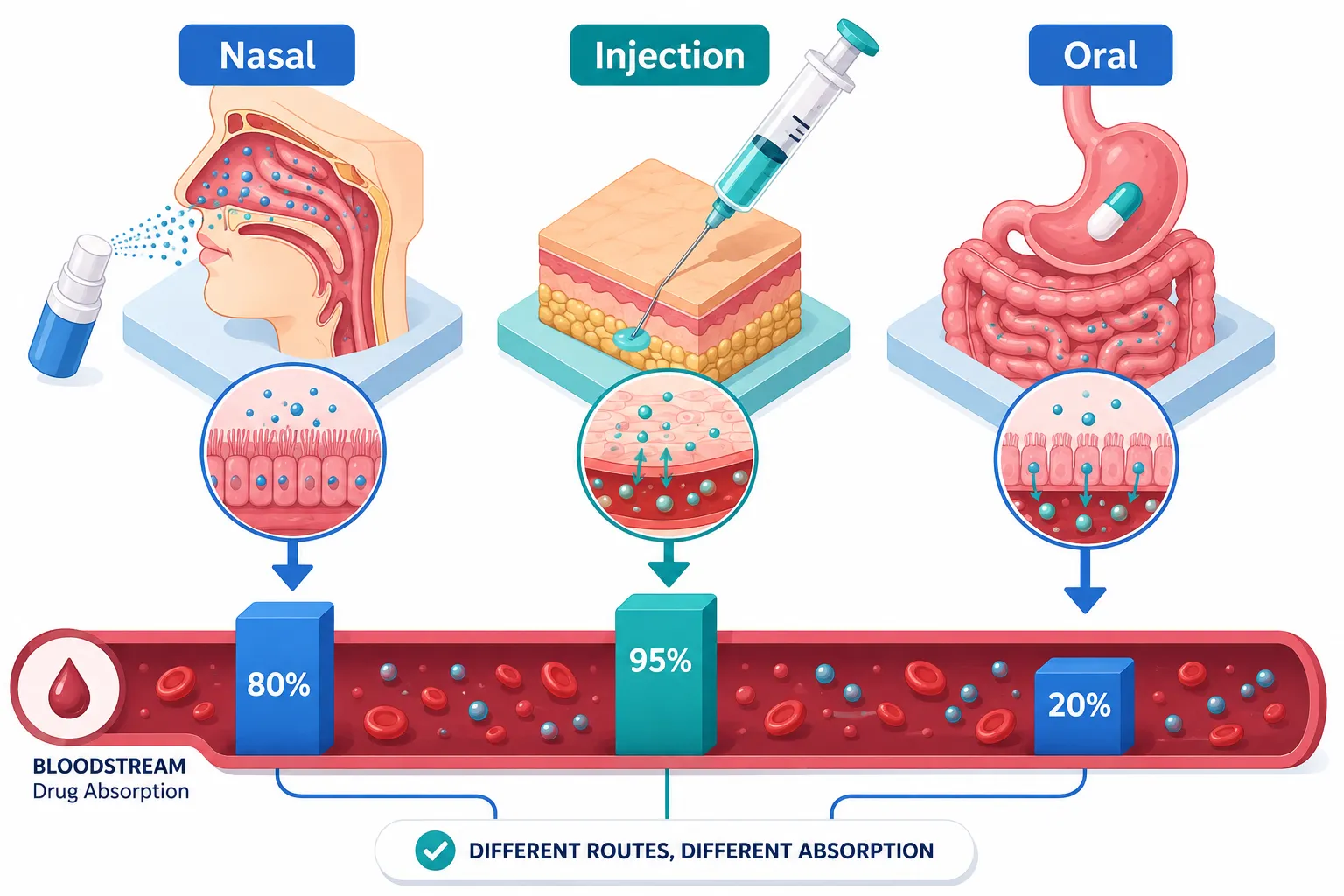
The route of administration is not a minor logistical detail, it is a primary determinant of whether a peptide compound reaches its biological target at a meaningful concentration. Peptides are chains of amino acids. When taken orally, proteolytic enzymes in the gastrointestinal tract cleave those chains aggressively, and the liver further metabolizes whatever survives absorption. The result is negligible systemic exposure.

Injection, subcutaneous or intravenous, solves the degradation problem but introduces practical constraints in research settings: sterility requirements, tissue trauma at repeated dosing sites, and compliance challenges in longer study designs.

Intranasal delivery occupies a unique middle ground. The nasal epithelium is highly vascularized. Peptides applied to the nasal mucosa can diffuse directly into submucosal capillaries, entering systemic circulation without hepatic first-pass processing. For researchers studying peptides like those found in BPC-157 and TB-500 blend formulations, understanding how delivery route affects compound behavior is foundational.

The Olfactory Pathway: A Direct CNS Route

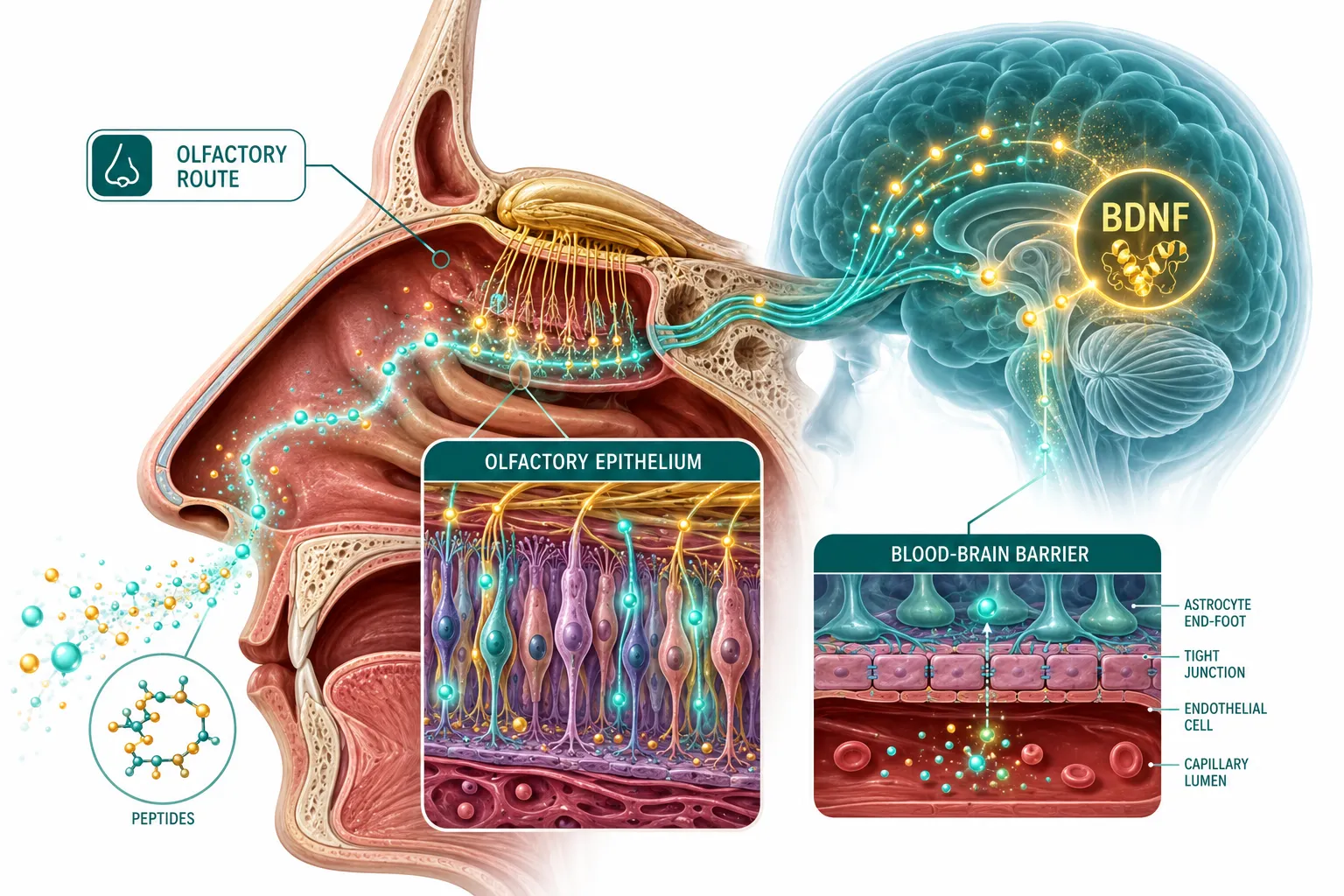
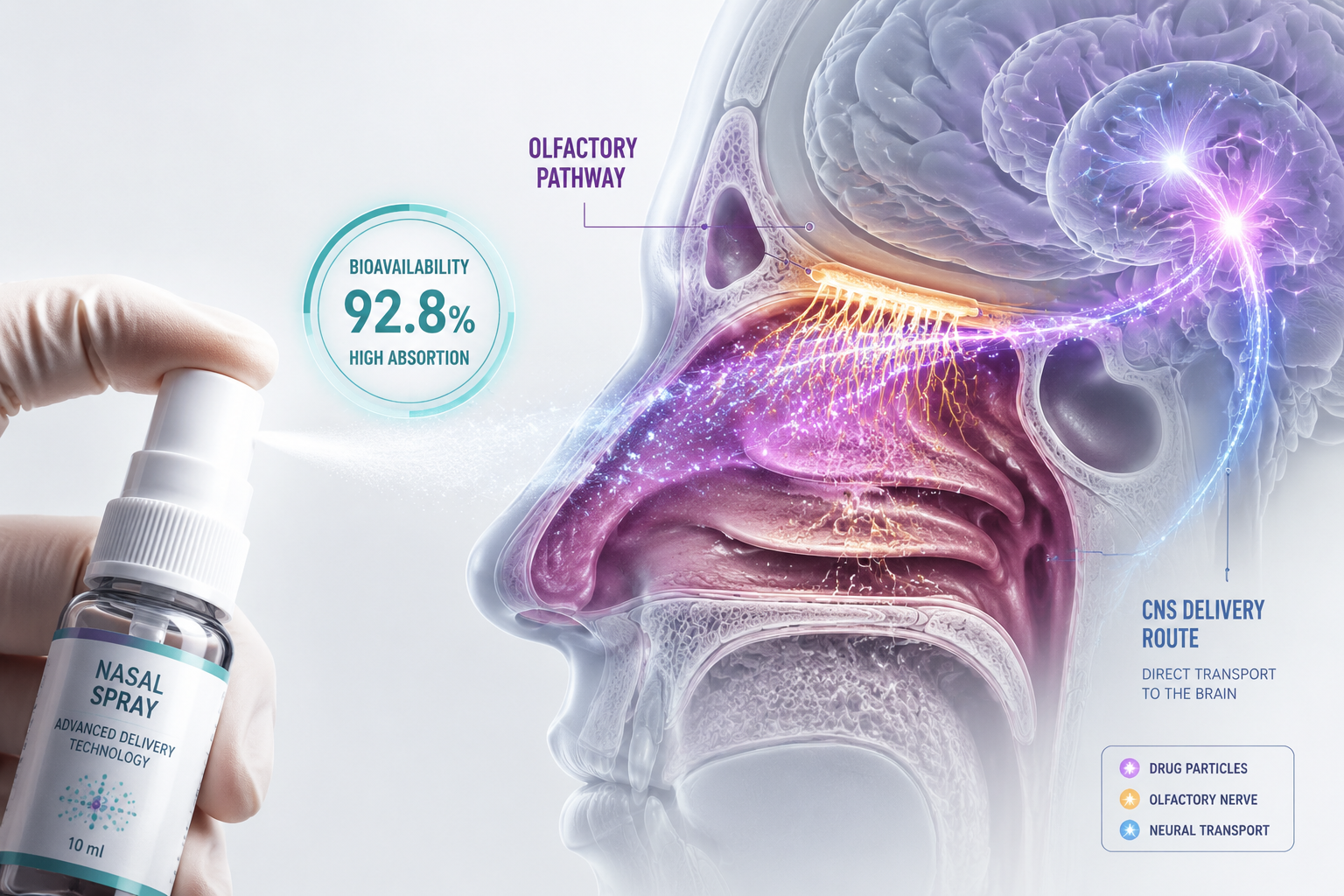
Beyond systemic absorption, the nasal cavity offers something injection cannot easily replicate: a potential direct route to the central nervous system via the olfactory epithelium. The olfactory nerve fibers run from the nasal roof to the olfactory bulb, bypassing the blood-brain barrier. This pathway has been studied extensively for neuropeptides, where CNS exposure is the primary research objective.

Peptides designed for cognitive or neurological research models, including Semax and Selank, are frequently formulated as nasal sprays precisely because this pathway may deliver compound to brain tissue faster and at higher concentrations than peripheral injection followed by CNS diffusion.

Bioavailability Factors in Nasal Spray Peptide Formulations
Bioavailability Factors in Nasal Spray Peptide Formulations

Bioavailability from nasal delivery is not automatic. Several formulation variables determine how efficiently a peptide crosses the nasal epithelium.

Key Formulation Variables

Variable Effect on Bioavailability
Molecular weight Peptides under 1,000 Da absorb more readily
pH of solution Must match nasal mucosa range (6.4-7.4)
Viscosity Higher viscosity extends mucosal contact time
Particle/droplet size 10-50 micron range targets turbinate deposition
Permeation enhancers Cyclodextrins and chitosan improve epithelial crossing

Mucociliary clearance is the main competing force. The nasal mucosa clears deposited material toward the nasopharynx within 15-20 minutes. Formulations must either absorb rapidly or use mucoadhesive agents to extend residence time.

Preservatives matter too. Benzalkonium chloride, commonly used in commercial nasal sprays, has shown ciliotoxic effects at certain concentrations in research models. Researchers using peptide nasal sprays in controlled studies often prefer preservative-free formulations to avoid confounding variables.

For researchers exploring Klow blend peptides or Glow blend peptides, formulation details are directly relevant to how intranasal administration protocols are designed.

Research Advantages of Nasal Spray Peptides: Delivery Methods, Bioavailability, and Research Advantages in Practice

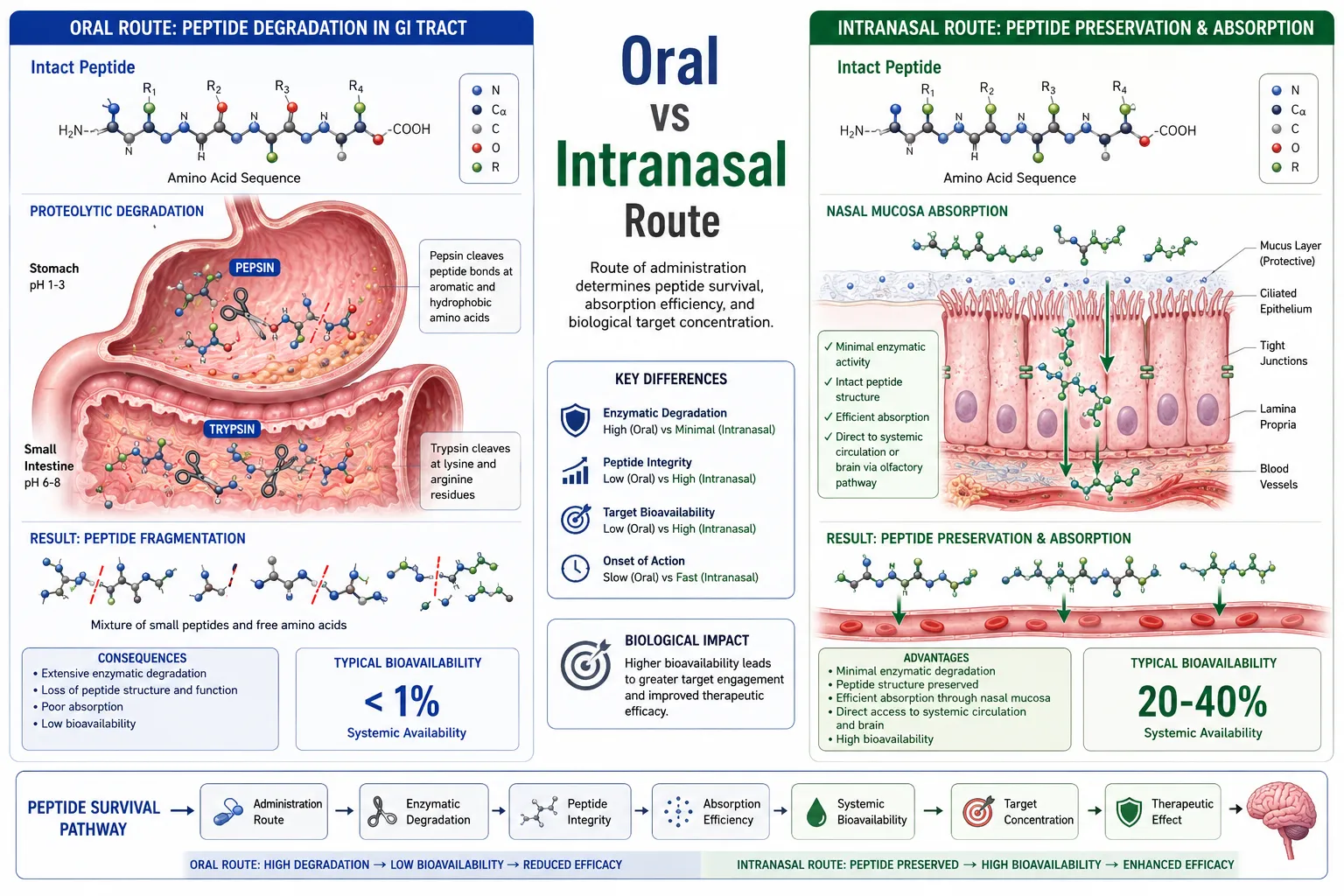
Research Advantages of Nasal Spray Peptides: Delivery Methods, Bioavailability, and Research Advantages in Practice

Research Advantages of Nasal Spray Peptides: Delivery Methods, Bioavailability, and Research Advantages in Practice

The scientific case for intranasal peptide delivery in research settings rests on several converging advantages.

Rapid Onset and CNS Accessibility

Nasal absorption produces measurable plasma concentrations within minutes. For time-sensitive research endpoints, acute behavioral studies, rapid neurological assessments, this speed is a significant protocol advantage over subcutaneous injection, which typically peaks at 20-40 minutes post-dose depending on compound and vehicle.

Reduced Systemic Burden

Because intranasal delivery can target CNS endpoints via the olfactory route, researchers can potentially achieve meaningful brain exposure at lower total doses than systemic injection would require. Lower doses reduce off-target peripheral effects, which simplifies data interpretation.

Non-Invasive Repeated Dosing

Chronic study designs benefit enormously from non-invasive administration. Repeated injection introduces stress variables and injection-site pathology that can confound longitudinal data. Nasal spray administration reduces these confounders, improving data quality across multi-week protocols.

Researchers comparing growth hormone-related peptides, such as those reviewed in GHRP-2 versus Sermorelin research comparisons, often evaluate delivery route as part of their experimental design because administration method directly affects pharmacokinetic profiles.

Compound Integrity and Purity Requirements

Intranasal formulations demand high compound purity. Endotoxin contamination or degradation byproducts that might be tolerable in some systemic models become more significant when compound is delivered near olfactory nerve tissue. Researchers sourcing peptides from verified peptide stores with documented third-party testing reduce this risk substantially.

For compounds like those in the IPA peptides category, purity documentation is not optional, it is a baseline requirement for credible intranasal research design.

Conclusion

Nasal spray peptides: delivery methods, bioavailability, and research advantages represent a convergence of pharmacokinetics, formulation science, and practical research design. The intranasal route bypasses hepatic metabolism, offers potential direct CNS access via the olfactory pathway, and supports non-invasive repeated dosing, three properties that make it uniquely valuable for peptide research.

Actionable next steps for researchers:

  • Evaluate molecular weight and lipophilicity of target peptides before selecting intranasal as the primary route.
  • Specify formulation parameters (pH, viscosity, particle size) in protocols to ensure reproducibility.
  • Source compounds with verified purity certificates and endotoxin testing data.
  • Compare intranasal pharmacokinetic data against subcutaneous controls in pilot studies before committing to full experimental runs.
  • Review published olfactory pathway research to understand CNS exposure assumptions for specific peptide classes.

Delivery science is not secondary to compound selection, it is half the experiment.

https://www.puretestedpeptides.com/wp-content/uploads/2026/08/nasal-spray-peptides-delivery-methods-bioavailability-and-research-advantages.webp 1024 1536 https://www.puretestedpeptides.com/wp-content/uploads/2026/01/buy-peptides-online.jpg 2026-08-07 13:06:392026-08-07 13:06:39Nasal Spray Peptides: Delivery Methods, Bioavailability, and Research Advantages
Klow Blend vs. Semax and Selank: Intranasal Nootropic Peptides Compared for Research

Klow Blend vs. Semax and Selank: Intranasal Nootropic Peptides Compared for Research

July 28, 2026/0 Comments/in Uncategorized/by

Fewer than 5% of peptide researchers who search for intranasal nootropics ever stop to ask whether the compounds they are comparing were actually designed for the same purpose. That gap in reasoning is exactly where confusion about Klow Blend vs. Semax and Selank: Intranasal Nootropic Peptides Compared for Research begins, and where this article starts to clear things up.

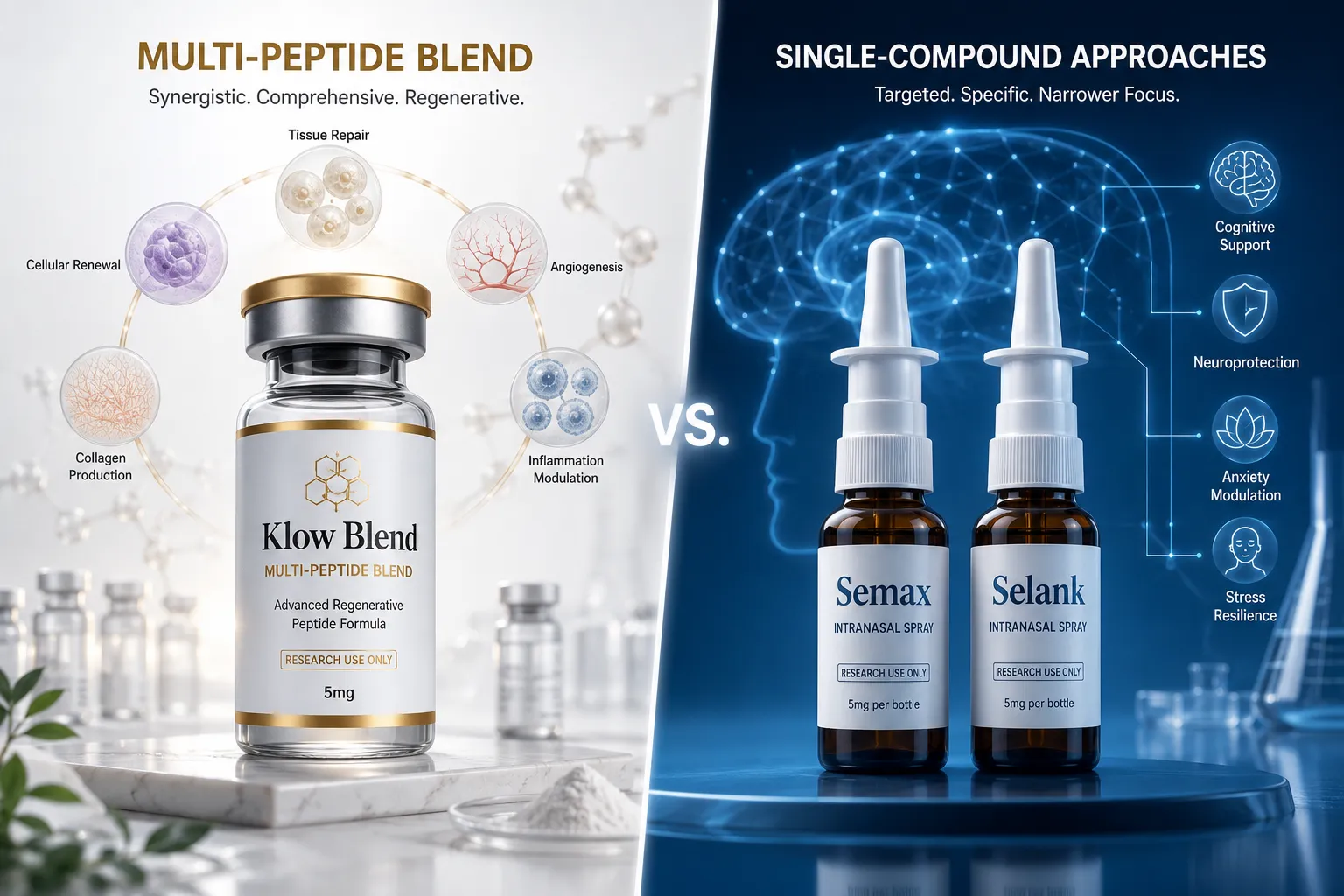
Semax and Selank are well-characterized intranasal peptides with decades of Russian pharmacological research behind them. Klow Blend is a newer multi-peptide regenerative formula that has attracted attention in 2026 wellness and research circles. Placing them side by side requires understanding what each compound is actually built to do, how each is delivered, and what the current evidence base looks like for each.

Split-screen editorial illustration (): left half shows a stylized multi-peptide blend vial labeled 'Klow Blend' on a clean

Key Takeaways

  • Semax and Selank are single-target intranasal peptides with established Russian prescription histories and focused nootropic or anxiolytic mechanisms.
  • Klow Blend is a multi-peptide regenerative formula, not a dedicated nootropic, and its research profile in 2026 is still emerging.
  • Intranasal delivery offers a shared advantage for all three: bypassing first-pass metabolism and providing a direct olfactory route toward the central nervous system.
  • Comparing these compounds as direct substitutes misreads their formulation logic; they address overlapping but distinct research hypotheses.
  • Purity verification and sourcing quality matter significantly for all intranasal peptide research.

What Are Semax and Selank

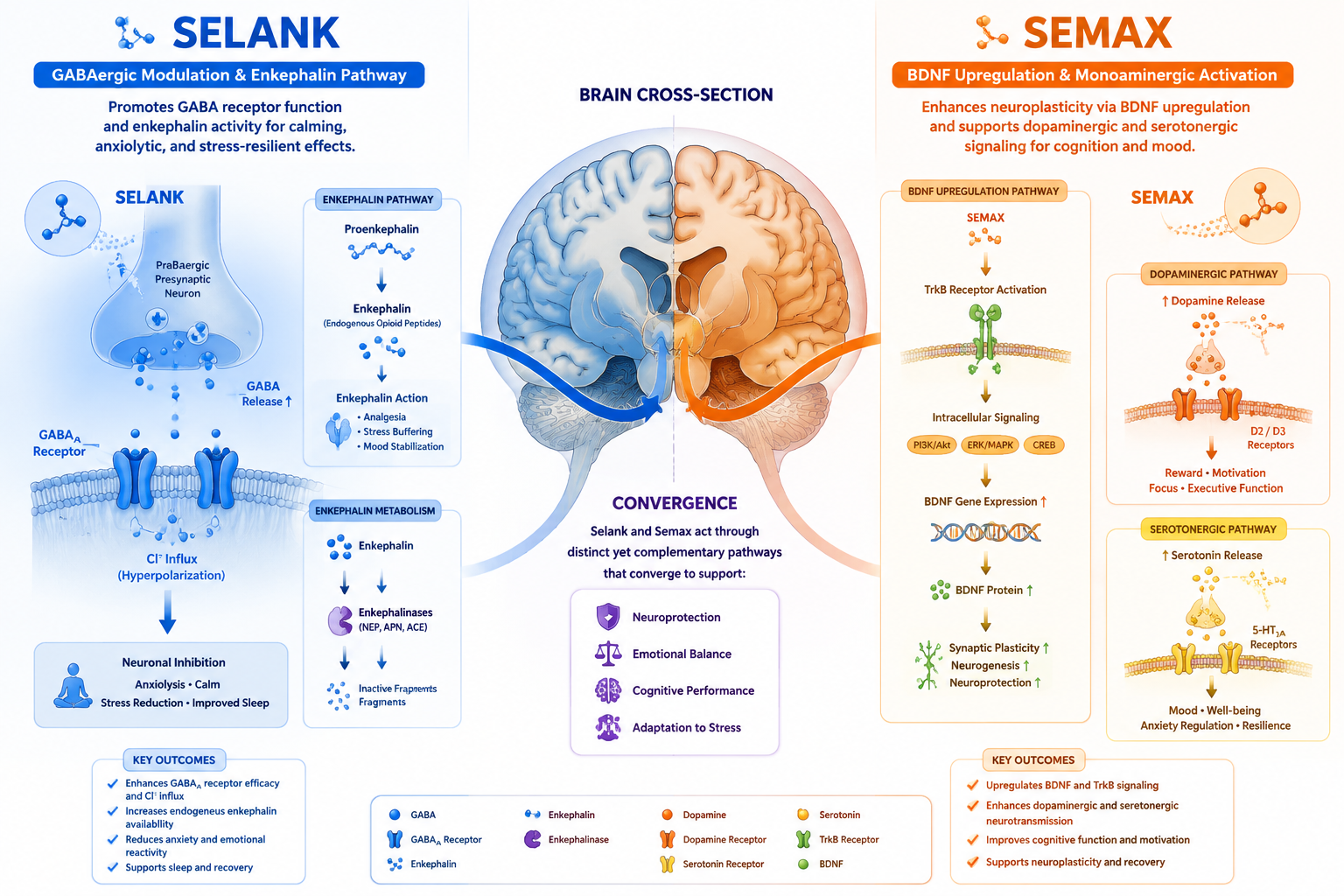
Semax is a synthetic heptapeptide derived from ACTH(4-7), developed at the Institute of Molecular Genetics in Russia. It has been used clinically in Russia and Ukraine as a prescription nasal spray for cognitive impairment, stroke recovery, and attention disorders. Its primary mechanisms involve upregulation of brain-derived neurotrophic factor (BDNF) and modulation of dopaminergic and serotonergic systems.

Selank is a synthetic analog of the endogenous tetrapeptide tuftsin, also developed in Russia. It is registered as an anxiolytic drug in Russia and has a well-documented profile as an anti-anxiety and nootropic agent. Selank works partly through modulation of the GABAergic system and has shown effects on BDNF upregulation in preclinical models.

Both peptides share three important characteristics for researchers:

  • Intranasal delivery as the primary administration route
  • Short amino acid chains that are relatively stable in nasal mucosa
  • CNS-targeted mechanisms with documented effects on mood, memory, and neuroprotection

For a deeper look at Selank's pharmacological profile, the Selank peptide research overview and the Selank side effects summary provide useful starting points for protocol planning.

What Is Klow Blend and How Does It Differ

Klow Blend is a multi-peptide regenerative formula. Unlike Semax or Selank, it was not designed around a single nootropic target. Instead, it combines several peptide components aimed at broader regenerative, anti-inflammatory, and systemic wellness outcomes. As of mid-2026, Klow Blend does not carry a prescription classification in the United States and is positioned primarily as a research compound rather than a clinical therapeutic.

This distinction matters enormously when comparing it to Semax and Selank:

Feature Semax Selank Klow Blend
Primary Target Cognitive enhancement, BDNF Anxiolytic, nootropic Multi-system regenerative
Delivery Route Intranasal Intranasal Varies by formulation
Regulatory Status Russian Rx Russian Rx Research compound (US, 2026)
Evidence Base Extensive preclinical + clinical Extensive preclinical + clinical Emerging
Formula Type Single peptide Single peptide Multi-peptide blend

Key distinction: Klow Blend's value proposition is formulation breadth, not cognitive specificity. Semax and Selank offer narrower, better-characterized mechanisms for researchers focused on nootropic or anxiolytic hypotheses.

For researchers interested in how multi-peptide blends are structured more broadly, the IPA Sermorelin stack research guide offers relevant context on combination peptide logic.

Intranasal Delivery: The Shared Advantage and Its Limits

Intranasal Delivery: The Shared Advantage and Its Limits

The intranasal route is one of the most discussed delivery mechanisms in peptide research, and for good reason. It bypasses the liver's first-pass metabolism, avoids gastrointestinal degradation, and provides access to the olfactory epithelium, a pathway that allows some peptides to reach the central nervous system more efficiently than subcutaneous or oral routes.

Semax and Selank were specifically engineered for this route. Their molecular size, stability in nasal mucosa, and absorption kinetics were optimized through decades of iterative research. This is not incidental, it is core to why they work as nootropic and anxiolytic agents.

Klow Blend, as a multi-peptide formula, faces a more complex delivery challenge. When multiple peptide components are combined, their individual absorption rates, mucosal stability, and CNS penetration profiles may differ. This does not make intranasal delivery of blends impossible, but it does mean that the delivery efficiency for each component in Klow Blend cannot simply be assumed to match the precision seen with Semax or Selank.

Researchers exploring peptide delivery should also review guidance on what not to mix with peptides to avoid formulation errors that compromise results.

Comparing Research Hypotheses: Where Each Compound Fits

When evaluating Klow Blend vs. Semax and Selank: Intranasal Nootropic Peptides Compared for Research, the most practical question is: what research question is being asked?

Choose Semax if the hypothesis involves:

  • Acute cognitive enhancement or neuroprotection
  • BDNF pathway modulation
  • Dopaminergic or serotonergic system effects

Choose Selank if the hypothesis involves:

  • Anxiety reduction without sedation
  • GABAergic modulation
  • Immune-cognitive interaction (Selank has shown immunomodulatory effects in some models)

Consider Klow Blend if the hypothesis involves:

  • Regenerative or systemic multi-target outcomes
  • Combination peptide synergy research
  • Broader wellness endpoints beyond strict nootropic effects

Researchers sourcing any of these compounds should prioritize verified purity. Lab-tested peptides with documented assay results reduce confounding variables that can undermine intranasal research protocols. For those comparing sourcing options, quality peptides and online peptide sourcing resources can help identify reliable suppliers.

Practical Considerations for Researchers in 2026

Practical Considerations for Researchers in 2026

As of 2026, the regulatory landscape for all three compounds in the United States positions them as research-only materials. None are approved by the FDA for human therapeutic use outside of clinical trial frameworks. This shapes how researchers should approach procurement, documentation, and protocol design.

Three practical points stand out:

  1. Purity documentation is non-negotiable. Intranasal delivery means the compound contacts mucosal tissue directly. Contaminants that might be tolerable in other contexts carry higher risk here.
  2. Formulation logic should match the hypothesis. Using Klow Blend to test a nootropic-specific hypothesis introduces unnecessary variables. Using Semax or Selank to test a regenerative hypothesis misses the compound's actual mechanism.
  3. Storage and stability differ between single-peptide and multi-peptide formulations. Blends may require more careful handling to preserve the activity of each component.

Conclusion

The comparison of Klow Blend vs. Semax and Selank: Intranasal Nootropic Peptides Compared for Research ultimately comes down to formulation intent. Semax and Selank are precision instruments for cognitive and anxiolytic research, built specifically for intranasal delivery with decades of supporting data. Klow Blend is a broader regenerative formula with an emerging evidence base that serves different research hypotheses.

Actionable next steps for researchers:

  • Define the specific biological target before selecting a compound.
  • Review the full profiles of Selank and Semax independently before comparing them to blends.
  • Source only from suppliers who provide third-party purity assays.
  • Document all protocol variables carefully, especially when using intranasal delivery routes where absorption can vary by formulation.

Choosing the right peptide is not about which compound is superior in the abstract, it is about which compound is right for the specific research question being asked.

https://www.puretestedpeptides.com/wp-content/uploads/2026/07/klow-blend-vs-semax-and-selank-intranasal-nootropic-peptides-compared-for-resear.webp 1024 1536 https://www.puretestedpeptides.com/wp-content/uploads/2026/01/buy-peptides-online.jpg 2026-07-28 13:04:132026-07-28 13:04:13Klow Blend vs. Semax and Selank: Intranasal Nootropic Peptides Compared for Research

Tag Archive for: selank

Best Research Peptides for Cognitive Enhancement: Comparing Selank, Semax, and Epithalon

Best Research Peptides for Cognitive Enhancement: Comparing Selank, Semax, and Epithalon

July 11, 2026/0 Comments/by Pure Tested

Roughly 50 million adults worldwide report clinically significant cognitive complaints each year, yet fewer than a handful of pharmaceutical compounds have received approval specifically for cognitive enhancement. That gap has driven serious research interest toward a class of short-chain amino acid sequences known as nootropic peptides. Among the most studied are three compounds with distinct mechanisms: Selank, Semax, and Epithalon. Evaluating the best research peptides for cognitive enhancement, comparing Selank, Semax, and Epithalon, requires a close look at what the science actually shows, where the evidence is strong, and where critical gaps remain.

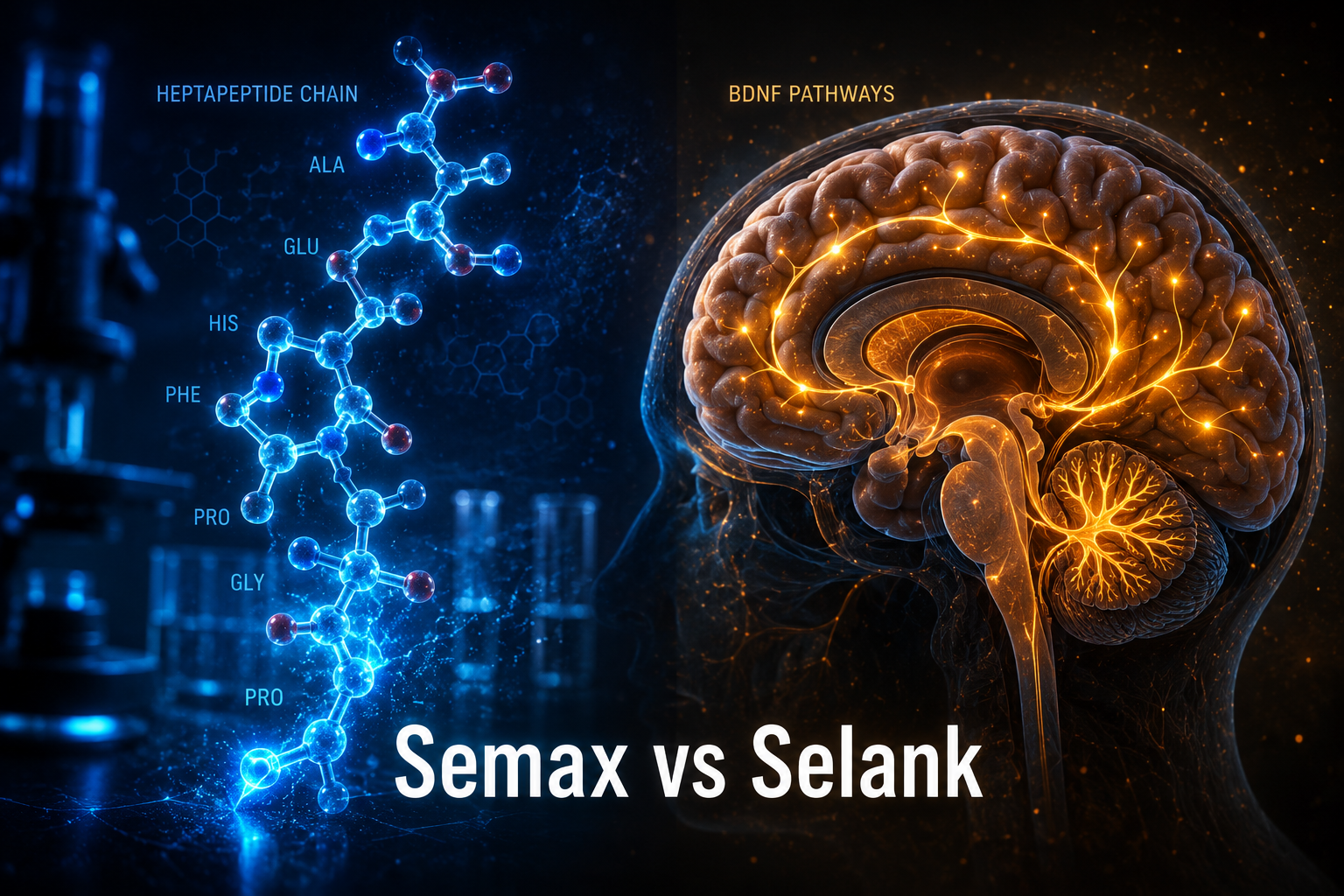
Editorial (). Split-screen conceptual illustration: left panel shows a stylized molecular structure of a heptapeptide chain

Key Takeaways

  • Semax is the most directly cognitive-activating of the three, upregulating BDNF and NGF to support memory, attention, and neuroprotection.
  • Selank works primarily as an anxiolytic, producing cognitive benefits indirectly by reducing anxiety without sedation or dependence.
  • Epithalon is studied mainly for telomerase activation and anti-aging effects; its cognitive role is less established than the other two.
  • Both Semax and Selank are approved in Russia but hold no FDA approval; most clinical data originates from Russian-language literature.
  • Peptide purity and sourcing quality are critical variables when evaluating any research compound.

Mechanisms of Action: How Each Peptide Works in the Brain

Understanding the best research peptides for cognitive enhancement means starting with mechanism, not marketing.

Semax is a synthetic heptapeptide derived from adrenocorticotropic hormone (ACTH). Its primary cognitive effect comes from upregulating brain-derived neurotrophic factor (BDNF) and nerve growth factor (NGF). These proteins support neuron survival, synaptic plasticity, and the formation of new neural connections. Semax also modulates dopaminergic and serotonergic systems, which influence motivation, attention, and working memory. Animal models and limited human trials have shown improvements in learning speed and memory consolidation. A particularly notable line of research demonstrated that Semax improved cognitive function in mice with amyloid-beta-induced Alzheimer's-like pathology, suggesting relevance beyond acute brain injury.

Selank is also a heptapeptide developed at the Russian Academy of Sciences. Rather than directly activating neurotrophic pathways, it modulates GABAergic and serotonergic systems to produce anxiolytic effects without sedation. Its cognitive benefits are largely indirect: by reducing anxiety, it removes a major barrier to attention, memory encoding, and executive function. Importantly, Selank does not appear to cause dependence or withdrawal, which distinguishes it from benzodiazepine-class anxiolytics. For a deeper look at the documented effects of both compounds, the Selank and Semax research overview covers the key findings in accessible detail.

Epithalon is a tetrapeptide (four amino acids) with a different primary target: telomerase activation. Telomerase is the enzyme that maintains telomere length, a key marker of cellular aging. Most Epithalon research focuses on longevity and anti-aging rather than acute cognitive enhancement. Some animal studies suggest neuroprotective properties, but the direct cognitive evidence is considerably thinner than what exists for Semax or Selank.

Peptide Primary Mechanism Main Cognitive Benefit Evidence Strength
Semax BDNF/NGF upregulation Memory, attention, neuroprotection Moderate (clinical + preclinical)
Selank GABAergic/serotonergic modulation Anxiety reduction, indirect cognition Moderate (clinical + preclinical)
Epithalon Telomerase activation Neuroprotection, anti-aging Limited (mainly preclinical)

Comparing Selank, Semax, and Epithalon: Clinical Evidence and Approval Status

When comparing the best research peptides for cognitive enhancement, regulatory status and clinical depth matter.

Semax holds approval in Russia for ischemic stroke and cognitive disorders. Clinical studies have shown improved neurological outcomes when it is administered intranasally shortly after stroke onset. A 2019 Russian review summarizing 25 years of Semax use across more than 15,000 patients reported no serious adverse events at therapeutic doses, though the review was retrospective rather than a prospectively collected safety database.

Selank is approved in Russia for generalized anxiety disorder and neurasthenia. A functional MRI study in 52 healthy participants found that both Selank and Semax produced measurable changes in functional connectivity between the right amygdala and the right temporal cortex, suggesting real neurological activity rather than placebo effects. Researchers interested in how Selank influences stress response and cognition will find the Selank stress and cognition research summary a useful reference. Additional context on Selank side effects is also worth reviewing before drawing research conclusions.

Neither Semax nor Selank holds FDA approval. Epithalon has no regulatory approval in any major Western market. All three are available primarily through research chemical suppliers, which makes sourcing quality a critical variable. Understanding peptide purity testing is essential for anyone working with these compounds in a research context.

"The majority of clinical data on Semax and Selank originates from Russian-language literature, with limited replication in Western studies, a significant gap that shapes how confidently any conclusions can be drawn."

Both Semax and Selank are administered intranasally, which allows them to bypass the blood-brain barrier efficiently and reach the central nervous system directly. This delivery route is a key advantage over oral peptides, which typically degrade before reaching systemic circulation.

Comparing Selank, Semax, and Epithalon: Clinical Evidence and Approval Status


Delivery, Safety, and Research Sourcing Considerations

For researchers evaluating the best research peptides for cognitive enhancement, comparing Selank, Semax, and Epithalon, practical sourcing and safety considerations are inseparable from the science.

Delivery method shapes bioavailability significantly. Intranasal delivery for Semax and Selank provides rapid CNS access. Epithalon is typically administered subcutaneously or intravenously in research settings. Oral delivery of any peptide carries degradation risks unless specifically formulated for that route.

Safety profiles for Semax and Selank appear favorable in available data, with no serious adverse events reported at research-relevant doses. However, the evidence base is geographically concentrated and methodologically variable. Epithalon's long-term safety profile in humans remains understudied.

Purity and sourcing represent the most controllable variable in any peptide research protocol. Contaminated or mislabeled compounds introduce confounds that make results uninterpretable. Researchers working across multiple peptide classes, from cognitive compounds to metabolic agents like those explored in GHK-Cu longevity research or NAD+ energetics and longevity themes, consistently cite verified purity as the baseline requirement.

Those exploring broader neuroprotective peptide research may also find the Pinealon neuroprotection overview relevant, as it covers a related class of bioregulator peptides with overlapping research themes.

Delivery, Safety, and Research Sourcing Considerations


Conclusion

The best research peptides for cognitive enhancement, comparing Selank, Semax, and Epithalon, each occupy a distinct niche. Semax is the strongest candidate for direct cognitive activation, supported by the most robust clinical data. Selank offers a complementary pathway through anxiety reduction, with a clean safety profile and documented neurological activity. Epithalon's cognitive role remains largely theoretical at this stage, with its primary value lying in anti-aging and neuroprotective research.

Actionable next steps for researchers:

  • Prioritize verified, third-party tested peptide sources before beginning any protocol.
  • Review the functional MRI and BDNF literature on Semax before designing cognitive outcome measures.
  • Treat Epithalon as a longevity compound first and a cognitive enhancer second until more direct human evidence emerges.
  • Consult the neuroendocrine and innate immunity research resource for broader context on how peptides interact with CNS regulatory systems.
  • Stay current with Western replication studies, as the field is evolving rapidly in 2026.
https://www.puretestedpeptides.com/wp-content/uploads/2026/07/best-research-peptides-for-cognitive-enhancement-comparing-selank-semax-and-epit.png 1024 1536 Pure Tested https://www.puretestedpeptides.com/wp-content/uploads/2026/01/buy-peptides-online.jpg Pure Tested2026-07-11 13:05:222026-07-20 15:00:26Best Research Peptides for Cognitive Enhancement: Comparing Selank, Semax, and Epithalon
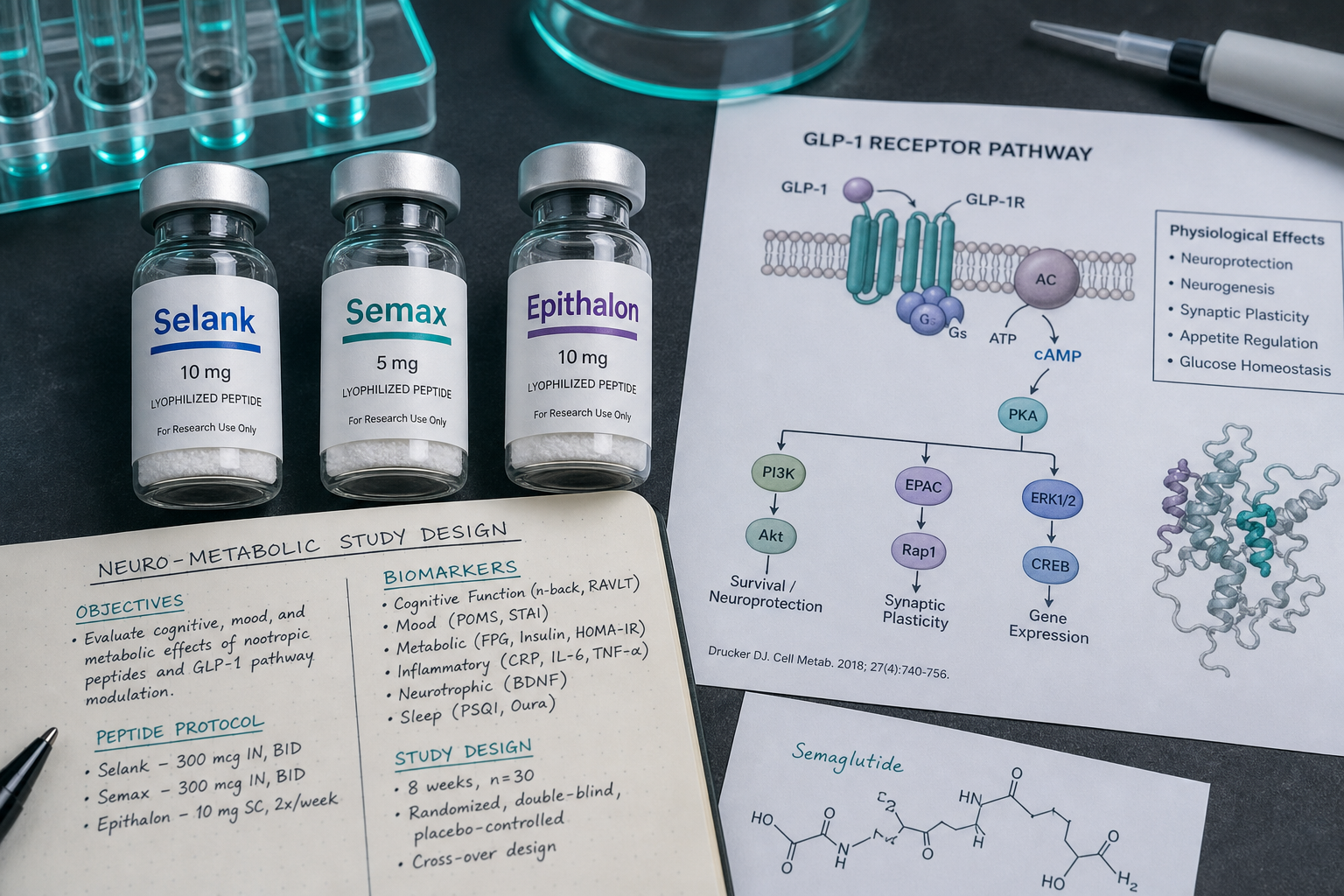
Neuroactive Research Peptides as Adjuncts to GLP‑1/GLP‑3: Selank, Semax, and Epithalon in Neuro‑Metabolic Study Designs

Neuroactive Research Peptides as Adjuncts to GLP‑1/GLP‑3: Selank, Semax, and Epithalon in Neuro‑Metabolic Study Designs

July 7, 2026/0 Comments/by Pure Tested

Fewer than 15% of subjects in GLP-1-based metabolic research protocols complete long-term study phases without reporting anxiety, sleep disruption, or cognitive fatigue, variables that rarely appear in primary endpoints but quietly shape adherence data. That gap is driving renewed interest in neuroactive research peptides as adjuncts to GLP-1/GLP-3: Selank, Semax, and Epithalon in neuro-metabolic study designs represent three candidates that researchers are increasingly pairing with incretin-based frameworks to address exactly these secondary endpoints.

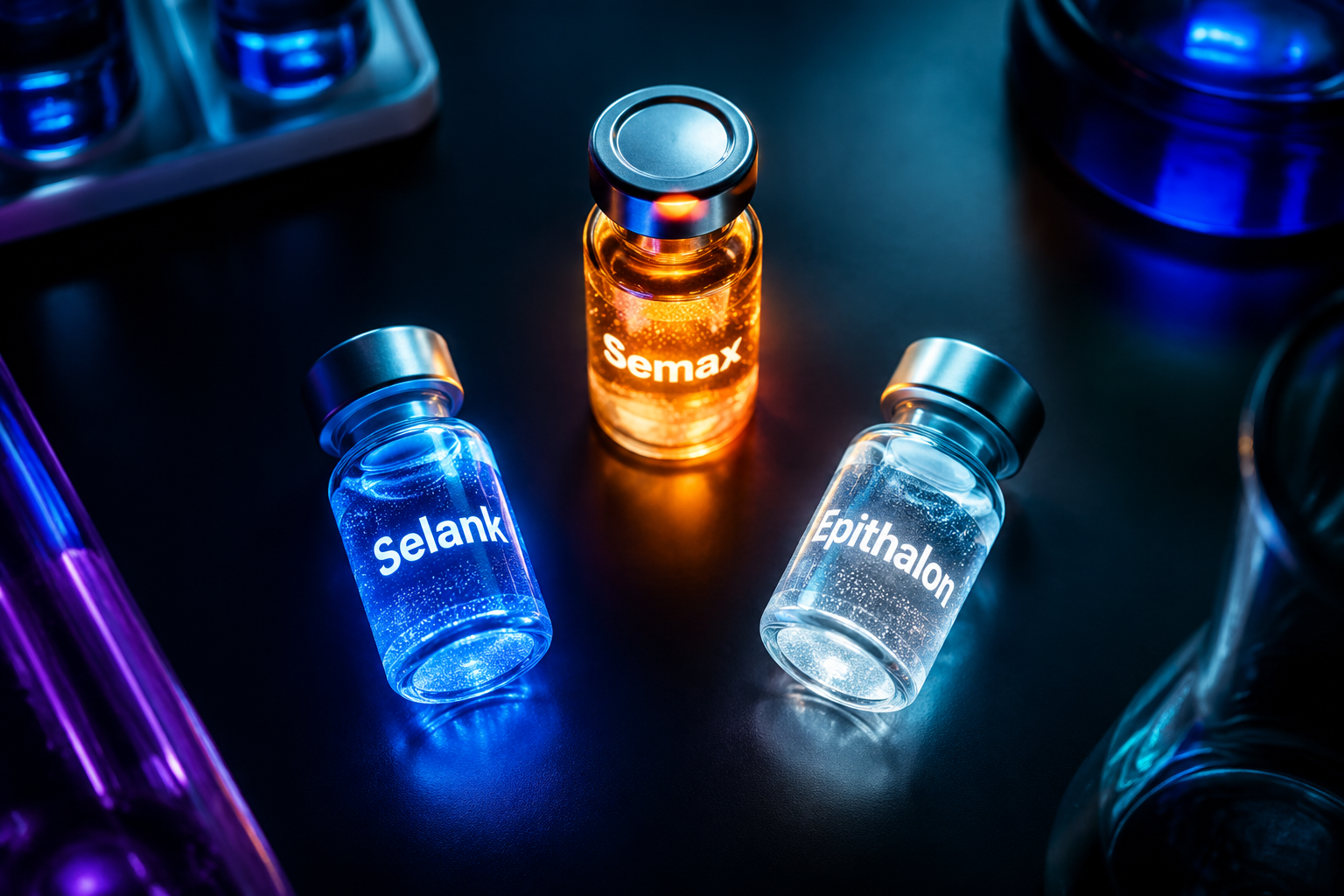
Close-up laboratory flat-lay image showing three distinct peptide vials labeled Selank, Semax, and Epithalon arranged on a

Key Takeaways

  • Selank, Semax, and Epithalon each target distinct neurological pathways, anxiety modulation, BDNF upregulation, and circadian/telomere regulation respectively, that may complement GLP-1 and GLP-3 metabolic protocols.
  • GLP-1 receptor agonists combined with additional peptides have demonstrated up to a 32% reduction in food intake in research settings, suggesting multi-peptide synergy is a viable study design strategy.
  • Both Semax and Selank are approved for medical use in Russia but lack large-scale Western randomized controlled trials, limiting regulatory standing outside that jurisdiction.
  • Epithalon's influence on sleep architecture and pineal function positions it as a hypothesized adjunct for circadian-metabolic alignment in longer study windows.
  • All three peptides are classified as research compounds and are subject to WADA prohibitions; researchers must account for regulatory context in study design.

Mechanisms: How Selank, Semax, and Epithalon Map to Neuro-Metabolic Pathways

Understanding why these compounds attract attention in metabolic research begins with their individual mechanisms.

Semax is a synthetic heptapeptide derived from adrenocorticotropic hormone (ACTH). Its most studied action is the upregulation of Brain-Derived Neurotrophic Factor (BDNF) in the hippocampus and cortex. BDNF elevation activates TrkB receptors, supporting neuronal survival, synaptic plasticity, and cognitive function. In metabolic research contexts, BDNF is not merely a cognitive marker, it also plays a documented role in energy homeostasis and hypothalamic appetite regulation, making Semax a biologically plausible adjunct in neuro-metabolic designs.

Selank, also a heptapeptide but derived from the immunomodulatory peptide tuftsin, operates through a different set of mechanisms. It modulates monoamine metabolism, increases GABA release, and regulates serotonin-related gene expression. The result is anxiolytic and nootropic activity without the sedation or dependence risk associated with classical anxiolytics. Researchers studying Selank peptide benefits note its potential relevance to stress-driven eating behavior and cortisol-mediated metabolic disruption, endpoints that are rarely isolated in standard GLP-1 trials but are mechanistically significant.

Epithalon (also spelled Epitalon) is a tetrapeptide synthesized from epithalamin, a pineal gland extract. Its primary research interest centers on telomerase activation, circadian rhythm normalization, and melatonin secretion support. Disrupted sleep architecture is strongly associated with impaired insulin sensitivity and elevated ghrelin, which means Epithalon's circadian-regulatory properties carry direct metabolic relevance. Researchers exploring Epithalon peptides for sale in research contexts often frame it within longevity and metabolic aging study designs.

"The intersection of neurological stability and metabolic regulation is not incidental, it is mechanistic. Anxiety, sleep quality, and cognitive load each modulate the hormonal environment that GLP-1 therapies are designed to influence."


GLP-1/GLP-3 Synergy and the Case for Multi-Peptide Study Designs

GLP-1 receptor agonists have reshaped metabolic research, but their scope is expanding. Combined infusion studies using GLP-1 alongside oxyntomodulin and peptide YY have recorded a 32% reduction in food intake among obese research subjects, evidence that multi-peptide protocols can produce outcomes beyond what single-agent designs achieve.

GLP-3, a lesser-studied incretin fragment, is gaining attention for its potential role in gut-brain signaling and neuroinflammation modulation. When researchers consider NAD research and GLP-3 online resources, the emerging picture is one of overlapping neuroendocrine pathways where incretin biology and neuropeptide biology converge.

The rationale for pairing Selank, Semax, or Epithalon with GLP-1/GLP-3 frameworks rests on several hypothesized interaction points:

Peptide Primary Research Target Hypothesized GLP-1/GLP-3 Adjunct Role
Semax BDNF upregulation, neuroprotection Hypothalamic appetite axis support, cognitive adherence
Selank Anxiolysis, serotonin/GABA modulation Stress-eating attenuation, cortisol normalization
Epithalon Circadian regulation, telomerase activation Sleep-metabolic alignment, insulin sensitivity support

GLP-1 infusions have also been shown to augment muscle protein synthesis in older adults, addressing anabolic resistance, a finding that becomes more relevant when paired with Epithalon's anti-aging and cellular repair research themes. For researchers interested in related metabolic peptide frameworks, AOD9604 metabolic research and 5-Amino-1MQ research data offer additional mechanistic context for multi-pathway designs.


Study Design Considerations, Safety Profiles, and Regulatory Context

Designing a neuro-metabolic study that incorporates neuroactive research peptides as adjuncts to GLP-1/GLP-3, Selank, Semax, and Epithalon in neuro-metabolic study designs specifically, requires careful attention to both safety data and regulatory standing.

Safety profiles for Semax and Selank are generally favorable in existing literature. Semax is well-tolerated, with rare adverse events limited to mild nasal irritation and transient agitation. Selank is considered non-sedative and non-addictive, with uncommon side effects including mild daytime drowsiness or dry mouth. Epithalon has a strong preclinical safety record, though long-term human data remains limited.

Critically, neither Semax nor Selank has undergone large-scale randomized controlled trials in Western research settings. Both are approved for medical use in Russia, Semax for stroke recovery and neurological disease, Selank for mild anxiety, but neither holds FDA or EMA approval. Researchers should also note that WADA classifies both Semax and Selank as prohibited substances due to their neuroenhancement potential.

For researchers building multi-peptide protocols, resources on neuroendocrine and innate immunity research themes and PT-141 neural-metabolic research themes provide useful comparative frameworks for designing endpoints that capture both neurological and metabolic variables.

Key study design checkpoints include:

  • Baseline neurological assessments for anxiety, sleep quality, and cognitive function before GLP-1/GLP-3 protocol initiation
  • Defined adjunct dosing windows that avoid confounding primary incretin endpoints
  • Secondary endpoint tracking for cortisol, BDNF, melatonin, and inflammatory markers
  • Institutional review and ethics compliance given the unapproved status of all three peptides in most Western jurisdictions

Conclusion

The convergence of neuroactive research peptides as adjuncts to GLP-1/GLP-3, Selank, Semax, and Epithalon in neuro-metabolic study designs, reflects a broader shift in how researchers are framing metabolic science. Rather than treating anxiety, cognition, and sleep as confounding variables, forward-looking study designs are beginning to treat them as mechanistically relevant endpoints in their own right.

Actionable next steps for researchers in 2026:

  1. Review existing GLP-1 protocol data for unreported neurological secondary variables that Selank or Semax could address in follow-up designs.
  2. Incorporate Epithalon into longer study windows where circadian-metabolic alignment is a measurable outcome.
  3. Consult institutional review boards early regarding the regulatory status of all three peptides before protocol submission.
  4. Explore multi-peptide synergy literature, including cagrilintide synergy with GLP-1 and GLOW blend longevity research themes, to build a comparative evidence base.

The evidence base remains early-stage, but the mechanistic logic is sound. Rigorous trial design, not speculation, will determine whether these peptides earn a formal role in neuro-metabolic research protocols.

https://www.puretestedpeptides.com/wp-content/uploads/2026/07/Neuroactive-Research-Peptides-as-Adjuncts-to-GLP‑1GLP‑3-Selank-Semax-and-Epithalon-in-Neuro‑Metabolic-Study-Designs.png 1024 1536 Pure Tested https://www.puretestedpeptides.com/wp-content/uploads/2026/01/buy-peptides-online.jpg Pure Tested2026-07-07 13:16:152026-07-20 15:00:50Neuroactive Research Peptides as Adjuncts to GLP‑1/GLP‑3: Selank, Semax, and Epithalon in Neuro‑Metabolic Study Designs
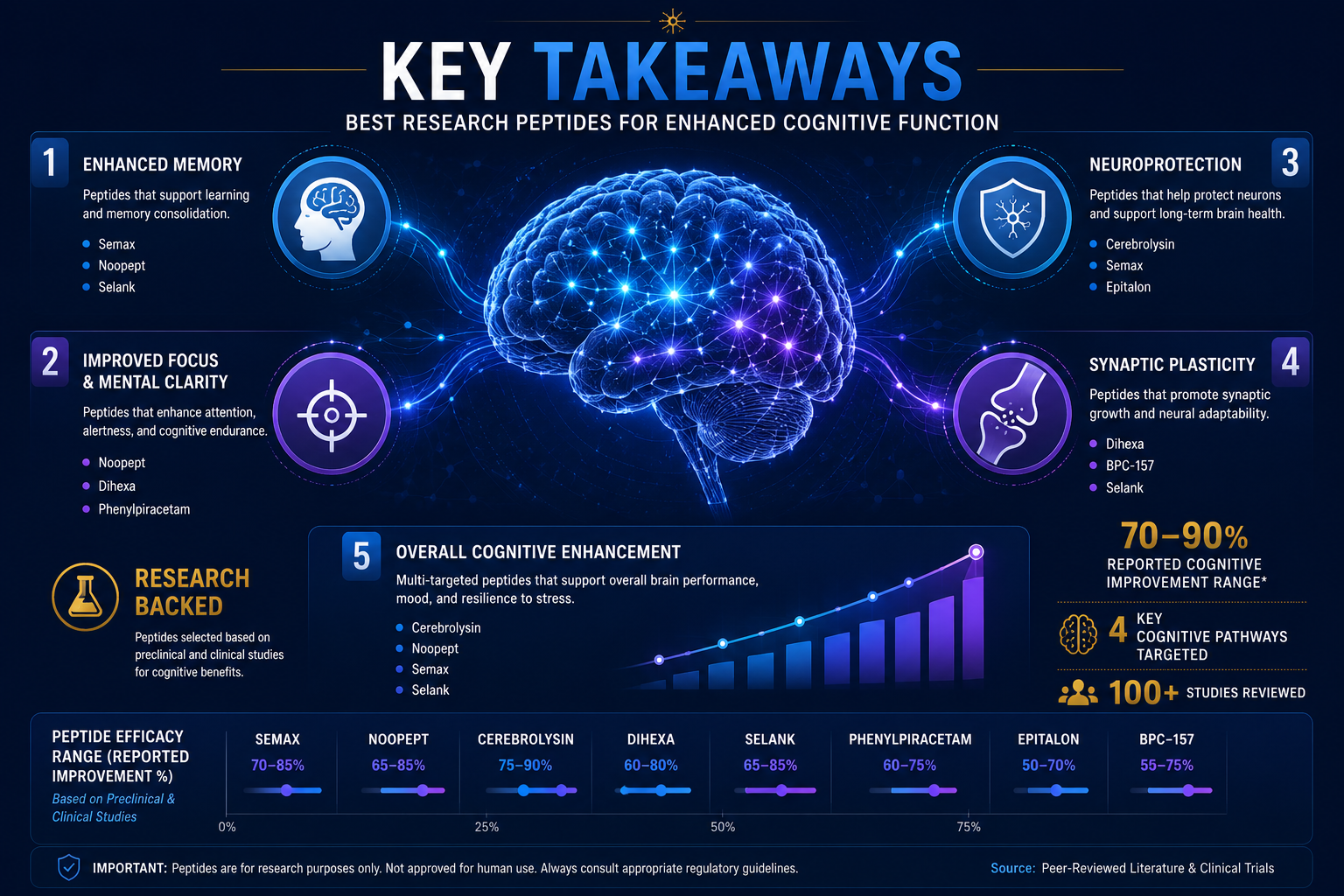
Best Research Peptides for Enhanced Cognitive Function: A Comparative Review

Best Research Peptides for Enhanced Cognitive Function: A Comparative Review

July 3, 2026/0 Comments/by Pure Tested

{"cover":"Professional landscape format (1536×1024) hero image with bold text overlay: 'Best Research Peptides for Cognitive Function: A Comparative Review' in extra large 72pt white bold sans-serif font with deep shadow effect, centered upper-third composition. Background features a stunning macro visualization of neural synaptic connections rendered in electric blue and gold against a dark navy backdrop, with subtle molecular peptide chain structures floating in the foreground. Color palette: deep navy, electric blue, gold accents. Magazine cover aesthetic, editorial quality, high contrast, cinematic depth of field.","content":["Detailed landscape format (1536×1024) scientific illustration showing side-by-side molecular structure comparison of Semax and Selank peptides as glowing 3D ribbon diagrams in blue and amber tones, with labeled arrows pointing to BDNF and NGF receptor binding sites on a stylized neuron cross-section. Dark background with faint brain scan imagery. Clean laboratory aesthetic, research journal quality, with subtle text labels 'Semax' and 'Selank' in white sans-serif. Cognitive peptide research theme, high detail.","Landscape format (1536×1024) overhead flat-lay composition of a research laboratory bench showing multiple peptide vials arranged in a comparison grid, each labeled with peptide names including Dihexa, Cerebrolysin, Pinealon, and PE-22-28. A researcher's gloved hand holds a pipette over a test tube. Warm clinical lighting, teal and white color palette, with a blurred brain MRI scan visible on a lightbox in the background. Scientific research quality, editorial photography style, sharp focus on vials.","Landscape format (1536×1024) infographic-style visualization showing a decision flowchart for selecting cognitive research peptides, with branching pathways from 'Research Goal' through nodes labeled 'Neuroprotection', 'Synaptogenesis', 'Anxiety Reduction', and 'Neurogenesis'. Each node features a small peptide name badge in contrasting colors. Background is a clean white-to-light-gray gradient with subtle hexagonal molecular pattern overlay. Bold sans-serif typography, professional data visualization aesthetic, teal and charcoal color scheme."}

Professional landscape hero image () with : "Best Research Peptides for Enhanced Cognitive Function: A Comparative Review".

Fewer than 15% of adults consistently perform at their cognitive peak under real-world stress conditions, yet a growing body of preclinical and clinical research suggests that certain bioactive peptides may directly address the neurobiological gaps responsible for that shortfall. This comparative review of the best research peptides for enhanced cognitive function examines the leading compounds, their mechanisms, and what current evidence actually supports.

Key Takeaways

  • Semax and Selank are the most clinically documented cognitive peptides, operating through complementary but distinct mechanisms involving BDNF, NGF, and GABAergic pathways.
  • Emerging compounds such as Dihexa, PE-22-28, and Pinealon show strong preclinical promise but lack extensive human safety data.
  • No cognitive peptide currently holds FDA approval for use in healthy adults; most human data originates from Russian clinical research.
  • Purity and sourcing quality are critical variables that directly affect research reliability and reproducibility.
  • Combining peptides with non-overlapping mechanisms, such as Semax and Selank, is a common research strategy for broader cognitive coverage.

Key Takeaways

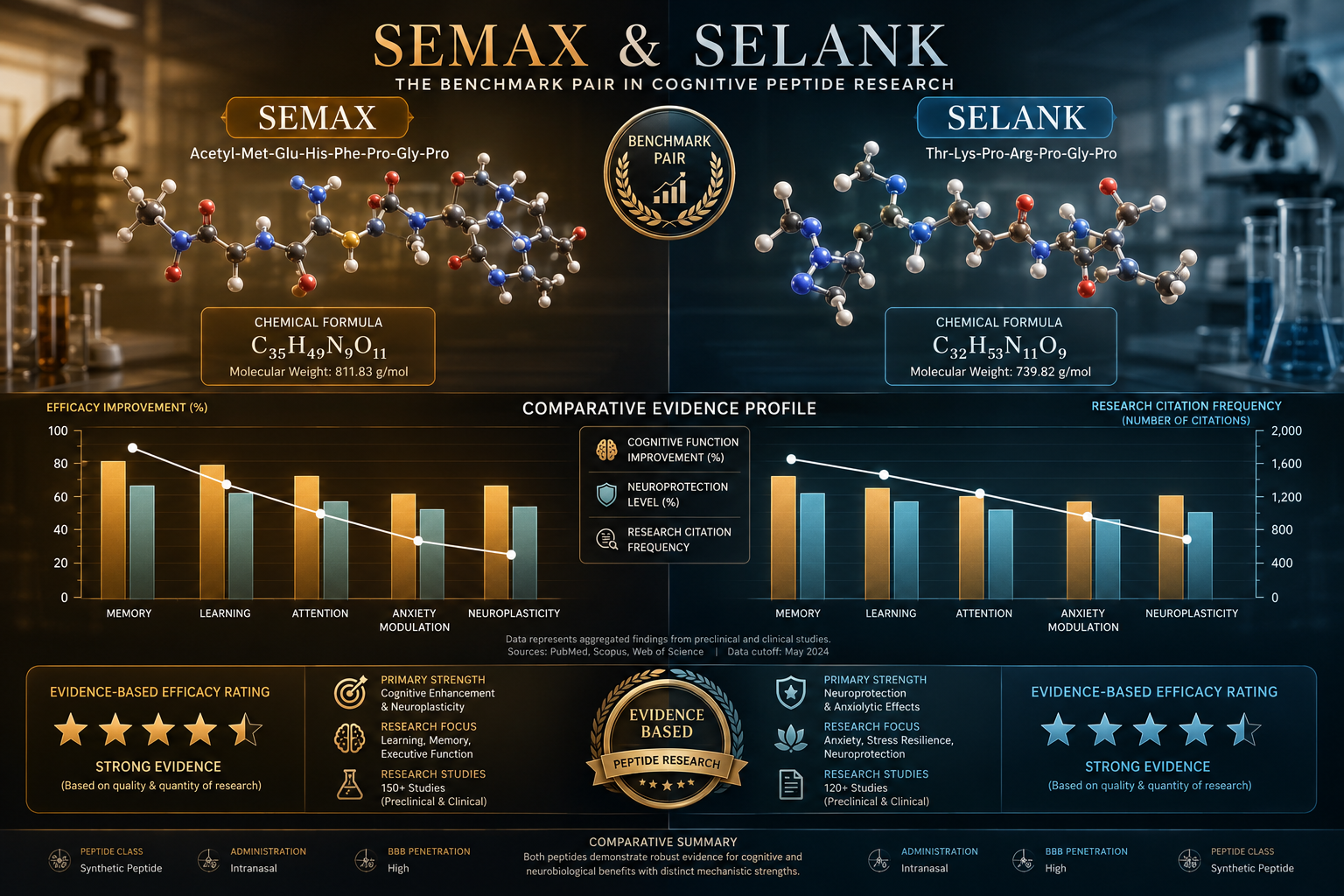
Semax and Selank: The Benchmark Pair in Cognitive Peptide Research

When evaluating the best research peptides for enhanced cognitive function in a comparative review, Semax consistently ranks at the top of the evidence hierarchy. Approved in Russia for stroke recovery and cognitive disorders, Semax is a synthetic heptapeptide derived from ACTH(4-10). Its primary mechanism involves upregulating Brain-Derived Neurotrophic Factor (BDNF) and Nerve Growth Factor (NGF), two proteins essential for neuronal survival, synaptic plasticity, and memory consolidation.

Selank complements Semax through a fundamentally different pathway. Rather than boosting neurotrophic factors directly, Selank modulates GABAergic transmission and enkephalin metabolism, reducing anxiety-driven cognitive interference. This makes the Semax-Selank combination particularly relevant in research models where stress-induced cognitive impairment is a variable.

"The Semax-Selank pairing is widely studied precisely because their mechanisms do not overlap, one builds neural infrastructure while the other clears the psychological noise that disrupts it."

For researchers interested in anxiety-adjacent cognitive research, reviewing Selank side effects and research considerations provides important context before designing protocols.


Semax and Selank: The Benchmark Pair in Cognitive Peptide Research

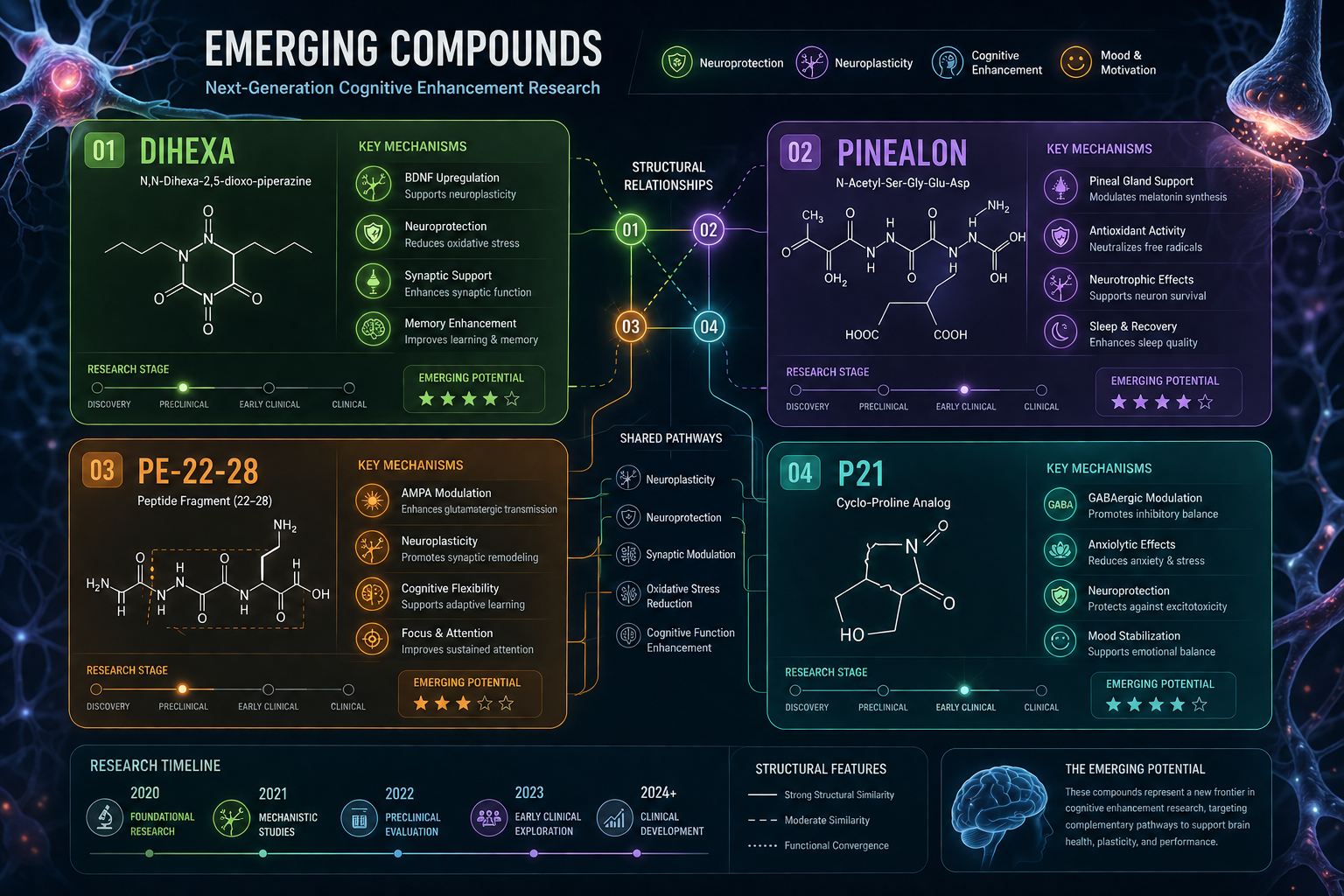
Emerging Compounds: Dihexa, Pinealon, PE-22-28, and P21

The landscape of cognitive peptide research extends well beyond the Semax-Selank pair. Several newer compounds are generating significant preclinical interest.

Dihexa is perhaps the most discussed emerging synaptogenic peptide. It promotes synapse formation at concentrations far lower than traditional neurotrophic factors, with preclinical data suggesting substantial improvements in memory and learning tasks. However, human safety data remains limited, making it strictly a research compound at this stage.

Pinealon, a synthetic tripeptide (Glu-Asp-Arg), has been studied for neuroprotective effects in traumatic brain injury models and age-related memory decline. Its small size allows efficient cellular penetration, and early studies suggest it may support memory consolidation through epigenetic mechanisms.

PE-22-28, a shortened analog of spadin, functions as a TREK-1 potassium channel blocker. By inhibiting this channel, PE-22-28 promotes hippocampal neurogenesis and synaptogenesis, two processes directly tied to long-term memory formation. Its targeted mechanism makes it a compelling subject for future cognitive research.

P21, derived from ciliary neurotrophic factor (CNTF), shows preclinical promise for promoting neurogenesis and protecting against neurodegeneration. Early animal studies indicate potential cognitive benefits, though the compound requires significantly more investigation.

A 2026 study published in Food Chemistry added further depth to this field, identifying five novel peptides from porcine brain hydrolysates, including FPLHP and WGQKPW, that enhance memory by targeting Keap1, p38α, AChE, and BACE1 simultaneously.

For researchers exploring neuroprotective peptides alongside cognitive compounds, humanin and cellular protection research and epithalon peptide research offer relevant mechanistic parallels.


Peptide Primary Mechanism Evidence Level Human Data
Semax BDNF/NGF upregulation High (clinical) Yes (Russia)
Selank GABAergic/enkephalin modulation Moderate-High Yes (Russia)
Dihexa Synaptogenesis promotion Moderate (preclinical) Limited
Pinealon Epigenetic neuroprotection Early preclinical Minimal
PE-22-28 TREK-1 channel blockade Early preclinical None confirmed
P21 CNTF-derived neurogenesis Early preclinical None confirmed

Sourcing, Purity, and Research Protocol Considerations

Any meaningful comparative review of the best research peptides for enhanced cognitive function must address a variable that often receives insufficient attention: peptide purity. Impure compounds introduce confounding variables that invalidate results and create safety concerns in research settings.

Researchers should prioritize suppliers that provide third-party verified purity documentation. Understanding peptide purity testing standards is a foundational step before any cognitive peptide protocol begins. Similarly, understanding reference standards and benchmarking practices ensures that experimental results can be meaningfully compared across studies.

Delivery method also matters. Semax and Selank are typically administered intranasally in research settings, which bypasses first-pass metabolism and allows direct CNS access. Advances in innovative peptide delivery systems are expanding options for researchers working with less bioavailable compounds.

It is also worth noting that none of these peptides hold FDA approval for cognitive enhancement in healthy adults. The most robust human data originates from Russian clinical research, which has not yet been fully replicated in Western randomized controlled trials. Researchers should treat all findings as preliminary until that replication gap is closed.


Sourcing, Purity, and Research Protocol Considerations

Conclusion

The best research peptides for enhanced cognitive function represent a scientifically compelling but still-evolving field. Semax remains the gold standard based on clinical evidence, while Selank provides a complementary anxiolytic mechanism that makes the pair greater than the sum of its parts. Emerging compounds, Dihexa, Pinealon, PE-22-28, and P21, offer intriguing preclinical signals that warrant rigorous follow-up research.

Actionable next steps for researchers:

  • Prioritize compounds with the strongest evidence base (Semax, Selank) before exploring newer analogs.
  • Verify peptide purity through third-party testing before initiating any protocol.
  • Design studies that account for stress variables, where Selank's anxiolytic properties may be a confounding or complementary factor.
  • Monitor the replication of Russian clinical data in Western trials, this will be the defining development for the field in the coming years.
  • Explore neuroendocrine and innate immunity research for broader context on how peptide systems interact with cognitive pathways.

The science is advancing rapidly. Staying current with high-quality sourcing and evidence standards will separate meaningful research from noise.

https://www.puretestedpeptides.com/wp-content/uploads/2026/07/Best-Research-Peptides-for-Enhanced-Cognitive-Function-A-Comparative-Review.png 1024 1536 Pure Tested https://www.puretestedpeptides.com/wp-content/uploads/2026/01/buy-peptides-online.jpg Pure Tested2026-07-03 13:04:422026-07-20 15:01:11Best Research Peptides for Enhanced Cognitive Function: A Comparative Review
Selank vs Semax: Comparing Anxiolytic and Nootropic Peptides, Mechanisms, and Nasal Delivery

Selank vs Semax: Comparing Anxiolytic and Nootropic Peptides, Mechanisms, and Nasal Delivery

June 16, 2026/0 Comments/by Pure Tested

Both Selank and Semax emerged from the same Soviet-era research program, yet they target entirely different neurological pathways — a distinction that makes the comparison between them far more than a matter of preference. Selank vs Semax: Comparing Anxiolytic and Nootropic Peptides, Mechanisms, and Nasal Delivery is one of the most clinically relevant questions in current peptide research, particularly as interest in stress-response biology and cognitive neuroscience continues to grow in 2026.

Detailed () scientific illustration showing two peptide molecular structures side by side labeled Selank and Semax, with

Key Takeaways

  • Selank and Semax are both synthetic heptapeptides developed at the Institute of Molecular Genetics of the Russian Academy of Sciences.
  • Selank primarily modulates GABAergic signaling for anxiolytic effects; Semax upregulates BDNF for cognitive and neuroprotective outcomes.
  • Both peptides are delivered intranasally, bypassing the blood-brain barrier via the olfactory pathway.
  • Selank is approved in Russia for anxiety disorders; Semax is authorized for stroke and cognitive impairment management.
  • Neither peptide has been associated with dependence or significant withdrawal effects in research settings.

Origins and Chemical Structure

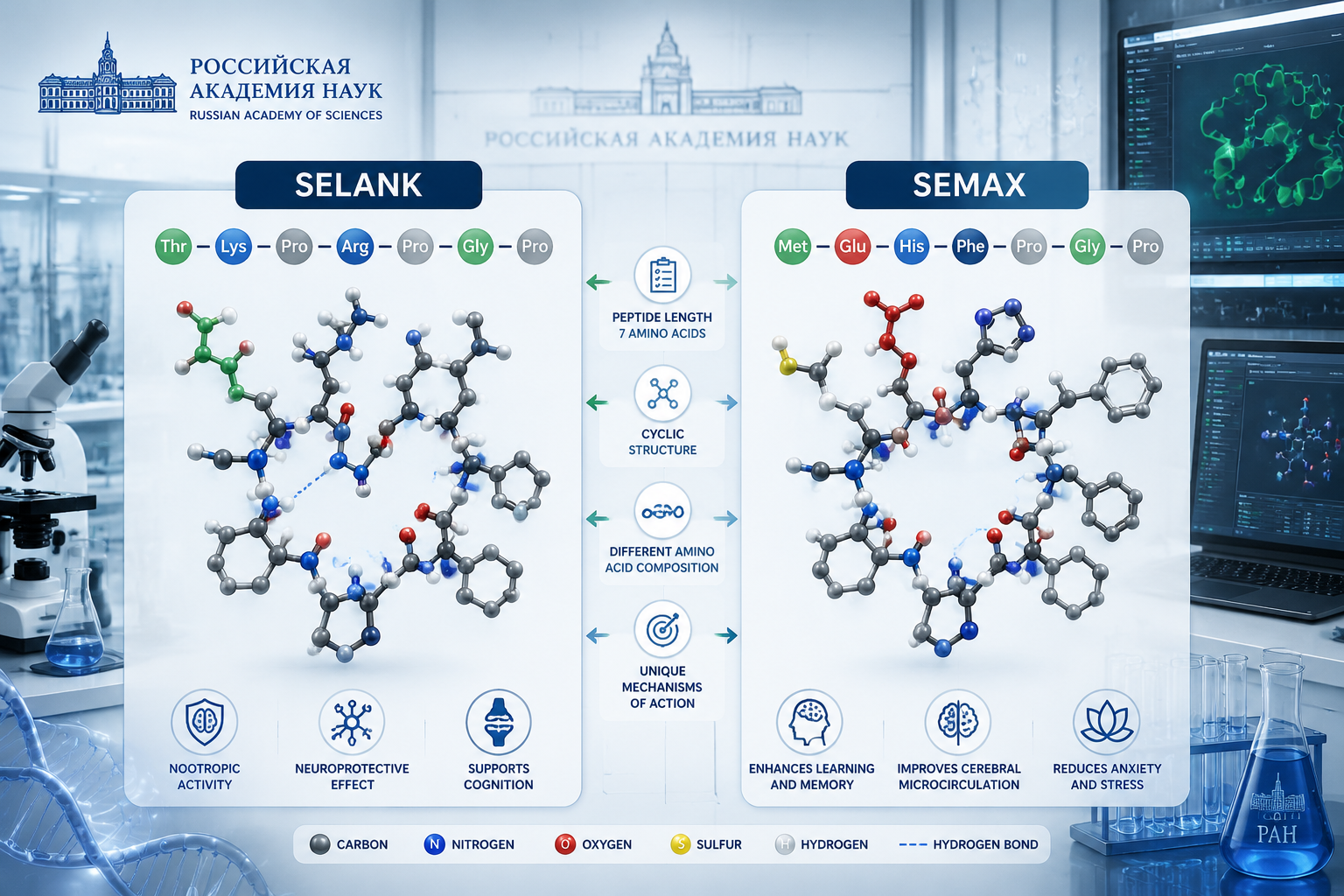
Both peptides are synthetic heptapeptides — chains of seven amino acids — created at the Institute of Molecular Genetics of the Russian Academy of Sciences. Despite sharing a common birthplace, their structural templates are entirely different.

Selank is an analog of tuftsin, a naturally occurring immunomodulatory tetrapeptide. Its sequence is Thr-Lys-Pro-Arg-Pro-Gly-Pro. Researchers extended the tuftsin backbone to improve metabolic stability and CNS penetration.

Semax is derived from the adrenocorticotropic hormone fragment ACTH(4-10), carrying the sequence Met-Glu-His-Phe-Pro-Gly-Pro. The ACTH origin gives Semax a distinct neuroendocrine profile that influences stress-axis biology.

For a broader overview of how these two peptides compare across multiple research dimensions, the Selank and Semax research overview provides useful context.


Mechanisms of Action: Where the Pathways Diverge

This is the core of any meaningful Selank vs Semax: Comparing Anxiolytic and Nootropic Peptides, Mechanisms, and Nasal Delivery analysis.

Mechanisms of Action: Where the Pathways Diverge

Selank: GABAergic Modulation and Enkephalin Metabolism

Selank's primary mechanism involves enhancement of GABA signaling — the brain's main inhibitory neurotransmitter system. By modulating GABAergic tone and influencing enkephalin metabolism, Selank produces anxiolytic effects without the sedation or tolerance risk associated with classical benzodiazepines.

Key research-supported effects include:

  • Reduced anxiety-like behavior in stress models
  • Modulation of interleukin expression, suggesting neuroimmune involvement
  • Stable anxiolytic profile without cognitive blunting

Understanding Selank's potential side effects is equally important when evaluating its research profile.

Semax: BDNF Upregulation and Monoamine Modulation

Semax operates through a fundamentally different mechanism. It upregulates brain-derived neurotrophic factor (BDNF), a protein critical for neuronal survival, synaptic plasticity, and learning. Semax also modulates dopaminergic and serotonergic systems, which underpins its cognitive-enhancing and neuroprotective properties.

Key research-supported effects include:

  • Enhanced memory consolidation and attention
  • Neuroprotection in ischemic models
  • Upregulation of BDNF in hippocampal and cortical regions
Feature Selank Semax
Primary target GABA system BDNF / monoamines
Main effect Anxiolytic Cognitive enhancement
Approved use (Russia) Anxiety, neurasthenia Stroke, cognitive disorders
Onset Minutes to hours Minutes to hours
Duration Several hours 2-4 hours

The neuroendocrine and innate immunity research context is relevant here, as Selank's immunomodulatory properties reflect a broader neuroimmune model.


Nasal Delivery, Bioavailability, and Research Use Cases

Both peptides are administered intranasally, which is not merely a matter of convenience. The intranasal route allows direct access to the central nervous system via the olfactory pathway, bypassing the blood-brain barrier entirely.

Nasal Delivery, Bioavailability, and Research Use Cases

Selank demonstrates a bioavailability of approximately 92.8% via this route — a notably high figure for a peptide compound. Semax also achieves high CNS bioavailability intranasally, though precise figures vary across studies.

"The intranasal route transforms peptide delivery from a systemic challenge into a targeted CNS strategy."

For researchers interested in how delivery systems affect peptide efficacy, innovative peptide delivery systems explores this topic in depth.

Safety profiles for both peptides are favorable in research contexts:

  • Mild nasal irritation is the most commonly reported adverse effect
  • No dependence or withdrawal symptoms have been documented
  • Neither compound shows significant sedative burden

Those researching Selank specifically may also find the detailed Selank side effects analysis and Selank overview useful for building a complete picture.

For researchers sourcing verified compounds, reviewing lab-tested peptides ensures quality and purity standards are met.


Conclusion

Selank vs Semax: Comparing Anxiolytic and Nootropic Peptides, Mechanisms, and Nasal Delivery ultimately comes down to target pathway and research objective. Selank is the stronger candidate for stress-response and neuroimmune models, given its GABAergic and enkephalin-modulating profile. Semax is better suited for cognitive neuroscience and neuroprotection research, driven by BDNF upregulation and monoamine modulation.

Actionable next steps for researchers:

  1. Define the primary research endpoint — anxiety/stress models favor Selank; cognitive and neuroprotective models favor Semax.
  2. Confirm intranasal delivery protocols, as both peptides depend on olfactory pathway absorption for CNS efficacy.
  3. Source only verified, lab-tested compounds to ensure research integrity.
  4. Review the full side-effect and safety literature before designing protocols.

Both peptides represent a compelling frontier in neuropeptide research, and their distinct mechanisms make them complementary rather than interchangeable tools.

https://www.puretestedpeptides.com/wp-content/uploads/2026/06/Selank-vs-Semax-Comparing-Anxiolytic-and-Nootropic-Peptides-Mechanisms-and-Nasal-Delivery.png 1024 1536 Pure Tested https://www.puretestedpeptides.com/wp-content/uploads/2026/01/buy-peptides-online.jpg Pure Tested2026-06-16 13:04:162026-07-20 15:03:00Selank vs Semax: Comparing Anxiolytic and Nootropic Peptides, Mechanisms, and Nasal Delivery
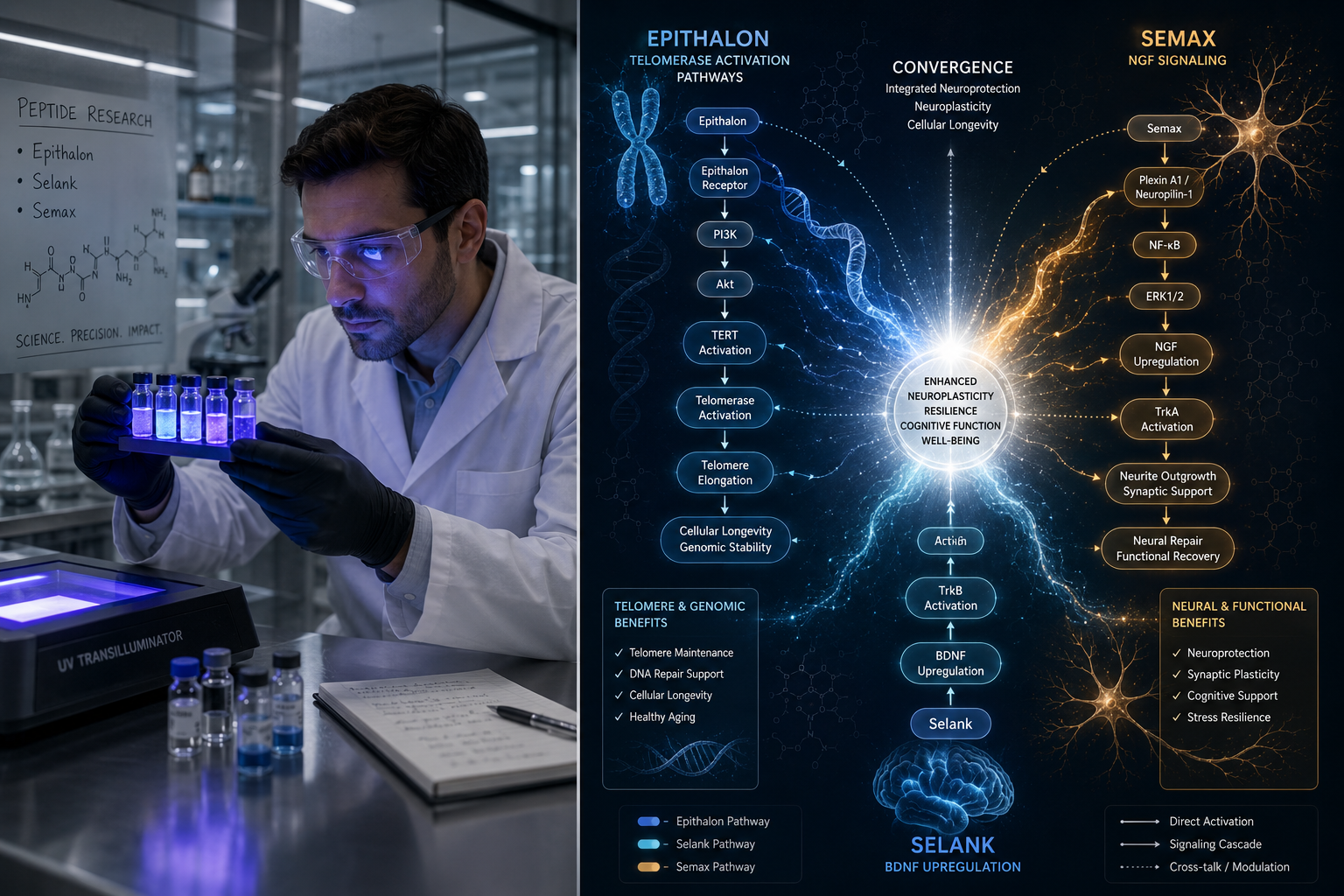
Epithalon, Selank, and Semax: How ‘Longevity’ and Nootropic Peptides Intersect With Telomere Biology and Neurotrophic Pathways

Epithalon, Selank, and Semax: How ‘Longevity’ and Nootropic Peptides Intersect With Telomere Biology and Neurotrophic Pathways

June 14, 2026/0 Comments/by Pure Tested

Telomere length has been linked to biological age in over 200 peer-reviewed studies, yet most longevity conversations treat cellular aging and cognitive decline as separate problems. Epithalon, Selank, and Semax challenge that separation. Research into these three peptides reveals a striking overlap: the same biological machinery that governs how long cells live also shapes how well the brain learns, adapts, and recovers.

Detailed () scientific illustration showing three peptide molecular structures labeled Epithalon, Selank, and Semax arranged

Key Takeaways

  • Epithalon is a tetrapeptide studied for its ability to activate telomerase, the enzyme that rebuilds telomere caps on chromosomes.
  • Selank and Semax are neuropeptides developed in Russia with documented effects on BDNF, NGF, and GABAergic signaling.
  • Telomere shortening and neurotrophic decline share upstream regulators, meaning anti-aging and nootropic peptides may act on overlapping pathways.
  • Preclinical data suggests these peptides influence oxidative stress, a common driver of both cellular aging and neurodegeneration.
  • Purity and sourcing quality are critical variables when evaluating research outcomes for any of these compounds.

Epithalon and Telomere Biology: The Anti-Aging Foundation

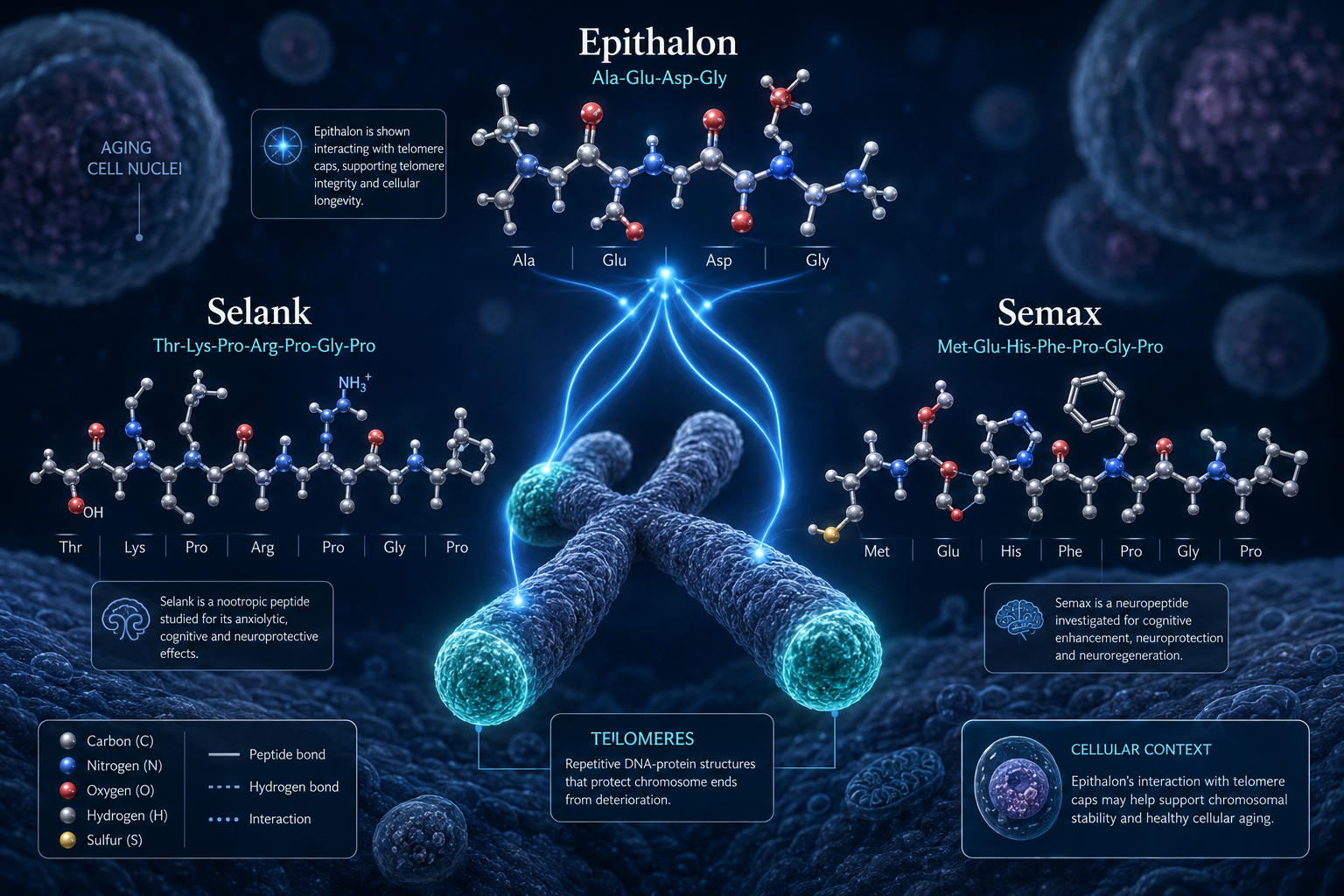
Epithalon (Ala-Glu-Asp-Gly) is a synthetic tetrapeptide derived from epithalamin, a natural extract of the pineal gland. Its primary claim in longevity research rests on telomerase activation. Telomerase is the enzyme responsible for adding protective nucleotide sequences back onto chromosome ends. Without it, telomeres shorten with each cell division until the cell enters senescence or apoptosis.

Key findings from preclinical models include:

  • Increased telomerase activity in somatic cells
  • Extended lifespan in animal studies compared to controls
  • Reduced markers of oxidative DNA damage
  • Restored melatonin secretion patterns linked to circadian regulation

Explore the Epithalon research overview for a detailed breakdown of these findings.

What makes Epithalon particularly relevant to the broader longevity conversation is its downstream effect on reactive oxygen species (ROS). Oxidative stress accelerates telomere erosion and simultaneously damages mitochondria. This creates a direct mechanistic bridge to the mitochondrial longevity research that has gained significant traction in 2026.

"Telomere shortening and mitochondrial dysfunction are not parallel tracks — they are intersecting highways, and peptides like Epithalon may operate at the junction."


Selank and Semax: Nootropic Peptides and Neurotrophic Pathways

Selank and Semax: Nootropic Peptides and Neurotrophic Pathways

While Epithalon targets cellular longevity, Selank and Semax operate primarily in the central nervous system. Understanding how these compounds work helps clarify why researchers increasingly study them alongside anti-aging peptides.

Selank: Anxiety, BDNF, and GABAergic Modulation

Selank (Thr-Lys-Pro-Arg-Pro-Gly-Pro) is a heptapeptide analog of the immunomodulatory peptide tuftsin. Research models show it:

  • Upregulates brain-derived neurotrophic factor (BDNF), which supports neuronal survival and synaptic plasticity
  • Modulates GABAergic transmission, producing anxiolytic effects without sedation
  • Reduces enkephalin degradation, extending the activity of endogenous opioid peptides

For a thorough look at the research profile, see the Selank peptide benefits overview and the Selank side effects research summary.

Semax: NGF Upregulation and Neuroprotection

Semax (Met-Glu-His-Phe-Pro-Gly-Pro) is an ACTH(4-7) analog developed by the Russian Academy of Sciences. Its most studied mechanism involves nerve growth factor (NGF) upregulation in the hippocampus and frontal cortex. NGF is essential for the maintenance of cholinergic neurons, which are among the first casualties of age-related cognitive decline.

Peptide Primary Mechanism Key Neurotrophic Target
Selank GABAergic + enkephalin modulation BDNF
Semax ACTH analog signaling NGF
Epithalon Telomerase activation Indirect via oxidative stress reduction

The Selank and Semax comparison resource provides side-by-side research context for both compounds.


Where Longevity and Nootropic Peptides Converge

The intersection of Epithalon, Selank, and Semax with telomere biology and neurotrophic pathways becomes clearest when examining shared upstream regulators.

Where Longevity and Nootropic Peptides Converge

Three convergence points stand out:

  1. Oxidative stress reduction — Epithalon lowers ROS; Semax and Selank reduce neuroinflammatory markers. Both processes protect telomeres and neurons simultaneously.
  2. Pineal-hypothalamic axis — Epithalon restores melatonin rhythms; Semax modulates ACTH-related pathways. Both touch the neuroendocrine system that governs aging rate.
  3. Neuroplasticity and cellular repair — BDNF and NGF upregulation by Selank and Semax mirrors the cellular maintenance role Epithalon plays at the chromosomal level.

Researchers interested in the broader peptide landscape may also find value in the recovery and tissue biology overview and the aging support product category for context on how these compounds fit within a wider research framework.

Purity remains a non-negotiable variable. Contaminated or underdosed peptides produce unreliable data. Reviewing quality testing protocols before sourcing any research compound is an essential step.


Conclusion

The study of Epithalon, Selank, and Semax illustrates that longevity and nootropic peptides intersect with telomere biology and neurotrophic pathways at multiple, mechanistically meaningful points. Epithalon's telomerase activation reduces the oxidative damage that also undermines BDNF and NGF signaling. Selank and Semax, in turn, support the neuronal health that depends on the same cellular integrity Epithalon aims to preserve.

Actionable next steps for researchers:

  • Review primary literature on telomerase activity and BDNF co-regulation before designing multi-peptide protocols.
  • Prioritize verified, purity-tested sources to ensure data integrity.
  • Examine the Selank and Semax combined research resource alongside Epithalon data to map pathway overlaps.
  • Consider oxidative stress biomarkers as shared endpoints when evaluating outcomes across all three peptides.

The convergence of anti-aging and cognitive research is no longer speculative. The mechanistic evidence in 2026 points toward a unified biology of healthy aging — one where telomere length and neurotrophic signaling are two sides of the same coin.

https://www.puretestedpeptides.com/wp-content/uploads/2026/06/Epithalon-Selank-and-Semax-How-‘Longevity-and-Nootropic-Peptides-Intersect-With-Telomere-Biology-and-Neurotrophic-Pathways.png 1024 1536 Pure Tested https://www.puretestedpeptides.com/wp-content/uploads/2026/01/buy-peptides-online.jpg Pure Tested2026-06-14 13:04:032026-07-20 15:03:16Epithalon, Selank, and Semax: How ‘Longevity’ and Nootropic Peptides Intersect With Telomere Biology and Neurotrophic Pathways
Where to Buy Nootropic Peptides Like Semax and Selank for Research: What Labs Should Look For in a Supplier

Where to Buy Nootropic Peptides Like Semax and Selank for Research: What Labs Should Look For in a Supplier

June 10, 2026/0 Comments/by Pure Tested

Fewer than 30% of research peptide vendors publish batch-specific analytical data — yet that single omission can invalidate months of experimental work. For labs sourcing neuropeptides such as Semax and Selank, supplier selection is not a procurement detail; it is a scientific variable. Understanding where to buy nootropic peptides like Semax and Selank for research, and what labs should look for in a supplier, directly shapes data integrity, reproducibility, and regulatory standing.

Key Takeaways

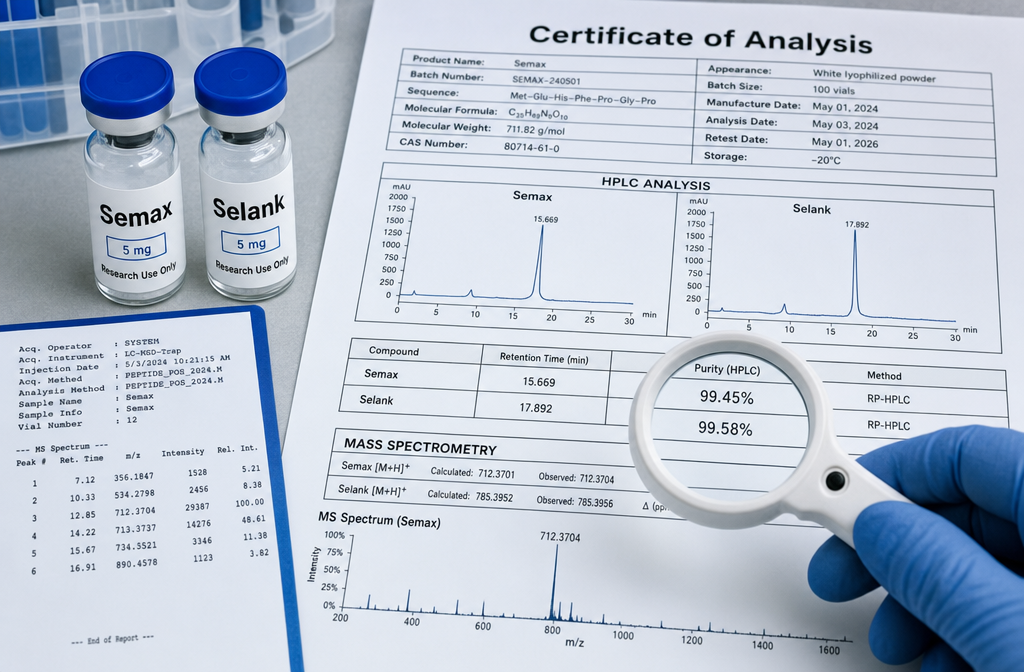
  • Purity documentation of 99% or higher, confirmed by HPLC and mass spectrometry, is the minimum acceptable standard for research-grade Semax and Selank.
  • Batch-specific Certificates of Analysis (CoA) — not generic lot documents — are essential for traceability and reproducibility.
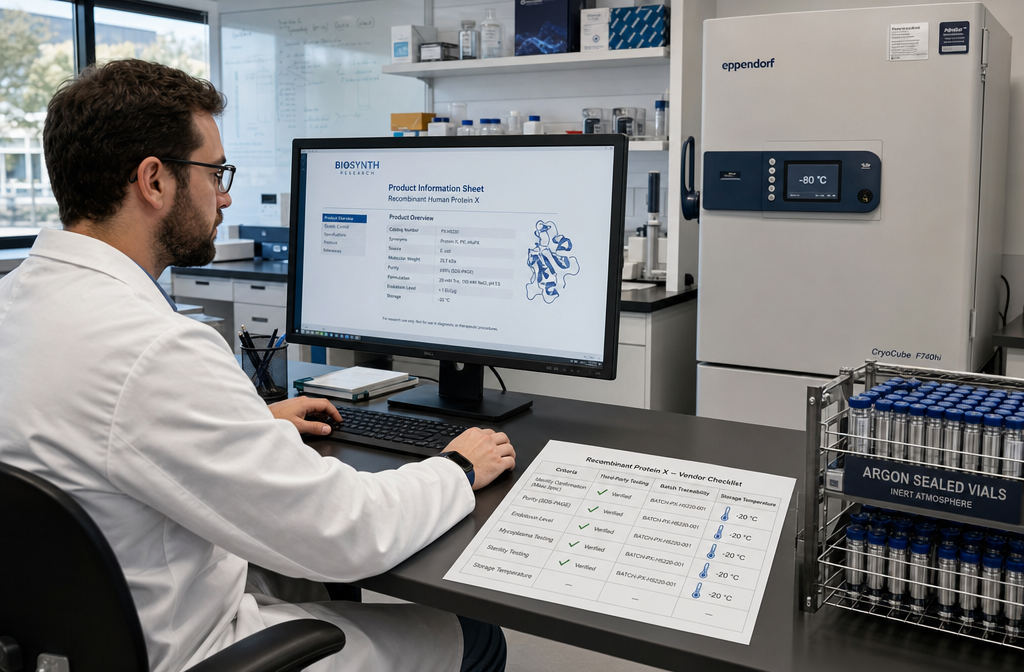
  • Third-party independent testing removes supplier bias and strengthens confidence in reported purity figures.
  • Proper lyophilized storage at -20°C under inert gas is required to maintain peptide stability beyond 12 months.
  • Regulatory labeling ("for research use only") and transparent manufacturing disclosures protect both the lab and the supplier relationship.

Key Takeaways

Why Documentation Is the First Filter When Sourcing Research Peptides

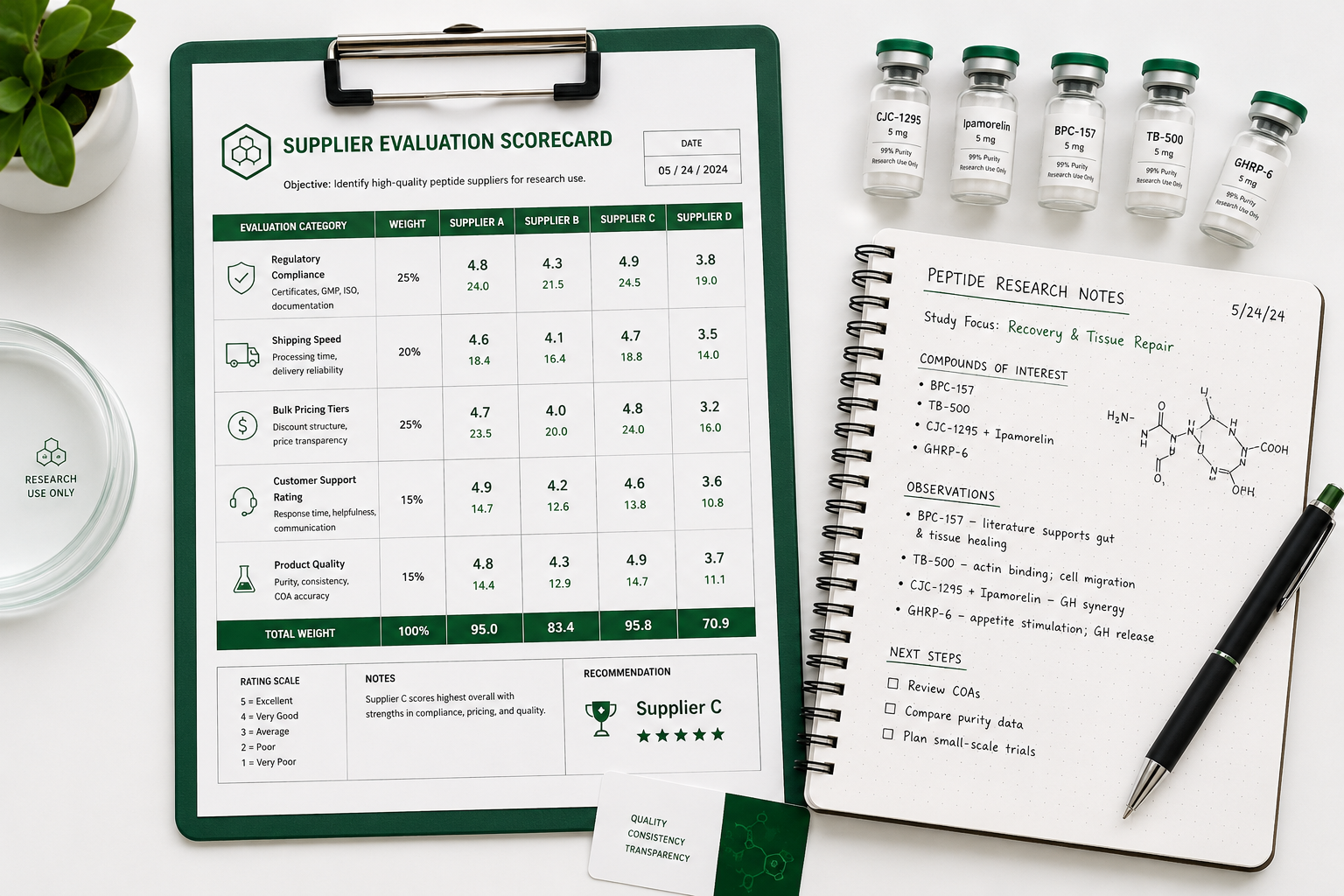
The most common mistake labs make when deciding where to buy nootropic peptides like Semax and Selank for research is prioritizing price before documentation. A low unit cost means nothing if the accompanying analytical record cannot support a publication or regulatory audit.

What valid documentation looks like:

Document Type Minimum Requirement
Certificate of Analysis (CoA) Batch-specific, not generic
HPLC Chromatogram Purity confirmed at 99% or higher
Mass Spectrometry Report Molecular weight and sequence verified
Testing Laboratory Independent, third-party facility

Reputable suppliers provide CoAs tied to individual production batches. A batch-specific CoA details the peptide's confirmed purity, identity, and the analytical methods used — making results traceable across experiments. Generic documents that cover an entire product line rather than a specific lot should raise immediate concern.

Third-party testing is equally non-negotiable. When a supplier uses an independent laboratory rather than an in-house team, the results carry far greater scientific weight. Labs should ask vendors directly: which external facility conducted the analysis, and can the raw data be shared?

For researchers already familiar with sourcing standards in adjacent peptide categories, the BPC-157 research sourcing guide provides a useful parallel framework for evaluating documentation quality.


Why Documentation Is the First Filter When Sourcing Research Peptides

Stability, Storage, and the Nasal Spray Framing Problem

Semax and Selank are frequently marketed in nasal spray formulations. Labs should understand the distinction between a pre-formulated nasal spray and a lyophilized powder intended for reconstitution in research settings.

Lyophilized powder is the preferred format for controlled research because:

  • It supports longer shelf stability — beyond 12 months when stored correctly
  • It allows precise reconstitution volumes for experimental dosing protocols
  • It is less susceptible to microbial contamination than pre-mixed aqueous solutions

Proper storage conditions for lyophilized Semax and Selank require temperatures of -20°C and an inert atmosphere, typically argon, to prevent oxidative degradation. Suppliers who ship peptides without cold-chain packaging or fail to specify storage conditions in their documentation are signaling inadequate quality control.

The nasal spray format, while convenient for some applications, introduces formulation variables that complicate research reproducibility. Labs should clarify with any vendor whether the product is supplied as a research-grade lyophilized compound or as a consumer-oriented finished formulation. For a deeper look at how Selank functions in research contexts, the Selank peptide benefits overview and the Selank and Semax comparison resource both provide useful mechanistic context.

Understanding how reference-grade benchmarks are established also matters here. The Bachem and reference standards resource outlines how pharmaceutical-grade benchmarks are built — a useful standard against which to evaluate supplier claims.


Stability, Storage, and the Nasal Spray Framing Problem

Practical Supplier Evaluation: What Labs Should Look For

When determining where to buy nootropic peptides like Semax and Selank for research, labs benefit from a structured evaluation process rather than relying on vendor marketing copy alone.

Core evaluation criteria:

  • Regulatory labeling: Products must be clearly labeled "for research use only." This protects the purchasing institution and confirms the supplier understands the legal framework.
  • Manufacturing transparency: Reputable vendors disclose synthesis methods, quality control workflows, and sourcing of raw materials.
  • Shipping and availability: Same-day or next-day dispatch options with cold-chain packaging preserve peptide integrity in transit.
  • Bulk pricing structure: Tiered pricing for larger research quantities is standard among established suppliers and supports longer study designs.
  • Customer support quality: Knowledgeable support staff who can answer analytical questions — not just order inquiries — indicate a scientifically credible operation.
  • Reputation and consistency: Peer reviews from other research institutions and consistent batch-to-batch purity records are strong indicators of reliability.

Labs sourcing a broader peptide panel alongside Semax and Selank may also find value in reviewing quality testing protocols and exploring related neuroprotective compounds such as Pinealon to understand how rigorous documentation standards apply across peptide categories.


Conclusion

Sourcing Semax and Selank for research is a decision that carries real scientific consequences. The question of where to buy nootropic peptides like Semax and Selank for research — and what labs should look for in a supplier — ultimately comes down to three priorities: verified purity through independent analytical testing, batch-specific documentation that supports reproducibility, and transparent handling and storage practices that protect compound integrity.

Actionable next steps for labs:

  1. Request batch-specific CoAs with HPLC and MS data before placing any order.
  2. Confirm that testing was conducted by a named, independent third-party laboratory.
  3. Verify cold-chain shipping protocols and confirm lyophilized powder format for research applications.
  4. Review the supplier's regulatory labeling and manufacturing disclosures before committing to a vendor relationship.
  5. Cross-reference peer reviews from other research institutions to validate consistency claims.

A supplier who cannot answer these questions clearly is not yet ready to support serious research.

https://www.puretestedpeptides.com/wp-content/uploads/2026/06/Where-to-Buy-Nootropic-Peptides-Like-Semax-and-Selank-for-Research-What-Labs-Should-Look-For-in-a-Supplier.png 672 1024 Pure Tested https://www.puretestedpeptides.com/wp-content/uploads/2026/01/buy-peptides-online.jpg Pure Tested2026-06-10 13:06:202026-07-20 15:03:33Where to Buy Nootropic Peptides Like Semax and Selank for Research: What Labs Should Look For in a Supplier
Selank vs Semax vs PT-141: A Research-Only Guide to Distinct Neuropeptide Mechanisms, Delivery Routes, and Use Cases

Selank vs Semax vs PT-141: A Research-Only Guide to Distinct Neuropeptide Mechanisms, Delivery Routes, and Use Cases

June 9, 2026/0 Comments/by Pure Tested

Three synthetic heptapeptides. Three completely different receptor targets. Three delivery strategies that reflect fundamentally different pharmacological goals. Researchers who treat Selank, Semax, and PT-141 as interchangeable nootropic compounds are missing the point entirely — and potentially compromising experimental design in the process.

This guide to Selank vs Semax vs PT-141: A Research-Only Guide to Distinct Neuropeptide Mechanisms, Delivery Routes, and Use Cases breaks down what actually separates these compounds at the mechanistic level, where each one is delivered and why, and which research contexts each one fits.

All three compounds are for research purposes only. None should be used for human self-administration outside of approved clinical settings.


Key Takeaways

  • Selank targets the GABAergic system for anxiolytic effects without sedation; Semax modulates BDNF and monoamine pathways for cognitive enhancement.
  • PT-141 (bremelanotide) acts on central melanocortin receptors MC3R and MC4R — a mechanism entirely unrelated to the other two peptides.
  • Selank and Semax are primarily delivered intranasally; PT-141 is delivered via subcutaneous injection.
  • PT-141 received FDA approval in 2019 for HSDD in premenopausal women; Selank and Semax remain unapproved by the FDA.
  • Choosing the right peptide for a given research model requires understanding receptor specificity, not just general "neuropeptide" classification.

Key Takeaways

Mechanisms: What Each Peptide Actually Does

Understanding this research-only guide to distinct neuropeptide mechanisms starts at the receptor level.

Selank: GABAergic Modulation and Anxiolytic Signaling

Selank is a synthetic analog of the endogenous tetrapeptide tuftsin. Its primary mechanism involves modulating gene expression within the GABAergic system — the same neurotransmitter network targeted by benzodiazepines, but without the sedation or dependence risk associated with those drugs. Research models using Selank focus on anxiety reduction, stress response, and immune-adjacent signaling. For researchers studying the Selank side effects profile, the GABAergic mechanism is central to interpreting observed outcomes.

Semax: BDNF Upregulation and Monoamine Influence

Semax works differently. It is believed to enhance cognitive function by upregulating brain-derived neurotrophic factor (BDNF) and influencing dopaminergic and serotonergic systems. This makes Semax relevant to research on neuroplasticity, attention, and neuroprotection rather than anxiety. The two peptides are frequently compared, but their mechanisms are distinct enough that stacking them in a single model requires careful justification.

PT-141: Central Melanocortin Pathway

PT-141 (bremelanotide) operates through an entirely different system. As a synthetic cyclic heptapeptide, it acts as a melanocortin receptor agonist — specifically targeting MC3R and MC4R in the central nervous system. This distinguishes it sharply from PDE5 inhibitors, which work peripherally. PT-141 enhances sexual desire and arousal through central CNS signaling, not vasodilation. Researchers can explore the PT-141 research context and quality controls for sourcing and experimental design guidance.


Delivery Routes: Why Administration Method Matters

Delivery Routes: Why Administration Method Matters

Delivery route is not a minor detail — it directly affects bioavailability, onset time, and CNS penetration. This section of the Selank vs Semax vs PT-141 guide is where researchers often make consequential decisions.

Intranasal Delivery: Selank and Semax

Both Selank and Semax are administered intranasally in research settings. The nasal mucosa offers rich vascularization and direct neural connections to the CNS via the olfactory pathway. This allows for rapid onset and relatively efficient CNS delivery without requiring injection. The intranasal route is also practical for repeated-dosing protocols.

Peptide Primary Delivery CNS Target Onset
Selank Intranasal GABAergic system Rapid
Semax Intranasal BDNF / Dopamine / Serotonin Rapid
PT-141 Subcutaneous injection MC3R / MC4R ~60 min

Subcutaneous Injection: PT-141

PT-141 follows a different path. The FDA-approved route is subcutaneous injection at 1.75 mg as needed. Following injection, peak plasma concentrations are reached approximately 60 minutes post-administration, with effects lasting 6 to 12 hours. Intranasal PT-141 was explored in early research but showed variable absorption and lower bioavailability, leading to its exclusion from the approved protocol.

Researchers comparing peptide delivery strategies may also find value in reviewing BPC-157 nasal spray and capsule evidence as a parallel case study in route-dependent outcomes.


Research Use Cases and Regulatory Status

Research Use Cases and Regulatory Status

Where Each Peptide Fits in Preclinical Research

Selank is best suited for models examining anxiety, stress resilience, and immune modulation. Its clean anxiolytic profile — without sedation — makes it useful in behavioral paradigms where motor function must remain intact.

Semax fits cognitive enhancement, neuroprotection, and neuroplasticity research. Its BDNF-modulating properties make it relevant in models of neurodegeneration or cognitive decline.

PT-141 belongs in research focused on sexual dysfunction, melanocortin signaling, or CNS-mediated arousal pathways. Its 2019 FDA approval for hypoactive sexual desire disorder (HSDD) in premenopausal women — based on two Phase III trials with 1,247 participants — gives it the strongest clinical validation of the three. Common side effects observed in trials included nausea (approximately 40% of participants), flushing, and headache.

Researchers building multi-peptide protocols may also want to examine how other neuropeptides interact with overlapping systems. The IPA-Sermorelin stack research overview and peptide supplier comparison guide offer useful context for sourcing decisions and protocol design.

Regulatory Landscape in 2026

As of 2026, Semax and Selank remain unapproved by the FDA for any medical use in the United States. They are available for research purposes only. PT-141 holds FDA approval under the brand name Vyleesi, though research-grade material is subject to different handling and documentation standards. Researchers should always verify certificates of analysis — the COA verification resource provides guidance on what to look for.

For those exploring adjacent peptide categories, GHK-Cu copper peptide sourcing guidance and AOD-9604 research method notes illustrate how traceability standards apply across different peptide classes.


Conclusion

The comparison at the heart of Selank vs Semax vs PT-141: A Research-Only Guide to Distinct Neuropeptide Mechanisms, Delivery Routes, and Use Cases reveals three peptides with almost nothing in common beyond their heptapeptide structure. Selank calms through GABAergic modulation. Semax stimulates cognitive pathways via BDNF and monoamines. PT-141 activates melanocortin receptors to influence central arousal signaling.

Actionable next steps for researchers:

  • Match peptide selection to the specific receptor system under investigation — do not group these compounds by structural similarity alone.
  • Account for delivery route when designing dosing intervals and bioavailability assumptions.
  • Verify regulatory status and obtain certificates of analysis before initiating any research protocol.
  • Review published clinical data on PT-141 as a benchmark for what rigorous peptide trial design looks like, then apply those standards to Selank and Semax research where Western-accessible data remains limited.

Precision in peptide research begins with precision in compound selection.

https://www.puretestedpeptides.com/wp-content/uploads/2026/06/Selank-vs-Semax-vs-PT-141-A-Research-Only-Guide-to-Distinct-Neuropeptide-Mechanisms-Delivery-Routes-and-Use-Cases.png 1024 1536 Pure Tested https://www.puretestedpeptides.com/wp-content/uploads/2026/01/buy-peptides-online.jpg Pure Tested2026-06-09 13:05:202026-07-20 15:03:36Selank vs Semax vs PT-141: A Research-Only Guide to Distinct Neuropeptide Mechanisms, Delivery Routes, and Use Cases
×

Helpful Links

  • My account
  • Cart
  • Checkout
  • Refund and Returns Policy
  • Privacy Policy
  • SMS Privacy Policy
  • Login
  • My Account
  • Logout

USA Made Lab Tested Peptides

All products are sold for research, laboratory, or analytical purposes only, and are not for human consumption


Pure Tested Peptides is a chemical supplier. Pure Tested Peptides is not a compounding / chemical compounding facility as defined under 503A of the Federal Food, Drug, and Cosmetic act. Pure Tested Peptides is not an outsourcing facility as defined under 503B of the Federal Food, Drug, and Cosmetic act.

The statements made within this website have not been evaluated by the US Food and Drug Administration. The products we offer are not intended to diagnose, treat, cure or prevent any disease.

Human/Animal Consumption Prohibited. Laboratory/In-Vitro Experimental Use Only

Scroll to top Scroll to top Scroll to top