Call or Text 727-513-9780
  • Shopping Cart Shopping Cart
    0Shopping Cart
Pure Tested Peptides | America's most trusted Peptides for sale online
  • Peptides for sale
    • Oral Peptides for sale
      • Peptide Capsules for sale
      • BPC 157 Capsules 1000mcg
      • SLU-PP-332 Capsules | 1000 mcg
      • 5-Amino-1MQ 50mg Capsules
      • Tesofensine 500mcg
    • All Peptides for sale
    • Peptide Sprays
      • BPC 157 Nasal Spray Kit
      • BPC-157 TB500 Nasal Spray Kit
      • Semax Nasal Spray 10mg
      • Selank – Nasal Spray Kit – 10mg
      • Epithalon 50MG Nasal Spray Kit
      • Ipamorelin 10mg Nasal Spray
      • Klow Nasal Spray (BPC-157 + TB-500 + GHK-Cu + KPV) | 80mg
      • Hulk Nasal Spray Tesa / Ipa Blend 6/3 MG
      • Klow Nasal Spray
      • NAD + 500 mg Nasal Spray
      • PT-141 Nasal Spray Kit
    • GHRH Peptides
      • Ipa Peptides
      • CJC-1295 Peptides
        • CJC-1295 with DAC 5 mg
        • CJC-1295 without DAC 5 mg
        • CJC-1295 Ipa 10mg
      • Tesa Peptides
        • Tesa Peptide
        • Tesa 20 mg
    • GHK-Cu Peptides
      • All GHK-Cu Peptides
      • GHK-Cu 100mg
      • KLOW Peptide Blend – Buy KLOW blend online
    • BPC Peptides
      • All BPC Peptides
      • BPC-157
      • BPC-157 TB-500
      • BPC 157 capsules 1000mcg
    • SLU-PP-332 Peptides
      • All SLU-PP-332 Peptides
      • SLU-PP-332 5mg
    • GLP3 Peptides
    • PT-141 Peptides
      • PT-141 Peptides for sale
      • PT-141 10mg
      • PT-141 Nasal Spray
    • CAG Peptides
      • Lipo-C Peptide Blend
      • CAG 5mg
      • CAG 10mg
    • MOTS-C Peptides
      • MOTS-C Peptides for sale
      • MOTS-c peptide
      • MOTS-c 10mg *6 pack*
    • 5 Amino 1MQ Peptides
      • 5 Amino 1MQ Peptides for sale
      • 5-Amino-1MQ 50mg Capsules
      • 5-Amino-1MQ 5mg
    • Epithalon Peptides
      • Epithalon Peptides for sale
      • Epithalon 10mg
      • Epithalon 50mg
  • Shop
    • GLPs
      • 5-Amino-1MQ 50mg Capsules
      • 5-Amino-1MQ 5mg
      • L-Carnitine 500mg/ml
      • Tesofensine 500mcg
      • SLU-PP-332 5mg
      • MOTS-c 10mg *6 pack*
    • Epithalon & BPC Peptides
      • Epithalon 10mg
      • Epithalon 50mg
      • BPC-157
      • BPC 157 capsules 1000mcg
      • BPC-157 TB-500
      • BPC-157 TB500 Nasal Spray Kit
      • BPC 157 Nasal Spray Kit
    • BPC TB-500 & NAD+ Peptides
      • NAD+ 500 mg
      • KLOW Peptide Blend – Buy KLOW blend online
      • GLOW Peptide Blend
      • TB 500 5mg
      • BPC 157 capsules 1000mcg – Supplement
      • BPC 157 Nasal Spray Kit
      • BPC-157
      • BPC-157 TB500 Nasal Spray Kit
      • BPC-157 TB-500
      • BPC 157 capsules 1000mcg
    • LL-37 Peptide
      • LL-37 10 mg
    • MOTS-C & Selank
      • MOTS-c peptide
      • Selank 10mg
    • GHK Peptides
      • GHK-Cu 100mg
      • GLOW Peptide Blend
      • KLOW Peptide Blend – Buy KLOW blend online
  • COAs
  • Wholesale
    • Wholesale Peptides for sale
  • PTP FAQ
  • Affiliates
    • Selank Peptide: Advanced Pharmacological Mechanisms Underlying Its Anxiolytic and Nootropic Effects in Research
      • 5-Amino-1MQ Peptide: Detailed Mechanisms of NNMT Inhibition and Its Impact on Cellular Metabolism Research
        • MOTS-C Peptide: Unraveling Its Role in Mitochondrial Dynamics and Energy Metabolism Research
          • Epithalon Peptide and Telomerase Regulation: Investigating Its Impact on Cellular Senescence and Lifespan Research Models
            • GLP2-T vs GLP2 Tirz Peptide: Understanding the Naming, Mechanistic Nuances, and Research Implications for Gut Health
      • Peptides and Polypeptides in Modern Pharmacology: What Research on Metoprolol, Prednisone, and Amlodipine Reveals
        • Polypeptide Peptides vs NSAIDs: What Naproxen and Diclofenac Teach Tissue-Repair Researchers About BPC‑157 and TB‑500
          • Peptides and Polypeptides in Endocrine Pharmacology: How GLP-1, GLP-2, and GLP-3 Retatrutide Differ From Classic Drugs Like Prednisone and Amlodipine
          • 5‑Amino‑1MQ Peptide and NNMT Inhibition: How It Compares With Statins Like Atorvastatin in Adipose and Lipid Metabolism Research
      • Enclomiphene, Estrogen Receptor Signaling, and Luteinizing Phase Biology: What Hormone Researchers Should Measure
        • Mesenchymal Stem Cells, BPC‑157, and GHK‑Cu: How Tissue Repair Peptides Compare With Classic NSAIDs Like Naproxen in Injury Models
          • Peptide Calculator Use Cases Beyond Growth Hormone: Working Through GLP‑3 Retatrutide, MOTS‑c, and BPC‑157 Research Dosing
        • Polypeptide Peptides in Endocrine and Metabolic Pharmacology: Lessons From Amlodipine, Prednisone, and Metoprolol
        • Peptides Calculator for Advanced Blends: Worked Examples for Tesamorelin, CJC‑1295, and Ipamorelin Stacks
          • Peptides and Polypeptides in Human Physiology: How Molecular Size Shapes Research Applications
            • Selank Peptide: Advanced Pharmacological Mechanisms Underlying Its Anxiolytic and Nootropic Effects in Research
          • 5-Amino-1MQ Peptide: Detailed Mechanisms of NNMT Inhibition and Its Impact on Cellular Metabolism Research
            • MOTS-C Peptide: Unraveling Its Role in Mitochondrial Dynamics and Energy Metabolism Research
              • Epithalon Peptide and Telomerase Regulation: Investigating Its Impact on Cellular Senescence and Lifespan Research Models
                • GLP2-T vs GLP2 Tirz Peptide: Understanding the Naming, Mechanistic Nuances, and Research Implications for Gut Health
                  • Peptides and Polypeptides in Endocrine Pharmacology: How GLP-1, GLP-2, and GLP-3 Retatrutide Differ From Classic Drugs Like Prednisone and Amlodipine
                    • Polypeptide Peptides vs NSAIDs: What Naproxen and Diclofenac Teach Tissue-Repair Researchers About BPC‑157 and TB‑500
                      • Peptides and Polypeptides in Modern Pharmacology: What Research on Metoprolol, Prednisone, and Amlodipine Reveals
                        • 5‑Amino‑1MQ Peptide and NNMT Inhibition: How It Compares With Statins Like Atorvastatin in Adipose and Lipid Metabolism Research
                        • Enclomiphene, Estrogen Receptor Signaling, and Luteinizing Phase Biology: What Hormone Researchers Should Measure
                        • Mesenchymal Stem Cells, BPC‑157, and GHK‑Cu: How Tissue Repair Peptides Compare With Classic NSAIDs Like Naproxen in Injury Models
                        • Peptide Calculator Use Cases Beyond Growth Hormone: Working Through GLP‑3 Retatrutide, MOTS‑c, and BPC‑157 Research Dosing
                        • Polypeptide Peptides in Endocrine and Metabolic Pharmacology: Lessons From Amlodipine, Prednisone, and Metoprolol
                        • Peptides Calculator for Advanced Blends: Worked Examples for Tesamorelin, CJC‑1295, and Ipamorelin Stacks
                        • Peptides and Polypeptides in Human Physiology: How Molecular Size Shapes Research Applications
                        • Selank Peptide: Advanced Pharmacological Mechanisms Underlying Its Anxiolytic and Nootropic Effects in Research
                        • MOTS-C Peptide: Unraveling Its Role in Mitochondrial Dynamics and Energy Metabolism Research
                        • Peptides and Polypeptides in Modern Pharmacology: What Research on Metoprolol, Prednisone, and Amlodipine Reveals
                        • Peptides and Polypeptides in Endocrine Pharmacology: How GLP-1, GLP-2, and GLP-3 Retatrutide Differ From Classic Drugs Like Prednisone and Amlodipine
                        • 5-Amino-1MQ Peptide: Detailed Mechanisms of NNMT Inhibition and Its Impact on Cellular Metabolism Research
                        • Mesenchymal Stem Cells, BPC‑157, and GHK‑Cu: How Tissue Repair Peptides Compare With Classic NSAIDs Like Naproxen in Injury Models
                        • Peptide Calculator Use Cases Beyond Growth Hormone: Working Through GLP‑3 Retatrutide, MOTS‑c, and BPC‑157 Research Dosing
                        • GLP2-T vs GLP2 Tirz Peptide: Understanding the Naming, Mechanistic Nuances, and Research Implications for Gut Health
                        • Polypeptide Peptides in Endocrine and Metabolic Pharmacology: Lessons From Amlodipine, Prednisone, and Metoprolol
                        • Polypeptide Peptides vs NSAIDs: What Naproxen and Diclofenac Teach Tissue-Repair Researchers About BPC‑157 and TB‑500
                        • Peptides and Polypeptides in Human Physiology: How Molecular Size Shapes Research Applications
                        • Peptides Calculator for Advanced Blends: Worked Examples for Tesamorelin, CJC‑1295, and Ipamorelin Stacks
                        • 5‑Amino‑1MQ Peptide and NNMT Inhibition: How It Compares With Statins Like Atorvastatin in Adipose and Lipid Metabolism Research
                        • Enclomiphene, Estrogen Receptor Signaling, and Luteinizing Phase Biology: What Hormone Researchers Should Measure
                        • Epithalon Peptide and Telomerase Regulation: Investigating Its Impact on Cellular Senescence and Lifespan Research Models
                        • Best research protocol Klow blend
                        • best time to take BPC-157
                        • best time to take DSIP (Delta Sleep Inducing Peptide)
                        • best time to take CJC-1295
                        • best time to take AOD-9604
                        • best time to take Follistatin 344
                        • best time to take Ipamorelin
                        • best time to take MK-677 (Ibutamoren)
                        • best time to take Ligandrol (LGD-4033) — research compound
                        • best time to take Ostarine (MK-2866) — research compound
                        • best time to take GHK-CU
                        • best time to take TB-500
                        • best time to take MOTS-c
                        • best time to take Semax
                        • best time to take RAD-140 (Testolone) — research compound
                        • best time to take Thymosin Alpha-1
                        • best time to take PEG-MGF
                        • Biolife Plasma, Octapharma Plasma, and Research Peptides: How Plasma Donation Labs Differ From Peptide Suppliers
                        • best time to take YK-11 — research compound
                        • best time to take PT-141 (Bremelanotide)
                        • Best research protocol Klow blend
                        • 5-Amino-1MQ and MOTS-C Synergy: Metabolic Signaling, Mitochondria, and Research Design
                        • BPC-157 and TB-500: Investigating Their Combined Effects on Angiogenesis and Cellular Migration in Tissue Repair Models
                        • BPC-157 Peptide: Gut Barrier Function, Inflammation, and Tissue-Recovery Research
                        • 5‑Amino‑1MQ and MOTS‑c Synergy in Metabolic Research: Designing NNMT and Mitochondrial Biogenesis Stacks
                        • CJC-1295 with DAC vs. Without DAC: Half-Life, Release Kinetics, and Research Implications
                        • CJC‑1295 with DAC vs. Without DAC: Expanding on Half‑Life Differences Using Tesamorelin and Ipamorelin Blend Case Studies
                        • Collagen Biology and Copper‑Binding Peptides: How GHK‑Cu, Glow Blend, and Klow Blend Interact with Skin and Connective Tissue
                        • Collagen Biology and Regenerative Peptides: How GHK‑Cu, Glow Blend, and Klow Blend Affect Extracellular Matrix Research
                    • DNA, Telomeres, and Longevity Peptides: Positioning Epithalon and MOTS‑c in Genetic Aging Research
                      • Enclomiphene Citrate: serm Mechanism, Testosterone Research, and Stack Compatibility
                        • Enclomiphene vs Enclomiphene Citrate: Formulation, Bioavailability, and Research Distinctions
                        • Epithalon Peptide Research: Telomerase Activation, Aging, and Pineal Gland Function
                        • Estrogen Receptor Signaling and Enclomiphene: How Selective Modulators Compare with Classic Polypeptide Hormones
                        • GHK-Cu Peptide: Advanced Mechanisms in Extracellular Matrix Remodeling and Wound Healing Research
                        • GHK-Cu Peptide: Collagen Synthesis, Wound Repair, and Skin-Barrier Research Models
                        • GLP-1 vs GLP-3 vs GLP-2: Peptide Classification and Research Applications
                        • GLP-2 Peptide Research Guide: Gut Barrier Function, Nutrient Absorption, and Intestinal Recovery Models
                        • GLP-3 Retatrutide vs. GLP-1 Drugs: What Triple-Agonist Biology Changes in Research Models
                        • Ipamorelin and Tesamorelin Combination: Synergistic GH Secretagogue Research and Dosing Protocols
                        • GLP2 Tirz Peptide: What It Is, Why the Name Exists, and How Researchers Should Interpret It
                        • Klow Blend Peptide Nasal Spray: What the Formulation Is Trying to Do in Cognitive Research
                        • Mitochondria, NNMT Inhibition, and Peptide Modulators: Where MOTS‑c and 5‑Amino‑1MQ Fit in Cellular Energy Research
                        • MOTS-c Peptide: Mitochondrial Function, Energy Metabolism, and What Researchers Measure
                        • MOTS-c vs. 5-Amino-1MQ: Which Metabolic Research Questions Each Compound Actually Answers
                        • Nasal Spray Peptides: Bioavailability, Administration, and Semax/Selank Research Applications
                        • PT-141 Peptide Research: Mechanism of Action and Melanocortin Receptor Signaling
                        • Retatrutide for Research: Mechanism, Structure, and GLP-1/GLP-3 Dual Action
                        • Retatrutide for Obesity and Type 2 Diabetes: What the Latest Trial Data Suggest
                        • Tesofensine Peptide Research: Mechanism, Appetite Suppression, and Neuropeptide Y Pathways
  • Contact
    • Contact Customer Service
    • Text Customer Support
  • About US
  • Shop all peptides
  • Affiliate Program
    • Affiliate Signup
  • Login / Register Login / Register Page Link Login / Register Page Link
  • Click to open the search input field Click to open the search input field Search
  • Menu Menu

Tag Archive for: semax nasal spray

Semax and Selank Nasal Sprays vs Classic Anxiolytics: How Lorazepam and Buspirone Differ From Peptide-Based Nootropics in Bench Studies

Semax and Selank Nasal Sprays vs Classic Anxiolytics: How Lorazepam and Buspirone Differ From Peptide-Based Nootropics in Bench Studies

September 22, 2026/0 Comments/in Uncategorized/by

Roughly 40 million adults in the United States live with an anxiety disorder, yet the pharmacological toolkit available to clinicians has barely expanded beyond benzodiazepines and serotonergic agents for decades. Against that backdrop, a growing number of researchers and peptide-oriented clinics are examining whether nasal-spray peptides such as Semax and Selank could occupy a different mechanistic lane. The comparison of Semax and Selank nasal sprays vs classic anxiolytics, specifically how lorazepam and buspirone differ from peptide-based nootropics in bench studies, is now a live question in pharmacology, even if the regulatory picture remains far from settled.

Key Takeaways

  • Lorazepam is a direct positive allosteric modulator at GABA-A receptors; buspirone is a 5-HT1A partial agonist. Neither relies on enkephalinase inhibition, which is a shared mechanism of both Semax and Selank.
  • Selank shows anxiolytic effects in preclinical elevated plus maze models without the sedation or motor impairment associated with benzodiazepines like lorazepam.
  • In small human trials, Selank produced Hamilton Anxiety Rating Scale reductions comparable to medazepam and phenazepam, but the total evidence base covers roughly 192 patients, far below Phase 3 standards.
  • Semax is primarily supported by cognitive and neuroprotective data; its human anxiety evidence is essentially absent, distinguishing it sharply from buspirone's dedicated GAD trial record.
  • Both peptide sprays remain classified as research compounds in 2026, with no FDA or EMA approval for any anxiety indication.

Mechanistic Foundations: Where Lorazepam, Buspirone, and Peptides Diverge
Mechanistic Foundations: Where Lorazepam, Buspirone, and Peptides Diverge

Understanding the comparison of Semax and Selank nasal sprays vs classic anxiolytics requires starting at the receptor level, because the mechanisms are genuinely distinct rather than merely variations on the same theme.

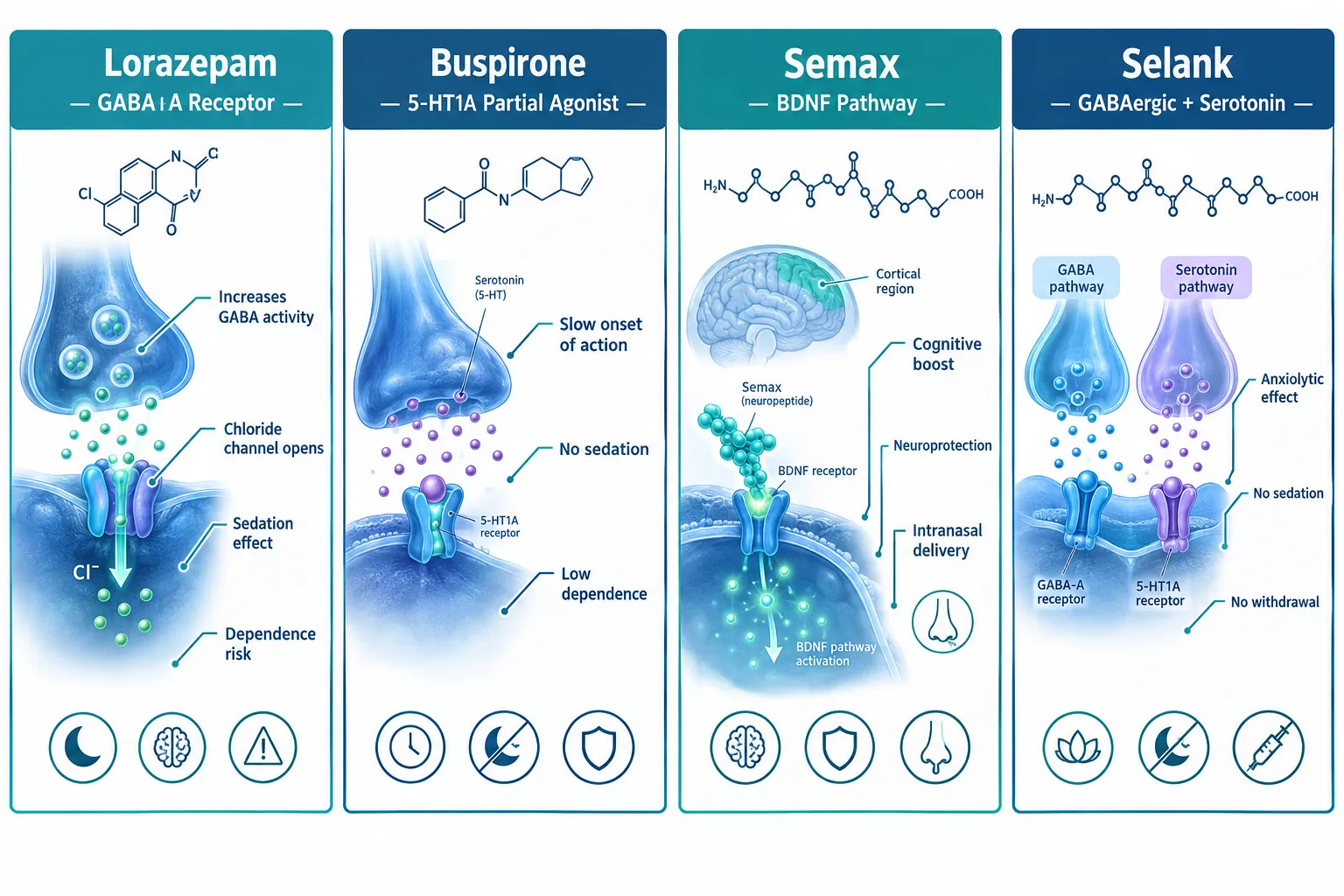
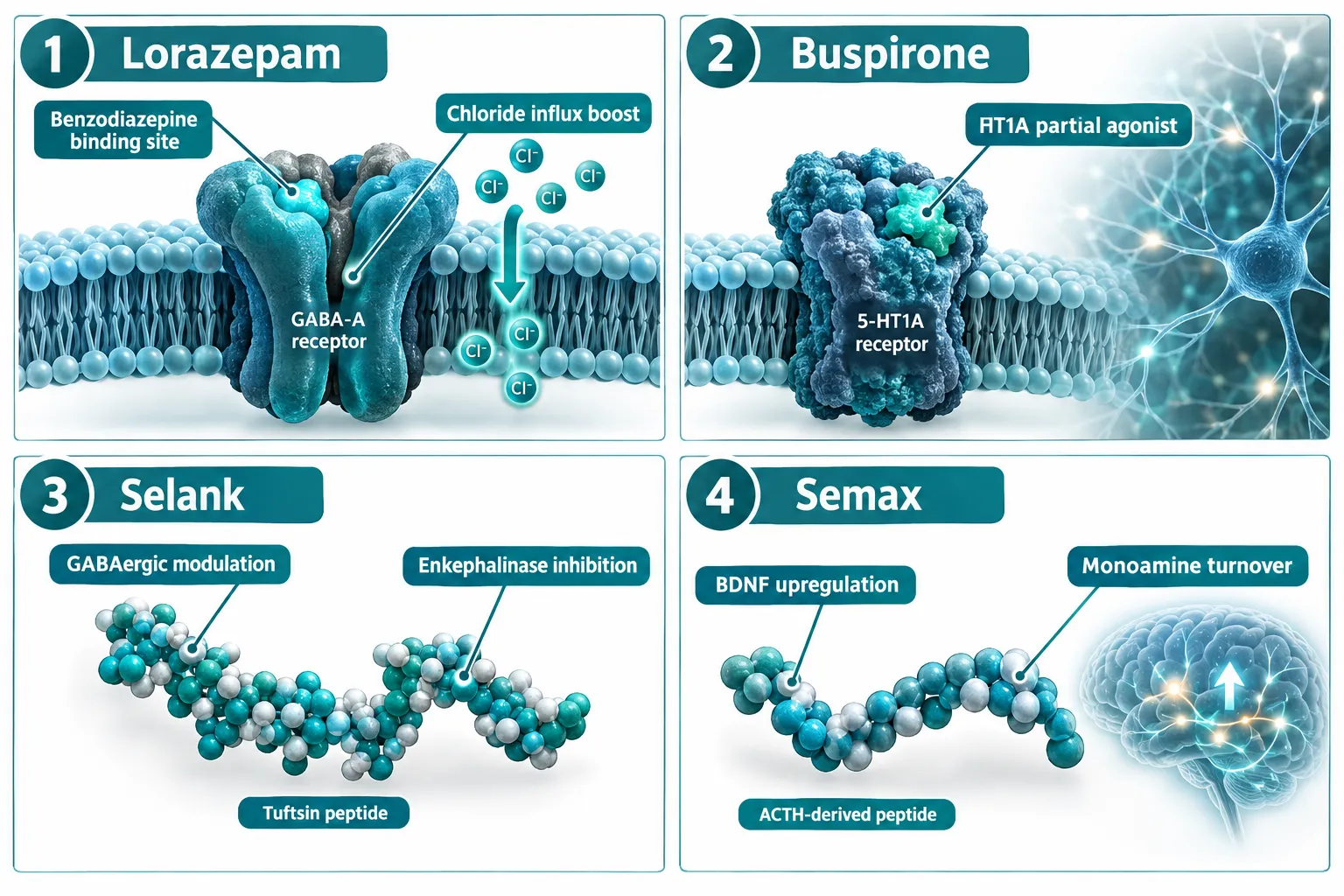
Lorazepam is a benzodiazepine that acts as a direct positive allosteric modulator at the GABA-A receptor. By binding to the benzodiazepine site, it amplifies chloride influx into neurons, producing rapid neural inhibition. The result is fast-acting anxiolysis, sedation, and muscle relaxation, but also tolerance, physical dependence, and cognitive slowing with sustained use.

Buspirone works through an entirely different pathway. As a 5-HT1A partial agonist, it modulates serotonergic tone without touching GABA-A receptors directly. It also carries mild dopaminergic activity. Because it lacks the sedative-hypnotic profile of benzodiazepines, it became a preferred option for generalized anxiety disorder (GAD), though its delayed onset of two to four weeks is a clinical limitation.

Selank is a synthetic heptapeptide analogue of tuftsin (Thr-Lys-Pro-Arg-Pro-Gly-Pro), engineered to produce anxiolytic effects through two overlapping mechanisms: GABAergic gene expression modulation and inhibition of enkephalin-degrading enzymes (enkephalinases). In vitro bench data place Selank's approximate IC50 for human serum enkephalinase inhibition at around 20 µM.

Semax, derived from the ACTH(4-7) sequence, targets monoamine turnover and promotes brain-derived neurotrophic factor (BDNF) upregulation rather than direct GABAergic or serotonergic receptor binding. Its in vitro enkephalinase IC50 is approximately 10 µM, slightly more potent than Selank at this enzyme level, though the clinical relevance of this difference is unknown.

"The peptides modulate upstream neurotrophic and neuropeptidergic systems, while classic anxiolytics work at well-defined receptor targets with predictable sedative and dependence profiles."

This upstream vs. direct-receptor distinction is the central mechanistic story when comparing peptide-based nootropics to lorazepam and buspirone in bench studies.


Bench and Preclinical Evidence: What Animal Models and Cellular Studies Show
Bench and Preclinical Evidence: What Animal Models and Cellular Studies Show

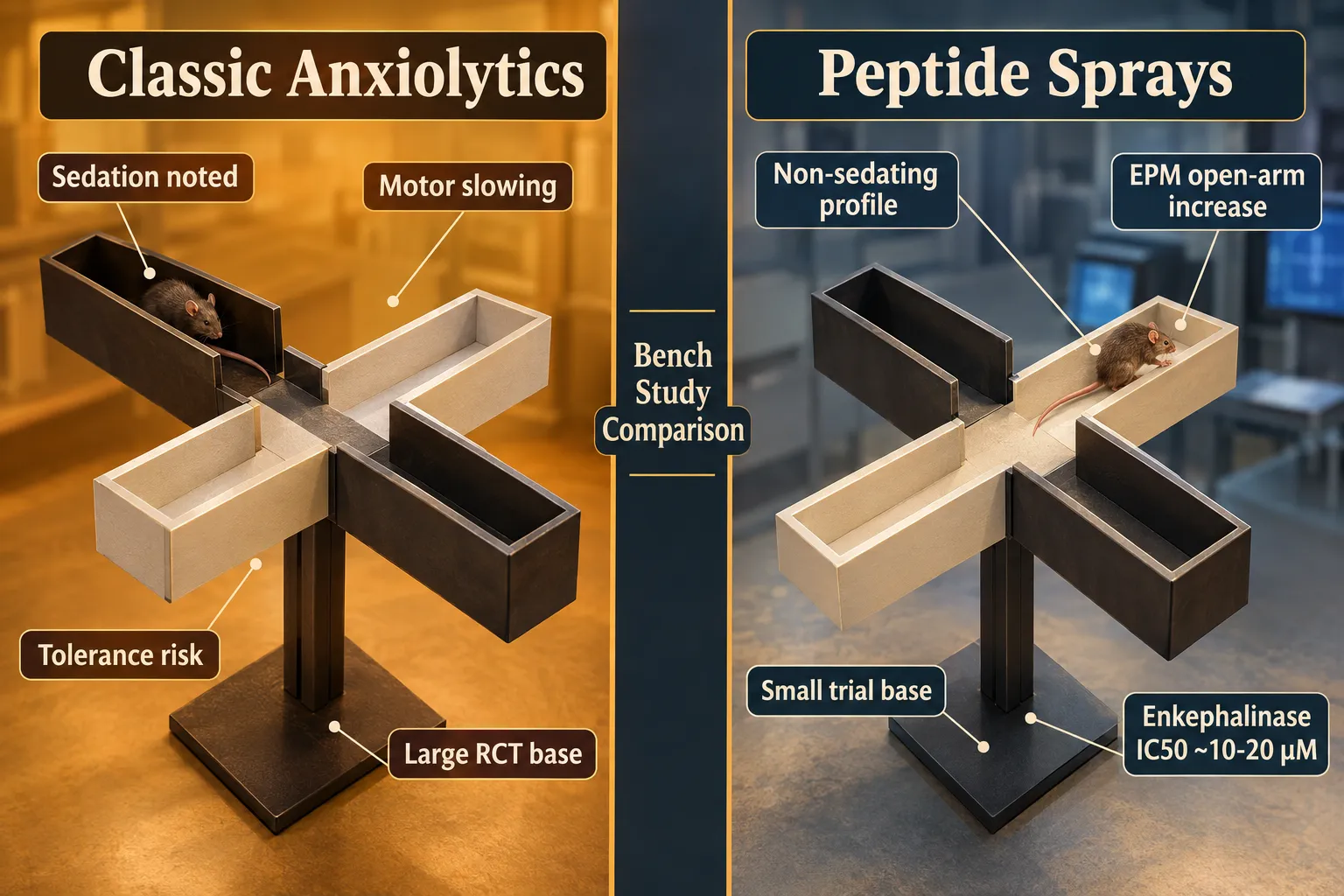
The preclinical data for Selank in rodent models are the most developed among the peptide sprays. In elevated plus maze (EPM) studies, the standard behavioral assay for anxiolysis, Selank increases both time spent in open arms and the number of open-arm entries. Critically, these effects appear comparable to diazepam in magnitude but without the motor impairment or sedation that benzodiazepines reliably produce in the same paradigm.

This non-sedating profile is a meaningful bench-level differentiator. Lorazepam and diazepam consistently produce dose-dependent motor slowing and cognitive interference at anxiolytically effective doses in animal models, a finding that translates directly to clinical sedation and psychomotor impairment in humans. Selank's EPM profile suggests a different side-effect architecture, possibly because its GABAergic influence operates through gene expression modulation rather than direct receptor potentiation.

For Semax, the preclinical picture is more cognitive than anxiolytic. A controlled resting-state fMRI study in 52 healthy adults compared acute Semax, Selank, and placebo, revealing that Semax produced more pronounced engagement of cortical executive networks (including the dorsolateral prefrontal cortex), while Selank tended toward reduced limbic hyperactivity, specifically in amygdala-temporal connectivity. These findings emerged within 5 to 20 minutes of dosing and are consistent with their respective "nootropic vs. anxiolytic" reputations.

A summarized crossover study in 45 patients with mild cognitive impairment quantified this split directly: Semax produced a larger effect size for memory enhancement (0.82 vs. 0.34 for Selank), while Selank showed greater anxiolytic efficacy (effect size 0.91 vs. 0.28 for Semax). These numbers are frequently cited in 2026 comparison guides, though the study is small and not independently replicated.

Researchers exploring other peptide research compounds can find lab tested peptides and review resources on sourcing from a best peptide manufacturer to ensure compound integrity in bench-level work.


Human Trial Data and the Evidence Gap Between Peptides and Classic Anxiolytics
Human Trial Data and the Evidence Gap Between Peptides and Classic Anxiolytics

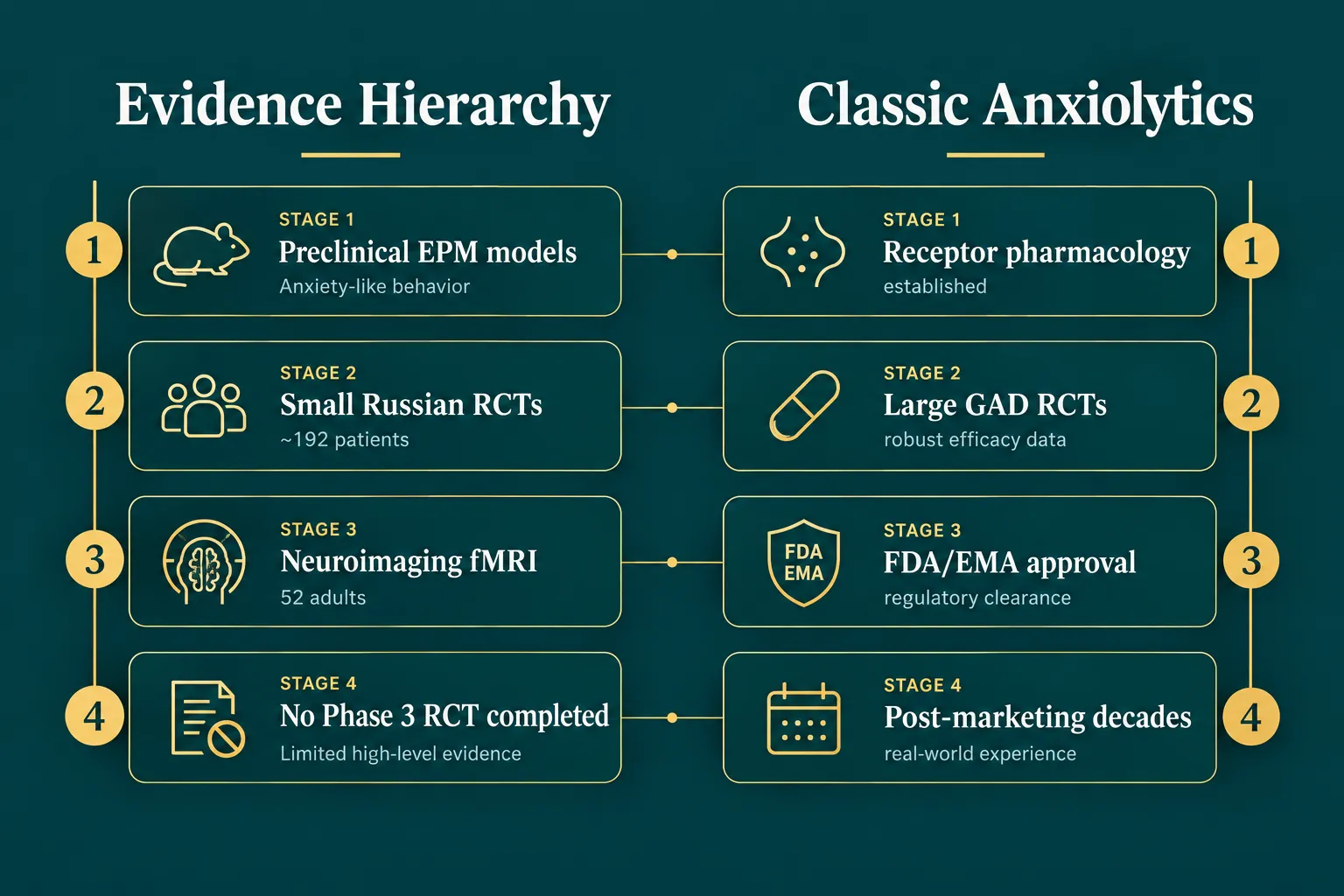
When examining Semax and Selank nasal sprays vs classic anxiolytics in terms of clinical evidence, the gap is stark. Lorazepam and buspirone are supported by large, multi-site, randomized controlled trials. One controlled GAD trial comparing lorazepam and buspirone directly found similar anxiolytic efficacy at day 56, with buspirone performing somewhat better on neurovegetative symptom scales, a finding that reinforced buspirone's status as a non-sedating first-line option for chronic anxiety.

Selank's human anxiety data, by contrast, derive from approximately three small trials totaling roughly 192 patients. The most frequently cited study enrolled 62 patients (30 on Selank, 32 on medazepam) and found comparable reductions on the Hamilton Anxiety Rating Scale, with Selank additionally showing antiasthenic and mild psychostimulant properties. A 60-patient phenazepam comparison produced similar findings. These are encouraging signals, but they originate from Eastern European clinical settings in the 2000s and have not been replicated in large international Phase 3 programs.

Semax's human anxiety data are even more limited. Its meaningful clinical record is restricted to ischemic stroke recovery and cognitive domains. No dedicated human anxiety trial for Semax exists as of 2026, making the comparison to buspirone, a compound designed and approved specifically as a non-sedating anxiolytic, particularly asymmetric.

Evidence Snapshot (2026)

  • Lorazepam: Multiple large RCTs, FDA-approved, decades of post-marketing data
  • Buspirone: Multiple GAD RCTs, FDA-approved, established non-sedating profile
  • Selank: ~192 patients across three small trials, no Phase 3 RCT, research compound status
  • Semax: No human anxiety RCT; cognitive and stroke data only

In terms of onset and sedation profiles, a 2026 clinical overview characterizes Selank's onset at 30 to 90 minutes and Semax's at 20 to 60 minutes, both described as non-sedating. This contrasts with lorazepam's rapid sedative onset and buspirone's delayed two-to-four-week therapeutic window. The peptides may thus offer a faster, non-sedative subjective profile more analogous to acute benzodiazepine relief, but this is based largely on small-study and anecdotal data rather than controlled comparisons.

In 2026, both Selank and Semax remain classified as experimental or adjunctive options in peptide-oriented clinical practices, used off-label under physician-guided protocols. Classic anxiolytics remain the backbone of evidence-based anxiety treatment algorithms, with standardized dosing, clear contraindications, and formal guideline support. Researchers interested in related peptide categories can also explore NAD peptides and SS-31 peptide benefits for adjacent neuroprotective research, or browse MOTC peptide categories for broader context on research-grade compounds. For nasal delivery format research, nasal spray with PT-141 offers a parallel example of intranasal peptide administration studied in controlled settings.


Conclusion

The comparison of Semax and Selank nasal sprays vs classic anxiolytics, and how lorazepam and buspirone differ from peptide-based nootropics in bench studies, reveals two genuinely different pharmacological philosophies. Lorazepam acts directly at GABA-A receptors for rapid, well-characterized anxiolysis with known dependence risk. Buspirone modulates serotonergic tone for sustained, non-sedating GAD management backed by large RCTs. Selank and Semax operate upstream through enkephalinase inhibition, GABAergic gene expression, BDNF upregulation, and monoaminergic modulation, mechanisms that show real promise in preclinical models and small human trials but have not yet cleared the Phase 3 evidentiary bar.

Actionable next steps for researchers and clinicians:

  • Treat Selank and Semax as research-stage compounds requiring institutional or physician oversight; do not substitute them for approved anxiolytics in clinical practice.
  • Prioritize studies that directly compare peptide sprays to buspirone in standardized GAD populations, this is the most meaningful gap in the current literature.
  • When sourcing peptides for bench work, verify purity through third-party testing; compound integrity is essential for reproducible mechanistic data.
  • Monitor 2026 and 2027 trial registries for emerging Phase 2 data on Selank, which represents the most clinically advanced peptide anxiolytic candidate.

The mechanistic story is compelling. The clinical story is still being written.

https://www.puretestedpeptides.com/wp-content/uploads/2026/09/semax-and-selank-nasal-sprays-vs-classic-anxiolytics-how-lorazepam-and-buspirone.webp 1024 1536 https://www.puretestedpeptides.com/wp-content/uploads/2026/01/buy-peptides-online.jpg 2026-09-22 13:04:532026-09-22 13:04:53Semax and Selank Nasal Sprays vs Classic Anxiolytics: How Lorazepam and Buspirone Differ From Peptide-Based Nootropics in Bench Studies
Lorazepam, Buspirone, and Nasal Spray Peptides: How Semax, Selank, and Klow Nasal Formulations Differ From Classic Anxiolytics in Lab Studies

Lorazepam, Buspirone, and Nasal Spray Peptides: How Semax, Selank, and Klow Nasal Formulations Differ From Classic Anxiolytics in Lab Studies

September 13, 2026/0 Comments/in Uncategorized/by

Anxiety disorders affect roughly one in three adults at some point in their lives, yet the two most prescribed drug classes for anxiety, benzodiazepines and azapirones, carry well-documented trade-offs that researchers have spent decades trying to solve. The comparison of lorazepam, buspirone, and nasal spray peptides, specifically how Semax, Selank, and Klow nasal formulations differ from classic anxiolytics in lab studies, has become one of the more active areas of preclinical pharmacology in 2026. Understanding the mechanistic differences between these compound classes is essential for anyone following peptide research, neuropharmacology, or CNS drug development.

Key Takeaways

  • Lorazepam works through GABA-A receptor modulation, producing fast but sedating and dependence-prone anxiolysis.
  • Buspirone partially agonizes the 5-HT1A receptor, avoiding sedation but requiring weeks for full effect.
  • Semax and Selank are intranasal peptides with distinct receptor targets, cognitive endpoints, and minimal sedation in animal models.
  • Klow nasal blends combine multiple peptides but currently lack formal anxiolytic trial data.
  • Intranasal delivery bypasses hepatic first-pass metabolism, giving peptides a bioavailability advantage that oral routes cannot match.

Receptor Targets: Where Classic Drugs and Peptides Diverge

Receptor Targets: Where Classic Drugs and Peptides Diverge

The most fundamental difference between classic anxiolytics and peptide nasal sprays lies in their receptor targets.

Lorazepam is a benzodiazepine. It binds to the GABA-A receptor complex and enhances chloride ion influx, effectively slowing neuronal firing across the central nervous system. The result is fast, reliable anxiolysis, but it comes packaged with sedation, psychomotor impairment, and a significant dependence liability with repeated use. Tolerance builds within weeks, and abrupt discontinuation can trigger rebound anxiety or seizures.

Buspirone operates through a completely different pathway. As a partial agonist at the 5-HT1A serotonin receptor, it modulates serotonergic tone without touching GABA channels. This sidesteps sedation and dependence risk, but the trade-off is a slow onset, clinical effect typically requires two to four weeks of consistent dosing. Buspirone also has a narrower symptom profile, performing better on generalized anxiety than on panic or phobic subtypes.

Semax and Selank diverge from both of these mechanisms in ways that make direct comparison difficult. Semax research shows that this heptapeptide analog of ACTH(4-7) primarily stimulates brain-derived neurotrophic factor (BDNF) production and modulates dopaminergic and serotonergic signaling. Its anxiolytic-adjacent effects in rodent models appear secondary to broader neuroprotective and cognitive-enhancing actions, not direct receptor sedation.

Selank, a synthetic analog of the endogenous peptide tuftsin, shows a more direct anxiolytic profile in animal studies. It appears to influence GABAergic activity and serotonin metabolism simultaneously, producing anxiety reduction without the sedation or withdrawal effects seen with benzodiazepines. Comparative studies on Selank vs Semax suggest that while both reduce stress markers in rodents, Selank's anxiolytic signal is more consistent and Semax's cognitive benefits are more pronounced.

Intranasal Delivery and Bioavailability: Why the Route Matters

Intranasal Delivery and Bioavailability: Why the Route Matters

The delivery route is not a minor detail, it is central to understanding why peptide nasal sprays are studied at all.

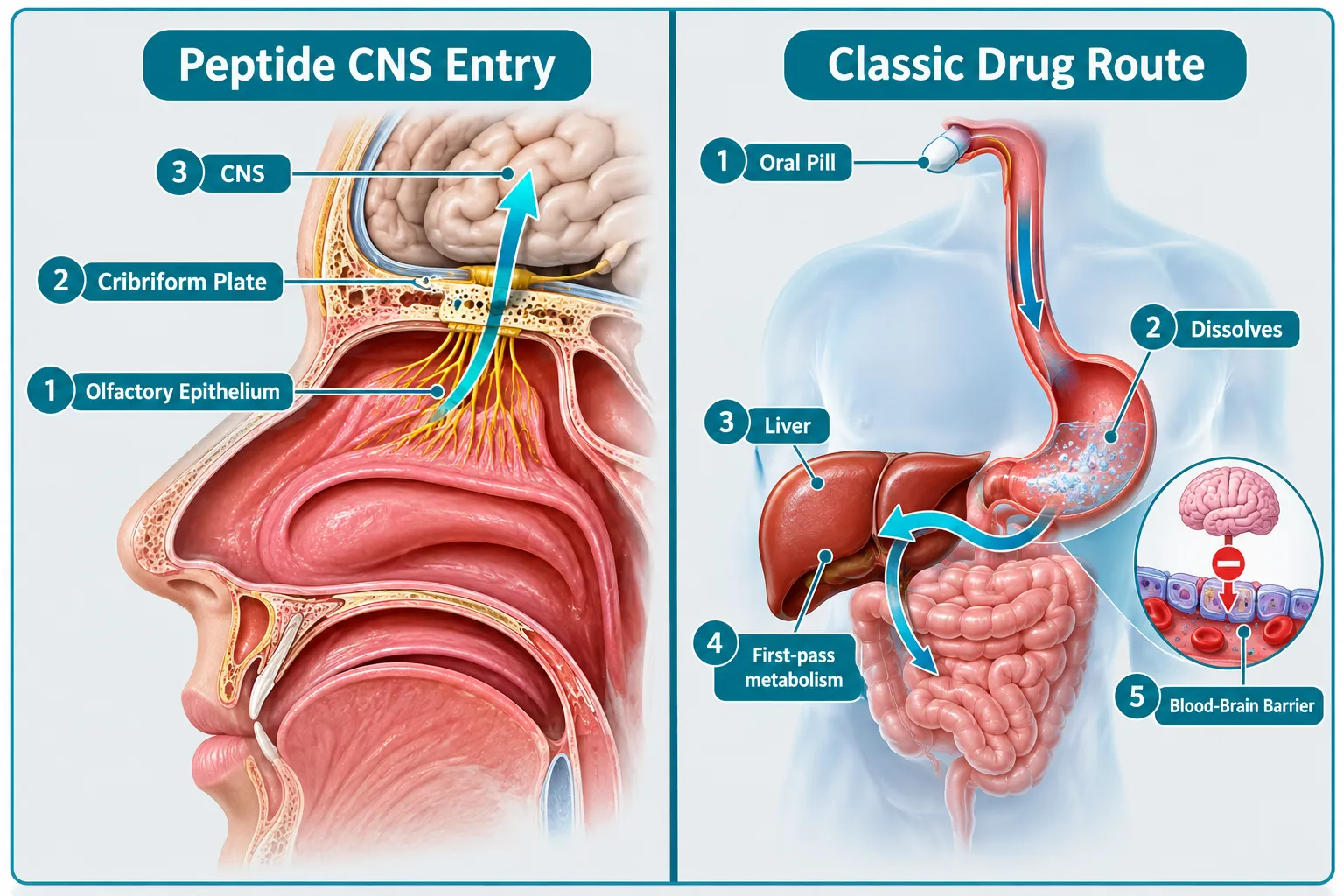
Oral administration of peptides faces a brutal pharmacokinetic obstacle: proteolytic enzymes in the gut degrade most peptide bonds before absorption, and any fraction that does absorb encounters hepatic first-pass metabolism before reaching systemic circulation. The result is negligible bioavailability for most unmodified peptides taken by mouth.

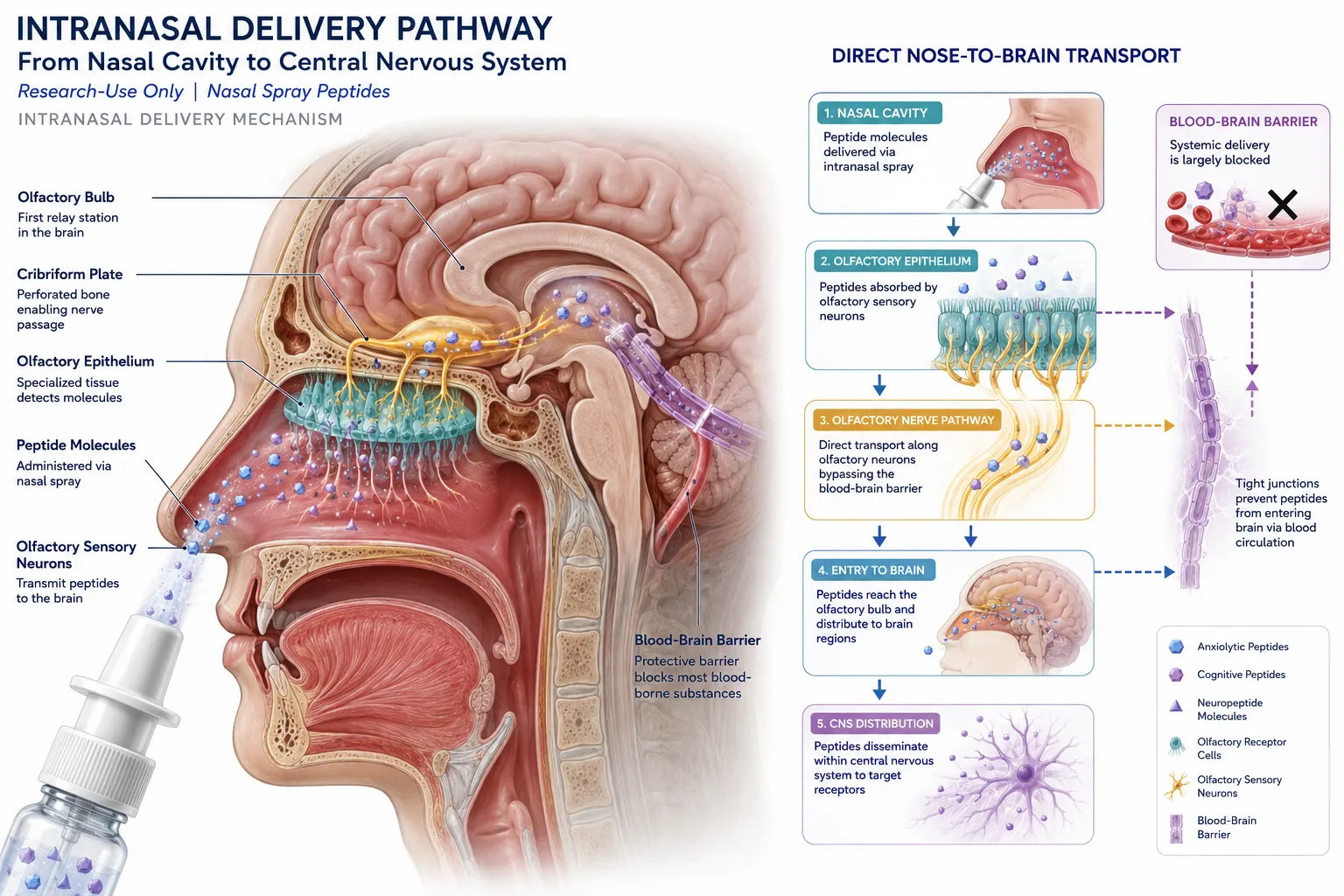
Intranasal delivery bypasses both barriers. The olfactory epithelium and the cribriform plate offer a direct anatomical pathway to the CNS, allowing peptides to enter brain tissue without crossing the blood-brain barrier through conventional routes. Studies on Semax nasal spray formulations show measurable CNS activity at doses far lower than would be required orally, and onset is substantially faster than buspirone's multi-week timeline.

Key distinction: Classic anxiolytics are optimized for oral bioavailability. Peptide nasal sprays exploit a different anatomical route entirely, one that classic drug formulation never needed to consider.

Lorazepam, by contrast, achieves near-complete oral absorption through conventional gastrointestinal uptake and does not require intranasal delivery. Buspirone has moderate oral bioavailability but is also subject to significant first-pass metabolism, which is why its clinical doses are relatively high.

For researchers reviewing Semax research protocols, intranasal dosing typically ranges from 200 to 600 micrograms per day in animal models, with human exploratory use reported in Russian clinical literature at similar microgram-range doses. Selank intranasal studies use comparable ranges. These doses are orders of magnitude smaller than typical benzodiazepine or buspirone doses, reflecting the efficiency of the nasal-to-CNS route.

Cognitive Endpoints, Side-Effect Profiles, and the Klow Question

Cognitive Endpoints, Side-Effect Profiles, and the Klow Question

The side-effect comparison between these compound classes is where the practical research interest concentrates.

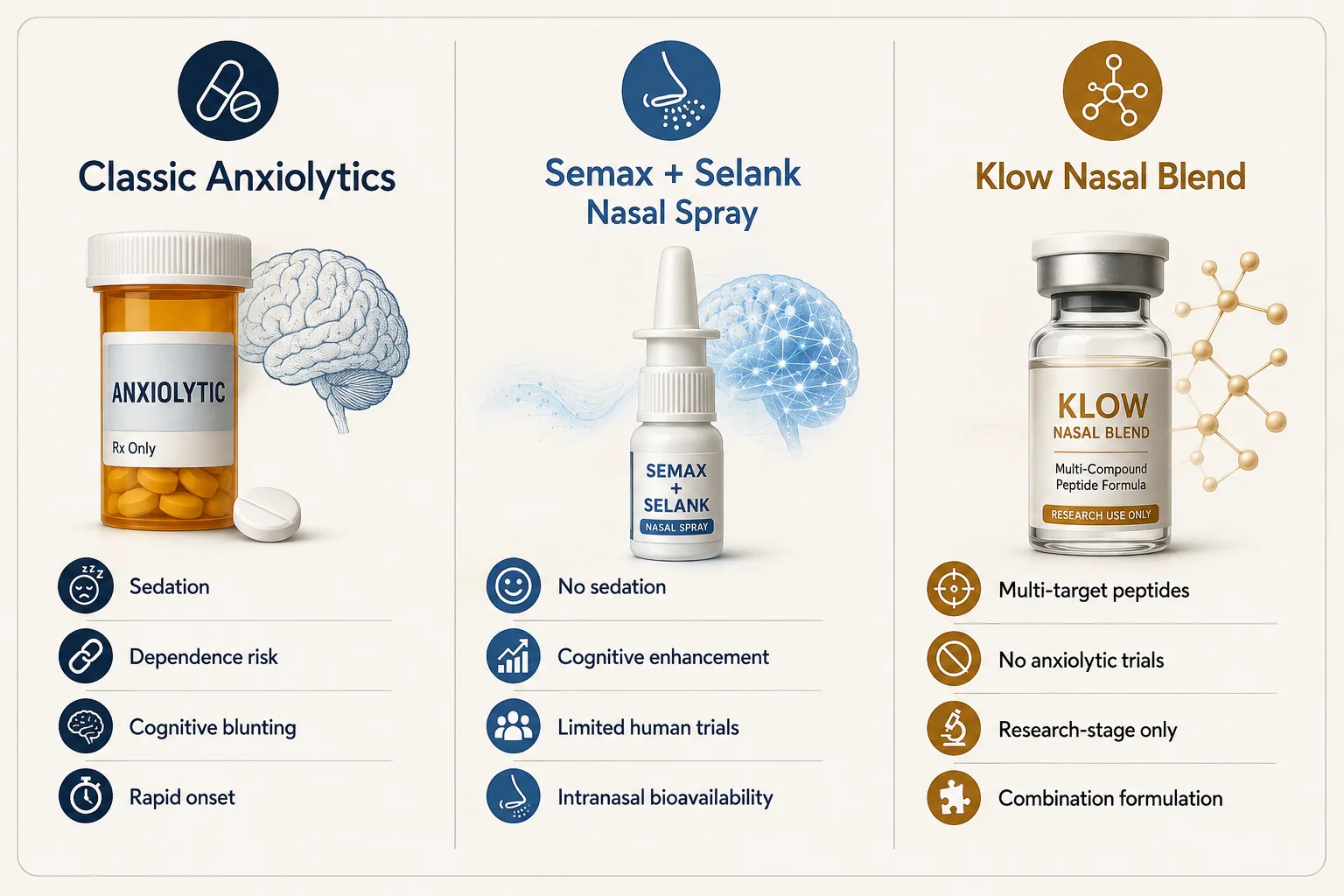
Feature Lorazepam Buspirone Semax / Selank Klow Blends
Primary target GABA-A 5-HT1A BDNF / GABAergic Multi-peptide
Sedation High None None observed Unknown
Dependence risk High Low Not reported Unknown
Cognitive effects Blunting Neutral Enhancement Uncharacterized
Onset Minutes 2-4 weeks Hours (intranasal) Not established
Human trial data Extensive Extensive Limited None

Lorazepam consistently blunts working memory and reaction time in controlled studies, effects that persist beyond the anxiolytic window. Buspirone avoids this but offers no cognitive benefit. Semax, in multiple rodent and limited human studies, shows the opposite pattern: improved memory consolidation, faster learning acquisition, and enhanced neuroplasticity markers alongside stress reduction.

Selank's cognitive profile is more neutral than Semax's but still avoids the blunting seen with benzodiazepines. In studies comparing anxiolytic efficacy, Selank reduced anxiety-like behavior in elevated plus-maze and open-field tests without impairing locomotor performance, a finding that stands in direct contrast to lorazepam's profile.

Klow nasal formulations represent a newer category of multi-peptide blends. These products combine several peptide compounds in a single intranasal delivery system, targeting multiple pathways simultaneously. However, as of 2026, no formal anxiolytic trials exist for Klow-style blends. The mechanistic rationale is plausible given the individual peptide data, but the absence of controlled trial data means efficacy and safety claims remain speculative. Researchers interested in the broader landscape of wholesale peptides for sale in research contexts should treat Klow formulations as hypothesis-generating rather than evidence-supported.

The authority of current evidence also deserves honest assessment. Semax and Selank have the strongest data sets among the peptide group, but most studies originate from Russian research institutions and involve relatively small sample sizes. Replication in Western clinical settings remains limited. This does not invalidate the findings, but it does mean that direct head-to-head comparisons with lorazepam or buspirone at the clinical trial level do not yet exist.

For those exploring the broader peptide research space, resources on peptides and polypeptides in endocrine pharmacology provide useful context on how peptide compounds interact with receptor biology across different systems.

Conclusion

The mechanistic gap between lorazepam, buspirone, and intranasal peptides like Semax, Selank, and Klow is not simply a matter of degree, it reflects fundamentally different pharmacological philosophies. Classic anxiolytics target established receptor systems with decades of clinical data but carry sedation, dependence, and cognitive cost. Peptide nasal sprays exploit the nasal-to-CNS route to deliver compounds that appear to modulate anxiety through neuroprotective and neurotrophic pathways, with a side-effect profile that animal models suggest is substantially cleaner.

Actionable next steps for researchers and informed readers:

  • Review the primary Semax and Selank literature from Russian clinical sources alongside any available Western replication studies before drawing efficacy conclusions.
  • Treat Klow multi-peptide blends as research-stage compounds requiring formal trial data before anxiolytic claims can be substantiated.
  • Recognize that intranasal bioavailability data does not automatically translate to clinical equivalence with orally dosed classic anxiolytics.
  • Follow emerging Semax nasal spray research for updates on human dosing and cognitive endpoint data as the field matures in 2026.

The comparison of lorazepam, buspirone, and nasal spray peptides, and how Semax, Selank, and Klow nasal formulations differ from classic anxiolytics in lab studies, will only sharpen as controlled human trials close the evidence gap between preclinical promise and clinical proof.

https://www.puretestedpeptides.com/wp-content/uploads/2026/09/lorazepam-buspirone-and-nasal-spray-peptides-how-semax-selank-and-klow-nasal-for.webp 1024 1536 https://www.puretestedpeptides.com/wp-content/uploads/2026/01/buy-peptides-online.jpg 2026-09-13 13:04:052026-09-13 13:04:05Lorazepam, Buspirone, and Nasal Spray Peptides: How Semax, Selank, and Klow Nasal Formulations Differ From Classic Anxiolytics in Lab Studies
Semax vs Classic Anxiolytics: How Semax Nasal Spray Research Differs From Buspirone and Benzodiazepine Models

Semax vs Classic Anxiolytics: How Semax Nasal Spray Research Differs From Buspirone and Benzodiazepine Models

September 4, 2026/0 Comments/in Uncategorized/by

Anxiety disorders affect roughly one in three adults at some point in their lifetime, yet the dominant pharmacological tools, benzodiazepines and buspirone, were developed under research frameworks that prioritize direct anxiolysis over neuroplasticity or cognitive preservation. That gap has driven renewed scientific interest in peptide-based compounds, and nowhere is the contrast sharper than in the growing body of Semax research comparing this synthetic neuropeptide to classical anxiolytic drug models.

Understanding Semax vs classic anxiolytics: how Semax nasal spray research differs from buspirone and benzodiazepine models requires examining not just outcomes, but the underlying research frameworks, mechanistic targets, and endpoint definitions that separate these approaches.

Key Takeaways

  • Semax acts primarily on neurotrophic and neuroprotective pathways, not on GABA-A receptors or serotonin 5-HT1A sites like benzodiazepines and buspirone.
  • Preclinical research positions Semax as a stress-resilience agent rather than a direct anxiolytic, a meaningful distinction in research design.
  • Semax nasal spray delivers the peptide intranasally, bypassing first-pass metabolism and raising distinct bioavailability questions compared to oral anxiolytics.
  • As of 2026, Semax holds regulatory approval in Russia and some Eastern European countries but lacks Western clinical trial validation for anxiety indications.
  • Evidence gaps remain significant, and current findings should be interpreted within their preclinical and limited clinical contexts.

Mechanistic Foundations: Where the Research Models Diverge

Mechanistic Foundations: Where the Research Models Diverge

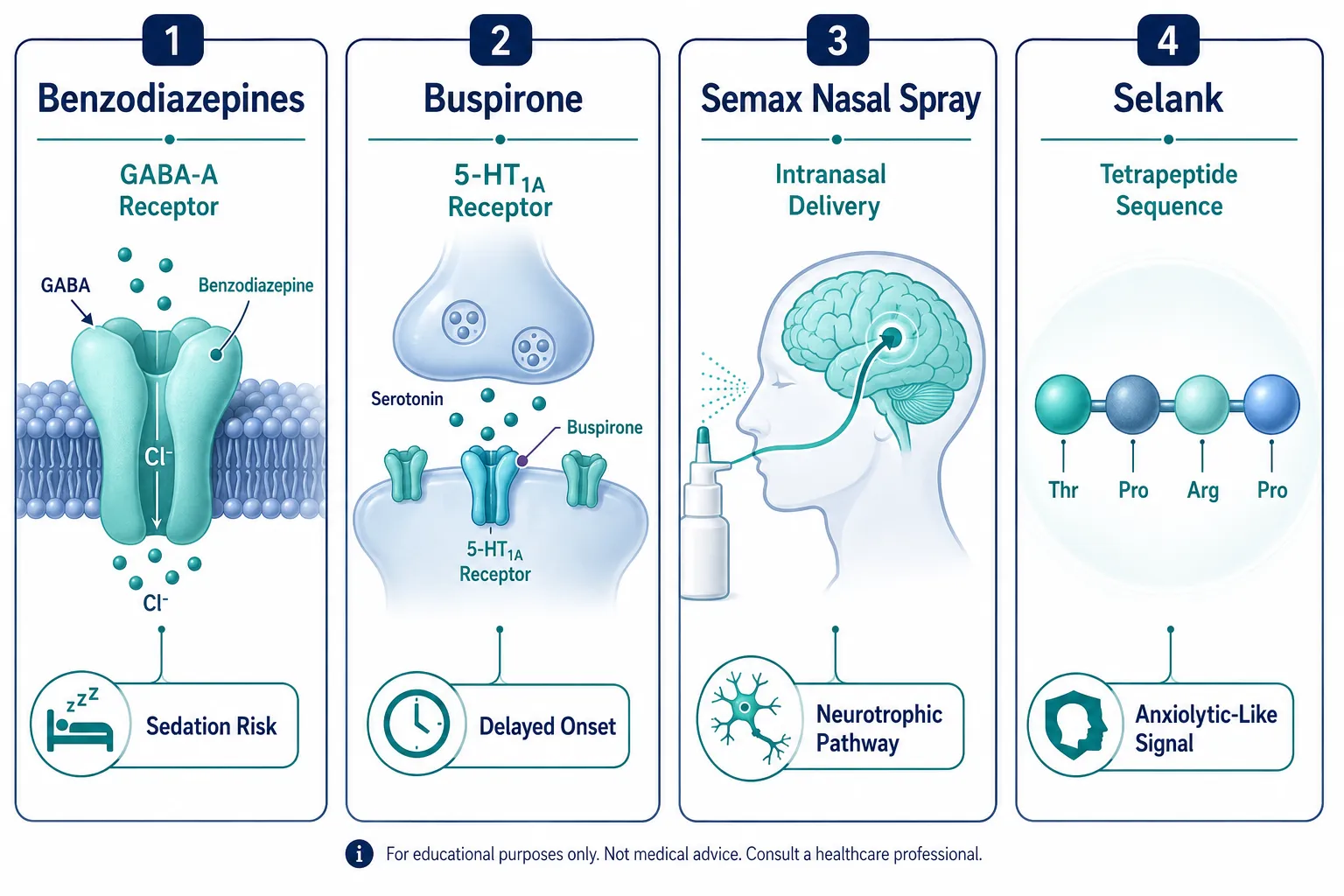
The clearest way to understand Semax vs classic anxiolytics is to start at the receptor level. Benzodiazepines bind to GABA-A receptors, enhancing chloride ion influx and producing rapid sedation alongside anxiolysis. Buspirone, a non-benzodiazepine anxiolytic, acts as a partial agonist at 5-HT1A receptors and takes one to two weeks to produce measurable effects. Both mechanisms target anxiety suppression as a primary endpoint.

Semax, a synthetic heptapeptide derived from adrenocorticotropic hormone (ACTH), works through a fundamentally different pathway. Research models indicate it upregulates brain-derived neurotrophic factor (BDNF) and modulates dopaminergic and serotonergic transmission without direct receptor binding at GABA-A or 5-HT1A sites. This places Semax in a neuroprotective and neurotrophic category rather than a classical anxiolytic one.

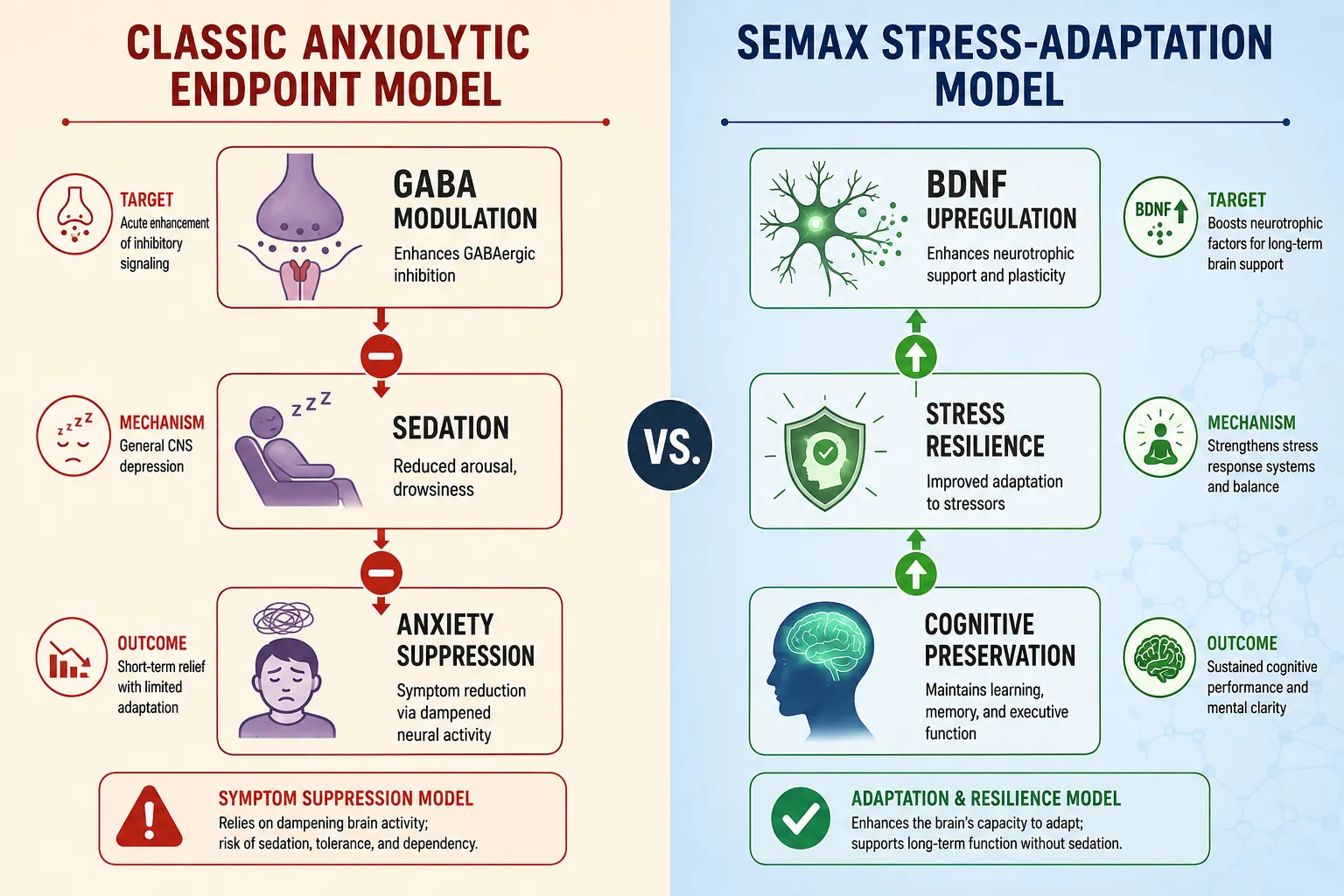
"The distinction is not merely pharmacological, it reflects entirely different research questions. Classic anxiolytic models ask: does the compound suppress anxiety signals? Semax research asks: does the compound strengthen the brain's adaptive response to stress?"

This mechanistic separation explains why Semax administration protocols and outcome measures in research settings look so different from standard anxiolytic drug trials.

Key mechanistic differences at a glance:

Feature Benzodiazepines Buspirone Semax
Primary target GABA-A receptor 5-HT1A receptor BDNF / neurotrophic axis
Onset Rapid (minutes) Slow (1-2 weeks) Variable; model-dependent
Sedation risk High Low Minimal in preclinical data
Cognitive effects Impairment common Neutral Potential enhancement
Dependence risk Significant Low Not established

How Semax Nasal Spray Research Differs From Buspirone and Benzodiazepine Models in Preclinical Settings

How Semax Nasal Spray Research Differs From Buspirone and Benzodiazepine Models in Preclinical Settings

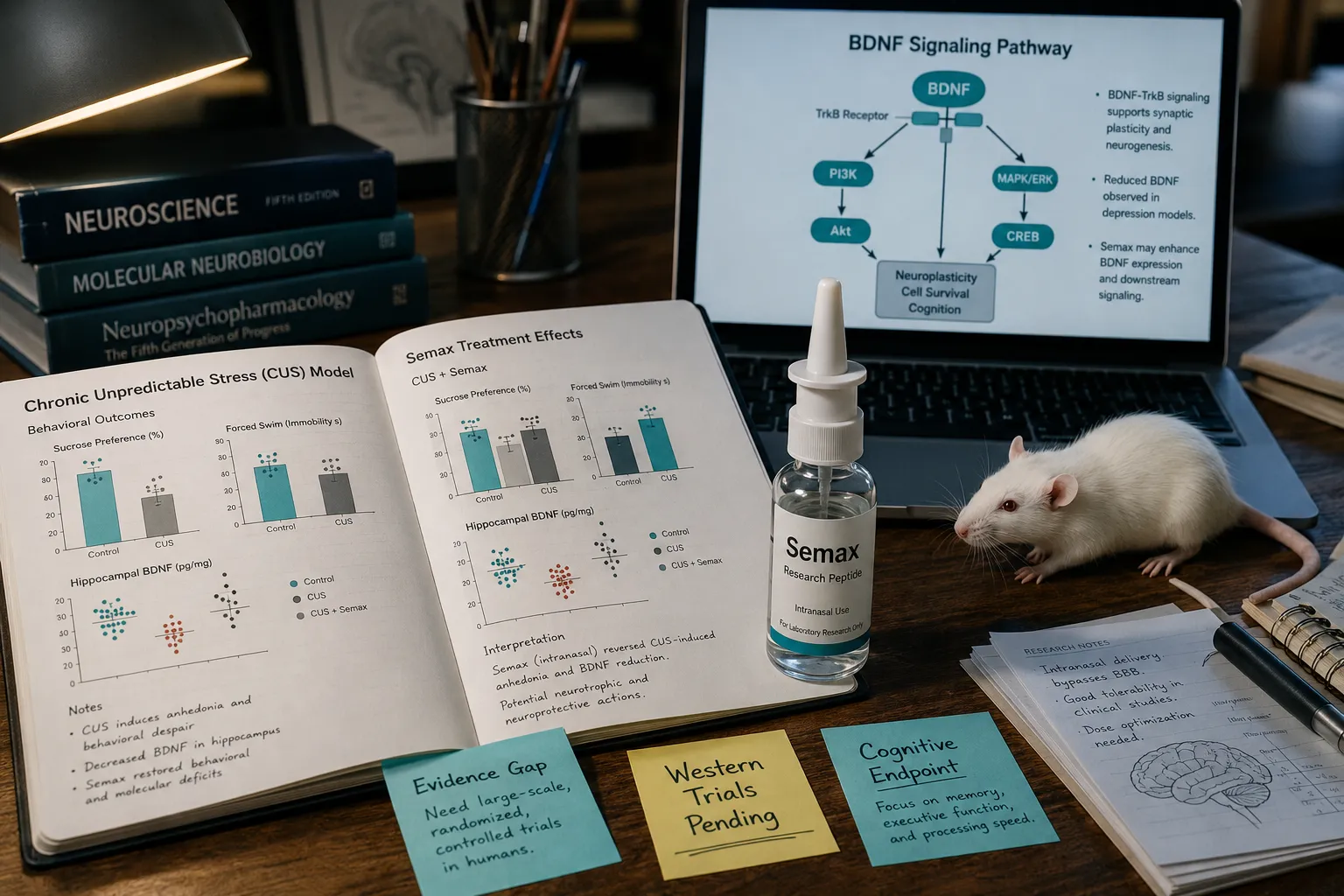
The preclinical landscape reveals how deeply the research designs diverge. A 2024 chronic unpredictable stress (CUS) rat model demonstrated that Semax promoted stress resilience, animals showed preserved cognitive function and reduced depressive-like behavior, rather than direct suppression of anxiety-related behaviors as measured by classic endpoints like the elevated plus maze or open field test.

Older rodent studies did show conditional anxiolytic-like effects, but these were context-dependent and dose-sensitive. Critically, Semax did not produce the sedation or motor impairment that consistently appears in benzodiazepine-treated rodent cohorts.

Buspirone research models, by contrast, are built around 5-HT1A partial agonism and use generalized anxiety disorder (GAD) symptom clusters as primary endpoints. These models do not measure cognitive preservation, neuroplasticity markers, or BDNF expression, endpoints that are central to understanding Semax's profile.

For researchers exploring peptide comparisons, the Selank vs Semax distinction is equally instructive. Selank, another synthetic peptide with anxiolytic-like properties, more closely mirrors classical anxiolytic endpoints in some models, while Semax leans toward neuroprotection and cognitive enhancement. Reviewing Selank research alongside Semax data helps clarify where these compounds overlap and where they diverge.

Three defining differences in research model design:

  1. Endpoint selection, Semax studies measure BDNF levels, cognitive task performance, and stress biomarkers; anxiolytic drug trials measure anxiety symptom scores and sedation thresholds.
  2. Stress model type, Semax research favors chronic stress paradigms; benzodiazepine research often uses acute anxiety provocation models.
  3. Administration route, Semax bioavailability via intranasal delivery bypasses hepatic first-pass metabolism, a pharmacokinetic consideration absent from oral drug models.

Regulatory Status, Evidence Gaps, and the 2026 Research Landscape

Regulatory Status, Evidence Gaps, and the 2026 Research Landscape

As of 2026, the regulatory and clinical picture for Semax remains uneven. The compound holds approval in Russia and select Eastern European countries for neurological and cognitive indications. No Western regulatory agency, including the FDA or EMA, has approved Semax for anxiety or any other indication, and no large-scale randomized controlled trials in Western populations have been completed for anxiety endpoints.

This creates a significant evidence gap when comparing Semax to buspirone or benzodiazepines, both of which have decades of human trial data. Integrative reviews published in 2026 consistently position Semax as a neuroprotective agent with "anxiolytic-like signals" rather than a validated anxiolytic drug, an important distinction for both researchers and clinicians.

The safety profile from available data is notable: Semax shows minimal sedation, no reported physical dependence in preclinical models, and no significant motor impairment, a sharp contrast to benzodiazepine risks. However, long-term human safety data remain limited.

Researchers interested in combined peptide approaches can explore Selank Semax stack models, where the two peptides are studied together for potentially complementary anxiolytic-like and neuroprotective effects. For those examining intranasal delivery specifically, Selank intranasal research provides useful parallel data on peptide absorption and CNS delivery via nasal routes.

Proper Semax dosing protocols in research settings vary considerably from the fixed-dose models used in classic anxiolytic drug trials, further complicating direct comparisons.

Current evidence status summary:

  • Preclinical support: Moderate, with stress-resilience and cognitive endpoints showing consistent signals
  • Human clinical data: Limited; primarily from Russian clinical settings
  • Western RCT data: Absent as of 2026
  • Regulatory approval (Western): None for anxiety indications

Conclusion

The comparison of Semax vs classic anxiolytics: how Semax nasal spray research differs from buspirone and benzodiazepine models ultimately reflects two different scientific philosophies. Classical anxiolytic research targets symptom suppression through well-characterized receptor systems. Semax research targets neuroadaptation, resilience, and cognitive preservation through neurotrophic pathways, a framework that produces different data, different endpoints, and different clinical implications.

Actionable next steps for researchers and informed readers:

  • Review the primary preclinical literature on Semax's BDNF-mediated mechanisms before drawing comparisons to GABAergic or serotonergic drug models.
  • Treat current "anxiolytic-like" findings as hypothesis-generating, not confirmatory, given the absence of Western RCT data.
  • Examine Selank peptide research alongside Semax data for a fuller picture of intranasal peptide anxiolytic-like profiles.
  • Follow Western trial registries for emerging Semax and related peptide studies expected in the 2026-2028 window.
  • Consult qualified research professionals before applying any findings from preclinical or limited clinical models to human health contexts.

The science is evolving. What is clear in 2026 is that Semax occupies a genuinely distinct research category, one that deserves rigorous, independent evaluation rather than direct mapping onto the anxiolytic drug frameworks built for benzodiazepines and buspirone.

https://www.puretestedpeptides.com/wp-content/uploads/2026/09/semax-vs-classic-anxiolytics-how-semax-nasal-spray-research-differs-from-buspiro.webp 1024 1536 https://www.puretestedpeptides.com/wp-content/uploads/2026/01/buy-peptides-online.jpg 2026-09-04 13:04:402026-09-04 13:04:40Semax vs Classic Anxiolytics: How Semax Nasal Spray Research Differs From Buspirone and Benzodiazepine Models
Research-Use Only Nasal Spray Peptides: Comparing Semax, Selank, and Klow Nasal for Cognitive and Anxiolytic Models

Research-Use Only Nasal Spray Peptides: Comparing Semax, Selank, and Klow Nasal for Cognitive and Anxiolytic Models

August 6, 2026/0 Comments/in Uncategorized/by

Fewer than 1% of peptide compounds studied in preclinical settings can cross the blood-brain barrier efficiently through non-invasive delivery routes. Nasal administration stands out as one of the most promising pathways for central nervous system research, and three compounds have drawn significant attention in 2026: Semax, Selank, and proprietary blends such as Klow Nasal. This article examines research-use only nasal spray peptides: comparing Semax, Selank, and Klow Nasal for cognitive and anxiolytic models to help researchers understand formulation differences, delivery mechanisms, and typical experimental endpoints.

"Intranasal delivery bypasses hepatic first-pass metabolism and leverages olfactory transport, making it a uniquely efficient route for neuropeptide research."

Key Takeaways

  • Semax, Selank, and Klow Nasal are research-use only compounds not approved for human therapeutic use
  • Each peptide targets distinct but overlapping neurological pathways relevant to cognition and anxiety models
  • Intranasal delivery exploits the olfactory nerve route for rapid CNS access in preclinical studies
  • Formulation differences in concentration, carrier solution, and stability affect experimental reproducibility
  • Researchers sourcing these compounds should prioritize verified purity and third-party testing

Key Takeaways

Nose-to-Brain Transport: Why Intranasal Delivery Matters in Peptide Research

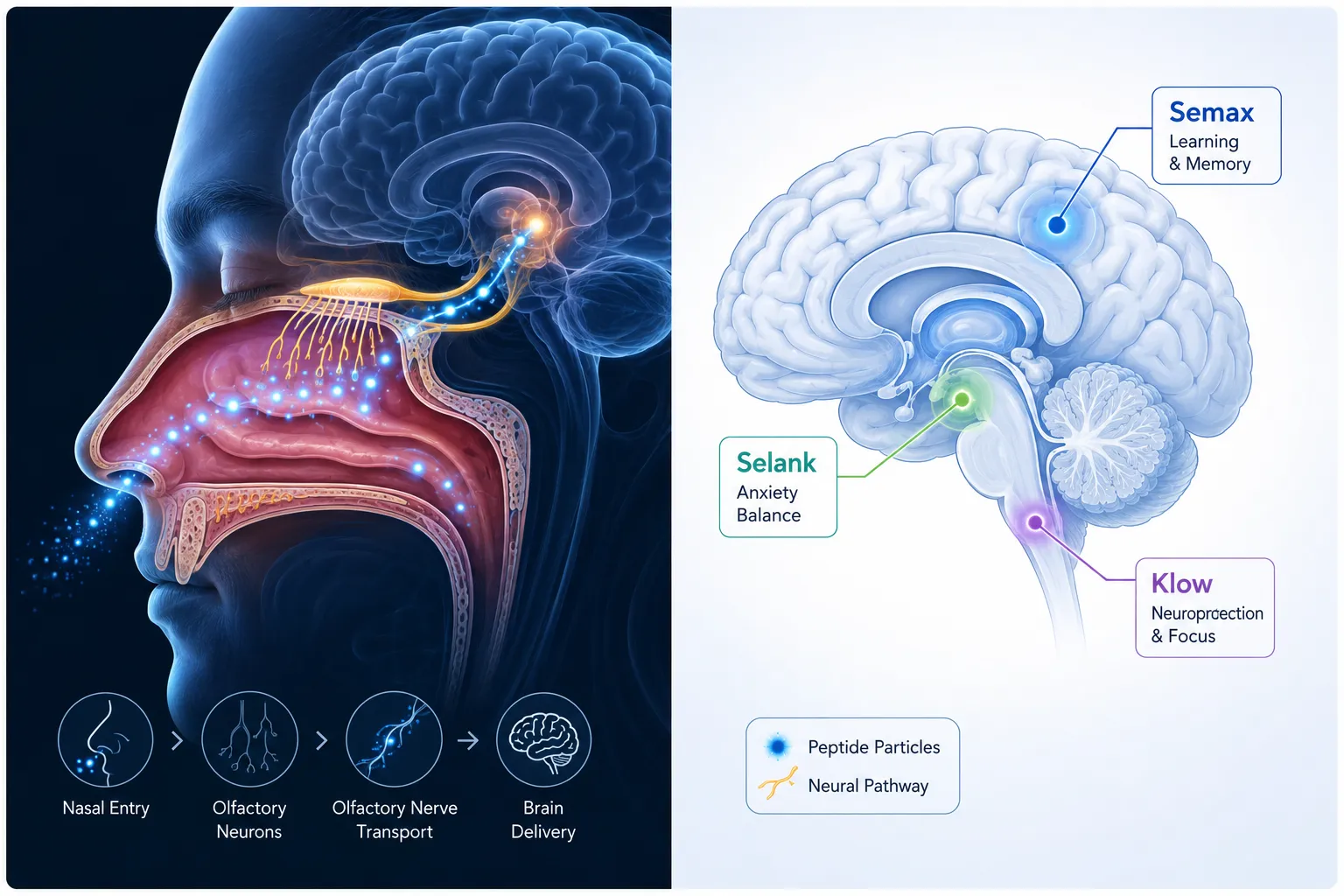
The nasal cavity offers a direct anatomical bridge to the central nervous system via the olfactory epithelium. When a peptide is administered intranasally, molecules can travel along olfactory sensory neurons, bypassing the blood-brain barrier entirely. This pathway is particularly relevant for larger peptide molecules that would otherwise face degradation or poor CNS penetration through systemic routes.

Key transport mechanisms include:

  • Olfactory nerve pathway (direct axonal transport)
  • Trigeminal nerve pathway (covers broader brain regions)
  • Mucosal absorption into systemic circulation with secondary CNS entry

For research-use only nasal spray peptides, this delivery method allows investigators to study dose-response relationships with greater CNS specificity. Formulation variables such as pH, osmolality, and the presence of absorption enhancers directly influence how much active peptide reaches target brain regions.

Researchers exploring broader peptide delivery strategies may also find value in reviewing Klow Blend Peptides as a reference point for multi-compound formulation design.

Semax: Cognitive Enhancement Mechanisms in Preclinical Models

Semax is a synthetic heptapeptide derived from the ACTH(4-7) sequence, extended with a Pro-Gly-Pro fragment to enhance stability. It does not bind ACTH receptors directly but instead modulates brain-derived neurotrophic factor (BDNF) expression and serotonergic activity.

Typical research endpoints for Semax include:

  • Working memory and spatial learning tasks (Morris Water Maze, radial arm maze)
  • BDNF and NGF upregulation in hippocampal tissue
  • Neuroprotection models following ischemic or oxidative stress
  • Attention and focus-related behavioral assays

Semax nasal formulations are typically prepared at concentrations between 0.1% and 1%, often in sterile saline with a slightly acidic pH to maintain peptide stability. Researchers should note that higher concentrations do not linearly increase CNS uptake due to mucosal saturation effects.

Semax: Cognitive Enhancement Mechanisms in Preclinical Models

Selank: Anxiolytic and Immunomodulatory Research Applications

Selank is a synthetic analog of the endogenous peptide tuftsin, extended with a Gly-Pro-Pro sequence. Its primary research interest lies in anxiety-related behavioral models, though it also demonstrates nootropic properties in several preclinical studies.

Selank research endpoints commonly studied:

  • Elevated plus maze and open field test performance (anxiety models)
  • GABAergic and serotonergic modulation
  • Cytokine regulation and immune response profiling
  • Memory consolidation under stress conditions

Selank nasal sprays are typically formulated at 0.15% concentration in saline. One important distinction from Semax is Selank's reported enkephalin-stabilizing activity, which may contribute to its calming profile without the sedation seen in classical anxiolytics.

For researchers building broader peptide research protocols, resources on peptide supplier comparisons and sourcing notes provide useful context for evaluating compound quality across vendors.

Klow Nasal: Proprietary Blend Formulations in Research Contexts

Klow Nasal represents a category of proprietary multi-peptide blends designed for intranasal delivery. Unlike single-compound formulations, these blends combine peptides with complementary mechanisms to study synergistic effects on cognition and stress response simultaneously.

Distinguishing features of Klow Nasal formulations:

Feature Single-Peptide (Semax/Selank) Klow Nasal Blend
Mechanism targeting Single pathway Multi-pathway
Formulation complexity Low Moderate to high
Research endpoints Specific Broader behavioral panels
Stability considerations Established Requires blend-specific validation

Researchers using proprietary blends must account for potential peptide-peptide interactions within the formulation. Stability testing and HPLC purity verification become even more critical when multiple active compounds share a single carrier solution.

Those interested in how multi-peptide approaches are structured in other research categories can review the Glow Blend Peptides page for comparative formulation context.

Klow Nasal: Proprietary Blend Formulations in Research Contexts

Comparing Research Endpoints Across the Three Compounds

When designing studies using research-use only nasal spray peptides comparing Semax, Selank, and Klow Nasal for cognitive and anxiolytic models, selecting the right compound depends on the primary research question.

Quick reference for endpoint alignment:

  • Cognitive focus (memory, learning): Semax is the stronger candidate due to BDNF modulation
  • Anxiety and stress response: Selank's GABAergic and enkephalin activity makes it preferable
  • Broad CNS profiling: Klow Nasal blends allow multi-endpoint data collection in a single protocol

Researchers should also consider that intranasal peptide studies require rigorous controls for delivery volume, sniff behavior in animal models, and mucosal absorption variability. Standardizing administration technique is as important as compound selection.

For those building comprehensive peptide research programs, exploring resources like Peptides Buy and Peptide Stores can assist with sourcing verified research-grade compounds.

Conclusion

Selecting among research-use only nasal spray peptides for cognitive and anxiolytic models requires a clear understanding of each compound's mechanism, formulation requirements, and appropriate experimental endpoints. Semax excels in cognitive and neuroprotective research contexts, Selank leads in anxiety and stress-related models, and Klow Nasal blends offer multi-pathway investigation potential at the cost of greater formulation complexity.

Actionable next steps for researchers:

  1. Define the primary research endpoint before selecting a compound
  2. Verify peptide purity through third-party HPLC testing before any study begins
  3. Standardize intranasal delivery technique to reduce inter-subject variability
  4. Review current literature on nose-to-brain transport to optimize formulation parameters
  5. Source compounds only from suppliers with documented quality control processes

References

  • Dolotov, O. V., et al. "Semax, an Analog of ACTH(4-7) with Cognitive Effects, Regulates BDNF and trkB Expression in the Rat Hippocampus." Brain Research, vol. 1117, no. 1, 2006, pp. 54-60.
  • Semenova, T. P., et al. "Selank Modulates the Expression of Genes Involved in GABAergic Neurotransmission." Bulletin of Experimental Biology and Medicine, vol. 148, no. 6, 2010, pp. 851-854.
  • Illum, L. "Nasal Drug Delivery: New Developments and Strategies." Drug Discovery Today, vol. 7, no. 23, 2002, pp. 1184-1189.
  • Dhuria, S. V., Hanson, L. R., and Frey, W. H. "Intranasal Delivery to the Central Nervous System: Mechanisms and Experimental Considerations." Journal of Pharmaceutical Sciences, vol. 99, no. 4, 2010, pp. 1654-1673.
  • Zozulya, A. A., et al. "The Immunosuppressive and Anxiolytic Effects of Selank." Bulletin of Experimental Biology and Medicine, vol. 136, no. 5, 2003, pp. 474-476.
https://www.puretestedpeptides.com/wp-content/uploads/2026/08/research-use-only-nasal-spray-peptides-comparing-semax-selank-and-klow-nasal-for.webp 1024 1536 https://www.puretestedpeptides.com/wp-content/uploads/2026/01/buy-peptides-online.jpg 2026-08-06 13:04:342026-08-06 13:04:34Research-Use Only Nasal Spray Peptides: Comparing Semax, Selank, and Klow Nasal for Cognitive and Anxiolytic Models
Page 2 of 212

Tag Archive for: semax nasal spray

Nothing Found

Sorry, no posts matched your criteria

×

Helpful Links

  • My account
  • Cart
  • Checkout
  • Refund and Returns Policy
  • Privacy Policy
  • SMS Privacy Policy
  • Login
  • My Account
  • Logout

USA Made Lab Tested Peptides

All products are sold for research, laboratory, or analytical purposes only, and are not for human consumption


Pure Tested Peptides is a chemical supplier. Pure Tested Peptides is not a compounding / chemical compounding facility as defined under 503A of the Federal Food, Drug, and Cosmetic act. Pure Tested Peptides is not an outsourcing facility as defined under 503B of the Federal Food, Drug, and Cosmetic act.

The statements made within this website have not been evaluated by the US Food and Drug Administration. The products we offer are not intended to diagnose, treat, cure or prevent any disease.

Human/Animal Consumption Prohibited. Laboratory/In-Vitro Experimental Use Only

Scroll to top Scroll to top Scroll to top