Call or Text 727-513-9780
  • Shopping Cart Shopping Cart
    0Shopping Cart
Pure Tested Peptides | America's most trusted Peptides for sale online
  • Peptides for sale
    • Oral Peptides for sale
      • Peptide Capsules for sale
      • BPC 157 Capsules 1000mcg
      • SLU-PP-332 Capsules | 1000 mcg
      • 5-Amino-1MQ 50mg Capsules
      • Tesofensine 500mcg
    • All Peptides for sale
    • Peptide Sprays
      • BPC 157 Nasal Spray Kit
      • BPC-157 TB500 Nasal Spray Kit
      • Semax Nasal Spray 10mg
      • Selank – Nasal Spray Kit – 10mg
      • Epithalon 50MG Nasal Spray Kit
      • Ipamorelin 10mg Nasal Spray
      • Klow Nasal Spray (BPC-157 + TB-500 + GHK-Cu + KPV) | 80mg
      • Hulk Nasal Spray Tesa / Ipa Blend 6/3 MG
      • Klow Nasal Spray
      • NAD + 500 mg Nasal Spray
      • PT-141 Nasal Spray Kit
    • GHRH Peptides
      • Ipa Peptides
      • CJC-1295 Peptides
        • CJC-1295 with DAC 5 mg
        • CJC-1295 without DAC 5 mg
        • CJC-1295 Ipa 10mg
      • Tesa Peptides
        • Tesa Peptide
        • Tesa 20 mg
    • GHK-Cu Peptides
      • All GHK-Cu Peptides
      • GHK-Cu 100mg
      • KLOW Peptide Blend – Buy KLOW blend online
    • BPC Peptides
      • All BPC Peptides
      • BPC-157
      • BPC-157 TB-500
      • BPC 157 capsules 1000mcg
    • SLU-PP-332 Peptides
      • All SLU-PP-332 Peptides
      • SLU-PP-332 5mg
    • GLP3 Peptides
    • PT-141 Peptides
      • PT-141 Peptides for sale
      • PT-141 10mg
      • PT-141 Nasal Spray
    • CAG Peptides
      • Lipo-C Peptide Blend
      • CAG 5mg
      • CAG 10mg
    • MOTS-C Peptides
      • MOTS-C Peptides for sale
      • MOTS-c peptide
      • MOTS-c 10mg *6 pack*
    • 5 Amino 1MQ Peptides
      • 5 Amino 1MQ Peptides for sale
      • 5-Amino-1MQ 50mg Capsules
      • 5-Amino-1MQ 5mg
    • Epithalon Peptides
      • Epithalon Peptides for sale
      • Epithalon 10mg
      • Epithalon 50mg
  • Shop
    • GLPs
      • 5-Amino-1MQ 50mg Capsules
      • 5-Amino-1MQ 5mg
      • L-Carnitine 500mg/ml
      • Tesofensine 500mcg
      • SLU-PP-332 5mg
      • MOTS-c 10mg *6 pack*
    • Epithalon & BPC Peptides
      • Epithalon 10mg
      • Epithalon 50mg
      • BPC-157
      • BPC 157 capsules 1000mcg
      • BPC-157 TB-500
      • BPC-157 TB500 Nasal Spray Kit
      • BPC 157 Nasal Spray Kit
    • BPC TB-500 & NAD+ Peptides
      • NAD+ 500 mg
      • KLOW Peptide Blend – Buy KLOW blend online
      • GLOW Peptide Blend
      • TB 500 5mg
      • BPC 157 capsules 1000mcg – Supplement
      • BPC 157 Nasal Spray Kit
      • BPC-157
      • BPC-157 TB500 Nasal Spray Kit
      • BPC-157 TB-500
      • BPC 157 capsules 1000mcg
    • LL-37 Peptide
      • LL-37 10 mg
    • MOTS-C & Selank
      • MOTS-c peptide
      • Selank 10mg
    • GHK Peptides
      • GHK-Cu 100mg
      • GLOW Peptide Blend
      • KLOW Peptide Blend – Buy KLOW blend online
  • COAs
  • Wholesale
    • Wholesale Peptides for sale
  • PTP FAQ
  • Affiliates
    • Selank Peptide: Advanced Pharmacological Mechanisms Underlying Its Anxiolytic and Nootropic Effects in Research
      • 5-Amino-1MQ Peptide: Detailed Mechanisms of NNMT Inhibition and Its Impact on Cellular Metabolism Research
        • MOTS-C Peptide: Unraveling Its Role in Mitochondrial Dynamics and Energy Metabolism Research
          • Epithalon Peptide and Telomerase Regulation: Investigating Its Impact on Cellular Senescence and Lifespan Research Models
            • GLP2-T vs GLP2 Tirz Peptide: Understanding the Naming, Mechanistic Nuances, and Research Implications for Gut Health
      • Peptides and Polypeptides in Modern Pharmacology: What Research on Metoprolol, Prednisone, and Amlodipine Reveals
        • Polypeptide Peptides vs NSAIDs: What Naproxen and Diclofenac Teach Tissue-Repair Researchers About BPC‑157 and TB‑500
          • Peptides and Polypeptides in Endocrine Pharmacology: How GLP-1, GLP-2, and GLP-3 Retatrutide Differ From Classic Drugs Like Prednisone and Amlodipine
          • 5‑Amino‑1MQ Peptide and NNMT Inhibition: How It Compares With Statins Like Atorvastatin in Adipose and Lipid Metabolism Research
      • Enclomiphene, Estrogen Receptor Signaling, and Luteinizing Phase Biology: What Hormone Researchers Should Measure
        • Mesenchymal Stem Cells, BPC‑157, and GHK‑Cu: How Tissue Repair Peptides Compare With Classic NSAIDs Like Naproxen in Injury Models
          • Peptide Calculator Use Cases Beyond Growth Hormone: Working Through GLP‑3 Retatrutide, MOTS‑c, and BPC‑157 Research Dosing
        • Polypeptide Peptides in Endocrine and Metabolic Pharmacology: Lessons From Amlodipine, Prednisone, and Metoprolol
        • Peptides Calculator for Advanced Blends: Worked Examples for Tesamorelin, CJC‑1295, and Ipamorelin Stacks
          • Peptides and Polypeptides in Human Physiology: How Molecular Size Shapes Research Applications
            • Selank Peptide: Advanced Pharmacological Mechanisms Underlying Its Anxiolytic and Nootropic Effects in Research
          • 5-Amino-1MQ Peptide: Detailed Mechanisms of NNMT Inhibition and Its Impact on Cellular Metabolism Research
            • MOTS-C Peptide: Unraveling Its Role in Mitochondrial Dynamics and Energy Metabolism Research
              • Epithalon Peptide and Telomerase Regulation: Investigating Its Impact on Cellular Senescence and Lifespan Research Models
                • GLP2-T vs GLP2 Tirz Peptide: Understanding the Naming, Mechanistic Nuances, and Research Implications for Gut Health
                  • Peptides and Polypeptides in Endocrine Pharmacology: How GLP-1, GLP-2, and GLP-3 Retatrutide Differ From Classic Drugs Like Prednisone and Amlodipine
                    • Polypeptide Peptides vs NSAIDs: What Naproxen and Diclofenac Teach Tissue-Repair Researchers About BPC‑157 and TB‑500
                      • Peptides and Polypeptides in Modern Pharmacology: What Research on Metoprolol, Prednisone, and Amlodipine Reveals
                        • 5‑Amino‑1MQ Peptide and NNMT Inhibition: How It Compares With Statins Like Atorvastatin in Adipose and Lipid Metabolism Research
                        • Enclomiphene, Estrogen Receptor Signaling, and Luteinizing Phase Biology: What Hormone Researchers Should Measure
                        • Mesenchymal Stem Cells, BPC‑157, and GHK‑Cu: How Tissue Repair Peptides Compare With Classic NSAIDs Like Naproxen in Injury Models
                        • Peptide Calculator Use Cases Beyond Growth Hormone: Working Through GLP‑3 Retatrutide, MOTS‑c, and BPC‑157 Research Dosing
                        • Polypeptide Peptides in Endocrine and Metabolic Pharmacology: Lessons From Amlodipine, Prednisone, and Metoprolol
                        • Peptides Calculator for Advanced Blends: Worked Examples for Tesamorelin, CJC‑1295, and Ipamorelin Stacks
                        • Peptides and Polypeptides in Human Physiology: How Molecular Size Shapes Research Applications
                        • Selank Peptide: Advanced Pharmacological Mechanisms Underlying Its Anxiolytic and Nootropic Effects in Research
                        • MOTS-C Peptide: Unraveling Its Role in Mitochondrial Dynamics and Energy Metabolism Research
                        • Peptides and Polypeptides in Modern Pharmacology: What Research on Metoprolol, Prednisone, and Amlodipine Reveals
                        • Peptides and Polypeptides in Endocrine Pharmacology: How GLP-1, GLP-2, and GLP-3 Retatrutide Differ From Classic Drugs Like Prednisone and Amlodipine
                        • 5-Amino-1MQ Peptide: Detailed Mechanisms of NNMT Inhibition and Its Impact on Cellular Metabolism Research
                        • Mesenchymal Stem Cells, BPC‑157, and GHK‑Cu: How Tissue Repair Peptides Compare With Classic NSAIDs Like Naproxen in Injury Models
                        • Peptide Calculator Use Cases Beyond Growth Hormone: Working Through GLP‑3 Retatrutide, MOTS‑c, and BPC‑157 Research Dosing
                        • GLP2-T vs GLP2 Tirz Peptide: Understanding the Naming, Mechanistic Nuances, and Research Implications for Gut Health
                        • Polypeptide Peptides in Endocrine and Metabolic Pharmacology: Lessons From Amlodipine, Prednisone, and Metoprolol
                        • Polypeptide Peptides vs NSAIDs: What Naproxen and Diclofenac Teach Tissue-Repair Researchers About BPC‑157 and TB‑500
                        • Peptides and Polypeptides in Human Physiology: How Molecular Size Shapes Research Applications
                        • Peptides Calculator for Advanced Blends: Worked Examples for Tesamorelin, CJC‑1295, and Ipamorelin Stacks
                        • 5‑Amino‑1MQ Peptide and NNMT Inhibition: How It Compares With Statins Like Atorvastatin in Adipose and Lipid Metabolism Research
                        • Enclomiphene, Estrogen Receptor Signaling, and Luteinizing Phase Biology: What Hormone Researchers Should Measure
                        • Epithalon Peptide and Telomerase Regulation: Investigating Its Impact on Cellular Senescence and Lifespan Research Models
                        • Best research protocol Klow blend
                        • best time to take BPC-157
                        • best time to take DSIP (Delta Sleep Inducing Peptide)
                        • best time to take CJC-1295
                        • best time to take AOD-9604
                        • best time to take Follistatin 344
                        • best time to take Ipamorelin
                        • best time to take MK-677 (Ibutamoren)
                        • best time to take Ligandrol (LGD-4033) — research compound
                        • best time to take Ostarine (MK-2866) — research compound
                        • best time to take GHK-CU
                        • best time to take TB-500
                        • best time to take MOTS-c
                        • best time to take Semax
                        • best time to take RAD-140 (Testolone) — research compound
                        • best time to take Thymosin Alpha-1
                        • best time to take PEG-MGF
                        • Biolife Plasma, Octapharma Plasma, and Research Peptides: How Plasma Donation Labs Differ From Peptide Suppliers
                        • best time to take YK-11 — research compound
                        • best time to take PT-141 (Bremelanotide)
                        • Best research protocol Klow blend
                        • 5-Amino-1MQ and MOTS-C Synergy: Metabolic Signaling, Mitochondria, and Research Design
                        • BPC-157 and TB-500: Investigating Their Combined Effects on Angiogenesis and Cellular Migration in Tissue Repair Models
                        • BPC-157 Peptide: Gut Barrier Function, Inflammation, and Tissue-Recovery Research
                        • 5‑Amino‑1MQ and MOTS‑c Synergy in Metabolic Research: Designing NNMT and Mitochondrial Biogenesis Stacks
                        • CJC-1295 with DAC vs. Without DAC: Half-Life, Release Kinetics, and Research Implications
                        • CJC‑1295 with DAC vs. Without DAC: Expanding on Half‑Life Differences Using Tesamorelin and Ipamorelin Blend Case Studies
                        • Collagen Biology and Copper‑Binding Peptides: How GHK‑Cu, Glow Blend, and Klow Blend Interact with Skin and Connective Tissue
                        • Collagen Biology and Regenerative Peptides: How GHK‑Cu, Glow Blend, and Klow Blend Affect Extracellular Matrix Research
                    • DNA, Telomeres, and Longevity Peptides: Positioning Epithalon and MOTS‑c in Genetic Aging Research
                      • Enclomiphene Citrate: serm Mechanism, Testosterone Research, and Stack Compatibility
                        • Enclomiphene vs Enclomiphene Citrate: Formulation, Bioavailability, and Research Distinctions
                        • Epithalon Peptide Research: Telomerase Activation, Aging, and Pineal Gland Function
                        • Estrogen Receptor Signaling and Enclomiphene: How Selective Modulators Compare with Classic Polypeptide Hormones
                        • GHK-Cu Peptide: Advanced Mechanisms in Extracellular Matrix Remodeling and Wound Healing Research
                        • GHK-Cu Peptide: Collagen Synthesis, Wound Repair, and Skin-Barrier Research Models
                        • GLP-1 vs GLP-3 vs GLP-2: Peptide Classification and Research Applications
                        • GLP-2 Peptide Research Guide: Gut Barrier Function, Nutrient Absorption, and Intestinal Recovery Models
                        • GLP-3 Retatrutide vs. GLP-1 Drugs: What Triple-Agonist Biology Changes in Research Models
                        • Ipamorelin and Tesamorelin Combination: Synergistic GH Secretagogue Research and Dosing Protocols
                        • GLP2 Tirz Peptide: What It Is, Why the Name Exists, and How Researchers Should Interpret It
                        • Klow Blend Peptide Nasal Spray: What the Formulation Is Trying to Do in Cognitive Research
                        • Mitochondria, NNMT Inhibition, and Peptide Modulators: Where MOTS‑c and 5‑Amino‑1MQ Fit in Cellular Energy Research
                        • MOTS-c Peptide: Mitochondrial Function, Energy Metabolism, and What Researchers Measure
                        • MOTS-c vs. 5-Amino-1MQ: Which Metabolic Research Questions Each Compound Actually Answers
                        • Nasal Spray Peptides: Bioavailability, Administration, and Semax/Selank Research Applications
                        • PT-141 Peptide Research: Mechanism of Action and Melanocortin Receptor Signaling
                        • Retatrutide for Research: Mechanism, Structure, and GLP-1/GLP-3 Dual Action
                        • Retatrutide for Obesity and Type 2 Diabetes: What the Latest Trial Data Suggest
                        • Tesofensine Peptide Research: Mechanism, Appetite Suppression, and Neuropeptide Y Pathways
  • Contact
    • Contact Customer Service
    • Text Customer Support
  • About US
  • Shop all peptides
  • Affiliate Program
    • Affiliate Signup
  • Login / Register Login / Register Page Link Login / Register Page Link
  • Click to open the search input field Click to open the search input field Search
  • Menu Menu

Tag Archive for: tesa

Complete Guide to Peptide Mechanisms: How GLP-1, GLP-3, and Growth Hormone Peptides Work at the Molecular Level

Complete Guide to Peptide Mechanisms: How GLP-1, GLP-3, and Growth Hormone Peptides Work at the Molecular Level

August 7, 2026/0 Comments/in Uncategorized/by

Fewer than 50 amino acids separate a metabolically inert string of molecules from a compound that can reshape insulin secretion, fat oxidation, and tissue repair. That structural precision is exactly what makes peptide pharmacology one of the most rapidly advancing fields in 2026 biomedical research.

This complete guide to peptide mechanisms covers how GLP-1, GLP-3, and growth hormone peptides bind to their targets, activate downstream signaling cascades, and produce distinct metabolic outcomes, giving researchers and informed readers the mechanistic foundation they need.

Key Takeaways

  • GLP-1 receptor agonists work through G-protein coupled receptor (GPCR) activation, triggering cAMP-mediated insulin secretion in a glucose-dependent manner.
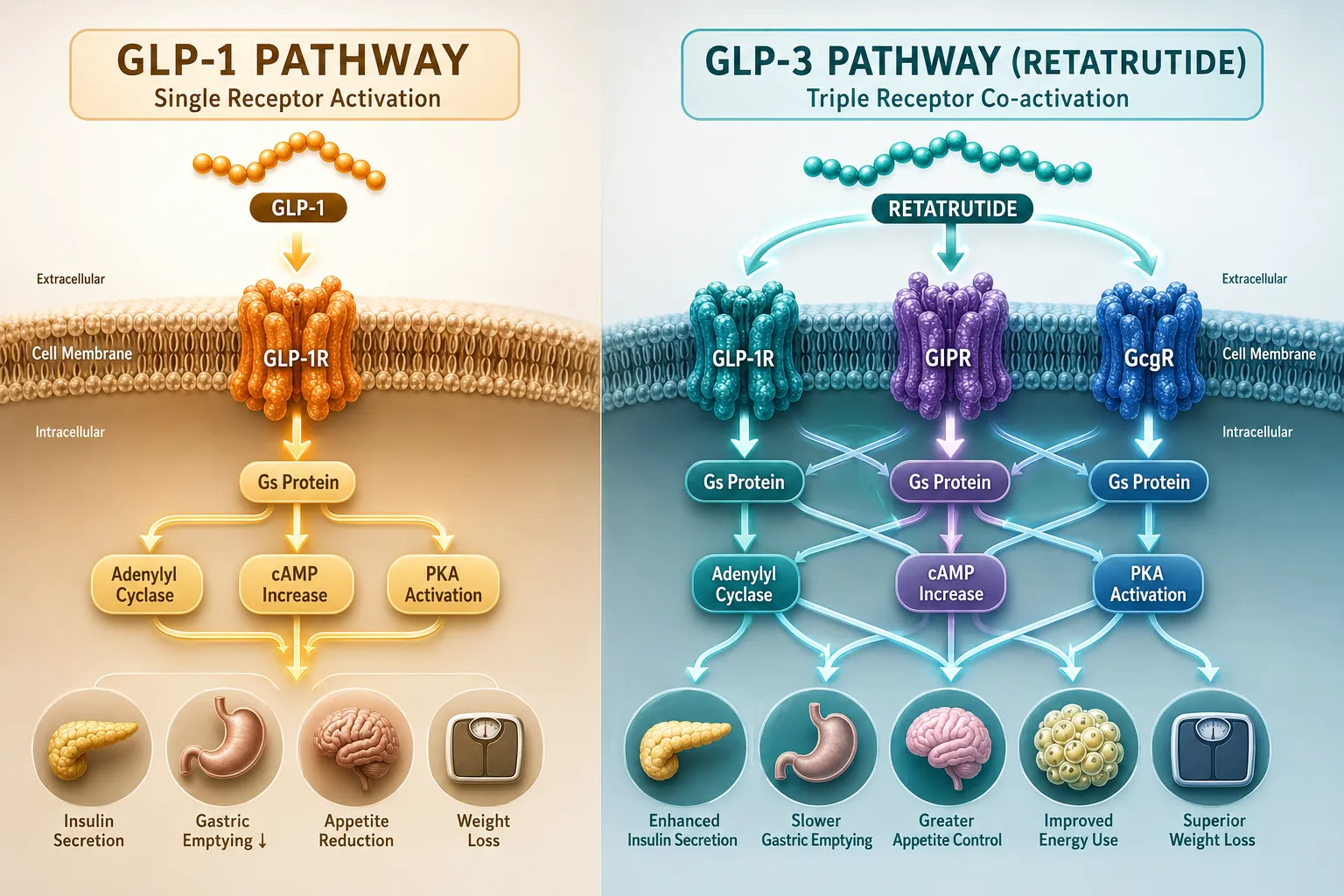
  • GLP-3, represented by retatrutide, is a triple-receptor agonist targeting GLP-1R, GIPR, and glucagon receptors simultaneously, producing additive metabolic effects.
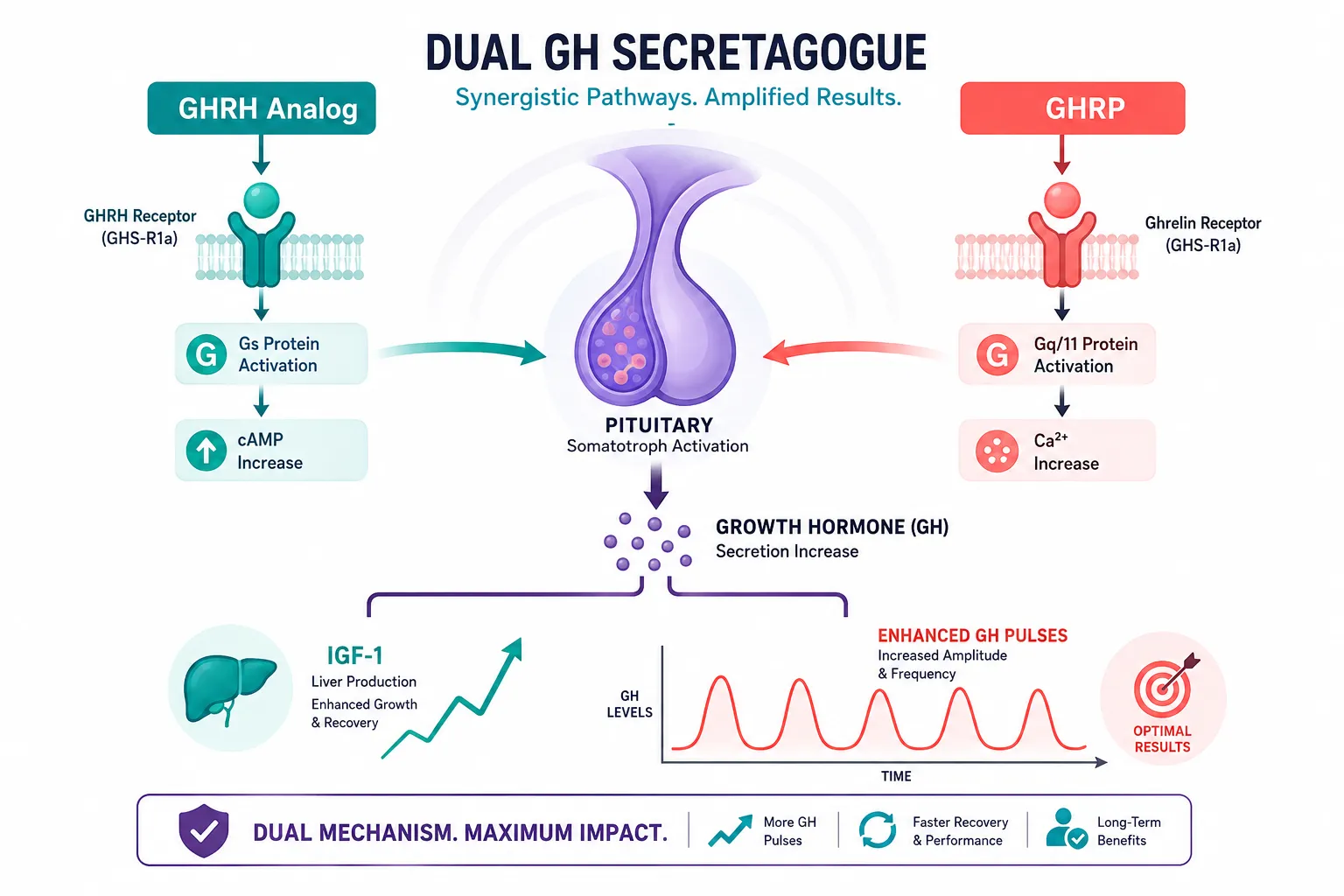
  • Growth hormone secretagogues stimulate the pituitary via GHRH receptors or ghrelin receptors, increasing endogenous GH pulse amplitude.
  • Different peptide families produce different outcomes because they bind to structurally distinct receptor classes and activate non-overlapping second-messenger pathways.
  • Purity and structural integrity of any peptide compound are non-negotiable for reliable downstream signaling.
Key Takeaways

How GLP-1 Receptor Agonists Activate Downstream Signaling

The molecular story of GLP-1 peptides begins at the cell surface. GLP-1 (glucagon-like peptide-1) is a 30-amino acid incretin hormone cleaved from proglucagon in intestinal L-cells. Its receptor, GLP-1R, belongs to the class B family of G-protein coupled receptors, a structurally distinct group that uses a large extracellular domain to capture peptide ligands.

Receptor Binding and Conformational Change

When GLP-1 approaches GLP-1R, the C-terminal helix of the peptide docks into the receptor's extracellular domain first. This initial contact triggers a conformational shift that draws the peptide's N-terminus into the transmembrane bundle, locking the receptor into an active state. The canonical molecular mechanism of GLP-1 receptor agonists has been refined through cryo-EM studies but the core two-step binding model remains the accepted framework.

The cAMP Cascade

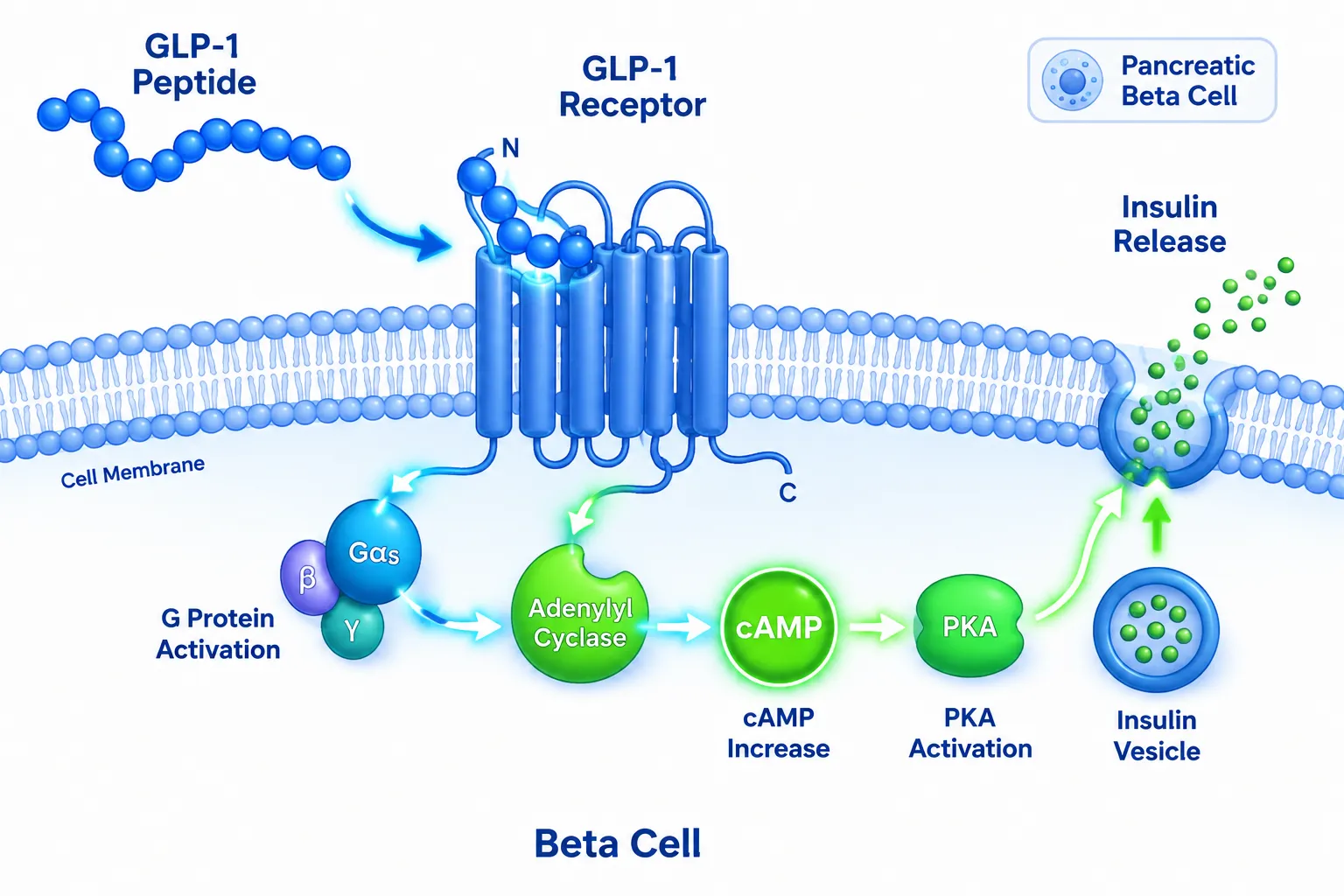
Active GLP-1R couples to the stimulatory G-protein (Gs), which activates adenylyl cyclase and elevates intracellular cyclic AMP (cAMP). Rising cAMP activates protein kinase A (PKA) and the exchange protein EPAC2. Together, these effectors:

  • Close ATP-sensitive potassium channels, depolarizing the beta cell membrane
  • Trigger calcium influx through voltage-gated channels
  • Stimulate insulin vesicle exocytosis in a glucose-dependent manner

This glucose dependency is the central safety feature of the GLP-1 pathway, insulin release only amplifies when blood glucose is already elevated, reducing hypoglycemia risk.

"The glucose-dependence of GLP-1 receptor signaling is not a limitation, it is an elegant molecular safeguard built into the receptor's coupling architecture."

Beyond the pancreas, GLP-1R is expressed in the hypothalamus, brainstem, and vagal afferents, where the same cAMP cascade suppresses appetite and slows gastric emptying. Researchers looking to purchase GLP-1 peptide for study purposes should prioritize verified purity, since even minor sequence truncations at the N-terminus abolish receptor activation.
The cAMP Cascade

GLP-3 and Multi-Receptor Agonism: A Mechanistic Overview

Understanding the complete guide to peptide mechanisms requires distinguishing single-receptor from multi-receptor strategies. The compound commonly referred to as GLP-3 (retatrutide) is a triagonist that simultaneously engages three receptor types:

Receptor Primary Tissue Key Metabolic Effect
GLP-1R Pancreas, CNS Insulin secretion, appetite suppression
GIPR Adipose, pancreas Enhanced insulin response, fat mobilization
Glucagon receptor Liver, adipose Hepatic glucose output, thermogenesis

Why Triple Agonism Produces Additive Outcomes

Each receptor activates Gs-cAMP signaling, but the downstream effectors diverge by tissue. Glucagon receptor activation in adipose tissue upregulates hormone-sensitive lipase, accelerating lipolysis. GIPR co-activation in the pancreas potentiates glucose-stimulated insulin secretion beyond what GLP-1R alone achieves. The net result is a broader metabolic remodeling effect compared to mono-agonism.

Those researching buy GLP-3 peptide options should note that the triagonist structure is significantly more complex than GLP-1 analogs, making synthesis quality especially critical.

Why Triple Agonism Produces Additive Outcomes

Growth Hormone Peptides: Pituitary Signaling and Secretagogue Mechanisms

Growth hormone secretagogues (GHS) represent a third mechanistic class. Rather than acting peripherally on metabolic tissues, they target the anterior pituitary and hypothalamus to amplify endogenous GH release. A well-studied example is tesa, a stabilized analog of growth hormone-releasing hormone (GHRH).

GHRH Receptor Pathway

Tesamorelin binds the GHRH receptor (GHRHR), a class B GPCR expressed on somatotroph cells. Receptor activation elevates cAMP, which opens voltage-gated calcium channels and triggers GH vesicle release. Critically, tesa preserves the pulsatile pattern of GH secretion, a feature that distinguishes it mechanistically from exogenous GH administration.

Ghrelin-Receptor Secretagogues

A parallel class of GHS compounds, including peptides like ipamorelin, binds the ghrelin receptor (GHSR-1a). GHSR-1a couples to Gq proteins, activating phospholipase C and generating IP3-mediated calcium release. This Gq pathway is mechanistically distinct from the GHRH-Gs route, which explains why combining both classes can produce synergistic GH pulse amplification.

Researchers interested in the broader peptide landscape, including mitochondria-targeted compounds like those found at Peptide SS-31, will find that each peptide class operates through a unique receptor-effector architecture. Similarly, tissue-repair peptides such as those covered in the BPC-157 and TB-500 peptides overview rely on growth factor receptor pathways rather than GPCR cascades entirely.

Why Receptor Selectivity Determines Metabolic Outcomes

The central lesson of this complete guide to peptide mechanisms is that receptor identity dictates biological outcome. Three structural variables drive selectivity:

  1. Peptide sequence, even single amino acid substitutions shift receptor affinity by orders of magnitude
  2. N-terminal modifications, fatty acid conjugations extend half-life but can alter receptor residence time
  3. Conformational stability, alpha-helical stabilization in GHRH analogs prevents enzymatic degradation that would otherwise truncate signaling

This is why sourcing from a best peptide manufacturer with verified analytical testing is not a commercial preference but a scientific necessity. A peptide with incorrect disulfide bonding or racemized residues will bind its receptor with altered kinetics, producing unpredictable downstream effects.

Conclusion

The mechanistic differences between GLP-1, GLP-3, and growth hormone peptides are not subtle, they operate through distinct receptor families, second-messenger systems, and tissue distributions. Researchers building a working knowledge of peptide pharmacology should start with receptor class identification, trace the primary second messenger (cAMP vs. IP3 vs. direct ion channel modulation), and then map the downstream effectors to the observed physiological outcome.

Actionable next steps:

  • Study cryo-EM structures of GLP-1R and GHRHR to visualize the binding interfaces described here
  • Cross-reference peptide purity certificates against known receptor activation thresholds before designing experiments
  • Explore the mechanistic profiles of adjacent peptide families, including BDNF peptides for neurotrophin signaling, to build a complete receptor-level map of the peptide landscape
  • Source compounds only from suppliers offering full analytical documentation to ensure structural fidelity

Mechanism-first understanding is the most durable foundation for any serious peptide research program.

https://www.puretestedpeptides.com/wp-content/uploads/2026/08/complete-guide-to-peptide-mechanisms-how-glp-1-glp-3-and-growth-hormone-peptides.webp 1024 1536 https://www.puretestedpeptides.com/wp-content/uploads/2026/01/buy-peptides-online.jpg 2026-08-07 13:06:472026-11-22 02:18:36Complete Guide to Peptide Mechanisms: How GLP-1, GLP-3, and Growth Hormone Peptides Work at the Molecular Level
Tesamorelin, Ipamorelin, and CJC-1295 With DAC: How Different GHRH Mimetic Profiles Shape Growth Hormone Study Outcomes

Tesamorelin, Ipamorelin, and CJC-1295 With DAC: How Different GHRH Mimetic Profiles Shape Growth Hormone Study Outcomes

August 6, 2026/0 Comments/in Uncategorized/by

Growth hormone secretagogue research has expanded rapidly, yet fewer than 15% of preclinical labs systematically account for half-life differences when designing GH pulse studies, a gap that skews IGF-1 readouts and muddies cross-study comparisons. Understanding how Tesamorelin, Ipamorelin, and CJC-1295 With DAC: How Different GHRH Mimetic Profiles Shape Growth Hormone Study Outcomes differ at the receptor, pulse, and IGF-1 level is now a foundational requirement for any serious research protocol.

Key Takeaways

  • Tesamorelin is a full-length GHRH analog with FDA-validated receptor fidelity and a short half-life suited to acute pulse studies.
  • Ipamorelin is a selective ghrelin-receptor agonist that drives clean GH pulses without significant cortisol or prolactin co-stimulation.
  • CJC-1295 with DAC uses albumin binding to achieve a 6-8 day effective half-life, fundamentally changing the exposure profile compared to short-acting analogs.
  • Receptor target, pulse shape, and IGF-1 trajectory each vary meaningfully across the three peptides, making protocol design critical.
  • Combination blends can leverage complementary mechanisms, but require careful assay planning to interpret outcomes correctly.

Receptor Targets and Mechanistic Profiles

The first variable that separates these three compounds is where they act.

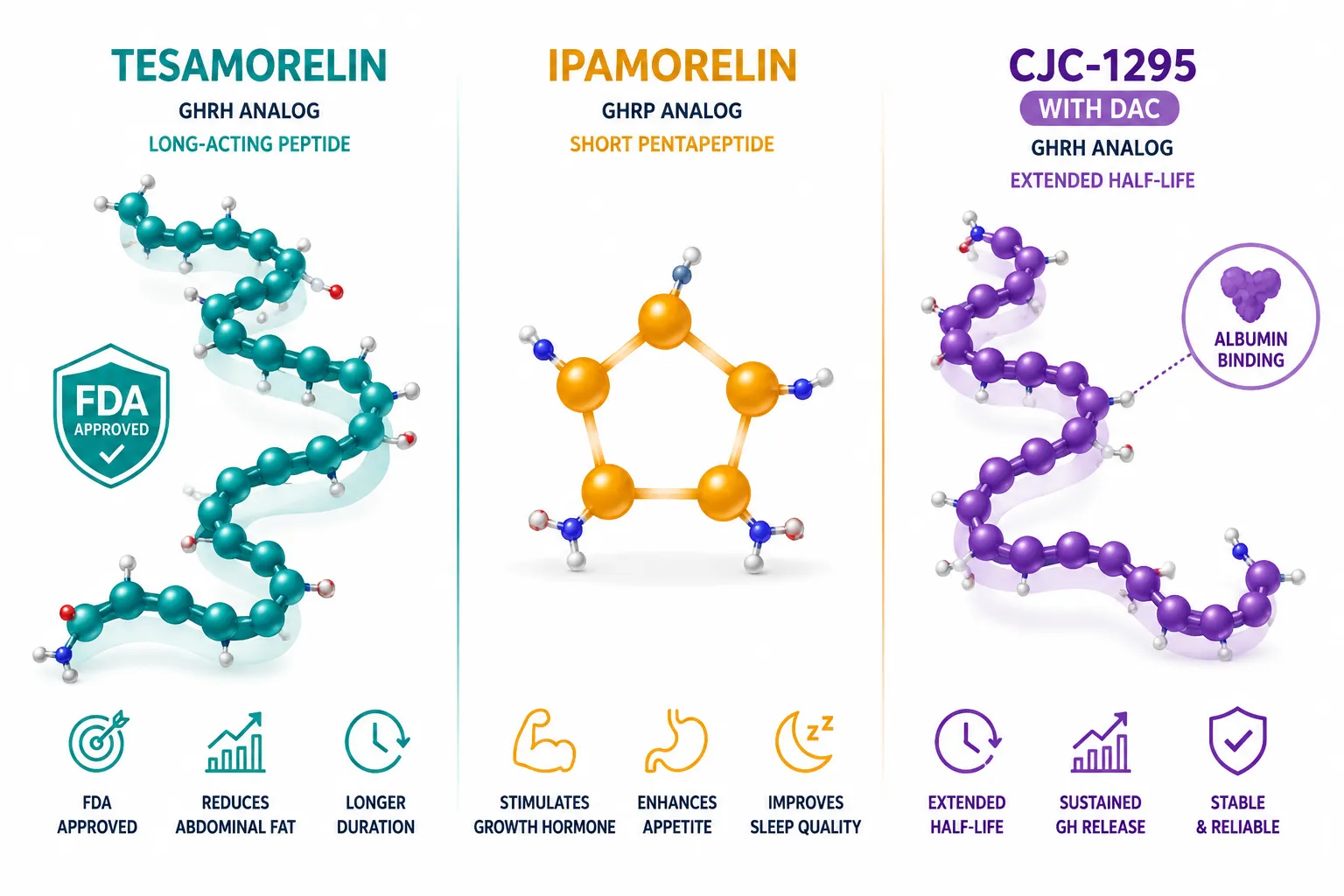
Tesamorelin is a stabilized synthetic analog of endogenous growth hormone-releasing hormone (GHRH). It binds selectively to the GHRH receptor on pituitary somatotrophs, mimicking the natural signal with high fidelity. Because it preserves the full 44-amino-acid structure of native GHRH, its downstream signaling closely parallels physiological GH release. Researchers exploring what Tesamorelin is and how it works will find it is the closest available analog to endogenous GHRH in terms of receptor engagement.

Ipamorelin operates through an entirely different pathway. As a selective ghrelin receptor (GHS-R1a) agonist, it stimulates GH release via the ghrelin axis rather than the GHRH receptor. Critically, Ipamorelin shows high selectivity, it does not meaningfully elevate cortisol, prolactin, or ACTH at research-relevant doses. This selectivity makes it a preferred tool when investigators need clean GH data without adrenal confounders. A detailed comparison of Ipamorelin vs Tesamorelin highlights how these distinct receptor pathways produce overlapping yet distinct downstream effects.

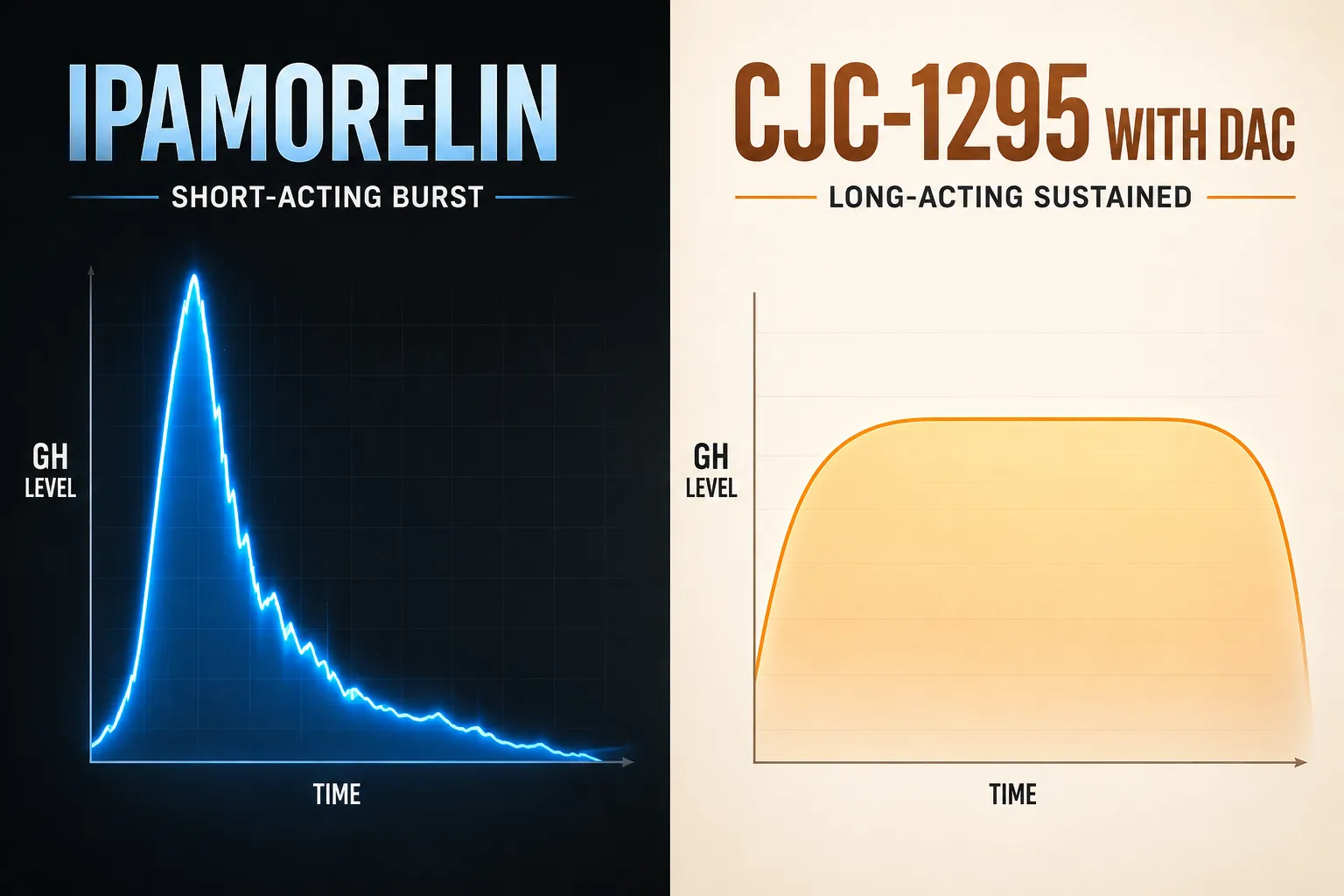
CJC-1295 with DAC is a GHRH receptor agonist like Tesamorelin, but its Drug Affinity Complex (DAC) modification enables covalent albumin binding in circulation. This single structural change transforms the molecule's pharmacokinetic profile entirely, extending the effective half-life to approximately 6-8 days versus the roughly 30-minute half-life of unmodified GHRH analogs. The result is sustained, tonic GH and IGF-1 elevation rather than discrete pulses.

How Pulse Characteristics and IGF-1 Responses Differ Across Protocols

How Pulse Characteristics and IGF-1 Responses Differ Across Protocols

The pharmacokinetic differences above translate directly into measurable differences in study outcomes. The table below summarizes the key parameters researchers should account for when designing protocols.

Parameter Tesamorelin Ipamorelin CJC-1295 with DAC
Receptor target GHRH-R GHS-R1a GHRH-R
Half-life ~30 min ~2 hours 6-8 days
GH pulse shape Sharp, physiological Sharp, selective Broad, sustained
IGF-1 trajectory Moderate elevation Moderate elevation Prolonged elevation
Dosing frequency Daily Daily or BID Weekly

"The DAC modification does not simply extend duration, it fundamentally changes the nature of GH secretion from pulsatile to tonic, which has downstream consequences for IGF-1 kinetics and receptor sensitivity."

Tesamorelin produces sharp, physiologically patterned GH pulses when dosed daily. Its IGF-1 response is consistent and well-characterized, making it ideal for studies requiring predictable, repeatable GH stimulation. Researchers can explore Tesamorelin peptide benefits and Tesamorelin dosage per day considerations when planning acute or subchronic protocols.

Ipamorelin generates similarly sharp pulses but through the ghrelin axis. Because its mechanism is independent of GHRH-R, it can be combined with GHRH analogs for synergistic GH release, a common rationale behind combination blends. Dosing guidance for CJC-1295 Ipamorelin dosage protocols reflects this synergistic design logic.

CJC-1295 with DAC drives sustained IGF-1 elevation that persists across the dosing interval. Weekly dosing designs are both practical and sufficient, but researchers must account for the tonic GH environment when interpreting anabolic or metabolic endpoints. The prolonged exposure also raises considerations around somatostatin feedback that do not apply to short-acting analogs.

Choosing the Right Peptide or Combination for Your Research Design

Choosing the Right Peptide or Combination for Your Research Design

Choosing the Right Peptide or Combination for Your Research Design

Selecting among these three compounds, or combining them, depends on the specific research question.

For acute GH pulse studies: Tesamorelin or Ipamorelin are the better choices. Their short half-lives allow investigators to control timing precisely and measure discrete pulse amplitude and frequency.

For sustained IGF-1 elevation studies: CJC-1295 with DAC is the logical candidate. Its weekly dosing simplifies long-duration protocols and reduces injection frequency as a confounding variable.

For combination protocols: Pairing Ipamorelin (GHS-R1a) with a GHRH-R agonist (Tesamorelin or CJC-1295 with DAC) leverages dual-axis stimulation. Researchers planning such designs should consult an assay planning and sourcing checklist for CJC-1295 Ipamorelin before finalizing their protocol. Multi-peptide blends such as the Tesamorelin CJC-1295 Ipamorelin 12mg blend are increasingly used in research settings where dual-axis stimulation is the experimental goal.

Key protocol considerations include:

  • Sampling windows: Short-acting peptides require frequent sampling (every 15-30 minutes post-dose); CJC-1295 with DAC allows wider intervals.
  • IGF-1 measurement timing: Tonic GH from DAC formulations elevates baseline IGF-1 continuously; acute studies need pre-dose baselines reset between sessions.
  • Somatostatin feedback: Prolonged GH stimulation may upregulate somatostatin tone, potentially blunting peak responses in extended DAC studies.
  • Assay interference: Cortisol and prolactin co-measurements are more critical in protocols using non-selective secretagogues.

Conclusion

The distinctions among Tesamorelin, Ipamorelin, and CJC-1295 With DAC in shaping growth hormone study outcomes are not subtle, they are mechanistically fundamental. Tesamorelin offers physiological GHRH-R fidelity with acute pulse control. Ipamorelin delivers selective ghrelin-axis stimulation without adrenal noise. CJC-1295 with DAC redefines the exposure profile entirely through albumin binding, converting pulsatile release into sustained tonic elevation.

Actionable next steps for research teams in 2026:

  1. Define the primary endpoint first, acute pulse amplitude, sustained IGF-1 elevation, or dual-axis synergy, then select the compound that matches that endpoint mechanistically.
  2. Review CJC-1295 Ipamorelin cycle design principles to align dosing intervals with the chosen compound's half-life.
  3. Use a Tesamorelin dosage calculator when standardizing per-subject dosing in Tesamorelin-inclusive protocols.
  4. Document the pharmacokinetic rationale for compound selection in all study reports to improve cross-lab reproducibility.

Matching the right GHRH mimetic profile to the right research question is the single most impactful decision a lab can make before the first assay runs.

https://www.puretestedpeptides.com/wp-content/uploads/2026/08/tesamorelin-ipamorelin-and-cjc-1295-with-dac-how-different-ghrh-mimetic-profiles.webp 1024 1536 https://www.puretestedpeptides.com/wp-content/uploads/2026/01/buy-peptides-online.jpg 2026-08-06 13:04:112026-08-06 13:04:11Tesamorelin, Ipamorelin, and CJC-1295 With DAC: How Different GHRH Mimetic Profiles Shape Growth Hormone Study Outcomes
Tesofensine, Enclomiphene, and Peptide-Based Approaches: How Small Molecules Fit Alongside GLP-3 and GH Secretagogues in Metabolic Research

Tesofensine, Enclomiphene, and Peptide-Based Approaches: How Small Molecules Fit Alongside GLP-3 and GH Secretagogues in Metabolic Research

August 6, 2026/0 Comments/in Uncategorized/by

"

Professional () hero image with (≤42 chars): 'Small Molecules & Metabolic Research' in crisp white on a deep navy

More than 650 million adults worldwide live with obesity, yet fewer than 5% of available investigational compounds target the full metabolic axis, appetite regulation, hormonal balance, and cellular energy production simultaneously. That gap is precisely where tesofensine, enclomiphene, and peptide-based approaches have drawn sustained research attention, each addressing a distinct but overlapping node in metabolic dysfunction.

This article maps how these small molecules and peptides compare mechanistically, what study endpoints researchers track, and where combination strategies may lead next.

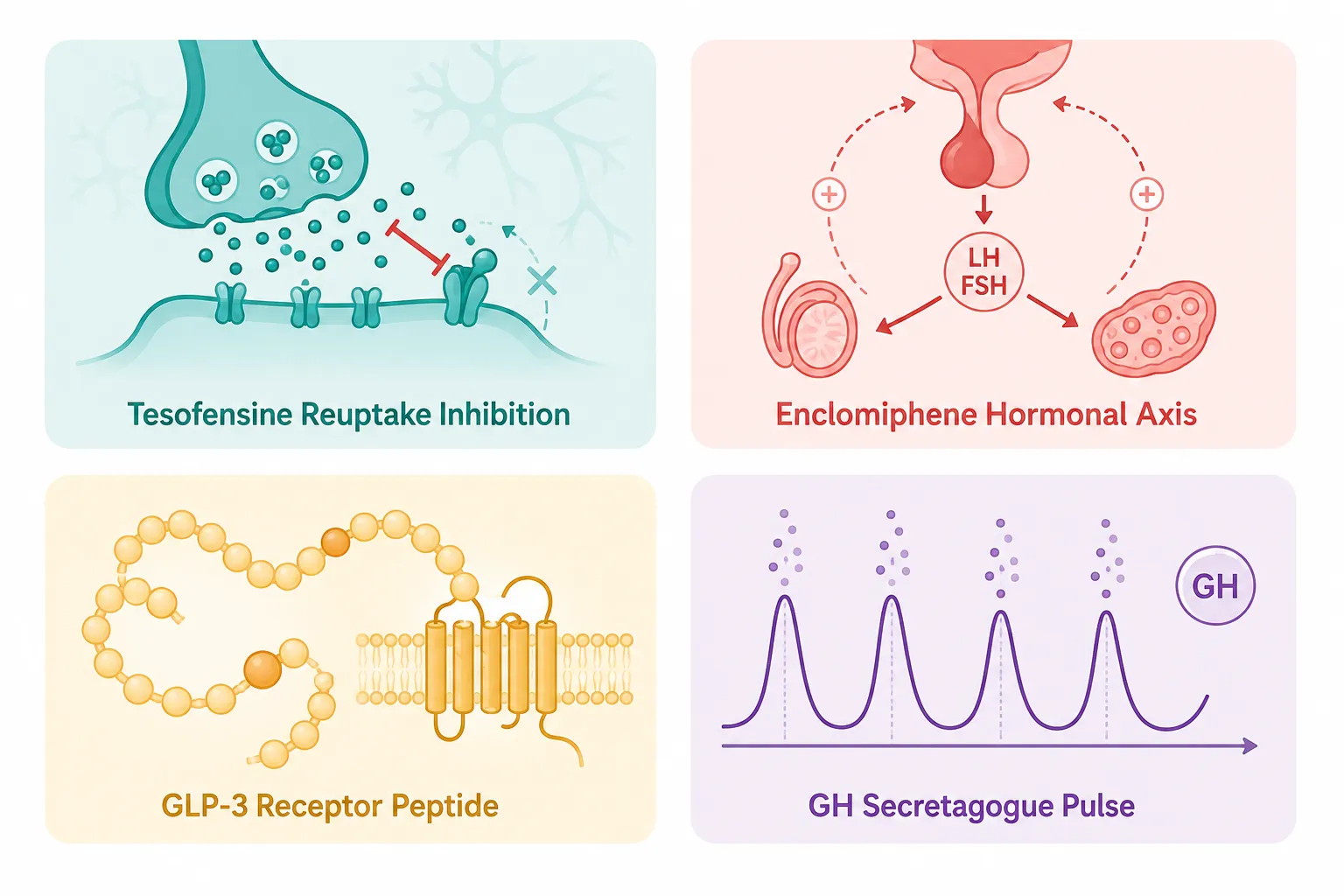
Editorial flat-vector infographic landscape () showing four distinct molecular pathway icons arranged in a 2x2 grid:

Key Takeaways

  • Tesofensine acts as a triple monoamine reuptake inhibitor; enclomiphene restores the hypothalamic-pituitary-gonadal axis, both target metabolic dysfunction through non-peptide mechanisms.
  • GLP-3 and GH secretagogue peptides operate through receptor-mediated signaling, offering complementary rather than redundant pathways.
  • Combining small molecules with peptide-based tools is an active area of preclinical inquiry, with multi-axis targeting as the central hypothesis.
  • Endpoint selection, body composition, insulin sensitivity, hormonal panels, differs meaningfully across compound classes.
  • Sourcing purity and documentation standards remain critical variables in any research protocol involving these agents.

Mechanisms Behind Tesofensine, Enclomiphene, and Peptide-Based Approaches in Metabolic Research

Tesofensine: Triple Reuptake Inhibition

Tesofensine blocks the reuptake of serotonin, dopamine, and norepinephrine. This triple monoamine inhibition reduces appetite signaling in the hypothalamus while increasing energy expenditure through sympathomimetic activity. Phase II clinical data published in The Lancet demonstrated mean weight reductions of 10.6% over 24 weeks at the 1.0 mg dose, a result that positioned tesofensine among the most potent investigational anti-obesity small molecules at the time.

Key research endpoints for tesofensine include:

  • Body weight and BMI reduction
  • Resting metabolic rate changes
  • Appetite hormone panels (ghrelin, leptin)
  • Cardiovascular safety markers (heart rate, blood pressure)

Enclomiphene: Restoring the HPG Axis

Enclomiphene is the trans-isomer of clomiphene citrate. Unlike its cis-counterpart zuclomiphene, enclomiphene has a short half-life and selectively blocks estrogen receptors in the hypothalamus, prompting increased LH and FSH secretion. The downstream result is restored endogenous testosterone production, a mechanism relevant to male hypogonadism and its associated metabolic consequences, including insulin resistance and adiposity.

"Hormonal optimization is not a peripheral concern in metabolic research, testosterone deficiency independently predicts visceral fat accumulation and reduced insulin sensitivity."

Enclomiphene research endpoints typically include:

  • Serum testosterone, LH, and FSH levels
  • Sperm count and morphology (fertility endpoints)
  • Fasting insulin and HOMA-IR scores
  • Body composition via DEXA scan

How GLP-3 and GH Secretagogues Extend the Peptide-Based Landscape

GLP-3 Peptides and Gut-Derived Signaling

GLP-3 (glucagon-like peptide 3) is a lesser-studied member of the proglucagon-derived peptide family. Research into GLP-3 RETA peptide has explored its potential roles in gut motility, nutrient absorption modulation, and metabolic signaling distinct from GLP-1. While GLP-1 agonists dominate clinical pipelines, GLP-3 represents an investigational frontier with a different receptor profile and potentially complementary metabolic effects.

Researchers sourcing GLP-1 peptides for metabolic studies frequently benchmark GLP-3 data against GLP-1 receptor activity to define mechanistic boundaries.

GH Secretagogues: Tesamorelin and the GHRH Axis

Growth hormone secretagogues stimulate endogenous GH release through GHRH receptor agonism or ghrelin receptor activation. Tesamorelin, a stabilized GHRH analog, has FDA approval for HIV-associated lipodystrophy and has been studied for visceral fat reduction in non-HIV populations. Research on tesa side effects and dosing is essential reading for any investigator designing GH secretagogue protocols.

GH secretagogue endpoints differ from small-molecule endpoints in important ways:

Compound Class Primary Endpoint Secondary Endpoints
Tesofensine Body weight reduction Heart rate, appetite hormones
Enclomiphene Serum testosterone HOMA-IR, body composition
GLP-3 peptides Gut metabolic signaling Nutrient absorption markers
GH secretagogues IGF-1 levels, visceral fat Lean mass, lipid panels

Combination Research Possibilities: Where Small Molecules Fit Alongside GLP-3 and GH Secretagogues

Combination Research Possibilities: Where Small Molecules Fit Alongside GLP-3 and GH Secretagogues

The central hypothesis driving combination research is multi-axis targeting: no single compound addresses appetite, hormonal balance, cellular energy, and body composition simultaneously. Small molecules like tesofensine and enclomiphene offer oral bioavailability and defined pharmacokinetic profiles, while peptides provide receptor specificity and physiological signaling patterns.

Preclinical models have begun exploring stacked protocols. For example:

  • Tesofensine + GH secretagogue: appetite suppression paired with lean mass preservation
  • Enclomiphene + GLP-1/GLP-3 peptides: hormonal axis restoration alongside gut-mediated glucose regulation
  • BPC-157 as a recovery adjunct: researchers reviewing BPC-157 core peptides documentation note its cytoprotective properties, which may support tissue integrity during aggressive metabolic interventions

Mitochondrial health is another emerging intersection point. SS-31 mitochondrial research themes suggest that cardiolipin-targeting peptides like SS-31 could support cellular energy efficiency in subjects undergoing metabolic recomposition protocols, a mechanistically distinct but synergistic contribution.

Researchers working with BPC-157 and TB-500 peptide combinations have also documented multi-peptide stacking approaches that inform how combination metabolic protocols might be structured.

Documentation and Sourcing Standards

Regardless of compound class, purity verification and third-party testing are non-negotiable in legitimate research. Certificate of Analysis (CoA) documentation, HPLC purity data, and mass spectrometry confirmation should accompany any research-grade compound. Investigators exploring peptides for research purposes should prioritize suppliers with transparent testing protocols.

Documentation and Sourcing Standards

Conclusion

The integration of tesofensine, enclomiphene, and peptide-based approaches alongside GLP-3 and GH secretagogues represents one of the most mechanistically rich areas in 2026 metabolic research. Each compound class addresses a distinct regulatory axis, neurotransmitter-mediated appetite control, HPG hormonal restoration, gut-derived peptide signaling, and GH-driven body composition, creating a logical framework for combination investigation.

Actionable next steps for researchers:

  1. Map the specific metabolic axis each compound targets before designing multi-agent protocols.
  2. Establish baseline biomarkers, testosterone, IGF-1, fasting insulin, body composition, to measure outcomes across compound classes.
  3. Review published safety and endpoint data for each agent independently before combining.
  4. Source compounds exclusively from suppliers providing verified CoA and third-party purity documentation.
  5. Monitor emerging GLP-3 and mitochondrial peptide literature, as these areas are generating rapid preclinical data in 2026.

The future of metabolic research is integrative. Understanding where small molecules end and peptide-based tools begin, and how they might work together, is the defining question for the next phase of investigation.

https://www.puretestedpeptides.com/wp-content/uploads/2026/08/tesofensine-enclomiphene-and-peptide-based-approaches-how-small-molecules-fit-al.webp 1024 1536 https://www.puretestedpeptides.com/wp-content/uploads/2026/01/buy-peptides-online.jpg 2026-08-06 13:03:502026-11-22 02:18:34Tesofensine, Enclomiphene, and Peptide-Based Approaches: How Small Molecules Fit Alongside GLP-3 and GH Secretagogues in Metabolic Research
Estrogen Receptor Biology for Peptide Researchers: How Enclomiphene and Related serms Interface With Endocrine Pathways

Estrogen Receptor Biology for Peptide Researchers: How Enclomiphene and Related serms Interface With Endocrine Pathways

August 5, 2026/0 Comments/in Uncategorized/by

Testosterone levels in men have declined by roughly 1% per year since the 1980s, a trend that has pushed hormone optimization research, including the study of selective estrogen receptor modulators, squarely into the mainstream of endocrine science. For researchers working with peptides and growth hormone secretagogues, understanding estrogen receptor biology for peptide researchers: how enclomiphene and related serms interface with endocrine pathways is no longer optional. Estrogen receptors sit at the crossroads of the hypothalamic-pituitary-gonadal (HPG) axis, directly influencing the same feedback loops that peptide protocols are designed to modulate.

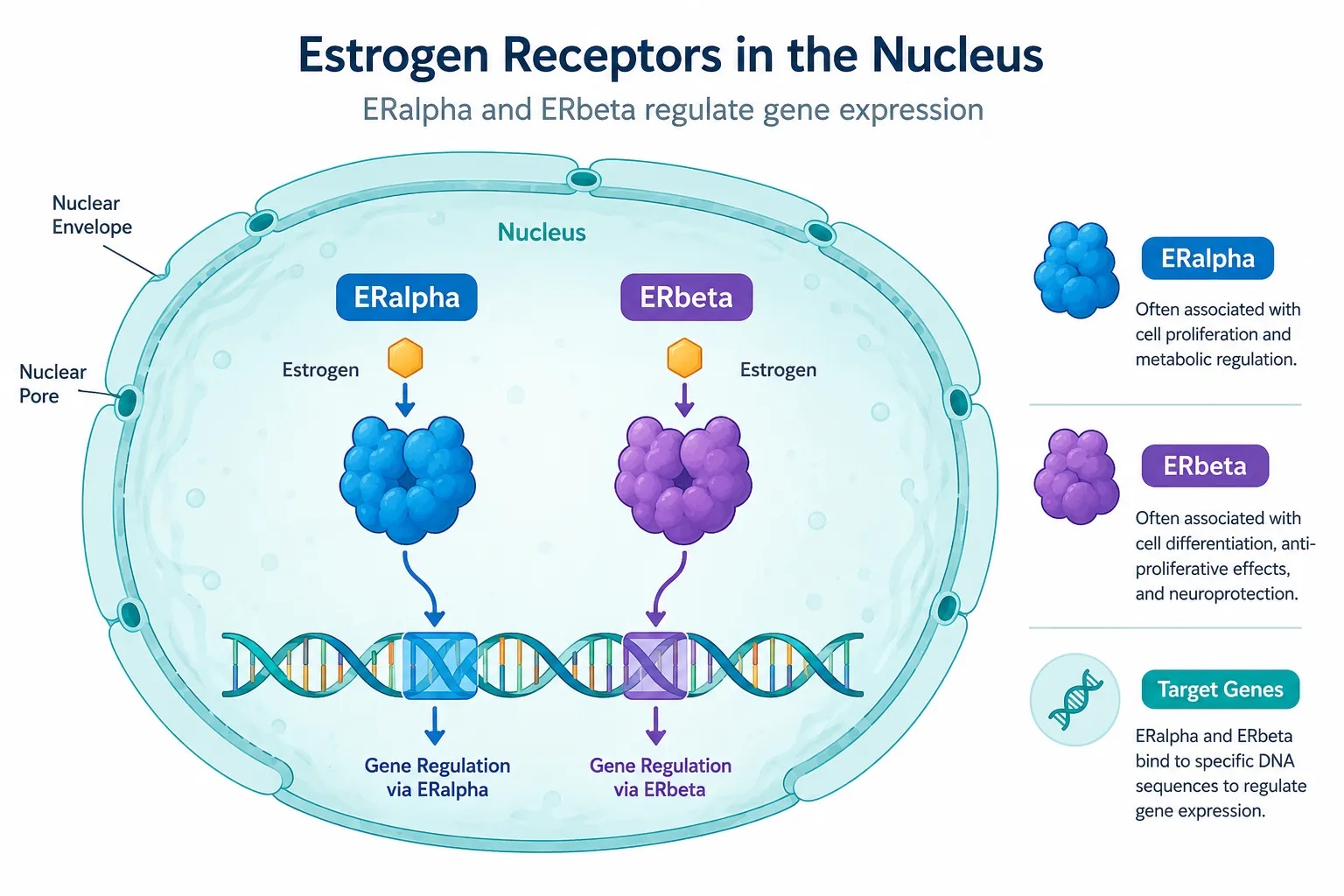
Flat-vector infographic illustration in bright clinical white and teal palette showing a stylized cross-section of a cell

Key Takeaways

  • Estrogen receptors exist in at least three functionally distinct forms, ERalpha, ERbeta, and GPER, each producing different downstream effects depending on tissue type.
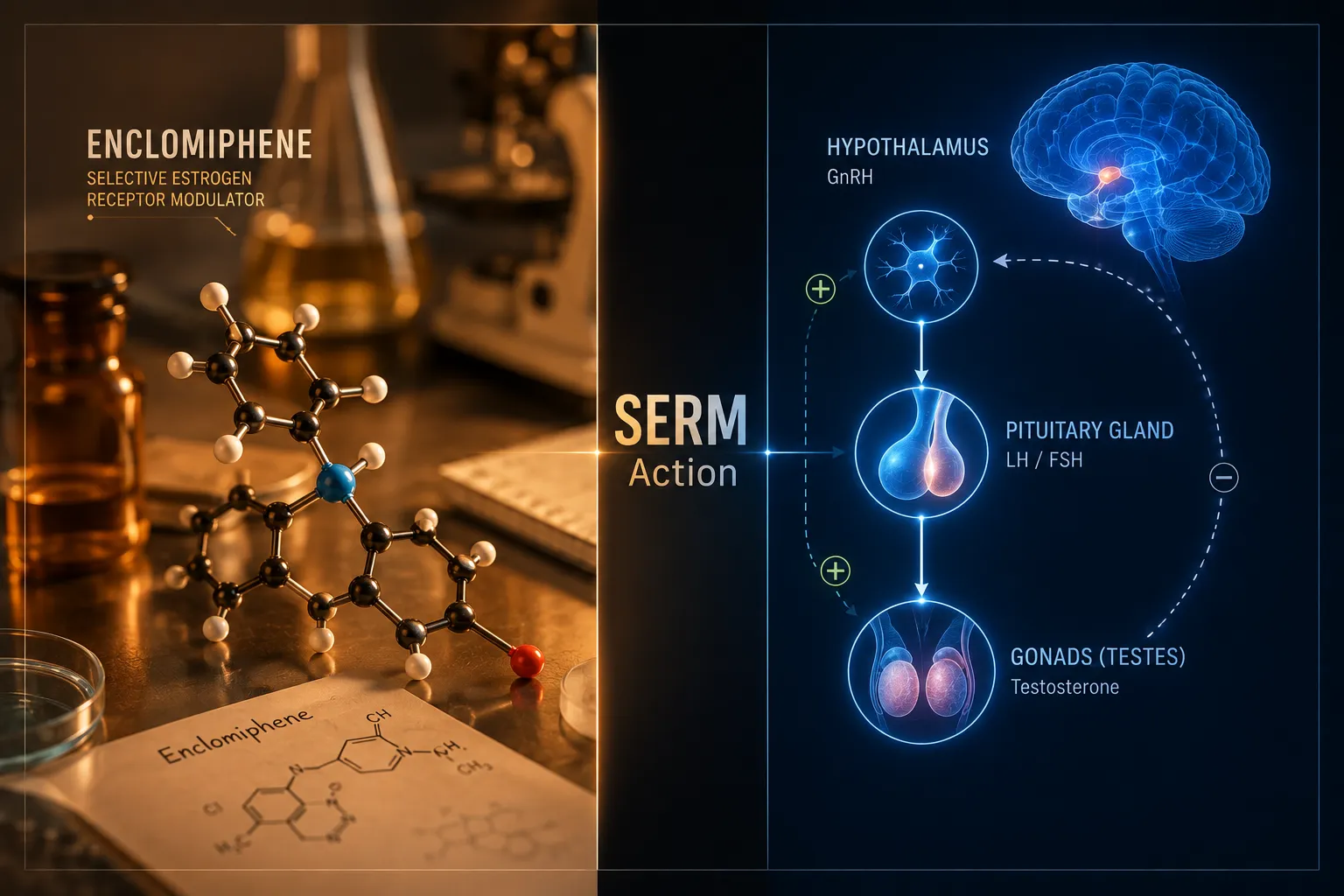
  • serms like enclomiphene act as tissue-selective modulators, blocking estrogen's negative feedback at the hypothalamus to elevate LH, FSH, and endogenous testosterone.
  • Coregulator proteins determine whether a serm behaves as an agonist or antagonist in a given tissue, explaining the drug's differential effects across organ systems.
  • Peptide researchers combining growth hormone secretagogues with serm protocols should understand how these pathways intersect to avoid redundant or counterproductive signaling.
  • Purity and characterization of research compounds remain critical variables when studying serm-peptide interactions.

The Architecture of Estrogen Receptor Signaling

Estrogen does not act through a single receptor. Three receptor types carry its signal into cells: ERalpha (ERa), ERbeta (ERb), and the membrane-bound G protein-coupled estrogen receptor (GPER). Each has a distinct tissue distribution and a distinct set of coregulator proteins that shape its final biological output.

ERalpha dominates in the uterus, liver, bone, and the hypothalamus. ERbeta is more prominent in the ovaries, lungs, and central nervous system. GPER, a newer focus in endocrine and vascular biology, mediates rapid non-genomic estrogen responses, including vasodilation and insulin secretion, that occur too quickly to involve gene transcription.

Genomic vs. non-genomic signaling is a critical distinction:

Pathway Receptor Involved Time to Effect Mechanism
Classical genomic ERalpha / ERbeta Hours DNA binding, gene transcription
Non-genomic GPER, membrane ERs Seconds to minutes Second messengers (cAMP, MAPK)
Tethered genomic ERalpha / ERbeta Hours AP-1 or Sp1 transcription factors

When a serm binds to ERalpha or ERbeta, it induces a specific three-dimensional shape change in the receptor's ligand-binding domain. That shape change determines which coregulator proteins are recruited. Coactivators amplify gene transcription; corepressors suppress it. The ratio of these proteins in any given tissue is what makes tamoxifen estrogenic in bone but anti-estrogenic in breast tissue, and it is the same principle that governs enclomiphene's selectivity.

How Enclomiphene and Related serms Interface With Endocrine Pathways

Clomiphene citrate has been used in fertility medicine for decades, but it is a racemic mixture of two isomers with opposing properties. Enclomiphene is the trans-isomer, the component responsible for the majority of the HPG axis stimulation. Zuclomiphene, the cis-isomer, is weakly estrogenic and has a much longer half-life, contributing to side effects in the original mixture.

Enclomiphene's primary mechanism is competitive antagonism at hypothalamic ERalpha receptors. Estrogen normally suppresses GnRH pulse frequency through negative feedback. By blocking that feedback signal, enclomiphene allows GnRH pulses to increase, which drives greater pituitary release of LH and FSH, which in turn stimulates testicular testosterone production.

"The HPG axis is a finely tuned feedback loop. serms like enclomiphene do not add hormones, they remove a brake."

This mechanism is directly relevant to researchers studying peptide stacks that include growth hormone secretagogues. Resources like the serm, Ipamorelin, and CJC-1295 research overview explore how these pathways can be studied together. Similarly, the serm, Ipamorelin, and CJC-1295 dosage considerations outline how researchers have approached combined protocols.

Other serms in current research include:

  • Tamoxifen, strong ERalpha antagonist in breast, partial agonist in bone and uterus
  • Raloxifene, bone-protective, neutral to antagonistic in breast, no uterine stimulation
  • Toremifene, structural analog of tamoxifen with a slightly different coregulator recruitment profile
  • Ospemifene, agonist in vaginal tissue, used in genitourinary research

Each of these compounds recruits a different coregulator constellation, reinforcing the coregulator-centric model of serm action that has replaced older simple agonist/antagonist frameworks.

How Enclomiphene and Related serms Interface With Endocrine Pathways

Practical Implications for Peptide Research Protocols

Understanding estrogen receptor biology for peptide researchers: how enclomiphene and related serms interface with endocrine pathways becomes especially actionable when designing multi-compound research protocols. Growth hormone secretagogues such as tesa, ipamorelin, and CJC-1295 operate on the GHRH/somatostatin axis, a system that intersects with sex hormone signaling in several ways.

Estrogen modulates IGF-1 sensitivity and GH pulse amplitude. Blocking estrogenic feedback at the hypothalamus with a serm can therefore alter the baseline hormonal environment in which GH secretagogues operate. Researchers studying tesa peptide benefits or reviewing tesa dosage protocols should factor in this cross-axis interaction.

Peptide researchers sourcing compounds for endocrine studies should also consider purity standards. Exploring all peptides available for research from verified suppliers reduces confounding variables. Those investigating where to source serms for laboratory use can review where to buy a serm for research purposes for guidance on compound availability and quality standards.

Key research design considerations:

  • Establish baseline LH, FSH, and total testosterone before introducing any serm
  • Account for GPER-mediated non-genomic effects, which may not appear in standard genomic assays
  • Recognize that zuclomiphene contamination in impure enclomiphene preparations will confound results
  • Monitor coregulator expression patterns if tissue-specific agonism/antagonism is a study endpoint

Researchers working with aging-related endocrine models may also find value in the aging support peptide category, where serm-adjacent compounds are increasingly studied alongside secretagogues for their complementary effects on the HPG and GH axes.

Practical Implications for Peptide Research Protocols

Conclusion

Estrogen receptor biology for peptide researchers: how enclomiphene and related serms interface with endocrine pathways is a foundational topic for anyone designing serious hormone or peptide research protocols in 2026. The key actionable steps are clear: distinguish between ERalpha, ERbeta, and GPER when interpreting study outcomes; apply the coregulator-centric model to predict tissue-specific serm behavior; and account for HPG axis cross-talk when combining serms with growth hormone secretagogues like ipamorelin or tesamorelin.

Researchers should prioritize high-purity, well-characterized compounds to minimize experimental noise. Reviewing the IPA and Sermorelin stack research alongside serm mechanism data provides a more complete picture of how these endocrine pathways interact. As the coregulator-centric model continues to mature, researchers who understand receptor-level selectivity will be best positioned to design protocols that yield reproducible, meaningful data.

https://www.puretestedpeptides.com/wp-content/uploads/2026/08/estrogen-receptor-biology-for-peptide-researchers-how-enclomiphene-and-related-s.webp 1024 1536 https://www.puretestedpeptides.com/wp-content/uploads/2026/01/buy-peptides-online.jpg 2026-08-05 13:04:362026-11-22 02:18:33Estrogen Receptor Biology for Peptide Researchers: How Enclomiphene and Related serms Interface With Endocrine Pathways
Tesamorelin and Ipamorelin Combination Protocols: GH-Axis Modulation and Visceral Fat Research Design

Tesamorelin and Ipamorelin Combination Protocols: GH-Axis Modulation and Visceral Fat Research Design

August 5, 2026/0 Comments/in Uncategorized/by

Visceral adipose tissue (VAT) is metabolically distinct from subcutaneous fat, it drives insulin resistance, systemic inflammation, and cardiovascular risk at rates that subcutaneous depots simply do not. Targeting VAT through the growth hormone (GH) axis has become one of the most studied strategies in metabolic peptide research. Tesamorelin and Ipamorelin combination protocols: GH-axis modulation and visceral fat research design represent a sophisticated dual-secretagogue framework that addresses this challenge from two complementary biological angles simultaneously.

Flat-vector infographic landscape () showing dual GH secretagogue mechanism diagram: two molecular pathway arrows labeled

Key Takeaways

  • Tesamorelin acts as a GHRH analog, stimulating the pituitary through the GHRH receptor, while ipamorelin acts as a ghrelin-receptor agonist (GHSR), creating two distinct but synergistic GH-release pathways.
  • Combining both peptides in research protocols produces amplified, more physiologically pulsatile GH secretion compared to either agent alone.
  • Tesamorelin has the strongest clinical evidence base for visceral fat reduction, particularly in HIV-associated lipodystrophy populations.
  • Dual-secretagogue research designs must control for IGF-1 elevation, cortisol blunting, and inter-dose timing to produce reliable metabolic data.
  • Ipamorelin's selectivity for GH release with minimal cortisol or prolactin stimulation makes it a preferred GHSR agonist for combination work.

How the GH Axis Responds to Dual Secretagogue Stimulation

The GH axis operates through two primary regulatory inputs: growth hormone-releasing hormone (GHRH), which stimulates GH secretion, and somatostatin, which inhibits it. Ghrelin-receptor agonists like ipamorelin add a third lever, they amplify GH pulse amplitude by acting on GHSR-1a receptors independently of the GHRH pathway.

Tesamorelin is a synthetic analog of endogenous GHRH, stabilized with a trans-3-hexenoic acid modification that extends its half-life. It binds GHRH receptors on somatotroph cells in the anterior pituitary, triggering GH synthesis and release. For a detailed breakdown of its pharmacology, see this overview of what tesa is and how it works.

Ipamorelin, by contrast, is a pentapeptide GHSR agonist. It mimics ghrelin's action without significantly raising cortisol or prolactin, a key advantage over older GHRPs like GHRP-6 or hexarelin. Researchers comparing secretagogue profiles can reference this ipamorelin vs. sermorelin vs. hexarelin comparison for mechanistic context.

When both agents are co-administered, the GHRH pathway and the ghrelin pathway converge on the somatotroph simultaneously. The result is a supra-additive increase in GH pulse amplitude, a phenomenon well-documented in pituitary physiology. This dual-pathway stimulation is the core rationale behind tesa and ipamorelin combination protocols for GH-axis modulation and visceral fat research design.

GH Pulse Architecture: Why Pulsatility Matters

Continuous GH elevation is not the goal. Physiological GH acts in pulses, typically 4 to 9 pulses per 24 hours in healthy adults. Pulsatile GH preferentially activates lipolytic pathways in visceral adipocytes, while tonic GH exposure can desensitize receptors and paradoxically increase insulin resistance.

Feature Tesamorelin Alone Ipamorelin Alone Combination Protocol
Mechanism GHRH receptor agonism GHSR-1a agonism Dual-pathway convergence
GH Pulse Amplitude Moderate increase Moderate increase High increase
Cortisol Effect Minimal Minimal Minimal
VAT Evidence Strong (clinical trials) Indirect/preclinical Emerging
IGF-1 Elevation Moderate Mild Higher; requires monitoring

Visceral Fat Mechanisms in Tesamorelin and Ipamorelin Combination Research Design

Visceral Fat Mechanisms in Tesamorelin and Ipamorelin Combination Research Design

Tesamorelin's effect on VAT is the most clinically validated aspect of GH-secretagogue research. Phase III trials demonstrated a 15-20% reduction in VAT area in HIV-associated lipodystrophy patients over 26 weeks. The mechanism involves GH-driven upregulation of hormone-sensitive lipase (HSL) and adipose triglyceride lipase (ATGL) in visceral adipocytes, combined with suppression of lipoprotein lipase (LPL) activity, the enzyme responsible for fat storage.

For researchers designing tesamorelin-focused protocols, the tesa dosage calculator and tesa dosage chart provide structured reference points for weight-adjusted and time-based dosing frameworks.

Ipamorelin's contribution to VAT reduction is less direct but mechanistically important. By amplifying GH pulse amplitude, it enhances the lipolytic signal that tesa initiates. Research models suggest the combination may also modulate adipokine secretion, particularly adiponectin and leptin, though controlled human data remain limited as of 2026.

Key Variables in Dual-Secretagogue Research Design

Researchers building combination protocols should account for the following variables:

  • Timing of co-administration: Simultaneous injection versus staggered dosing (e.g., ipamorelin 30 minutes before tesa) affects peak GH amplitude differently.
  • IGF-1 monitoring: Dual stimulation elevates IGF-1 more than either agent alone; baseline and interval IGF-1 measurement is essential.
  • Fasting state: GH secretion is blunted by postprandial insulin; administering secretagogues in a fasted state (typically pre-sleep) maximizes pulse amplitude.
  • Somatostatin rebound: Repeated stimulation can upregulate somatostatin tone; research designs should incorporate washout periods or cycling protocols.

For comparison with single-agent GHRH protocols, the tesa vs. CJC-1295 analysis offers useful mechanistic contrast. Researchers interested in multi-peptide frameworks may also find the sermorelin, ipamorelin, and CJC-1295 combination overview relevant for comparative design.

Designing Research Protocols Around GH-Axis Modulation and Metabolic Outcomes

Designing Research Protocols Around GH-Axis Modulation and Metabolic Outcomes

A rigorous tesa and ipamorelin combination protocol for GH-axis modulation and visceral fat research design requires clearly defined endpoints, standardized measurement tools, and mechanistic controls.

Primary endpoints in VAT-focused research typically include:

  • Cross-sectional VAT area via DEXA or CT imaging
  • Fasting triglycerides and HDL-C
  • IGF-1 serum levels
  • Waist circumference as a surrogate marker

Secondary endpoints may include insulin sensitivity indices (HOMA-IR), adipokine panels, and GH pulse profiling via frequent sampling protocols.

Researchers should also evaluate potential adverse signal patterns. Reviewing documented tesa side effects and understanding how they may be modified by concurrent ipamorelin exposure is a necessary step in protocol safety design.

For broader metabolic research contexts, adipotide (FTPP) represents a distinct mechanistic approach to VAT targeting, useful as a comparative reference when evaluating GH-axis versus non-GH-axis fat reduction strategies.

"The combination of a GHRH analog and a GHSR agonist does not simply add two effects, it multiplies the pituitary's output through synchronized receptor convergence."

Dosing frameworks for combination protocols should reference established single-agent baselines. The tesa dosage per day guide provides a clinical anchor from which combination adjustments can be modeled.

Conclusion

Tesamorelin and ipamorelin combination protocols represent one of the most mechanistically coherent approaches to GH-axis modulation and visceral fat research design available in the peptide research landscape. By engaging both the GHRH receptor and GHSR-1a simultaneously, dual-secretagogue frameworks produce amplified, pulsatile GH release that preferentially targets visceral adipose tissue through well-characterized lipolytic pathways.

Actionable next steps for researchers:

  1. Establish baseline IGF-1, fasting insulin, and VAT imaging before initiating any combination protocol.
  2. Use validated dosing references for each agent independently before modeling combination schedules.
  3. Design protocols with defined cycling periods to prevent somatostatin upregulation and receptor desensitization.
  4. Monitor for additive IGF-1 elevation and document all adverse signals systematically.
  5. Compare findings against single-agent controls to isolate the combinatorial effect.

As 2026 research continues to refine dual-secretagogue models, the tesamorelin-ipamorelin combination stands as a high-priority framework for investigators focused on metabolic health, GH pulsatility, and evidence-based visceral fat reduction strategies.

https://www.puretestedpeptides.com/wp-content/uploads/2026/08/tesamorelin-and-ipamorelin-combination-protocols-gh-axis-modulation-and-visceral.webp 1024 1536 https://www.puretestedpeptides.com/wp-content/uploads/2026/01/buy-peptides-online.jpg 2026-08-05 13:04:152026-11-22 02:18:33Tesamorelin and Ipamorelin Combination Protocols: GH-Axis Modulation and Visceral Fat Research Design
Page 2 of 212

Tag Archive for: tesa

Nothing Found

Sorry, no posts matched your criteria

×

Helpful Links

  • My account
  • Cart
  • Checkout
  • Refund and Returns Policy
  • Privacy Policy
  • SMS Privacy Policy
  • Login
  • My Account
  • Logout
  • About
  • Contact
  • COA / Lab Testing
  • Shipping Policy
  • Terms and Conditions
  • Research Use Disclaimer

USA Made Lab Tested Peptides

All products are sold for research, laboratory, or analytical purposes only, and are not for human consumption


Pure Tested Peptides is a chemical supplier. Pure Tested Peptides is not a compounding / chemical compounding facility as defined under 503A of the Federal Food, Drug, and Cosmetic act. Pure Tested Peptides is not an outsourcing facility as defined under 503B of the Federal Food, Drug, and Cosmetic act.

The statements made within this website have not been evaluated by the US Food and Drug Administration. The products we offer are not intended to diagnose, treat, cure or prevent any disease.

Human/Animal Consumption Prohibited. Laboratory/In-Vitro Experimental Use Only

Scroll to top Scroll to top Scroll to top