

5-Amino-1MQ Peptide: Investigating Its Impact on NAD+ Metabolism and Cellular Energetics in Research Models
NAD+ levels in human tissue drop by as much as 50% between early adulthood and midlife, a decline now linked to impaired mitochondrial function, reduced metabolic efficiency, and accelerated cellular aging. Against this backdrop, the study of 5-Amino-1MQ peptide: investigating its impact on NAD+ metabolism and cellular energetics in research models has emerged as one of the more compelling areas in preclinical metabolic science. This article examines what the current evidence shows, where the research gaps remain, and what investigators should consider when working with this compound in 2026.
Key Takeaways
- 5-Amino-1MQ is a selective small-molecule inhibitor of the enzyme NNMT, which directly regulates NAD+ availability in cells.
- In adipocyte research models, the compound demonstrates an EC50 of approximately 2.3 µM, indicating meaningful potency at low concentrations.
- Preclinical rodent studies show tissue-specific elevations in NAD+ and improvements in metabolic markers associated with obesity models.
- The compound influences sirtuin activation and methyl donor metabolism, connecting NAD+ salvage to broader epigenetic regulation.
- As of 2026, 5-Amino-1MQ remains a research-only compound with no clinical approvals; long-term safety data are limited.
How 5-Amino-1MQ Works: NNMT Inhibition and the NAD+ Salvage Pathway
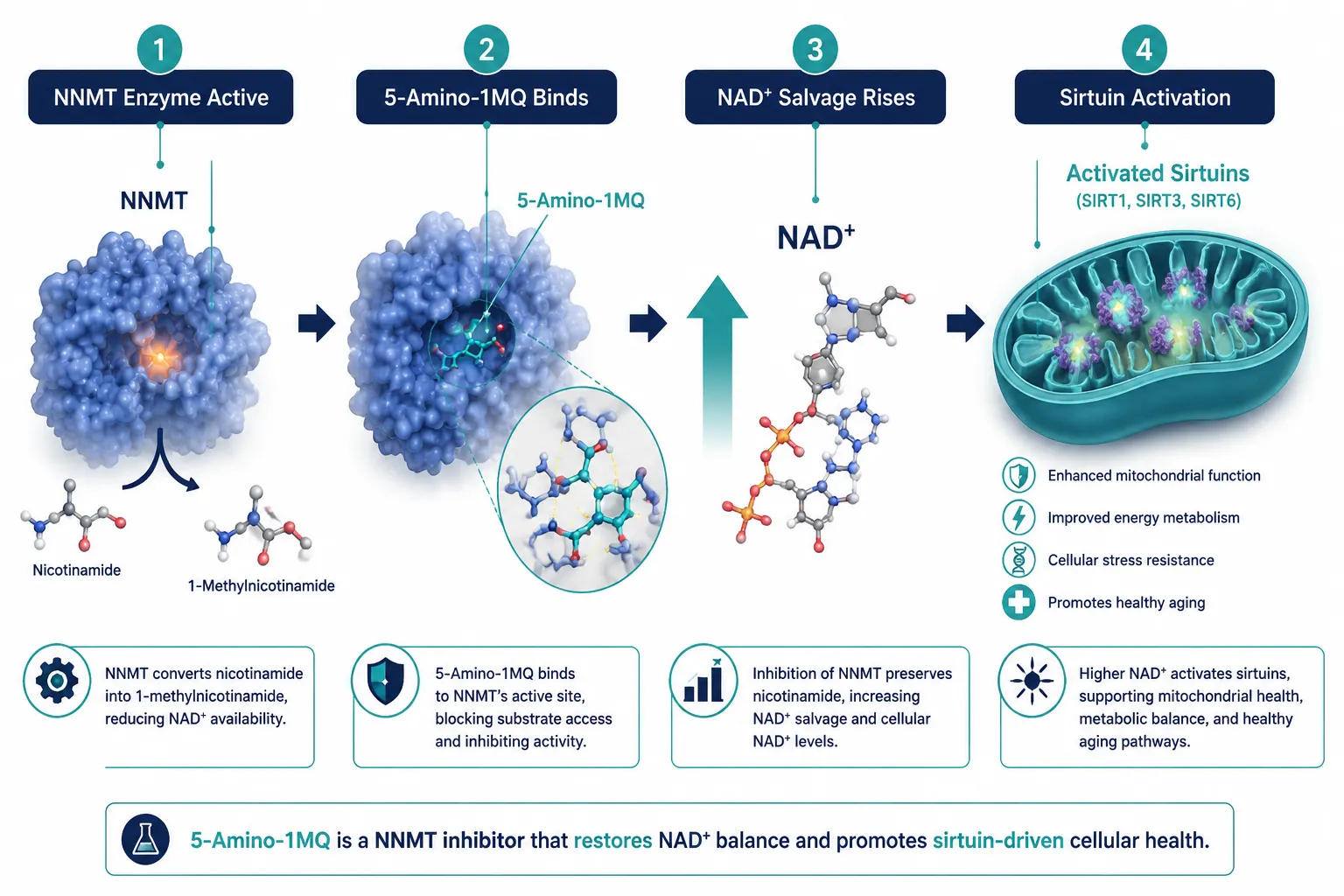
The mechanism behind 5-Amino-1MQ centers on its inhibition of nicotinamide N-methyltransferase (NNMT), an enzyme that consumes nicotinamide, a direct precursor in the NAD+ salvage pathway. Under normal physiological conditions, NNMT methylates nicotinamide using S-adenosylmethionine (SAM) as a methyl donor, converting it to 1-methylnicotinamide and effectively removing it from the NAD+ biosynthetic pool.
By selectively blocking NNMT, 5-Amino-1MQ redirects nicotinamide back into the salvage pathway, where it is recycled into NAD+. This dual effect, preserving a NAD+ precursor while simultaneously conserving SAM for other methylation reactions, gives the compound a metabolic leverage that simple NAD+ precursor supplementation does not replicate.
"NNMT inhibition represents a fundamentally different strategy from direct NAD+ precursor loading. It targets the drain rather than increasing the supply."
Key enzymatic data from adipocyte models:
| Parameter | Value |
|---|---|
| Target enzyme | NNMT |
| EC50 in adipocytes | ~2.3 µM |
| Primary substrate redirected | Nicotinamide |
| Methyl donor conserved | SAM |
| Downstream activators | Sirtuins (SIRT1, SIRT3) |
This selectivity profile makes 5-Amino-1MQ particularly useful for researchers studying the intersection of NAD+ metabolism, epigenetic regulation, and metabolic disease.
Cellular Energetics: What Research Models Reveal About Mitochondrial Function
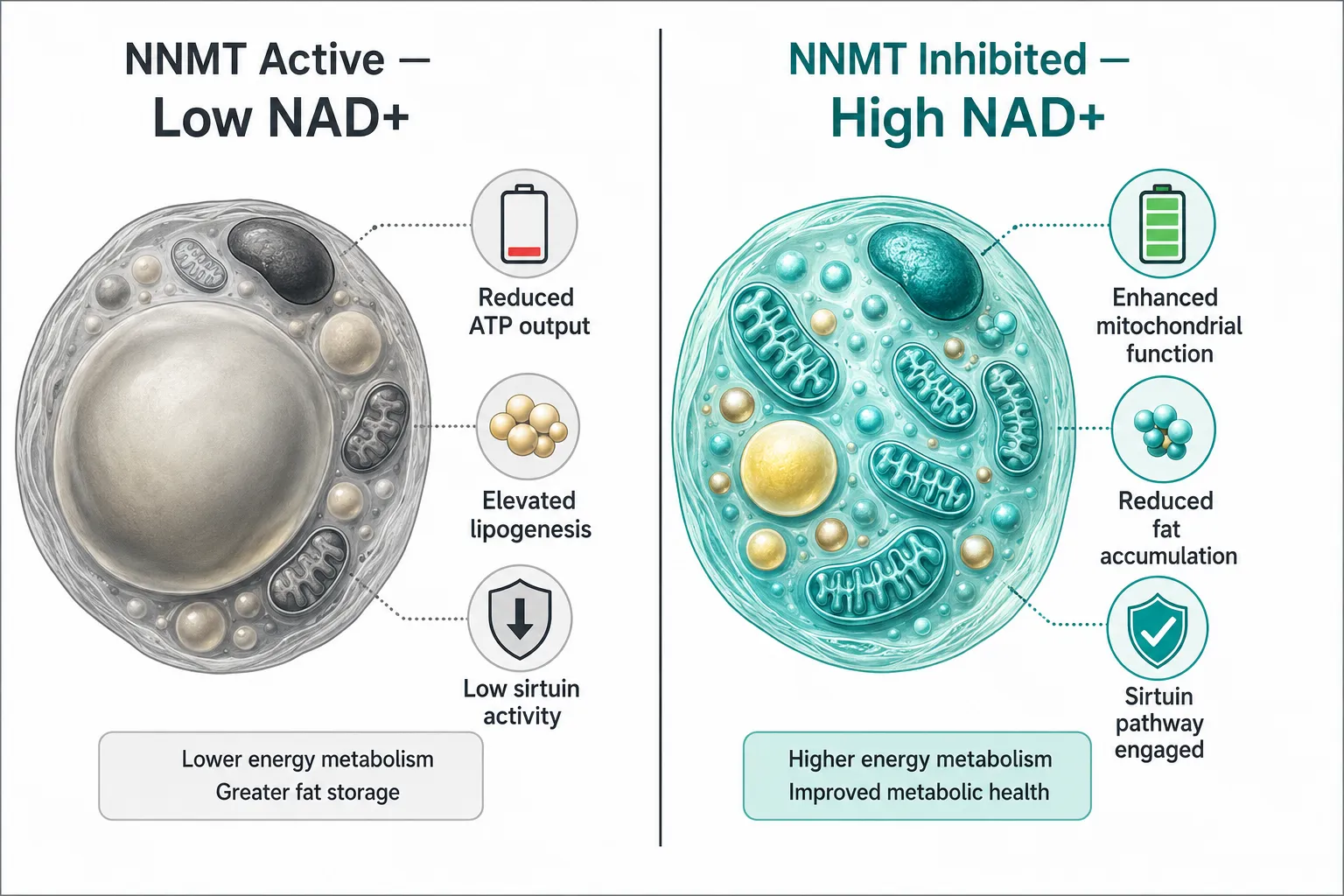
When examining the 5-Amino-1MQ peptide: investigating its impact on NAD+ metabolism and cellular energetics in research models, the mitochondrial data are among the most informative. Elevated intracellular NAD+ directly fuels the activity of sirtuins, a family of NAD+-dependent deacylases that regulate mitochondrial biogenesis, oxidative phosphorylation efficiency, and fatty acid oxidation.
In rodent obesity models, NNMT inhibition with 5-Amino-1MQ has been associated with:
- Tissue-specific NAD+ increases in adipose tissue and liver, with dose-dependent responses observed in preclinical dosing protocols
- Reduced lipogenesis in adipocyte cultures, suggesting a shift away from fat storage and toward energy utilization
- Improved metabolic profiles including reduced body weight gain and better insulin sensitivity markers in high-fat diet models
- Enhanced mitochondrial respiration consistent with sirtuin-mediated upregulation of oxidative metabolism
These findings connect closely to research on other mitochondria-targeting compounds. For context on parallel mitochondrial research, the SS-31 mitochondrial research themes explored in preclinical settings offer a useful comparative framework, as SS-31 also targets mitochondrial membrane integrity through a distinct mechanism.
The sirtuin activation cascade is particularly relevant to aging research. SIRT1 and SIRT3, both activated downstream of elevated NAD+, regulate pathways governing cellular stress resistance, inflammation, and metabolic flexibility, all of which deteriorate with age and obesity.
Research Sourcing, Quality Standards, and the Regulatory Landscape in 2026
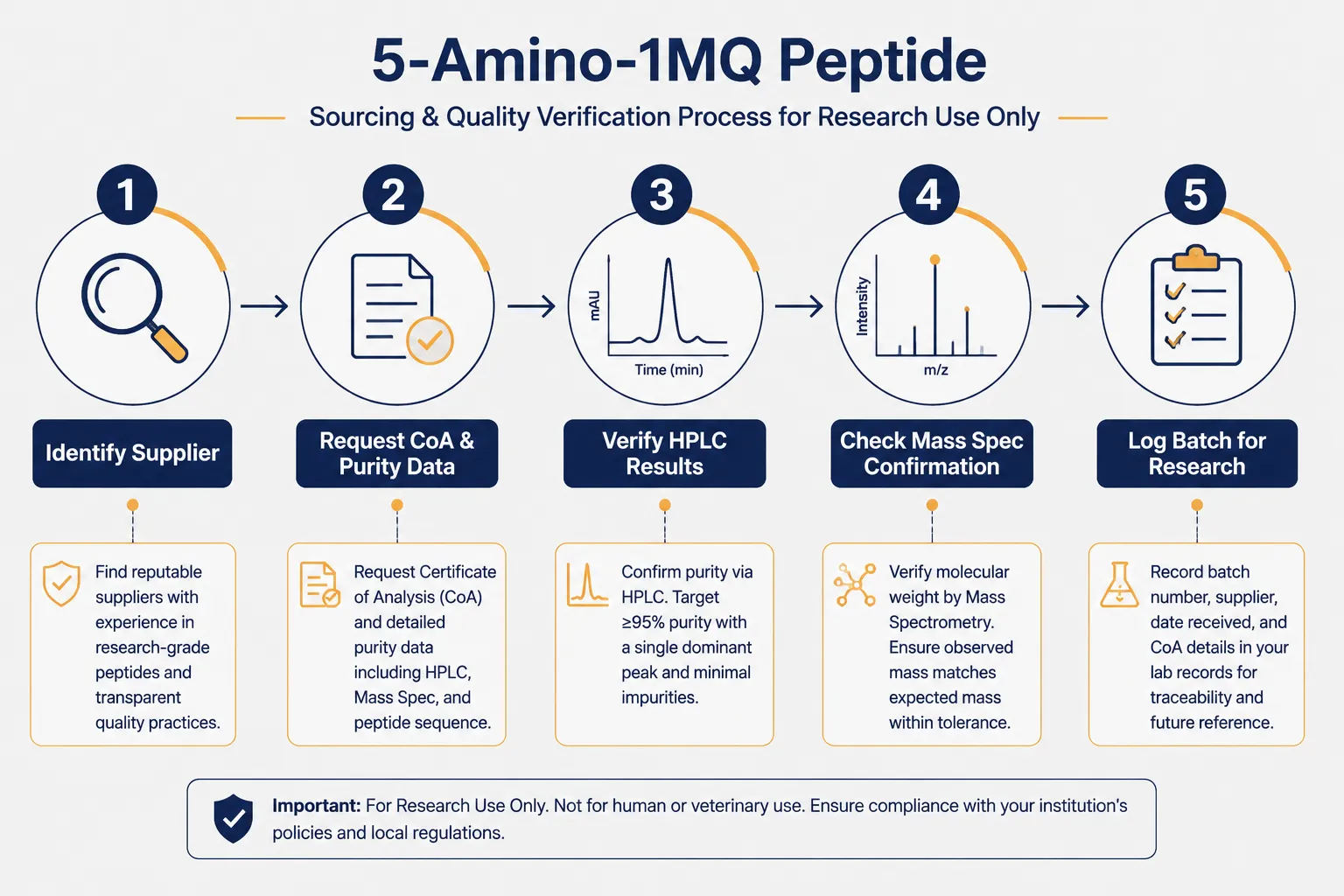
Rigorous investigation of the 5-Amino-1MQ peptide: investigating its impact on NAD+ metabolism and cellular energetics in research models depends entirely on compound quality. Impure or mischaracterized material introduces confounding variables that can invalidate experimental results.
Critical quality benchmarks for research-grade 5-Amino-1MQ:
- HPLC purity: A minimum of 98% is the accepted standard for mechanistic studies
- Mass spectrometry confirmation: Verifies molecular identity independent of chromatographic purity
- Certificate of Analysis (CoA): Should accompany every batch with lot-specific data
- Endotoxin testing: Essential for cell-culture work to avoid inflammatory artifacts
Researchers sourcing this compound can explore the 5-Amino-1MQ product category for research-grade options. For broader context on evaluating peptide suppliers, the guide on peptide supplier comparisons interpreting PeptideTech and PeptideSc provides a structured approach to assessing vendor credibility. Understanding reference standards is equally important; the resource on Bachem and reference standards for building robust peptide benchmarks is relevant for laboratories establishing internal quality controls.
Regulatory status as of 2026: 5-Amino-1MQ has no approved clinical indications in any jurisdiction. It is classified strictly as a research compound. Use outside of controlled laboratory or preclinical settings is not sanctioned, and researchers should maintain full compliance with institutional review protocols.
Remaining Unknowns and Research Priorities
Several critical questions remain unresolved as of 2026:
- Long-term NNMT inhibition effects: Chronic suppression of NNMT may affect methylation homeostasis in ways not yet fully characterized
- Off-target selectivity: While early data suggest reasonable selectivity, comprehensive off-target profiling across tissue types is incomplete
- Translational gap: Human pharmacokinetic and pharmacodynamic data are extremely limited; extrapolation from rodent models carries significant uncertainty
- Optimal dosing windows: Tissue-specific NAD+ responses suggest that dosing thresholds may vary considerably by target tissue and disease model
Researchers working on metabolic aging models may also find value in reviewing SS-31 mechanism and research as a complementary mitochondrial intervention studied in similar aging and obesity contexts. Purity evaluation practices discussed in the research-grade Glow Blend Peptide sourcing guide also offer transferable lessons for maintaining experimental integrity with novel compounds.
Conclusion
The scientific case for 5-Amino-1MQ as a tool for studying NAD+ metabolism and cellular energetics is well-grounded in preclinical evidence. Its mechanism, NNMT inhibition leading to NAD+ salvage pathway enhancement and downstream sirtuin activation, is mechanistically coherent and supported by quantitative data from adipocyte and rodent models.
Actionable next steps for researchers:
- Source only HPLC-verified, mass-spec-confirmed material with full CoA documentation before initiating any study.
- Design experiments with tissue-specific NAD+ measurement endpoints to capture the compound's differential effects across compartments.
- Include appropriate controls for methyl donor metabolism (SAM levels) alongside NAD+ quantification.
- Treat all rodent-derived findings as hypothesis-generating rather than directly translatable to human biology.
- Monitor the emerging literature closely, 2026 represents an early but active phase of translational discussion for this compound.
The field of NAD+ biology is advancing rapidly, and 5-Amino-1MQ occupies a distinct and promising niche within it. Disciplined, well-controlled preclinical research remains the essential foundation for any future translational work.


Leave a Reply
Want to join the discussion?Feel free to contribute!