Call or Text 727-513-9780
  • Shopping Cart Shopping Cart
    0Shopping Cart
Pure Tested Peptides | America's most trusted Peptides for sale online
  • Peptides for sale
    • Oral Peptides for sale
      • Peptide Capsules for sale
      • BPC 157 Capsules 1000mcg
      • SLU-PP-332 Capsules | 1000 mcg
      • 5-Amino-1MQ 50mg Capsules
      • Tesofensine 500mcg
    • All Peptides for sale
    • Peptide Sprays
      • BPC 157 Nasal Spray Kit
      • BPC-157 TB500 Nasal Spray Kit
      • Semax Nasal Spray 10mg
      • Selank – Nasal Spray Kit – 10mg
      • Epithalon 50MG Nasal Spray Kit
      • Ipamorelin 10mg Nasal Spray
      • Klow Nasal Spray (BPC-157 + TB-500 + GHK-Cu + KPV) | 80mg
      • Hulk Nasal Spray Tesa / Ipa Blend 6/3 MG
      • Klow Nasal Spray
      • NAD + 500 mg Nasal Spray
      • PT-141 Nasal Spray Kit
    • GHRH Peptides
      • Ipa Peptides
      • CJC-1295 Peptides
        • CJC-1295 with DAC 5 mg
        • CJC-1295 without DAC 5 mg
        • CJC-1295 Ipa 10mg
      • Tesa Peptides
        • Tesa Peptide
        • Tesa 20 mg
    • GHK-Cu Peptides
      • All GHK-Cu Peptides
      • GHK-Cu 100mg
      • KLOW Peptide Blend – Buy KLOW blend online
    • BPC Peptides
      • All BPC Peptides
      • BPC-157
      • BPC-157 TB-500
      • BPC 157 capsules 1000mcg
    • SLU-PP-332 Peptides
      • All SLU-PP-332 Peptides
      • SLU-PP-332 5mg
    • GLP3 Peptides
    • PT-141 Peptides
      • PT-141 Peptides for sale
      • PT-141 10mg
      • PT-141 Nasal Spray
    • CAG Peptides
      • Lipo-C Peptide Blend
      • CAG 5mg
      • CAG 10mg
    • MOTS-C Peptides
      • MOTS-C Peptides for sale
      • MOTS-c peptide
      • MOTS-c 10mg *6 pack*
    • 5 Amino 1MQ Peptides
      • 5 Amino 1MQ Peptides for sale
      • 5-Amino-1MQ 50mg Capsules
      • 5-Amino-1MQ 5mg
    • Epithalon Peptides
      • Epithalon Peptides for sale
      • Epithalon 10mg
      • Epithalon 50mg
  • Shop
    • GLPs
      • 5-Amino-1MQ 50mg Capsules
      • 5-Amino-1MQ 5mg
      • L-Carnitine 500mg/ml
      • Tesofensine 500mcg
      • SLU-PP-332 5mg
      • MOTS-c 10mg *6 pack*
    • Epithalon & BPC Peptides
      • Epithalon 10mg
      • Epithalon 50mg
      • BPC-157
      • BPC 157 capsules 1000mcg
      • BPC-157 TB-500
      • BPC-157 TB500 Nasal Spray Kit
      • BPC 157 Nasal Spray Kit
    • BPC TB-500 & NAD+ Peptides
      • NAD+ 500 mg
      • KLOW Peptide Blend – Buy KLOW blend online
      • GLOW Peptide Blend
      • TB 500 5mg
      • BPC 157 capsules 1000mcg – Supplement
      • BPC 157 Nasal Spray Kit
      • BPC-157
      • BPC-157 TB500 Nasal Spray Kit
      • BPC-157 TB-500
      • BPC 157 capsules 1000mcg
    • LL-37 Peptide
      • LL-37 10 mg
    • MOTS-C & Selank
      • MOTS-c peptide
      • Selank 10mg
    • GHK Peptides
      • GHK-Cu 100mg
      • GLOW Peptide Blend
      • KLOW Peptide Blend – Buy KLOW blend online
  • COAs
  • Wholesale
    • Wholesale Peptides for sale
  • PTP FAQ
  • Affiliates
    • Selank Peptide: Advanced Pharmacological Mechanisms Underlying Its Anxiolytic and Nootropic Effects in Research
      • 5-Amino-1MQ Peptide: Detailed Mechanisms of NNMT Inhibition and Its Impact on Cellular Metabolism Research
        • MOTS-C Peptide: Unraveling Its Role in Mitochondrial Dynamics and Energy Metabolism Research
          • Epithalon Peptide and Telomerase Regulation: Investigating Its Impact on Cellular Senescence and Lifespan Research Models
            • GLP2-T vs GLP2 Tirz Peptide: Understanding the Naming, Mechanistic Nuances, and Research Implications for Gut Health
      • Peptides and Polypeptides in Modern Pharmacology: What Research on Metoprolol, Prednisone, and Amlodipine Reveals
        • Polypeptide Peptides vs NSAIDs: What Naproxen and Diclofenac Teach Tissue-Repair Researchers About BPC‑157 and TB‑500
          • Peptides and Polypeptides in Endocrine Pharmacology: How GLP-1, GLP-2, and GLP-3 Retatrutide Differ From Classic Drugs Like Prednisone and Amlodipine
          • 5‑Amino‑1MQ Peptide and NNMT Inhibition: How It Compares With Statins Like Atorvastatin in Adipose and Lipid Metabolism Research
      • Enclomiphene, Estrogen Receptor Signaling, and Luteinizing Phase Biology: What Hormone Researchers Should Measure
        • Mesenchymal Stem Cells, BPC‑157, and GHK‑Cu: How Tissue Repair Peptides Compare With Classic NSAIDs Like Naproxen in Injury Models
          • Peptide Calculator Use Cases Beyond Growth Hormone: Working Through GLP‑3 Retatrutide, MOTS‑c, and BPC‑157 Research Dosing
        • Polypeptide Peptides in Endocrine and Metabolic Pharmacology: Lessons From Amlodipine, Prednisone, and Metoprolol
        • Peptides Calculator for Advanced Blends: Worked Examples for Tesamorelin, CJC‑1295, and Ipamorelin Stacks
          • Peptides and Polypeptides in Human Physiology: How Molecular Size Shapes Research Applications
            • Selank Peptide: Advanced Pharmacological Mechanisms Underlying Its Anxiolytic and Nootropic Effects in Research
          • 5-Amino-1MQ Peptide: Detailed Mechanisms of NNMT Inhibition and Its Impact on Cellular Metabolism Research
            • MOTS-C Peptide: Unraveling Its Role in Mitochondrial Dynamics and Energy Metabolism Research
              • Epithalon Peptide and Telomerase Regulation: Investigating Its Impact on Cellular Senescence and Lifespan Research Models
                • GLP2-T vs GLP2 Tirz Peptide: Understanding the Naming, Mechanistic Nuances, and Research Implications for Gut Health
                  • Peptides and Polypeptides in Endocrine Pharmacology: How GLP-1, GLP-2, and GLP-3 Retatrutide Differ From Classic Drugs Like Prednisone and Amlodipine
                    • Polypeptide Peptides vs NSAIDs: What Naproxen and Diclofenac Teach Tissue-Repair Researchers About BPC‑157 and TB‑500
                      • Peptides and Polypeptides in Modern Pharmacology: What Research on Metoprolol, Prednisone, and Amlodipine Reveals
                        • 5‑Amino‑1MQ Peptide and NNMT Inhibition: How It Compares With Statins Like Atorvastatin in Adipose and Lipid Metabolism Research
                        • Enclomiphene, Estrogen Receptor Signaling, and Luteinizing Phase Biology: What Hormone Researchers Should Measure
                        • Mesenchymal Stem Cells, BPC‑157, and GHK‑Cu: How Tissue Repair Peptides Compare With Classic NSAIDs Like Naproxen in Injury Models
                        • Peptide Calculator Use Cases Beyond Growth Hormone: Working Through GLP‑3 Retatrutide, MOTS‑c, and BPC‑157 Research Dosing
                        • Polypeptide Peptides in Endocrine and Metabolic Pharmacology: Lessons From Amlodipine, Prednisone, and Metoprolol
                        • Peptides Calculator for Advanced Blends: Worked Examples for Tesamorelin, CJC‑1295, and Ipamorelin Stacks
                        • Peptides and Polypeptides in Human Physiology: How Molecular Size Shapes Research Applications
                        • Selank Peptide: Advanced Pharmacological Mechanisms Underlying Its Anxiolytic and Nootropic Effects in Research
                        • MOTS-C Peptide: Unraveling Its Role in Mitochondrial Dynamics and Energy Metabolism Research
                        • Peptides and Polypeptides in Modern Pharmacology: What Research on Metoprolol, Prednisone, and Amlodipine Reveals
                        • Peptides and Polypeptides in Endocrine Pharmacology: How GLP-1, GLP-2, and GLP-3 Retatrutide Differ From Classic Drugs Like Prednisone and Amlodipine
                        • 5-Amino-1MQ Peptide: Detailed Mechanisms of NNMT Inhibition and Its Impact on Cellular Metabolism Research
                        • Mesenchymal Stem Cells, BPC‑157, and GHK‑Cu: How Tissue Repair Peptides Compare With Classic NSAIDs Like Naproxen in Injury Models
                        • Peptide Calculator Use Cases Beyond Growth Hormone: Working Through GLP‑3 Retatrutide, MOTS‑c, and BPC‑157 Research Dosing
                        • GLP2-T vs GLP2 Tirz Peptide: Understanding the Naming, Mechanistic Nuances, and Research Implications for Gut Health
                        • Polypeptide Peptides in Endocrine and Metabolic Pharmacology: Lessons From Amlodipine, Prednisone, and Metoprolol
                        • Polypeptide Peptides vs NSAIDs: What Naproxen and Diclofenac Teach Tissue-Repair Researchers About BPC‑157 and TB‑500
                        • Peptides and Polypeptides in Human Physiology: How Molecular Size Shapes Research Applications
                        • Peptides Calculator for Advanced Blends: Worked Examples for Tesamorelin, CJC‑1295, and Ipamorelin Stacks
                        • 5‑Amino‑1MQ Peptide and NNMT Inhibition: How It Compares With Statins Like Atorvastatin in Adipose and Lipid Metabolism Research
                        • Enclomiphene, Estrogen Receptor Signaling, and Luteinizing Phase Biology: What Hormone Researchers Should Measure
                        • Epithalon Peptide and Telomerase Regulation: Investigating Its Impact on Cellular Senescence and Lifespan Research Models
                        • Best research protocol Klow blend
                        • best time to take BPC-157
                        • best time to take DSIP (Delta Sleep Inducing Peptide)
                        • best time to take CJC-1295
                        • best time to take AOD-9604
                        • best time to take Follistatin 344
                        • best time to take Ipamorelin
                        • best time to take MK-677 (Ibutamoren)
                        • best time to take Ligandrol (LGD-4033) — research compound
                        • best time to take Ostarine (MK-2866) — research compound
                        • best time to take GHK-CU
                        • best time to take TB-500
                        • best time to take MOTS-c
                        • best time to take Semax
                        • best time to take RAD-140 (Testolone) — research compound
                        • best time to take Thymosin Alpha-1
                        • best time to take PEG-MGF
                        • Biolife Plasma, Octapharma Plasma, and Research Peptides: How Plasma Donation Labs Differ From Peptide Suppliers
                        • best time to take YK-11 — research compound
                        • best time to take PT-141 (Bremelanotide)
                        • Best research protocol Klow blend
                        • 5-Amino-1MQ and MOTS-C Synergy: Metabolic Signaling, Mitochondria, and Research Design
                        • BPC-157 and TB-500: Investigating Their Combined Effects on Angiogenesis and Cellular Migration in Tissue Repair Models
                        • BPC-157 Peptide: Gut Barrier Function, Inflammation, and Tissue-Recovery Research
                        • 5‑Amino‑1MQ and MOTS‑c Synergy in Metabolic Research: Designing NNMT and Mitochondrial Biogenesis Stacks
                        • CJC-1295 with DAC vs. Without DAC: Half-Life, Release Kinetics, and Research Implications
                        • CJC‑1295 with DAC vs. Without DAC: Expanding on Half‑Life Differences Using Tesamorelin and Ipamorelin Blend Case Studies
                        • Collagen Biology and Copper‑Binding Peptides: How GHK‑Cu, Glow Blend, and Klow Blend Interact with Skin and Connective Tissue
                        • Collagen Biology and Regenerative Peptides: How GHK‑Cu, Glow Blend, and Klow Blend Affect Extracellular Matrix Research
                    • DNA, Telomeres, and Longevity Peptides: Positioning Epithalon and MOTS‑c in Genetic Aging Research
                      • Enclomiphene Citrate: serm Mechanism, Testosterone Research, and Stack Compatibility
                        • Enclomiphene vs Enclomiphene Citrate: Formulation, Bioavailability, and Research Distinctions
                        • Epithalon Peptide Research: Telomerase Activation, Aging, and Pineal Gland Function
                        • Estrogen Receptor Signaling and Enclomiphene: How Selective Modulators Compare with Classic Polypeptide Hormones
                        • GHK-Cu Peptide: Advanced Mechanisms in Extracellular Matrix Remodeling and Wound Healing Research
                        • GHK-Cu Peptide: Collagen Synthesis, Wound Repair, and Skin-Barrier Research Models
                        • GLP-1 vs GLP-3 vs GLP-2: Peptide Classification and Research Applications
                        • GLP-2 Peptide Research Guide: Gut Barrier Function, Nutrient Absorption, and Intestinal Recovery Models
                        • GLP-3 Retatrutide vs. GLP-1 Drugs: What Triple-Agonist Biology Changes in Research Models
                        • Ipamorelin and Tesamorelin Combination: Synergistic GH Secretagogue Research and Dosing Protocols
                        • GLP2 Tirz Peptide: What It Is, Why the Name Exists, and How Researchers Should Interpret It
                        • Klow Blend Peptide Nasal Spray: What the Formulation Is Trying to Do in Cognitive Research
                        • Mitochondria, NNMT Inhibition, and Peptide Modulators: Where MOTS‑c and 5‑Amino‑1MQ Fit in Cellular Energy Research
                        • MOTS-c Peptide: Mitochondrial Function, Energy Metabolism, and What Researchers Measure
                        • MOTS-c vs. 5-Amino-1MQ: Which Metabolic Research Questions Each Compound Actually Answers
                        • Nasal Spray Peptides: Bioavailability, Administration, and Semax/Selank Research Applications
                        • PT-141 Peptide Research: Mechanism of Action and Melanocortin Receptor Signaling
                        • Retatrutide for Research: Mechanism, Structure, and GLP-1/GLP-3 Dual Action
                        • Retatrutide for Obesity and Type 2 Diabetes: What the Latest Trial Data Suggest
                        • Tesofensine Peptide Research: Mechanism, Appetite Suppression, and Neuropeptide Y Pathways
  • Contact
    • Contact Customer Service
    • Text Customer Support
  • About US
  • Shop all peptides
  • Affiliate Program
    • Affiliate Signup
  • Login / Register Login / Register Page Link Login / Register Page Link
  • Click to open the search input field Click to open the search input field Search
  • Menu Menu
Phosphate Buffered Saline for Peptide Reconstitution: A Complete Research Protocol Guide

Phosphate Buffered Saline for Peptide Reconstitution: A Complete Research Protocol Guide

September 14, 2026/0 Comments/in Uncategorized/by

Roughly 30% of peptide reconstitution failures in research settings trace back to a single, preventable error: choosing the wrong solvent. For researchers working with synthetic peptides, that choice starts with understanding when phosphate buffered saline is the right tool and when it is not. This guide to Phosphate Buffered Saline for Peptide Reconstitution: A Complete Research Protocol Guide covers everything a researcher needs to make that decision confidently, execute the protocol correctly, and store reconstituted stocks safely.

Key Takeaways

  • PBS at pH 7.4 closely mimics physiological conditions, making it ideal for hydrophilic and cell-compatible peptide assays.
  • Phosphate ions can catalyze deamidation and other degradation pathways in susceptible peptides, so PBS is not universally appropriate.
  • Proper concentration calculation, sterile filtration, and cold-chain storage are non-negotiable steps in any PBS reconstitution protocol.
  • Alternatives such as bacteriostatic water, HEPES-buffered saline, and dilute acetic acid each serve specific peptide chemistries better than PBS in certain cases.
  • Sourcing high-purity, third-party-tested peptides is the foundation of any reliable reconstitution outcome.

Why PBS Remains the Default Solvent in Peptide Research

Phosphate buffered saline is a water-based salt solution that maintains a stable pH of 7.4 while matching the osmolarity of human plasma at approximately 300 mOsm/kg. Those two properties explain its dominance in cell culture, biochemical assays, and in vivo research models.
Why PBS Remains the Default Solvent in Peptide Research

For hydrophilic peptides with a net neutral or slightly negative charge at physiological pH, PBS provides an aqueous environment that supports full dissolution without introducing organic solvents that could disrupt downstream cell viability. Researchers running Semax research protocols and similar neuropeptide studies frequently rely on PBS precisely because the buffer does not interfere with receptor-binding assays or neuronal cell lines.

When PBS is the right choice:

  • Hydrophilic peptides that dissolve readily in water
  • Cell-based assays requiring physiological osmolarity
  • In vivo models where isotonicity is critical
  • Short-term stocks used within 24 to 72 hours

When PBS should be avoided:

  • Peptides containing asparagine or glutamine residues prone to deamidation (phosphate accelerates this reaction)
  • Highly hydrophobic sequences that require DMSO or dilute organic acid as a primary solvent
  • Long-term frozen stocks where phosphate precipitation at low temperatures can alter effective concentration

"PBS is not a universal default. It is the best default for a defined subset of peptide chemistries."

Core Protocol Steps for Reconstituting Peptides in PBS

Following a standardized workflow reduces variability and protects peptide integrity from the moment the lyophilized powder is opened.
Core Protocol Steps for Reconstituting Peptides in PBS

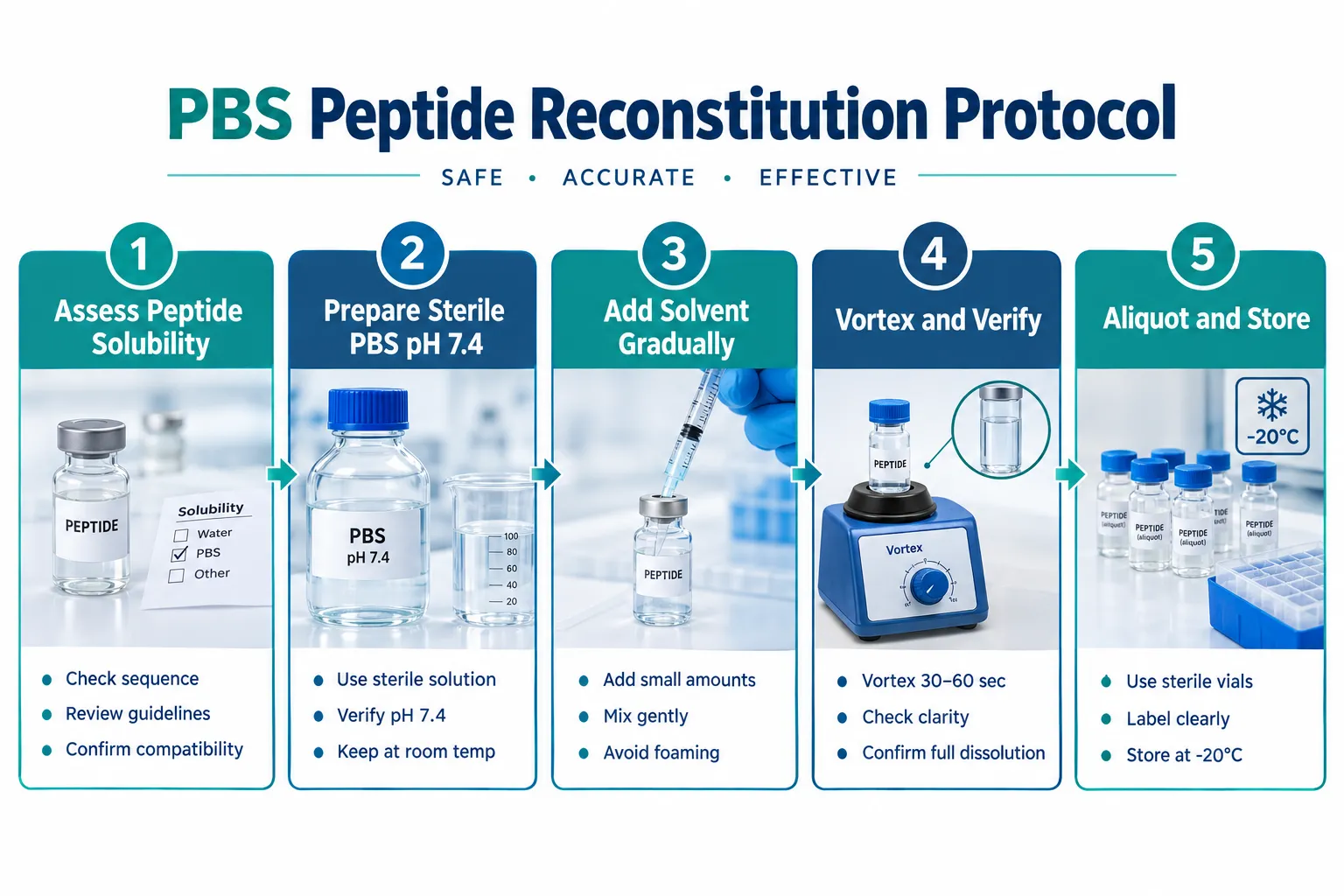
Step 1: Assess Peptide Solubility Before Reconstitution

Review the manufacturer's certificate of analysis and any published solubility data. Peptides with a high proportion of hydrophobic residues (leucine, isoleucine, phenylalanine, valine) will likely require a co-solvent step before PBS dilution. Peptides with multiple charged residues at physiological pH are strong candidates for direct PBS dissolution.

Step 2: Prepare or Verify Sterile PBS

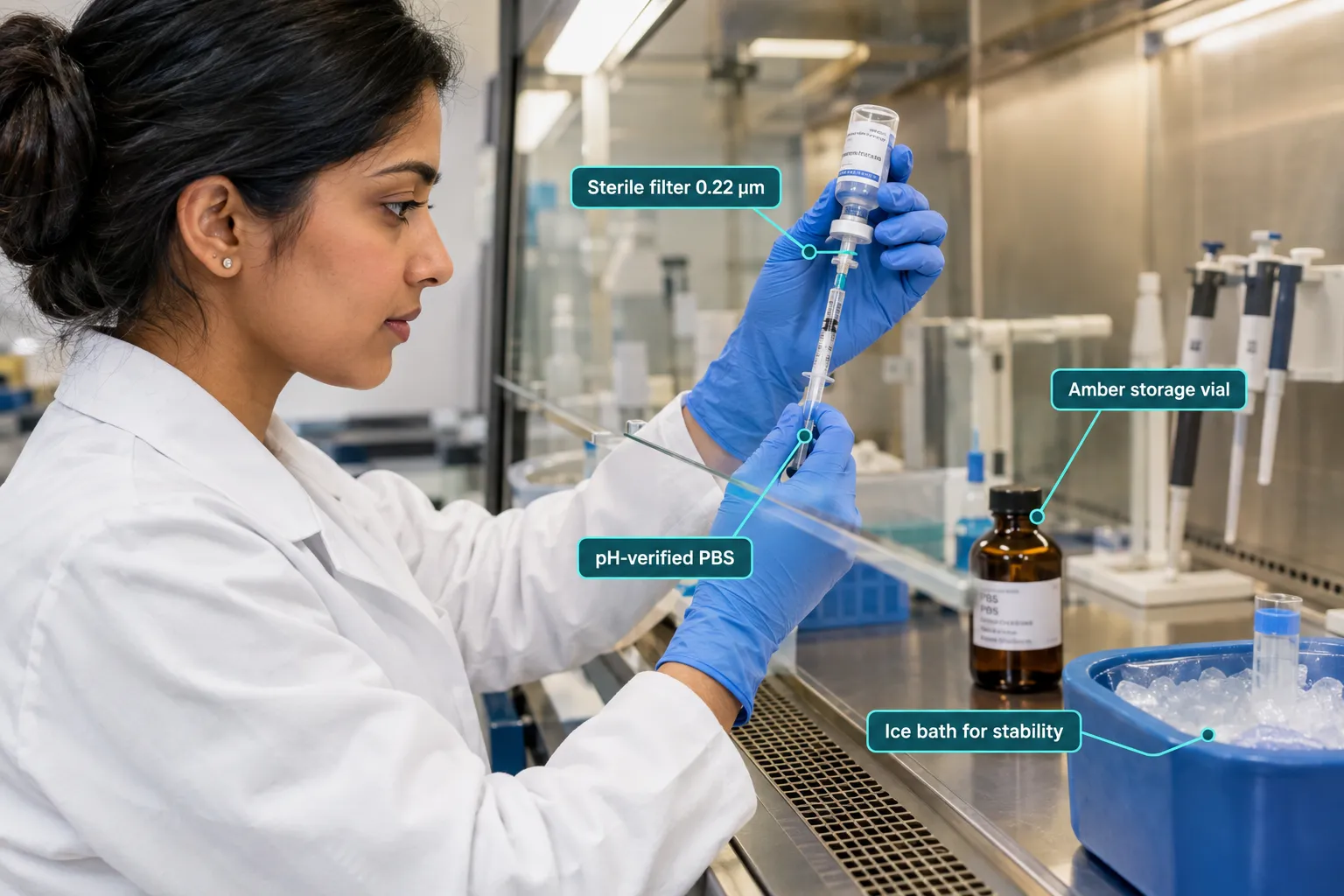
Use sterile, endotoxin-tested PBS at pH 7.4. For in vivo or cell-culture work, confirm the endotoxin level is below 0.1 EU/mL. If preparing PBS in-house, sterile-filter through a 0.22 µm membrane after preparation.

Step 3: Calculate Target Concentration

Use the molecular weight from the certificate of analysis, not a generic database value, since counterion salts affect actual mass.

Target Concentration Peptide Mass (1 mg) PBS Volume Required
1 mg/mL 1 mg 1.0 mL
0.5 mg/mL 1 mg 2.0 mL
0.1 mg/mL 1 mg 10.0 mL

Step 4: Add Solvent Gradually and Mix Gently

Add PBS in small increments to the lyophilized peptide. Avoid vortexing at high speed for extended periods, as mechanical shear can fragment sensitive sequences. Gentle swirling or brief low-speed vortexing for 5 to 10 seconds is sufficient for most hydrophilic peptides.

Step 5: Verify Dissolution and Filter

Inspect the solution visually for particulates. For critical applications, confirm concentration using UV absorbance at 280 nm if the peptide contains aromatic residues, or via HPLC for absolute quantification. Filter through a 0.22 µm syringe filter before aliquoting.

PBS vs. Alternative Solvents: Choosing the Right Buffer

Researchers working with a broad peptide library will encounter situations where PBS is not the optimal first choice. Understanding the alternatives is essential.
PBS vs. Alternative Solvents: Choosing the Right Buffer

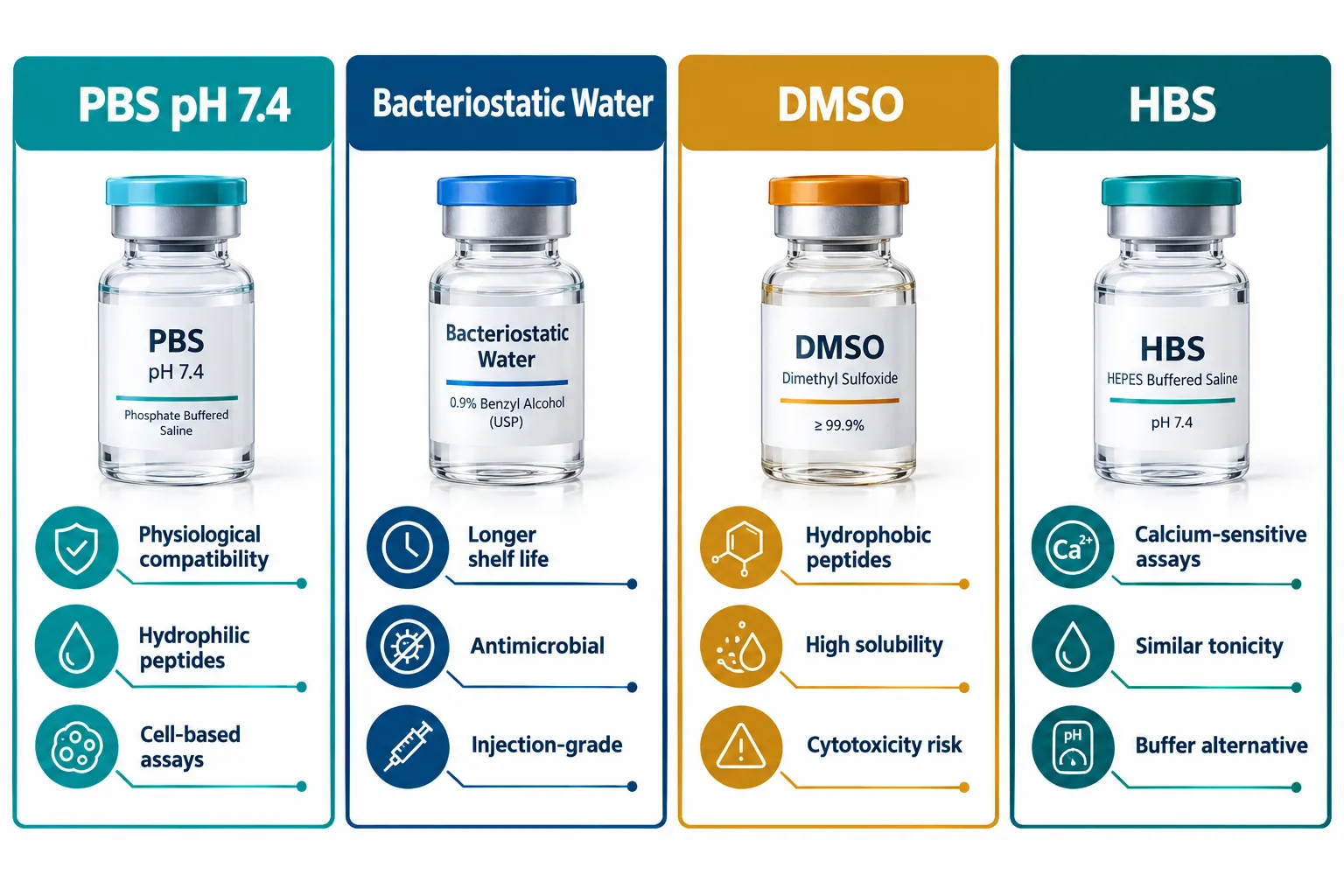
Bacteriostatic water contains 0.9% benzyl alcohol, which inhibits microbial growth and extends the usable life of a reconstituted stock. It is commonly used for peptides intended for repeated withdrawal from the same vial. However, it lacks the buffering capacity of PBS and is not appropriate for pH-sensitive assays. Researchers exploring SS-31 peptide research and related mitochondria-targeted compounds often weigh bacteriostatic water against PBS depending on the assay format.

HEPES-buffered saline (HBS) offers a phosphate-free alternative at physiological pH, making it preferable for calcium-sensitive assays or any protocol where phosphate ions could interfere with signaling pathways. The tradeoff is higher cost and less universal availability.

Dilute acetic acid (0.1% to 1%) is the go-to primary solvent for hydrophobic or aggregation-prone peptides. After initial dissolution in acetic acid, the researcher then dilutes into PBS to reach physiological conditions, keeping the final acetic acid concentration below 0.01%.

DMSO is reserved for extremely hydrophobic sequences. Final DMSO concentration in cell-based assays should remain below 0.1% to avoid cytotoxicity.

For those sourcing peptides for structured research programs, working with a best peptide supplier that provides solubility guidance alongside the certificate of analysis removes much of the guesswork from solvent selection.

Storage and Handling of PBS-Reconstituted Peptide Stocks

Reconstitution is only half the protocol. Improper storage is one of the most common sources of data variability in peptide research.

Recommended storage practices for 2026:

  • Short-term use (less than 72 hours): Store at 2 to 8 degrees Celsius in a sealed, sterile vial. Minimize freeze-thaw cycles.
  • Medium-term storage (up to 4 weeks): Aliquot into single-use volumes and store at -20 degrees Celsius. Label each aliquot with peptide name, concentration, date, and lot number.
  • Long-term storage (beyond 4 weeks): Store at -80 degrees Celsius. Note that phosphate salts can precipitate during freezing; allow complete thaw and gentle mixing before use.
  • Light sensitivity: Many peptides degrade under UV exposure. Use amber vials or wrap clear vials in foil.

Researchers working with compounds such as SS-31 peptide or Mot-C peptide should follow the specific storage guidance provided with each product, as mitochondria-targeted and growth-hormone-related peptides can have unique stability profiles that modify general PBS storage rules.

For broader research contexts such as wound healing peptide studies or metabolic peptide investigations, maintaining a cold chain from reconstitution through assay setup is non-negotiable.

Conclusion

Phosphate Buffered Saline for Peptide Reconstitution: A Complete Research Protocol Guide comes down to three decisions: assess whether PBS suits the peptide's chemistry, execute the reconstitution with sterile technique and accurate concentration math, and store aliquots under conditions that prevent degradation. PBS earns its status as the most common reconstitution solvent because it is physiologically compatible, widely available, and well-characterized, but it is not appropriate for every peptide or every assay.

Actionable next steps for researchers:

  1. Always obtain and review the certificate of analysis before selecting a solvent.
  2. Default to PBS for hydrophilic, charge-bearing peptides destined for cell-based or in vivo work.
  3. Switch to bacteriostatic water, HBS, or acetic acid pre-dissolution when PBS chemistry creates stability or solubility concerns.
  4. Aliquot immediately after reconstitution and label every vial with full traceability information.
  5. Source peptides from a best peptide manufacturer that provides third-party purity testing, so the reconstitution protocol starts with a verified, high-quality substrate.

A disciplined approach to solvent selection and storage transforms peptide reconstitution from a potential failure point into a reliable, reproducible foundation for research.

Tags: bacteriostatic water, pbs protocol, peptide reconstitution, peptide solubility, peptide storage, phosphate buffered saline, research peptides, solvent selection
https://www.puretestedpeptides.com/wp-content/uploads/2026/09/phosphate-buffered-saline-for-peptide-reconstitution-a-complete-research-protoco.webp 1024 1536 https://www.puretestedpeptides.com/wp-content/uploads/2026/01/buy-peptides-online.jpg 2026-09-14 13:05:452026-09-14 13:05:45Phosphate Buffered Saline for Peptide Reconstitution: A Complete Research Protocol Guide
You might also like
Peptides Calculator for GLP-3, MOTS-c, and BPC-157: How Researchers Estimate Dosing and Concentration Safely Peptides Calculator for GLP-3, MOTS-c, and BPC-157: How Researchers Estimate Dosing and Concentration Safely
GHK-Cu Peptide: Copper Complex Chemistry, Research Stability, and Lab Use Considerations GHK-Cu Peptide: Copper Complex Chemistry, Research Stability, and Lab Use Considerations
Cellular Energy and Research Peptides: Why ATP Readouts Matter in Mitochondrial Studies Cellular Energy and Research Peptides: Why ATP Readouts Matter in Mitochondrial Studies
Enclomiphene vs Enclomiphene Citrate: What Researchers Need to Know Before Choosing a Formulation Enclomiphene vs Enclomiphene Citrate: What Researchers Need to Know Before Choosing a Formulation
What Are Polypeptide Peptides? From Collagen and Hormones to Advanced Research Compounds Like GLP-3 Retatrutide What Are Polypeptide Peptides? From Collagen and Hormones to Advanced Research Compounds Like GLP-3 Retatrutide
Selank Peptide: Research Benefits, Dosing Concepts, and Mechanism of Action Selank Peptide: Research Benefits, Dosing Concepts, and Mechanism of Action
DNA, Mitochondria, and Research Peptides: How MOTS-c and 5-Amino-1MQ Interface With Cellular Energy and Genomic Pathways DNA, Mitochondria, and Research Peptides: How MOTS-c and 5-Amino-1MQ Interface With Cellular Energy and Genomic Pathways
Peptides 101 for Research-Use Only Buyers: Structure, Mechanisms, and Where GLP-3, MOTS-c, and 5-Amino-1MQ Fit In Peptides 101 for Research-Use Only Buyers: Structure, Mechanisms, and Where GLP-3, MOTS-c, and 5-Amino-1MQ Fit In
0 replies

Leave a Reply

Want to join the discussion?
Feel free to contribute!

Leave a Reply Cancel reply

Your email address will not be published. Required fields are marked *

×

Helpful Links

  • My account
  • Cart
  • Checkout
  • Refund and Returns Policy
  • Privacy Policy
  • SMS Privacy Policy
  • Login
  • My Account
  • Logout

USA Made Lab Tested Peptides

All products are sold for research, laboratory, or analytical purposes only, and are not for human consumption


Pure Tested Peptides is a chemical supplier. Pure Tested Peptides is not a compounding / chemical compounding facility as defined under 503A of the Federal Food, Drug, and Cosmetic act. Pure Tested Peptides is not an outsourcing facility as defined under 503B of the Federal Food, Drug, and Cosmetic act.

The statements made within this website have not been evaluated by the US Food and Drug Administration. The products we offer are not intended to diagnose, treat, cure or prevent any disease.

Human/Animal Consumption Prohibited. Laboratory/In-Vitro Experimental Use Only

Link to: Peptide Research and Omeprazole: What Acid-Suppressing Drugs Mean for GLP-2 and Gut-Focused Studies Link to: Peptide Research and Omeprazole: What Acid-Suppressing Drugs Mean for GLP-2 and Gut-Focused Studies Peptide Research and Omeprazole: What Acid-Suppressing Drugs Mean for GLP-2...Peptide Research and Omeprazole: What Acid-Suppressing Drugs Mean for GLP-2 and Gut-Focused Studies Link to: Retatrutide 2026 Phase 3 Results: What the Latest Trial Data Means for GLP-3 Research Link to: Retatrutide 2026 Phase 3 Results: What the Latest Trial Data Means for GLP-3 Research Retatrutide 2026 Phase 3 Results: What the Latest Trial Data Means for GLP-3 ResearchRetatrutide 2026 Phase 3 Results: What the Latest Trial Data Means for GLP-3...
Scroll to top Scroll to top Scroll to top