

What Is Slupp332 With 5-Amino-1MQ? Research Context, Naming Confusion, and Potential Metabolic Relevance
A single search for "Slupp332 with 5-Amino-1MQ" returns product pages, research forums, and peptide vendor catalogs that use the term in completely different ways. For researchers and clinicians trying to parse the science, that inconsistency is a real problem. Understanding what is Slupp332 with 5-Amino-1MQ, including the research context, naming confusion, and potential metabolic relevance, requires separating two distinct compounds that are often sold together but work through entirely different biological mechanisms.
Key Takeaways
- "Slupp332" is an informal spelling of SLU-PP-332, a beta-3 adrenergic receptor agonist studied as an exercise mimetic in preclinical models.
- 5-Amino-1MQ (5-amino-1-methylquinolinium) is a separate small-molecule inhibitor of the enzyme NNMT, studied for its role in NAD+ preservation and fat metabolism.
- The two compounds are sold together in research bundles but are not the same substance and do not share a mechanism of action.
- Naming inconsistencies across vendor pages, "SLUPP-332," "SLU-PP-332," "Slupp332", are a primary source of confusion for researchers.
- As of 2026, both compounds remain investigational, with no approved clinical indications and no large-scale human outcome data.
Decoding the Naming Confusion Around Slupp332 and 5-Amino-1MQ
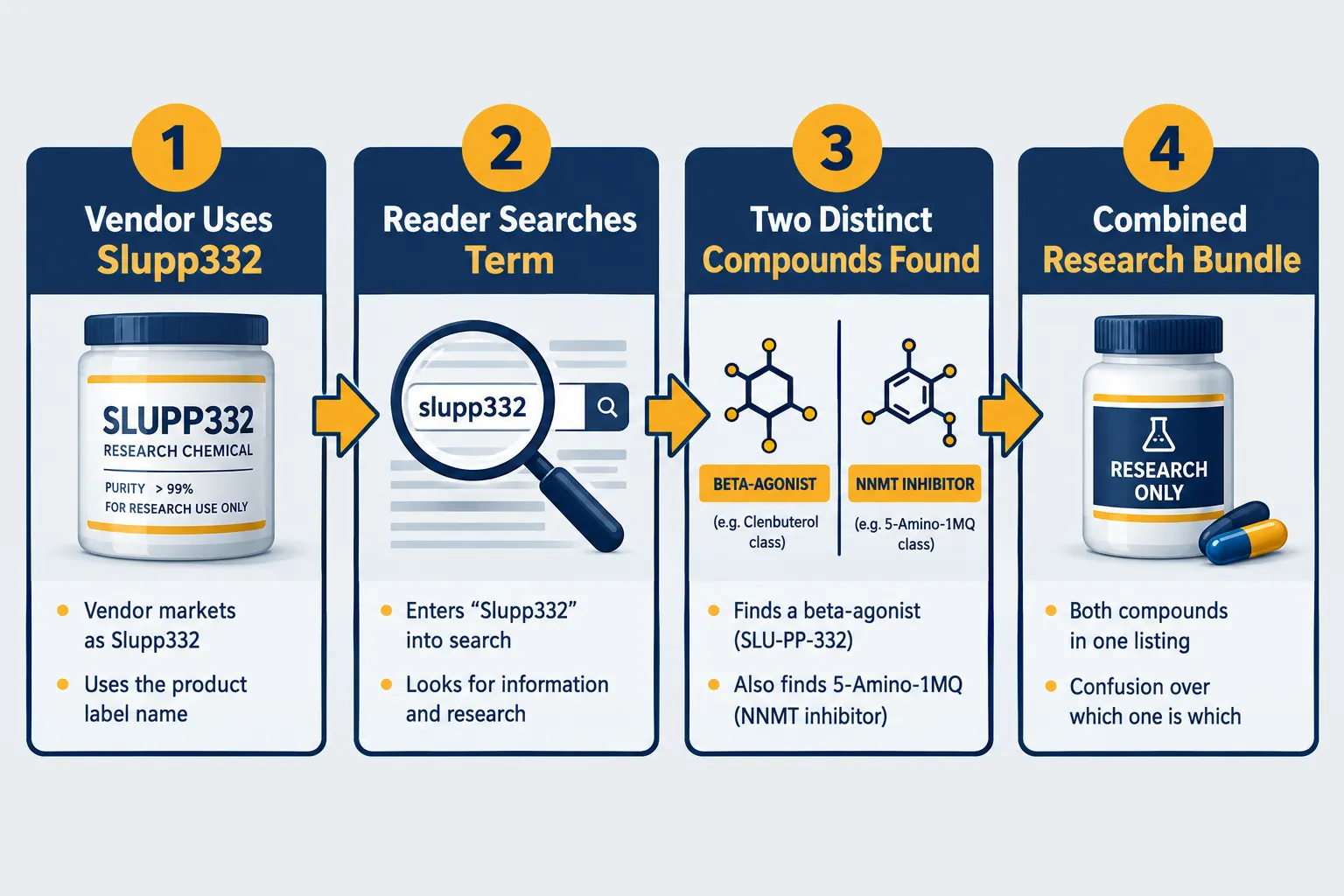
The term "Slupp332" is not a standardized chemical name. It is a vendor-simplified version of SLU-PP-332, a compound developed in academic pharmacology research. Across supplier catalogs, it appears as "SLU-PP-332," "SLUPP-332," "Slupp-332," and "Slupp332", all referring to the same molecule. This inconsistency is not trivial. A researcher unfamiliar with the compound might assume these are different substances or mistake the informal name for a peptide blend.
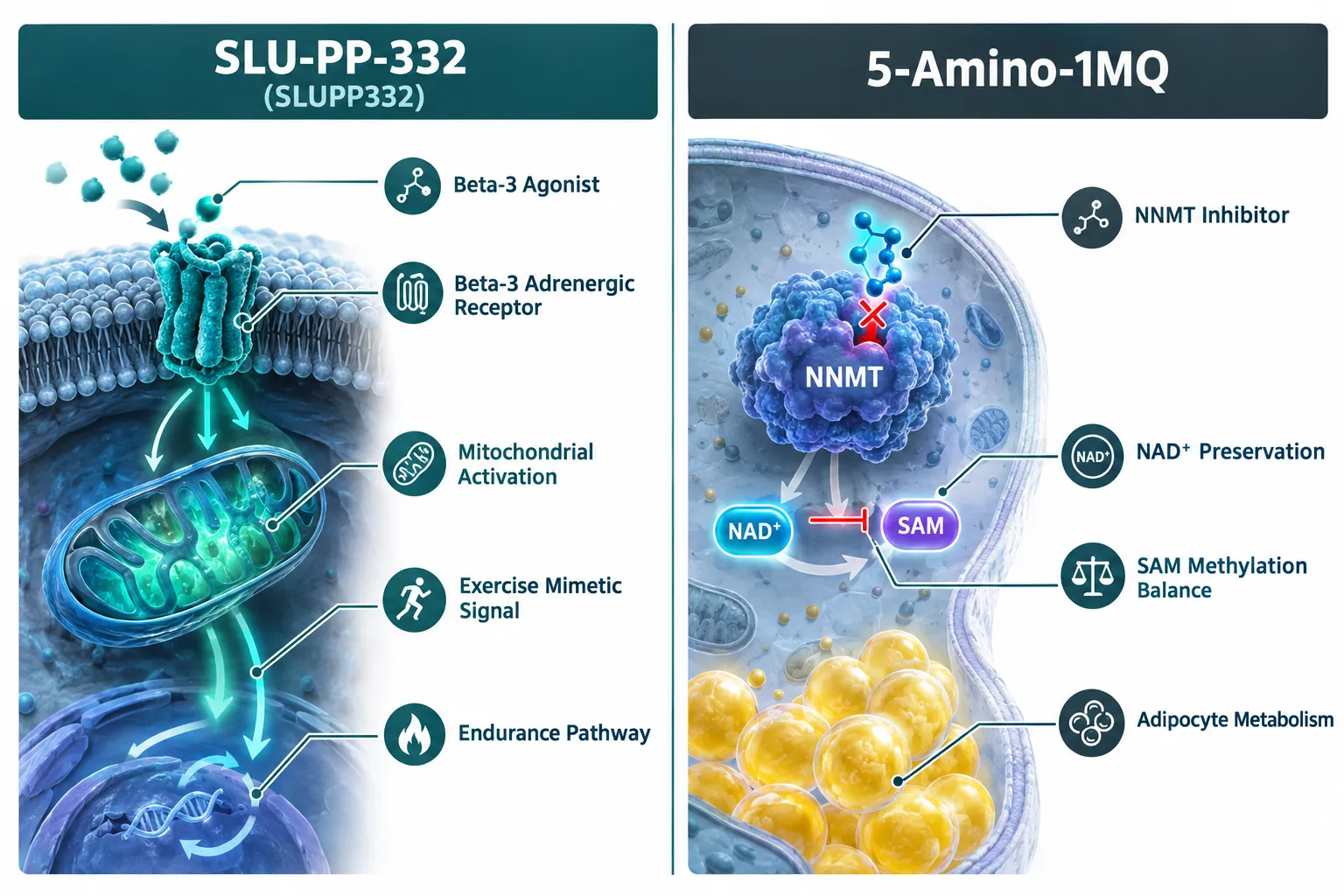
SLU-PP-332 is a beta-3 adrenergic receptor agonist. Its research interest centers on its potential to mimic some physiological effects of exercise, specifically, activating pathways linked to mitochondrial biogenesis and endurance adaptation, without physical activity. In research bundles, it typically appears at 250 mcg per capsule, explicitly labeled for laboratory research only.
5-Amino-1MQ (full name: 5-amino-1-methylquinolinium) is an entirely different class of compound. It is a small-molecule, membrane-permeable inhibitor of nicotinamide N-methyltransferase (NNMT), the enzyme responsible for methylating nicotinamide using S-adenosyl methionine (SAM). When NNMT is active, it diverts nicotinamide away from the NAD+ salvage pathway. By blocking NNMT, 5-Amino-1MQ preserves nicotinamide for NAD+ synthesis, which may support cellular energy metabolism, particularly in metabolically aged or obese tissue.
To explore the broader landscape of small molecules and peptides in this research space, the Peptides 101 for Research-Use Only Buyers guide provides useful structural and mechanistic context.
Research Context: What Each Compound Does Separately
SLU-PP-332 as an Exercise Mimetic
SLU-PP-332 targets the beta-3 adrenergic receptor, a G-protein-coupled receptor expressed primarily in adipose tissue and, to a lesser extent, in skeletal muscle. Activation of this receptor triggers downstream signaling associated with:
- Mitochondrial activation and increased oxidative capacity
- Enhanced fat oxidation in adipose depots
- Endurance-related gene expression changes
Preclinical research has described these effects as "exercise mimetic," meaning the compound may activate some of the same cellular programs that physical training does. This positions SLU-PP-332 alongside other compounds studied for visceral fat research and metabolic optimization in animal models.
5-Amino-1MQ as an NNMT Inhibitor
5-Amino-1MQ's mechanism is rooted in methylation biochemistry. Preclinical work in differentiated adipocytes demonstrated that exposing cells to 0.3-60 µM of 5-Amino-1MQ over 24 hours reduces intracellular NNMT activity and alters levels of NAD+, nicotinic acid, SAM, and S-adenosylhomocysteine (SAH). These changes support a direct role in both cellular energy metabolism and epigenetic regulation of metabolic genes.
A 2022 study in Scientific Reports reported that combining an NNMT inhibitor with a reduced-calorie, low-fat diet in diet-induced obese mice produced rapid adiposity and weight loss, normalizing measures to lean controls faster than diet alone, while also shifting the gut microbiome to a distinct profile.
Pharmacokinetic data from rat studies show an oral bioavailability of approximately 38.4% for 5-Amino-1MQ, with a mean terminal half-life of 3.80 hours after intravenous administration and 6.90 hours after oral dosing. These parameters are foundational for designing future exposure models.
Researchers interested in 5-Amino-1MQ capsules for preclinical study can find research-grade formulations through specialized suppliers.
Potential Metabolic Relevance of the Slupp332 + 5-Amino-1MQ Combination
The pairing of these two compounds in research bundles is not arbitrary. Vendors and research guides describe the combination as a framework for interrogating fat oxidation, energy regulation, glucose control, and cellular health within the same experimental design.
The rationale is mechanistically complementary:
| Compound | Mechanism | Research Target |
|---|---|---|
| SLU-PP-332 | Beta-3 adrenergic agonism | Mitochondrial activation, fat oxidation |
| 5-Amino-1MQ | NNMT inhibition | NAD+ preservation, adipocyte size reduction |
By combining beta-3 adrenergic signaling with NNMT inhibition, researchers can study whether activating exercise-mimetic pathways while simultaneously preserving NAD+ produces additive or synergistic effects on metabolic parameters. This dual approach is part of a broader trend in 2026 research positioning compounds as longevity-oriented metabolic modulators.
"The combination is hypothesis-generating, not clinically validated, a distinction that matters enormously when evaluating preclinical data."
For context on related mitochondrial research compounds studied alongside metabolic modulators, see SS-31 mitochondrial research themes and the SS-31 mitochondrial research tag.
Current Limitations and Regulatory Status
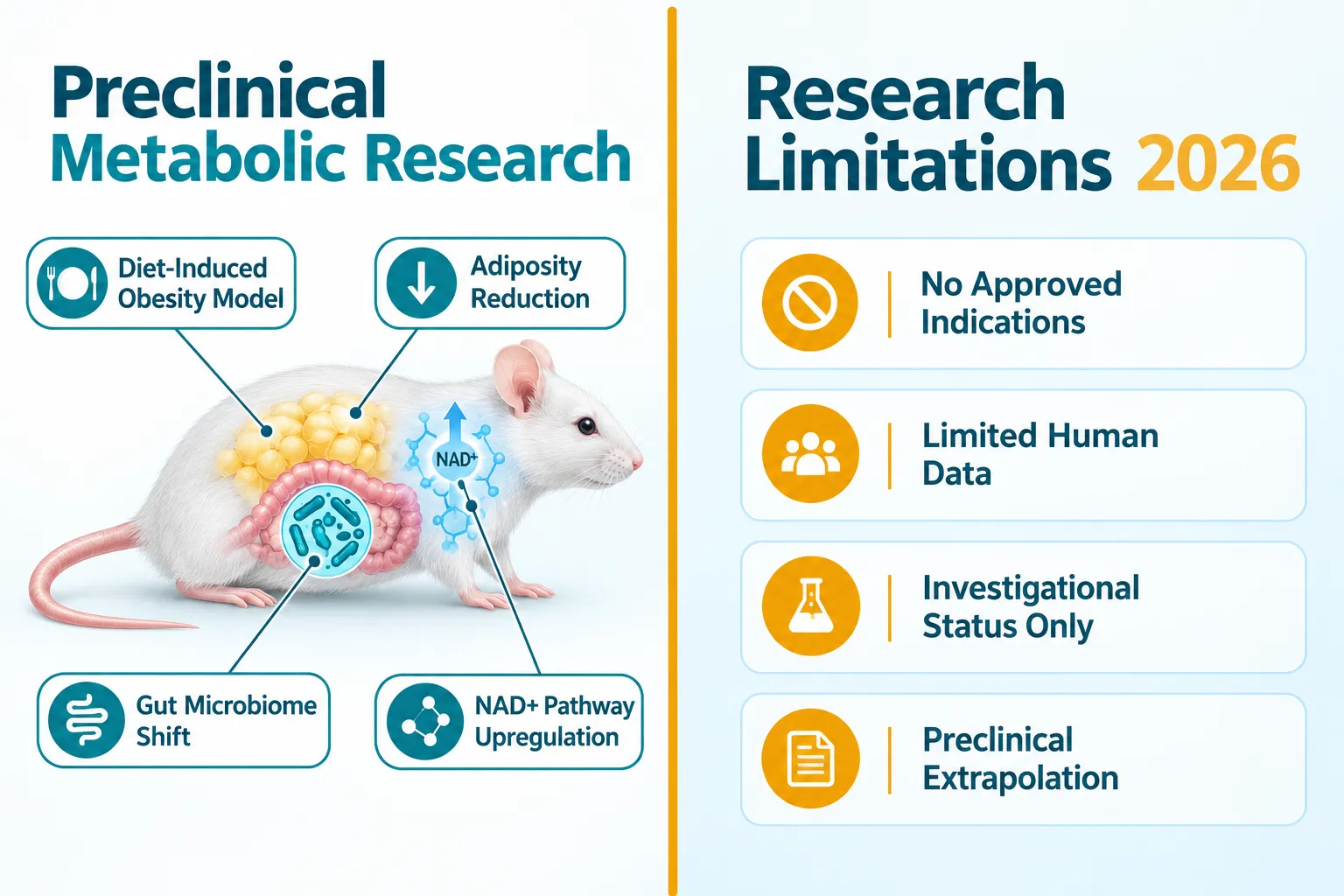
Despite promising animal data, several important limitations apply to both compounds as of 2026:
- No approved indications exist for SLU-PP-332 or 5-Amino-1MQ from any major regulatory agency.
- Human clinical evidence is extremely limited. At least one 2026 clinical-trial summary explicitly frames 5-Amino-1MQ as experimental, with no large peer-reviewed human outcome data available.
- All research-grade products are sold for laboratory use only and are not intended for human consumption.
- Claims about obesity, diabetes, or longevity benefits remain extrapolated from preclinical models and should be treated as hypothesis-generating.
Authoritative guidance remains confined to basic-science NNMT and adrenergic-signaling literature. Any therapeutic application would be speculative and off-label.
Conclusion
The question of what is Slupp332 with 5-Amino-1MQ, including the research context, naming confusion, and potential metabolic relevance, has a clear answer once the terminology is untangled. "Slupp332" is an informal rendering of SLU-PP-332, a beta-3 adrenergic receptor agonist. 5-Amino-1MQ is a separate NNMT inhibitor. They are distinct compounds with different mechanisms that vendors bundle together for complementary preclinical research into fat metabolism, mitochondrial function, and NAD+ biology.
Actionable next steps for researchers:
- Always verify the formal chemical name (SLU-PP-332, not "Slupp332") when sourcing compounds to avoid cross-contamination of data.
- Treat preclinical findings as hypothesis-generating only; design studies with appropriate controls before extrapolating to metabolic outcomes.
- Review pharmacokinetic parameters (bioavailability, half-life) before selecting dosing intervals in animal models.
- Monitor regulatory updates in 2026 and beyond, as the investigational status of both compounds may evolve as human trial data accumulates.
For researchers exploring adjacent compounds in metabolic and peptide science, the IPA Sermorelin stack research overview offers additional context on how stacked research compounds are evaluated in preclinical frameworks.


Leave a Reply
Want to join the discussion?Feel free to contribute!