Call or Text 727-513-9780
  • Shopping Cart Shopping Cart
    0Shopping Cart
Pure Tested Peptides | America's most trusted Peptides for sale online
  • Peptides for sale
    • Oral Peptides for sale
      • Peptide Capsules for sale
      • BPC 157 Capsules 1000mcg
      • SLU-PP-332 Capsules | 1000 mcg
      • 5-Amino-1MQ 50mg Capsules
      • Tesofensine 500mcg
    • All Peptides for sale
    • Peptide Sprays
      • BPC 157 Nasal Spray Kit
      • BPC-157 TB500 Nasal Spray Kit
      • Semax Nasal Spray 10mg
      • Selank – Nasal Spray Kit – 10mg
      • Epithalon 50MG Nasal Spray Kit
      • Ipamorelin 10mg Nasal Spray
      • Klow Nasal Spray (BPC-157 + TB-500 + GHK-Cu + KPV) | 80mg
      • Hulk Nasal Spray Tesa / Ipa Blend 6/3 MG
      • Klow Nasal Spray
      • NAD + 500 mg Nasal Spray
      • PT-141 Nasal Spray Kit
    • GHRH Peptides
      • Ipa Peptides
      • CJC-1295 Peptides
        • CJC-1295 with DAC 5 mg
        • CJC-1295 without DAC 5 mg
        • CJC-1295 Ipa 10mg
      • Tesa Peptides
        • Tesa Peptide
        • Tesa 20 mg
    • GHK-Cu Peptides
      • All GHK-Cu Peptides
      • GHK-Cu 100mg
      • KLOW Peptide Blend – Buy KLOW blend online
    • BPC Peptides
      • All BPC Peptides
      • BPC-157
      • BPC-157 TB-500
      • BPC 157 capsules 1000mcg
    • SLU-PP-332 Peptides
      • All SLU-PP-332 Peptides
      • SLU-PP-332 5mg
    • GLP3 Peptides
    • PT-141 Peptides
      • PT-141 Peptides for sale
      • PT-141 10mg
      • PT-141 Nasal Spray
    • CAG Peptides
      • Lipo-C Peptide Blend
      • CAG 5mg
      • CAG 10mg
    • MOTS-C Peptides
      • MOTS-C Peptides for sale
      • MOTS-c peptide
      • MOTS-c 10mg *6 pack*
    • 5 Amino 1MQ Peptides
      • 5 Amino 1MQ Peptides for sale
      • 5-Amino-1MQ 50mg Capsules
      • 5-Amino-1MQ 5mg
    • Epithalon Peptides
      • Epithalon Peptides for sale
      • Epithalon 10mg
      • Epithalon 50mg
  • Shop
    • GLPs
      • 5-Amino-1MQ 50mg Capsules
      • 5-Amino-1MQ 5mg
      • L-Carnitine 500mg/ml
      • Tesofensine 500mcg
      • SLU-PP-332 5mg
      • MOTS-c 10mg *6 pack*
    • Epithalon & BPC Peptides
      • Epithalon 10mg
      • Epithalon 50mg
      • BPC-157
      • BPC 157 capsules 1000mcg
      • BPC-157 TB-500
      • BPC-157 TB500 Nasal Spray Kit
      • BPC 157 Nasal Spray Kit
    • BPC TB-500 & NAD+ Peptides
      • NAD+ 500 mg
      • KLOW Peptide Blend – Buy KLOW blend online
      • GLOW Peptide Blend
      • TB 500 5mg
      • BPC 157 capsules 1000mcg – Supplement
      • BPC 157 Nasal Spray Kit
      • BPC-157
      • BPC-157 TB500 Nasal Spray Kit
      • BPC-157 TB-500
      • BPC 157 capsules 1000mcg
    • LL-37 Peptide
      • LL-37 10 mg
    • MOTS-C & Selank
      • MOTS-c peptide
      • Selank 10mg
    • GHK Peptides
      • GHK-Cu 100mg
      • GLOW Peptide Blend
      • KLOW Peptide Blend – Buy KLOW blend online
  • COAs
  • Wholesale
    • Wholesale Peptides for sale
  • PTP FAQ
  • Affiliates
    • Selank Peptide: Advanced Pharmacological Mechanisms Underlying Its Anxiolytic and Nootropic Effects in Research
      • 5-Amino-1MQ Peptide: Detailed Mechanisms of NNMT Inhibition and Its Impact on Cellular Metabolism Research
        • MOTS-C Peptide: Unraveling Its Role in Mitochondrial Dynamics and Energy Metabolism Research
          • Epithalon Peptide and Telomerase Regulation: Investigating Its Impact on Cellular Senescence and Lifespan Research Models
            • GLP2-T vs GLP2 Tirz Peptide: Understanding the Naming, Mechanistic Nuances, and Research Implications for Gut Health
      • Peptides and Polypeptides in Modern Pharmacology: What Research on Metoprolol, Prednisone, and Amlodipine Reveals
        • Polypeptide Peptides vs NSAIDs: What Naproxen and Diclofenac Teach Tissue-Repair Researchers About BPC‑157 and TB‑500
          • Peptides and Polypeptides in Endocrine Pharmacology: How GLP-1, GLP-2, and GLP-3 Retatrutide Differ From Classic Drugs Like Prednisone and Amlodipine
          • 5‑Amino‑1MQ Peptide and NNMT Inhibition: How It Compares With Statins Like Atorvastatin in Adipose and Lipid Metabolism Research
      • Enclomiphene, Estrogen Receptor Signaling, and Luteinizing Phase Biology: What Hormone Researchers Should Measure
        • Mesenchymal Stem Cells, BPC‑157, and GHK‑Cu: How Tissue Repair Peptides Compare With Classic NSAIDs Like Naproxen in Injury Models
          • Peptide Calculator Use Cases Beyond Growth Hormone: Working Through GLP‑3 Retatrutide, MOTS‑c, and BPC‑157 Research Dosing
        • Polypeptide Peptides in Endocrine and Metabolic Pharmacology: Lessons From Amlodipine, Prednisone, and Metoprolol
        • Peptides Calculator for Advanced Blends: Worked Examples for Tesamorelin, CJC‑1295, and Ipamorelin Stacks
          • Peptides and Polypeptides in Human Physiology: How Molecular Size Shapes Research Applications
            • Selank Peptide: Advanced Pharmacological Mechanisms Underlying Its Anxiolytic and Nootropic Effects in Research
          • 5-Amino-1MQ Peptide: Detailed Mechanisms of NNMT Inhibition and Its Impact on Cellular Metabolism Research
            • MOTS-C Peptide: Unraveling Its Role in Mitochondrial Dynamics and Energy Metabolism Research
              • Epithalon Peptide and Telomerase Regulation: Investigating Its Impact on Cellular Senescence and Lifespan Research Models
                • GLP2-T vs GLP2 Tirz Peptide: Understanding the Naming, Mechanistic Nuances, and Research Implications for Gut Health
                  • Peptides and Polypeptides in Endocrine Pharmacology: How GLP-1, GLP-2, and GLP-3 Retatrutide Differ From Classic Drugs Like Prednisone and Amlodipine
                    • Polypeptide Peptides vs NSAIDs: What Naproxen and Diclofenac Teach Tissue-Repair Researchers About BPC‑157 and TB‑500
                      • Peptides and Polypeptides in Modern Pharmacology: What Research on Metoprolol, Prednisone, and Amlodipine Reveals
                        • 5‑Amino‑1MQ Peptide and NNMT Inhibition: How It Compares With Statins Like Atorvastatin in Adipose and Lipid Metabolism Research
                        • Enclomiphene, Estrogen Receptor Signaling, and Luteinizing Phase Biology: What Hormone Researchers Should Measure
                        • Mesenchymal Stem Cells, BPC‑157, and GHK‑Cu: How Tissue Repair Peptides Compare With Classic NSAIDs Like Naproxen in Injury Models
                        • Peptide Calculator Use Cases Beyond Growth Hormone: Working Through GLP‑3 Retatrutide, MOTS‑c, and BPC‑157 Research Dosing
                        • Polypeptide Peptides in Endocrine and Metabolic Pharmacology: Lessons From Amlodipine, Prednisone, and Metoprolol
                        • Peptides Calculator for Advanced Blends: Worked Examples for Tesamorelin, CJC‑1295, and Ipamorelin Stacks
                        • Peptides and Polypeptides in Human Physiology: How Molecular Size Shapes Research Applications
                        • Selank Peptide: Advanced Pharmacological Mechanisms Underlying Its Anxiolytic and Nootropic Effects in Research
                        • MOTS-C Peptide: Unraveling Its Role in Mitochondrial Dynamics and Energy Metabolism Research
                        • Peptides and Polypeptides in Modern Pharmacology: What Research on Metoprolol, Prednisone, and Amlodipine Reveals
                        • Peptides and Polypeptides in Endocrine Pharmacology: How GLP-1, GLP-2, and GLP-3 Retatrutide Differ From Classic Drugs Like Prednisone and Amlodipine
                        • 5-Amino-1MQ Peptide: Detailed Mechanisms of NNMT Inhibition and Its Impact on Cellular Metabolism Research
                        • Mesenchymal Stem Cells, BPC‑157, and GHK‑Cu: How Tissue Repair Peptides Compare With Classic NSAIDs Like Naproxen in Injury Models
                        • Peptide Calculator Use Cases Beyond Growth Hormone: Working Through GLP‑3 Retatrutide, MOTS‑c, and BPC‑157 Research Dosing
                        • GLP2-T vs GLP2 Tirz Peptide: Understanding the Naming, Mechanistic Nuances, and Research Implications for Gut Health
                        • Polypeptide Peptides in Endocrine and Metabolic Pharmacology: Lessons From Amlodipine, Prednisone, and Metoprolol
                        • Polypeptide Peptides vs NSAIDs: What Naproxen and Diclofenac Teach Tissue-Repair Researchers About BPC‑157 and TB‑500
                        • Peptides and Polypeptides in Human Physiology: How Molecular Size Shapes Research Applications
                        • Peptides Calculator for Advanced Blends: Worked Examples for Tesamorelin, CJC‑1295, and Ipamorelin Stacks
                        • 5‑Amino‑1MQ Peptide and NNMT Inhibition: How It Compares With Statins Like Atorvastatin in Adipose and Lipid Metabolism Research
                        • Enclomiphene, Estrogen Receptor Signaling, and Luteinizing Phase Biology: What Hormone Researchers Should Measure
                        • Epithalon Peptide and Telomerase Regulation: Investigating Its Impact on Cellular Senescence and Lifespan Research Models
                        • Best research protocol Klow blend
                        • best time to take BPC-157
                        • best time to take DSIP (Delta Sleep Inducing Peptide)
                        • best time to take CJC-1295
                        • best time to take AOD-9604
                        • best time to take Follistatin 344
                        • best time to take Ipamorelin
                        • best time to take MK-677 (Ibutamoren)
                        • best time to take Ligandrol (LGD-4033) — research compound
                        • best time to take Ostarine (MK-2866) — research compound
                        • best time to take GHK-CU
                        • best time to take TB-500
                        • best time to take MOTS-c
                        • best time to take Semax
                        • best time to take RAD-140 (Testolone) — research compound
                        • best time to take Thymosin Alpha-1
                        • best time to take PEG-MGF
                        • Biolife Plasma, Octapharma Plasma, and Research Peptides: How Plasma Donation Labs Differ From Peptide Suppliers
                        • best time to take YK-11 — research compound
                        • best time to take PT-141 (Bremelanotide)
                        • Best research protocol Klow blend
                        • 5-Amino-1MQ and MOTS-C Synergy: Metabolic Signaling, Mitochondria, and Research Design
                        • BPC-157 and TB-500: Investigating Their Combined Effects on Angiogenesis and Cellular Migration in Tissue Repair Models
                        • BPC-157 Peptide: Gut Barrier Function, Inflammation, and Tissue-Recovery Research
                        • 5‑Amino‑1MQ and MOTS‑c Synergy in Metabolic Research: Designing NNMT and Mitochondrial Biogenesis Stacks
                        • CJC-1295 with DAC vs. Without DAC: Half-Life, Release Kinetics, and Research Implications
                        • CJC‑1295 with DAC vs. Without DAC: Expanding on Half‑Life Differences Using Tesamorelin and Ipamorelin Blend Case Studies
                        • Collagen Biology and Copper‑Binding Peptides: How GHK‑Cu, Glow Blend, and Klow Blend Interact with Skin and Connective Tissue
                        • Collagen Biology and Regenerative Peptides: How GHK‑Cu, Glow Blend, and Klow Blend Affect Extracellular Matrix Research
                    • DNA, Telomeres, and Longevity Peptides: Positioning Epithalon and MOTS‑c in Genetic Aging Research
                      • Enclomiphene Citrate: serm Mechanism, Testosterone Research, and Stack Compatibility
                        • Enclomiphene vs Enclomiphene Citrate: Formulation, Bioavailability, and Research Distinctions
                        • Epithalon Peptide Research: Telomerase Activation, Aging, and Pineal Gland Function
                        • Estrogen Receptor Signaling and Enclomiphene: How Selective Modulators Compare with Classic Polypeptide Hormones
                        • GHK-Cu Peptide: Advanced Mechanisms in Extracellular Matrix Remodeling and Wound Healing Research
                        • GHK-Cu Peptide: Collagen Synthesis, Wound Repair, and Skin-Barrier Research Models
                        • GLP-1 vs GLP-3 vs GLP-2: Peptide Classification and Research Applications
                        • GLP-2 Peptide Research Guide: Gut Barrier Function, Nutrient Absorption, and Intestinal Recovery Models
                        • GLP-3 Retatrutide vs. GLP-1 Drugs: What Triple-Agonist Biology Changes in Research Models
                        • Ipamorelin and Tesamorelin Combination: Synergistic GH Secretagogue Research and Dosing Protocols
                        • GLP2 Tirz Peptide: What It Is, Why the Name Exists, and How Researchers Should Interpret It
                        • Klow Blend Peptide Nasal Spray: What the Formulation Is Trying to Do in Cognitive Research
                        • Mitochondria, NNMT Inhibition, and Peptide Modulators: Where MOTS‑c and 5‑Amino‑1MQ Fit in Cellular Energy Research
                        • MOTS-c Peptide: Mitochondrial Function, Energy Metabolism, and What Researchers Measure
                        • MOTS-c vs. 5-Amino-1MQ: Which Metabolic Research Questions Each Compound Actually Answers
                        • Nasal Spray Peptides: Bioavailability, Administration, and Semax/Selank Research Applications
                        • PT-141 Peptide Research: Mechanism of Action and Melanocortin Receptor Signaling
                        • Retatrutide for Research: Mechanism, Structure, and GLP-1/GLP-3 Dual Action
                        • Retatrutide for Obesity and Type 2 Diabetes: What the Latest Trial Data Suggest
                        • Tesofensine Peptide Research: Mechanism, Appetite Suppression, and Neuropeptide Y Pathways
  • Contact
    • Contact Customer Service
    • Text Customer Support
  • About US
  • Shop all peptides
  • Affiliate Program
    • Affiliate Signup
  • Login / Register Login / Register Page Link Login / Register Page Link
  • Click to open the search input field Click to open the search input field Search
  • Menu Menu
What Is Slupp332 With 5-Amino-1MQ? Research Context, Naming Confusion, and Potential Metabolic Relevance

What Is Slupp332 With 5-Amino-1MQ? Research Context, Naming Confusion, and Potential Metabolic Relevance

September 29, 2026/0 Comments/in Uncategorized/by

A single search for "Slupp332 with 5-Amino-1MQ" returns product pages, research forums, and peptide vendor catalogs that use the term in completely different ways. For researchers and clinicians trying to parse the science, that inconsistency is a real problem. Understanding what is Slupp332 with 5-Amino-1MQ, including the research context, naming confusion, and potential metabolic relevance, requires separating two distinct compounds that are often sold together but work through entirely different biological mechanisms.

Key Takeaways

  • "Slupp332" is an informal spelling of SLU-PP-332, a beta-3 adrenergic receptor agonist studied as an exercise mimetic in preclinical models.
  • 5-Amino-1MQ (5-amino-1-methylquinolinium) is a separate small-molecule inhibitor of the enzyme NNMT, studied for its role in NAD+ preservation and fat metabolism.
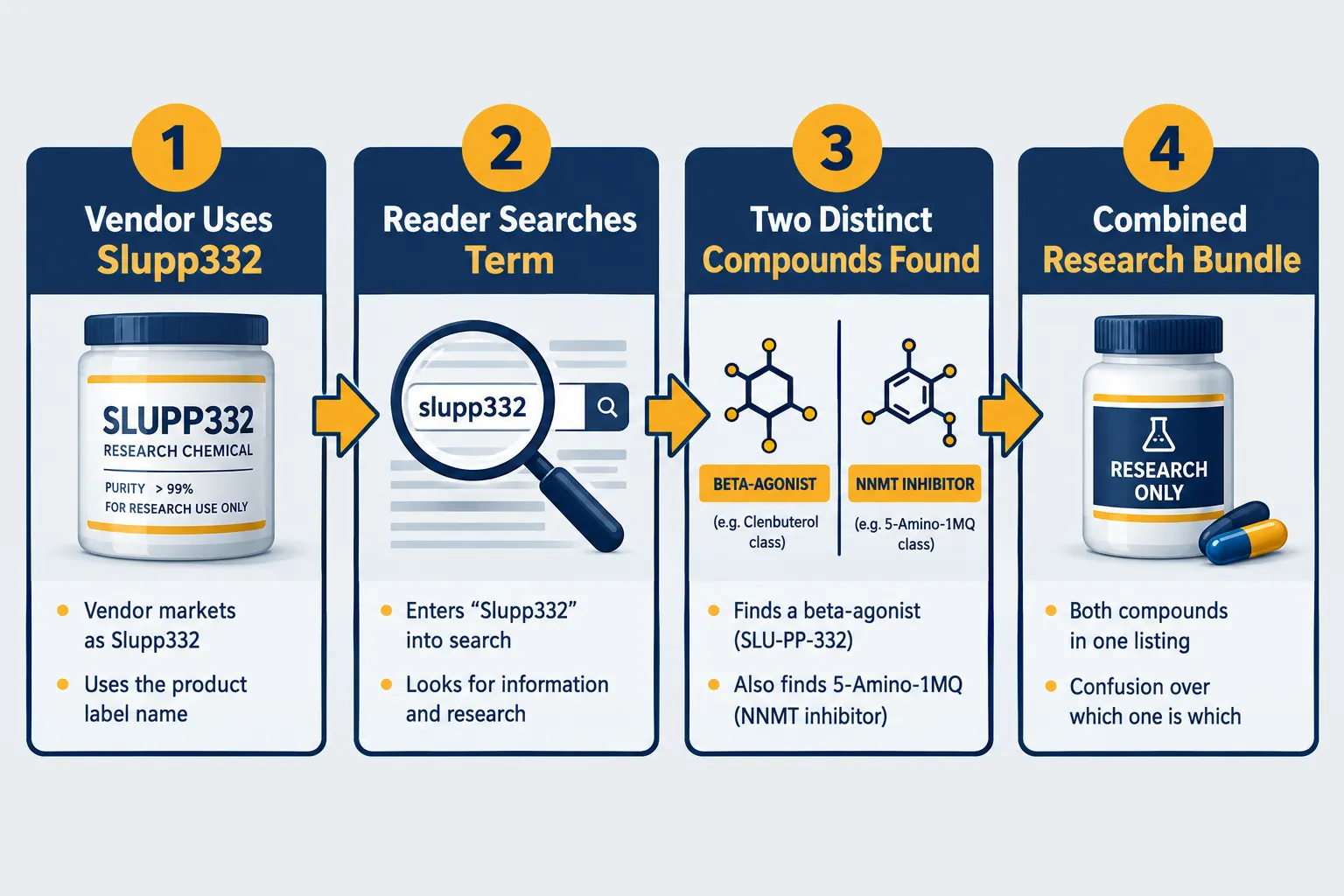
  • The two compounds are sold together in research bundles but are not the same substance and do not share a mechanism of action.
  • Naming inconsistencies across vendor pages, "SLUPP-332," "SLU-PP-332," "Slupp332", are a primary source of confusion for researchers.
  • As of 2026, both compounds remain investigational, with no approved clinical indications and no large-scale human outcome data.

Decoding the Naming Confusion Around Slupp332 and 5-Amino-1MQ

The term "Slupp332" is not a standardized chemical name. It is a vendor-simplified version of SLU-PP-332, a compound developed in academic pharmacology research. Across supplier catalogs, it appears as "SLU-PP-332," "SLUPP-332," "Slupp-332," and "Slupp332", all referring to the same molecule. This inconsistency is not trivial. A researcher unfamiliar with the compound might assume these are different substances or mistake the informal name for a peptide blend.
Decoding the Naming Confusion Around Slupp332 and 5-Amino-1MQ

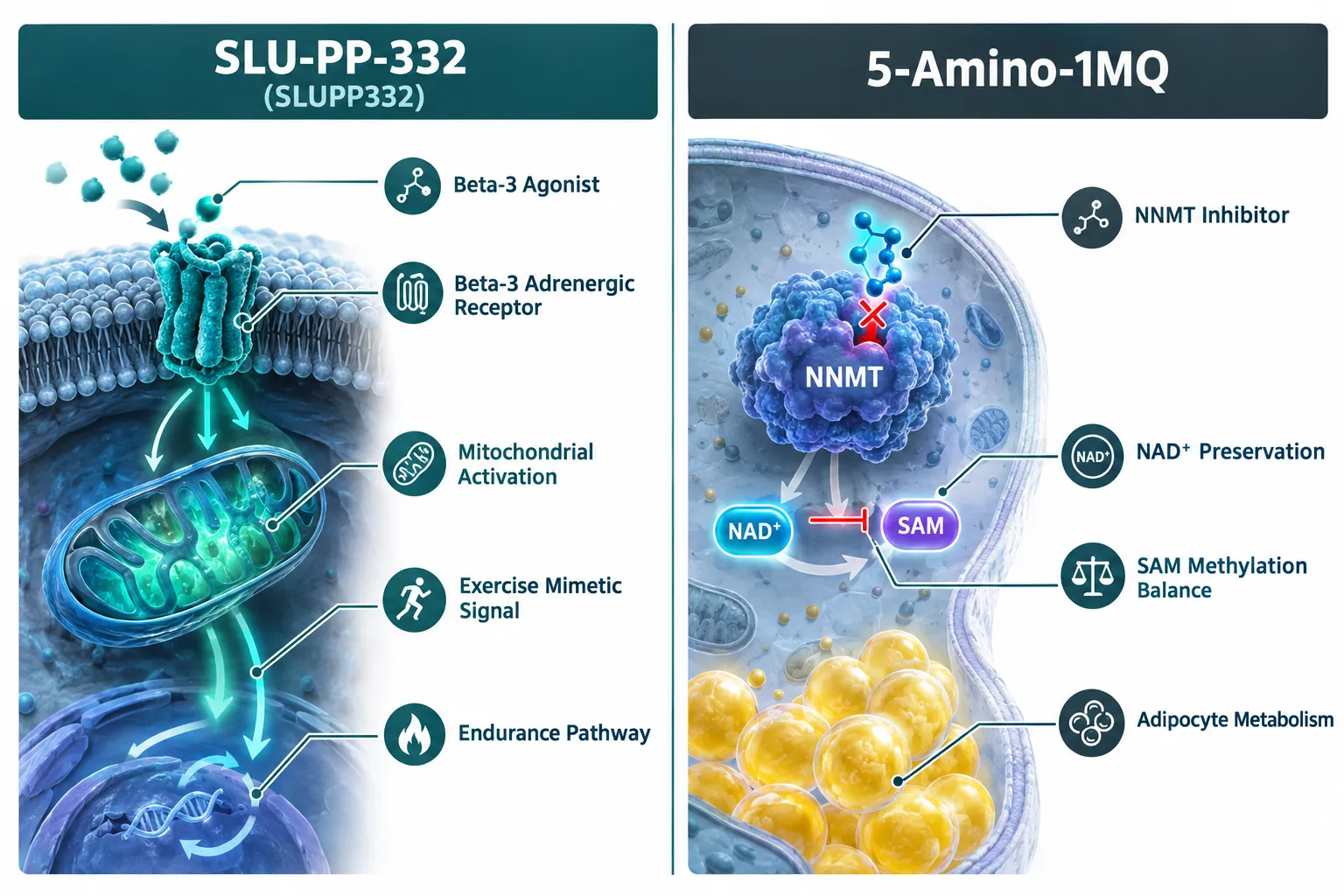
SLU-PP-332 is a beta-3 adrenergic receptor agonist. Its research interest centers on its potential to mimic some physiological effects of exercise, specifically, activating pathways linked to mitochondrial biogenesis and endurance adaptation, without physical activity. In research bundles, it typically appears at 250 mcg per capsule, explicitly labeled for laboratory research only.

5-Amino-1MQ (full name: 5-amino-1-methylquinolinium) is an entirely different class of compound. It is a small-molecule, membrane-permeable inhibitor of nicotinamide N-methyltransferase (NNMT), the enzyme responsible for methylating nicotinamide using S-adenosyl methionine (SAM). When NNMT is active, it diverts nicotinamide away from the NAD+ salvage pathway. By blocking NNMT, 5-Amino-1MQ preserves nicotinamide for NAD+ synthesis, which may support cellular energy metabolism, particularly in metabolically aged or obese tissue.

To explore the broader landscape of small molecules and peptides in this research space, the Peptides 101 for Research-Use Only Buyers guide provides useful structural and mechanistic context.


Research Context: What Each Compound Does Separately

SLU-PP-332 as an Exercise Mimetic

SLU-PP-332 targets the beta-3 adrenergic receptor, a G-protein-coupled receptor expressed primarily in adipose tissue and, to a lesser extent, in skeletal muscle. Activation of this receptor triggers downstream signaling associated with:

  • Mitochondrial activation and increased oxidative capacity
  • Enhanced fat oxidation in adipose depots
  • Endurance-related gene expression changes

Preclinical research has described these effects as "exercise mimetic," meaning the compound may activate some of the same cellular programs that physical training does. This positions SLU-PP-332 alongside other compounds studied for visceral fat research and metabolic optimization in animal models.

5-Amino-1MQ as an NNMT Inhibitor

5-Amino-1MQ's mechanism is rooted in methylation biochemistry. Preclinical work in differentiated adipocytes demonstrated that exposing cells to 0.3-60 µM of 5-Amino-1MQ over 24 hours reduces intracellular NNMT activity and alters levels of NAD+, nicotinic acid, SAM, and S-adenosylhomocysteine (SAH). These changes support a direct role in both cellular energy metabolism and epigenetic regulation of metabolic genes.

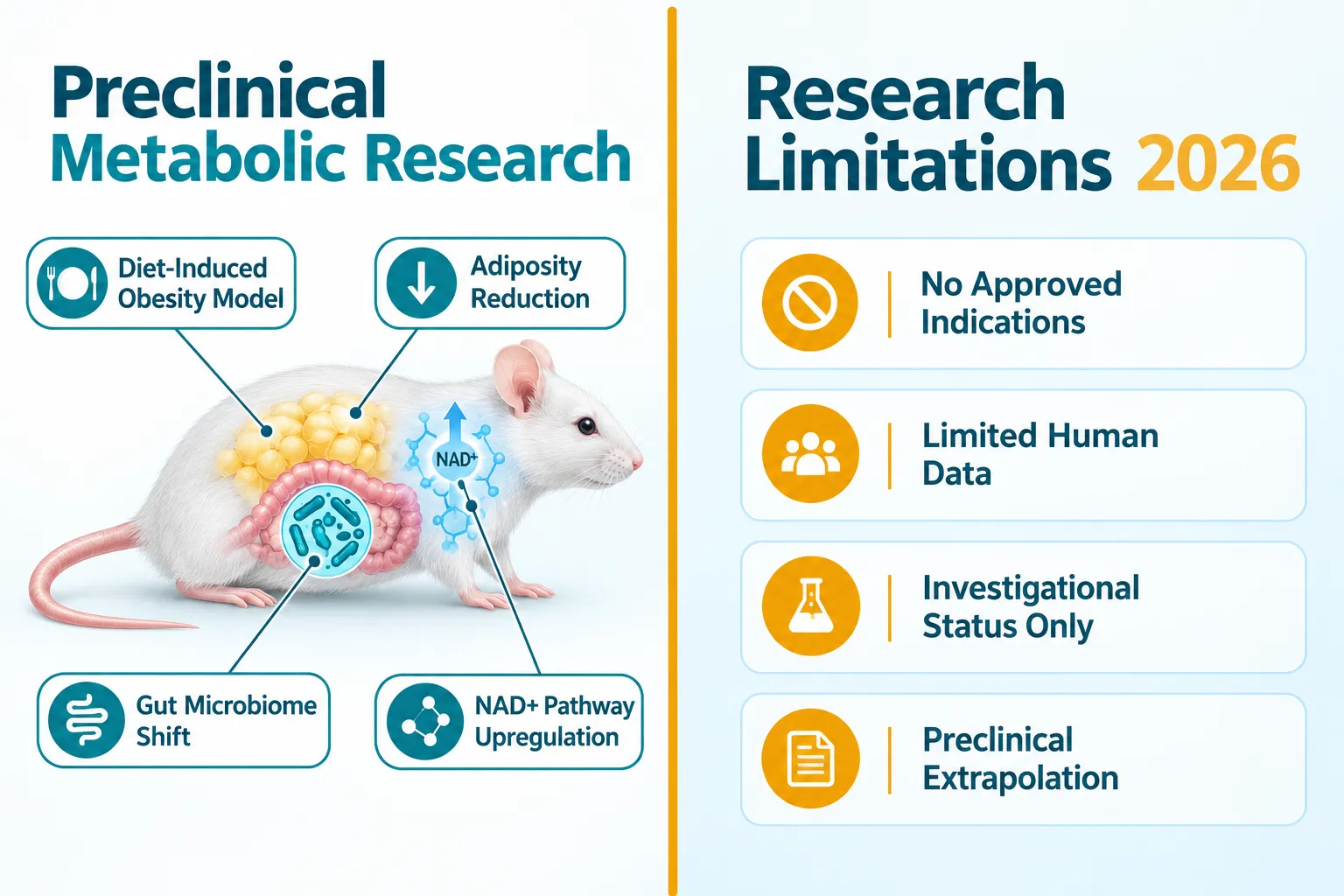
A 2022 study in Scientific Reports reported that combining an NNMT inhibitor with a reduced-calorie, low-fat diet in diet-induced obese mice produced rapid adiposity and weight loss, normalizing measures to lean controls faster than diet alone, while also shifting the gut microbiome to a distinct profile.

Pharmacokinetic data from rat studies show an oral bioavailability of approximately 38.4% for 5-Amino-1MQ, with a mean terminal half-life of 3.80 hours after intravenous administration and 6.90 hours after oral dosing. These parameters are foundational for designing future exposure models.

Researchers interested in 5-Amino-1MQ capsules for preclinical study can find research-grade formulations through specialized suppliers.


Potential Metabolic Relevance of the Slupp332 + 5-Amino-1MQ Combination

The pairing of these two compounds in research bundles is not arbitrary. Vendors and research guides describe the combination as a framework for interrogating fat oxidation, energy regulation, glucose control, and cellular health within the same experimental design.
Potential Metabolic Relevance of the Slupp332 + 5-Amino-1MQ Combination

The rationale is mechanistically complementary:

Compound Mechanism Research Target
SLU-PP-332 Beta-3 adrenergic agonism Mitochondrial activation, fat oxidation
5-Amino-1MQ NNMT inhibition NAD+ preservation, adipocyte size reduction

By combining beta-3 adrenergic signaling with NNMT inhibition, researchers can study whether activating exercise-mimetic pathways while simultaneously preserving NAD+ produces additive or synergistic effects on metabolic parameters. This dual approach is part of a broader trend in 2026 research positioning compounds as longevity-oriented metabolic modulators.

"The combination is hypothesis-generating, not clinically validated, a distinction that matters enormously when evaluating preclinical data."

For context on related mitochondrial research compounds studied alongside metabolic modulators, see SS-31 mitochondrial research themes and the SS-31 mitochondrial research tag.


Current Limitations and Regulatory Status
Current Limitations and Regulatory Status

Despite promising animal data, several important limitations apply to both compounds as of 2026:

  • No approved indications exist for SLU-PP-332 or 5-Amino-1MQ from any major regulatory agency.
  • Human clinical evidence is extremely limited. At least one 2026 clinical-trial summary explicitly frames 5-Amino-1MQ as experimental, with no large peer-reviewed human outcome data available.
  • All research-grade products are sold for laboratory use only and are not intended for human consumption.
  • Claims about obesity, diabetes, or longevity benefits remain extrapolated from preclinical models and should be treated as hypothesis-generating.

Authoritative guidance remains confined to basic-science NNMT and adrenergic-signaling literature. Any therapeutic application would be speculative and off-label.


Conclusion

The question of what is Slupp332 with 5-Amino-1MQ, including the research context, naming confusion, and potential metabolic relevance, has a clear answer once the terminology is untangled. "Slupp332" is an informal rendering of SLU-PP-332, a beta-3 adrenergic receptor agonist. 5-Amino-1MQ is a separate NNMT inhibitor. They are distinct compounds with different mechanisms that vendors bundle together for complementary preclinical research into fat metabolism, mitochondrial function, and NAD+ biology.

Actionable next steps for researchers:

  1. Always verify the formal chemical name (SLU-PP-332, not "Slupp332") when sourcing compounds to avoid cross-contamination of data.
  2. Treat preclinical findings as hypothesis-generating only; design studies with appropriate controls before extrapolating to metabolic outcomes.
  3. Review pharmacokinetic parameters (bioavailability, half-life) before selecting dosing intervals in animal models.
  4. Monitor regulatory updates in 2026 and beyond, as the investigational status of both compounds may evolve as human trial data accumulates.

For researchers exploring adjacent compounds in metabolic and peptide science, the IPA Sermorelin stack research overview offers additional context on how stacked research compounds are evaluated in preclinical frameworks.

Tags: 5-amino-1mq, beta-3 adrenergic agonist, exercise mimetic research, metabolic research compounds, nad+ metabolism, nnmt inhibitor, slu-pp-332, slupp332
https://www.puretestedpeptides.com/wp-content/uploads/2026/09/what-is-slupp332-with-5-amino-1mq-research-context-naming-confusion-and-potentia.webp 1024 1536 https://www.puretestedpeptides.com/wp-content/uploads/2026/01/buy-peptides-online.jpg 2026-09-29 13:03:422026-09-29 13:03:42What Is Slupp332 With 5-Amino-1MQ? Research Context, Naming Confusion, and Potential Metabolic Relevance
You might also like
The Best Research Peptides for Mitochondrial Function: A Comparative Review of MOTS-c and 5-Amino-1MQ The Best Research Peptides for Mitochondrial Function: A Comparative Review of MOTS-c and 5-Amino-1MQ
5-Amino-1MQ and MOTS-c Co-Treatment: A Matrix for Dose-Response, Additivity, and Interaction Testing 5-Amino-1MQ and MOTS-c Co-Treatment: A Matrix for Dose-Response, Additivity, and Interaction Testing
How 5-Amino-1MQ and MOTS-c Are Studied Together in Metabolic Research How 5-Amino-1MQ and MOTS-c Are Studied Together in Metabolic Research
5-Amino-1MQ Peptide: Mechanism, Metabolic Research, and How It Differs From Mitochondrial Peptides 5-Amino-1MQ Peptide: Mechanism, Metabolic Research, and How It Differs From Mitochondrial Peptides
5-Amino-1MQ and MOTS-c Synergy: How Mitochondrial Peptides Target Adiposity and Insulin Resistance in Experimental Models 5-Amino-1MQ and MOTS-c Synergy: How Mitochondrial Peptides Target Adiposity and Insulin Resistance in Experimental Models
Vitamin D, MOTS-c, and 5-Amino-1MQ: Designing Nutrient-Controlled Cellular Energy Experiments Vitamin D, MOTS-c, and 5-Amino-1MQ: Designing Nutrient-Controlled Cellular Energy Experiments
Atorvastatin and Mitochondrial Peptides: Separating Lipid-Lowering Effects From MOTS-c and 5-Amino-1MQ Readouts Atorvastatin and Mitochondrial Peptides: Separating Lipid-Lowering Effects From MOTS-c and 5-Amino-1MQ Readouts
Adenosine Triphosphate and Mitochondrial Peptides: How MOTS-c and 5-Amino-1MQ Influence ATP Production in Research Models Adenosine Triphosphate and Mitochondrial Peptides: How MOTS-c and 5-Amino-1MQ Influence ATP Production in Research Models
0 replies

Leave a Reply

Want to join the discussion?
Feel free to contribute!

Leave a Reply Cancel reply

Your email address will not be published. Required fields are marked *

×

Helpful Links

  • My account
  • Cart
  • Checkout
  • Refund and Returns Policy
  • Privacy Policy
  • SMS Privacy Policy
  • Login
  • My Account
  • Logout

USA Made Lab Tested Peptides

All products are sold for research, laboratory, or analytical purposes only, and are not for human consumption


Pure Tested Peptides is a chemical supplier. Pure Tested Peptides is not a compounding / chemical compounding facility as defined under 503A of the Federal Food, Drug, and Cosmetic act. Pure Tested Peptides is not an outsourcing facility as defined under 503B of the Federal Food, Drug, and Cosmetic act.

The statements made within this website have not been evaluated by the US Food and Drug Administration. The products we offer are not intended to diagnose, treat, cure or prevent any disease.

Human/Animal Consumption Prohibited. Laboratory/In-Vitro Experimental Use Only

Link to: Complement-Dependent Cytotoxicity in GLP-3 and BPC-157 Studies: What New Safety Data Signals Mean for Peptide Researchers in 2026 Link to: Complement-Dependent Cytotoxicity in GLP-3 and BPC-157 Studies: What New Safety Data Signals Mean for Peptide Researchers in 2026 Complement-Dependent Cytotoxicity in GLP-3 and BPC-157 Studies: What New Safety...Complement-Dependent Cytotoxicity in GLP-3 and BPC-157 Studies: What New Safety Data Signals Mean for Peptide Researchers in 2026 Link to: Klow Blend Nasal Spray Stability Study: A Research Framework for Container Closure, Temperature, and Freeze–Thaw Testing Link to: Klow Blend Nasal Spray Stability Study: A Research Framework for Container Closure, Temperature, and Freeze–Thaw Testing Klow Blend Nasal Spray Stability Study: A Research Framework for Container Closure, Temperature, and Freeze–Thaw TestingKlow Blend Nasal Spray Stability Study: A Research Framework for Container Closure,...
Scroll to top Scroll to top Scroll to top