

Vitamin D, MOTS-c, and 5-Amino-1MQ: Designing Nutrient-Controlled Cellular Energy Experiments
Researchers who publish conflicting results on metabolic peptides often share one overlooked flaw: they never standardized the vitamin D status of their cell cultures or animal models before the experiment began. That single omission can silently shift AMPK activity, mitochondrial respiration, and insulin signaling, making every downstream comparison unreliable. Understanding how to design nutrient-controlled cellular energy experiments around Vitamin D, MOTS-c, and 5-Amino-1MQ is therefore not a minor methodological footnote; it is the foundation of reproducible metabolic science.
Key Takeaways
- Vitamin D, acting through the vitamin D receptor (VDR), directly modulates AMPK, mTOR, and mitochondrial oxidative capacity, making vitamin D status a critical baseline variable in any cellular energy experiment.
- MOTS-c is a 16-amino-acid mitochondrial-derived peptide that activates AMPK by accumulating AICAR, linking mitochondrial stress signals to whole-cell energy regulation.
- 5-Amino-1MQ inhibits nicotinamide N-methyltransferase (NNMT), redirecting nicotinamide toward NAD+ biosynthesis and reshaping cellular energy and lipid metabolism.
- All three agents converge on the AMPK-SIRT1-PGC-1alpha axis, meaning their effects are not independent, experimental designs must account for this overlap.
- Standardizing media composition, vitamin D concentration, and mitochondrial readout methods before adding peptide or small-molecule treatments is essential for valid, reproducible results.
Why Vitamin D Status Must Be Standardized First
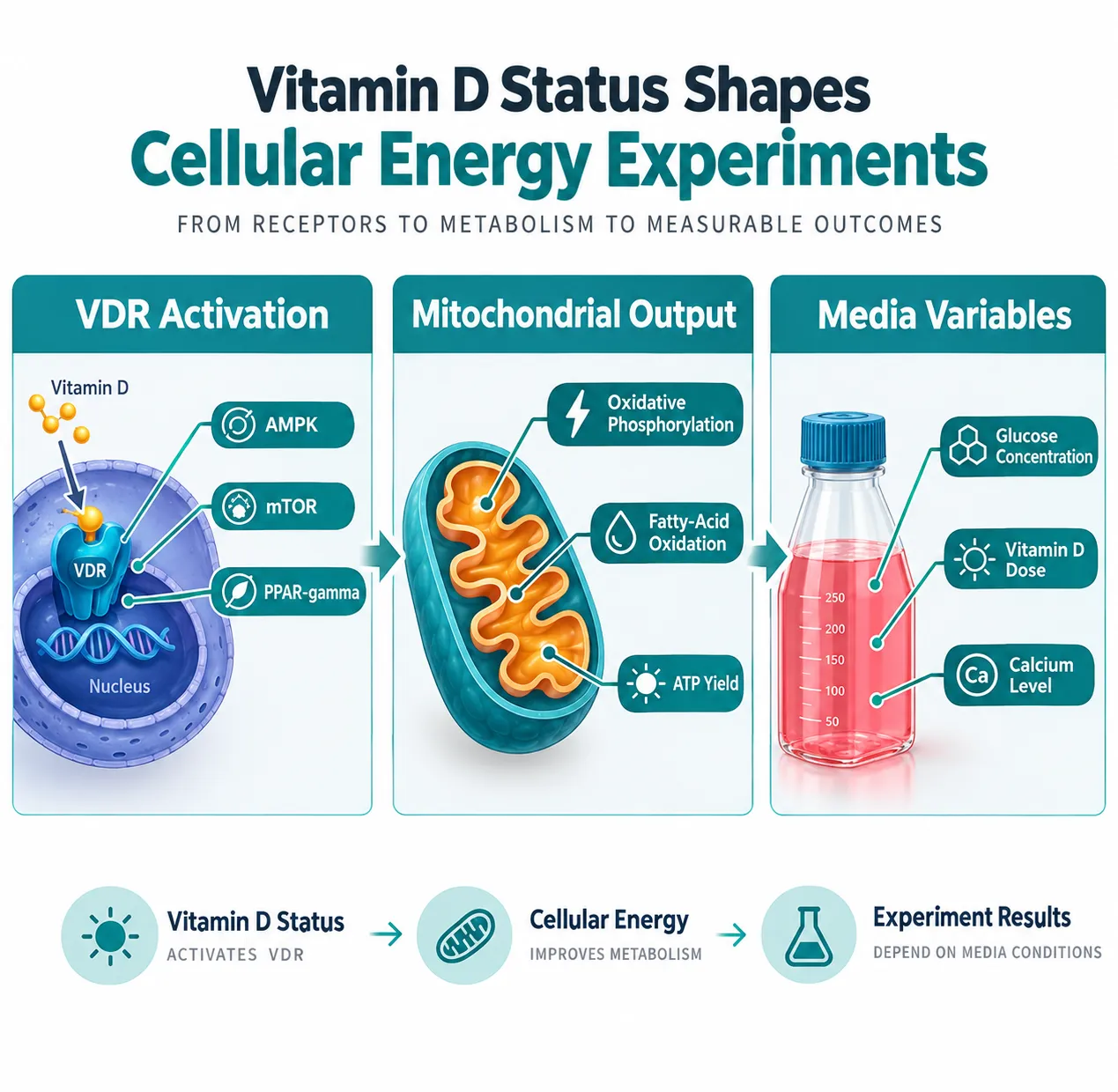
Most cell-culture media formulations contain little to no vitamin D, yet researchers rarely report the vitamin D content of their experimental system. This gap matters because the active form of vitamin D, calcitriol, enhances mitochondrial fatty-acid oxidation and oxidative phosphorylation in muscle cells. Human supplementation studies confirm that cholecalciferol increases oxidative phosphorylation capacity and improves muscle function, effects that translate directly to the readouts used in cellular energy assays.
The mechanism runs through the vitamin D receptor (VDR), which is expressed in adipocytes, hepatocytes, skeletal muscle, beta-cells, endothelial cells, and immune cells. VDR activation modulates several signaling nodes that are central to cellular energy regulation:
| Signaling Node | Role in Energy Metabolism |
|---|---|
| AMPK | Cellular energy sensor; activates catabolic pathways |
| mTOR | Anabolic signaling; suppressed during energy deficit |
| NF-kB | Inflammatory regulator; linked to mitochondrial stress |
| PPAR-gamma | Lipid metabolism and adipogenesis control |
Because these pathways overlap with classic exercise and nutrient-stress responses, an experiment that ignores vitamin D status is effectively running with an uncontrolled variable sitting at the top of the signaling cascade. A 2026 mechanistic review on vitamin D and metabolic syndrome positions VDR-dependent signaling as a core modulator of insulin sensitivity, oxidative stress, and mitochondrial function, reinforcing that vitamin D belongs in the experimental design checklist, not the supplementary materials.
Practical standardization steps include:
- Measuring baseline 25-hydroxyvitamin D in serum before animal studies
- Supplementing cell culture media with a defined calcitriol concentration
- Running a vitamin D-deficient control arm alongside replete conditions
- Reporting media composition fully in the methods section
MOTS-c and 5-Amino-1MQ: Mechanisms Within a Nutrient-Controlled Framework
With a stable vitamin D baseline established, researchers can introduce the two experimental agents most relevant to nutrient-controlled cellular energy work: the mitochondrial peptide MOTS-c and the NNMT inhibitor 5-Amino-1MQ.
MOTS-c: A Mitochondrial Stress Peptide That Reads Nutrient State
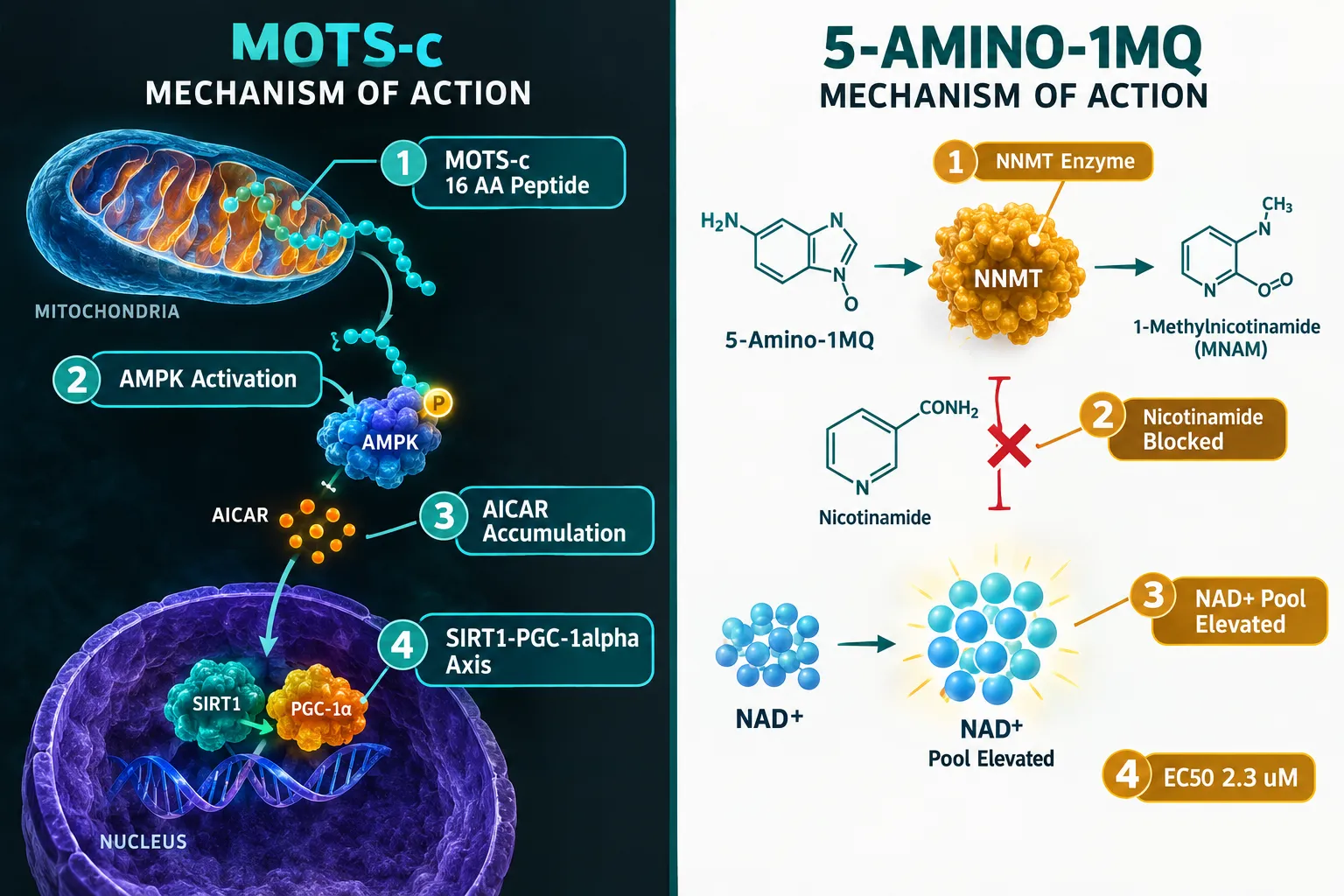
MOTS-c is a 16-amino-acid microprotein encoded within the 12S rRNA of mitochondrial DNA. Its primary mechanism involves inhibiting the folate cycle and de novo purine synthesis, which causes accumulation of AICAR, an endogenous AMPK agonist. This makes MOTS-c a direct link between mitochondrial stress and the cell's central energy "fuel gauge."
Under metabolic stress such as nutrient deprivation or mitochondrial dysfunction, MOTS-c translocates to the nucleus in an AMPK-dependent manner, where it regulates gene expression programs that optimize mitochondrial function and enhance antioxidant defenses. A 2026 translational review describes MOTS-c as part of a secreted mitochondrial microprotein network engaging the canonical AMPK → SIRT1 → PGC-1alpha axis, the same cascade driven by endurance exercise and caloric restriction.
Preclinical data from 2025 show that MOTS-c restores mitochondrial respiration in the type 2 diabetic heart, improving oxygen consumption and cardiac bioenergetics. Separate 2025 work reports that MOTS-c prevents metabolic derangements via regulation of both AMPK and mTOR pathways. Researchers exploring these effects can source MOTS-c peptide for in-vitro and preclinical work.
"MOTS-c does not act in isolation, its potency is shaped by the nutrient environment the cell is already experiencing when the peptide arrives."
5-Amino-1MQ: Redirecting NAD+ Through NNMT Inhibition
5-Amino-1MQ (5-amino-1-methylquinolinium) is a small-molecule inhibitor of nicotinamide N-methyltransferase (NNMT), the cytosolic enzyme that methylates nicotinamide, a NAD+ precursor, using SAM as the methyl donor. By occupying the nicotinamide-binding pocket of NNMT, 5-Amino-1MQ blocks this diversion and reshapes cellular NAD+ and methyl-donor pools.
In differentiated adipocyte models, 5-Amino-1MQ demonstrates concentration-dependent NNMT inhibition with a calculated EC50 of approximately 2.3 µM, providing a practical dose range for in-vitro studies. At effective concentrations, it reduces intracellular 1-methylnicotinamide, elevates NAD+ levels, and suppresses lipogenesis, demonstrating that NNMT inhibition can reroute nicotinamide toward energy metabolism rather than fat-storage pathways.
Preclinical obesity models show that 5-Amino-1MQ reverses diet-induced obesity, improves glucose tolerance, enhances insulin sensitivity, and attenuates fatty-liver changes. Research on 5-Amino-1MQ capsules and related 5-amino peptide compounds continues to expand as interest in NAD+ metabolism grows. Notably, NNMT inhibition also helps preserve nicotinamide and NMN as NAD+ precursors in skeletal muscle, connecting 5-Amino-1MQ to muscle bioenergetics research.
Designing the Three-Axis Experiment
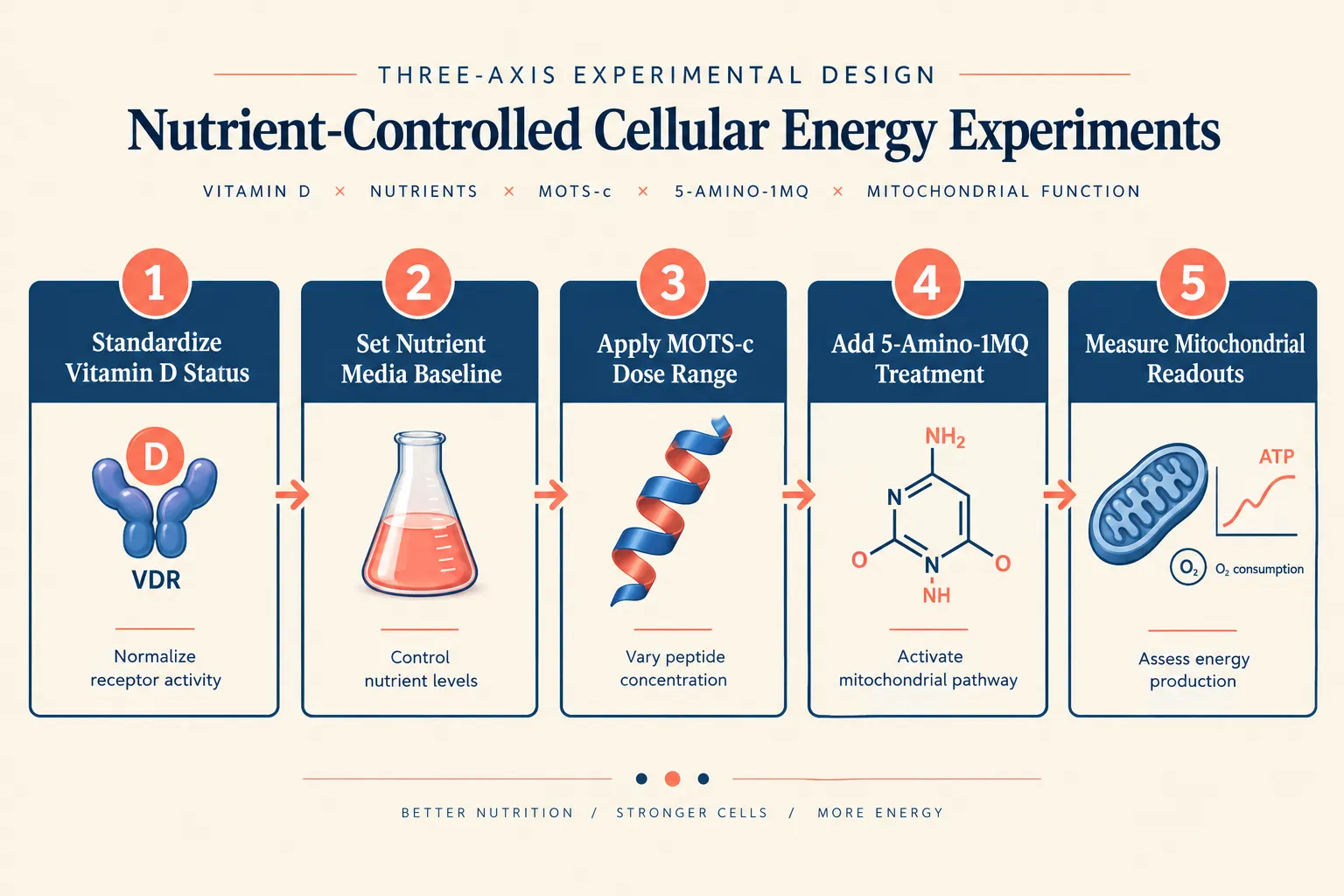
The convergence of all three agents on the AMPK-SIRT1-PGC-1alpha axis is both an opportunity and a methodological challenge. Vitamin D acts primarily via nuclear VDR-dependent transcription. MOTS-c operates as a mitochondria-encoded stress peptide converging on AMPK and SIRT1. 5-Amino-1MQ reshapes NAD+ availability, which directly feeds SIRT1 activity. These are not independent levers, pulling one affects the others.
A rational three-axis experimental framework for Vitamin D, MOTS-c, and 5-Amino-1MQ: Designing Nutrient-Controlled Cellular Energy Experiments looks like this:
Axis 1, Vitamin D (VDR-dependent metabolic signaling)
- Vary: deficient vs. replete calcitriol concentrations in media
- Measure: VDR target gene expression, AMPK phosphorylation, mitochondrial membrane potential
Axis 2, MOTS-c (acute AMPK activation and stress response)
- Vary: peptide concentration and timing relative to nutrient stress
- Measure: oxygen consumption rate, AICAR levels, PGC-1alpha expression
Axis 3-5-Amino-1MQ (NAD+ salvage and NNMT inhibition)
- Vary: concentration from sub-EC50 to supra-EC50 (reference: ~2.3 µM EC50)
- Measure: intracellular NAD+/NADH ratio, 1-methylnicotinamide, lipogenesis markers
Combining these axes with controlled glucose, fatty-acid, and amino-acid availability allows researchers to interrogate how endocrine nutrients, mitochondrial microproteins, and NAD+ salvage pathways jointly determine ATP production, substrate choice, and resilience to metabolic stress. For researchers interested in related mitochondrial research tools, SS-31 mitochondrial research resources and NAD+ compounds offer complementary experimental angles. Additional context on how peptides fit into broader cardiometabolic models can be found in this overview of polypeptides in cardiometabolic models.
Critical readouts to standardize across all arms:
- Oxygen consumption rate (OCR) and extracellular acidification rate (ECAR) via Seahorse or equivalent
- ATP production rate separated by oxidative phosphorylation vs. glycolysis
- Mitochondrial biogenesis markers (PGC-1alpha, TFAM, mtDNA copy number)
- Oxidative stress indicators (mitochondrial ROS, glutathione ratio)
Conclusion
Designing nutrient-controlled cellular energy experiments with Vitamin D, MOTS-c, and 5-Amino-1MQ requires treating vitamin D not as background noise but as an active experimental variable. Before any peptide or small molecule is introduced, vitamin D status in the model system must be defined, controlled, and reported. From that stable foundation, MOTS-c can be used to probe acute AMPK-driven mitochondrial stress responses, while 5-Amino-1MQ reshapes the NAD+ landscape through NNMT inhibition, two complementary tools that, together with vitamin D, map the full AMPK-SIRT1-PGC-1alpha signaling network.
Actionable next steps for researchers in 2026:
- Audit current cell-culture and animal-model protocols for vitamin D content and add a deficient-versus-replete arm to ongoing studies.
- Select MOTS-c dose ranges based on published preclinical respiration data and confirm AICAR accumulation as a mechanistic marker.
- Use the ~2.3 µM EC50 reference for 5-Amino-1MQ to build a concentration-response curve before committing to a single treatment dose.
- Report all three axes, vitamin D status, peptide concentration, and NNMT inhibitor dose, alongside nutrient media composition in every methods section.
- Prioritize OCR and NAD+/NADH ratio as primary readouts to capture both mitochondrial and metabolic dimensions of the experiment.
All three agents remain experimental tools rather than approved therapeutics, but their mechanistic precision makes them among the most powerful instruments available for dissecting nutrient-sensing and energy-metabolism pathways in 2026.


Leave a Reply
Want to join the discussion?Feel free to contribute!