Call or Text 727-513-9780
  • Shopping Cart Shopping Cart
    0Shopping Cart
Pure Tested Peptides | America's most trusted Peptides for sale online
  • Peptides for sale
    • Oral Peptides for sale
      • Peptide Capsules for sale
      • BPC 157 Capsules 1000mcg
      • SLU-PP-332 Capsules | 1000 mcg
      • 5-Amino-1MQ 50mg Capsules
      • Tesofensine 500mcg
    • All Peptides for sale
    • Peptide Sprays
      • BPC 157 Nasal Spray Kit
      • BPC-157 TB500 Nasal Spray Kit
      • Semax Nasal Spray 10mg
      • Selank – Nasal Spray Kit – 10mg
      • Epithalon 50MG Nasal Spray Kit
      • Ipamorelin 10mg Nasal Spray
      • Klow Nasal Spray (BPC-157 + TB-500 + GHK-Cu + KPV) | 80mg
      • Hulk Nasal Spray Tesa / Ipa Blend 6/3 MG
      • Klow Nasal Spray
      • NAD + 500 mg Nasal Spray
      • PT-141 Nasal Spray Kit
    • GHRH Peptides
      • Ipa Peptides
      • CJC-1295 Peptides
        • CJC-1295 with DAC 5 mg
        • CJC-1295 without DAC 5 mg
        • CJC-1295 Ipa 10mg
      • Tesa Peptides
        • Tesa Peptide
        • Tesa 20 mg
    • GHK-Cu Peptides
      • All GHK-Cu Peptides
      • GHK-Cu 100mg
      • KLOW Peptide Blend – Buy KLOW blend online
    • BPC Peptides
      • All BPC Peptides
      • BPC-157
      • BPC-157 TB-500
      • BPC 157 capsules 1000mcg
    • SLU-PP-332 Peptides
      • All SLU-PP-332 Peptides
      • SLU-PP-332 5mg
    • GLP3 Peptides
    • PT-141 Peptides
      • PT-141 Peptides for sale
      • PT-141 10mg
      • PT-141 Nasal Spray
    • CAG Peptides
      • Lipo-C Peptide Blend
      • CAG 5mg
      • CAG 10mg
    • MOTS-C Peptides
      • MOTS-C Peptides for sale
      • MOTS-c peptide
      • MOTS-c 10mg *6 pack*
    • 5 Amino 1MQ Peptides
      • 5 Amino 1MQ Peptides for sale
      • 5-Amino-1MQ 50mg Capsules
      • 5-Amino-1MQ 5mg
    • Epithalon Peptides
      • Epithalon Peptides for sale
      • Epithalon 10mg
      • Epithalon 50mg
  • Shop
    • GLPs
      • 5-Amino-1MQ 50mg Capsules
      • 5-Amino-1MQ 5mg
      • L-Carnitine 500mg/ml
      • Tesofensine 500mcg
      • SLU-PP-332 5mg
      • MOTS-c 10mg *6 pack*
    • Epithalon & BPC Peptides
      • Epithalon 10mg
      • Epithalon 50mg
      • BPC-157
      • BPC 157 capsules 1000mcg
      • BPC-157 TB-500
      • BPC-157 TB500 Nasal Spray Kit
      • BPC 157 Nasal Spray Kit
    • BPC TB-500 & NAD+ Peptides
      • NAD+ 500 mg
      • KLOW Peptide Blend – Buy KLOW blend online
      • GLOW Peptide Blend
      • TB 500 5mg
      • BPC 157 capsules 1000mcg – Supplement
      • BPC 157 Nasal Spray Kit
      • BPC-157
      • BPC-157 TB500 Nasal Spray Kit
      • BPC-157 TB-500
      • BPC 157 capsules 1000mcg
    • LL-37 Peptide
      • LL-37 10 mg
    • MOTS-C & Selank
      • MOTS-c peptide
      • Selank 10mg
    • GHK Peptides
      • GHK-Cu 100mg
      • GLOW Peptide Blend
      • KLOW Peptide Blend – Buy KLOW blend online
  • COAs
  • Wholesale
    • Wholesale Peptides for sale
  • PTP FAQ
  • Affiliates
    • Selank Peptide: Advanced Pharmacological Mechanisms Underlying Its Anxiolytic and Nootropic Effects in Research
      • 5-Amino-1MQ Peptide: Detailed Mechanisms of NNMT Inhibition and Its Impact on Cellular Metabolism Research
        • MOTS-C Peptide: Unraveling Its Role in Mitochondrial Dynamics and Energy Metabolism Research
          • Epithalon Peptide and Telomerase Regulation: Investigating Its Impact on Cellular Senescence and Lifespan Research Models
            • GLP2-T vs GLP2 Tirz Peptide: Understanding the Naming, Mechanistic Nuances, and Research Implications for Gut Health
      • Peptides and Polypeptides in Modern Pharmacology: What Research on Metoprolol, Prednisone, and Amlodipine Reveals
        • Polypeptide Peptides vs NSAIDs: What Naproxen and Diclofenac Teach Tissue-Repair Researchers About BPC‑157 and TB‑500
          • Peptides and Polypeptides in Endocrine Pharmacology: How GLP-1, GLP-2, and GLP-3 Retatrutide Differ From Classic Drugs Like Prednisone and Amlodipine
          • 5‑Amino‑1MQ Peptide and NNMT Inhibition: How It Compares With Statins Like Atorvastatin in Adipose and Lipid Metabolism Research
      • Enclomiphene, Estrogen Receptor Signaling, and Luteinizing Phase Biology: What Hormone Researchers Should Measure
        • Mesenchymal Stem Cells, BPC‑157, and GHK‑Cu: How Tissue Repair Peptides Compare With Classic NSAIDs Like Naproxen in Injury Models
          • Peptide Calculator Use Cases Beyond Growth Hormone: Working Through GLP‑3 Retatrutide, MOTS‑c, and BPC‑157 Research Dosing
        • Polypeptide Peptides in Endocrine and Metabolic Pharmacology: Lessons From Amlodipine, Prednisone, and Metoprolol
        • Peptides Calculator for Advanced Blends: Worked Examples for Tesamorelin, CJC‑1295, and Ipamorelin Stacks
          • Peptides and Polypeptides in Human Physiology: How Molecular Size Shapes Research Applications
            • Selank Peptide: Advanced Pharmacological Mechanisms Underlying Its Anxiolytic and Nootropic Effects in Research
          • 5-Amino-1MQ Peptide: Detailed Mechanisms of NNMT Inhibition and Its Impact on Cellular Metabolism Research
            • MOTS-C Peptide: Unraveling Its Role in Mitochondrial Dynamics and Energy Metabolism Research
              • Epithalon Peptide and Telomerase Regulation: Investigating Its Impact on Cellular Senescence and Lifespan Research Models
                • GLP2-T vs GLP2 Tirz Peptide: Understanding the Naming, Mechanistic Nuances, and Research Implications for Gut Health
                  • Peptides and Polypeptides in Endocrine Pharmacology: How GLP-1, GLP-2, and GLP-3 Retatrutide Differ From Classic Drugs Like Prednisone and Amlodipine
                    • Polypeptide Peptides vs NSAIDs: What Naproxen and Diclofenac Teach Tissue-Repair Researchers About BPC‑157 and TB‑500
                      • Peptides and Polypeptides in Modern Pharmacology: What Research on Metoprolol, Prednisone, and Amlodipine Reveals
                        • 5‑Amino‑1MQ Peptide and NNMT Inhibition: How It Compares With Statins Like Atorvastatin in Adipose and Lipid Metabolism Research
                        • Enclomiphene, Estrogen Receptor Signaling, and Luteinizing Phase Biology: What Hormone Researchers Should Measure
                        • Mesenchymal Stem Cells, BPC‑157, and GHK‑Cu: How Tissue Repair Peptides Compare With Classic NSAIDs Like Naproxen in Injury Models
                        • Peptide Calculator Use Cases Beyond Growth Hormone: Working Through GLP‑3 Retatrutide, MOTS‑c, and BPC‑157 Research Dosing
                        • Polypeptide Peptides in Endocrine and Metabolic Pharmacology: Lessons From Amlodipine, Prednisone, and Metoprolol
                        • Peptides Calculator for Advanced Blends: Worked Examples for Tesamorelin, CJC‑1295, and Ipamorelin Stacks
                        • Peptides and Polypeptides in Human Physiology: How Molecular Size Shapes Research Applications
                        • Selank Peptide: Advanced Pharmacological Mechanisms Underlying Its Anxiolytic and Nootropic Effects in Research
                        • MOTS-C Peptide: Unraveling Its Role in Mitochondrial Dynamics and Energy Metabolism Research
                        • Peptides and Polypeptides in Modern Pharmacology: What Research on Metoprolol, Prednisone, and Amlodipine Reveals
                        • Peptides and Polypeptides in Endocrine Pharmacology: How GLP-1, GLP-2, and GLP-3 Retatrutide Differ From Classic Drugs Like Prednisone and Amlodipine
                        • 5-Amino-1MQ Peptide: Detailed Mechanisms of NNMT Inhibition and Its Impact on Cellular Metabolism Research
                        • Mesenchymal Stem Cells, BPC‑157, and GHK‑Cu: How Tissue Repair Peptides Compare With Classic NSAIDs Like Naproxen in Injury Models
                        • Peptide Calculator Use Cases Beyond Growth Hormone: Working Through GLP‑3 Retatrutide, MOTS‑c, and BPC‑157 Research Dosing
                        • GLP2-T vs GLP2 Tirz Peptide: Understanding the Naming, Mechanistic Nuances, and Research Implications for Gut Health
                        • Polypeptide Peptides in Endocrine and Metabolic Pharmacology: Lessons From Amlodipine, Prednisone, and Metoprolol
                        • Polypeptide Peptides vs NSAIDs: What Naproxen and Diclofenac Teach Tissue-Repair Researchers About BPC‑157 and TB‑500
                        • Peptides and Polypeptides in Human Physiology: How Molecular Size Shapes Research Applications
                        • Peptides Calculator for Advanced Blends: Worked Examples for Tesamorelin, CJC‑1295, and Ipamorelin Stacks
                        • 5‑Amino‑1MQ Peptide and NNMT Inhibition: How It Compares With Statins Like Atorvastatin in Adipose and Lipid Metabolism Research
                        • Enclomiphene, Estrogen Receptor Signaling, and Luteinizing Phase Biology: What Hormone Researchers Should Measure
                        • Epithalon Peptide and Telomerase Regulation: Investigating Its Impact on Cellular Senescence and Lifespan Research Models
                        • Best research protocol Klow blend
                        • best time to take BPC-157
                        • best time to take DSIP (Delta Sleep Inducing Peptide)
                        • best time to take CJC-1295
                        • best time to take AOD-9604
                        • best time to take Follistatin 344
                        • best time to take Ipamorelin
                        • best time to take MK-677 (Ibutamoren)
                        • best time to take Ligandrol (LGD-4033) — research compound
                        • best time to take Ostarine (MK-2866) — research compound
                        • best time to take GHK-CU
                        • best time to take TB-500
                        • best time to take MOTS-c
                        • best time to take Semax
                        • best time to take RAD-140 (Testolone) — research compound
                        • best time to take Thymosin Alpha-1
                        • best time to take PEG-MGF
                        • Biolife Plasma, Octapharma Plasma, and Research Peptides: How Plasma Donation Labs Differ From Peptide Suppliers
                        • best time to take YK-11 — research compound
                        • best time to take PT-141 (Bremelanotide)
                        • Best research protocol Klow blend
                        • 5-Amino-1MQ and MOTS-C Synergy: Metabolic Signaling, Mitochondria, and Research Design
                        • BPC-157 and TB-500: Investigating Their Combined Effects on Angiogenesis and Cellular Migration in Tissue Repair Models
                        • BPC-157 Peptide: Gut Barrier Function, Inflammation, and Tissue-Recovery Research
                        • 5‑Amino‑1MQ and MOTS‑c Synergy in Metabolic Research: Designing NNMT and Mitochondrial Biogenesis Stacks
                        • CJC-1295 with DAC vs. Without DAC: Half-Life, Release Kinetics, and Research Implications
                        • CJC‑1295 with DAC vs. Without DAC: Expanding on Half‑Life Differences Using Tesamorelin and Ipamorelin Blend Case Studies
                        • Collagen Biology and Copper‑Binding Peptides: How GHK‑Cu, Glow Blend, and Klow Blend Interact with Skin and Connective Tissue
                        • Collagen Biology and Regenerative Peptides: How GHK‑Cu, Glow Blend, and Klow Blend Affect Extracellular Matrix Research
                    • DNA, Telomeres, and Longevity Peptides: Positioning Epithalon and MOTS‑c in Genetic Aging Research
                      • Enclomiphene Citrate: serm Mechanism, Testosterone Research, and Stack Compatibility
                        • Enclomiphene vs Enclomiphene Citrate: Formulation, Bioavailability, and Research Distinctions
                        • Epithalon Peptide Research: Telomerase Activation, Aging, and Pineal Gland Function
                        • Estrogen Receptor Signaling and Enclomiphene: How Selective Modulators Compare with Classic Polypeptide Hormones
                        • GHK-Cu Peptide: Advanced Mechanisms in Extracellular Matrix Remodeling and Wound Healing Research
                        • GHK-Cu Peptide: Collagen Synthesis, Wound Repair, and Skin-Barrier Research Models
                        • GLP-1 vs GLP-3 vs GLP-2: Peptide Classification and Research Applications
                        • GLP-2 Peptide Research Guide: Gut Barrier Function, Nutrient Absorption, and Intestinal Recovery Models
                        • GLP-3 Retatrutide vs. GLP-1 Drugs: What Triple-Agonist Biology Changes in Research Models
                        • Ipamorelin and Tesamorelin Combination: Synergistic GH Secretagogue Research and Dosing Protocols
                        • GLP2 Tirz Peptide: What It Is, Why the Name Exists, and How Researchers Should Interpret It
                        • Klow Blend Peptide Nasal Spray: What the Formulation Is Trying to Do in Cognitive Research
                        • Mitochondria, NNMT Inhibition, and Peptide Modulators: Where MOTS‑c and 5‑Amino‑1MQ Fit in Cellular Energy Research
                        • MOTS-c Peptide: Mitochondrial Function, Energy Metabolism, and What Researchers Measure
                        • MOTS-c vs. 5-Amino-1MQ: Which Metabolic Research Questions Each Compound Actually Answers
                        • Nasal Spray Peptides: Bioavailability, Administration, and Semax/Selank Research Applications
                        • PT-141 Peptide Research: Mechanism of Action and Melanocortin Receptor Signaling
                        • Retatrutide for Research: Mechanism, Structure, and GLP-1/GLP-3 Dual Action
                        • Retatrutide for Obesity and Type 2 Diabetes: What the Latest Trial Data Suggest
                        • Tesofensine Peptide Research: Mechanism, Appetite Suppression, and Neuropeptide Y Pathways
  • Contact
    • Contact Customer Service
    • Text Customer Support
  • About US
  • Shop all peptides
  • Affiliate Program
    • Affiliate Signup
  • Login / Register Login / Register Page Link Login / Register Page Link
  • Click to open the search input field Click to open the search input field Search
  • Menu Menu
Slupp332 and 5-Amino-1MQ: Liver, Adipocyte, and Mitochondrial Safety Endpoints for Combination Studies

Slupp332 and 5-Amino-1MQ: Liver, Adipocyte, and Mitochondrial Safety Endpoints for Combination Studies

October 20, 2026/0 Comments/in Uncategorized/by

Zero controlled human safety trials exist for either SLU-PP-332 or 5-Amino-1MQ as of 2026, yet capsule stacks combining both compounds are sold openly online, promoted with mouse-injection data and no validated organ toxicology. That gap between commercial availability and scientific evidence defines the central challenge when evaluating Slupp332 and 5-Amino-1MQ: liver, adipocyte, and mitochondrial safety endpoints for combination studies.

This article examines what is known, what is missing, and what rigorous preclinical and clinical safety programs would need to address before either compound, let alone both together, could be used with any meaningful confidence.

Key Takeaways

  • SLU-PP-332 activates estrogen-related receptors (ERRα/β/γ) to drive mitochondrial biogenesis; 5-Amino-1MQ inhibits NNMT in adipose tissue to reduce fat mass, both effects are confirmed only in rodent models.
  • No human pharmacokinetic, hepatotoxicity, or mitochondrial safety data exist for either compound as of late 2026.
  • The quinolinium chemical class to which 5-Amino-1MQ belongs carries unresolved genotoxicity concerns; NNMT inhibition may also suppress 1-methylnicotinamide with hypothetical cardiovascular implications.
  • Grey-market combination products rely entirely on animal injection data, providing no validated liver, adipocyte, or mitochondrial safety endpoints.
  • Future development programs would require GLP-grade rodent toxicology covering hepatic enzymes, adipose morphology, mitochondrial function assays, and cardiovascular markers before any human trial could be justified.

Mechanisms Behind the Combination: What Each Compound Does

Understanding why researchers are interested in pairing these two agents requires a clear look at their individual mechanisms.
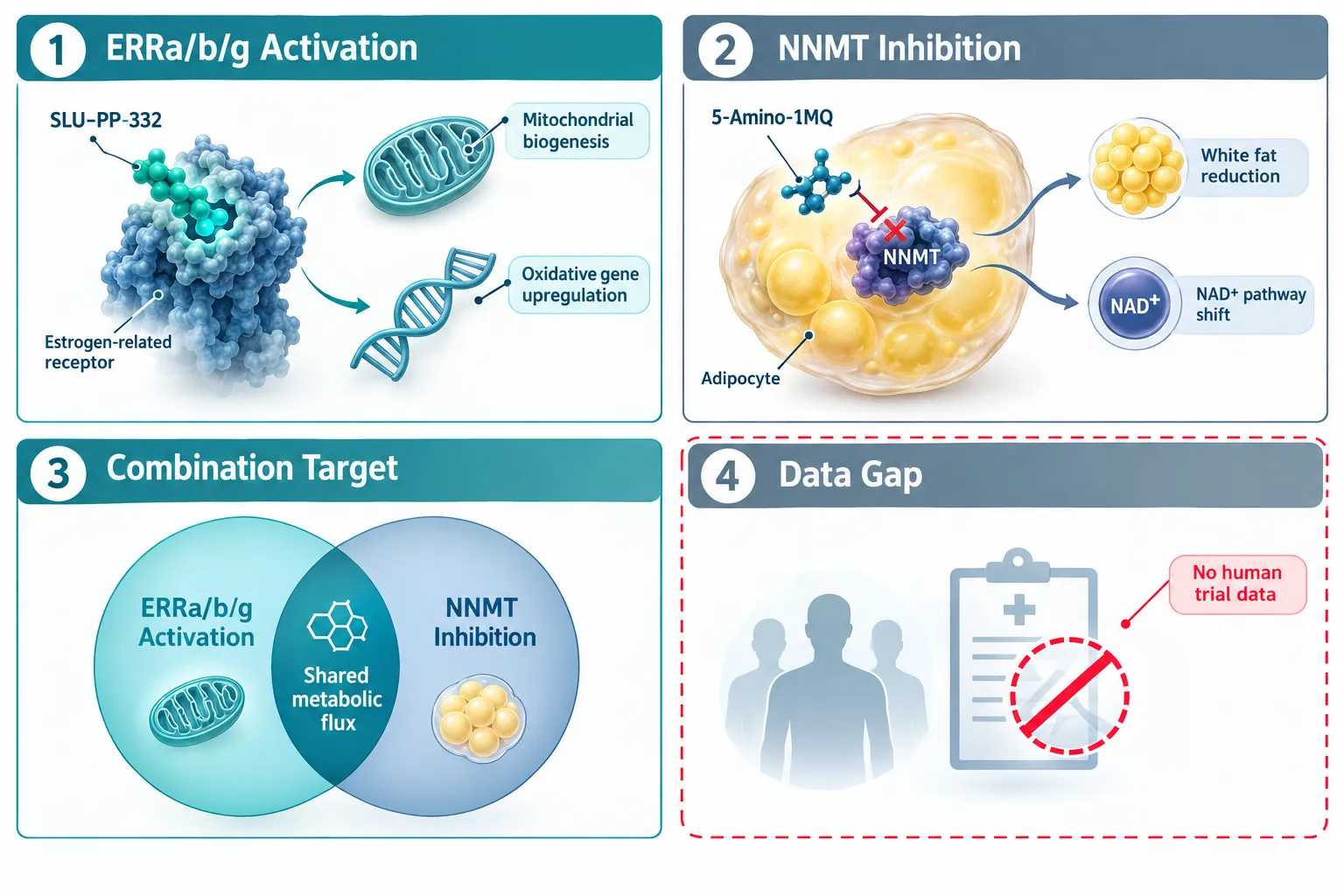
Mechanisms Behind the Combination: What Each Compound Does

SLU-PP-332 is a synthetic pan-agonist of estrogen-related receptors. It simultaneously activates ERRα, ERRβ, and ERRγ, nuclear receptors that regulate oxidative phosphorylation and mitochondrial biogenesis. In diet-induced obese mouse models, SLU-PP-332 increased expression of oxidative metabolic genes in skeletal muscle, improved running endurance, reduced fat mass, and enhanced insulin sensitivity. Critically, these results came from injected doses; oral bioavailability is acknowledged to be poor even by vendor documentation.

5-Amino-1MQ (5-amino-1-methylquinolinium) is a small-molecule inhibitor of nicotinamide N-methyltransferase (NNMT), an enzyme highly expressed in white adipose tissue. NNMT methylates nicotinamide, diverting it from NAD+ biosynthesis. When NNMT is blocked, more substrate flows back toward NAD+, shifting adipocyte energy balance and reducing white adipose mass in obese rodent models. The compound is not FDA-approved, does not appear in DailyMed, and has no registered human clinical trials as of 2026.

"The mechanistic rationale for combining an ERR pan-agonist with an NNMT inhibitor is scientifically coherent, both touch NAD-related and mitochondrial pathways, but mechanistic plausibility is not the same as demonstrated safety."

Both compounds are frequently mis-marketed as peptides. They are small molecules. That distinction matters for predicting metabolism, hepatic clearance, and potential drug interactions.


Liver, Adipocyte, and Mitochondrial Safety Endpoints: What the Data Actually Show

When evaluating Slupp332 and 5-Amino-1MQ: liver, adipocyte, and mitochondrial safety endpoints for combination studies, the honest summary is brief: rodent data shows no acute organ failure at tested doses, and that is largely where the evidence stops.
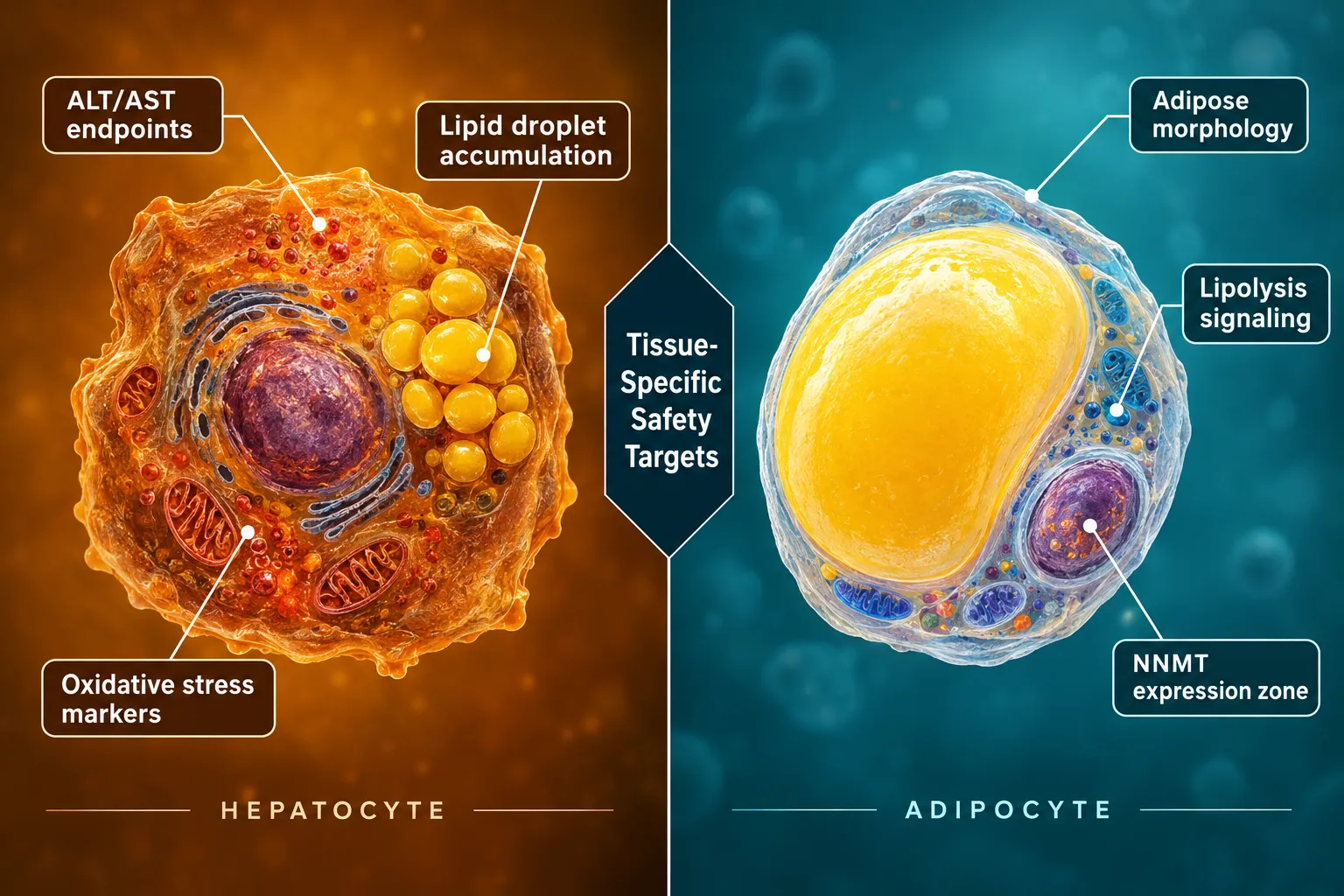
Liver, Adipocyte, and Mitochondrial Safety Endpoints: What the Data Actually Show

Hepatic Safety Endpoints

No controlled study has measured alanine aminotransferase (ALT), aspartate aminotransferase (AST), or liver histology in animals or humans after either compound at doses translatable to human use. Key gaps include:

  • Transaminase monitoring, no baseline or post-exposure enzyme data in published literature
  • Lipid droplet accumulation, NNMT plays a role in hepatic lipid metabolism; inhibition effects on liver steatosis are uncharacterized
  • Oxidative stress in hepatocytes, ERR activation increases reactive oxygen species (ROS) alongside mitochondrial biogenesis; liver-specific ROS burden has not been quantified

For researchers exploring SS-31 mitochondrial research as a reference point, SS-31's hepatic profile is far better characterized than either compound discussed here, underscoring how immature the SLU-PP-332 and 5-Amino-1MQ safety literature remains.

Adipocyte Safety Endpoints

5-Amino-1MQ targets adipose tissue directly, making adipocyte viability a first-order concern. Missing data include:

Safety Endpoint Rodent Data Available Human Data Available
Adipocyte morphology changes Limited None
Lipolysis dysregulation Indirect None
NNMT expression in non-target tissues Partial None
Adipokine secretion profile None None

The concern is not just toxicity but dysfunction: excessive or off-target NNMT inhibition could disrupt adipokine signaling, with downstream effects on insulin sensitivity and inflammation that no current study has addressed.

Mitochondrial Safety Endpoints

SLU-PP-332's core mechanism, upregulating mitochondrial biogenesis via ERR activation, is also its primary safety question. More mitochondria are not unconditionally beneficial. Uncoupled or dysfunctional mitochondria generate excess ROS. No study has measured:

  • Mitochondrial membrane potential under prolonged ERR activation
  • Oxygen consumption rate in non-muscle tissues (especially liver)
  • Mitophagy regulation or mitochondrial quality control markers

Resources on SS-31 peptide benefits illustrate that mitochondria-targeting compounds require specific assay frameworks; those frameworks simply do not exist yet for SLU-PP-332.


Combination Safety Concerns and Exposure Controls

Evaluating Slupp332 and 5-Amino-1MQ: liver, adipocyte, and mitochondrial safety endpoints for combination studies as a stack introduces additive and potentially synergistic unknowns.
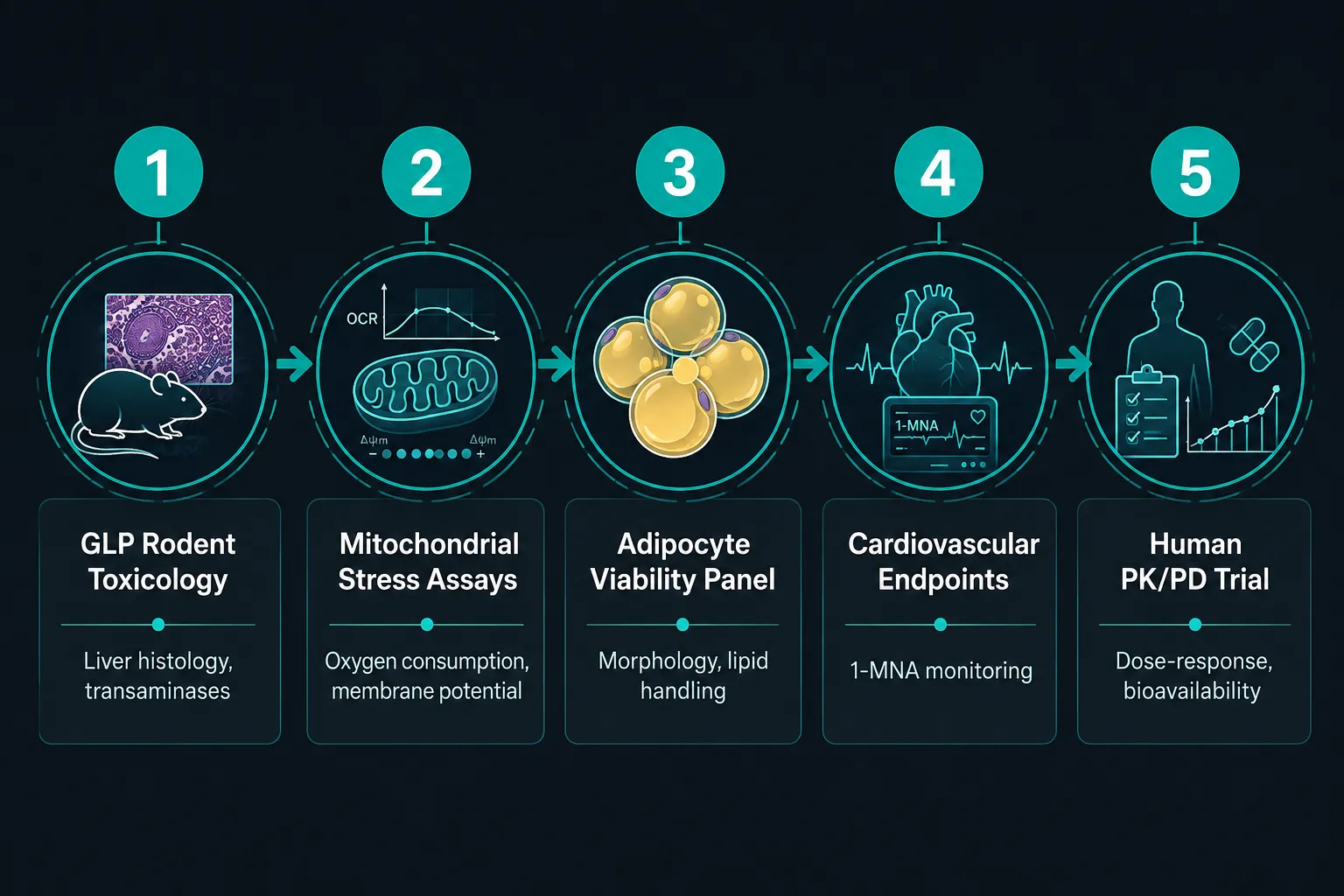
Combination Safety Concerns and Exposure Controls

Genotoxicity and Chemical Class Risk

The quinolinium scaffold in 5-Amino-1MQ is structurally related to known mutagens. Genotoxicity for 5-Amino-1MQ itself has not been formally confirmed or ruled out. Any responsible development program would require an Ames test and in vitro chromosomal aberration assay as first-line screening before advancing to organ-specific endpoints.

1-Methylnicotinamide Suppression

NNMT inhibition reduces 1-methylnicotinamide (1-MNA), a metabolite with proposed cardioprotective and anti-inflammatory properties. Chronic suppression of 1-MNA is a hypothetical cardiovascular risk that has not been evaluated in any controlled model, and it represents a distinct concern from liver or mitochondrial toxicity.

What a Responsible Safety Program Would Require

Before any human combination study could be justified, reviewers and mechanistic analyses converge on a minimum preclinical package:

  1. GLP rodent toxicology, 28-day and 90-day repeat-dose studies with full histopathology including liver, kidney, heart, and adipose
  2. Mitochondrial function assays, Seahorse respirometry in hepatocytes and adipocytes exposed to both compounds individually and combined
  3. Hepatic enzyme panels, Serial ALT, AST, alkaline phosphatase, and bilirubin at multiple dose levels
  4. Genotoxicity battery, Ames test, micronucleus assay
  5. Cardiovascular markers, 1-MNA levels, echocardiography in rodent models
  6. Human pharmacokinetic studies, Oral bioavailability, half-life, protein binding, and metabolite identification

For context on how peptide and small-molecule research stacks approach metabolic fat-loss endpoints more broadly, resources on tesa dosage for fat loss demonstrate that even well-studied compounds require robust dose-finding and monitoring before clinical use. Both SLU-PP-332 and 5-Amino-1MQ remain far behind that standard.

Grey-market products now combine 50 mg 5-Amino-1MQ with 1 mg SLU-PP-332 in a single capsule, labeled "not for human consumption." None of these products report GLP-grade toxicology, and all product descriptions draw on rodent injection data, a pharmacokinetic model that does not translate directly to human oral dosing. Interested readers can also review AOD 9604 price and research context as a comparison point for how even more established metabolic research compounds carry significant regulatory and data limitations.


Conclusion

The scientific case for combining SLU-PP-332 and 5-Amino-1MQ is mechanistically interesting: ERR pan-agonism plus NNMT inhibition could theoretically complement each other across mitochondrial and adipose metabolic pathways. However, the safety case does not exist yet. As of 2026, no human clinical data, no formal hepatic enzyme monitoring, no adipocyte viability assays, and no mitochondrial stress protocols have been published for either compound, individually or in combination.

Actionable next steps for researchers and clinicians:

  • Treat any commercial combination product as entirely experimental with undetermined organ-specific risk.
  • Prioritize genotoxicity screening for 5-Amino-1MQ given its quinolinium structure before any chronic exposure model.
  • Design future preclinical programs to include liver histology, mitochondrial respirometry, adipose morphology, and 1-MNA cardiovascular monitoring as minimum endpoints.
  • Consult resources on established mitochondria-targeting compounds, such as SS-31 elamipretide, to understand what a mature safety profile for a mitochondrial compound actually looks like.
  • Do not conflate rodent injection efficacy data with human oral safety data; the two are categorically different.

The evidence gap is not a reason to dismiss future research into this combination, it is a precise map of what that research must address first.

Tags: 5-amino-1mq, adipocyte research, combination peptide studies, err agonist, liver safety endpoints, mitochondrial safety, nnmt inhibitor, slupp332
https://www.puretestedpeptides.com/wp-content/uploads/2026/10/slupp332-and-5-amino-1mq-liver-adipocyte-and-mitochondrial-safety-endpoints-for.webp 1024 1536 https://www.puretestedpeptides.com/wp-content/uploads/2026/01/buy-peptides-online.jpg 2026-10-20 13:03:502026-10-20 13:03:50Slupp332 and 5-Amino-1MQ: Liver, Adipocyte, and Mitochondrial Safety Endpoints for Combination Studies
You might also like
5-Amino-1MQ and MOTS-c Synergy: What Combination Research Is Trying to Test in Metabolic Models 5-Amino-1MQ and MOTS-c Synergy: What Combination Research Is Trying to Test in Metabolic Models
5-Amino-1MQ and MOTS-c Synergy: How Mitochondrial Pathways Are Studied Together 5-Amino-1MQ and MOTS-c Synergy: How Mitochondrial Pathways Are Studied Together
Mitochondria, Adenosine Triphosphate, and Peptide Signaling: Where MOTS-c and 5-Amino-1MQ Fit in Cellular Energy Research Mitochondria, Adenosine Triphosphate, and Peptide Signaling: Where MOTS-c and 5-Amino-1MQ Fit in Cellular Energy Research
Atorvastatin and Mitochondrial Peptides: Separating Lipid-Lowering Effects From MOTS-c and 5-Amino-1MQ Readouts Atorvastatin and Mitochondrial Peptides: Separating Lipid-Lowering Effects From MOTS-c and 5-Amino-1MQ Readouts
DNA, Mitochondria, and Research Peptides: How MOTS-c and 5-Amino-1MQ Interface With Cellular Energy and Genomic Pathways DNA, Mitochondria, and Research Peptides: How MOTS-c and 5-Amino-1MQ Interface With Cellular Energy and Genomic Pathways
Statin Therapy and Liver Enzymatic Readouts in Metabolic Peptide Models: Atorvastatin vs. MOTS-c and 5-Amino-1MQ Statin Therapy and Liver Enzymatic Readouts in Metabolic Peptide Models: Atorvastatin vs. MOTS-c and 5-Amino-1MQ
Mesenchymal Stem Cells and Mitochondrial Peptides: Where MOTS-c and 5-Amino-1MQ Fit in Regenerative Cell Models Mesenchymal Stem Cells and Mitochondrial Peptides: Where MOTS-c and 5-Amino-1MQ Fit in Regenerative Cell Models
5-Amino-1MQ and MOTS-c in Adipocyte Models: Separating Lipolysis, Mitochondrial Stress, and Viability Effects 5-Amino-1MQ and MOTS-c in Adipocyte Models: Separating Lipolysis, Mitochondrial Stress, and Viability Effects
0 replies

Leave a Reply

Want to join the discussion?
Feel free to contribute!

Leave a Reply Cancel reply

Your email address will not be published. Required fields are marked *

×

Helpful Links

  • My account
  • Cart
  • Checkout
  • Refund and Returns Policy
  • Privacy Policy
  • SMS Privacy Policy
  • Login
  • My Account
  • Logout

USA Made Lab Tested Peptides

All products are sold for research, laboratory, or analytical purposes only, and are not for human consumption


Pure Tested Peptides is a chemical supplier. Pure Tested Peptides is not a compounding / chemical compounding facility as defined under 503A of the Federal Food, Drug, and Cosmetic act. Pure Tested Peptides is not an outsourcing facility as defined under 503B of the Federal Food, Drug, and Cosmetic act.

The statements made within this website have not been evaluated by the US Food and Drug Administration. The products we offer are not intended to diagnose, treat, cure or prevent any disease.

Human/Animal Consumption Prohibited. Laboratory/In-Vitro Experimental Use Only

Link to: GLP-2-T and GLP2 Tirz Peptides: Measuring Intestinal Barrier Function Without Confounding Motility Link to: GLP-2-T and GLP2 Tirz Peptides: Measuring Intestinal Barrier Function Without Confounding Motility GLP-2-T and GLP2 Tirz Peptides: Measuring Intestinal Barrier Function Without...GLP-2-T and GLP2 Tirz Peptides: Measuring Intestinal Barrier Function Without Confounding Motility Link to: Research-Use Peptide Storage and Stability: A Quality-Control Checklist for Lyophilized, Liquid, and Intranasal Materials Link to: Research-Use Peptide Storage and Stability: A Quality-Control Checklist for Lyophilized, Liquid, and Intranasal Materials Research-Use Peptide Storage and Stability: A Quality-Control Checklist for Lyophilized, Liquid, and Intranasal MaterialsResearch-Use Peptide Storage and Stability: A Quality-Control Checklist for...
Scroll to top Scroll to top Scroll to top