

ACE Inhibitors, ARBs, and Peptides: How Renin-Angiotensin Controls Affect Vascular and Metabolic Readouts
More than one billion people worldwide live with hypertension, yet a single drug class, agents that interrupt the renin-angiotensin-aldosterone system (RAAS), consistently reduces blood pressure, slows kidney disease, and lowers cardiovascular risk at the same time. Understanding ACE inhibitors, ARBs, and peptides: how renin-angiotensin controls affect vascular and metabolic readouts is no longer just a pharmacology exercise. It is the central question for anyone managing cardiometabolic disease in 2026.
This article serves as a broader companion to condition-specific lisinopril content by comparing ACE inhibition with angiotensin-receptor blockade head to head, and by identifying which vascular and metabolic outcomes are most vulnerable to blood-pressure and RAAS confounding.
Key Takeaways
- The RAAS is a complex peptide network, not merely a blood-pressure switch, it governs inflammation, fibrosis, insulin sensitivity, and organ protection across multiple systems.
- ACE inhibitors and ARBs share major benefits but differ meaningfully on mortality outcomes in heart failure and tolerability profiles.
- Multiple angiotensin peptide fragments beyond Angiotensin II, including Ang-(1-7) and alamandine, exert protective, anti-inflammatory effects through distinct receptors.
- RAAS blockade carries a documented metabolic benefit, including roughly a 16% reduction in new-onset diabetes risk compared with placebo.
- Emerging agents, including ARNIs and food-derived ACE-inhibitory peptides, are expanding the RAAS toolkit well beyond classic drugs.
The RAAS Is a Peptide Network, Not Just a Blood-Pressure Switch
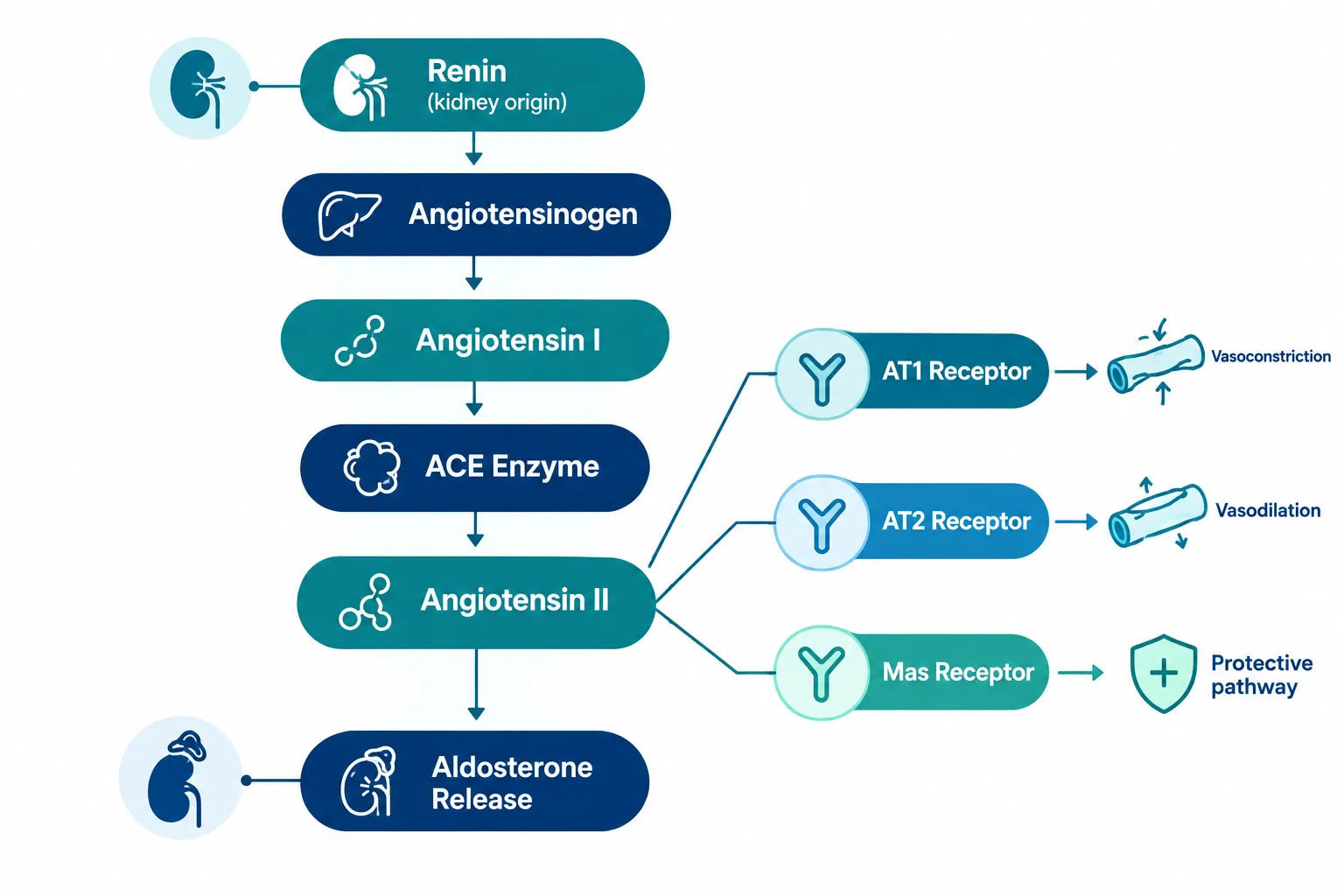
The renin-angiotensin-aldosterone system begins when the kidney releases renin, which cleaves angiotensinogen into Angiotensin I (Ang I). ACE then converts Ang I into Angiotensin II (Ang II), the primary effector peptide. Ang II acts on AT1 receptors to cause vasoconstriction, sodium retention, fibrosis, and insulin resistance. Simultaneously, it activates aldosterone release, compounding fluid retention and inflammation.
What recent research has clarified is that this cascade produces a much richer set of bioactive peptides than textbooks once acknowledged. These include:
| Peptide | Receptor | Primary Effect |
|---|---|---|
| Angiotensin II | AT1 | Vasoconstriction, fibrosis, insulin resistance |
| Ang-(1-7) | Mas | Vasodilation, anti-inflammatory, neuroprotective |
| Angiotensin IV | AT4/IRAP | Cognitive, renal blood flow effects |
| Alamandine | MrgD | Vasodilation, cardioprotective |
| Ang A | AT2/AT1 | Vasodilation via AT2 activation |
This "peptidergic RAAS" explains why ACE inhibitors and ARBs do more than reduce blood pressure. They shift the balance away from harmful AT1-driven signaling toward protective AT2 and Mas receptor pathways.
"RAAS dysregulation is now linked to multi-organ cardiovascular-renal-hepatic-metabolic syndromes, a mechanistic foundation for the broad clinical benefits of RAAS-modulating drugs."
Researchers are now using phosphoproteomics to map receptor-specific signaling events, which could guide drug design toward selectively activating protective pathways while blocking harmful ones.
ACE Inhibitors vs ARBs: Where Renin-Angiotensin Controls Diverge on Vascular Readouts
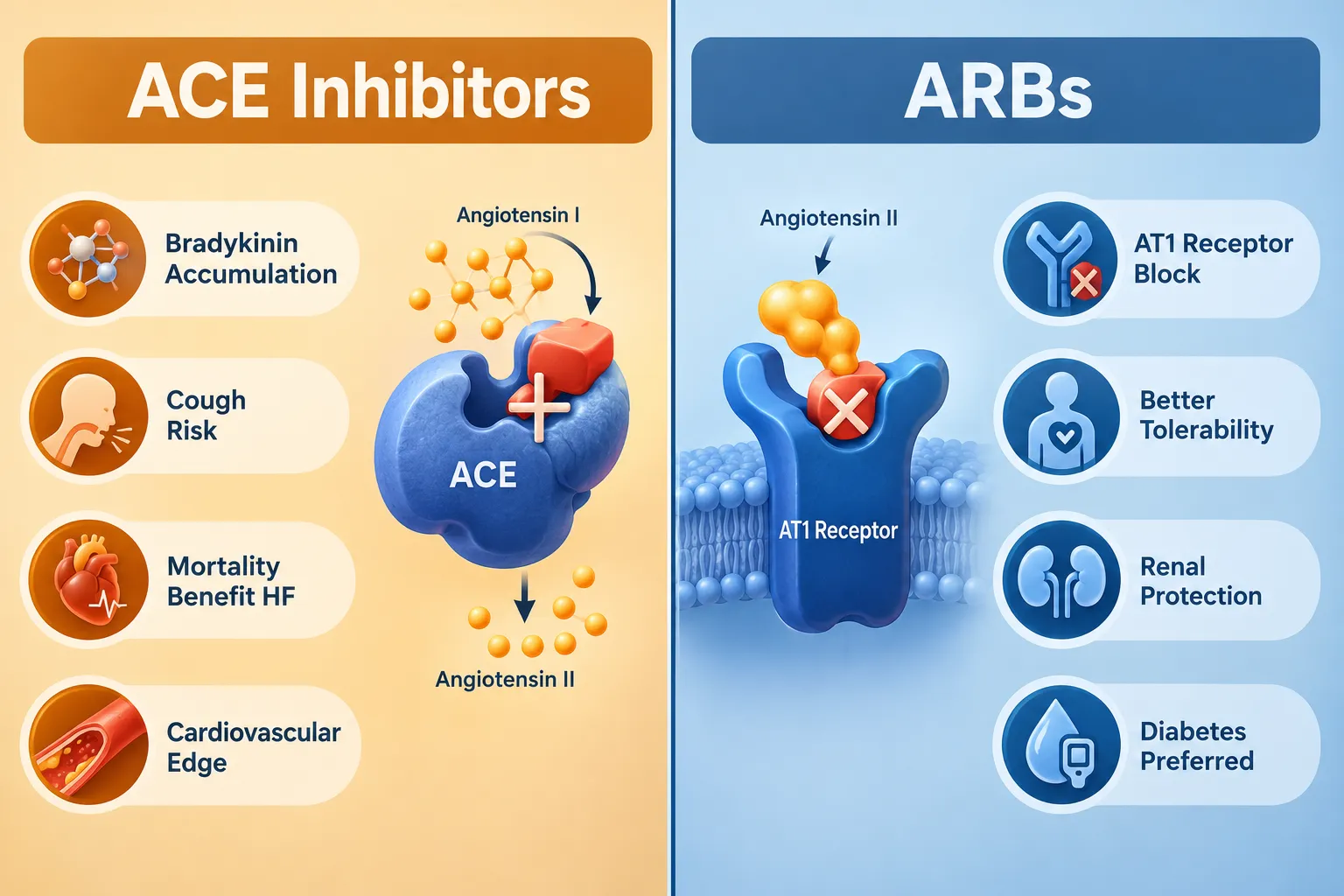
ACE inhibitors and ARBs both reduce Ang II-mediated vascular injury, but they work at different points in the cascade, and that distinction matters for clinical outcomes.
ACE inhibitors block the enzyme that converts Ang I to Ang II. This also prevents bradykinin breakdown, raising bradykinin levels. Higher bradykinin contributes to vasodilation and cardioprotection, but also causes the persistent dry cough that leads roughly 10-15% of patients to stop treatment.
ARBs block the AT1 receptor directly. They do not affect bradykinin, so cough and angioedema rates are significantly lower. However, because the AT1 receptor is blocked rather than the ligand eliminated, Ang II levels rise and may activate AT2 receptors, adding a secondary vasodilatory effect.
Head-to-Head Outcome Data
A large meta-analysis in heart failure found that ACE inhibitors reduced all-cause mortality (hazard ratio approximately 0.90, p=0.004), while ARBs did not reach statistical significance for mortality reduction (HR approximately 0.99, p=0.68). This is a clinically meaningful difference.
In diabetic nephropathy, both classes effectively lower blood pressure, standard-dose monotherapy reduces systolic blood pressure by approximately 8.5 mmHg in pooled hypertensive populations, and both delay progression of kidney disease. However:
- ACEi tend to provide a modest edge on cardiovascular and all-cause mortality
- ARBs deliver comparable renal protection with better tolerability for patients intolerant to ACEi
Current guidelines recommend ACEi or ARBs as preferred first-line agents in heart failure, CKD with proteinuria, diabetes with albuminuria, post-MI, and left ventricular systolic dysfunction because their organ-protective effects extend far beyond simple blood-pressure reduction.
For those sourcing research-grade compounds, lab tested peptides and related vasoactive agents are increasingly relevant to preclinical RAAS research.
Metabolic Readouts: How Peptide-Based RAAS Controls Shape Insulin Sensitivity and Beyond
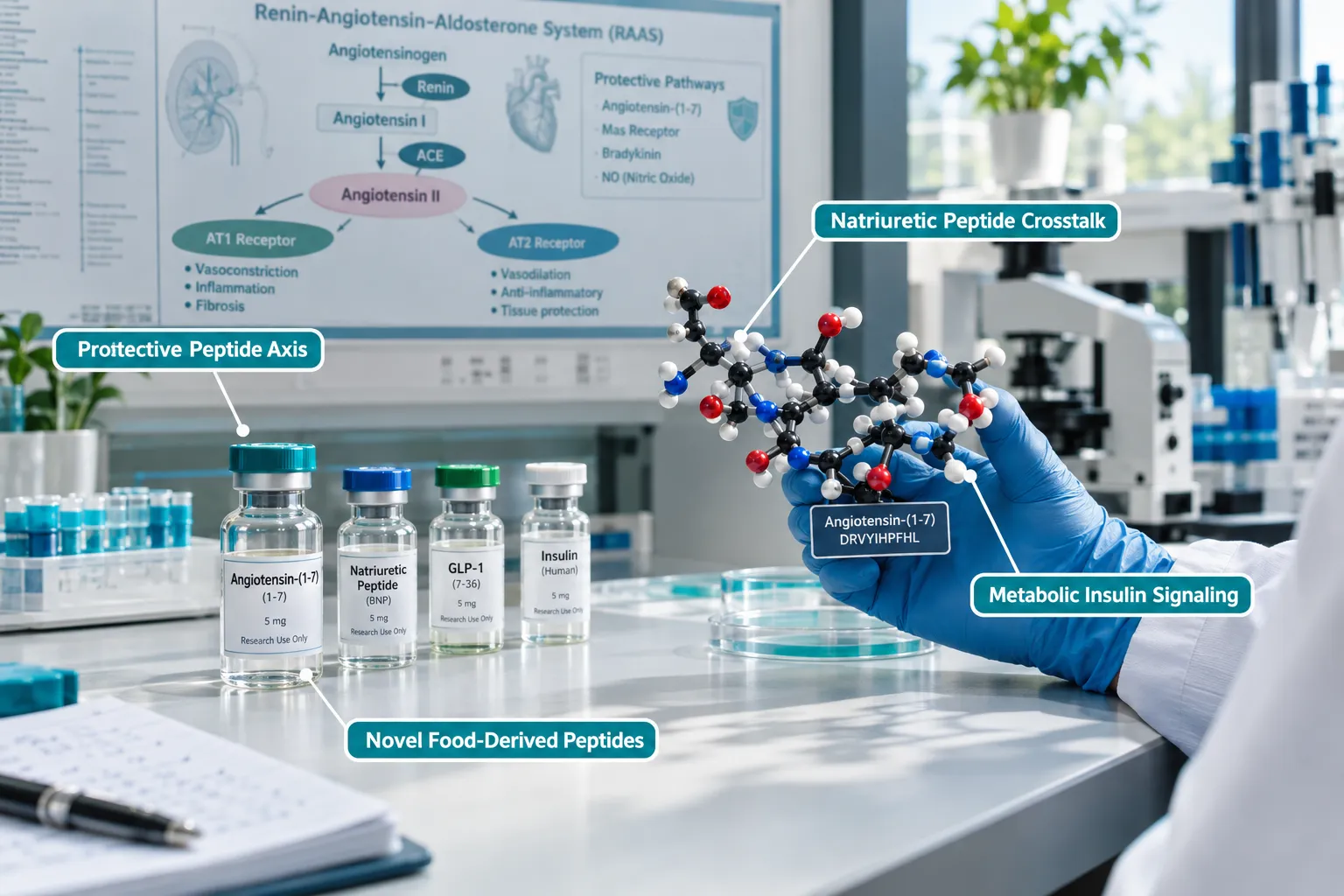
The metabolic dimension of ACE inhibitors, ARBs, and peptides: how renin-angiotensin controls affect vascular and metabolic readouts is now well established in clinical data. RAAS blockade carries a class signal for reducing new-onset type 2 diabetes, roughly a 16% relative risk reduction compared with placebo across pooled trials. This stands in contrast to certain beta-blockers and thiazide diuretics, which are associated with average weight gain of approximately 1.2 kg and worsened glucose and lipid profiles.
The mechanisms behind the metabolic benefit include:
- Reduced Ang II-driven insulin receptor desensitization
- Improved skeletal muscle glucose uptake via enhanced IRS/PI3K/Akt/GLUT signaling
- Decreased adipose tissue inflammation and NF-kB activity
- Improved pancreatic beta-cell blood flow
Emerging Metabolic Agents: ARNIs and Food-Derived Peptides
Angiotensin receptor-neprilysin inhibitors (ARNIs) represent the next evolution. They simultaneously block the AT1 receptor and prevent breakdown of natriuretic peptides, promoting vasodilation, natriuresis, reduced cardiac hypertrophy, improved insulin sensitivity, and favorable lipid shifts. Current cardiometabolic syndrome reviews position ARNIs alongside SGLT2 inhibitors as dual vascular-metabolic agents.
Food-derived peptides are also gaining traction. Lactoferrin-derived peptides show ACE-inhibitory and hypotensive activity comparable to some ARBs in preclinical models. Their mechanisms include ACE inhibition, nitric oxide pathway activation, and endothelin suppression, making them potential dietary adjuncts to pharmacologic therapy.
Researchers interested in complementary peptide axes can explore GLP peptides for sale and SS31 peptide benefits, which address mitochondrial and inflammatory pathways that intersect with RAAS-driven metabolic dysfunction. Similarly, tesa peptide benefits and Semax peptide research touch on neuroendocrine axes that interact with blood pressure and glucose metabolism. Those exploring combined protective strategies may also find the synergy of LL37 and SS31 relevant to understanding multi-pathway anti-inflammatory approaches.
Aldosterone synthase inhibition is emerging as yet another complementary layer. By reducing aldosterone-driven fibrosis and inflammation independently of ACE or AT1 blockade, these agents may enhance the metabolic and antifibrotic effects of standard RAAS therapy without excessive suppression of the entire system.
Conclusion
The science behind ACE inhibitors, ARBs, and peptides: how renin-angiotensin controls affect vascular and metabolic readouts has moved decisively beyond simple blood-pressure management. The RAAS is an integrated peptide signaling network whose protective and harmful arms can be selectively modulated for vascular, renal, and metabolic benefit.
Actionable next steps:
- For clinicians: Prioritize ACEi over ARBs in heart failure patients without cough or angioedema, given the stronger mortality signal. Use ARBs when tolerability is the limiting factor, renal protection is comparable.
- For researchers: Explore Ang-(1-7), alamandine, and AT2/Mas receptor agonism as next-generation targets revealed by phosphoproteomic mapping.
- For metabolic disease management: Recognize that RAAS blockade is a metabolic intervention. Pair it with awareness of complementary peptide systems influencing insulin signaling and inflammation.
- Consult a specialist: Anyone considering peptide-based protocols or advanced RAAS-modulating strategies should work with a qualified provider, find a peptides doctor near me to discuss evidence-based options.
The era of treating RAAS as a single dial for blood pressure is over. Understanding its full peptide landscape is the foundation for precision cardiometabolic care.


Leave a Reply
Want to join the discussion?Feel free to contribute!