Call or Text 727-513-9780
  • Shopping Cart Shopping Cart
    0Shopping Cart
Pure Tested Peptides | America's most trusted Peptides for sale online
  • Peptides for sale
    • Oral Peptides for sale
      • Peptide Capsules for sale
      • BPC 157 Capsules 1000mcg
      • SLU-PP-332 Capsules | 1000 mcg
      • 5-Amino-1MQ 50mg Capsules
      • Tesofensine 500mcg
    • All Peptides for sale
    • Peptide Sprays
      • BPC 157 Nasal Spray Kit
      • BPC-157 TB500 Nasal Spray Kit
      • Semax Nasal Spray 10mg
      • Selank – Nasal Spray Kit – 10mg
      • Epithalon 50MG Nasal Spray Kit
      • Ipamorelin 10mg Nasal Spray
      • Klow Nasal Spray (BPC-157 + TB-500 + GHK-Cu + KPV) | 80mg
      • Hulk Nasal Spray Tesa / Ipa Blend 6/3 MG
      • Klow Nasal Spray
      • NAD + 500 mg Nasal Spray
      • PT-141 Nasal Spray Kit
    • GHRH Peptides
      • Ipa Peptides
      • CJC-1295 Peptides
        • CJC-1295 with DAC 5 mg
        • CJC-1295 without DAC 5 mg
        • CJC-1295 Ipa 10mg
      • Tesa Peptides
        • Tesa Peptide
        • Tesa 20 mg
    • GHK-Cu Peptides
      • All GHK-Cu Peptides
      • GHK-Cu 100mg
      • KLOW Peptide Blend – Buy KLOW blend online
    • BPC Peptides
      • All BPC Peptides
      • BPC-157
      • BPC-157 TB-500
      • BPC 157 capsules 1000mcg
    • SLU-PP-332 Peptides
      • All SLU-PP-332 Peptides
      • SLU-PP-332 5mg
    • GLP3 Peptides
      • GLP3-R
      • GLP3-R CAG 10mg
      • GLP3-R 20mg
    • PT-141 Peptides
      • PT-141 Peptides for sale
      • PT-141 10mg
      • PT-141 Nasal Spray
    • CAG Peptides
      • Lipo-C Peptide Blend
      • CAG 5mg
      • CAG 10mg
    • MOTS-C Peptides
      • MOTS-C Peptides for sale
      • MOTS-c peptide
      • MOTS-c 10mg *6 pack*
    • 5 Amino 1MQ Peptides
      • 5 Amino 1MQ Peptides for sale
      • 5-Amino-1MQ 50mg Capsules
      • 5-Amino-1MQ 5mg
    • Epithalon Peptides
      • Epithalon Peptides for sale
      • Epithalon 10mg
      • Epithalon 50mg
  • Shop
    • GLPs
      • 5-Amino-1MQ 50mg Capsules
      • 5-Amino-1MQ 5mg
      • GLP3-Reta
      • L-Carnitine 500mg/ml
      • Tesofensine 500mcg
      • SLU-PP-332 5mg
      • MOTS-c 10mg *6 pack*
    • Epithalon & BPC Peptides
      • Epithalon 10mg
      • Epithalon 50mg
      • BPC-157
      • BPC 157 capsules 1000mcg
      • BPC-157 TB-500
      • BPC-157 TB500 Nasal Spray Kit
      • BPC 157 Nasal Spray Kit
    • BPC TB-500 & NAD+ Peptides
      • NAD+ 500 mg
      • KLOW Peptide Blend – Buy KLOW blend online
      • GLOW Peptide Blend
      • TB 500 5mg
      • BPC 157 capsules 1000mcg – Supplement
      • BPC 157 Nasal Spray Kit
      • BPC-157
      • BPC-157 TB500 Nasal Spray Kit
      • BPC-157 TB-500
      • BPC 157 capsules 1000mcg
    • LL-37 Peptide
      • LL-37 10 mg
    • MOTS-C & Selank
      • MOTS-c peptide
      • Selank 10mg
    • GHK Peptides
      • GHK-Cu 100mg
      • GLOW Peptide Blend
      • KLOW Peptide Blend – Buy KLOW blend online
  • COAs
  • Wholesale
    • Wholesale Peptides for sale
  • PTP FAQ
  • Affiliates
    • Affiliate Program
    • Affiliate Signup
  • Contact
    • Contact Customer Service
    • Text Customer Support
  • About US
  • Shop all peptides
  • Login / Register Login / Register Page Link Login / Register Page Link
  • Click to open the search input field Click to open the search input field Search
  • Menu Menu

Tag Archive for: hplc peptide testing

Where to Buy Research-Grade GLP-2-T Peptide: A Guide to Sourcing High-Purity Compounds

Where to Buy Research-Grade GLP-2-T Peptide: A Guide to Sourcing High-Purity Compounds

July 8, 2026/0 Comments/in Uncategorized/by

Fewer than 30% of peptide compounds sold online meet the purity thresholds required for reliable preclinical research, a statistic that makes supplier selection one of the most consequential decisions a researcher can make. For scientists investigating intestinal adaptation, mucosal repair, and metabolic signaling, knowing where to buy research-grade GLP-2-T peptide and how to evaluate high-purity compounds is not a minor detail; it is foundational to data integrity.

This guide to sourcing high-purity GLP-2-T compounds walks through the key quality benchmarks, supplier evaluation criteria, and ordering best practices that serious researchers rely on in 2026.

Key Takeaways

  • Research-grade GLP-2-T peptide requires a minimum purity of 98%, verified by third-party HPLC and mass spectrometry analysis.
  • Certificates of Analysis (CoA) from independent labs are non-negotiable when vetting any supplier.
  • Reputable suppliers provide transparent documentation, cold-chain shipping, and clearly labeled research-only designations.
  • Newer GLP-related analogs are expanding rapidly; understanding the GLP peptide landscape helps researchers select the right compound.
  • Domestic suppliers with updated product listings, such as those refreshed in mid-2026, tend to offer more reliable stock and documentation consistency.

Key Takeaways

Understanding GLP-2-T: What Researchers Need to Know Before Sourcing

GLP-2-T (Glucagon-Like Peptide-2, Thr-substituted analog) is a modified variant of native GLP-2, designed to extend half-life and improve stability in research settings. Native GLP-2 is a 33-amino acid peptide secreted by intestinal L-cells, primarily studied for its role in gut epithelial proliferation, nutrient absorption, and mucosal barrier integrity.

The "T" designation refers to a threonine substitution that resists dipeptidyl peptidase-IV (DPP-IV) cleavage, a modification that makes the compound more tractable for in vitro and in vivo research models.

Why purity matters here: Even a 2-3% impurity load in a GLP-2-T sample can introduce confounding variables in receptor-binding assays or cell proliferation studies. Researchers exploring the broader incretin landscape, including those reviewing GLP-1 receptor agonist research themes, consistently cite purity as the single largest variable affecting reproducibility.

For context on how GLP-family analogs have evolved across research generations, the overview of GLP-1 generations and structural differences provides useful background.


Key Quality Standards: A Guide to Sourcing High-Purity Compounds

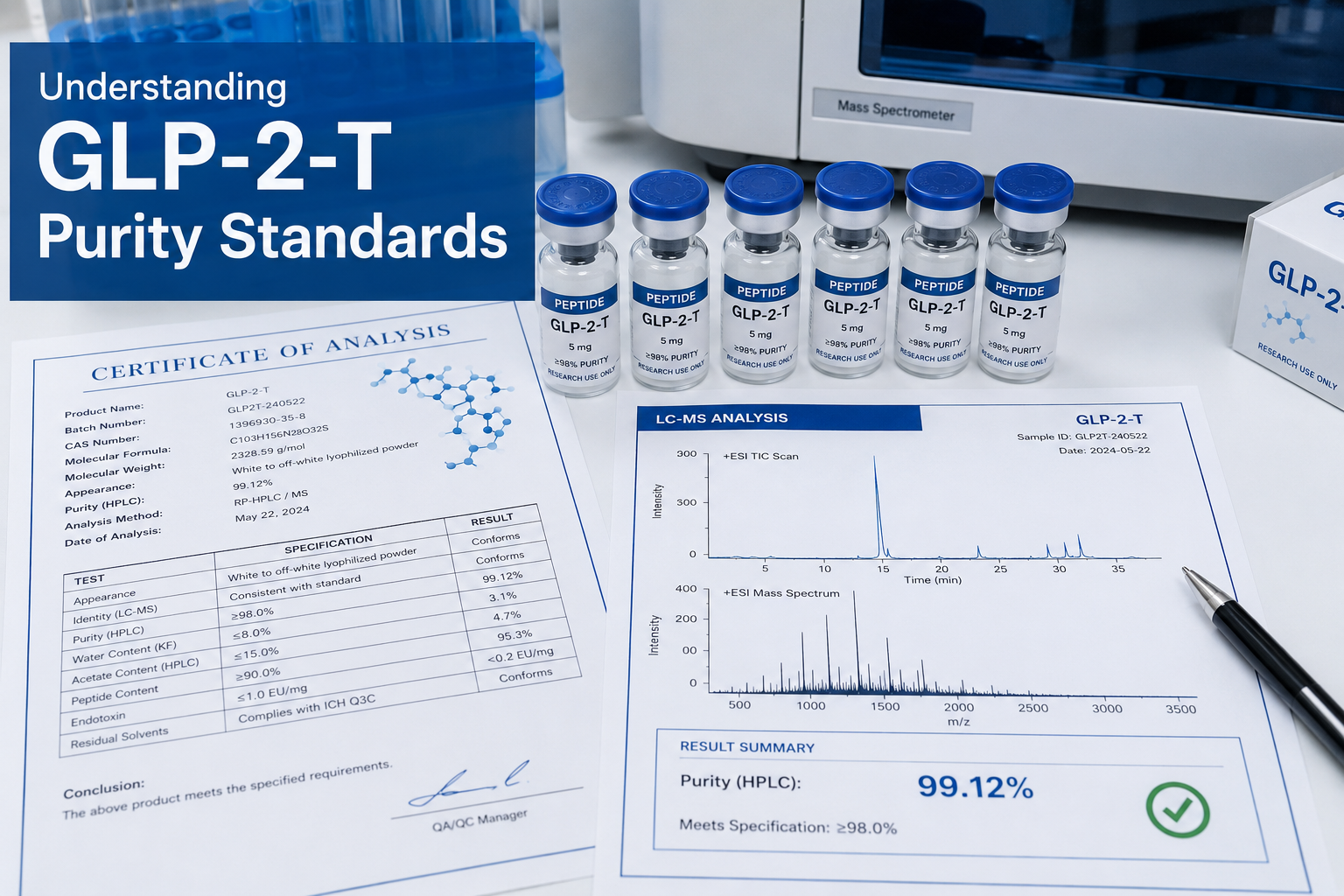
Before placing any order, researchers should evaluate suppliers against a defined set of quality benchmarks. The table below summarizes the minimum acceptable standards for research-grade GLP-2-T peptide.

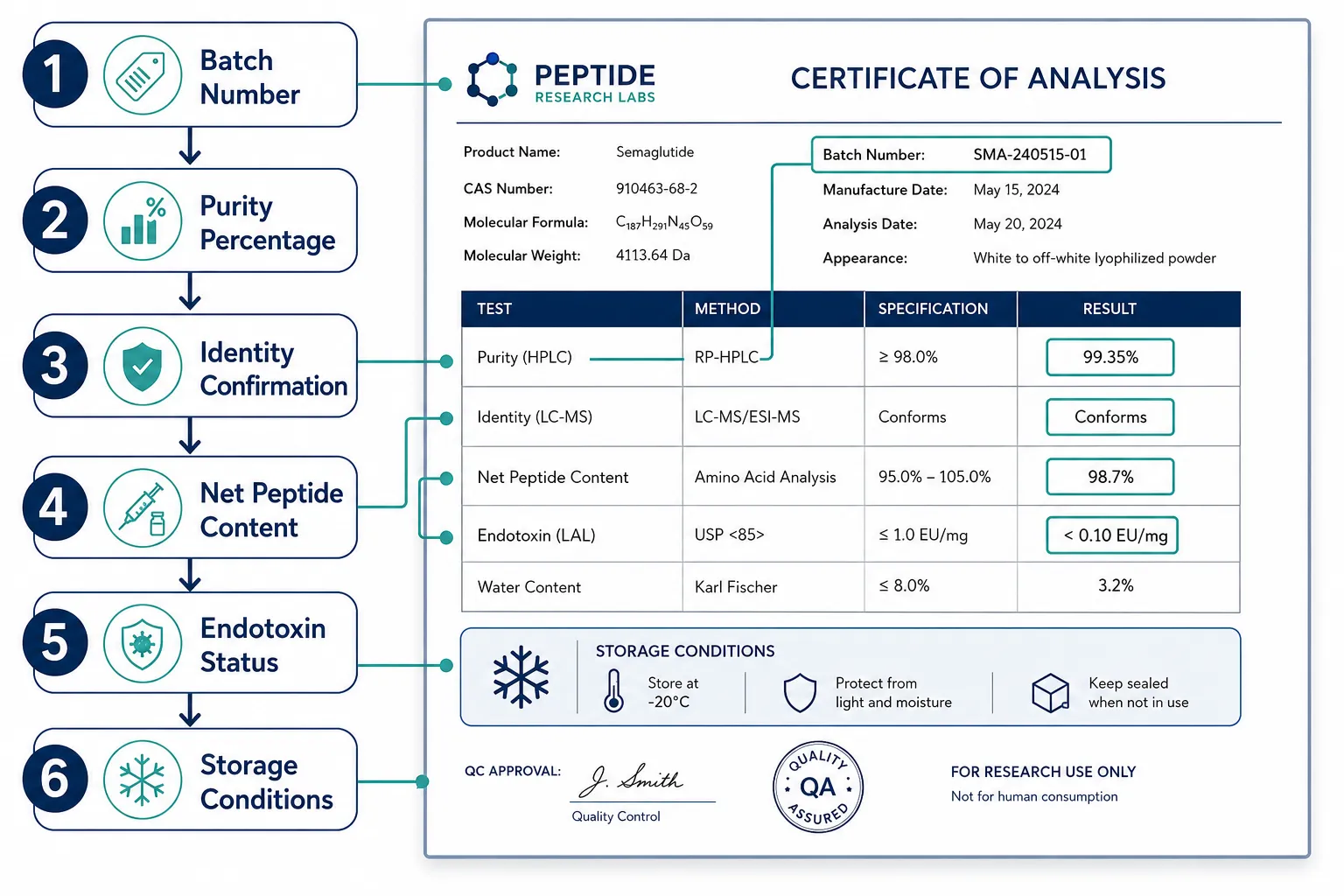
Quality Parameter Minimum Standard Verification Method
Peptide Purity >98% HPLC chromatography
Molecular Identity Confirmed Mass spectrometry (MS)
Endotoxin Level <1 EU/mg LAL assay
Certificate of Analysis Third-party issued Independent lab documentation
Sterility Lyophilized, sealed Visual + documentation

Understanding peptide purity testing methods in detail helps researchers interpret CoA data accurately rather than accepting supplier claims at face value.

Key principle: A supplier unwilling to share third-party CoA documentation before purchase should be disqualified immediately, regardless of price.

Key Quality Standards: A Guide to Sourcing High-Purity Compounds

Where to Buy Research-Grade GLP-2-T Peptide: Evaluating Suppliers in 2026

The research peptide market has grown significantly, and not all vendors maintain consistent standards. As of mid-2026, suppliers such as Nationwide Peptides and Cenexa Labs have updated their GLP-2 and GLP-2-T product pages with current batch documentation, a positive indicator of active inventory management and quality oversight.

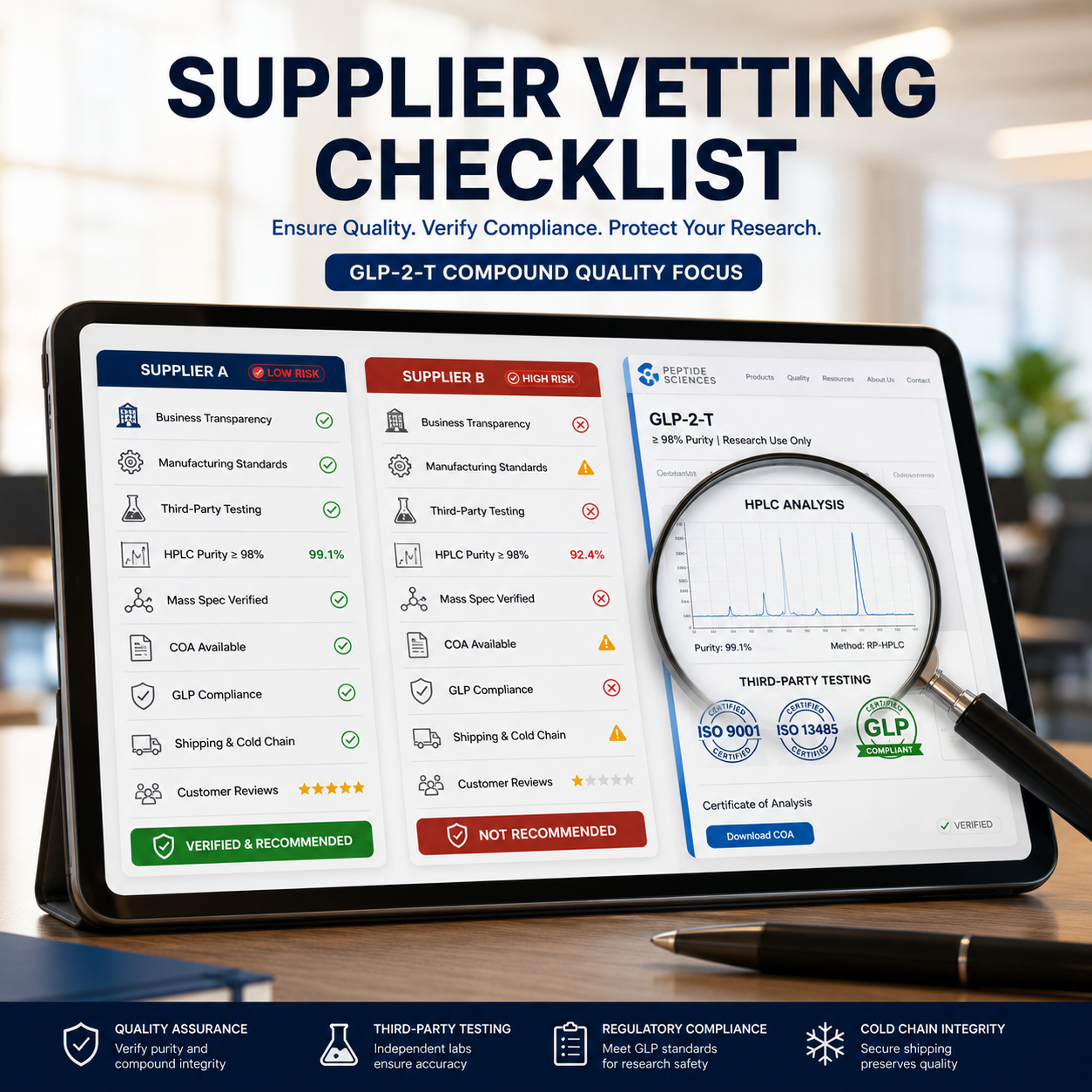
What to look for in a reputable supplier:

  • Independent third-party testing, CoAs issued by labs with no commercial relationship to the vendor
  • Transparent batch numbers, traceable to specific synthesis runs
  • Research-only labeling, clearly states the compound is for laboratory use, not human consumption
  • Cold-chain shipping options, lyophilized peptides remain stable at room temperature short-term, but cold-chain shipping reduces degradation risk during transit
  • Responsive technical support, ability to answer questions about reconstitution, storage, and compound specifications

Researchers sourcing GLP-related compounds may also find value in reviewing the GLP-3 triple agonist research catalog to understand how adjacent compounds are documented and presented by quality-focused vendors.

For those comparing sourcing options across compound classes, the comprehensive peptide catalog overview offers a useful reference point for evaluating how vendors organize and disclose product information.


Storage, Handling, and Ordering Best Practices

Receiving high-purity GLP-2-T peptide is only half the equation. Improper storage or reconstitution can degrade even a 99%-pure compound within days.

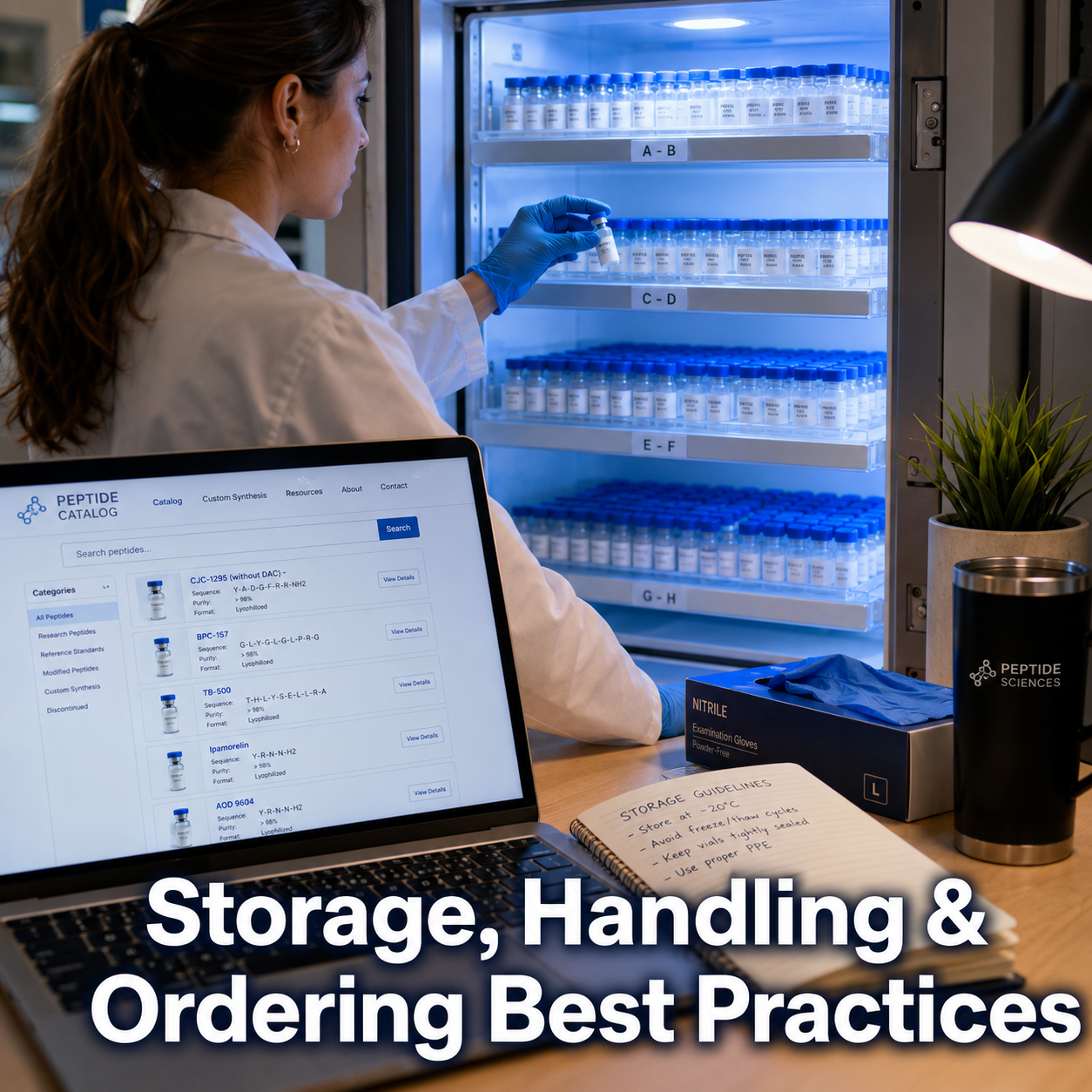
Storage guidelines:

  • Store lyophilized powder at -20°C for long-term stability
  • After reconstitution, store at 4°C and use within 48-72 hours
  • Avoid repeated freeze-thaw cycles, aliquot before freezing
  • Use sterile bacteriostatic water or acetic acid solution for reconstitution, depending on solubility specifications

Ordering checklist:

  1. Confirm current batch CoA is available before checkout
  2. Verify purity percentage matches the stated research-grade threshold
  3. Check that the supplier lists the compound under research-use-only terms
  4. Review shipping conditions, especially for warm-weather transit
  5. Confirm return or replacement policy for damaged shipments

Researchers working with peptide blends or multi-compound protocols should also review available peptide blend formulations to understand how combination products are documented versus single-compound vials.

For broader context on the evolving peptide research landscape in 2026, the latest peptide research updates provide relevant background on emerging analogs and regulatory considerations.

Storage, Handling, and Ordering Best Practices


Conclusion

Knowing where to buy research-grade GLP-2-T peptide and applying a rigorous guide to sourcing high-purity compounds directly determines the quality of downstream research outcomes. The steps are straightforward: demand third-party CoAs, verify purity above 98% via HPLC and mass spectrometry, confirm research-only labeling, and choose suppliers with demonstrably current inventory documentation.

Actionable next steps for researchers:

  • Build a supplier vetting checklist based on the quality parameters outlined above
  • Request CoA documentation from any new vendor before committing to a purchase
  • Cross-reference batch purity data against your assay sensitivity requirements
  • Review updated GLP-2-T listings from vendors who refreshed their catalogs in 2026
  • Bookmark resources on GLP-1 dual receptor agonism research to contextualize GLP-2-T findings within the broader incretin family

Sourcing decisions made with rigor at the outset protect the integrity of every experiment that follows.

https://www.puretestedpeptides.com/wp-content/uploads/2026/07/Where-to-Buy-Research-Grade-GLP-2-T-Peptide-A-Guide-to-Sourcing-High-Purity-Compounds.png 1254 1254 https://www.puretestedpeptides.com/wp-content/uploads/2026/01/buy-peptides-online.jpg 2026-07-08 13:05:452026-07-08 13:05:45Where to Buy Research-Grade GLP-2-T Peptide: A Guide to Sourcing High-Purity Compounds
How Online Communities Evaluate Research Peptide Vendors: Lessons from Reddit, YouTube, and Lab Forums

How Online Communities Evaluate Research Peptide Vendors: Lessons from Reddit, YouTube, and Lab Forums

June 12, 2026/0 Comments/in Uncategorized/by

Fewer than one in three research peptide buyers verify a vendor's Certificate of Analysis before their first purchase — yet community-driven forums have built some of the most rigorous vendor evaluation systems found anywhere online. Understanding how online communities evaluate research peptide vendors, drawing lessons from Reddit, YouTube, and lab forums, can help researchers make smarter, safer sourcing decisions in 2026.

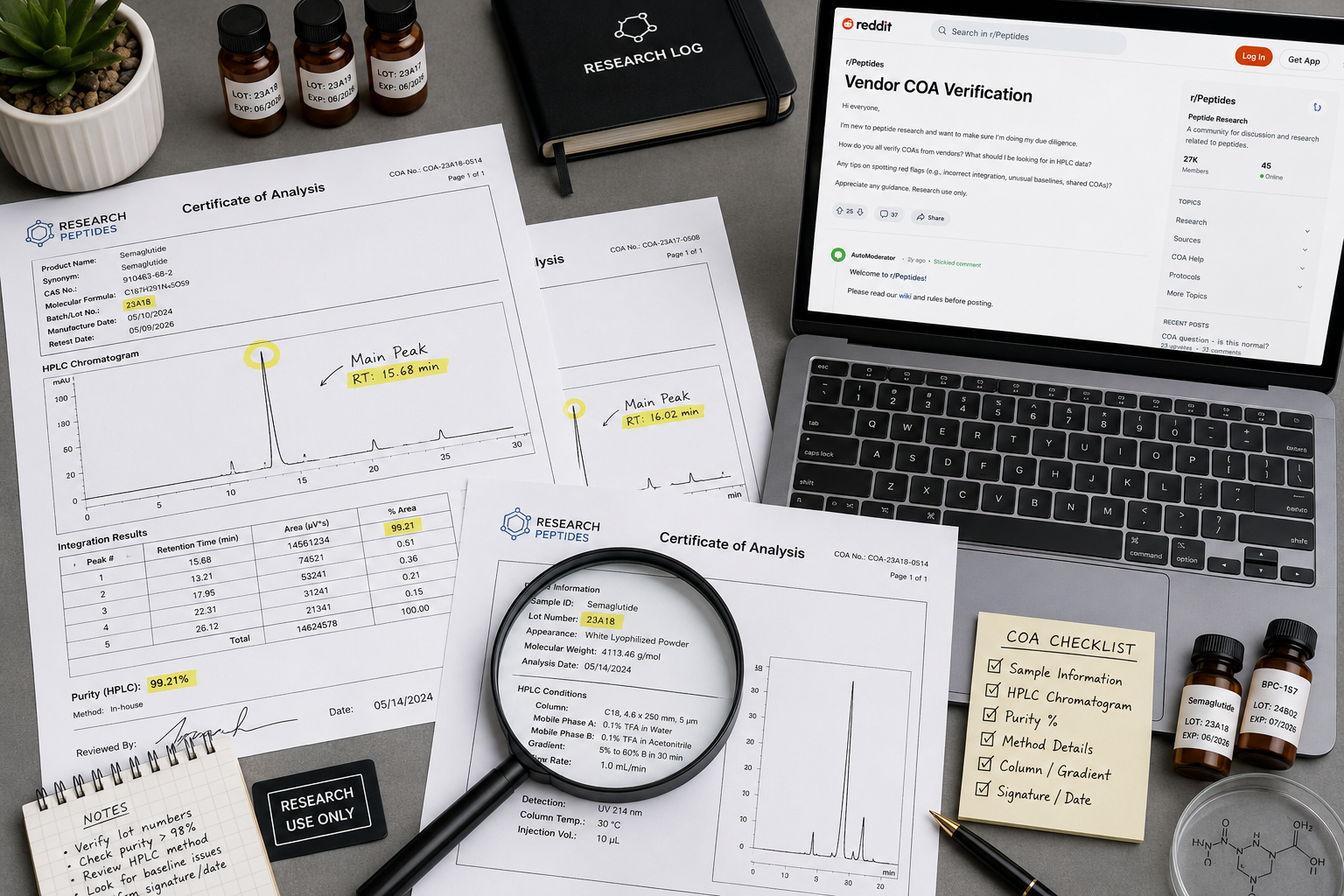
Wide-angle flat-lay editorial photograph of a researcher's desk showing printed Certificate of Analysis documents with HPLC

Key Takeaways

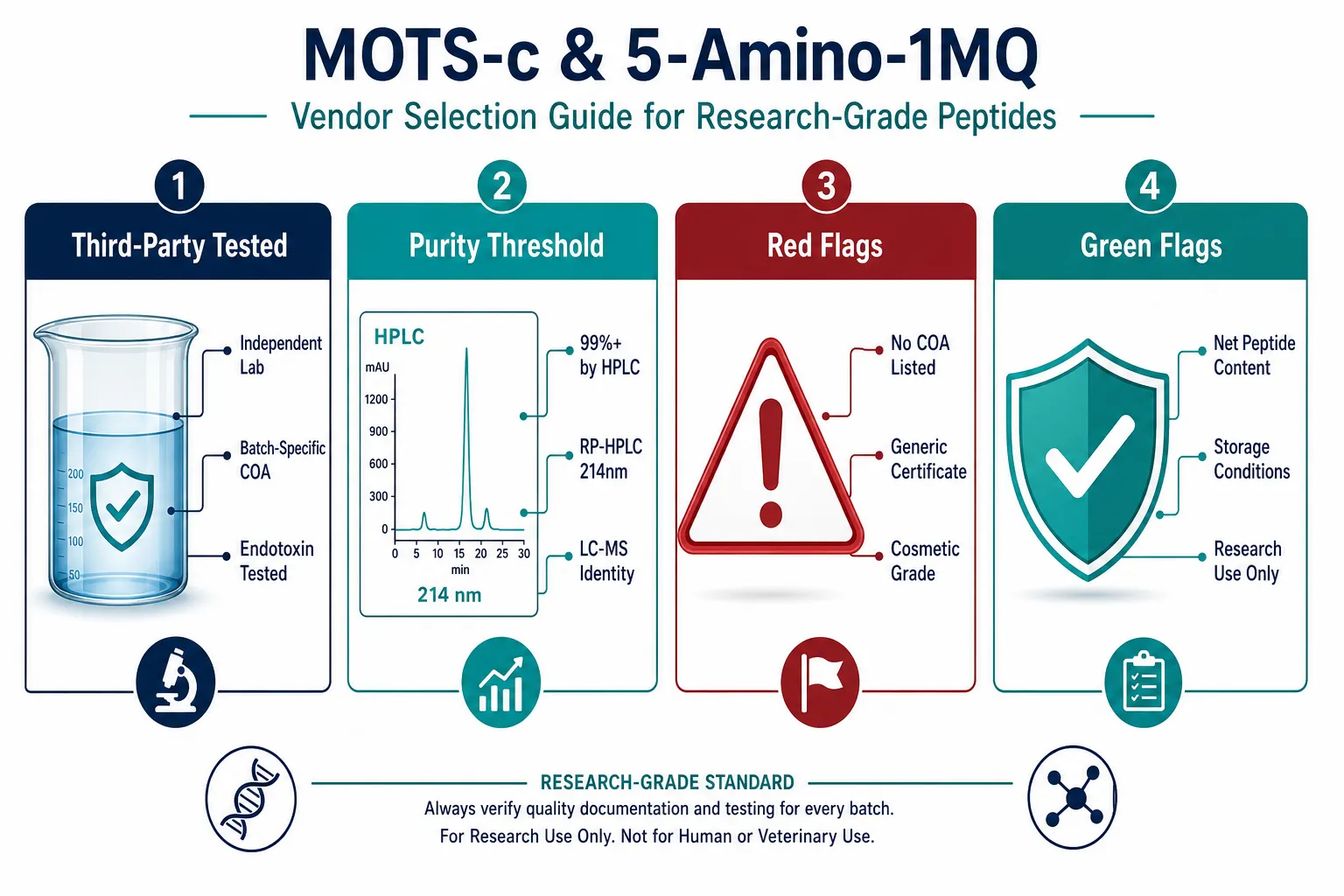
  • Batch-specific Certificates of Analysis from independent labs are the single most important quality signal communities use
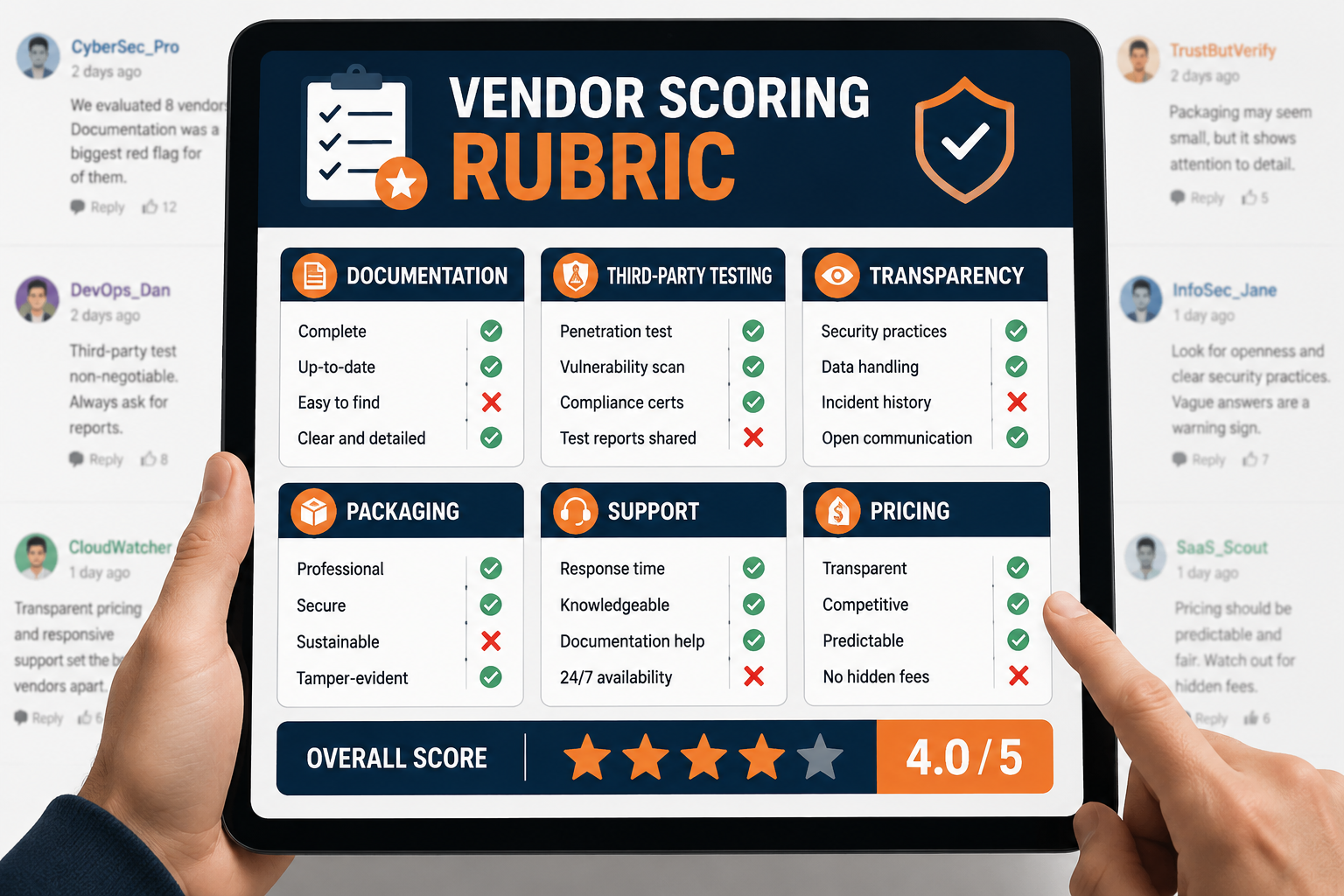
  • Community scoring rubrics now cover six or more criteria, moving far beyond simple "good vendor / bad vendor" labels
  • Red flags such as reused COAs, missing HPLC chromatograms, and crypto-only payments are widely documented and shared
  • A fast "two-minute website test" has become a standard first filter before any purchase
  • Generic positive reviews carry little weight; reviews with COA images and lot numbers are treated as high-signal

The COA-First Standard That Reddit Built

The most visible shift in how online communities evaluate research peptide vendors is the move from reputation-based recommendations to documentation-based checklists. Threads on r/Peptides and r/PeptideReviews now routinely open with a demand for batch-specific Certificates of Analysis before any vendor name is even discussed.

The community standard is specific: COAs must come from independent third-party labs — Janoshik is frequently cited — and must use HPLC methodology at minimum. A vendor-supplied PDF with no lab name, no chromatogram, and no lot number is treated as worthless. Redditors cross-reference the lot number printed on the vial against the COA to confirm the document is not recycled from a previous batch.

This matters enormously for compounds where purity directly affects research validity. Whether a researcher is sourcing lab-tested peptides or evaluating a specific compound like SS-31 for mitochondrial research, the community expects the same documentation standard.

Red flags communities flag immediately:

  • COAs reused across multiple products or batches
  • No HPLC chromatogram included
  • Missing mass spectrometry (MS) identity data
  • Vendor-only lab names with no independent verification
  • Crypto-only payment options

Green flags that build trust:

  • Batch-matched COAs with visible lot numbers
  • Independent lab name and date visible on document
  • HPLC purity above 98% with chromatogram attached
  • MS confirmation of compound identity

Structured Scoring Rubrics: Beyond Simple Recommendations

Structured Scoring Rubrics: Beyond Simple Recommendations

Community evaluation of research peptide vendors has evolved into something resembling a formal audit process. A widely shared 2026 framework proposes a 10-plus-point legitimacy checklist that scores vendors across verifiable criteria rather than subjective impressions.

The six core scoring categories used across Reddit, Discord, and lab forums are:

Category What Communities Check
Documentation Batch COAs, chromatograms, MS data
Third-Party Testing Independent lab, not vendor-affiliated
Transparency Physical address, working phone, sourcing info
Packaging Tamper-evident seals, proper labeling, cold-chain info
Support Response time, willingness to share COAs on request
Pricing Within normal market band, not suspiciously cheap

Vendors scoring below a threshold on this rubric — roughly seven out of fourteen points in one popular framework — are labeled "avoid" regardless of positive reviews. This approach has gained traction because it removes personal bias and forces reviewers to cite evidence.

The "two-minute website test" has become a standard first filter: if a researcher cannot find a physical address, phone number, COA links, and shipping or storage protocols within two minutes of landing on a vendor's site, the community treats that as sufficient reason not to buy. For context on what good documentation looks like, the quality testing protocols page provides a useful reference point.

"Generic 'fast shipping, great product' comments are low-signal noise. What the community trusts is a review with a COA image, a batch number, and an independent lab name."

Researchers sourcing compounds such as tesa or LL-37 are encouraged to order small test quantities first, request lot-matched COAs, and post their findings — including COA screenshots — back to the forum before scaling up.


YouTube and Lab Forums: Video Evidence and Peer Review

YouTube and Lab Forums: Video Evidence and Peer Review

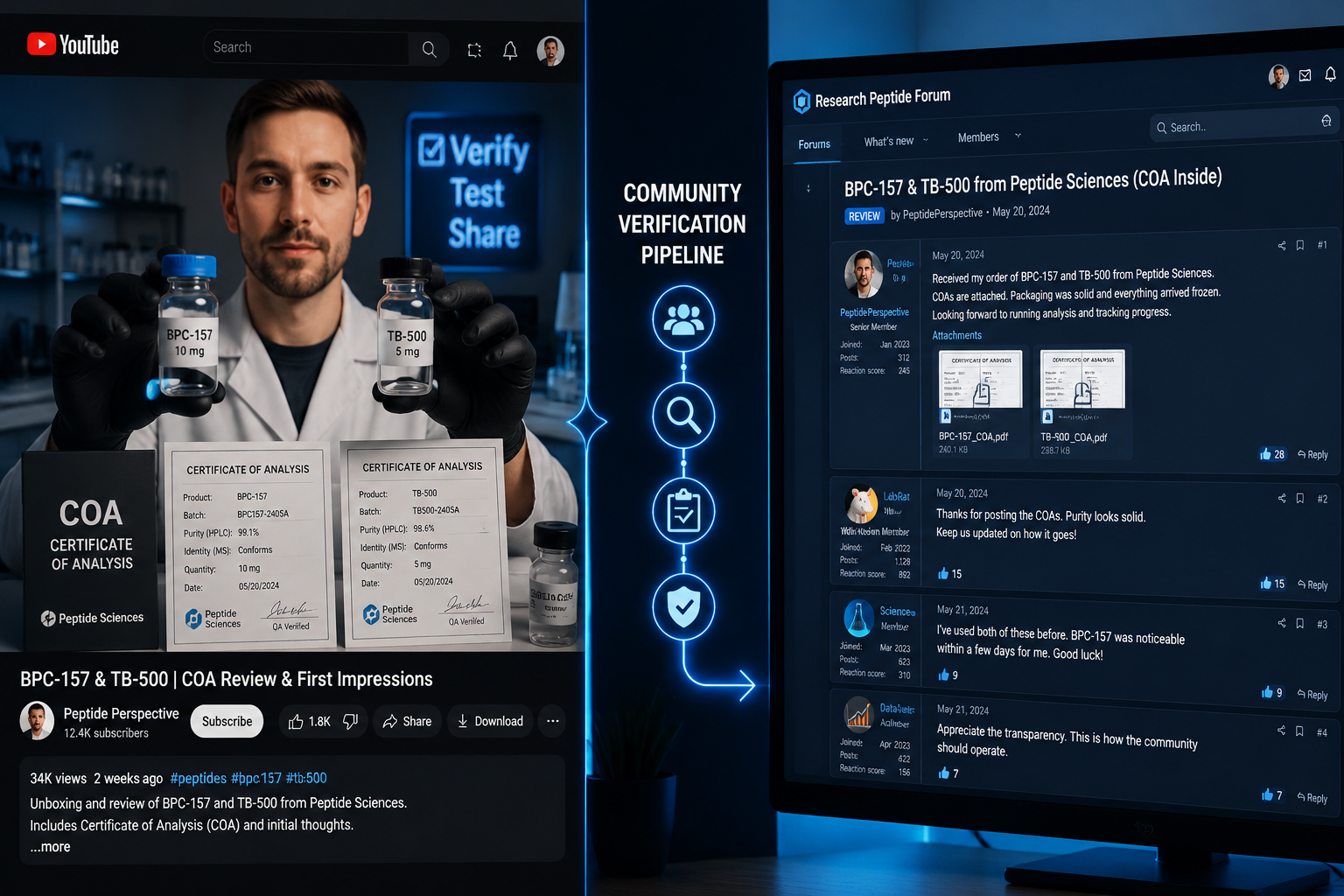
YouTube has added a visual layer to vendor evaluation that text-based forums cannot replicate. Researchers film unboxing videos, photograph vial labels against COA documents, and walk through HPLC graphs in real time. This format makes it harder to fake documentation because viewers can pause and scrutinize every detail.

Lab forums contribute a peer-review dynamic. Experienced chemists challenge methodology, question purity claims, and flag when a COA's chromatogram shows unusual peaks. This technical scrutiny filters out vendors who pass a casual visual check but fail under expert examination.

The combined effect is a community verification pipeline. A vendor might survive a Reddit thread but get dismantled in a YouTube comment section by someone who recognizes a recycled chromatogram. Communities also share marketing red flags: direct-to-consumer language around fat loss or anti-aging, which signals a vendor is not positioning products for legitimate research use.

For researchers exploring compounds covered in longevity or metabolic research — such as those reviewed in longevity peptide research overviews or MOTS-c metabolic research — the community expects the same documentation rigor regardless of compound type.

The broader lesson is that community intelligence compounds over time. Each posted COA, each flagged red flag, and each scored vendor review adds to a shared knowledge base that makes the next purchase decision easier for everyone in the community.


Conclusion

The way online communities evaluate research peptide vendors has matured from informal word-of-mouth into a structured, evidence-based process. The actionable steps are clear: demand batch-specific COAs from independent labs, apply a multi-criteria scoring rubric before ordering, use the two-minute website test as a first filter, and treat only reviews with documented evidence as reliable.

Researchers should also contribute back — posting COA screenshots, lot numbers, and honest assessments helps the entire community raise its standards. Before placing any order, consult community resources, review peptides available for research use, and verify that every vendor clears the documentation bar the community has collectively set.

https://www.puretestedpeptides.com/wp-content/uploads/2026/06/How-Online-Communities-Evaluate-Research-Peptide-Vendors-Lessons-from-Reddit-YouTube-and-Lab-Forums.png 1024 1536 https://www.puretestedpeptides.com/wp-content/uploads/2026/01/buy-peptides-online.jpg 2026-06-12 13:03:282026-06-12 13:03:28How Online Communities Evaluate Research Peptide Vendors: Lessons from Reddit, YouTube, and Lab Forums
×

Helpful Links

  • My account
  • Cart
  • Checkout
  • Refund and Returns Policy
  • Privacy Policy
  • SMS Privacy Policy
  • Login
  • My Account
  • Logout

USA Made Lab Tested Peptides

All products are sold for research, laboratory, or analytical purposes only, and are not for human consumption


Pure Tested Peptides is a chemical supplier. Pure Tested Peptides is not a compounding / chemical compounding facility as defined under 503A of the Federal Food, Drug, and Cosmetic act. Pure Tested Peptides is not an outsourcing facility as defined under 503B of the Federal Food, Drug, and Cosmetic act.

The statements made within this website have not been evaluated by the US Food and Drug Administration. The products we offer are not intended to diagnose, treat, cure or prevent any disease.

Human/Animal Consumption Prohibited. Laboratory/In-Vitro Experimental Use Only

Scroll to top Scroll to top Scroll to top