Call or Text 727-513-9780
  • Shopping Cart Shopping Cart
    0Shopping Cart
Pure Tested Peptides | America's most trusted Peptides for sale online
  • Peptides for sale
    • Oral Peptides for sale
      • Peptide Capsules for sale
      • BPC 157 Capsules 1000mcg
      • SLU-PP-332 Capsules | 1000 mcg
      • 5-Amino-1MQ 50mg Capsules
      • Tesofensine 500mcg
    • All Peptides for sale
    • Peptide Sprays
      • BPC 157 Nasal Spray Kit
      • BPC-157 TB500 Nasal Spray Kit
      • Semax Nasal Spray 10mg
      • Selank – Nasal Spray Kit – 10mg
      • Epithalon 50MG Nasal Spray Kit
      • Ipamorelin 10mg Nasal Spray
      • Klow Nasal Spray (BPC-157 + TB-500 + GHK-Cu + KPV) | 80mg
      • Hulk Nasal Spray Tesa / Ipa Blend 6/3 MG
      • Klow Nasal Spray
      • NAD + 500 mg Nasal Spray
      • PT-141 Nasal Spray Kit
    • GHRH Peptides
      • Ipa Peptides
      • CJC-1295 Peptides
        • CJC-1295 with DAC 5 mg
        • CJC-1295 without DAC 5 mg
        • CJC-1295 Ipa 10mg
      • Tesa Peptides
        • Tesa Peptide
        • Tesa 20 mg
    • GHK-Cu Peptides
      • All GHK-Cu Peptides
      • GHK-Cu 100mg
      • KLOW Peptide Blend – Buy KLOW blend online
    • BPC Peptides
      • All BPC Peptides
      • BPC-157
      • BPC-157 TB-500
      • BPC 157 capsules 1000mcg
    • SLU-PP-332 Peptides
      • All SLU-PP-332 Peptides
      • SLU-PP-332 5mg
    • GLP3 Peptides
    • PT-141 Peptides
      • PT-141 Peptides for sale
      • PT-141 10mg
      • PT-141 Nasal Spray
    • CAG Peptides
      • Lipo-C Peptide Blend
      • CAG 5mg
      • CAG 10mg
    • MOTS-C Peptides
      • MOTS-C Peptides for sale
      • MOTS-c peptide
      • MOTS-c 10mg *6 pack*
    • 5 Amino 1MQ Peptides
      • 5 Amino 1MQ Peptides for sale
      • 5-Amino-1MQ 50mg Capsules
      • 5-Amino-1MQ 5mg
    • Epithalon Peptides
      • Epithalon Peptides for sale
      • Epithalon 10mg
      • Epithalon 50mg
  • Shop
    • GLPs
      • 5-Amino-1MQ 50mg Capsules
      • 5-Amino-1MQ 5mg
      • L-Carnitine 500mg/ml
      • Tesofensine 500mcg
      • SLU-PP-332 5mg
      • MOTS-c 10mg *6 pack*
    • Epithalon & BPC Peptides
      • Epithalon 10mg
      • Epithalon 50mg
      • BPC-157
      • BPC 157 capsules 1000mcg
      • BPC-157 TB-500
      • BPC-157 TB500 Nasal Spray Kit
      • BPC 157 Nasal Spray Kit
    • BPC TB-500 & NAD+ Peptides
      • NAD+ 500 mg
      • KLOW Peptide Blend – Buy KLOW blend online
      • GLOW Peptide Blend
      • TB 500 5mg
      • BPC 157 capsules 1000mcg – Supplement
      • BPC 157 Nasal Spray Kit
      • BPC-157
      • BPC-157 TB500 Nasal Spray Kit
      • BPC-157 TB-500
      • BPC 157 capsules 1000mcg
    • LL-37 Peptide
      • LL-37 10 mg
    • MOTS-C & Selank
      • MOTS-c peptide
      • Selank 10mg
    • GHK Peptides
      • GHK-Cu 100mg
      • GLOW Peptide Blend
      • KLOW Peptide Blend – Buy KLOW blend online
  • COAs
  • Wholesale
    • Wholesale Peptides for sale
  • PTP FAQ
  • Affiliates
    • Selank Peptide: Advanced Pharmacological Mechanisms Underlying Its Anxiolytic and Nootropic Effects in Research
      • 5-Amino-1MQ Peptide: Detailed Mechanisms of NNMT Inhibition and Its Impact on Cellular Metabolism Research
        • MOTS-C Peptide: Unraveling Its Role in Mitochondrial Dynamics and Energy Metabolism Research
          • Epithalon Peptide and Telomerase Regulation: Investigating Its Impact on Cellular Senescence and Lifespan Research Models
            • GLP2-T vs GLP2 Tirz Peptide: Understanding the Naming, Mechanistic Nuances, and Research Implications for Gut Health
      • Peptides and Polypeptides in Modern Pharmacology: What Research on Metoprolol, Prednisone, and Amlodipine Reveals
        • Polypeptide Peptides vs NSAIDs: What Naproxen and Diclofenac Teach Tissue-Repair Researchers About BPC‑157 and TB‑500
          • Peptides and Polypeptides in Endocrine Pharmacology: How GLP-1, GLP-2, and GLP-3 Retatrutide Differ From Classic Drugs Like Prednisone and Amlodipine
          • 5‑Amino‑1MQ Peptide and NNMT Inhibition: How It Compares With Statins Like Atorvastatin in Adipose and Lipid Metabolism Research
      • Enclomiphene, Estrogen Receptor Signaling, and Luteinizing Phase Biology: What Hormone Researchers Should Measure
        • Mesenchymal Stem Cells, BPC‑157, and GHK‑Cu: How Tissue Repair Peptides Compare With Classic NSAIDs Like Naproxen in Injury Models
          • Peptide Calculator Use Cases Beyond Growth Hormone: Working Through GLP‑3 Retatrutide, MOTS‑c, and BPC‑157 Research Dosing
        • Polypeptide Peptides in Endocrine and Metabolic Pharmacology: Lessons From Amlodipine, Prednisone, and Metoprolol
        • Peptides Calculator for Advanced Blends: Worked Examples for Tesamorelin, CJC‑1295, and Ipamorelin Stacks
          • Peptides and Polypeptides in Human Physiology: How Molecular Size Shapes Research Applications
            • Selank Peptide: Advanced Pharmacological Mechanisms Underlying Its Anxiolytic and Nootropic Effects in Research
          • 5-Amino-1MQ Peptide: Detailed Mechanisms of NNMT Inhibition and Its Impact on Cellular Metabolism Research
            • MOTS-C Peptide: Unraveling Its Role in Mitochondrial Dynamics and Energy Metabolism Research
              • Epithalon Peptide and Telomerase Regulation: Investigating Its Impact on Cellular Senescence and Lifespan Research Models
                • GLP2-T vs GLP2 Tirz Peptide: Understanding the Naming, Mechanistic Nuances, and Research Implications for Gut Health
                  • Peptides and Polypeptides in Endocrine Pharmacology: How GLP-1, GLP-2, and GLP-3 Retatrutide Differ From Classic Drugs Like Prednisone and Amlodipine
                    • Polypeptide Peptides vs NSAIDs: What Naproxen and Diclofenac Teach Tissue-Repair Researchers About BPC‑157 and TB‑500
                      • Peptides and Polypeptides in Modern Pharmacology: What Research on Metoprolol, Prednisone, and Amlodipine Reveals
                        • 5‑Amino‑1MQ Peptide and NNMT Inhibition: How It Compares With Statins Like Atorvastatin in Adipose and Lipid Metabolism Research
                        • Enclomiphene, Estrogen Receptor Signaling, and Luteinizing Phase Biology: What Hormone Researchers Should Measure
                        • Mesenchymal Stem Cells, BPC‑157, and GHK‑Cu: How Tissue Repair Peptides Compare With Classic NSAIDs Like Naproxen in Injury Models
                        • Peptide Calculator Use Cases Beyond Growth Hormone: Working Through GLP‑3 Retatrutide, MOTS‑c, and BPC‑157 Research Dosing
                        • Polypeptide Peptides in Endocrine and Metabolic Pharmacology: Lessons From Amlodipine, Prednisone, and Metoprolol
                        • Peptides Calculator for Advanced Blends: Worked Examples for Tesamorelin, CJC‑1295, and Ipamorelin Stacks
                        • Peptides and Polypeptides in Human Physiology: How Molecular Size Shapes Research Applications
                        • Selank Peptide: Advanced Pharmacological Mechanisms Underlying Its Anxiolytic and Nootropic Effects in Research
                        • MOTS-C Peptide: Unraveling Its Role in Mitochondrial Dynamics and Energy Metabolism Research
                        • Peptides and Polypeptides in Modern Pharmacology: What Research on Metoprolol, Prednisone, and Amlodipine Reveals
                        • Peptides and Polypeptides in Endocrine Pharmacology: How GLP-1, GLP-2, and GLP-3 Retatrutide Differ From Classic Drugs Like Prednisone and Amlodipine
                        • 5-Amino-1MQ Peptide: Detailed Mechanisms of NNMT Inhibition and Its Impact on Cellular Metabolism Research
                        • Mesenchymal Stem Cells, BPC‑157, and GHK‑Cu: How Tissue Repair Peptides Compare With Classic NSAIDs Like Naproxen in Injury Models
                        • Peptide Calculator Use Cases Beyond Growth Hormone: Working Through GLP‑3 Retatrutide, MOTS‑c, and BPC‑157 Research Dosing
                        • GLP2-T vs GLP2 Tirz Peptide: Understanding the Naming, Mechanistic Nuances, and Research Implications for Gut Health
                        • Polypeptide Peptides in Endocrine and Metabolic Pharmacology: Lessons From Amlodipine, Prednisone, and Metoprolol
                        • Polypeptide Peptides vs NSAIDs: What Naproxen and Diclofenac Teach Tissue-Repair Researchers About BPC‑157 and TB‑500
                        • Peptides and Polypeptides in Human Physiology: How Molecular Size Shapes Research Applications
                        • Peptides Calculator for Advanced Blends: Worked Examples for Tesamorelin, CJC‑1295, and Ipamorelin Stacks
                        • 5‑Amino‑1MQ Peptide and NNMT Inhibition: How It Compares With Statins Like Atorvastatin in Adipose and Lipid Metabolism Research
                        • Enclomiphene, Estrogen Receptor Signaling, and Luteinizing Phase Biology: What Hormone Researchers Should Measure
                        • Epithalon Peptide and Telomerase Regulation: Investigating Its Impact on Cellular Senescence and Lifespan Research Models
                        • Best research protocol Klow blend
                        • best time to take BPC-157
                        • best time to take DSIP (Delta Sleep Inducing Peptide)
                        • best time to take CJC-1295
                        • best time to take AOD-9604
                        • best time to take Follistatin 344
                        • best time to take Ipamorelin
                        • best time to take MK-677 (Ibutamoren)
                        • best time to take Ligandrol (LGD-4033) — research compound
                        • best time to take Ostarine (MK-2866) — research compound
                        • best time to take GHK-CU
                        • best time to take TB-500
                        • best time to take MOTS-c
                        • best time to take Semax
                        • best time to take RAD-140 (Testolone) — research compound
                        • best time to take Thymosin Alpha-1
                        • best time to take PEG-MGF
                        • Biolife Plasma, Octapharma Plasma, and Research Peptides: How Plasma Donation Labs Differ From Peptide Suppliers
                        • best time to take YK-11 — research compound
                        • best time to take PT-141 (Bremelanotide)
                        • Best research protocol Klow blend
                        • 5-Amino-1MQ and MOTS-C Synergy: Metabolic Signaling, Mitochondria, and Research Design
                        • BPC-157 and TB-500: Investigating Their Combined Effects on Angiogenesis and Cellular Migration in Tissue Repair Models
                        • BPC-157 Peptide: Gut Barrier Function, Inflammation, and Tissue-Recovery Research
                        • 5‑Amino‑1MQ and MOTS‑c Synergy in Metabolic Research: Designing NNMT and Mitochondrial Biogenesis Stacks
                        • CJC-1295 with DAC vs. Without DAC: Half-Life, Release Kinetics, and Research Implications
                        • CJC‑1295 with DAC vs. Without DAC: Expanding on Half‑Life Differences Using Tesamorelin and Ipamorelin Blend Case Studies
                        • Collagen Biology and Copper‑Binding Peptides: How GHK‑Cu, Glow Blend, and Klow Blend Interact with Skin and Connective Tissue
                        • Collagen Biology and Regenerative Peptides: How GHK‑Cu, Glow Blend, and Klow Blend Affect Extracellular Matrix Research
                    • DNA, Telomeres, and Longevity Peptides: Positioning Epithalon and MOTS‑c in Genetic Aging Research
                      • Enclomiphene Citrate: serm Mechanism, Testosterone Research, and Stack Compatibility
                        • Enclomiphene vs Enclomiphene Citrate: Formulation, Bioavailability, and Research Distinctions
                        • Epithalon Peptide Research: Telomerase Activation, Aging, and Pineal Gland Function
                        • Estrogen Receptor Signaling and Enclomiphene: How Selective Modulators Compare with Classic Polypeptide Hormones
                        • GHK-Cu Peptide: Advanced Mechanisms in Extracellular Matrix Remodeling and Wound Healing Research
                        • GHK-Cu Peptide: Collagen Synthesis, Wound Repair, and Skin-Barrier Research Models
                        • GLP-1 vs GLP-3 vs GLP-2: Peptide Classification and Research Applications
                        • GLP-2 Peptide Research Guide: Gut Barrier Function, Nutrient Absorption, and Intestinal Recovery Models
                        • GLP-3 Retatrutide vs. GLP-1 Drugs: What Triple-Agonist Biology Changes in Research Models
                        • Ipamorelin and Tesamorelin Combination: Synergistic GH Secretagogue Research and Dosing Protocols
                        • GLP2 Tirz Peptide: What It Is, Why the Name Exists, and How Researchers Should Interpret It
                        • Klow Blend Peptide Nasal Spray: What the Formulation Is Trying to Do in Cognitive Research
                        • Mitochondria, NNMT Inhibition, and Peptide Modulators: Where MOTS‑c and 5‑Amino‑1MQ Fit in Cellular Energy Research
                        • MOTS-c Peptide: Mitochondrial Function, Energy Metabolism, and What Researchers Measure
                        • MOTS-c vs. 5-Amino-1MQ: Which Metabolic Research Questions Each Compound Actually Answers
                        • Nasal Spray Peptides: Bioavailability, Administration, and Semax/Selank Research Applications
                        • PT-141 Peptide Research: Mechanism of Action and Melanocortin Receptor Signaling
                        • Retatrutide for Research: Mechanism, Structure, and GLP-1/GLP-3 Dual Action
                        • Retatrutide for Obesity and Type 2 Diabetes: What the Latest Trial Data Suggest
                        • Tesofensine Peptide Research: Mechanism, Appetite Suppression, and Neuropeptide Y Pathways
  • Contact
    • Contact Customer Service
    • Text Customer Support
  • About US
  • Shop all peptides
  • Affiliate Program
    • Affiliate Signup
  • Login / Register Login / Register Page Link Login / Register Page Link
  • Click to open the search input field Click to open the search input field Search
  • Menu Menu

Tag Archive for: intranasal delivery

Peptides and Polypeptides in Nervous System Research: Where Semax, Selank, and Nasal Spray Peptides Fit Alongside Classic Drugs

Peptides and Polypeptides in Nervous System Research: Where Semax, Selank, and Nasal Spray Peptides Fit Alongside Classic Drugs

September 8, 2026/0 Comments/in Uncategorized/by

Fewer than 1% of small-molecule drugs successfully cross the blood-brain barrier, a structural reality that has driven decades of interest in alternative delivery strategies and alternative compound classes. That bottleneck sits at the center of why peptides and polypeptides in nervous system research have drawn sustained attention, and why compounds like Semax, Selank, and related nasal spray peptides are studied alongside classic anxiolytics and antidepressants rather than simply replacing them.

Key Takeaways

  • Semax and Selank are short synthetic peptides studied for neuroprotective and anxiolytic properties, respectively, with mechanisms that differ fundamentally from classic CNS drugs.
  • Intranasal delivery allows peptides to bypass the blood-brain barrier via the olfactory epithelium, making administration route a central variable in research design.
  • Semax research in 2026 spans Alzheimer's disease models, Parkinson's neuroprotection, and next-generation analogues such as N-acetyl Semax-amide.
  • Selank's evidence base is compared against benzodiazepines and SSRIs primarily through GABAergic and serotonergic pathway studies.
  • The broader intranasal neuropeptide landscape, including davunetide, KAFAK, and osteopontin heptamer, frames Semax and Selank as part of a larger research category rather than isolated curiosities.

How Classic CNS Drugs and Neuroactive Peptides Differ in Research Design
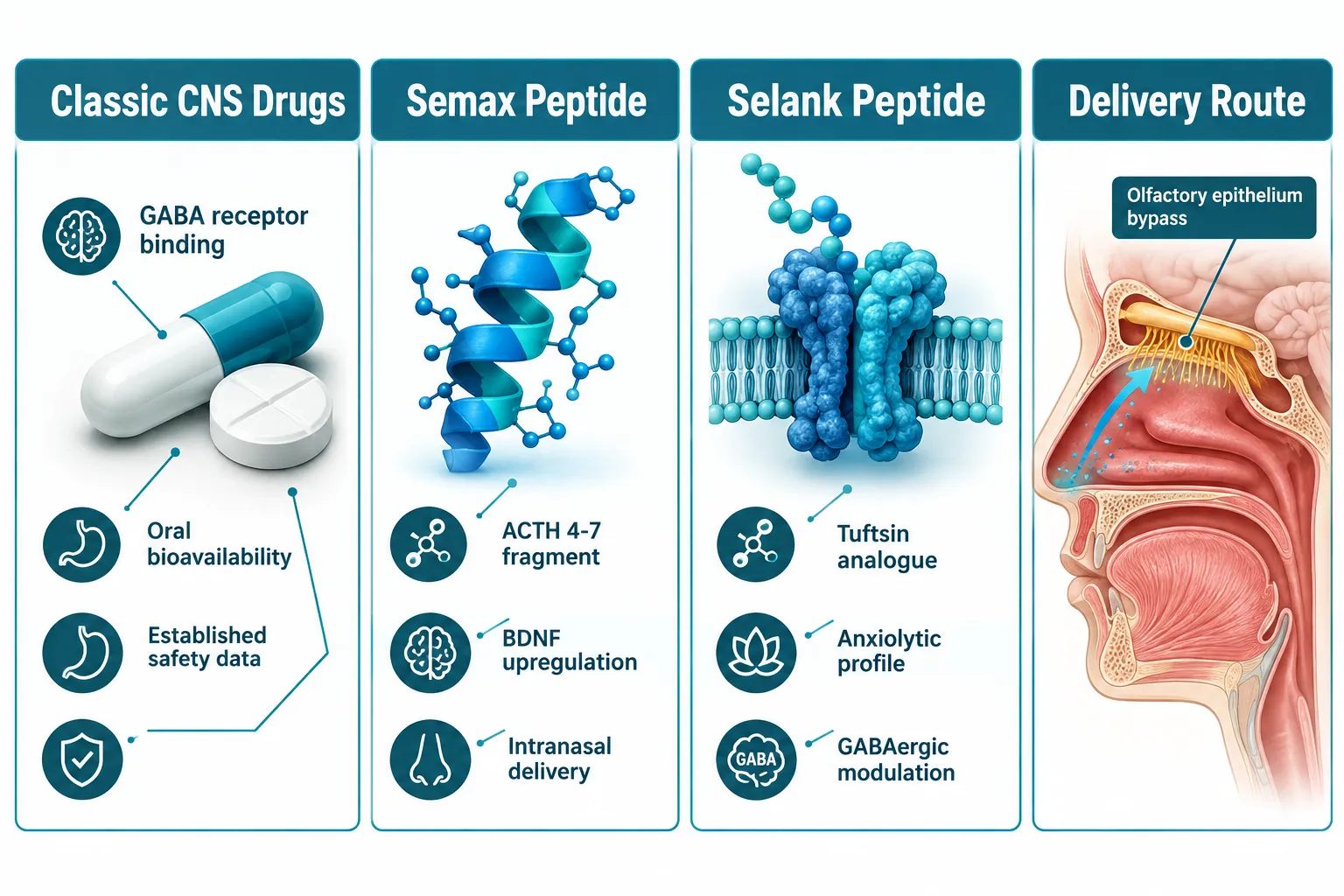
How Classic CNS Drugs and Neuroactive Peptides Differ in Research Design

Standard CNS pharmacology has long relied on small molecules, benzodiazepines, selective serotonin reuptake inhibitors (SSRIs), and monoamine oxidase inhibitors, that act on well-mapped receptor systems. These compounds have decades of clinical trial data, defined pharmacokinetic profiles, and regulatory approval in most major markets.

Peptides operate differently. Rather than occupying a single receptor subtype with high affinity, short neuroactive peptides often modulate signaling cascades, influence neurotrophic factor expression, or mimic endogenous regulatory sequences. This mechanistic breadth is both a research advantage and an interpretive challenge: endpoints that work for a benzodiazepine study may not capture what a peptide is doing at the cellular level.

Feature Classic CNS Drugs Research Peptides (e.g., Semax, Selank)
Molecular size Small molecule Short amino acid chain
Primary target Defined receptor (GABA-A, SERT) Signaling cascade, neurotrophic factors
Delivery route Oral, IV Intranasal, subcutaneous
Regulatory status Approved (most markets) Approved in Russia; research-use in West
Evidence base Large RCT datasets Preclinical + limited human data

Researchers exploring this space benefit from understanding polypeptide peptides: structure, function, and research applications before designing comparative protocols.

Semax and Selank: Mechanisms and Evidence in the Context of Peptides and Polypeptides in Nervous System Research
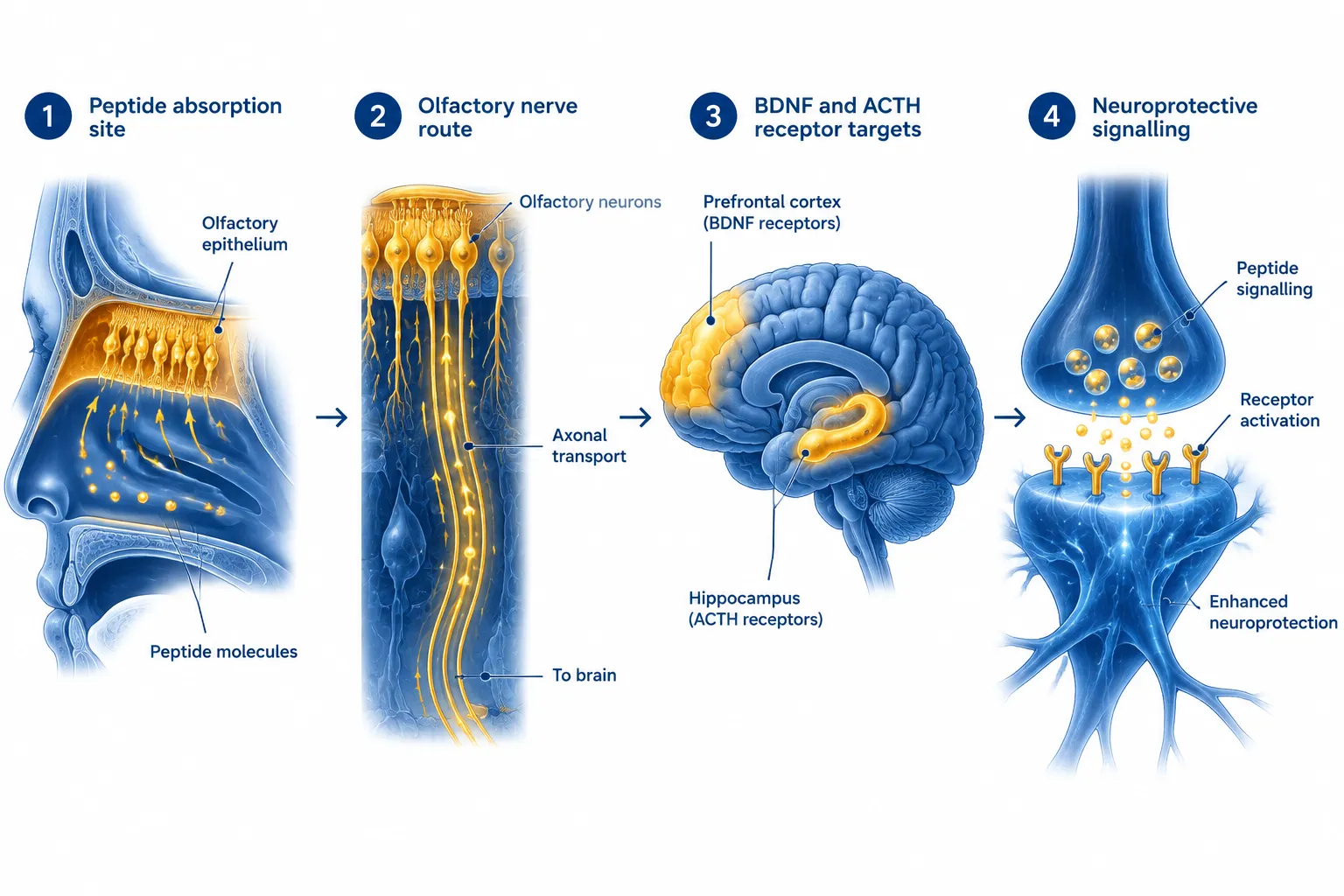
Semax and Selank: Mechanisms and Evidence in the Context of Peptides and Polypeptides in Nervous System Research

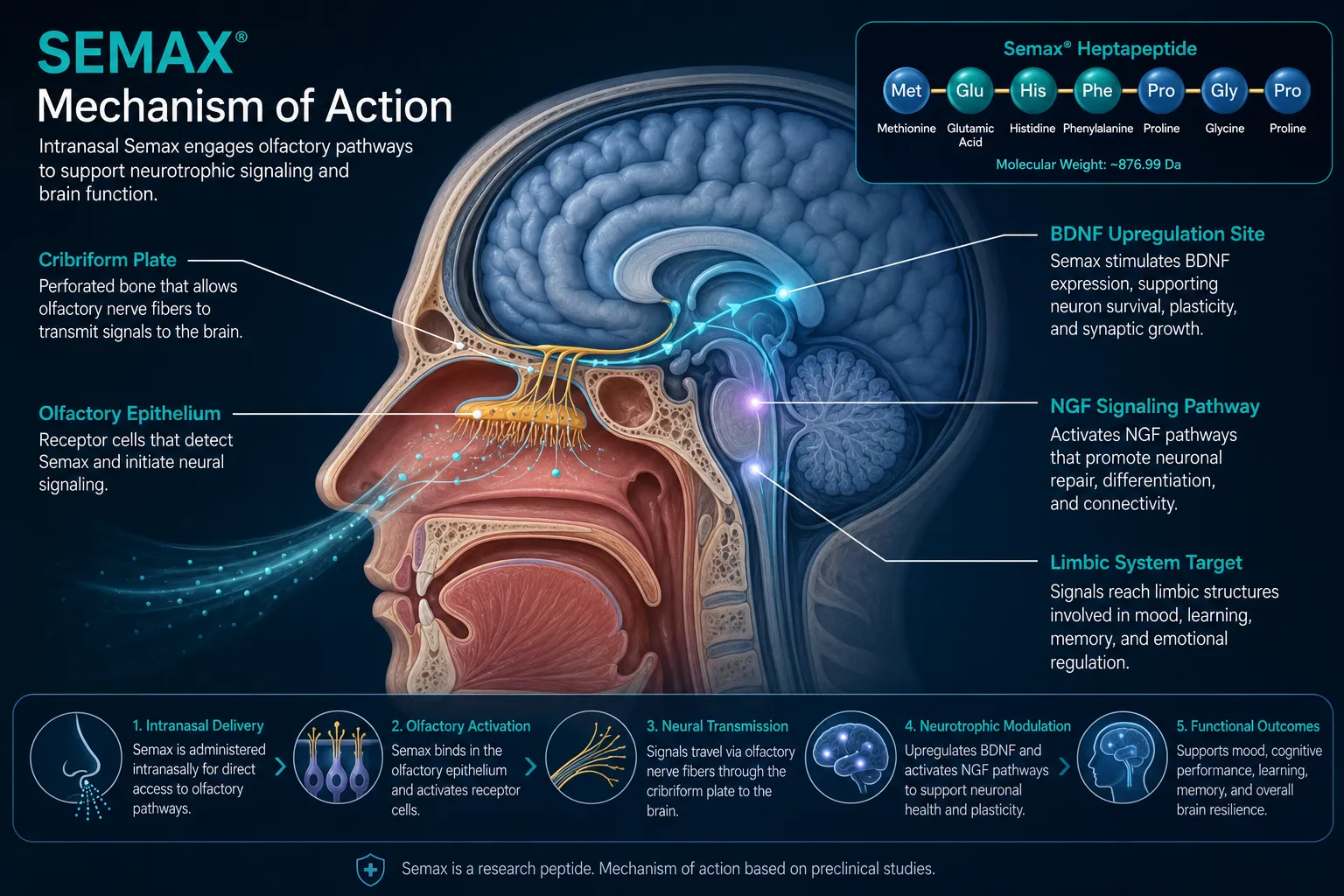
Semax is a heptapeptide derived from the ACTH 4-7 sequence. It does not bind adrenocorticotropic receptors directly; instead, it upregulates brain-derived neurotrophic factor (BDNF), modulates dopaminergic and serotonergic tone, and has shown neuroprotective effects in ischemia models. In Russia, it holds approved status for stroke recovery and cognitive support, a regulatory position that has no equivalent in the United States or European Union, where it remains a research compound.

As of 2026, preclinical Alzheimer's disease data for Semax and its heptapeptide derivative have expanded, with studies examining amyloid-related neurodegeneration endpoints. Parkinson's disease neuroprotection research has also generated academic commentary, focusing on Semax's capacity to reduce oxidative stress in dopaminergic neurons. Next-generation analogues, particularly N-acetyl Semax-amide, are being assessed for improved stability and extended half-life, though human safety data remain limited outside the Russian clinical context.

For researchers comparing these two compounds, the Selank vs Semax nootropic peptide research guide provides a structured breakdown of how each fits different experimental questions.

Selank is a synthetic analogue of the endogenous immunomodulatory peptide tuftsin. Its anxiolytic profile has been studied primarily through GABAergic and serotonergic pathway modulation, positioning it as a mechanistic counterpart, not a replacement, to benzodiazepines. Unlike benzodiazepines, Selank does not appear to produce dependence signals in preclinical models, and it lacks the sedative burden common to GABA-A positive allosteric modulators. A white-paper synthesis circulated in 2026 comparing Selank's evidence base against conventional anxiolytics concluded that while effect size data remain smaller than those for approved drugs, the side-effect profile warrants continued controlled investigation.

"The question in peptide neuroscience research is not whether these compounds replace classic drugs, but what they reveal about pathways that small molecules cannot cleanly isolate."

For detailed mechanistic background on Selank, the Selank peptide research benefits, dosing concepts, and mechanism of action resource offers a thorough foundation.

Intranasal Delivery: Why Administration Route Shapes the Entire Research Framework
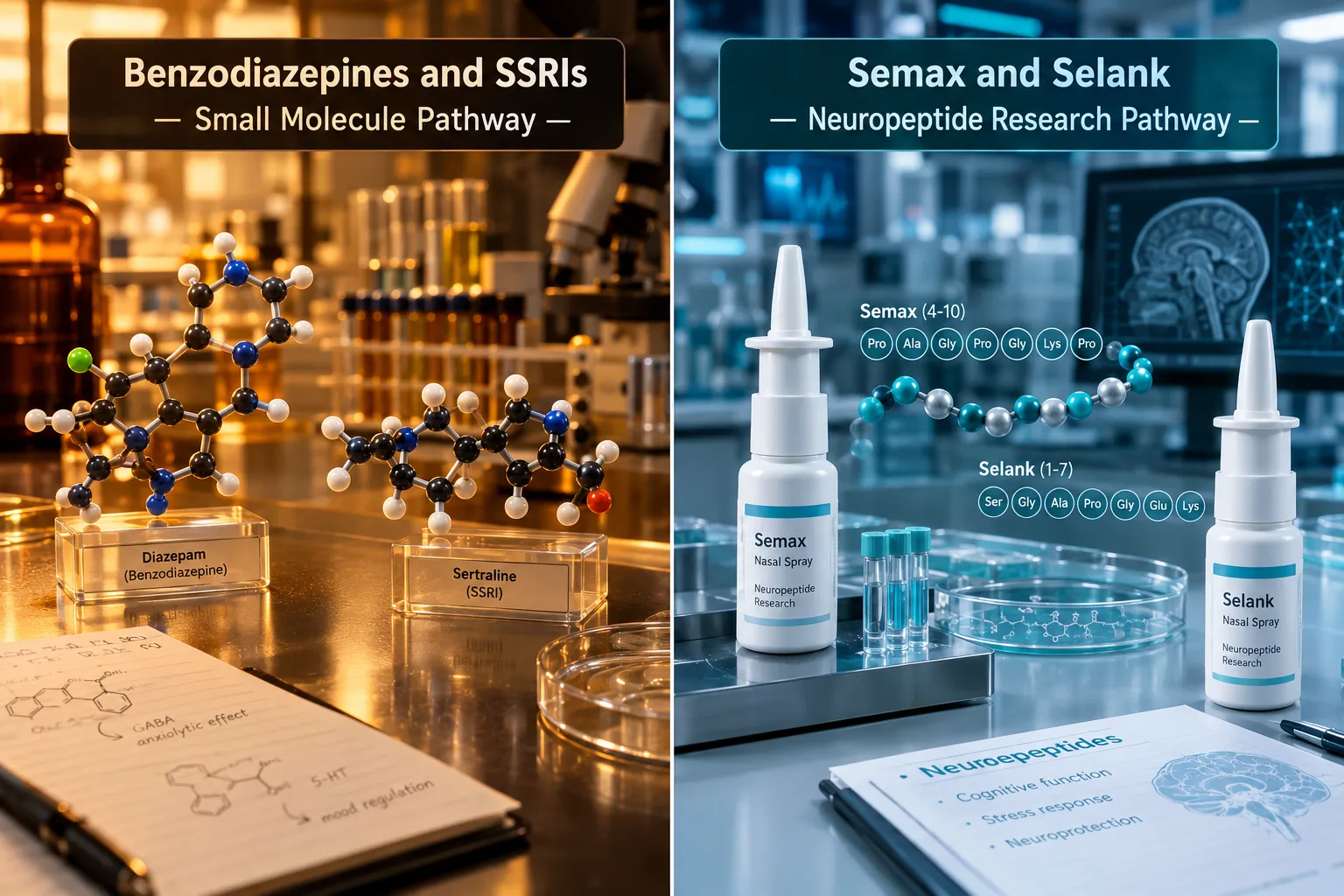
Intranasal Delivery: Why Administration Route Shapes the Entire Research Framework

The nasal route is not simply a convenience for peptides, it is a mechanistic necessity for many of them. The olfactory epithelium provides a direct anatomical channel to the central nervous system, bypassing hepatic first-pass metabolism and the blood-brain barrier simultaneously. This makes intranasal delivery the dominant administration route in peptides and polypeptides in nervous system research, and it fundamentally changes how bioavailability, dosing intervals, and tissue distribution are measured.

Researchers studying Semax as a Semax nasal spray formulation must account for variables that do not apply to oral CNS drugs: mucosal absorption efficiency, ciliary clearance rates, and peptide stability in aqueous nasal formulations. A broader treatment of these variables is available in the nasal spray peptides bioavailability, administration routes, and research design considerations resource.

Beyond Semax and Selank, the intranasal neuropeptide landscape in 2026 includes several other compounds under active preclinical investigation:

  • Davunetide (NAP): an eight-amino-acid peptide derived from activity-dependent neuroprotective protein, studied for tau pathology and microtubule stabilization.
  • KAFAK: an anti-inflammatory peptide examined in neuroinflammation models, with intranasal delivery studies showing CNS penetration.
  • Osteopontin heptamer: a fragment studied in stroke and traumatic brain injury models for its role in microglial modulation.

These compounds share the intranasal delivery rationale with Semax and Selank but target distinct pathological mechanisms, illustrating how broad the peptides and polypeptides in nervous system research category has become.

For labs working on dosing precision across these compounds, the peptide calculators in research: how labs estimate dosing, concentration, and reconstitution guide addresses a practical gap that affects experimental reproducibility.

Conclusion

The field of peptides and polypeptides in nervous system research is not positioned to displace classic CNS pharmacology, it is positioned to extend it. Semax and Selank occupy a specific niche: mechanistically distinct from benzodiazepines and SSRIs, delivered through a route that bypasses the blood-brain barrier, and studied against endpoints that small molecules cannot cleanly address.

Actionable next steps for researchers in 2026:

  1. Define experimental endpoints that are appropriate for peptide mechanisms, BDNF expression, GABAergic modulation, and neuroinflammatory markers, rather than borrowing endpoints designed for receptor-occupancy drugs.
  2. Standardize intranasal delivery protocols using validated bioavailability data before comparing results across studies.
  3. Treat Semax analogues (including N-acetyl Semax-amide) and Selank as distinct compounds with distinct evidence bases, not interchangeable nootropic tools.
  4. Monitor the expanding intranasal neuropeptide literature, davunetide, KAFAK, and osteopontin heptamer data, for methodological frameworks transferable to Semax and Selank research.
  5. Consult Semax research protocols and comparative peptide resources when designing studies that need to position findings within the broader neuroactive peptide literature.

The gap between preclinical promise and clinical evidence remains the central challenge for this entire compound class. Closing that gap requires rigorous, reproducible study design, and a clear understanding of where these peptides sit relative to the drugs that already occupy the clinical landscape.

https://www.puretestedpeptides.com/wp-content/uploads/2026/09/peptides-and-polypeptides-in-nervous-system-research-where-semax-selank-and-nasa.webp 1024 1536 https://www.puretestedpeptides.com/wp-content/uploads/2026/01/buy-peptides-online.jpg 2026-09-08 13:11:092026-09-08 13:11:09Peptides and Polypeptides in Nervous System Research: Where Semax, Selank, and Nasal Spray Peptides Fit Alongside Classic Drugs
Semax Peptide Nasal Spray: Mechanism, Use Cases, and What Researchers Compare Before Buying

Semax Peptide Nasal Spray: Mechanism, Use Cases, and What Researchers Compare Before Buying

August 20, 2026/0 Comments/in Uncategorized/by

Fewer than a dozen peptides have made the jump from Soviet-era clinical medicine to modern nootropic research communities, and Semax is one of them. Originally developed in Russia as a neuroprotective agent and approved there for stroke and cognitive impairment, Semax is now attracting serious attention from researchers worldwide, particularly in its intranasal delivery format. This article on Semax Peptide Nasal Spray: Mechanism, Use Cases, and What Researchers Compare Before Buying covers the pharmacology, documented research applications, and the formulation variables that matter most when sourcing this compound for laboratory or investigational use.

Key Takeaways

  • Semax is a synthetic heptapeptide derived from ACTH(4-10) that primarily works by upregulating BDNF and NGF neurotrophic signaling.
  • Intranasal delivery exploits the nose-to-brain pathway, bypassing the blood-brain barrier more efficiently than oral routes.
  • Preclinical research supports cognitive, neuroprotective, and mood-related use cases; human clinical data exists but remains region-specific.
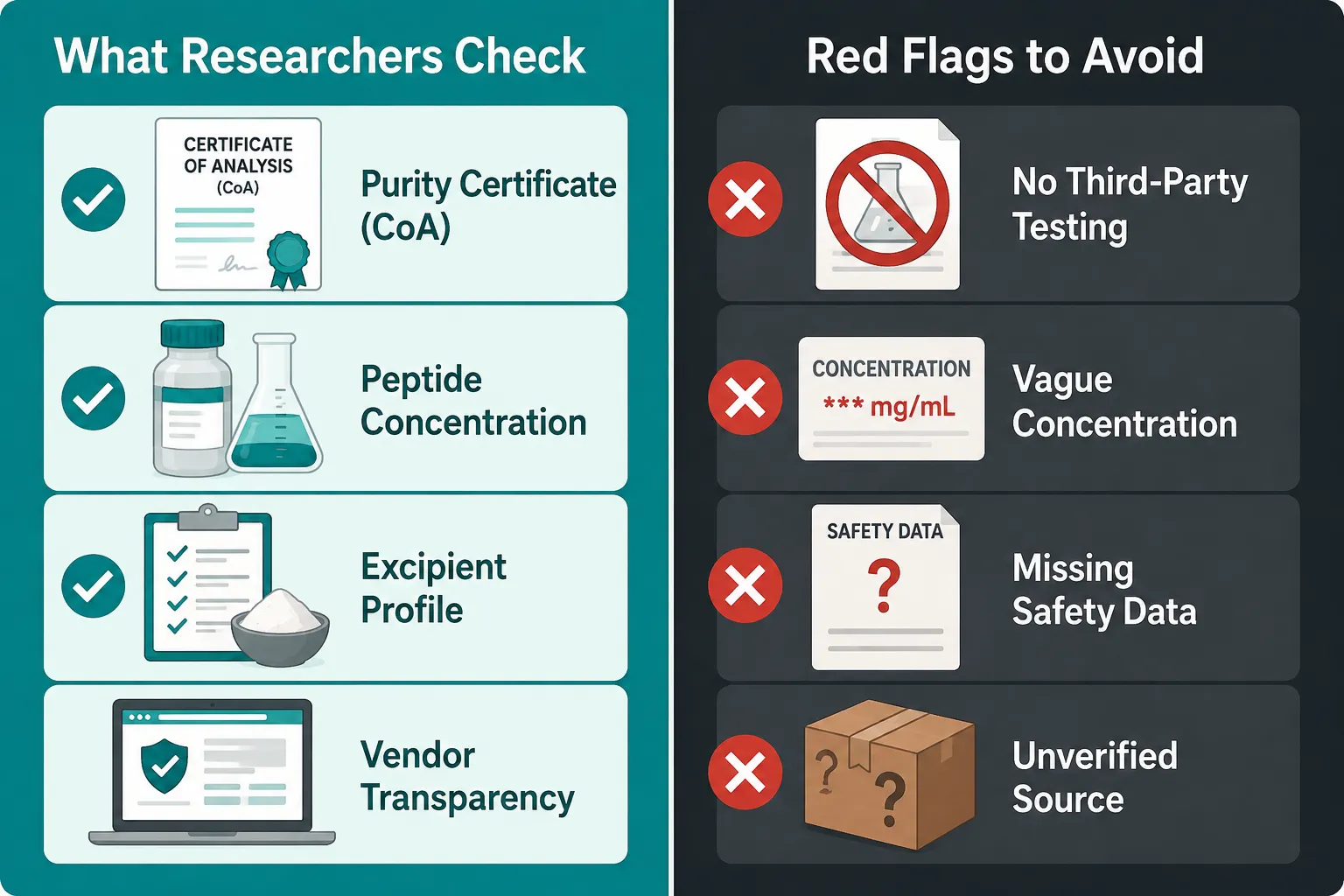
  • Researchers evaluating Semax nasal spray in 2026 prioritize purity documentation, peptide concentration, excipient transparency, and vendor credibility.
  • The compound is classified strictly as a research-use peptide in most jurisdictions outside Russia and Ukraine.

How Semax Works: The Neurotrophic Mechanism

How Semax Works: The Neurotrophic Mechanism

Semax is a seven-amino-acid synthetic analog of the adrenocorticotropic hormone fragment ACTH(4-10), with a C-terminal Pro-Gly-Pro extension that increases its metabolic stability. That structural modification is not cosmetic, it dramatically extends the peptide's half-life in biological tissue compared to the parent fragment.

The primary mechanism centers on neurotrophic factor regulation:

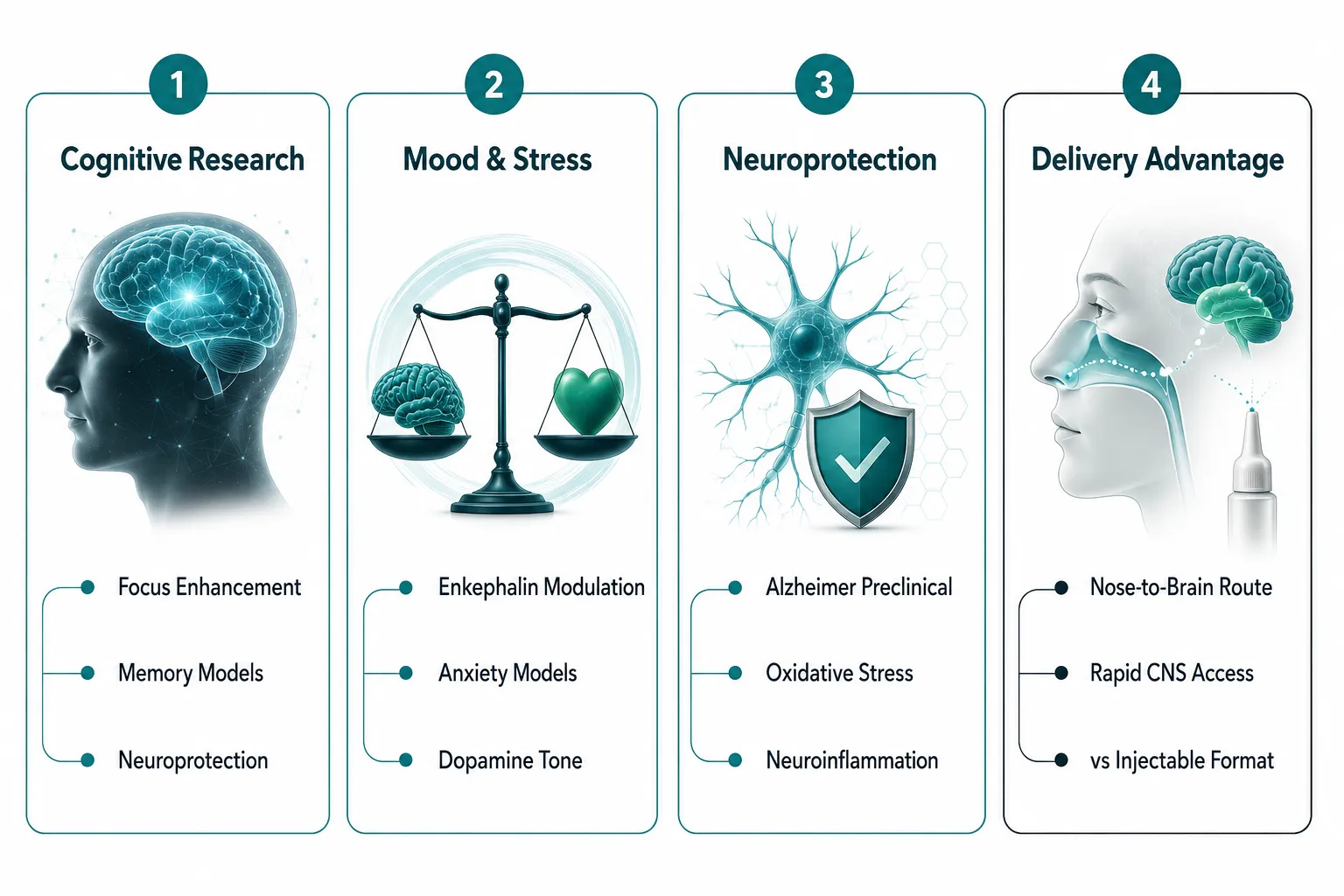
  • BDNF (Brain-Derived Neurotrophic Factor): Semax has been shown in multiple preclinical models to upregulate BDNF expression, particularly in the hippocampus and cortex, regions central to learning and memory consolidation.
  • NGF (Nerve Growth Factor): Parallel upregulation of NGF supports neuronal survival and synaptic plasticity.
  • Enkephalin and neurotransmitter modulation: Semax influences dopaminergic and serotonergic tone, and evidence from animal studies points to enkephalin system engagement, which may partly explain reported mood effects.

"The mechanistic emphasis on neurotrophic signaling is what separates Semax from stimulant-class nootropics, it appears to support the biological infrastructure of cognition rather than simply increasing arousal."

Why intranasal delivery matters here: The olfactory epithelium in the nasal cavity provides a direct anatomical route to the central nervous system via the cribriform plate. This nose-to-brain pathway allows peptides to bypass hepatic first-pass metabolism and circumvent the blood-brain barrier more efficiently than oral administration. For a peptide like Semax, which would be rapidly degraded in the gastrointestinal tract, intranasal delivery is not just convenient; it is pharmacologically essential for CNS-targeted research.

Understanding how delivery format shapes bioavailability is a recurring theme across peptide research. For comparison, readers exploring other CNS- and metabolic-targeted peptides may find the overview of what is Tesamorelin useful for contextualizing delivery and receptor-binding differences across compound classes.

Research Use Cases for Semax Nasal Spray

Research Use Cases for Semax Nasal Spray

The documented research applications for Semax nasal spray cluster into three main categories, each supported by varying levels of evidence.

Cognitive Enhancement and Focus

The nootropic community's interest in Semax is grounded in preclinical data showing improved performance on learning and memory tasks in rodent models. Researchers investigating attention, working memory, and executive function have used Semax as a reference compound in cognitive enhancement protocols. The BDNF upregulation mechanism provides a plausible biological rationale that distinguishes Semax from non-peptide cognitive agents.

Neuroprotection

Preclinical data from ischemia and Alzheimer's disease models represent the most robust area of Semax research. Studies have demonstrated reduced neuronal apoptosis and improved functional recovery in stroke models, consistent with the peptide's origin as a neuroprotective pharmaceutical. Researchers working with neuroinflammation or oxidative stress models have included Semax as a comparator or active variable.

Mood and Stress Modulation

Enkephalin system engagement and dopaminergic modulation position Semax as a candidate for anxiety and stress-related research. Animal models have shown anxiolytic-like effects, and anecdotal reports from human users in clinical regions describe mood stabilization alongside cognitive improvements.

Evidentiary note: Human clinical data for Semax exists primarily from Russian and Ukrainian medical literature. As of 2026, no large-scale randomized controlled trials have been published in Western peer-reviewed journals. Researchers should treat the compound's human-use profile as preliminary.

For broader context on how peptide classification shapes research interpretation, the peptide classification resource provides a useful structural framework. Researchers also comparing recovery-oriented peptides may want to review the BPC-157 and TB-500 peptides overview for contrast with CNS-focused compounds.

What Researchers Compare Before Buying Semax Peptide Nasal Spray

What Researchers Compare Before Buying Semax Peptide Nasal Spray

The 2026 market for Semax nasal spray has expanded considerably, with multiple vendors offering branded intranasal formulations at varying concentrations. That growth has made sourcing decisions more complex. Below are the key variables researchers evaluate before purchasing.

Purity and Third-Party Testing

A Certificate of Analysis (CoA) from an independent laboratory is the minimum credibility standard. Researchers should look for HPLC purity data confirming the peptide sequence and ruling out common synthesis byproducts. Vendors who publish batch-specific CoAs rather than generic documentation signal a higher commitment to research-grade standards. This mirrors the verification standards discussed in the Bachem and reference standards for peptide benchmarks article.

Peptide Concentration and Formulation Clarity

Semax nasal sprays are typically formulated at concentrations ranging from 0.1% to 1% (1 mg/mL to 10 mg/mL). Researchers must confirm:

  • Stated concentration per actuation (mcg per spray)
  • Total peptide content per vial
  • Excipient profile, preservatives such as benzalkonium chloride can affect mucosal tissue in prolonged research protocols

Stability and Storage Requirements

Peptides in aqueous nasal spray formulations are susceptible to degradation. Vendors should specify refrigeration requirements, shelf life after opening, and whether lyophilized reconstitution options are available for longer-term storage. Stability documentation is a differentiator that separates research-grade suppliers from lower-quality alternatives.

Vendor Transparency and Research-Use Framing

Reputable suppliers clearly label Semax nasal spray as a research compound not intended for human consumption. Vendors who make therapeutic claims or omit research-only disclaimers raise immediate credibility concerns. Researchers sourcing peptides for investigational protocols benefit from suppliers who provide supporting literature and maintain transparent manufacturing documentation.

Safety framing: Reported adverse effects in the existing literature are generally mild and local, transient nasal irritation being the most commonly noted. Systemic adverse events are rare in preclinical data, but formal long-term safety profiling in humans remains limited. This underscores the research-only classification that applies in most Western jurisdictions.

For researchers building multi-peptide protocols, the IPA Sermorelin stack research article offers a useful parallel example of how stacking rationale and sourcing diligence intersect.

Conclusion

Semax peptide nasal spray occupies a well-defined but still-evolving position in the peptide research landscape. Its neurotrophic mechanism, centered on BDNF and NGF upregulation with secondary enkephalin and neurotransmitter effects, provides a scientifically coherent basis for cognitive, neuroprotective, and mood-related research applications. The intranasal delivery format is not a marketing preference; it is a pharmacokinetic necessity that enables meaningful CNS access for a peptide that would otherwise be degraded before reaching its target.

Actionable next steps for researchers in 2026:

  1. Confirm CoA documentation from any vendor before ordering, batch-specific HPLC data is the baseline.
  2. Clarify concentration per actuation and total vial content to align dosing with published preclinical protocols.
  3. Review the excipient list for preservatives that may interfere with mucosal research endpoints.
  4. Cross-reference vendor research-use framing and disclaimers as a credibility filter.
  5. Treat human-use extrapolations from preclinical data with appropriate scientific caution until larger controlled trials emerge.

The mechanistic foundation is strong. The evidentiary base is growing. Sourcing discipline remains the variable most within a researcher's direct control.

https://www.puretestedpeptides.com/wp-content/uploads/2026/08/semax-peptide-nasal-spray-mechanism-use-cases-and-what-researchers-compare-befor.webp 1024 1536 https://www.puretestedpeptides.com/wp-content/uploads/2026/01/buy-peptides-online.jpg 2026-08-20 13:05:282026-08-20 13:05:28Semax Peptide Nasal Spray: Mechanism, Use Cases, and What Researchers Compare Before Buying
Nasal Spray Peptides: Delivery Methods, Bioavailability, and Research Advantages

Nasal Spray Peptides: Delivery Methods, Bioavailability, and Research Advantages

August 7, 2026/0 Comments/in Uncategorized/by

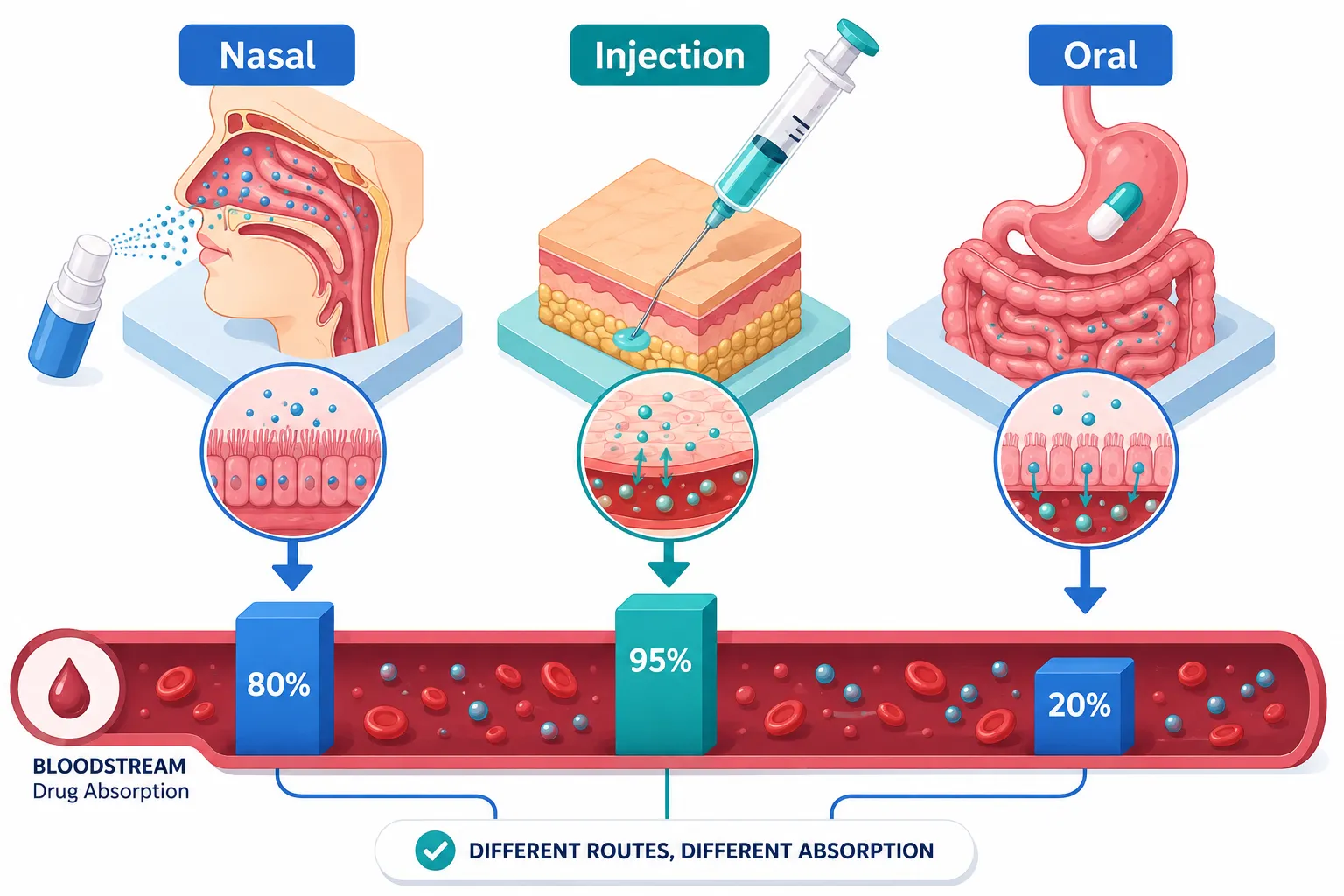
Oral peptide drugs lose up to 98% of their active compound before reaching systemic circulation, a pharmacokinetic obstacle that has pushed researchers toward alternative administration routes for decades. Among those alternatives, intranasal delivery has emerged as one of the most scientifically compelling options. Understanding nasal spray peptides: delivery methods, bioavailability, and research advantages is now central to designing effective preclinical protocols and advancing peptide science.

Professional () hero image with (≤42 chars): 'Nasal Spray Peptides: Delivery Methods…' in crisp white on a deep navy

Key Takeaways

  • Intranasal delivery bypasses first-pass hepatic metabolism, dramatically improving peptide bioavailability compared to oral routes.
  • The nasal mucosa and the olfactory pathway offer two distinct absorption mechanisms, each with different speed and target profiles.
  • Peptides such as Semax, Selank, and blend formulations have been studied specifically for intranasal administration.
  • Formulation variables, including pH, viscosity, and particle size, directly affect how much peptide reaches systemic or central targets.
  • Researchers sourcing compounds for intranasal studies benefit from verified purity data to ensure consistent experimental outcomes.

Why Delivery Route Defines Peptide Research Outcomes

The route of administration is not a minor logistical detail, it is a primary determinant of whether a peptide compound reaches its biological target at a meaningful concentration. Peptides are chains of amino acids. When taken orally, proteolytic enzymes in the gastrointestinal tract cleave those chains aggressively, and the liver further metabolizes whatever survives absorption. The result is negligible systemic exposure.

Injection, subcutaneous or intravenous, solves the degradation problem but introduces practical constraints in research settings: sterility requirements, tissue trauma at repeated dosing sites, and compliance challenges in longer study designs.

Intranasal delivery occupies a unique middle ground. The nasal epithelium is highly vascularized. Peptides applied to the nasal mucosa can diffuse directly into submucosal capillaries, entering systemic circulation without hepatic first-pass processing. For researchers studying peptides like those found in BPC-157 and TB-500 blend formulations, understanding how delivery route affects compound behavior is foundational.

The Olfactory Pathway: A Direct CNS Route

Beyond systemic absorption, the nasal cavity offers something injection cannot easily replicate: a potential direct route to the central nervous system via the olfactory epithelium. The olfactory nerve fibers run from the nasal roof to the olfactory bulb, bypassing the blood-brain barrier. This pathway has been studied extensively for neuropeptides, where CNS exposure is the primary research objective.

Peptides designed for cognitive or neurological research models, including Semax and Selank, are frequently formulated as nasal sprays precisely because this pathway may deliver compound to brain tissue faster and at higher concentrations than peripheral injection followed by CNS diffusion.

Bioavailability Factors in Nasal Spray Peptide Formulations

Bioavailability Factors in Nasal Spray Peptide Formulations

Bioavailability from nasal delivery is not automatic. Several formulation variables determine how efficiently a peptide crosses the nasal epithelium.

Key Formulation Variables

Variable Effect on Bioavailability
Molecular weight Peptides under 1,000 Da absorb more readily
pH of solution Must match nasal mucosa range (6.4-7.4)
Viscosity Higher viscosity extends mucosal contact time
Particle/droplet size 10-50 micron range targets turbinate deposition
Permeation enhancers Cyclodextrins and chitosan improve epithelial crossing

Mucociliary clearance is the main competing force. The nasal mucosa clears deposited material toward the nasopharynx within 15-20 minutes. Formulations must either absorb rapidly or use mucoadhesive agents to extend residence time.

Preservatives matter too. Benzalkonium chloride, commonly used in commercial nasal sprays, has shown ciliotoxic effects at certain concentrations in research models. Researchers using peptide nasal sprays in controlled studies often prefer preservative-free formulations to avoid confounding variables.

For researchers exploring Klow blend peptides or Glow blend peptides, formulation details are directly relevant to how intranasal administration protocols are designed.

Research Advantages of Nasal Spray Peptides: Delivery Methods, Bioavailability, and Research Advantages in Practice

Research Advantages of Nasal Spray Peptides: Delivery Methods, Bioavailability, and Research Advantages in Practice

Research Advantages of Nasal Spray Peptides: Delivery Methods, Bioavailability, and Research Advantages in Practice

The scientific case for intranasal peptide delivery in research settings rests on several converging advantages.

Rapid Onset and CNS Accessibility

Nasal absorption produces measurable plasma concentrations within minutes. For time-sensitive research endpoints, acute behavioral studies, rapid neurological assessments, this speed is a significant protocol advantage over subcutaneous injection, which typically peaks at 20-40 minutes post-dose depending on compound and vehicle.

Reduced Systemic Burden

Because intranasal delivery can target CNS endpoints via the olfactory route, researchers can potentially achieve meaningful brain exposure at lower total doses than systemic injection would require. Lower doses reduce off-target peripheral effects, which simplifies data interpretation.

Non-Invasive Repeated Dosing

Chronic study designs benefit enormously from non-invasive administration. Repeated injection introduces stress variables and injection-site pathology that can confound longitudinal data. Nasal spray administration reduces these confounders, improving data quality across multi-week protocols.

Researchers comparing growth hormone-related peptides, such as those reviewed in GHRP-2 versus Sermorelin research comparisons, often evaluate delivery route as part of their experimental design because administration method directly affects pharmacokinetic profiles.

Compound Integrity and Purity Requirements

Intranasal formulations demand high compound purity. Endotoxin contamination or degradation byproducts that might be tolerable in some systemic models become more significant when compound is delivered near olfactory nerve tissue. Researchers sourcing peptides from verified peptide stores with documented third-party testing reduce this risk substantially.

For compounds like those in the IPA peptides category, purity documentation is not optional, it is a baseline requirement for credible intranasal research design.

Conclusion

Nasal spray peptides: delivery methods, bioavailability, and research advantages represent a convergence of pharmacokinetics, formulation science, and practical research design. The intranasal route bypasses hepatic metabolism, offers potential direct CNS access via the olfactory pathway, and supports non-invasive repeated dosing, three properties that make it uniquely valuable for peptide research.

Actionable next steps for researchers:

  • Evaluate molecular weight and lipophilicity of target peptides before selecting intranasal as the primary route.
  • Specify formulation parameters (pH, viscosity, particle size) in protocols to ensure reproducibility.
  • Source compounds with verified purity certificates and endotoxin testing data.
  • Compare intranasal pharmacokinetic data against subcutaneous controls in pilot studies before committing to full experimental runs.
  • Review published olfactory pathway research to understand CNS exposure assumptions for specific peptide classes.

Delivery science is not secondary to compound selection, it is half the experiment.

https://www.puretestedpeptides.com/wp-content/uploads/2026/08/nasal-spray-peptides-delivery-methods-bioavailability-and-research-advantages.webp 1024 1536 https://www.puretestedpeptides.com/wp-content/uploads/2026/01/buy-peptides-online.jpg 2026-08-07 13:06:392026-08-07 13:06:39Nasal Spray Peptides: Delivery Methods, Bioavailability, and Research Advantages
×

Helpful Links

  • My account
  • Cart
  • Checkout
  • Refund and Returns Policy
  • Privacy Policy
  • SMS Privacy Policy
  • Login
  • My Account
  • Logout

USA Made Lab Tested Peptides

All products are sold for research, laboratory, or analytical purposes only, and are not for human consumption


Pure Tested Peptides is a chemical supplier. Pure Tested Peptides is not a compounding / chemical compounding facility as defined under 503A of the Federal Food, Drug, and Cosmetic act. Pure Tested Peptides is not an outsourcing facility as defined under 503B of the Federal Food, Drug, and Cosmetic act.

The statements made within this website have not been evaluated by the US Food and Drug Administration. The products we offer are not intended to diagnose, treat, cure or prevent any disease.

Human/Animal Consumption Prohibited. Laboratory/In-Vitro Experimental Use Only

Scroll to top Scroll to top Scroll to top