

Semax Peptide Nasal Spray: Mechanism, Use Cases, and What Researchers Compare Before Buying
Fewer than a dozen peptides have made the jump from Soviet-era clinical medicine to modern nootropic research communities, and Semax is one of them. Originally developed in Russia as a neuroprotective agent and approved there for stroke and cognitive impairment, Semax is now attracting serious attention from researchers worldwide, particularly in its intranasal delivery format. This article on Semax Peptide Nasal Spray: Mechanism, Use Cases, and What Researchers Compare Before Buying covers the pharmacology, documented research applications, and the formulation variables that matter most when sourcing this compound for laboratory or investigational use.
Key Takeaways
- Semax is a synthetic heptapeptide derived from ACTH(4-10) that primarily works by upregulating BDNF and NGF neurotrophic signaling.
- Intranasal delivery exploits the nose-to-brain pathway, bypassing the blood-brain barrier more efficiently than oral routes.
- Preclinical research supports cognitive, neuroprotective, and mood-related use cases; human clinical data exists but remains region-specific.
- Researchers evaluating Semax nasal spray in 2026 prioritize purity documentation, peptide concentration, excipient transparency, and vendor credibility.
- The compound is classified strictly as a research-use peptide in most jurisdictions outside Russia and Ukraine.
How Semax Works: The Neurotrophic Mechanism
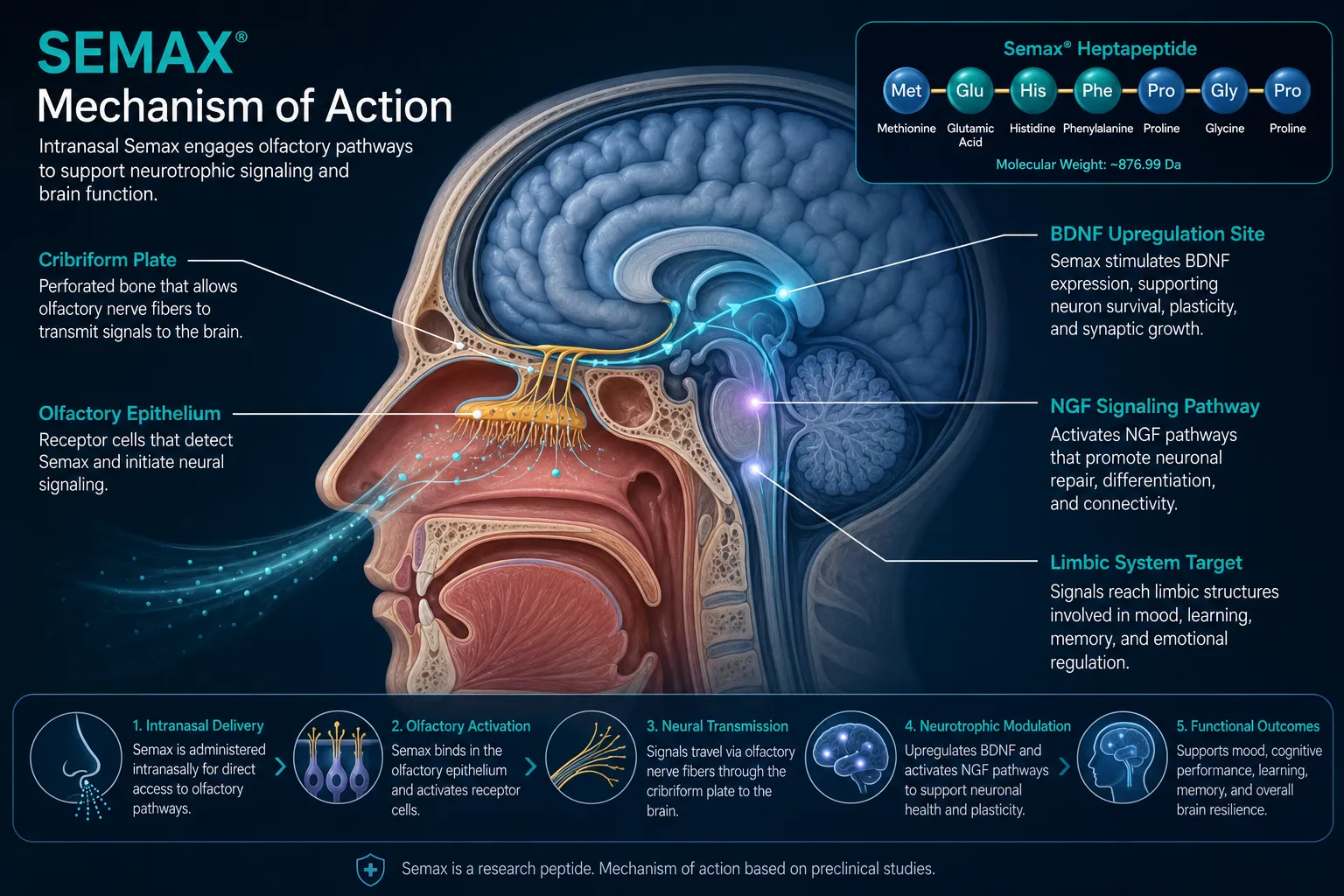
Semax is a seven-amino-acid synthetic analog of the adrenocorticotropic hormone fragment ACTH(4-10), with a C-terminal Pro-Gly-Pro extension that increases its metabolic stability. That structural modification is not cosmetic, it dramatically extends the peptide's half-life in biological tissue compared to the parent fragment.
The primary mechanism centers on neurotrophic factor regulation:
- BDNF (Brain-Derived Neurotrophic Factor): Semax has been shown in multiple preclinical models to upregulate BDNF expression, particularly in the hippocampus and cortex, regions central to learning and memory consolidation.
- NGF (Nerve Growth Factor): Parallel upregulation of NGF supports neuronal survival and synaptic plasticity.
- Enkephalin and neurotransmitter modulation: Semax influences dopaminergic and serotonergic tone, and evidence from animal studies points to enkephalin system engagement, which may partly explain reported mood effects.
"The mechanistic emphasis on neurotrophic signaling is what separates Semax from stimulant-class nootropics, it appears to support the biological infrastructure of cognition rather than simply increasing arousal."
Why intranasal delivery matters here: The olfactory epithelium in the nasal cavity provides a direct anatomical route to the central nervous system via the cribriform plate. This nose-to-brain pathway allows peptides to bypass hepatic first-pass metabolism and circumvent the blood-brain barrier more efficiently than oral administration. For a peptide like Semax, which would be rapidly degraded in the gastrointestinal tract, intranasal delivery is not just convenient; it is pharmacologically essential for CNS-targeted research.
Understanding how delivery format shapes bioavailability is a recurring theme across peptide research. For comparison, readers exploring other CNS- and metabolic-targeted peptides may find the overview of what is Tesamorelin useful for contextualizing delivery and receptor-binding differences across compound classes.
Research Use Cases for Semax Nasal Spray
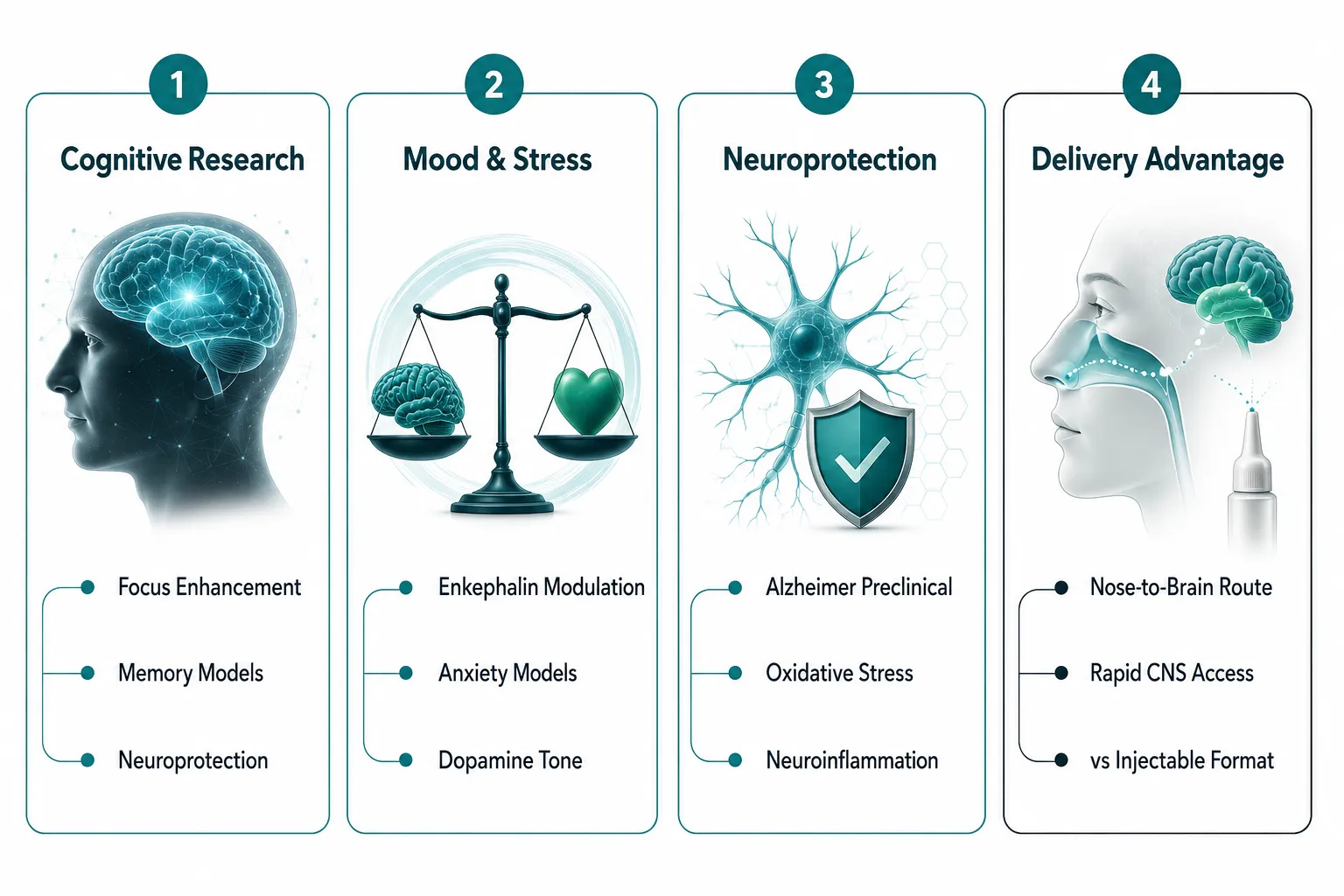
The documented research applications for Semax nasal spray cluster into three main categories, each supported by varying levels of evidence.
Cognitive Enhancement and Focus
The nootropic community's interest in Semax is grounded in preclinical data showing improved performance on learning and memory tasks in rodent models. Researchers investigating attention, working memory, and executive function have used Semax as a reference compound in cognitive enhancement protocols. The BDNF upregulation mechanism provides a plausible biological rationale that distinguishes Semax from non-peptide cognitive agents.
Neuroprotection
Preclinical data from ischemia and Alzheimer's disease models represent the most robust area of Semax research. Studies have demonstrated reduced neuronal apoptosis and improved functional recovery in stroke models, consistent with the peptide's origin as a neuroprotective pharmaceutical. Researchers working with neuroinflammation or oxidative stress models have included Semax as a comparator or active variable.
Mood and Stress Modulation
Enkephalin system engagement and dopaminergic modulation position Semax as a candidate for anxiety and stress-related research. Animal models have shown anxiolytic-like effects, and anecdotal reports from human users in clinical regions describe mood stabilization alongside cognitive improvements.
Evidentiary note: Human clinical data for Semax exists primarily from Russian and Ukrainian medical literature. As of 2026, no large-scale randomized controlled trials have been published in Western peer-reviewed journals. Researchers should treat the compound's human-use profile as preliminary.
For broader context on how peptide classification shapes research interpretation, the peptide classification resource provides a useful structural framework. Researchers also comparing recovery-oriented peptides may want to review the BPC-157 and TB-500 peptides overview for contrast with CNS-focused compounds.
What Researchers Compare Before Buying Semax Peptide Nasal Spray
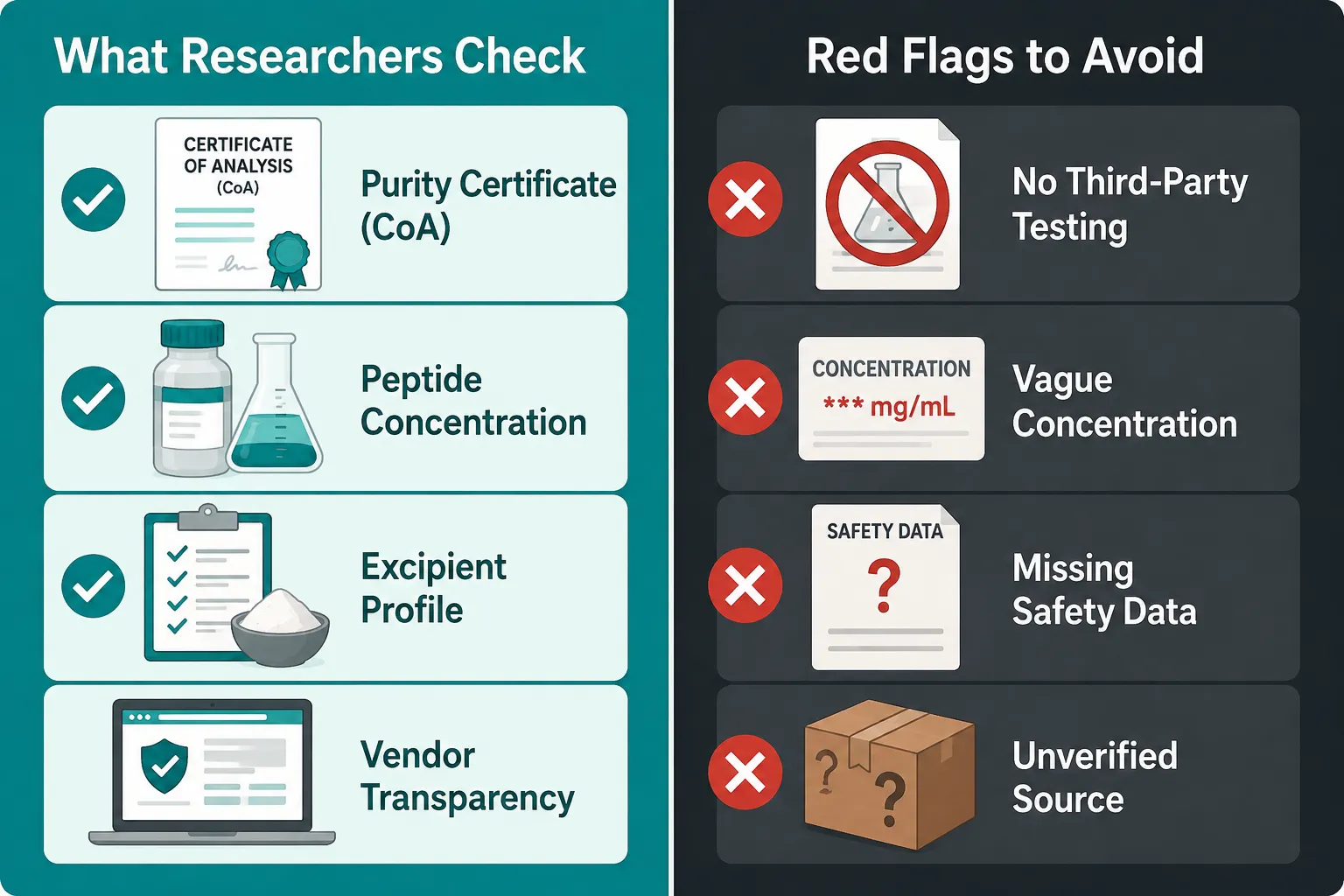
The 2026 market for Semax nasal spray has expanded considerably, with multiple vendors offering branded intranasal formulations at varying concentrations. That growth has made sourcing decisions more complex. Below are the key variables researchers evaluate before purchasing.
Purity and Third-Party Testing
A Certificate of Analysis (CoA) from an independent laboratory is the minimum credibility standard. Researchers should look for HPLC purity data confirming the peptide sequence and ruling out common synthesis byproducts. Vendors who publish batch-specific CoAs rather than generic documentation signal a higher commitment to research-grade standards. This mirrors the verification standards discussed in the Bachem and reference standards for peptide benchmarks article.
Peptide Concentration and Formulation Clarity
Semax nasal sprays are typically formulated at concentrations ranging from 0.1% to 1% (1 mg/mL to 10 mg/mL). Researchers must confirm:
- Stated concentration per actuation (mcg per spray)
- Total peptide content per vial
- Excipient profile, preservatives such as benzalkonium chloride can affect mucosal tissue in prolonged research protocols
Stability and Storage Requirements
Peptides in aqueous nasal spray formulations are susceptible to degradation. Vendors should specify refrigeration requirements, shelf life after opening, and whether lyophilized reconstitution options are available for longer-term storage. Stability documentation is a differentiator that separates research-grade suppliers from lower-quality alternatives.
Vendor Transparency and Research-Use Framing
Reputable suppliers clearly label Semax nasal spray as a research compound not intended for human consumption. Vendors who make therapeutic claims or omit research-only disclaimers raise immediate credibility concerns. Researchers sourcing peptides for investigational protocols benefit from suppliers who provide supporting literature and maintain transparent manufacturing documentation.
Safety framing: Reported adverse effects in the existing literature are generally mild and local, transient nasal irritation being the most commonly noted. Systemic adverse events are rare in preclinical data, but formal long-term safety profiling in humans remains limited. This underscores the research-only classification that applies in most Western jurisdictions.
For researchers building multi-peptide protocols, the IPA Sermorelin stack research article offers a useful parallel example of how stacking rationale and sourcing diligence intersect.
Conclusion
Semax peptide nasal spray occupies a well-defined but still-evolving position in the peptide research landscape. Its neurotrophic mechanism, centered on BDNF and NGF upregulation with secondary enkephalin and neurotransmitter effects, provides a scientifically coherent basis for cognitive, neuroprotective, and mood-related research applications. The intranasal delivery format is not a marketing preference; it is a pharmacokinetic necessity that enables meaningful CNS access for a peptide that would otherwise be degraded before reaching its target.
Actionable next steps for researchers in 2026:
- Confirm CoA documentation from any vendor before ordering, batch-specific HPLC data is the baseline.
- Clarify concentration per actuation and total vial content to align dosing with published preclinical protocols.
- Review the excipient list for preservatives that may interfere with mucosal research endpoints.
- Cross-reference vendor research-use framing and disclaimers as a credibility filter.
- Treat human-use extrapolations from preclinical data with appropriate scientific caution until larger controlled trials emerge.
The mechanistic foundation is strong. The evidentiary base is growing. Sourcing discipline remains the variable most within a researcher's direct control.


Leave a Reply
Want to join the discussion?Feel free to contribute!