Call or Text 727-513-9780
  • Shopping Cart Shopping Cart
    0Shopping Cart
Pure Tested Peptides | America's most trusted Peptides for sale online
  • Peptides for sale
    • Oral Peptides for sale
      • Peptide Capsules for sale
      • BPC 157 Capsules 1000mcg
      • SLU-PP-332 Capsules | 1000 mcg
      • 5-Amino-1MQ 50mg Capsules
      • Tesofensine 500mcg
    • All Peptides for sale
    • Peptide Sprays
      • BPC 157 Nasal Spray Kit
      • BPC-157 TB500 Nasal Spray Kit
      • Semax Nasal Spray 10mg
      • Selank – Nasal Spray Kit – 10mg
      • Epithalon 50MG Nasal Spray Kit
      • Ipamorelin 10mg Nasal Spray
      • Klow Nasal Spray (BPC-157 + TB-500 + GHK-Cu + KPV) | 80mg
      • Hulk Nasal Spray Tesa / Ipa Blend 6/3 MG
      • Klow Nasal Spray
      • NAD + 500 mg Nasal Spray
      • PT-141 Nasal Spray Kit
    • GHRH Peptides
      • Ipa Peptides
      • CJC-1295 Peptides
        • CJC-1295 with DAC 5 mg
        • CJC-1295 without DAC 5 mg
        • CJC-1295 Ipa 10mg
      • Tesa Peptides
        • Tesa Peptide
        • Tesa 20 mg
    • GHK-Cu Peptides
      • All GHK-Cu Peptides
      • GHK-Cu 100mg
      • KLOW Peptide Blend – Buy KLOW blend online
    • BPC Peptides
      • All BPC Peptides
      • BPC-157
      • BPC-157 TB-500
      • BPC 157 capsules 1000mcg
    • SLU-PP-332 Peptides
      • All SLU-PP-332 Peptides
      • SLU-PP-332 5mg
    • GLP3 Peptides
      • GLP3-R
      • GLP3-R CAG 10mg
      • GLP3-R 20mg
    • PT-141 Peptides
      • PT-141 Peptides for sale
      • PT-141 10mg
      • PT-141 Nasal Spray
    • CAG Peptides
      • Lipo-C Peptide Blend
      • CAG 5mg
      • CAG 10mg
    • MOTS-C Peptides
      • MOTS-C Peptides for sale
      • MOTS-c peptide
      • MOTS-c 10mg *6 pack*
    • 5 Amino 1MQ Peptides
      • 5 Amino 1MQ Peptides for sale
      • 5-Amino-1MQ 50mg Capsules
      • 5-Amino-1MQ 5mg
    • Epithalon Peptides
      • Epithalon Peptides for sale
      • Epithalon 10mg
      • Epithalon 50mg
  • Shop
    • GLPs
      • 5-Amino-1MQ 50mg Capsules
      • 5-Amino-1MQ 5mg
      • GLP3-Reta
      • L-Carnitine 500mg/ml
      • Tesofensine 500mcg
      • SLU-PP-332 5mg
      • MOTS-c 10mg *6 pack*
    • Epithalon & BPC Peptides
      • Epithalon 10mg
      • Epithalon 50mg
      • BPC-157
      • BPC 157 capsules 1000mcg
      • BPC-157 TB-500
      • BPC-157 TB500 Nasal Spray Kit
      • BPC 157 Nasal Spray Kit
    • BPC TB-500 & NAD+ Peptides
      • NAD+ 500 mg
      • KLOW Peptide Blend – Buy KLOW blend online
      • GLOW Peptide Blend
      • TB 500 5mg
      • BPC 157 capsules 1000mcg – Supplement
      • BPC 157 Nasal Spray Kit
      • BPC-157
      • BPC-157 TB500 Nasal Spray Kit
      • BPC-157 TB-500
      • BPC 157 capsules 1000mcg
    • LL-37 Peptide
      • LL-37 10 mg
    • MOTS-C & Selank
      • MOTS-c peptide
      • Selank 10mg
    • GHK Peptides
      • GHK-Cu 100mg
      • GLOW Peptide Blend
      • KLOW Peptide Blend – Buy KLOW blend online
  • COAs
  • Wholesale
    • Wholesale Peptides for sale
  • PTP FAQ
  • Affiliates
    • Selank Peptide: Advanced Pharmacological Mechanisms Underlying Its Anxiolytic and Nootropic Effects in Research
      • 5-Amino-1MQ Peptide: Detailed Mechanisms of NNMT Inhibition and Its Impact on Cellular Metabolism Research
        • MOTS-C Peptide: Unraveling Its Role in Mitochondrial Dynamics and Energy Metabolism Research
          • Epithalon Peptide and Telomerase Regulation: Investigating Its Impact on Cellular Senescence and Lifespan Research Models
            • GLP2-T vs GLP2 Tirz Peptide: Understanding the Naming, Mechanistic Nuances, and Research Implications for Gut Health
      • Peptides and Polypeptides in Modern Pharmacology: What Research on Metoprolol, Prednisone, and Amlodipine Reveals
        • Polypeptide Peptides vs NSAIDs: What Naproxen and Diclofenac Teach Tissue-Repair Researchers About BPC‑157 and TB‑500
          • Peptides and Polypeptides in Endocrine Pharmacology: How GLP-1, GLP-2, and GLP-3 Retatrutide Differ From Classic Drugs Like Prednisone and Amlodipine
          • 5‑Amino‑1MQ Peptide and NNMT Inhibition: How It Compares With Statins Like Atorvastatin in Adipose and Lipid Metabolism Research
      • Enclomiphene, Estrogen Receptor Signaling, and Luteinizing Phase Biology: What Hormone Researchers Should Measure
        • Mesenchymal Stem Cells, BPC‑157, and GHK‑Cu: How Tissue Repair Peptides Compare With Classic NSAIDs Like Naproxen in Injury Models
          • Peptide Calculator Use Cases Beyond Growth Hormone: Working Through GLP‑3 Retatrutide, MOTS‑c, and BPC‑157 Research Dosing
        • Polypeptide Peptides in Endocrine and Metabolic Pharmacology: Lessons From Amlodipine, Prednisone, and Metoprolol
        • Peptides Calculator for Advanced Blends: Worked Examples for Tesamorelin, CJC‑1295, and Ipamorelin Stacks
          • Peptides and Polypeptides in Human Physiology: How Molecular Size Shapes Research Applications
            • Selank Peptide: Advanced Pharmacological Mechanisms Underlying Its Anxiolytic and Nootropic Effects in Research
          • 5-Amino-1MQ Peptide: Detailed Mechanisms of NNMT Inhibition and Its Impact on Cellular Metabolism Research
            • MOTS-C Peptide: Unraveling Its Role in Mitochondrial Dynamics and Energy Metabolism Research
              • Epithalon Peptide and Telomerase Regulation: Investigating Its Impact on Cellular Senescence and Lifespan Research Models
                • GLP2-T vs GLP2 Tirz Peptide: Understanding the Naming, Mechanistic Nuances, and Research Implications for Gut Health
                  • Peptides and Polypeptides in Endocrine Pharmacology: How GLP-1, GLP-2, and GLP-3 Retatrutide Differ From Classic Drugs Like Prednisone and Amlodipine
                    • Polypeptide Peptides vs NSAIDs: What Naproxen and Diclofenac Teach Tissue-Repair Researchers About BPC‑157 and TB‑500
                      • Peptides and Polypeptides in Modern Pharmacology: What Research on Metoprolol, Prednisone, and Amlodipine Reveals
                        • 5‑Amino‑1MQ Peptide and NNMT Inhibition: How It Compares With Statins Like Atorvastatin in Adipose and Lipid Metabolism Research
                        • Enclomiphene, Estrogen Receptor Signaling, and Luteinizing Phase Biology: What Hormone Researchers Should Measure
                        • Mesenchymal Stem Cells, BPC‑157, and GHK‑Cu: How Tissue Repair Peptides Compare With Classic NSAIDs Like Naproxen in Injury Models
                        • Peptide Calculator Use Cases Beyond Growth Hormone: Working Through GLP‑3 Retatrutide, MOTS‑c, and BPC‑157 Research Dosing
                        • Polypeptide Peptides in Endocrine and Metabolic Pharmacology: Lessons From Amlodipine, Prednisone, and Metoprolol
                        • Peptides Calculator for Advanced Blends: Worked Examples for Tesamorelin, CJC‑1295, and Ipamorelin Stacks
                        • Peptides and Polypeptides in Human Physiology: How Molecular Size Shapes Research Applications
                        • Selank Peptide: Advanced Pharmacological Mechanisms Underlying Its Anxiolytic and Nootropic Effects in Research
                        • MOTS-C Peptide: Unraveling Its Role in Mitochondrial Dynamics and Energy Metabolism Research
                        • Peptides and Polypeptides in Modern Pharmacology: What Research on Metoprolol, Prednisone, and Amlodipine Reveals
                        • Peptides and Polypeptides in Endocrine Pharmacology: How GLP-1, GLP-2, and GLP-3 Retatrutide Differ From Classic Drugs Like Prednisone and Amlodipine
                        • 5-Amino-1MQ Peptide: Detailed Mechanisms of NNMT Inhibition and Its Impact on Cellular Metabolism Research
                        • Mesenchymal Stem Cells, BPC‑157, and GHK‑Cu: How Tissue Repair Peptides Compare With Classic NSAIDs Like Naproxen in Injury Models
                        • Peptide Calculator Use Cases Beyond Growth Hormone: Working Through GLP‑3 Retatrutide, MOTS‑c, and BPC‑157 Research Dosing
                        • GLP2-T vs GLP2 Tirz Peptide: Understanding the Naming, Mechanistic Nuances, and Research Implications for Gut Health
                        • Polypeptide Peptides in Endocrine and Metabolic Pharmacology: Lessons From Amlodipine, Prednisone, and Metoprolol
                        • Polypeptide Peptides vs NSAIDs: What Naproxen and Diclofenac Teach Tissue-Repair Researchers About BPC‑157 and TB‑500
                        • Peptides and Polypeptides in Human Physiology: How Molecular Size Shapes Research Applications
                        • Peptides Calculator for Advanced Blends: Worked Examples for Tesamorelin, CJC‑1295, and Ipamorelin Stacks
                        • 5‑Amino‑1MQ Peptide and NNMT Inhibition: How It Compares With Statins Like Atorvastatin in Adipose and Lipid Metabolism Research
                        • Enclomiphene, Estrogen Receptor Signaling, and Luteinizing Phase Biology: What Hormone Researchers Should Measure
                        • Epithalon Peptide and Telomerase Regulation: Investigating Its Impact on Cellular Senescence and Lifespan Research Models
                        • Best research protocol Klow blend
                        • best time to take BPC-157
                        • best time to take DSIP (Delta Sleep Inducing Peptide)
                        • best time to take CJC-1295
                        • best time to take AOD-9604
                        • best time to take Follistatin 344
                        • best time to take Ipamorelin
                        • best time to take MK-677 (Ibutamoren)
                        • best time to take Ligandrol (LGD-4033) — research compound
                        • best time to take Ostarine (MK-2866) — research compound
                        • best time to take GHK-CU
                        • best time to take TB-500
                        • best time to take MOTS-c
                        • best time to take Semax
                        • best time to take RAD-140 (Testolone) — research compound
                        • best time to take Thymosin Alpha-1
                        • best time to take PEG-MGF
                        • Biolife Plasma, Octapharma Plasma, and Research Peptides: How Plasma Donation Labs Differ From Peptide Suppliers
                        • best time to take YK-11 — research compound
                        • best time to take PT-141 (Bremelanotide)
                        • Best research protocol Klow blend
  • Contact
    • Contact Customer Service
    • Text Customer Support
  • About US
  • Shop all peptides
  • Affiliate Program
    • Affiliate Signup
  • Login / Register Login / Register Page Link Login / Register Page Link
  • Click to open the search input field Click to open the search input field Search
  • Menu Menu

Tag Archive for: mitochondria

Mitochondria, NNMT Inhibition, and Peptide Modulators: Where MOTS‑c and 5‑Amino‑1MQ Fit in Cellular Energy Research

Mitochondria, NNMT Inhibition, and Peptide Modulators: Where MOTS‑c and 5‑Amino‑1MQ Fit in Cellular Energy Research

July 22, 2026/0 Comments/in Uncategorized/by

Fewer than 5% of the body's cells can survive more than a few seconds without the ATP generated inside mitochondria, yet the molecular signals that fine-tune that output remain one of the most active frontiers in metabolic biology. The intersection of Mitochondria, NNMT Inhibition, and Peptide Modulators: Where MOTS‑c and 5‑Amino‑1MQ Fit in Cellular Energy Research sits at the heart of this frontier, drawing together mitochondrial physiology, enzyme pharmacology, and emerging peptide science into a single research framework.

Key Takeaways

  • Mitochondria do far more than produce ATP; they act as metabolic signaling hubs that regulate gene expression and cellular stress responses.
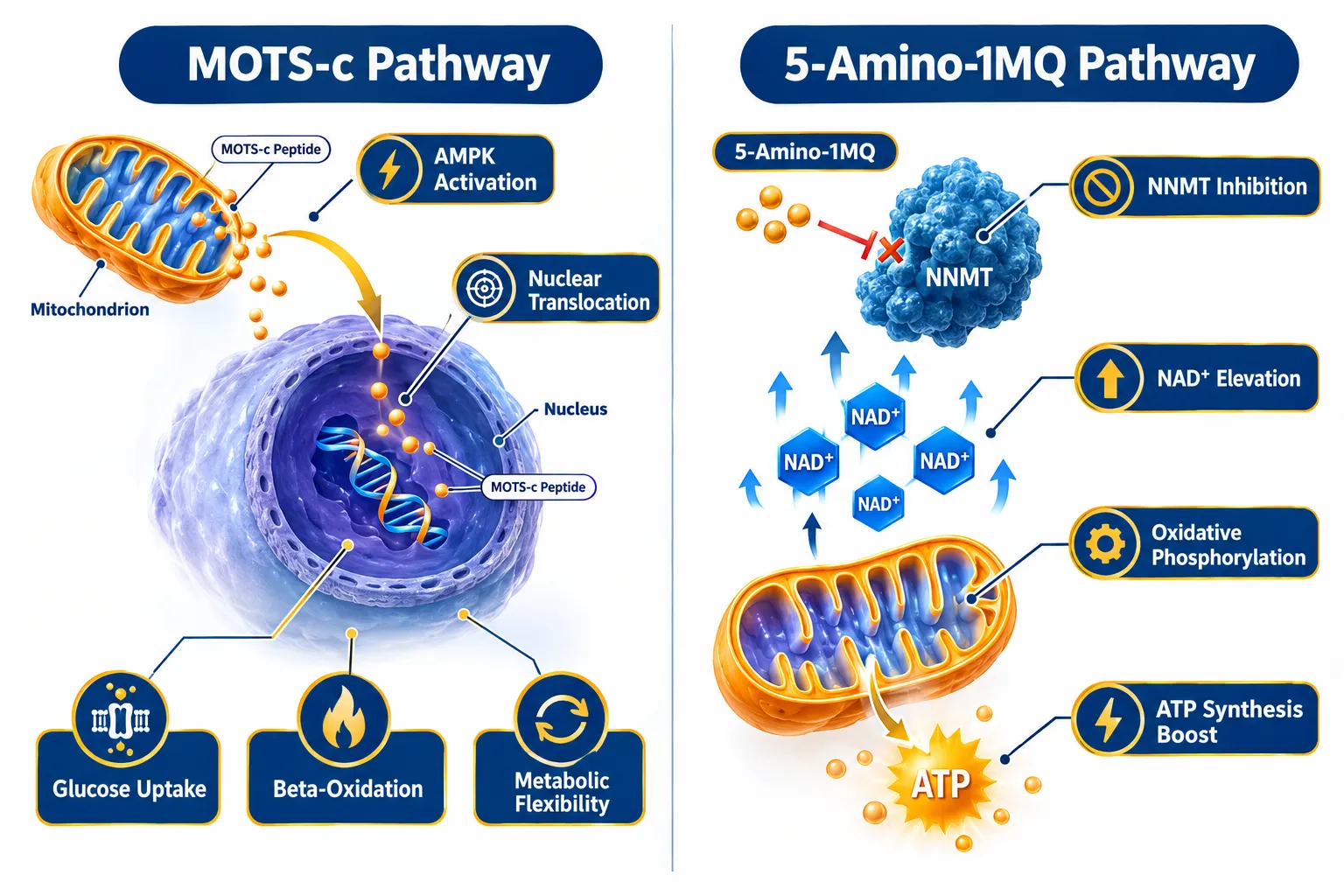
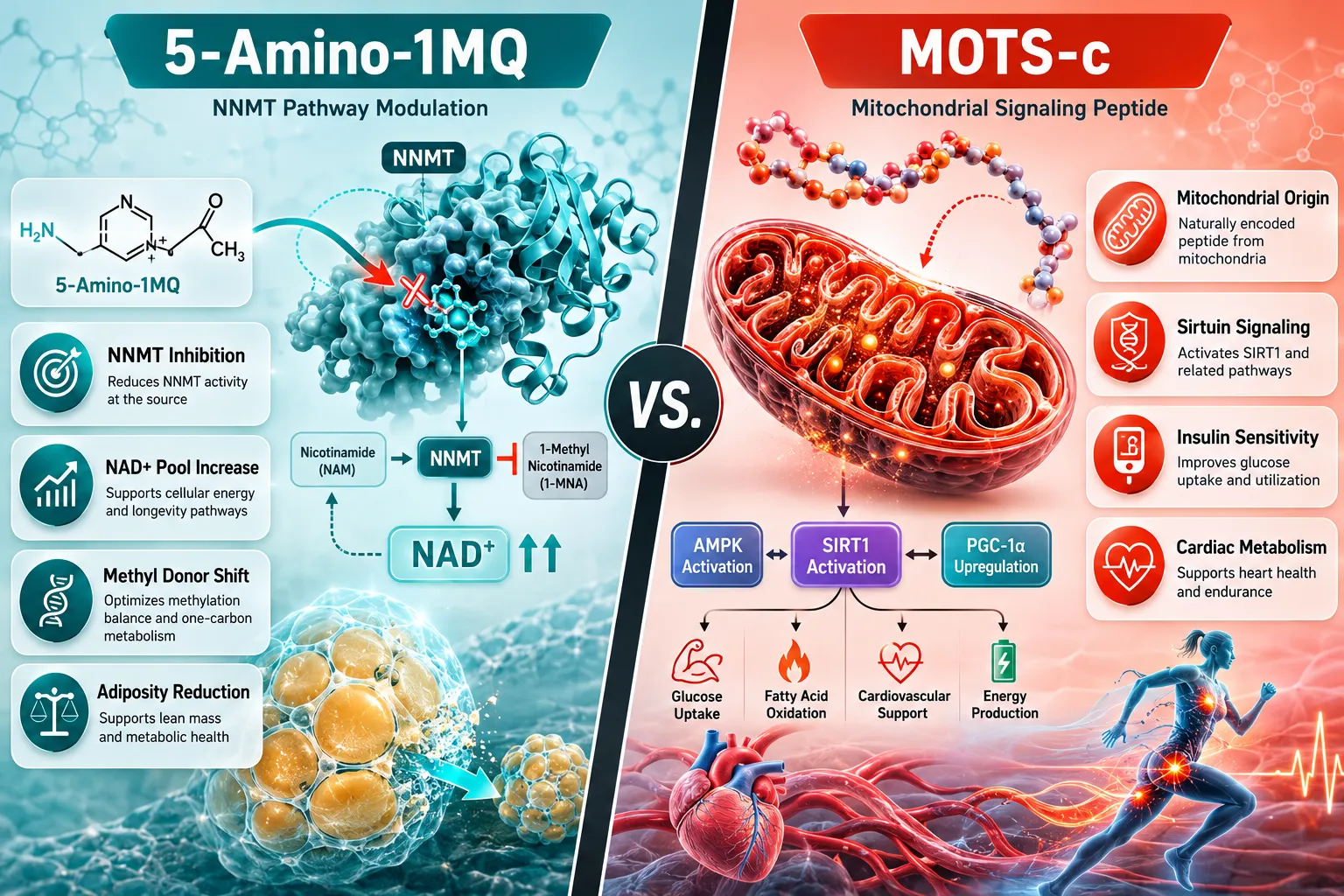
  • MOTS‑c is a mitochondrial-derived peptide that activates AMPK, translocates to the nucleus, and functions as a metabolic stress sensor.
  • 5‑Amino‑1MQ is a selective small-molecule inhibitor of NNMT that raises intracellular NAD+ and SAM levels, shifting cells toward energy expenditure.
  • Combining MOTS‑c and 5‑Amino‑1MQ targets two distinct but complementary metabolic pathways, making them valuable paired tools in preclinical research.
  • Both compounds are currently research-stage agents; all findings discussed here come from preclinical and early-phase studies.

Key Takeaways

Mitochondrial Biology: The Foundation

Structure Drives Function

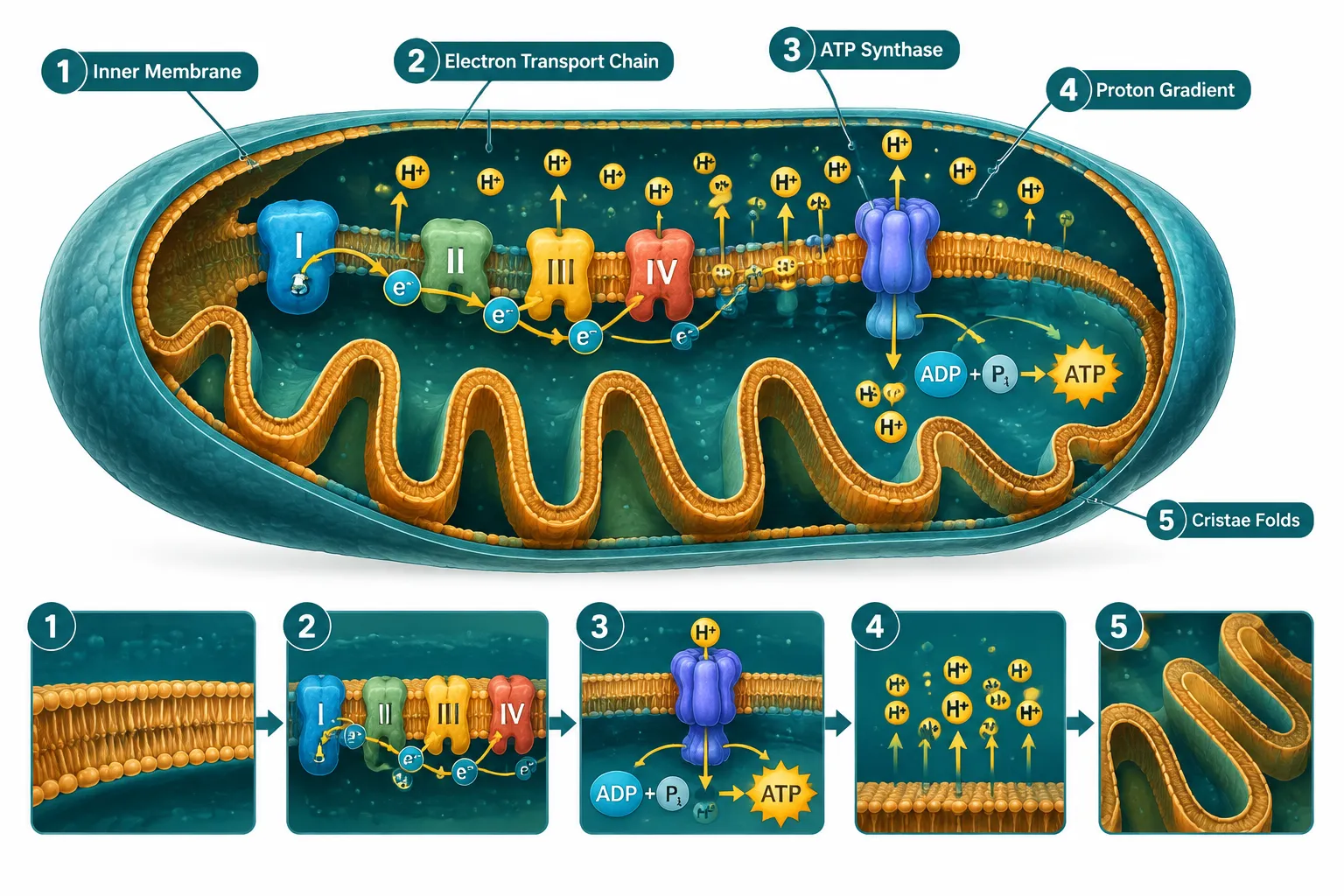
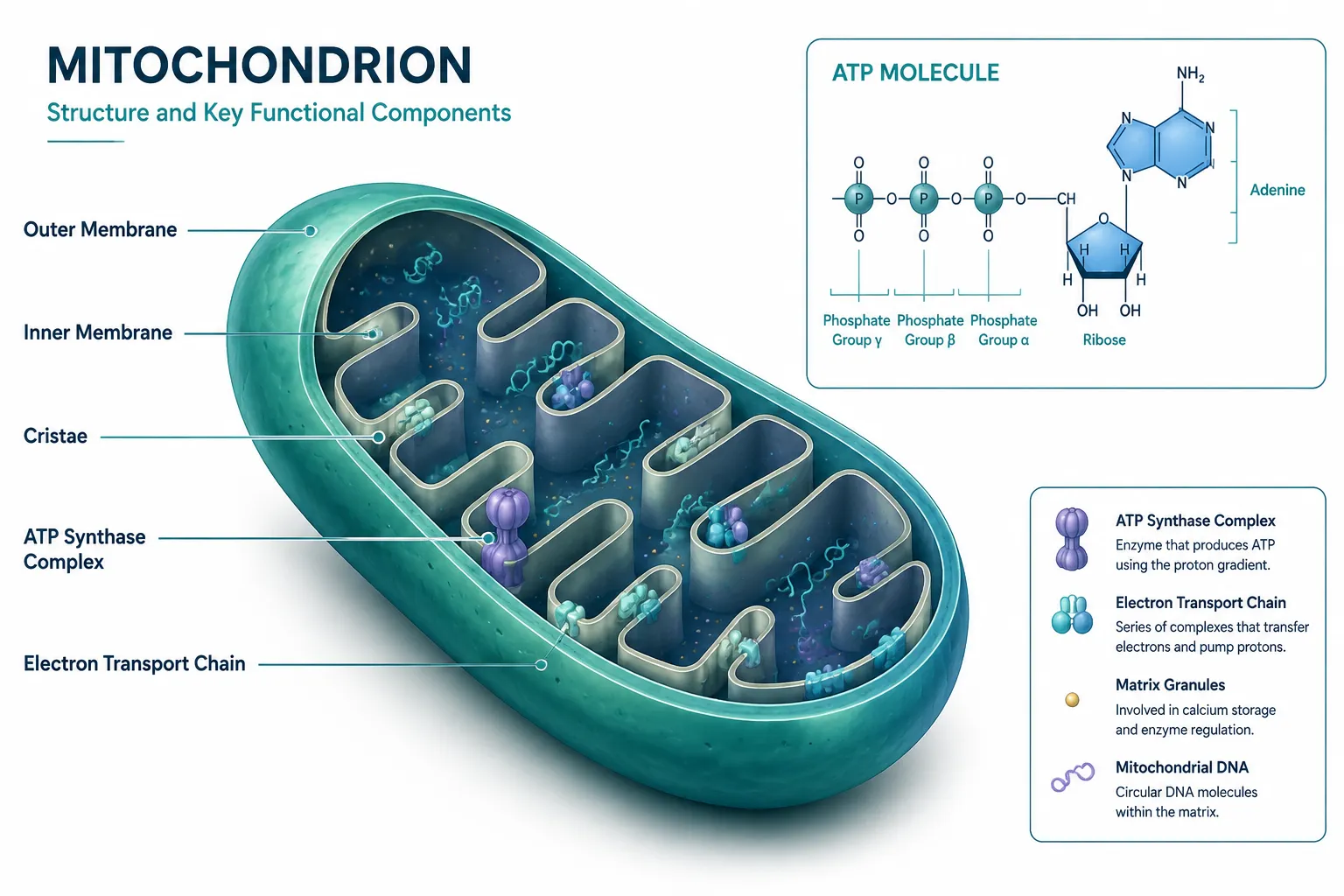
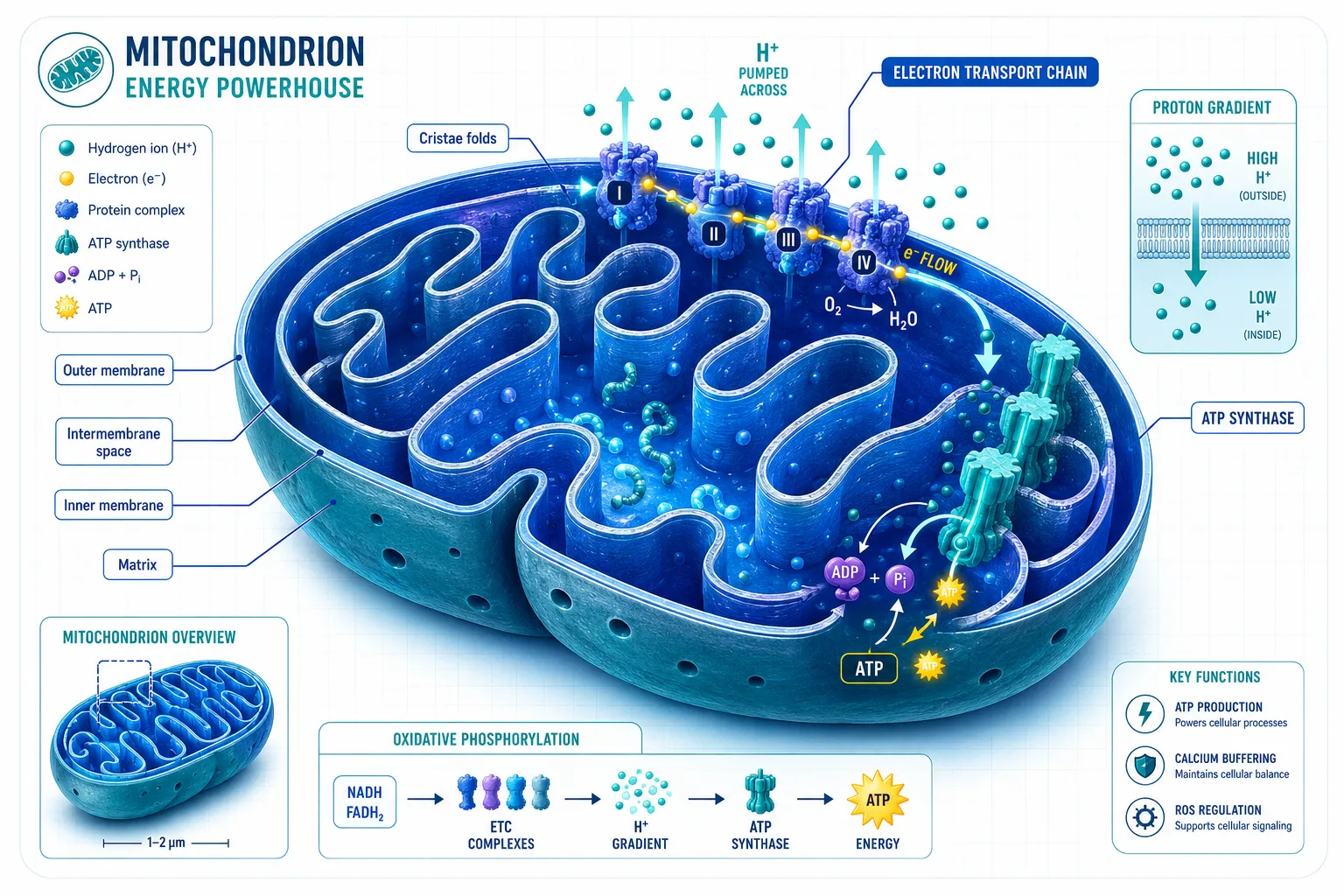
The mitochondrion is far more than a cellular power plant. Its double-membrane architecture, an outer membrane and a highly folded inner membrane called the cristae, creates distinct compartments that govern ATP synthesis, calcium buffering, reactive oxygen species (ROS) management, and apoptotic signaling.

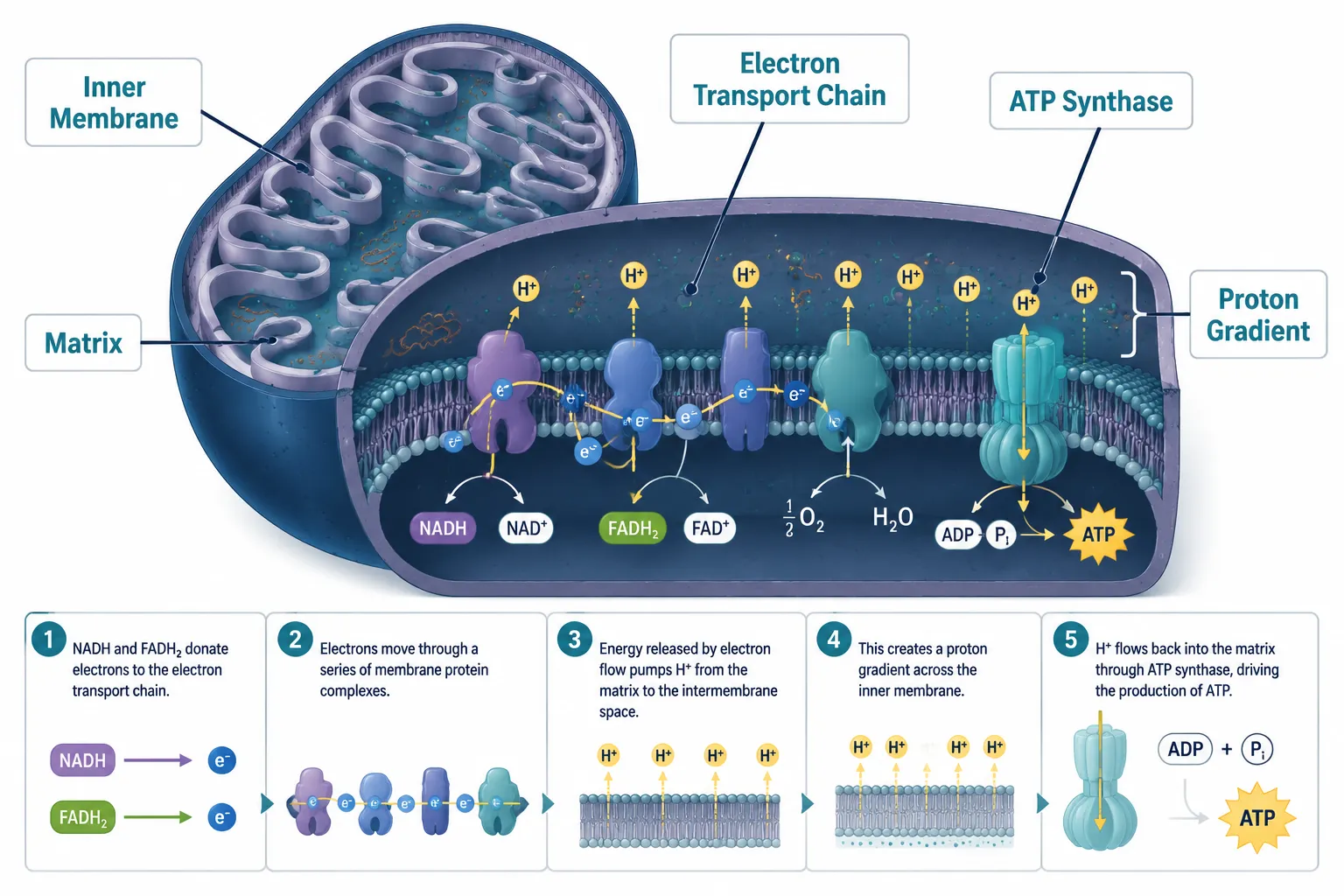
The inner membrane houses the electron transport chain (ETC), a series of protein complexes (I through V) that shuttle electrons from NADH and FADH2 toward oxygen. This process pumps protons across the inner membrane, building an electrochemical gradient. ATP synthase (Complex V) then harnesses that gradient to phosphorylate ADP into ATP, a process called oxidative phosphorylation (OXPHOS).

Why Mitochondrial Signaling Matters

Mitochondria do not operate in isolation. They communicate with the nucleus through a process called retrograde signaling, adjusting nuclear gene expression in response to metabolic conditions. Key mediators include:

Signal Molecule Role
NAD+ Cofactor for sirtuins and PARP; declines with age
AMPK Energy sensor activated when AMP/ATP ratio rises
ROS Dual role: damaging at high levels, signaling at low levels
mtDNA-derived peptides Regulate nuclear gene expression (e.g., MOTS‑c)

This bidirectional communication is the conceptual bridge that connects classical mitochondrial biology to newer peptide modulators like MOTS‑c.

For researchers exploring the broader landscape of mitochondrial-targeted compounds, the mitochondrial longevity research overview provides useful context on how different agents are being studied together.

Why Mitochondrial Signaling Matters

MOTS‑c and 5‑Amino‑1MQ: Mechanisms in Cellular Energy Research

MOTS‑c: A Peptide Encoded in Mitochondrial DNA

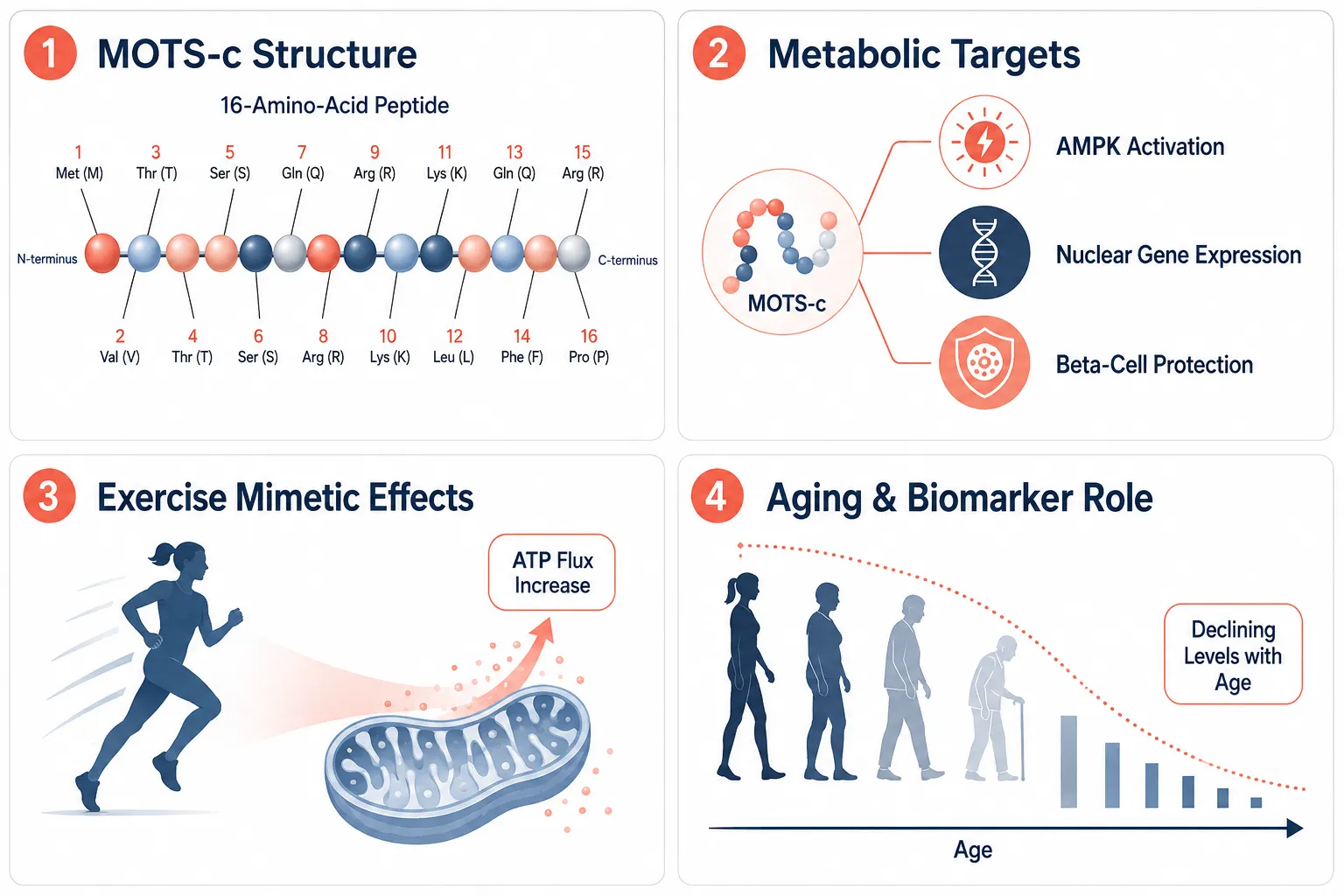
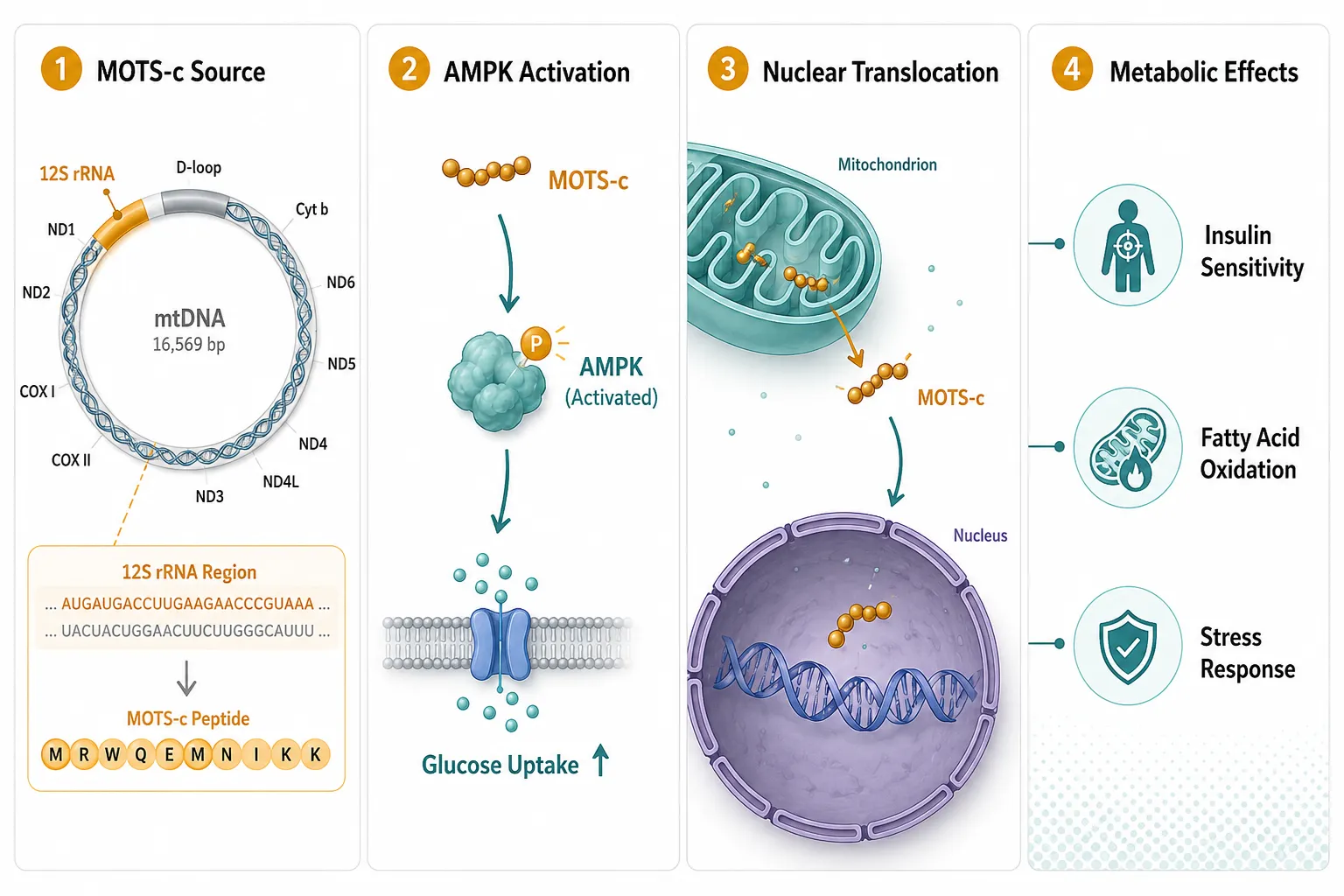
MOTS‑c (Mitochondrial Open Reading Frame of the 12S rRNA type‑c) is a 16-amino-acid peptide encoded within the mitochondrial genome, a discovery that reshaped understanding of what mitochondrial DNA actually produces.

How MOTS‑c works:

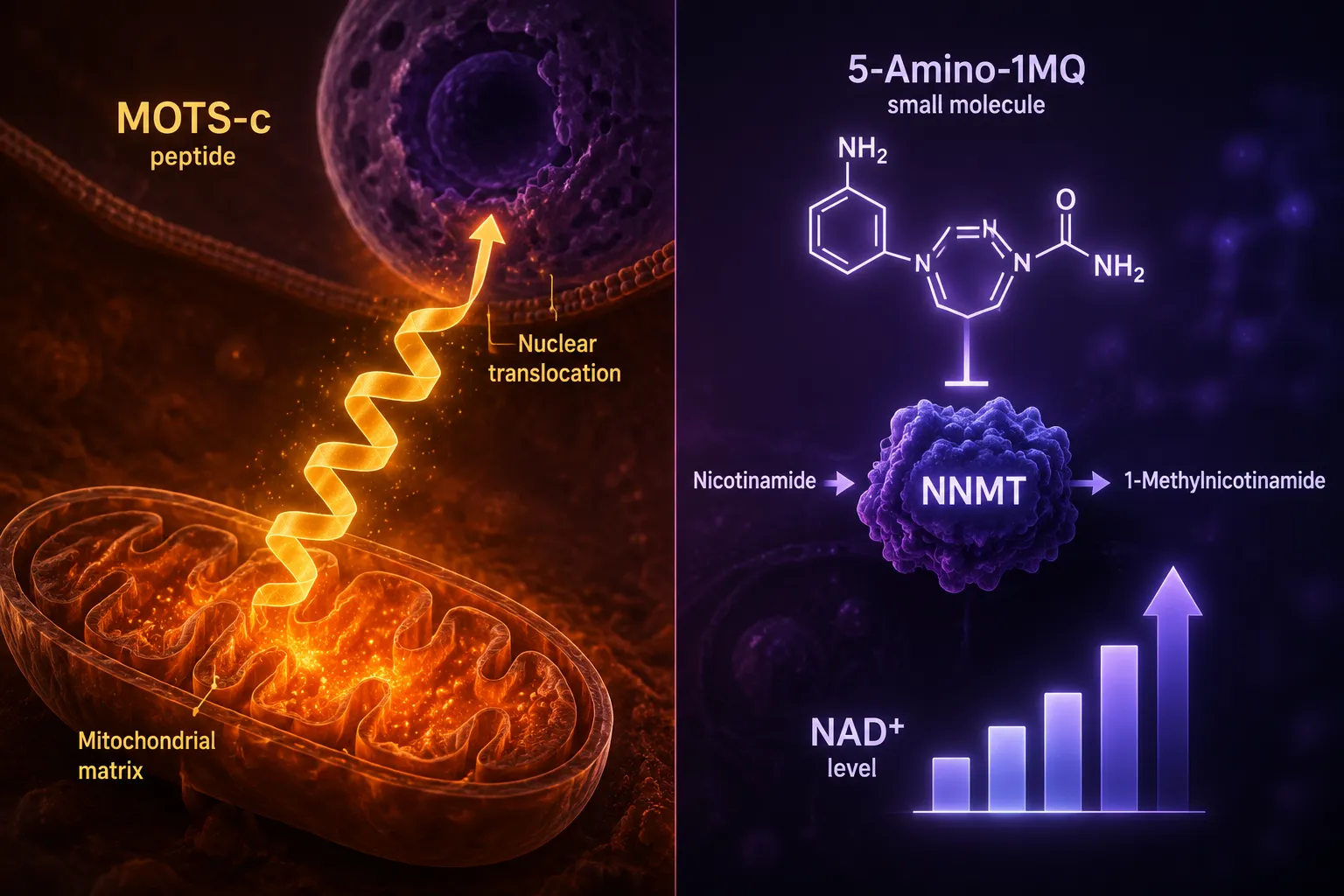
  • Under metabolic stress, MOTS‑c translocates from the mitochondria to the nucleus
  • Once in the nucleus, it regulates adaptive gene expression related to metabolism and proteostasis
  • It activates AMPK, the master energy sensor, promoting mitochondrial biogenesis and metabolic flexibility
  • It has been described as an exercise mimetic because its downstream effects closely resemble those of physical activity

A landmark study in Nature Communications showed that MOTS‑c treatment improved physical performance in mice across three age groups, young, middle-aged, and old, by enhancing skeletal muscle metabolism and myoblast adaptation to metabolic stress. A separate review in Frontiers in Endocrinology highlighted its therapeutic potential in metabolic disorders.

Researchers interested in MOTS‑c's specific mitochondrial actions can explore the MOTS‑c mitochondrial peptide research page and the dedicated MOTS‑c metabolic stress research notes for additional mechanistic detail.

5‑Amino‑1MQ: Targeting NNMT to Elevate NAD+

Nicotinamide N-methyltransferase (NNMT) is an enzyme that methylates nicotinamide, consuming both the NAD+ precursor and S-adenosylmethionine (SAM) in the process. In obese individuals, NNMT is overexpressed in adipose tissue, effectively draining the cell's NAD+ pool and blunting metabolic activity.

5‑Amino‑1MQ is a small-molecule NNMT inhibitor with high selectivity, its IC50 for NNMT in cell-free assays is approximately 1.2 μM, with minimal off-target activity against other methyltransferases.

Downstream effects of NNMT inhibition by 5‑Amino‑1MQ:

  • Spares nicotinamide, allowing more NAD+ synthesis
  • Preserves SAM for other methylation reactions
  • Shifts cellular metabolism toward energy expenditure
  • Reduces fat mass in preclinical obese rodent models
  • Improves muscle stem-cell function

The NAD+ elevation produced by 5‑Amino‑1MQ is particularly relevant to mitochondrial function because NAD+ is the primary electron donor feeding Complex I of the ETC. Raising NAD+ availability can directly support OXPHOS efficiency.

For context on NAD+ metabolism and its scientific evidence base, the NAD+ scientific evidence resource offers a useful companion read.

Why These Two Agents Are Studied Together

The rationale for pairing MOTS‑c and 5‑Amino‑1MQ in research protocols lies in their non-overlapping mechanisms:

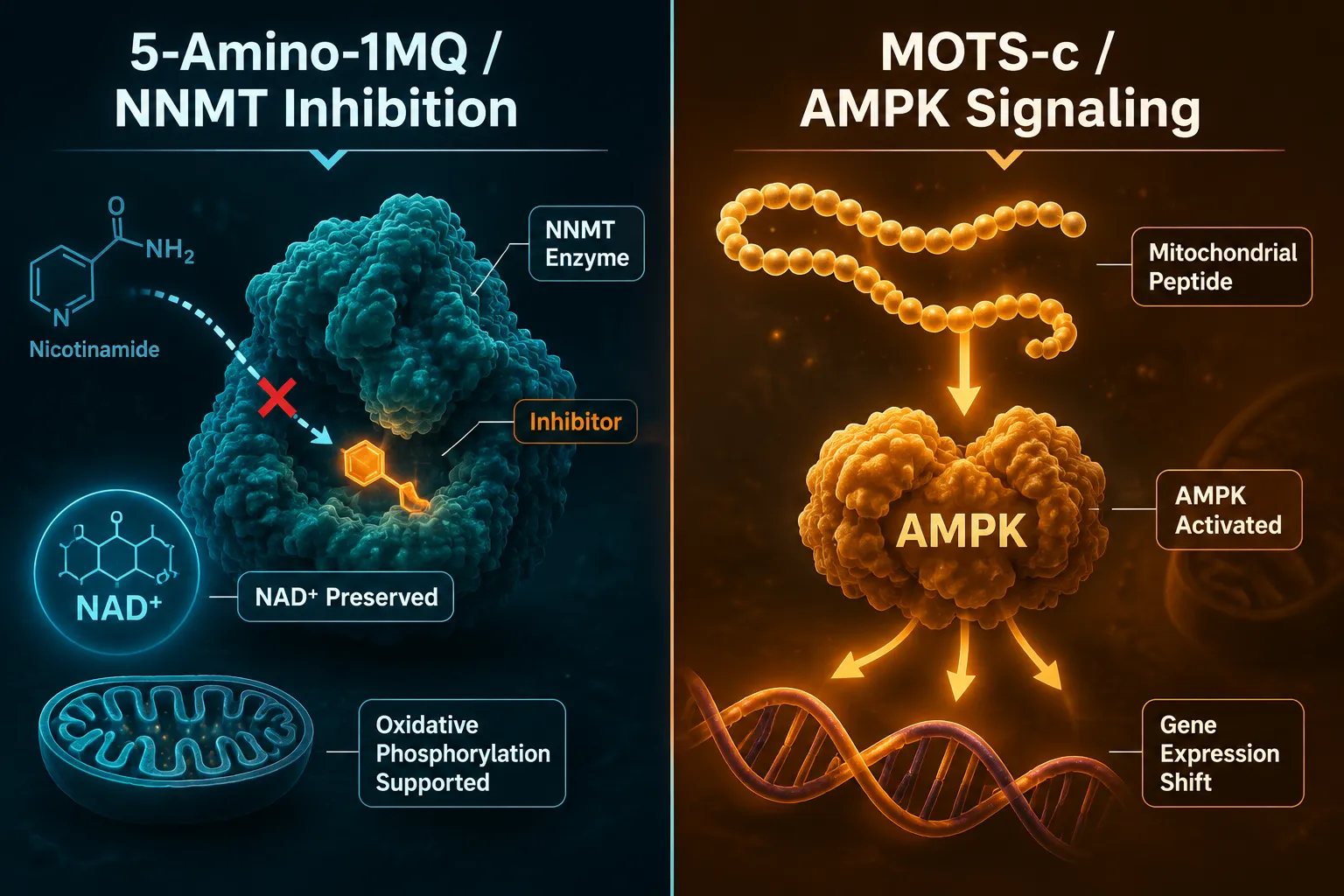
  • MOTS‑c acts upstream via AMPK activation and nuclear gene regulation
  • 5‑Amino‑1MQ acts via NNMT inhibition and NAD+ substrate availability

Together, they address both the signaling and substrate sides of mitochondrial energy metabolism. This complementary approach is a central theme in current mitochondrial longevity research. The MOTS‑c and elamipretide combined research page illustrates how researchers are increasingly pairing mitochondrial peptides with other modulators for broader mechanistic coverage.

For those tracking related mitochondrial-targeted peptides, SS‑31 mitochondrial research themes and SS‑31 mitochondrial dynamics document another well-studied cardiolipin-targeting compound that works through yet a different mechanism.

Why These Two Agents Are Studied Together

Research Considerations and Sourcing Quality

Preclinical Status and Research Context

As of 2026, both MOTS‑c and 5‑Amino‑1MQ remain research-stage compounds. All data discussed in this article derives from preclinical models (primarily rodent studies) and early mechanistic investigations. Neither compound has received regulatory approval for therapeutic use in humans. Researchers should interpret findings accordingly and adhere to institutional protocols.

Purity and Verification Standards

The integrity of any research involving these peptides depends heavily on compound purity. Contaminated or mischaracterized samples introduce confounding variables that undermine mechanistic conclusions. Researchers sourcing these compounds should prioritize suppliers that provide third-party verified certificates of analysis.

The peptide purity testing guide outlines what to look for in quality documentation, and the quality testing protocols page details the analytical methods, including HPLC and mass spectrometry, that distinguish research-grade material from lower-quality alternatives.

Conclusion

The study of Mitochondria, NNMT Inhibition, and Peptide Modulators: Where MOTS‑c and 5‑Amino‑1MQ Fit in Cellular Energy Research represents a productive convergence of classical bioenergetics and modern peptide pharmacology. Mitochondria are not passive ATP factories; they are dynamic signaling organelles whose output is shaped by retrograde communication, NAD+ availability, and AMPK-driven transcriptional programs.

MOTS‑c and 5‑Amino‑1MQ each address a distinct node in this network. MOTS‑c modulates the signaling layer through AMPK activation and nuclear gene regulation. 5‑Amino‑1MQ modulates the substrate layer by elevating NAD+ through NNMT inhibition. Used together in preclinical research, they offer a more complete picture of how mitochondrial energy metabolism can be probed and potentially supported.

Actionable next steps for researchers in 2026:

  • Review the preclinical literature on MOTS‑c AMPK activation and 5‑Amino‑1MQ NNMT selectivity before designing protocols
  • Establish baseline NAD+ and AMPK activity measurements to track compound effects accurately
  • Source compounds only from suppliers offering HPLC-verified purity documentation
  • Consider pairing these agents with established mitochondrial markers (e.g., mitochondrial membrane potential, oxygen consumption rate) for rigorous mechanistic data
  • Stay current with emerging longevity peptide research through resources like the longevity peptide research hub
https://www.puretestedpeptides.com/wp-content/uploads/2026/07/mitochondria-nnmt-inhibition-and-peptide-modulators-where-mots-c-and-5-amino-1mq.webp 1024 1536 https://www.puretestedpeptides.com/wp-content/uploads/2026/01/buy-peptides-online.jpg 2026-07-22 13:06:222026-07-22 13:06:22Mitochondria, NNMT Inhibition, and Peptide Modulators: Where MOTS‑c and 5‑Amino‑1MQ Fit in Cellular Energy Research
×

Helpful Links

  • My account
  • Cart
  • Checkout
  • Refund and Returns Policy
  • Privacy Policy
  • SMS Privacy Policy
  • Login
  • My Account
  • Logout

USA Made Lab Tested Peptides

All products are sold for research, laboratory, or analytical purposes only, and are not for human consumption


Pure Tested Peptides is a chemical supplier. Pure Tested Peptides is not a compounding / chemical compounding facility as defined under 503A of the Federal Food, Drug, and Cosmetic act. Pure Tested Peptides is not an outsourcing facility as defined under 503B of the Federal Food, Drug, and Cosmetic act.

The statements made within this website have not been evaluated by the US Food and Drug Administration. The products we offer are not intended to diagnose, treat, cure or prevent any disease.

Human/Animal Consumption Prohibited. Laboratory/In-Vitro Experimental Use Only

Scroll to top Scroll to top Scroll to top