Call or Text 727-513-9780
  • Shopping Cart Shopping Cart
    0Shopping Cart
Pure Tested Peptides | America's most trusted Peptides for sale online
  • Peptides for sale
    • Oral Peptides for sale
      • Peptide Capsules for sale
      • BPC 157 Capsules 1000mcg
      • SLU-PP-332 Capsules | 1000 mcg
      • 5-Amino-1MQ 50mg Capsules
      • Tesofensine 500mcg
    • All Peptides for sale
    • Peptide Sprays
      • BPC 157 Nasal Spray Kit
      • BPC-157 TB500 Nasal Spray Kit
      • Semax Nasal Spray 10mg
      • Selank – Nasal Spray Kit – 10mg
      • Epithalon 50MG Nasal Spray Kit
      • Ipamorelin 10mg Nasal Spray
      • Klow Nasal Spray (BPC-157 + TB-500 + GHK-Cu + KPV) | 80mg
      • Hulk Nasal Spray Tesa / Ipa Blend 6/3 MG
      • Klow Nasal Spray
      • NAD + 500 mg Nasal Spray
      • PT-141 Nasal Spray Kit
    • GHRH Peptides
      • Ipa Peptides
      • CJC-1295 Peptides
        • CJC-1295 with DAC 5 mg
        • CJC-1295 without DAC 5 mg
        • CJC-1295 Ipa 10mg
      • Tesa Peptides
        • Tesa Peptide
        • Tesa 20 mg
    • GHK-Cu Peptides
      • All GHK-Cu Peptides
      • GHK-Cu 100mg
      • KLOW Peptide Blend – Buy KLOW blend online
    • BPC Peptides
      • All BPC Peptides
      • BPC-157
      • BPC-157 TB-500
      • BPC 157 capsules 1000mcg
    • SLU-PP-332 Peptides
      • All SLU-PP-332 Peptides
      • SLU-PP-332 5mg
    • GLP3 Peptides
      • GLP3-R
      • GLP3-R CAG 10mg
      • GLP3-R 20mg
    • PT-141 Peptides
      • PT-141 Peptides for sale
      • PT-141 10mg
      • PT-141 Nasal Spray
    • CAG Peptides
      • Lipo-C Peptide Blend
      • CAG 5mg
      • CAG 10mg
    • MOTS-C Peptides
      • MOTS-C Peptides for sale
      • MOTS-c peptide
      • MOTS-c 10mg *6 pack*
    • 5 Amino 1MQ Peptides
      • 5 Amino 1MQ Peptides for sale
      • 5-Amino-1MQ 50mg Capsules
      • 5-Amino-1MQ 5mg
    • Epithalon Peptides
      • Epithalon Peptides for sale
      • Epithalon 10mg
      • Epithalon 50mg
  • Shop
    • GLPs
      • 5-Amino-1MQ 50mg Capsules
      • 5-Amino-1MQ 5mg
      • GLP3-Reta
      • L-Carnitine 500mg/ml
      • Tesofensine 500mcg
      • SLU-PP-332 5mg
      • MOTS-c 10mg *6 pack*
    • Epithalon & BPC Peptides
      • Epithalon 10mg
      • Epithalon 50mg
      • BPC-157
      • BPC 157 capsules 1000mcg
      • BPC-157 TB-500
      • BPC-157 TB500 Nasal Spray Kit
      • BPC 157 Nasal Spray Kit
    • BPC TB-500 & NAD+ Peptides
      • NAD+ 500 mg
      • KLOW Peptide Blend – Buy KLOW blend online
      • GLOW Peptide Blend
      • TB 500 5mg
      • BPC 157 capsules 1000mcg – Supplement
      • BPC 157 Nasal Spray Kit
      • BPC-157
      • BPC-157 TB500 Nasal Spray Kit
      • BPC-157 TB-500
      • BPC 157 capsules 1000mcg
    • LL-37 Peptide
      • LL-37 10 mg
    • MOTS-C & Selank
      • MOTS-c peptide
      • Selank 10mg
    • GHK Peptides
      • GHK-Cu 100mg
      • GLOW Peptide Blend
      • KLOW Peptide Blend – Buy KLOW blend online
  • COAs
  • Wholesale
    • Wholesale Peptides for sale
  • PTP FAQ
  • Affiliates
    • Selank Peptide: Advanced Pharmacological Mechanisms Underlying Its Anxiolytic and Nootropic Effects in Research
      • 5-Amino-1MQ Peptide: Detailed Mechanisms of NNMT Inhibition and Its Impact on Cellular Metabolism Research
        • MOTS-C Peptide: Unraveling Its Role in Mitochondrial Dynamics and Energy Metabolism Research
          • Epithalon Peptide and Telomerase Regulation: Investigating Its Impact on Cellular Senescence and Lifespan Research Models
            • GLP2-T vs GLP2 Tirz Peptide: Understanding the Naming, Mechanistic Nuances, and Research Implications for Gut Health
      • Peptides and Polypeptides in Modern Pharmacology: What Research on Metoprolol, Prednisone, and Amlodipine Reveals
        • Polypeptide Peptides vs NSAIDs: What Naproxen and Diclofenac Teach Tissue-Repair Researchers About BPC‑157 and TB‑500
          • Peptides and Polypeptides in Endocrine Pharmacology: How GLP-1, GLP-2, and GLP-3 Retatrutide Differ From Classic Drugs Like Prednisone and Amlodipine
          • 5‑Amino‑1MQ Peptide and NNMT Inhibition: How It Compares With Statins Like Atorvastatin in Adipose and Lipid Metabolism Research
      • Enclomiphene, Estrogen Receptor Signaling, and Luteinizing Phase Biology: What Hormone Researchers Should Measure
        • Mesenchymal Stem Cells, BPC‑157, and GHK‑Cu: How Tissue Repair Peptides Compare With Classic NSAIDs Like Naproxen in Injury Models
          • Peptide Calculator Use Cases Beyond Growth Hormone: Working Through GLP‑3 Retatrutide, MOTS‑c, and BPC‑157 Research Dosing
        • Polypeptide Peptides in Endocrine and Metabolic Pharmacology: Lessons From Amlodipine, Prednisone, and Metoprolol
        • Peptides Calculator for Advanced Blends: Worked Examples for Tesamorelin, CJC‑1295, and Ipamorelin Stacks
          • Peptides and Polypeptides in Human Physiology: How Molecular Size Shapes Research Applications
            • Selank Peptide: Advanced Pharmacological Mechanisms Underlying Its Anxiolytic and Nootropic Effects in Research
          • 5-Amino-1MQ Peptide: Detailed Mechanisms of NNMT Inhibition and Its Impact on Cellular Metabolism Research
            • MOTS-C Peptide: Unraveling Its Role in Mitochondrial Dynamics and Energy Metabolism Research
              • Epithalon Peptide and Telomerase Regulation: Investigating Its Impact on Cellular Senescence and Lifespan Research Models
                • GLP2-T vs GLP2 Tirz Peptide: Understanding the Naming, Mechanistic Nuances, and Research Implications for Gut Health
                  • Peptides and Polypeptides in Endocrine Pharmacology: How GLP-1, GLP-2, and GLP-3 Retatrutide Differ From Classic Drugs Like Prednisone and Amlodipine
                    • Polypeptide Peptides vs NSAIDs: What Naproxen and Diclofenac Teach Tissue-Repair Researchers About BPC‑157 and TB‑500
                      • Peptides and Polypeptides in Modern Pharmacology: What Research on Metoprolol, Prednisone, and Amlodipine Reveals
                        • 5‑Amino‑1MQ Peptide and NNMT Inhibition: How It Compares With Statins Like Atorvastatin in Adipose and Lipid Metabolism Research
                        • Enclomiphene, Estrogen Receptor Signaling, and Luteinizing Phase Biology: What Hormone Researchers Should Measure
                        • Mesenchymal Stem Cells, BPC‑157, and GHK‑Cu: How Tissue Repair Peptides Compare With Classic NSAIDs Like Naproxen in Injury Models
                        • Peptide Calculator Use Cases Beyond Growth Hormone: Working Through GLP‑3 Retatrutide, MOTS‑c, and BPC‑157 Research Dosing
                        • Polypeptide Peptides in Endocrine and Metabolic Pharmacology: Lessons From Amlodipine, Prednisone, and Metoprolol
                        • Peptides Calculator for Advanced Blends: Worked Examples for Tesamorelin, CJC‑1295, and Ipamorelin Stacks
                        • Peptides and Polypeptides in Human Physiology: How Molecular Size Shapes Research Applications
                        • Selank Peptide: Advanced Pharmacological Mechanisms Underlying Its Anxiolytic and Nootropic Effects in Research
                        • MOTS-C Peptide: Unraveling Its Role in Mitochondrial Dynamics and Energy Metabolism Research
                        • Peptides and Polypeptides in Modern Pharmacology: What Research on Metoprolol, Prednisone, and Amlodipine Reveals
                        • Peptides and Polypeptides in Endocrine Pharmacology: How GLP-1, GLP-2, and GLP-3 Retatrutide Differ From Classic Drugs Like Prednisone and Amlodipine
                        • 5-Amino-1MQ Peptide: Detailed Mechanisms of NNMT Inhibition and Its Impact on Cellular Metabolism Research
                        • Mesenchymal Stem Cells, BPC‑157, and GHK‑Cu: How Tissue Repair Peptides Compare With Classic NSAIDs Like Naproxen in Injury Models
                        • Peptide Calculator Use Cases Beyond Growth Hormone: Working Through GLP‑3 Retatrutide, MOTS‑c, and BPC‑157 Research Dosing
                        • GLP2-T vs GLP2 Tirz Peptide: Understanding the Naming, Mechanistic Nuances, and Research Implications for Gut Health
                        • Polypeptide Peptides in Endocrine and Metabolic Pharmacology: Lessons From Amlodipine, Prednisone, and Metoprolol
                        • Polypeptide Peptides vs NSAIDs: What Naproxen and Diclofenac Teach Tissue-Repair Researchers About BPC‑157 and TB‑500
                        • Peptides and Polypeptides in Human Physiology: How Molecular Size Shapes Research Applications
                        • Peptides Calculator for Advanced Blends: Worked Examples for Tesamorelin, CJC‑1295, and Ipamorelin Stacks
                        • 5‑Amino‑1MQ Peptide and NNMT Inhibition: How It Compares With Statins Like Atorvastatin in Adipose and Lipid Metabolism Research
                        • Enclomiphene, Estrogen Receptor Signaling, and Luteinizing Phase Biology: What Hormone Researchers Should Measure
                        • Epithalon Peptide and Telomerase Regulation: Investigating Its Impact on Cellular Senescence and Lifespan Research Models
                        • Best research protocol Klow blend
                        • best time to take BPC-157
                        • best time to take DSIP (Delta Sleep Inducing Peptide)
                        • best time to take CJC-1295
                        • best time to take AOD-9604
                        • best time to take Follistatin 344
                        • best time to take Ipamorelin
                        • best time to take MK-677 (Ibutamoren)
                        • best time to take Ligandrol (LGD-4033) — research compound
                        • best time to take Ostarine (MK-2866) — research compound
                        • best time to take GHK-CU
                        • best time to take TB-500
                        • best time to take MOTS-c
                        • best time to take Semax
                        • best time to take RAD-140 (Testolone) — research compound
                        • best time to take Thymosin Alpha-1
                        • best time to take PEG-MGF
                        • Biolife Plasma, Octapharma Plasma, and Research Peptides: How Plasma Donation Labs Differ From Peptide Suppliers
                        • best time to take YK-11 — research compound
                        • best time to take PT-141 (Bremelanotide)
                        • Best research protocol Klow blend
  • Contact
    • Contact Customer Service
    • Text Customer Support
  • About US
  • Shop all peptides
  • Affiliate Program
    • Affiliate Signup
  • Login / Register Login / Register Page Link Login / Register Page Link
  • Click to open the search input field Click to open the search input field Search
  • Menu Menu

Tag Archive for: research peptides

Understanding Peptide Stability: A Guide to Optimizing Storage and Handling for Research Purity

Understanding Peptide Stability: A Guide to Optimizing Storage and Handling for Research Purity

July 6, 2026/0 Comments/by Pure Tested

A single improper storage decision can reduce a peptide's purity from over 98% to below 90% in less than four weeks. For researchers who depend on precise, reproducible results, that loss is not just inconvenient, it can invalidate entire experimental protocols. This guide to understanding peptide stability covers the essential storage and handling practices that protect research-grade compounds from the most common degradation threats.

Key Takeaways

  • Lyophilized peptides stored at -20°C or below can remain stable for 2 to 3 years; reconstituted peptides degrade far more quickly.
  • Five primary degradation pathways, hydrolysis, oxidation, deamidation, aggregation, and racemization, threaten purity at every stage.
  • Aliquoting reconstituted peptides into single-use portions dramatically reduces freeze-thaw damage.
  • Bacteriostatic water extends the usable life of reconstituted peptides compared to sterile water alone.
  • HPLC and mass spectrometry remain the gold-standard methods for verifying purity after storage.

Key Takeaways

The Five Degradation Pathways Every Researcher Must Know

A foundational part of understanding peptide stability is recognizing how compounds break down. Peptides degrade through five main chemical and physical pathways:

Degradation Pathway Primary Trigger Key Prevention Strategy
Hydrolysis Moisture exposure Sealed vials, low-humidity handling
Oxidation Oxygen, light Amber containers, inert atmosphere
Deamidation Heat, alkaline pH Cold storage, correct solvent pH
Aggregation Freeze-thaw cycling Single-use aliquots
Racemization Heat, extreme pH Stable temperature, proper solvent

Each pathway can occur independently or in combination. Hydrolysis is among the most common, triggered by even trace moisture entering a vial. Oxidation is accelerated by light exposure, which is why amber or opaque containers are standard in professional research settings. Aggregation, where peptide chains clump together and lose bioactivity, is most often caused by repeated freeze-thaw cycles.

Researchers working with sensitive compounds such as those explored in longevity peptide research or mitochondria-targeted molecules like those covered in the MOTS-C mitochondrial peptide overview must be especially attentive to these pathways, as structural integrity directly affects experimental outcomes.


The Five Degradation Pathways Every Researcher Must Know

Storage Conditions: Lyophilized vs. Reconstituted Peptides

Understanding peptide stability requires treating lyophilized and reconstituted peptides as two distinct categories with very different requirements.

Lyophilized (freeze-dried) peptides are the more stable form. When stored at -20°C or below in sealed, moisture-protected vials, they can remain viable for 2 to 3 years. The freeze-drying process removes water, which is the primary driver of hydrolytic breakdown. Handling lyophilized peptides in low-humidity environments and ensuring vials are tightly sealed before returning them to cold storage is essential.

Reconstituted peptides are considerably more vulnerable. Research monitoring eight common peptides in bacteriostatic water at 4°C over 30 days found average purity retention of 98.2% at day 7, dropping to 91.3% by day 28. This decline underscores the importance of using reconstituted peptides promptly and storing them correctly.

"Bacteriostatic water extends the usable life of reconstituted peptides by inhibiting microbial growth, a meaningful advantage over sterile water for short-term research use."

Standard short-term storage for reconstituted peptides is 2 to 8°C, typically supporting a usable window of 30 to 60 days depending on the specific compound. For peptides like those discussed in the TB-500 muscle recovery research overview or GHK-Cu longevity research themes, following these guidelines helps ensure data reliability.


Storage Conditions: Lyophilized vs. Reconstituted Peptides

Practical Handling Protocols for Maintaining Research Purity

Optimizing storage and handling for research purity extends beyond temperature settings. The physical act of reconstitution matters.

Best practices for reconstitution:

  • Add solvent slowly along the inside wall of the vial rather than directly onto the lyophilized cake.
  • Swirl gently, never vortex, to dissolve the peptide without causing mechanical denaturation.
  • Allow the vial to reach room temperature before opening to prevent condensation from entering.

Aliquoting strategy is equally important. Dividing a reconstituted batch into single-use portions before freezing eliminates the need to repeatedly thaw and refreeze the same vial. Each freeze-thaw cycle risks aggregation and structural damage.

For researchers sourcing compounds, peptide purity testing provides a clear framework for evaluating quality before storage even begins. Verifying purity at the point of purchase using HPLC and mass spectrometry data ensures the baseline is sound. Those exploring newer compounds can also review what is new in peptide research for evolving best practices.

Light protection is another often-overlooked factor. Peptides susceptible to photodegradation, including many aromatic amino acid-containing sequences, should be stored in amber containers and handled away from direct light sources.

For those interested in sourcing verified compounds, lab-tested peptides with documented purity certificates reduce the variables that compromise downstream research integrity.


Conclusion

Protecting peptide purity is not a passive process. It requires deliberate decisions at every stage, from the moment a lyophilized vial arrives to the final use of a reconstituted aliquot. The core actions are clear: store lyophilized peptides at -20°C or below, reconstitute with bacteriostatic water, aliquot before freezing, shield from light and moisture, and verify purity with HPLC or mass spectrometry before critical experiments. Researchers who treat these protocols as non-negotiable will see more consistent, reproducible results and fewer compromised data sets. Start by auditing current storage conditions, identify any gaps against the guidelines above, and implement changes systematically to build a more reliable research workflow.


https://www.puretestedpeptides.com/wp-content/uploads/2026/07/Understanding-Peptide-Stability-A-Guide-to-Optimizing-Storage-and-Handling-for-Research-Purity.png 1024 1536 Pure Tested https://www.puretestedpeptides.com/wp-content/uploads/2026/01/buy-peptides-online.jpg Pure Tested2026-07-06 13:04:302026-07-20 15:00:53Understanding Peptide Stability: A Guide to Optimizing Storage and Handling for Research Purity
Epithalon Peptide and Telomerase Activation: Unraveling Its Potential in Longevity Research Models

Epithalon Peptide and Telomerase Activation: Unraveling Its Potential in Longevity Research Models

July 5, 2026/0 Comments/by Pure Tested

A tetrapeptide composed of just four amino acids, alanine, glutamic acid, aspartic acid, and glycine, has generated more longevity research interest than compounds many times its size. Epithalon peptide and telomerase activation: unraveling its potential in longevity research models has become one of the most discussed topics in cellular aging science, and for measurable reasons. Research models show telomerase enzyme activity increasing by 33 to 45% following Epithalon exposure, with actual telomere lengthening of 20 to 40% recorded over six-month study periods. For researchers focused on the biology of cellular aging, those numbers demand serious attention.

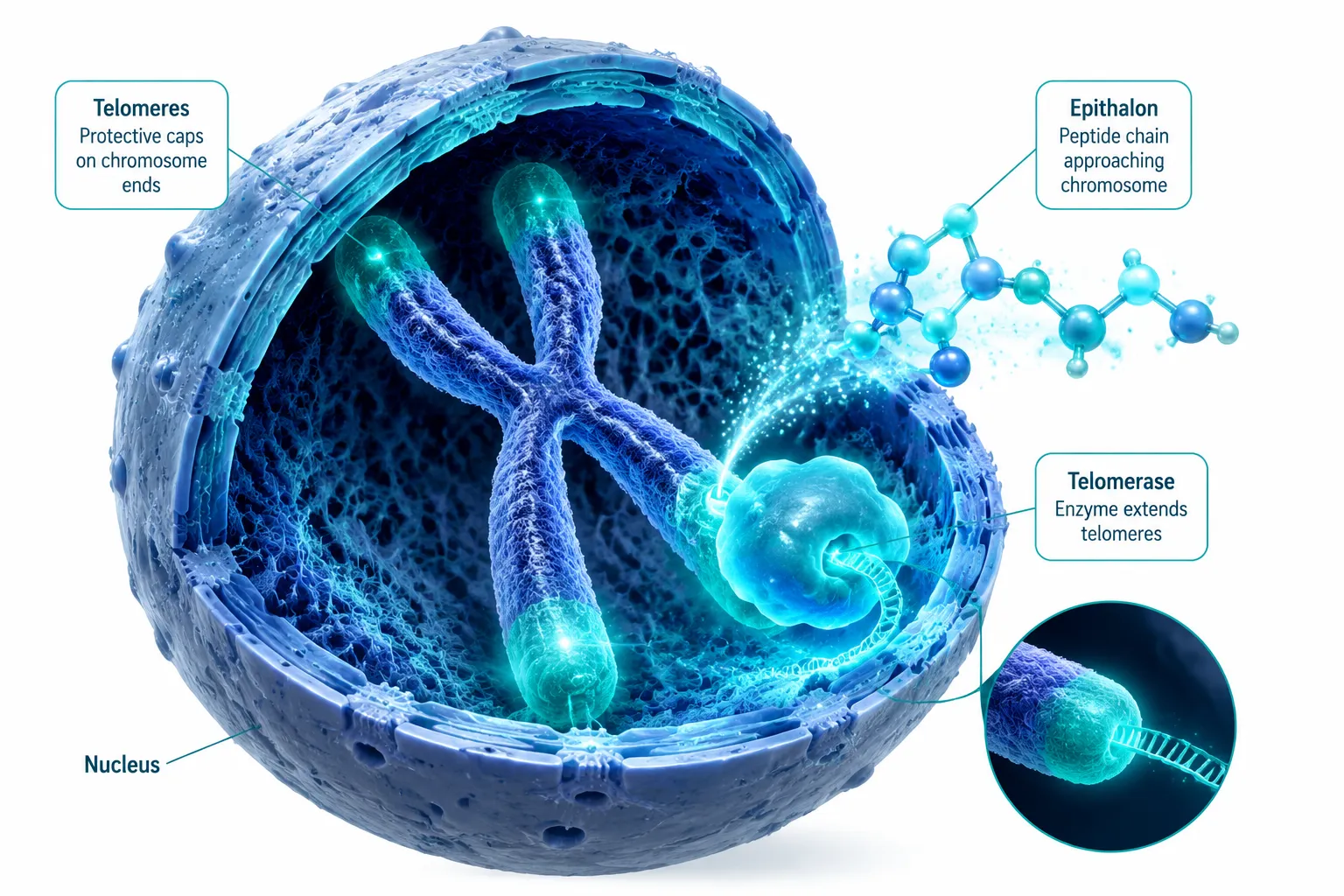
Scientific illustration () showing a detailed cross-section diagram of a cell nucleus with telomeres highlighted in glowing

Key Takeaways

  • Epithalon activates telomerase enzyme activity by 33 to 45% in experimental models, with tissue-specific variation across hippocampal, cardiac, and skeletal muscle cells
  • Telomere lengthening of 20 to 40% has been observed over six-month periods in treated cell lines, alongside a 40 to 60% reduction in pro-inflammatory SASP cytokine production
  • Animal longevity studies show meaningful lifespan extension and reduced disease incidence, though most findings originate from a single research group
  • Epithalon also restores melatonin production and circadian gene cycling, suggesting systemic anti-aging effects beyond telomere biology
  • No large-scale, independent human clinical trials exist, and the FDA has not approved Epithalon for any medical use as of 2026

How Epithalon Activates Telomerase at the Molecular Level

Telomeres are the protective caps at the ends of chromosomes. With each cell division, they shorten. When they become critically short, cells enter senescence or die. Telomerase is the enzyme that can rebuild these caps, but in most adult somatic cells, it is largely inactive.

Epithalon appears to change that. Studies in normal human cell lines demonstrate that the peptide upregulates hTERT expression, the catalytic subunit of telomerase, in a dose-dependent manner. In vitro, this activation occurs at concentrations of 1 to 5 micromolar. The result is a molecular cascade that slows the rate of telomere attrition and, in some models, reverses it.

Tissue-specific responses vary:

Tissue Type Telomerase Activation Increase
Hippocampal neurons ~45%
Cardiac tissue 25 to 30%
Skeletal muscle 15 to 35%

Alongside telomere lengthening, treated cells show a 40 to 60% reduction in pro-inflammatory senescence-associated secretory phenotype (SASP) cytokines. This suggests that Epithalon's effects extend beyond simple telomere maintenance into broader cellular health regulation. Researchers exploring Epithalon longevity signals have noted these multi-pathway effects as particularly compelling for aging biology frameworks.


Longevity Research Models: What Animal and Human Studies Reveal

Longevity Research Models: What Animal and Human Studies Reveal

Animal research provides some of the strongest evidence available. In female SHR mice receiving monthly Epithalon injections, mean lifespan increased measurably and leukemia development was inhibited sixfold compared to untreated controls. These are not trivial findings in a longevity model.

Beyond lifespan, Epithalon demonstrates systemic regulatory effects:

  • Melatonin restoration: Aged animal models treated with Epithalon showed peak melatonin concentrations increasing 2.5 to 3.2 times compared to age-matched controls, through modulation of N-acetyltransferase activity
  • Circadian gene cycling: The peptide restores Clock, Bmal1, and Period gene expression patterns in peripheral tissues, rhythms that deteriorate significantly with age
  • Reduced mortality: A 6 to 8-year observational study of 266 elderly patients treated with epithalamin reported a 1.6 to 1.8-fold decrease in mortality; combined treatment with thymalin produced a 2.5-fold decrease

These findings connect Epithalon to broader longevity research themes. For context on how peptides interact with mitochondrial longevity pathways, the overlap between energy metabolism and cellular aging becomes increasingly relevant. Similarly, researchers comparing compounds like MOTS-c and its mitochondrial dynamics often reference Epithalon as a complementary telomere-focused intervention.

"The convergence of telomere biology, circadian restoration, and inflammatory reduction in a single tetrapeptide makes Epithalon one of the more structurally interesting compounds in current longevity research."


Critical Limitations and the Current Research Landscape in 2026

Critical Limitations and the Current Research Landscape in 2026

Honest evaluation of Epithalon peptide and telomerase activation: unraveling its potential in longevity research models requires acknowledging significant gaps. The most pressing concern is research concentration: the majority of published Epithalon studies originate from a single laboratory group, raising legitimate questions about reproducibility and independence.

Large-scale, double-blind, placebo-controlled human trials by independent investigators do not yet exist. Without this evidence tier, drawing definitive conclusions about human efficacy remains premature. The FDA has not approved Epithalon for any medical use and has restricted compounding pharmacies from producing it.

For researchers sourcing compounds for preclinical study, understanding quality testing protocols is essential. Purity verification matters significantly when working with bioactive peptides at the concentrations used in telomerase research. Those also investigating complementary compounds may find value in reviewing NAD+ energetics and longevity research themes alongside Epithalon data, as both pathways intersect in cellular aging models.

Animal dosing in published studies ranges from 0.1 to 1.0 mg/kg, with consistent biological activity and no apparent adverse effects reported at these levels. In vitro parameters remain the most reproducible data points currently available.

Researchers also examining innovative peptide delivery systems may find that bioavailability optimization represents a key variable in translating preclinical Epithalon findings toward more robust human study designs.


Conclusion

Epithalon peptide and telomerase activation: unraveling its potential in longevity research models remains a scientifically grounded but incomplete story. The mechanistic evidence, telomerase upregulation, telomere lengthening, SASP reduction, circadian restoration, is specific and measurable. Animal models show meaningful lifespan effects. Observational human data, while limited, points in a consistent direction.

Actionable next steps for researchers and longevity scientists in 2026:

  1. Review existing preclinical literature with attention to dosing parameters and tissue-specific response data
  2. Prioritize independent replication studies to address the single-laboratory concentration problem
  3. Evaluate Epithalon alongside complementary longevity compounds such as MOTS-c and NAD+ precursors for multi-pathway research designs
  4. Source only verified, purity-tested peptides for any research application
  5. Monitor the pipeline for independent human trial registrations, which represent the critical next evidence tier

The biology is compelling. The research infrastructure still needs to catch up.

https://www.puretestedpeptides.com/wp-content/uploads/2026/07/Epithalon-Peptide-and-Telomerase-Activation-Unraveling-Its-Potential-in-Longevity-Research-Models.png 1024 1536 Pure Tested https://www.puretestedpeptides.com/wp-content/uploads/2026/01/buy-peptides-online.jpg Pure Tested2026-07-05 13:06:432026-07-20 15:00:57Epithalon Peptide and Telomerase Activation: Unraveling Its Potential in Longevity Research Models
Best Research Peptides for Enhanced Cognitive Function: A Comparative Review

Best Research Peptides for Enhanced Cognitive Function: A Comparative Review

July 3, 2026/0 Comments/by Pure Tested

{"cover":"Professional landscape format (1536×1024) hero image with bold text overlay: 'Best Research Peptides for Cognitive Function: A Comparative Review' in extra large 72pt white bold sans-serif font with deep shadow effect, centered upper-third composition. Background features a stunning macro visualization of neural synaptic connections rendered in electric blue and gold against a dark navy backdrop, with subtle molecular peptide chain structures floating in the foreground. Color palette: deep navy, electric blue, gold accents. Magazine cover aesthetic, editorial quality, high contrast, cinematic depth of field.","content":["Detailed landscape format (1536×1024) scientific illustration showing side-by-side molecular structure comparison of Semax and Selank peptides as glowing 3D ribbon diagrams in blue and amber tones, with labeled arrows pointing to BDNF and NGF receptor binding sites on a stylized neuron cross-section. Dark background with faint brain scan imagery. Clean laboratory aesthetic, research journal quality, with subtle text labels 'Semax' and 'Selank' in white sans-serif. Cognitive peptide research theme, high detail.","Landscape format (1536×1024) overhead flat-lay composition of a research laboratory bench showing multiple peptide vials arranged in a comparison grid, each labeled with peptide names including Dihexa, Cerebrolysin, Pinealon, and PE-22-28. A researcher's gloved hand holds a pipette over a test tube. Warm clinical lighting, teal and white color palette, with a blurred brain MRI scan visible on a lightbox in the background. Scientific research quality, editorial photography style, sharp focus on vials.","Landscape format (1536×1024) infographic-style visualization showing a decision flowchart for selecting cognitive research peptides, with branching pathways from 'Research Goal' through nodes labeled 'Neuroprotection', 'Synaptogenesis', 'Anxiety Reduction', and 'Neurogenesis'. Each node features a small peptide name badge in contrasting colors. Background is a clean white-to-light-gray gradient with subtle hexagonal molecular pattern overlay. Bold sans-serif typography, professional data visualization aesthetic, teal and charcoal color scheme."}

Professional landscape hero image () with : "Best Research Peptides for Enhanced Cognitive Function: A Comparative Review".

Fewer than 15% of adults consistently perform at their cognitive peak under real-world stress conditions, yet a growing body of preclinical and clinical research suggests that certain bioactive peptides may directly address the neurobiological gaps responsible for that shortfall. This comparative review of the best research peptides for enhanced cognitive function examines the leading compounds, their mechanisms, and what current evidence actually supports.

Key Takeaways

  • Semax and Selank are the most clinically documented cognitive peptides, operating through complementary but distinct mechanisms involving BDNF, NGF, and GABAergic pathways.
  • Emerging compounds such as Dihexa, PE-22-28, and Pinealon show strong preclinical promise but lack extensive human safety data.
  • No cognitive peptide currently holds FDA approval for use in healthy adults; most human data originates from Russian clinical research.
  • Purity and sourcing quality are critical variables that directly affect research reliability and reproducibility.
  • Combining peptides with non-overlapping mechanisms, such as Semax and Selank, is a common research strategy for broader cognitive coverage.

Key Takeaways

Semax and Selank: The Benchmark Pair in Cognitive Peptide Research

When evaluating the best research peptides for enhanced cognitive function in a comparative review, Semax consistently ranks at the top of the evidence hierarchy. Approved in Russia for stroke recovery and cognitive disorders, Semax is a synthetic heptapeptide derived from ACTH(4-10). Its primary mechanism involves upregulating Brain-Derived Neurotrophic Factor (BDNF) and Nerve Growth Factor (NGF), two proteins essential for neuronal survival, synaptic plasticity, and memory consolidation.
Selank complements Semax through a fundamentally different pathway. Rather than boosting neurotrophic factors directly, Selank modulates GABAergic transmission and enkephalin metabolism, reducing anxiety-driven cognitive interference. This makes the Semax-Selank combination particularly relevant in research models where stress-induced cognitive impairment is a variable.

"The Semax-Selank pairing is widely studied precisely because their mechanisms do not overlap, one builds neural infrastructure while the other clears the psychological noise that disrupts it."

For researchers interested in anxiety-adjacent cognitive research, reviewing Selank side effects and research considerations provides important context before designing protocols.


Semax and Selank: The Benchmark Pair in Cognitive Peptide Research

Emerging Compounds: Dihexa, Pinealon, PE-22-28, and P21

The landscape of cognitive peptide research extends well beyond the Semax-Selank pair. Several newer compounds are generating significant preclinical interest.

Dihexa is perhaps the most discussed emerging synaptogenic peptide. It promotes synapse formation at concentrations far lower than traditional neurotrophic factors, with preclinical data suggesting substantial improvements in memory and learning tasks. However, human safety data remains limited, making it strictly a research compound at this stage.

Pinealon, a synthetic tripeptide (Glu-Asp-Arg), has been studied for neuroprotective effects in traumatic brain injury models and age-related memory decline. Its small size allows efficient cellular penetration, and early studies suggest it may support memory consolidation through epigenetic mechanisms.

PE-22-28, a shortened analog of spadin, functions as a TREK-1 potassium channel blocker. By inhibiting this channel, PE-22-28 promotes hippocampal neurogenesis and synaptogenesis, two processes directly tied to long-term memory formation. Its targeted mechanism makes it a compelling subject for future cognitive research.
P21, derived from ciliary neurotrophic factor (CNTF), shows preclinical promise for promoting neurogenesis and protecting against neurodegeneration. Early animal studies indicate potential cognitive benefits, though the compound requires significantly more investigation.
A 2026 study published in Food Chemistry added further depth to this field, identifying five novel peptides from porcine brain hydrolysates, including FPLHP and WGQKPW, that enhance memory by targeting Keap1, p38α, AChE, and BACE1 simultaneously.

For researchers exploring neuroprotective peptides alongside cognitive compounds, humanin and cellular protection research and epithalon peptide research offer relevant mechanistic parallels.


Peptide Primary Mechanism Evidence Level Human Data
Semax BDNF/NGF upregulation High (clinical) Yes (Russia)
Selank GABAergic/enkephalin modulation Moderate-High Yes (Russia)
Dihexa Synaptogenesis promotion Moderate (preclinical) Limited
Pinealon Epigenetic neuroprotection Early preclinical Minimal
PE-22-28 TREK-1 channel blockade Early preclinical None confirmed
P21 CNTF-derived neurogenesis Early preclinical None confirmed

Sourcing, Purity, and Research Protocol Considerations

Any meaningful comparative review of the best research peptides for enhanced cognitive function must address a variable that often receives insufficient attention: peptide purity. Impure compounds introduce confounding variables that invalidate results and create safety concerns in research settings.

Researchers should prioritize suppliers that provide third-party verified purity documentation. Understanding peptide purity testing standards is a foundational step before any cognitive peptide protocol begins. Similarly, understanding reference standards and benchmarking practices ensures that experimental results can be meaningfully compared across studies.

Delivery method also matters. Semax and Selank are typically administered intranasally in research settings, which bypasses first-pass metabolism and allows direct CNS access. Advances in innovative peptide delivery systems are expanding options for researchers working with less bioavailable compounds.

It is also worth noting that none of these peptides hold FDA approval for cognitive enhancement in healthy adults. The most robust human data originates from Russian clinical research, which has not yet been fully replicated in Western randomized controlled trials. Researchers should treat all findings as preliminary until that replication gap is closed.


Sourcing, Purity, and Research Protocol Considerations

Conclusion

The best research peptides for enhanced cognitive function represent a scientifically compelling but still-evolving field. Semax remains the gold standard based on clinical evidence, while Selank provides a complementary anxiolytic mechanism that makes the pair greater than the sum of its parts. Emerging compounds, Dihexa, Pinealon, PE-22-28, and P21, offer intriguing preclinical signals that warrant rigorous follow-up research.

Actionable next steps for researchers:

  • Prioritize compounds with the strongest evidence base (Semax, Selank) before exploring newer analogs.
  • Verify peptide purity through third-party testing before initiating any protocol.
  • Design studies that account for stress variables, where Selank's anxiolytic properties may be a confounding or complementary factor.
  • Monitor the replication of Russian clinical data in Western trials, this will be the defining development for the field in the coming years.
  • Explore neuroendocrine and innate immunity research for broader context on how peptide systems interact with cognitive pathways.

The science is advancing rapidly. Staying current with high-quality sourcing and evidence standards will separate meaningful research from noise.

https://www.puretestedpeptides.com/wp-content/uploads/2026/07/Best-Research-Peptides-for-Enhanced-Cognitive-Function-A-Comparative-Review.png 1024 1536 Pure Tested https://www.puretestedpeptides.com/wp-content/uploads/2026/01/buy-peptides-online.jpg Pure Tested2026-07-03 13:04:422026-07-20 15:01:11Best Research Peptides for Enhanced Cognitive Function: A Comparative Review
Peptides vs Polypeptides: A Simple Scientific Guide for Research Buyers and Lab Readers

Peptides vs Polypeptides: A Simple Scientific Guide for Research Buyers and Lab Readers

July 1, 2026/0 Comments/by Pure Tested

{"cover":"Professional landscape format (1536×1024) hero image with bold text overlay: 'Peptides vs Polypeptides: A Simple Scientific Guide' in extra large 72pt white sans-serif font with dark semi-transparent background panel, centered upper-third composition. Background shows a high-resolution molecular biology scene: glowing amino acid chain structures in blue and teal against a dark navy laboratory backdrop, with subtle helix formations and scientific data overlays. Color palette: deep navy, electric teal, crisp white. Magazine cover aesthetic, editorial quality, high contrast.","content":["Detailed landscape format (1536×1024) scientific infographic illustration showing two side-by-side molecular chain diagrams: a short peptide chain of 3-5 amino acids labeled 'Peptide' in bold teal text, and a longer polypeptide chain of 50+ amino acids labeled 'Polypeptide' in bold navy text. Clean white background with amino acid nodes shown as colored spheres connected by peptide bond lines. Size comparison arrows, numerical labels (2-49 residues vs 50+ residues), and a simple ruler graphic emphasizing chain length differences. Clinical, educational infographic style with modern sans-serif typography.","Detailed landscape format (1536×1024) overhead laboratory bench scene showing a researcher's gloved hands examining two labeled vials: one marked 'Short-Chain Peptide' and one marked 'Polypeptide Compound', with a lab notebook open showing a comparison table, a digital scale, and a HPLC chromatography printout in the background. Soft clinical lighting, white and stainless steel surfaces, teal accent lighting from lab equipment screens. Focus on the contrast between the two sample types. Photorealistic, editorial quality, research laboratory aesthetic.","Detailed landscape format (1536×1024) split-screen concept illustration: left panel shows a clean e-commerce product page wireframe for a peptide research compound with structured data fields, purity percentage badge, and chain-length specification callout; right panel shows a molecular 3D ribbon structure of a polypeptide folding into a protein shape with annotation arrows. Connected by a central dividing line labeled 'Research Buyer Decision Point'. Dark charcoal background with white and gold typography, modern UI design aesthetic, editorial quality."]

Professional landscape hero image () with : "Peptides vs Polypeptides: A Simple Scientific Guide for Research Buyers and Lab

Peptide and polypeptide molecular chain comparison diagram

Only two amino acids separate a dipeptide from a tripeptide — yet that single bond can change how a compound is classified, priced, and regulated across the entire research supply chain. For anyone sourcing compounds or interpreting lab data, understanding the distinction covered in this Peptides vs Polypeptides: A Simple Scientific Guide for Research Buyers and Lab Readers is not a matter of academic curiosity. It directly affects purchasing decisions, product labeling, and how compound pages should be structured for search visibility.

Key Takeaways

  • A peptide contains 2 to 49 amino acid residues; a polypeptide contains 50 or more.
  • The boundary between the two terms is scientifically fuzzy and context-dependent.
  • Chain length affects stability, bioavailability, synthesis method, and research application.
  • Research buyers should verify chain length specifications before ordering any compound.
  • Proper classification on product pages improves both user trust and search engine relevance.

Defining the Terms: Where the Science Starts

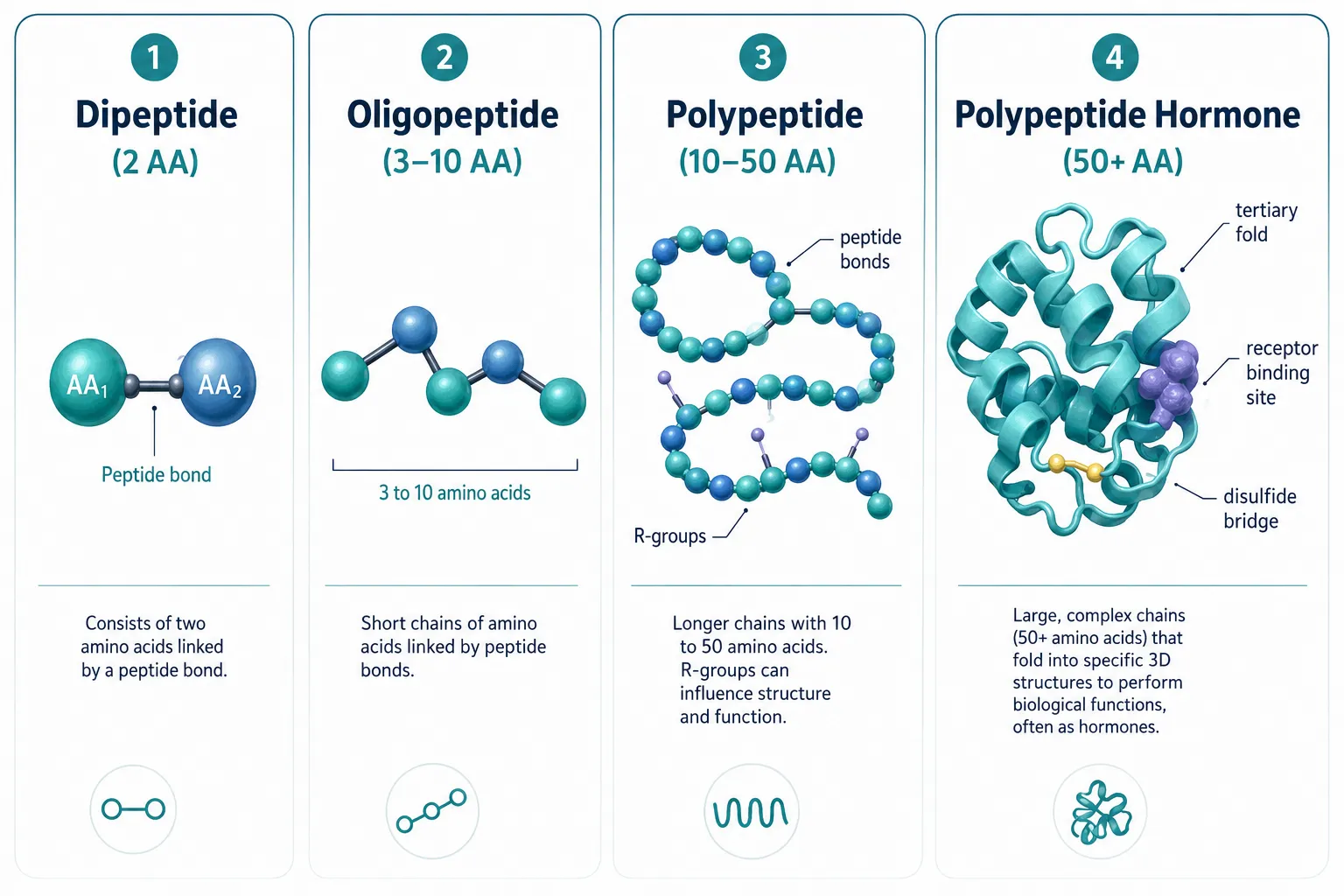
At the most basic level, both peptides and polypeptides are chains of amino acids linked by peptide bonds. The difference is size.

Term Amino Acid Residues Common Examples
Dipeptide 2 Carnosine
Oligopeptide 3-10 BPC-157 (15 residues)
Peptide 2-49 Ipamorelin, Selank
Polypeptide 50+ Growth hormone fragments
Protein 100+ Insulin (51 residues, borderline)

Peptide bonds form when the carboxyl group of one amino acid reacts with the amino group of another, releasing water. This reaction repeats along the chain. The longer the chain, the more complex the folding behavior and the greater the potential for biological activity — but also the greater the synthesis challenge.

Short-chain peptides like BPC-157 and Selank are relatively stable, easy to synthesize via solid-phase methods, and well-suited for research use. Longer polypeptides require more advanced manufacturing and are more sensitive to degradation.

Defining the Terms: Where the Science Starts


Where the Boundary Gets Fuzzy

Here is where this Peptides vs Polypeptides: A Simple Scientific Guide for Research Buyers and Lab Readers must be honest: the scientific community does not agree on a single cutoff number.

Some biochemistry textbooks place the peptide-polypeptide boundary at 50 residues. Others use 30. Insulin — one of the most studied molecules in medicine — sits at 51 residues and is variously called a polypeptide, a small protein, and simply a peptide depending on the source.

"The terms peptide, polypeptide, and protein are used somewhat loosely." — Berg, Tymoczko & Stryer, Biochemistry, 8th Edition

This ambiguity has real consequences for research buyers:

  • A compound listed as a "peptide" on one supplier's site may appear as a "polypeptide" on another.
  • Chain length affects bioavailability — shorter chains are generally absorbed more readily.
  • Stability under storage conditions varies significantly with molecular weight.
  • Synthesis purity standards differ between short and long chains.

Compounds like Tesamorelin (44 residues) and MOTS-c (16 residues) illustrate how diverse the peptide category is even before crossing into polypeptide territory. Reviewing quality testing protocols from a supplier helps confirm that chain length and purity are properly verified.

Where the Boundary Gets Fuzzy


What This Means for Research Buyers and Product Pages

This is the practical core of any Peptides vs Polypeptides: A Simple Scientific Guide for Research Buyers and Lab Readers discussion: classification shapes how compounds are found, evaluated, and trusted.

For research buyers, check these specifications before ordering:

  • Molecular weight (Daltons) — a reliable proxy for chain length
  • Number of amino acid residues — listed in the certificate of analysis
  • Synthesis method — SPPS (solid-phase) for shorter chains, recombinant for longer ones
  • Purity percentage — HPLC-verified purity above 98% is the research standard

For product pages and SEO structure, the distinction matters equally. A page for a short-chain compound like GHK-Cu should use "peptide" terminology throughout, while a page covering larger growth hormone fragments should accurately reflect polypeptide classification. Misclassification confuses both search engines and buyers.

Structured compound pages that include residue count, molecular weight, and synthesis method in the body copy tend to rank better for specific research queries. Buyers searching for peptides available for research benefit from this specificity because it reduces guesswork and supports informed purchasing.

Suppliers who publish certificates of analysis — accessible through a COA verification page — give buyers the data needed to confirm classification independently.

What This Means for Research Buyers and Product Pages


Conclusion

The peptide-polypeptide distinction comes down to chain length, but the exact boundary remains context-dependent. For research buyers, the actionable takeaway is straightforward: always request residue count and molecular weight data before purchasing. For content creators and lab communicators, accurate classification on product pages builds credibility with both readers and search engines.

Start by reviewing the certificate of analysis for any compound under consideration. Compare residue counts across supplier listings. Use precise terminology — "oligopeptide," "polypeptide," or "short-chain peptide" — rather than defaulting to generic labels. That precision is what separates a trusted research source from a vague catalog entry.

https://www.puretestedpeptides.com/wp-content/uploads/2026/07/Peptides-vs-Polypeptides-A-Simple-Scientific-Guide-for-Research-Buyers-and-Lab-Readers.png 1024 1536 Pure Tested https://www.puretestedpeptides.com/wp-content/uploads/2026/01/buy-peptides-online.jpg Pure Tested2026-07-01 13:03:452026-07-20 15:01:18Peptides vs Polypeptides: A Simple Scientific Guide for Research Buyers and Lab Readers
Slupp332 with 5-Amino-1MQ: Investigating Synergistic Metabolic Effects in Cellular Models

Slupp332 with 5-Amino-1MQ: Investigating Synergistic Metabolic Effects in Cellular Models

June 30, 2026/0 Comments/by Pure Tested

A 34% rise in cellular NAD+ concentration within just 48 hours — that single preclinical data point hints at why researchers are now pairing two distinct metabolic compounds to explore what neither can achieve alone. The study of Slupp332 with 5-Amino-1MQ: Investigating Synergistic Metabolic Effects in Cellular Models has become one of the more compelling areas of preclinical metabolic research in 2026, drawing attention for its dual-pathway approach to energy regulation and fat metabolism.

Detailed () scientific diagram showing two distinct molecular pathway arrows — one labeled ERR-alpha/gamma activation

Key Takeaways

  • Slupp332 activates estrogen-related receptors (ERRa/g), promoting mitochondrial biogenesis and fatty acid oxidation.
  • 5-Amino-1MQ inhibits NNMT, raising intracellular NAD+ levels and boosting mitochondrial function.
  • Combining both compounds targets complementary pathways, potentially amplifying metabolic outcomes beyond what either achieves alone.
  • Preclinical models show meaningful reductions in body weight and white adipose tissue with Slupp332, and significant NAD+ elevation with 5-Amino-1MQ.
  • As of 2026, both remain research-stage compounds with no approved human therapeutic use.

How Each Compound Works at the Cellular Level

Understanding the combination starts with understanding each compound individually.

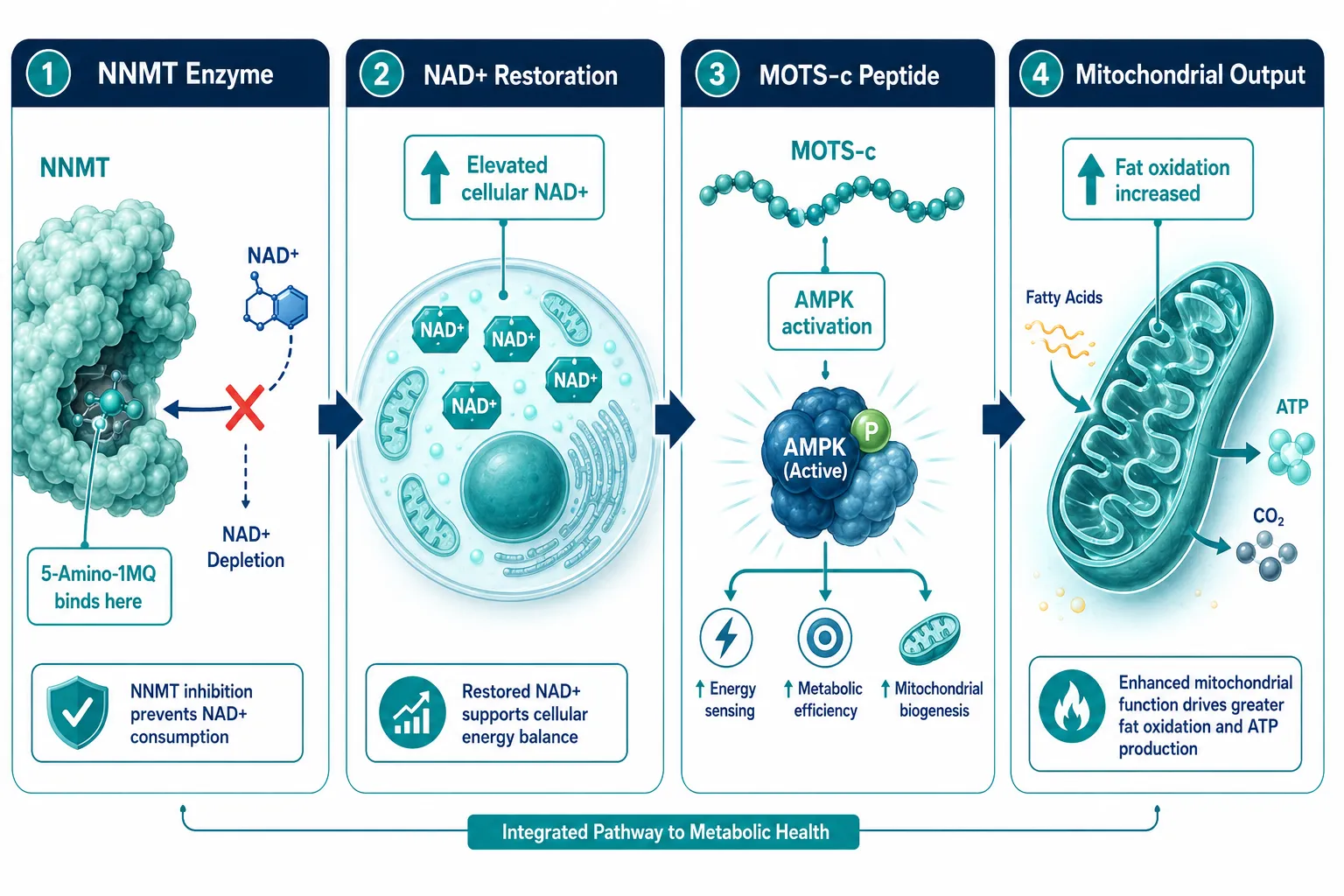
5-Amino-1MQ is a selective inhibitor of nicotinamide N-methyltransferase (NNMT), an enzyme that consumes SAM (S-adenosylmethionine) and reduces NAD+ availability. By blocking NNMT, 5-Amino-1MQ preserves NAD+ pools within the cell. Elevated NAD+ then fuels sirtuin activity — particularly SIRT1 — which regulates mitochondrial efficiency, glucose homeostasis, and cellular stress responses. For researchers exploring NAD+ and its scientific evidence base, this mechanism is well-documented in preclinical settings.

Slupp332 (SLU-PP-332) takes a different route. It acts as an agonist of estrogen-related receptors ERRa and ERRg — nuclear receptors that govern the transcription of genes tied to mitochondrial biogenesis and fatty acid oxidation. In diet-induced obese mouse models, Slupp332 produced an 18-24% reduction in body weight and a 30-35% decrease in white adipose tissue mass over a 12-28 day period. Detailed background on this compound is available through the SLU-PP-332 research overview.

Compound Primary Target Key Cellular Effect
5-Amino-1MQ NNMT inhibition Raises NAD+, activates SIRT1
Slupp332 ERRa/g agonism Drives mitochondrial biogenesis, fat oxidation

Slupp332 with 5-Amino-1MQ: Investigating Synergistic Metabolic Effects in Cellular Models

The scientific rationale for combining these two compounds rests on pathway complementarity. NNMT inhibition raises NAD+ and activates sirtuins, while ERR agonism drives the structural and transcriptional machinery needed for new mitochondria. Together, they address both the fuel supply (NAD+) and the engine capacity (mitochondrial mass).

"Targeting distinct but complementary metabolic nodes may produce additive or synergistic effects that single-compound approaches cannot replicate."

Preclinical evidence supports this hypothesis. When both pathways are engaged simultaneously, models show amplified mitochondrial activity and energy expenditure compared to either compound used alone. This is consistent with broader research themes around mitochondrial longevity and cellular energy, which increasingly point to multi-target strategies as more effective than single-pathway interventions.

Researchers studying related metabolic peptides such as MOTS-c for metabolic flexibility will recognize the parallel logic: compounds that work on mitochondrial signaling often show greater effect when combined with agents that enhance substrate availability.

Slupp332 with 5-Amino-1MQ: Investigating Synergistic Metabolic Effects in Cellular Models


Research Limitations and What Comes Next

Despite promising preclinical signals, significant gaps remain in the research landscape for Slupp332 with 5-Amino-1MQ: Investigating Synergistic Metabolic Effects in Cellular Models.

Current limitations include:

  • No human clinical trials on the combined use of these compounds
  • Existing data is limited to cellular and animal models
  • Optimal dosing ratios for combination use are not established
  • Long-term safety profiles remain unknown

Both compounds are classified as research-stage molecules as of 2026. Neither has received regulatory approval for human therapeutic use. This places them in a similar category to other investigational metabolic agents, such as those discussed in AOD-9604 research themes and ipamorelin muscle and fat research.

Researchers sourcing these compounds for controlled studies should prioritize verified quality standards. Reviewing quality testing protocols before procurement is an important step in maintaining experimental integrity.

Research Limitations and What Comes Next


Conclusion

The combination of Slupp332 and 5-Amino-1MQ represents a mechanistically sound dual-pathway approach to metabolic research. By pairing ERR agonism with NNMT inhibition, researchers can probe complementary aspects of mitochondrial function and energy metabolism within the same cellular model. Preclinical data — including the 34% NAD+ increase and significant adipose tissue reductions — provide a credible foundation for continued investigation.

Actionable next steps for researchers:

  1. Review existing cellular model data before designing combination studies.
  2. Establish baseline NAD+ and mitochondrial markers to measure compound interaction effects accurately.
  3. Consult verified sources for compound purity and testing documentation.
  4. Monitor emerging literature, as 2026 is an active year for metabolic compound research.
  5. Consider parallel investigation of complementary compounds such as MOTS-c to build a broader metabolic research framework.

The science is early, but the mechanistic logic is compelling. Rigorous cellular model studies remain the essential next step.

https://www.puretestedpeptides.com/wp-content/uploads/2026/06/Slupp332-with-5-Amino-1MQ-Investigating-Synergistic-Metabolic-Effects-in-Cellular-Models.png 1024 1536 Pure Tested https://www.puretestedpeptides.com/wp-content/uploads/2026/01/buy-peptides-online.jpg Pure Tested2026-06-30 13:03:442026-07-20 15:01:54Slupp332 with 5-Amino-1MQ: Investigating Synergistic Metabolic Effects in Cellular Models
Best Research Peptides for Advanced Wound Healing: Comparing BPC-157, TB-500, and GHK-Cu

Best Research Peptides for Advanced Wound Healing: Comparing BPC-157, TB-500, and GHK-Cu

June 30, 2026/0 Comments/by Pure Tested

Chronic wounds affect more than 6.5 million patients in the United States annually, costing the healthcare system upward of $25 billion per year — yet standard-of-care options remain limited. That gap has pushed researchers toward a focused investigation of the best research peptides for advanced wound healing: comparing BPC-157, TB-500, and GHK-Cu as candidates that may address healing at the molecular level.

This article breaks down each peptide's mechanism, compares their individual strengths, and examines the evidence for combining them in research protocols.

Key Takeaways

  • BPC-157, TB-500, and GHK-Cu each target distinct but complementary phases of the wound healing cascade.
  • BPC-157 is notable for its angiogenic and cytoprotective properties; TB-500 promotes cell migration and actin regulation; GHK-Cu drives collagen synthesis and antioxidant activity.
  • Synergistic stacking of these peptides is an active area of preclinical research.
  • Purity and third-party testing are critical variables when sourcing peptides for research use.
  • All three compounds remain research-use-only; none are approved for human therapeutic use outside of clinical trials.

Key Takeaways

Understanding the Three Peptides: Mechanisms and Roles

BPC-157: Angiogenesis and Cytoprotection

Body Protection Compound-157 (BPC-157) is a synthetic pentadecapeptide derived from a protective protein found in gastric juice. Its most well-documented mechanism is the upregulation of vascular endothelial growth factor (VEGF), which drives angiogenesis — the formation of new blood vessels essential for tissue repair.

Preclinical studies show BPC-157 also modulates nitric oxide synthesis, reduces oxidative stress, and accelerates tendon-to-bone healing. For a detailed breakdown of its documented research profile, see this BPC-157 first research guide.

Key research-noted properties of BPC-157:

  • Promotes capillary formation in wound beds
  • Reduces inflammation via nitric oxide pathways
  • Accelerates muscle, tendon, and ligament repair in animal models
  • Demonstrates gastroprotective effects in gastric ulcer models

TB-500: Actin Regulation and Cell Migration

Thymosin Beta-4 (TB-500) is a synthetic analog of a naturally occurring 43-amino-acid peptide. Its primary mechanism involves binding to G-actin, which regulates actin polymerization. This process is fundamental to cell migration — a critical step in the proliferative phase of wound healing.

TB-500 also promotes the upregulation of stem cell recruitment and has shown anti-inflammatory effects in multiple animal models. Researchers interested in its regenerative profile can explore TB-500 research documentation here.

Key research-noted properties of TB-500:

  • Regulates actin dynamics to facilitate keratinocyte and fibroblast migration
  • Promotes stem cell homing to wound sites
  • Reduces scar tissue formation in preclinical models
  • Demonstrates cardioprotective effects in ischemic injury models

GHK-Cu: Collagen Synthesis and Antioxidant Defense

GHK-Cu (Glycyl-L-Histidyl-L-Lysine Copper) is a naturally occurring copper-binding tripeptide. It is one of the most studied peptides in skin biology, with a research record spanning several decades. Its primary wound healing actions include stimulating collagen and glycosaminoglycan synthesis, activating matrix metalloproteinases (MMPs) for tissue remodeling, and exerting potent antioxidant effects.

Topical GHK-Cu formulations are already used in cosmetic research. For more on its longevity and skin-repair research themes, see GHK-Cu longevity research and the topical GHK-Cu product page.


GHK-Cu: Collagen Synthesis and Antioxidant Defense

Side-by-Side Comparison: Best Research Peptides for Advanced Wound Healing

The table below summarizes key differentiators across the three peptides when evaluating them as the best research peptides for advanced wound healing: comparing BPC-157, TB-500, and GHK-Cu.

Feature BPC-157 TB-500 GHK-Cu
Primary Mechanism Angiogenesis, VEGF upregulation Actin regulation, cell migration Collagen synthesis, MMP activation
Wound Healing Phase All phases, especially proliferative Proliferative and remodeling Remodeling and maturation
Delivery Route (Research) Subcutaneous, oral Subcutaneous Topical, subcutaneous
Anti-inflammatory Yes Yes Yes
Antioxidant Activity Moderate Low High
Scar Reduction Evidence Moderate Strong Strong

Key insight: No single peptide covers every phase of wound healing with equal potency. This is precisely why researchers have begun exploring combination protocols.


Synergistic Protocols: Combining BPC-157, TB-500, and GHK-Cu

The most advanced research direction in this space involves stacking these three peptides to address the full wound healing cascade simultaneously. The logic is straightforward: BPC-157 establishes vascular supply, TB-500 drives cellular migration into the wound bed, and GHK-Cu orchestrates collagen deposition and tissue remodeling.

This complementary action across all four healing phases — hemostasis, inflammation, proliferation, and remodeling — makes the combination theoretically superior to any single agent. For a focused look at how BPC-157 and TB-500 work together in regeneration research, see TB-500 and BPC-157 regeneration protocols.

Researchers should also consider the broader landscape of longevity peptide research, as wound healing intersects significantly with cellular aging and tissue maintenance.

Synergistic Protocols: Combining BPC-157, TB-500, and GHK-Cu

Sourcing and Purity Considerations

For any research protocol involving these peptides, purity is non-negotiable. Contaminants such as endotoxins or residual solvents can confound results and introduce variables that invalidate findings. Researchers should prioritize suppliers that provide third-party HPLC and mass spectrometry certificates of analysis. A practical overview of what to look for is available in this peptide purity testing guide.

Additionally, understanding how different suppliers compare on documentation standards is essential — see peptide supplier comparisons for a structured evaluation framework.


Conclusion

The best research peptides for advanced wound healing — BPC-157, TB-500, and GHK-Cu — each bring distinct and well-documented mechanisms to the table. BPC-157 drives vascular growth, TB-500 facilitates cellular migration, and GHK-Cu anchors the remodeling phase with collagen synthesis and antioxidant protection. Together, they represent a comprehensive toolkit for researchers designing multi-target wound healing protocols.

Actionable next steps for researchers:

  1. Review the primary literature for each peptide before designing protocols.
  2. Source only from suppliers with verified third-party purity documentation.
  3. Consider combination protocols that address all four wound healing phases.
  4. Document dosing, timing, and delivery routes rigorously for reproducible results.
  5. Stay current with emerging findings through resources like what is new in peptide research.
https://www.puretestedpeptides.com/wp-content/uploads/2026/06/Best-Research-Peptides-for-Advanced-Wound-Healing-Comparing-BPC-157-TB-500-and-GHK-Cu.png 1024 1536 Pure Tested https://www.puretestedpeptides.com/wp-content/uploads/2026/01/buy-peptides-online.jpg Pure Tested2026-06-30 13:03:252026-07-20 15:01:54Best Research Peptides for Advanced Wound Healing: Comparing BPC-157, TB-500, and GHK-Cu
Where to Buy High-Purity Research Peptides: A Guide to Trusted Suppliers and COA Verification

Where to Buy High-Purity Research Peptides: A Guide to Trusted Suppliers and COA Verification

June 30, 2026/0 Comments/by Pure Tested

Roughly 40% of peptide samples purchased from unverified online vendors fail independent purity testing — a figure that should stop any serious researcher before placing an order. For laboratories and research professionals navigating this guide to trusted suppliers and COA verification, the stakes are not just financial. Contaminated or mislabeled peptides can invalidate months of experimental work. This guide to buying high-purity research peptides lays out a systematic, verifiable framework for finding trustworthy sources and confirming the quality documents they provide.

Key Takeaways

  • Supplier verifiability — not marketing language — is the first and most critical filter when sourcing research peptides.
  • A legitimate Certificate of Analysis (COA) must come from an accredited, independent third-party laboratory, not the vendor's in-house team.
  • HPLC purity data, mass spectrometry confirmation, and lot-specific results are the three non-negotiable elements of a credible COA.
  • Red flags include COAs without named testing labs, purity claims above 99.9% with no supporting data, and pricing that is economically implausible for genuine analytical testing.
  • Matching lot numbers between the COA and the product vial is a simple, fast verification step that filters out recycled or fabricated documents.

Key Takeaways

How to Evaluate a Trusted Supplier Before Ordering

When the goal is finding where to buy high-purity research peptides, the evaluation process must begin with the supplier's identity and infrastructure — not its product catalog. In 2026, analytical guides consistently prioritize supplier verifiability over promotional claims.

Start with these supplier-level checks:

  • Physical address and registration: A verifiable business address, not a P.O. box, is a baseline requirement.
  • Transparent manufacturing or sourcing chain: Reputable vendors disclose whether peptides are synthesized in-house or sourced from established GMP-adjacent facilities.
  • Customer service responsiveness: Send a pre-purchase question about a specific COA. A credible supplier answers with technical specificity, not generic reassurance.
  • Peer-reviewed community presence: Look for the supplier's name in researcher forums, published procurement notes, or third-party review platforms — not just testimonials on their own website.
  • Return and dispute policy: A clear, published refund and returns policy signals accountability.

Suppliers who invest in lab-tested peptides will make that testing infrastructure visible and easy to verify. If locating the testing documentation requires more than two clicks, treat that as a warning sign.


How to Evaluate a Trusted Supplier Before Ordering

COA Verification: The Non-Negotiable Steps

A Certificate of Analysis is only as valuable as the process that produced it. Expert procurement protocols now begin by proving the COA is real and economically plausible — not simply present.

A credible COA must include:

Element What to Look For
Testing laboratory name Accredited, independent, named facility
HPLC chromatogram Visible peak data, not just a percentage
Mass spectrometry result Confirms molecular identity of the peptide
Lot or batch number Must match the number printed on the vial
Testing date Recent; ideally within 12 months of purchase
Purity percentage Typically 98%+ for research-grade material

"A COA without a named third-party laboratory is a marketing document, not an analytical one."

Always cross-reference the lot number on the COA against the physical product. Vendors who publish a dedicated COA verification page make this step straightforward. If the COA is a generic document with no lot-specific data, it may have been recycled across multiple batches.

For specific compounds, purity requirements can vary. Researchers sourcing peptides such as BPC-157, CJC-1295 without DAC, or Tesamorelin should request compound-specific COAs rather than accepting a blanket purity certificate for an entire product line.


COA Verification: The Non-Negotiable Steps

Applying This Guide to Specific Research Peptides

The principles above apply universally, but practical sourcing decisions benefit from compound-specific context. Researchers exploring longevity-focused peptide research or metabolic compounds like AOD-9604 should confirm that COA documentation covers the precise analog or salt form being purchased — not just the base peptide name.

For mitochondrial compounds such as SS-31 (Elamipretide), purity verification is especially critical because structural analogs can differ significantly in biological activity. Similarly, researchers working with neuropeptides like Selank should verify sequence fidelity through mass spectrometry data, not HPLC alone.

Pricing as a purity signal: Genuine third-party HPLC and mass spectrometry testing carries real cost. If a vendor's pricing is dramatically lower than the market average, that gap often reflects skipped analytical steps. Economically implausible pricing is a COA red flag before the document is even reviewed.


Conclusion

Sourcing high-purity research peptides in 2026 demands a structured, skeptical approach. The guide to trusted suppliers and COA verification outlined here reduces research risk through a clear sequence: verify the supplier exists and operates transparently, then verify the COA is compound-specific, lot-matched, and produced by a named independent laboratory. Researchers should bookmark their supplier's COA page, save lot-number records alongside purchase receipts, and repeat the verification process with every new batch — not just the first order. Applying these steps consistently protects both experimental integrity and research investment.

https://www.puretestedpeptides.com/wp-content/uploads/2026/06/Where-to-Buy-High-Purity-Research-Peptides-A-Guide-to-Trusted-Suppliers-and-COA-Verification.png 1024 1536 Pure Tested https://www.puretestedpeptides.com/wp-content/uploads/2026/01/buy-peptides-online.jpg Pure Tested2026-06-30 13:03:242026-07-20 15:01:55Where to Buy High-Purity Research Peptides: A Guide to Trusted Suppliers and COA Verification
CJC-1295 Without DAC: Why Half-Life Matters in Growth Hormone Research

CJC-1295 Without DAC: Why Half-Life Matters in Growth Hormone Research

June 28, 2026/0 Comments/by Pure Tested

A peptide with a 30-minute half-life may sound like a limitation. In growth hormone research, it is often the point. CJC-1295 Without DAC: Why Half-Life Matters in Growth Hormone Research is a question that cuts to the core of how researchers design protocols that respect the body's natural hormonal rhythms rather than override them.

Also known as Modified GRF 1-29, CJC-1295 without DAC is a synthetic analog of growth hormone-releasing hormone (GHRH). Its short active window is not a flaw in the design — it is the design.

Key Takeaways

  • CJC-1295 without DAC has a half-life of approximately 30 minutes, supporting pulsatile GH release
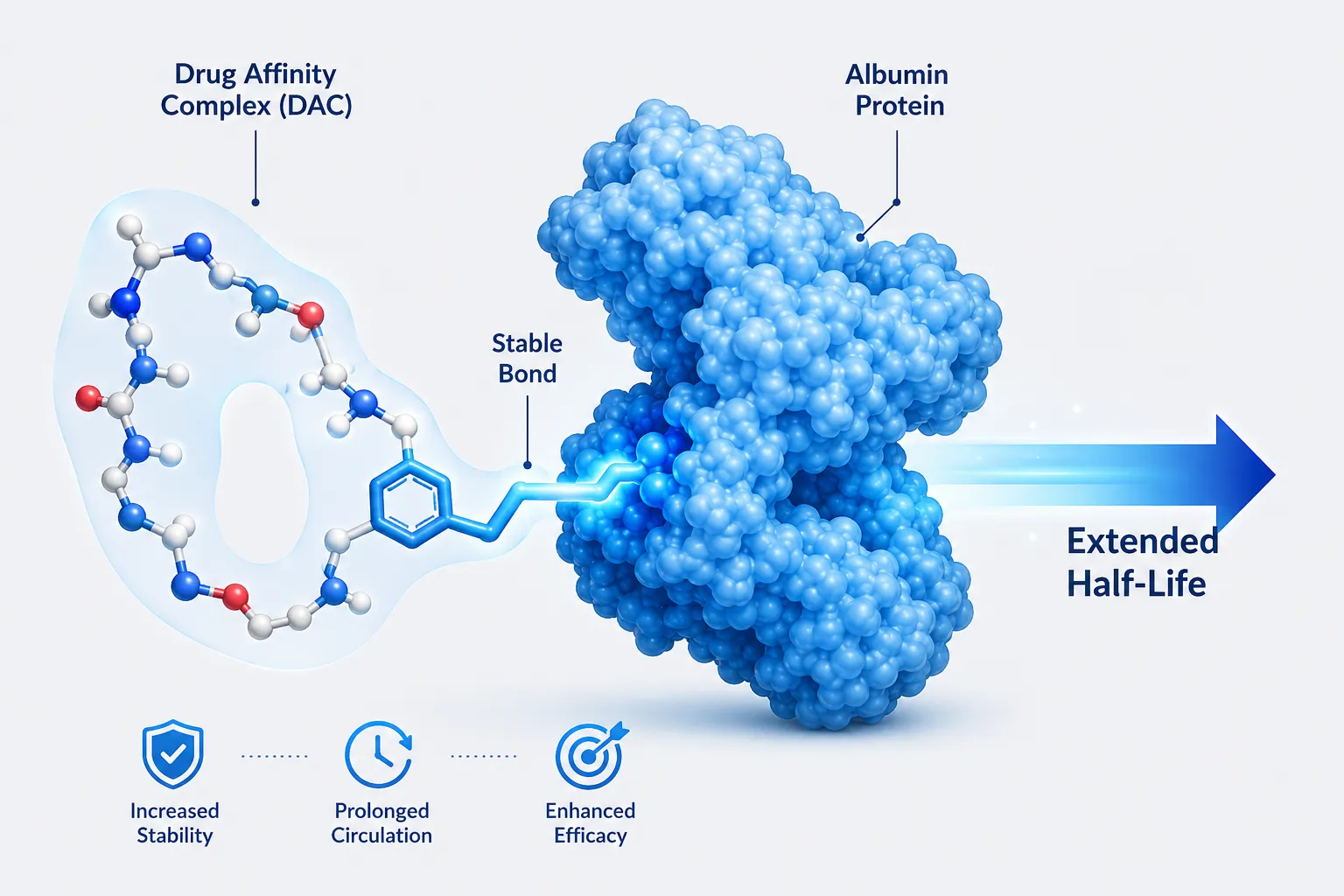
  • The absence of the Drug Affinity Complex (DAC) distinguishes it from the longer-acting DAC variant
  • Pulsatile GH secretion more closely mirrors natural physiology and may reduce receptor desensitization
  • It is frequently paired with ipamorelin to target complementary GH-release pathways
  • CJC-1295 without DAC is not FDA-approved and is intended strictly for research purposes

Key Takeaways

Understanding the Half-Life Difference in CJC-1295 Without DAC Research

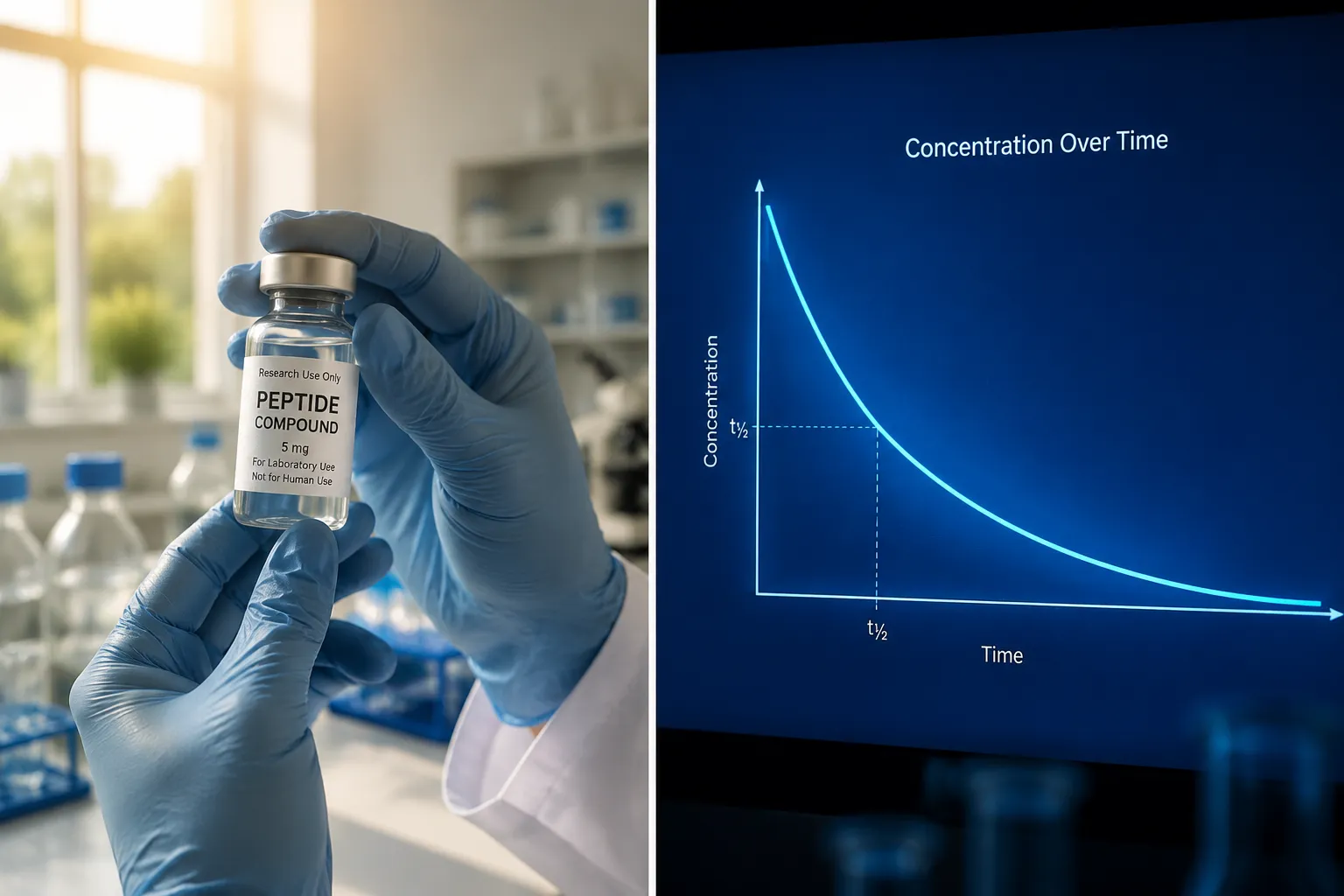
Half-life determines how long a compound remains active in a biological system. For CJC-1295 without DAC, that window is roughly 30 minutes. For the DAC version, the half-life stretches to approximately 5.8 to 8.1 days.

That difference is not trivial. It changes everything about how GH is released.

Variant Half-Life GH Release Pattern
CJC-1295 without DAC ~30 minutes Pulsatile, physiological
CJC-1295 with DAC ~5.8–8.1 days Sustained, continuous

The body does not release GH in a steady stream. It releases it in pulses — sharp peaks followed by quiet troughs. This rhythm is tied to sleep cycles, metabolic signaling, and feedback loops involving IGF-1. A compound that mimics this pattern is considered more physiologically aligned than one that maintains constant elevation.

"The short half-life of the no-DAC variant allows researchers to time GH pulses with precision, which is central to protocols designed around natural secretion windows."

For a deeper look at how the DAC modification changes the pharmacological profile, the CJC-1295 with DAC deeper dive offers a useful comparison.


Mechanism of Action: How the No-DAC Version Triggers GH Pulses

CJC-1295 without DAC binds to GHRH receptors on pituitary somatotroph cells. This binding stimulates the release of GH, which in turn drives IGF-1 production in the liver. The cascade is well-characterized in the scientific literature.

What makes the no-DAC version distinct is its rapid clearance. Because it leaves the system quickly, GH levels rise sharply and then return to baseline — closely matching the body's endogenous pattern.

Why this matters in research:

  • Avoids prolonged receptor activation that can lead to desensitization
  • Allows multiple dosing windows within a single day
  • Enables researchers to observe GH pulse responses in controlled intervals

Typical research protocols use doses of 100–300 mcg administered two to three times daily, often timed around sleep onset and morning windows when natural GH secretion is highest. Cycles in research settings commonly run 12 to 16 weeks.

The CJC-1295 product page provides additional catalog context for researchers sourcing this compound.


Mechanism of Action: How the No-DAC Version Triggers GH Pulses

CJC-1295 Without DAC and Ipamorelin: A Common Research Pairing

One of the most studied combinations in GH research pairs CJC-1295 without DAC with ipamorelin. These two compounds work through different but complementary pathways.

  • CJC-1295 without DAC activates the GHRH receptor, amplifying the GH pulse
  • Ipamorelin activates the growth hormone secretagogue receptor (GHSR), independently triggering GH release

Together, they produce a stronger, more synchronized GH response than either compound alone. Researchers value this pairing because it targets two separate mechanisms while still producing a pulsatile, time-limited GH spike.

Pre-formulated blends are available for research use, including the CJC-1295 and ipamorelin combination and the CJC-1295 plus IPA research blend.

For researchers exploring broader GH-axis protocols, the tesa vs ipamorelin comparison provides useful context on how different GHRH analogs differ in their pharmacological profiles.


CJC-1295 Without DAC and Ipamorelin: A Common Research Pairing

Storage, Safety, and Research Considerations

Lyophilized CJC-1295 without DAC should be stored at 2–8°C. Once reconstituted, it remains stable under refrigeration for up to 30 days.

The available safety data — drawn from studies on the parent CJC-1295 compound — suggest reasonable tolerability at research doses, with no serious adverse reactions reported at doses of 30 or 60 mcg/kg. However, long-term safety data remain limited, and the compound is not FDA-approved for human or veterinary use.

The evidence base includes 18 human studies, 126 animal studies, and over 56 published reviews — a substantial foundation, though researchers should note that studies specific to the no-DAC variant are less numerous than those on the DAC form.

Researchers interested in broader peptide research contexts may also find value in reviewing BPC-157 research documentation and TB-500 and BPC-157 regeneration research as complementary areas of study.


Conclusion

CJC-1295 Without DAC: Why Half-Life Matters in Growth Hormone Research comes down to one core principle: shorter is sometimes smarter. A 30-minute half-life is not a compromise — it is a tool that allows researchers to replicate pulsatile GH dynamics with precision.

Actionable next steps for researchers in 2026:

  1. Review the pharmacokinetic literature on Modified GRF 1-29 before designing protocols
  2. Consider the ipamorelin pairing to target complementary GH-release pathways
  3. Source compounds from verified suppliers with documented purity testing
  4. Align dosing windows with natural GH secretion peaks (sleep onset, morning)
  5. Monitor IGF-1 markers as a downstream indicator of GH pulse activity

Understanding half-life is not a detail — it is the foundation of responsible, reproducible growth hormone research.

https://www.puretestedpeptides.com/wp-content/uploads/2026/06/CJC-1295-Without-DAC-Why-Half-Life-Matters-in-Growth-Hormone-Research.png 1024 1536 Pure Tested https://www.puretestedpeptides.com/wp-content/uploads/2026/01/buy-peptides-online.jpg Pure Tested2026-06-28 13:04:042026-07-20 15:02:00CJC-1295 Without DAC: Why Half-Life Matters in Growth Hormone Research
Epithalon Peptide and Telomere Biology: What Researchers Actually Measure in Longevity Studies

Epithalon Peptide and Telomere Biology: What Researchers Actually Measure in Longevity Studies

June 28, 2026/0 Comments/by Pure Tested

Telomere length in human somatic cells shortens by roughly 50 to 200 base pairs with every cell division — a measurable countdown that researchers now treat as one of the most reliable proxies for biological aging. That single fact explains why Epithalon peptide and telomere biology has attracted serious scientific attention, and why longevity researchers are careful to distinguish between a mechanistic hypothesis and a reproducible, quantified outcome.

This article examines what investigators actually record in Epithalon studies: the assays used, the biomarkers tracked, and the honest limitations of the current evidence base.


Key Takeaways

  • Epithalon is a synthetic tetrapeptide (Ala-Glu-Asp-Gly) reported to activate the hTERT catalytic subunit of telomerase, leading to measurable telomere elongation in cell models.
  • Researchers track telomere length, telomerase activity, oxidative stress markers, and gene expression — not simply lifespan — as primary endpoints.
  • Animal studies report up to a 13% increase in maximum lifespan; a multi-year human observational study found a 1.6 to 1.8-fold decrease in mortality among treated elderly patients.
  • The majority of published Epithalon research originates from a single laboratory group, making independent replication a critical unmet need.
  • Epithalon is not FDA-approved and is sold as a research chemical only; concerns about telomerase activation and oncogenesis remain an active area of scrutiny.

Key Takeaways

The Core Mechanism: What Epithalon Does at the Cellular Level

Epithalon is a synthetic tetrapeptide derived from epithalamin, a polypeptide extract of the pineal gland. Its proposed primary action is the activation of hTERT — the catalytic subunit of telomerase — in human somatic cells. In a 2003 cell study, Epithalon induced measurable telomerase activity and telomere elongation in human fetal fibroblasts, cells that normally do not express telomerase at significant levels.

What makes this relevant to longevity research is the Hayflick limit: somatic cells stop dividing once telomeres shorten below a critical threshold. If telomerase can be upregulated in a controlled, tissue-specific way, the theoretical result is extended replicative capacity.

Researchers measure several downstream variables to test this hypothesis:

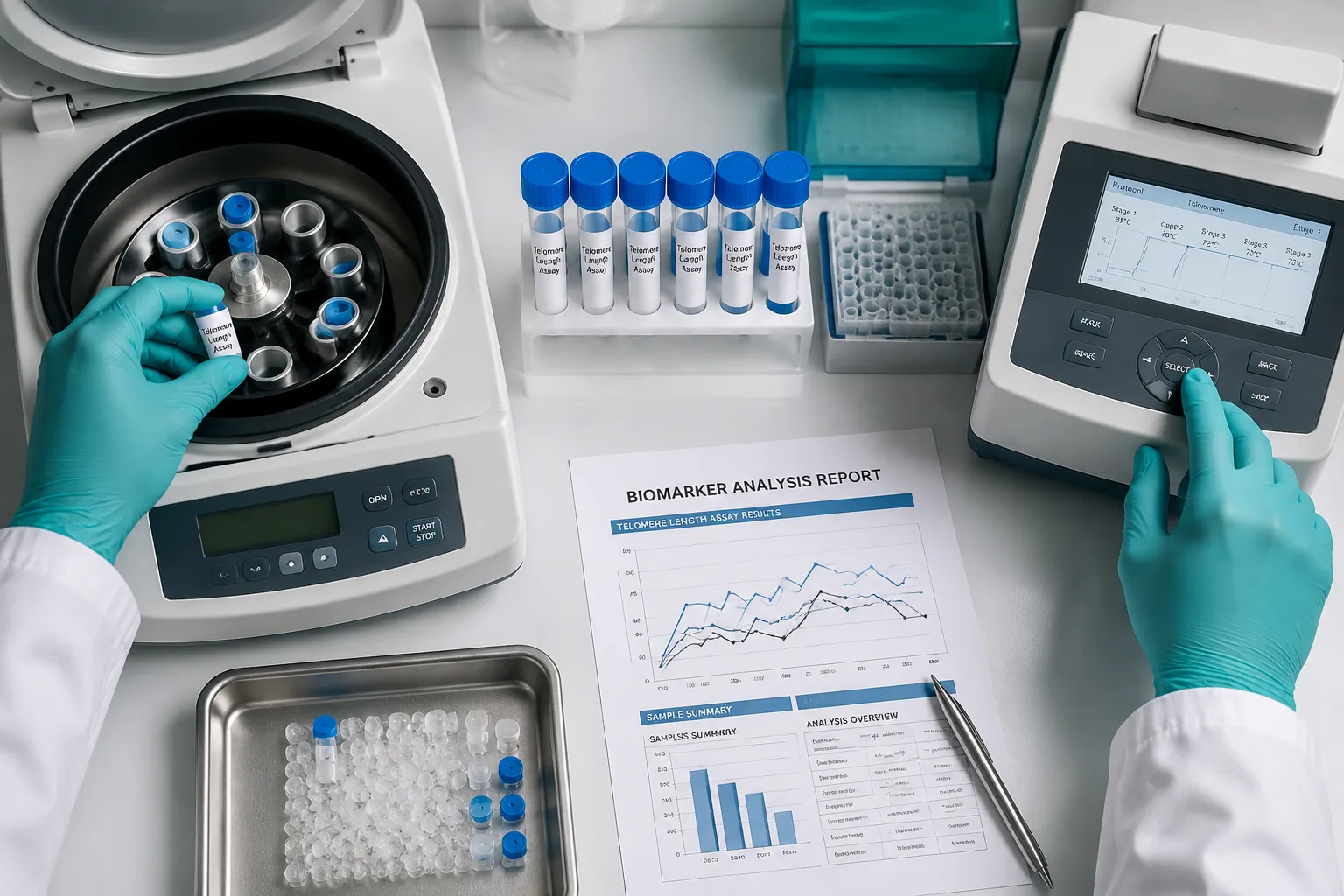
  • Telomere length (via quantitative PCR or Southern blot)
  • Telomerase enzymatic activity (TRAP assay)
  • Expression levels of hTERT mRNA
  • Markers of oxidative DNA damage such as 8-OHdG
  • Melatonin and cortisol rhythms, which Epithalon may influence through pineal modulation

Beyond telomere biology, Epithalon has been studied alongside other peptides that target cellular aging pathways. Researchers interested in mitochondrial aging often compare it with compounds like SS-31, which focuses on mitochondrial membrane dynamics rather than telomere length. These represent distinct but potentially complementary mechanisms.


Measurable Outcomes in Epithalon Longevity Studies

Measurable Outcomes in Epithalon Longevity Studies

Understanding Epithalon peptide and telomere biology: what researchers actually measure in longevity studies requires separating three tiers of evidence: cell-based assays, animal models, and human observational data.

Cell and Animal Data

In rodent studies, Anisimov and colleagues reported that Epithalon increased maximum lifespan by approximately 13% in female SHR mice. The measured endpoints included tumor incidence, spontaneous mutation frequency, and estrous cycle regularity — not simply survival time.

Human Observational Evidence

A 6 to 8-year observational study involving 266 elderly patients found that those treated with epithalamin experienced a 1.6 to 1.8-fold decrease in mortality compared to untreated controls. Researchers tracked:

Endpoint Measurement Tool
Mortality rate Actuarial survival analysis
Immune function T-cell subset counts
Cardiovascular markers Lipid panels, blood pressure
Melatonin levels Urinary 6-sulfatoxymelatonin

These are concrete, quantifiable outcomes — not subjective wellness scores.

The Replication Problem

A critical issue in evaluating Epithalon peptide and telomere biology research is that most published data originates from one laboratory group in St. Petersburg, Russia. Independent replication using blinded protocols and diverse cell lines has not yet been published at scale. This is not a reason to dismiss the findings, but it is a reason to hold conclusions at a hypothesis level rather than treat them as established fact.

Researchers sourcing Epithalon for preclinical work can review available Epithalon research peptide options and detailed Epithalon research documentation to understand current purity standards and protocols.


Comparing Epithalon to Other Longevity-Focused Peptides

Comparing Epithalon to Other Longevity-Focused Peptides

Placing Epithalon peptide and telomere biology: what researchers actually measure in longevity studies into context means comparing it against other research-stage peptides targeting aging pathways.

Key distinctions:

  • Epithalon targets telomerase activation and pineal/melatonin restoration
  • SS-31 (Elamipretide) targets mitochondrial inner membrane cardiolipin, with stronger independent evidence and FDA Breakthrough Therapy designation for certain conditions
  • GHK-Cu targets extracellular matrix remodeling and gene expression via copper-dependent pathways — relevant to skin matrix biology research
  • MOTS-c targets mitochondrial-derived metabolic signaling, as covered in MOTS-c metabolic flexibility research

Researchers interested in where to source both compounds can consult the SS-31 and Epithalon sourcing guide for comparative procurement information.

The Oncogenesis Concern

Telomerase is highly active in approximately 85% of human cancer cells. Any compound that broadly upregulates hTERT activity carries a theoretical oncogenic risk. This concern does not invalidate Epithalon research, but it does mean that studies must measure cell proliferation rates, tumor marker panels, and apoptosis indices alongside telomere length — and that protocols without these controls are incomplete.

Researchers studying peptide combinations in aging models may also find value in reviewing Pinealon neuroprotection research, which shares a pineal-derived origin with Epithalon and offers complementary mechanistic data.


Conclusion

The evidence base for Epithalon peptide and telomere biology is genuinely interesting and mechanistically coherent — but it is not yet definitive. Researchers who engage with this literature rigorously should:

  1. Prioritize studies that report quantified biomarkers (telomere length in base pairs, hTERT mRNA expression levels, oxidative stress indices) over those reporting only survival curves.
  2. Weight independent replications more heavily than studies from a single research group.
  3. Track oncogenesis safety markers in any protocol involving telomerase activators.
  4. Compare Epithalon's evidence tier against peptides with broader independent validation before drawing equivalence claims.

For researchers building a longevity-focused peptide library, browsing the full peptide catalog by research theme provides a structured way to identify compounds with overlapping or synergistic mechanisms. The science of telomere biology is advancing rapidly in 2026 — and the most valuable contribution any researcher can make is demanding measurable, reproducible outcomes at every step.

https://www.puretestedpeptides.com/wp-content/uploads/2026/06/Epithalon-Peptide-and-Telomere-Biology-What-Researchers-Actually-Measure-in-Longevity-Studies.png 1024 1536 Pure Tested https://www.puretestedpeptides.com/wp-content/uploads/2026/01/buy-peptides-online.jpg Pure Tested2026-06-28 13:04:002026-07-20 15:02:01Epithalon Peptide and Telomere Biology: What Researchers Actually Measure in Longevity Studies
Peptide Purity Standards: How to Read a COA for Potency, Sterility, and Endotoxin

Peptide Purity Standards: How to Read a COA for Potency, Sterility, and Endotoxin

June 28, 2026/0 Comments/by Pure Tested

A peptide that tests at 85% purity on paper may contain enough impurities to invalidate an entire research protocol — yet many researchers order compounds without ever opening the Certificate of Analysis. Understanding peptide purity standards: how to read a COA for potency, sterility, and endotoxin is one of the most practical skills a researcher can develop in 2026, especially as the peptide research market continues to expand rapidly.

Detailed () infographic-style illustration showing the core sections of a peptide Certificate of Analysis document laid flat

Key Takeaways

  • A Certificate of Analysis (COA) is the primary document for verifying peptide quality before use in any research setting.
  • Purity should be confirmed by HPLC and expressed as a percentage, with research-grade peptides typically meeting a 98%+ threshold.
  • Sterility testing and endotoxin limits are separate, critical fields — both must pass independently.
  • Endotoxin results should be expressed in Endotoxin Units per milligram (EU/mg) and tested via a validated LAL method.
  • Always match the COA lot number to the physical vial before proceeding with any protocol.

What a Modern Peptide COA Must Show

A Certificate of Analysis is a supplier-issued document that records the results of quality testing for a specific batch of compound. Not all COAs are equal. A trustworthy document includes several non-negotiable fields.

Core COA Fields to Verify

Field What to Look For
Peptide identity Confirmed by MS or amino acid analysis
HPLC purity Percentage with chromatogram attached
Molecular weight Matches theoretical value within tolerance
Lot/batch number Must match the physical vial label
Sterility result Pass/Fail from validated test method
Endotoxin level Expressed in EU/mg with test method noted
Manufacture date Recent date confirms freshness

Researchers sourcing compounds like BPC-157 or SS-31 peptide should request a COA for every individual lot, not just a generic document posted on a supplier's website. Batch-specific documentation is the standard that separates reliable suppliers from unreliable ones.

"A COA without a matching lot number is a marketing document, not a quality record."


Peptide Purity Standards: How to Read a COA for Potency, Sterility, and Endotoxin — The Purity Section

Purity is typically the first number researchers look at, and for good reason. It reflects how much of the total material is actually the intended peptide versus degradation products, truncated sequences, or synthesis byproducts.

HPLC Purity: The Baseline Metric

High-Performance Liquid Chromatography (HPLC) separates a peptide sample by its chemical properties and reports each component as a percentage of the total. The main peak percentage equals the purity figure.

  • Research-grade standard: 98% or higher
  • Pharmaceutical-adjacent use: 99%+ with validated method
  • Below 95%: generally unsuitable for controlled research

The chromatogram itself — the graph attached to the COA — should show a dominant single peak with minimal secondary peaks. If a supplier provides only a number without the actual chromatogram, that is a red flag.

Mass Spectrometry (MS) Confirmation works alongside HPLC by confirming the molecular identity of the compound. The observed molecular weight should match the theoretical value within an acceptable margin (typically ±0.5 Da for smaller peptides).

Researchers reviewing documentation for compounds like tesa or MOTS-c should expect both HPLC and MS data on any reputable COA.


Sterility and Endotoxin: The Fields Most Researchers Skip

Sterility and Endotoxin: The Fields Most Researchers Skip

Purity addresses chemical composition. Sterility and endotoxin testing address biological contamination — a completely separate concern.

Sterility Testing

Sterility testing confirms the absence of viable microorganisms, including bacteria and fungi. The result should appear as a clear Pass on the COA, referencing the test method used (commonly USP <71> or equivalent).

A sterility pass does not automatically mean the peptide is endotoxin-free. These are independent tests.

Endotoxin Limits

Endotoxins are fragments of bacterial cell walls that remain even after bacteria are killed. They can trigger inflammatory responses in biological systems, which is why they matter enormously in research contexts.

The Limulus Amebocyte Lysate (LAL) test is the gold-standard method for endotoxin detection. COA results should show:

  • A numerical value in EU/mg (Endotoxin Units per milligram)
  • The test method (gel-clot, turbidimetric, or chromogenic LAL)
  • A passing threshold relative to the intended application

For research peptides, an endotoxin level below 1.0 EU/mg is a commonly cited benchmark, though specific thresholds vary by application.


How to Compare COAs Across Peptide Suppliers

How to Compare COAs Across Peptide Suppliers

When evaluating multiple suppliers, use a consistent checklist rather than comparing headline purity numbers alone. Suppliers offering detailed documentation for products like PT-141, Ipamorelin, or CJC-1295 blends demonstrate a higher level of quality commitment.

Supplier COA Comparison Checklist

  • Lot-specific COA (not a generic document)
  • HPLC chromatogram included, not just a percentage
  • MS data confirming molecular identity
  • Sterility test result with method referenced
  • Endotoxin result in EU/mg with LAL method noted
  • Manufacture and expiration dates present
  • Third-party or independent lab testing disclosed

Reviewing the core product documentation standards used by established suppliers provides a useful benchmark for what thorough quality records look like in practice.


Conclusion

Reading a COA correctly is not optional for serious research — it is the first line of quality control. The key action steps are straightforward: verify HPLC purity with a chromatogram, confirm molecular identity via MS data, check sterility as a Pass/Fail result, and review endotoxin levels in EU/mg from a validated LAL test. Match every document to its specific lot number before use.

Researchers who apply these standards consistently will make better sourcing decisions, reduce experimental variables, and maintain the integrity of their work. Before placing any order, request the full COA, review each field against the benchmarks outlined above, and only proceed when every section meets the expected standard.

https://www.puretestedpeptides.com/wp-content/uploads/2026/06/Peptide-Purity-Standards-How-to-Read-a-COA-for-Potency-Sterility-and-Endotoxin.png 1024 1536 Pure Tested https://www.puretestedpeptides.com/wp-content/uploads/2026/01/buy-peptides-online.jpg Pure Tested2026-06-28 13:03:372026-07-20 15:02:02Peptide Purity Standards: How to Read a COA for Potency, Sterility, and Endotoxin
Page 3 of 6‹12345›»
×

Helpful Links

  • My account
  • Cart
  • Checkout
  • Refund and Returns Policy
  • Privacy Policy
  • SMS Privacy Policy
  • Login
  • My Account
  • Logout

USA Made Lab Tested Peptides

All products are sold for research, laboratory, or analytical purposes only, and are not for human consumption


Pure Tested Peptides is a chemical supplier. Pure Tested Peptides is not a compounding / chemical compounding facility as defined under 503A of the Federal Food, Drug, and Cosmetic act. Pure Tested Peptides is not an outsourcing facility as defined under 503B of the Federal Food, Drug, and Cosmetic act.

The statements made within this website have not been evaluated by the US Food and Drug Administration. The products we offer are not intended to diagnose, treat, cure or prevent any disease.

Human/Animal Consumption Prohibited. Laboratory/In-Vitro Experimental Use Only

Scroll to top Scroll to top Scroll to top