Call or Text 727-513-9780
  • Shopping Cart Shopping Cart
    0Shopping Cart
Pure Tested Peptides | America's most trusted Peptides for sale online
  • Peptides for sale
    • Oral Peptides for sale
      • Peptide Capsules for sale
      • BPC 157 Capsules 1000mcg
      • SLU-PP-332 Capsules | 1000 mcg
      • 5-Amino-1MQ 50mg Capsules
      • Tesofensine 500mcg
    • All Peptides for sale
    • Peptide Sprays
      • BPC 157 Nasal Spray Kit
      • BPC-157 TB500 Nasal Spray Kit
      • Semax Nasal Spray 10mg
      • Selank – Nasal Spray Kit – 10mg
      • Epithalon 50MG Nasal Spray Kit
      • Ipamorelin 10mg Nasal Spray
      • Klow Nasal Spray (BPC-157 + TB-500 + GHK-Cu + KPV) | 80mg
      • Hulk Nasal Spray Tesa / Ipa Blend 6/3 MG
      • Klow Nasal Spray
      • NAD + 500 mg Nasal Spray
      • PT-141 Nasal Spray Kit
    • GHRH Peptides
      • Ipa Peptides
      • CJC-1295 Peptides
        • CJC-1295 with DAC 5 mg
        • CJC-1295 without DAC 5 mg
        • CJC-1295 Ipa 10mg
      • Tesa Peptides
        • Tesa Peptide
        • Tesa 20 mg
    • GHK-Cu Peptides
      • All GHK-Cu Peptides
      • GHK-Cu 100mg
      • KLOW Peptide Blend – Buy KLOW blend online
    • BPC Peptides
      • All BPC Peptides
      • BPC-157
      • BPC-157 TB-500
      • BPC 157 capsules 1000mcg
    • SLU-PP-332 Peptides
      • All SLU-PP-332 Peptides
      • SLU-PP-332 5mg
    • GLP3 Peptides
      • GLP3-R
      • GLP3-R CAG 10mg
      • GLP3-R 20mg
    • PT-141 Peptides
      • PT-141 Peptides for sale
      • PT-141 10mg
      • PT-141 Nasal Spray
    • CAG Peptides
      • Lipo-C Peptide Blend
      • CAG 5mg
      • CAG 10mg
    • MOTS-C Peptides
      • MOTS-C Peptides for sale
      • MOTS-c peptide
      • MOTS-c 10mg *6 pack*
    • 5 Amino 1MQ Peptides
      • 5 Amino 1MQ Peptides for sale
      • 5-Amino-1MQ 50mg Capsules
      • 5-Amino-1MQ 5mg
    • Epithalon Peptides
      • Epithalon Peptides for sale
      • Epithalon 10mg
      • Epithalon 50mg
  • Shop
    • GLPs
      • 5-Amino-1MQ 50mg Capsules
      • 5-Amino-1MQ 5mg
      • GLP3-Reta
      • L-Carnitine 500mg/ml
      • Tesofensine 500mcg
      • SLU-PP-332 5mg
      • MOTS-c 10mg *6 pack*
    • Epithalon & BPC Peptides
      • Epithalon 10mg
      • Epithalon 50mg
      • BPC-157
      • BPC 157 capsules 1000mcg
      • BPC-157 TB-500
      • BPC-157 TB500 Nasal Spray Kit
      • BPC 157 Nasal Spray Kit
    • BPC TB-500 & NAD+ Peptides
      • NAD+ 500 mg
      • KLOW Peptide Blend – Buy KLOW blend online
      • GLOW Peptide Blend
      • TB 500 5mg
      • BPC 157 capsules 1000mcg – Supplement
      • BPC 157 Nasal Spray Kit
      • BPC-157
      • BPC-157 TB500 Nasal Spray Kit
      • BPC-157 TB-500
      • BPC 157 capsules 1000mcg
    • LL-37 Peptide
      • LL-37 10 mg
    • MOTS-C & Selank
      • MOTS-c peptide
      • Selank 10mg
    • GHK Peptides
      • GHK-Cu 100mg
      • GLOW Peptide Blend
      • KLOW Peptide Blend – Buy KLOW blend online
  • COAs
  • Wholesale
    • Wholesale Peptides for sale
  • PTP FAQ
  • Affiliates
    • Selank Peptide: Advanced Pharmacological Mechanisms Underlying Its Anxiolytic and Nootropic Effects in Research
      • 5-Amino-1MQ Peptide: Detailed Mechanisms of NNMT Inhibition and Its Impact on Cellular Metabolism Research
        • MOTS-C Peptide: Unraveling Its Role in Mitochondrial Dynamics and Energy Metabolism Research
          • Epithalon Peptide and Telomerase Regulation: Investigating Its Impact on Cellular Senescence and Lifespan Research Models
            • GLP2-T vs GLP2 Tirz Peptide: Understanding the Naming, Mechanistic Nuances, and Research Implications for Gut Health
      • Peptides and Polypeptides in Modern Pharmacology: What Research on Metoprolol, Prednisone, and Amlodipine Reveals
        • Polypeptide Peptides vs NSAIDs: What Naproxen and Diclofenac Teach Tissue-Repair Researchers About BPC‑157 and TB‑500
          • Peptides and Polypeptides in Endocrine Pharmacology: How GLP-1, GLP-2, and GLP-3 Retatrutide Differ From Classic Drugs Like Prednisone and Amlodipine
          • 5‑Amino‑1MQ Peptide and NNMT Inhibition: How It Compares With Statins Like Atorvastatin in Adipose and Lipid Metabolism Research
      • Enclomiphene, Estrogen Receptor Signaling, and Luteinizing Phase Biology: What Hormone Researchers Should Measure
        • Mesenchymal Stem Cells, BPC‑157, and GHK‑Cu: How Tissue Repair Peptides Compare With Classic NSAIDs Like Naproxen in Injury Models
          • Peptide Calculator Use Cases Beyond Growth Hormone: Working Through GLP‑3 Retatrutide, MOTS‑c, and BPC‑157 Research Dosing
        • Polypeptide Peptides in Endocrine and Metabolic Pharmacology: Lessons From Amlodipine, Prednisone, and Metoprolol
        • Peptides Calculator for Advanced Blends: Worked Examples for Tesamorelin, CJC‑1295, and Ipamorelin Stacks
          • Peptides and Polypeptides in Human Physiology: How Molecular Size Shapes Research Applications
            • Selank Peptide: Advanced Pharmacological Mechanisms Underlying Its Anxiolytic and Nootropic Effects in Research
          • 5-Amino-1MQ Peptide: Detailed Mechanisms of NNMT Inhibition and Its Impact on Cellular Metabolism Research
            • MOTS-C Peptide: Unraveling Its Role in Mitochondrial Dynamics and Energy Metabolism Research
              • Epithalon Peptide and Telomerase Regulation: Investigating Its Impact on Cellular Senescence and Lifespan Research Models
                • GLP2-T vs GLP2 Tirz Peptide: Understanding the Naming, Mechanistic Nuances, and Research Implications for Gut Health
                  • Peptides and Polypeptides in Endocrine Pharmacology: How GLP-1, GLP-2, and GLP-3 Retatrutide Differ From Classic Drugs Like Prednisone and Amlodipine
                    • Polypeptide Peptides vs NSAIDs: What Naproxen and Diclofenac Teach Tissue-Repair Researchers About BPC‑157 and TB‑500
                      • Peptides and Polypeptides in Modern Pharmacology: What Research on Metoprolol, Prednisone, and Amlodipine Reveals
                        • 5‑Amino‑1MQ Peptide and NNMT Inhibition: How It Compares With Statins Like Atorvastatin in Adipose and Lipid Metabolism Research
                        • Enclomiphene, Estrogen Receptor Signaling, and Luteinizing Phase Biology: What Hormone Researchers Should Measure
                        • Mesenchymal Stem Cells, BPC‑157, and GHK‑Cu: How Tissue Repair Peptides Compare With Classic NSAIDs Like Naproxen in Injury Models
                        • Peptide Calculator Use Cases Beyond Growth Hormone: Working Through GLP‑3 Retatrutide, MOTS‑c, and BPC‑157 Research Dosing
                        • Polypeptide Peptides in Endocrine and Metabolic Pharmacology: Lessons From Amlodipine, Prednisone, and Metoprolol
                        • Peptides Calculator for Advanced Blends: Worked Examples for Tesamorelin, CJC‑1295, and Ipamorelin Stacks
                        • Peptides and Polypeptides in Human Physiology: How Molecular Size Shapes Research Applications
                        • Selank Peptide: Advanced Pharmacological Mechanisms Underlying Its Anxiolytic and Nootropic Effects in Research
                        • MOTS-C Peptide: Unraveling Its Role in Mitochondrial Dynamics and Energy Metabolism Research
                        • Peptides and Polypeptides in Modern Pharmacology: What Research on Metoprolol, Prednisone, and Amlodipine Reveals
                        • Peptides and Polypeptides in Endocrine Pharmacology: How GLP-1, GLP-2, and GLP-3 Retatrutide Differ From Classic Drugs Like Prednisone and Amlodipine
                        • 5-Amino-1MQ Peptide: Detailed Mechanisms of NNMT Inhibition and Its Impact on Cellular Metabolism Research
                        • Mesenchymal Stem Cells, BPC‑157, and GHK‑Cu: How Tissue Repair Peptides Compare With Classic NSAIDs Like Naproxen in Injury Models
                        • Peptide Calculator Use Cases Beyond Growth Hormone: Working Through GLP‑3 Retatrutide, MOTS‑c, and BPC‑157 Research Dosing
                        • GLP2-T vs GLP2 Tirz Peptide: Understanding the Naming, Mechanistic Nuances, and Research Implications for Gut Health
                        • Polypeptide Peptides in Endocrine and Metabolic Pharmacology: Lessons From Amlodipine, Prednisone, and Metoprolol
                        • Polypeptide Peptides vs NSAIDs: What Naproxen and Diclofenac Teach Tissue-Repair Researchers About BPC‑157 and TB‑500
                        • Peptides and Polypeptides in Human Physiology: How Molecular Size Shapes Research Applications
                        • Peptides Calculator for Advanced Blends: Worked Examples for Tesamorelin, CJC‑1295, and Ipamorelin Stacks
                        • 5‑Amino‑1MQ Peptide and NNMT Inhibition: How It Compares With Statins Like Atorvastatin in Adipose and Lipid Metabolism Research
                        • Enclomiphene, Estrogen Receptor Signaling, and Luteinizing Phase Biology: What Hormone Researchers Should Measure
                        • Epithalon Peptide and Telomerase Regulation: Investigating Its Impact on Cellular Senescence and Lifespan Research Models
                        • Best research protocol Klow blend
                        • best time to take BPC-157
                        • best time to take DSIP (Delta Sleep Inducing Peptide)
                        • best time to take CJC-1295
                        • best time to take AOD-9604
                        • best time to take Follistatin 344
                        • best time to take Ipamorelin
                        • best time to take MK-677 (Ibutamoren)
                        • best time to take Ligandrol (LGD-4033) — research compound
                        • best time to take Ostarine (MK-2866) — research compound
                        • best time to take GHK-CU
                        • best time to take TB-500
                        • best time to take MOTS-c
                        • best time to take Semax
                        • best time to take RAD-140 (Testolone) — research compound
                        • best time to take Thymosin Alpha-1
                        • best time to take PEG-MGF
                        • Biolife Plasma, Octapharma Plasma, and Research Peptides: How Plasma Donation Labs Differ From Peptide Suppliers
                        • best time to take YK-11 — research compound
                        • best time to take PT-141 (Bremelanotide)
                        • Best research protocol Klow blend
  • Contact
    • Contact Customer Service
    • Text Customer Support
  • About US
  • Shop all peptides
  • Affiliate Program
    • Affiliate Signup
  • Login / Register Login / Register Page Link Login / Register Page Link
  • Click to open the search input field Click to open the search input field Search
  • Menu Menu

Tag Archive for: research peptides

How Safe Are Mail‑Order Research Peptides? Evidence Gaps, Regulatory Gray Zones, and Risk‑Mitigation for Labs

How Safe Are Mail‑Order Research Peptides? Evidence Gaps, Regulatory Gray Zones, and Risk‑Mitigation for Labs

June 11, 2026/0 Comments/by Pure Tested

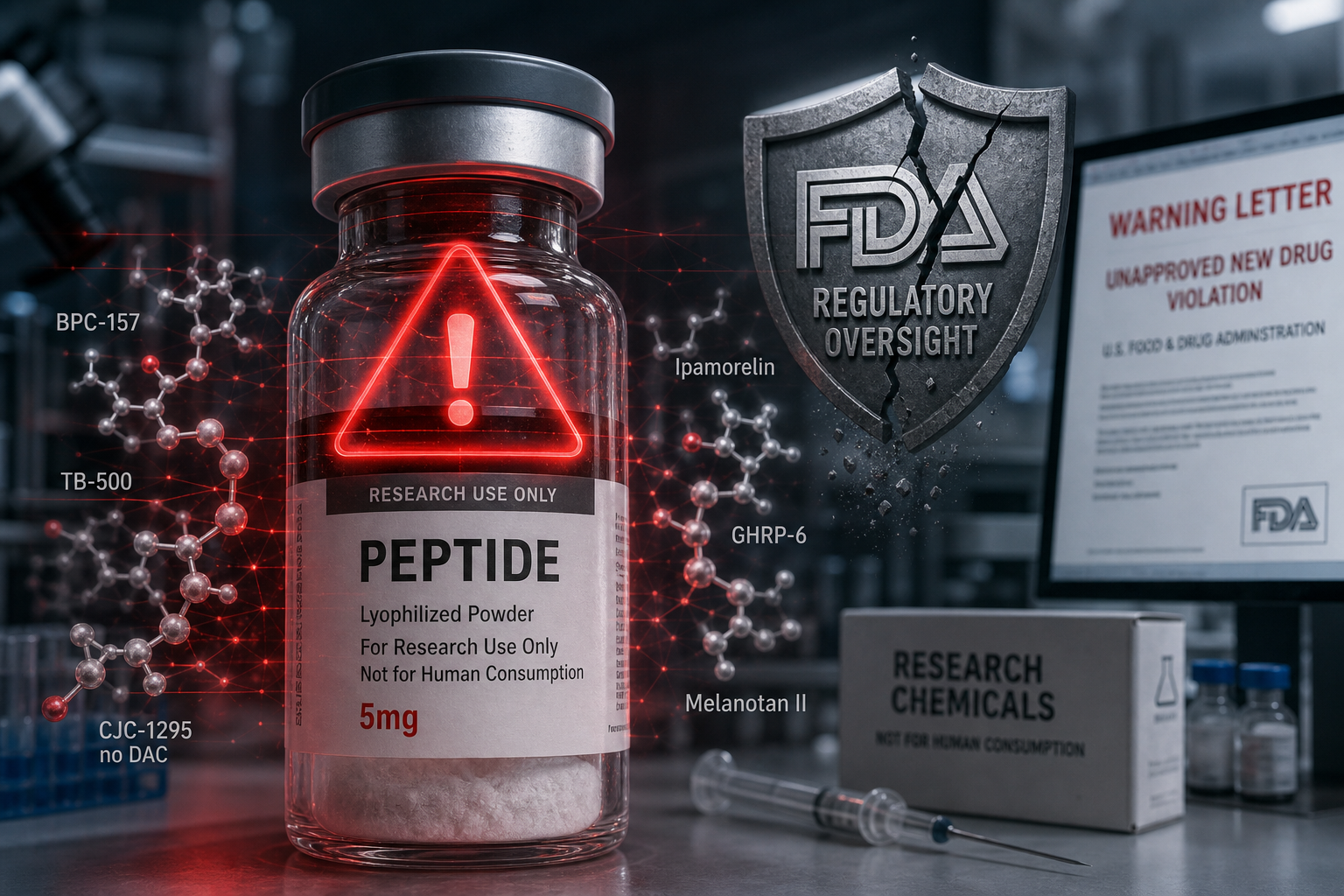
A February 2025 FDA warning letter to a major online peptide vendor confirmed what regulators had long suspected: "For Research Use Only" labels do not shield sellers — or buyers — from enforcement when products are clearly marketed for human use. That single enforcement action crystallized a debate that has grown louder as the peptide market expands rapidly in 2026.

Understanding how safe are mail-order research peptides, evidence gaps, regulatory gray zones, and risk-mitigation for labs is no longer optional for serious researchers. The stakes — legal, scientific, and physiological — demand a clear-eyed look at what the evidence actually shows.

Detailed () editorial illustration showing a magnified view of a peptide vial with a glowing red warning symbol overlaid,

Key Takeaways

  • The FDA classifies peptides with biological activity as drugs; "research use only" labeling does not create a legal exemption for human consumption.
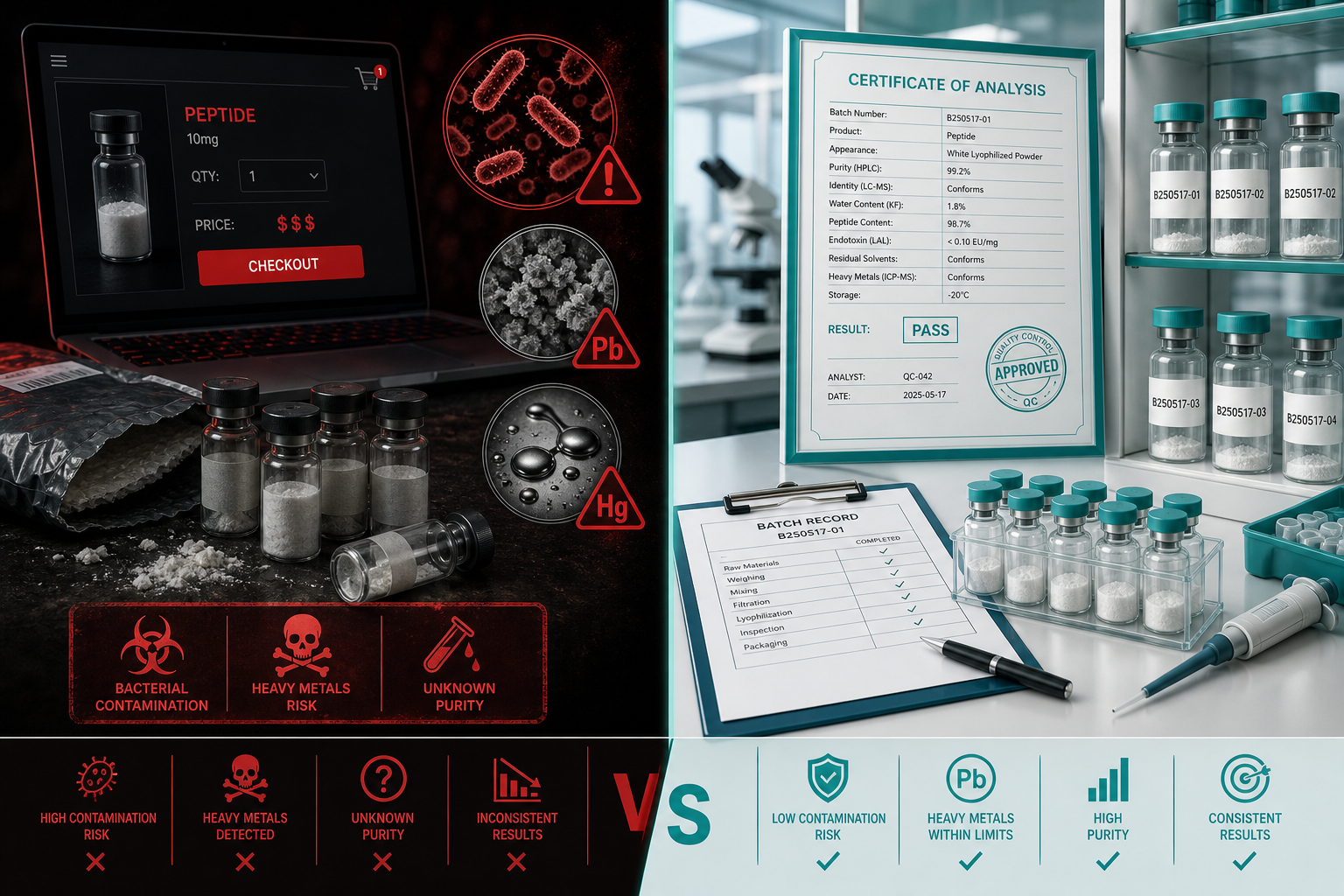
  • Unverified peptide suppliers carry documented risks including bacterial contamination, heavy metal presence, and incorrect potency.
  • The American Peptide Research Alliance reported two adverse events linked to unlicensed vendors in early 2026, with investigations ongoing.
  • Certificates of Analysis (COAs), batch traceability, and cold-chain compliance are the minimum quality benchmarks for legitimate lab sourcing.
  • Legal, prescription-based compounding pathways exist for clinical contexts and represent the gold standard for human-use peptides.

The Regulatory Gray Zone: What "Research Use Only" Actually Means

The phrase "For Research Use Only" (RUO) appears on thousands of peptide product pages, but its legal weight is far weaker than most buyers assume. Under U.S. law, any compound with biological activity intended for human use qualifies as a drug — regardless of how it is labeled. The FDA evaluates actual intent and use, not packaging language.

When a vendor's website includes testimonials, dosing guides, or health benefit claims alongside an RUO disclaimer, regulators treat the disclaimer as void. Marketing language that implies human health outcomes can trigger enforcement actions and has done so repeatedly. Vendors who operate in this space are not protected by a "research chemical" carve-out because no such exemption exists in federal statute.

For buyers, individual possession for genuine laboratory research has not historically been a primary enforcement target. However, that tolerance is not a legal right — it is an unenforced gray area that can shift with regulatory priorities. Labs that source peptides for in-vitro or animal studies should document their research purpose clearly and maintain records accordingly.

Researchers exploring compounds like GLP-1 peptides or AOD-9604 will find that sourcing documentation matters as much as the science itself.


Evidence Gaps and Safety Concerns With Unregulated Suppliers

Evidence Gaps and Safety Concerns With Unregulated Suppliers

Asking how safe are mail-order research peptides requires confronting uncomfortable data gaps. Because unregulated peptide vendors operate outside pharmaceutical manufacturing standards, independent quality data is scarce. What exists is not reassuring.

Documented risks from unverified sources include:

  • Bacterial and fungal contamination from non-sterile synthesis environments
  • Heavy metal residues from uncontrolled reagents
  • Incorrect peptide sequences or truncated chains
  • Mislabeled concentrations leading to unknown potency
  • Degraded product from improper cold-chain handling during shipping

The American Peptide Research Alliance issued a safety alert in March 2026 reporting two adverse events tied to products from unlicensed vendors. Investigations remain ongoing, but the alert underscores that the risk is not theoretical.

"Absence of a Certificate of Analysis is not a minor oversight — it is a fundamental indicator that manufacturing standards were not followed."

For labs researching mitochondrial compounds such as SS-31 peptides or MOTS-c, purity is a scientific necessity, not just a compliance checkbox. Contaminated or mislabeled compounds corrupt experimental results and make data unreproducible.

Red flags when evaluating a peptide supplier:

Warning Sign What It Suggests
No COA or outdated COA No independent purity verification
Price significantly below market Cost-cutting in synthesis or testing
No batch or lot number No traceability if contamination occurs
Health benefit claims on product pages Likely FDA enforcement risk
No cold-chain shipping options Degradation during transit

Risk-Mitigation for Labs: Practical Sourcing Standards

Addressing how safe are mail-order research peptides, evidence gaps, regulatory gray zones, and risk-mitigation for labs ultimately comes down to sourcing discipline. The following standards represent current best practice for legitimate research environments.

Minimum sourcing requirements:

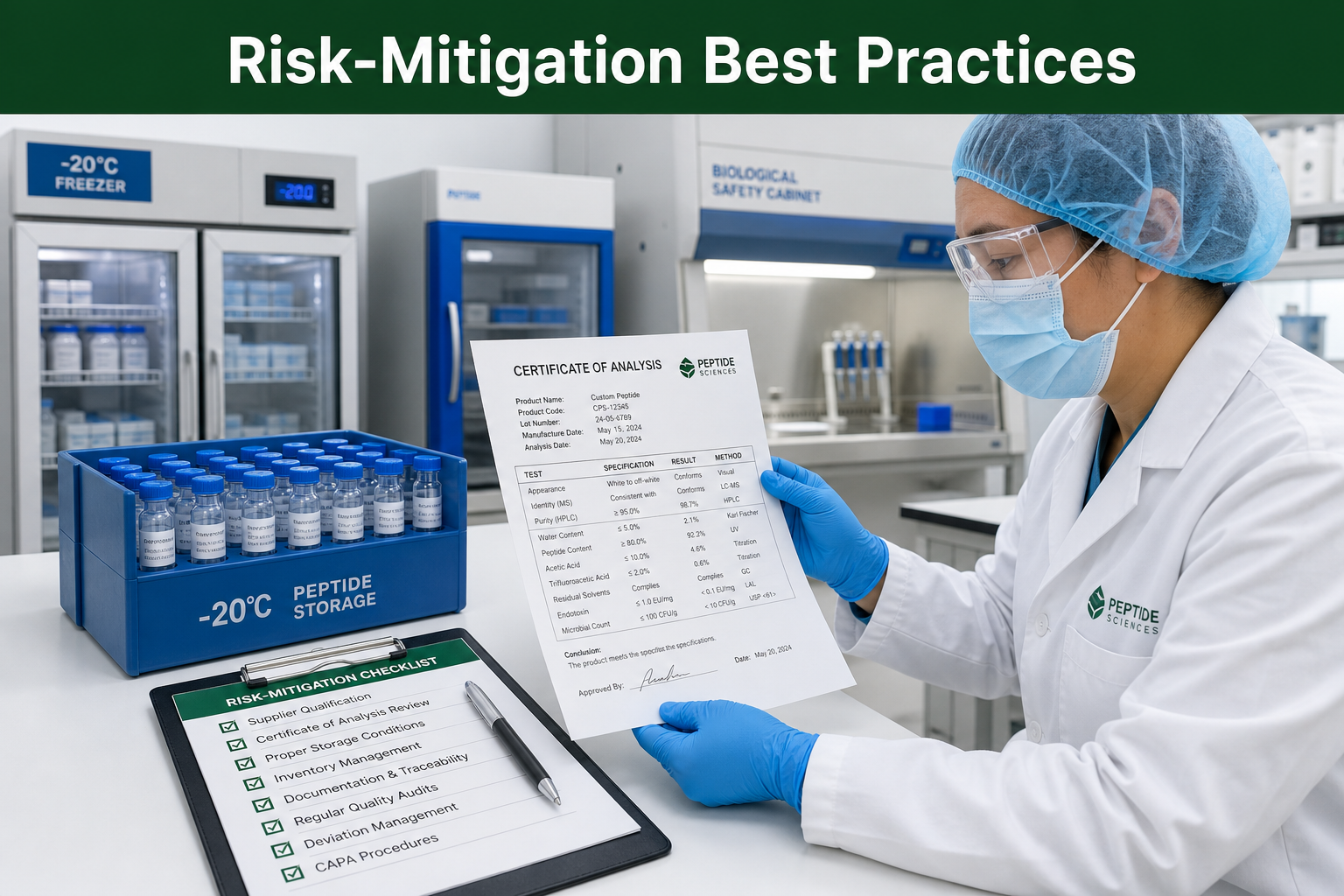
  1. Third-party COA — Verify purity, sequence confirmation, and residual solvent levels from an independent laboratory, not just the vendor's internal testing.
  2. Batch traceability — Every vial should carry a lot number traceable to a specific synthesis run and test report.
  3. Cold-chain compliance — Lyophilized peptides require refrigerated or frozen shipping. Avoid vendors who ship at ambient temperature without insulation.
  4. No human-use marketing — Vendors making health claims are operating outside regulatory boundaries, which signals broader quality control problems.
  5. Transparent manufacturing disclosures — Reputable suppliers disclose synthesis method, facility standards, and sterility testing.

For labs working with compounds like BPC-157, GHK-Cu, or LL-37, these standards are non-negotiable for data integrity.

When human use is the clinical goal, the legally sound pathway is a patient-specific prescription filled by a 503A-licensed compounding pharmacy. This route ensures regulatory compliance, pharmaceutical-grade quality, and prescriber accountability — none of which exist in the unregulated market.

Researchers can also review innovative peptide delivery systems to understand how formulation choices affect both stability and research validity.

Risk-Mitigation for Labs: Practical Sourcing Standards


Conclusion

The peptide research market in 2026 is expanding faster than the regulatory infrastructure designed to govern it. That gap creates real risk — for lab data quality, for legal compliance, and for public safety when products migrate from "research" to human use without oversight.

Actionable next steps for labs and researchers:

  • Audit current suppliers against the COA, batch traceability, and cold-chain checklist above before the next order.
  • Document the research purpose for every peptide purchase and retain records.
  • Reject any vendor whose product pages include dosing guidance, testimonials, or health outcome claims.
  • For any human-use application, engage a licensed prescriber and 503A compounding pharmacy — not an online vendor.
  • Stay current with FDA enforcement actions, which signal which compounds and vendor practices are under active scrutiny.

The science behind peptide research is genuinely compelling. Protecting that science — and the people conducting it — requires sourcing standards that match the seriousness of the work.

https://www.puretestedpeptides.com/wp-content/uploads/2026/06/How-Safe-Are-Mail‑Order-Research-Peptides-Evidence-Gaps-Regulatory-Gray-Zones-and-Risk‑Mitigation-for-Labs.png 1024 1536 Pure Tested https://www.puretestedpeptides.com/wp-content/uploads/2026/01/buy-peptides-online.jpg Pure Tested2026-06-11 13:06:492026-07-20 15:03:31How Safe Are Mail‑Order Research Peptides? Evidence Gaps, Regulatory Gray Zones, and Risk‑Mitigation for Labs
Where to Buy Nootropic Peptides Like Semax and Selank for Research: What Labs Should Look For in a Supplier

Where to Buy Nootropic Peptides Like Semax and Selank for Research: What Labs Should Look For in a Supplier

June 10, 2026/0 Comments/by Pure Tested

Fewer than 30% of research peptide vendors publish batch-specific analytical data — yet that single omission can invalidate months of experimental work. For labs sourcing neuropeptides such as Semax and Selank, supplier selection is not a procurement detail; it is a scientific variable. Understanding where to buy nootropic peptides like Semax and Selank for research, and what labs should look for in a supplier, directly shapes data integrity, reproducibility, and regulatory standing.

Key Takeaways

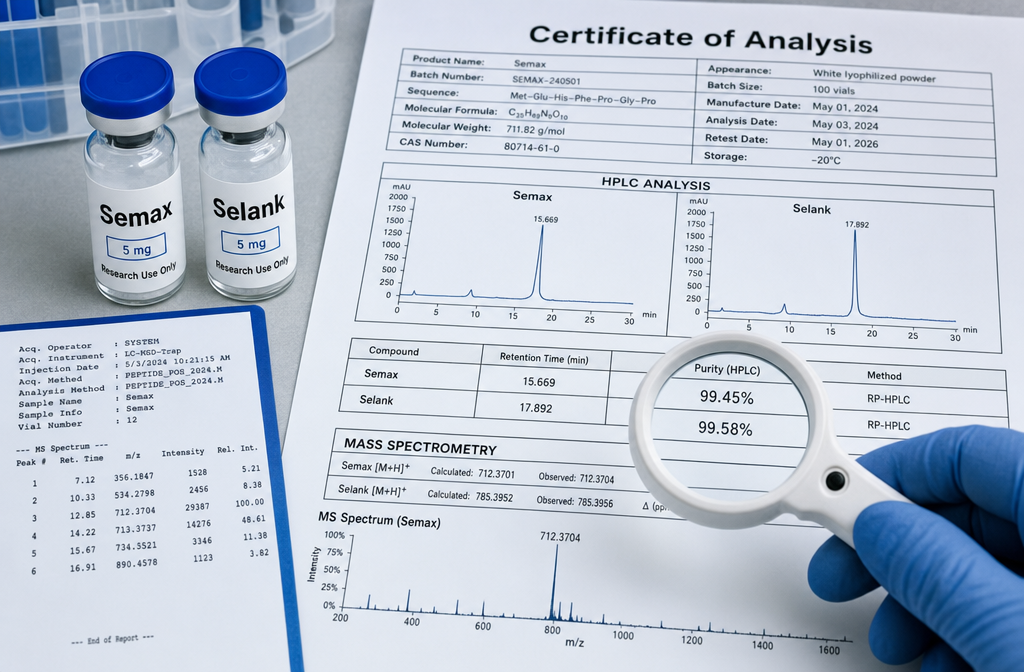
  • Purity documentation of 99% or higher, confirmed by HPLC and mass spectrometry, is the minimum acceptable standard for research-grade Semax and Selank.
  • Batch-specific Certificates of Analysis (CoA) — not generic lot documents — are essential for traceability and reproducibility.
  • Third-party independent testing removes supplier bias and strengthens confidence in reported purity figures.
  • Proper lyophilized storage at -20°C under inert gas is required to maintain peptide stability beyond 12 months.
  • Regulatory labeling ("for research use only") and transparent manufacturing disclosures protect both the lab and the supplier relationship.

Key Takeaways

Why Documentation Is the First Filter When Sourcing Research Peptides

The most common mistake labs make when deciding where to buy nootropic peptides like Semax and Selank for research is prioritizing price before documentation. A low unit cost means nothing if the accompanying analytical record cannot support a publication or regulatory audit.

What valid documentation looks like:

Document Type Minimum Requirement
Certificate of Analysis (CoA) Batch-specific, not generic
HPLC Chromatogram Purity confirmed at 99% or higher
Mass Spectrometry Report Molecular weight and sequence verified
Testing Laboratory Independent, third-party facility

Reputable suppliers provide CoAs tied to individual production batches. A batch-specific CoA details the peptide's confirmed purity, identity, and the analytical methods used — making results traceable across experiments. Generic documents that cover an entire product line rather than a specific lot should raise immediate concern.
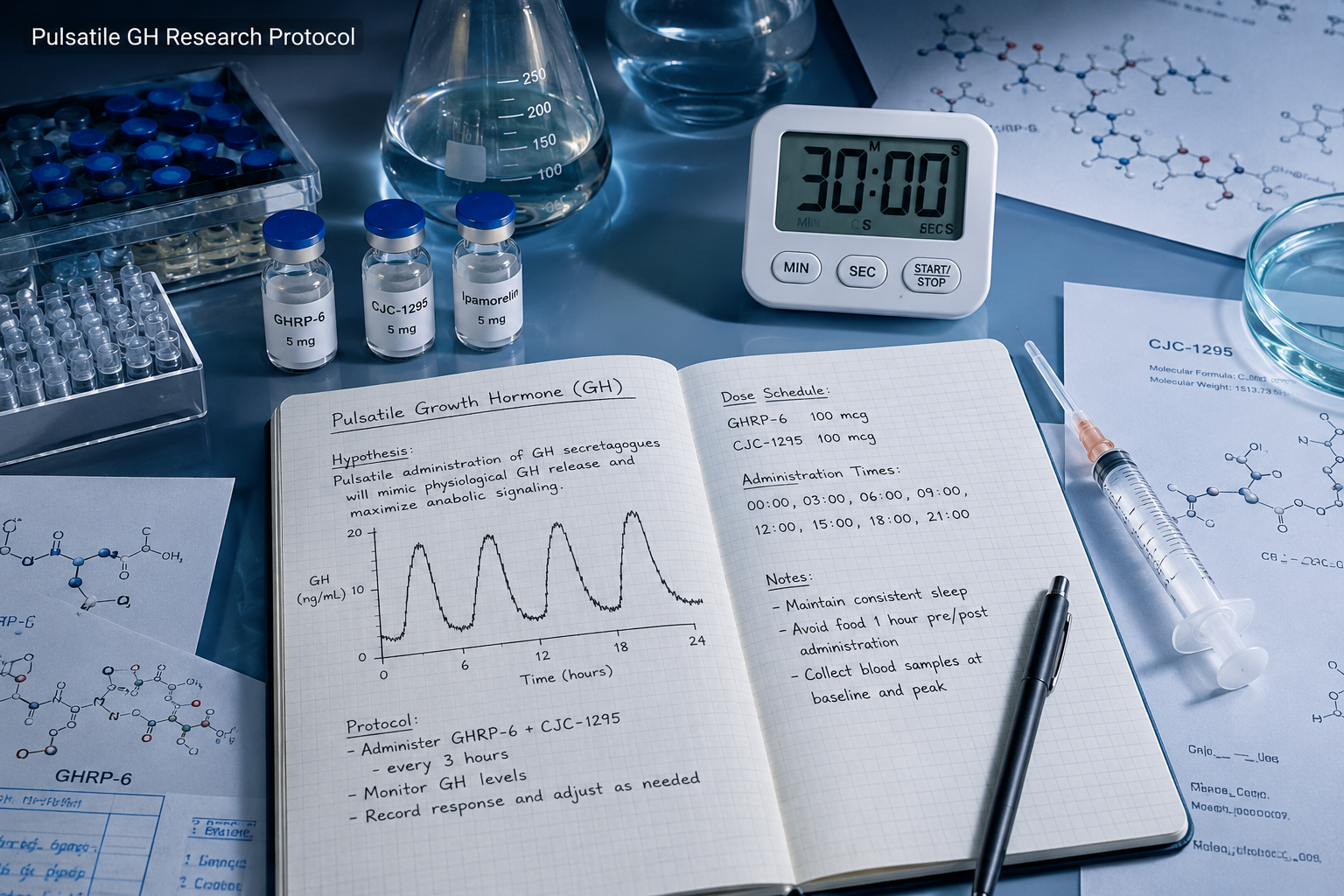
Third-party testing is equally non-negotiable. When a supplier uses an independent laboratory rather than an in-house team, the results carry far greater scientific weight. Labs should ask vendors directly: which external facility conducted the analysis, and can the raw data be shared?

For researchers already familiar with sourcing standards in adjacent peptide categories, the BPC-157 research sourcing guide provides a useful parallel framework for evaluating documentation quality.


Why Documentation Is the First Filter When Sourcing Research Peptides

Stability, Storage, and the Nasal Spray Framing Problem

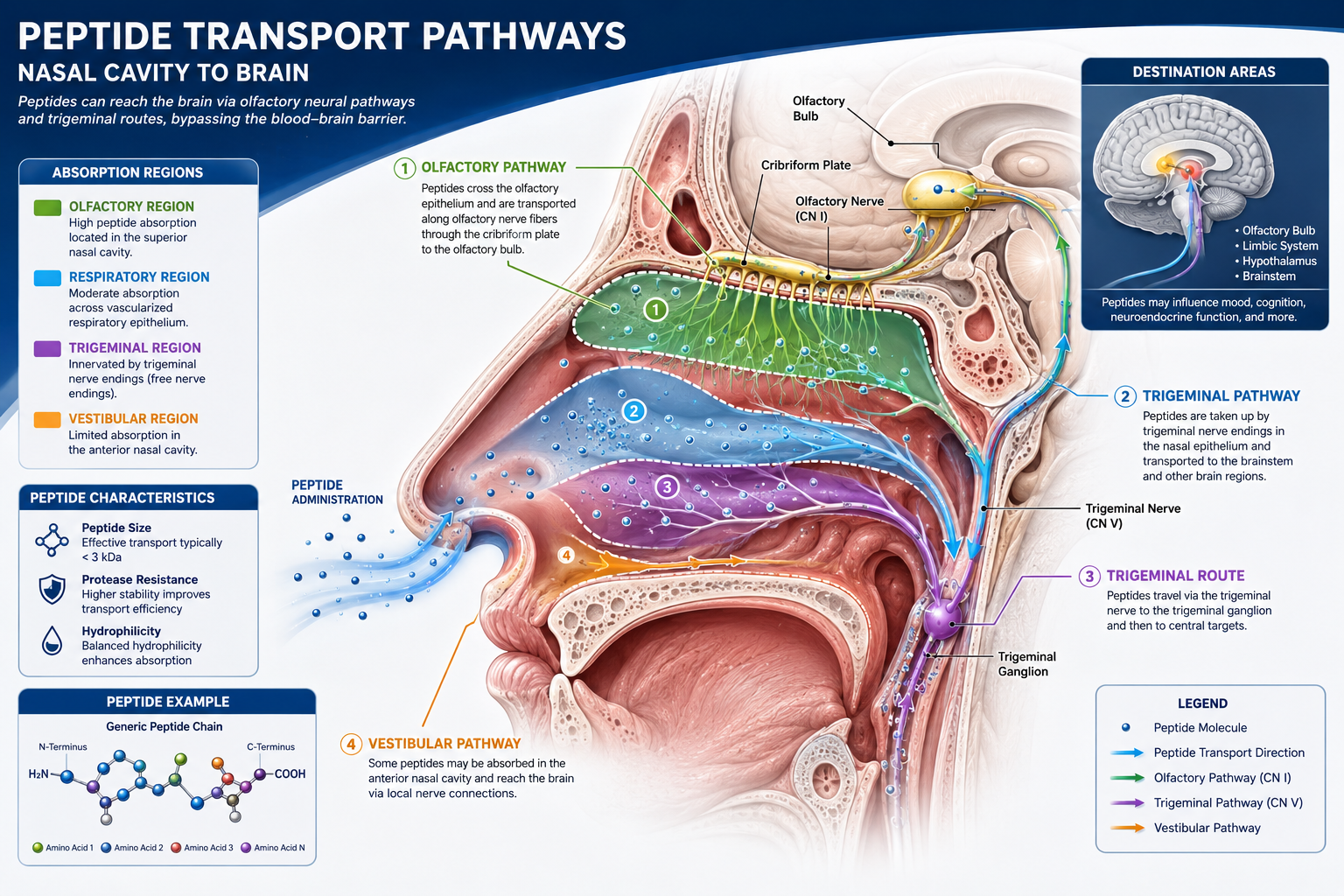
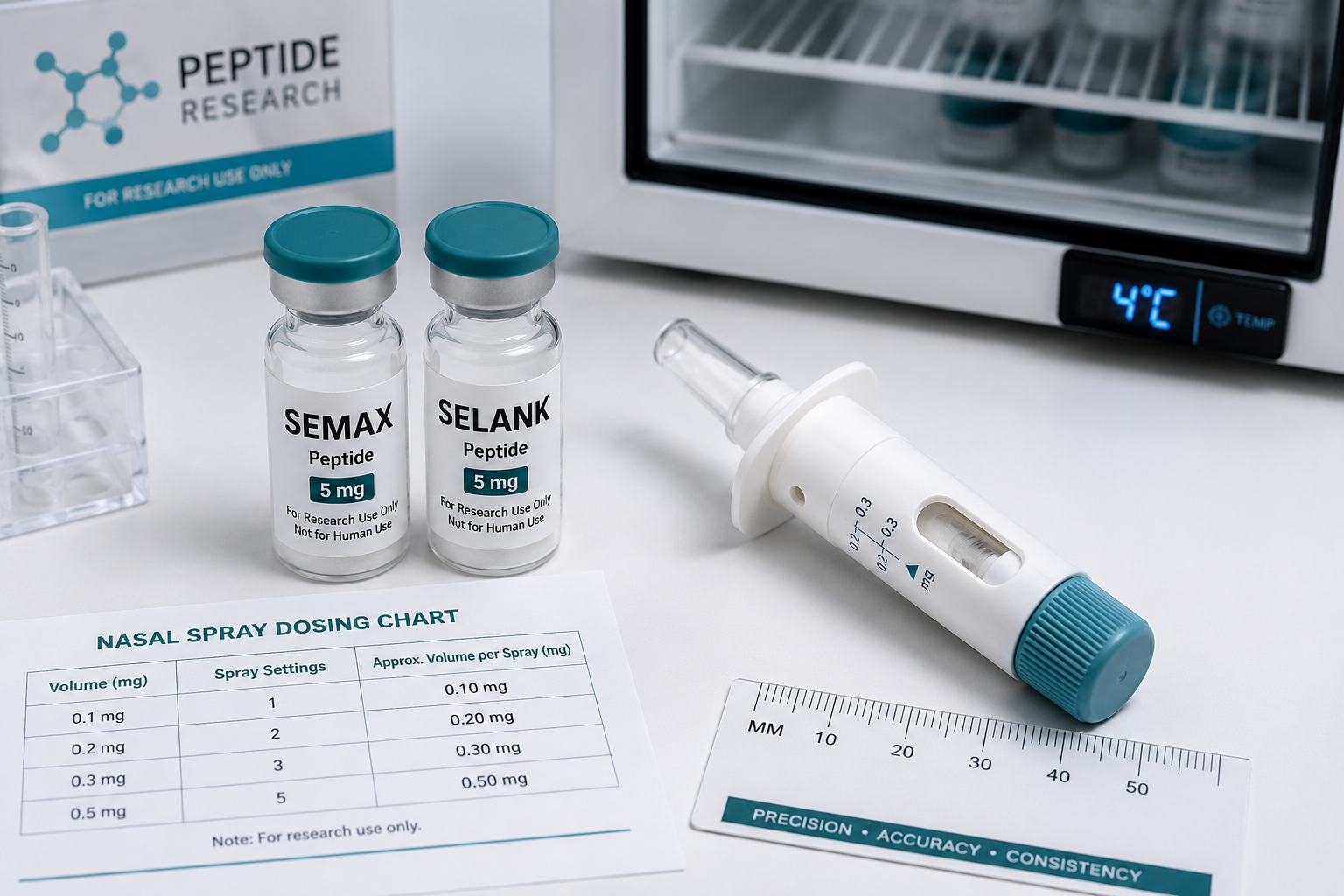
Semax and Selank are frequently marketed in nasal spray formulations. Labs should understand the distinction between a pre-formulated nasal spray and a lyophilized powder intended for reconstitution in research settings.

Lyophilized powder is the preferred format for controlled research because:

  • It supports longer shelf stability — beyond 12 months when stored correctly
  • It allows precise reconstitution volumes for experimental dosing protocols
  • It is less susceptible to microbial contamination than pre-mixed aqueous solutions

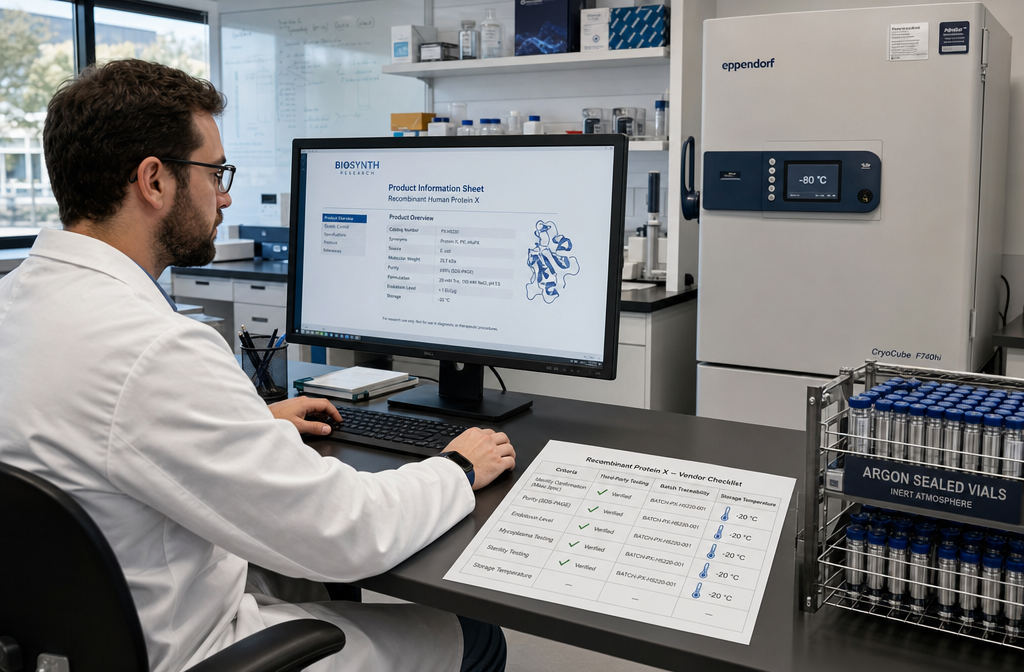
Proper storage conditions for lyophilized Semax and Selank require temperatures of -20°C and an inert atmosphere, typically argon, to prevent oxidative degradation. Suppliers who ship peptides without cold-chain packaging or fail to specify storage conditions in their documentation are signaling inadequate quality control.

The nasal spray format, while convenient for some applications, introduces formulation variables that complicate research reproducibility. Labs should clarify with any vendor whether the product is supplied as a research-grade lyophilized compound or as a consumer-oriented finished formulation. For a deeper look at how Selank functions in research contexts, the Selank peptide benefits overview and the Selank and Semax comparison resource both provide useful mechanistic context.

Understanding how reference-grade benchmarks are established also matters here. The Bachem and reference standards resource outlines how pharmaceutical-grade benchmarks are built — a useful standard against which to evaluate supplier claims.


Stability, Storage, and the Nasal Spray Framing Problem

Practical Supplier Evaluation: What Labs Should Look For

When determining where to buy nootropic peptides like Semax and Selank for research, labs benefit from a structured evaluation process rather than relying on vendor marketing copy alone.

Core evaluation criteria:

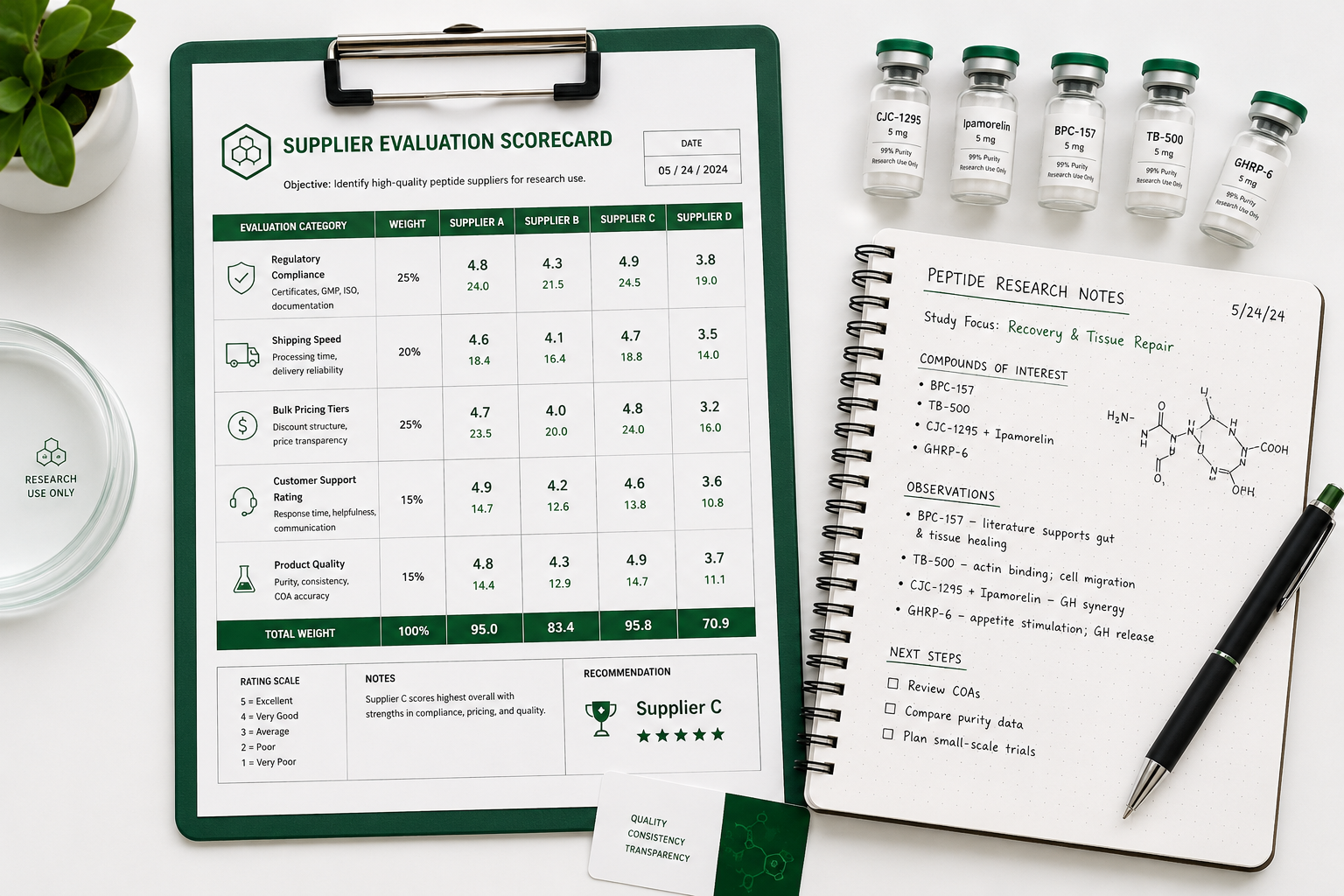
  • Regulatory labeling: Products must be clearly labeled "for research use only." This protects the purchasing institution and confirms the supplier understands the legal framework.
  • Manufacturing transparency: Reputable vendors disclose synthesis methods, quality control workflows, and sourcing of raw materials.
  • Shipping and availability: Same-day or next-day dispatch options with cold-chain packaging preserve peptide integrity in transit.
  • Bulk pricing structure: Tiered pricing for larger research quantities is standard among established suppliers and supports longer study designs.
  • Customer support quality: Knowledgeable support staff who can answer analytical questions — not just order inquiries — indicate a scientifically credible operation.
  • Reputation and consistency: Peer reviews from other research institutions and consistent batch-to-batch purity records are strong indicators of reliability.

Labs sourcing a broader peptide panel alongside Semax and Selank may also find value in reviewing quality testing protocols and exploring related neuroprotective compounds such as Pinealon to understand how rigorous documentation standards apply across peptide categories.


Conclusion

Sourcing Semax and Selank for research is a decision that carries real scientific consequences. The question of where to buy nootropic peptides like Semax and Selank for research — and what labs should look for in a supplier — ultimately comes down to three priorities: verified purity through independent analytical testing, batch-specific documentation that supports reproducibility, and transparent handling and storage practices that protect compound integrity.

Actionable next steps for labs:

  1. Request batch-specific CoAs with HPLC and MS data before placing any order.
  2. Confirm that testing was conducted by a named, independent third-party laboratory.
  3. Verify cold-chain shipping protocols and confirm lyophilized powder format for research applications.
  4. Review the supplier's regulatory labeling and manufacturing disclosures before committing to a vendor relationship.
  5. Cross-reference peer reviews from other research institutions to validate consistency claims.

A supplier who cannot answer these questions clearly is not yet ready to support serious research.

https://www.puretestedpeptides.com/wp-content/uploads/2026/06/Where-to-Buy-Nootropic-Peptides-Like-Semax-and-Selank-for-Research-What-Labs-Should-Look-For-in-a-Supplier.png 672 1024 Pure Tested https://www.puretestedpeptides.com/wp-content/uploads/2026/01/buy-peptides-online.jpg Pure Tested2026-06-10 13:06:202026-07-20 15:03:33Where to Buy Nootropic Peptides Like Semax and Selank for Research: What Labs Should Look For in a Supplier
BPC-157 and TB-500: How Researchers Think About Multi-Peptide Tissue-Repair Models

BPC-157 and TB-500: How Researchers Think About Multi-Peptide Tissue-Repair Models

June 10, 2026/0 Comments/by Pure Tested

Fewer than a handful of peptide pairings generate as much discussion in preclinical research circles as BPC-157 and TB-500. The reason is straightforward: these two compounds appear to act on different but overlapping repair pathways, which makes them a natural subject for researchers designing multi-peptide tissue-repair models. Understanding why scientists study them together — and where the evidence actually stands — is essential for anyone comparing single-peptide and stack-based experimental frameworks.

() scientific illustration showing two distinct peptide molecules — one compact 15-amino-acid chain labeled BPC-157 glowing

Key Takeaways

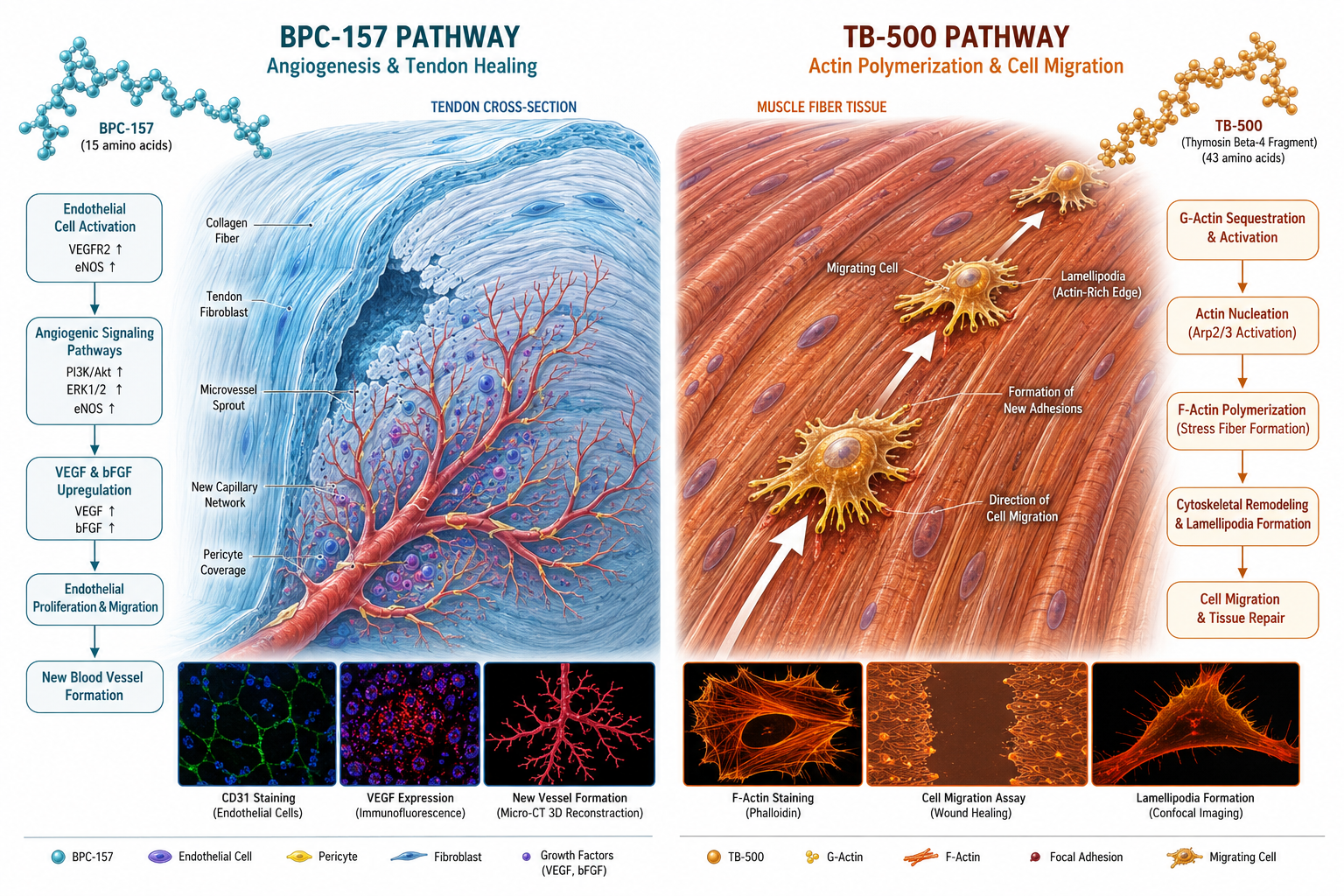
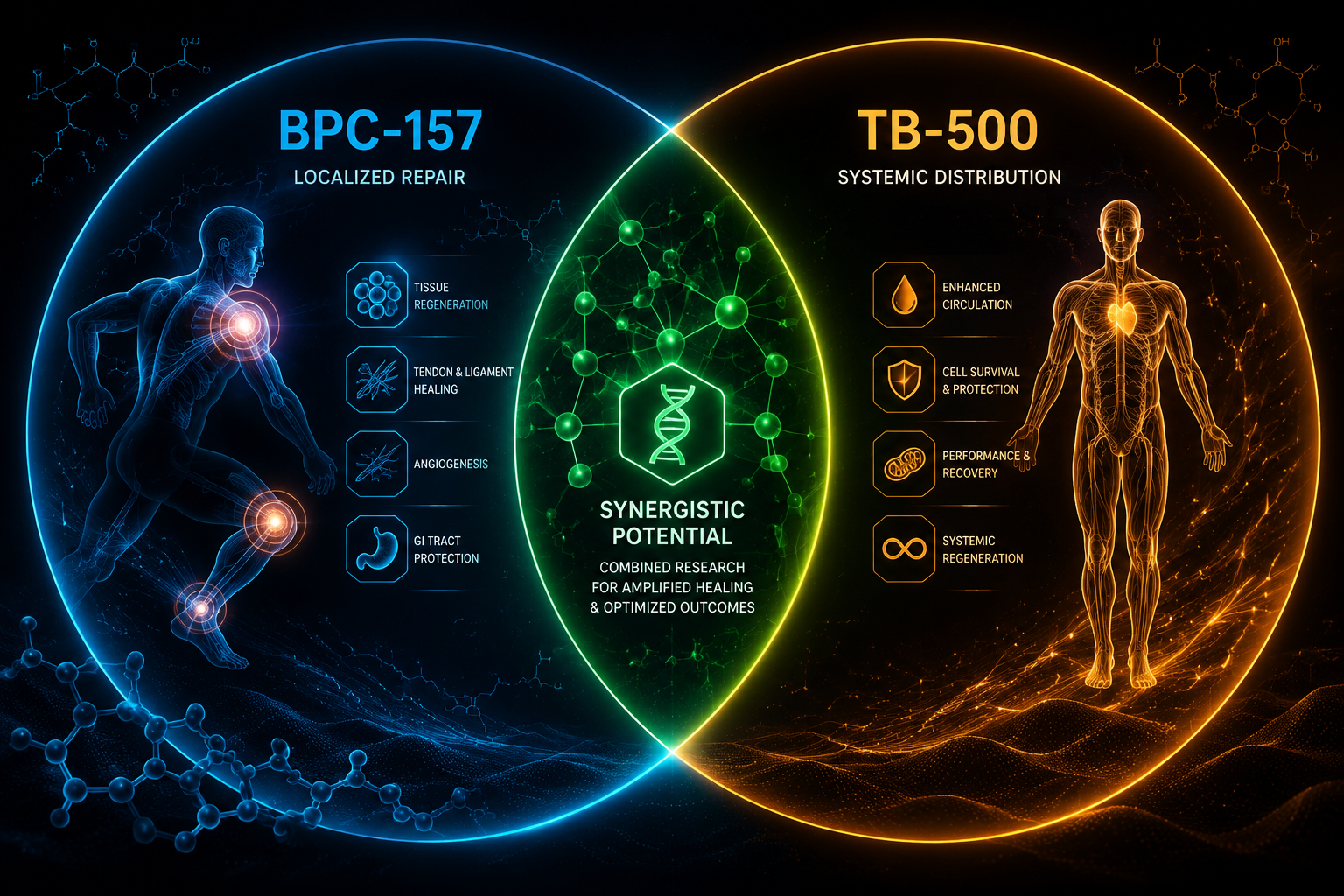
  • BPC-157 targets localized tissue repair through angiogenesis and nitric oxide modulation; TB-500 supports systemic healing via actin regulation and cell migration.
  • When combined in what researchers call the "Wolverine Stack," the two peptides are studied for complementary local and systemic repair coverage.
  • Preclinical animal models show improvements in tensile strength, collagen organization, and recovery time when both peptides are used together.
  • Neither compound holds FDA approval; both are classified as research-only substances and are banned by WADA under the S0 category.
  • Human clinical data remain limited, making rigorous experimental design and verified sourcing critical for any legitimate research program.

Complementary Mechanisms: Why Researchers Pair These Two Peptides

At the core of BPC-157 and TB-500: how researchers think about multi-peptide tissue-repair models is a simple mechanistic logic. The two peptides do not duplicate each other — they fill different roles.

BPC-157 is a 15-amino-acid peptide derived from human gastric juice. Its proposed mechanisms center on:

  • Promoting angiogenesis (new blood vessel formation) at injury sites
  • Modulating nitric oxide signaling to improve local blood flow
  • Upregulating growth factors that support tendon, ligament, and gastrointestinal tissue repair

TB-500, a synthetic fragment of thymosin beta-4, works differently. It is thought to:

  • Regulate actin polymerization, which is essential for cell movement and structural repair
  • Facilitate cell migration toward damaged tissue from distant sites
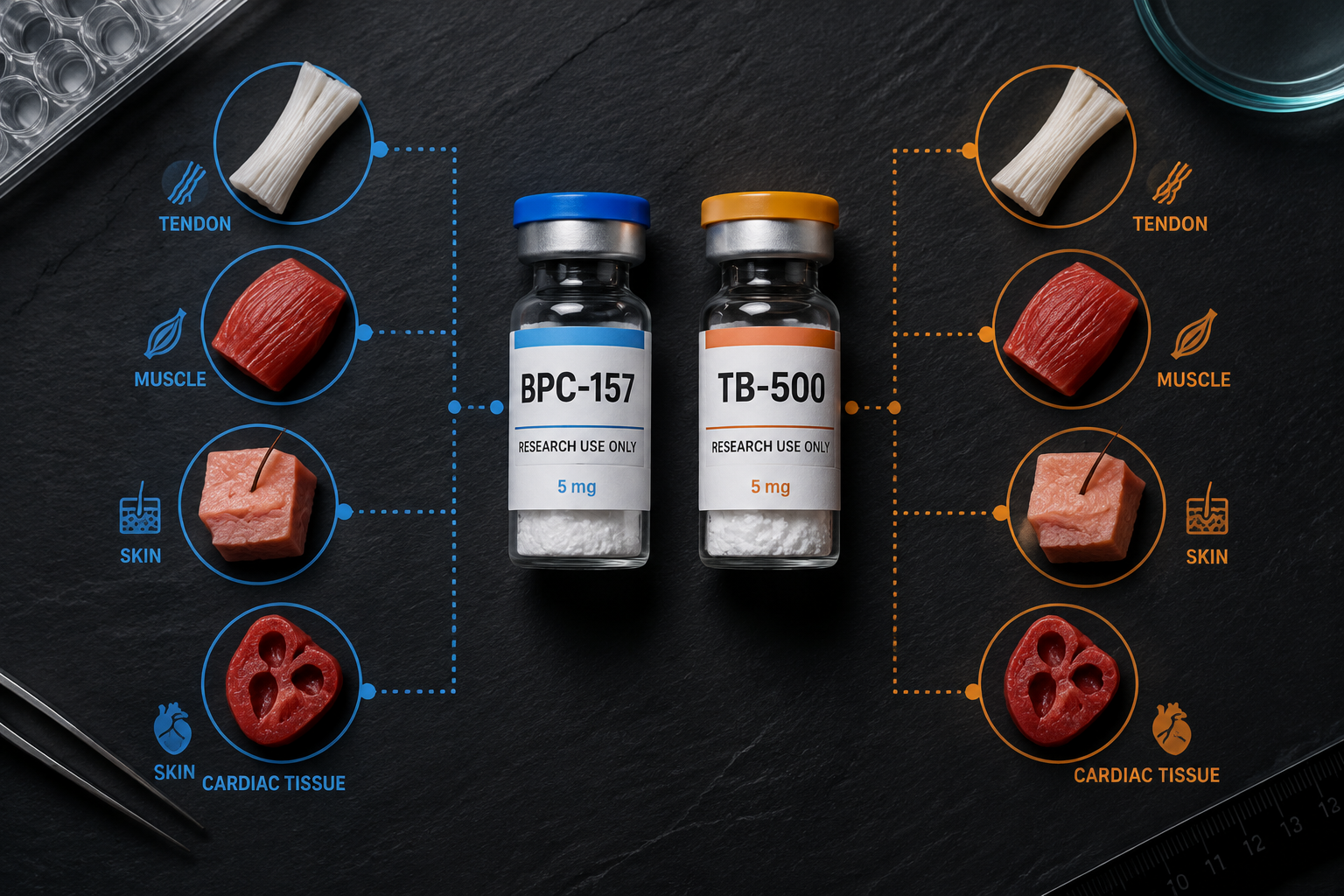
  • Support recovery in muscle, cardiac, and dermal tissues through systemic distribution

"The mechanistic distinction — localized versus systemic — is precisely why researchers designing multi-peptide models find value in studying these compounds together rather than in isolation."

This complementary profile is why the combination is sometimes called the "Wolverine Stack" in research shorthand. For a broader look at how tissue biology underpins these models, the recovery and tissue biology overview provides useful foundational context.


Preclinical Evidence and Dosing Frameworks in Multi-Peptide Research

Preclinical Evidence and Dosing Frameworks in Multi-Peptide Research

Animal studies form the current backbone of evidence for BPC-157 and TB-500: how researchers think about multi-peptide tissue-repair models. Preclinical data from Achilles tendon injury models, ligament damage studies, and cardiac ischemia/reperfusion experiments consistently show that the combination produces measurable improvements in:

Outcome Measure Observed in Preclinical Models
Tensile strength Increased in tendon repair models
Collagen organization Improved fiber alignment
Recovery timeline Shortened vs. control groups
Cardiac tissue preservation Reduced ischemia-related damage

Researchers working with these compounds typically follow distinct dosing frameworks:

  • BPC-157: 250–500 mcg once or twice daily, administered subcutaneously near the injury site or orally for gastrointestinal applications
  • TB-500: 2–2.5 mg twice weekly during a loading phase, followed by 2 mg weekly for maintenance, administered subcutaneously at any site due to its systemic distribution

For deeper dives into each compound individually, the BPC-157 angiogenesis and tendon research overview and the TB-500 muscle recovery research themes page offer detailed mechanistic breakdowns. The TB-500 cytoskeletal remodeling research article is also directly relevant for understanding actin-related repair pathways.


Single-Peptide vs. Stack Models: Where the Evidence Diverges

Single-Peptide vs. Stack Models: Where the Evidence Diverges

The central question for researchers designing experiments around BPC-157 and TB-500: how researchers think about multi-peptide tissue-repair models is whether combined use produces outcomes that neither peptide achieves alone. Preclinical data suggest it does — but with important caveats.

Human clinical data remain scarce. BPC-157 has been examined in only a small number of pilot studies. TB-500 has progressed to Phase 2/3 clinical trials in specific formulations, but comprehensive human data are still absent. This gap between preclinical promise and clinical validation is the defining challenge of the field in 2026.

Researchers should also note two regulatory realities:

  1. Neither BPC-157 nor TB-500 holds FDA approval for therapeutic use. Both are classified as research compounds only.
  2. WADA prohibits both substances under the S0 category (Non-Approved Substances), making them banned in competitive sport contexts.

For researchers interested in how multi-peptide synergy concepts apply to other compound pairings, the synergy of LL-37 and MOTS-c research page offers a useful parallel framework. Those sourcing compounds for legitimate research programs should also review Bachem reference standards and peptide benchmarking to ensure purity verification is part of the experimental design.


Conclusion

The case for studying BPC-157 and TB-500 together rests on a mechanistically coherent rationale: one peptide addresses localized repair, the other supports systemic healing, and preclinical evidence suggests the combination outperforms either agent alone in several tissue models. However, the field is still in early stages. Human data are limited, regulatory status is clear (research-only), and rigorous experimental controls are non-negotiable.

Actionable next steps for researchers:

  • Review the preclinical literature on tendon, ligament, and cardiac repair models before designing any experimental protocol.
  • Establish purity benchmarks using certified reference standards before sourcing either compound.
  • Design experiments with appropriate single-peptide control arms to isolate stack-specific effects.
  • Monitor the regulatory landscape, as both peptides remain unapproved and WADA-prohibited as of 2026.

The multi-peptide tissue-repair model is a compelling research framework — but its value depends entirely on the quality of the science behind it.

https://www.puretestedpeptides.com/wp-content/uploads/2026/06/BPC-157-and-TB-500-How-Researchers-Think-About-Multi-Peptide-Tissue-Repair-Models.png 1024 1536 Pure Tested https://www.puretestedpeptides.com/wp-content/uploads/2026/01/buy-peptides-online.jpg Pure Tested2026-06-10 13:05:002026-07-20 15:03:34BPC-157 and TB-500: How Researchers Think About Multi-Peptide Tissue-Repair Models
Tesamorelin, CJC‑1295, and Ipamorelin Stacks: How Researchers Compare Multi‑Peptide Blends to Single‑Peptide Protocols

Tesamorelin, CJC‑1295, and Ipamorelin Stacks: How Researchers Compare Multi‑Peptide Blends to Single‑Peptide Protocols

June 9, 2026/0 Comments/by Pure Tested

{"cover":"Professional landscape format (1536×1024) hero image with bold text overlay: 'Peptide Stacks vs Single Protocols: Tesamorelin, CJC-1295 & Ipamorelin' in extra large 72pt white bold sans-serif font with dark semi-transparent overlay box, centered upper-third composition. Background shows a high-resolution laboratory research setting with glass vials, molecular structure diagrams, and soft blue lighting with white accents. Color palette: deep navy blue, crisp white, and teal highlights. Magazine cover aesthetic, editorial quality, high contrast.","content":["Detailed landscape format (1536×1024) scientific illustration showing three distinct peptide molecular structures labeled Tesamorelin, CJC-1295, and Ipamorelin arranged side by side with connecting arrows indicating GH-axis pathway activation. Background features a stylized pituitary gland diagram with GH pulse waveforms. Color scheme: clinical white, deep blue, and amber highlights. Infographic style with clean sans-serif annotations, research laboratory aesthetic, high detail.","Aerial top-down view of a researcher's desk showing a comparison chart contrasting single-peptide protocol data versus multi-peptide blend data, with bar graphs showing 17% VAT reduction figures, regulatory status badges (FDA-approved vs research chemical), and dose-sparing calculation notes on a digital tablet. Scattered research papers, a calculator, and peptide vials visible. Color palette: warm white desk surface, navy data graphics, green and red status indicators. Editorial research aesthetic.","Close-up wide-angle shot of a laboratory bench with precisely measured peptide vials arranged in a row showing dose-sparing blend formulations, a digital scale, and a research protocol notebook open to a page titled Multi-Peptide Stack Design Considerations. Soft overhead lighting with clinical blue-white tones. One vial labeled with a triple-blend formulation tag. Background shows blurred centrifuge equipment. Color scheme: sterile white, steel grey, and accent blue. High-resolution editorial quality."]

Professional landscape hero image () with : "Tesamorelin, CJC-1295, and Ipamorelin Stacks: How Researchers Compare

Only one peptide in the GH-secretagogue class has cleared the bar of FDA approval and multiple randomized controlled trials — and it is almost always studied alone. That single fact defines the central tension researchers face when evaluating Tesamorelin, CJC-1295, and Ipamorelin stacks: How researchers compare multi-peptide blends to single-peptide protocols reveals a sharp divide between what is clinically proven and what is mechanistically plausible.

Key Takeaways section infographic: Split-screen scientific visualization comparing multi-peptide GH-secretagogue stacks

Key Takeaways

  • Tesamorelin monotherapy has robust RCT evidence showing roughly 17% visceral adipose tissue (VAT) reduction at six months; no equivalent data exist for CJC-1295 or Ipamorelin stacks.
  • CJC-1295 + Ipamorelin combinations sit in the lowest evidence tier for fat loss, classified as mechanistically plausible but clinically under-proven.
  • Triple-blend stacks typically use lower individual doses than standalone protocols, reflecting a dose-sparing research strategy.
  • Regulatory status differs sharply: tesa is FDA-approved for a specific indication; triple-peptide blends are research chemicals not approved for human use.
  • Researchers choosing between protocols should match the peptide to the research question, not assume that more peptides equal better outcomes.

Understanding the Evidence Gap in GH-Secretagogue Research

The GH axis can be stimulated through two distinct receptor pathways: GHRH receptors (targeted by tesa and CJC-1295) and ghrelin/GHS receptors (targeted by ipamorelin). On paper, combining both pathways makes sense — each amplifies GH pulse amplitude through a different mechanism, and preclinical data support synergistic GH release.

The problem is that synergistic GH release is a surrogate marker, not a clinical outcome. Tesamorelin's evidence base is built on hard endpoints. Pooled data from multiple randomized trials in patients with metabolic syndrome show approximately 17.2% VAT reduction at six months alongside meaningful improvements in HbA1c. These results come from tesa used as a monotherapy, not as part of a stack.

CJC-1295 and ipamorelin have no equivalent VAT-specific RCT data. Their reputation for supporting fat loss, lean mass, recovery, and sleep quality rests largely on:

  • Surrogate biomarkers (IGF-1 elevation, GH pulse data)
  • Small or open-label studies
  • Extrapolation from tesa's mechanism
  • Accumulated clinical experience rather than controlled outcomes

For researchers designing protocols, this distinction is not a minor detail — it determines what conclusions can legitimately be drawn from any experiment.


How Researchers Compare Multi-Peptide Blends to Single-Peptide Protocols: Regulatory and Dosing Frameworks

How Researchers Compare Multi-Peptide Blends to Single-Peptide Protocols: Regulatory and Dosing Frameworks

Regulatory status shapes research design as much as pharmacology does. Tesamorelin carries FDA approval for HIV-associated lipodystrophy, which means its dosing, monitoring parameters, and safety profile are well-characterized in published literature. Researchers using it off-label for visceral fat or metabolic endpoints have a defined framework to work within.

Triple-peptide blends — such as the tesa + CJC-1295 + ipamorelin 12mg blend — are explicitly classified as research chemicals not approved for human use. This status places them in a different methodological category. Researchers working with these compounds in preclinical or experimental models must account for the absence of standardized clinical dosing guidance.

When comparing the two approaches, a useful framework is the evidence tier system:

Protocol Type Evidence Tier Key Data Source
Tesamorelin monotherapy High Multiple RCTs, meta-analyses
CJC-1295 + Ipamorelin stack Low Surrogate markers, case series
Tesamorelin + CJC-1295 + Ipamorelin triple blend Lowest Preclinical, mechanistic only

Researchers exploring tesa vs ipamorelin as separate protocols will find that tesa is the evidence-based choice for visceral fat specifically, while ipamorelin-containing stacks are positioned more toward generalized recovery and lean-mass support — a distinction that should inform how any study is designed and how results are interpreted.


Practical Considerations When Designing Multi-Peptide GH Stack Protocols

Practical Considerations When Designing Multi-Peptide GH Stack Protocols

One consistent feature of triple-blend formulations is dose-sparing. Experimental profiles for the tesa + CJC-1295 + ipamorelin combination typically describe each component dosed below its usual standalone level — for example, tesa at 500–1,000 mcg alongside CJC-1295 and ipamorelin each at 100–200 mcg per administration. The rationale is multi-pathway stimulation without proportionally increasing total peptide load.

Researchers considering peptide blend research should weigh several practical factors:

  • Research question specificity: If the target endpoint is visceral fat reduction, single-peptide tesa protocols have validated measurement tools and outcome benchmarks. Multi-peptide blends lack these reference points.
  • Confounding variables: Stacking multiple peptides makes it harder to attribute any observed effect to a specific compound. Single-peptide protocols offer cleaner data.
  • Dose-response clarity: Established tesa dosage guidance exists in the literature; equivalent guidance for triple blends does not.
  • Purity verification: Any multi-peptide blend used in research should come with third-party testing documentation. Reviewing quality testing protocols before sourcing is a critical step.

For researchers interested in broader GH-axis research design, the GH axis product line overview provides useful context on how different secretagogues fit within a structured research framework. Those exploring adjacent peptide categories may also find value in reviewing BPC-157 core peptides documentation for comparison on how single-peptide evidence builds over time.


Conclusion

The comparison between Tesamorelin, CJC-1295, and Ipamorelin stacks and single-peptide protocols ultimately comes down to matching the tool to the task. Tesamorelin monotherapy remains the gold standard for visceral fat research, backed by rigorous clinical trial data. CJC-1295 and ipamorelin combinations offer mechanistic appeal and broader GH-axis stimulation, but researchers must work with the understanding that combination data are thin and clinical outcomes are largely unproven.

Actionable next steps for researchers in 2026:

  1. Define the primary endpoint before selecting a protocol — visceral fat reduction favors tesa alone; recovery and lean-mass models may justify a stack design.
  2. Use single-peptide runs first to establish baseline response data before introducing multi-peptide complexity.
  3. Source only third-party tested compounds and document purity for every experimental batch.
  4. Treat any triple-blend result as hypothesis-generating, not confirmatory, until controlled studies exist.

The gap between mechanistic plausibility and clinical proof is where most peptide stack research currently lives. Acknowledging that gap is the first step toward designing studies that actually close it.

https://www.puretestedpeptides.com/wp-content/uploads/2026/06/Tesamorelin-CJC‑1295-and-Ipamorelin-Stacks-How-Researchers-Compare-Multi‑Peptide-Blends-to-Single‑Peptide-Protocols.png 672 1024 Pure Tested https://www.puretestedpeptides.com/wp-content/uploads/2026/01/buy-peptides-online.jpg Pure Tested2026-06-09 13:05:282026-07-20 15:03:36Tesamorelin, CJC‑1295, and Ipamorelin Stacks: How Researchers Compare Multi‑Peptide Blends to Single‑Peptide Protocols
Best Research Peptides for Tissue Repair: Comparing BPC‑157, TB‑500, GHK‑Cu, and Glow/Klow Blends for In‑Vitro and Animal Models

Best Research Peptides for Tissue Repair: Comparing BPC‑157, TB‑500, GHK‑Cu, and Glow/Klow Blends for In‑Vitro and Animal Models

June 8, 2026/0 Comments/by Pure Tested

Fewer than 30 human subjects have been enrolled across all published pilot studies on BPC‑157 combined — yet preclinical data on this and related peptides continues to accelerate at a striking pace. For researchers selecting compounds for tissue repair models in 2026, that gap between animal evidence and human data is the central challenge. This article examines the best research peptides for tissue repair: comparing BPC‑157, TB‑500, GHK‑Cu, and Glow/Klow blends for in‑vitro and animal models, covering mechanisms, model selection, reconstitution ranges, and purity considerations.

Key Takeaways

  • BPC‑157, TB‑500, and GHK‑Cu each target a distinct phase of tissue repair, making them complementary rather than redundant.
  • GLOW blends combine all three peptides; KLOW adds the anti-inflammatory tripeptide KPV for a broader repair profile.
  • Preclinical evidence is robust, but human clinical data remains extremely limited — these compounds are for research use only.
  • Purity verification and proper reconstitution are non-negotiable for reproducible in-vitro and animal model results.
  • None of these peptides are FDA-approved for medical use in tissue repair contexts as of 2026.

Key Takeaways


Mechanisms of Action: What Each Peptide Does

Understanding why these peptides are considered among the best research peptides for tissue repair starts with their distinct biological pathways.

BPC‑157 (Body Protection Compound 157) is a 15-amino-acid synthetic peptide derived from a gastric protein. Its primary mechanism involves upregulating vascular endothelial growth factor (VEGF), which drives angiogenesis — the formation of new blood vessels. In animal models, this translates to accelerated healing across tendons, muscles, ligaments, bones, and gut mucosa. Researchers can explore the BPC-157 research overview for detailed preclinical data summaries.

TB‑500 (Thymosin Beta‑4 fragment) works differently. It modulates the actin cytoskeleton, facilitating cell migration and differentiation. This makes it particularly relevant in wound-closure and muscle-repair models where cellular mobility is rate-limiting.

GHK‑Cu (Glycine-Histidine-Lysine copper complex) focuses on the reconstruction phase. It stimulates collagen synthesis and extracellular matrix remodeling. Researchers studying dermal and connective tissue models will find the GHK-Cu extracellular matrix research a useful reference. The copper chelation component also appears to modulate gene expression related to tissue remodeling.

Peptide Primary Mechanism Key Repair Phase
BPC‑157 VEGF upregulation, angiogenesis Vascularization
TB‑500 Actin modulation, cell migration Proliferation
GHK‑Cu Collagen synthesis, ECM remodeling Reconstruction

Comparing GLOW and KLOW Blends for Research Models

Comparing GLOW and KLOW Blends for Research Models

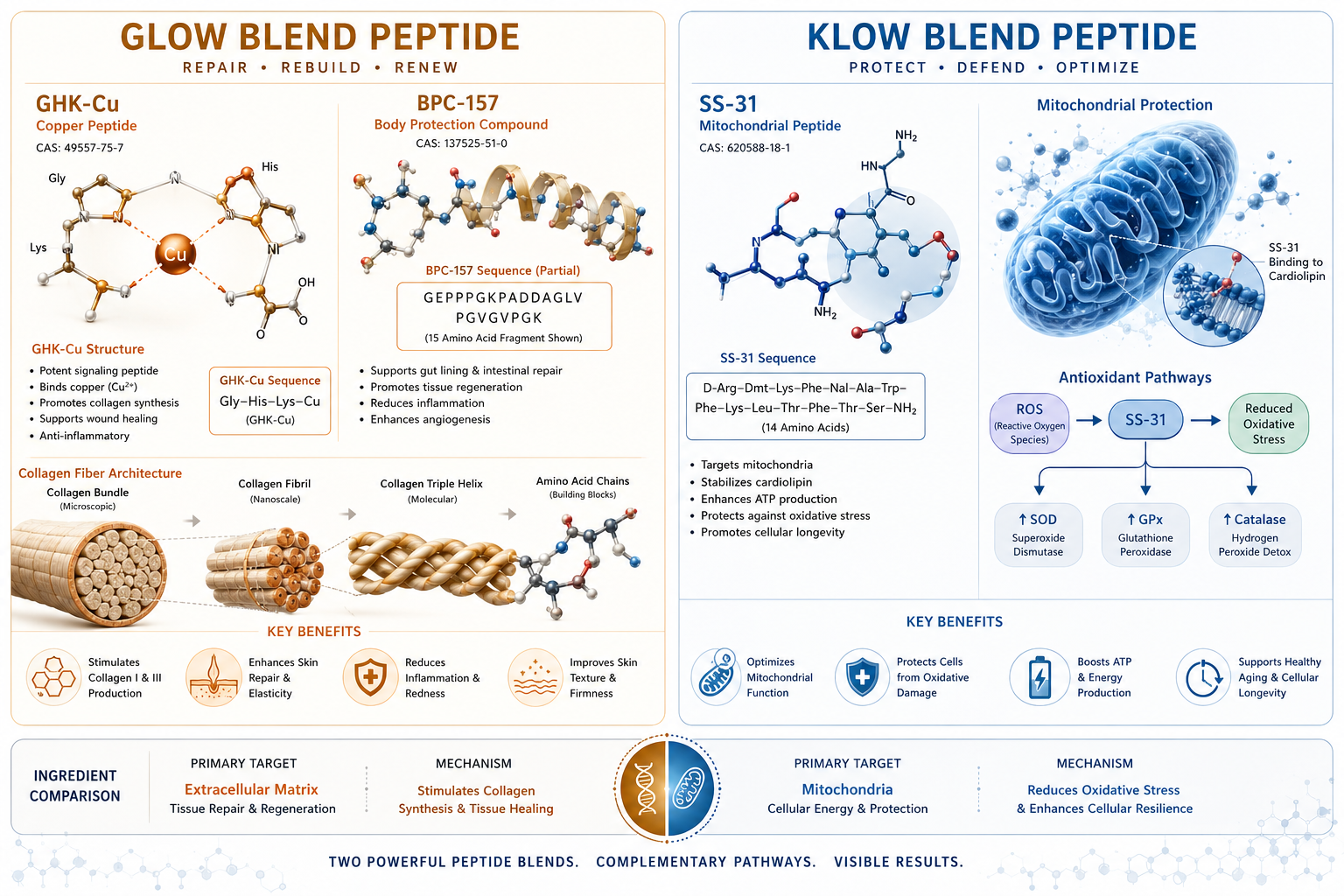
The GLOW blend combines BPC‑157, TB‑500, and GHK‑Cu in a single formulation, targeting all three stages of the repair cascade sequentially. This multi-phase approach is the core rationale behind proprietary blends — rather than isolating one mechanism, researchers can observe how overlapping pathways interact. The GLOW and KLOW peptide blend overview provides composition details relevant to experimental design.

The KLOW blend extends GLOW by adding KPV, a tripeptide (Lysine-Proline-Valine) with documented anti-inflammatory properties. In models where inflammation is a confounding variable — such as inflammatory bowel or skin wound models — KLOW may offer a more controlled environment for observing net repair outcomes.

Important note: No published clinical trials have evaluated GLOW or KLOW blends in human subjects. Both are marketed strictly for in-vitro research purposes and are not intended for human or veterinary use.

For researchers interested in longevity-adjacent tissue repair themes, the GLOW blend longevity research themes page outlines how these compounds intersect with broader aging biology questions.


Model Selection, Reconstitution, and Purity Considerations

Model Selection, Reconstitution, and Purity Considerations

Selecting the right model is as critical as selecting the peptide. For in-vitro work, cell migration assays (scratch assays), tube formation assays for angiogenesis, and collagen gel contraction models are the most common formats aligned with BPC‑157, TB‑500, and GHK‑Cu mechanisms respectively.

For animal models, rodent tendon transection, excisional wound, and colitis models dominate the published literature on BPC‑157. TB‑500 has shown relevance in cardiac and skeletal muscle injury models. GHK‑Cu is frequently evaluated in dermal punch-biopsy models.

Reconstitution guidance (for research use only):

  • Peptides should be reconstituted with bacteriostatic water or sterile saline.
  • Typical working concentrations in cell culture range from 1 nM to 1 µM depending on the assay.
  • Avoid repeated freeze-thaw cycles; aliquot prior to storage at -20°C.

Purity is the most overlooked variable in peptide research reproducibility. Researchers should require certificates of analysis (CoA) confirming HPLC purity of at least 98% and mass spectrometry confirmation. The quality testing protocols page outlines what rigorous third-party verification looks like in practice. For broader peptide sourcing context, peptide blend research options can help orient purchasing decisions.

Researchers exploring adjacent repair-related compounds may also find the TB-500 and BPC-157 regeneration research page useful for comparative study design.


Conclusion

The best research peptides for tissue repair — BPC‑157, TB‑500, GHK‑Cu, and Glow/Klow blends for in‑vitro and animal models — each bring distinct, well-characterized mechanisms to the repair cascade. BPC‑157 drives vascularization, TB‑500 enables cell migration, and GHK‑Cu rebuilds the extracellular matrix. GLOW and KLOW blends combine these actions, with KLOW adding anti-inflammatory KPV for more complex inflammatory models.

Actionable next steps for researchers:

  • Match peptide selection to the specific repair phase your model targets.
  • Demand third-party CoA documentation with HPLC and mass spec data before ordering.
  • Design controls that isolate individual peptide contributions when using blends.
  • Remain current on regulatory status — none of these compounds are approved for human use as of 2026.

Rigorous experimental design, verified purity, and clear model alignment remain the foundation of reproducible tissue repair research.

https://www.puretestedpeptides.com/wp-content/uploads/2026/06/Best-Research-Peptides-for-Tissue-Repair-Comparing-BPC‑157-TB‑500-GHK‑Cu-and-GlowKlow-Blends-for-In‑Vitro-and-Animal-Models.png 1024 1536 Pure Tested https://www.puretestedpeptides.com/wp-content/uploads/2026/01/buy-peptides-online.jpg Pure Tested2026-06-08 13:04:002026-07-20 15:03:37Best Research Peptides for Tissue Repair: Comparing BPC‑157, TB‑500, GHK‑Cu, and Glow/Klow Blends for In‑Vitro and Animal Models
Epithalon Peptide and Telomere Biology: What Cell and Animal Studies Really Show (and Don’t Show)

Epithalon Peptide and Telomere Biology: What Cell and Animal Studies Really Show (and Don’t Show)

June 6, 2026/0 Comments/by Pure Tested

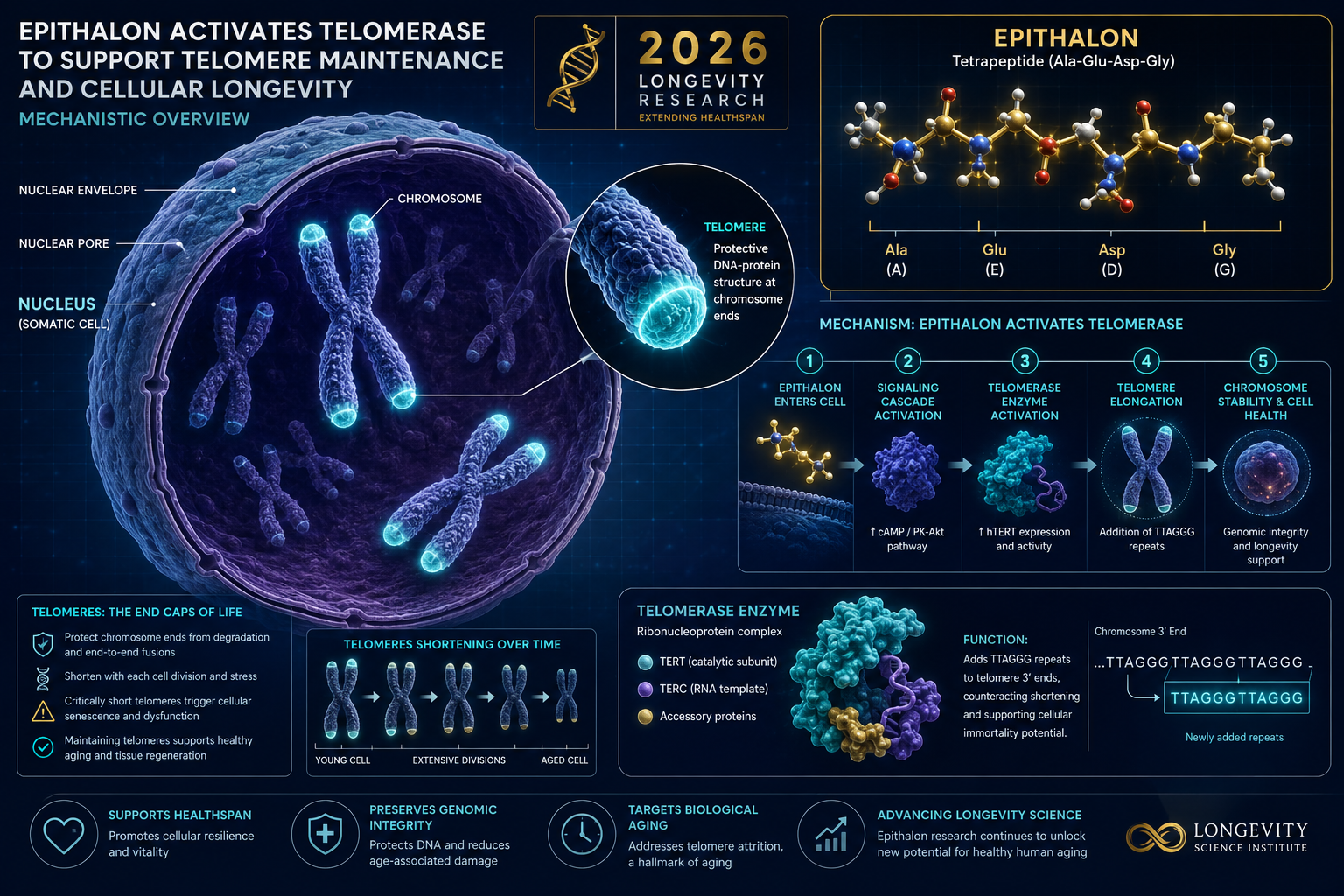
A synthetic tetrapeptide of just four amino acids — Ala-Glu-Asp-Gly — has generated decades of research interest by appearing to reactivate one of biology's most tightly regulated aging mechanisms. Epithalon peptide and telomere biology intersect in ways that are genuinely compelling, but also frequently overstated. Understanding what the cell and animal data actually demonstrate, and where the evidence falls short, is essential for anyone following aging research in 2026.

Detailed () scientific illustration showing a cross-section of a human cell nucleus with elongated telomere caps glowing in

Key Takeaways

  • Epithalon is a synthetic tetrapeptide derived from a natural pineal gland extract, with molecular formula C14H22N4O9.
  • Cell studies show it can upregulate telomerase activity and extend telomere length in normal human cells, with a distinct mechanism observed in cancer cell lines.
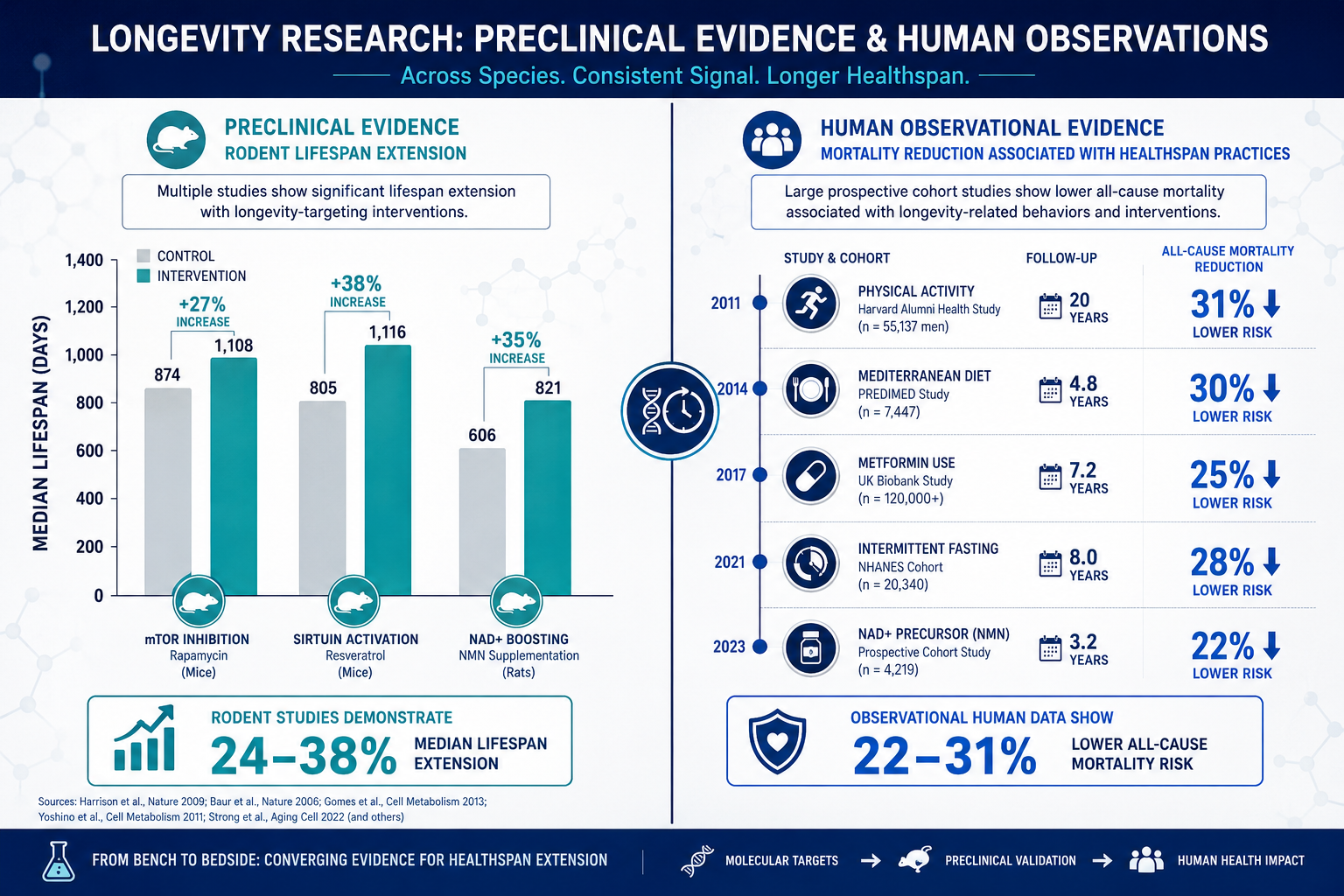
  • Animal studies report 24-38% mean lifespan increases and reduced tumor incidence, but most data come from a single research group.
  • Antioxidant and anti-inflammatory effects are among the most consistently reported secondary findings.
  • Independent replication using modern molecular tools remains limited, which is a critical gap before drawing firm mechanistic conclusions.

What Epithalon Is and Where It Comes From

Epithalon was developed by Russian gerontologist Vladimir Khavinson and is based on epithalamin, a natural polypeptide extract from the pineal gland. The synthetic version condenses this activity into four amino acids, making it chemically stable and reproducible for research purposes.

The pineal gland connection is relevant. Epithalamin was historically associated with melatonin regulation and circadian signaling. Epithalon appears to retain some of this influence, with proposed mechanisms including melatonin upregulation and modulation of the Nrf2/ARE pathway — a transcription system that governs the body's endogenous antioxidant proteins.

Researchers interested in peptides for aging and longevity research will find Epithalon sits at a unique crossroads of telomere biology, oxidative stress reduction, and circadian regulation.


Epithalon Peptide and Telomere Biology: What Cell and Animal Studies Really Show

Telomerase Activation in Normal Human Cells

The foundational 2003 work by Khavinson and colleagues was the first published demonstration that a short synthetic peptide could reactivate telomerase in human somatic cells. This was a notable finding because telomerase is typically silenced in most adult tissues, and its reactivation had previously been associated almost exclusively with cancer biology.

A 2025 study extended this work, showing that Epithalon treatment produced a dose-dependent increase in telomere length in normal human epithelial and fibroblast cells. This effect was linked to upregulation of hTERT mRNA expression — the gene encoding the catalytic subunit of telomerase — and measurable increases in telomerase enzyme activity.

In cancer cell lines, the picture was different. Rather than activating telomerase, Epithalon appeared to extend telomere length through the Alternative Lengthening of Telomeres (ALT) pathway. This distinction matters: the mechanism shifts depending on cell type, which has implications for how researchers interpret safety and applicability data.

Animal Lifespan and Tumor Data

Long-term rodent studies have reported some of the most striking findings in this literature. Chronic Epithalon administration was associated with:

Outcome Observed Effect
Mean lifespan 24-38% increase vs. controls
Mammary tumor incidence Reduced in treated groups
Hepatic tumor incidence Reduced in treated groups
Oxidative stress markers Decreased lipid peroxidation
Antioxidant enzyme activity Restored superoxide dismutase and catalase

These effects were observed in brain, liver, and blood tissue of aged rats following chronic treatment. The antioxidant findings are among the most replicated secondary outcomes in this body of research.


What the Studies Don't Show: Gaps and Limitations

What the Studies Don't Show: Gaps and Limitations

This is where Epithalon peptide and telomere biology research requires careful reading. Several important caveats apply.

First, the replication problem. A significant portion of published Epithalon research originates from a single research group. While the findings are internally consistent, independent replication using modern molecular biology tools has been limited. This is not a reason to dismiss the data, but it is a reason to hold conclusions loosely.

Second, the translation gap. Rodent lifespan data does not translate automatically to human outcomes. The cellular mechanisms may differ, dosing relationships are unclear, and long-term safety in humans has not been systematically studied.

Third, mechanistic complexity. The dual-pathway finding — telomerase in normal cells, ALT in cancer cells — raises questions that have not been fully resolved. Researchers exploring NAD+ and energetics in longevity research will recognize this pattern: promising mechanisms often prove more context-dependent than initial studies suggest.

A 2002 clinical study in patients with retinitis pigmentosa did report electrophysiological improvements, attributed to antioxidant and anti-apoptotic effects on photoreceptors. This represents one of the few human-adjacent data points, though it is limited in scope.

For broader context on how peptide research translates from bench to application, resources on MOTS-c mitochondrial research themes and GHK-Cu peptide research offer useful comparative frameworks.


Epithalon Peptide and Telomere Biology: Putting the Evidence in Context

Epithalon Peptide and Telomere Biology: Putting the Evidence in Context

The honest summary is this: Epithalon has produced genuinely interesting results in cell and animal models. The telomerase activation data is mechanistically plausible, the antioxidant findings are consistent, and the lifespan data — if replicated — would be significant. However, the field needs broader independent validation before any definitive claims can be made.

Researchers comparing peptide mechanisms may also find value in reviewing SS-31 elamipretide mitochondrial research and BPC-157 core peptide documentation for contrast in how different peptide classes approach cellular protection.

Those sourcing research-grade compounds should prioritize verified purity and documentation. Exploring tested peptides available for research with transparent assay data is a practical starting point.


Conclusion

Epithalon occupies a legitimate and interesting position in aging research, particularly within telomere biology. The cell data supporting telomerase upregulation in normal human cells is the strongest signal in the literature. Animal lifespan findings are provocative but require independent confirmation. The antioxidant and circadian-related effects may prove to be the most durable findings over time.

Actionable next steps for researchers:

  • Prioritize studies that include independent replication and modern genomic tools when evaluating Epithalon claims.
  • Distinguish between normal cell data and cancer cell data, as the mechanisms appear to differ.
  • Track emerging 2026 publications for independent validation efforts.
  • Source only research-grade, assay-documented compounds for any in vitro or in vivo work.

The science is worth following. The conclusions, for now, should remain provisional.

https://www.puretestedpeptides.com/wp-content/uploads/2026/06/Epithalon-Peptide-and-Telomere-Biology-What-Cell-and-Animal-Studies-Really-Show-and-Dont-Show.png 1024 1536 Pure Tested https://www.puretestedpeptides.com/wp-content/uploads/2026/01/buy-peptides-online.jpg Pure Tested2026-06-06 13:04:582026-07-20 15:03:51Epithalon Peptide and Telomere Biology: What Cell and Animal Studies Really Show (and Don’t Show)
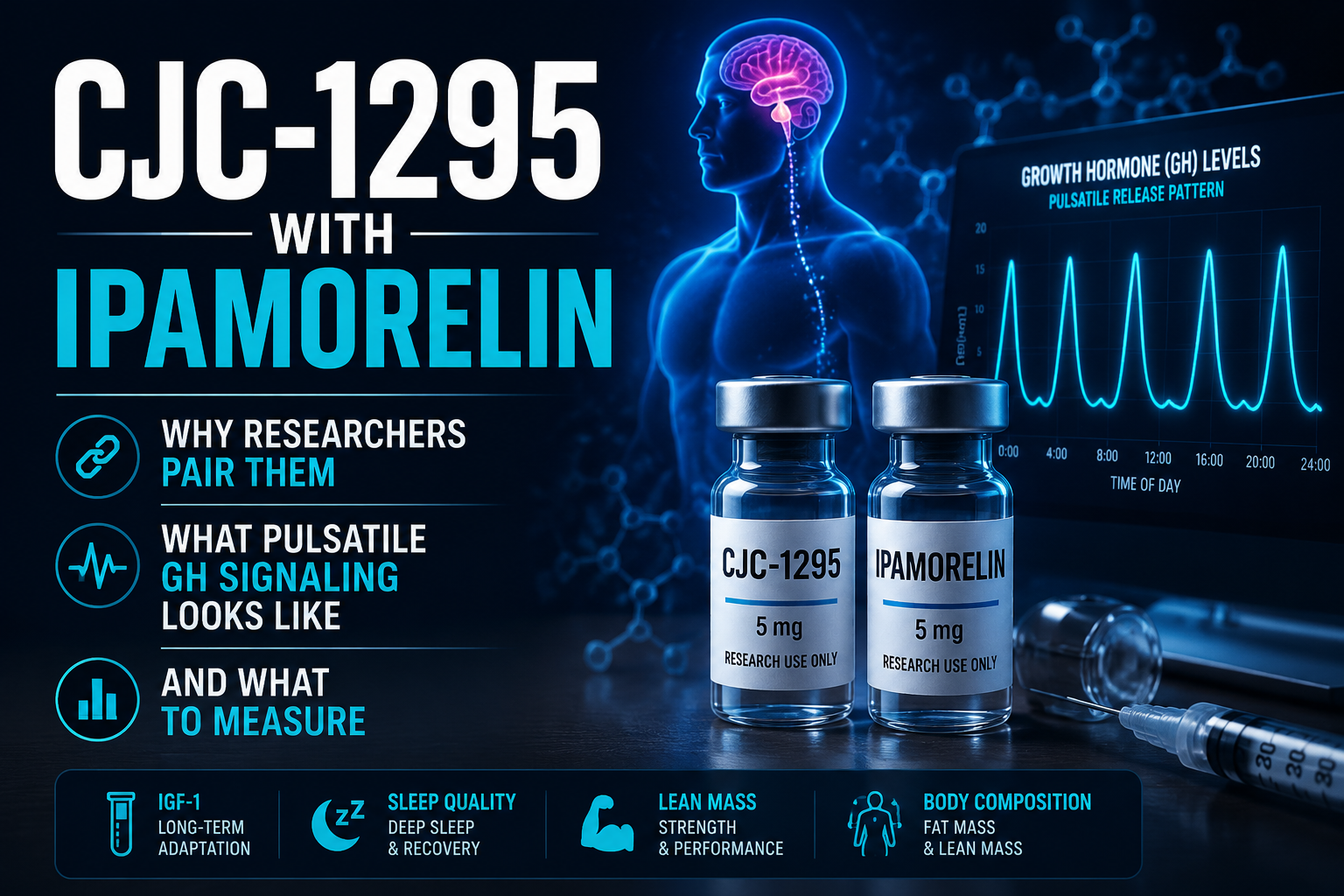
CJC-1295 With and Without DAC: Peptide Structure, Half-Life, and Experimental GH/IGF-1 Dynamics

CJC-1295 With and Without DAC: Peptide Structure, Half-Life, and Experimental GH/IGF-1 Dynamics

June 4, 2026/0 Comments/by Pure Tested

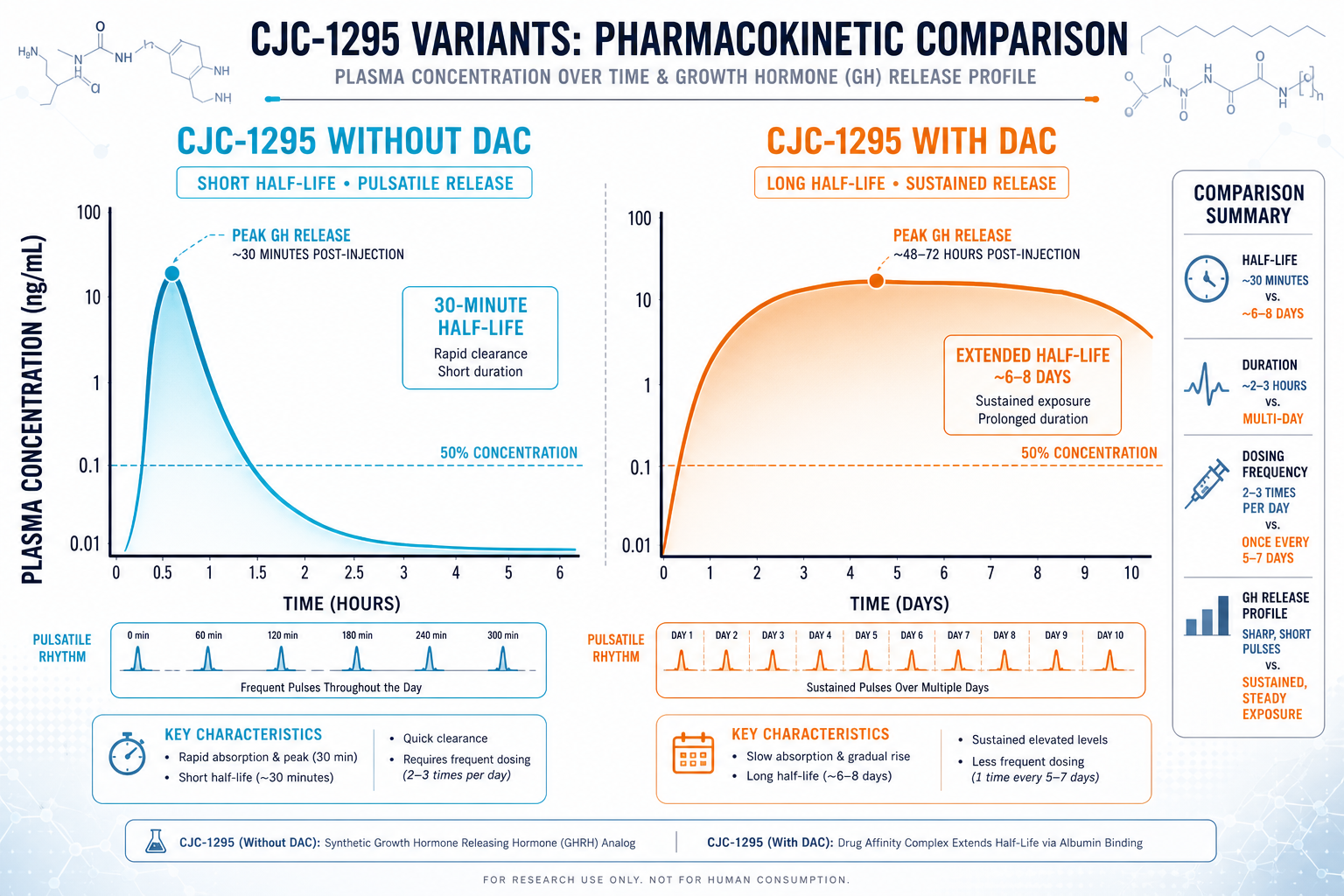
A single structural modification — the addition of a maleimidopropionyl group — transforms a peptide with a 30-minute window of activity into one that remains active for nearly eight days. That is the pharmacological story at the heart of CJC-1295 with and without DAC: peptide structure, half-life, and experimental GH/IGF-1 dynamics, and it has significant implications for how researchers design growth hormone secretagogue protocols in vitro and in preclinical models.

Key Takeaways

  • CJC-1295 is a 30-amino-acid synthetic analog of growth hormone-releasing hormone (GHRH).
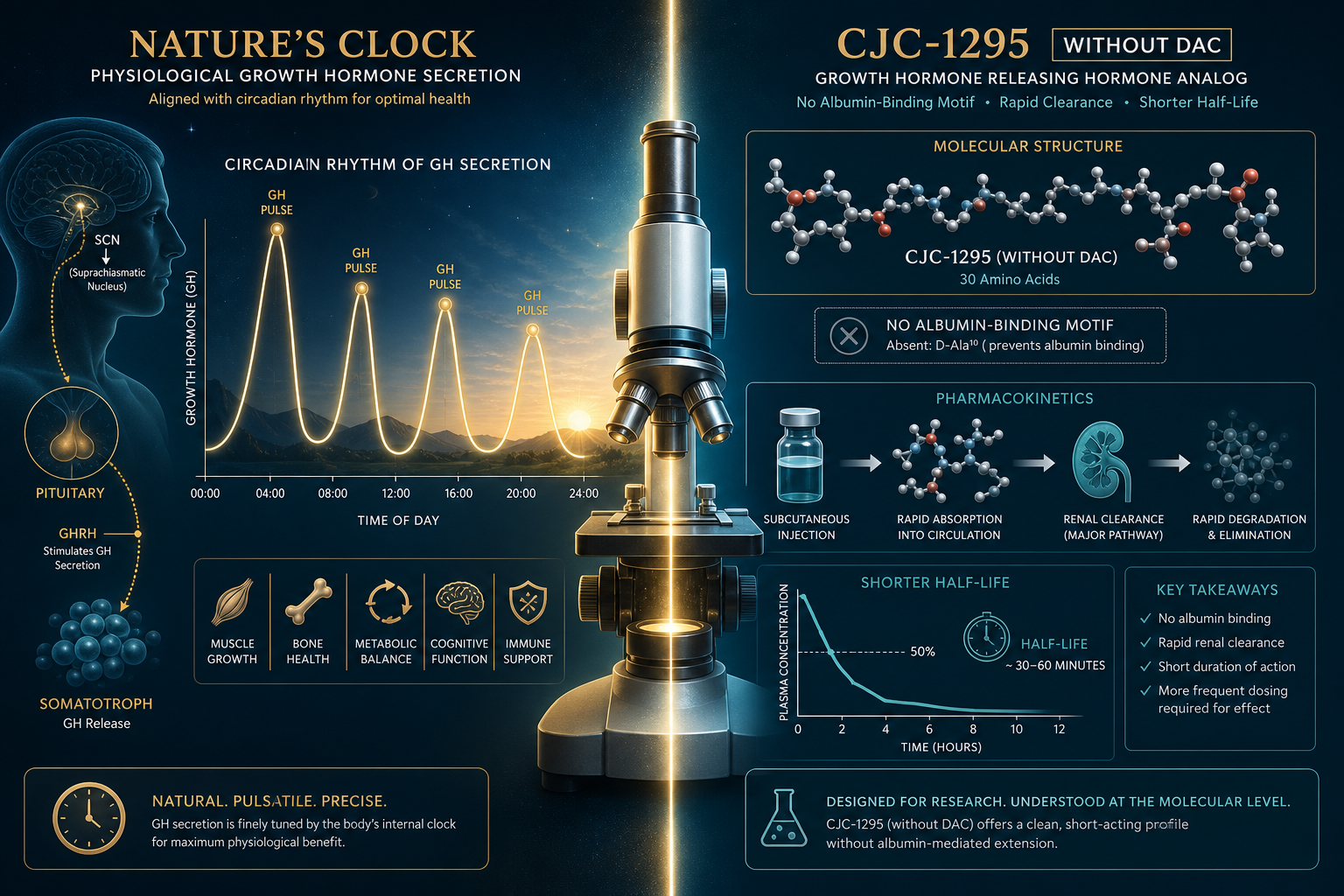
  • The Drug Affinity Complex (DAC) modification extends half-life from roughly 30 minutes to approximately 5.8-8.1 days via covalent albumin binding.
  • Without DAC (Modified GRF 1-29), the peptide requires more frequent dosing to sustain receptor stimulation.
  • A single CJC-1295 with DAC injection can produce a 2- to 10-fold increase in plasma GH lasting up to six days.
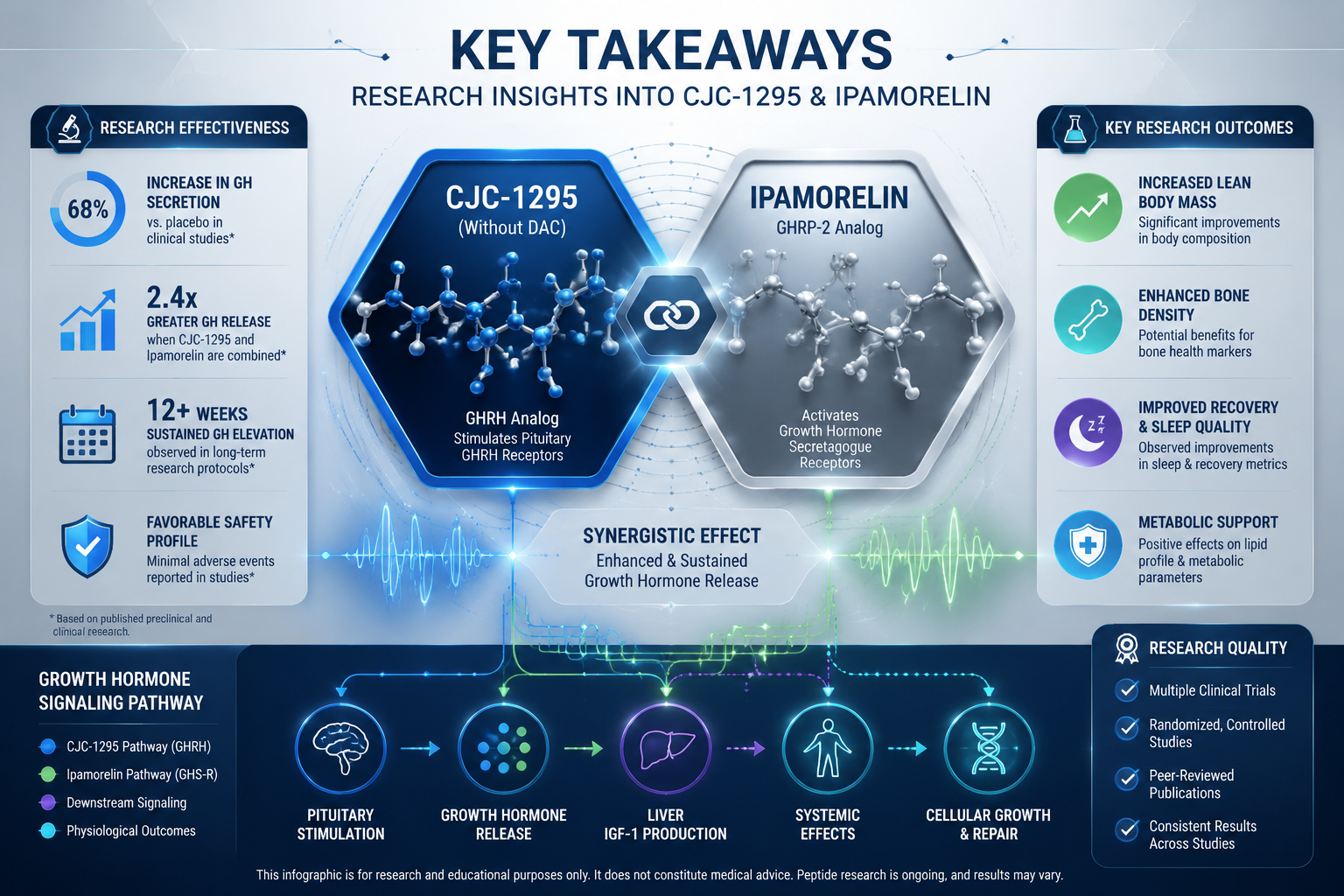
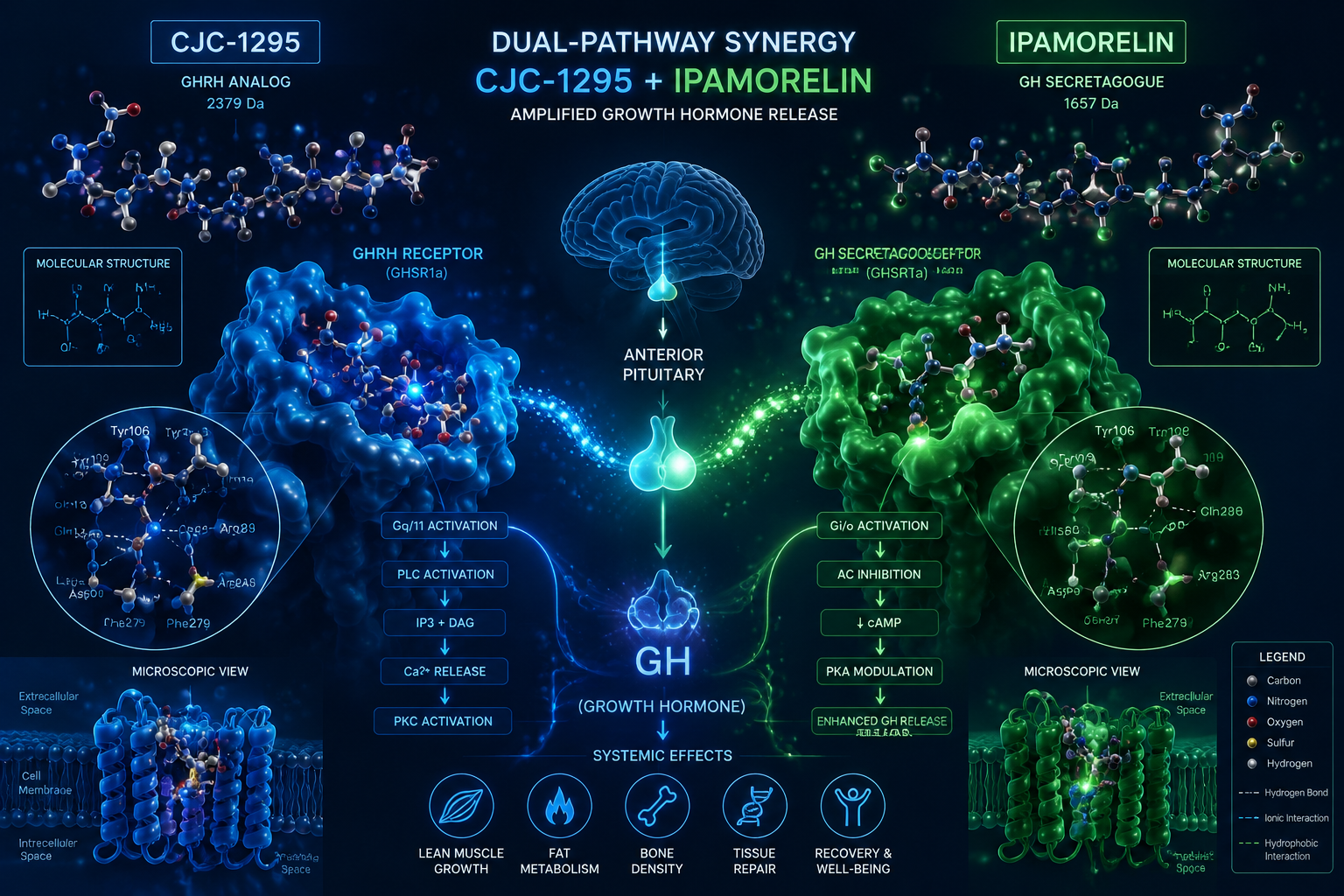
  • Combining CJC-1295 with ghrelin mimetics such as ipamorelin produces synergistic GH release through complementary pathways.

Key Takeaways


Peptide Structure: How the DAC Modification Changes Everything

CJC-1295 is built on the first 29 amino acids of endogenous GHRH, with four strategic amino acid substitutions that resist enzymatic degradation. In its unmodified research form — commonly called Modified GRF (1-29) or CJC-1295 without DAC — the peptide retains high receptor affinity but is rapidly cleared from circulation.

The DAC version adds a maleimidopropionyl (MPA) bioconjugate to the peptide's C-terminus. This reactive group forms a covalent thioether bond with the free cysteine-34 residue on circulating serum albumin. Because albumin has a half-life of roughly 19 days and is too large to be filtered by the kidneys, the bound peptide is effectively shielded from proteolytic breakdown.

"The DAC modification does not alter receptor binding affinity — it changes how long the peptide survives long enough to bind."

This distinction matters for assay design. Researchers exploring CJC-1295 and ipamorelin combination protocols must account for whether the DAC form's prolonged presence will create sustained baseline GH stimulation or whether the pulsatile pattern of Modified GRF (1-29) better fits the experimental timeline.


Half-Life Comparison and Experimental Dosing Implications

The pharmacokinetic difference between the two forms is stark:

Form Common Name Approximate Half-Life Dosing Frequency
CJC-1295 with DAC DAC-GRF 5.8 – 8.1 days Once or twice weekly
CJC-1295 without DAC Modified GRF (1-29) ~30 minutes Multiple times daily

For context, other GHRH analogs fall well below even the without-DAC form: sermorelin has a half-life of 10-12 minutes, and tesa sits at approximately 30 minutes. Researchers can review tesa peptide benefits and pharmacology for a useful comparative baseline.

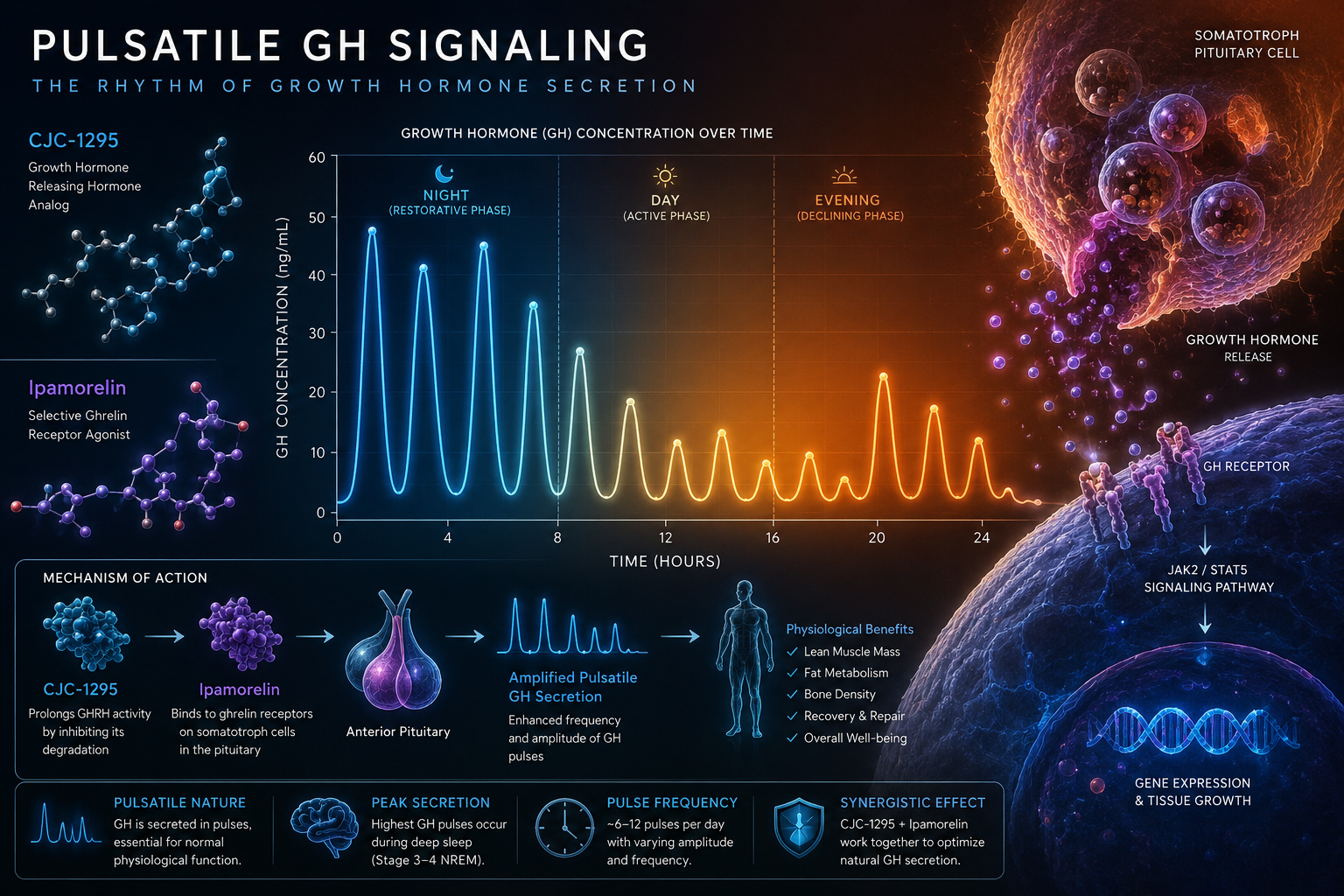
The without-DAC form is often preferred in protocols that require tight temporal control over GH pulses. Its short window allows researchers to time injections around specific assay windows, mimicking the body's natural ultradian GH rhythm. The DAC form, by contrast, produces a sustained elevation that is better suited to protocols measuring cumulative IGF-1 response over days.

For researchers building multi-peptide stacks, the sermorelin, ipamorelin, and CJC-1295 combination overview provides useful context on how different half-lives interact within the same protocol.

Half-Life Comparison and Experimental Dosing Implications


Experimental GH/IGF-1 Dynamics: What the Data Shows

Understanding CJC-1295 with and without DAC: peptide structure, half-life, and experimental GH/IGF-1 dynamics requires examining how each form drives the GH-IGF-1 axis differently.

CJC-1295 with DAC binds GHRH receptors on pituitary somatotroph cells and sustains that stimulation across days. Phase I clinical data shows a single injection can produce:

  • A 2- to 10-fold increase in mean plasma GH levels lasting up to six days
  • A 1.5- to 3-fold increase in IGF-1 levels persisting for nine to eleven days

Critically, this occurs while preserving pulsatile GH secretion — a key advantage over exogenous GH administration, which suppresses the natural feedback loop. Pulsatility is associated with more physiological receptor sensitivity and reduced tachyphylaxis risk.

CJC-1295 without DAC produces sharp, transient GH spikes that closely mirror endogenous GHRH pulses. This makes it valuable for experiments requiring acute GH measurements or when researchers want to avoid prolonged IGF-1 elevation between assay time points.

Synergistic combinations are a major area of interest. Pairing CJC-1295 with a ghrelin mimetic like ipamorelin activates two distinct receptor pathways — GHRH receptors and ghrelin receptors (GHS-R1a) — simultaneously. The result is GH output greater than either peptide alone. The CJC-1295 ipamorelin assay planning and sourcing checklist is a practical resource for structuring such experiments.

Phase I safety data indicates CJC-1295 is well-tolerated at doses of 30-60 mcg/kg, with mild injection site reactions and occasional headaches as the most commonly noted effects. As of 2026, the peptide remains unapproved for human therapeutic use across most jurisdictions and is classified as a research compound.

For researchers sourcing reference-grade material, the GH axis product line overview and sermorelin ipamorelin CJC-1295 dosage reference guide offer structured starting points. Lyophilized CJC-1295 should be stored at 2-8°C and, once reconstituted, used within 30 days.

Experimental GH/IGF-1 Dynamics: What the Data Shows


Conclusion

The DAC modification is not a minor refinement — it fundamentally redefines how CJC-1295 interacts with the GH-IGF-1 axis. Researchers designing protocols in 2026 should base their form selection on experimental objectives: choose the without-DAC form when temporal precision and pulsatile GH mimicry are priorities, and the DAC form when sustained IGF-1 elevation or infrequent dosing windows are required.

Actionable next steps for researchers:

  1. Define whether the assay requires acute GH spikes or sustained IGF-1 elevation before selecting a form.
  2. Consider pairing either form with ipamorelin to leverage synergistic GH secretagogue pathways.
  3. Verify peptide purity through certificates of analysis before initiating any in vitro or preclinical work.
  4. Store lyophilized stock at 2-8°C and track reconstitution dates to maintain compound integrity.
  5. Cross-reference the CJC-1295 product and research reference page for sourcing and specification details.

https://www.puretestedpeptides.com/wp-content/uploads/2026/06/CJC-1295-With-and-Without-DAC-Peptide-Structure-Half-Life-and-Experimental-GHIGF-1-Dynamics.png 672 1024 Pure Tested https://www.puretestedpeptides.com/wp-content/uploads/2026/01/buy-peptides-online.jpg Pure Tested2026-06-04 13:05:432026-07-20 15:04:07CJC-1295 With and Without DAC: Peptide Structure, Half-Life, and Experimental GH/IGF-1 Dynamics
Polypeptide Peptides in Modern Lab Research: From Structure to Synthesis Workflows

Polypeptide Peptides in Modern Lab Research: From Structure to Synthesis Workflows

June 3, 2026/0 Comments/by Pure Tested

Over 7,000 naturally occurring peptides have been identified in the human body, yet the synthetic peptide research market continues to expand rapidly as labs unlock new biological applications. The study of polypeptide peptides in modern lab research: from structure to synthesis workflows sits at the intersection of structural biochemistry, computational design, and precision manufacturing — a convergence that is reshaping how researchers approach GLP receptor agonism, growth hormone secretagogue design, and mitochondrial-targeted compounds in 2026.

Key Takeaways

  • Peptides are short chains of 2 to 50 amino acids; polypeptides extend beyond that range, and both categories are central to modern biomedical research.
  • Solid-phase peptide synthesis (SPPS) remains the dominant method for producing research-grade peptides with high precision and reproducibility.
  • Sequence design, solubility, and amino acid selection critically determine whether a synthesized peptide performs as intended.
  • Quality control via HPLC and mass spectrometry is non-negotiable for validating peptide purity before research use.
  • Specialized research peptides — including GH secretagogues, GLP-class compounds, and mitochondria-targeting sequences — follow the same foundational synthesis principles but require additional design considerations.

Key Takeaways

Understanding Peptide Structure: The Foundation of Research Design

Every synthesis workflow begins with a clear understanding of molecular architecture. Peptides form when amino acids link together through peptide bonds — covalent connections created by condensation reactions between the carboxyl group of one amino acid and the amino group of the next. The resulting chain adopts secondary structures including alpha-helices and beta-sheets, which directly influence biological activity.

Structural Level Description Research Relevance
Primary Linear amino acid sequence Determines identity and function
Secondary Alpha-helix, beta-sheet Affects receptor binding geometry
Tertiary 3D folding Critical for target specificity

Sequence length matters significantly. Peptides of 5 to 20 residues are often sufficient for receptor interaction studies, while longer polypeptides may be required for enzyme mimicry or scaffold-based applications. Researchers designing compounds like GHK-Cu for longevity and tissue research must account for how tripeptide geometry enables copper chelation — a property entirely dependent on primary sequence.

Solubility is another early-stage consideration. Hydrophobic sequences tend to aggregate, reducing yield and complicating purification. Incorporating charged residues or using solubility-enhancing tags can address this during the design phase rather than after synthesis has begun.


Solid-Phase Peptide Synthesis: The Core Workflow for Modern Lab Peptides

Solid-Phase Peptide Synthesis: The Core Workflow for Modern Lab Peptides

Robert Bruce Merrifield's introduction of SPPS in 1963 transformed peptide chemistry from a slow, solution-based process into a scalable, automatable workflow. The method anchors the growing peptide chain to an insoluble resin support, allowing reagents and solvents to be washed away between each coupling step without losing the target compound.

The standard SPPS workflow proceeds as follows:

  1. Resin loading with the first protected amino acid
  2. Deprotection of the terminal amine
  3. Coupling of the next amino acid using activating reagents
  4. Washing and repeat cycling through the full sequence
  5. Global deprotection and cleavage from the resin
  6. Purification by reverse-phase HPLC
  7. Characterization by mass spectrometry

Recent protocol refinements have focused on reducing aggregation during chain elongation — a persistent challenge when synthesizing hydrophobic or beta-sheet-prone sequences. Pseudoproline dipeptide building blocks and microwave-assisted coupling have both improved outcomes for difficult sequences.

This workflow applies directly to the synthesis of research compounds like tesa and CJC-1295, both of which are growth hormone-releasing hormone analogs requiring precise sequence fidelity to maintain receptor selectivity. Similarly, MOTS-c, a mitochondria-derived peptide studied for metabolic regulation, demands high synthesis accuracy given its short but functionally dense 16-amino-acid sequence.

For researchers exploring incretin biology, compounds such as those covered in GLP-1 dual receptor agonism research illustrate how incremental sequence modifications — often single residue substitutions — can dramatically shift receptor binding profiles and metabolic outcomes.


Quality Control and Research-Grade Standards in Peptide Synthesis Workflows

Quality Control and Research-Grade Standards in Peptide Synthesis Workflows

Polypeptide peptides in modern lab research: from structure to synthesis workflows are only as valuable as the purity standards applied at the end of production. Two analytical tools dominate quality assurance:

  • Reverse-phase HPLC — separates peptide from truncated sequences, deletion products, and synthesis byproducts; purity above 95% is standard for research use
  • Mass spectrometry — confirms molecular weight and detects sequence errors or incomplete deprotection

Stability profiling is equally important. Lyophilized peptides stored at -20°C generally maintain integrity longer than reconstituted solutions. Researchers should always verify reconstitution conditions against the specific peptide's isoelectric point and solubility profile.

Benchmarking synthesis quality against established reference standards — as discussed in resources covering Bachem and reference standards for peptide benchmarks — helps labs maintain reproducibility across experimental batches. This is especially critical when comparing data across institutions or scaling from discovery to preclinical stages.

Peptidomics workflows have further elevated quality expectations. Modern peptidomics integrates genetic analysis, peptide characterization, and computational processing to handle complex biological samples and enrich low-abundance peptides — requiring that any synthetic reference compound used in such studies meets strict purity criteria.


Conclusion

Understanding polypeptide peptides in modern lab research: from structure to synthesis workflows is not optional for researchers who want reproducible, meaningful results. The path from sequence design to purified compound involves deliberate decisions at every stage — amino acid selection, synthesis strategy, coupling chemistry, and analytical validation.

Actionable next steps for researchers in 2026:

  • Audit current peptide design protocols against solubility and aggregation risk factors before initiating synthesis
  • Standardize HPLC purity thresholds at 95% or above for all research-grade compounds
  • Cross-reference synthesis workflows with published benchmarks to ensure batch-to-batch consistency
  • Explore the comprehensive peptide catalog to identify well-characterized research compounds relevant to GH axis, metabolic, and mitochondrial research lines
  • Review metabolic modulation research lines for context on how synthesized peptides are being applied in current experimental models

Precision at the synthesis stage protects the integrity of every downstream experiment.


https://www.puretestedpeptides.com/wp-content/uploads/2026/06/Polypeptide-Peptides-in-Modern-Lab-Research-From-Structure-to-Synthesis-Workflows.png 672 1024 Pure Tested https://www.puretestedpeptides.com/wp-content/uploads/2026/01/buy-peptides-online.jpg Pure Tested2026-06-03 13:05:382026-07-20 15:04:11Polypeptide Peptides in Modern Lab Research: From Structure to Synthesis Workflows
5-Amino-1MQ Peptide: NNMT Inhibition, NAD+ Preservation, and Metabolic Research Applications

5-Amino-1MQ Peptide: NNMT Inhibition, NAD+ Preservation, and Metabolic Research Applications

June 2, 2026/0 Comments/by Pure Tested

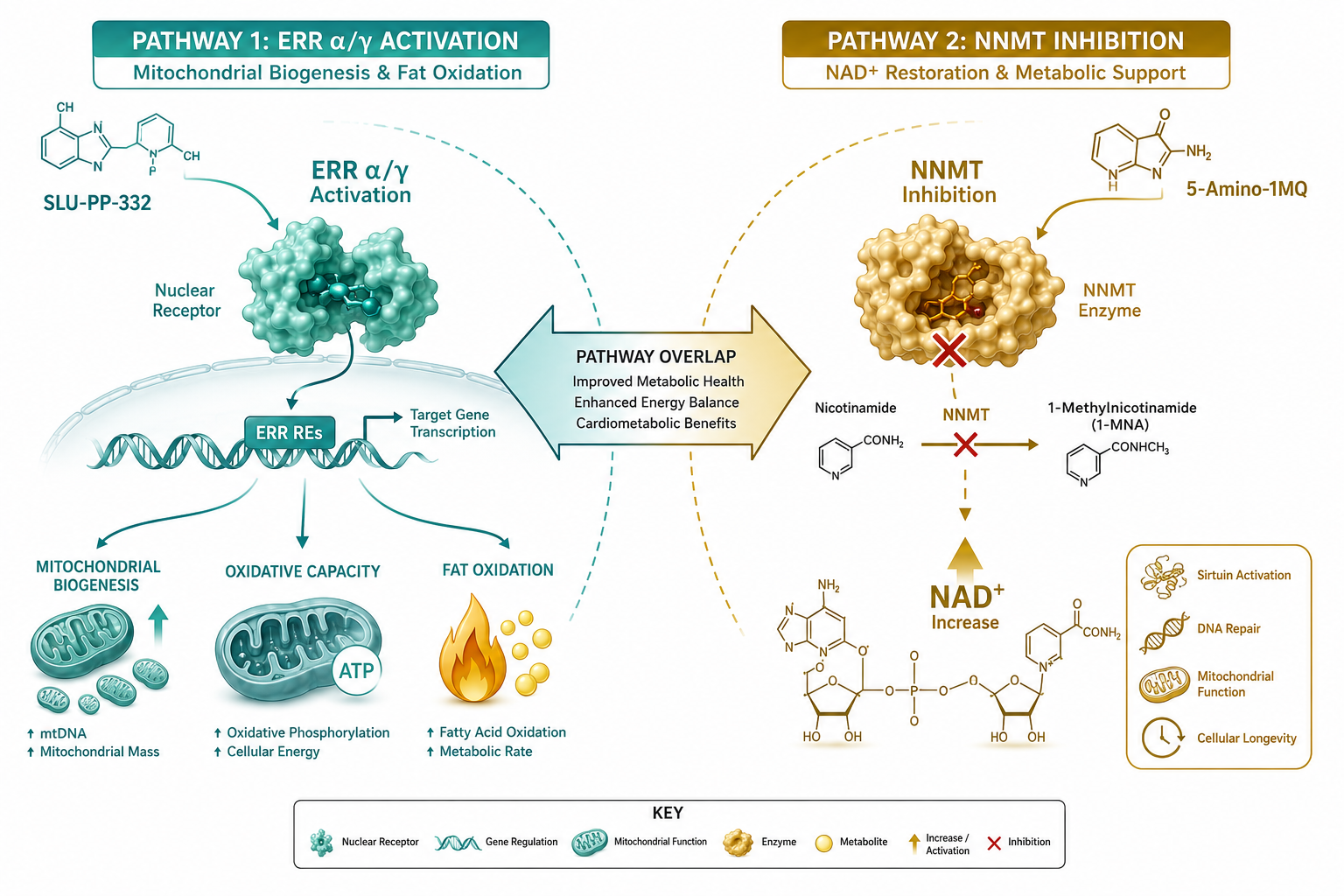
A single enzyme quietly redirects the flow of cellular energy — and blocking it may reshape how researchers think about fat metabolism, muscle aging, and NAD+ biology. That enzyme is nicotinamide N-methyltransferase (NNMT), and the compound drawing the most attention in this space is 5-Amino-1MQ.

As of 2026, the 5-Amino-1MQ peptide — spanning NNMT inhibition, NAD+ preservation, and metabolic research applications — has generated a focused body of preclinical evidence that positions it as one of the more mechanistically interesting small molecules in metabolic science.

Key Takeaways

  • 5-Amino-1MQ selectively inhibits NNMT, an enzyme that consumes methyl groups and depletes NAD+ precursors in metabolically active tissues.
  • Preclinical studies show dose-dependent fat loss, improved insulin sensitivity, and reduced liver fat without changes in food intake.
  • Muscle regeneration data from aged mouse models is compelling, with peak torque improvements near 70% and grip strength gains up to 60% when combined with exercise.
  • No human clinical trials have been published or registered as of 2026; all data remain preclinical.
  • 5-Amino-1MQ is classified as a research compound and is not FDA-approved for any therapeutic use.

Key Takeaways

How NNMT Inhibition Drives NAD+ Preservation

NNMT catalyzes the methylation of nicotinamide, converting it to 1-methylnicotinamide (1-MNA) and effectively removing it from the NAD+ biosynthesis pathway. When NNMT is overactive — as it tends to be in obese and aged tissues — this process accelerates NAD+ precursor depletion, impairing mitochondrial function and energy output.

5-Amino-1MQ works by selectively binding to NNMT's active site, slowing this drain. The result is a measurable increase in intracellular NAD+ levels, which supports mitochondrial respiration, activates sirtuins, and improves overall metabolic efficiency.

"Blocking NNMT is not simply about preserving a molecule — it is about restoring the signaling environment that governs how cells burn fuel and repair themselves."

This mechanism distinguishes 5-Amino-1MQ from direct NAD+ precursor supplementation. Rather than flooding cells with nicotinamide riboside or NMN, it reduces the rate at which NAD+ precursors are diverted away from synthesis. For researchers exploring NAD+ biology and metabolic signaling, this upstream approach offers a distinct angle worth examining.

Key pharmacokinetic data from rat studies:

Parameter Value
Oral bioavailability 38.4%
Half-life 4-7 hours (route-dependent)
Tissue distribution Adipose, muscle, liver confirmed

Preclinical Evidence: Fat Loss, Muscle, and Metabolic Health

Preclinical Evidence: Fat Loss, Muscle, and Metabolic Health

The preclinical record for 5-Amino-1MQ across NNMT inhibition, NAD+ preservation, and metabolic research applications spans several well-designed animal studies.

Obesity and fat metabolism:

A 2018 study found that 20 mg/kg/day of 5-Amino-1MQ reversed diet-induced obesity in mice without reducing food intake. This is significant because it suggests a thermogenic or metabolic shift rather than appetite suppression. A 2024 dose-finding study extended this work, demonstrating 28-day treatment produced dose-dependent weight loss, improved glucose tolerance, better insulin sensitivity, and measurable reductions in hepatic steatosis.

When combined with caloric restriction, NNMT inhibition normalized adiposity faster than either intervention alone and produced a distinct gut microbiome shift enriched in Lactobacillus species.

Muscle regeneration and aging:

  • A 2019 study in aged mice showed NNMT inhibition doubled myofiber cross-sectional area and improved peak muscle torque by approximately 70%.
  • A 2024 follow-up reported a 40% improvement in grip strength in sedentary aged mice, rising to 60% when paired with exercise.

These findings make 5-Amino-1MQ relevant to researchers studying sarcopenia and age-related muscle decline. This complements work being done with compounds like MOTS-c, a mitochondrial peptide that also targets energy metabolism in aging tissue.

Researchers building metabolic stacks may also find value in reviewing the scientific evidence around NAD+ supplementation and how upstream inhibition strategies compare to direct precursor loading.

Research Limitations and Where 5-Amino-1MQ Fits in 2026

Research Limitations and Where 5-Amino-1MQ Fits in 2026

The most important limitation of 5-Amino-1MQ research is straightforward: as of 2026, no human clinical trials have been published or registered. Every data point discussed above comes from rodent models. Translating these findings to human physiology requires controlled trials that do not yet exist.

5-Amino-1MQ is not FDA-approved and is classified strictly as a research compound. Its safety profile in humans is unknown.

That said, its mechanism fits logically into current metabolic research frameworks. Researchers interested in longevity peptide research will recognize NNMT inhibition as a credible target given the enzyme's known upregulation in obesity, aging, and metabolic disease states.

For those sourcing research compounds, peptide purity testing remains a non-negotiable step before any preclinical work begins. Researchers can also explore the full catalog of available research peptides to review current compound specifications.

5-Amino-1MQ may also pair meaningfully with compounds targeting adjacent pathways. Research on SS-31, a mitochondrial-targeted peptide, addresses oxidative stress at the inner mitochondrial membrane — a complementary mechanism to the NAD+ preservation strategy of NNMT inhibition.

Conclusion

5-Amino-1MQ occupies a genuinely interesting position in metabolic research. Its mechanism — reducing NNMT activity to preserve NAD+ precursors and improve mitochondrial function — is well-supported at the molecular level, and preclinical data across obesity, insulin resistance, liver health, and muscle aging are consistent and encouraging.

Actionable next steps for researchers:

  • Review the 2024 dose-finding data carefully before designing rodent study protocols.
  • Pair NNMT inhibition research with gut microbiome analysis, given the Lactobacillus enrichment findings.
  • Prioritize third-party purity verification for all research-grade compounds.
  • Monitor clinical trial registries for the first human studies, which remain the critical missing piece.
  • Consider how 5-Amino-1MQ fits within broader metabolic stacks targeting NAD+ biology, mitochondrial function, and adipose tissue regulation.

The compound is not a clinical solution yet. It is a research priority — and in 2026, that distinction matters.


https://www.puretestedpeptides.com/wp-content/uploads/2026/06/5-Amino-1MQ-Peptide-NNMT-Inhibition-NAD-Preservation-and-Metabolic-Research-Applications.png 1024 1536 Pure Tested https://www.puretestedpeptides.com/wp-content/uploads/2026/01/buy-peptides-online.jpg Pure Tested2026-06-02 22:10:032026-07-20 15:04:135-Amino-1MQ Peptide: NNMT Inhibition, NAD+ Preservation, and Metabolic Research Applications
Page 6 of 6«‹456
×

Helpful Links

  • My account
  • Cart
  • Checkout
  • Refund and Returns Policy
  • Privacy Policy
  • SMS Privacy Policy
  • Login
  • My Account
  • Logout

USA Made Lab Tested Peptides

All products are sold for research, laboratory, or analytical purposes only, and are not for human consumption


Pure Tested Peptides is a chemical supplier. Pure Tested Peptides is not a compounding / chemical compounding facility as defined under 503A of the Federal Food, Drug, and Cosmetic act. Pure Tested Peptides is not an outsourcing facility as defined under 503B of the Federal Food, Drug, and Cosmetic act.

The statements made within this website have not been evaluated by the US Food and Drug Administration. The products we offer are not intended to diagnose, treat, cure or prevent any disease.

Human/Animal Consumption Prohibited. Laboratory/In-Vitro Experimental Use Only

Scroll to top Scroll to top Scroll to top