Call or Text 727-513-9780
  • Shopping Cart Shopping Cart
    0Shopping Cart
Pure Tested Peptides | America's most trusted Peptides for sale online
  • Peptides for sale
    • Oral Peptides for sale
      • Peptide Capsules for sale
      • BPC 157 Capsules 1000mcg
      • SLU-PP-332 Capsules | 1000 mcg
      • 5-Amino-1MQ 50mg Capsules
      • Tesofensine 500mcg
    • All Peptides for sale
    • Peptide Sprays
      • BPC 157 Nasal Spray Kit
      • BPC-157 TB500 Nasal Spray Kit
      • Semax Nasal Spray 10mg
      • Selank – Nasal Spray Kit – 10mg
      • Epithalon 50MG Nasal Spray Kit
      • Ipamorelin 10mg Nasal Spray
      • Klow Nasal Spray (BPC-157 + TB-500 + GHK-Cu + KPV) | 80mg
      • Hulk Nasal Spray Tesa / Ipa Blend 6/3 MG
      • Klow Nasal Spray
      • NAD + 500 mg Nasal Spray
      • PT-141 Nasal Spray Kit
    • GHRH Peptides
      • Ipa Peptides
      • CJC-1295 Peptides
        • CJC-1295 with DAC 5 mg
        • CJC-1295 without DAC 5 mg
        • CJC-1295 Ipa 10mg
      • Tesa Peptides
        • Tesa Peptide
        • Tesa 20 mg
    • GHK-Cu Peptides
      • All GHK-Cu Peptides
      • GHK-Cu 100mg
      • KLOW Peptide Blend – Buy KLOW blend online
    • BPC Peptides
      • All BPC Peptides
      • BPC-157
      • BPC-157 TB-500
      • BPC 157 capsules 1000mcg
    • SLU-PP-332 Peptides
      • All SLU-PP-332 Peptides
      • SLU-PP-332 5mg
    • GLP3 Peptides
      • GLP3-R
      • GLP3-R CAG 10mg
      • GLP3-R 20mg
    • PT-141 Peptides
      • PT-141 Peptides for sale
      • PT-141 10mg
      • PT-141 Nasal Spray
    • CAG Peptides
      • Lipo-C Peptide Blend
      • CAG 5mg
      • CAG 10mg
    • MOTS-C Peptides
      • MOTS-C Peptides for sale
      • MOTS-c peptide
      • MOTS-c 10mg *6 pack*
    • 5 Amino 1MQ Peptides
      • 5 Amino 1MQ Peptides for sale
      • 5-Amino-1MQ 50mg Capsules
      • 5-Amino-1MQ 5mg
    • Epithalon Peptides
      • Epithalon Peptides for sale
      • Epithalon 10mg
      • Epithalon 50mg
  • Shop
    • GLPs
      • 5-Amino-1MQ 50mg Capsules
      • 5-Amino-1MQ 5mg
      • GLP3-Reta
      • L-Carnitine 500mg/ml
      • Tesofensine 500mcg
      • SLU-PP-332 5mg
      • MOTS-c 10mg *6 pack*
    • Epithalon & BPC Peptides
      • Epithalon 10mg
      • Epithalon 50mg
      • BPC-157
      • BPC 157 capsules 1000mcg
      • BPC-157 TB-500
      • BPC-157 TB500 Nasal Spray Kit
      • BPC 157 Nasal Spray Kit
    • BPC TB-500 & NAD+ Peptides
      • NAD+ 500 mg
      • KLOW Peptide Blend – Buy KLOW blend online
      • GLOW Peptide Blend
      • TB 500 5mg
      • BPC 157 capsules 1000mcg – Supplement
      • BPC 157 Nasal Spray Kit
      • BPC-157
      • BPC-157 TB500 Nasal Spray Kit
      • BPC-157 TB-500
      • BPC 157 capsules 1000mcg
    • LL-37 Peptide
      • LL-37 10 mg
    • MOTS-C & Selank
      • MOTS-c peptide
      • Selank 10mg
    • GHK Peptides
      • GHK-Cu 100mg
      • GLOW Peptide Blend
      • KLOW Peptide Blend – Buy KLOW blend online
  • COAs
  • Wholesale
    • Wholesale Peptides for sale
  • PTP FAQ
  • Affiliates
    • Selank Peptide: Advanced Pharmacological Mechanisms Underlying Its Anxiolytic and Nootropic Effects in Research
      • 5-Amino-1MQ Peptide: Detailed Mechanisms of NNMT Inhibition and Its Impact on Cellular Metabolism Research
        • MOTS-C Peptide: Unraveling Its Role in Mitochondrial Dynamics and Energy Metabolism Research
          • Epithalon Peptide and Telomerase Regulation: Investigating Its Impact on Cellular Senescence and Lifespan Research Models
            • GLP2-T vs GLP2 Tirz Peptide: Understanding the Naming, Mechanistic Nuances, and Research Implications for Gut Health
      • Peptides and Polypeptides in Modern Pharmacology: What Research on Metoprolol, Prednisone, and Amlodipine Reveals
        • Polypeptide Peptides vs NSAIDs: What Naproxen and Diclofenac Teach Tissue-Repair Researchers About BPC‑157 and TB‑500
          • Peptides and Polypeptides in Endocrine Pharmacology: How GLP-1, GLP-2, and GLP-3 Retatrutide Differ From Classic Drugs Like Prednisone and Amlodipine
          • 5‑Amino‑1MQ Peptide and NNMT Inhibition: How It Compares With Statins Like Atorvastatin in Adipose and Lipid Metabolism Research
      • Enclomiphene, Estrogen Receptor Signaling, and Luteinizing Phase Biology: What Hormone Researchers Should Measure
        • Mesenchymal Stem Cells, BPC‑157, and GHK‑Cu: How Tissue Repair Peptides Compare With Classic NSAIDs Like Naproxen in Injury Models
          • Peptide Calculator Use Cases Beyond Growth Hormone: Working Through GLP‑3 Retatrutide, MOTS‑c, and BPC‑157 Research Dosing
        • Polypeptide Peptides in Endocrine and Metabolic Pharmacology: Lessons From Amlodipine, Prednisone, and Metoprolol
        • Peptides Calculator for Advanced Blends: Worked Examples for Tesamorelin, CJC‑1295, and Ipamorelin Stacks
          • Peptides and Polypeptides in Human Physiology: How Molecular Size Shapes Research Applications
            • Selank Peptide: Advanced Pharmacological Mechanisms Underlying Its Anxiolytic and Nootropic Effects in Research
          • 5-Amino-1MQ Peptide: Detailed Mechanisms of NNMT Inhibition and Its Impact on Cellular Metabolism Research
            • MOTS-C Peptide: Unraveling Its Role in Mitochondrial Dynamics and Energy Metabolism Research
              • Epithalon Peptide and Telomerase Regulation: Investigating Its Impact on Cellular Senescence and Lifespan Research Models
                • GLP2-T vs GLP2 Tirz Peptide: Understanding the Naming, Mechanistic Nuances, and Research Implications for Gut Health
                  • Peptides and Polypeptides in Endocrine Pharmacology: How GLP-1, GLP-2, and GLP-3 Retatrutide Differ From Classic Drugs Like Prednisone and Amlodipine
                    • Polypeptide Peptides vs NSAIDs: What Naproxen and Diclofenac Teach Tissue-Repair Researchers About BPC‑157 and TB‑500
                      • Peptides and Polypeptides in Modern Pharmacology: What Research on Metoprolol, Prednisone, and Amlodipine Reveals
                        • 5‑Amino‑1MQ Peptide and NNMT Inhibition: How It Compares With Statins Like Atorvastatin in Adipose and Lipid Metabolism Research
                        • Enclomiphene, Estrogen Receptor Signaling, and Luteinizing Phase Biology: What Hormone Researchers Should Measure
                        • Mesenchymal Stem Cells, BPC‑157, and GHK‑Cu: How Tissue Repair Peptides Compare With Classic NSAIDs Like Naproxen in Injury Models
                        • Peptide Calculator Use Cases Beyond Growth Hormone: Working Through GLP‑3 Retatrutide, MOTS‑c, and BPC‑157 Research Dosing
                        • Polypeptide Peptides in Endocrine and Metabolic Pharmacology: Lessons From Amlodipine, Prednisone, and Metoprolol
                        • Peptides Calculator for Advanced Blends: Worked Examples for Tesamorelin, CJC‑1295, and Ipamorelin Stacks
                        • Peptides and Polypeptides in Human Physiology: How Molecular Size Shapes Research Applications
                        • Selank Peptide: Advanced Pharmacological Mechanisms Underlying Its Anxiolytic and Nootropic Effects in Research
                        • MOTS-C Peptide: Unraveling Its Role in Mitochondrial Dynamics and Energy Metabolism Research
                        • Peptides and Polypeptides in Modern Pharmacology: What Research on Metoprolol, Prednisone, and Amlodipine Reveals
                        • Peptides and Polypeptides in Endocrine Pharmacology: How GLP-1, GLP-2, and GLP-3 Retatrutide Differ From Classic Drugs Like Prednisone and Amlodipine
                        • 5-Amino-1MQ Peptide: Detailed Mechanisms of NNMT Inhibition and Its Impact on Cellular Metabolism Research
                        • Mesenchymal Stem Cells, BPC‑157, and GHK‑Cu: How Tissue Repair Peptides Compare With Classic NSAIDs Like Naproxen in Injury Models
                        • Peptide Calculator Use Cases Beyond Growth Hormone: Working Through GLP‑3 Retatrutide, MOTS‑c, and BPC‑157 Research Dosing
                        • GLP2-T vs GLP2 Tirz Peptide: Understanding the Naming, Mechanistic Nuances, and Research Implications for Gut Health
                        • Polypeptide Peptides in Endocrine and Metabolic Pharmacology: Lessons From Amlodipine, Prednisone, and Metoprolol
                        • Polypeptide Peptides vs NSAIDs: What Naproxen and Diclofenac Teach Tissue-Repair Researchers About BPC‑157 and TB‑500
                        • Peptides and Polypeptides in Human Physiology: How Molecular Size Shapes Research Applications
                        • Peptides Calculator for Advanced Blends: Worked Examples for Tesamorelin, CJC‑1295, and Ipamorelin Stacks
                        • 5‑Amino‑1MQ Peptide and NNMT Inhibition: How It Compares With Statins Like Atorvastatin in Adipose and Lipid Metabolism Research
                        • Enclomiphene, Estrogen Receptor Signaling, and Luteinizing Phase Biology: What Hormone Researchers Should Measure
                        • Epithalon Peptide and Telomerase Regulation: Investigating Its Impact on Cellular Senescence and Lifespan Research Models
                        • Best research protocol Klow blend
                        • best time to take BPC-157
                        • best time to take DSIP (Delta Sleep Inducing Peptide)
                        • best time to take CJC-1295
                        • best time to take AOD-9604
                        • best time to take Follistatin 344
                        • best time to take Ipamorelin
                        • best time to take MK-677 (Ibutamoren)
                        • best time to take Ligandrol (LGD-4033) — research compound
                        • best time to take Ostarine (MK-2866) — research compound
                        • best time to take GHK-CU
                        • best time to take TB-500
                        • best time to take MOTS-c
                        • best time to take Semax
                        • best time to take RAD-140 (Testolone) — research compound
                        • best time to take Thymosin Alpha-1
                        • best time to take PEG-MGF
                        • Biolife Plasma, Octapharma Plasma, and Research Peptides: How Plasma Donation Labs Differ From Peptide Suppliers
                        • best time to take YK-11 — research compound
                        • best time to take PT-141 (Bremelanotide)
                        • Best research protocol Klow blend
                        • 5-Amino-1MQ and MOTS-C Synergy: Metabolic Signaling, Mitochondria, and Research Design
                        • BPC-157 and TB-500: Investigating Their Combined Effects on Angiogenesis and Cellular Migration in Tissue Repair Models
                        • BPC-157 Peptide: Gut Barrier Function, Inflammation, and Tissue-Recovery Research
                        • 5‑Amino‑1MQ and MOTS‑c Synergy in Metabolic Research: Designing NNMT and Mitochondrial Biogenesis Stacks
                        • CJC-1295 with DAC vs. Without DAC: Half-Life, Release Kinetics, and Research Implications
                        • CJC‑1295 with DAC vs. Without DAC: Expanding on Half‑Life Differences Using Tesamorelin and Ipamorelin Blend Case Studies
                        • Collagen Biology and Copper‑Binding Peptides: How GHK‑Cu, Glow Blend, and Klow Blend Interact with Skin and Connective Tissue
                        • Collagen Biology and Regenerative Peptides: How GHK‑Cu, Glow Blend, and Klow Blend Affect Extracellular Matrix Research
                    • DNA, Telomeres, and Longevity Peptides: Positioning Epithalon and MOTS‑c in Genetic Aging Research
                      • Enclomiphene Citrate: serm Mechanism, Testosterone Research, and Stack Compatibility
                        • Enclomiphene vs Enclomiphene Citrate: Formulation, Bioavailability, and Research Distinctions
                        • Epithalon Peptide Research: Telomerase Activation, Aging, and Pineal Gland Function
                        • Estrogen Receptor Signaling and Enclomiphene: How Selective Modulators Compare with Classic Polypeptide Hormones
                        • GHK-Cu Peptide: Advanced Mechanisms in Extracellular Matrix Remodeling and Wound Healing Research
                        • GHK-Cu Peptide: Collagen Synthesis, Wound Repair, and Skin-Barrier Research Models
                        • GLP-1 vs GLP-3 vs GLP-2: Peptide Classification and Research Applications
                        • GLP-2 Peptide Research Guide: Gut Barrier Function, Nutrient Absorption, and Intestinal Recovery Models
                        • GLP-3 Retatrutide vs. GLP-1 Drugs: What Triple-Agonist Biology Changes in Research Models
                        • Ipamorelin and Tesamorelin Combination: Synergistic GH Secretagogue Research and Dosing Protocols
                        • GLP2 Tirz Peptide: What It Is, Why the Name Exists, and How Researchers Should Interpret It
                        • Klow Blend Peptide Nasal Spray: What the Formulation Is Trying to Do in Cognitive Research
                        • Mitochondria, NNMT Inhibition, and Peptide Modulators: Where MOTS‑c and 5‑Amino‑1MQ Fit in Cellular Energy Research
                        • MOTS-c Peptide: Mitochondrial Function, Energy Metabolism, and What Researchers Measure
                        • MOTS-c vs. 5-Amino-1MQ: Which Metabolic Research Questions Each Compound Actually Answers
                        • Nasal Spray Peptides: Bioavailability, Administration, and Semax/Selank Research Applications
                        • PT-141 Peptide Research: Mechanism of Action and Melanocortin Receptor Signaling
                        • Retatrutide for Research: Mechanism, Structure, and GLP-1/GLP-3 Dual Action
                        • Retatrutide for Obesity and Type 2 Diabetes: What the Latest Trial Data Suggest
                        • Tesofensine Peptide Research: Mechanism, Appetite Suppression, and Neuropeptide Y Pathways
  • Contact
    • Contact Customer Service
    • Text Customer Support
  • About US
  • Shop all peptides
  • Affiliate Program
    • Affiliate Signup
  • Login / Register Login / Register Page Link Login / Register Page Link
  • Click to open the search input field Click to open the search input field Search
  • Menu Menu

Tag Archive for: tesofensine research

Best Research-Use GLP-3, GLP-2-T, and Tesofensine Stacks: How Labs Compare Metabolic Peptide Combinations for Appetite and Weight Models

Best Research-Use GLP-3, GLP-2-T, and Tesofensine Stacks: How Labs Compare Metabolic Peptide Combinations for Appetite and Weight Models

September 6, 2026/0 Comments/in Uncategorized/by

}

Professional () hero image with SHORT (≤42 chars): 'Best Research-Use GLP-3, GLP-2-T, and' in crisp white centered on a deep

Retatrutide's Phase 3 TRIUMPH program data, released through mid-2026, now gives research labs a concrete benchmark that no single-agent peptide has matched. That benchmark is reshaping how investigators design multi-compound protocols. When labs evaluate the best research-use GLP-3, GLP-2-T, and tesofensine stacks for appetite and weight models, they are not simply mixing compounds at random. They are working backward from endpoint hierarchies, receptor biology, and the performance ceilings set by clinically tested combinations.

Key Takeaways

  • Triple incretin agonism (GLP-1/GIP/glucagon), exemplified by retatrutide, is the current gold-standard reference point for any research-use metabolic stack in 2026.
  • GLP-2-T peptides primarily drive gut adaptation rather than weight loss, making their role in appetite-focused stacks speculative rather than evidence-based.
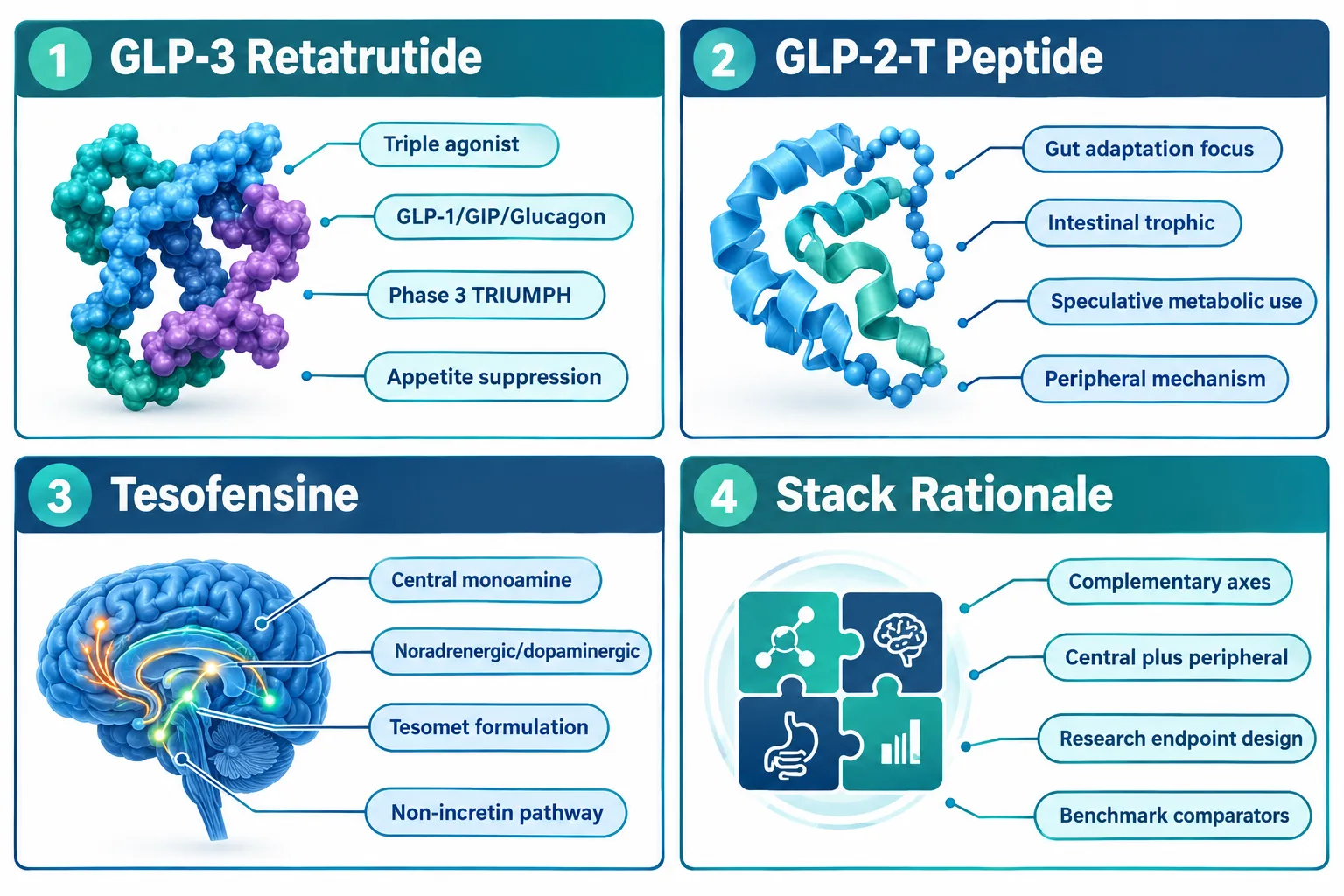
  • Tesofensine contributes a distinct central monoamine mechanism, complementing incretin pathways rather than duplicating them.
  • Labs designing multi-compound protocols typically assign each agent to a separate mechanistic axis to avoid redundancy and isolate variables.
  • No published human data yet evaluates tesofensine co-administered with GLP-1, GLP-2, or GLP-3-class peptides, so research stacks in this space remain preclinical in design.

Understanding the Agents: GLP-3, GLP-2-T, and Tesofensine in Research Context

Understanding the Agents: GLP-3, GLP-2-T, and Tesofensine in Research Context

Before evaluating any combination, researchers need clarity on what each agent actually does.

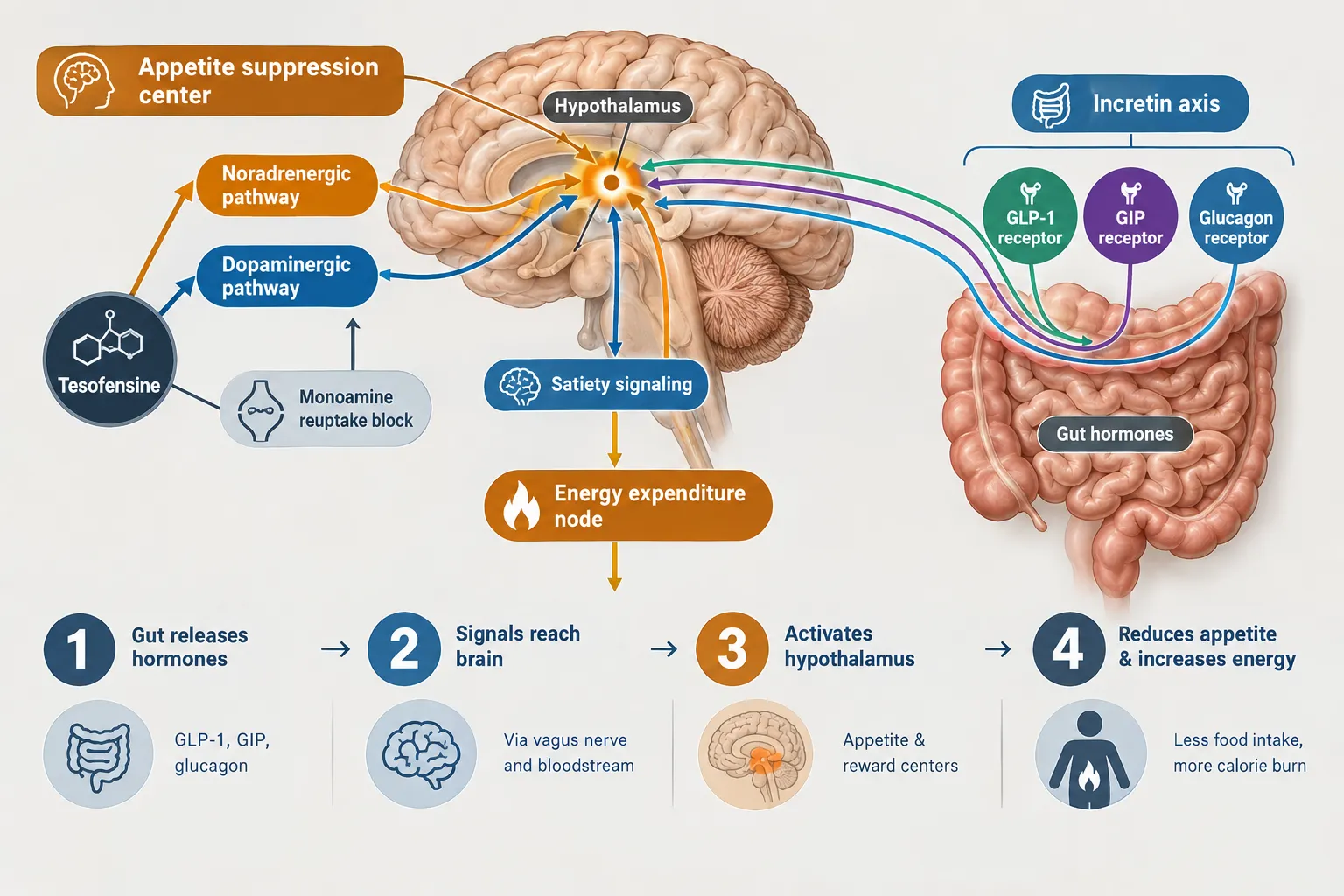
GLP-3 (Retatrutide) is the informal label researchers apply to triple incretin agonists that activate GLP-1, GIP, and glucagon receptors simultaneously. Retatrutide is the leading compound in this class. Its Phase 3 TRIUMPH data confirm weight reductions that outperform all prior single or dual incretin agents. For a detailed breakdown of how retatrutide is distinguished from simpler GLP peptides, see what GLP-3 peptide means and how researchers distinguish it from retatrutide.

GLP-2-T refers to GLP-2 tirzepatide-adjacent or GLP-2 tirzepeptide formulations. This naming creates genuine confusion in research procurement. GLP-2 receptor agonism primarily promotes intestinal mucosal growth and nutrient absorption. Its mainstream clinical application targets gut adaptation syndromes, not obesity. For labs considering metabolic stacks, understanding what GLP-2-T versus GLP2 Tirz naming actually means is essential before procurement decisions are made.

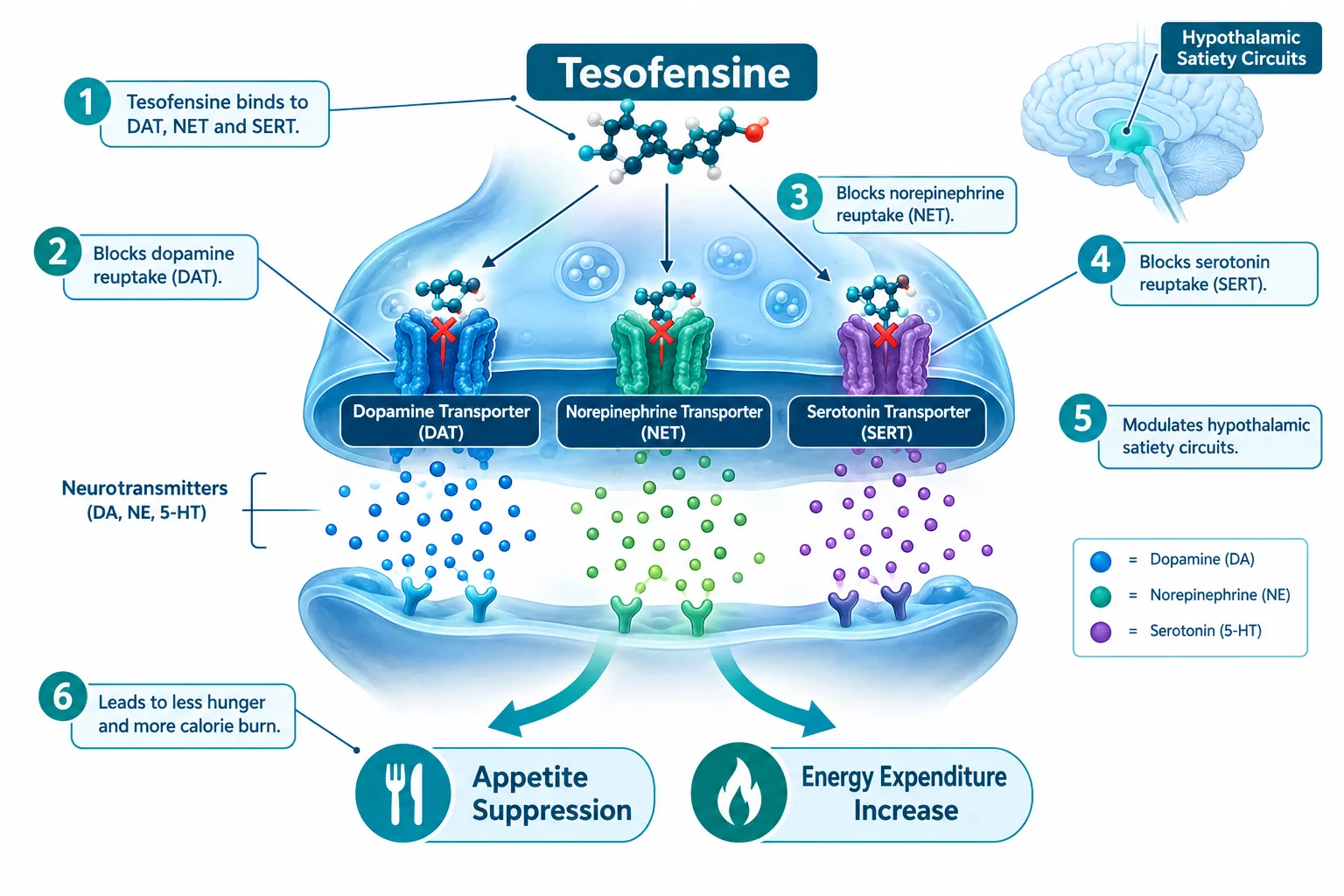
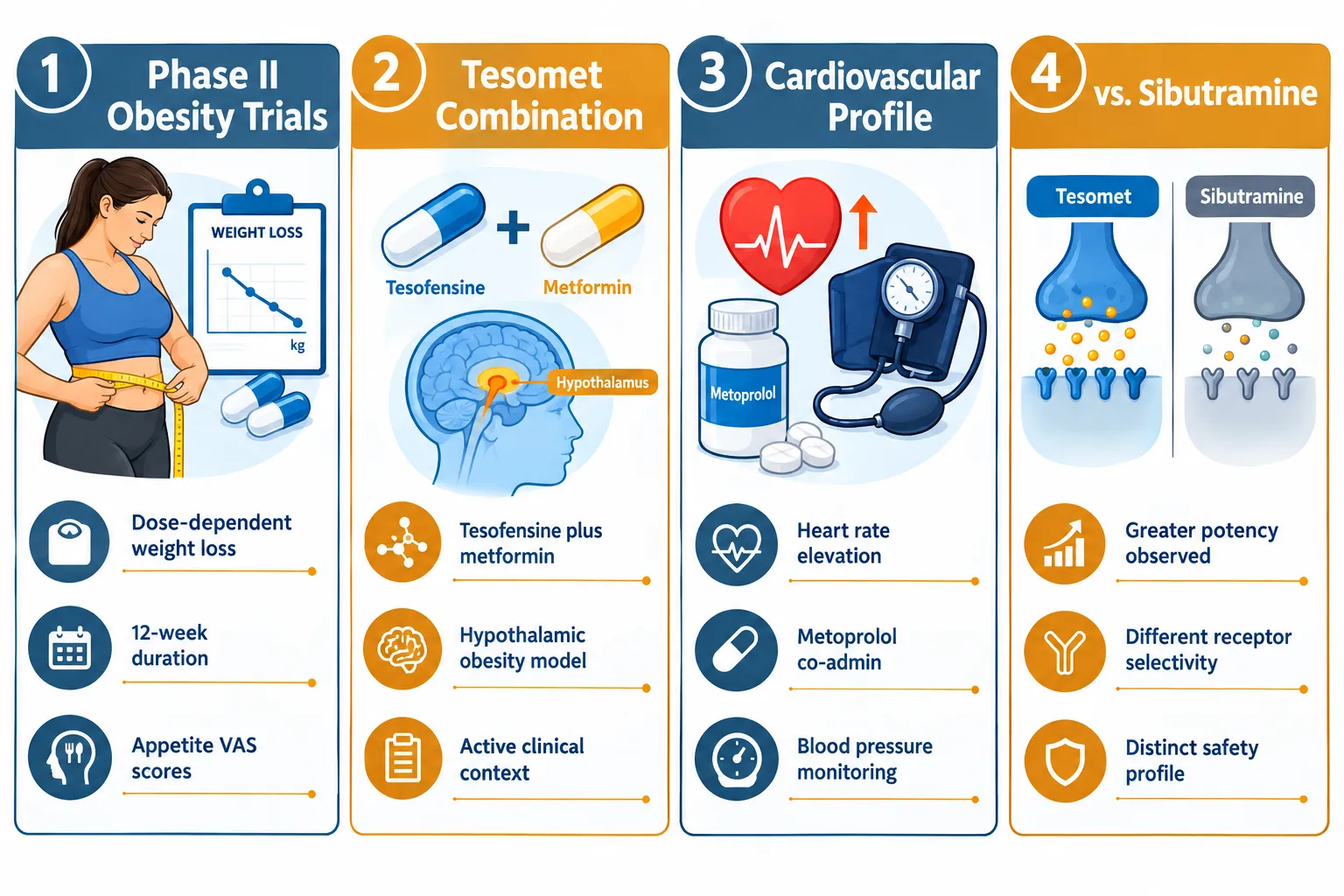
Tesofensine is a triple monoamine reuptake inhibitor that blocks norepinephrine, dopamine, and serotonin transporters. Its central mechanism drives appetite suppression through pathways entirely separate from the incretin axis. The compound is not FDA-approved and is primarily studied or used clinically in Mexico as of 2026. Its most documented human combination is Tesomet, which pairs tesofensine with metoprolol as a cardiovascular buffer, not with any GLP peptide. For a full mechanistic overview, see tesofensine's noradrenergic and dopaminergic mechanisms for appetite regulation research.

How Labs Evaluate Metabolic Peptide Combinations for Appetite and Weight Models

How Labs Evaluate Metabolic Peptide Combinations for Appetite and Weight Models

The logic behind the best research-use GLP-3, GLP-2-T, and tesofensine stacks follows a simple principle: mechanistic non-overlap. When two agents share the same receptor or downstream signaling pathway, stacking them yields diminishing returns and complicates endpoint attribution.

Mechanistic Axes Labs Assign to Each Agent

Agent Primary Axis Key Endpoint in Research Models
GLP-3 / Retatrutide Incretin (GLP-1, GIP, glucagon) Body weight, glucose, appetite scores
GLP-2-T Intestinal trophic / gut barrier Gut morphology, absorption markers
Tesofensine Central monoamine reuptake inhibition Caloric intake, satiety signaling, CNS activity

This table illustrates why GLP-2-T is peripheral to most appetite-focused stacks. Its receptor biology targets gut adaptation, not hypothalamic satiety circuits. Labs studying weight-related endpoints would need a strong mechanistic rationale before including it alongside GLP-3 agents.

Tesofensine, by contrast, addresses a completely different axis. Where retatrutide works peripherally through incretin receptors to reduce appetite and enhance energy expenditure, tesofensine works centrally by prolonging monoamine signaling in hypothalamic circuits. That non-overlap is exactly what makes the combination theoretically interesting. For a direct comparison of how these pathways diverge, tesofensine vs GLP-3 retatrutide appetite-modulating pathways provides a useful framework.

Reference Stacks That Set Performance Ceilings

Research labs do not operate in a vacuum. Clinically tested combinations function as performance benchmarks:

  • Retatrutide (GLP-3-class): The current gold standard for weight-loss magnitude in any metabolic stack discussion.
  • CagriSema (cagrilintide + semaglutide): A GLP-1 plus amylin combination that demonstrates what a dual-mechanism incretin stack achieves.
  • Amycretin: A single-molecule GLP-1/amylin co-agonist that further defines the ceiling for incretin-based combinations.
  • Tesomet: The only published human data showing tesofensine in a fixed combination, paired with metoprolol for cardiovascular safety in hypothalamic obesity models.

Preclinical triple-agonist data consistently show that balanced GLP-1/GIP/glucagon activation outperforms mono- or dual-agonist approaches, which is the scientific rationale behind the GLP-3-style stack concept. Labs reviewing GLP-3 retatrutide and triple-agonist peptide research shaping next-generation metabolic models will find this preclinical-to-clinical translation well documented.

Practical Stack Comparisons: What Research Labs Are Actually Ordering

Practical Stack Comparisons: What Research Labs Are Actually Ordering

When procurement decisions are made for appetite and weight model research, labs generally fall into three protocol categories.

Category 1: Incretin-First Protocols

These labs treat retatrutide or a GLP-1/GIP dual agonist as the primary agent and add secondary compounds only when a specific mechanistic question demands it. GLP-2-T would appear here only if gut barrier integrity or intestinal adaptation is a co-endpoint. For broader context on how incretin peptides compare across research pathways, tesofensine vs semaglutide vs retatrutide appetite research pathways is a useful reference.

Category 2: Central-Plus-Peripheral Stacks

These protocols pair a centrally acting agent (tesofensine) with a peripherally acting incretin (GLP-3/retatrutide) to study additive or synergistic effects on caloric intake and body weight. No published human data exists for this combination as of 2026, making it a preclinical design space. Labs using this approach need robust cardiovascular monitoring endpoints given tesofensine's known hemodynamic profile.

Category 3: Exploratory Multi-Axis Protocols

Some labs include all three agent classes to map interaction effects across incretin, gut trophic, and monoamine axes simultaneously. These are high-variable-count designs that require careful statistical power planning. GLP-2-T inclusion here is typically justified by intestinal permeability or microbiome co-endpoints rather than weight outcomes alone.

Key insight for procurement: The best research-use GLP-3, GLP-2-T, and tesofensine stacks are defined by endpoint specificity, not by the number of compounds included. More agents do not automatically produce better data.

For labs that also study mitochondrial or NAD+ pathways alongside metabolic peptides, how 5-Amino-1MQ and MOTS-c are studied together in metabolic research offers a parallel framework for multi-compound protocol design.

Conclusion

The hierarchy for metabolic peptide stacks in 2026 is clear: triple incretin agonists like retatrutide set the performance ceiling, GLP-1/amylin combinations occupy the second tier, and tesofensine functions as a powerful but structurally separate central-drive agent. GLP-2-T remains a peripheral player in weight-focused models unless gut adaptation is a defined endpoint.

Actionable next steps for research labs:

  1. Define endpoints first. Appetite suppression, body weight, gut morphology, and monoamine signaling each require different primary agents.
  2. Use retatrutide or CagriSema data as your benchmark before designing any novel combination protocol.
  3. Treat GLP-2-T inclusion as an intestinal-axis decision, not a weight-loss decision.
  4. Build cardiovascular monitoring into any tesofensine-containing stack, following the Tesomet precedent.
  5. Consult how tesofensine as a noradrenergic appetite modulator compares with GLP-3 peptides in study design before finalizing any central-plus-peripheral protocol.

Research in this space is moving fast. Labs that anchor their stack designs to published mechanistic data and clinical benchmarks will produce the most interpretable results as this field evolves.

https://www.puretestedpeptides.com/wp-content/uploads/2026/09/best-research-use-glp-3-glp-2-t-and-tesofensine-stacks-how-labs-compare-metaboli.webp 1024 1536 https://www.puretestedpeptides.com/wp-content/uploads/2026/01/buy-peptides-online.jpg 2026-09-06 13:04:262026-09-06 13:04:26Best Research-Use GLP-3, GLP-2-T, and Tesofensine Stacks: How Labs Compare Metabolic Peptide Combinations for Appetite and Weight Models
Tesofensine vs GLP-3 Peptides in Metabolic Research: How Labs Decide Which Compounds to Order

Tesofensine vs GLP-3 Peptides in Metabolic Research: How Labs Decide Which Compounds to Order

August 29, 2026/0 Comments/in Uncategorized/by

Only about 5% of obesity drug candidates that enter clinical development ever reach approval, a statistic that shapes every procurement decision a metabolic research lab makes. When evaluating Tesofensine vs GLP-3 Peptides in Metabolic Research: How Labs Decide Which Compounds to Order, the choice is rarely simple. It hinges on mechanistic goals, available evidence, translational potential, and practical sourcing factors that vary from lab to lab.

Key Takeaways

  • Tesofensine is a triple monoamine reuptake inhibitor with CNS-driven appetite suppression; GLP-based peptides act peripherally and centrally through incretin pathways.
  • GLP-1 receptor agonists and next-generation multi-agonists carry deeper clinical evidence and broader cardiometabolic endpoints than tesofensine.
  • Tesofensine remains a valid niche tool for labs studying central monoamine systems and appetite neuroscience.
  • Evidence depth, regulatory trajectory, and endpoint specificity are the three primary filters labs use when ordering compounds.
  • Sourcing quality, purity certification, stability data, and vendor transparency, is equally critical for both compound classes.

Understanding the Two Compound Classes

Understanding the Two Compound Classes

Before any procurement decision is made, researchers need a clear picture of what each compound actually does at the receptor level.

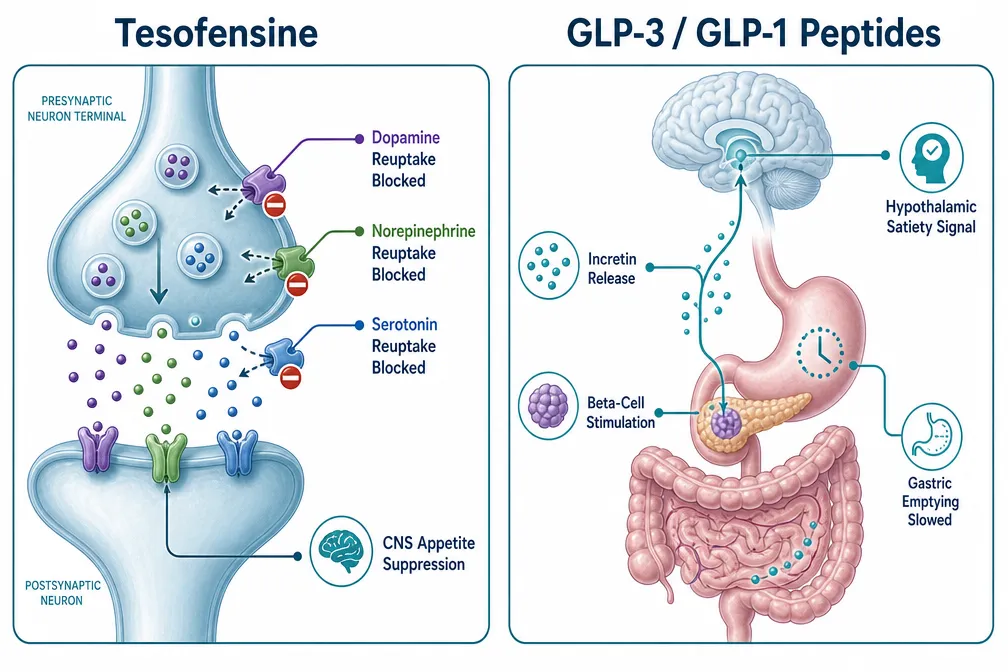
Tesofensine is a small-molecule triple reuptake inhibitor. It blocks the reuptake of dopamine, norepinephrine, and serotonin simultaneously, producing appetite suppression primarily through central nervous system pathways. Early monotherapy trials showed meaningful reductions in body weight, but cardiovascular signals, including elevated heart rate and blood pressure, slowed development. The Tesomet combination (tesofensine plus metoprolol) was designed to blunt those cardiovascular effects, and small trials have shown moderate but consistent weight loss. Pipeline analysts currently classify Tesomet as an early-stage anti-obesity candidate with modest efficacy compared to newer agents.

GLP-3 and related GLP-based peptides operate through a fundamentally different mechanism. GLP-1 receptor agonists stimulate incretin release, slow gastric emptying, activate hypothalamic satiety circuits, and promote insulin secretion in a glucose-dependent manner. Compounds such as retatrutide, a triple GLP-1/GIP/glucagon receptor co-agonist, represent the frontier of this class. For a deeper breakdown of how GLP-1, GLP-2, and GLP-3 relate to each other mechanistically, the GLP-3, GLP-1, and GLP-2 explained: a researcher's guide to the peptide family provides essential context.

"Mechanistic focus is the first filter. A lab studying central reward circuitry may legitimately need tesofensine. A lab studying cardiometabolic risk almost certainly needs a GLP-based agent."

Comparing Evidence Depth and Research Endpoints

Comparing Evidence Depth and Research Endpoints

When evaluating Tesofensine vs GLP-3 Peptides in Metabolic Research: How Labs Decide Which Compounds to Order, evidence depth is the most decisive factor for most labs.

Efficacy and Clinical Data

Factor Tesofensine GLP-Based Peptides
Weight loss magnitude Moderate Substantial to large
Cardiometabolic endpoints Limited Broad and well-documented
Translational pipeline depth Early-stage Advanced, multi-indication
Safety profile clarity Concerns noted Known, manageable
Multi-agonist variants None Tirzepatide, retatrutide, others

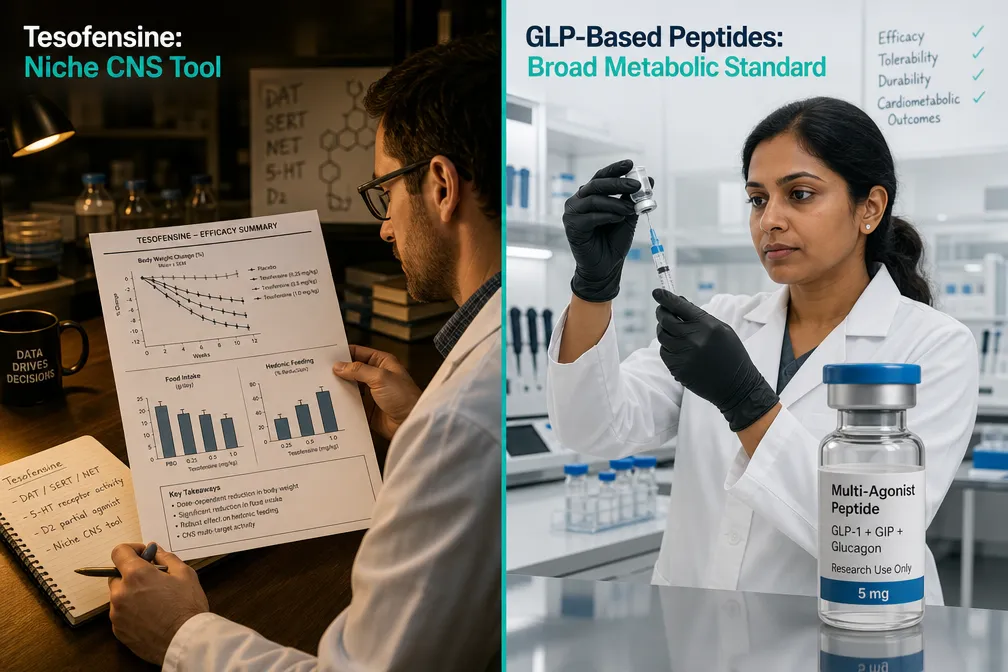
GLP-1 receptor agonists deliver larger, better-documented weight loss outcomes and cardiometabolic benefits than tesofensine across multiple trial populations. Pharmacovigilance data show known but manageable safety profiles for GLP-1 RAs, which reassures translational researchers planning longer study windows. Dual and multi-agonist GLP-based drugs, tirzepatide being the clearest example, have set a translational gold standard that newer lab programs aim to replicate or surpass.

Tesofensine's evidence base, while real, is narrower. Its value lies specifically in CNS-focused research: appetite neuroscience, reward pathway modulation, and monoamine system studies. Labs focused on those endpoints will find tesofensine uniquely suited. Labs pursuing metabolic syndrome, insulin resistance, or cardiovascular risk reduction will find GLP-based peptides far more aligned with their endpoints.

For researchers exploring GLP-1 peptide sourcing concepts and generational research notes, understanding how the evidence base has evolved across GLP generations is essential before finalizing compound orders.

How Labs Decide Which Compounds to Order: A Practical Framework

How Labs Decide Which Compounds to Order: A Practical Framework

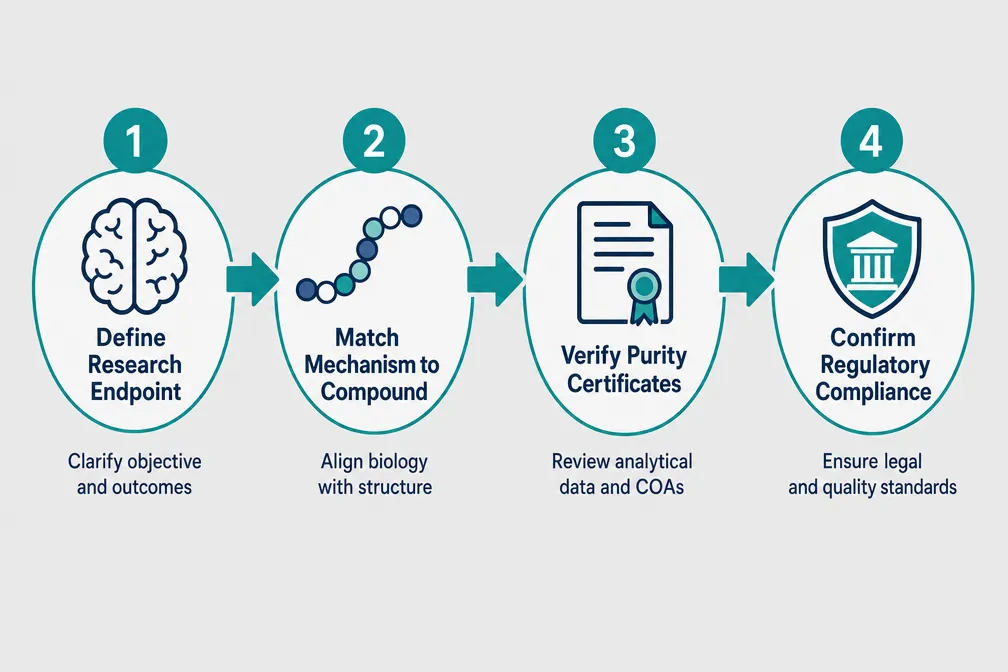
The practical side of Tesofensine vs GLP-3 Peptides in Metabolic Research: How Labs Decide Which Compounds to Order comes down to four structured decision points.

Step 1: Define the Research Endpoint

Labs must ask: Is the primary endpoint CNS-driven (appetite, reward, monoamine tone) or peripheral/metabolic (insulin sensitivity, body composition, cardiovascular markers)? CNS-focused endpoints favor tesofensine. Metabolic endpoints favor GLP-based peptides.

Step 2: Match Mechanism to Compound

Once the endpoint is clear, mechanism alignment follows naturally. Researchers studying hormone research compounds will recognize that GLP-based agents interact with incretin hormones in ways tesofensine simply does not. Conversely, monoamine reuptake inhibition cannot be replicated by any GLP-based compound.

Step 3: Evaluate Regulatory and Commercial Trajectory

Regulatory and commercial trajectories strongly push labs toward GLP-1-aligned programs. Labs seeking translational relevance, where preclinical data might eventually inform clinical development, will find GLP-based agents far better positioned. Next-generation GLP-based co-agonists and biased agonists are at the forefront of cutting-edge metabolic research investment globally.

Step 4: Verify Sourcing Quality

Regardless of which compound a lab selects, purity certification is non-negotiable. For peptide-based compounds, researchers should confirm:

  • Certificate of Analysis (CoA) with HPLC purity data
  • Mass spectrometry confirmation of molecular identity
  • Stability and storage specifications matched to the lab's conditions
  • Vendor transparency regarding synthesis methods

Labs sourcing GLP-class compounds can explore GLP-1 peptides available for research and review buy GLP-1 peptides options to compare available research-grade formulations. For broader compound discovery, all peptides for sale provides a wider catalog view. Understanding polypeptide peptides and drug mechanisms can also help researchers contextualize how each compound class fits within broader pharmacological frameworks.

The Short-Term Outlook for Each Compound Class

As of 2026, GLP-based agents remain the default ordering choice for the majority of metabolic research labs. The evidence base is deeper, the translational pipeline is more active, and regulatory momentum clearly favors incretin-based approaches. Tesofensine occupies a legitimate but narrow niche, valuable for CNS appetite research, less relevant for labs chasing cardiometabolic endpoints.

Labs should also monitor emerging hormone research developments, as the intersection of incretin biology and neuroendocrine signaling continues to generate new compound candidates that may eventually bridge both mechanistic worlds.

Conclusion

The decision between tesofensine and GLP-3 peptides is not a matter of one compound being universally superior. It is a matter of alignment, between the compound's mechanism and the lab's specific research question.

Actionable next steps for research teams:

  1. Audit current study endpoints before placing any compound order.
  2. If endpoints are metabolic or cardiometabolic, prioritize GLP-based peptides with documented multi-agonist profiles.
  3. If endpoints involve CNS appetite circuits or monoamine systems, evaluate tesofensine as a targeted tool.
  4. Require full CoA documentation and mass spectrometry data from any vendor.
  5. Stay current with pipeline developments, the GLP-based compound landscape is evolving rapidly in 2026.

Compound selection is a scientific decision first, and a sourcing decision second. Getting the order right on both counts is what separates rigorous metabolic research from inconclusive results.

https://www.puretestedpeptides.com/wp-content/uploads/2026/08/tesofensine-vs-glp-3-peptides-in-metabolic-research-how-labs-decide-which-compou.webp 672 1008 https://www.puretestedpeptides.com/wp-content/uploads/2026/01/buy-peptides-online.jpg 2026-08-29 13:04:292026-08-29 13:04:29Tesofensine vs GLP-3 Peptides in Metabolic Research: How Labs Decide Which Compounds to Order
Tesofensine vs GLP Peptides: Appetite Research Pathways Compared for Lab Buyers

Tesofensine vs GLP Peptides: Appetite Research Pathways Compared for Lab Buyers

August 19, 2026/0 Comments/in Uncategorized/by

Only one in three obesity drug candidates that enters Phase 2 trials ever reaches approval, a statistic that makes the diverging fates of tesofensine and GLP-based peptides all the more instructive for researchers choosing where to direct their experimental budgets. The comparison of Tesofensine vs GLP Peptides: Appetite Research Pathways Compared for Lab Buyers is not simply a question of which compound produces more weight loss. It is a question of which neural circuit a lab wants to interrogate, which safety profile a protocol can accommodate, and which pipeline has the momentum to generate publishable, fundable science in 2026.

Key Takeaways

  • Tesofensine targets monoamine reuptake and hypothalamic GABA neurons; GLP-based peptides act through incretin receptors and gut-brain signaling.
  • GLP-1 agonists and dual/triple agonists dominate the current obesity pipeline, but tesofensine retains a distinct niche in monoamine-focused appetite research.
  • Efficacy data favor newer dual and triple agonists for raw weight-loss magnitude; tesofensine's Phase 3 data from Mexico show meaningful but narrower results.
  • Safety profiles differ substantially: tesofensine carries cardiovascular and stimulant-class risks; GLP peptides carry gastrointestinal tolerability concerns.
  • Lab buyers should match compound selection to research question, not to headline weight-loss numbers alone.

Mechanism Deep Dive: How Each Pathway Controls Appetite

Mechanism Deep Dive: How Each Pathway Controls Appetite

Understanding the biology is the first step in any rigorous comparison of Tesofensine vs GLP Peptides: Appetite Research Pathways Compared for Lab Buyers.

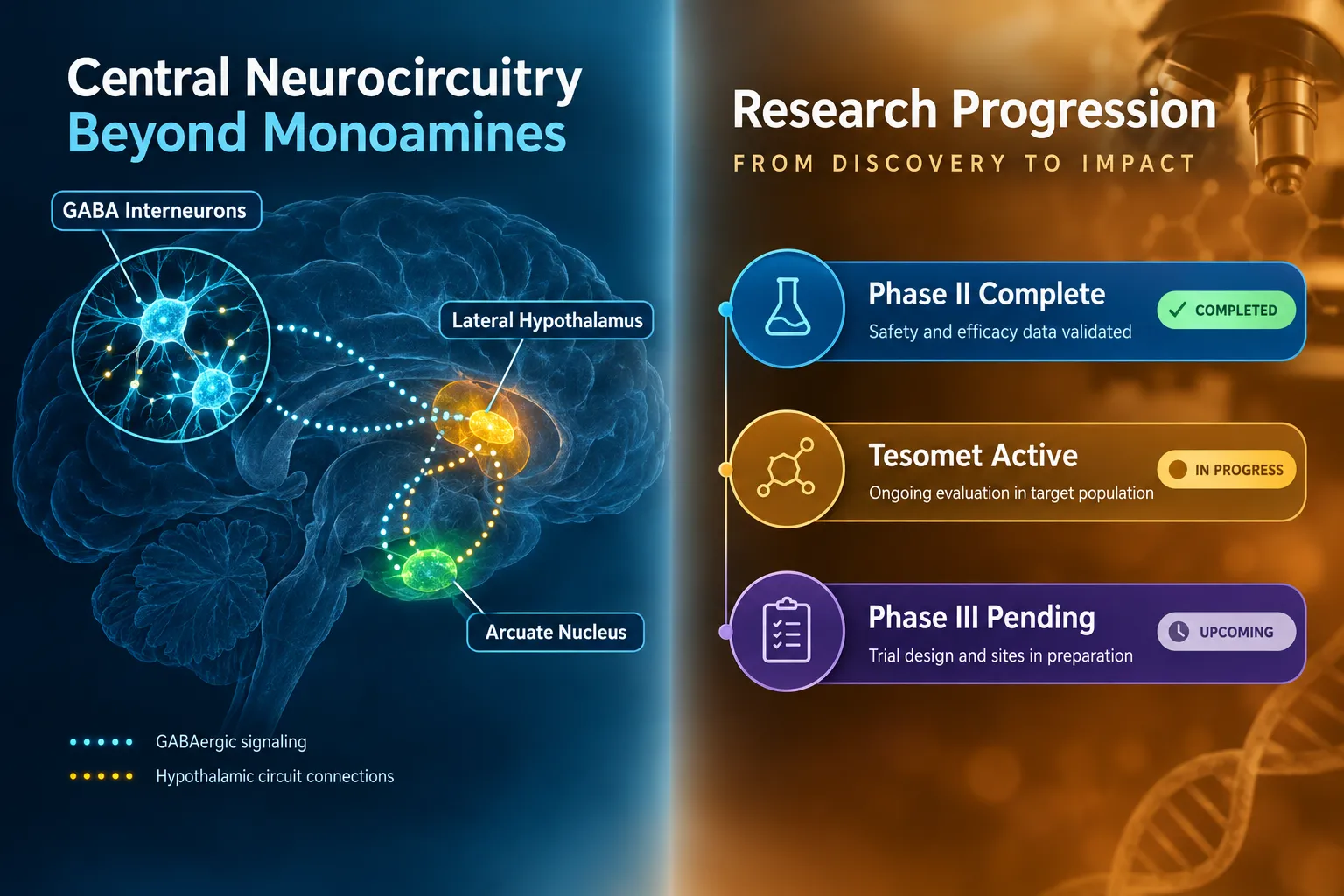
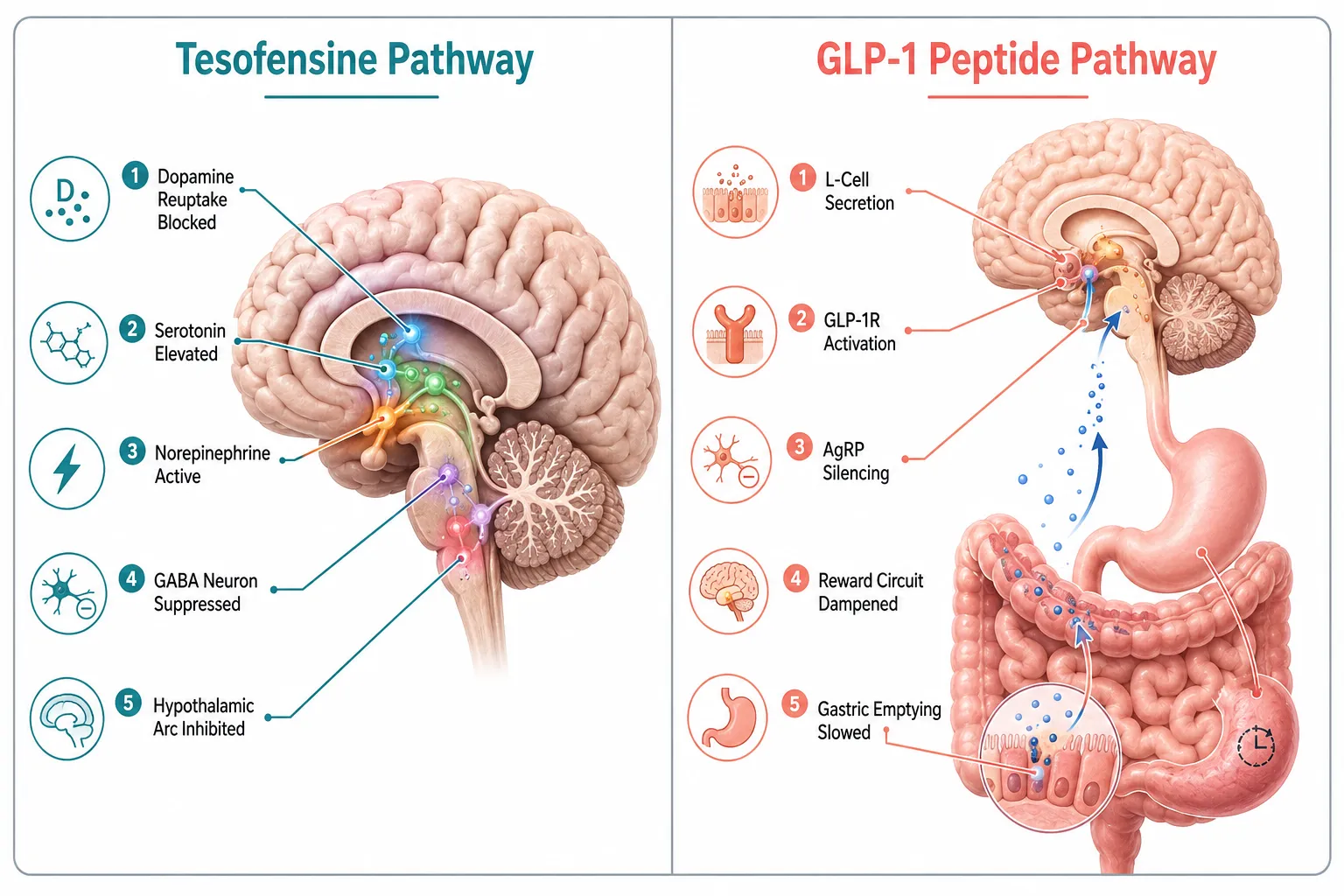
Tesofensine is a small-molecule triple monoamine reuptake inhibitor. It blocks the reuptake of dopamine, serotonin, and norepinephrine simultaneously. This elevates synaptic concentrations of all three neurotransmitters in regions that regulate energy balance. Critically, animal and human data indicate that tesofensine also suppresses a specific population of hypothalamic GABA neurons in the lateral hypothalamus, neurons that normally promote feeding. The result is a dual action: central stimulant-like appetite suppression combined with reduced reward salience for food.

GLP-1 peptides work through an entirely different axis. Glucagon-like peptide-1 is secreted by intestinal L-cells after eating. It binds GLP-1 receptors in the gut, pancreas, and brain. In the hypothalamus, GLP-1 receptor activation silences AgRP (agouti-related protein) neurons, the primary hunger-promoting neurons in the arcuate nucleus. GLP-1 also slows gastric emptying and modulates the mesolimbic reward circuit, reducing the motivational drive to eat. For a thorough breakdown of the GLP peptide family, see this researcher's guide to GLP-3, GLP-1, and GLP-2.

Dual agonists (GLP-1/GIP) and triple agonists add glucose-dependent insulinotropic polypeptide and glucagon receptor activity to the mix, amplifying both peripheral metabolic effects and central appetite suppression. Researchers tracking this frontier should review Retatrutide Phase 3 and beyond for the latest multi-agonist trial data.

Key distinction: Tesofensine answers questions about monoamine circuits and GABA-mediated feeding control. GLP peptides answer questions about incretin signaling, AgRP regulation, and gut-brain crosstalk. These are complementary, not interchangeable, research tools.

Efficacy and Safety: What the Data Show

Efficacy and Safety: What the Data Show

Weight-Loss Efficacy Compared

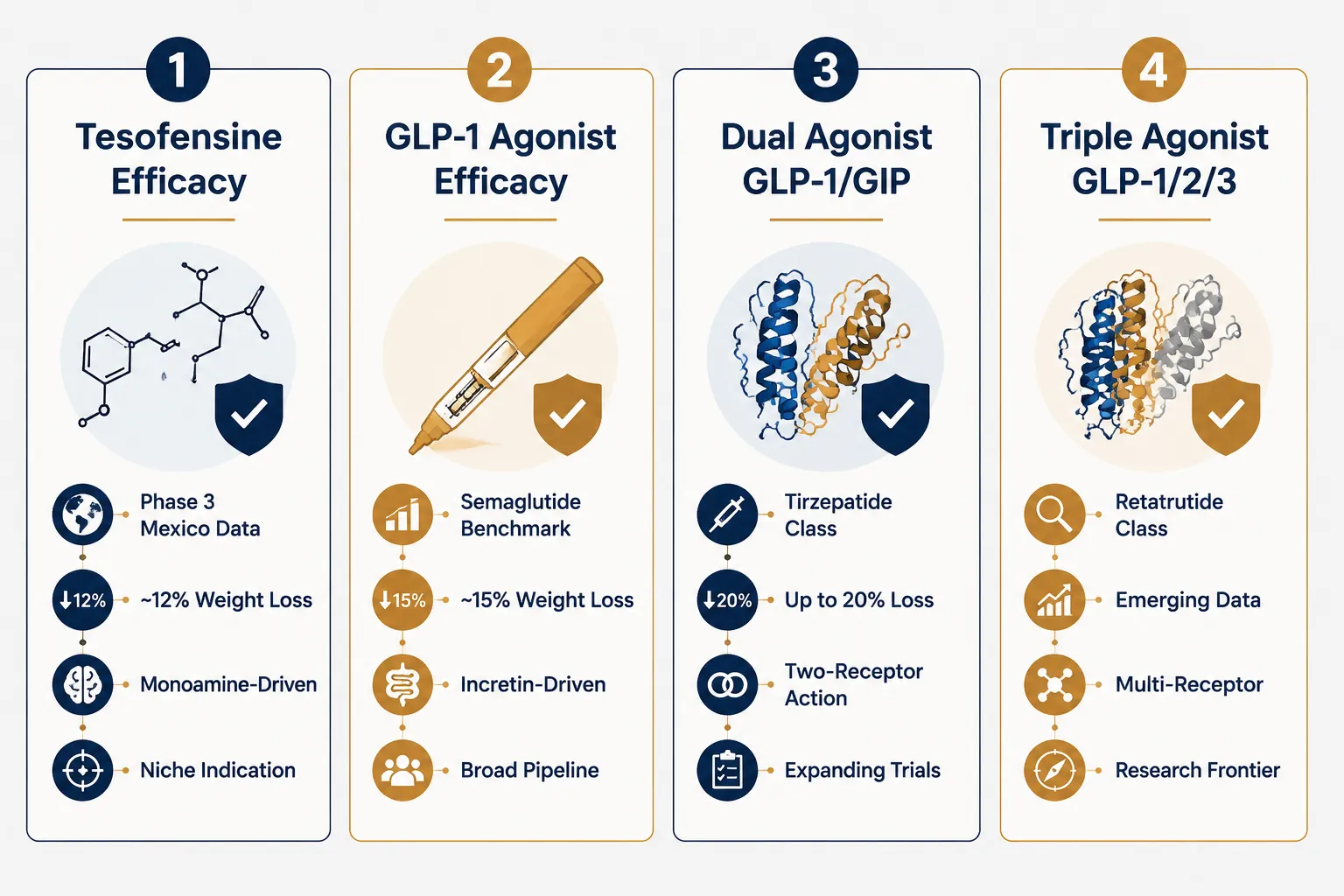
Compound Class Mechanism Approximate Weight Loss (Trial Data)
Tesofensine Triple monoamine reuptake inhibitor ~10-12% body weight
GLP-1 agonist (semaglutide class) GLP-1R agonism ~15% body weight
Dual agonist (GLP-1/GIP) GLP-1R + GIPR agonism ~18-20% body weight
Triple agonist (retatrutide class) GLP-1R + GIPR + GcgR Up to 24% body weight

Tesofensine's Phase 3 program, conducted primarily through a Mexican regulatory pathway, has confirmed meaningful weight reduction in obese adults. However, the magnitude sits below that of current GLP-1-based standards. This does not diminish tesofensine's research value, it simply frames where the compound fits. Labs studying monoaminergic contributions to appetite, or researching Parkinson's disease and obesity comorbidities, will find tesofensine's mechanism irreplaceable.

Safety Profiles: A Practical Comparison

Tesofensine risks to model in protocols:

  • Elevated heart rate and blood pressure (sympathomimetic effect)
  • Insomnia and dry mouth (monoamine elevation)
  • Potential for abuse liability in dopaminergic circuits
  • Contraindicated profiles overlap with stimulant-class compounds

GLP peptide risks to model in protocols:

  • Nausea, vomiting, and diarrhea (dose-dependent, typically transient)
  • Rare pancreatitis signals requiring monitoring
  • Injection-site reactions for subcutaneous formulations
  • Emerging data on muscle mass preservation with newer agonists

Labs sourcing GLP-1 compounds for in vitro or animal model work can explore GLP-1 peptides for research to compare available formats. Those evaluating hormone research protocols will also find relevant context for designing metabolic studies.

Strategic Considerations for Lab Buyers in 2026

Strategic Considerations for Lab Buyers in 2026

The practical question for lab buyers is not "which is better" but "which answers my research question." Here is a structured decision framework:

Choose tesofensine when the research question involves:

  • Monoamine reuptake inhibition and appetite regulation
  • Hypothalamic GABA neuron activity
  • Comparison of small-molecule vs peptide-based appetite suppression
  • Neurological comorbidities (Parkinson's, Alzheimer's metabolic overlap)

Choose GLP peptides when the research question involves:

  • Incretin signaling and pancreatic beta-cell function
  • AgRP/NPY neuron suppression models
  • Gut-brain axis communication
  • Multi-receptor metabolic synergy (dual/triple agonist models)

For labs exploring next-generation metabolic peptides, the GLP-3 and retatrutide research overview provides critical context on where the triple-agonist pipeline is heading. Labs that need oral delivery formats should also review oral peptides for sale to assess formulation compatibility with their protocols.

Sourcing Quality: A Non-Negotiable Variable

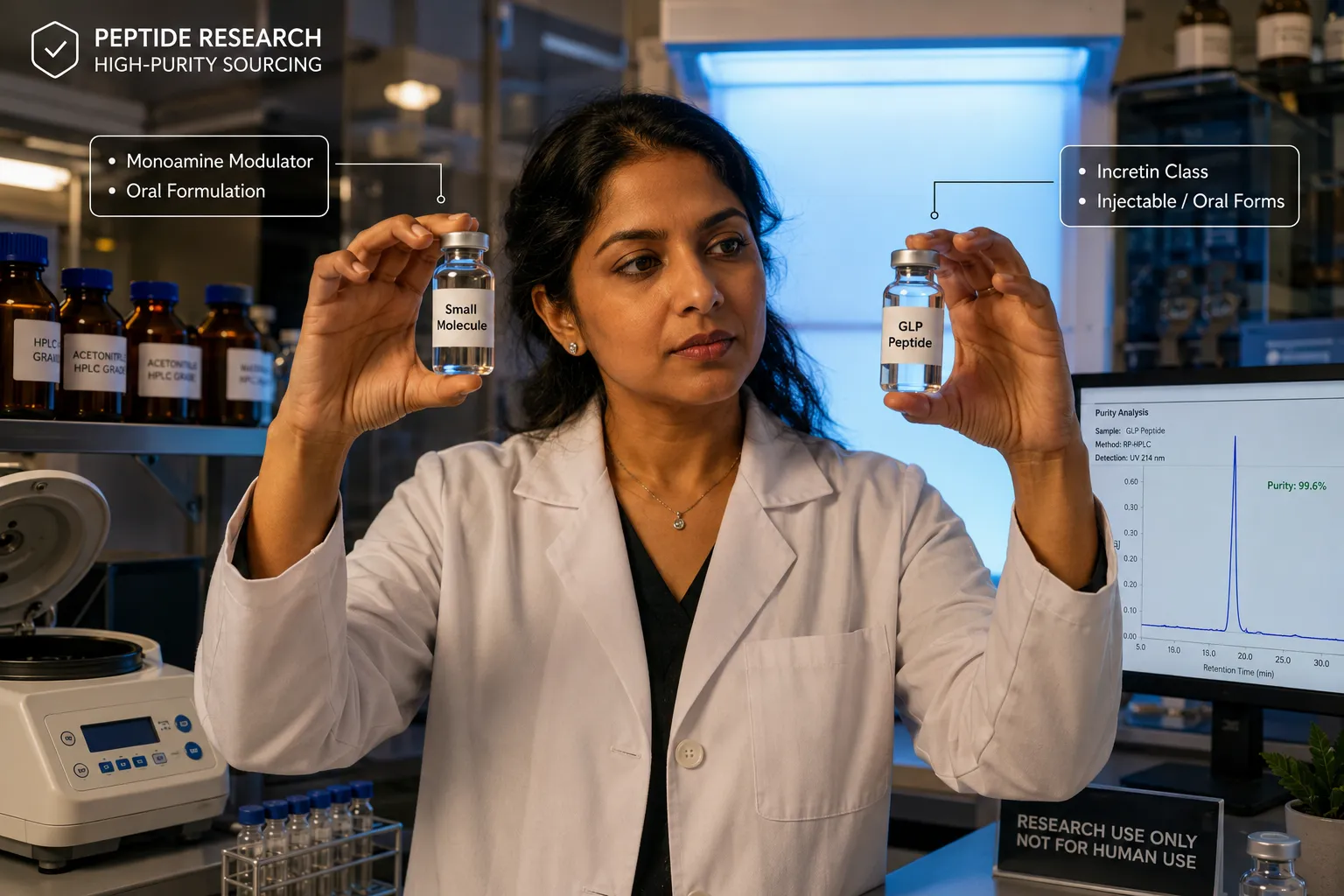
Regardless of which pathway a lab chooses, purity and documentation are paramount. Monoamine studies require compounds free of serotonergic contaminants; GLP receptor binding assays are sensitive to aggregation artifacts. Reviewing high purity peptide sourcing standards before procurement prevents confounded results and wasted budget.

When comparing vendors, peptide supplier comparisons offer a practical framework for evaluating certificate-of-analysis standards across the market.

Conclusion

The Tesofensine vs GLP Peptides: Appetite Research Pathways Compared for Lab Buyers decision ultimately maps onto mechanism, not marketing. Tesofensine remains the compound of choice for monoamine-circuit research and specialized neurological-metabolic crossover studies. GLP-based peptides, particularly dual and triple agonists, command the broader pipeline and offer richer incretin and gut-brain research opportunities.

Actionable next steps for lab buyers:

  1. Define the primary neural circuit or receptor system under investigation before selecting a compound.
  2. Review the latest Phase 3 safety data for both compound classes and model contraindicated profiles into your protocol design.
  3. Audit supplier purity documentation; demand HPLC and mass spectrometry certificates for every lot.
  4. Consider running parallel mechanistic arms, one monoamine-focused, one incretin-focused, to generate comparative data within a single study design.
  5. Monitor the triple-agonist pipeline closely; retatrutide-class compounds are reshaping the research landscape faster than most procurement cycles can adapt.

Matching compound to question, and sourcing to standard, is what separates publishable science from inconclusive data.

https://www.puretestedpeptides.com/wp-content/uploads/2026/08/tesofensine-vs-glp-peptides-appetite-research-pathways-compared-for-lab-buyers.webp 1024 1536 https://www.puretestedpeptides.com/wp-content/uploads/2026/01/buy-peptides-online.jpg 2026-08-19 13:04:102026-08-19 13:04:10Tesofensine vs GLP Peptides: Appetite Research Pathways Compared for Lab Buyers
×

Helpful Links

  • My account
  • Cart
  • Checkout
  • Refund and Returns Policy
  • Privacy Policy
  • SMS Privacy Policy
  • Login
  • My Account
  • Logout

USA Made Lab Tested Peptides

All products are sold for research, laboratory, or analytical purposes only, and are not for human consumption


Pure Tested Peptides is a chemical supplier. Pure Tested Peptides is not a compounding / chemical compounding facility as defined under 503A of the Federal Food, Drug, and Cosmetic act. Pure Tested Peptides is not an outsourcing facility as defined under 503B of the Federal Food, Drug, and Cosmetic act.

The statements made within this website have not been evaluated by the US Food and Drug Administration. The products we offer are not intended to diagnose, treat, cure or prevent any disease.

Human/Animal Consumption Prohibited. Laboratory/In-Vitro Experimental Use Only

Scroll to top Scroll to top Scroll to top