Call or Text 727-513-9780
  • Shopping Cart Shopping Cart
    0Shopping Cart
Pure Tested Peptides | America's most trusted Peptides for sale online
  • Peptides for sale
    • Oral Peptides for sale
      • Peptide Capsules for sale
      • BPC 157 Capsules 1000mcg
      • SLU-PP-332 Capsules | 1000 mcg
      • 5-Amino-1MQ 50mg Capsules
      • Tesofensine 500mcg
    • All Peptides for sale
    • Peptide Sprays
      • BPC 157 Nasal Spray Kit
      • BPC-157 TB500 Nasal Spray Kit
      • Semax Nasal Spray 10mg
      • Selank – Nasal Spray Kit – 10mg
      • Epithalon 50MG Nasal Spray Kit
      • Ipamorelin 10mg Nasal Spray
      • Klow Nasal Spray (BPC-157 + TB-500 + GHK-Cu + KPV) | 80mg
      • Hulk Nasal Spray Tesa / Ipa Blend 6/3 MG
      • Klow Nasal Spray
      • NAD + 500 mg Nasal Spray
      • PT-141 Nasal Spray Kit
    • GHRH Peptides
      • Ipa Peptides
      • CJC-1295 Peptides
        • CJC-1295 with DAC 5 mg
        • CJC-1295 without DAC 5 mg
        • CJC-1295 Ipa 10mg
      • Tesa Peptides
        • Tesa Peptide
        • Tesa 20 mg
    • GHK-Cu Peptides
      • All GHK-Cu Peptides
      • GHK-Cu 100mg
      • KLOW Peptide Blend – Buy KLOW blend online
    • BPC Peptides
      • All BPC Peptides
      • BPC-157
      • BPC-157 TB-500
      • BPC 157 capsules 1000mcg
    • SLU-PP-332 Peptides
      • All SLU-PP-332 Peptides
      • SLU-PP-332 5mg
    • GLP3 Peptides
    • PT-141 Peptides
      • PT-141 Peptides for sale
      • PT-141 10mg
      • PT-141 Nasal Spray
    • CAG Peptides
      • Lipo-C Peptide Blend
      • CAG 5mg
      • CAG 10mg
    • MOTS-C Peptides
      • MOTS-C Peptides for sale
      • MOTS-c peptide
      • MOTS-c 10mg *6 pack*
    • 5 Amino 1MQ Peptides
      • 5 Amino 1MQ Peptides for sale
      • 5-Amino-1MQ 50mg Capsules
      • 5-Amino-1MQ 5mg
    • Epithalon Peptides
      • Epithalon Peptides for sale
      • Epithalon 10mg
      • Epithalon 50mg
  • Shop
    • GLPs
      • 5-Amino-1MQ 50mg Capsules
      • 5-Amino-1MQ 5mg
      • L-Carnitine 500mg/ml
      • Tesofensine 500mcg
      • SLU-PP-332 5mg
      • MOTS-c 10mg *6 pack*
    • Epithalon & BPC Peptides
      • Epithalon 10mg
      • Epithalon 50mg
      • BPC-157
      • BPC 157 capsules 1000mcg
      • BPC-157 TB-500
      • BPC-157 TB500 Nasal Spray Kit
      • BPC 157 Nasal Spray Kit
    • BPC TB-500 & NAD+ Peptides
      • NAD+ 500 mg
      • KLOW Peptide Blend – Buy KLOW blend online
      • GLOW Peptide Blend
      • TB 500 5mg
      • BPC 157 capsules 1000mcg – Supplement
      • BPC 157 Nasal Spray Kit
      • BPC-157
      • BPC-157 TB500 Nasal Spray Kit
      • BPC-157 TB-500
      • BPC 157 capsules 1000mcg
    • LL-37 Peptide
      • LL-37 10 mg
    • MOTS-C & Selank
      • MOTS-c peptide
      • Selank 10mg
    • GHK Peptides
      • GHK-Cu 100mg
      • GLOW Peptide Blend
      • KLOW Peptide Blend – Buy KLOW blend online
  • COAs
  • Wholesale
    • Wholesale Peptides for sale
  • PTP FAQ
  • Affiliates
    • Selank Peptide: Advanced Pharmacological Mechanisms Underlying Its Anxiolytic and Nootropic Effects in Research
      • 5-Amino-1MQ Peptide: Detailed Mechanisms of NNMT Inhibition and Its Impact on Cellular Metabolism Research
        • MOTS-C Peptide: Unraveling Its Role in Mitochondrial Dynamics and Energy Metabolism Research
          • Epithalon Peptide and Telomerase Regulation: Investigating Its Impact on Cellular Senescence and Lifespan Research Models
            • GLP2-T vs GLP2 Tirz Peptide: Understanding the Naming, Mechanistic Nuances, and Research Implications for Gut Health
      • Peptides and Polypeptides in Modern Pharmacology: What Research on Metoprolol, Prednisone, and Amlodipine Reveals
        • Polypeptide Peptides vs NSAIDs: What Naproxen and Diclofenac Teach Tissue-Repair Researchers About BPC‑157 and TB‑500
          • Peptides and Polypeptides in Endocrine Pharmacology: How GLP-1, GLP-2, and GLP-3 Retatrutide Differ From Classic Drugs Like Prednisone and Amlodipine
          • 5‑Amino‑1MQ Peptide and NNMT Inhibition: How It Compares With Statins Like Atorvastatin in Adipose and Lipid Metabolism Research
      • Enclomiphene, Estrogen Receptor Signaling, and Luteinizing Phase Biology: What Hormone Researchers Should Measure
        • Mesenchymal Stem Cells, BPC‑157, and GHK‑Cu: How Tissue Repair Peptides Compare With Classic NSAIDs Like Naproxen in Injury Models
          • Peptide Calculator Use Cases Beyond Growth Hormone: Working Through GLP‑3 Retatrutide, MOTS‑c, and BPC‑157 Research Dosing
        • Polypeptide Peptides in Endocrine and Metabolic Pharmacology: Lessons From Amlodipine, Prednisone, and Metoprolol
        • Peptides Calculator for Advanced Blends: Worked Examples for Tesamorelin, CJC‑1295, and Ipamorelin Stacks
          • Peptides and Polypeptides in Human Physiology: How Molecular Size Shapes Research Applications
            • Selank Peptide: Advanced Pharmacological Mechanisms Underlying Its Anxiolytic and Nootropic Effects in Research
          • 5-Amino-1MQ Peptide: Detailed Mechanisms of NNMT Inhibition and Its Impact on Cellular Metabolism Research
            • MOTS-C Peptide: Unraveling Its Role in Mitochondrial Dynamics and Energy Metabolism Research
              • Epithalon Peptide and Telomerase Regulation: Investigating Its Impact on Cellular Senescence and Lifespan Research Models
                • GLP2-T vs GLP2 Tirz Peptide: Understanding the Naming, Mechanistic Nuances, and Research Implications for Gut Health
                  • Peptides and Polypeptides in Endocrine Pharmacology: How GLP-1, GLP-2, and GLP-3 Retatrutide Differ From Classic Drugs Like Prednisone and Amlodipine
                    • Polypeptide Peptides vs NSAIDs: What Naproxen and Diclofenac Teach Tissue-Repair Researchers About BPC‑157 and TB‑500
                      • Peptides and Polypeptides in Modern Pharmacology: What Research on Metoprolol, Prednisone, and Amlodipine Reveals
                        • 5‑Amino‑1MQ Peptide and NNMT Inhibition: How It Compares With Statins Like Atorvastatin in Adipose and Lipid Metabolism Research
                        • Enclomiphene, Estrogen Receptor Signaling, and Luteinizing Phase Biology: What Hormone Researchers Should Measure
                        • Mesenchymal Stem Cells, BPC‑157, and GHK‑Cu: How Tissue Repair Peptides Compare With Classic NSAIDs Like Naproxen in Injury Models
                        • Peptide Calculator Use Cases Beyond Growth Hormone: Working Through GLP‑3 Retatrutide, MOTS‑c, and BPC‑157 Research Dosing
                        • Polypeptide Peptides in Endocrine and Metabolic Pharmacology: Lessons From Amlodipine, Prednisone, and Metoprolol
                        • Peptides Calculator for Advanced Blends: Worked Examples for Tesamorelin, CJC‑1295, and Ipamorelin Stacks
                        • Peptides and Polypeptides in Human Physiology: How Molecular Size Shapes Research Applications
                        • Selank Peptide: Advanced Pharmacological Mechanisms Underlying Its Anxiolytic and Nootropic Effects in Research
                        • MOTS-C Peptide: Unraveling Its Role in Mitochondrial Dynamics and Energy Metabolism Research
                        • Peptides and Polypeptides in Modern Pharmacology: What Research on Metoprolol, Prednisone, and Amlodipine Reveals
                        • Peptides and Polypeptides in Endocrine Pharmacology: How GLP-1, GLP-2, and GLP-3 Retatrutide Differ From Classic Drugs Like Prednisone and Amlodipine
                        • 5-Amino-1MQ Peptide: Detailed Mechanisms of NNMT Inhibition and Its Impact on Cellular Metabolism Research
                        • Mesenchymal Stem Cells, BPC‑157, and GHK‑Cu: How Tissue Repair Peptides Compare With Classic NSAIDs Like Naproxen in Injury Models
                        • Peptide Calculator Use Cases Beyond Growth Hormone: Working Through GLP‑3 Retatrutide, MOTS‑c, and BPC‑157 Research Dosing
                        • GLP2-T vs GLP2 Tirz Peptide: Understanding the Naming, Mechanistic Nuances, and Research Implications for Gut Health
                        • Polypeptide Peptides in Endocrine and Metabolic Pharmacology: Lessons From Amlodipine, Prednisone, and Metoprolol
                        • Polypeptide Peptides vs NSAIDs: What Naproxen and Diclofenac Teach Tissue-Repair Researchers About BPC‑157 and TB‑500
                        • Peptides and Polypeptides in Human Physiology: How Molecular Size Shapes Research Applications
                        • Peptides Calculator for Advanced Blends: Worked Examples for Tesamorelin, CJC‑1295, and Ipamorelin Stacks
                        • 5‑Amino‑1MQ Peptide and NNMT Inhibition: How It Compares With Statins Like Atorvastatin in Adipose and Lipid Metabolism Research
                        • Enclomiphene, Estrogen Receptor Signaling, and Luteinizing Phase Biology: What Hormone Researchers Should Measure
                        • Epithalon Peptide and Telomerase Regulation: Investigating Its Impact on Cellular Senescence and Lifespan Research Models
                        • Best research protocol Klow blend
                        • best time to take BPC-157
                        • best time to take DSIP (Delta Sleep Inducing Peptide)
                        • best time to take CJC-1295
                        • best time to take AOD-9604
                        • best time to take Follistatin 344
                        • best time to take Ipamorelin
                        • best time to take MK-677 (Ibutamoren)
                        • best time to take Ligandrol (LGD-4033) — research compound
                        • best time to take Ostarine (MK-2866) — research compound
                        • best time to take GHK-CU
                        • best time to take TB-500
                        • best time to take MOTS-c
                        • best time to take Semax
                        • best time to take RAD-140 (Testolone) — research compound
                        • best time to take Thymosin Alpha-1
                        • best time to take PEG-MGF
                        • Biolife Plasma, Octapharma Plasma, and Research Peptides: How Plasma Donation Labs Differ From Peptide Suppliers
                        • best time to take YK-11 — research compound
                        • best time to take PT-141 (Bremelanotide)
                        • Best research protocol Klow blend
                        • 5-Amino-1MQ and MOTS-C Synergy: Metabolic Signaling, Mitochondria, and Research Design
                        • BPC-157 and TB-500: Investigating Their Combined Effects on Angiogenesis and Cellular Migration in Tissue Repair Models
                        • BPC-157 Peptide: Gut Barrier Function, Inflammation, and Tissue-Recovery Research
                        • 5‑Amino‑1MQ and MOTS‑c Synergy in Metabolic Research: Designing NNMT and Mitochondrial Biogenesis Stacks
                        • CJC-1295 with DAC vs. Without DAC: Half-Life, Release Kinetics, and Research Implications
                        • CJC‑1295 with DAC vs. Without DAC: Expanding on Half‑Life Differences Using Tesamorelin and Ipamorelin Blend Case Studies
                        • Collagen Biology and Copper‑Binding Peptides: How GHK‑Cu, Glow Blend, and Klow Blend Interact with Skin and Connective Tissue
                        • Collagen Biology and Regenerative Peptides: How GHK‑Cu, Glow Blend, and Klow Blend Affect Extracellular Matrix Research
                    • DNA, Telomeres, and Longevity Peptides: Positioning Epithalon and MOTS‑c in Genetic Aging Research
                      • Enclomiphene Citrate: serm Mechanism, Testosterone Research, and Stack Compatibility
                        • Enclomiphene vs Enclomiphene Citrate: Formulation, Bioavailability, and Research Distinctions
                        • Epithalon Peptide Research: Telomerase Activation, Aging, and Pineal Gland Function
                        • Estrogen Receptor Signaling and Enclomiphene: How Selective Modulators Compare with Classic Polypeptide Hormones
                        • GHK-Cu Peptide: Advanced Mechanisms in Extracellular Matrix Remodeling and Wound Healing Research
                        • GHK-Cu Peptide: Collagen Synthesis, Wound Repair, and Skin-Barrier Research Models
                        • GLP-1 vs GLP-3 vs GLP-2: Peptide Classification and Research Applications
                        • GLP-2 Peptide Research Guide: Gut Barrier Function, Nutrient Absorption, and Intestinal Recovery Models
                        • GLP-3 Retatrutide vs. GLP-1 Drugs: What Triple-Agonist Biology Changes in Research Models
                        • Ipamorelin and Tesamorelin Combination: Synergistic GH Secretagogue Research and Dosing Protocols
                        • GLP2 Tirz Peptide: What It Is, Why the Name Exists, and How Researchers Should Interpret It
                        • Klow Blend Peptide Nasal Spray: What the Formulation Is Trying to Do in Cognitive Research
                        • Mitochondria, NNMT Inhibition, and Peptide Modulators: Where MOTS‑c and 5‑Amino‑1MQ Fit in Cellular Energy Research
                        • MOTS-c Peptide: Mitochondrial Function, Energy Metabolism, and What Researchers Measure
                        • MOTS-c vs. 5-Amino-1MQ: Which Metabolic Research Questions Each Compound Actually Answers
                        • Nasal Spray Peptides: Bioavailability, Administration, and Semax/Selank Research Applications
                        • PT-141 Peptide Research: Mechanism of Action and Melanocortin Receptor Signaling
                        • Retatrutide for Research: Mechanism, Structure, and GLP-1/GLP-3 Dual Action
                        • Retatrutide for Obesity and Type 2 Diabetes: What the Latest Trial Data Suggest
                        • Tesofensine Peptide Research: Mechanism, Appetite Suppression, and Neuropeptide Y Pathways
  • Contact
    • Contact Customer Service
    • Text Customer Support
  • About US
  • Shop all peptides
  • Affiliate Program
    • Affiliate Signup
  • Login / Register Login / Register Page Link Login / Register Page Link
  • Click to open the search input field Click to open the search input field Search
  • Menu Menu

Tag Archive for: tesofensine

Tesofensine vs Semaglutide vs Retatrutide: Appetite Research Pathways Compared

Tesofensine vs Semaglutide vs Retatrutide: Appetite Research Pathways Compared

August 12, 2026/0 Comments/in Uncategorized/by

Obesity now affects more than one billion people globally, yet the mechanisms researchers use to study appetite suppression differ dramatically depending on the compound under investigation. When examining Tesofensine vs Semaglutide vs Retatrutide: Appetite Research Pathways Compared, three distinct biological architectures emerge, each targeting a different node in the energy-balance network. Understanding those differences is essential for any researcher designing a metabolic study in 2026.
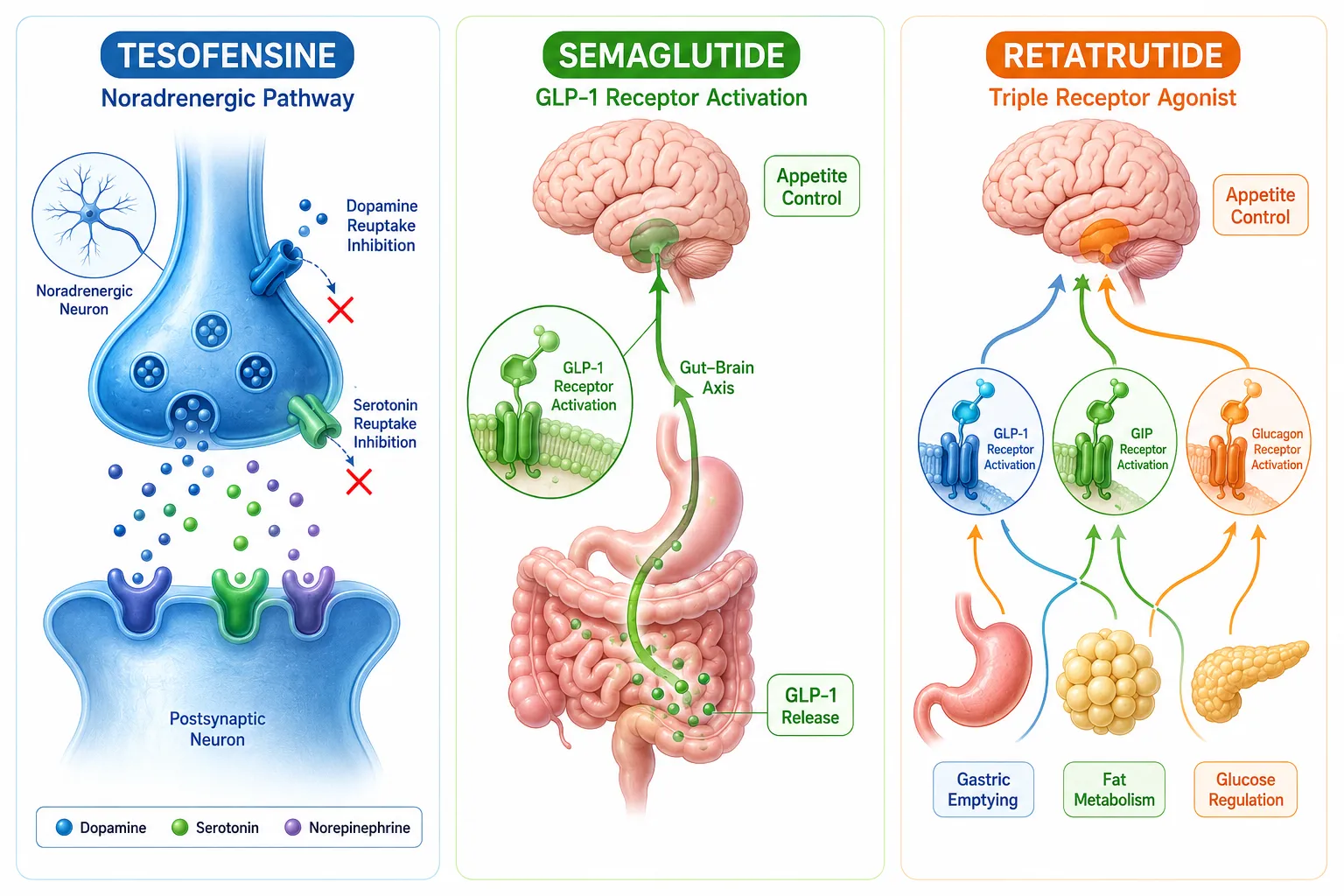
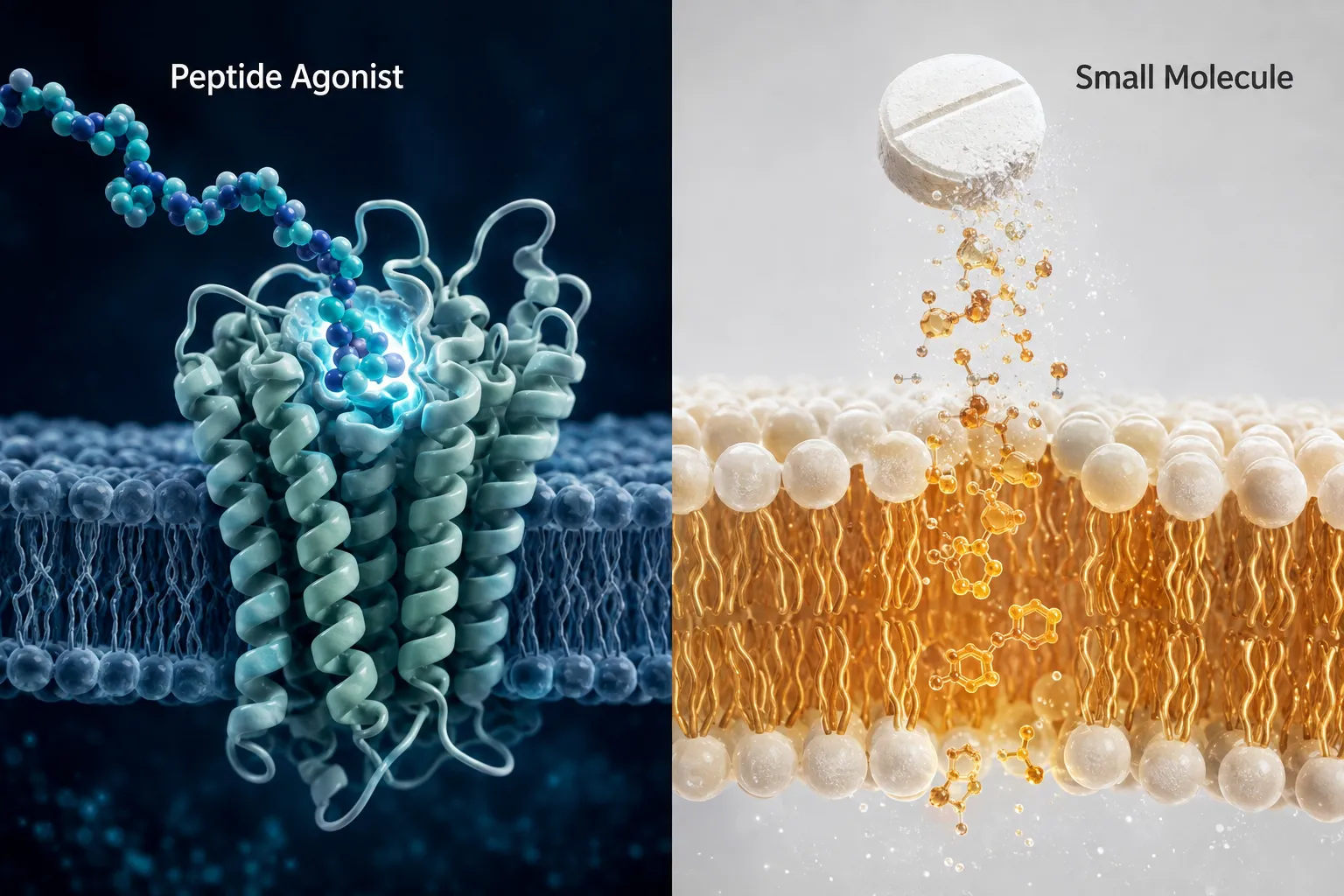
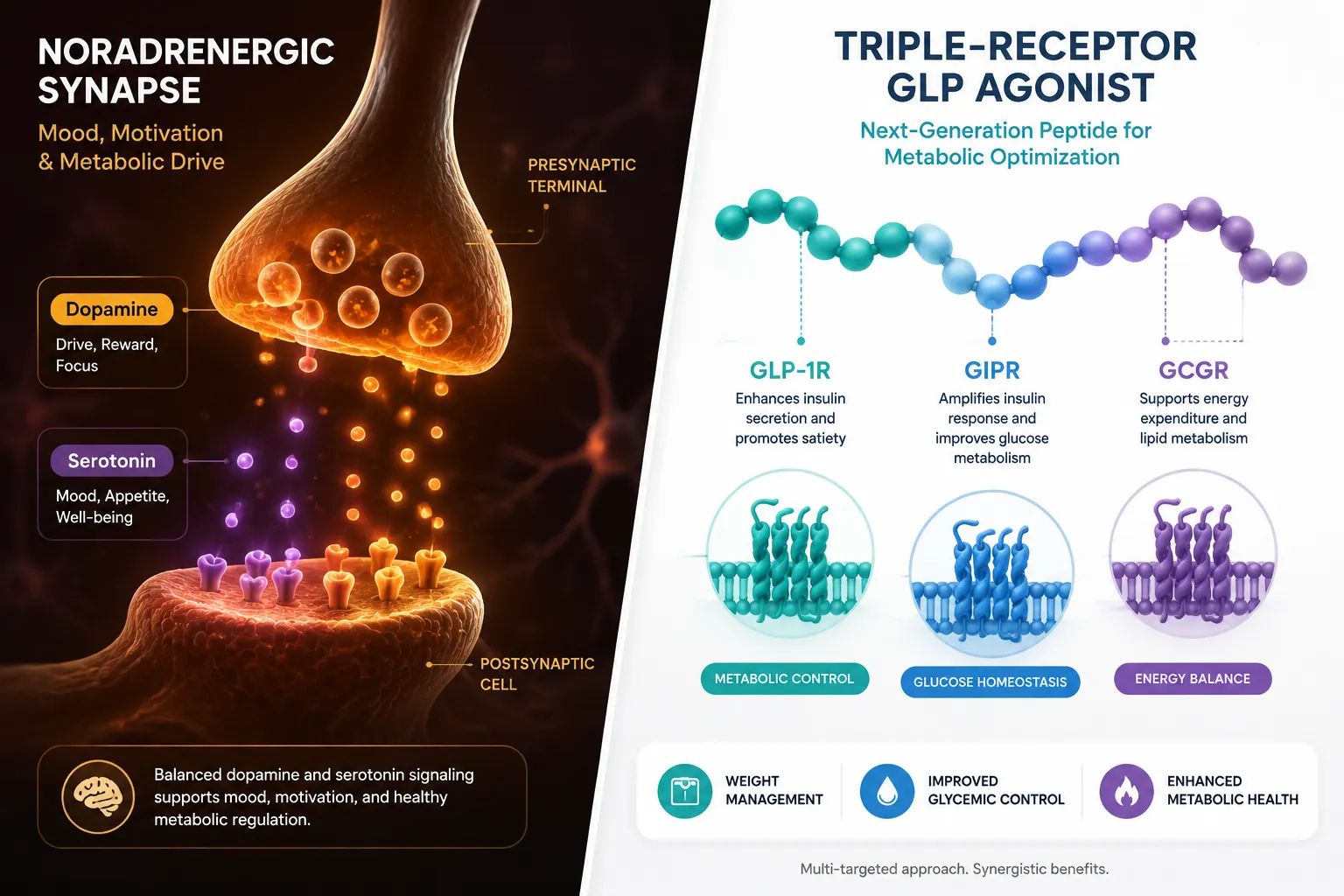
Split-screen editorial illustration () showing three distinct neural pathway diagrams side by side — left panel depicts

Key Takeaways

  • Tesofensine acts primarily through central noradrenergic, dopaminergic, and serotonergic reuptake inhibition, making it a small-molecule CNS-focused tool.
  • Semaglutide is a GLP-1 receptor agonist that reduces appetite through both peripheral gut signaling and central hypothalamic pathways.
  • Retatrutide is a triple agonist (GLP-1, GIP, and glucagon receptors), offering the broadest multi-receptor metabolic coverage of the three.
  • Each compound suits different study-design goals: CNS appetite modeling, incretin-axis research, or multi-pathway energy expenditure studies.
  • Researchers should align compound selection with their specific endpoint, appetite suppression, insulin sensitivity, hepatic fat, or energy expenditure.

How Each Compound Targets Appetite: Mechanism Overview

Tesofensine: Central Monoamine Reuptake Inhibition

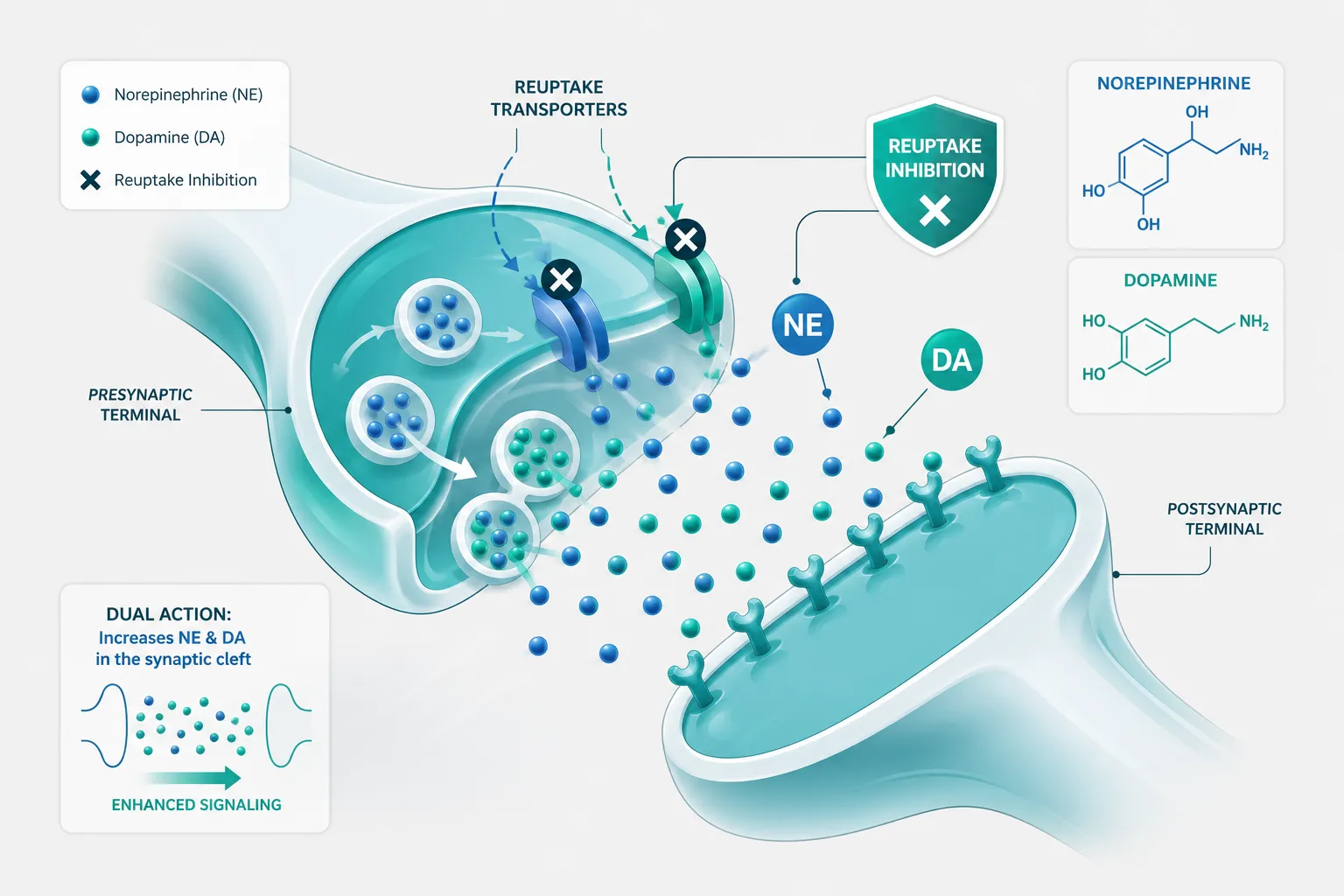
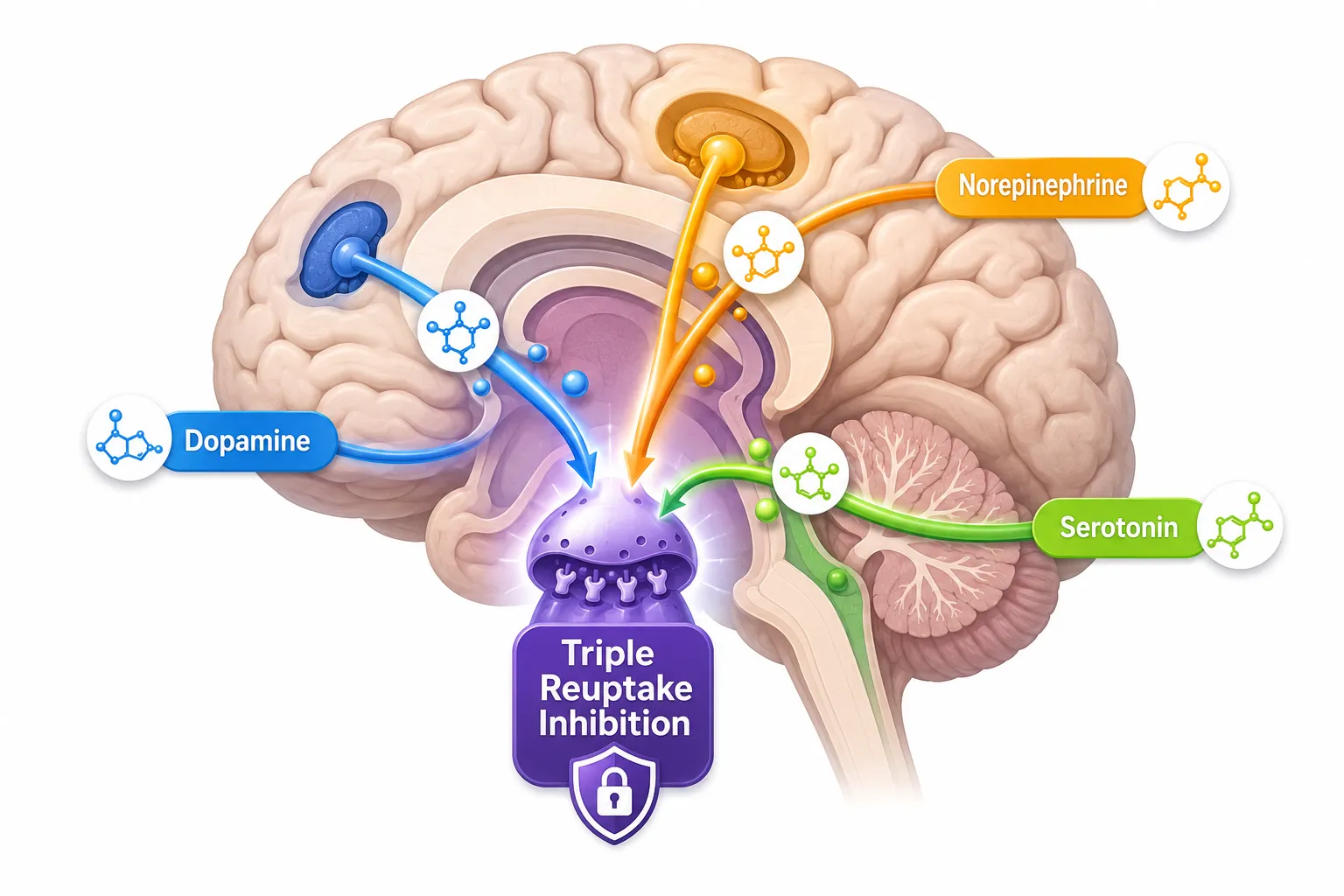
Tesofensine is a small-molecule triple monoamine reuptake inhibitor. It blocks the reuptake of norepinephrine, dopamine, and serotonin simultaneously. This action elevates monoamine tone in the central nervous system, suppressing appetite through hypothalamic and mesolimbic circuits.

For a deeper look at how this works at the synapse level, the Tesofensine mechanism explained: noradrenergic appetite modulation vs incretin-based pathways resource provides a detailed mechanistic breakdown.

Key research characteristics of tesofensine:

  • Acts centrally, not peripherally
  • Does not require receptor agonism, works by prolonging neurotransmitter availability
  • Studied for effects on energy expenditure beyond appetite alone
  • Small-molecule structure distinguishes it from peptide-based compounds

Semaglutide: GLP-1 Receptor Agonism

Semaglutide is a glucagon-like peptide-1 (GLP-1) receptor agonist. It mimics the action of endogenous GLP-1, a hormone released from intestinal L-cells after food intake. Its appetite-suppressing effects are mediated both peripherally (slowing gastric emptying, increasing satiety signals) and centrally (acting on hypothalamic GLP-1 receptors).

Researchers interested in the broader GLP-1 landscape can explore GLP-1 peptide research: generational concepts and sourcing notes for context on how this class has evolved.

Retatrutide: Triple Receptor Agonism

Retatrutide simultaneously activates three receptors: GLP-1, GIP (glucose-dependent insulinotropic polypeptide), and glucagon receptors. This triple-agonist profile makes it the most mechanistically complex of the three. The glucagon receptor component adds a direct thermogenic and hepatic fat-reduction dimension not present in semaglutide alone.

For research focused on liver endpoints, retatrutide and MASLD: how triple-agonist research is reframing liver fat endpoints covers how this receptor profile is being applied in hepatic studies.

Tesofensine vs Semaglutide vs Retatrutide: Appetite Research Pathways Compared Side by Side

Tesofensine vs Semaglutide vs Retatrutide: Appetite Research Pathways Compared Side by Side

Understanding how these compounds differ requires examining their pathways across several research-relevant dimensions.

Feature Tesofensine Semaglutide Retatrutide
Compound type Small molecule Peptide analog Peptide analog
Primary target Monoamine transporters (CNS) GLP-1 receptor GLP-1 / GIP / Glucagon receptors
Appetite pathway Central (hypothalamic, mesolimbic) Central + peripheral Central + peripheral + hepatic
Energy expenditure effect Moderate (sympathomimetic) Indirect (via weight loss) Direct (glucagon-driven thermogenesis)
Hepatic fat relevance Low Moderate High

Research design insight: Tesofensine is best suited for studies isolating CNS appetite modulation. Semaglutide fits incretin-axis and glycemic research. Retatrutide is the tool of choice when multi-pathway metabolic endpoints are the goal.

For a focused comparison between tesofensine and retatrutide specifically, tesofensine vs GLP-3 retatrutide: which appetite-modulating pathways each answer in metabolic research design offers a detailed side-by-side analysis.

Selecting the Right Pathway for Your Study Design
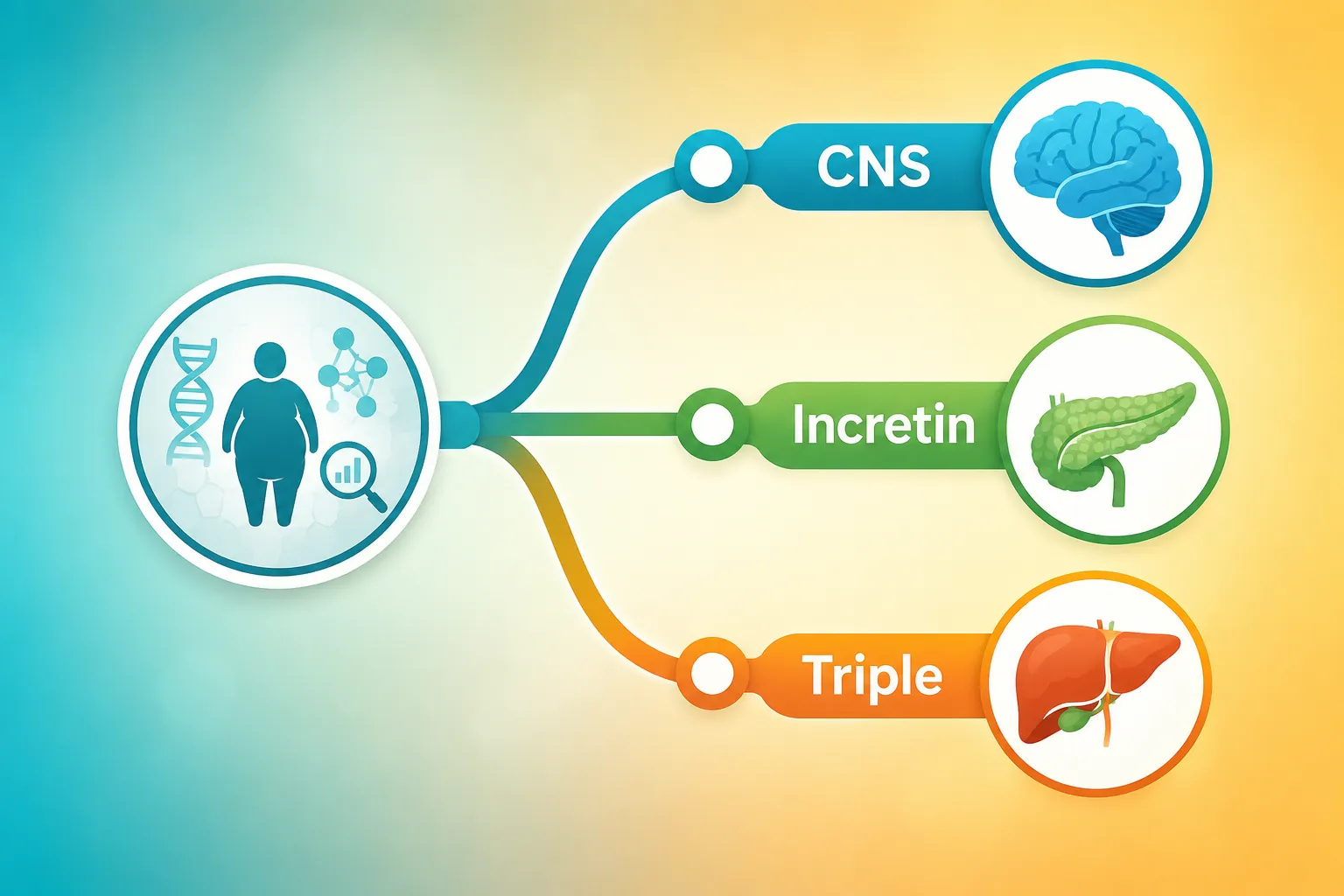
Selecting the Right Pathway for Your Study Design

Choosing between these three compounds in a research context depends on the specific biological question being asked. The following framework helps clarify that decision.

When CNS Appetite Circuits Are the Focus

If the study aims to understand how monoamine tone influences food intake, reward-driven eating, or hypothalamic appetite regulation, tesofensine is the logical selection. Its mechanism does not involve receptor agonism, which means it avoids confounding incretin-axis variables.

Researchers exploring how tesofensine fits into broader metabolic study designs can review tesofensine and metabolic research: how a noradrenergic appetite modulator compares with GLP-3 peptides in study design.

When Incretin Biology Is Central

Semaglutide remains the reference compound for GLP-1 receptor research. Its well-characterized pharmacokinetics and receptor selectivity make it a clean tool for studies examining insulin secretion, gastric motility, and hypothalamic satiety signaling. It is also the most studied of the three in human clinical settings.

When Multi-Pathway Energy Balance Is the Endpoint

Retatrutide's triple-agonist profile makes it uniquely suited for studies where the goal is to understand how simultaneous activation of GLP-1, GIP, and glucagon receptors affects total energy balance. This includes hepatic lipid metabolism, brown adipose tissue activation, and integrated hormonal appetite suppression.

For researchers comparing tesofensine's small-molecule profile against peptide-based options more broadly, 5-Amino-1MQ vs Tesofensine: weight loss peptides compared provides additional context on how compound class affects study design choices.

Overlapping Variables to Control

When running Tesofensine vs Semaglutide vs Retatrutide: Appetite Research Pathways Compared studies, researchers must account for:

  • Baseline metabolic state of the model system
  • Duration of exposure, monoamine effects may differ in time course from incretin effects
  • Endpoint selection, appetite suppression, body weight, insulin sensitivity, or hepatic fat require different assay designs
  • Receptor expression levels in the target tissue or model organism

Conclusion

The comparison of Tesofensine vs Semaglutide vs Retatrutide: Appetite Research Pathways Compared reveals three mechanistically distinct tools serving different research purposes. Tesofensine addresses CNS monoamine-driven appetite circuits. Semaglutide targets the incretin axis with a well-validated GLP-1 receptor profile. Retatrutide offers the broadest receptor coverage, making it the most versatile for multi-pathway metabolic endpoints.

Actionable next steps for researchers in 2026:

  1. Define the primary biological question before selecting a compound, mechanism should drive selection, not availability.
  2. Review published pharmacokinetic data for each compound to align dosing windows with study duration.
  3. Consider whether a single-pathway or multi-pathway design better answers the hypothesis.
  4. Consult the tesofensine peptide overview for sourcing and purity documentation considerations specific to tesofensine.
  5. Ensure all compounds are sourced to research-grade standards with verified certificates of analysis before initiating any protocol.

Matching the right appetite-modulation pathway to the right study design is the single most important variable in generating reproducible, meaningful metabolic research data.

https://www.puretestedpeptides.com/wp-content/uploads/2026/08/tesofensine-vs-semaglutide-vs-retatrutide-appetite-research-pathways-compared.webp 1024 1536 https://www.puretestedpeptides.com/wp-content/uploads/2026/01/buy-peptides-online.jpg 2026-08-12 13:04:072026-08-12 13:04:07Tesofensine vs Semaglutide vs Retatrutide: Appetite Research Pathways Compared
Tesofensine: Mechanism, Appetite Pathways, and Research Use in Metabolic Studies

Tesofensine: Mechanism, Appetite Pathways, and Research Use in Metabolic Studies

August 10, 2026/0 Comments/in Uncategorized/by

Obesity affects more than one billion people globally as of 2026, yet the pharmacological toolkit for studying its underlying neurobiology remains surprisingly narrow. Tesofensine: Mechanism, Appetite Pathways, and Research Use in Metabolic Studies is a subject that has drawn sustained attention from metabolic researchers precisely because this small molecule operates through a mechanism that sets it apart from the incretin-based compounds dominating current headlines. While GLP-1 receptor agonists and dual-receptor peptides generate most of the conversation, tesofensine works upstream, at the level of monoamine neurotransmission, offering a distinct window into how the brain governs appetite and energy expenditure.

Key Takeaways

  • Tesofensine is a triple monoamine reuptake inhibitor that simultaneously blocks the reuptake of dopamine, norepinephrine, and serotonin.
  • Its primary appetite-suppressing effects are linked to hypothalamic signaling pathways, particularly those involving neuropeptide Y and pro-opiomelanocortin neurons.
  • Preclinical and early clinical data suggest significant reductions in body weight, making it a valuable tool in metabolic research models.
  • Tesofensine is mechanistically distinct from incretin-based peptides such as GLP-1 agonists, though both converge on energy balance outcomes.
  • Research-grade tesofensine is used in laboratory settings to probe monoamine-driven appetite circuits, not as an approved therapeutic agent.

Key Takeaways

How Tesofensine Works: The Triple Reuptake Mechanism

Tesofensine belongs to a class of compounds known as triple monoamine reuptake inhibitors (TMRIs). Its core action is the simultaneous inhibition of presynaptic transporters responsible for clearing three neurotransmitters from the synaptic cleft:

Neurotransmitter Transporter Blocked Metabolic Relevance
Dopamine DAT Reward signaling, motivation to eat
Norepinephrine NET Energy expenditure, thermogenesis
Serotonin SERT Satiety signaling, meal termination

By blocking all three transporters, tesofensine elevates synaptic concentrations of each neurotransmitter simultaneously. This is fundamentally different from older single-target agents like selective serotonin reuptake inhibitors (SSRIs) or norepinephrine-dopamine reuptake inhibitors (NDRIs), which address only one or two pathways.

"The triple-inhibition profile of tesofensine allows researchers to study how monoamine crosstalk shapes appetite regulation in ways that single-target compounds simply cannot replicate."

This multi-pathway engagement is one reason tesofensine is discussed alongside incretin-based compounds in metabolic research. Both categories ultimately reduce food intake and body weight, but through entirely separate biological entry points. Incretin peptides act on peripheral gut receptors and vagal nerve signaling; tesofensine acts centrally on monoamine circuits. Researchers studying the polypeptide peptides in cardiometabolic models that include tesofensine alongside GLP-class agents have noted this mechanistic divergence as a key variable in experimental design.

Appetite Pathways Targeted by Tesofensine

Appetite Pathways Targeted by Tesofensine

Hypothalamic Control of Energy Balance

The hypothalamus is the primary brain region where tesofensine exerts its appetite-suppressing effects. Two neuronal populations are especially relevant:

  • NPY/AgRP neurons, These neurons stimulate appetite and reduce energy expenditure when activated. Elevated norepinephrine and dopamine tone, driven by tesofensine, suppresses their activity.
  • POMC/CART neurons, These neurons promote satiety and increase metabolic rate. Enhanced serotonin signaling supports their activation.

The net effect is a shift in the hypothalamic set point toward reduced caloric intake and increased energy output.

Dopaminergic Reward Circuits

Beyond the hypothalamus, tesofensine's dopaminergic action influences the mesolimbic reward pathway. Elevated dopamine in the nucleus accumbens reduces the motivational drive to seek high-calorie foods. This is a distinct mechanism from the gut-hormone signaling studied in GLP-1 dual receptor agonism research, yet both pathways converge on reduced caloric consumption.

Norepinephrine and Thermogenesis

Norepinephrine elevation contributes to increased sympathetic nervous system activity, which promotes brown adipose tissue thermogenesis, the process by which the body generates heat by burning stored fat. This thermogenic component adds a second dimension to tesofensine's weight-reducing profile beyond simple appetite suppression.

For researchers exploring mitochondrial metabolism alongside appetite regulation, the MOTS-c peptide mitochondrial signaling research provides a complementary perspective on how cellular energy pathways interface with systemic metabolic outcomes.

Research Use in Metabolic Studies

Research Use in Metabolic Studies

What the Preclinical and Clinical Data Show

Tesofensine: Mechanism, Appetite Pathways, and Research Use in Metabolic Studies has been examined in both animal models and Phase II human trials. Key findings include:

  • In diet-induced obese mouse models, tesofensine produced dose-dependent reductions in body weight, with effects attributed to both hypophagia (reduced food intake) and increased energy expenditure.
  • A landmark Phase II clinical trial (NeuroSearch, 2008) reported mean weight loss of 10.6% over 24 weeks at the 1.0 mg dose, a result that exceeded comparator agents available at the time.
  • Cardiovascular parameters, including heart rate, showed dose-dependent increases, which remains an active area of safety characterization in research models.

Why Researchers Use Tesofensine Alongside Incretin Compounds

The growing interest in combination metabolic research has placed tesofensine in direct comparison with incretin-based peptides. The distinction matters:

  • Incretin peptides (GLP-1 agonists, dual agonists) act peripherally and centrally via receptor-mediated pathways.
  • Tesofensine acts centrally via transporter inhibition, independent of receptor binding.

This makes tesofensine a useful mechanistic control in studies designed to isolate central versus peripheral contributions to energy balance. Researchers consulting the top research peptides for metabolic health buyer's guide will find tesofensine positioned as a small-molecule comparator rather than a peptide, reinforcing its distinct role in experimental frameworks.

For those designing multi-compound metabolic protocols, resources on IPA muscle and fat research themes and tesa and ipamorelin combination protocols offer relevant context on how growth hormone axis modulation intersects with adipose tissue outcomes.

For a foundational overview of the compound itself, the tesofensine peptide overview provides a useful reference point before designing experimental protocols.

Research-Grade Sourcing Considerations

Because tesofensine is not an approved therapeutic in most jurisdictions as of 2026, its use is confined to laboratory and preclinical research settings. Purity verification, certificate of analysis documentation, and proper storage conditions are non-negotiable requirements for valid experimental data.

Conclusion

Tesofensine occupies a unique position in metabolic research: a small molecule that engages three monoamine systems simultaneously to reduce appetite and increase energy expenditure through entirely central mechanisms. Understanding Tesofensine: Mechanism, Appetite Pathways, and Research Use in Metabolic Studies equips researchers to use it as a mechanistic probe rather than conflating it with the incretin-based peptide class.

Actionable next steps for researchers:

  1. Review the preclinical literature on triple reuptake inhibition before designing dosing protocols in animal models.
  2. Use tesofensine as a mechanistic control in studies comparing central versus peripheral appetite regulation.
  3. Pair findings with complementary metabolic research on mitochondrial and GH-axis pathways to build a more complete picture of energy balance.
  4. Source only research-grade material with verified purity documentation to ensure data integrity.
  5. Monitor cardiovascular parameters alongside weight and intake endpoints in all study designs.

The mechanistic clarity tesofensine offers, distinct from yet complementary to incretin research, makes it a valuable tool for any laboratory serious about dissecting the neurobiology of metabolic disease.

References

  • Astrup, A., Madsbad, S., Breum, L., Jensen, T. J., Kroustrup, J. P., & Larsen, T. M. (2008). Effect of tesofensine on bodyweight loss, body composition, and quality of life in obese patients: a randomised, double-blind, placebo-controlled trial. The Lancet, 372(9653), 1906-1913.
  • Lehr, T., Staab, A., Tillmann, C., Nielsen, E. O., Trommeshauser, D., Schaefer, H. G., & Kloft, C. (2008). Contribution of the active metabolite M1 to the pharmacological activity of tesofensine in vivo: a pharmacokinetic-pharmacodynamic modelling approach. British Journal of Pharmacology, 153(1), 164-174.
  • Axel, A. M., Mikkelsen, J. D., & Hansen, H. H. (2010). Tesofensine, a novel triple monoamine reuptake inhibitor, induces appetite suppression by indirect stimulation of alpha1 adrenoceptor and dopamine D1 receptor pathways in the diet-induced obese rat. Neuropsychopharmacology, 35(7), 1464-1476.
  • Appel, L., Bergström, M., Buus Lassen, J., & Långström, B. (2014). Tesofensine, a novel triple monoamine reuptake inhibitor with anti-obesity effects: dopamine transporter occupancy as measured by PET. European Neuropsychopharmacology, 24(2), 251-261.
https://www.puretestedpeptides.com/wp-content/uploads/2026/08/tesofensine-mechanism-appetite-pathways-and-research-use-in-metabolic-studies.webp 1024 1536 https://www.puretestedpeptides.com/wp-content/uploads/2026/01/buy-peptides-online.jpg 2026-08-10 13:04:102026-08-10 13:04:10Tesofensine: Mechanism, Appetite Pathways, and Research Use in Metabolic Studies
Tesofensine, Enclomiphene, and Peptide-Based Approaches: How Small Molecules Fit Alongside GLP-3 and GH Secretagogues in Metabolic Research

Tesofensine, Enclomiphene, and Peptide-Based Approaches: How Small Molecules Fit Alongside GLP-3 and GH Secretagogues in Metabolic Research

August 6, 2026/0 Comments/in Uncategorized/by

"

Professional () hero image with (≤42 chars): 'Small Molecules & Metabolic Research' in crisp white on a deep navy

More than 650 million adults worldwide live with obesity, yet fewer than 5% of available investigational compounds target the full metabolic axis, appetite regulation, hormonal balance, and cellular energy production simultaneously. That gap is precisely where tesofensine, enclomiphene, and peptide-based approaches have drawn sustained research attention, each addressing a distinct but overlapping node in metabolic dysfunction.

This article maps how these small molecules and peptides compare mechanistically, what study endpoints researchers track, and where combination strategies may lead next.

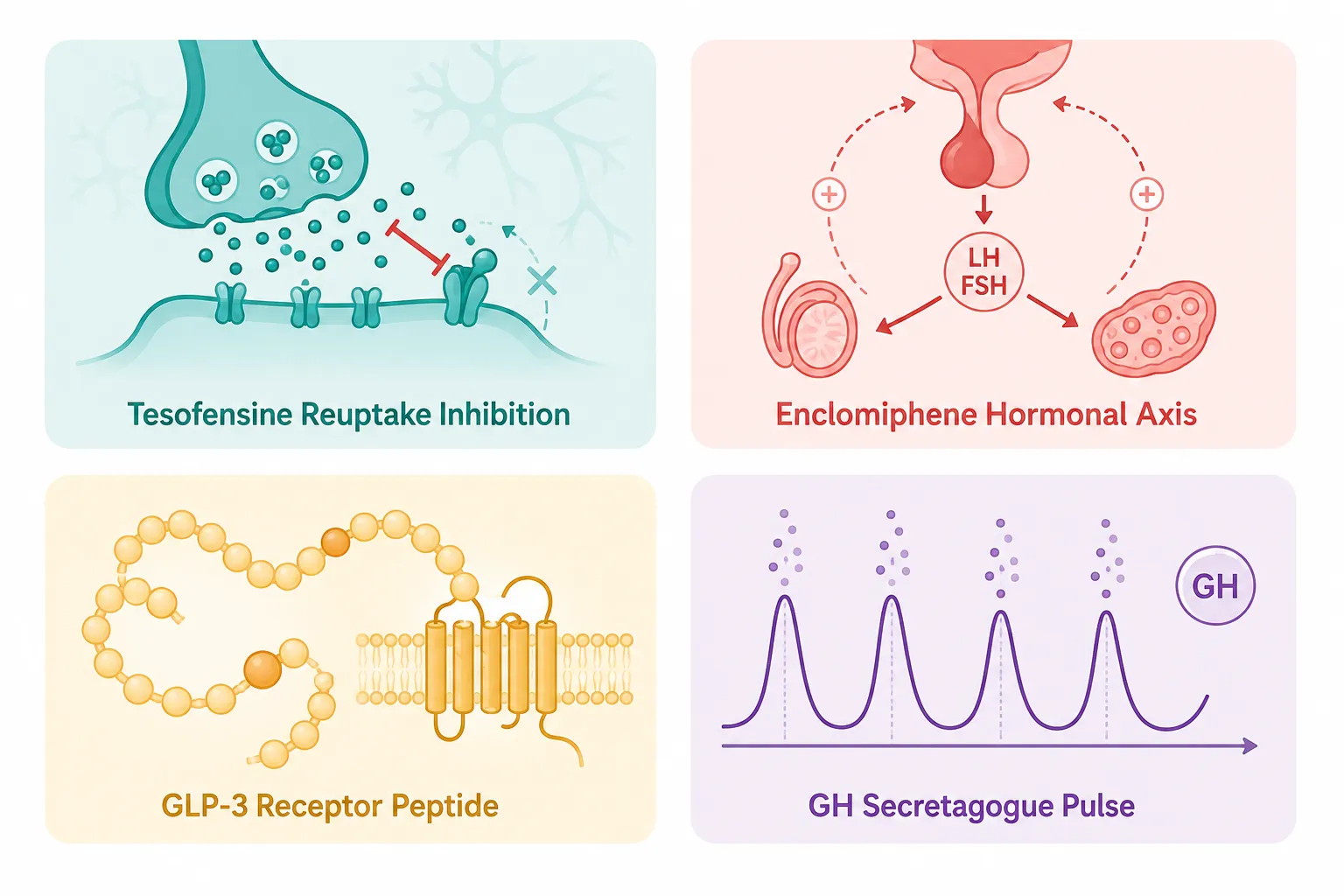
Editorial flat-vector infographic landscape () showing four distinct molecular pathway icons arranged in a 2x2 grid:

Key Takeaways

  • Tesofensine acts as a triple monoamine reuptake inhibitor; enclomiphene restores the hypothalamic-pituitary-gonadal axis, both target metabolic dysfunction through non-peptide mechanisms.
  • GLP-3 and GH secretagogue peptides operate through receptor-mediated signaling, offering complementary rather than redundant pathways.
  • Combining small molecules with peptide-based tools is an active area of preclinical inquiry, with multi-axis targeting as the central hypothesis.
  • Endpoint selection, body composition, insulin sensitivity, hormonal panels, differs meaningfully across compound classes.
  • Sourcing purity and documentation standards remain critical variables in any research protocol involving these agents.

Mechanisms Behind Tesofensine, Enclomiphene, and Peptide-Based Approaches in Metabolic Research

Tesofensine: Triple Reuptake Inhibition

Tesofensine blocks the reuptake of serotonin, dopamine, and norepinephrine. This triple monoamine inhibition reduces appetite signaling in the hypothalamus while increasing energy expenditure through sympathomimetic activity. Phase II clinical data published in The Lancet demonstrated mean weight reductions of 10.6% over 24 weeks at the 1.0 mg dose, a result that positioned tesofensine among the most potent investigational anti-obesity small molecules at the time.

Key research endpoints for tesofensine include:

  • Body weight and BMI reduction
  • Resting metabolic rate changes
  • Appetite hormone panels (ghrelin, leptin)
  • Cardiovascular safety markers (heart rate, blood pressure)

Enclomiphene: Restoring the HPG Axis

Enclomiphene is the trans-isomer of clomiphene citrate. Unlike its cis-counterpart zuclomiphene, enclomiphene has a short half-life and selectively blocks estrogen receptors in the hypothalamus, prompting increased LH and FSH secretion. The downstream result is restored endogenous testosterone production, a mechanism relevant to male hypogonadism and its associated metabolic consequences, including insulin resistance and adiposity.

"Hormonal optimization is not a peripheral concern in metabolic research, testosterone deficiency independently predicts visceral fat accumulation and reduced insulin sensitivity."

Enclomiphene research endpoints typically include:

  • Serum testosterone, LH, and FSH levels
  • Sperm count and morphology (fertility endpoints)
  • Fasting insulin and HOMA-IR scores
  • Body composition via DEXA scan

How GLP-3 and GH Secretagogues Extend the Peptide-Based Landscape

GLP-3 Peptides and Gut-Derived Signaling

GLP-3 (glucagon-like peptide 3) is a lesser-studied member of the proglucagon-derived peptide family. Research into GLP-3 RETA peptide has explored its potential roles in gut motility, nutrient absorption modulation, and metabolic signaling distinct from GLP-1. While GLP-1 agonists dominate clinical pipelines, GLP-3 represents an investigational frontier with a different receptor profile and potentially complementary metabolic effects.

Researchers sourcing GLP-1 peptides for metabolic studies frequently benchmark GLP-3 data against GLP-1 receptor activity to define mechanistic boundaries.

GH Secretagogues: Tesamorelin and the GHRH Axis

Growth hormone secretagogues stimulate endogenous GH release through GHRH receptor agonism or ghrelin receptor activation. Tesamorelin, a stabilized GHRH analog, has FDA approval for HIV-associated lipodystrophy and has been studied for visceral fat reduction in non-HIV populations. Research on tesa side effects and dosing is essential reading for any investigator designing GH secretagogue protocols.

GH secretagogue endpoints differ from small-molecule endpoints in important ways:

Compound Class Primary Endpoint Secondary Endpoints
Tesofensine Body weight reduction Heart rate, appetite hormones
Enclomiphene Serum testosterone HOMA-IR, body composition
GLP-3 peptides Gut metabolic signaling Nutrient absorption markers
GH secretagogues IGF-1 levels, visceral fat Lean mass, lipid panels

Combination Research Possibilities: Where Small Molecules Fit Alongside GLP-3 and GH Secretagogues

Combination Research Possibilities: Where Small Molecules Fit Alongside GLP-3 and GH Secretagogues

The central hypothesis driving combination research is multi-axis targeting: no single compound addresses appetite, hormonal balance, cellular energy, and body composition simultaneously. Small molecules like tesofensine and enclomiphene offer oral bioavailability and defined pharmacokinetic profiles, while peptides provide receptor specificity and physiological signaling patterns.

Preclinical models have begun exploring stacked protocols. For example:

  • Tesofensine + GH secretagogue: appetite suppression paired with lean mass preservation
  • Enclomiphene + GLP-1/GLP-3 peptides: hormonal axis restoration alongside gut-mediated glucose regulation
  • BPC-157 as a recovery adjunct: researchers reviewing BPC-157 core peptides documentation note its cytoprotective properties, which may support tissue integrity during aggressive metabolic interventions

Mitochondrial health is another emerging intersection point. SS-31 mitochondrial research themes suggest that cardiolipin-targeting peptides like SS-31 could support cellular energy efficiency in subjects undergoing metabolic recomposition protocols, a mechanistically distinct but synergistic contribution.

Researchers working with BPC-157 and TB-500 peptide combinations have also documented multi-peptide stacking approaches that inform how combination metabolic protocols might be structured.

Documentation and Sourcing Standards

Regardless of compound class, purity verification and third-party testing are non-negotiable in legitimate research. Certificate of Analysis (CoA) documentation, HPLC purity data, and mass spectrometry confirmation should accompany any research-grade compound. Investigators exploring peptides for research purposes should prioritize suppliers with transparent testing protocols.

Documentation and Sourcing Standards

Conclusion

The integration of tesofensine, enclomiphene, and peptide-based approaches alongside GLP-3 and GH secretagogues represents one of the most mechanistically rich areas in 2026 metabolic research. Each compound class addresses a distinct regulatory axis, neurotransmitter-mediated appetite control, HPG hormonal restoration, gut-derived peptide signaling, and GH-driven body composition, creating a logical framework for combination investigation.

Actionable next steps for researchers:

  1. Map the specific metabolic axis each compound targets before designing multi-agent protocols.
  2. Establish baseline biomarkers, testosterone, IGF-1, fasting insulin, body composition, to measure outcomes across compound classes.
  3. Review published safety and endpoint data for each agent independently before combining.
  4. Source compounds exclusively from suppliers providing verified CoA and third-party purity documentation.
  5. Monitor emerging GLP-3 and mitochondrial peptide literature, as these areas are generating rapid preclinical data in 2026.

The future of metabolic research is integrative. Understanding where small molecules end and peptide-based tools begin, and how they might work together, is the defining question for the next phase of investigation.

https://www.puretestedpeptides.com/wp-content/uploads/2026/08/tesofensine-enclomiphene-and-peptide-based-approaches-how-small-molecules-fit-al.webp 1024 1536 https://www.puretestedpeptides.com/wp-content/uploads/2026/01/buy-peptides-online.jpg 2026-08-06 13:03:502026-08-06 13:03:50Tesofensine, Enclomiphene, and Peptide-Based Approaches: How Small Molecules Fit Alongside GLP-3 and GH Secretagogues in Metabolic Research
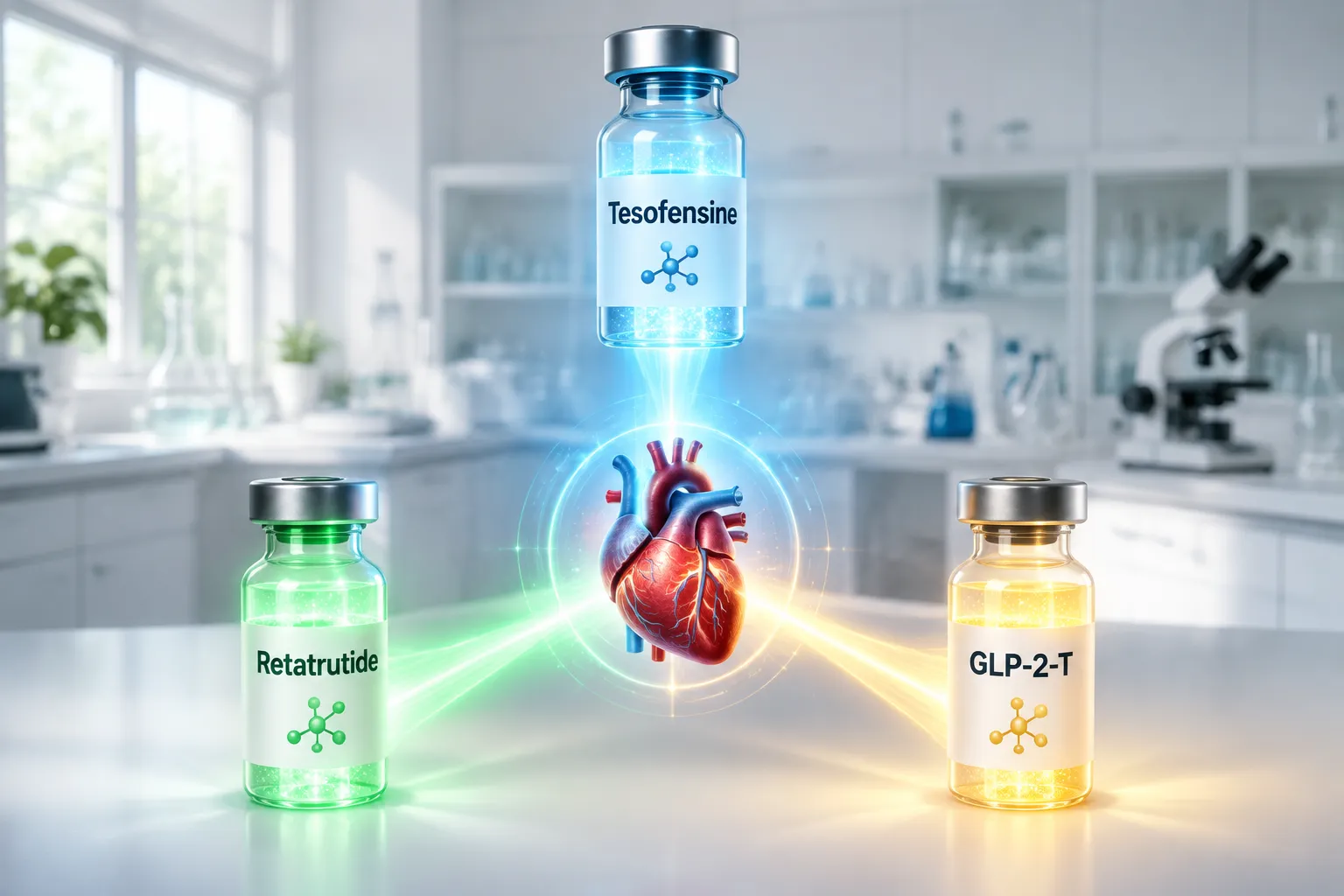
Polypeptide Peptides in Cardiometabolic Models: How Tesofensine, GLP-3 Retatrutide, and GLP-2-T Differ From Classic Small-Molecule Drugs

Polypeptide Peptides in Cardiometabolic Models: How Tesofensine, GLP-3 Retatrutide, and GLP-2-T Differ From Classic Small-Molecule Drugs

August 3, 2026/0 Comments/in Uncategorized/by

Cardiovascular disease and metabolic dysfunction together account for more than 17 million deaths annually worldwide, yet the dominant drug classes used to treat them, beta-blockers, statins, ACE inhibitors, were designed around receptor pharmacology that has barely changed since the 1970s. The emergence of polypeptide peptides in cardiometabolic models has fundamentally shifted what researchers believe is possible, offering multi-receptor engagement, tissue-level signaling precision, and endpoint profiles that classic small-molecule drugs simply cannot replicate.

Understanding how Tesofensine, GLP-3 Retatrutide, and GLP-2-T differ from agents like metoprolol or atorvastatin requires a close look at receptor biology, study design conventions, and the endpoints that matter most in modern metabolic research.

Key Takeaways

  • Polypeptide peptides engage G-protein-coupled receptors (GPCRs) with high structural specificity, whereas classic small molecules often act on enzyme active sites or ion channels.
  • Retatrutide is a triple agonist (GLP-1/GIP/glucagon receptors), giving it a multi-axis metabolic footprint that no single small-molecule drug can match.
  • Tesofensine targets monoamine reuptake through a CNS-mediated pathway, bridging neurological and metabolic endpoints in a way that statins and beta-blockers do not.
  • GLP-2-T primarily modulates intestinal and cardiovascular tissue remodeling, making it relevant to cardiometabolic models focused on gut-heart crosstalk.
  • Study design for peptides demands different controls, stability protocols, and biomarker panels than standard small-molecule trials.

Key Takeaways

Receptor Biology: Where Peptides and Small Molecules Diverge

The most fundamental difference between polypeptide peptides in cardiometabolic models and classic small-molecule drugs lies in how they bind and what they activate.

Small molecules like atorvastatin inhibit HMG-CoA reductase, an intracellular enzyme. Metoprolol blocks beta-1 adrenergic receptors through competitive antagonism. Both mechanisms are relatively narrow, one receptor, one pathway, one primary endpoint. This is pharmacologically clean but metabolically limited.

Polypeptide peptides, by contrast, bind to the extracellular domains of GPCRs and trigger conformational changes that cascade through multiple intracellular signaling arms, cAMP, PI3K/Akt, MAPK, simultaneously. This is not a side effect; it is the mechanism.

Key receptor differences at a glance:

Feature Classic Small Molecules Polypeptide Peptides
Binding site Enzyme active site or receptor pocket Extracellular GPCR domain
Signaling breadth Narrow, single-pathway Multi-axis, pleiotropic
Molecular weight Typically under 500 Da 1,000-5,000+ Da
Metabolic clearance Hepatic CYP450 enzymes Proteolytic degradation
Receptor selectivity High for single target Tunable across receptor families

Retatrutide exemplifies this multi-axis design. As a GLP-3 Retatrutide triple agonist, it simultaneously activates GLP-1, GIP, and glucagon receptors, three distinct GPCRs with overlapping but non-identical metabolic roles. No statin or beta-blocker operates across three receptor families at once.

For researchers sourcing reference-grade materials, understanding how Bachem and reference standards shape peptide benchmarks is essential to designing valid comparative assays.

Receptor Biology: Where Peptides and Small Molecules Diverge

Comparing Tesofensine, GLP-3 Retatrutide, and GLP-2-T in Cardiometabolic Study Design

When researchers design cardiometabolic studies, the choice of compound determines nearly every other variable: dosing frequency, biomarker selection, tissue endpoints, and control group structure.

Tesofensine: CNS-Metabolic Bridge

Tesofensine inhibits the reuptake of serotonin, norepinephrine, and dopamine, a triple monoamine mechanism. Unlike classic weight-loss drugs or antihypertensives, it engages central appetite regulation and peripheral metabolic rate in the same model. This makes it uniquely useful in studies examining the neurological drivers of cardiometabolic dysfunction.

Compared to metoprolol, which reduces cardiac output by blocking beta-1 receptors, Tesofensine's cardiovascular effects are indirect, mediated through body composition changes, sympathetic tone modulation, and energy expenditure. Study designs using Tesofensine therefore require CNS-relevant endpoints (appetite hormone panels, dopaminergic markers) alongside standard cardiometabolic readouts like blood pressure and lipid profiles. Researchers interested in MC4R signaling pathways will find Tesofensine's monoamine mechanism intersects with melanocortin receptor biology in appetite-focused models.

GLP-3 Retatrutide: Triple-Axis Metabolic Remodeling

Retatrutide's triple agonism produces effects on insulin secretion, glucagon suppression, gastric emptying, and adipose tissue lipolysis, all within a single compound. Classic small molecules require combination therapy (e.g., a statin plus a GLP-1 agonist) to approach this endpoint breadth.

In study design terms, this creates both opportunity and complexity. Researchers must account for:

  • Glucose homeostasis markers (HbA1c, fasting insulin, HOMA-IR)
  • Lipid remodeling endpoints (triglycerides, LDL particle size)
  • Body composition imaging (DEXA or MRI for visceral fat)
  • Cardiovascular surrogates (arterial stiffness, inflammatory cytokines)

For labs building GLP-1 peptide research protocols, Retatrutide represents a logical next step beyond single-receptor GLP-1 analogs. Researchers can also explore GLP-3 buy-online resources when planning triple-agonist study inventories.

GLP-2-T: Gut-Heart Crosstalk and Tissue Remodeling

GLP-2-T acts primarily on GLP-2 receptors expressed in intestinal epithelium, cardiac tissue, and vascular endothelium. Its relevance to cardiometabolic models centers on gut barrier integrity, mucosal blood flow, and cardiac remodeling endpoints, a profile with no direct equivalent among classic antihypertensives or lipid-lowering agents.

Where atorvastatin reduces LDL through hepatic cholesterol synthesis inhibition, GLP-2-T modulates the gut-heart axis through tissue trophic effects. Studies using GLP-2-T typically incorporate intestinal permeability assays, endothelial function markers, and cardiac fibrosis panels alongside standard metabolic readouts. Researchers planning GLP-1 and GLP-2 comparative studies should build assay panels that capture both receptor families.

GLP-2-T: Gut-Heart Crosstalk and Tissue Remodeling

Study Design Considerations Unique to Polypeptide Peptides in Cardiometabolic Models

The shift from small-molecule to peptide-based cardiometabolic research requires rethinking several standard design assumptions.

Stability and storage are non-trivial. Unlike metoprolol tablets, polypeptide peptides require cold-chain handling, reconstitution protocols, and degradation controls. Researchers should establish peptide integrity checkpoints at baseline and throughout the study window.

Control group design must account for vehicle effects. Peptide vehicles (bacteriostatic water, DMSO blends) can independently affect some metabolic endpoints, a confound that does not arise with oral small-molecule controls.

Biomarker panel breadth must expand. A statin study might track LDL, ALT, and CK. A Retatrutide study demands glucose, insulin, GLP-1 active, GIP, glucagon, triglycerides, body weight, and inflammatory markers at minimum.

Dosing interval differs fundamentally. Most peptides have short plasma half-lives and require more frequent dosing than once-daily oral drugs. Some, like fatty-acid-conjugated GLP-1 analogs, are engineered for extended half-life, but this must be verified per compound. Researchers exploring related growth hormone-axis peptides can review GHRP-2 versus Sermorelin comparisons for parallel design lessons in peptide half-life management.

"The endpoint profile of a triple-agonist peptide is not three times the data of a single-receptor drug, it is a fundamentally different picture of metabolic biology."

For labs building comprehensive peptide research inventories, reviewing available peptide research catalogs helps align compound selection with study endpoints before procurement.

Conclusion

The comparison between polypeptide peptides in cardiometabolic models and classic small-molecule drugs is not simply a matter of newer versus older. It reflects a deeper divergence in receptor biology, signaling architecture, and what researchers define as a meaningful endpoint. Tesofensine, GLP-3 Retatrutide, and GLP-2-T each engage cardiometabolic biology through mechanisms that metoprolol and atorvastatin were never designed to reach.

Actionable next steps for researchers in 2026:

  1. Audit current study designs to determine whether single-receptor endpoints adequately capture the biology under investigation.
  2. Build expanded biomarker panels that reflect multi-axis peptide mechanisms, glucose, lipid, inflammatory, and tissue-remodeling markers together.
  3. Establish peptide-specific stability and storage protocols before study initiation.
  4. Source reference-grade compounds with verified purity documentation to ensure assay validity.
  5. Consider comparative arms that include both a classic small-molecule control and a peptide comparator to generate translational contrast data.

The mechanistic gap between these two drug classes is not a limitation of small molecules, it is an opportunity that peptide-based cardiometabolic research is uniquely positioned to explore.

https://www.puretestedpeptides.com/wp-content/uploads/2026/08/polypeptide-peptides-in-cardiometabolic-models-how-tesofensine-glp-3-retatrutide.webp 1024 1536 https://www.puretestedpeptides.com/wp-content/uploads/2026/01/buy-peptides-online.jpg 2026-08-03 13:04:312026-08-03 13:04:31Polypeptide Peptides in Cardiometabolic Models: How Tesofensine, GLP-3 Retatrutide, and GLP-2-T Differ From Classic Small-Molecule Drugs
Tesofensine vs GLP-3 Retatrutide: Which Appetite-Modulating Pathways Each Answer in Metabolic Research Design

Tesofensine vs GLP-3 Retatrutide: Which Appetite-Modulating Pathways Each Answer in Metabolic Research Design

August 2, 2026/0 Comments/in Uncategorized/by

Only about 2% of adults with obesity achieve sustained weight loss through lifestyle intervention alone, a statistic that continues to drive demand for more precise pharmacological tools in metabolic research. The comparison of Tesofensine vs GLP-3 Retatrutide: Which Appetite-Modulating Pathways Each Answer in Metabolic Research Design is now a central question for labs building rigorous obesity and appetite studies. These two compounds operate through fundamentally different biological mechanisms, making each one better suited to specific experimental endpoints, study populations, and research questions.

Key Takeaways

  • Tesofensine is a noradrenergic/dopaminergic/serotonergic reuptake inhibitor that primarily modulates central appetite circuits.
  • Retatrutide (informally called GLP-3) is a triple incretin agonist acting on GLP-1R, GIPR, and glucagon receptors simultaneously.
  • Each compound answers different mechanistic questions, CNS-driven satiety versus peripheral metabolic signaling.
  • Study population selection, primary endpoints, and safety monitoring differ significantly between the two.
  • Researchers should match compound choice to the specific appetite pathway under investigation.

Key Takeaways

Mechanistic Differences at the Core of Tesofensine vs GLP-3 Retatrutide Research

Understanding the Tesofensine vs GLP-3 Retatrutide: Which Appetite-Modulating Pathways Each Answer in Metabolic Research Design question starts with receptor-level biology.

How Tesofensine Works

Tesofensine is a triple monoamine reuptake inhibitor. It blocks the reuptake of:

  • Dopamine, reinforcing satiety signaling and reducing food reward behavior
  • Norepinephrine, activating sympathetic pathways that suppress appetite
  • Serotonin, modulating mood-linked eating and hypothalamic satiety centers

This CNS-centric mechanism makes tesofensine particularly relevant for studies examining hedonic eating, reward-driven food intake, and hypothalamic appetite regulation. Its action is upstream of peripheral hormones, targeting the brain's own appetite control architecture.

"Tesofensine's value in research lies in isolating the central nervous system's contribution to caloric intake reduction, independent of gut hormone signaling."

Relevant to labs studying neurochemical appetite control, tesofensine also shows interaction with MC4R signaling pathways, an important secondary endpoint in hypothalamic obesity models.

How Retatrutide (GLP-3) Works

Retatrutide is a triple incretin receptor agonist, simultaneously activating:

Receptor Primary Role
GLP-1R Insulin secretion, gastric emptying delay, satiety
GIPR Insulin potentiation, adipose tissue signaling
Glucagon receptor Energy expenditure, hepatic glucose output

This peripheral-dominant mechanism makes retatrutide ideal for studying metabolic flexibility, insulin sensitivity, and multi-hormonal appetite suppression. Researchers exploring the GLP-3 Retatrutide compound profile will find its multi-receptor activity creates a broader metabolic footprint than single-agonist GLP-1 analogs.

For labs already working with GLP-1 analogs available in the GLP-1 for sale research category, retatrutide represents a logical mechanistic expansion.

How Retatrutide (GLP-3) Works

Matching Compound to Endpoint: Practical Research Design Considerations

The practical side of Tesofensine vs GLP-3 Retatrutide: Which Appetite-Modulating Pathways Each Answer in Metabolic Research Design comes down to four key design variables.

1. Primary Endpoint Selection

Tesofensine is best suited for endpoints including:

  • Caloric intake reduction measured via food diary or indirect calorimetry
  • Appetite visual analog scale (VAS) scores
  • Neurochemical biomarkers (dopamine metabolites, serotonin turnover)
  • Behavioral feeding frequency studies

Retatrutide is better aligned with:

  • Body weight and BMI reduction over extended timeframes
  • Fasting insulin and HOMA-IR scores
  • Lipid panel changes (LDL, triglycerides)
  • Glucagon suppression and hepatic fat reduction

2. Study Population Considerations

Tesofensine research typically enrolls subjects with behavioral or neurological contributors to obesity, including binge eating patterns or reward-pathway dysregulation. Its cardiovascular stimulant properties (from norepinephrine reuptake inhibition) require careful screening for hypertension and cardiac history.

Retatrutide studies are more appropriate for subjects with comorbid metabolic syndrome, type 2 diabetes risk, or significant adiposity where peripheral hormonal dysregulation is the primary driver. Labs comparing it to other incretin-based tools may also find the ipamorelin vs tesa comparison useful for contextualizing growth hormone axis interactions.

3. Monitoring Requirements

Both compounds require different safety monitoring frameworks:

  • Tesofensine: Heart rate, blood pressure, mood/anxiety scales, sleep quality
  • Retatrutide: Nausea/GI tolerability, pancreatic enzyme levels, thyroid screening

4. Combination Research Potential

Some advanced metabolic protocols explore CNS-plus-peripheral appetite suppression. Labs interested in stacking approaches may reference CJC-1295/Ipamorelin research frameworks for precedent on multi-compound metabolic study design. Similarly, BDNF induction research offers relevant context for understanding how central appetite circuits interact with peripheral metabolic signals.

4. Combination Research Potential

Choosing the Right Tool for Specific Metabolic Research Questions

The decision between these two compounds is not about which is "better", it is about which pathway the research question demands.

Choose tesofensine when the study asks:

  • How does central monoamine tone influence caloric intake?
  • What is the neurochemical basis of appetite suppression in reward-driven obesity?
  • How does CNS satiety signaling interact with behavioral eating patterns?

Choose retatrutide when the study asks:

  • How does simultaneous multi-incretin receptor activation affect metabolic homeostasis?
  • What is the relative contribution of GLP-1R vs GIPR vs glucagon receptor to weight loss magnitude?
  • How does peripheral hormonal signaling reduce adiposity in metabolically complex subjects?

For labs sourcing research-grade peptides, exploring the GLP-1 peptide for sale options alongside dedicated retatrutide compounds allows direct mechanistic comparison within the same study design framework.

Conclusion

The Tesofensine vs GLP-3 Retatrutide: Which Appetite-Modulating Pathways Each Answer in Metabolic Research Design question has a clear answer: these compounds are complementary tools, not competing ones. Tesofensine isolates the CNS monoamine contribution to appetite suppression, while retatrutide maps the peripheral incretin axis. In 2026, metabolic research teams gain the most value by aligning compound selection to their specific mechanistic hypothesis before designing the study.

Actionable next steps for research teams:

  1. Define whether the primary appetite pathway under study is central (CNS) or peripheral (incretin/hormonal).
  2. Screen study populations for compound-specific contraindications before enrollment.
  3. Build monitoring protocols that match each compound's known safety profile.
  4. Consider whether a dual-pathway design could answer broader mechanistic questions with appropriate controls.
  5. Source compounds from verified, purity-tested suppliers to ensure data integrity.
https://www.puretestedpeptides.com/wp-content/uploads/2026/08/tesofensine-vs-glp-3-retatrutide-which-appetite-modulating-pathways-each-answer.webp 1024 1536 https://www.puretestedpeptides.com/wp-content/uploads/2026/01/buy-peptides-online.jpg 2026-08-02 13:04:162026-08-02 13:04:16Tesofensine vs GLP-3 Retatrutide: Which Appetite-Modulating Pathways Each Answer in Metabolic Research Design
Tesofensine and Metabolic Research: How a Noradrenergic Appetite Modulator Compares With GLP‑3 Peptides in Study Design

Tesofensine and Metabolic Research: How a Noradrenergic Appetite Modulator Compares With GLP‑3 Peptides in Study Design

July 30, 2026/0 Comments/in Uncategorized/by

Obesity affects more than one billion adults worldwide, yet fewer than five percent of patients sustain meaningful weight loss beyond two years with lifestyle intervention alone. That gap has pushed preclinical researchers toward a broader toolkit, one that now includes both small-molecule reuptake inhibitors and next-generation incretin peptides. Tesofensine and metabolic research exploring how a noradrenergic appetite modulator compares with GLP-3 peptides in study design sits at the center of this conversation, raising important questions about mechanism, model selection, and how these two compound classes might inform each other.

Key Takeaways

  • Tesofensine is a triple monoamine reuptake inhibitor that reduces appetite primarily through central noradrenergic and dopaminergic signaling.
  • GLP-3 peptides such as retatrutide act peripherally and centrally via incretin receptors, creating a mechanistically distinct pathway from tesofensine.
  • Preclinical dosing models for tesofensine typically use 0.5-2.0 mg/kg ranges in rodent studies, while peptide-based protocols require different reconstitution and delivery planning.
  • Combining or comparing these two compound classes in study design can reveal additive appetite-suppression effects not achievable with either agent alone.
  • Researchers sourcing compounds for metabolic studies should prioritize purity verification and documented lot testing.

Key Takeaways

Mechanism of Action: What Makes Tesofensine Distinct in Metabolic Research

Tesofensine is a pre-synaptic reuptake inhibitor of serotonin, norepinephrine, and dopamine, a triple monoamine reuptake inhibitor (TMRI). Its appetite-suppressing effect is driven predominantly by noradrenergic and dopaminergic activity in the hypothalamus and mesolimbic reward circuits. Unlike GLP-1 receptor agonists, tesofensine does not engage incretin pathways directly. Instead, it modulates the central "hunger thermostat" by increasing synaptic availability of catecholamines.

Key mechanistic features:

  • Norepinephrine reuptake inhibition reduces orexigenic signaling in the lateral hypothalamus
  • Dopamine reuptake inhibition blunts food-reward motivation in the nucleus accumbens
  • Serotonin component contributes to satiety signaling, though it is weaker than dedicated SSRIs

This central mechanism stands in contrast to GLP-3 peptide research, which targets peripheral gut-derived incretin receptors and vagal afferent pathways before reaching the hypothalamus. Understanding this distinction is essential when designing comparative studies, because each compound class requires different outcome measures, tissue sampling protocols, and washout periods.

"Mechanistic diversity is not a weakness in obesity research, it is the foundation for rational combination study design."

Researchers working with BDNF-related appetite pathways may also find it useful to review BDNF peptide research themes, since central neurotrophic signaling intersects with both noradrenergic tone and incretin activity.

Preclinical Dosing Models and Study Design Considerations

Preclinical Dosing Models and Study Design Considerations

Tesofensine Dosing in Rodent Models

Published rodent studies have used tesofensine in the range of 0.5 to 2.0 mg/kg/day, typically administered by oral gavage or subcutaneous injection. Diet-induced obesity (DIO) mouse models are the most common platform because they replicate the hypercaloric, low-activity conditions seen in human metabolic syndrome.

Parameter Typical Range
Species C57BL/6 mice, Sprague-Dawley rats
Dose range 0.5-2.0 mg/kg/day
Duration 4-12 weeks
Primary endpoints Body weight, food intake, fat mass
Secondary endpoints Glucose tolerance, plasma lipids

GLP-3 Peptide Protocols for Comparison

GLP-3 class peptides, including retatrutide, which acts as a GLP-1/GIP/glucagon tri-agonist, require subcutaneous injection and are typically dosed in the 0.1-1.0 nmol/kg range in rodent models. Researchers interested in the evidence base around GLP-3 peptides for weight loss will note that these peptides have a fundamentally different pharmacokinetic profile: longer half-lives, receptor-mediated clearance, and dose-dependent nausea at higher concentrations.

When designing a head-to-head or combination study, researchers must account for:

  1. Different administration routes (oral vs. subcutaneous)
  2. Non-overlapping receptor targets requiring separate washout periods
  3. Distinct biomarker panels, catecholamine metabolites for tesofensine vs. GLP-1 and GIP levels for incretin peptides
  4. Potential additive effects on food intake without additive cardiovascular burden

For researchers also exploring growth hormone secretagogue peptides in metabolic panels, the tesa peptide research overview provides useful context on visceral fat endpoints that can be adapted for comparative metabolic studies.

How Tesofensine and Metabolic Research Compares With GLP-3 Peptides in Study Design: Practical Implications

How Tesofensine and Metabolic Research Compares With GLP-3 Peptides in Study Design: Practical Implications

Appetite Suppression: Central vs. Peripheral Pathways

The core design challenge when comparing tesofensine with GLP-3 peptides is that they suppress appetite through non-competing pathways. Tesofensine acts upstream in the CNS; retatrutide and related peptides act at peripheral receptors before triggering central satiety signals. This means:

  • Additive appetite suppression is plausible without simple pharmacological overlap
  • Combination protocols may reveal synergistic effects at sub-maximal doses of each compound
  • Adverse event profiles differ significantly, cardiovascular monitoring is critical for tesofensine, while GI tolerability is the primary concern for incretin peptides

Compound Sourcing and Purity Standards

Study validity depends heavily on compound quality. Researchers sourcing tesofensine or GLP-3 peptides for preclinical work should require:

  • Certificate of Analysis (CoA) with HPLC purity data (minimum 98%)
  • Mass spectrometry confirmation of molecular identity
  • Endotoxin testing for injectable preparations

Those looking to buy peptides online for research purposes should verify that suppliers provide lot-specific documentation. Researchers in Canada may also find the peptides in Canada sourcing guide a useful reference for regulatory context.

For teams comparing multiple peptide classes in the same metabolic panel, lab-tested peptide sourcing from documented suppliers reduces batch-to-batch variability that can confound longitudinal data.

Additionally, researchers building multi-compound metabolic panels may want to review GLP-1 peptide sourcing and generational research concepts to understand how incretin compound generations differ in receptor binding profiles.

Conclusion

Tesofensine and metabolic research examining how a noradrenergic appetite modulator compares with GLP-3 peptides in study design represents one of the more nuanced areas of obesity pharmacology. The two compound classes operate through distinct, potentially complementary mechanisms, central catecholamine reuptake inhibition versus peripheral incretin receptor activation, making them valuable both as standalone research tools and as candidates for combination protocol design.

Actionable next steps for researchers:

  • Define primary endpoints early: body weight and food intake for tesofensine; GLP-1 and insulin secretion indices for incretin peptides
  • Build separate washout periods into crossover designs to prevent mechanistic interference
  • Source compounds with full lot-specific CoA documentation to protect data integrity
  • Consider sub-maximal combination dosing to explore additive appetite suppression without compounding adverse event risk
  • Review the growing literature on tri-agonist peptides like retatrutide to understand where GLP-3 class compounds are headed

As the obesity research landscape evolves, understanding how small-molecule modulators and peptide-based agents interact at the systems level will be critical to designing studies that translate meaningfully from bench to clinic.


References

  • Astrup, A., Meier, D. H., Mikkelsen, B. O., Villumsen, J. S., & Larsen, T. M. (2008). Weight loss produced by tesofensine in patients with Parkinson's or Alzheimer's disease. Obesity, 16(6), 1363-1369.
  • Lehr, T., Staab, A., Tillmann, C., Trommeshauser, D., Schaefer, H. G., & Kloft, C. (2008). A quantitative enterohepatic circulation model: development and evaluation with tesofensine and meloxicam. Clinical Pharmacokinetics, 47(4), 291-307.
  • Friedrichsen, M., Sørensen, A., Faber, J., Holst, J. J., Carr, R. D., Petersen, J. S., & Bagger, J. I. (2015). Differential effects of tesofensine on gut hormones in humans. Obesity, 23(9), 1789-1796.
  • Nauck, M. A., & D'Alessio, D. A. (2022). Tirzepatide, a dual GIP/GLP-1 receptor co-agonist for the treatment of type 2 diabetes with unmatched effectiveness regrading glycaemic control and body weight reduction. Cardiovascular Diabetology, 21(1), 169.
  • Jastreboff, A. M., Aronne, L. J., Ahmad, N. N., Wharton, S., Connery, L., Alves, B., & Kiyosue, A. (2023). Tirzepatide once weekly for the treatment of obesity. New England Journal of Medicine, 387(3), 205-216.
https://www.puretestedpeptides.com/wp-content/uploads/2026/07/tesofensine-and-metabolic-research-how-a-noradrenergic-appetite-modulator-compar.webp 1024 1536 https://www.puretestedpeptides.com/wp-content/uploads/2026/01/buy-peptides-online.jpg 2026-07-30 13:04:482026-07-30 13:04:48Tesofensine and Metabolic Research: How a Noradrenergic Appetite Modulator Compares With GLP‑3 Peptides in Study Design
Page 2 of 212

Tag Archive for: tesofensine

Nothing Found

Sorry, no posts matched your criteria

×

Helpful Links

  • My account
  • Cart
  • Checkout
  • Refund and Returns Policy
  • Privacy Policy
  • SMS Privacy Policy
  • Login
  • My Account
  • Logout

USA Made Lab Tested Peptides

All products are sold for research, laboratory, or analytical purposes only, and are not for human consumption


Pure Tested Peptides is a chemical supplier. Pure Tested Peptides is not a compounding / chemical compounding facility as defined under 503A of the Federal Food, Drug, and Cosmetic act. Pure Tested Peptides is not an outsourcing facility as defined under 503B of the Federal Food, Drug, and Cosmetic act.

The statements made within this website have not been evaluated by the US Food and Drug Administration. The products we offer are not intended to diagnose, treat, cure or prevent any disease.

Human/Animal Consumption Prohibited. Laboratory/In-Vitro Experimental Use Only

Scroll to top Scroll to top Scroll to top