Call or Text 727-513-9780
  • Shopping Cart Shopping Cart
    0Shopping Cart
Pure Tested Peptides | America's most trusted Peptides for sale online
  • Peptides for sale
    • Oral Peptides for sale
      • Peptide Capsules for sale
      • BPC 157 Capsules 1000mcg
      • SLU-PP-332 Capsules | 1000 mcg
      • 5-Amino-1MQ 50mg Capsules
      • Tesofensine 500mcg
    • All Peptides for sale
    • Peptide Sprays
      • BPC 157 Nasal Spray Kit
      • BPC-157 TB500 Nasal Spray Kit
      • Semax Nasal Spray 10mg
      • Selank – Nasal Spray Kit – 10mg
      • Epithalon 50MG Nasal Spray Kit
      • Ipamorelin 10mg Nasal Spray
      • Klow Nasal Spray (BPC-157 + TB-500 + GHK-Cu + KPV) | 80mg
      • Hulk Nasal Spray Tesa / Ipa Blend 6/3 MG
      • Klow Nasal Spray
      • NAD + 500 mg Nasal Spray
      • PT-141 Nasal Spray Kit
    • GHRH Peptides
      • Ipa Peptides
      • CJC-1295 Peptides
        • CJC-1295 with DAC 5 mg
        • CJC-1295 without DAC 5 mg
        • CJC-1295 Ipa 10mg
      • Tesa Peptides
        • Tesa Peptide
        • Tesa 20 mg
    • GHK-Cu Peptides
      • All GHK-Cu Peptides
      • GHK-Cu 100mg
      • KLOW Peptide Blend – Buy KLOW blend online
    • BPC Peptides
      • All BPC Peptides
      • BPC-157
      • BPC-157 TB-500
      • BPC 157 capsules 1000mcg
    • SLU-PP-332 Peptides
      • All SLU-PP-332 Peptides
      • SLU-PP-332 5mg
    • GLP3 Peptides
      • GLP3-R
      • GLP3-R CAG 10mg
      • GLP3-R 20mg
    • PT-141 Peptides
      • PT-141 Peptides for sale
      • PT-141 10mg
      • PT-141 Nasal Spray
    • CAG Peptides
      • Lipo-C Peptide Blend
      • CAG 5mg
      • CAG 10mg
    • MOTS-C Peptides
      • MOTS-C Peptides for sale
      • MOTS-c peptide
      • MOTS-c 10mg *6 pack*
    • 5 Amino 1MQ Peptides
      • 5 Amino 1MQ Peptides for sale
      • 5-Amino-1MQ 50mg Capsules
      • 5-Amino-1MQ 5mg
    • Epithalon Peptides
      • Epithalon Peptides for sale
      • Epithalon 10mg
      • Epithalon 50mg
  • Shop
    • GLPs
      • 5-Amino-1MQ 50mg Capsules
      • 5-Amino-1MQ 5mg
      • GLP3-Reta
      • L-Carnitine 500mg/ml
      • Tesofensine 500mcg
      • SLU-PP-332 5mg
      • MOTS-c 10mg *6 pack*
    • Epithalon & BPC Peptides
      • Epithalon 10mg
      • Epithalon 50mg
      • BPC-157
      • BPC 157 capsules 1000mcg
      • BPC-157 TB-500
      • BPC-157 TB500 Nasal Spray Kit
      • BPC 157 Nasal Spray Kit
    • BPC TB-500 & NAD+ Peptides
      • NAD+ 500 mg
      • KLOW Peptide Blend – Buy KLOW blend online
      • GLOW Peptide Blend
      • TB 500 5mg
      • BPC 157 capsules 1000mcg – Supplement
      • BPC 157 Nasal Spray Kit
      • BPC-157
      • BPC-157 TB500 Nasal Spray Kit
      • BPC-157 TB-500
      • BPC 157 capsules 1000mcg
    • LL-37 Peptide
      • LL-37 10 mg
    • MOTS-C & Selank
      • MOTS-c peptide
      • Selank 10mg
    • GHK Peptides
      • GHK-Cu 100mg
      • GLOW Peptide Blend
      • KLOW Peptide Blend – Buy KLOW blend online
  • COAs
  • Wholesale
    • Wholesale Peptides for sale
  • PTP FAQ
  • Affiliates
    • Selank Peptide: Advanced Pharmacological Mechanisms Underlying Its Anxiolytic and Nootropic Effects in Research
      • 5-Amino-1MQ Peptide: Detailed Mechanisms of NNMT Inhibition and Its Impact on Cellular Metabolism Research
        • MOTS-C Peptide: Unraveling Its Role in Mitochondrial Dynamics and Energy Metabolism Research
          • Epithalon Peptide and Telomerase Regulation: Investigating Its Impact on Cellular Senescence and Lifespan Research Models
            • GLP2-T vs GLP2 Tirz Peptide: Understanding the Naming, Mechanistic Nuances, and Research Implications for Gut Health
      • Peptides and Polypeptides in Modern Pharmacology: What Research on Metoprolol, Prednisone, and Amlodipine Reveals
        • Polypeptide Peptides vs NSAIDs: What Naproxen and Diclofenac Teach Tissue-Repair Researchers About BPC‑157 and TB‑500
          • Peptides and Polypeptides in Endocrine Pharmacology: How GLP-1, GLP-2, and GLP-3 Retatrutide Differ From Classic Drugs Like Prednisone and Amlodipine
          • 5‑Amino‑1MQ Peptide and NNMT Inhibition: How It Compares With Statins Like Atorvastatin in Adipose and Lipid Metabolism Research
      • Enclomiphene, Estrogen Receptor Signaling, and Luteinizing Phase Biology: What Hormone Researchers Should Measure
        • Mesenchymal Stem Cells, BPC‑157, and GHK‑Cu: How Tissue Repair Peptides Compare With Classic NSAIDs Like Naproxen in Injury Models
          • Peptide Calculator Use Cases Beyond Growth Hormone: Working Through GLP‑3 Retatrutide, MOTS‑c, and BPC‑157 Research Dosing
        • Polypeptide Peptides in Endocrine and Metabolic Pharmacology: Lessons From Amlodipine, Prednisone, and Metoprolol
        • Peptides Calculator for Advanced Blends: Worked Examples for Tesamorelin, CJC‑1295, and Ipamorelin Stacks
          • Peptides and Polypeptides in Human Physiology: How Molecular Size Shapes Research Applications
            • Selank Peptide: Advanced Pharmacological Mechanisms Underlying Its Anxiolytic and Nootropic Effects in Research
          • 5-Amino-1MQ Peptide: Detailed Mechanisms of NNMT Inhibition and Its Impact on Cellular Metabolism Research
            • MOTS-C Peptide: Unraveling Its Role in Mitochondrial Dynamics and Energy Metabolism Research
              • Epithalon Peptide and Telomerase Regulation: Investigating Its Impact on Cellular Senescence and Lifespan Research Models
                • GLP2-T vs GLP2 Tirz Peptide: Understanding the Naming, Mechanistic Nuances, and Research Implications for Gut Health
                  • Peptides and Polypeptides in Endocrine Pharmacology: How GLP-1, GLP-2, and GLP-3 Retatrutide Differ From Classic Drugs Like Prednisone and Amlodipine
                    • Polypeptide Peptides vs NSAIDs: What Naproxen and Diclofenac Teach Tissue-Repair Researchers About BPC‑157 and TB‑500
                      • Peptides and Polypeptides in Modern Pharmacology: What Research on Metoprolol, Prednisone, and Amlodipine Reveals
                        • 5‑Amino‑1MQ Peptide and NNMT Inhibition: How It Compares With Statins Like Atorvastatin in Adipose and Lipid Metabolism Research
                        • Enclomiphene, Estrogen Receptor Signaling, and Luteinizing Phase Biology: What Hormone Researchers Should Measure
                        • Mesenchymal Stem Cells, BPC‑157, and GHK‑Cu: How Tissue Repair Peptides Compare With Classic NSAIDs Like Naproxen in Injury Models
                        • Peptide Calculator Use Cases Beyond Growth Hormone: Working Through GLP‑3 Retatrutide, MOTS‑c, and BPC‑157 Research Dosing
                        • Polypeptide Peptides in Endocrine and Metabolic Pharmacology: Lessons From Amlodipine, Prednisone, and Metoprolol
                        • Peptides Calculator for Advanced Blends: Worked Examples for Tesamorelin, CJC‑1295, and Ipamorelin Stacks
                        • Peptides and Polypeptides in Human Physiology: How Molecular Size Shapes Research Applications
                        • Selank Peptide: Advanced Pharmacological Mechanisms Underlying Its Anxiolytic and Nootropic Effects in Research
                        • MOTS-C Peptide: Unraveling Its Role in Mitochondrial Dynamics and Energy Metabolism Research
                        • Peptides and Polypeptides in Modern Pharmacology: What Research on Metoprolol, Prednisone, and Amlodipine Reveals
                        • Peptides and Polypeptides in Endocrine Pharmacology: How GLP-1, GLP-2, and GLP-3 Retatrutide Differ From Classic Drugs Like Prednisone and Amlodipine
                        • 5-Amino-1MQ Peptide: Detailed Mechanisms of NNMT Inhibition and Its Impact on Cellular Metabolism Research
                        • Mesenchymal Stem Cells, BPC‑157, and GHK‑Cu: How Tissue Repair Peptides Compare With Classic NSAIDs Like Naproxen in Injury Models
                        • Peptide Calculator Use Cases Beyond Growth Hormone: Working Through GLP‑3 Retatrutide, MOTS‑c, and BPC‑157 Research Dosing
                        • GLP2-T vs GLP2 Tirz Peptide: Understanding the Naming, Mechanistic Nuances, and Research Implications for Gut Health
                        • Polypeptide Peptides in Endocrine and Metabolic Pharmacology: Lessons From Amlodipine, Prednisone, and Metoprolol
                        • Polypeptide Peptides vs NSAIDs: What Naproxen and Diclofenac Teach Tissue-Repair Researchers About BPC‑157 and TB‑500
                        • Peptides and Polypeptides in Human Physiology: How Molecular Size Shapes Research Applications
                        • Peptides Calculator for Advanced Blends: Worked Examples for Tesamorelin, CJC‑1295, and Ipamorelin Stacks
                        • 5‑Amino‑1MQ Peptide and NNMT Inhibition: How It Compares With Statins Like Atorvastatin in Adipose and Lipid Metabolism Research
                        • Enclomiphene, Estrogen Receptor Signaling, and Luteinizing Phase Biology: What Hormone Researchers Should Measure
                        • Epithalon Peptide and Telomerase Regulation: Investigating Its Impact on Cellular Senescence and Lifespan Research Models
                        • Best research protocol Klow blend
                        • best time to take BPC-157
                        • best time to take DSIP (Delta Sleep Inducing Peptide)
                        • best time to take CJC-1295
                        • best time to take AOD-9604
                        • best time to take Follistatin 344
                        • best time to take Ipamorelin
                        • best time to take MK-677 (Ibutamoren)
                        • best time to take Ligandrol (LGD-4033) — research compound
                        • best time to take Ostarine (MK-2866) — research compound
                        • best time to take GHK-CU
                        • best time to take TB-500
                        • best time to take MOTS-c
                        • best time to take Semax
                        • best time to take RAD-140 (Testolone) — research compound
                        • best time to take Thymosin Alpha-1
                        • best time to take PEG-MGF
                        • Biolife Plasma, Octapharma Plasma, and Research Peptides: How Plasma Donation Labs Differ From Peptide Suppliers
                        • best time to take YK-11 — research compound
                        • best time to take PT-141 (Bremelanotide)
                        • Best research protocol Klow blend
                        • 5-Amino-1MQ and MOTS-C Synergy: Metabolic Signaling, Mitochondria, and Research Design
                        • BPC-157 and TB-500: Investigating Their Combined Effects on Angiogenesis and Cellular Migration in Tissue Repair Models
                        • BPC-157 Peptide: Gut Barrier Function, Inflammation, and Tissue-Recovery Research
                        • 5‑Amino‑1MQ and MOTS‑c Synergy in Metabolic Research: Designing NNMT and Mitochondrial Biogenesis Stacks
                        • CJC-1295 with DAC vs. Without DAC: Half-Life, Release Kinetics, and Research Implications
                        • CJC‑1295 with DAC vs. Without DAC: Expanding on Half‑Life Differences Using Tesamorelin and Ipamorelin Blend Case Studies
                        • Collagen Biology and Copper‑Binding Peptides: How GHK‑Cu, Glow Blend, and Klow Blend Interact with Skin and Connective Tissue
                        • Collagen Biology and Regenerative Peptides: How GHK‑Cu, Glow Blend, and Klow Blend Affect Extracellular Matrix Research
                    • DNA, Telomeres, and Longevity Peptides: Positioning Epithalon and MOTS‑c in Genetic Aging Research
                      • Enclomiphene Citrate: serm Mechanism, Testosterone Research, and Stack Compatibility
                        • Enclomiphene vs Enclomiphene Citrate: Formulation, Bioavailability, and Research Distinctions
                        • Epithalon Peptide Research: Telomerase Activation, Aging, and Pineal Gland Function
                        • Estrogen Receptor Signaling and Enclomiphene: How Selective Modulators Compare with Classic Polypeptide Hormones
                        • GHK-Cu Peptide: Advanced Mechanisms in Extracellular Matrix Remodeling and Wound Healing Research
                        • GHK-Cu Peptide: Collagen Synthesis, Wound Repair, and Skin-Barrier Research Models
                        • GLP-1 vs GLP-3 vs GLP-2: Peptide Classification and Research Applications
                        • GLP-2 Peptide Research Guide: Gut Barrier Function, Nutrient Absorption, and Intestinal Recovery Models
                        • GLP-3 Retatrutide vs. GLP-1 Drugs: What Triple-Agonist Biology Changes in Research Models
                        • Ipamorelin and Tesamorelin Combination: Synergistic GH Secretagogue Research and Dosing Protocols
                        • GLP2 Tirz Peptide: What It Is, Why the Name Exists, and How Researchers Should Interpret It
                        • Klow Blend Peptide Nasal Spray: What the Formulation Is Trying to Do in Cognitive Research
                        • Mitochondria, NNMT Inhibition, and Peptide Modulators: Where MOTS‑c and 5‑Amino‑1MQ Fit in Cellular Energy Research
                        • MOTS-c Peptide: Mitochondrial Function, Energy Metabolism, and What Researchers Measure
                        • MOTS-c vs. 5-Amino-1MQ: Which Metabolic Research Questions Each Compound Actually Answers
                        • Nasal Spray Peptides: Bioavailability, Administration, and Semax/Selank Research Applications
                        • PT-141 Peptide Research: Mechanism of Action and Melanocortin Receptor Signaling
                        • Retatrutide for Research: Mechanism, Structure, and GLP-1/GLP-3 Dual Action
                        • Retatrutide for Obesity and Type 2 Diabetes: What the Latest Trial Data Suggest
                        • Tesofensine Peptide Research: Mechanism, Appetite Suppression, and Neuropeptide Y Pathways
  • Contact
    • Contact Customer Service
    • Text Customer Support
  • About US
  • Shop all peptides
  • Affiliate Program
    • Affiliate Signup
  • Login / Register Login / Register Page Link Login / Register Page Link
  • Click to open the search input field Click to open the search input field Search
  • Menu Menu
CJC-1295 With DAC in 2026 Research: Why Long-Acting GHRH Analogs Remain a Core Search Topic

CJC-1295 With DAC in 2026 Research: Why Long-Acting GHRH Analogs Remain a Core Search Topic

August 10, 2026/0 Comments/in Uncategorized/by

Search interest in growth hormone secretagogues has not faded, it has shifted. Researchers and clinicians tracking peptide science in 2026 consistently return to one compound that stands apart from shorter-acting analogs: CJC-1295 with DAC. The persistence of this compound as a core search topic reflects a straightforward pharmacological advantage that newer peptides have not yet displaced.

This article examines why CJC-1295 with DAC in 2026 research continues to attract sustained attention, what the Drug Affinity Complex modification actually does, and how the compound fits into the broader landscape of long-acting GHRH analogs.
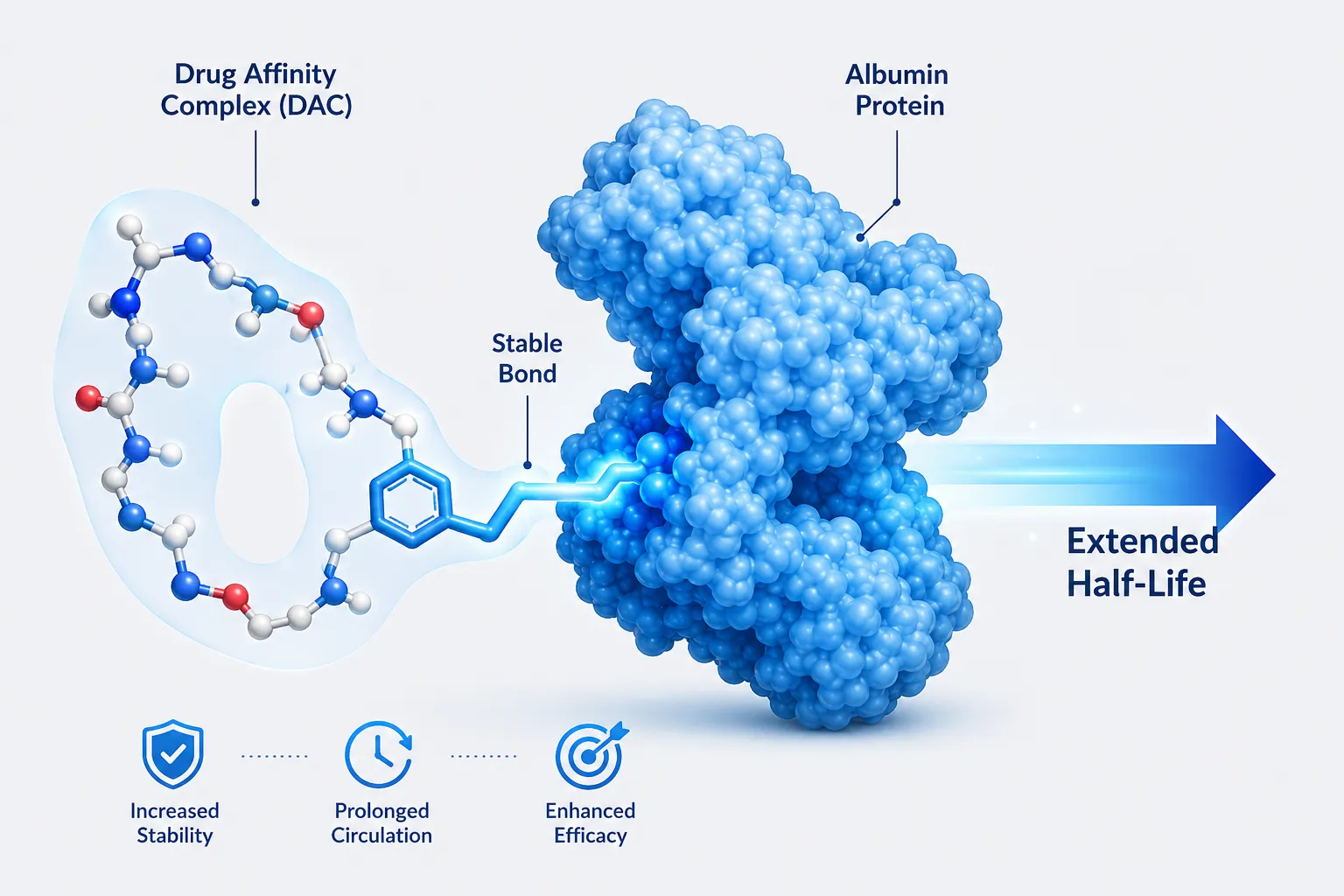
Editorial () infographic-style illustration showing a molecular diagram of the Drug Affinity Complex (DAC) modification

Key Takeaways

  • CJC-1295 with DAC achieves an estimated half-life of 6 to 8 days through albumin binding, making it one of the longest-acting GHRH analogs studied.
  • The Drug Affinity Complex (DAC) modification is the structural feature that separates this compound from standard CJC-1295 without DAC.
  • In 2026, the compound remains unapproved for clinical use in the US and is restricted under compounding regulations, it is strictly a research-use compound.
  • Sustained search volume reflects ongoing interest from researchers studying GH axis modulation, body composition, and metabolic function.
  • Blend formulations combining CJC-1295 with other secretagogues continue to appear in research protocols, expanding the compound's study context.

What the DAC Modification Does, and Why It Matters

Standard GHRH analogs degrade quickly in circulation. CJC-1295 without DAC, for example, carries a half-life measured in minutes to a few hours. The Drug Affinity Complex modification solves this problem through a reactive maleimide group that forms a covalent bond with circulating serum albumin after injection.

Albumin is the most abundant protein in human plasma. Because the body continuously recycles albumin rather than filtering it rapidly, any peptide bound to albumin inherits a dramatically extended residence time. The result for CJC-1295 with DAC is an estimated half-life of approximately 6 to 8 days, a figure that makes once or twice-weekly dosing theoretically feasible in research protocols rather than daily injections.

This pharmacokinetic profile is the central reason CJC-1295 with DAC in 2026 research remains a reference point. Researchers studying pulsatile versus sustained GH release find the compound useful as a model for long-duration GHRH stimulation. The distinction between pulsatile and continuous GH axis stimulation has meaningful implications for downstream IGF-1 levels, receptor sensitivity, and metabolic outcomes, all active areas of inquiry.

"The albumin-binding strategy used in CJC-1295 with DAC represents one of the cleaner examples of half-life extension through endogenous protein recycling rather than PEGylation or other synthetic approaches."

For researchers exploring adjacent peptide mechanisms, the SS-31 mitochondrial research themes provide a useful contrast: SS-31 operates through entirely different cellular targets, illustrating how varied the peptide research landscape has become.

The 2026 Regulatory Context for Long-Acting GHRH Analogs

Understanding why CJC-1295 with DAC in 2026 research occupies a specific niche requires clarity on its legal status. In the United States, the compound is:

  • Not FDA-approved for any clinical indication
  • Restricted from compounding under current regulatory guidance affecting peptides
  • Available only for legitimate research purposes through licensed research chemical suppliers

This status is not unique to CJC-1295 with DAC. Many peptides that generate significant scientific interest operate in this research-only space. The regulatory environment has, if anything, intensified researcher focus on proper sourcing and documentation.

Researchers working with related secretagogue combinations should review current formulation options such as the Tesamorelin AOD9604 CJC1295 Ipamorelin 12mg blend and the Sermorelin Ipamorelin CJC1295 combination to understand how CJC-1295 is being studied within multi-peptide frameworks.

Why Search Volume for Long-Acting GHRH Analogs Stays High in 2026
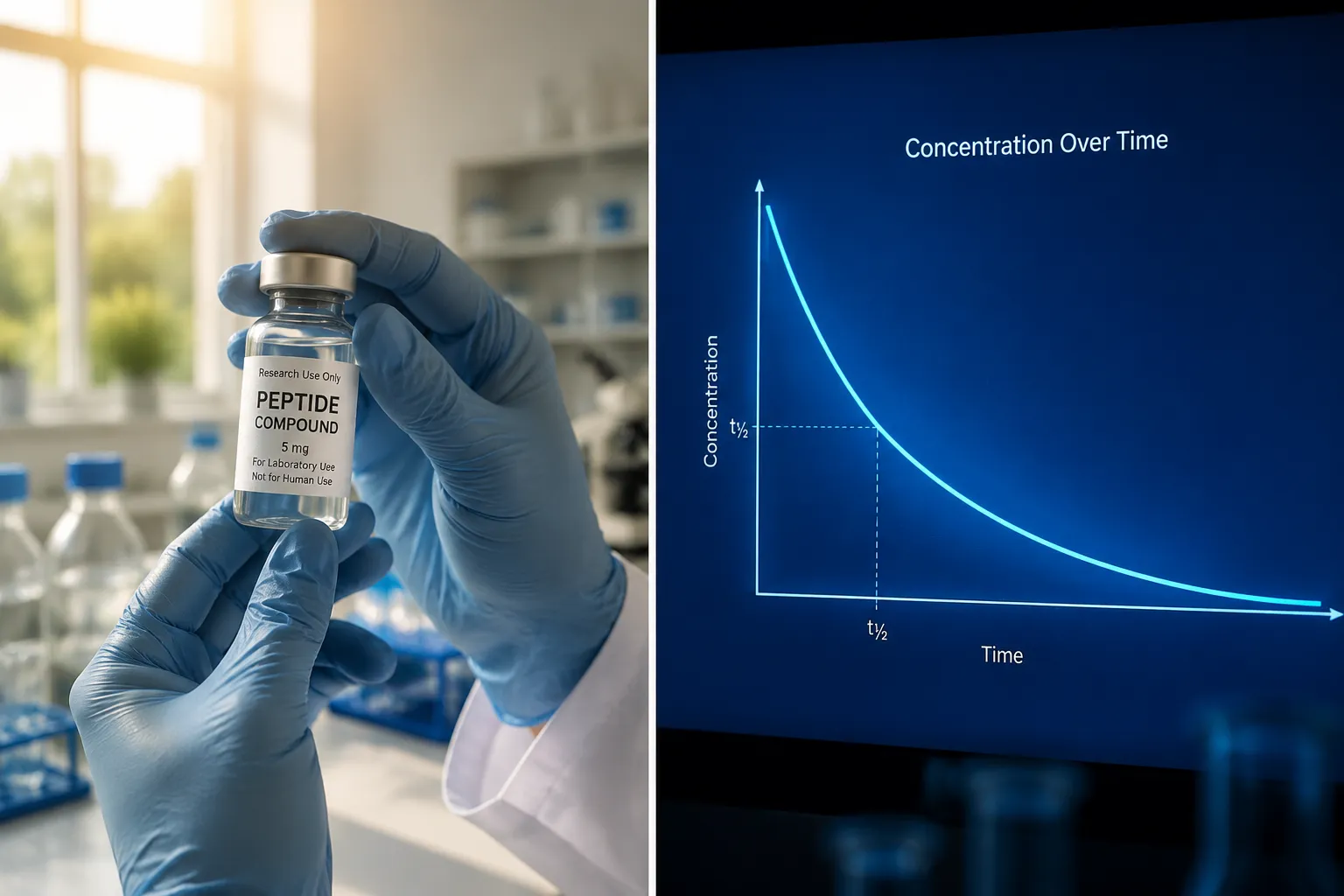
Why Search Volume for Long-Acting GHRH Analogs Stays High in 2026

Several converging factors explain why CJC-1295 with DAC in 2026 research continues to generate consistent search traffic rather than fading as older content might suggest.

1. Aging population research interest
Studies on GH axis decline with age remain active. Researchers investigating interventions for age-related changes in lean mass, bone density, and metabolic rate frequently encounter GHRH analogs as a model class.

2. Blend protocol proliferation
CJC-1295 rarely appears in isolation in modern research designs. It is commonly studied alongside Ipamorelin, Tesamorelin, and other secretagogues. The Tesamorelin CJC1295 Ipamorelin 12mg blend and related formulations represent this trend clearly. Each new blend formulation generates fresh search queries tied back to the core compound.

3. Comparative pharmacology interest
Researchers comparing DAC-modified peptides with newer GLP-based compounds, such as those covered in GLP-3 Retatrutide in Phase 3 Trials, often return to CJC-1295 with DAC as a benchmark for sustained receptor stimulation strategies.

4. Half-life as a research design variable
The 6-to-8-day half-life makes CJC-1295 with DAC useful for studies where researchers want stable, prolonged GH axis stimulation without daily intervention. This is a practical research design advantage that shorter-acting compounds cannot replicate.

Feature CJC-1295 Without DAC CJC-1295 With DAC
Half-life ~30 minutes ~6-8 days
Dosing frequency Daily or multiple times daily Once or twice weekly
Albumin binding No Yes (covalent bond)
Research use status (US, 2026) Research only Research only

Researchers sourcing the compound should review the CJC-1295 IPA 10mg product page for current availability and purity documentation standards.

How CJC-1295 With DAC Fits the Broader Peptide Research Landscape
How CJC-1295 With DAC Fits the Broader Peptide Research Landscape

The sustained relevance of CJC-1295 with DAC in 2026 research is not accidental. It reflects a compound that solved a genuine pharmacokinetic problem, short half-life, using an elegant biological mechanism. That solution remains scientifically interesting regardless of how the regulatory environment evolves.

Researchers working across the peptide space will find that the albumin-binding strategy used in DAC modification has influenced thinking in adjacent areas. For context on how peptide-based assay design intersects with modern research frameworks, the overview of carbohydrate antigens and peptide-based assays offers useful background on how peptide structure affects detection and measurement.

The Tesamorelin CJC1295 Ipamorelin 12mg blend reconstitution guide is also a practical resource for researchers handling multi-peptide formulations that include CJC-1295.

Conclusion

CJC-1295 with DAC in 2026 research occupies a durable position in the peptide science conversation for one clear reason: its pharmacokinetic profile is genuinely differentiated. The DAC modification's albumin-binding mechanism extends the compound's half-life to approximately 6 to 8 days, enabling research designs that shorter-acting GHRH analogs cannot support.

Actionable next steps for researchers:

  • Confirm current regulatory status and sourcing requirements before initiating any CJC-1295 with DAC research protocol in 2026.
  • Review blend formulation options to understand how CJC-1295 is being studied in combination with Ipamorelin, Tesamorelin, and other secretagogues.
  • Document purity testing data from suppliers, certificate of analysis standards are a baseline requirement for credible research.
  • Stay current with FDA compounding guidance, as the regulatory landscape for research peptides continues to evolve.

The compound's continued search prominence is earned, not residual. As long as researchers need a model for sustained GHRH stimulation, CJC-1295 with DAC will remain a reference point.

Tags: albumin binding peptides, cjc-1295 half-life, cjc-1295 with dac, drug affinity complex, gh axis modulation, ghrh analogs, growth hormone secretagogues, ipamorelin blend, long-acting peptides, peptide research 2026, research peptides, tesa research
https://www.puretestedpeptides.com/wp-content/uploads/2026/08/cjc-1295-with-dac-in-2026-research-why-long-acting-ghrh-analogs-remain-a-core-se.webp 1024 1536 https://www.puretestedpeptides.com/wp-content/uploads/2026/01/buy-peptides-online.jpg 2026-08-10 13:03:552026-08-10 13:03:55CJC-1295 With DAC in 2026 Research: Why Long-Acting GHRH Analogs Remain a Core Search Topic
You might also like
CJC-1295 With and Without DAC: A Detailed Mechanism and Pharmacokinetic Comparison for Growth Hormone Research CJC-1295 With and Without DAC: A Detailed Mechanism and Pharmacokinetic Comparison for Growth Hormone Research
Top 5 Research Peptides for Metabolic Health: An Updated Buyer's Guide Top 5 Research Peptides for Metabolic Health: An Updated Buyer’s Guide
Epithalon Peptide in Longevity Research: Telomeres, Cellular Aging, and What Labs Measure Epithalon Peptide in Longevity Research: Telomeres, Cellular Aging, and What Labs Measure
Peptides and Polypeptides in Modern Research: How Molecular Size Shapes Function, Stability, and Experimental Design Peptides and Polypeptides in Modern Research: How Molecular Size Shapes Function, Stability, and Experimental Design
Peptides 101 for Research-Use Only Buyers: Structure, Mechanisms, and Where GLP-3, MOTS-c, and 5-Amino-1MQ Fit In Peptides 101 for Research-Use Only Buyers: Structure, Mechanisms, and Where GLP-3, MOTS-c, and 5-Amino-1MQ Fit In
Polypeptide Peptides and Drug Mechanisms: What Common Medications Reveal About Research-Use Peptide Pharmacology Polypeptide Peptides and Drug Mechanisms: What Common Medications Reveal About Research-Use Peptide Pharmacology
Semax Peptide Nasal Spray: Cognitive Enhancement, Neuroprotection, and Research Protocols Semax Peptide Nasal Spray: Cognitive Enhancement, Neuroprotection, and Research Protocols
Peptide Calculators for Tesamorelin and Ipamorelin: Optimizing Reconstitution and Dosing Accuracy Peptide Calculators for Tesamorelin and Ipamorelin: Optimizing Reconstitution and Dosing Accuracy
0 replies

Leave a Reply

Want to join the discussion?
Feel free to contribute!

Leave a Reply Cancel reply

Your email address will not be published. Required fields are marked *

×

Helpful Links

  • My account
  • Cart
  • Checkout
  • Refund and Returns Policy
  • Privacy Policy
  • SMS Privacy Policy
  • Login
  • My Account
  • Logout

USA Made Lab Tested Peptides

All products are sold for research, laboratory, or analytical purposes only, and are not for human consumption


Pure Tested Peptides is a chemical supplier. Pure Tested Peptides is not a compounding / chemical compounding facility as defined under 503A of the Federal Food, Drug, and Cosmetic act. Pure Tested Peptides is not an outsourcing facility as defined under 503B of the Federal Food, Drug, and Cosmetic act.

The statements made within this website have not been evaluated by the US Food and Drug Administration. The products we offer are not intended to diagnose, treat, cure or prevent any disease.

Human/Animal Consumption Prohibited. Laboratory/In-Vitro Experimental Use Only

Link to: 5-Amino-1MQ Peptide: Mechanism, Metabolic Research, and How It Differs From Mitochondrial Peptides Link to: 5-Amino-1MQ Peptide: Mechanism, Metabolic Research, and How It Differs From Mitochondrial Peptides 5-Amino-1MQ Peptide: Mechanism, Metabolic Research, and How It Differs From...5-Amino-1MQ Peptide: Mechanism, Metabolic Research, and How It Differs From Mitochondrial Peptides Link to: Retatrutide Phase 3 Results: What the New GLP-3 Data Mean for Obesity and Diabetes Research Link to: Retatrutide Phase 3 Results: What the New GLP-3 Data Mean for Obesity and Diabetes Research Retatrutide Phase 3 Results: What the New GLP-3 Data Mean for Obesity and Diabetes ResearchRetatrutide Phase 3 Results: What the New GLP-3 Data Mean for Obesity and Diabetes...
Scroll to top Scroll to top Scroll to top