Call or Text 727-513-9780
  • Shopping Cart Shopping Cart
    0Shopping Cart
Pure Tested Peptides | America's most trusted Peptides for sale online
  • Peptides for sale
    • Oral Peptides for sale
      • Peptide Capsules for sale
      • BPC 157 Capsules 1000mcg
      • SLU-PP-332 Capsules | 1000 mcg
      • 5-Amino-1MQ 50mg Capsules
      • Tesofensine 500mcg
    • All Peptides for sale
    • Peptide Sprays
      • BPC 157 Nasal Spray Kit
      • BPC-157 TB500 Nasal Spray Kit
      • Semax Nasal Spray 10mg
      • Selank – Nasal Spray Kit – 10mg
      • Epithalon 50MG Nasal Spray Kit
      • Ipamorelin 10mg Nasal Spray
      • Klow Nasal Spray (BPC-157 + TB-500 + GHK-Cu + KPV) | 80mg
      • Hulk Nasal Spray Tesa / Ipa Blend 6/3 MG
      • Klow Nasal Spray
      • NAD + 500 mg Nasal Spray
      • PT-141 Nasal Spray Kit
    • GHRH Peptides
      • Ipa Peptides
      • CJC-1295 Peptides
        • CJC-1295 with DAC 5 mg
        • CJC-1295 without DAC 5 mg
        • CJC-1295 Ipa 10mg
      • Tesa Peptides
        • Tesa Peptide
        • Tesa 20 mg
    • GHK-Cu Peptides
      • All GHK-Cu Peptides
      • GHK-Cu 100mg
      • KLOW Peptide Blend – Buy KLOW blend online
    • BPC Peptides
      • All BPC Peptides
      • BPC-157
      • BPC-157 TB-500
      • BPC 157 capsules 1000mcg
    • SLU-PP-332 Peptides
      • All SLU-PP-332 Peptides
      • SLU-PP-332 5mg
    • GLP3 Peptides
      • GLP3-R
      • GLP3-R CAG 10mg
      • GLP3-R 20mg
    • PT-141 Peptides
      • PT-141 Peptides for sale
      • PT-141 10mg
      • PT-141 Nasal Spray
    • CAG Peptides
      • Lipo-C Peptide Blend
      • CAG 5mg
      • CAG 10mg
    • MOTS-C Peptides
      • MOTS-C Peptides for sale
      • MOTS-c peptide
      • MOTS-c 10mg *6 pack*
    • 5 Amino 1MQ Peptides
      • 5 Amino 1MQ Peptides for sale
      • 5-Amino-1MQ 50mg Capsules
      • 5-Amino-1MQ 5mg
    • Epithalon Peptides
      • Epithalon Peptides for sale
      • Epithalon 10mg
      • Epithalon 50mg
  • Shop
    • GLPs
      • 5-Amino-1MQ 50mg Capsules
      • 5-Amino-1MQ 5mg
      • GLP3-Reta
      • L-Carnitine 500mg/ml
      • Tesofensine 500mcg
      • SLU-PP-332 5mg
      • MOTS-c 10mg *6 pack*
    • Epithalon & BPC Peptides
      • Epithalon 10mg
      • Epithalon 50mg
      • BPC-157
      • BPC 157 capsules 1000mcg
      • BPC-157 TB-500
      • BPC-157 TB500 Nasal Spray Kit
      • BPC 157 Nasal Spray Kit
    • BPC TB-500 & NAD+ Peptides
      • NAD+ 500 mg
      • KLOW Peptide Blend – Buy KLOW blend online
      • GLOW Peptide Blend
      • TB 500 5mg
      • BPC 157 capsules 1000mcg – Supplement
      • BPC 157 Nasal Spray Kit
      • BPC-157
      • BPC-157 TB500 Nasal Spray Kit
      • BPC-157 TB-500
      • BPC 157 capsules 1000mcg
    • LL-37 Peptide
      • LL-37 10 mg
    • MOTS-C & Selank
      • MOTS-c peptide
      • Selank 10mg
    • GHK Peptides
      • GHK-Cu 100mg
      • GLOW Peptide Blend
      • KLOW Peptide Blend – Buy KLOW blend online
  • COAs
  • Wholesale
    • Wholesale Peptides for sale
  • PTP FAQ
  • Affiliates
    • Selank Peptide: Advanced Pharmacological Mechanisms Underlying Its Anxiolytic and Nootropic Effects in Research
      • 5-Amino-1MQ Peptide: Detailed Mechanisms of NNMT Inhibition and Its Impact on Cellular Metabolism Research
        • MOTS-C Peptide: Unraveling Its Role in Mitochondrial Dynamics and Energy Metabolism Research
          • Epithalon Peptide and Telomerase Regulation: Investigating Its Impact on Cellular Senescence and Lifespan Research Models
            • GLP2-T vs GLP2 Tirz Peptide: Understanding the Naming, Mechanistic Nuances, and Research Implications for Gut Health
      • Peptides and Polypeptides in Modern Pharmacology: What Research on Metoprolol, Prednisone, and Amlodipine Reveals
        • Polypeptide Peptides vs NSAIDs: What Naproxen and Diclofenac Teach Tissue-Repair Researchers About BPC‑157 and TB‑500
          • Peptides and Polypeptides in Endocrine Pharmacology: How GLP-1, GLP-2, and GLP-3 Retatrutide Differ From Classic Drugs Like Prednisone and Amlodipine
          • 5‑Amino‑1MQ Peptide and NNMT Inhibition: How It Compares With Statins Like Atorvastatin in Adipose and Lipid Metabolism Research
      • Enclomiphene, Estrogen Receptor Signaling, and Luteinizing Phase Biology: What Hormone Researchers Should Measure
        • Mesenchymal Stem Cells, BPC‑157, and GHK‑Cu: How Tissue Repair Peptides Compare With Classic NSAIDs Like Naproxen in Injury Models
          • Peptide Calculator Use Cases Beyond Growth Hormone: Working Through GLP‑3 Retatrutide, MOTS‑c, and BPC‑157 Research Dosing
        • Polypeptide Peptides in Endocrine and Metabolic Pharmacology: Lessons From Amlodipine, Prednisone, and Metoprolol
        • Peptides Calculator for Advanced Blends: Worked Examples for Tesamorelin, CJC‑1295, and Ipamorelin Stacks
          • Peptides and Polypeptides in Human Physiology: How Molecular Size Shapes Research Applications
            • Selank Peptide: Advanced Pharmacological Mechanisms Underlying Its Anxiolytic and Nootropic Effects in Research
          • 5-Amino-1MQ Peptide: Detailed Mechanisms of NNMT Inhibition and Its Impact on Cellular Metabolism Research
            • MOTS-C Peptide: Unraveling Its Role in Mitochondrial Dynamics and Energy Metabolism Research
              • Epithalon Peptide and Telomerase Regulation: Investigating Its Impact on Cellular Senescence and Lifespan Research Models
                • GLP2-T vs GLP2 Tirz Peptide: Understanding the Naming, Mechanistic Nuances, and Research Implications for Gut Health
                  • Peptides and Polypeptides in Endocrine Pharmacology: How GLP-1, GLP-2, and GLP-3 Retatrutide Differ From Classic Drugs Like Prednisone and Amlodipine
                    • Polypeptide Peptides vs NSAIDs: What Naproxen and Diclofenac Teach Tissue-Repair Researchers About BPC‑157 and TB‑500
                      • Peptides and Polypeptides in Modern Pharmacology: What Research on Metoprolol, Prednisone, and Amlodipine Reveals
                        • 5‑Amino‑1MQ Peptide and NNMT Inhibition: How It Compares With Statins Like Atorvastatin in Adipose and Lipid Metabolism Research
                        • Enclomiphene, Estrogen Receptor Signaling, and Luteinizing Phase Biology: What Hormone Researchers Should Measure
                        • Mesenchymal Stem Cells, BPC‑157, and GHK‑Cu: How Tissue Repair Peptides Compare With Classic NSAIDs Like Naproxen in Injury Models
                        • Peptide Calculator Use Cases Beyond Growth Hormone: Working Through GLP‑3 Retatrutide, MOTS‑c, and BPC‑157 Research Dosing
                        • Polypeptide Peptides in Endocrine and Metabolic Pharmacology: Lessons From Amlodipine, Prednisone, and Metoprolol
                        • Peptides Calculator for Advanced Blends: Worked Examples for Tesamorelin, CJC‑1295, and Ipamorelin Stacks
                        • Peptides and Polypeptides in Human Physiology: How Molecular Size Shapes Research Applications
                        • Selank Peptide: Advanced Pharmacological Mechanisms Underlying Its Anxiolytic and Nootropic Effects in Research
                        • MOTS-C Peptide: Unraveling Its Role in Mitochondrial Dynamics and Energy Metabolism Research
                        • Peptides and Polypeptides in Modern Pharmacology: What Research on Metoprolol, Prednisone, and Amlodipine Reveals
                        • Peptides and Polypeptides in Endocrine Pharmacology: How GLP-1, GLP-2, and GLP-3 Retatrutide Differ From Classic Drugs Like Prednisone and Amlodipine
                        • 5-Amino-1MQ Peptide: Detailed Mechanisms of NNMT Inhibition and Its Impact on Cellular Metabolism Research
                        • Mesenchymal Stem Cells, BPC‑157, and GHK‑Cu: How Tissue Repair Peptides Compare With Classic NSAIDs Like Naproxen in Injury Models
                        • Peptide Calculator Use Cases Beyond Growth Hormone: Working Through GLP‑3 Retatrutide, MOTS‑c, and BPC‑157 Research Dosing
                        • GLP2-T vs GLP2 Tirz Peptide: Understanding the Naming, Mechanistic Nuances, and Research Implications for Gut Health
                        • Polypeptide Peptides in Endocrine and Metabolic Pharmacology: Lessons From Amlodipine, Prednisone, and Metoprolol
                        • Polypeptide Peptides vs NSAIDs: What Naproxen and Diclofenac Teach Tissue-Repair Researchers About BPC‑157 and TB‑500
                        • Peptides and Polypeptides in Human Physiology: How Molecular Size Shapes Research Applications
                        • Peptides Calculator for Advanced Blends: Worked Examples for Tesamorelin, CJC‑1295, and Ipamorelin Stacks
                        • 5‑Amino‑1MQ Peptide and NNMT Inhibition: How It Compares With Statins Like Atorvastatin in Adipose and Lipid Metabolism Research
                        • Enclomiphene, Estrogen Receptor Signaling, and Luteinizing Phase Biology: What Hormone Researchers Should Measure
                        • Epithalon Peptide and Telomerase Regulation: Investigating Its Impact on Cellular Senescence and Lifespan Research Models
                        • Best research protocol Klow blend
                        • best time to take BPC-157
                        • best time to take DSIP (Delta Sleep Inducing Peptide)
                        • best time to take CJC-1295
                        • best time to take AOD-9604
                        • best time to take Follistatin 344
                        • best time to take Ipamorelin
                        • best time to take MK-677 (Ibutamoren)
                        • best time to take Ligandrol (LGD-4033) — research compound
                        • best time to take Ostarine (MK-2866) — research compound
                        • best time to take GHK-CU
                        • best time to take TB-500
                        • best time to take MOTS-c
                        • best time to take Semax
                        • best time to take RAD-140 (Testolone) — research compound
                        • best time to take Thymosin Alpha-1
                        • best time to take PEG-MGF
                        • Biolife Plasma, Octapharma Plasma, and Research Peptides: How Plasma Donation Labs Differ From Peptide Suppliers
                        • best time to take YK-11 — research compound
                        • best time to take PT-141 (Bremelanotide)
                        • Best research protocol Klow blend
                        • 5-Amino-1MQ and MOTS-C Synergy: Metabolic Signaling, Mitochondria, and Research Design
                        • BPC-157 and TB-500: Investigating Their Combined Effects on Angiogenesis and Cellular Migration in Tissue Repair Models
                        • BPC-157 Peptide: Gut Barrier Function, Inflammation, and Tissue-Recovery Research
                        • 5‑Amino‑1MQ and MOTS‑c Synergy in Metabolic Research: Designing NNMT and Mitochondrial Biogenesis Stacks
                        • CJC-1295 with DAC vs. Without DAC: Half-Life, Release Kinetics, and Research Implications
                        • CJC‑1295 with DAC vs. Without DAC: Expanding on Half‑Life Differences Using Tesamorelin and Ipamorelin Blend Case Studies
                        • Collagen Biology and Copper‑Binding Peptides: How GHK‑Cu, Glow Blend, and Klow Blend Interact with Skin and Connective Tissue
                        • Collagen Biology and Regenerative Peptides: How GHK‑Cu, Glow Blend, and Klow Blend Affect Extracellular Matrix Research
                    • DNA, Telomeres, and Longevity Peptides: Positioning Epithalon and MOTS‑c in Genetic Aging Research
                      • Enclomiphene Citrate: serm Mechanism, Testosterone Research, and Stack Compatibility
                        • Enclomiphene vs Enclomiphene Citrate: Formulation, Bioavailability, and Research Distinctions
                        • Epithalon Peptide Research: Telomerase Activation, Aging, and Pineal Gland Function
                        • Estrogen Receptor Signaling and Enclomiphene: How Selective Modulators Compare with Classic Polypeptide Hormones
                        • GHK-Cu Peptide: Advanced Mechanisms in Extracellular Matrix Remodeling and Wound Healing Research
                        • GHK-Cu Peptide: Collagen Synthesis, Wound Repair, and Skin-Barrier Research Models
                        • GLP-1 vs GLP-3 vs GLP-2: Peptide Classification and Research Applications
                        • GLP-2 Peptide Research Guide: Gut Barrier Function, Nutrient Absorption, and Intestinal Recovery Models
                        • GLP-3 Retatrutide vs. GLP-1 Drugs: What Triple-Agonist Biology Changes in Research Models
                        • Ipamorelin and Tesamorelin Combination: Synergistic GH Secretagogue Research and Dosing Protocols
                        • GLP2 Tirz Peptide: What It Is, Why the Name Exists, and How Researchers Should Interpret It
                        • Klow Blend Peptide Nasal Spray: What the Formulation Is Trying to Do in Cognitive Research
                        • Mitochondria, NNMT Inhibition, and Peptide Modulators: Where MOTS‑c and 5‑Amino‑1MQ Fit in Cellular Energy Research
                        • MOTS-c Peptide: Mitochondrial Function, Energy Metabolism, and What Researchers Measure
                        • MOTS-c vs. 5-Amino-1MQ: Which Metabolic Research Questions Each Compound Actually Answers
                        • Nasal Spray Peptides: Bioavailability, Administration, and Semax/Selank Research Applications
                        • PT-141 Peptide Research: Mechanism of Action and Melanocortin Receptor Signaling
                        • Retatrutide for Research: Mechanism, Structure, and GLP-1/GLP-3 Dual Action
                        • Retatrutide for Obesity and Type 2 Diabetes: What the Latest Trial Data Suggest
                        • Tesofensine Peptide Research: Mechanism, Appetite Suppression, and Neuropeptide Y Pathways
  • Contact
    • Contact Customer Service
    • Text Customer Support
  • About US
  • Shop all peptides
  • Affiliate Program
    • Affiliate Signup
  • Login / Register Login / Register Page Link Login / Register Page Link
  • Click to open the search input field Click to open the search input field Search
  • Menu Menu
Complete Guide to Research Peptides: Types, Mechanisms, and Laboratory Use Cases

Complete Guide to Research Peptides: Types, Mechanisms, and Laboratory Use Cases

August 14, 2026/0 Comments/in Uncategorized/by

Over 7,000 naturally occurring peptides have been identified in the human body, yet the global research peptide market continues to expand as scientists uncover new ways these short amino acid chains regulate nearly every biological system. This complete guide to research peptides: types, mechanisms, and laboratory use cases is designed to serve as a foundational reference for researchers, students, and science professionals who need a clear, organized overview of how peptides are classified, how they work, and where they are being studied today.

Key Takeaways

  • Research peptides are short chains of 2 to 50 amino acids studied primarily in preclinical settings, with many lacking formal human approval.
  • Peptides are classified by their mechanism of action, including receptor agonism, membrane targeting, and enzyme modulation.
  • Major research categories include GLP-1 agonists, growth hormone secretagogues, regenerative peptides, neuropeptides, and longevity compounds.
  • Laboratory use cases span tissue repair, metabolic biology, angiogenesis, and mitochondrial function.
  • Formulation and stability challenges remain key areas of active investigation in peptide science.

What Are Research Peptides and How Are They Defined

Research peptides are amino acid chains typically ranging from 2 to 50 residues in length. This size range places them between small-molecule drugs and full-size proteins, giving them a distinct pharmacological profile. Most are studied in preclinical or early-phase settings, and many that appear in research catalogs have not received regulatory approval for human use.
What Are Research Peptides and How Are They Defined

Their appeal in laboratory research comes from several properties. Peptides can be synthesized with high precision, modified to improve stability, and designed to interact with specific receptors or cellular pathways. Unlike many small-molecule drugs, they often mimic endogenous signaling molecules, which makes them valuable tools for studying how biological systems respond to targeted stimulation or inhibition. For a deeper look at how these compounds compare with conventional pharmaceuticals, see Peptides vs Classic Small-Molecule Drugs.

Key structural features of research peptides:

Feature Description
Chain length 2 to 50 amino acids
Molecular weight Typically 500 to 5,000 Da
Synthesis method Solid-phase peptide synthesis (SPPS)
Stability Often sensitive to heat, light, and proteases
Selectivity High receptor or pathway specificity

Major Types and Mechanistic Families in the Complete Guide to Research Peptides

Understanding peptide types requires looking at both structure and function. The most useful classification system in research settings groups peptides by their primary mechanism of action.

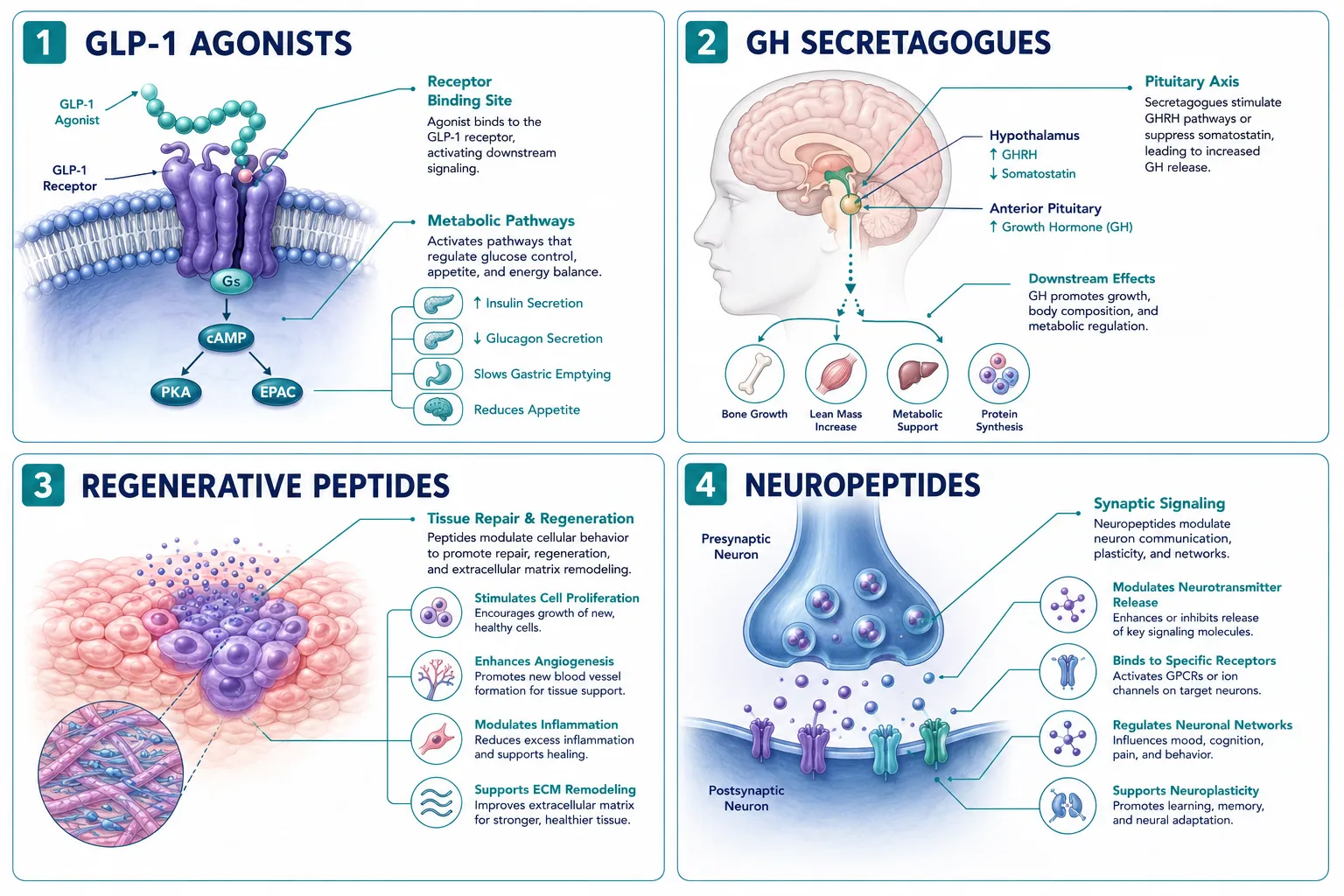
GLP-1 Agonists and Metabolic Peptides

GLP-1 receptor agonists are among the most clinically advanced peptide classes. They bind to glucagon-like peptide receptors to regulate insulin secretion, appetite, and energy metabolism. Newer multi-agonist designs, including triple-agonist compounds, are expanding the research scope considerably. The GLP-3 Retatrutide and triple-agonist peptides research overview covers how these next-generation compounds are reshaping metabolic science.

Growth Hormone Secretagogues

These peptides stimulate the pituitary gland to release growth hormone. Common examples include ipamorelin, sermorelin, and CJC-1295. They work primarily through ghrelin receptors or growth hormone-releasing hormone receptors. The CJC-1295 mechanism and pharmacokinetic comparison is a useful resource for understanding how DAC modification changes half-life and receptor interaction.

Regenerative and Tissue Repair Peptides

BPC-157 and TB-500 are the most widely studied compounds in this category. Research suggests they may influence angiogenesis, collagen synthesis, and cellular migration. The BPC-157 vs TB-500 complete research comparison provides a detailed side-by-side analysis of their proposed mechanisms and laboratory applications.

Neuropeptides and Cognitive Research Compounds

Selank, Semax, and BDNF-related peptides are studied for their roles in neuroplasticity, anxiety modulation, and cognitive function. These compounds interact with receptors in the central nervous system and are often administered intranasally in research settings. See the Selank peptide research benefits and mechanism of action for a detailed breakdown.

Longevity and Mitochondrial Peptides

MOTS-c, SS-31, and Epithalon represent a growing class of compounds studied for their effects on cellular aging, mitochondrial efficiency, and senescence pathways. The MOTS-c mitochondrial research themes page covers the current state of this research area.

Laboratory Use Cases Covered in This Complete Guide to Research Peptides
Laboratory Use Cases Covered in This Complete Guide to Research Peptides

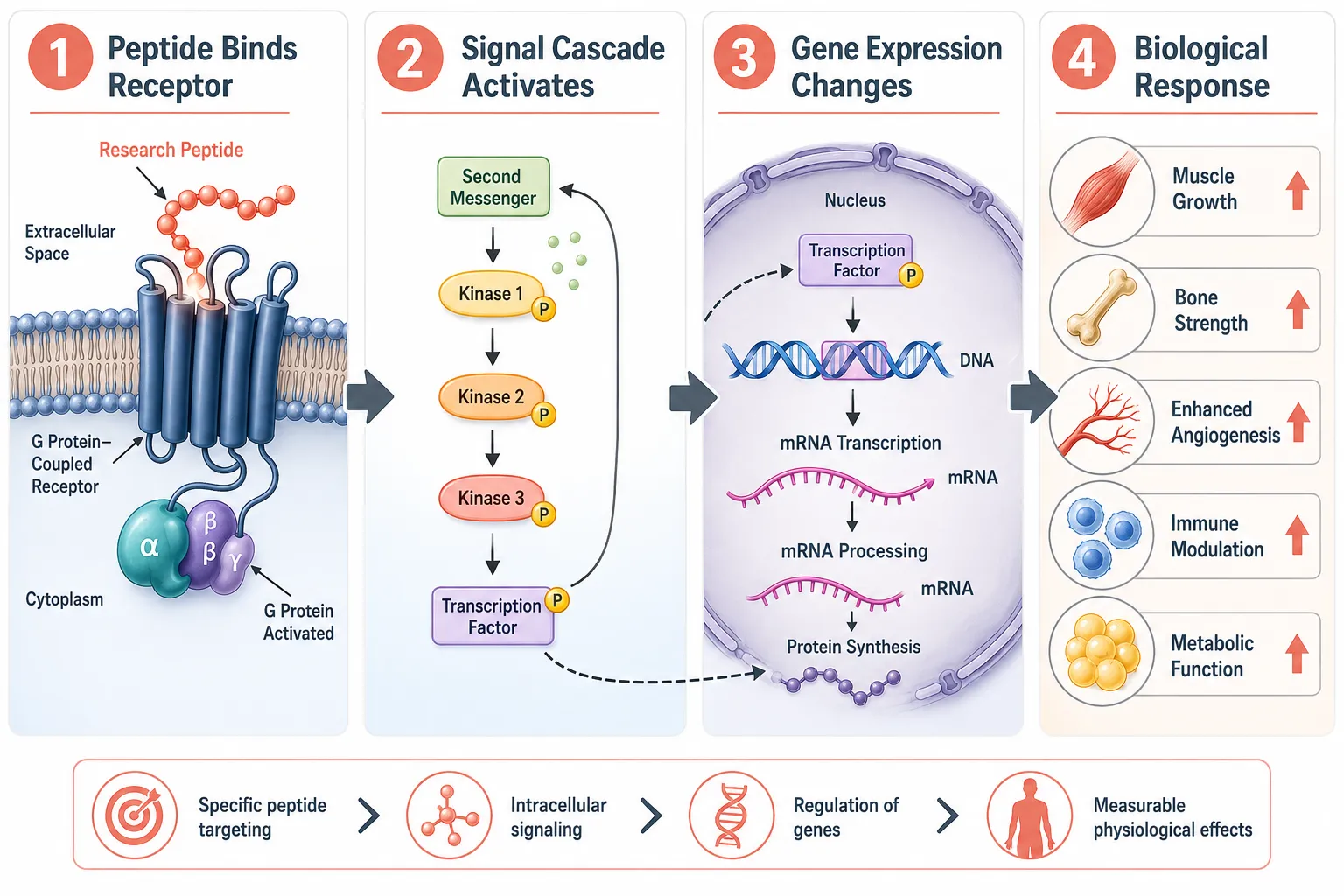
The practical applications of research peptides span multiple biological domains. Below are the primary laboratory use cases documented in current preclinical literature.

Tissue Repair and Regenerative Biology
Peptides such as BPC-157 are studied in wound healing models, tendon repair assays, and gut mucosal regeneration. Their proposed effects on nitric oxide pathways and growth factor upregulation make them valuable tools in regenerative biology research.

Metabolic and Endocrine Research
GLP-1 agonists and growth hormone secretagogues are used in metabolic studies examining insulin sensitivity, adipose tissue dynamics, and hormonal feedback loops. The complete guide to peptide mechanisms covering GLP-1 and growth hormone peptides explains the molecular detail behind these pathways.

Neuroprotection and Brain Research
Neuropeptides are used in models of neuroinflammation, cognitive decline, and stress response. Researchers study how these compounds modulate BDNF expression, serotonin signaling, and HPA axis activity.

Skin, Hair, and Connective Tissue Research
GHK-Cu and related copper-binding peptides are studied for their effects on collagen gene expression, antioxidant activity, and dermal repair. The GHK-Cu peptide and collagen research overview covers the current evidence base.

Mitochondrial and Aging Biology
SS-31 and MOTS-c are used in studies examining mitochondrial membrane potential, ROS production, and age-related cellular decline. These compounds are at the frontier of longevity research.

Formulation, Storage, and Administration Challenges
Formulation, Storage, and Administration Challenges

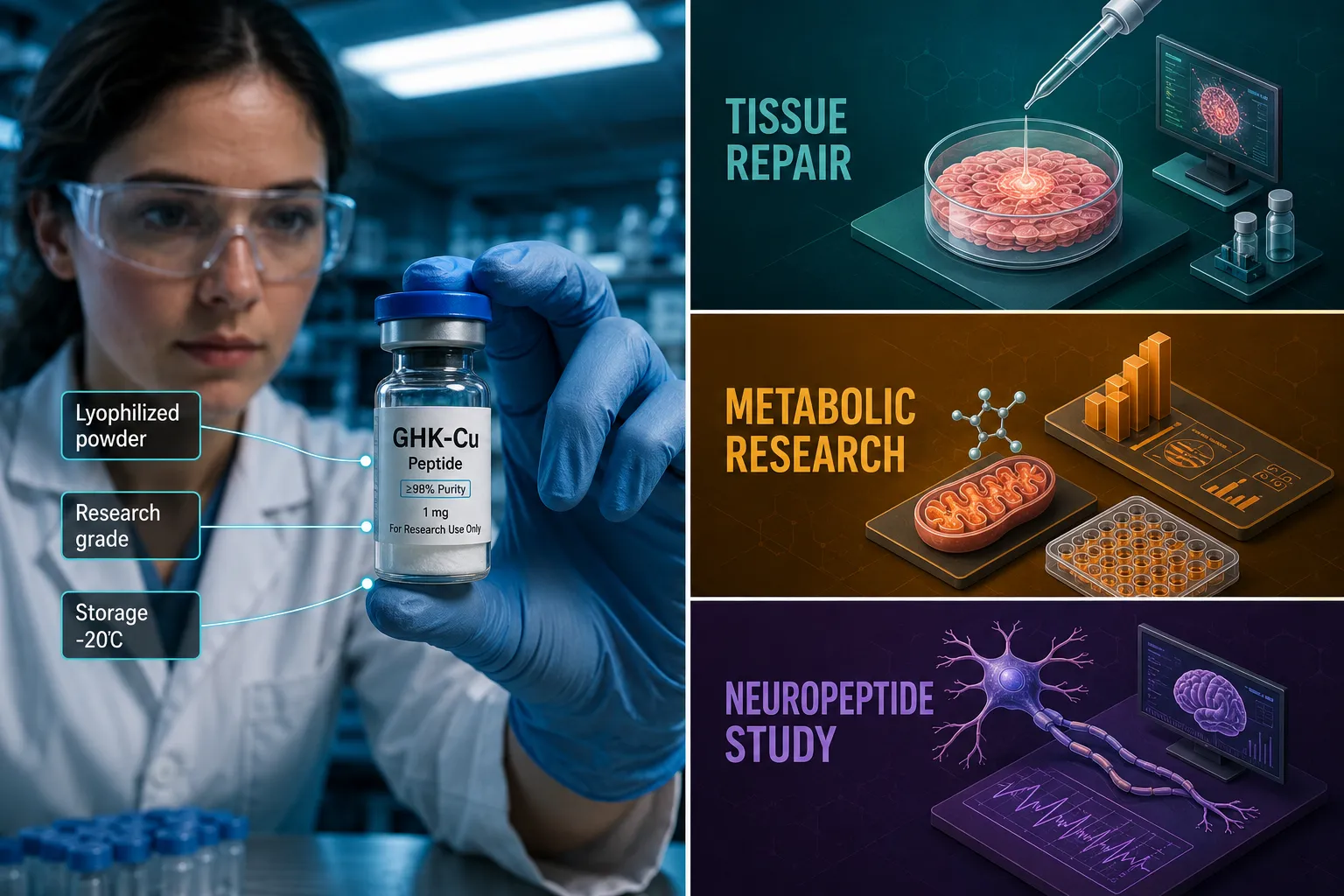
Peptides present unique challenges in research settings that differ significantly from small-molecule compounds.

  • Proteolytic degradation: Peptides are broken down rapidly by enzymes in biological fluids, requiring modified analogs or protective formulations.
  • Reconstitution accuracy: Lyophilized peptides must be reconstituted carefully to ensure dosing precision. Tools like peptide calculators help researchers maintain accuracy.
  • Storage requirements: Most research peptides require storage at -20°C or lower to maintain stability.
  • Routes of administration: Subcutaneous injection is most common in research models, though intranasal and oral routes are being studied for specific compounds.

"Stability and purity are the two most critical variables in peptide research. A compound that degrades before reaching its target cannot produce reliable data."

These formulation considerations are especially relevant when working with multi-peptide stacks or novel delivery systems currently under investigation.

Conclusion

This complete guide to research peptides: types, mechanisms, and laboratory use cases provides a working framework for understanding one of the most dynamic areas in modern biochemistry. As of 2026, hundreds of peptide compounds are under active preclinical and clinical evaluation, spanning metabolic disease, neurological research, regenerative medicine, and aging biology.

Actionable next steps for researchers:

  1. Identify the mechanistic family most relevant to your research question before selecting a compound.
  2. Review published preclinical data for your target peptide, paying close attention to model species and dosing protocols.
  3. Confirm purity and third-party testing documentation before using any research peptide in a laboratory setting.
  4. Consult regulatory guidance in your jurisdiction, as the legal status of research peptides varies by country and application.
  5. Use the internal resources linked throughout this guide to explore specific peptide categories in greater depth.

Peptide science is advancing rapidly. Staying current with mechanistic research and emerging compound classes is essential for anyone working at the intersection of biochemistry, pharmacology, and translational medicine.

Tags: bpc-157, glp-1 agonists, growth hormone secretagogues, laboratory peptide use cases, longevity peptides, mitochondrial peptides, neuropeptides, peptide classification, peptide mechanisms, peptide research guide, regenerative peptides, research peptides
https://www.puretestedpeptides.com/wp-content/uploads/2026/08/complete-guide-to-research-peptides-types-mechanisms-and-laboratory-use-cases.webp 1024 1536 https://www.puretestedpeptides.com/wp-content/uploads/2026/01/buy-peptides-online.jpg 2026-08-14 13:06:382026-08-14 13:06:38Complete Guide to Research Peptides: Types, Mechanisms, and Laboratory Use Cases
You might also like
Research-Use Only BPC-157: What It Is, What It Is Not, and Where It Fits in Tissue-Repair Models Research-Use Only BPC-157: What It Is, What It Is Not, and Where It Fits in Tissue-Repair Models
Cellular Energy and Research Peptides: Why ATP Readouts Matter in Mitochondrial Studies Cellular Energy and Research Peptides: Why ATP Readouts Matter in Mitochondrial Studies
CJC-1295 with Ipamorelin: What the Combination Means for Growth Hormone Research Models CJC-1295 with Ipamorelin: What the Combination Means for Growth Hormone Research Models
Klow Blend vs. Semax and Selank: Intranasal Nootropic Peptides Compared for Research Klow Blend vs. Semax and Selank: Intranasal Nootropic Peptides Compared for Research
Peptides in Modern Research: From Simple Chains to Complex Polypeptide Hormones Peptides in Modern Research: From Simple Chains to Complex Polypeptide Hormones
GLP2-T Peptide and GLP2 Tirz Peptide: Naming Confusion, Product Labels, and Research Interpretation GLP2-T Peptide and GLP2 Tirz Peptide: Naming Confusion, Product Labels, and Research Interpretation
Carbohydrate Antigens and Peptide-Based Assays: How Glycoprotein Markers Interface With Modern Research Peptides Carbohydrate Antigens and Peptide-Based Assays: How Glycoprotein Markers Interface With Modern Research Peptides
Klow Peptide Nasal Spray: What It Is, How Researchers Evaluate It, and Why Formulation Matters Klow Peptide Nasal Spray: What It Is, How Researchers Evaluate It, and Why Formulation Matters
0 replies

Leave a Reply

Want to join the discussion?
Feel free to contribute!

Leave a Reply Cancel reply

Your email address will not be published. Required fields are marked *

×

Helpful Links

  • My account
  • Cart
  • Checkout
  • Refund and Returns Policy
  • Privacy Policy
  • SMS Privacy Policy
  • Login
  • My Account
  • Logout

USA Made Lab Tested Peptides

All products are sold for research, laboratory, or analytical purposes only, and are not for human consumption


Pure Tested Peptides is a chemical supplier. Pure Tested Peptides is not a compounding / chemical compounding facility as defined under 503A of the Federal Food, Drug, and Cosmetic act. Pure Tested Peptides is not an outsourcing facility as defined under 503B of the Federal Food, Drug, and Cosmetic act.

The statements made within this website have not been evaluated by the US Food and Drug Administration. The products we offer are not intended to diagnose, treat, cure or prevent any disease.

Human/Animal Consumption Prohibited. Laboratory/In-Vitro Experimental Use Only

Link to: GHK-Cu Peptide: Collagen Signaling, Wound Models, and Skin Research Applications Link to: GHK-Cu Peptide: Collagen Signaling, Wound Models, and Skin Research Applications GHK-Cu Peptide: Collagen Signaling, Wound Models, and Skin Research Applica...GHK-Cu Peptide: Collagen Signaling, Wound Models, and Skin Research Applications Link to: CJC-1295 With DAC vs Without DAC: Mechanism, Duration, and Research Design Differences Link to: CJC-1295 With DAC vs Without DAC: Mechanism, Duration, and Research Design Differences CJC-1295 With DAC vs Without DAC: Mechanism, Duration, and Research Design DifferencesCJC-1295 With DAC vs Without DAC: Mechanism, Duration, and Research Design ...
Scroll to top Scroll to top Scroll to top