

Tesofensine vs GLP-3 Peptides in Metabolic Research: How Labs Decide Which Compounds to Order
Only about 5% of obesity drug candidates that enter clinical development ever reach approval, a statistic that shapes every procurement decision a metabolic research lab makes. When evaluating Tesofensine vs GLP-3 Peptides in Metabolic Research: How Labs Decide Which Compounds to Order, the choice is rarely simple. It hinges on mechanistic goals, available evidence, translational potential, and practical sourcing factors that vary from lab to lab.
Key Takeaways
- Tesofensine is a triple monoamine reuptake inhibitor with CNS-driven appetite suppression; GLP-based peptides act peripherally and centrally through incretin pathways.
- GLP-1 receptor agonists and next-generation multi-agonists carry deeper clinical evidence and broader cardiometabolic endpoints than tesofensine.
- Tesofensine remains a valid niche tool for labs studying central monoamine systems and appetite neuroscience.
- Evidence depth, regulatory trajectory, and endpoint specificity are the three primary filters labs use when ordering compounds.
- Sourcing quality, purity certification, stability data, and vendor transparency, is equally critical for both compound classes.
Understanding the Two Compound Classes
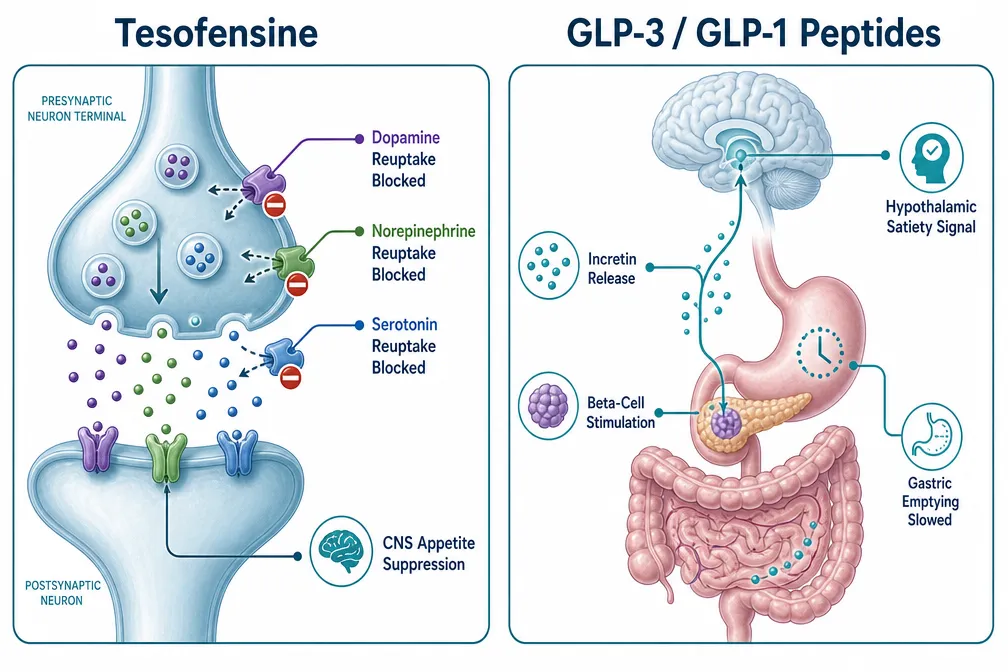
Before any procurement decision is made, researchers need a clear picture of what each compound actually does at the receptor level.
Tesofensine is a small-molecule triple reuptake inhibitor. It blocks the reuptake of dopamine, norepinephrine, and serotonin simultaneously, producing appetite suppression primarily through central nervous system pathways. Early monotherapy trials showed meaningful reductions in body weight, but cardiovascular signals, including elevated heart rate and blood pressure, slowed development. The Tesomet combination (tesofensine plus metoprolol) was designed to blunt those cardiovascular effects, and small trials have shown moderate but consistent weight loss. Pipeline analysts currently classify Tesomet as an early-stage anti-obesity candidate with modest efficacy compared to newer agents.
GLP-3 and related GLP-based peptides operate through a fundamentally different mechanism. GLP-1 receptor agonists stimulate incretin release, slow gastric emptying, activate hypothalamic satiety circuits, and promote insulin secretion in a glucose-dependent manner. Compounds such as retatrutide, a triple GLP-1/GIP/glucagon receptor co-agonist, represent the frontier of this class. For a deeper breakdown of how GLP-1, GLP-2, and GLP-3 relate to each other mechanistically, the GLP-3, GLP-1, and GLP-2 explained: a researcher's guide to the peptide family provides essential context.
"Mechanistic focus is the first filter. A lab studying central reward circuitry may legitimately need tesofensine. A lab studying cardiometabolic risk almost certainly needs a GLP-based agent."
Comparing Evidence Depth and Research Endpoints
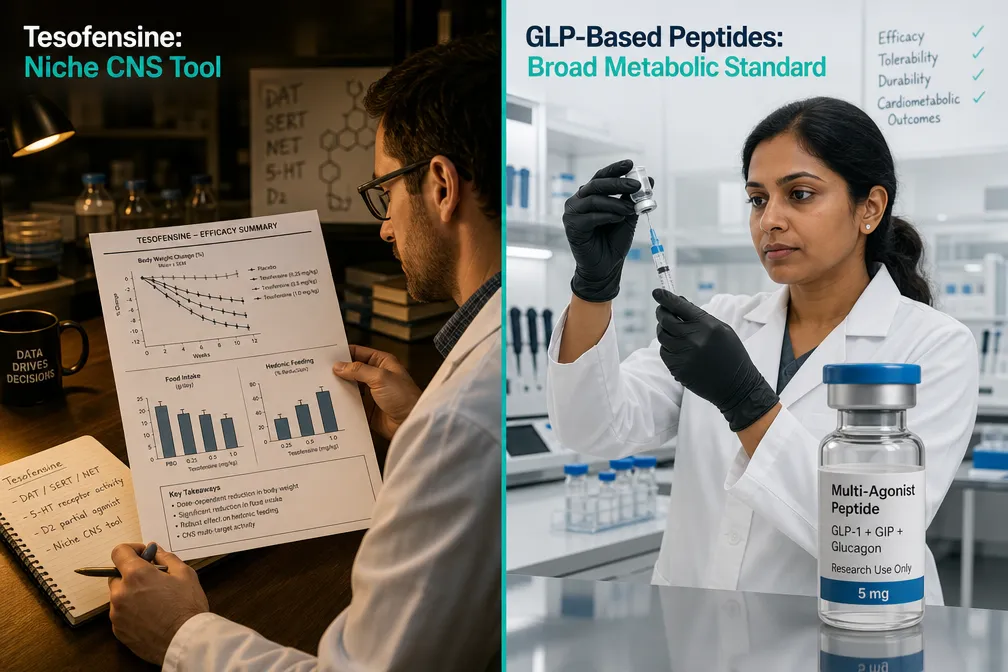
When evaluating Tesofensine vs GLP-3 Peptides in Metabolic Research: How Labs Decide Which Compounds to Order, evidence depth is the most decisive factor for most labs.
Efficacy and Clinical Data
| Factor | Tesofensine | GLP-Based Peptides |
|---|---|---|
| Weight loss magnitude | Moderate | Substantial to large |
| Cardiometabolic endpoints | Limited | Broad and well-documented |
| Translational pipeline depth | Early-stage | Advanced, multi-indication |
| Safety profile clarity | Concerns noted | Known, manageable |
| Multi-agonist variants | None | Tirzepatide, retatrutide, others |
GLP-1 receptor agonists deliver larger, better-documented weight loss outcomes and cardiometabolic benefits than tesofensine across multiple trial populations. Pharmacovigilance data show known but manageable safety profiles for GLP-1 RAs, which reassures translational researchers planning longer study windows. Dual and multi-agonist GLP-based drugs, tirzepatide being the clearest example, have set a translational gold standard that newer lab programs aim to replicate or surpass.
Tesofensine's evidence base, while real, is narrower. Its value lies specifically in CNS-focused research: appetite neuroscience, reward pathway modulation, and monoamine system studies. Labs focused on those endpoints will find tesofensine uniquely suited. Labs pursuing metabolic syndrome, insulin resistance, or cardiovascular risk reduction will find GLP-based peptides far more aligned with their endpoints.
For researchers exploring GLP-1 peptide sourcing concepts and generational research notes, understanding how the evidence base has evolved across GLP generations is essential before finalizing compound orders.
How Labs Decide Which Compounds to Order: A Practical Framework
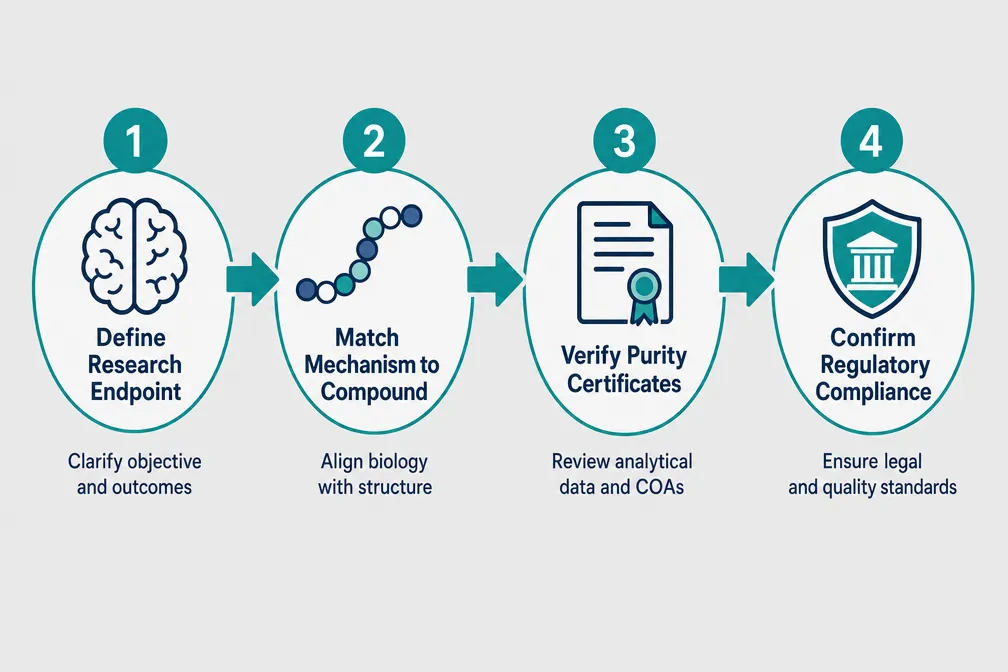
The practical side of Tesofensine vs GLP-3 Peptides in Metabolic Research: How Labs Decide Which Compounds to Order comes down to four structured decision points.
Step 1: Define the Research Endpoint
Labs must ask: Is the primary endpoint CNS-driven (appetite, reward, monoamine tone) or peripheral/metabolic (insulin sensitivity, body composition, cardiovascular markers)? CNS-focused endpoints favor tesofensine. Metabolic endpoints favor GLP-based peptides.
Step 2: Match Mechanism to Compound
Once the endpoint is clear, mechanism alignment follows naturally. Researchers studying hormone research compounds will recognize that GLP-based agents interact with incretin hormones in ways tesofensine simply does not. Conversely, monoamine reuptake inhibition cannot be replicated by any GLP-based compound.
Step 3: Evaluate Regulatory and Commercial Trajectory
Regulatory and commercial trajectories strongly push labs toward GLP-1-aligned programs. Labs seeking translational relevance, where preclinical data might eventually inform clinical development, will find GLP-based agents far better positioned. Next-generation GLP-based co-agonists and biased agonists are at the forefront of cutting-edge metabolic research investment globally.
Step 4: Verify Sourcing Quality
Regardless of which compound a lab selects, purity certification is non-negotiable. For peptide-based compounds, researchers should confirm:
- Certificate of Analysis (CoA) with HPLC purity data
- Mass spectrometry confirmation of molecular identity
- Stability and storage specifications matched to the lab's conditions
- Vendor transparency regarding synthesis methods
Labs sourcing GLP-class compounds can explore GLP-1 peptides available for research and review buy GLP-1 peptides options to compare available research-grade formulations. For broader compound discovery, all peptides for sale provides a wider catalog view. Understanding polypeptide peptides and drug mechanisms can also help researchers contextualize how each compound class fits within broader pharmacological frameworks.
The Short-Term Outlook for Each Compound Class
As of 2026, GLP-based agents remain the default ordering choice for the majority of metabolic research labs. The evidence base is deeper, the translational pipeline is more active, and regulatory momentum clearly favors incretin-based approaches. Tesofensine occupies a legitimate but narrow niche, valuable for CNS appetite research, less relevant for labs chasing cardiometabolic endpoints.
Labs should also monitor emerging hormone research developments, as the intersection of incretin biology and neuroendocrine signaling continues to generate new compound candidates that may eventually bridge both mechanistic worlds.
Conclusion
The decision between tesofensine and GLP-3 peptides is not a matter of one compound being universally superior. It is a matter of alignment, between the compound's mechanism and the lab's specific research question.
Actionable next steps for research teams:
- Audit current study endpoints before placing any compound order.
- If endpoints are metabolic or cardiometabolic, prioritize GLP-based peptides with documented multi-agonist profiles.
- If endpoints involve CNS appetite circuits or monoamine systems, evaluate tesofensine as a targeted tool.
- Require full CoA documentation and mass spectrometry data from any vendor.
- Stay current with pipeline developments, the GLP-based compound landscape is evolving rapidly in 2026.
Compound selection is a scientific decision first, and a sourcing decision second. Getting the order right on both counts is what separates rigorous metabolic research from inconclusive results.


Leave a Reply
Want to join the discussion?Feel free to contribute!