

MOTS-c and 5-Amino-1MQ Synergy: Optimizing Mitochondrial Function and Metabolic Research
Circulating levels of MOTS-c, a peptide produced inside the mitochondria, drop measurably with age, obesity, and insulin resistance, yet rise in response to aerobic exercise. That single observation has driven a wave of preclinical research into whether this mitochondrial signal can be amplified, and whether pairing it with a small-molecule metabolic regulator like 5-Amino-1MQ could multiply the benefit. The concept of MOTS-c and 5-Amino-1MQ synergy: optimizing mitochondrial function and metabolic research sits at the intersection of two fast-moving fields: mitochondrial peptide biology and NAD+ metabolism.
Key Takeaways
- MOTS-c is a 16-amino acid mitochondrial-derived peptide that activates AMPK, improves glucose utilization, and reduces oxidative stress in skeletal muscle.
- 5-Amino-1MQ inhibits the enzyme NNMT, raising intracellular NAD+ levels and suppressing lipogenesis in adipocytes.
- The proposed synergy links upstream NAD+ elevation (5-Amino-1MQ) with downstream mitochondrial signaling (MOTS-c) to potentially amplify metabolic benefits.
- Both compounds remain strictly investigational as of 2026, with no published randomized controlled human trials for either agent alone or in combination.
- Researchers are advised to map independent dose-response curves before designing combination experiments, using readouts such as oxygen consumption rate and AMPK phosphorylation.
Understanding MOTS-c: A Mitochondrial Peptide With Broad Metabolic Reach
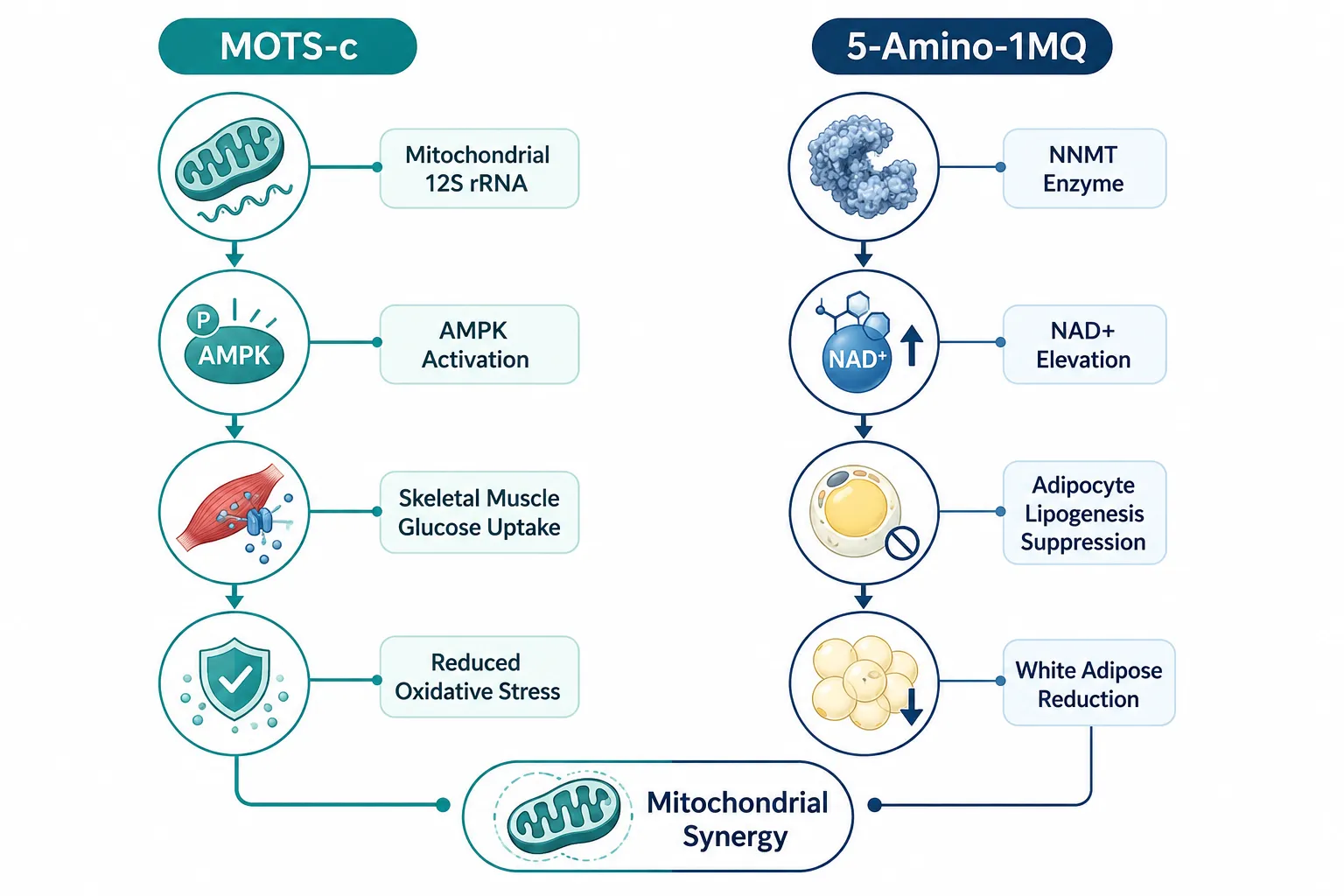
MOTS-c is a 16-amino acid peptide encoded within the mitochondrial 12S ribosomal RNA. Unlike most peptides, it originates from within the mitochondria themselves, making it a rare class of molecule called a mitochondrial-derived peptide. Its primary site of action in preclinical models is skeletal muscle, where it inhibits the folate cycle and de novo purine synthesis. This inhibition triggers activation of AMPK (AMP-activated protein kinase), the cell's master energy sensor, leading to improved glucose uptake and utilization.
Research published in 2026 demonstrated that MOTS-c administration in mice enhanced intrinsic skeletal muscle mitochondrial bioenergetic performance through both PGC-1alpha and AMPK pathways. Critically, it also lowered mitochondrial reactive oxygen species (ROS) emission and reduced ROS-related protein damage, a meaningful indicator of reduced oxidative stress. Separately, a 2025 study in a Nature-affiliated journal showed that MOTS-c prevented pancreatic islet failure in non-obese diabetic mice by upregulating mitochondrial oxidative phosphorylation and oxygen consumption rate, without increasing glycolysis.
Three converging mechanisms have emerged from the literature:
- Enhanced skeletal muscle glucose uptake via AMPK activation
- Suppression of hepatic de novo lipogenesis, reducing fat production in the liver
- Improved mitochondrial substrate flexibility, meaning the cell can switch more efficiently between burning carbohydrates and fats
These properties position MOTS-c as a candidate signal for addressing age-related metabolic decline in research models. Investigators exploring small molecule obesity research will find MOTS-c a compelling upstream target given its exercise-mimetic profile.
5-Amino-1MQ: Raising NAD+ Through NNMT Inhibition
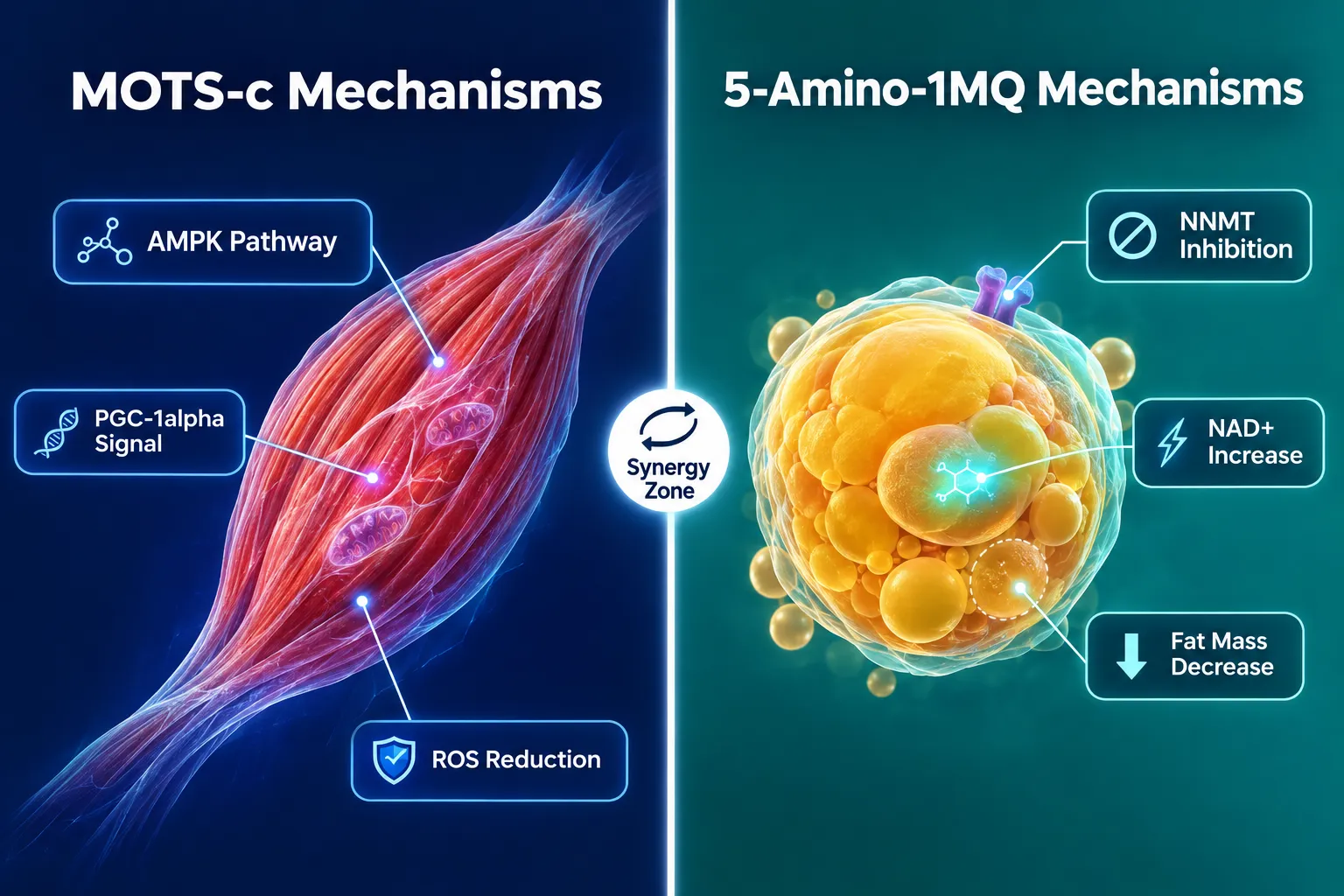
5-Amino-1MQ (5-amino-1-methylquinolinium) is a small-molecule inhibitor of nicotinamide N-methyltransferase, commonly abbreviated as NNMT. This enzyme plays a key role in NAD+ metabolism and methylation balance, and its overexpression has been linked to obesity and type 2 diabetes. By blocking NNMT, 5-Amino-1MQ reduces intracellular 1-methylnicotinamide (MNA) and increases intracellular NAD+, a critical coenzyme for mitochondrial energy production.
In vitro, 5-Amino-1MQ suppresses lipogenesis in adipocytes. In vivo, diet-induced obese mice treated with the compound showed notable reductions in body weight, white adipose mass, adipocyte size, and plasma cholesterol. Preclinical data from early 2026 noted approximately 7% reductions in body mass and around 30% reductions in adipocyte volume over just 10 days in high-fat-diet mice, without caloric restriction.
Key metabolic effects observed in preclinical models include:
| Effect | Model | Observation |
|---|---|---|
| Body weight reduction | Diet-induced obese mice | ~7% over 10 days |
| Adipocyte volume decrease | High-fat-diet mice | ~30% reduction |
| White adipose mass | Systemic NNMT inhibition | Significantly reduced |
| Plasma cholesterol | In vivo treatment | Lowered total levels |
| Intracellular NAD+ | In vitro adipocytes | Increased |
The Case for MOTS-c and 5-Amino-1MQ Synergy: Optimizing Mitochondrial Function and Metabolic Research
The theoretical basis for MOTS-c and 5-Amino-1MQ synergy in optimizing mitochondrial function and metabolic research rests on a straightforward logic: the two compounds act at different points in the same energy-sensing cascade.
5-Amino-1MQ works upstream, raising NAD+ availability by inhibiting NNMT. MOTS-c works downstream, activating AMPK and improving how cells use the energy generated through NAD+-dependent processes. In theory, combining them could couple enhanced NAD+ pools with sharper mitochondrial signaling, potentially amplifying metabolic benefits in obesity or insulin resistance models beyond what either compound achieves alone.
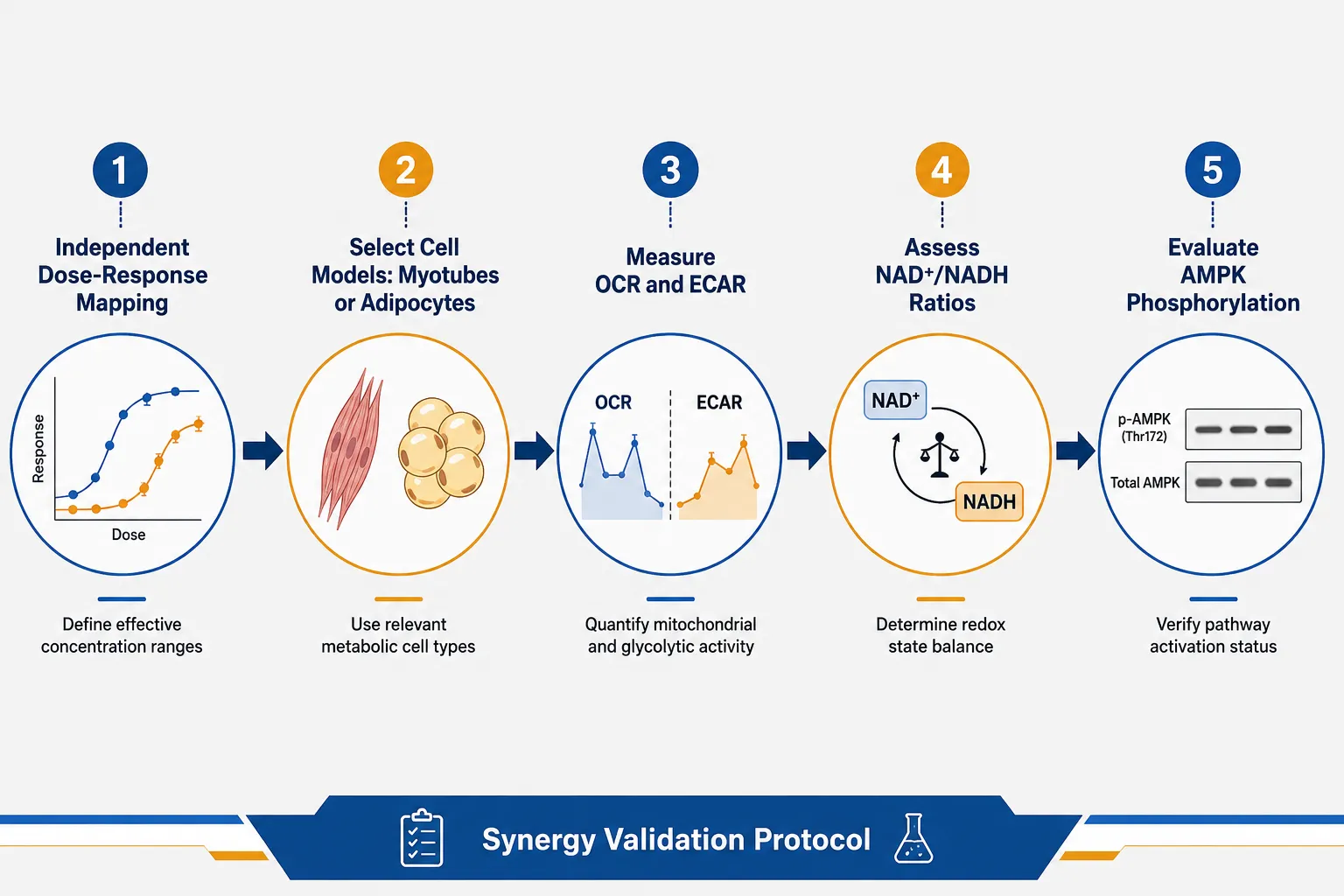
Research design guides published in 2026 recommend a structured approach for investigators:
- Map independent dose-response curves for each compound before combining them
- Choose appropriate cell models, primary human myotubes or adipocytes are preferred
- Measure oxygen consumption rate (OCR) and extracellular acidification rate (ECAR) to assess mitochondrial vs. glycolytic metabolism
- Track NAD+/NADH ratios to confirm upstream NAD+ effects from 5-Amino-1MQ
- Assess AMPK phosphorylation to confirm downstream MOTS-c activity
Researchers interested in related stress pathway research may find parallels in how AMPK and mTOR interact under combined metabolic interventions. Similarly, those reviewing Semax research protocols or Selank peptide research will recognize the importance of rigorous independent baseline characterization before stacking investigational compounds.
Safety and Limitations Researchers Must Acknowledge
The same 2026 methodological articles that describe the synergy concept are equally clear about its limits. There are no published human pharmacokinetic data for the combination. Organ-specific interaction profiles and safety at combined doses remain unstudied. The overlapping activation of AMPK, mTOR, and related stress-sensing pathways could, in theory, produce unforeseen effects at higher doses.
Researchers are specifically advised not to stack MOTS-c plus 5-Amino-1MQ with other potent mitochondrial or NAD+-modulating interventions, such as high-dose NAD+ precursors or mitochondrial uncouplers, until mechanistic and safety data are clearer. Those exploring Semax research or Selank research will recognize this principle of conservative combination design as standard practice in peptide research.
Conclusion
The intersection of MOTS-c and 5-Amino-1MQ represents one of the more scientifically coherent combination hypotheses in current metabolic research. MOTS-c brings mitochondrial signaling, AMPK activation, and oxidative stress reduction. 5-Amino-1MQ brings NAD+ elevation and adipocyte-level lipogenesis suppression. Together, the proposed mechanism is logical, but it remains unconfirmed in controlled human studies.
Actionable next steps for researchers in 2026:
- Establish independent dose-response data for each compound in your chosen model before designing any combination experiment
- Use OCR, ECAR, NAD+/NADH ratios, and AMPK phosphorylation as primary readouts to distinguish additive from synergistic effects
- Avoid co-administration with other NAD+ modulators until safety profiles are better characterized
- Document all findings rigorously, as this area lacks the human clinical trial data needed to validate preclinical observations
- Stay current with emerging literature, this field is moving quickly, and new mechanistic data could reframe the synergy hypothesis substantially
The science of MOTS-c and 5-Amino-1MQ synergy for optimizing mitochondrial function and metabolic research is promising. Responsible, methodical investigation is the path from hypothesis to evidence.


Leave a Reply
Want to join the discussion?Feel free to contribute!