

Prostate Specific Antigen and Peptide Hormones: How PSA Is Used to Monitor Enclomiphene and GLP-Class Research Studies
Fewer than one in five researchers working with hormone-modulating peptides routinely track prostate-specific antigen as a safety endpoint, yet the field of prostate specific antigen and peptide hormones is rapidly reshaping how enclomiphene and GLP-class research studies are designed, monitored, and interpreted. Understanding the intersection of PSA biology with emerging serm and incretin-based research is no longer optional for anyone serious about endocrine safety endpoints.
Key Takeaways
- PSA is a serine protease produced in prostate tissue and regulated by androgen signaling, making it a logical safety marker in any research protocol that modulates testosterone or related hormones.
- Enclomiphene studies show small, clinically minor PSA increases compared with testosterone-replacement protocols, but baseline and periodic PSA monitoring remains standard practice.
- GLP-1 receptor agonist research uses PSA primarily for risk stratification rather than as a direct drug-response marker.
- Mechanistic data suggest GLP-1 receptor activation may suppress oncogenic signaling in prostate tissue, giving PSA a secondary role as an indirect safety endpoint.
- Unified PSA monitoring thresholds for enclomiphene and GLP-class research are expected to converge by 2030.
What PSA Is and Why It Matters in Peptide Hormone Research
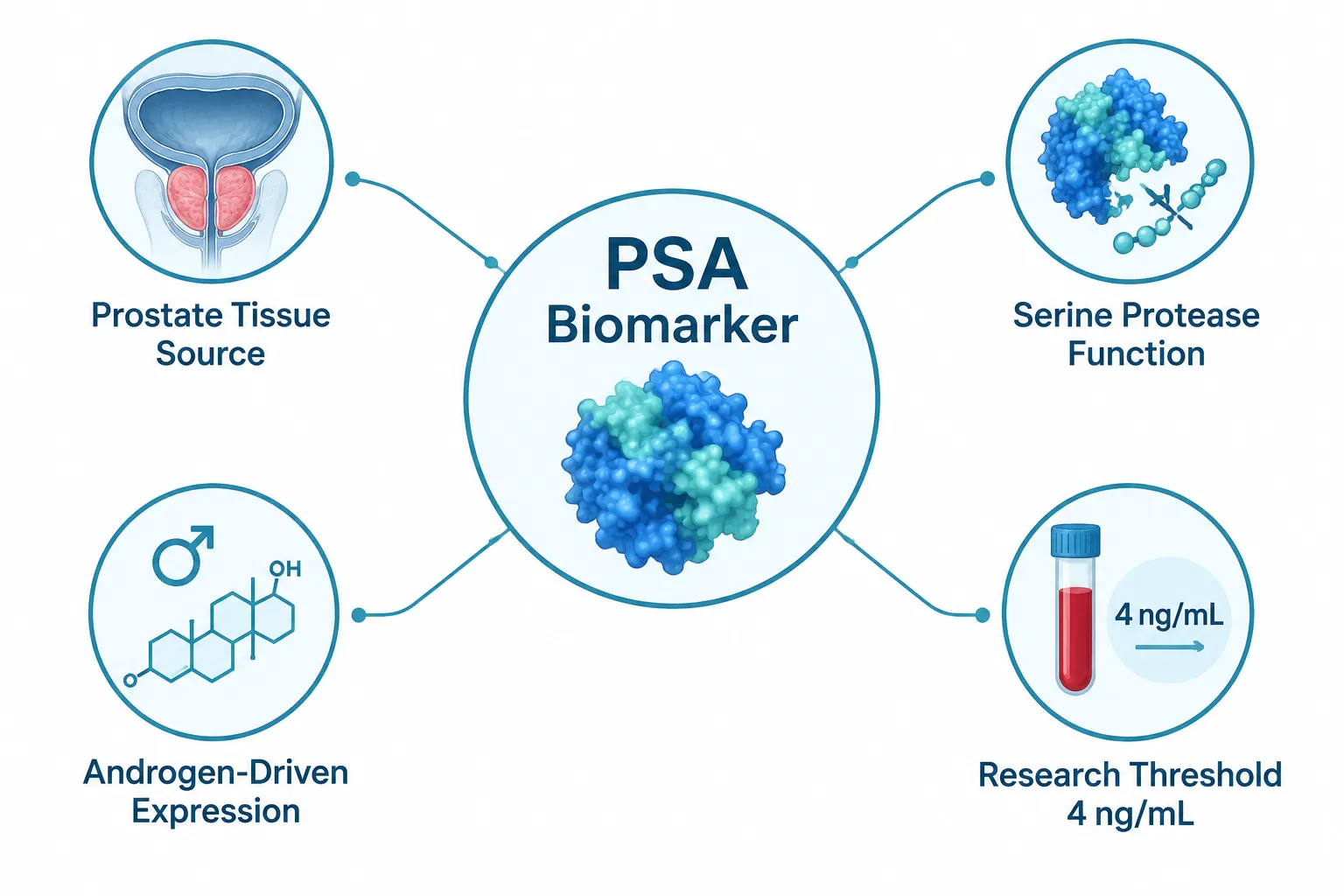
Prostate-specific antigen is a serine protease enzyme encoded by the KLK3 gene and secreted almost exclusively by prostate epithelial cells. Its primary physiological role is to liquefy seminal fluid, but because its expression is tightly driven by androgen receptor signaling, serum PSA levels rise and fall in response to changes in the androgen environment.
This androgen-sensitivity is precisely what makes PSA relevant to peptides and polypeptides in endocrine pharmacology. Any compound that raises circulating testosterone, whether a peptide hormone, a serm like enclomiphene, or an exogenous androgen, can theoretically stimulate PSA production. Conversely, compounds that blunt androgen signaling tend to suppress PSA.
Standard PSA thresholds used in research monitoring:
| PSA Level (ng/mL) | Interpretation in Research Context |
|---|---|
| Below 1.0 | Low baseline; minimal androgen stimulation |
| 1.0-4.0 | Normal range; monitor for velocity changes |
| Above 4.0 | Referral threshold; warrants further evaluation |
| Velocity > 0.75/year | Clinically significant rise regardless of absolute value |
For researchers working with peptides in basic cell biology and hormone analogues, PSA provides a low-cost, widely available window into androgen-axis activity that complements more expensive genomic or imaging endpoints.
Prostate Specific Antigen and Peptide Hormones in Enclomiphene Monitoring Protocols
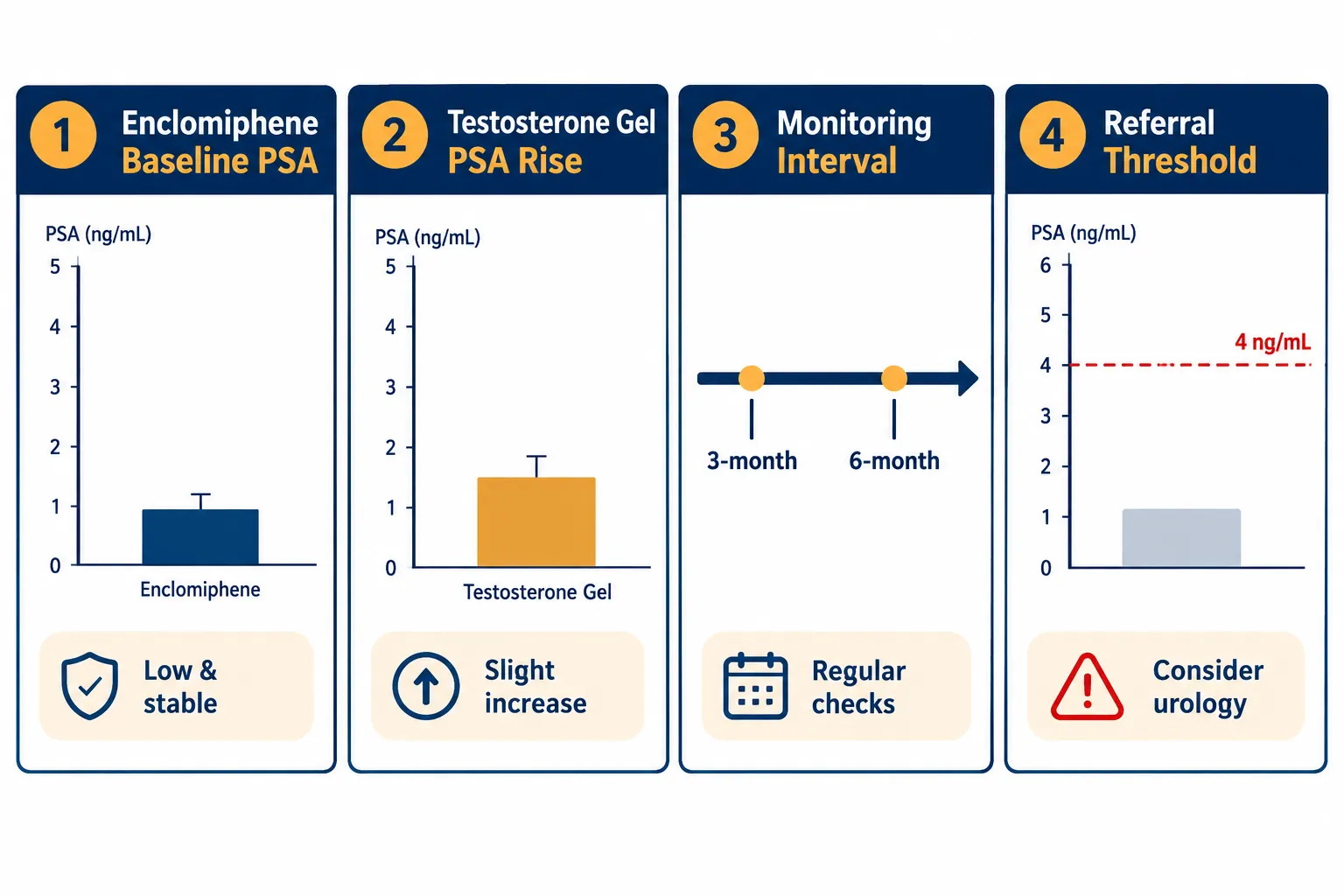
Enclomiphene citrate is the trans-isomer of clomiphene and acts as a selective estrogen receptor modulator (serm) at the hypothalamic-pituitary axis. By blocking estrogen's negative feedback, it drives a rise in LH and FSH, which in turn stimulates endogenous testosterone production. Because testosterone is the primary driver of PSA expression, any enclomiphene-mediated testosterone increase carries at least a theoretical PSA signal.
Research published through 2025 and reviewed in 2026 consistently shows that enclomiphene produces small but measurable PSA increases, typically within the normal reference range and substantially lower than the rises observed with exogenous testosterone gels or injections. Over follow-up periods extending to three years, no significant PSA impact has been confirmed, though researchers and clinicians continue to advise monitoring because the androgen-axis stimulation is real.
Current enclomiphene PSA monitoring protocol (adapted from testosterone-therapy guidelines):
- Establish a baseline PSA before the study compound is introduced.
- Repeat PSA at 3 months and 6 months after initiation.
- Apply the same 4 ng/mL referral threshold and 0.75 ng/mL/year velocity rule used in testosterone-replacement research.
- Document any concurrent medications that could confound PSA (e.g., 5-alpha reductase inhibitors).
The borrowing of thresholds from testosterone-replacement guidelines reflects a practical reality: enclomiphene-specific PSA criteria do not yet exist. Debate continues in the literature about whether early routine PSA checks add meaningful safety data in younger, otherwise healthy research subjects, but baseline and periodic monitoring remain the consensus standard.
"The PSA changes seen with enclomiphene are minor relative to exogenous testosterone, but the absence of dedicated long-term data makes monitoring a non-negotiable safety step in responsible research design."
For a broader view of how enclomiphene fits within receptor biology, the article on enclomiphene and estrogen receptor biology provides useful mechanistic context.
GLP-Class Research Studies and the Role of PSA Risk Stratification
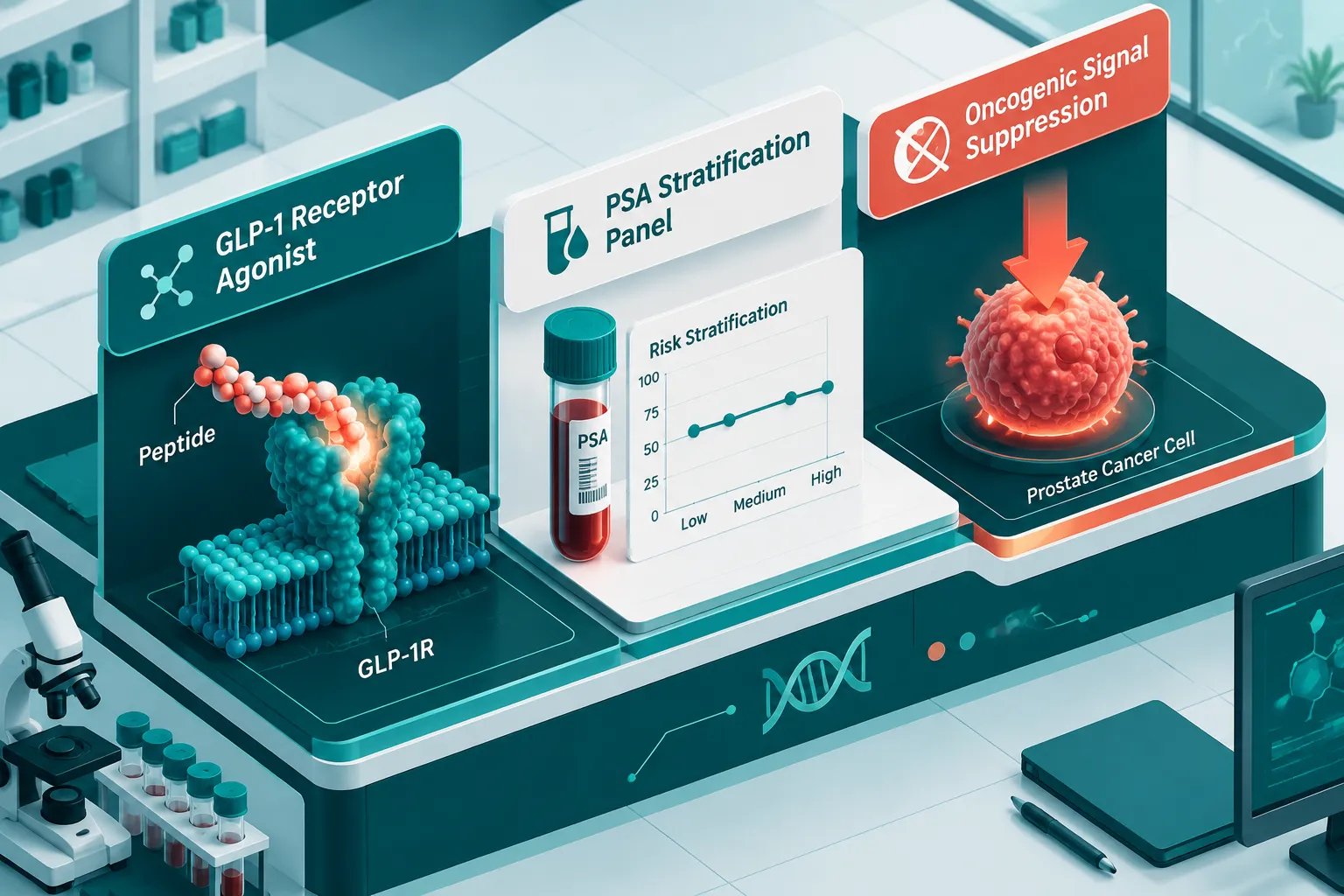
The relationship between prostate specific antigen and peptide hormones in GLP-class research is fundamentally different from the enclomiphene context. GLP-1 receptor agonists, including the triple-agonist retatrutide studied in GLP-3 retatrutide phase 3 trials, do not directly stimulate androgen production. Instead, PSA enters GLP-class research as a risk stratification tool and a secondary safety endpoint.
Large-cohort analyses of GLP-1 receptor agonist users show a neutral to mildly protective prostate-cancer risk profile. Mechanistic studies add an important layer: GLP-1 receptor activation appears to suppress oncogenic signaling pathways in prostate cancer cell lines, suggesting a potential indirect protective effect. PSA is the practical instrument through which researchers detect any meaningful change in prostate cancer risk during these studies.
How PSA functions in GLP-class study designs:
- Baseline stratification: Subjects with elevated baseline PSA are flagged for exclusion or sub-group analysis to prevent confounding.
- Case detection: Any PSA rise during a GLP-1 study triggers standard urological workup, separating drug-related from incidental findings.
- Cardiometabolic integration: PSA is increasingly analyzed alongside insulin resistance markers, visceral fat measurements, and inflammatory biomarkers in risk-reduction models.
This integrated approach is consistent with how carbohydrate antigens and peptide-based assays are being combined with modern research peptide endpoints to build richer safety profiles.
Researchers interested in the metabolic dimensions of GLP-class compounds can also explore tesofensine and metabolic research for a comparative look at how different appetite-modulating agents handle overlapping endpoints.
Where Enclomiphene and GLP-Class PSA Monitoring Are Headed
The convergence of prostate specific antigen and peptide hormones research across serm and incretin platforms is generating pressure for unified monitoring guidelines. Expert commentary in 2026 points toward a likely consensus by 2030 in which:
- Formal PSA monitoring thresholds specific to enclomiphene will be established, rather than borrowed from testosterone-therapy protocols.
- PSA dynamics will be incorporated as pre-specified secondary endpoints in GLP-1 and GLP-3 interventional trials, particularly those targeting obesity-related prostate cancer risk.
- Composite biomarker panels, combining PSA with sex hormone-binding globulin, estradiol, and metabolic markers, will replace single-marker monitoring in advanced study designs.
Understanding how researchers classify hormone analogues and peptide chains is foundational to interpreting these evolving protocols. The overview at peptides in modern research covers the structural and mechanistic distinctions that underpin these monitoring decisions.
Conclusion
The intersection of prostate specific antigen and peptide hormones is no longer a niche concern. For enclomiphene research, PSA monitoring is a borrowed but essential safety practice, one that will likely gain its own dedicated thresholds as long-term data mature. For GLP-class studies, PSA serves a distinct role as a risk stratification and case-detection tool, with emerging mechanistic evidence suggesting these compounds may actually reduce prostate oncogenic signaling.
Actionable next steps for researchers:
- Establish a documented PSA baseline before initiating any enclomiphene or testosterone-modulating protocol.
- Apply the 4 ng/mL threshold and 0.75 ng/mL/year velocity rule as interim standards until enclomiphene-specific guidelines are published.
- In GLP-class study designs, include PSA as a pre-specified secondary safety endpoint with a clear exclusion and referral algorithm.
- Monitor the literature through 2026-2030 for convergence on unified PSA thresholds across serm and incretin research platforms.
- Cross-reference PSA data with cardiometabolic and hormonal markers to build more complete safety profiles.
Staying current with these developments positions any research program to meet the higher safety and reporting standards that regulators and peer reviewers will increasingly expect.


Leave a Reply
Want to join the discussion?Feel free to contribute!