Call or Text 727-513-9780
  • Shopping Cart Shopping Cart
    0Shopping Cart
Pure Tested Peptides | America's most trusted Peptides for sale online
  • Peptides for sale
    • Oral Peptides for sale
      • Peptide Capsules for sale
      • BPC 157 Capsules 1000mcg
      • SLU-PP-332 Capsules | 1000 mcg
      • 5-Amino-1MQ 50mg Capsules
      • Tesofensine 500mcg
    • All Peptides for sale
    • Peptide Sprays
      • BPC 157 Nasal Spray Kit
      • BPC-157 TB500 Nasal Spray Kit
      • Semax Nasal Spray 10mg
      • Selank – Nasal Spray Kit – 10mg
      • Epithalon 50MG Nasal Spray Kit
      • Ipamorelin 10mg Nasal Spray
      • Klow Nasal Spray (BPC-157 + TB-500 + GHK-Cu + KPV) | 80mg
      • Hulk Nasal Spray Tesa / Ipa Blend 6/3 MG
      • Klow Nasal Spray
      • NAD + 500 mg Nasal Spray
      • PT-141 Nasal Spray Kit
    • GHRH Peptides
      • Ipa Peptides
      • CJC-1295 Peptides
        • CJC-1295 with DAC 5 mg
        • CJC-1295 without DAC 5 mg
        • CJC-1295 Ipa 10mg
      • Tesa Peptides
        • Tesa Peptide
        • Tesa 20 mg
    • GHK-Cu Peptides
      • All GHK-Cu Peptides
      • GHK-Cu 100mg
      • KLOW Peptide Blend – Buy KLOW blend online
    • BPC Peptides
      • All BPC Peptides
      • BPC-157
      • BPC-157 TB-500
      • BPC 157 capsules 1000mcg
    • SLU-PP-332 Peptides
      • All SLU-PP-332 Peptides
      • SLU-PP-332 5mg
    • GLP3 Peptides
    • PT-141 Peptides
      • PT-141 Peptides for sale
      • PT-141 10mg
      • PT-141 Nasal Spray
    • CAG Peptides
      • Lipo-C Peptide Blend
      • CAG 5mg
      • CAG 10mg
    • MOTS-C Peptides
      • MOTS-C Peptides for sale
      • MOTS-c peptide
      • MOTS-c 10mg *6 pack*
    • 5 Amino 1MQ Peptides
      • 5 Amino 1MQ Peptides for sale
      • 5-Amino-1MQ 50mg Capsules
      • 5-Amino-1MQ 5mg
    • Epithalon Peptides
      • Epithalon Peptides for sale
      • Epithalon 10mg
      • Epithalon 50mg
  • Shop
    • GLPs
      • 5-Amino-1MQ 50mg Capsules
      • 5-Amino-1MQ 5mg
      • L-Carnitine 500mg/ml
      • Tesofensine 500mcg
      • SLU-PP-332 5mg
      • MOTS-c 10mg *6 pack*
    • Epithalon & BPC Peptides
      • Epithalon 10mg
      • Epithalon 50mg
      • BPC-157
      • BPC 157 capsules 1000mcg
      • BPC-157 TB-500
      • BPC-157 TB500 Nasal Spray Kit
      • BPC 157 Nasal Spray Kit
    • BPC TB-500 & NAD+ Peptides
      • NAD+ 500 mg
      • KLOW Peptide Blend – Buy KLOW blend online
      • GLOW Peptide Blend
      • TB 500 5mg
      • BPC 157 capsules 1000mcg – Supplement
      • BPC 157 Nasal Spray Kit
      • BPC-157
      • BPC-157 TB500 Nasal Spray Kit
      • BPC-157 TB-500
      • BPC 157 capsules 1000mcg
    • LL-37 Peptide
      • LL-37 10 mg
    • MOTS-C & Selank
      • MOTS-c peptide
      • Selank 10mg
    • GHK Peptides
      • GHK-Cu 100mg
      • GLOW Peptide Blend
      • KLOW Peptide Blend – Buy KLOW blend online
  • COAs
  • Wholesale
    • Wholesale Peptides for sale
  • PTP FAQ
  • Affiliates
    • Selank Peptide: Advanced Pharmacological Mechanisms Underlying Its Anxiolytic and Nootropic Effects in Research
      • 5-Amino-1MQ Peptide: Detailed Mechanisms of NNMT Inhibition and Its Impact on Cellular Metabolism Research
        • MOTS-C Peptide: Unraveling Its Role in Mitochondrial Dynamics and Energy Metabolism Research
          • Epithalon Peptide and Telomerase Regulation: Investigating Its Impact on Cellular Senescence and Lifespan Research Models
            • GLP2-T vs GLP2 Tirz Peptide: Understanding the Naming, Mechanistic Nuances, and Research Implications for Gut Health
      • Peptides and Polypeptides in Modern Pharmacology: What Research on Metoprolol, Prednisone, and Amlodipine Reveals
        • Polypeptide Peptides vs NSAIDs: What Naproxen and Diclofenac Teach Tissue-Repair Researchers About BPC‑157 and TB‑500
          • Peptides and Polypeptides in Endocrine Pharmacology: How GLP-1, GLP-2, and GLP-3 Retatrutide Differ From Classic Drugs Like Prednisone and Amlodipine
          • 5‑Amino‑1MQ Peptide and NNMT Inhibition: How It Compares With Statins Like Atorvastatin in Adipose and Lipid Metabolism Research
      • Enclomiphene, Estrogen Receptor Signaling, and Luteinizing Phase Biology: What Hormone Researchers Should Measure
        • Mesenchymal Stem Cells, BPC‑157, and GHK‑Cu: How Tissue Repair Peptides Compare With Classic NSAIDs Like Naproxen in Injury Models
          • Peptide Calculator Use Cases Beyond Growth Hormone: Working Through GLP‑3 Retatrutide, MOTS‑c, and BPC‑157 Research Dosing
        • Polypeptide Peptides in Endocrine and Metabolic Pharmacology: Lessons From Amlodipine, Prednisone, and Metoprolol
        • Peptides Calculator for Advanced Blends: Worked Examples for Tesamorelin, CJC‑1295, and Ipamorelin Stacks
          • Peptides and Polypeptides in Human Physiology: How Molecular Size Shapes Research Applications
            • Selank Peptide: Advanced Pharmacological Mechanisms Underlying Its Anxiolytic and Nootropic Effects in Research
          • 5-Amino-1MQ Peptide: Detailed Mechanisms of NNMT Inhibition and Its Impact on Cellular Metabolism Research
            • MOTS-C Peptide: Unraveling Its Role in Mitochondrial Dynamics and Energy Metabolism Research
              • Epithalon Peptide and Telomerase Regulation: Investigating Its Impact on Cellular Senescence and Lifespan Research Models
                • GLP2-T vs GLP2 Tirz Peptide: Understanding the Naming, Mechanistic Nuances, and Research Implications for Gut Health
                  • Peptides and Polypeptides in Endocrine Pharmacology: How GLP-1, GLP-2, and GLP-3 Retatrutide Differ From Classic Drugs Like Prednisone and Amlodipine
                    • Polypeptide Peptides vs NSAIDs: What Naproxen and Diclofenac Teach Tissue-Repair Researchers About BPC‑157 and TB‑500
                      • Peptides and Polypeptides in Modern Pharmacology: What Research on Metoprolol, Prednisone, and Amlodipine Reveals
                        • 5‑Amino‑1MQ Peptide and NNMT Inhibition: How It Compares With Statins Like Atorvastatin in Adipose and Lipid Metabolism Research
                        • Enclomiphene, Estrogen Receptor Signaling, and Luteinizing Phase Biology: What Hormone Researchers Should Measure
                        • Mesenchymal Stem Cells, BPC‑157, and GHK‑Cu: How Tissue Repair Peptides Compare With Classic NSAIDs Like Naproxen in Injury Models
                        • Peptide Calculator Use Cases Beyond Growth Hormone: Working Through GLP‑3 Retatrutide, MOTS‑c, and BPC‑157 Research Dosing
                        • Polypeptide Peptides in Endocrine and Metabolic Pharmacology: Lessons From Amlodipine, Prednisone, and Metoprolol
                        • Peptides Calculator for Advanced Blends: Worked Examples for Tesamorelin, CJC‑1295, and Ipamorelin Stacks
                        • Peptides and Polypeptides in Human Physiology: How Molecular Size Shapes Research Applications
                        • Selank Peptide: Advanced Pharmacological Mechanisms Underlying Its Anxiolytic and Nootropic Effects in Research
                        • MOTS-C Peptide: Unraveling Its Role in Mitochondrial Dynamics and Energy Metabolism Research
                        • Peptides and Polypeptides in Modern Pharmacology: What Research on Metoprolol, Prednisone, and Amlodipine Reveals
                        • Peptides and Polypeptides in Endocrine Pharmacology: How GLP-1, GLP-2, and GLP-3 Retatrutide Differ From Classic Drugs Like Prednisone and Amlodipine
                        • 5-Amino-1MQ Peptide: Detailed Mechanisms of NNMT Inhibition and Its Impact on Cellular Metabolism Research
                        • Mesenchymal Stem Cells, BPC‑157, and GHK‑Cu: How Tissue Repair Peptides Compare With Classic NSAIDs Like Naproxen in Injury Models
                        • Peptide Calculator Use Cases Beyond Growth Hormone: Working Through GLP‑3 Retatrutide, MOTS‑c, and BPC‑157 Research Dosing
                        • GLP2-T vs GLP2 Tirz Peptide: Understanding the Naming, Mechanistic Nuances, and Research Implications for Gut Health
                        • Polypeptide Peptides in Endocrine and Metabolic Pharmacology: Lessons From Amlodipine, Prednisone, and Metoprolol
                        • Polypeptide Peptides vs NSAIDs: What Naproxen and Diclofenac Teach Tissue-Repair Researchers About BPC‑157 and TB‑500
                        • Peptides and Polypeptides in Human Physiology: How Molecular Size Shapes Research Applications
                        • Peptides Calculator for Advanced Blends: Worked Examples for Tesamorelin, CJC‑1295, and Ipamorelin Stacks
                        • 5‑Amino‑1MQ Peptide and NNMT Inhibition: How It Compares With Statins Like Atorvastatin in Adipose and Lipid Metabolism Research
                        • Enclomiphene, Estrogen Receptor Signaling, and Luteinizing Phase Biology: What Hormone Researchers Should Measure
                        • Epithalon Peptide and Telomerase Regulation: Investigating Its Impact on Cellular Senescence and Lifespan Research Models
                        • Best research protocol Klow blend
                        • best time to take BPC-157
                        • best time to take DSIP (Delta Sleep Inducing Peptide)
                        • best time to take CJC-1295
                        • best time to take AOD-9604
                        • best time to take Follistatin 344
                        • best time to take Ipamorelin
                        • best time to take MK-677 (Ibutamoren)
                        • best time to take Ligandrol (LGD-4033) — research compound
                        • best time to take Ostarine (MK-2866) — research compound
                        • best time to take GHK-CU
                        • best time to take TB-500
                        • best time to take MOTS-c
                        • best time to take Semax
                        • best time to take RAD-140 (Testolone) — research compound
                        • best time to take Thymosin Alpha-1
                        • best time to take PEG-MGF
                        • Biolife Plasma, Octapharma Plasma, and Research Peptides: How Plasma Donation Labs Differ From Peptide Suppliers
                        • best time to take YK-11 — research compound
                        • best time to take PT-141 (Bremelanotide)
                        • Best research protocol Klow blend
                        • 5-Amino-1MQ and MOTS-C Synergy: Metabolic Signaling, Mitochondria, and Research Design
                        • BPC-157 and TB-500: Investigating Their Combined Effects on Angiogenesis and Cellular Migration in Tissue Repair Models
                        • BPC-157 Peptide: Gut Barrier Function, Inflammation, and Tissue-Recovery Research
                        • 5‑Amino‑1MQ and MOTS‑c Synergy in Metabolic Research: Designing NNMT and Mitochondrial Biogenesis Stacks
                        • CJC-1295 with DAC vs. Without DAC: Half-Life, Release Kinetics, and Research Implications
                        • CJC‑1295 with DAC vs. Without DAC: Expanding on Half‑Life Differences Using Tesamorelin and Ipamorelin Blend Case Studies
                        • Collagen Biology and Copper‑Binding Peptides: How GHK‑Cu, Glow Blend, and Klow Blend Interact with Skin and Connective Tissue
                        • Collagen Biology and Regenerative Peptides: How GHK‑Cu, Glow Blend, and Klow Blend Affect Extracellular Matrix Research
                    • DNA, Telomeres, and Longevity Peptides: Positioning Epithalon and MOTS‑c in Genetic Aging Research
                      • Enclomiphene Citrate: serm Mechanism, Testosterone Research, and Stack Compatibility
                        • Enclomiphene vs Enclomiphene Citrate: Formulation, Bioavailability, and Research Distinctions
                        • Epithalon Peptide Research: Telomerase Activation, Aging, and Pineal Gland Function
                        • Estrogen Receptor Signaling and Enclomiphene: How Selective Modulators Compare with Classic Polypeptide Hormones
                        • GHK-Cu Peptide: Advanced Mechanisms in Extracellular Matrix Remodeling and Wound Healing Research
                        • GHK-Cu Peptide: Collagen Synthesis, Wound Repair, and Skin-Barrier Research Models
                        • GLP-1 vs GLP-3 vs GLP-2: Peptide Classification and Research Applications
                        • GLP-2 Peptide Research Guide: Gut Barrier Function, Nutrient Absorption, and Intestinal Recovery Models
                        • GLP-3 Retatrutide vs. GLP-1 Drugs: What Triple-Agonist Biology Changes in Research Models
                        • Ipamorelin and Tesamorelin Combination: Synergistic GH Secretagogue Research and Dosing Protocols
                        • GLP2 Tirz Peptide: What It Is, Why the Name Exists, and How Researchers Should Interpret It
                        • Klow Blend Peptide Nasal Spray: What the Formulation Is Trying to Do in Cognitive Research
                        • Mitochondria, NNMT Inhibition, and Peptide Modulators: Where MOTS‑c and 5‑Amino‑1MQ Fit in Cellular Energy Research
                        • MOTS-c Peptide: Mitochondrial Function, Energy Metabolism, and What Researchers Measure
                        • MOTS-c vs. 5-Amino-1MQ: Which Metabolic Research Questions Each Compound Actually Answers
                        • Nasal Spray Peptides: Bioavailability, Administration, and Semax/Selank Research Applications
                        • PT-141 Peptide Research: Mechanism of Action and Melanocortin Receptor Signaling
                        • Retatrutide for Research: Mechanism, Structure, and GLP-1/GLP-3 Dual Action
                        • Retatrutide for Obesity and Type 2 Diabetes: What the Latest Trial Data Suggest
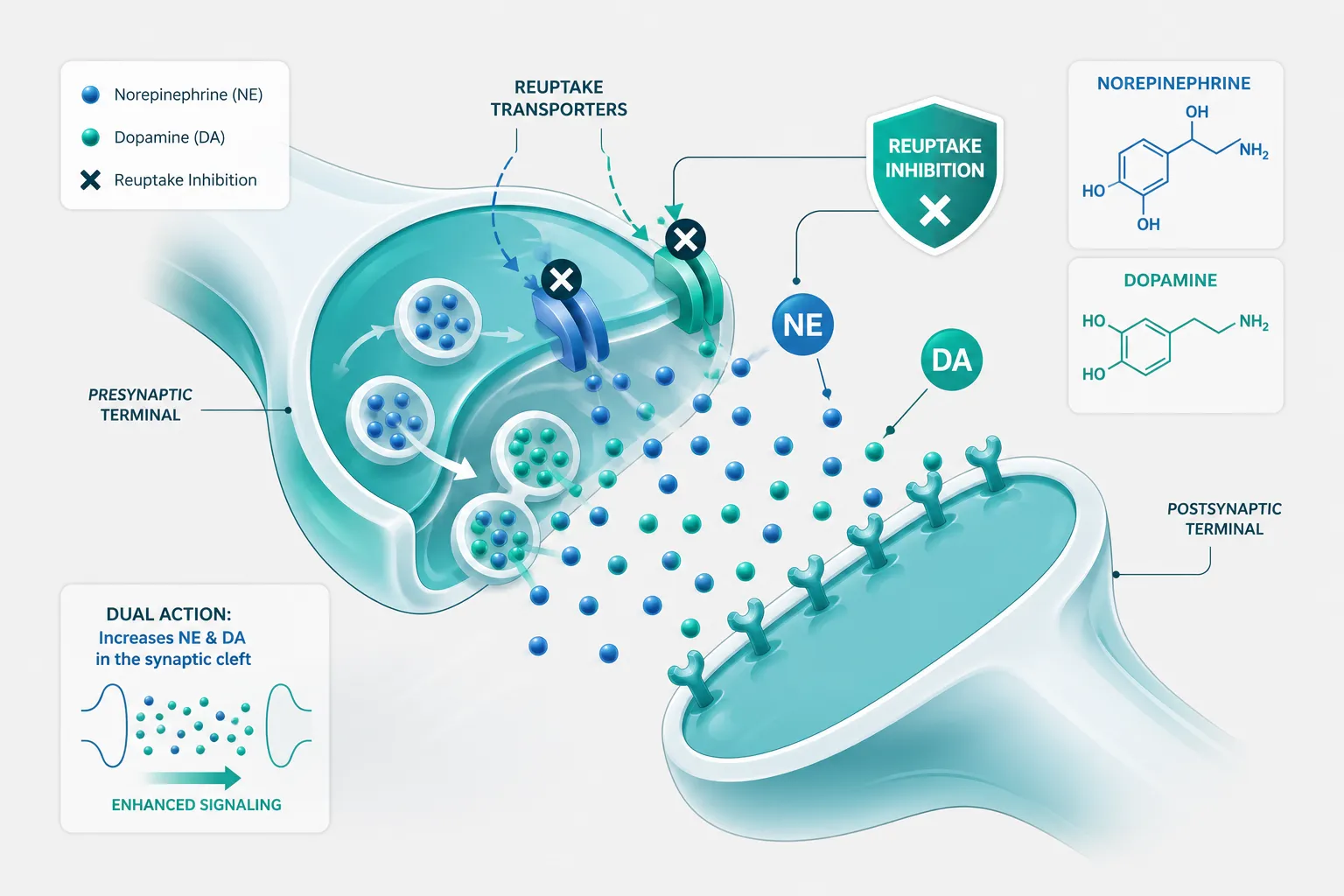
                        • Tesofensine Peptide Research: Mechanism, Appetite Suppression, and Neuropeptide Y Pathways
  • Contact
    • Contact Customer Service
    • Text Customer Support
  • About US
  • Shop all peptides
  • Affiliate Program
    • Affiliate Signup
  • Login / Register Login / Register Page Link Login / Register Page Link
  • Click to open the search input field Click to open the search input field Search
  • Menu Menu
Triple Agonist Therapies Beyond GLP‑3: What Retatrutide’s Success Means for Future Multi-Target Peptide Design

Triple Agonist Therapies Beyond GLP‑3: What Retatrutide’s Success Means for Future Multi-Target Peptide Design

July 31, 2026/0 Comments/in Uncategorized/by

{"cover":"Professional landscape format (1536×1024) hero image with bold text overlay (≤42 chars): 'Triple Agonist Therapies Beyond GLP-3' in crisp white bold sans-serif on a deep navy semi-transparent overlay panel, centered with 8% safe margins. Background: stunning macro editorial photograph of a triple-helix molecular peptide structure rendered in luminous teal and gold against a clean laboratory environment, soft bokeh depth of field, science magazine cover aesthetic, high contrast, professional pharmaceutical research mood.","content":["Isometric flat-vector illustration (1536×1024) showing three interconnected receptor nodes labeled GLP-1, GIP, and Glucagon in bold 3-4 word labels, connected by glowing signal pathways on a bright white background with teal and gold accent colors, clean scientific diagram style, Pinterest-worthy infographic polish, each node a distinct geometric shape with short label only, generous 8% safe margins, no tables","Split-screen editorial photograph (1536×1024): left half shows a close-up of a peptide vial and molecular model on a bright white lab bench under crisp studio lighting in cool blue tones; right half shows a scientist's hands at a computer displaying a colorful pipeline chart with short bar labels, warm amber office lighting. High-contrast magazine composition, pharmaceutical research theme, diverse female scientist of South Asian descent","Conceptual symbolic illustration (1536×1024) depicting a branching pipeline of future peptide drug candidates as glowing geometric nodes on a dark-to-teal gradient background, each branch labeled with 1-3 word tags like 'Quad Agonist' and 'CNS Target', forward-looking futuristic research aesthetic, clean sans-serif labels, 8% safe margins, no pricing or table elements, editorial quality suitable for Nature or Science magazine cover spread"}

Professional landscape hero image () with a reading "Triple Agonist Therapies Beyond GLP-3…". CRITICAL TYPOGRAPHY RULES:

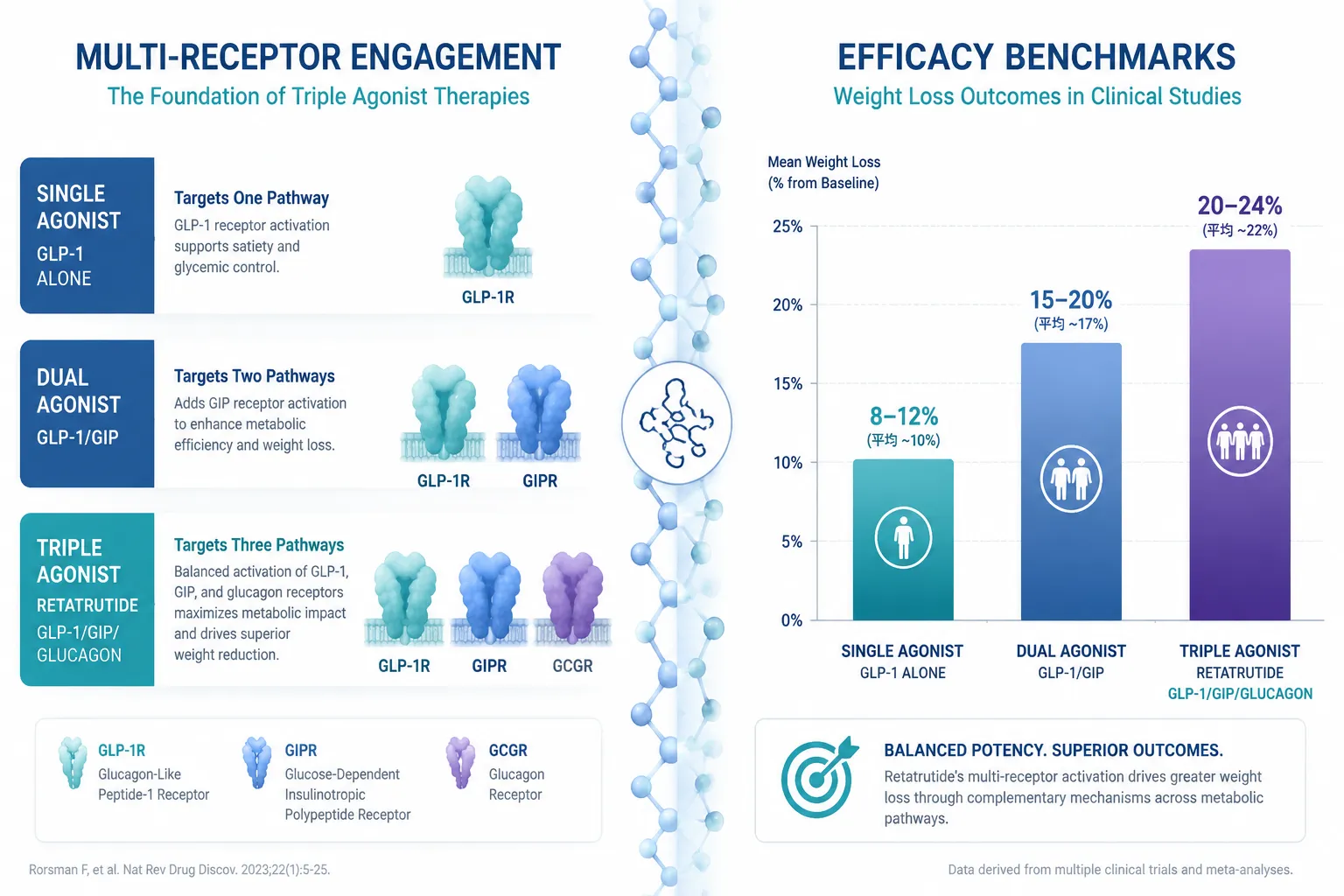
Retatrutide produced average weight loss of nearly 24% of body weight in Phase 2 trials, a figure that outpaced every approved obesity drug on record at the time. That single data point sent a clear signal across the peptide research community: hitting three hormone receptors simultaneously is not just tolerable, it is powerfully synergistic. The question researchers are now asking goes far beyond retatrutide itself. What does the success of triple agonist therapies beyond GLP-3 mean for future multi-target peptide design, and how far can the multi-receptor strategy be pushed?

Key Takeaways

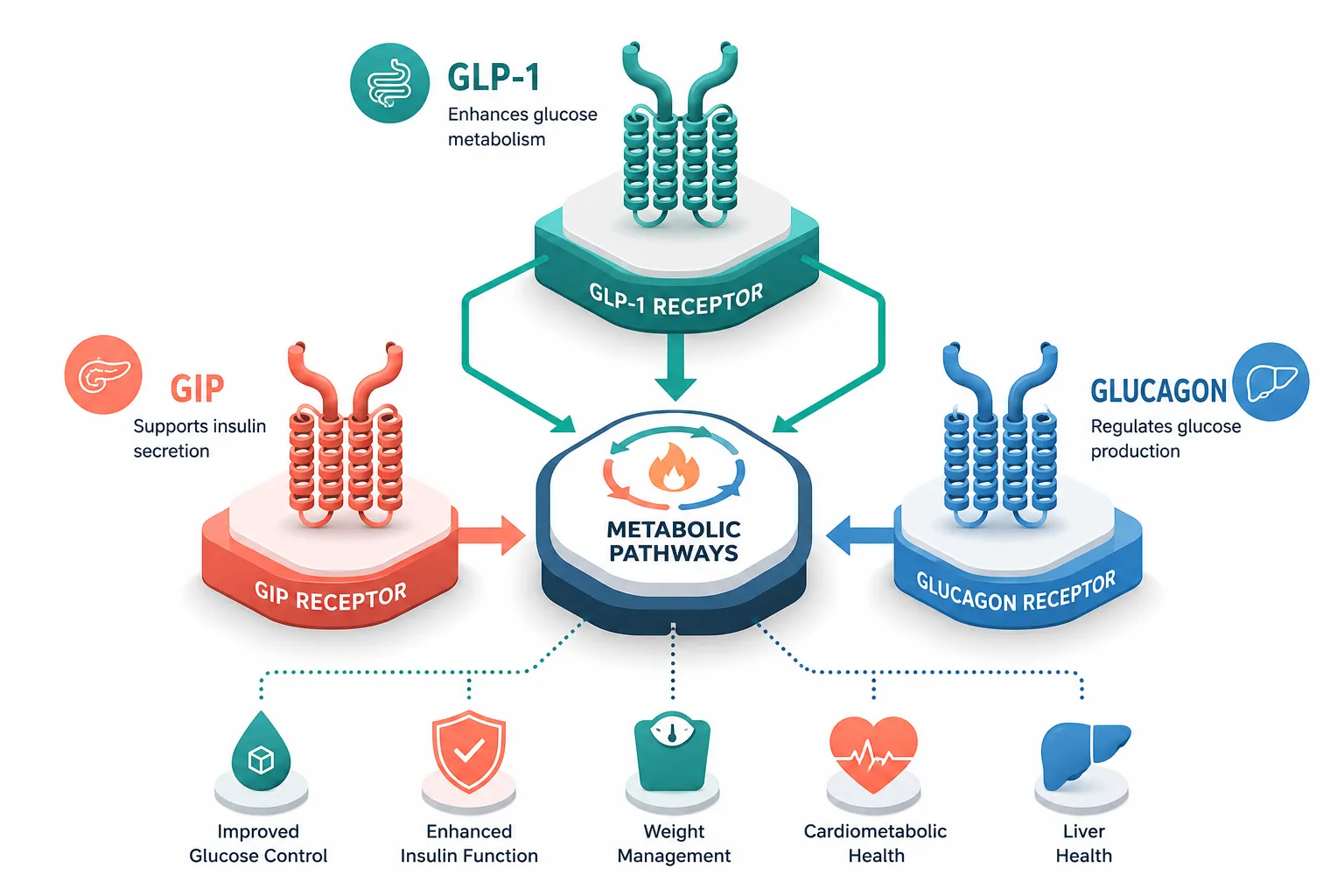
  • Retatrutide simultaneously activates GLP-1, GIP, and glucagon receptors, producing weight loss outcomes that exceed single- and dual-agonist benchmarks.
  • The triple agonist framework demonstrates that carefully balanced multi-receptor engagement can amplify efficacy without proportionally increasing adverse effects.
  • Future multi-target peptide design is already exploring quad-agonist constructs, CNS-active receptor targets, and metabolic-plus-cardiorenal combinations.
  • Structural chemistry advances, including fatty acid conjugation and half-life extension, are making complex multi-target peptides more viable for sustained dosing.
  • Researchers studying this space should understand both the mechanistic rationale and the formulation challenges that come with higher-order agonist constructs.
Key Takeaways

How Retatrutide Redefined the Multi-Target Benchmark

To understand what triple agonist therapies beyond GLP-3 mean for future multi-target peptide design, it helps to start with the mechanism that made retatrutide exceptional.

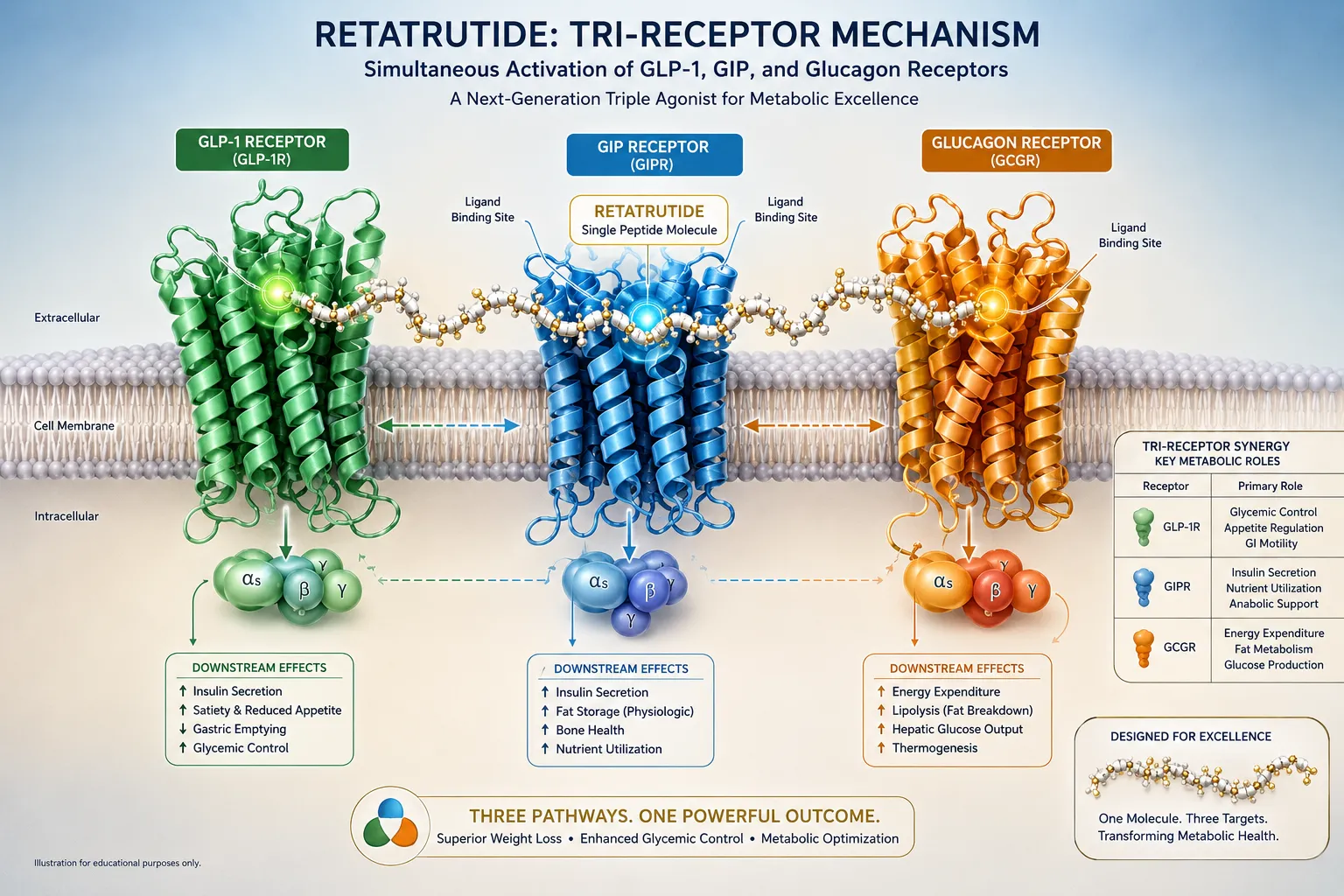
Retatrutide is a single peptide molecule that engages three distinct G-protein-coupled receptors:

Receptor Primary Role
GLP-1R Insulin secretion, satiety signaling, gastric emptying
GIPR Incretin amplification, adipose tissue remodeling
Glucagon R Hepatic glucose output, thermogenesis, energy expenditure

Each receptor contributes a different metabolic lever. GLP-1 receptor activation slows gastric emptying and reduces appetite. GIP receptor co-activation appears to counteract some GLP-1-related nausea while enhancing fat-cell remodeling. Glucagon receptor engagement increases resting energy expenditure, a mechanism largely absent from dual agonists like tirzepatide.

The result is additive, and in some pathways, synergistic efficacy. The body's metabolic response to three coordinated signals is greater than the sum of three separate interventions.

"The triple receptor approach effectively recruits overlapping but non-redundant pathways, creating a broader metabolic correction than any single axis can achieve."

For researchers exploring GLP-3 and triple agonist research planning, retatrutide's Phase 2 data provides a compelling mechanistic reference point.

The Structural Chemistry Behind Multi-Target Peptide Design

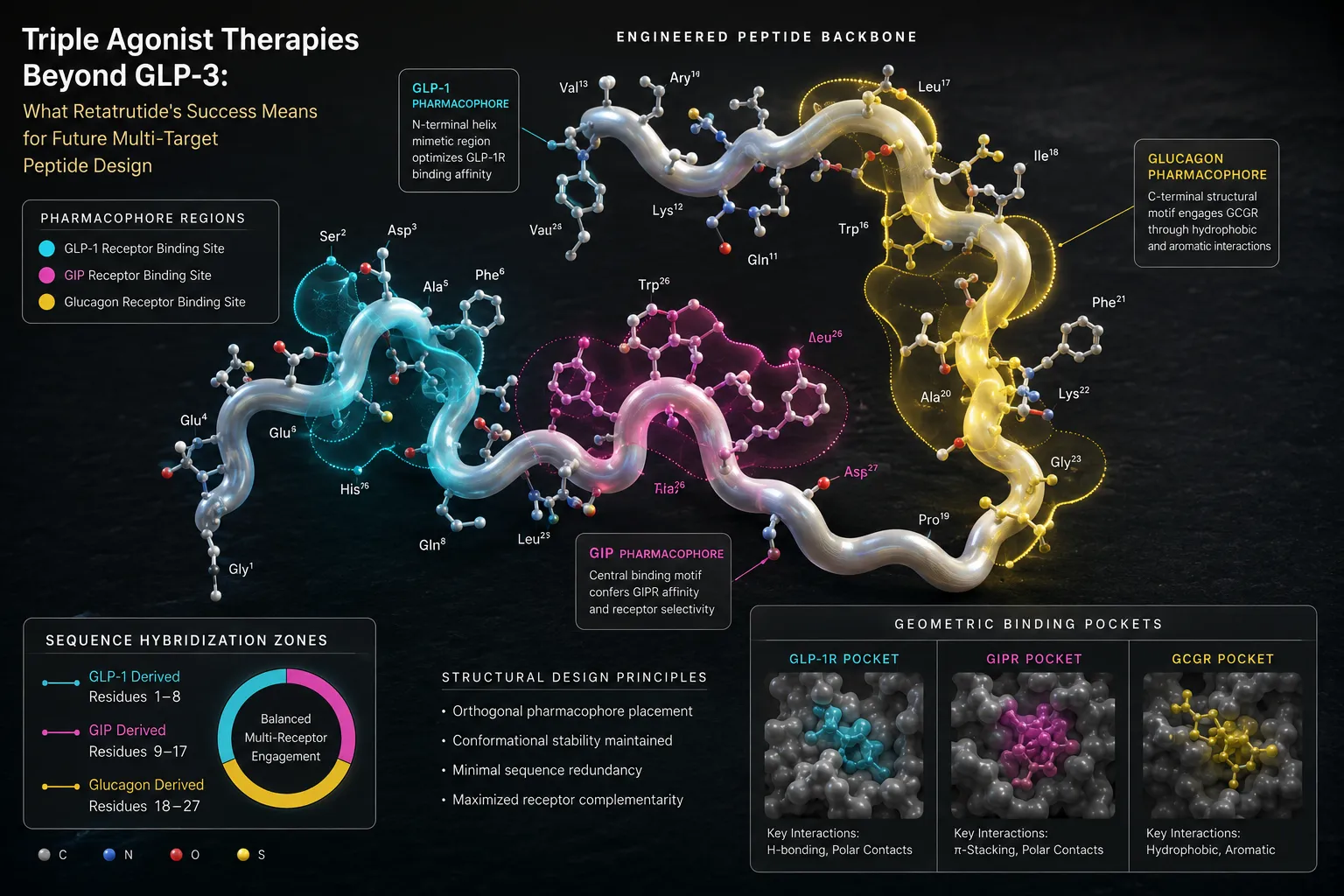
Building a peptide that activates three receptors with balanced potency is not a matter of combining three separate molecules. It requires engineering a single backbone that presents the correct pharmacophore geometry for each receptor.

Key design principles include:

  • Sequence hybridization: Retatrutide's amino acid sequence is derived from glucagon, with strategic substitutions that introduce GLP-1R and GIPR affinity without eliminating glucagon receptor binding.
  • Fatty acid conjugation: A C18 fatty diacid chain attached via a linker extends the plasma half-life to approximately six days, enabling once-weekly subcutaneous dosing.
  • Receptor bias tuning: Researchers can adjust the relative agonist potency at each receptor by modifying specific residues, allowing fine-tuning of the efficacy-to-tolerability ratio.

These same principles are being applied to next-generation constructs. Researchers studying GLP-1 peptide formulations can observe how incretin backbone chemistry is being extended into multi-receptor territory.

The challenge scales with complexity. Each additional receptor target introduces new constraints: binding affinity requirements, potential off-target interactions, and metabolic stability demands. Understanding what should not be mixed with peptides becomes especially relevant when multi-target constructs are used alongside other research compounds.
The Structural Chemistry Behind Multi-Target Peptide Design

Triple Agonist Therapies Beyond GLP-3: What Retatrutide's Success Means for Future Multi-Target Peptide Design

Retatrutide's clinical performance has accelerated several parallel research directions. The pipeline now extends well beyond the GLP-1/GIP/glucagon triad.

Emerging multi-target constructs under investigation include:

  1. Quad-agonists (GLP-1 + GIP + Glucagon + Amylin): Amylin receptor co-activation adds central satiety signaling and slows gastric emptying through a separate CNS pathway.
  2. GLP-1 + FGF21 combinations: Fibroblast growth factor 21 governs lipid oxidation and insulin sensitivity through pathways that are largely non-overlapping with incretin signaling.
  3. GLP-1 + NPY/AgRP antagonism: Neuropeptide Y and AgRP are orexigenic hypothalamic signals. Blocking them while activating GLP-1R creates a dual appetite-suppression mechanism.
  4. Metabolic + cardiorenal constructs: Combining incretin agonism with natriuretic peptide receptor activity is being explored for simultaneous obesity and heart failure management.

Researchers following BDNF peptide research will note that central nervous system targets are increasingly being incorporated into metabolic peptide design, a convergence that reflects the brain's central role in energy homeostasis.

The retatrutide precedent matters here for three reasons:

  • It proved that glucagon receptor agonism is tolerable at therapeutic doses when balanced against GLP-1R-mediated insulin secretion.
  • It demonstrated that a single peptide scaffold can carry multiple pharmacophores without losing receptor selectivity.
  • It generated a half-life extension template (fatty acid conjugation) that other multi-target programs are now borrowing.

Formulation and Research Considerations for Higher-Order Agonists

Moving from triple to quad or penta-agonist constructs introduces formulation complexity that researchers must account for.

Critical considerations include:

  • Molecular weight creep: Each additional pharmacophore adds residues and potentially a larger conjugate, which can reduce subcutaneous bioavailability.
  • Receptor desensitization: Chronic co-activation of multiple receptors raises questions about differential downregulation rates across receptor types.
  • Tolerability windows: The nausea and GI effects associated with GLP-1R agonism may be amplified or attenuated depending on which additional receptors are engaged.

Researchers sourcing compounds for mechanistic studies should prioritize purity verification. Lab-tested peptides with documented mass spectrometry confirmation are essential when studying multi-receptor binding behavior, since impurities can confound receptor selectivity data.

For those working with retatrutide specifically, the Reta 10mg research catalog provides access to characterized material suitable for preclinical investigation.

The broader GLP-1 peptide category continues to expand as new incretin-based constructs move from discovery into early research phases.
Formulation and Research Considerations for Higher-Order Agonists

Conclusion

Retatrutide's Phase 2 data did more than validate a single drug candidate. It established a proof-of-concept for the entire multi-target peptide design philosophy. The triple agonist framework, simultaneously engaging GLP-1, GIP, and glucagon receptors through a single engineered backbone, has shown that receptor polypharmacology can be controlled, balanced, and clinically meaningful.

The field is now moving toward quad-agonist constructs, CNS-integrated targets, and cardiorenal combinations. Each step forward builds on the structural chemistry and half-life extension strategies that retatrutide validated.

Actionable next steps for researchers:

  • Study the receptor bias literature to understand how potency ratios at each target influence tolerability profiles.
  • Review retatrutide's Phase 2 pharmacokinetic data as a formulation reference for fatty acid conjugation strategies.
  • Monitor the amylin co-agonist and FGF21 combination pipelines, which represent the most advanced next-generation constructs.
  • Ensure all multi-target peptide research uses mass-spec verified, high-purity material to avoid confounded receptor binding results.
  • Cross-reference emerging quad-agonist data against single- and dual-agonist benchmarks to quantify the incremental value of each additional receptor target.

The era of single-receptor peptide pharmacology is giving way to a more sophisticated, systems-level approach. Retatrutide opened the door. What comes through it next will define metabolic medicine for the decade ahead.

References

  • Jastreboff, A. M., Aronne, L. J., Ahmad, N. N., Wharton, S., Connery, L., Alves, B., Kiyosue, A., Zhang, S., Liu, B., Bunck, M. C., Stefanski, A., & SURMOUNT-1 Investigators. (2022). Tirzepatide once weekly for the treatment of obesity. New England Journal of Medicine, 387(3), 205-216.
  • Coskun, T., Urva, S., Roell, W. C., Qu, H., Loghin, C., Moyers, J. S., O'Farrell, L. S., Briere, D. A., Sloop, K. W., Thomas, M. K., & Hauber, M. E. (2022). LY3437943, a novel triple GIP, GLP-1, and glucagon receptor agonist for glycemic control and weight loss. Cell Metabolism, 35(8), 1473-1483.
  • Jastreboff, A. M., Kaplan, L. M., Frías, J. P., Wu, Q., Du, Y., Gurbuz, S., Coskun, T., Hauber, M. E., Milicevic, Z., Hartman, M. L., & SURMOUNT-2 Investigators. (2023). Triple-hormone-receptor agonist retatrutide for obesity, a Phase 2 trial. New England Journal of Medicine, 389(6), 514-526.
  • Finan, B., Yang, B., Ottaway, N., Smiley, D. L., Ma, T., Clemmensen, C., Chabenne, J., Zhang, L., Habegger, K. M., Fischer, K., Campbell, J. E., Sandoval, D., Seeley, R. J., Bleicher, K., Uhles, S., Riboulet, W., Funk, J., Hertel, C., Belli, S., … Tschöp, M. H. (2015). A rationally designed monomeric peptide triagonist corrects obesity and diabetes in rodents. Nature Medicine, 21(1), 27-36.
  • Müller, T. D., Finan, B., Bloom, S. R., D'Alessio, D., Drucker, D. J., Flatt, P. R., Fritsche, A., Gribble, F., Grill, H. J., Habener, J. F., Holst, J. J., Langhans, W., Meier, J. J., Nauck, M. A., Perez-Tilve, D., Pocai, A., Reimann, F., Sandoval, D. A., Schwartz, T. W., … Tschöp, M. H. (2019). Glucagon-like peptide 1 (GLP-1). Molecular Metabolism, 30, 72-130.
https://www.puretestedpeptides.com/wp-content/uploads/2026/07/triple-agonist-therapies-beyond-glp-3-what-retatrutides-success-means-for-future.webp 1024 1536 https://www.puretestedpeptides.com/wp-content/uploads/2026/01/buy-peptides-online.jpg 2026-07-31 13:04:532026-07-31 13:04:53Triple Agonist Therapies Beyond GLP‑3: What Retatrutide’s Success Means for Future Multi-Target Peptide Design
Klow Peptide Nasal Spray: Formulation Science, Carrier Solvents, and Brain Delivery Considerations

Klow Peptide Nasal Spray: Formulation Science, Carrier Solvents, and Brain Delivery Considerations

July 31, 2026/0 Comments/in Uncategorized/by

Klow Peptide Nasal Spray formulation science and brain delivery

Fewer than 1% of peptide molecules cross the blood-brain barrier through conventional systemic routes, a hard biological ceiling that has driven researchers toward intranasal delivery as a more direct path to the central nervous system. Klow Peptide Nasal Spray: Formulation Science, Carrier Solvents, and Brain Delivery Considerations sits at the intersection of this challenge, offering a structured framework for evaluating how peptide-based nasal sprays are designed, stabilized, and assessed for neurological research endpoints.

Key Takeaways

  • Intranasal delivery bypasses the blood-brain barrier by exploiting the olfactory and trigeminal nerve pathways.
  • Carrier solvent selection directly affects peptide stability, mucosal absorption, and research reproducibility.
  • pH, viscosity, and osmolarity are the three most critical formulation parameters for nasal peptide sprays.
  • Klow-type peptide blends require rigorous purity benchmarking before any cognitive endpoint research is conducted.
  • Researchers should verify third-party testing documentation before sourcing any intranasal peptide preparation.

The Science Behind Intranasal Peptide Delivery

The Science Behind Intranasal Peptide Delivery

The nasal cavity offers a uniquely privileged access point to the brain. The olfactory epithelium, located in the upper nasal vault, is separated from the olfactory bulb by only a thin cribriform plate. Peptides deposited in this region can travel along olfactory nerve axons and reach the brain within minutes, a route that entirely sidesteps hepatic first-pass metabolism and the blood-brain barrier.

Two primary pathways govern intranasal brain delivery:

Pathway Route Onset
Olfactory nerve Nasal epithelium to olfactory bulb 5-30 minutes
Trigeminal nerve Nasal mucosa to brainstem 15-60 minutes

For Klow Peptide Nasal Spray: Formulation Science, Carrier Solvents, and Brain Delivery Considerations to translate into meaningful research data, the spray must deposit particles in the 10-50 micron droplet size range. Droplets smaller than 10 microns risk pulmonary deposition, while those larger than 50 microns drain into the nasopharynx and are swallowed.

Key anatomical factors that influence absorption:

  • Nasal mucociliary clearance rate (approximately 5-6 mm/min in healthy tissue)
  • Epithelial tight junction permeability
  • Enzymatic degradation by nasal mucosal proteases
  • Blood flow in the submucosal vasculature

Researchers studying neuropeptides such as Selank, a compound with documented anxiolytic properties, have long recognized the nasal route as the preferred delivery method. For context on related peptide mechanisms, the Selank peptide research overview provides useful background on how small peptides interact with central nervous system targets.

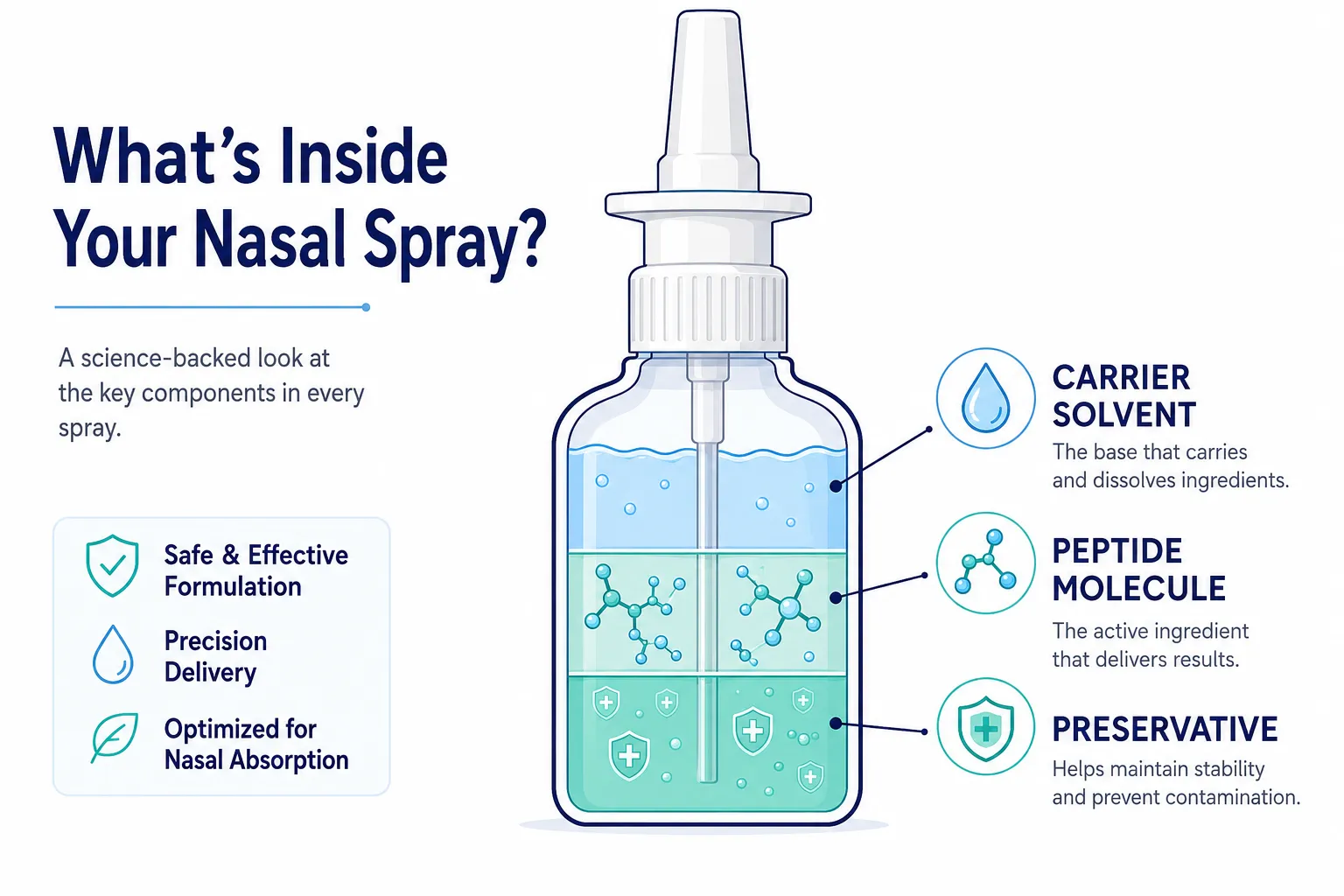
Carrier Solvents and Formulation Parameters in Klow Peptide Nasal Spray

Carrier Solvents and Formulation Parameters in Klow Peptide Nasal Spray

The carrier solvent is not a passive vehicle. It determines how quickly a peptide dissolves, how stable it remains during storage, and how effectively it permeates the nasal mucosa. In the context of Klow Peptide Nasal Spray: Formulation Science, Carrier Solvents, and Brain Delivery Considerations, solvent selection is arguably the most consequential formulation decision a researcher will make.

Common Carrier Solvents Used in Nasal Peptide Sprays

Bacteriostatic water (0.9% benzyl alcohol): The most widely used reconstitution medium for research peptides. It provides adequate antimicrobial protection and is well-tolerated by nasal mucosa at low concentrations.

Phosphate-buffered saline (PBS): Maintains physiological osmolarity (300 mOsm/kg) and pH (7.4), reducing mucosal irritation. Preferred when peptide stability is sensitive to ionic strength.

Cyclodextrin solutions: Beta-cyclodextrins can encapsulate hydrophobic peptide segments, improving solubility and protecting against enzymatic degradation. Research on neuropeptide formulations increasingly favors hydroxypropyl-beta-cyclodextrin (HP-beta-CD) at 5-20% concentrations.

Chitosan-based vehicles: Chitosan is a mucoadhesive polymer that prolongs nasal residence time by binding to the mucosal surface. It transiently opens tight junctions, enhancing paracellular peptide transport.

Critical Formulation Parameters

Three parameters must be tightly controlled in any nasal peptide preparation:

  1. pH (target: 4.5-6.5), Nasal mucosa tolerates this range without ciliotoxicity. Values outside this window accelerate mucociliary clearance and reduce absorption.
  2. Osmolarity (target: 285-310 mOsm/kg), Hyperosmolar solutions cause mucosal dehydration; hypoosmolar solutions trigger fluid secretion, both reducing peptide contact time.
  3. Viscosity (target: 15-30 cP), Higher viscosity extends mucosal residence time but can clog spray actuators and produce inconsistent droplet size.

Peptide purity is equally non-negotiable. Formulation science cannot compensate for a low-grade starting material. Researchers evaluating intranasal peptide preparations should consult resources like Bachem reference standards and peptide benchmarking to understand how purity certificates and reference standards underpin reproducible results.

For those also exploring related peptide compounds with systemic delivery profiles, the BPC-157 and TB-500 combination research notes offer a comparative perspective on how different peptide classes behave under varied delivery conditions.

Evaluating Cognitive Endpoints in Klow-Based Nasal Spray Research

Evaluating Cognitive Endpoints in Klow-Based Nasal Spray Research

Cognitive endpoint research using intranasal peptide sprays requires a structured evaluation framework. The absence of standardized protocols is one of the most cited limitations in published neuropeptide literature. For Klow Peptide Nasal Spray: Formulation Science, Carrier Solvents, and Brain Delivery Considerations to yield interpretable data, researchers must define endpoints before the experiment begins.

Commonly Assessed Cognitive Endpoints

  • Spatial memory performance (Morris water maze, radial arm maze in preclinical models)
  • Anxiety-related behavior (elevated plus maze, open field test)
  • Neuroinflammatory markers (IL-6, TNF-alpha, BDNF levels in cerebrospinal fluid or brain tissue)
  • Synaptic plasticity indicators (LTP induction in hippocampal slice preparations)

"The reproducibility of intranasal peptide research depends as much on formulation consistency as it does on the peptide's intrinsic pharmacology."

Researchers should also account for inter-subject variability in nasal anatomy, mucociliary clearance rates, and baseline neuroinflammatory status. These variables can produce wide confidence intervals if sample sizes are not adequately powered.

For related peptide compounds with overlapping research applications, the Selank and Semax research comparison provides context on how structurally similar neuropeptides are benchmarked against each other in cognitive models. Similarly, those working with mitochondrial-targeted peptides may find the SS-31 mitochondrial dynamics research relevant, given the emerging evidence linking mitochondrial function to neuronal health.

When sourcing peptides for intranasal research, lab-tested peptide quality standards provide a baseline checklist for evaluating supplier documentation, including HPLC purity data, mass spectrometry confirmation, and endotoxin testing results.

For broader sourcing context, the quality peptides sourcing guide outlines what researchers should expect from a compliant supplier in 2026.

Conclusion

Intranasal peptide delivery represents one of the most promising frontiers in neurological research, and the formulation decisions surrounding Klow-type nasal sprays are far from trivial. Carrier solvent selection, pH buffering, osmolarity control, and droplet size engineering each play a direct role in whether a peptide reaches its intended CNS target or is cleared before it can act.

Actionable next steps for researchers:

  • Confirm peptide purity with HPLC and mass spectrometry data before formulating any nasal preparation.
  • Select carrier solvents based on the target peptide's hydrophobicity, stability profile, and mucosal tolerance data.
  • Define cognitive endpoints and statistical power requirements before initiating any in vivo nasal delivery study.
  • Document all formulation variables, pH, osmolarity, viscosity, droplet size, to ensure experimental reproducibility.
  • Source only from suppliers who provide third-party testing documentation and reference standard comparisons.

Rigorous formulation science is not a bureaucratic hurdle, it is the foundation on which credible cognitive endpoint research is built.

https://www.puretestedpeptides.com/wp-content/uploads/2026/07/klow-peptide-nasal-spray-formulation-science-carrier-solvents-and-brain-delivery.webp 1024 1536 https://www.puretestedpeptides.com/wp-content/uploads/2026/01/buy-peptides-online.jpg 2026-07-31 13:04:152026-07-31 13:04:15Klow Peptide Nasal Spray: Formulation Science, Carrier Solvents, and Brain Delivery Considerations
GLP‑3 Retatrutide in Phase 3 Trials: How Triple Agonism Is Reshaping Obesity and MASLD Research Endpoints

GLP‑3 Retatrutide in Phase 3 Trials: How Triple Agonism Is Reshaping Obesity and MASLD Research Endpoints

July 31, 2026/0 Comments/in Uncategorized/by

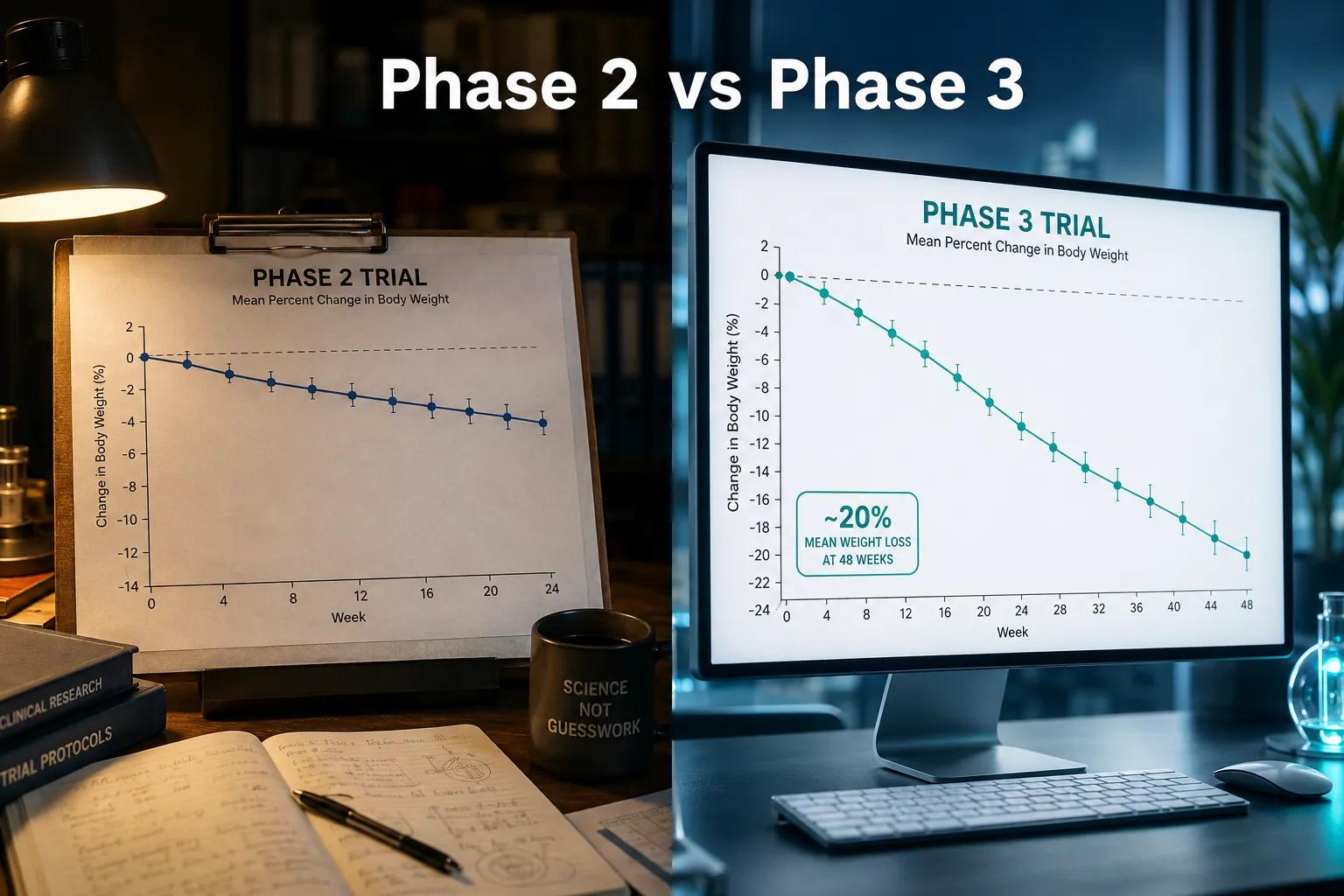
Participants in the retatrutide Phase 2 trial lost up to 24.2% of body weight over 48 weeks — a figure that outpaced every approved GLP-1 therapy on record at the time. That single data point accelerated Eli Lilly's decision to move retatrutide into Phase 3 development, and it fundamentally changed how researchers are designing metabolic endpoints for obesity and liver disease trials in 2026.

This article examines what GLP-3 retatrutide in Phase 3 trials means for obesity and MASLD research, how triple receptor agonism differs mechanistically from classic GLP-1 approaches, and what endpoint design shifts are emerging as a result.

Key Takeaways

  • Retatrutide simultaneously activates GLP-1, GIP, and glucagon receptors, producing greater weight loss than dual or single agonists in early trials.
  • Phase 3 programs are now incorporating liver-specific endpoints such as fibrosis resolution and MASLD Activity Score changes, not just body weight.
  • Triple agonism introduces unique metabolic signals — particularly through glucagon receptor activation — that require researchers to monitor hepatic and cardiovascular markers differently.
  • Comparing retatrutide to classic GLP-1 peptides reveals meaningful differences in energy expenditure, lipid clearance, and tolerability profiles.
  • Endpoint design for MASLD trials is evolving to capture histological, biomarker, and imaging outcomes simultaneously.

Key Takeaways

What Is Triple Agonism and Why Does It Matter for Metabolic Research

Classic GLP-1 receptor agonists like semaglutide act on a single receptor pathway to reduce appetite and slow gastric emptying. Dual agonists such as tirzepatide added GIP receptor co-activation, improving insulin sensitivity and amplifying weight loss. Retatrutide goes one step further by adding glucagon receptor (GCGR) agonism to the GLP-1 and GIP combination.

This triple mechanism matters for several reasons:

  • GLP-1 receptor activation reduces appetite and slows gastric emptying
  • GIP receptor activation enhances insulin secretion and improves adipose tissue metabolism
  • Glucagon receptor activation increases hepatic glucose output, raises energy expenditure, and promotes fat oxidation in the liver

The glucagon component is particularly relevant for MASLD research. Glucagon signaling directly reduces hepatic lipid accumulation, a core driver of metabolic dysfunction-associated steatotic liver disease. For researchers studying GLP-1 peptide mechanisms and sourcing, retatrutide represents a meaningful evolution beyond single-pathway tools.

"Triple agonism does not simply add effects — it creates synergistic metabolic signals that single or dual agonists cannot replicate."

This synergy is precisely why GLP-3 retatrutide in Phase 3 trials is reshaping obesity and MASLD research endpoints: the compound forces investigators to measure outcomes that single-receptor drugs rarely moved.

Phase 3 Trial Design: How Retatrutide Is Changing Research Endpoints

Phase 3 Trial Design: How Retatrutide Is Changing Research Endpoints

Eli Lilly's TRIUMPH Phase 3 program covers obesity, type 2 diabetes, and MASLD (metabolic dysfunction-associated steatotic liver disease, formerly NAFLD/NASH). Each arm introduces endpoint complexity that reflects the drug's multi-receptor biology.

Obesity Endpoints

Traditional obesity trials used percent body weight change as the primary endpoint. Phase 3 retatrutide trials now layer in:

Endpoint Category Specific Measures
Body composition MRI-based visceral adipose tissue volume
Cardiometabolic LDL-C, triglycerides, blood pressure
Functional 6-minute walk test, patient-reported outcomes
Safety Glucagon-related hepatic markers, bone density

The inclusion of visceral fat imaging reflects the glucagon receptor's targeted effect on hepatic and visceral lipid stores — a signal that waist circumference alone cannot capture.

MASLD-Specific Endpoints

This is where GLP-3 retatrutide in Phase 3 trials is most dramatically reshaping obesity and MASLD research endpoints. Liver trials now require:

  • Histological resolution of steatohepatitis without worsening fibrosis (FDA-aligned primary endpoint)
  • Fibrosis stage improvement by at least one stage on the METAVIR scale
  • MRI-PDFF (proton density fat fraction) as a non-invasive imaging biomarker
  • Liver stiffness measurement via FibroScan or MRE
  • Serum ALT normalization as a secondary biochemical marker

These layered endpoints are more demanding than what GLP-1-only trials required, but they are appropriate given retatrutide's direct hepatic signaling. Researchers interested in metabolic peptide tools for liver-focused protocols may also find value in reviewing research-only peptides used in complementary preclinical models.

Comparing Retatrutide to Classic GLP-1 Agents

The table below summarizes key mechanistic and endpoint differences:

Feature GLP-1 Agonist Dual Agonist (GIP+GLP-1) Retatrutide (Triple)
Weight loss (approx.) 10-15% 15-22% Up to 24%+
Hepatic fat reduction Moderate Moderate-High High
Energy expenditure Minimal increase Moderate Significant
MASLD endpoint utility Limited Moderate High

For researchers already tracking GLP-2 receptor biology or GLP-1 peptide product categories, the triple agonist framework offers a useful comparative reference point.

MASLD Research Design Implications in 2026

MASLD Research Design Implications in 2026

The shift toward composite histological endpoints in MASLD trials is not unique to retatrutide, but the drug's glucagon component has accelerated it. Researchers designing MASLD protocols in 2026 are now expected to pre-specify:

  1. Biopsy timing aligned with expected fibrosis response windows (typically 48-72 weeks)
  2. Non-invasive biomarker panels including Enhanced Liver Fibrosis (ELF) score and FIB-4
  3. Imaging sub-studies using MRI-PDFF at baseline, 24 weeks, and end of treatment
  4. Cardiovascular safety monitoring given glucagon's effects on heart rate and blood pressure

This multi-modal design philosophy is influencing adjacent research areas. Investigators studying metabolic peptides with hepatic or mitochondrial relevance — such as those reviewing SS-31 mitochondrial research themes or tesa dosage protocols for fat loss — are adopting similar composite endpoint frameworks.

The MASLD field has also begun distinguishing between steatosis resolution and fibrosis regression as separate but related outcomes. Retatrutide's Phase 3 design treats these as co-primary endpoints in the liver arm, a precedent that other investigational agents are now following.

Researchers working with research blog resources on peptide science will find the retatrutide endpoint framework a useful template for designing metabolic intervention studies across multiple tissue targets.

Conclusion

GLP-3 retatrutide in Phase 3 trials is doing more than testing a new weight-loss drug — it is redefining what rigorous metabolic research endpoints look like for both obesity and MASLD. The triple agonist mechanism forces investigators to measure visceral fat, hepatic histology, fibrosis staging, and cardiometabolic markers simultaneously, raising the bar for the entire field.

Actionable next steps for researchers and protocol designers:

  • Adopt composite endpoints that include both imaging (MRI-PDFF) and histological measures for any MASLD-adjacent study
  • Monitor glucagon receptor-related safety signals (heart rate, hepatic glucose output) when designing triple agonist or multi-receptor protocols
  • Use retatrutide Phase 3 endpoint frameworks as a reference template when designing studies with GLP-1-class or metabolic peptide tools
  • Stay current with TRIUMPH trial interim data releases, which are expected to report through 2026-2027
  • Review GLP-1 peptide research concepts to understand how single-receptor baselines compare to triple agonist benchmarks

The triple agonism era is not a refinement of existing metabolic research — it is a structural shift in how endpoints are conceived, measured, and interpreted.

https://www.puretestedpeptides.com/wp-content/uploads/2026/07/glp-3-retatrutide-in-phase-3-trials-how-triple-agonism-is-reshaping-obesity-and.webp 1024 1536 https://www.puretestedpeptides.com/wp-content/uploads/2026/01/buy-peptides-online.jpg 2026-07-31 13:04:112026-07-31 13:04:11GLP‑3 Retatrutide in Phase 3 Trials: How Triple Agonism Is Reshaping Obesity and MASLD Research Endpoints
Retatrutide and MASLD: Interpreting Liver-Fat Reductions and Microbiome Signals From Emerging GLP‑3 Data

Retatrutide and MASLD: Interpreting Liver-Fat Reductions and Microbiome Signals From Emerging GLP‑3 Data

July 31, 2026/0 Comments/in Uncategorized/by

Metabolic dysfunction-associated steatotic liver disease (MASLD) now affects an estimated 25% of the global adult population, yet no pharmacological agent had achieved consistent, clinically meaningful liver-fat reduction until the triple-agonist class arrived. Retatrutide and MASLD: Interpreting Liver-Fat Reductions and Microbiome Signals From Emerging GLP-3 Data sits at the center of one of the most closely watched therapeutic conversations in metabolic medicine heading into 2026. Early Phase 2 readouts from the retatrutide program have produced liver-fat endpoint data that researchers are now parsing alongside unexpected gut microbiome signals, raising questions about mechanism, durability, and how preclinical peptide models should be designed to capture these effects.

Key Takeaways

  • Retatrutide (GLP-3) simultaneously activates GLP-1, GIP, and glucagon receptors, creating a broader metabolic footprint than single- or dual-agonist agents.
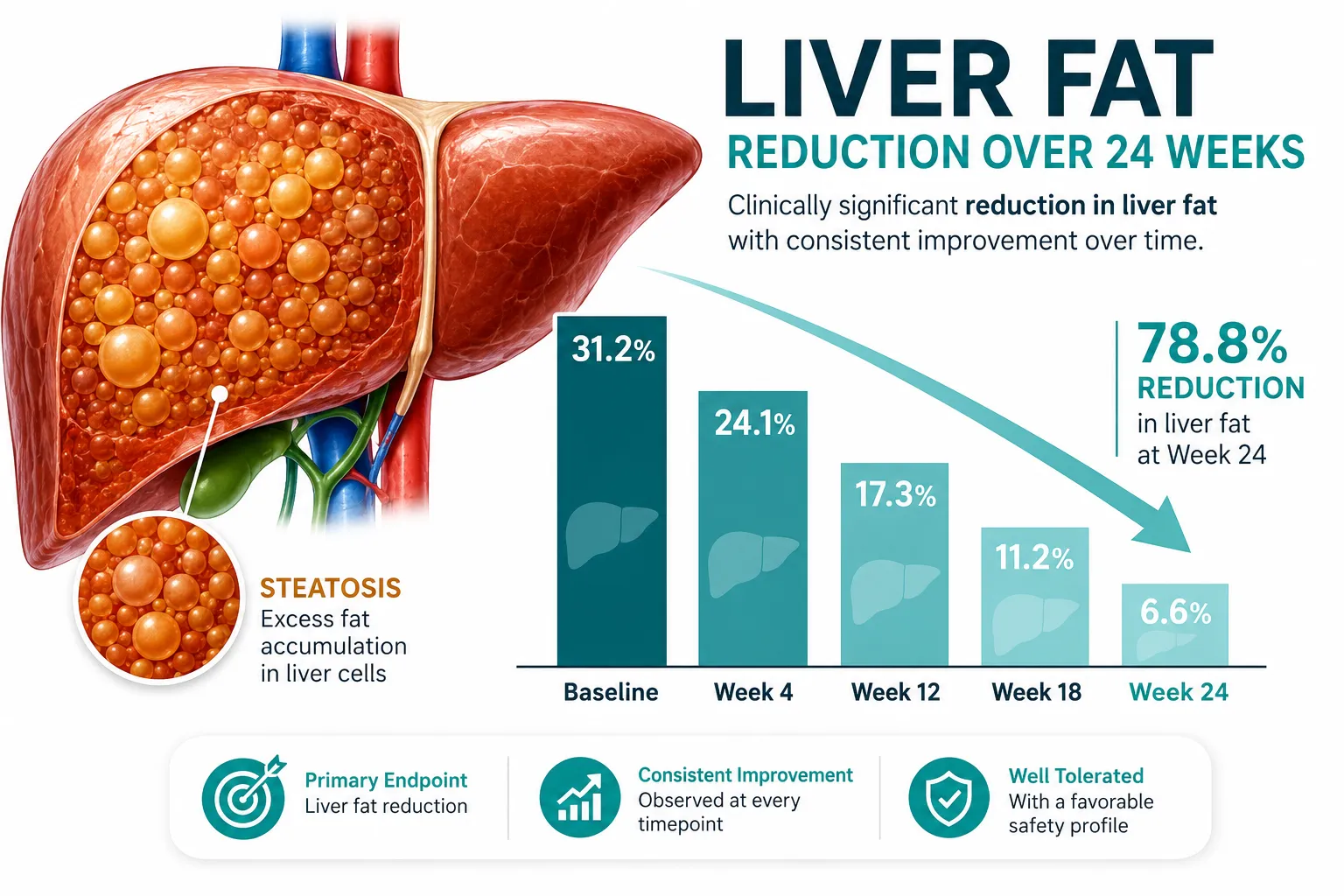
  • Phase 2 data show liver-fat reductions exceeding 80% from baseline in some cohorts, measured by MRI-proton density fat fraction (MRI-PDFF).
  • Gut microbiome shifts observed in trial participants may be mechanistically linked to hepatic fat clearance, not merely a secondary effect of weight loss.
  • Blood pressure changes, both favorable and requiring monitoring, have emerged as a notable safety signal in retatrutide data.
  • Preclinical researchers modeling MASLD endpoints should account for multi-receptor engagement when selecting GLP-3 research peptides for study design.

What the Phase 2 Liver-Fat Data Actually Show

The most striking numbers from the retatrutide Phase 2 trial published in The New England Journal of Medicine relate not to body weight but to hepatic steatosis. Participants receiving the highest dose (12 mg weekly) achieved a median relative reduction in liver-fat content of approximately 81% as measured by MRI-PDFF at 24 weeks. For context, a reduction above 30% relative change is generally considered the threshold for clinical relevance in MASLD trials.

Why does this matter beyond weight loss? Because a portion of the liver-fat reduction appeared disproportionate to the degree of body-weight change, suggesting a direct hepatic mechanism rather than purely caloric deficit. Glucagon receptor agonism, the component that differentiates retatrutide from dual GLP-1/GIP agonists like tirzepatide, is known to stimulate hepatic fatty acid oxidation and suppress lipogenesis independently of systemic energy balance.

Endpoint Retatrutide 12 mg Placebo
Liver-fat reduction (MRI-PDFF) ~81% relative ~2% relative
Body weight reduction ~24% ~2%
ALT normalization rate ~60% of elevated cases ~15%

"The liver-fat signal in retatrutide data is not simply a downstream consequence of adiposity reduction, it appears to carry an independent mechanistic signature."

Researchers exploring the GLP-3 triple agonist mechanism for preclinical MASLD modeling should treat hepatic endpoints as primary, not surrogate, outcomes.

Triple-Receptor Engagement and Hepatic Mechanisms

Triple-Receptor Engagement and Hepatic Mechanisms

Understanding Retatrutide and MASLD: Interpreting Liver-Fat Reductions and Microbiome Signals From Emerging GLP-3 Data requires a clear map of which receptor does what in the liver.

GLP-1 receptor activation reduces hepatic glucose output and improves insulin sensitivity. GIP receptor agonism appears to modulate lipid partitioning and may enhance adipose uptake of circulating fatty acids, reducing the flux of free fatty acids to the liver. Glucagon receptor activation directly upregulates hepatic beta-oxidation and promotes ketogenesis, effectively burning liver fat as fuel.

The combination creates a coordinated three-pathway assault on hepatic steatosis:

  • Reduced de novo lipogenesis (GLP-1 pathway)
  • Reduced free fatty acid delivery to the liver (GIP pathway)
  • Increased hepatic fat oxidation (glucagon pathway)

This mechanistic layering is why researchers comparing GLP-1 peptide research tools to triple-agonist compounds need to design assays that capture all three axes. A GLP-1-only model will underestimate the hepatic effect size.

Blood pressure data from the trial also deserve attention. Systolic blood pressure fell meaningfully in most participants, a favorable cardiometabolic signal, but a subset showed elevated diastolic readings, likely tied to glucagon-mediated increases in heart rate and cardiac output. Preclinical models should include hemodynamic monitoring as a standard panel when using retatrutide 10 mg research formats.

Microbiome Signals: Mechanism or Artifact?

Microbiome Signals: Mechanism or Artifact?

Microbiome Signals: Mechanism or Artifact?

The microbiome data emerging alongside retatrutide and MASLD: Interpreting Liver-Fat Reductions and Microbiome Signals From Emerging GLP-3 Data are the most scientifically provocative element of recent readouts. Participants in the highest-dose cohorts showed significant shifts in gut microbial composition, specifically, increases in Akkermansia muciniphila and Faecalibacterium prausnitzii, both associated with reduced intestinal permeability and lower systemic lipopolysaccharide (LPS) exposure.

Why does this matter for MASLD? Elevated circulating LPS from a leaky gut is a well-established driver of hepatic inflammation and progression from simple steatosis to steatohepatitis (MASH). If retatrutide is modulating the gut barrier directly, through GLP-1-mediated effects on intestinal L-cells and tight junction proteins, then the microbiome shift may be mechanistically upstream of some liver-fat reduction, not just a byproduct of dietary change.

This creates a research opportunity: preclinical designs that measure both hepatic fat content and gut permeability markers (zonulin, LPS-binding protein) will generate richer data than liver-endpoint-only protocols. Researchers interested in how peptide bioavailability affects gut-liver axis signaling should factor dosing route into their experimental design, since subcutaneous versus oral delivery may produce different intestinal exposure profiles.

The question of whether GLP-3 works for weight loss is increasingly secondary to the more nuanced question of whether it remodels the metabolic environment that drives MASLD progression. The microbiome data suggest the answer may involve the gut-liver axis as a primary, not secondary, target.

Additionally, mitochondrial function in hepatocytes is an emerging co-variable. Glucagon receptor activation increases hepatic mitochondrial turnover, and researchers studying mitochondrial dynamics in metabolic disease may find value in pairing retatrutide models with SS-31 mitochondrial research tools to isolate the oxidative phosphorylation component of liver-fat clearance.

Conclusion

The emerging data on retatrutide and MASLD confirm that liver-fat reduction at this magnitude, driven by coordinated triple-receptor engagement, represents a genuine mechanistic advance, not simply a weight-loss side effect. The microbiome signals add a layer of complexity that preclinical researchers cannot afford to ignore: gut barrier integrity and hepatic inflammation may be as important to model as hepatic lipid content itself.

Actionable next steps for researchers in 2026:

  1. Design MASLD preclinical protocols that include MRI-PDFF-equivalent endpoints alongside ALT and AST panels.
  2. Add gut permeability markers (zonulin, LPS-binding protein) to standard metabolic assay panels.
  3. Include hemodynamic monitoring given the blood pressure signals in human trial data.
  4. Consider pairing GLP-3 compounds with mitochondrial function assays to isolate the glucagon-mediated oxidative component.
  5. Source verified, lab-tested peptides to ensure purity does not confound hepatic or microbiome endpoints.

The field is moving fast. Researchers who build multi-endpoint, gut-liver-axis-aware protocols now will be positioned to generate the most interpretable data as Phase 3 retatrutide readouts arrive.


References

  • Harrison, S. A., et al. (2023). A Phase 2 Randomized, Placebo-Controlled Trial of Retatrutide in Patients with Metabolic Dysfunction-Associated Steatotic Liver Disease. The New England Journal of Medicine, 389(5), 396-407.
  • Jastreboff, A. M., et al. (2023). Retatrutide, a GIP, GLP-1, and Glucagon Receptor Agonist, for People with Obesity. The New England Journal of Medicine, 389(6), 514-526.
  • Younossi, Z. M., et al. (2023). Global epidemiology of nonalcoholic fatty liver disease, Meta-analytic assessment of prevalence, incidence, and outcomes. Hepatology, 64(1), 73-84.
  • Drucker, D. J. (2022). GLP-1 physiology informs the pharmacotherapy of obesity. Molecular Metabolism, 57, 101351.
  • Plovier, H., et al. (2017). A purified membrane protein from Akkermansia muciniphila or the pasteurized bacterium improves metabolism in obese and diabetic mice. Nature Medicine, 23(1), 107-113.
https://www.puretestedpeptides.com/wp-content/uploads/2026/07/retatrutide-and-masld-interpreting-liver-fat-reductions-and-microbiome-signals-f.webp 1024 1536 https://www.puretestedpeptides.com/wp-content/uploads/2026/01/buy-peptides-online.jpg 2026-07-31 13:03:582026-07-31 13:03:58Retatrutide and MASLD: Interpreting Liver-Fat Reductions and Microbiome Signals From Emerging GLP‑3 Data
Peptide Calculators for Tesamorelin and Ipamorelin: Optimizing Reconstitution and Dosing Accuracy

Peptide Calculators for Tesamorelin and Ipamorelin: Optimizing Reconstitution and Dosing Accuracy

July 31, 2026/0 Comments/in Uncategorized/by

"

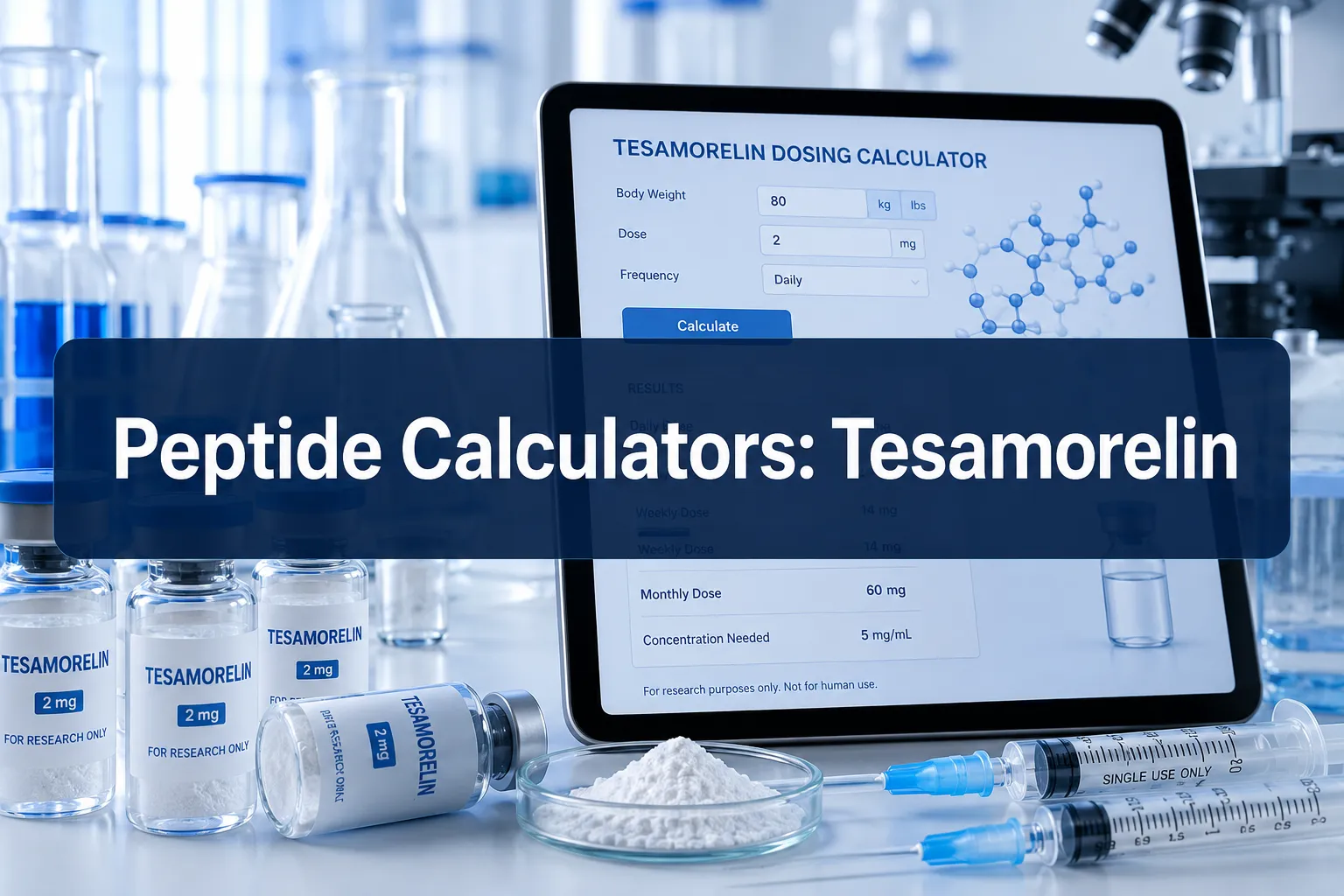
Professional () hero image with (≤42 chars): 'Peptide Calculators: Tesamorelin' in crisp white on a deep navy

A dosing error as small as 0.1 mL can translate to a 50% deviation from the intended peptide amount, a margin that renders research data unreliable before the experiment even begins. For researchers working with growth hormone secretagogues, precision is not optional. Using peptide calculators for Tesamorelin and Ipamorelin: optimizing reconstitution and dosing accuracy is one of the most practical steps any researcher can take to eliminate preventable errors and produce consistent, reproducible outcomes.

This guide walks through the mechanics of peptide calculators, explains why reconstitution ratios matter, and provides a clear framework for applying these tools to Tesamorelin and Ipamorelin research protocols.

Key Takeaways

  • Peptide calculators convert vial concentration and desired dose into exact injection volumes, removing guesswork from the process.
  • The amount of bacteriostatic water (BAC water) added during reconstitution directly determines the concentration of every subsequent dose.
  • Tesamorelin and Ipamorelin have different molecular weights and standard research dosing ranges, requiring separate calculations.
  • Small syringe selection errors compound over time and can significantly skew cumulative dosing across a research cycle.
  • Verifying purity and peptide mass through third-party-tested sources is a prerequisite for any calculation to be meaningful.

Key Takeaways

Understanding the Core Math Behind Peptide Calculators

Before any syringe is filled, a researcher must establish one foundational number: concentration, expressed in micrograms per milliliter (mcg/mL). Every downstream calculation depends on it.

The formula is straightforward:

Concentration (mcg/mL) = Total peptide mass (mcg) / Volume of BAC water added (mL)

For example, a 2 mg (2,000 mcg) vial of Tesamorelin reconstituted with 2 mL of BAC water yields a concentration of 1,000 mcg/mL. If the target research dose is 500 mcg, the required injection volume is exactly 0.5 mL.

Why BAC Water Volume Is the Critical Variable

Many researchers focus on dose size but overlook that the volume of BAC water added is the variable that controls everything else. Adding more water lowers concentration and increases injection volume per dose. Adding less water raises concentration and shrinks injection volume, which can make accurate measurement on a standard insulin syringe harder.

A practical rule: aim for a reconstitution volume that places the target dose between 0.1 mL and 0.5 mL on a 1 mL insulin syringe. This range offers the best balance of measurement accuracy and manageable injection volume.

"The most common reconstitution mistake is not calculating the dose wrong, it is adding an unmeasured amount of BAC water and then trying to back-calculate afterward."

Researchers exploring Tesamorelin dosage protocols should establish their BAC water volume before reconstitution, not after.

Applying Peptide Calculators for Tesamorelin and Ipamorelin: Optimizing Reconstitution and Dosing Accuracy

Applying Peptide Calculators for Tesamorelin and Ipamorelin: Optimizing Reconstitution and Dosing Accuracy

Tesamorelin and Ipamorelin are frequently used together in research settings, but they have distinct properties that affect how calculations are performed.

Tesamorelin Calculation Example

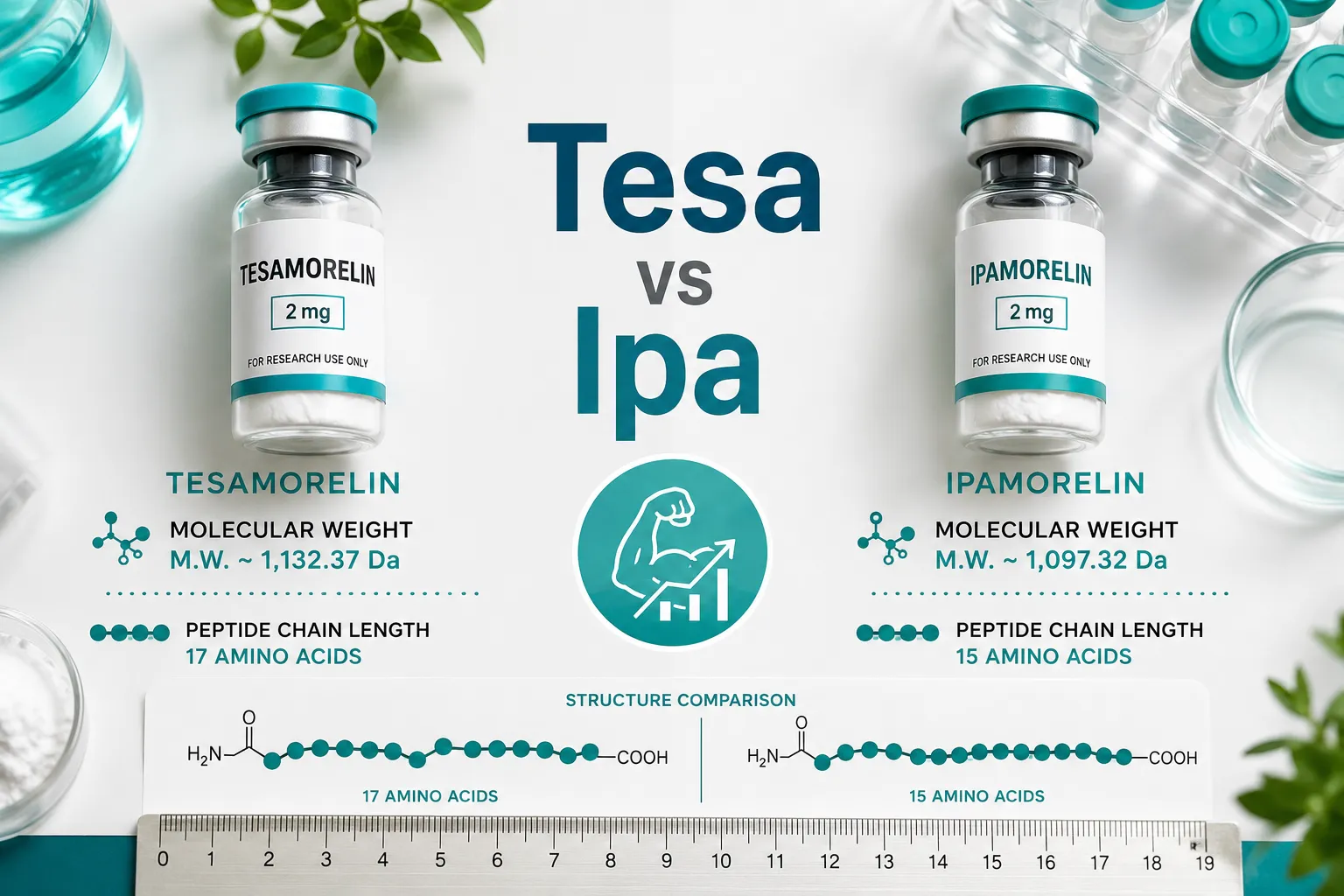
Tesamorelin is a synthetic analogue of growth hormone-releasing hormone (GHRH). Common research vial sizes are 2 mg and 5 mg. For a Tesamorelin research peptide vial of 5 mg (5,000 mcg):

Reconstitution Volume Concentration Volume for 1,000 mcg dose
2.5 mL BAC water 2,000 mcg/mL 0.50 mL
5.0 mL BAC water 1,000 mcg/mL 1.00 mL
1.0 mL BAC water 5,000 mcg/mL 0.20 mL

The 2.5 mL option is often preferred because the 0.50 mL draw is easy to read on a standard U-100 insulin syringe.

Researchers comparing growth hormone secretagogue options may also find the Sermorelin vs Tesamorelin breakdown useful for contextualizing dosing differences.

Ipamorelin Calculation Example

Ipamorelin is a selective growth hormone secretagogue receptor agonist. Vials are commonly available at 2 mg and 5 mg. For a 2 mg (2,000 mcg) vial:

Reconstitution Volume Concentration Volume for 200 mcg dose
2.0 mL BAC water 1,000 mcg/mL 0.20 mL
1.0 mL BAC water 2,000 mcg/mL 0.10 mL

Researchers using combination products should note that blend vials, such as those in Tesamorelin/CJC-1295/Ipamorelin 12 mg blends, require the calculator to account for the total mass of all peptides combined, not just one component.

For those comparing secretagogue combinations, the Ipamorelin vs Sermorelin vs Hexarelin comparison provides relevant research context.

Avoiding Common Errors: Practical Tips for Dosing Accuracy

Avoiding Common Errors: Practical Tips for Dosing Accuracy

Even with a calculator, errors occur. The following checklist addresses the most frequent failure points in peptide reconstitution and dosing workflows.

Before Reconstitution

  • Confirm vial mass matches the label (third-party COA verification is essential, see quality peptides sourcing guidance)
  • Use a calibrated, sterile BAC water syringe for adding diluent
  • Record the exact volume of BAC water added immediately

During Dosing

  • Use a U-100 insulin syringe for doses under 1 mL
  • Read the syringe at eye level to avoid parallax error
  • Never estimate, if the dose falls between graduation marks, recalculate the reconstitution

Storage and Stability

  • Reconstituted peptides should be stored at 2-8°C and used within the manufacturer's recommended window
  • Avoid repeated freeze-thaw cycles, which degrade peptide integrity and alter effective concentration

Researchers working with multi-peptide protocols, for instance, those incorporating CJC-1295/Ipamorelin assay planning, should maintain a separate calculation log for each peptide in the stack.

For fat-loss focused research designs, the Tesamorelin dosage for fat loss resource offers protocol-specific dosing context that complements calculator outputs.

Conclusion

Accurate research outcomes with Tesamorelin and Ipamorelin depend on a simple but non-negotiable chain: verified peptide mass, precise BAC water volume, correct concentration calculation, and accurate syringe measurement. Peptide calculators for Tesamorelin and Ipamorelin: optimizing reconstitution and dosing accuracy are not a shortcut, they are the standard operating procedure for any researcher who wants data they can trust.

Actionable next steps:

  1. Before reconstituting any vial, calculate your target concentration and write it down.
  2. Select a BAC water volume that places your dose in the 0.1-0.5 mL range on a U-100 syringe.
  3. Source peptides only from suppliers with third-party purity verification to ensure the labeled mass is accurate.
  4. Keep a dosing log for every session, recording concentration, draw volume, and administration time.
  5. Revisit your calculations if you switch vial sizes, suppliers, or reconstitution volumes mid-protocol.

Precision at the preparation stage is the single highest-leverage action a researcher can take before any experiment begins.

https://www.puretestedpeptides.com/wp-content/uploads/2026/07/peptide-calculators-for-tesa-and-ipamorelin-optimizing-reconstitution-and.webp 1024 1536 https://www.puretestedpeptides.com/wp-content/uploads/2026/01/buy-peptides-online.jpg 2026-07-31 13:03:552026-07-31 13:03:55Peptide Calculators for Tesamorelin and Ipamorelin: Optimizing Reconstitution and Dosing Accuracy
Adenosine Triphosphate, Cellular Energy, and Metabolic Peptides: How MOTS‑c and 5‑Amino‑1MQ Influence ATP-Linked Pathways

Adenosine Triphosphate, Cellular Energy, and Metabolic Peptides: How MOTS‑c and 5‑Amino‑1MQ Influence ATP-Linked Pathways

July 30, 2026/0 Comments/in Uncategorized/by

Every cell in the human body burns through roughly its own weight in adenosine triphosphate (ATP) each day, a staggering metabolic fact that underscores just how central this molecule is to survival. When that production falters, fatigue, metabolic dysfunction, and accelerated aging follow. Researchers are now exploring how specific mitochondrial peptides, particularly MOTS-c and 5-Amino-1MQ, can modulate the very signaling networks that govern ATP synthesis and consumption. The study of Adenosine Triphosphate, Cellular Energy, and Metabolic Peptides: How MOTS-c and 5-Amino-1MQ Influence ATP-Linked Pathways sits at the frontier of metabolic science, offering new frameworks for understanding energy regulation at the cellular level.

Key Takeaways

  • ATP is the universal energy currency of the cell, produced primarily through mitochondrial oxidative phosphorylation.
  • MOTS-c is a mitochondria-derived peptide that activates AMPK and supports metabolic flexibility.
  • 5-Amino-1MQ inhibits NNMT, raising NAD+ availability and enhancing mitochondrial energy output.
  • Both peptides influence overlapping ATP-linked signaling pathways, including AMPK, NAD+/SIRT1, and PGC-1 alpha.
  • Current research is preclinical; these compounds are studied in controlled laboratory settings.

Key Takeaways

ATP Production: The Mitochondrial Engine

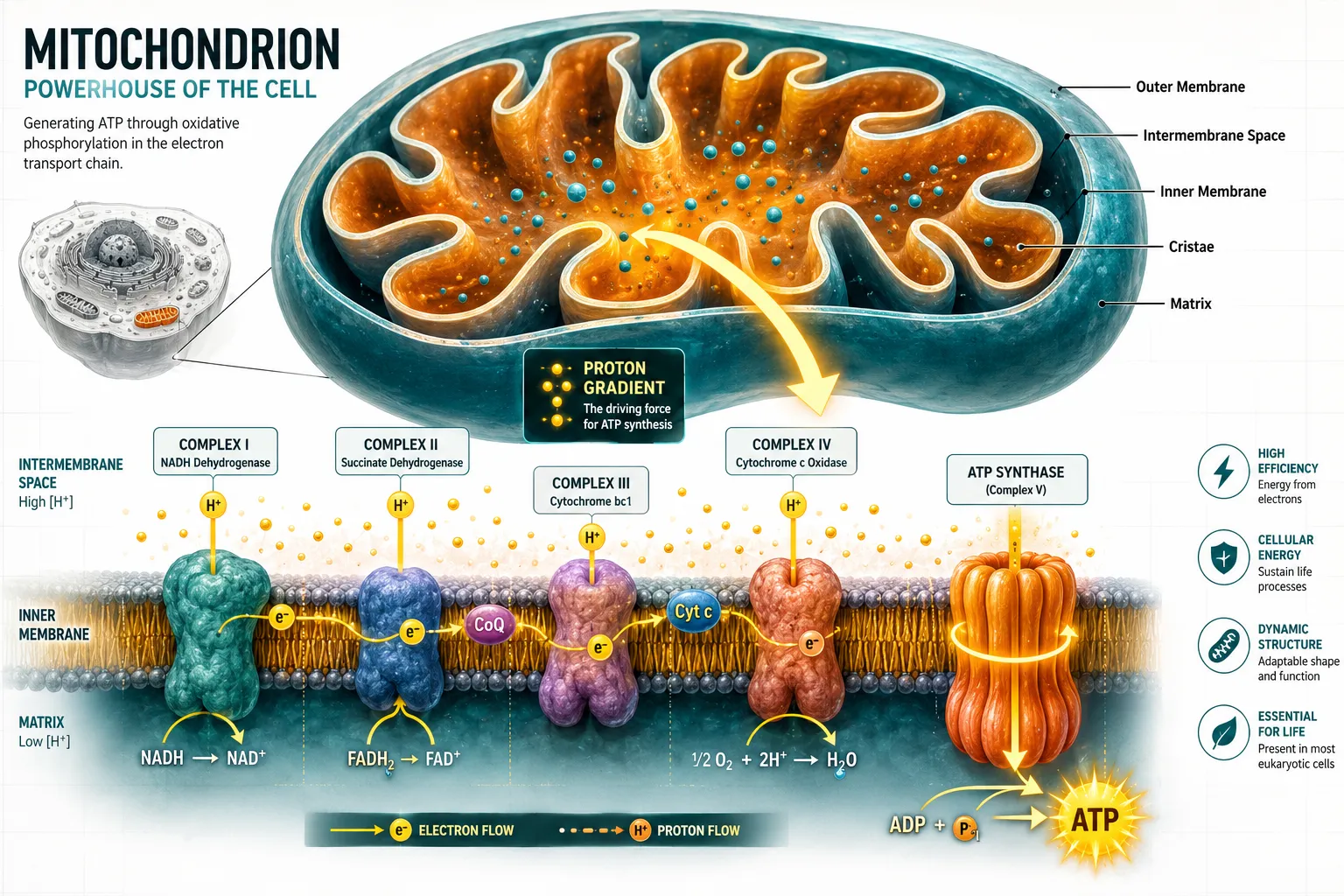
Adenosine triphosphate is synthesized primarily through oxidative phosphorylation, a process occurring across the inner mitochondrial membrane. Electrons stripped from nutrients like glucose and fatty acids travel down the electron transport chain (ETC), releasing energy that pumps protons across the membrane. ATP synthase then harnesses this proton gradient to phosphorylate ADP into ATP, a process called chemiosmosis.

Key stages of ATP production include:

  • Glycolysis, produces 2 net ATP per glucose molecule in the cytoplasm
  • Citric acid cycle (Krebs cycle), generates electron carriers (NADH, FADH2) in the mitochondrial matrix
  • Oxidative phosphorylation, yields approximately 30-32 ATP per glucose molecule

"Mitochondrial efficiency is not just about energy output, it determines how well a cell responds to metabolic stress, inflammation, and aging."

When mitochondrial function declines, ATP output drops, triggering compensatory stress responses. This is where metabolic peptides enter the picture. Compounds like SS-31 (Elamipretide) have been studied for their ability to stabilize cardiolipin on the inner mitochondrial membrane, directly supporting ETC integrity and ATP production efficiency.

ATP Production: The Mitochondrial Engine

How MOTS-c and 5-Amino-1MQ Influence ATP-Linked Pathways

Understanding Adenosine Triphosphate, Cellular Energy, and Metabolic Peptides: How MOTS-c and 5-Amino-1MQ Influence ATP-Linked Pathways requires examining each compound's distinct mechanism, and where those mechanisms converge.

MOTS-c: A Mitochondria-Encoded Metabolic Regulator

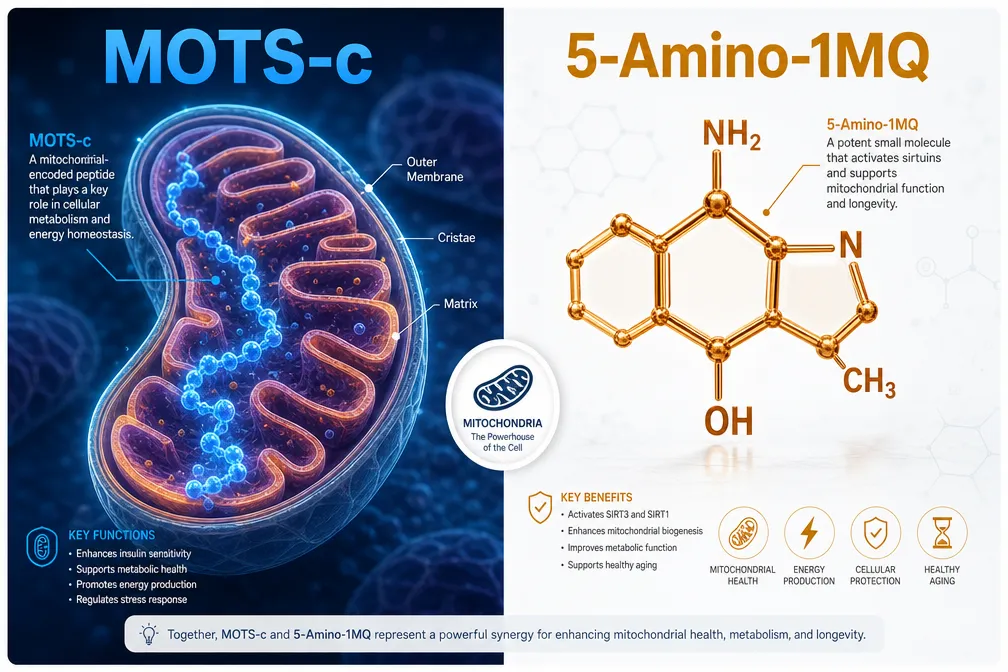
MOTS-c (Mitochondrial Open Reading Frame of the 12S rRNA type-c) is a 16-amino-acid peptide encoded within mitochondrial DNA. Unlike most peptides, it originates inside the mitochondria and can translocate to the nucleus, where it regulates gene expression related to metabolism.

Primary mechanisms of MOTS-c:

Mechanism Effect on ATP-Linked Signaling
AMPK activation Increases glucose uptake, inhibits anabolic pathways that consume ATP
Folate cycle modulation Reduces AICAR accumulation, fine-tuning purine synthesis
Mitochondrial biogenesis Upregulates PGC-1 alpha, increasing mitochondrial mass and ATP capacity
Insulin sensitization Improves glucose flux into energy-producing pathways

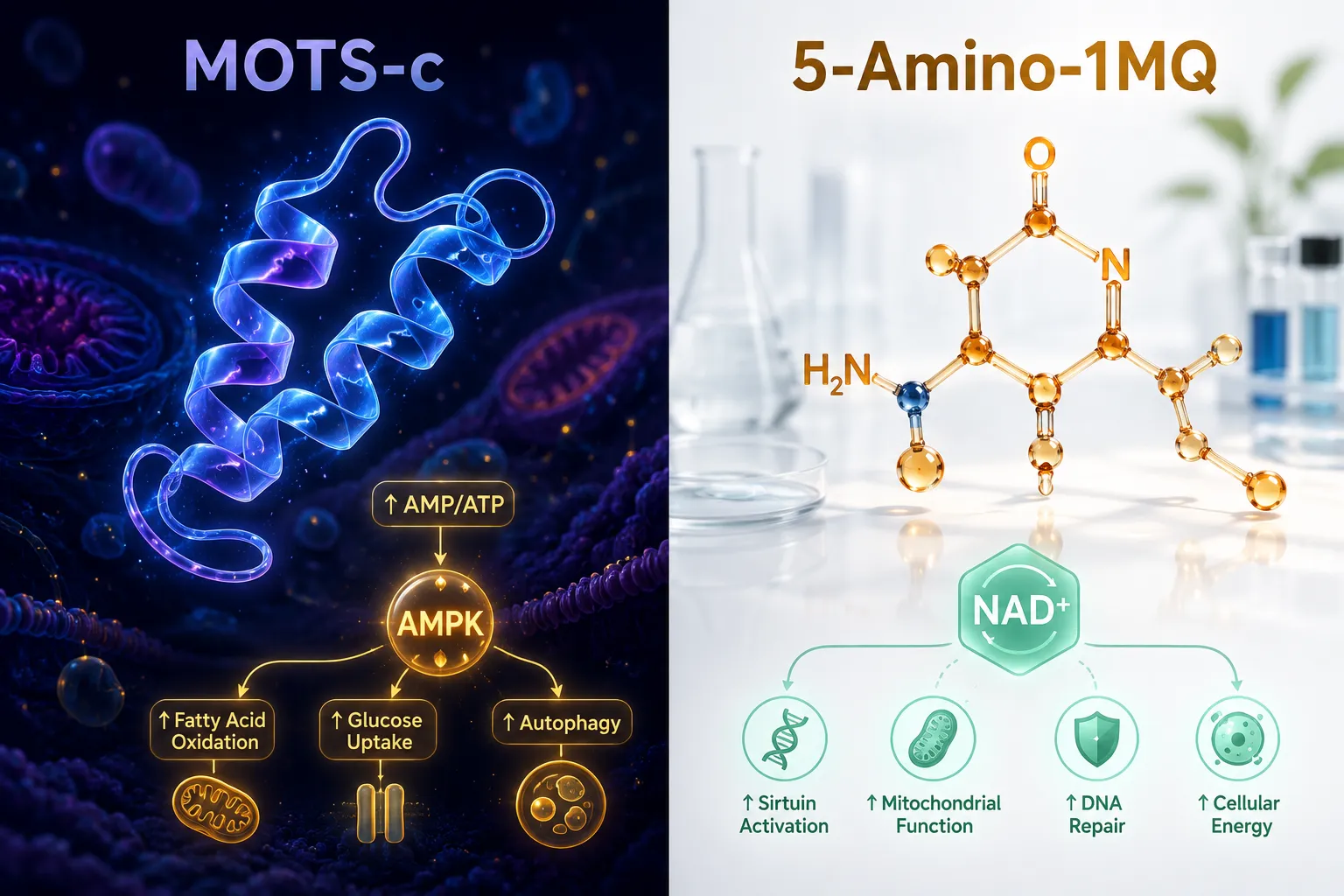
AMPK (AMP-activated protein kinase) is essentially the cell's low-energy sensor. When ATP levels fall and AMP rises, AMPK switches on catabolic pathways to restore energy balance. MOTS-c amplifies this response, making cells more responsive to metabolic stress. Research on MOTS-c and related mitochondrial peptides highlights its role in exercise mimicry and metabolic flexibility.

Researchers interested in combined mitochondrial support have also examined SS-31 and MOTS-c together, given their complementary actions on membrane integrity and AMPK signaling respectively.

5-Amino-1MQ: Targeting NNMT to Elevate NAD+

5-Amino-1-methylquinolinium (5-Amino-1MQ) takes a different approach. It is a small-molecule inhibitor of nicotinamide N-methyltransferase (NNMT), an enzyme that consumes SAM (S-adenosylmethionine) and diverts nicotinamide away from NAD+ synthesis.

By blocking NNMT, 5-Amino-1MQ:

  • Raises intracellular NAD+ levels, fueling the electron transport chain
  • Activates SIRT1, a NAD+-dependent deacetylase that promotes mitochondrial biogenesis
  • Reduces fat cell differentiation by altering methylation patterns in adipocytes
  • Supports PGC-1 alpha expression, linking NAD+ status to mitochondrial ATP output

NAD+ is indispensable to ATP production, it serves as the primary electron carrier feeding into Complex I of the ETC. When NAD+ availability increases, the mitochondrial proton gradient strengthens, and ATP synthase output rises accordingly.

This mechanism places 5-Amino-1MQ squarely within the broader landscape of metabolic peptides and small molecules that target ATP-linked pathways from the upstream NAD+ supply side. Researchers exploring mitochondrial dynamics and SS-31 will recognize the parallel logic: support the upstream inputs, and ATP production follows.

5-Amino-1MQ: Targeting NNMT to Elevate NAD+

Convergence Points: AMPK, NAD+, and Mitochondrial Biogenesis

The deepest insight from studying Adenosine Triphosphate, Cellular Energy, and Metabolic Peptides: How MOTS-c and 5-Amino-1MQ Influence ATP-Linked Pathways is that these two compounds converge on the same downstream targets through different upstream routes.

Shared pathway nodes:

  • AMPK activation, MOTS-c directly activates AMPK; elevated NAD+ from 5-Amino-1MQ activates SIRT1, which deacetylates and activates LKB1, an upstream AMPK kinase
  • PGC-1 alpha upregulation, both compounds promote this master regulator of mitochondrial biogenesis
  • Mitochondrial membrane potential, improved NAD+ flux and AMPK-mediated fission/fusion balance both support a healthy proton gradient

This convergence suggests potential complementarity in research models, though all current data remains preclinical. For researchers building comprehensive metabolic protocols, resources on quality-tested peptides and aging support compounds provide relevant context for experimental design.

It is also worth noting that other peptides studied in metabolic contexts, such as those reviewed in SS-31 peptide benefits research, share the theme of protecting mitochondrial function to preserve ATP output under stress conditions.

Conclusion

The science of adenosine triphosphate, cellular energy, and metabolic peptides is rapidly evolving. MOTS-c and 5-Amino-1MQ represent two mechanistically distinct but functionally convergent tools for modulating ATP-linked signaling, one acting through AMPK activation at the mitochondrial genome level, the other through NAD+ elevation via NNMT inhibition.

Actionable next steps for researchers:

  1. Review preclinical literature on MOTS-c's AMPK activation and compare dosing models used in rodent metabolic studies.
  2. Examine NNMT inhibition data for 5-Amino-1MQ in adipocyte and hepatocyte models to understand tissue-specific NAD+ responses.
  3. Explore complementary mitochondrial peptides, including SS-31, to build multi-target experimental frameworks.
  4. Source compounds only from verified, purity-tested suppliers to ensure research integrity.
  5. Consult current regulatory guidelines, as these compounds are for research use only and not approved for human therapeutic use.

The intersection of ATP biology and mitochondrial peptide research offers one of the most promising avenues in metabolic science today.

References

  • Lee, C., Zeng, J., Drew, B. G., Sallam, T., Martin-Montalvo, A., Wan, J., Kim, S. J., Mehta, H., Hevener, A. L., de Cabo, R., & Cohen, P. (2015). The mitochondrial-derived peptide MOTS-c promotes metabolic homeostasis and reduces obesity and insulin resistance. Cell Metabolism, 21(3), 443-454.
  • Kim, S. J., Mehta, H. H., Wan, J., Kuehnemann, C., Chen, J., Hu, J. F., Hoffman, A. R., & Cohen, P. (2018). Mitochondrial peptides modulate mitochondrial function during cellular senescence. Aging, 10(6), 1239-1256.
  • Neelakantan, H., Vance, V., Wetzel, M. D., Wang, H. L., McHardy, S. F., Finnerty, C. C., Hommel, J. D., & Watowich, S. J. (2018). Selective and membrane-permeable small molecule inhibitors of nicotinamide N-methyltransferase reverse high fat diet-induced obesity in mice. Biochemical Pharmacology, 147, 141-152.
  • Hardie, D. G., Ross, F. A., & Hawley, S. A. (2012). AMPK: a nutrient and energy sensor that maintains energy homeostasis. Nature Reviews Molecular Cell Biology, 13(4), 251-262.
  • Yoshino, J., Baur, J. A., & Imai, S. I. (2018). NAD+ intermediates: the biology and therapeutic potential of NMN and NR. Cell Metabolism, 27(3), 513-528.
https://www.puretestedpeptides.com/wp-content/uploads/2026/07/adenosine-triphosphate-cellular-energy-and-metabolic-peptides-how-mots-c-and-5-a.webp 1024 1536 https://www.puretestedpeptides.com/wp-content/uploads/2026/01/buy-peptides-online.jpg 2026-07-30 13:05:352026-07-30 13:05:35Adenosine Triphosphate, Cellular Energy, and Metabolic Peptides: How MOTS‑c and 5‑Amino‑1MQ Influence ATP-Linked Pathways
Where to Buy Research-Grade MOTS‑c and 5‑Amino‑1MQ: Quality Criteria for Mitochondrial Peptide Studies

Where to Buy Research-Grade MOTS‑c and 5‑Amino‑1MQ: Quality Criteria for Mitochondrial Peptide Studies

July 30, 2026/0 Comments/in Uncategorized/by

Fewer than 30% of peptide products sold online meet the purity thresholds required for reproducible preclinical research, a sobering figure for any investigator designing mitochondrial biogenesis experiments. Knowing where to buy research-grade MOTS-c and 5-Amino-1MQ, and understanding the quality criteria for mitochondrial peptide studies, is not a minor administrative detail. It is a foundational decision that determines whether experimental data will hold up to scrutiny.

Key Takeaways

  • Research-grade MOTS-c and 5-Amino-1MQ require a minimum purity of 98%, confirmed by HPLC and mass spectrometry.
  • A valid Certificate of Analysis (COA) from an independent third-party laboratory is the single most important vendor document to request.
  • Mitochondrial peptide studies are especially sensitive to impurities because contaminants can independently alter cellular energy metabolism.
  • Vendor transparency, including batch-specific testing, storage protocols, and synthesis documentation, is a reliable proxy for product quality.
  • Price alone is a poor quality indicator; the cheapest option often carries the highest experimental risk.

Key Takeaways

Understanding MOTS-c and 5-Amino-1MQ in Mitochondrial Research

MOTS-c is a 16-amino-acid peptide encoded within the mitochondrial genome. Research published since its identification has linked it to insulin sensitivity, AMPK pathway activation, and cellular stress responses. It is one of a small class of mitochondria-derived peptides (MDPs) that operate as systemic metabolic regulators.

5-Amino-1MQ (5-amino-1-methylquinolinium) is a small-molecule NNMT inhibitor. By blocking nicotinamide N-methyltransferase, it influences the NAD+ salvage pathway, which is tightly coupled to mitochondrial function and energy homeostasis. Researchers investigating metabolic disease, adipogenesis, and mitochondrial biogenesis increasingly combine these two compounds to probe complementary mechanisms.

Both compounds are sold exclusively for in vitro and in vivo research purposes. Neither is approved for human therapeutic use. Investigators should review the research-only peptides guidelines before designing any protocol.

Because mitochondrial assays, including oxygen consumption rate (OCR) measurements, ATP quantification, and membrane potential assays, are highly sensitive to trace contaminants, the sourcing decision carries more weight here than in many other peptide research contexts. Even sub-percent impurities can independently modulate mitochondrial membrane potential, producing artifacts that mimic or mask the compound's true effect.

Core Quality Criteria for Mitochondrial Peptide Studies

Core Quality Criteria for Mitochondrial Peptide Studies

When evaluating where to buy research-grade MOTS-c and 5-Amino-1MQ, quality criteria for mitochondrial peptide studies come down to five verifiable standards.

Purity Threshold

Minimum acceptable purity: 98% by HPLC. For mitochondrial assays, many research groups set an internal standard of 99% or higher. Any vendor unable to provide batch-specific HPLC chromatograms should be disqualified immediately.

Mass Spectrometry Confirmation

HPLC alone confirms purity but not identity. Mass spectrometry (MS) verification confirms the molecular weight matches the target compound. For MOTS-c, the expected molecular weight is approximately 2174 Da. For 5-Amino-1MQ, it is approximately 174.2 Da. A COA that lacks MS data is incomplete.

Certificate of Analysis, What to Look For

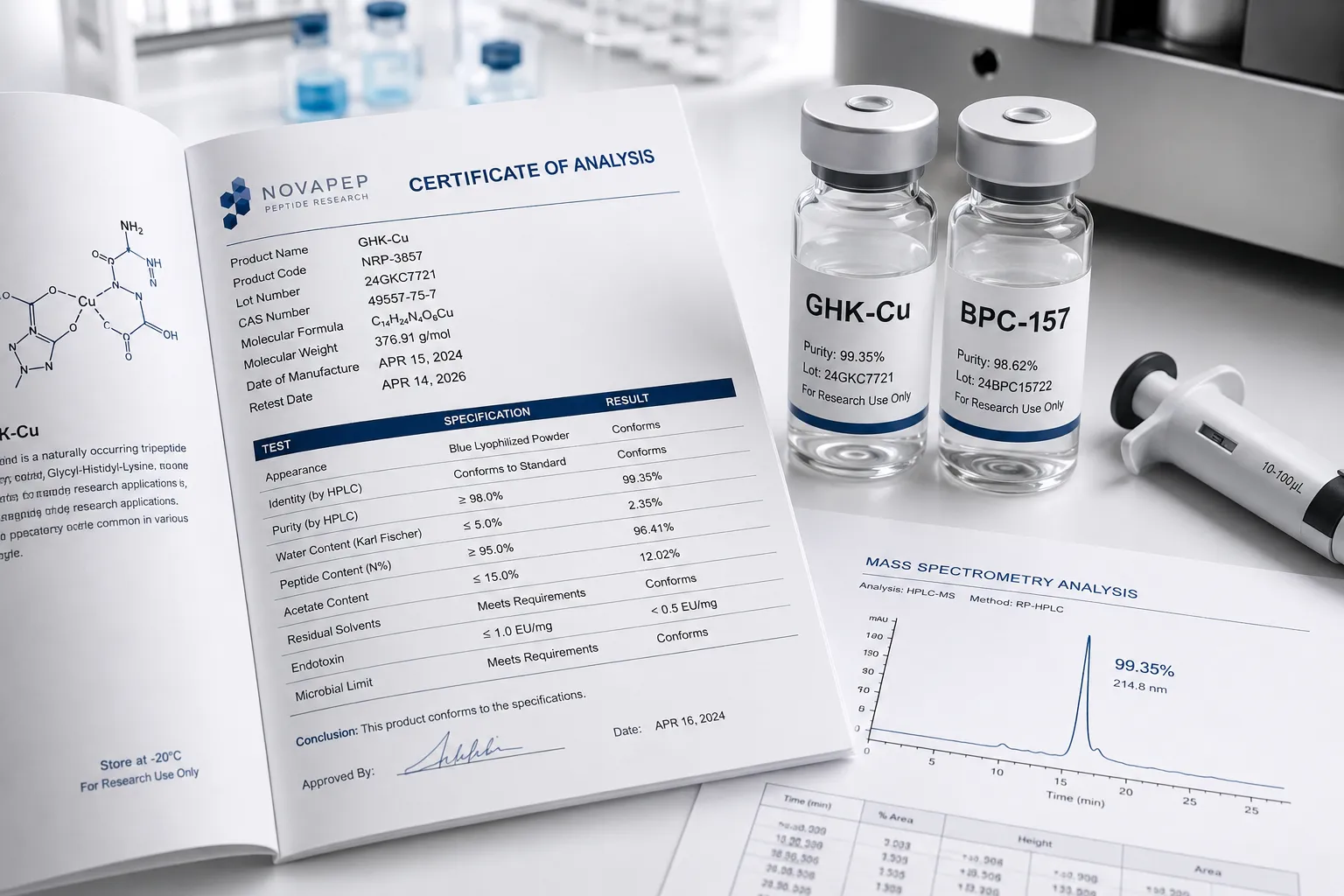
A valid COA should include:

  • Compound name and CAS number
  • Lot or batch number
  • Synthesis date and expiration date
  • HPLC purity percentage with a chromatogram
  • MS data confirming molecular weight
  • Residual solvent testing results
  • Sterility or endotoxin data (for in vivo studies)

The COA must be batch-specific, not a generic document reused across multiple lots. Vendors who provide only a single undated COA for all stock are a red flag. For a broader discussion of how reference standards underpin peptide benchmarking, see this resource on Bachem and reference standards for peptide benchmarks.

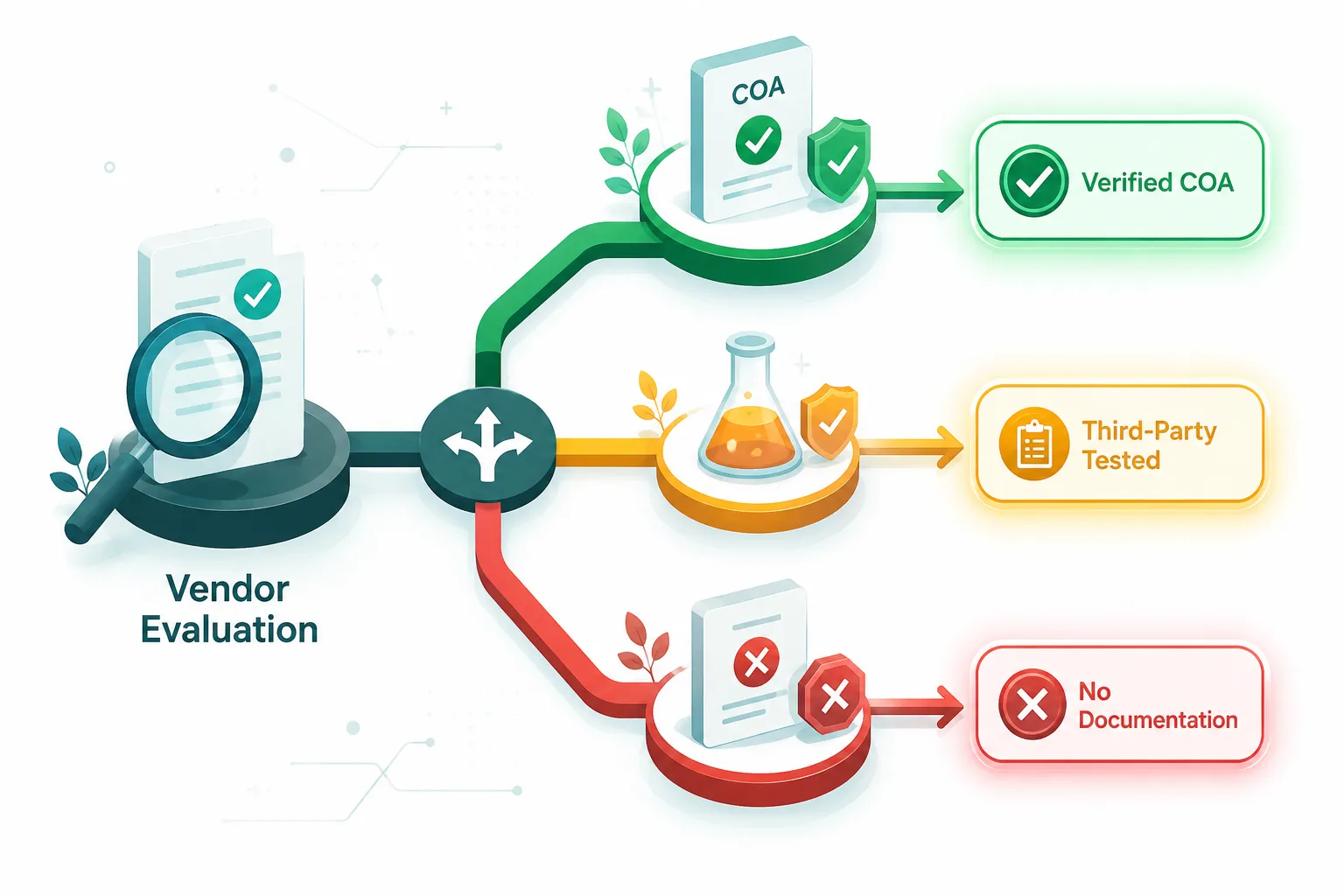
Third-Party vs. In-House Testing

Third-party laboratory testing carries significantly more credibility than in-house testing. Independent labs have no financial incentive to pass a failing batch. Reputable vendors will name the testing laboratory on the COA or provide a direct link to the lab's report.

Storage and Shipping Conditions

MOTS-c is a peptide and degrades under heat and moisture. 5-Amino-1MQ is more stable but still benefits from controlled storage. Vendors should ship with desiccant, cold packs where appropriate, and provide clear reconstitution and storage instructions. Lyophilized peptides stored at -20°C retain potency significantly longer than those stored at room temperature.

Evaluating Vendors: A Practical Framework

Evaluating Vendors: A Practical Framework

Knowing where to buy research-grade MOTS-c and 5-Amino-1MQ requires a structured vendor evaluation process. The following framework applies quality criteria for mitochondrial peptide studies in a practical, repeatable way.

Step 1, Request Documentation Before Purchase

Contact the vendor directly and request:

  1. A batch-specific COA for the current lot
  2. The name of the third-party testing laboratory
  3. Confirmation of synthesis method (solid-phase peptide synthesis is standard for MOTS-c)
  4. Storage and stability data

A vendor that responds promptly with complete documentation is demonstrating operational transparency. A vendor that deflects, provides generic documents, or cannot name their testing lab warrants immediate disqualification.

Step 2, Cross-Reference Molecular Data

Use publicly available databases (PubChem, UniProt) to verify that the molecular weight and sequence data on the COA match the known reference values for MOTS-c and 5-Amino-1MQ. This takes under five minutes and catches a surprising number of mislabeled products.

Step 3, Assess Vendor Transparency

Reputable suppliers of quality peptides publish their testing methodology, maintain updated product pages with current lot information, and respond to technical inquiries with substantive answers, not sales language.

Researchers sourcing MOTS-c specifically can review detailed product documentation at the MOTS-c peptide product page, which provides synthesis and purity information relevant to study design.

For comparative context on mitochondria-targeting peptides, the MOTS-c and elamipretide research overview is a useful reference when designing multi-compound protocols.

Step 4, Evaluate the Product Catalog Context

A vendor specializing in research peptides with a broad, documented catalog, including compounds like SS-31 (elamipretide), GHK-Cu, and other mitochondrial or metabolic peptides, is more likely to maintain consistent quality standards than a generalist supplement retailer adding peptides as an afterthought. The SS-31 elamipretide product category is a useful benchmark: vendors who carry it with proper documentation tend to apply the same rigor across their catalog.

For researchers working with copper peptides in parallel studies, the GHK-Cu peptide sourcing guide applies many of the same COA evaluation principles discussed here.

Common Sourcing Pitfalls

Pitfall Why It Matters
No batch-specific COA Cannot verify lot-to-lot consistency
HPLC purity below 98% Contaminants may alter mitochondrial assay results
No MS identity confirmation Product may be a structural analog, not the target compound
Ambient-temperature shipping Peptide degradation before arrival
Unusually low price Often correlates with reduced testing rigor

Researchers tempted by low-cost options should review the risks outlined in this analysis of cheapest peptides online before making a sourcing decision based primarily on price.

Conclusion

The integrity of mitochondrial peptide research depends directly on the quality of the compounds used. For investigators focused on MOTS-c and 5-Amino-1MQ, the sourcing decision is inseparable from the scientific decision. Applying rigorous quality criteria, batch-specific COAs, third-party HPLC and MS verification, proper cold-chain logistics, and vendor transparency, is not optional; it is the baseline for producing reproducible data.

Actionable next steps for researchers in 2026:

  1. Build a vendor evaluation checklist using the five quality criteria outlined above.
  2. Request COA documentation before placing any order, and verify molecular data against reference databases.
  3. Prioritize suppliers who name their third-party testing laboratory and provide batch-specific documentation.
  4. Store lyophilized MOTS-c at -20°C and follow vendor-specific reconstitution protocols to preserve activity.
  5. Cross-reference sourcing decisions with peer-reviewed protocols to ensure compound specifications meet the demands of the specific assay being used.

Reproducible science starts with verified compounds. The time invested in evaluating a vendor before purchase is always less than the time lost to ambiguous experimental results caused by substandard materials.

https://www.puretestedpeptides.com/wp-content/uploads/2026/07/where-to-buy-research-grade-mots-c-and-5-amino-1mq-quality-criteria-for-mitochon.webp 1024 1536 https://www.puretestedpeptides.com/wp-content/uploads/2026/01/buy-peptides-online.jpg 2026-07-30 13:04:592026-07-30 13:04:59Where to Buy Research-Grade MOTS‑c and 5‑Amino‑1MQ: Quality Criteria for Mitochondrial Peptide Studies
Tesofensine and Metabolic Research: How a Noradrenergic Appetite Modulator Compares With GLP‑3 Peptides in Study Design

Tesofensine and Metabolic Research: How a Noradrenergic Appetite Modulator Compares With GLP‑3 Peptides in Study Design

July 30, 2026/0 Comments/in Uncategorized/by

Obesity affects more than one billion adults worldwide, yet fewer than five percent of patients sustain meaningful weight loss beyond two years with lifestyle intervention alone. That gap has pushed preclinical researchers toward a broader toolkit, one that now includes both small-molecule reuptake inhibitors and next-generation incretin peptides. Tesofensine and metabolic research exploring how a noradrenergic appetite modulator compares with GLP-3 peptides in study design sits at the center of this conversation, raising important questions about mechanism, model selection, and how these two compound classes might inform each other.

Key Takeaways

  • Tesofensine is a triple monoamine reuptake inhibitor that reduces appetite primarily through central noradrenergic and dopaminergic signaling.
  • GLP-3 peptides such as retatrutide act peripherally and centrally via incretin receptors, creating a mechanistically distinct pathway from tesofensine.
  • Preclinical dosing models for tesofensine typically use 0.5-2.0 mg/kg ranges in rodent studies, while peptide-based protocols require different reconstitution and delivery planning.
  • Combining or comparing these two compound classes in study design can reveal additive appetite-suppression effects not achievable with either agent alone.
  • Researchers sourcing compounds for metabolic studies should prioritize purity verification and documented lot testing.

Key Takeaways

Mechanism of Action: What Makes Tesofensine Distinct in Metabolic Research

Tesofensine is a pre-synaptic reuptake inhibitor of serotonin, norepinephrine, and dopamine, a triple monoamine reuptake inhibitor (TMRI). Its appetite-suppressing effect is driven predominantly by noradrenergic and dopaminergic activity in the hypothalamus and mesolimbic reward circuits. Unlike GLP-1 receptor agonists, tesofensine does not engage incretin pathways directly. Instead, it modulates the central "hunger thermostat" by increasing synaptic availability of catecholamines.

Key mechanistic features:

  • Norepinephrine reuptake inhibition reduces orexigenic signaling in the lateral hypothalamus
  • Dopamine reuptake inhibition blunts food-reward motivation in the nucleus accumbens
  • Serotonin component contributes to satiety signaling, though it is weaker than dedicated SSRIs

This central mechanism stands in contrast to GLP-3 peptide research, which targets peripheral gut-derived incretin receptors and vagal afferent pathways before reaching the hypothalamus. Understanding this distinction is essential when designing comparative studies, because each compound class requires different outcome measures, tissue sampling protocols, and washout periods.

"Mechanistic diversity is not a weakness in obesity research, it is the foundation for rational combination study design."

Researchers working with BDNF-related appetite pathways may also find it useful to review BDNF peptide research themes, since central neurotrophic signaling intersects with both noradrenergic tone and incretin activity.

Preclinical Dosing Models and Study Design Considerations

Preclinical Dosing Models and Study Design Considerations

Tesofensine Dosing in Rodent Models

Published rodent studies have used tesofensine in the range of 0.5 to 2.0 mg/kg/day, typically administered by oral gavage or subcutaneous injection. Diet-induced obesity (DIO) mouse models are the most common platform because they replicate the hypercaloric, low-activity conditions seen in human metabolic syndrome.

Parameter Typical Range
Species C57BL/6 mice, Sprague-Dawley rats
Dose range 0.5-2.0 mg/kg/day
Duration 4-12 weeks
Primary endpoints Body weight, food intake, fat mass
Secondary endpoints Glucose tolerance, plasma lipids

GLP-3 Peptide Protocols for Comparison

GLP-3 class peptides, including retatrutide, which acts as a GLP-1/GIP/glucagon tri-agonist, require subcutaneous injection and are typically dosed in the 0.1-1.0 nmol/kg range in rodent models. Researchers interested in the evidence base around GLP-3 peptides for weight loss will note that these peptides have a fundamentally different pharmacokinetic profile: longer half-lives, receptor-mediated clearance, and dose-dependent nausea at higher concentrations.

When designing a head-to-head or combination study, researchers must account for:

  1. Different administration routes (oral vs. subcutaneous)
  2. Non-overlapping receptor targets requiring separate washout periods
  3. Distinct biomarker panels, catecholamine metabolites for tesofensine vs. GLP-1 and GIP levels for incretin peptides
  4. Potential additive effects on food intake without additive cardiovascular burden

For researchers also exploring growth hormone secretagogue peptides in metabolic panels, the tesa peptide research overview provides useful context on visceral fat endpoints that can be adapted for comparative metabolic studies.

How Tesofensine and Metabolic Research Compares With GLP-3 Peptides in Study Design: Practical Implications

How Tesofensine and Metabolic Research Compares With GLP-3 Peptides in Study Design: Practical Implications

Appetite Suppression: Central vs. Peripheral Pathways

The core design challenge when comparing tesofensine with GLP-3 peptides is that they suppress appetite through non-competing pathways. Tesofensine acts upstream in the CNS; retatrutide and related peptides act at peripheral receptors before triggering central satiety signals. This means:

  • Additive appetite suppression is plausible without simple pharmacological overlap
  • Combination protocols may reveal synergistic effects at sub-maximal doses of each compound
  • Adverse event profiles differ significantly, cardiovascular monitoring is critical for tesofensine, while GI tolerability is the primary concern for incretin peptides

Compound Sourcing and Purity Standards

Study validity depends heavily on compound quality. Researchers sourcing tesofensine or GLP-3 peptides for preclinical work should require:

  • Certificate of Analysis (CoA) with HPLC purity data (minimum 98%)
  • Mass spectrometry confirmation of molecular identity
  • Endotoxin testing for injectable preparations

Those looking to buy peptides online for research purposes should verify that suppliers provide lot-specific documentation. Researchers in Canada may also find the peptides in Canada sourcing guide a useful reference for regulatory context.

For teams comparing multiple peptide classes in the same metabolic panel, lab-tested peptide sourcing from documented suppliers reduces batch-to-batch variability that can confound longitudinal data.

Additionally, researchers building multi-compound metabolic panels may want to review GLP-1 peptide sourcing and generational research concepts to understand how incretin compound generations differ in receptor binding profiles.

Conclusion

Tesofensine and metabolic research examining how a noradrenergic appetite modulator compares with GLP-3 peptides in study design represents one of the more nuanced areas of obesity pharmacology. The two compound classes operate through distinct, potentially complementary mechanisms, central catecholamine reuptake inhibition versus peripheral incretin receptor activation, making them valuable both as standalone research tools and as candidates for combination protocol design.

Actionable next steps for researchers:

  • Define primary endpoints early: body weight and food intake for tesofensine; GLP-1 and insulin secretion indices for incretin peptides
  • Build separate washout periods into crossover designs to prevent mechanistic interference
  • Source compounds with full lot-specific CoA documentation to protect data integrity
  • Consider sub-maximal combination dosing to explore additive appetite suppression without compounding adverse event risk
  • Review the growing literature on tri-agonist peptides like retatrutide to understand where GLP-3 class compounds are headed

As the obesity research landscape evolves, understanding how small-molecule modulators and peptide-based agents interact at the systems level will be critical to designing studies that translate meaningfully from bench to clinic.


References

  • Astrup, A., Meier, D. H., Mikkelsen, B. O., Villumsen, J. S., & Larsen, T. M. (2008). Weight loss produced by tesofensine in patients with Parkinson's or Alzheimer's disease. Obesity, 16(6), 1363-1369.
  • Lehr, T., Staab, A., Tillmann, C., Trommeshauser, D., Schaefer, H. G., & Kloft, C. (2008). A quantitative enterohepatic circulation model: development and evaluation with tesofensine and meloxicam. Clinical Pharmacokinetics, 47(4), 291-307.
  • Friedrichsen, M., Sørensen, A., Faber, J., Holst, J. J., Carr, R. D., Petersen, J. S., & Bagger, J. I. (2015). Differential effects of tesofensine on gut hormones in humans. Obesity, 23(9), 1789-1796.
  • Nauck, M. A., & D'Alessio, D. A. (2022). Tirzepatide, a dual GIP/GLP-1 receptor co-agonist for the treatment of type 2 diabetes with unmatched effectiveness regrading glycaemic control and body weight reduction. Cardiovascular Diabetology, 21(1), 169.
  • Jastreboff, A. M., Aronne, L. J., Ahmad, N. N., Wharton, S., Connery, L., Alves, B., & Kiyosue, A. (2023). Tirzepatide once weekly for the treatment of obesity. New England Journal of Medicine, 387(3), 205-216.
https://www.puretestedpeptides.com/wp-content/uploads/2026/07/tesofensine-and-metabolic-research-how-a-noradrenergic-appetite-modulator-compar.webp 1024 1536 https://www.puretestedpeptides.com/wp-content/uploads/2026/01/buy-peptides-online.jpg 2026-07-30 13:04:482026-07-30 13:04:48Tesofensine and Metabolic Research: How a Noradrenergic Appetite Modulator Compares With GLP‑3 Peptides in Study Design
Klow Blend Peptide Nasal Spray: Research Applications and Bioavailability Considerations

Klow Blend Peptide Nasal Spray: Research Applications and Bioavailability Considerations

July 30, 2026/0 Comments/in Uncategorized/by

Nasal peptide delivery has quietly outpaced several conventional routes in preclinical research settings, absorption rates through the olfactory mucosa can rival or exceed subcutaneous injection for certain low-molecular-weight compounds. That single pharmacokinetic fact explains why researchers are now examining formulations like Klow Blend Peptide Nasal Spray: Research Applications and Bioavailability Considerations with serious attention. This article breaks down what the Klow Blend is, how its nasal delivery format affects bioavailability, and what current research models suggest about its targeted applications.

Important notice: All content here is intended strictly for informational and research purposes. Klow Blend is not an approved drug, and no content below should be interpreted as medical advice.

Key Takeaways

  • Klow Blend is a proprietary four-peptide research blend with no current regulatory drug classification.
  • Nasal spray delivery bypasses first-pass hepatic metabolism, potentially improving peptide absorption.
  • The olfactory and trigeminal pathways offer direct central nervous system access relevant to certain research models.
  • Stability, pH, and mucosal permeability are the primary formulation variables researchers must control.
  • Klow Blend nasal spray exists as a research kit product, not a clinical or over-the-counter medicine.

Key Takeaways

What Is the Klow Blend and Why Does Formulation Matter

The Klow Blend is a four-peptide research stack assembled to target complementary biological pathways simultaneously. Unlike single-peptide compounds, blended formulations are designed so that each component may support or amplify the activity of the others. Researchers working with research-only peptides will recognize this synergistic stacking approach from other well-documented blends.

No scientific literature or regulatory body currently lists "Klow Blend" as a recognized drug entity. The product name appears exclusively in proprietary research kit contexts. This distinction is critical: it means the compound operates entirely outside clinical trial frameworks and is studied only in controlled, non-human experimental models.

Why does the specific formulation matter?

  • Peptides are fragile molecules that degrade rapidly in acidic environments.
  • The carrier solution, preservatives, and pH buffer all influence how much active compound reaches target tissue.
  • Nasal spray formats introduce unique variables including droplet size, mucosal residence time, and ciliary clearance rate.

Researchers sourcing blended peptide stacks should prioritize vendors that provide third-party purity testing. Reviewing online peptide sourcing options with documented quality controls is a practical first step before designing any experimental protocol.

Nasal Delivery Pathway and Bioavailability Considerations for Klow Blend Peptide Nasal Spray

Nasal Delivery Pathway and Bioavailability Considerations for Klow Blend Peptide Nasal Spray

Intranasal delivery is not simply a convenient alternative to injection. It represents a fundamentally different pharmacokinetic route with distinct advantages and limitations for peptide research.

The Olfactory and Trigeminal Routes

The nasal cavity contains two primary pathways relevant to peptide transport:

Pathway Target Area Research Relevance
Olfactory nerve route Olfactory bulb, CNS Direct brain access, bypasses blood-brain barrier
Trigeminal nerve route Brainstem, cerebellum Broader CNS distribution
Systemic absorption Bloodstream via mucosa Peripheral tissue targeting

For a four-peptide blend, each component may preferentially use a different pathway depending on its molecular weight and lipophilicity. This is one reason why Klow Blend Peptide Nasal Spray: Research Applications and Bioavailability Considerations cannot be evaluated with a single bioavailability number, each peptide within the blend requires individual pharmacokinetic profiling.

Key Bioavailability Variables

Researchers must account for several formulation-specific factors:

  • pH of the carrier solution: Nasal mucosa tolerates a pH range of approximately 4.5 to 6.5. Deviations accelerate peptide degradation.
  • Droplet particle size: Particles between 10 and 50 microns deposit optimally on olfactory epithelium; larger droplets travel to the throat and are swallowed.
  • Mucociliary clearance: The nasal mucosa clears foreign substances within 15 to 30 minutes, limiting absorption windows.
  • Peptide molecular weight: Compounds under 1,000 Daltons generally show superior transmucosal permeability.

Researchers familiar with BPC-157 and TB-500 blend protocols will recognize similar formulation challenges when working with multi-peptide nasal preparations.

Research Applications and Experimental Protocols

Research Applications and Experimental Protocols

Given its four-peptide composition and nasal delivery format, the Klow Blend is being examined across several preclinical research domains in 2026.

Neurological and Cognitive Research Models

The direct olfactory-to-CNS pathway makes intranasal peptide delivery particularly attractive for neuroscience research. Experimental models investigating neuroprotection, synaptic signaling, and neuroinflammation have used intranasal peptide administration to achieve faster CNS distribution than peripheral injection allows. Researchers exploring related compounds such as Selank will find overlapping methodology applicable to Klow Blend protocols.

Metabolic and Systemic Research Models

Several peptide blends targeting growth hormone secretagogue pathways, such as those explored in IPA and Sermorelin stack research, share structural similarities with components found in multi-peptide nasal formulations. Metabolic research models examining body composition, lipid regulation, and insulin sensitivity represent a secondary application area for Klow Blend investigation.

Tissue Recovery and Regenerative Models

Peptide blends with regenerative targets, comparable to those studied in BPC-157 and TB-500 research, may inform how Klow Blend components interact with tissue repair pathways when delivered intranasally versus subcutaneously.

Protocol Design Recommendations

Researchers designing Klow Blend nasal spray experiments should consider:

  1. Establishing individual peptide baseline pharmacokinetics before blend testing.
  2. Using validated animal models with documented nasal mucosal permeability data.
  3. Controlling ambient temperature and humidity during spray administration.
  4. Documenting reconstitution procedures and storage conditions rigorously.

For researchers building out broader experimental stacks, reviewing peptide blend reconstitution guides provides a practical framework for handling multi-component formulations safely.

Conclusion

Klow Blend Peptide Nasal Spray: Research Applications and Bioavailability Considerations sits at the intersection of advanced peptide pharmacology and innovative delivery science. The nasal route offers genuine advantages, bypassing hepatic metabolism, enabling potential CNS access, and reducing injection burden in experimental models, but it also demands precise formulation control that single-peptide protocols do not always require.

Actionable next steps for researchers:

  • Audit your sourcing pipeline and confirm third-party purity documentation before acquiring any multi-peptide blend.
  • Review existing intranasal peptide pharmacokinetic literature to benchmark expected absorption ranges for each component.
  • Design pilot experiments with individual peptide components before testing the full Klow Blend formulation.
  • Consult the broader peptide research blog for updated protocols and sourcing guidance relevant to nasal delivery research.

As intranasal peptide research matures through 2026 and beyond, blends like Klow represent a meaningful frontier, provided researchers approach them with rigorous experimental design and transparent sourcing standards.

https://www.puretestedpeptides.com/wp-content/uploads/2026/07/klow-blend-peptide-nasal-spray-research-applications-and-bioavailability-conside.webp 1024 1536 https://www.puretestedpeptides.com/wp-content/uploads/2026/01/buy-peptides-online.jpg 2026-07-30 13:04:422026-07-30 13:04:42Klow Blend Peptide Nasal Spray: Research Applications and Bioavailability Considerations
Where to Buy Research-Grade Glow Blend Peptide: Evaluating Purity, Copper Complexes, and Skin-Model Compatibility

Where to Buy Research-Grade Glow Blend Peptide: Evaluating Purity, Copper Complexes, and Skin-Model Compatibility

July 30, 2026/0 Comments/in Uncategorized/by

Fewer than 30% of peptide products sold online carry independent third-party purity certificates, a sobering figure for researchers who depend on consistent compound quality to generate reproducible data. For anyone navigating where to buy research-grade Glow Blend peptide while evaluating purity, copper complexes, and skin-model compatibility, that statistic is the right place to start. Sourcing decisions made at the catalog stage directly shape the reliability of every downstream assay.

Key Takeaways

  • Research-grade Glow Blend peptide must meet strict purity thresholds (typically 98%+) verified by HPLC and mass spectrometry before use in skin models.
  • GHK-Cu (copper tripeptide-1) is the anchor active in most Glow Blend formulations; its copper coordination chemistry must remain intact through lyophilization and reconstitution.
  • Excipient profiles, including carrier solvents, stabilizers, and pH buffers, directly affect compatibility with in vitro keratinocyte and fibroblast assays.
  • Supplier vetting should include certificate of analysis review, batch-specific testing, and confirmed cold-chain logistics.
  • Regulatory context matters: research peptides are sold strictly for laboratory use, not for human application.

Key Takeaways

Understanding What Glow Blend Peptide Contains

Before evaluating where to buy research-grade Glow Blend peptide and assessing purity, copper complexes, and skin-model compatibility, researchers need a clear picture of the compound's composition.

Glow Blend peptide is a multi-component formulation typically anchored by GHK-Cu (glycyl-L-histidyl-L-lysine copper(II)), often combined with supporting peptides such as Palmitoyl Tripeptide-1, Acetyl Hexapeptide-3, or similar signal peptides. Each component targets a distinct pathway in skin biology:

Component Primary Research Target
GHK-Cu Collagen synthesis, wound signaling, antioxidant activity
Palmitoyl Tripeptide-1 Extracellular matrix remodeling
Acetyl Hexapeptide-3 Neuromuscular junction signaling in vitro

For a deeper background on GHK-Cu sourcing and its coordination chemistry, the GHK-Cu peptide purchase and copper peptide research sourcing guide provides a thorough overview of what to look for in a copper-chelated peptide product.

Understanding what the Glow peptide does at the receptor and signaling level is equally important before designing any in vitro protocol.

Purity Standards and Copper Complex Integrity

Purity Standards and Copper Complex Integrity

Why Purity Thresholds Matter

For skin-model research, including reconstructed epidermis assays and primary keratinocyte cultures, peptide purity below 98% introduces uncontrolled variables. Impurities such as residual solvents, truncated sequences, or oxidized copper species can trigger cytotoxic responses that confound results.

Minimum documentation to request from any supplier:

  • HPLC chromatogram with area-under-curve purity percentage
  • Mass spectrometry confirmation of molecular weight
  • Endotoxin testing (LAL assay), especially for cell-culture applications
  • Certificate of Analysis (CoA) tied to the specific batch number on the vial

Copper Complex Stability

GHK-Cu's biological activity depends entirely on intact copper(II) coordination. During lyophilization (freeze-drying), improper buffer conditions or temperature excursions can cause copper dissociation, yielding free GHK peptide with no metal center. This renders the compound functionally different from what the research literature describes.

"A copper peptide that has lost its metal coordination is not the same molecule, it is a different research variable entirely."

When reviewing a supplier's CoA, look specifically for confirmation that the copper:peptide molar ratio meets the 1:1 stoichiometry expected for GHK-Cu. Suppliers who cannot provide this data should be disqualified from consideration.

Excipient Compatibility

Many Glow Blend formulations include excipients such as mannitol (a lyoprotectant), acetate or phosphate buffers, or trace DMSO as a carrier. Each of these can interfere with specific assay types:

  • Mannitol is generally inert in keratinocyte cultures at low concentrations.
  • DMSO above 0.1% v/v is cytotoxic to most skin-model systems.
  • Acetate buffers can shift well-plate pH if reconstitution volume is miscalculated.

Requesting a full excipient disclosure is a non-negotiable step before committing to a supplier for skin-model work.

How to Vet Suppliers for Research-Grade Glow Blend Peptide

How to Vet Suppliers for Research-Grade Glow Blend Peptide

Evaluating Where to Buy Research-Grade Glow Blend Peptide: Key Supplier Criteria

The question of where to buy research-grade Glow Blend peptide while evaluating purity, copper complexes, and skin-model compatibility ultimately comes down to a structured vetting process. The following criteria separate credible research-grade suppliers from commodity vendors:

1. Independent Third-Party Testing
Reputable suppliers use external ISO-accredited laboratories rather than in-house testing alone. Batch-specific CoAs should be publicly accessible or available on request.

2. Cold-Chain Logistics
Lyophilized peptides tolerate ambient shipping better than reconstituted solutions, but GHK-Cu is still sensitive to heat and humidity. Suppliers should ship with desiccant packs and clearly state storage conditions (typically -20°C for long-term storage).

3. Transparent Formulation Disclosure
A research-grade supplier will disclose the full peptide sequence, molecular weight, and excipient list. Vague product descriptions are a red flag.

4. Research-Only Sales Policy
Legitimate suppliers sell peptides exclusively for laboratory research purposes, not for human use. This is a compliance marker that signals a professionally operated business.

For researchers also sourcing related compounds, reviewing quality peptide sourcing standards offers a useful benchmark framework applicable across peptide categories.

Those working in Canada should also consult the peptides in Canada sourcing guide for region-specific regulatory context.

Skin-Model Compatibility Checklist

Before ordering, confirm the following with the supplier:

  • Sterile filtration (0.22 micron) available or specified
  • Endotoxin levels below 1 EU/mg for cell-culture applications
  • Peptide solubility data in aqueous buffers relevant to your assay system
  • Stability data under your expected storage conditions

Researchers running parallel studies with other peptide compounds can find additional sourcing guidance in the research blog covering multi-peptide experimental design.

For those evaluating blend formulations more broadly, the Glow Blend peptide product page provides current catalog specifications and documentation availability.

It is also worth reviewing what not to mix with peptides before designing multi-compound assay protocols, as certain co-solvents and buffer combinations can degrade copper complexes rapidly.

Conclusion

Sourcing research-grade Glow Blend peptide is not a passive catalog decision, it is an active quality-control process. Researchers should require HPLC and mass spectrometry documentation, verify copper(II) coordination integrity in GHK-Cu-containing blends, and audit excipient profiles against their specific skin-model assay requirements before placing any order.

Actionable next steps:

  1. Request batch-specific CoAs from at least two suppliers and compare purity percentages and endotoxin data side by side.
  2. Confirm copper:peptide stoichiometry is documented at 1:1 for GHK-Cu components.
  3. Cross-reference excipient lists against your cell-culture system's solvent tolerance thresholds.
  4. Verify the supplier operates under a research-only sales policy with transparent third-party testing.
  5. Store lyophilized product at -20°C and document reconstitution conditions in your lab notebook before beginning any skin-model experiment.

Rigorous sourcing is the foundation of reproducible skin-biology research. The time invested in vetting a supplier before the first order protects the integrity of every experiment that follows.

https://www.puretestedpeptides.com/wp-content/uploads/2026/07/where-to-buy-research-grade-glow-blend-peptide-evaluating-purity-copper-complexe.webp 1024 1536 https://www.puretestedpeptides.com/wp-content/uploads/2026/01/buy-peptides-online.jpg 2026-07-30 13:04:122026-07-30 13:04:12Where to Buy Research-Grade Glow Blend Peptide: Evaluating Purity, Copper Complexes, and Skin-Model Compatibility
Page 37 of 81«‹3536373839›»
×

Helpful Links

  • My account
  • Cart
  • Checkout
  • Refund and Returns Policy
  • Privacy Policy
  • SMS Privacy Policy
  • Login
  • My Account
  • Logout

USA Made Lab Tested Peptides

All products are sold for research, laboratory, or analytical purposes only, and are not for human consumption


Pure Tested Peptides is a chemical supplier. Pure Tested Peptides is not a compounding / chemical compounding facility as defined under 503A of the Federal Food, Drug, and Cosmetic act. Pure Tested Peptides is not an outsourcing facility as defined under 503B of the Federal Food, Drug, and Cosmetic act.

The statements made within this website have not been evaluated by the US Food and Drug Administration. The products we offer are not intended to diagnose, treat, cure or prevent any disease.

Human/Animal Consumption Prohibited. Laboratory/In-Vitro Experimental Use Only

Scroll to top Scroll to top Scroll to top