Call or Text 727-513-9780
  • Shopping Cart Shopping Cart
    0Shopping Cart
Pure Tested Peptides | America's most trusted Peptides for sale online
  • Peptides for sale
    • Oral Peptides for sale
      • Peptide Capsules for sale
      • BPC 157 Capsules 1000mcg
      • SLU-PP-332 Capsules | 1000 mcg
      • 5-Amino-1MQ 50mg Capsules
      • Tesofensine 500mcg
    • All Peptides for sale
    • Peptide Sprays
      • BPC 157 Nasal Spray Kit
      • BPC-157 TB500 Nasal Spray Kit
      • Semax Nasal Spray 10mg
      • Selank – Nasal Spray Kit – 10mg
      • Epithalon 50MG Nasal Spray Kit
      • Ipamorelin 10mg Nasal Spray
      • Klow Nasal Spray (BPC-157 + TB-500 + GHK-Cu + KPV) | 80mg
      • Hulk Nasal Spray Tesa / Ipa Blend 6/3 MG
      • Klow Nasal Spray
      • NAD + 500 mg Nasal Spray
      • PT-141 Nasal Spray Kit
    • GHRH Peptides
      • Ipa Peptides
      • CJC-1295 Peptides
        • CJC-1295 with DAC 5 mg
        • CJC-1295 without DAC 5 mg
        • CJC-1295 Ipa 10mg
      • Tesa Peptides
        • Tesa Peptide
        • Tesa 20 mg
    • GHK-Cu Peptides
      • All GHK-Cu Peptides
      • GHK-Cu 100mg
      • KLOW Peptide Blend – Buy KLOW blend online
    • BPC Peptides
      • All BPC Peptides
      • BPC-157
      • BPC-157 TB-500
      • BPC 157 capsules 1000mcg
    • SLU-PP-332 Peptides
      • All SLU-PP-332 Peptides
      • SLU-PP-332 5mg
    • GLP3 Peptides
    • PT-141 Peptides
      • PT-141 Peptides for sale
      • PT-141 10mg
      • PT-141 Nasal Spray
    • CAG Peptides
      • Lipo-C Peptide Blend
      • CAG 5mg
      • CAG 10mg
    • MOTS-C Peptides
      • MOTS-C Peptides for sale
      • MOTS-c peptide
      • MOTS-c 10mg *6 pack*
    • 5 Amino 1MQ Peptides
      • 5 Amino 1MQ Peptides for sale
      • 5-Amino-1MQ 50mg Capsules
      • 5-Amino-1MQ 5mg
    • Epithalon Peptides
      • Epithalon Peptides for sale
      • Epithalon 10mg
      • Epithalon 50mg
  • Shop
    • GLPs
      • 5-Amino-1MQ 50mg Capsules
      • 5-Amino-1MQ 5mg
      • L-Carnitine 500mg/ml
      • Tesofensine 500mcg
      • SLU-PP-332 5mg
      • MOTS-c 10mg *6 pack*
    • Epithalon & BPC Peptides
      • Epithalon 10mg
      • Epithalon 50mg
      • BPC-157
      • BPC 157 capsules 1000mcg
      • BPC-157 TB-500
      • BPC-157 TB500 Nasal Spray Kit
      • BPC 157 Nasal Spray Kit
    • BPC TB-500 & NAD+ Peptides
      • NAD+ 500 mg
      • KLOW Peptide Blend – Buy KLOW blend online
      • GLOW Peptide Blend
      • TB 500 5mg
      • BPC 157 capsules 1000mcg – Supplement
      • BPC 157 Nasal Spray Kit
      • BPC-157
      • BPC-157 TB500 Nasal Spray Kit
      • BPC-157 TB-500
      • BPC 157 capsules 1000mcg
    • LL-37 Peptide
      • LL-37 10 mg
    • MOTS-C & Selank
      • MOTS-c peptide
      • Selank 10mg
    • GHK Peptides
      • GHK-Cu 100mg
      • GLOW Peptide Blend
      • KLOW Peptide Blend – Buy KLOW blend online
  • COAs
  • Wholesale
    • Wholesale Peptides for sale
  • PTP FAQ
  • Affiliates
    • Selank Peptide: Advanced Pharmacological Mechanisms Underlying Its Anxiolytic and Nootropic Effects in Research
      • 5-Amino-1MQ Peptide: Detailed Mechanisms of NNMT Inhibition and Its Impact on Cellular Metabolism Research
        • MOTS-C Peptide: Unraveling Its Role in Mitochondrial Dynamics and Energy Metabolism Research
          • Epithalon Peptide and Telomerase Regulation: Investigating Its Impact on Cellular Senescence and Lifespan Research Models
            • GLP2-T vs GLP2 Tirz Peptide: Understanding the Naming, Mechanistic Nuances, and Research Implications for Gut Health
      • Peptides and Polypeptides in Modern Pharmacology: What Research on Metoprolol, Prednisone, and Amlodipine Reveals
        • Polypeptide Peptides vs NSAIDs: What Naproxen and Diclofenac Teach Tissue-Repair Researchers About BPC‑157 and TB‑500
          • Peptides and Polypeptides in Endocrine Pharmacology: How GLP-1, GLP-2, and GLP-3 Retatrutide Differ From Classic Drugs Like Prednisone and Amlodipine
          • 5‑Amino‑1MQ Peptide and NNMT Inhibition: How It Compares With Statins Like Atorvastatin in Adipose and Lipid Metabolism Research
      • Enclomiphene, Estrogen Receptor Signaling, and Luteinizing Phase Biology: What Hormone Researchers Should Measure
        • Mesenchymal Stem Cells, BPC‑157, and GHK‑Cu: How Tissue Repair Peptides Compare With Classic NSAIDs Like Naproxen in Injury Models
          • Peptide Calculator Use Cases Beyond Growth Hormone: Working Through GLP‑3 Retatrutide, MOTS‑c, and BPC‑157 Research Dosing
        • Polypeptide Peptides in Endocrine and Metabolic Pharmacology: Lessons From Amlodipine, Prednisone, and Metoprolol
        • Peptides Calculator for Advanced Blends: Worked Examples for Tesamorelin, CJC‑1295, and Ipamorelin Stacks
          • Peptides and Polypeptides in Human Physiology: How Molecular Size Shapes Research Applications
            • Selank Peptide: Advanced Pharmacological Mechanisms Underlying Its Anxiolytic and Nootropic Effects in Research
          • 5-Amino-1MQ Peptide: Detailed Mechanisms of NNMT Inhibition and Its Impact on Cellular Metabolism Research
            • MOTS-C Peptide: Unraveling Its Role in Mitochondrial Dynamics and Energy Metabolism Research
              • Epithalon Peptide and Telomerase Regulation: Investigating Its Impact on Cellular Senescence and Lifespan Research Models
                • GLP2-T vs GLP2 Tirz Peptide: Understanding the Naming, Mechanistic Nuances, and Research Implications for Gut Health
                  • Peptides and Polypeptides in Endocrine Pharmacology: How GLP-1, GLP-2, and GLP-3 Retatrutide Differ From Classic Drugs Like Prednisone and Amlodipine
                    • Polypeptide Peptides vs NSAIDs: What Naproxen and Diclofenac Teach Tissue-Repair Researchers About BPC‑157 and TB‑500
                      • Peptides and Polypeptides in Modern Pharmacology: What Research on Metoprolol, Prednisone, and Amlodipine Reveals
                        • 5‑Amino‑1MQ Peptide and NNMT Inhibition: How It Compares With Statins Like Atorvastatin in Adipose and Lipid Metabolism Research
                        • Enclomiphene, Estrogen Receptor Signaling, and Luteinizing Phase Biology: What Hormone Researchers Should Measure
                        • Mesenchymal Stem Cells, BPC‑157, and GHK‑Cu: How Tissue Repair Peptides Compare With Classic NSAIDs Like Naproxen in Injury Models
                        • Peptide Calculator Use Cases Beyond Growth Hormone: Working Through GLP‑3 Retatrutide, MOTS‑c, and BPC‑157 Research Dosing
                        • Polypeptide Peptides in Endocrine and Metabolic Pharmacology: Lessons From Amlodipine, Prednisone, and Metoprolol
                        • Peptides Calculator for Advanced Blends: Worked Examples for Tesamorelin, CJC‑1295, and Ipamorelin Stacks
                        • Peptides and Polypeptides in Human Physiology: How Molecular Size Shapes Research Applications
                        • Selank Peptide: Advanced Pharmacological Mechanisms Underlying Its Anxiolytic and Nootropic Effects in Research
                        • MOTS-C Peptide: Unraveling Its Role in Mitochondrial Dynamics and Energy Metabolism Research
                        • Peptides and Polypeptides in Modern Pharmacology: What Research on Metoprolol, Prednisone, and Amlodipine Reveals
                        • Peptides and Polypeptides in Endocrine Pharmacology: How GLP-1, GLP-2, and GLP-3 Retatrutide Differ From Classic Drugs Like Prednisone and Amlodipine
                        • 5-Amino-1MQ Peptide: Detailed Mechanisms of NNMT Inhibition and Its Impact on Cellular Metabolism Research
                        • Mesenchymal Stem Cells, BPC‑157, and GHK‑Cu: How Tissue Repair Peptides Compare With Classic NSAIDs Like Naproxen in Injury Models
                        • Peptide Calculator Use Cases Beyond Growth Hormone: Working Through GLP‑3 Retatrutide, MOTS‑c, and BPC‑157 Research Dosing
                        • GLP2-T vs GLP2 Tirz Peptide: Understanding the Naming, Mechanistic Nuances, and Research Implications for Gut Health
                        • Polypeptide Peptides in Endocrine and Metabolic Pharmacology: Lessons From Amlodipine, Prednisone, and Metoprolol
                        • Polypeptide Peptides vs NSAIDs: What Naproxen and Diclofenac Teach Tissue-Repair Researchers About BPC‑157 and TB‑500
                        • Peptides and Polypeptides in Human Physiology: How Molecular Size Shapes Research Applications
                        • Peptides Calculator for Advanced Blends: Worked Examples for Tesamorelin, CJC‑1295, and Ipamorelin Stacks
                        • 5‑Amino‑1MQ Peptide and NNMT Inhibition: How It Compares With Statins Like Atorvastatin in Adipose and Lipid Metabolism Research
                        • Enclomiphene, Estrogen Receptor Signaling, and Luteinizing Phase Biology: What Hormone Researchers Should Measure
                        • Epithalon Peptide and Telomerase Regulation: Investigating Its Impact on Cellular Senescence and Lifespan Research Models
                        • Best research protocol Klow blend
                        • best time to take BPC-157
                        • best time to take DSIP (Delta Sleep Inducing Peptide)
                        • best time to take CJC-1295
                        • best time to take AOD-9604
                        • best time to take Follistatin 344
                        • best time to take Ipamorelin
                        • best time to take MK-677 (Ibutamoren)
                        • best time to take Ligandrol (LGD-4033) — research compound
                        • best time to take Ostarine (MK-2866) — research compound
                        • best time to take GHK-CU
                        • best time to take TB-500
                        • best time to take MOTS-c
                        • best time to take Semax
                        • best time to take RAD-140 (Testolone) — research compound
                        • best time to take Thymosin Alpha-1
                        • best time to take PEG-MGF
                        • Biolife Plasma, Octapharma Plasma, and Research Peptides: How Plasma Donation Labs Differ From Peptide Suppliers
                        • best time to take YK-11 — research compound
                        • best time to take PT-141 (Bremelanotide)
                        • Best research protocol Klow blend
                        • 5-Amino-1MQ and MOTS-C Synergy: Metabolic Signaling, Mitochondria, and Research Design
                        • BPC-157 and TB-500: Investigating Their Combined Effects on Angiogenesis and Cellular Migration in Tissue Repair Models
                        • BPC-157 Peptide: Gut Barrier Function, Inflammation, and Tissue-Recovery Research
                        • 5‑Amino‑1MQ and MOTS‑c Synergy in Metabolic Research: Designing NNMT and Mitochondrial Biogenesis Stacks
                        • CJC-1295 with DAC vs. Without DAC: Half-Life, Release Kinetics, and Research Implications
                        • CJC‑1295 with DAC vs. Without DAC: Expanding on Half‑Life Differences Using Tesamorelin and Ipamorelin Blend Case Studies
                        • Collagen Biology and Copper‑Binding Peptides: How GHK‑Cu, Glow Blend, and Klow Blend Interact with Skin and Connective Tissue
                        • Collagen Biology and Regenerative Peptides: How GHK‑Cu, Glow Blend, and Klow Blend Affect Extracellular Matrix Research
                    • DNA, Telomeres, and Longevity Peptides: Positioning Epithalon and MOTS‑c in Genetic Aging Research
                      • Enclomiphene Citrate: serm Mechanism, Testosterone Research, and Stack Compatibility
                        • Enclomiphene vs Enclomiphene Citrate: Formulation, Bioavailability, and Research Distinctions
                        • Epithalon Peptide Research: Telomerase Activation, Aging, and Pineal Gland Function
                        • Estrogen Receptor Signaling and Enclomiphene: How Selective Modulators Compare with Classic Polypeptide Hormones
                        • GHK-Cu Peptide: Advanced Mechanisms in Extracellular Matrix Remodeling and Wound Healing Research
                        • GHK-Cu Peptide: Collagen Synthesis, Wound Repair, and Skin-Barrier Research Models
                        • GLP-1 vs GLP-3 vs GLP-2: Peptide Classification and Research Applications
                        • GLP-2 Peptide Research Guide: Gut Barrier Function, Nutrient Absorption, and Intestinal Recovery Models
                        • GLP-3 Retatrutide vs. GLP-1 Drugs: What Triple-Agonist Biology Changes in Research Models
                        • Ipamorelin and Tesamorelin Combination: Synergistic GH Secretagogue Research and Dosing Protocols
                        • GLP2 Tirz Peptide: What It Is, Why the Name Exists, and How Researchers Should Interpret It
                        • Klow Blend Peptide Nasal Spray: What the Formulation Is Trying to Do in Cognitive Research
                        • Mitochondria, NNMT Inhibition, and Peptide Modulators: Where MOTS‑c and 5‑Amino‑1MQ Fit in Cellular Energy Research
                        • MOTS-c Peptide: Mitochondrial Function, Energy Metabolism, and What Researchers Measure
                        • MOTS-c vs. 5-Amino-1MQ: Which Metabolic Research Questions Each Compound Actually Answers
                        • Nasal Spray Peptides: Bioavailability, Administration, and Semax/Selank Research Applications
                        • PT-141 Peptide Research: Mechanism of Action and Melanocortin Receptor Signaling
                        • Retatrutide for Research: Mechanism, Structure, and GLP-1/GLP-3 Dual Action
                        • Retatrutide for Obesity and Type 2 Diabetes: What the Latest Trial Data Suggest
                        • Tesofensine Peptide Research: Mechanism, Appetite Suppression, and Neuropeptide Y Pathways
  • Contact
    • Contact Customer Service
    • Text Customer Support
  • About US
  • Shop all peptides
  • Affiliate Program
    • Affiliate Signup
  • Login / Register Login / Register Page Link Login / Register Page Link
  • Click to open the search input field Click to open the search input field Search
  • Menu Menu
Where to Buy Research-Grade Enclomiphene and Enclomiphene Citrate: Purity, Certificates of Analysis, and Lab-Use Considerations

Where to Buy Research-Grade Enclomiphene and Enclomiphene Citrate: Purity, Certificates of Analysis, and Lab-Use Considerations

August 2, 2026/0 Comments/in Uncategorized/by

Fewer than 40% of research chemical suppliers tested in independent audits between 2022 and 2024 delivered compounds at or above their advertised purity thresholds, a sobering figure for any serious hormone researcher. Knowing where to buy research-grade enclomiphene and enclomiphene citrate: purity, certificates of analysis, and lab-use considerations is not a minor detail. It is the foundation of reproducible, trustworthy research outcomes.

Key Takeaways

  • Enclomiphene and enclomiphene citrate are chemically related but not identical; the distinction matters for dosing accuracy and experimental design.
  • Research-grade purity should be 98% or higher, verified by HPLC or mass spectrometry, not just vendor claims.
  • A valid Certificate of Analysis (CoA) must come from an independent, third-party laboratory, not an in-house document.
  • Supplier red flags include missing CoAs, vague sourcing, no batch traceability, and no return or retest policies.
  • This compound is sold strictly for laboratory and in-vitro research use; regulatory compliance is the researcher's responsibility.
Key Takeaways

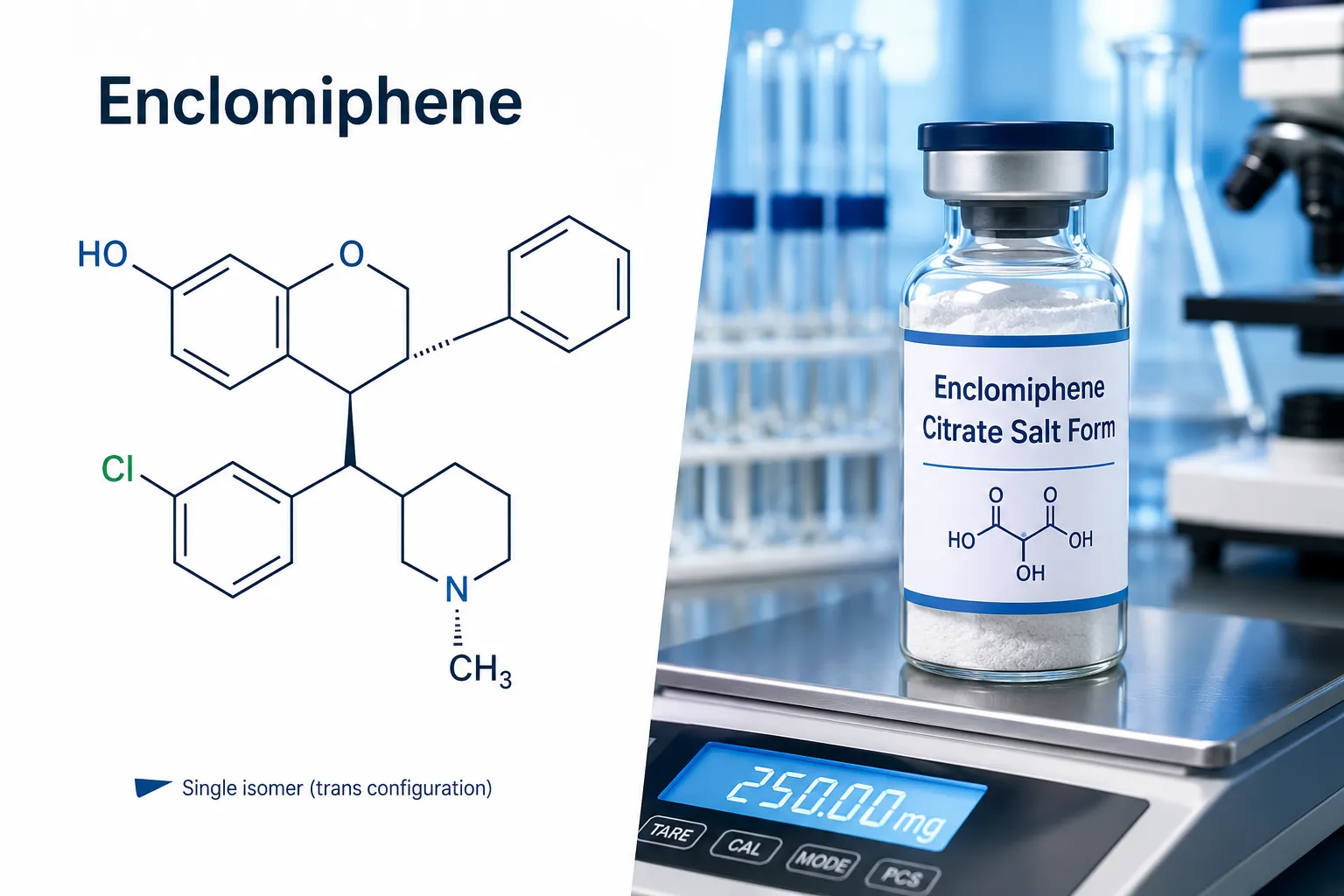
Enclomiphene vs. Enclomiphene Citrate: Understanding the Difference

Before deciding where to buy research-grade enclomiphene and enclomiphene citrate, researchers must understand what they are actually ordering.

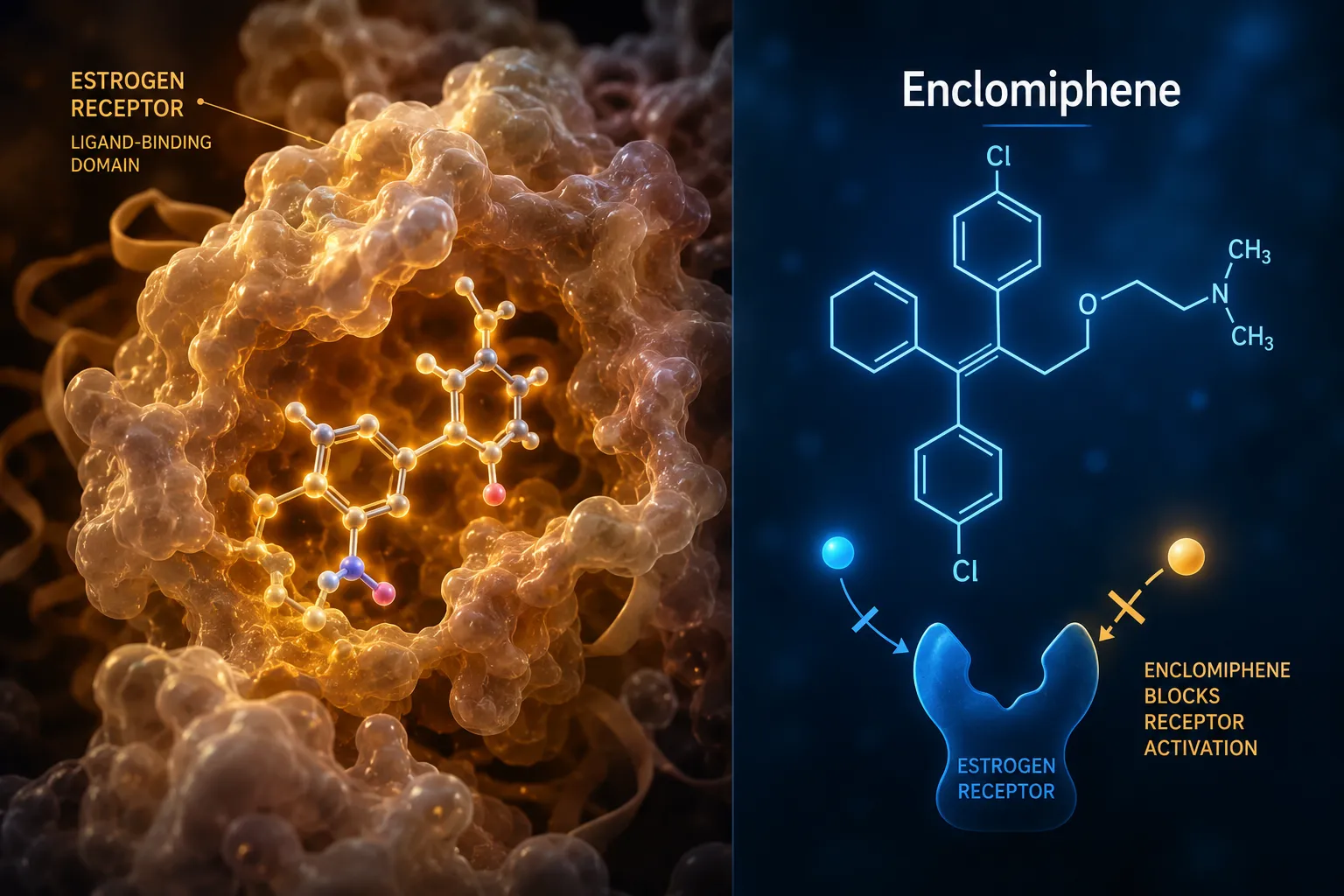
Clomiphene is a racemic mixture of two geometric isomers: zuclomiphene (the cis-isomer) and enclomiphene (the trans-isomer). Enclomiphene is the pharmacologically active isomer responsible for selective estrogen receptor modulation at the hypothalamic-pituitary axis.

Enclomiphene citrate is simply the citrate salt form of enclomiphene. The citrate counterion improves aqueous solubility, which is relevant for certain in-vitro assay formats and reconstitution protocols.

Form Molecular Weight Solubility Common Research Use
Enclomiphene (free base) 405.96 g/mol Lipophilic; ethanol or DMSO Cell-based receptor binding assays
Enclomiphene Citrate 598.08 g/mol Higher aqueous solubility In-vitro hormonal pathway studies

Ordering the wrong form can skew molar calculations and invalidate results. Always confirm the exact chemical form before purchase.

Researchers sourcing other selective modulators and peptide compounds, such as those exploring where to buy peptides for adjacent hormonal pathway studies, face the same form-specificity challenge.
Enclomiphene vs. Enclomiphene Citrate: Understanding the Difference

Purity Benchmarks and Certificates of Analysis: What Serious Researchers Require

Minimum Acceptable Purity Standards

For any compound used in controlled research, purity below 98% introduces confounding variables that can compromise data integrity. The gold standard for research-grade enclomiphene and enclomiphene citrate is:

  • HPLC purity: 98% or greater
  • Residual solvent levels within ICH Q3C guidelines
  • Heavy metal screening (lead, arsenic, mercury, cadmium) below pharmacopeial limits
  • Endotoxin testing if the compound will be used in any cell culture or biological assay

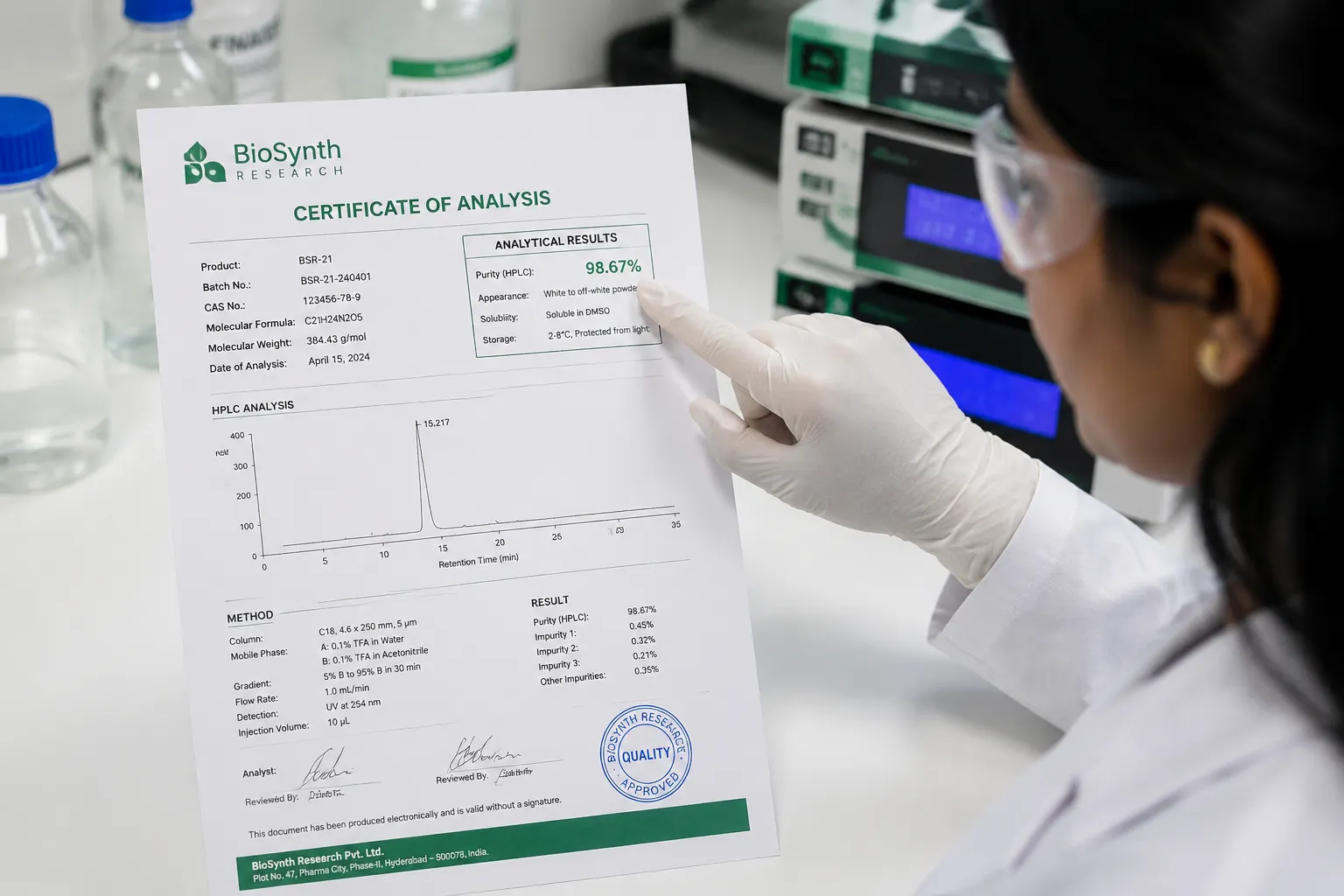
What a Valid CoA Must Include

A Certificate of Analysis is only as credible as the laboratory that issued it. An in-house CoA from the vendor itself carries limited weight. Researchers should require:

  1. Third-party laboratory name and accreditation number (ISO 17025 preferred)
  2. Batch or lot number matching the product label
  3. Test date, CoAs older than 12 months for a current batch are a warning sign
  4. HPLC chromatogram with integration data, not just a summary percentage
  5. Identity confirmation via NMR or mass spectrometry

"A CoA without an independent lab signature is a marketing document, not an analytical report."

Researchers who have navigated similar documentation requirements for compounds like Sermorelin or Tesamorelin will recognize this standard as non-negotiable across the research peptide and small-molecule space.

What a Valid CoA Must Include

Where to Buy Research-Grade Enclomiphene and Enclomiphene Citrate: Evaluating Suppliers

Green Flags in a Reputable Supplier

When evaluating where to buy research-grade enclomiphene and enclomiphene citrate, the following supplier characteristics indicate reliability:

  • Publicly accessible, batch-specific CoAs linked directly to product pages
  • Independent third-party testing from named, verifiable laboratories
  • Clear chemical specifications listing exact form (free base vs. citrate salt), CAS number, and molecular weight
  • Transparent sourcing and synthesis information
  • Responsive technical support capable of answering purity and formulation questions
  • Retest or return policy for purity disputes

Suppliers who demonstrate this rigor across their catalog, including well-documented compounds like TB-500 and Ipamorelin/CJC-1295 blends, typically apply the same standards to their serm-category compounds.

Red Flags to Avoid

  • Generic CoAs with no batch number or lab name
  • Purity listed as "99%+" with no supporting chromatogram
  • No CAS number or conflicting molecular weight data
  • Pricing dramatically below market average (often signals diluted or mislabeled product)
  • No physical address or verifiable business registration

Researchers comparing multiple vendors should also consult peptide supplier comparison resources to benchmark documentation standards across the industry.

Lab-Use Considerations and Regulatory Compliance

Intended Use and Legal Status

Research-grade enclomiphene and enclomiphene citrate are sold strictly for in-vitro laboratory research and non-clinical investigational use. These compounds are not approved for human consumption or veterinary use in most jurisdictions without appropriate licensure.

Researchers must:

  • Verify local and institutional regulations before purchase
  • Store compounds according to supplier specifications (typically -20°C, desiccated, protected from light)
  • Maintain chain-of-custody records and batch documentation for audit purposes
  • Never use research-grade material in any clinical or human-subject context

Reconstitution and Handling Notes

Enclomiphene free base dissolves most effectively in ethanol or DMSO at concentrations up to 10 mg/mL. Enclomiphene citrate offers better aqueous solubility but may still require a small percentage of organic co-solvent for complete dissolution. Researchers working with related peptide compounds, such as those studying SS-31 for mitochondrial research, will be familiar with these reconstitution protocols.

Always filter-sterilize solutions intended for cell culture using a 0.22 micron membrane filter.

Conclusion

The decision of where to buy research-grade enclomiphene and enclomiphene citrate ultimately comes down to documentation, transparency, and third-party verification. No amount of competitive pricing justifies working with a compound whose purity cannot be independently confirmed.

Actionable next steps for researchers:

  1. Identify the exact chemical form needed (free base vs. citrate salt) before contacting any supplier.
  2. Request a batch-specific, third-party CoA before placing any order, not after.
  3. Cross-reference the supplier's CoA laboratory against publicly verifiable accreditation databases.
  4. Review the supplier's broader catalog and documentation standards as a proxy for overall quality control.
  5. Maintain complete batch records from purchase through experimental use for institutional compliance.

Rigorous sourcing is not bureaucratic overhead, it is the first experimental variable a researcher controls.

https://www.puretestedpeptides.com/wp-content/uploads/2026/08/where-to-buy-research-grade-enclomiphene-and-enclomiphene-citrate-purity-certifi.webp 672 1008 https://www.puretestedpeptides.com/wp-content/uploads/2026/01/buy-peptides-online.jpg 2026-08-02 13:04:242026-08-02 13:04:24Where to Buy Research-Grade Enclomiphene and Enclomiphene Citrate: Purity, Certificates of Analysis, and Lab-Use Considerations
Tesofensine vs GLP-3 Retatrutide: Which Appetite-Modulating Pathways Each Answer in Metabolic Research Design

Tesofensine vs GLP-3 Retatrutide: Which Appetite-Modulating Pathways Each Answer in Metabolic Research Design

August 2, 2026/0 Comments/in Uncategorized/by

Only about 2% of adults with obesity achieve sustained weight loss through lifestyle intervention alone, a statistic that continues to drive demand for more precise pharmacological tools in metabolic research. The comparison of Tesofensine vs GLP-3 Retatrutide: Which Appetite-Modulating Pathways Each Answer in Metabolic Research Design is now a central question for labs building rigorous obesity and appetite studies. These two compounds operate through fundamentally different biological mechanisms, making each one better suited to specific experimental endpoints, study populations, and research questions.

Key Takeaways

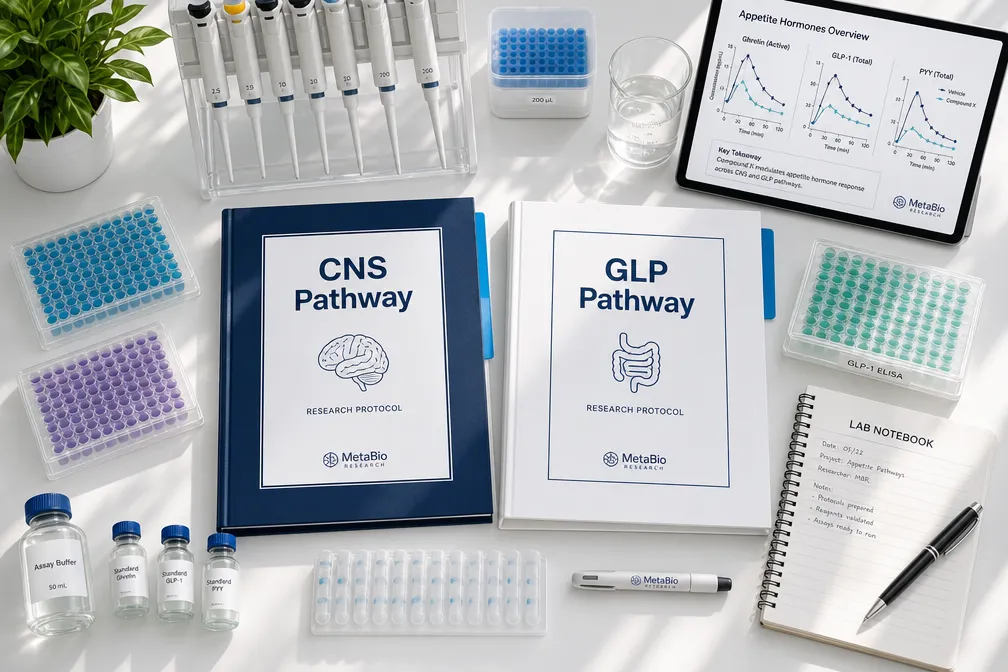
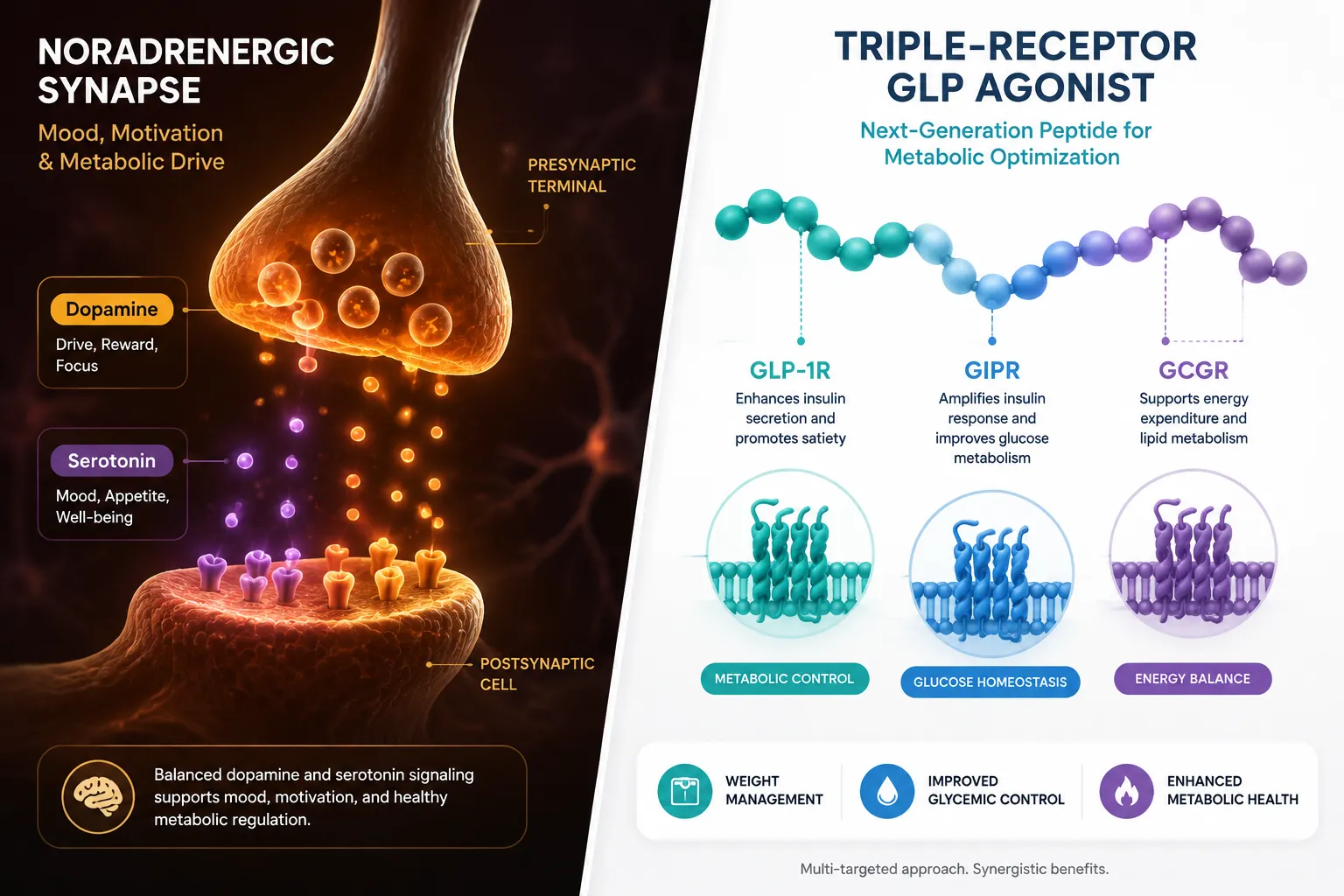
  • Tesofensine is a noradrenergic/dopaminergic/serotonergic reuptake inhibitor that primarily modulates central appetite circuits.
  • Retatrutide (informally called GLP-3) is a triple incretin agonist acting on GLP-1R, GIPR, and glucagon receptors simultaneously.
  • Each compound answers different mechanistic questions, CNS-driven satiety versus peripheral metabolic signaling.
  • Study population selection, primary endpoints, and safety monitoring differ significantly between the two.
  • Researchers should match compound choice to the specific appetite pathway under investigation.

Key Takeaways

Mechanistic Differences at the Core of Tesofensine vs GLP-3 Retatrutide Research

Understanding the Tesofensine vs GLP-3 Retatrutide: Which Appetite-Modulating Pathways Each Answer in Metabolic Research Design question starts with receptor-level biology.

How Tesofensine Works

Tesofensine is a triple monoamine reuptake inhibitor. It blocks the reuptake of:

  • Dopamine, reinforcing satiety signaling and reducing food reward behavior
  • Norepinephrine, activating sympathetic pathways that suppress appetite
  • Serotonin, modulating mood-linked eating and hypothalamic satiety centers

This CNS-centric mechanism makes tesofensine particularly relevant for studies examining hedonic eating, reward-driven food intake, and hypothalamic appetite regulation. Its action is upstream of peripheral hormones, targeting the brain's own appetite control architecture.

"Tesofensine's value in research lies in isolating the central nervous system's contribution to caloric intake reduction, independent of gut hormone signaling."

Relevant to labs studying neurochemical appetite control, tesofensine also shows interaction with MC4R signaling pathways, an important secondary endpoint in hypothalamic obesity models.

How Retatrutide (GLP-3) Works

Retatrutide is a triple incretin receptor agonist, simultaneously activating:

Receptor Primary Role
GLP-1R Insulin secretion, gastric emptying delay, satiety
GIPR Insulin potentiation, adipose tissue signaling
Glucagon receptor Energy expenditure, hepatic glucose output

This peripheral-dominant mechanism makes retatrutide ideal for studying metabolic flexibility, insulin sensitivity, and multi-hormonal appetite suppression. Researchers exploring the GLP-3 Retatrutide compound profile will find its multi-receptor activity creates a broader metabolic footprint than single-agonist GLP-1 analogs.

For labs already working with GLP-1 analogs available in the GLP-1 for sale research category, retatrutide represents a logical mechanistic expansion.

How Retatrutide (GLP-3) Works

Matching Compound to Endpoint: Practical Research Design Considerations

The practical side of Tesofensine vs GLP-3 Retatrutide: Which Appetite-Modulating Pathways Each Answer in Metabolic Research Design comes down to four key design variables.

1. Primary Endpoint Selection

Tesofensine is best suited for endpoints including:

  • Caloric intake reduction measured via food diary or indirect calorimetry
  • Appetite visual analog scale (VAS) scores
  • Neurochemical biomarkers (dopamine metabolites, serotonin turnover)
  • Behavioral feeding frequency studies

Retatrutide is better aligned with:

  • Body weight and BMI reduction over extended timeframes
  • Fasting insulin and HOMA-IR scores
  • Lipid panel changes (LDL, triglycerides)
  • Glucagon suppression and hepatic fat reduction

2. Study Population Considerations

Tesofensine research typically enrolls subjects with behavioral or neurological contributors to obesity, including binge eating patterns or reward-pathway dysregulation. Its cardiovascular stimulant properties (from norepinephrine reuptake inhibition) require careful screening for hypertension and cardiac history.

Retatrutide studies are more appropriate for subjects with comorbid metabolic syndrome, type 2 diabetes risk, or significant adiposity where peripheral hormonal dysregulation is the primary driver. Labs comparing it to other incretin-based tools may also find the ipamorelin vs tesa comparison useful for contextualizing growth hormone axis interactions.

3. Monitoring Requirements

Both compounds require different safety monitoring frameworks:

  • Tesofensine: Heart rate, blood pressure, mood/anxiety scales, sleep quality
  • Retatrutide: Nausea/GI tolerability, pancreatic enzyme levels, thyroid screening

4. Combination Research Potential

Some advanced metabolic protocols explore CNS-plus-peripheral appetite suppression. Labs interested in stacking approaches may reference CJC-1295/Ipamorelin research frameworks for precedent on multi-compound metabolic study design. Similarly, BDNF induction research offers relevant context for understanding how central appetite circuits interact with peripheral metabolic signals.

4. Combination Research Potential

Choosing the Right Tool for Specific Metabolic Research Questions

The decision between these two compounds is not about which is "better", it is about which pathway the research question demands.

Choose tesofensine when the study asks:

  • How does central monoamine tone influence caloric intake?
  • What is the neurochemical basis of appetite suppression in reward-driven obesity?
  • How does CNS satiety signaling interact with behavioral eating patterns?

Choose retatrutide when the study asks:

  • How does simultaneous multi-incretin receptor activation affect metabolic homeostasis?
  • What is the relative contribution of GLP-1R vs GIPR vs glucagon receptor to weight loss magnitude?
  • How does peripheral hormonal signaling reduce adiposity in metabolically complex subjects?

For labs sourcing research-grade peptides, exploring the GLP-1 peptide for sale options alongside dedicated retatrutide compounds allows direct mechanistic comparison within the same study design framework.

Conclusion

The Tesofensine vs GLP-3 Retatrutide: Which Appetite-Modulating Pathways Each Answer in Metabolic Research Design question has a clear answer: these compounds are complementary tools, not competing ones. Tesofensine isolates the CNS monoamine contribution to appetite suppression, while retatrutide maps the peripheral incretin axis. In 2026, metabolic research teams gain the most value by aligning compound selection to their specific mechanistic hypothesis before designing the study.

Actionable next steps for research teams:

  1. Define whether the primary appetite pathway under study is central (CNS) or peripheral (incretin/hormonal).
  2. Screen study populations for compound-specific contraindications before enrollment.
  3. Build monitoring protocols that match each compound's known safety profile.
  4. Consider whether a dual-pathway design could answer broader mechanistic questions with appropriate controls.
  5. Source compounds from verified, purity-tested suppliers to ensure data integrity.
https://www.puretestedpeptides.com/wp-content/uploads/2026/08/tesofensine-vs-glp-3-retatrutide-which-appetite-modulating-pathways-each-answer.webp 1024 1536 https://www.puretestedpeptides.com/wp-content/uploads/2026/01/buy-peptides-online.jpg 2026-08-02 13:04:162026-08-02 13:04:16Tesofensine vs GLP-3 Retatrutide: Which Appetite-Modulating Pathways Each Answer in Metabolic Research Design
Complement-Dependent Cytotoxicity and Peptide-Based Assays: Safety Considerations for BPC-157, GHK-Cu, and Glow Blend Research

Complement-Dependent Cytotoxicity and Peptide-Based Assays: Safety Considerations for BPC-157, GHK-Cu, and Glow Blend Research

August 2, 2026/0 Comments/in Uncategorized/by

Less than 15% of preclinical peptide studies include formal immunotoxicology screening before advancing to in vivo models, a gap that becomes critical when working with bioactive compounds that interact with immune signaling pathways. Complement-dependent cytotoxicity and peptide-based assays: safety considerations for BPC-157, GHK-Cu, and Glow Blend research represent an emerging priority for researchers who want rigorous, reproducible data from tissue-repair and copper-binding peptide studies.

Key Takeaways

  • Complement-dependent cytotoxicity (CDC) assays measure whether a compound activates the complement system to lyse target cells, making them a core immunosafety tool.
  • BPC-157 and GHK-Cu have distinct mechanisms that can interact with immune pathways in preclinical models, warranting CDC screening.
  • Glow Blend formulations combine multiple bioactive peptides, increasing the complexity of immunological profiling.
  • Assay design, peptide purity, and concentration controls directly determine the reliability of CDC results.
  • Sourcing research-grade peptides with verified certificates of analysis is a prerequisite for valid safety screening.

Key Takeaways

Understanding Complement-Dependent Cytotoxicity in Preclinical Research

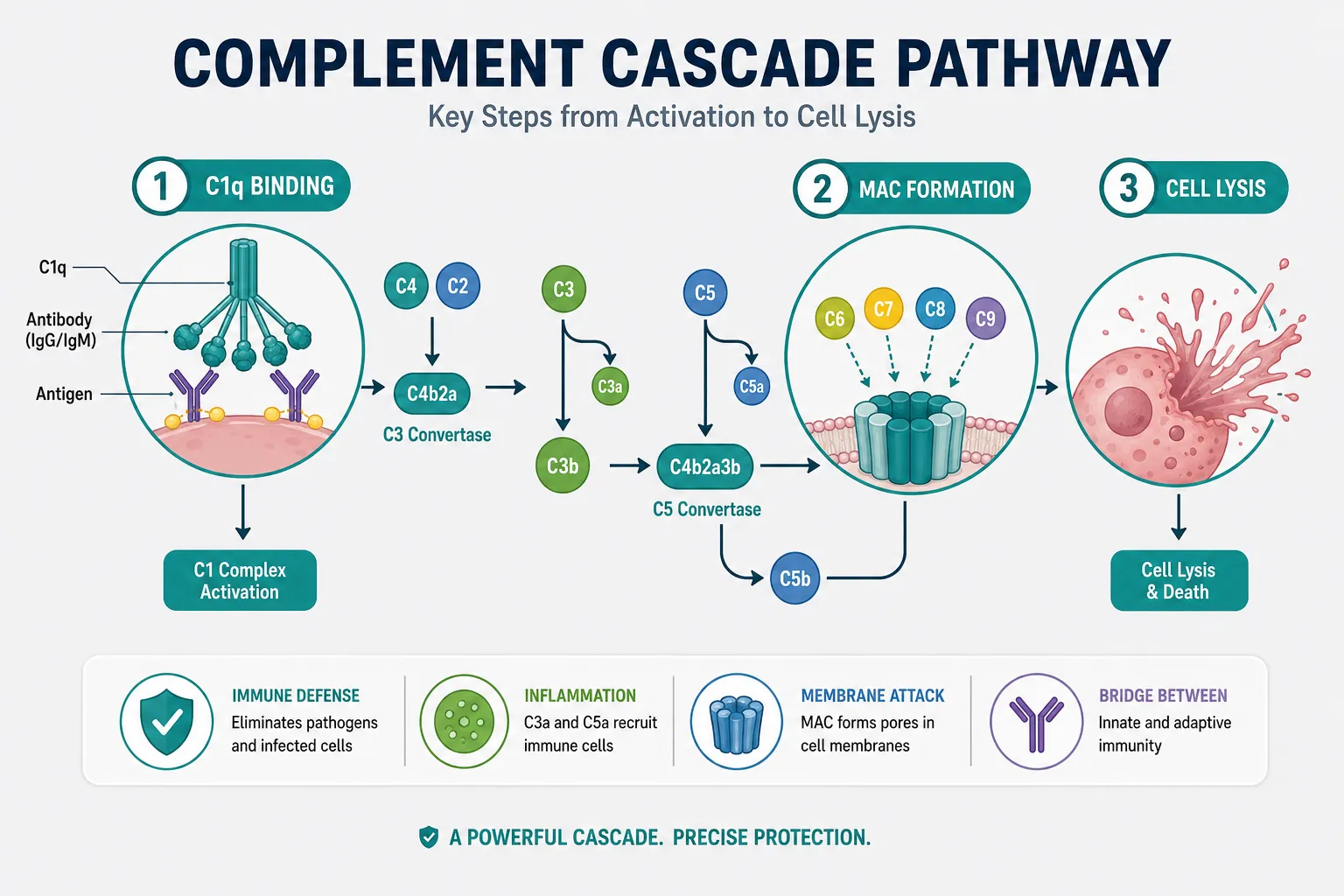
The complement system is a branch of innate immunity comprising more than 30 proteins. When activated, it forms the membrane attack complex (MAC), which punches holes in cell membranes and causes lysis. CDC assays exploit this mechanism to test whether antibodies, or, in peptide research, bioactive compounds, trigger complement activation against specific cell populations.

How a standard CDC assay works:

  1. Target cells are incubated with the test compound (e.g., BPC-157 or GHK-Cu at defined concentrations).
  2. Exogenous complement serum (typically rabbit or human) is added.
  3. After incubation, cell viability is measured using dye exclusion (trypan blue) or luminescence-based methods.
  4. Results are expressed as percentage cytotoxicity compared to positive and negative controls.
"A well-designed CDC assay does not simply detect toxicity, it identifies whether a peptide compound co-opts the complement cascade as part of its mechanism of action."

For tissue-repair peptides, this distinction matters. A compound that reduces inflammation through complement modulation may show apparent cytotoxicity in a CDC assay without being inherently harmful. Context and controls are everything.

Key variables that affect CDC assay outcomes:

Variable Impact on Results
Complement source Human vs. rabbit serum alters sensitivity
Peptide concentration Dose-dependent effects must be mapped
Incubation temperature 37 degrees C is standard; deviations skew lysis rates
Cell line selection Primary cells vs. immortalized lines respond differently
Peptide purity Impurities can independently activate complement

Purity is not a minor footnote. Researchers sourcing peptides for CDC screening should consult resources like building robust peptide benchmarks with reference standards to understand how impurity profiles from different synthesis batches can introduce false positives in complement assays.

BPC-157, GHK-Cu, and Glow Blend: Immunological Profiles in CDC Models

BPC-157, GHK-Cu, and Glow Blend: Immunological Profiles in CDC Models

BPC-157 and Complement Pathway Interactions

BPC-157 is a 15-amino-acid synthetic peptide derived from a gastric protein sequence. Preclinical data suggests it modulates nitric oxide pathways, angiogenesis, and cytokine signaling. Because cytokine networks overlap with complement regulation, researchers applying complement-dependent cytotoxicity and peptide-based assays to BPC-157 studies should account for potential indirect complement modulation rather than direct activation.

Researchers working with BPC-157 and TB-500 peptide combinations should note that stacking peptides in the same assay well can produce additive or antagonistic complement effects. Running single-compound controls alongside combination wells is non-negotiable for clean data interpretation. For a detailed comparison of these two compounds, the TB-500 vs BPC-157 research overview provides useful background on their distinct mechanisms.

GHK-Cu: Copper Binding and Immune Signaling

GHK-Cu (glycine-histidine-lysine copper complex) is a naturally occurring tripeptide with well-documented roles in wound healing, collagen synthesis, and anti-inflammatory signaling. The copper ion itself is biologically active and can influence reactive oxygen species (ROS) levels in cell culture systems.

In CDC assays, the copper component introduces a confounding variable: copper ions at supraphysiological concentrations are independently cytotoxic. Researchers must therefore:

  • Run GHK-Cu at physiologically relevant concentrations (typically 1-100 nM range in cell models).
  • Include copper sulfate controls at equivalent molar copper concentrations.
  • Distinguish peptide-mediated complement activation from copper-mediated oxidative lysis.

The GHK-Cu peptide sourcing and research guide outlines purity specifications that directly affect how copper content is quantified per batch, a critical input for accurate CDC dosing.

Glow Blend: Multi-Peptide Complexity in Safety Assays

Glow Blend formulations typically combine GHK-Cu with additional skin-repair or regenerative peptides. This multi-compound matrix complicates CDC assay design because each component may interact with complement proteins independently or synergistically.

The Glow Blend research formulation is designed for preclinical skin biology models. When running CDC safety screening on Glow Blend, researchers should:

  • Test the full blend AND individual components in parallel.
  • Use a complement titration approach to identify the lowest lytic concentration.
  • Document any synergistic cytotoxicity that exceeds the sum of individual peptide effects.

Assay Design Best Practices for Peptide Safety Screening

Assay Design Best Practices for Peptide Safety Screening

Applying complement-dependent cytotoxicity and peptide-based assays rigorously to BPC-157, GHK-Cu, and Glow Blend research requires attention to several protocol-level decisions that are often underspecified in published methods.

Critical controls for every CDC peptide assay:

  • Positive control: Known complement-activating antibody to confirm complement activity.
  • Negative control: Peptide-free vehicle (e.g., sterile water or DMSO at matched concentration).
  • Peptide-alone control: Peptide without complement serum to isolate direct cytotoxicity.
  • Complement-alone control: Serum without peptide to detect non-specific lysis.

Researchers combining peptides with growth hormone secretagogues or other compounds, such as those studying combination safety profiles of tesa and ipamorelin, should apply the same multi-control framework when CDC assays are part of their safety battery.

Sourcing considerations: Peptide purity directly determines assay validity. Researchers can review where to buy research-grade peptides for guidance on supplier qualification criteria that support defensible preclinical data.

Additionally, teams studying mitochondrial-targeted peptides alongside complement assays may find the SS-31 peptide research overview useful for understanding how cardioprotective peptides behave in immune-adjacent assay systems.

Conclusion

Complement-dependent cytotoxicity and peptide-based assays represent a rigorous, underutilized tool for characterizing the immunological safety profiles of BPC-157, GHK-Cu, and Glow Blend compounds in preclinical models. The key to reliable results lies in disciplined assay design: matched controls, physiologically relevant concentrations, and research-grade peptide sourcing.

Actionable next steps for researchers in 2026:

  • Incorporate CDC assays into standard preclinical safety batteries for any new peptide blend.
  • Validate peptide purity with certificates of analysis before initiating immunotoxicology screening.
  • Run individual component controls alongside full-blend wells for multi-peptide formulations.
  • Document copper-specific cytotoxicity separately when working with GHK-Cu.
  • Cross-reference findings against published complement biology literature before drawing mechanism-of-action conclusions.

Rigorous immunosafety screening at the preclinical stage protects the integrity of downstream data and advances the field toward more translatable research outcomes.

https://www.puretestedpeptides.com/wp-content/uploads/2026/08/complement-dependent-cytotoxicity-and-peptide-based-assays-safety-considerations.webp 1024 1536 https://www.puretestedpeptides.com/wp-content/uploads/2026/01/buy-peptides-online.jpg 2026-08-02 13:03:462026-08-02 13:03:46Complement-Dependent Cytotoxicity and Peptide-Based Assays: Safety Considerations for BPC-157, GHK-Cu, and Glow Blend Research
Research-Use Only Nasal Spray Peptides: What Labs Should Know Before Buying Semax, Selank, and Klow Nasal Formulations

Research-Use Only Nasal Spray Peptides: What Labs Should Know Before Buying Semax, Selank, and Klow Nasal Formulations

August 2, 2026/0 Comments/in Uncategorized/by

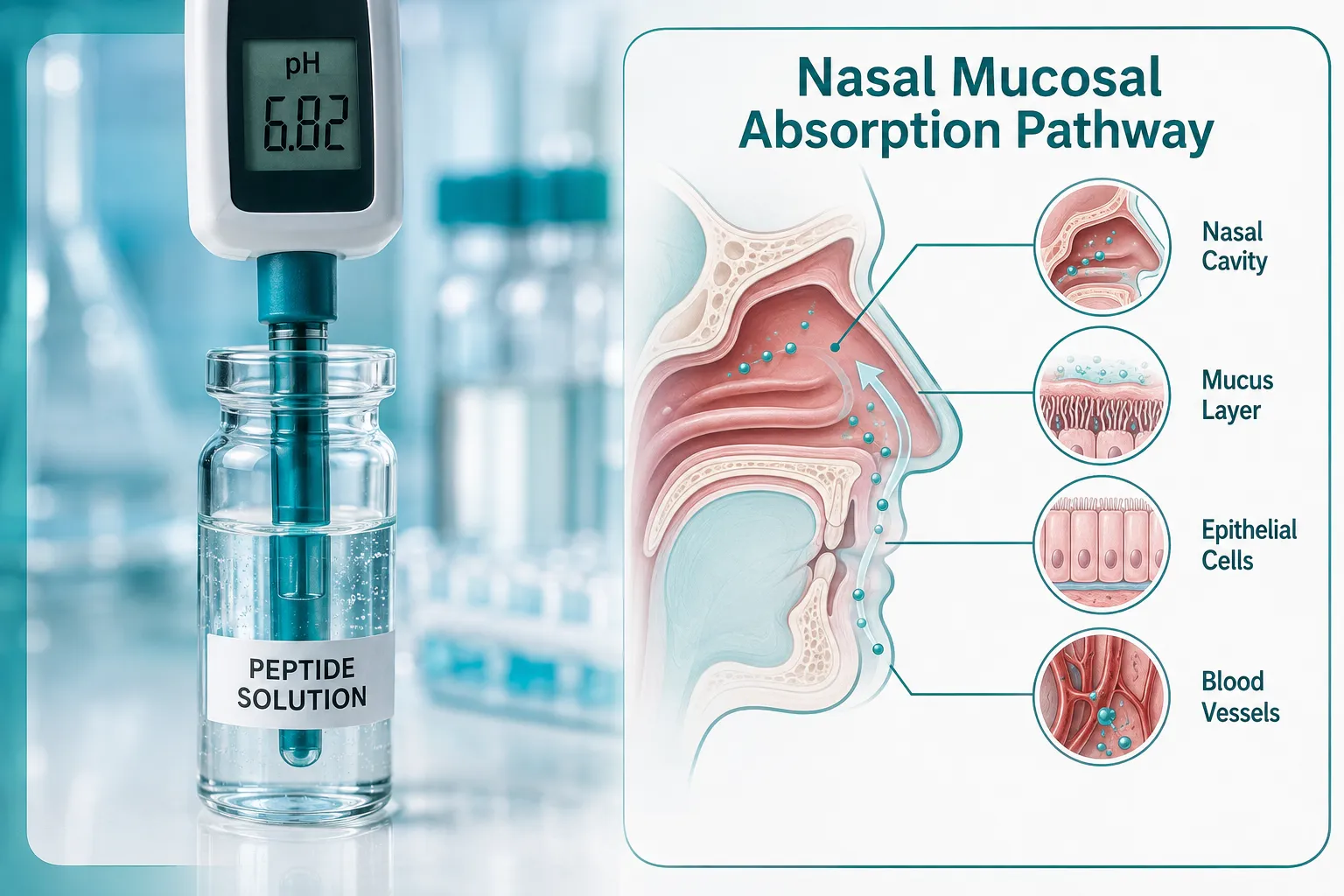
Fewer than 30% of peptide researchers who order intranasal formulations verify solvent pH before running their first assay, yet pH drift alone can degrade Semax by up to 40% within 72 hours of preparation. For any laboratory sourcing research-use only nasal spray peptides, that single oversight can invalidate weeks of data.

This guide addresses the practical procurement and formulation questions that matter most when working with Semax, Selank, and Klow nasal preparations in 2026, covering solvents, sterility, bioavailability, and supplier verification.

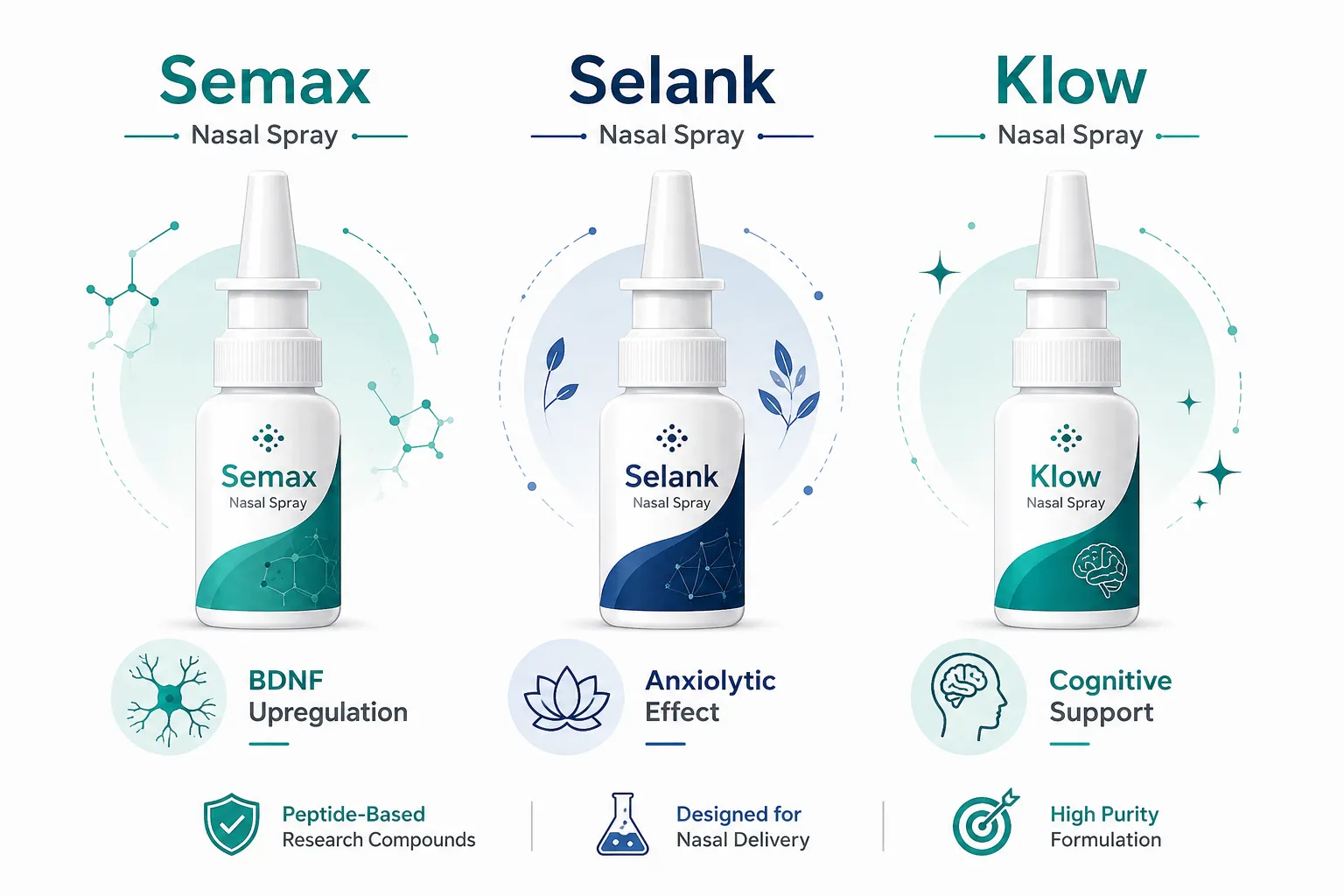
Flat-vector infographic landscape () showing three labeled nasal spray bottles — Semax, Selank, Klow — arranged left to

Key Takeaways

  • Semax, Selank, and Klow are strictly research-use only nasal spray peptides and must not be used in human clinical treatment outside approved trials.
  • Solvent selection, pH range, and preservative choice directly affect peptide stability and transmucosal bioavailability in both rodent and human experimental models.
  • Sterility testing and third-party Certificates of Analysis (CoA) are non-negotiable procurement requirements.
  • Nasal formulations bypass first-pass metabolism, making dose accuracy more critical than with injectable peptides.
  • Supplier transparency, including HPLC purity data and endotoxin testing, is the clearest indicator of formulation quality.

Understanding the Three Peptides: Semax, Selank, and Klow

Before addressing procurement, labs need a clear picture of what each compound is and why nasal delivery is the preferred route in research settings.

Semax (ACTH(4-7)PGP) is a synthetic heptapeptide derived from adrenocorticotropic hormone. Research interest centers on its role in BDNF upregulation and neuroprotective signaling. You can explore related BDNF upregulation research themes for broader context on neurotrophin pathways.

Selank is a synthetic analog of tuftsin (Thr-Lys-Pro-Arg) combined with a stabilizing peptide sequence. Studies in rodent models have examined its anxiolytic and nootropic properties, particularly its interaction with GABAergic and serotonergic systems.

Klow is a newer nasal formulation blend that has attracted attention in 2026 for its proposed role in supporting cognitive and metabolic signaling pathways. Labs interested in related peptide blend research may also find value in reviewing what the Glow peptide does as a comparable blend-formulation reference.

All three are sold exclusively as research-use only compounds. They are not approved for human therapeutic use in most jurisdictions, and procurement must reflect that classification in documentation, storage, and handling protocols.
Formulation Science Behind Research-Use Only Nasal Spray Peptides

The nasal route offers a compelling advantage for peptide research: direct access to the olfactory epithelium and trigeminal nerve pathways, which allows compounds to bypass the blood-brain barrier and first-pass hepatic metabolism. However, this advantage depends entirely on formulation quality.

Formulation Science Behind Research-Use Only Nasal Spray Peptides

Solvent Selection and pH

The nasal mucosa maintains a physiological pH between 5.5 and 6.5. Formulations outside this range cause mucosal irritation in rodent models and can reduce absorption by disrupting tight junction permeability. For Semax and Selank specifically:

Parameter Recommended Range Risk if Out of Range
pH 5.5-6.5 Degradation, reduced absorption
Osmolality 285-310 mOsm/kg Mucosal damage in rodent models
Preservative (benzalkonium chloride) 0.01-0.02% Ciliotoxicity above 0.02%

Saline-based vehicles (0.9% NaCl) remain the most common solvent for both Semax and Selank. Some suppliers use phosphate-buffered saline (PBS) to stabilize pH, which is acceptable provided the buffer concentration does not exceed 10 mM.

Preservatives and Sterility

Multi-dose nasal spray vials require antimicrobial preservation. Benzalkonium chloride (BAK) is standard but must be kept below 0.02% to avoid ciliotoxic effects documented in murine nasal epithelium studies. Phenylethanol is an alternative worth specifying when ordering from suppliers.

Sterility is non-negotiable. Labs should require:

  • USP <71> sterility test results or equivalent
  • Endotoxin testing (LAL assay) with results below 1 EU/mL
  • Particulate matter testing per USP <788>

When sourcing from a lab-tested peptide supplier, always request documentation for all three tests before accepting a shipment.

Peptide Stability in Nasal Vehicles

Semax is notably susceptible to enzymatic degradation by nasal mucosal aminopeptidases. Research formulations that include cyclodextrin complexation (particularly hydroxypropyl-beta-cyclodextrin at 5-10%) have shown improved stability in in vitro nasal tissue models. Selank is comparatively more stable but should still be stored at 2-8°C and protected from light.

Procurement Standards: What Labs Should Know Before Buying

Sourcing research-use only nasal spray peptides requires more rigor than ordering standard lyophilized peptides, because the formulation itself introduces additional variables, solvent purity, fill volume accuracy, and container integrity.

Procurement Standards: What Labs Should Know Before Buying

Certificate of Analysis Checklist

A credible CoA for nasal peptide formulations should include:

  • HPLC purity (minimum 98% for research-grade)
  • Mass spectrometry confirmation of molecular weight
  • Endotoxin test result (LAL method)
  • Sterility test result
  • pH at time of manufacture
  • Batch number and manufacture date

Labs reviewing suppliers should also assess whether the vendor offers wholesale peptides for research with consistent batch documentation, which is critical for longitudinal studies requiring reproducibility.

Regulatory and Documentation Requirements

In the United States, research-use only peptides must be purchased by verified research institutions. Labs should maintain purchase records, intended-use declarations, and storage logs. The "not for human use" designation must appear on all internal labels.

For labs also working with injectable peptide research, understanding how nasal bioavailability compares to subcutaneous delivery is valuable. Researchers exploring dual-route protocols may find the TB-500 peptide research overview and BPC-157 and TB-500 combination data useful for cross-route comparison context.

Red Flags When Evaluating Suppliers

Avoid suppliers who:

  • Cannot provide batch-specific CoA (only generic documents)
  • List pH or osmolality as "N/A"
  • Offer no endotoxin testing data
  • Ship nasal formulations without cold-chain packaging

Reputable sources will also direct researchers to broader peptide buying resources that outline quality benchmarks across compound categories.

Conclusion

Research-use only nasal spray peptides, including Semax, Selank, and Klow nasal formulations, offer genuine scientific value when procured and handled correctly. The formulation variables that determine research validity are not abstract: pH, osmolality, preservative concentration, and sterility testing are concrete, measurable, and verifiable before a single assay begins.

Actionable next steps for labs in 2026:

  1. Request batch-specific CoA documents before placing any order, and reject suppliers who cannot provide HPLC purity above 98% with endotoxin results.
  2. Verify solvent pH falls within 5.5-6.5 and confirm osmolality data is included in supplier documentation.
  3. Establish internal cold-chain storage protocols (2-8°C) and log opening dates for all multi-dose vials.
  4. Maintain purchase records and intended-use declarations to satisfy institutional and regulatory requirements.
  5. Cross-reference nasal bioavailability data against injectable route studies where applicable to strengthen experimental design.

Sourcing from a verified peptide store that publishes transparent testing documentation is the single most reliable way to protect both research integrity and institutional compliance.

https://www.puretestedpeptides.com/wp-content/uploads/2026/08/research-use-only-nasal-spray-peptides-what-labs-should-know-before-buying-semax.webp 1024 1536 https://www.puretestedpeptides.com/wp-content/uploads/2026/01/buy-peptides-online.jpg 2026-08-02 13:03:422026-08-02 13:03:42Research-Use Only Nasal Spray Peptides: What Labs Should Know Before Buying Semax, Selank, and Klow Nasal Formulations
Where to Buy Glow Blend and GHK-Cu Peptides for Skin and Collagen Research: Evaluating Purity, Copper Complexes, and Stability

Where to Buy Glow Blend and GHK-Cu Peptides for Skin and Collagen Research: Evaluating Purity, Copper Complexes, and Stability

August 2, 2026/0 Comments/in Uncategorized/by

Fewer than 30% of research-grade peptide suppliers publish independent third-party assay data for copper-complexed compounds, a gap that directly undermines the reproducibility of dermatologic and wound-healing studies. For labs sourcing GHK-Cu or multi-peptide formulations like Glow Blend, that statistic is not a minor inconvenience; it is a fundamental threat to data integrity. This guide addresses where to buy Glow Blend and GHK-Cu peptides for skin and collagen research, with a focused evaluation of purity standards, copper-complex chemistry, and stability requirements that procurement teams must verify before placing an order.

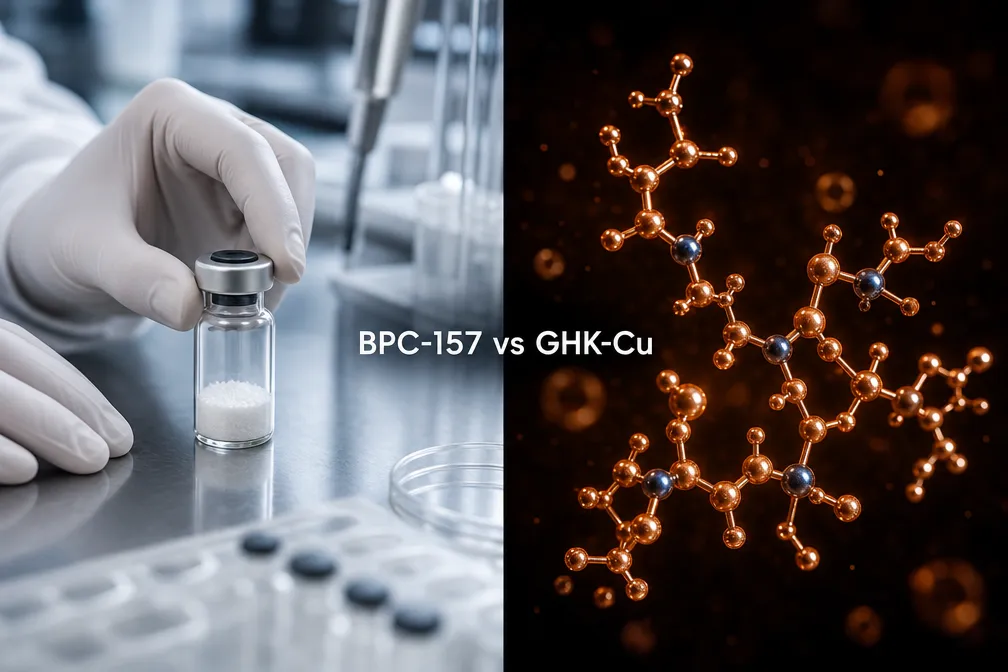
Bright editorial infographic-style landscape (): a clean split-screen illustration showing a molecular diagram of GHK-Cu

Key Takeaways

  • GHK-Cu is a copper-tripeptide complex; sourcing errors that disrupt the Cu(II) coordination bond render the compound biologically inactive for collagen research.
  • Purity certificates should confirm both peptide sequence integrity and copper-loading ratio via HPLC and ICP-MS or equivalent methods.
  • Glow Blend formulations combine GHK-Cu with complementary skin-active peptides, requiring multi-analyte QC documentation from the supplier.
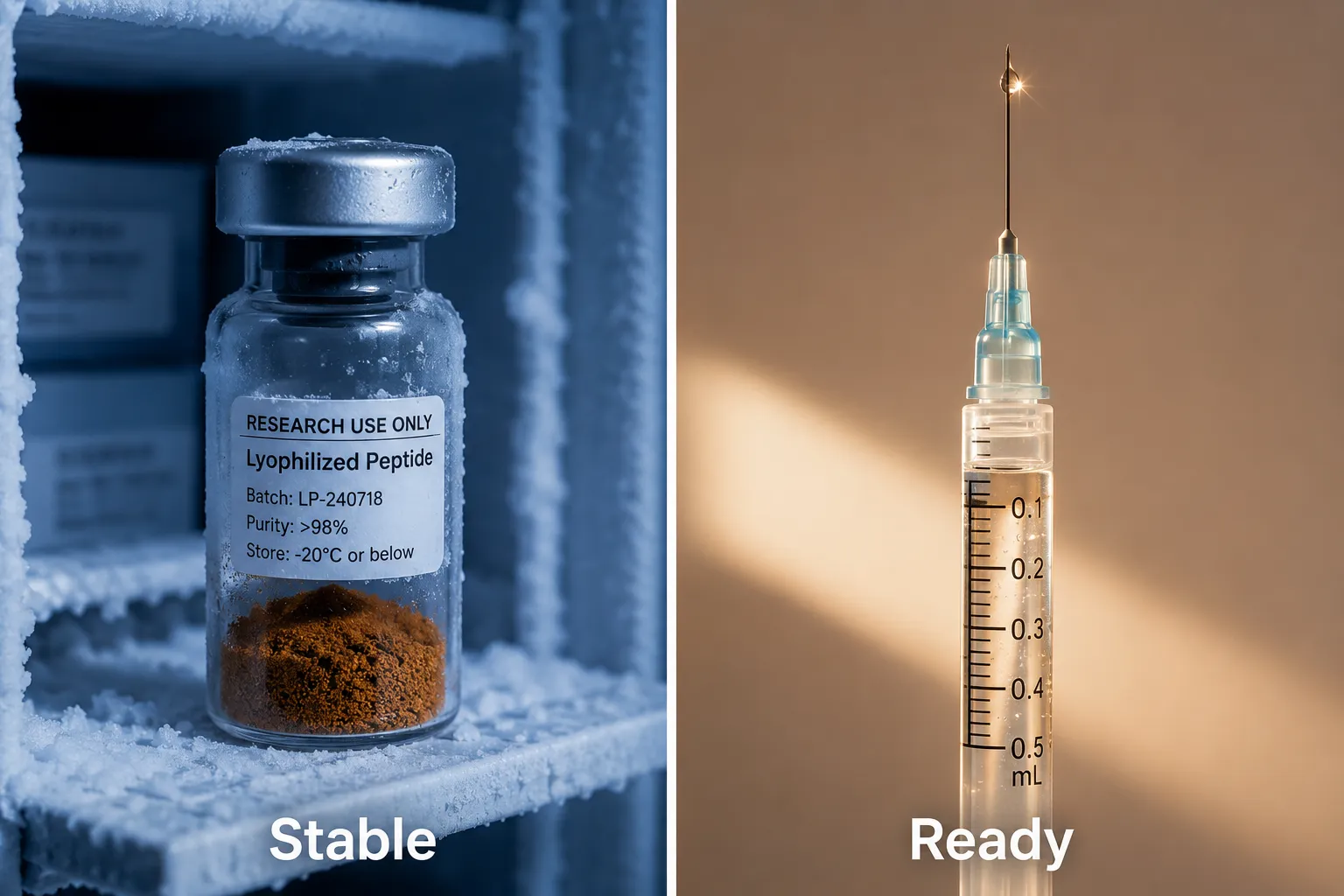
  • Lyophilized storage at -20 degrees C is the standard stability protocol; reconstituted solutions degrade rapidly without proper buffering.
  • Supplier transparency, including batch-specific CoA, residual solvent data, and endotoxin testing, is the clearest differentiator between research-grade and commercial-grade sources.

Understanding GHK-Cu Chemistry and Why Copper Coordination Matters

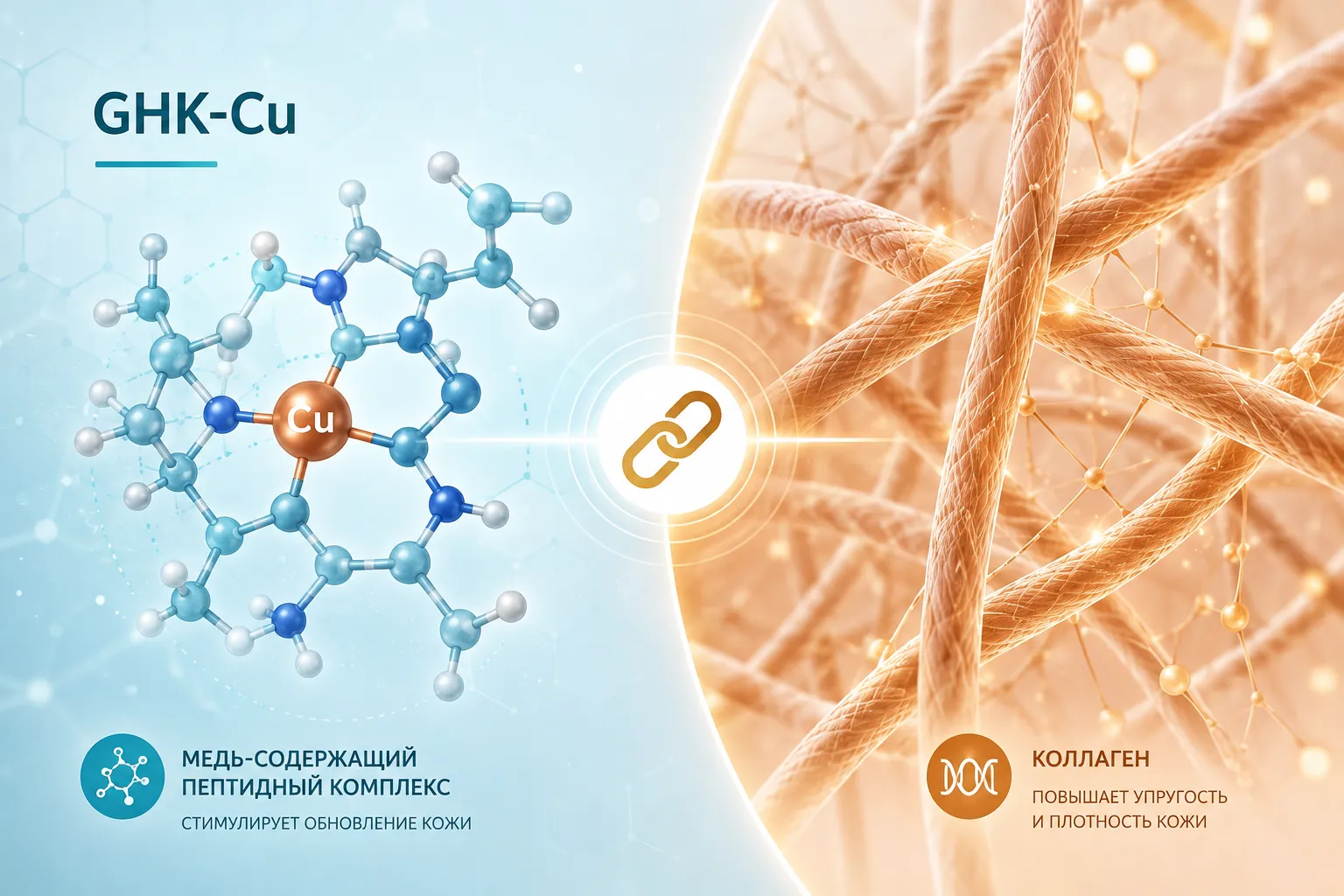
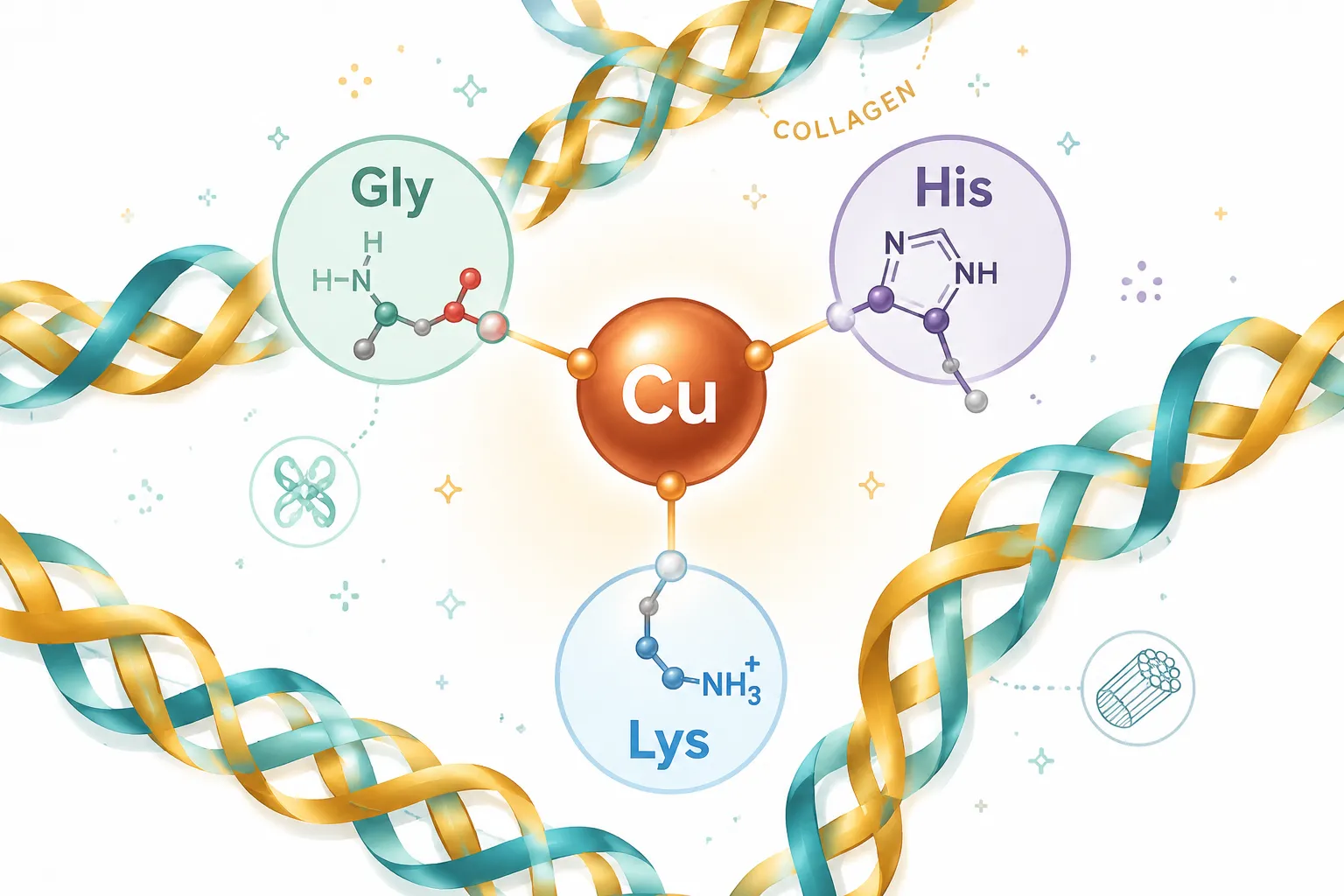
GHK-Cu (glycine-histidine-lysine copper(II)) is not simply a peptide with copper added as a label ingredient. The biological activity attributed to GHK-Cu in collagen synthesis, wound repair, and antioxidant signaling depends entirely on the intact Cu(II) coordination complex formed between the tripeptide and the divalent copper ion.

Key structural facts:

Parameter Specification
Peptide sequence Gly-His-Lys
Metal ion Cu(II) (cupric)
Coordination sites Histidine imidazole nitrogen, terminal amine, peptide backbone
Molecular weight ~340 Da (free peptide); ~403 Da with copper
Optimal pH for complex stability 6.5-7.4

When a supplier lyophilizes GHK-Cu without controlling pH during formulation, or uses incompatible excipients, the Cu(II) can dissociate or precipitate as copper oxide, leaving a peptide that passes amino acid analysis but fails entirely in receptor-binding or cell-culture assays. Labs evaluating purity must therefore request copper-loading confirmation, not just peptide purity by HPLC.

For broader context on how metal-coordinated peptides behave in research settings, reviewing SS-31 mechanism and research considerations provides a useful parallel, since SS-31 also relies on charge-dependent interactions that are sensitive to formulation quality.

Evaluating Purity Standards When Sourcing GHK-Cu and Glow Blend

When the question is where to buy Glow Blend and GHK-Cu peptides for skin and collagen research, purity documentation is the non-negotiable starting point. A certificate of analysis (CoA) for these compounds should include the following minimum data points:

Mandatory QC documentation checklist:

  • HPLC purity (greater than 98% for research grade)
  • Mass spectrometry confirmation of molecular weight
  • ICP-MS or atomic absorption spectroscopy for copper content and ratio
  • Residual solvent analysis (USP Class 2 limits as reference)
  • Endotoxin testing (LAL assay, less than 1 EU/mg for cell-culture use)
  • Sterility or bioburden data if aqueous formulations are supplied

"A peptide that is 99% pure by HPLC but carries only 40% of the theoretical copper load is not GHK-Cu for research purposes, it is GHK with a copper contaminant."

Glow Blend formulations present an additional challenge because they combine GHK-Cu with other bioactive peptides, often including compounds that target fibroblast activation, epidermal growth factor pathways, or melanin regulation. Multi-peptide blends require multi-analyte CoA documentation. Each component must be individually verified, and the supplier must confirm that co-formulation has not caused competitive metal chelation or sequence degradation.

The Glow Blend research peptide page provides a reference point for what a transparently documented multi-peptide skin formulation looks like at the catalog level.

For labs that also work with combination peptide products in other research areas, the BPC-157 and TB-500 blend documentation illustrates how reputable suppliers handle multi-component CoA requirements.

Evaluating Purity Standards When Sourcing GHK-Cu and Glow Blend

Stability Protocols, Copper Complex Preservation, and Practical Sourcing Tips

Stability is the most frequently underestimated variable in GHK-Cu procurement. The copper-peptide bond is susceptible to three primary degradation pathways: oxidative cleavage, pH-driven dissociation, and photolytic breakdown. Practical sourcing and handling protocols must address all three.

Recommended storage and handling protocol:

  1. Lyophilized form preferred, Lyophilized GHK-Cu stored at -20 degrees C in amber vials under inert gas (argon or nitrogen) retains greater than 95% activity for 24 months when unopened.
  2. Reconstitution buffer, Use sterile water or phosphate-buffered saline at pH 6.8-7.2. Avoid acetate buffers, which can compete with copper coordination sites.
  3. Aliquot immediately, Reconstituted solutions should be aliquoted into single-use volumes and stored at 4 degrees C for no more than 72 hours, or re-lyophilized for longer storage.
  4. Avoid freeze-thaw cycles, Each cycle degrades copper-complex integrity by an estimated 3-8% depending on formulation.
  5. Light protection, Cu(II) complexes are photosensitive; amber vials or foil wrapping are mandatory during storage and handling.

When evaluating suppliers, ask specifically whether their GHK-Cu is formulated with a copper pre-loading step during synthesis or whether copper is added post-synthesis. Pre-loaded synthesis produces a more homogeneous complex with tighter copper-to-peptide ratios.

For labs also sourcing other research peptides alongside GHK-Cu, reviewing SS-31 10mg research peptide considerations offers a transferable framework for evaluating lyophilization quality and vial integrity across different compound classes.

The Bachem and reference standards article on building robust peptide benchmarks is also a practical resource for labs that want to establish internal reference standards against which purchased GHK-Cu batches can be validated.

For labs sourcing multiple peptide classes, the all peptides for sale catalog provides a consolidated starting point for comparing supplier documentation across compound families.

Stability Protocols, Copper Complex Preservation, and Practical Sourcing Tips

Conclusion

Sourcing GHK-Cu and Glow Blend for dermatologic and collagen research is a procurement decision with direct consequences for experimental validity. The copper coordination complex is the functional core of GHK-Cu activity, and no amount of high HPLC purity compensates for inadequate copper loading or degraded complex integrity.

Actionable next steps for research procurement teams:

  1. Request batch-specific CoA with ICP-MS copper quantification before approving any GHK-Cu supplier.
  2. Confirm that Glow Blend suppliers provide individual component purity data, not only a blended product purity figure.
  3. Establish an internal stability reference standard using a validated source, and re-test incoming batches at 3-month intervals.
  4. Standardize reconstitution and storage protocols across the lab to eliminate inter-experimenter variability.
  5. Cross-reference supplier documentation against published reference standards to identify gaps before committing to large-volume orders.

The difference between reproducible skin and collagen research data and a failed assay often traces back to a single sourcing decision made before the experiment began.

https://www.puretestedpeptides.com/wp-content/uploads/2026/08/where-to-buy-glow-blend-and-ghk-cu-peptides-for-skin-and-collagen-research-evalu.webp 1024 1536 https://www.puretestedpeptides.com/wp-content/uploads/2026/01/buy-peptides-online.jpg 2026-08-02 13:03:402026-08-02 13:03:40Where to Buy Glow Blend and GHK-Cu Peptides for Skin and Collagen Research: Evaluating Purity, Copper Complexes, and Stability
GHK-Cu Peptide and Collagen: How Copper-Binding Polypeptides Interact With Classic Collagen Pathways in Skin and Tissue Research

GHK-Cu Peptide and Collagen: How Copper-Binding Polypeptides Interact With Classic Collagen Pathways in Skin and Tissue Research

August 1, 2026/0 Comments/in Uncategorized/by

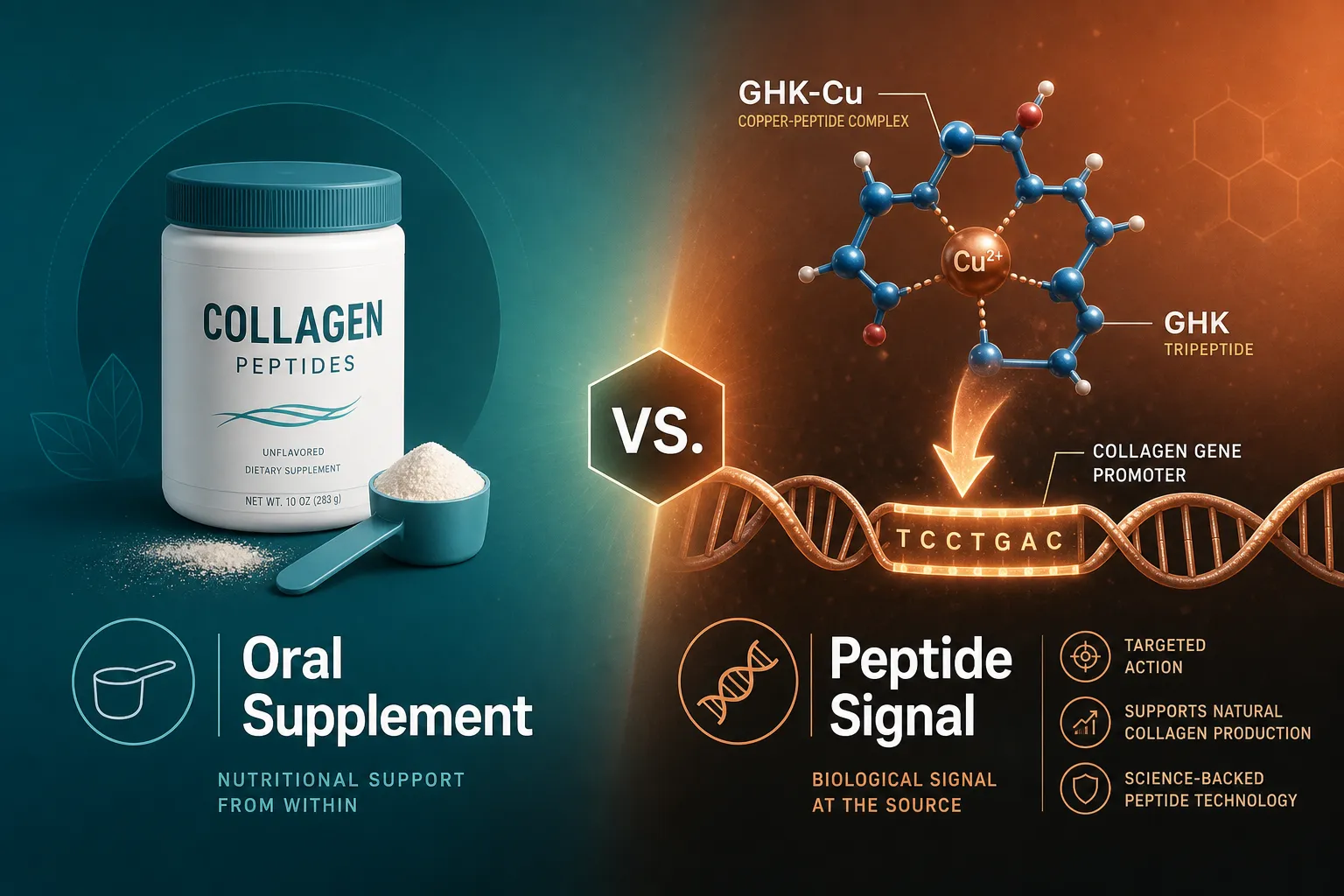
Collagen makes up roughly 30% of all protein in the human body, yet most people trying to support it reach for a powder rather than a signal. That distinction matters enormously in research. The study of GHK-Cu peptide and collagen has revealed that copper-binding polypeptides do not simply add raw material to skin and tissue; they interact directly with the genetic and enzymatic machinery that governs collagen synthesis, cross-linking, and extracellular matrix (ECM) remodeling. Understanding that mechanism separates informed research from guesswork.

Key Takeaways

  • GHK-Cu is a naturally occurring copper-binding tripeptide (Glycine-Histidine-Lysine) that modulates collagen gene expression rather than acting as a structural building block.
  • Copper within the GHK-Cu complex activates lysyl oxidase, the enzyme responsible for cross-linking collagen fibers into durable ECM scaffolds.
  • Research shows GHK-Cu upregulates collagen types I and III while simultaneously regulating matrix metalloproteinases (MMPs) to balance ECM breakdown and repair.
  • Copper-binding peptides differ fundamentally from oral collagen supplements, which work through amino acid delivery rather than receptor-level signaling.
  • Sourcing purity-verified peptides is critical for any research application involving GHK-Cu and collagen pathways.

Key Takeaways

The Molecular Basis of GHK-Cu Peptide and Collagen Pathway Activation

GHK-Cu stands for Glycine-Histidine-Lysine complexed with a copper (Cu2+) ion. This tripeptide was first isolated from human plasma in the early 1970s by Dr. Loren Pickart, who observed that older plasma lost the ability to support liver tissue function that younger plasma retained. The active fraction was GHK.

The copper ion is not incidental. It is structurally integral. The histidine residue coordinates the Cu2+ ion through its imidazole nitrogen, creating a stable chelate that allows the peptide to interact with cell surface receptors and nuclear signaling pathways. Without copper, the peptide's biological activity is substantially reduced.

How GHK-Cu signals collagen production:

  • Binds to cell surface receptors on fibroblasts
  • Activates TGF-beta (transforming growth factor beta) pathways
  • Upregulates mRNA expression for collagen type I and type III
  • Stimulates decorin and other proteoglycans that organize collagen fibers

"GHK-Cu does not donate collagen, it instructs cells to make more of it, and to make it correctly."

This signaling distinction is why researchers studying tissue repair and skin biology treat GHK-Cu as a regulatory molecule rather than a nutritional substrate. For those exploring other peptides with tissue-level effects, TB-500 peptide research offers a useful parallel in ECM-adjacent signaling.

ECM Remodeling: How Copper-Binding Polypeptides Interact With Classic Collagen Pathways in Skin and Tissue Research

The extracellular matrix is not a static scaffold. It is a dynamic environment that is continuously broken down and rebuilt. GHK-Cu participates in both sides of this process, which is what makes it particularly interesting in skin aging and wound-healing research.

Lysyl Oxidase Activation and Collagen Cross-Linking

Copper is a required cofactor for lysyl oxidase (LOX), the enzyme that catalyzes the cross-linking of collagen and elastin fibers. Cross-linking is what gives collagen its tensile strength. GHK-Cu delivers bioavailable copper directly to fibroblasts and other connective tissue cells, supporting LOX activity in a targeted way.

Process Role of GHK-Cu
Collagen synthesis Upregulates COL1A1 and COL3A1 gene expression
Cross-linking Supplies Cu2+ to lysyl oxidase
ECM degradation Modulates MMP-1, MMP-2, and MMP-9 activity
Anti-inflammatory Downregulates NF-kB signaling

Matrix Metalloproteinase Regulation

One of the more nuanced findings in GHK-Cu research is its dual role with MMPs. These enzymes degrade collagen and are necessary for healthy tissue turnover. Chronic overexpression of MMPs, common in aged or UV-damaged skin, leads to net collagen loss. GHK-Cu has been shown in cell culture studies to reduce excess MMP activity while preserving the baseline turnover needed for healthy ECM remodeling.

This balance is not replicated by oral collagen supplements, which have no direct MMP-modulating effect. Researchers interested in comparing peptide mechanisms across tissue types may also find value in reviewing BPC-157 and TB-500 blend research, which addresses related repair pathways.

Matrix Metalloproteinase Regulation

GHK-Cu Versus Oral Collagen Supplements: A Mechanistic Comparison

The commercial collagen supplement market is built on a straightforward premise: consume hydrolyzed collagen peptides, absorb the amino acids, and provide fibroblasts with raw material. This approach has some research support, particularly for joint comfort outcomes. However, it operates at a fundamentally different level than GHK-Cu peptide and collagen pathway modulation.

Key mechanistic differences:

  • Oral collagen: Delivers glycine, proline, and hydroxyproline as substrate; no direct gene expression effect
  • GHK-Cu: Acts as a signaling ligand; triggers fibroblast gene transcription programs
  • Oral collagen: Bioavailability depends on gut absorption and systemic amino acid competition
  • GHK-Cu: Exerts local effects at the tissue level through topical or injectable delivery in research settings

This is not an argument against either approach. It is a clarification that they are not interchangeable. Researchers studying skin biology, wound healing, or tissue engineering should treat them as complementary rather than equivalent tools.

For those exploring the broader peptide research landscape, resources on where to buy research peptides and what not to mix with peptides provide essential sourcing and safety context.

GHK-Cu Versus Oral Collagen Supplements: A Mechanistic Comparison

Research Applications and Sourcing Considerations in 2026

Current research in 2026 continues to expand the known scope of GHK-Cu activity. Beyond skin, published studies have examined its role in lung tissue repair, nerve regeneration, and anti-inflammatory signaling. The peptide appears in gene expression databases as a modulator of over 4,000 human genes, many of which intersect with ECM biology.

For researchers working with GHK-Cu in laboratory settings, purity and verification are non-negotiable. Copper-binding peptides are sensitive to oxidation and improper storage. A contaminated or degraded sample will not reproduce published results. Researchers sourcing peptides for collagen-related studies should also consider how GHK-Cu might be combined with other compounds, for example, Epithalon peptide research addresses telomere-related aging pathways that intersect with collagen biology at the cellular level.

Those building a broader research protocol may also benefit from reviewing aging support peptide categories to understand how GHK-Cu fits within a wider tissue-health framework.

Conclusion

The research on GHK-Cu peptide and collagen interaction represents one of the clearest examples of how copper-binding polypeptides interact with classic collagen pathways in skin and tissue research, not by adding building blocks, but by activating the biological programs that build, organize, and maintain collagen architecture. The peptide's ability to upregulate collagen gene expression, support lysyl oxidase cross-linking, and modulate MMP activity places it in a mechanistic category that oral supplements cannot occupy.

Actionable next steps for researchers:

  1. Review published fibroblast cell culture studies on GHK-Cu and COL1A1/COL3A1 expression before designing protocols.
  2. Source GHK-Cu only from vendors who provide third-party purity certificates and mass spectrometry data.
  3. Distinguish clearly between GHK-Cu's signaling role and the substrate role of hydrolyzed collagen when designing experiments or interpreting results.
  4. Explore complementary peptides, such as those in TB-500 and BPC-157 blend research, when studying multi-pathway tissue repair.
  5. Store copper-binding peptides per manufacturer specifications to preserve Cu2+ chelation integrity.

The field is active, the mechanisms are well-characterized, and the sourcing infrastructure for verified research-grade GHK-Cu is accessible. The next step is applying rigorous methodology to a peptide that has already demonstrated significant biological relevance.

https://www.puretestedpeptides.com/wp-content/uploads/2026/08/ghk-cu-peptide-and-collagen-how-copper-binding-polypeptides-interact-with-classi.webp 1024 1536 https://www.puretestedpeptides.com/wp-content/uploads/2026/01/buy-peptides-online.jpg 2026-08-01 13:05:132026-08-01 13:05:13GHK-Cu Peptide and Collagen: How Copper-Binding Polypeptides Interact With Classic Collagen Pathways in Skin and Tissue Research
Peptides and Polypeptides in Mitochondrial Biology: How MOTS-c and 5-Amino-1MQ Compare With Classic Mitochondrial Pathways

Peptides and Polypeptides in Mitochondrial Biology: How MOTS-c and 5-Amino-1MQ Compare With Classic Mitochondrial Pathways

August 1, 2026/0 Comments/in Uncategorized/by

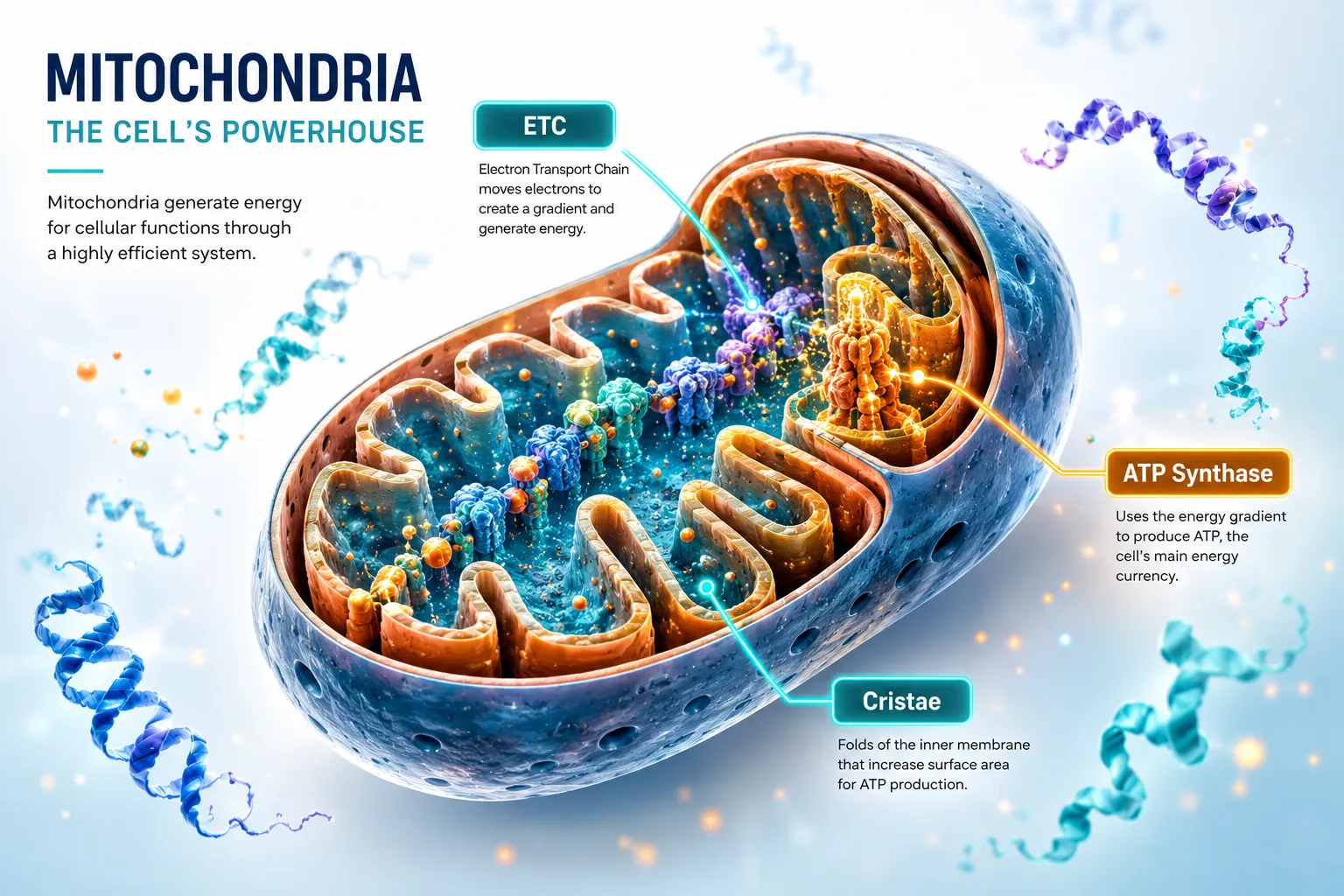
Mitochondria consume roughly 90% of the oxygen a cell uses, yet the molecular signals that govern their health remain one of biology's most active research frontiers. Exploring peptides and polypeptides in mitochondrial biology: how MOTS-c and 5-Amino-1MQ compare with classic mitochondrial pathways gives researchers a sharper map of where newer mitochondria-targeted compounds sit relative to well-established mechanisms like oxidative phosphorylation, the electron transport chain (ETC), and mitochondrial biogenesis.

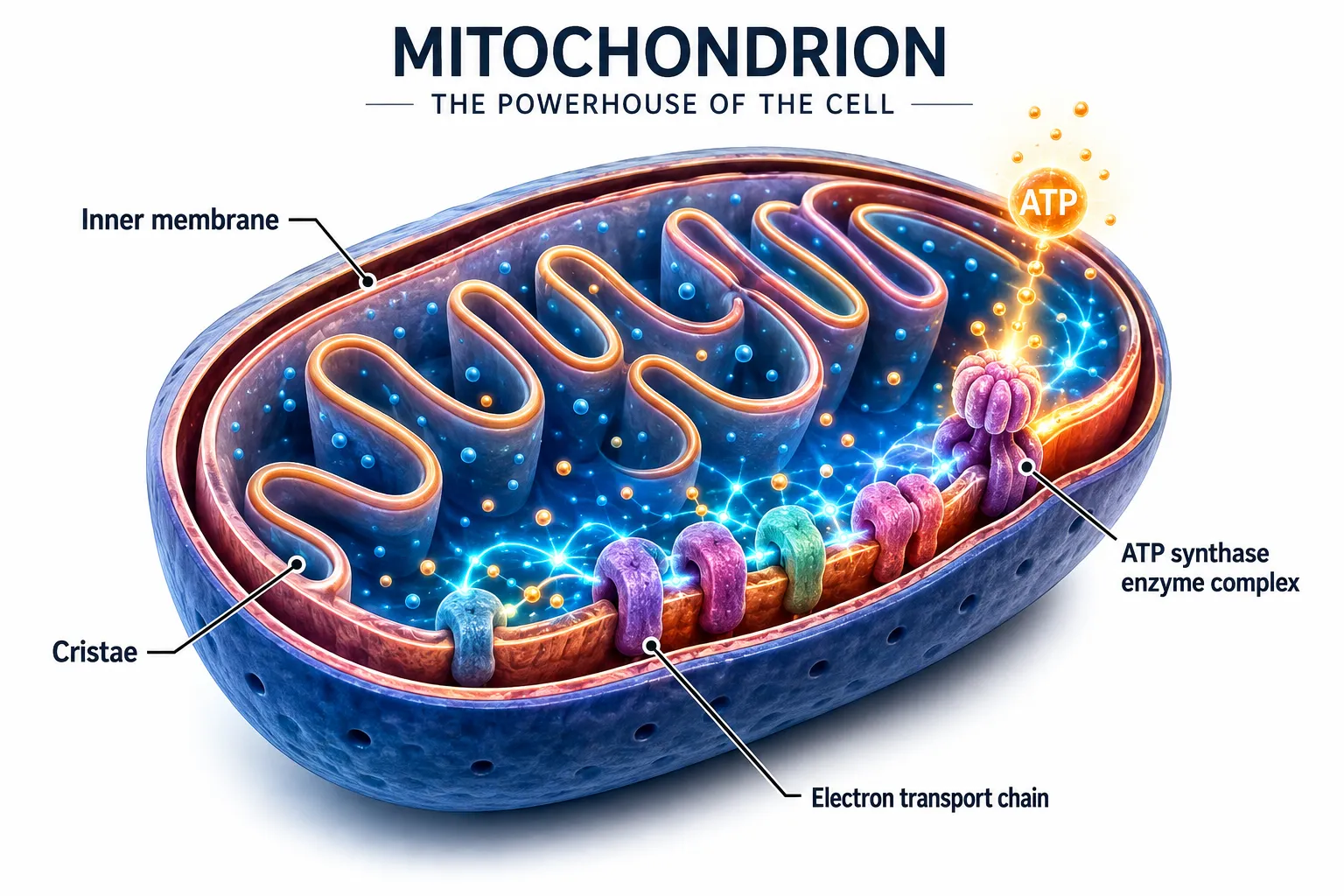
Bright editorial infographic-style landscape (): a vivid cross-section diagram of a mitochondrion with clearly labeled short

Key Takeaways

  • Mitochondria rely on canonical pathways, the ETC, ATP synthase, and PGC-1alpha-driven biogenesis, to sustain cellular energy.
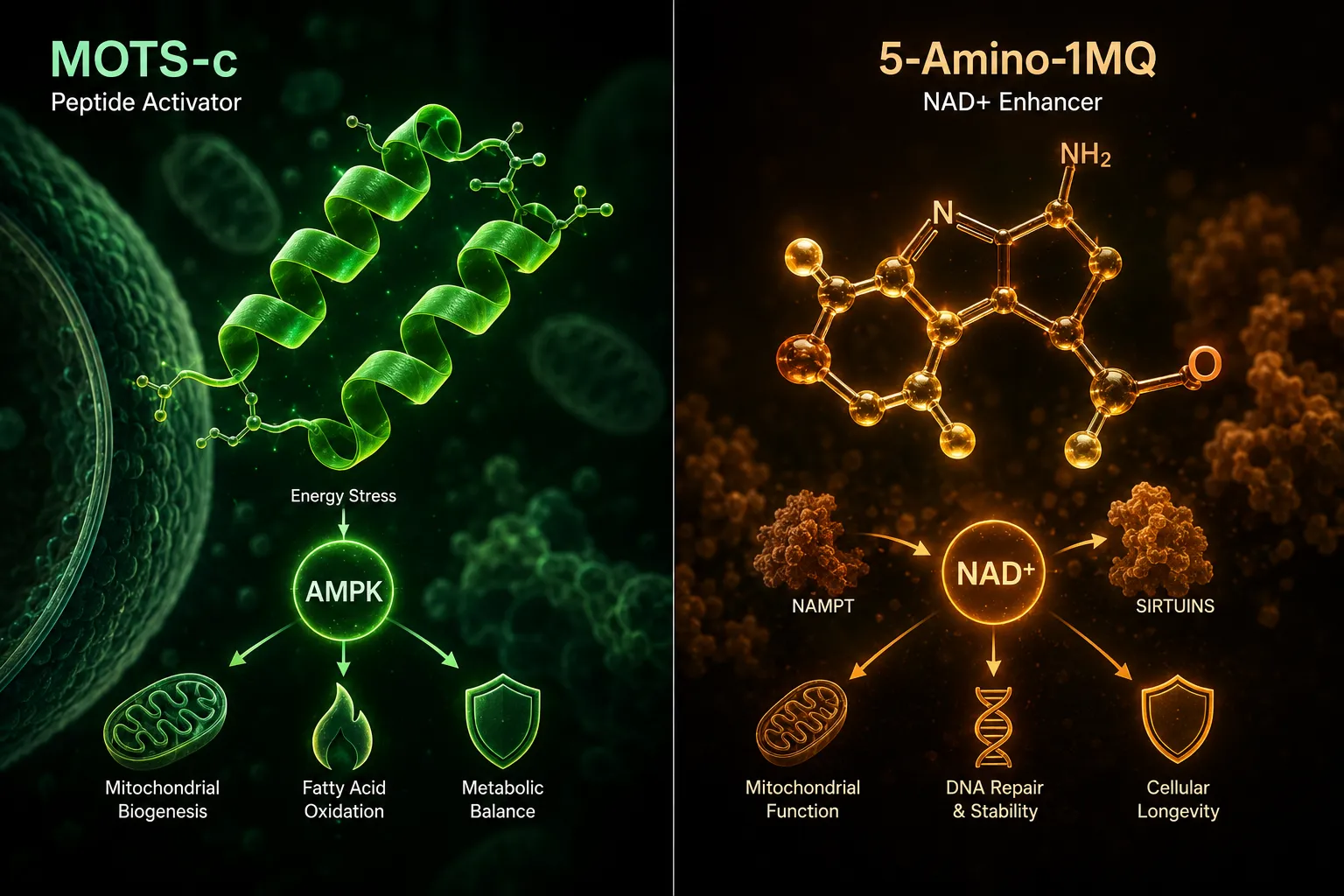
  • MOTS-c is a mitochondria-derived peptide (MDP) encoded in mitochondrial DNA that activates AMPK and influences metabolic homeostasis.
  • 5-Amino-1MQ is a small-molecule NNMT inhibitor that raises NAD+ precursor availability, indirectly supporting mitochondrial function.
  • Both agents intersect classic pathways at distinct nodes, making their mechanisms complementary rather than redundant.
  • Ongoing preclinical research continues to clarify how these compounds compare with established mitochondrial targets such as SS-31 (elamipretide).

Classic Mitochondrial Pathways: The Baseline for Comparison

Before mapping newer peptide research, it helps to anchor the discussion in core mitochondrial biology.

Oxidative phosphorylation (OXPHOS) is the process by which electrons from NADH and FADH2 travel through five protein complexes embedded in the inner mitochondrial membrane. This electron flow drives proton pumping, creating a gradient that ATP synthase (Complex V) converts into ATP, the cell's primary energy currency.

Mitochondrial biogenesis is the regulated growth and division of mitochondria. The transcriptional coactivator PGC-1alpha sits at the top of this regulatory cascade, coordinating nuclear respiratory factors (NRF-1, NRF-2) and mitochondrial transcription factor A (TFAM) to replicate mitochondrial DNA and build new organelles.

AMPK (AMP-activated protein kinase) acts as a cellular energy sensor. When the AMP:ATP ratio rises, signaling low energy, AMPK activates PGC-1alpha, stimulates fatty acid oxidation, and suppresses anabolic pathways that consume ATP.

NAD+ metabolism links directly to both OXPHOS and biogenesis. NAD+ is the electron acceptor that feeds Complex I of the ETC; it also activates sirtuins (SIRT1, SIRT3) that deacetylate and activate PGC-1alpha. Declining NAD+ is a hallmark of cellular aging and metabolic dysfunction.

These four nodes, OXPHOS, biogenesis via PGC-1alpha, AMPK signaling, and NAD+ flux, form the reference framework against which MOTS-c and 5-Amino-1MQ can be evaluated.

MOTS-c and 5-Amino-1MQ: Mechanisms Within Mitochondrial Pathways

MOTS-c and 5-Amino-1MQ: Mechanisms Within Mitochondrial Pathways

MOTS-c: A Mitochondria-Derived Peptide With AMPK Activity

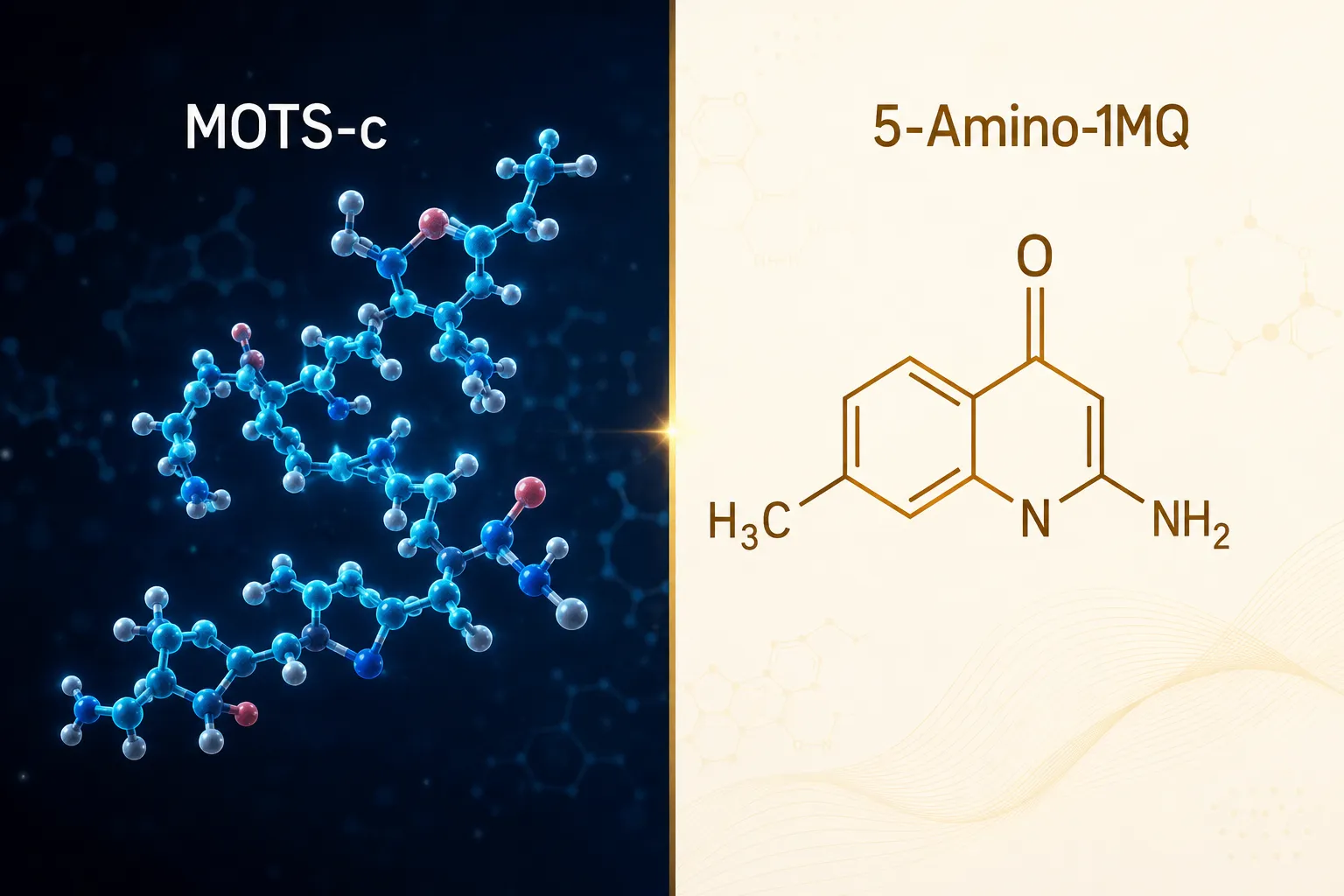
MOTS-c (Mitochondrial Open Reading Frame of the 12S rRNA-c) is a 16-amino-acid peptide encoded within the 12S rRNA gene of mitochondrial DNA. Its discovery in 2015 by Lee et al. established a new class of signaling molecules: mitochondria-derived peptides (MDPs).

Key mechanistic points:

  • AMPK activation: MOTS-c translocates to the nucleus under metabolic stress and activates AMPK, mirroring the energy-sensing role that classic AMPK activators (e.g., AICAR, metformin) fulfill.
  • Folate cycle interference: MOTS-c inhibits the folate cycle and de novo purine synthesis, which raises AMP levels and secondarily activates AMPK, a unique upstream mechanism not shared by conventional AMPK agonists.
  • Metabolic homeostasis: Preclinical studies show MOTS-c improves insulin sensitivity and reduces diet-induced obesity in mouse models, consistent with enhanced mitochondrial substrate utilization.

Compared to the classic PGC-1alpha pathway, MOTS-c does not directly upregulate mitochondrial biogenesis genes. Instead, it optimizes existing mitochondrial function by shifting cellular metabolism toward fatty acid oxidation and away from glucose dependence.

5-Amino-1MQ: NAD+ Restoration Through NNMT Inhibition

5-Amino-1-methylquinolinium (5-Amino-1MQ) is a small-molecule inhibitor of nicotinamide N-methyltransferase (NNMT), an enzyme that consumes S-adenosylmethionine (SAM) and converts nicotinamide into 1-methylnicotinamide, effectively sequestering NAD+ precursors away from biosynthetic use.

By blocking NNMT, 5-Amino-1MQ:

  • Increases intracellular nicotinamide availability, boosting NAD+ biosynthesis via the salvage pathway.
  • Elevates SIRT1 and SIRT3 activity, which deacetylates and activates PGC-1alpha, linking this compound directly to mitochondrial biogenesis.
  • Reduces adipogenesis in preclinical models, an effect attributed to improved mitochondrial energy expenditure.

Unlike direct NAD+ precursors (NMN, NR), 5-Amino-1MQ acts upstream by preventing precursor loss rather than supplying additional substrate. This positions it at a distinct node within NAD+ metabolism.

Comparing Peptides and Polypeptides in Mitochondrial Biology: MOTS-c, 5-Amino-1MQ, and SS-31

Comparing Peptides and Polypeptides in Mitochondrial Biology: MOTS-c, 5-Amino-1MQ, and SS-31

Understanding peptides and polypeptides in mitochondrial biology: how MOTS-c and 5-Amino-1MQ compare with classic mitochondrial pathways becomes clearer when these agents are placed alongside SS-31 (elamipretide), a well-studied mitochondria-targeted peptide. Researchers exploring SS-31 mitochondrial dynamics will recognize that SS-31 operates primarily at the inner mitochondrial membrane, stabilizing cardiolipin and protecting the structural integrity of ETC complexes, a mechanism distinct from both MOTS-c and 5-Amino-1MQ.

Agent Primary Target Classic Pathway Node
MOTS-c AMPK activation Energy sensing / substrate utilization
5-Amino-1MQ NNMT inhibition NAD+ metabolism / biogenesis
SS-31 Cardiolipin stabilization ETC structural integrity

Those researching SS-31 elamipretide will find that its cardiolipin-targeting mechanism complements MOTS-c's metabolic signaling role rather than overlapping with it. Similarly, resources on SS-31 mechanism and research provide useful context for understanding how structural mitochondrial peptides differ from signaling MDPs.

For researchers building a broader peptide research framework, reviewing research-only peptides and quality peptides sourcing considerations remains an essential step before experimental design. Aging-focused research programs may also find value in the aging support product category when planning compound selection.

Where the Mechanisms Converge

Despite their distinct entry points, all three agents ultimately support mitochondrial efficiency:

  • MOTS-c and 5-Amino-1MQ both feed into PGC-1alpha activity, MOTS-c via AMPK upstream signaling and 5-Amino-1MQ via SIRT1 activation downstream of NAD+.
  • SS-31 preserves the structural platform (cristae morphology, cardiolipin integrity) on which OXPHOS complexes operate.
  • Together, they represent complementary layers: structural protection, energy sensing, and metabolic substrate management.

Conclusion

Mapping peptides and polypeptides in mitochondrial biology: how MOTS-c and 5-Amino-1MQ compare with classic mitochondrial pathways reveals a layered picture. MOTS-c engages the AMPK energy-sensing node through a novel folate-cycle mechanism, while 5-Amino-1MQ restores NAD+ precursor flux by blocking NNMT, each intersecting canonical pathways at a different control point. Neither replaces the foundational biology of OXPHOS or PGC-1alpha-driven biogenesis; both modulate it.

Actionable next steps for researchers in 2026:

  1. Establish baseline NAD+ and AMPK activity measurements in your model system before introducing either compound.
  2. Consider whether structural mitochondrial protection (SS-31) should precede or accompany metabolic signaling interventions.
  3. Review current preclinical literature on MOTS-c dosing windows and 5-Amino-1MQ selectivity profiles before experimental design.
  4. Source compounds from verified, tested suppliers and document purity certificates for all research-grade materials.

The intersection of mitochondrial peptide biology with classic energy pathways is one of the most promising areas in cellular research today, and understanding where each tool fits within that map is the first step toward rigorous, reproducible science.


References

  • Lee, C., et al. (2015). "The mitochondrial-derived peptide MOTS-c promotes metabolic homeostasis and reduces obesity and insulin resistance." Cell Metabolism, 21(3), 443-454.
  • Neinast, M., et al. (2019). "Quantitative Analysis of the Whole-Body Metabolic Fate of Branched-Chain Amino Acids." Cell Metabolism, 29(2), 417-429.
  • Hong, S., et al. (2021). "NAD+ metabolism and its roles in cellular processes during ageing." Nature Reviews Molecular Cell Biology, 22(2), 119-141.
  • Bhullar, K. S., & Hubbard, B. P. (2015). "Lifespan and healthspan extension by resveratrol." Biochimica et Biophysica Acta, 1852(6), 1209-1218.
  • Szeto, H. H. (2014). "First-in-class cardiolipin-protective compound as a therapeutic agent to restore mitochondrial bioenergetics." British Journal of Pharmacology, 171(8), 2029-2050.
  • Eckert, M. A., et al. (2019). "Proteomics reveals NNMT as a master metabolic regulator of cancer-associated fibroblasts." Nature, 569(7758), 723-728.
https://www.puretestedpeptides.com/wp-content/uploads/2026/08/peptides-and-polypeptides-in-mitochondrial-biology-how-mots-c-and-5-amino-1mq-co.webp 1024 1536 https://www.puretestedpeptides.com/wp-content/uploads/2026/01/buy-peptides-online.jpg 2026-08-01 13:05:102026-08-01 13:05:10Peptides and Polypeptides in Mitochondrial Biology: How MOTS-c and 5-Amino-1MQ Compare With Classic Mitochondrial Pathways
Peptides 101 for Research-Use Only Buyers: Structure, Mechanisms, and Where GLP-3, MOTS-c, and 5-Amino-1MQ Fit In

Peptides 101 for Research-Use Only Buyers: Structure, Mechanisms, and Where GLP-3, MOTS-c, and 5-Amino-1MQ Fit In

August 1, 2026/0 Comments/in Uncategorized/by

More than 7,000 naturally occurring peptides have been identified in the human body, yet the research community's working vocabulary around them remains scattered and inconsistent. For scientists, lab managers, and informed research-use buyers, that knowledge gap creates real procurement and study-design problems. This guide to Peptides 101 for Research-Use Only Buyers: Structure, Mechanisms, and Where GLP-3, MOTS-c, and 5-Amino-1MQ Fit In builds a clear foundation, from basic chemistry through receptor biology, and then maps three emerging research compounds to that framework.

Disclaimer: All compounds discussed here are intended strictly for laboratory and research purposes. They are not approved for human consumption, diagnosis, or treatment.

Key Takeaways

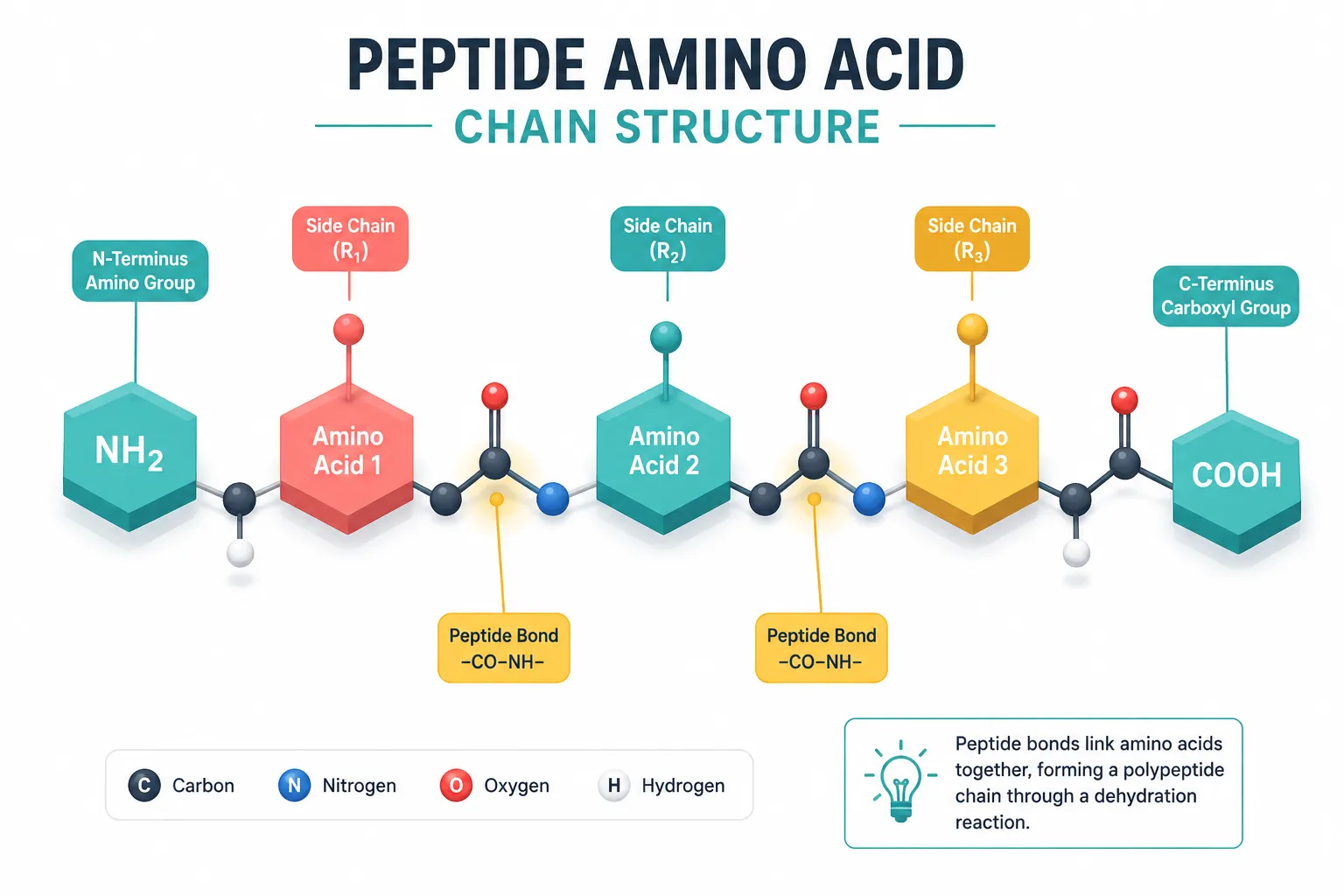
  • Peptides are short amino acid chains whose biological activity is determined by sequence, folding, and receptor specificity.
  • Structural class (cyclic, linear, stapled) directly predicts stability, bioavailability, and research utility.
  • GLP-3 is a proglucagon-derived incretin with distinct receptor pharmacology compared to GLP-1.
  • MOTS-c is a mitochondria-encoded peptide with roles in metabolic regulation and cellular stress response.
  • 5-Amino-1MQ is a small-molecule NNMT inhibitor that intersects peptide-adjacent metabolic research pathways.
  • Purity verification and certificate of analysis (CoA) documentation are non-negotiable for valid preclinical data.

Key Takeaways

The Structural Basics Every Research Buyer Should Know

What Is a Peptide?

A peptide is a chain of two or more amino acids linked by peptide bonds, covalent bonds formed between the carboxyl group of one amino acid and the amino group of the next. Chains of fewer than 50 residues are conventionally called peptides; longer chains become proteins.

Key structural vocabulary:

Term Definition
Residue A single amino acid unit within a chain
N-terminus The free amino end of the chain
C-terminus The free carboxyl end of the chain
Peptide bond The CO-NH linkage joining residues
Cyclic peptide Chain with head-to-tail or side-chain cyclization

Why Structure Matters for Research

Structural class determines three critical research parameters:

  1. Stability, Linear peptides are susceptible to protease degradation; cyclic and stapled peptides resist enzymatic cleavage.
  2. Receptor selectivity, Sequence determines which receptor binding pocket a peptide fits.
  3. Half-life, PEGylation, lipidation, and cyclization all extend plasma half-life in preclinical models.

Researchers sourcing compounds for in vitro or animal studies should consult lab-tested peptides with documented purity above 98% to ensure data reproducibility.

Why Structure Matters for Research

GLP-3, MOTS-c, and 5-Amino-1MQ: Where They Fit in Peptides 101 for Research-Use Only Buyers

GLP-3: The Overlooked Proglucagon Fragment

GLP-1 dominates current incretin research, but GLP-3 (glucagon-like peptide-3) is a lesser-studied proglucagon-derived fragment that warrants attention. Proglucagon is post-translationally cleaved into multiple bioactive peptides depending on tissue context. GLP-3 occupies residues 126-158 of proglucagon.

Key research points:

  • GLP-3 does not bind the canonical GLP-1 receptor with high affinity.
  • Preclinical data suggest activity at intestinal L-cell receptors distinct from GLP-1R.
  • Its role in gut motility and nutrient sensing is an active area of investigation.

For researchers studying incretin biology, reviewing the GLP-3R peptide research page provides useful compound context. Those already working with GLP-1 analogs can find GLP-1 peptide sourcing information for comparison studies.

MOTS-c: Mitochondria-Encoded Metabolic Signaling

MOTS-c (Mitochondrial Open Reading Frame of the 12S rRNA-c) is a 16-amino acid peptide encoded within mitochondrial DNA, a structural distinction that sets it apart from all nuclear-encoded peptides. Discovered in 2015, it is classified as a mitokine.

Mechanistic highlights from preclinical research:

  • Activates AMPK (AMP-activated protein kinase) signaling
  • Modulates folate and methionine metabolism via the AICAR pathway
  • Demonstrates exercise-mimetic effects in rodent models
  • Translocates to the nucleus under metabolic stress conditions

MOTS-c represents a new class of signaling molecule that blurs the line between peptide hormone and intracellular regulator, a distinction that matters when designing receptor binding assays.

5-Amino-1MQ: Small Molecule in a Peptide-Adjacent Space

5-Amino-1MQ is not a peptide by strict definition, it is a small-molecule inhibitor of NNMT (nicotinamide N-methyltransferase). It earns a place in this Peptides 101 framework because:

  • NNMT regulates the same NAD+/methyl donor pathways that several metabolic peptides modulate.
  • It is frequently co-studied with MOTS-c and other mitokines in metabolic disease models.
  • Its mechanism (enzyme inhibition rather than receptor agonism) offers a complementary research angle.

Preclinical rodent studies have linked NNMT inhibition to reduced adipogenesis and improved insulin sensitivity, making 5-Amino-1MQ relevant to any lab running metabolic peptide panels.

5-Amino-1MQ: Small Molecule in a Peptide-Adjacent Space

Sourcing, Purity Standards, and Research Compliance

What to Demand from a Peptide Supplier

Research validity depends entirely on compound quality. A reliable supplier should provide:

  • Certificate of Analysis (CoA) with HPLC purity data (target: >98%)
  • Mass spectrometry confirmation of molecular weight
  • Sterility testing for compounds used in cell culture
  • Clear research-use-only labeling on all materials

Researchers can buy peptides online from verified sources that publish full CoA documentation. For labs scaling up, wholesale peptides options with batch-level testing are available.

Comparing Metabolic Peptides to Classic Signaling Peptides

Classic signaling peptides (e.g., BPC-157, TB-500, Sermorelin) operate primarily through growth factor receptors and cytokine pathways. Metabolic peptides like GLP-3 and MOTS-c engage energy-sensing machinery, AMPK, mTOR, and mitochondrial biogenesis networks.

This distinction matters for:

  • Assay design (receptor binding vs. metabolic flux assays)
  • Animal model selection (diet-induced obesity models vs. wound healing models)
  • Endpoint selection (body composition, insulin sensitivity, VO2 max)

Researchers working across both categories should review BPC-157 and TB-500 combination research alongside metabolic peptide protocols to understand how signaling and metabolic pathways interact.

For labs exploring growth hormone secretagogues as part of a broader metabolic panel, GHRP-2 vs. Sermorelin comparisons offer useful mechanistic context.

Conclusion

A solid grasp of peptide structure and receptor pharmacology is the foundation for any credible preclinical research program. Peptides 101 for Research-Use Only Buyers: Structure, Mechanisms, and Where GLP-3, MOTS-c, and 5-Amino-1MQ Fit In shows that these three compounds occupy distinct but related positions in the metabolic research landscape, GLP-3 as a proglucagon fragment with unique receptor biology, MOTS-c as a mitochondria-encoded mitokine with systemic metabolic effects, and 5-Amino-1MQ as a small-molecule tool for probing NNMT-dependent pathways.

Actionable next steps for research buyers in 2026:

  1. Audit your current peptide inventory for CoA documentation and HPLC purity data.
  2. Map each compound to its primary receptor or enzymatic target before designing assays.
  3. Source GLP-3, MOTS-c, and 5-Amino-1MQ from suppliers that provide batch-specific mass spectrometry data.
  4. Cross-reference the research blog for updated preclinical literature summaries.
  5. Distinguish metabolic peptides from classic signaling peptides in your study design to avoid endpoint mismatches.

Quality sourcing and mechanistic clarity are not optional, they are the variables that separate publishable data from inconclusive results.

https://www.puretestedpeptides.com/wp-content/uploads/2026/08/peptides-101-for-research-use-only-buyers-structure-mechanisms-and-where-glp-3-m.webp 1024 1536 https://www.puretestedpeptides.com/wp-content/uploads/2026/01/buy-peptides-online.jpg 2026-08-01 13:05:082026-08-01 13:05:08Peptides 101 for Research-Use Only Buyers: Structure, Mechanisms, and Where GLP-3, MOTS-c, and 5-Amino-1MQ Fit In
Adenosine Triphosphate and Mitochondrial Peptides: How MOTS-c and 5-Amino-1MQ Influence ATP Production in Research Models

Adenosine Triphosphate and Mitochondrial Peptides: How MOTS-c and 5-Amino-1MQ Influence ATP Production in Research Models

August 1, 2026/0 Comments/in Uncategorized/by

Every cell in the body runs on a single molecular currency, adenosine triphosphate (ATP). When that currency becomes scarce, cellular function deteriorates rapidly. The emerging science of mitochondrial peptides now offers researchers a new lens for understanding how ATP production can be modulated at the molecular level, and two compounds sit at the center of that conversation: MOTS-c and 5-Amino-1MQ. The study of adenosine triphosphate and mitochondrial peptides, specifically how MOTS-c and 5-Amino-1MQ influence ATP production in research models, has accelerated considerably in 2026, with the first interventional human trials now recruiting.

Bright editorial infographic-style landscape image () showing a detailed cross-section diagram of a mitochondrion with

Key Takeaways

  • ATP is the primary energy currency of cells, produced mainly within mitochondrial inner membranes via oxidative phosphorylation.
  • MOTS-c is a mitochondria-encoded peptide that modulates the AMP/ATP ratio and activates AMPK, indirectly protecting ATP reserves under metabolic stress.
  • 5-Amino-1MQ inhibits NNMT, raising intracellular NAD+ levels and supporting mitochondrial electron transport chain efficiency.
  • Both compounds influence overlapping metabolic pathways, including NAD+ metabolism and AMPK signaling, making them complementary subjects in energy research.
  • The evidence base for both compounds remains primarily preclinical, though human data for MOTS-c is growing rapidly.

ATP Fundamentals: Why Mitochondrial Output Matters

Adenosine triphosphate is synthesized primarily through oxidative phosphorylation, a process driven by the electron transport chain (ETC) embedded in the inner mitochondrial membrane. Each glucose molecule, when fully oxidized, yields approximately 30-32 ATP molecules, the majority generated at the ATP synthase complex (Complex V).

Several factors limit this output in aging or diseased tissue:

  • Declining NAD+ availability, which slows ETC electron flow
  • Mitochondrial membrane damage, reducing proton gradient efficiency
  • Excess ATP hydrolysis under stress conditions, depleting reserves faster than they can be replenished
  • Impaired mitophagy, allowing dysfunctional mitochondria to accumulate

Understanding these bottlenecks is essential context for evaluating how peptides like MOTS-c and 5-Amino-1MQ interact with ATP metabolism. Researchers exploring related mitochondrial compounds such as SS-31 and its mitochondrial research themes will recognize many of the same upstream mechanisms at work.

How MOTS-c and 5-Amino-1MQ Influence ATP Production in Research Models

How MOTS-c and 5-Amino-1MQ Influence ATP Production in Research Models

MOTS-c: A Mitochondria-Encoded Metabolic Regulator

MOTS-c (Mitochondrial Open Reading Frame of the 12S rRNA type-c) is a 16-amino-acid peptide encoded directly within mitochondrial DNA, a distinction that makes it biologically unique. Rather than directly synthesizing ATP, MOTS-c acts as a metabolic stress sensor that modulates the AMP-to-ATP ratio and activates AMP-activated protein kinase (AMPK).

Key findings from preclinical and early human research include:

Observation Model Type
Acute exercise sharply elevates MOTS-c in muscle and circulation Human subjects
MOTS-c reduces ATP hydrolysis during anoxic stress Cellular/animal models
AMPK activation improves glucose uptake and fatty acid oxidation Animal models
MOTS-c preserves mitochondrial membrane integrity under oxidative load Preclinical

By slowing ATP hydrolysis rather than boosting raw production, MOTS-c effectively conserves the ATP pool when cellular demand outpaces supply. This mechanism is especially relevant in hypoxic or ischemic conditions studied in research settings.

Researchers interested in exploring MOTS-c peptide research will find it pairs conceptually with other mitochondria-targeted compounds. For a broader comparative view, the MOTS-c and elamipretide research overview provides useful context on how these agents differ mechanistically.

5-Amino-1MQ: NAD+ Elevation and ETC Support

5-Amino-1MQ (5-amino-1-methylquinolinium) takes a fundamentally different approach. It is a small-molecule inhibitor of nicotinamide N-methyltransferase (NNMT), an enzyme that consumes S-adenosylmethionine and depletes the methyl donor pool needed for NAD+ biosynthesis.

By blocking NNMT, 5-Amino-1MQ:

  1. Raises intracellular NAD+ concentrations
  2. Supports sirtuin (SIRT1/SIRT3) activity, which regulates mitochondrial biogenesis
  3. Enhances electron flow through Complexes I and III of the ETC
  4. Reduces adipogenesis in preclinical obesity models, indirectly improving metabolic efficiency

The downstream result in research models is improved mitochondrial respiratory capacity and greater ATP output per unit of substrate. Because NAD+ is consumed at multiple points in the ETC, even modest increases in its availability can meaningfully shift ATP yield.

"NAD+ is not merely a cofactor, it is a rate-limiting variable in mitochondrial energy production, and compounds that restore its availability represent a high-leverage intervention point in metabolic research."

Overlapping Pathways and Downstream Signaling

The significance of studying adenosine triphosphate and mitochondrial peptides, how MOTS-c and 5-Amino-1MQ influence ATP production in research models, becomes clearest when their pathways are examined together.

Both compounds converge on AMPK and sirtuin signaling:

  • MOTS-c activates AMPK via AMP/ATP ratio changes
  • Elevated NAD+ from 5-Amino-1MQ activates SIRT1, which can also stimulate AMPK indirectly

This convergence suggests potential synergistic effects in research models, though direct combination studies remain limited as of 2026. Researchers studying mitochondrial dynamics may also find value in reviewing SS-31 mitochondrial dynamics research, which addresses cristae remodeling, a structural factor that influences ETC efficiency upstream of both MOTS-c and 5-Amino-1MQ targets.

Additional peptides with metabolic relevance, such as those explored in epithalon peptide research, demonstrate that mitochondrial health intersects with broader cellular aging pathways, reinforcing the value of a systems-level research approach.

Overlapping Pathways and Downstream Signaling

The 2026 Research Landscape

The field has matured considerably. Key developments include:

  • First interventional human MOTS-c trials now actively recruiting as of 2026
  • Growing body of human exercise data showing MOTS-c responds dynamically to metabolic demand
  • Increased interest in 5-Amino-1MQ as a metabolic adjunct in obesity and insulin resistance models
  • Expanded understanding of how NAD+ precursor availability limits or enables peptide-driven ATP gains

Researchers sourcing compounds for preclinical work should prioritize purity and documentation. Resources such as quality peptides for research and verified peptides for sale help ensure experimental reproducibility.

Conclusion

The intersection of adenosine triphosphate and mitochondrial peptides, specifically how MOTS-c and 5-Amino-1MQ influence ATP production in research models, represents one of the most actionable frontiers in cellular bioenergetics research today. MOTS-c protects ATP reserves by moderating hydrolysis and activating AMPK, while 5-Amino-1MQ raises NAD+ availability to directly support electron transport chain throughput. Together, they illuminate distinct but complementary levers for improving mitochondrial energy output.

Actionable next steps for researchers:

  • Review current preclinical literature on MOTS-c's AMP/ATP modulation before designing in vitro protocols
  • Establish baseline NAD+ measurements in model systems before introducing 5-Amino-1MQ to accurately assess ETC changes
  • Consider AMPK pathway readouts as shared endpoints when studying both compounds
  • Monitor 2026 clinical trial registries for emerging human MOTS-c data that may inform translational research design
  • Source research-grade compounds from verified suppliers with documented purity testing to ensure data integrity
https://www.puretestedpeptides.com/wp-content/uploads/2026/08/adenosine-triphosphate-and-mitochondrial-peptides-how-mots-c-and-5-amino-1mq-inf.webp 1024 1536 https://www.puretestedpeptides.com/wp-content/uploads/2026/01/buy-peptides-online.jpg 2026-08-01 13:04:542026-08-01 13:04:54Adenosine Triphosphate and Mitochondrial Peptides: How MOTS-c and 5-Amino-1MQ Influence ATP Production in Research Models
Peptides and Polypeptides in Endocrine Pharmacology: How Enclomiphene Interfaces With Estrogen Receptor Biology

Peptides and Polypeptides in Endocrine Pharmacology: How Enclomiphene Interfaces With Estrogen Receptor Biology

August 1, 2026/0 Comments/in Uncategorized/by

Fewer than 10% of clinicians who prescribe selective estrogen receptor modulators can accurately define the structural difference between a peptide hormone and a small-molecule serm, yet that distinction determines how each drug class reshapes the endocrine axis. Peptides and polypeptides in endocrine pharmacology represent one of the most mechanistically rich areas of modern pharmacology, and understanding where non-peptide agents like enclomiphene fit within that landscape is essential for anyone conducting or interpreting research in this field.

Key Takeaways

  • Peptide and polypeptide hormones act on cell-surface receptors through second-messenger cascades, while enclomiphene binds directly inside the nucleus at estrogen receptors.
  • Enclomiphene works as an estrogen receptor antagonist at the hypothalamus, disrupting negative feedback and increasing endogenous LH and FSH secretion.
  • The hypothalamic-pituitary-gonadal (HPG) axis is the shared regulatory highway for both peptide-based and small-molecule endocrine modulators.
  • Purity and characterization of research compounds, whether peptide or small molecule, directly affect the reliability of mechanistic data.
  • Combining knowledge of peptide receptor biology with serm pharmacology produces a more complete picture of hormonal signaling networks.

The Structural Divide: Peptide Hormones Versus Small-Molecule Modulators

To appreciate how enclomiphene interfaces with estrogen receptor biology, it helps to first anchor the broader category of peptides and polypeptides in endocrine pharmacology.

Peptide hormones are chains of amino acids. Short chains of 2-50 residues are typically called peptides; longer chains become polypeptides and, eventually, proteins. Examples include gonadotropin-releasing hormone (GnRH), luteinizing hormone (LH), follicle-stimulating hormone (FSH), and growth hormone-releasing hormone (GHRH). These molecules are too large and too hydrophilic to cross the cell membrane, so they bind to surface receptors and trigger intracellular signaling cascades, most commonly through cyclic AMP or phospholipase C pathways.

Research into peptide modulators spans a wide range of targets. For instance, BPC-157 and TB-500 peptide research explores tissue-signaling mechanisms that share conceptual overlap with endocrine feedback loops. Similarly, GLP-1 peptide sourcing and research illustrates how incretin-class peptides modulate metabolic signaling through surface-receptor mechanisms, a useful structural contrast to nuclear receptor pharmacology.

Small-molecule agents like enclomiphene are chemically synthesized, low-molecular-weight compounds. They are lipophilic enough to diffuse across cell membranes and interact directly with intracellular receptors, in this case, the estrogen receptor (ER), a nuclear receptor superfamily member.

"The key pharmacological divide is not potency, it is receptor location. Peptide hormones knock on the cell's front door; small-molecule serms walk straight into the nucleus."

The Structural Divide: Peptide Hormones Versus Small-Molecule Modulators

How Enclomiphene Interfaces With Estrogen Receptor Biology Within the HPG Axis

The hypothalamic-pituitary-gonadal (HPG) axis is the shared regulatory highway where both peptide hormones and small-molecule modulators exert their effects.

Under normal physiology, circulating estradiol binds to estrogen receptors in hypothalamic neurons and pituitary gonadotrophs. This binding suppresses GnRH pulse frequency and reduces LH and FSH secretion, a classic negative-feedback loop mediated by a steroid hormone acting on nuclear receptors.

Enclomiphene, the trans-isomer of clomiphene citrate, competitively occupies estrogen receptors at these same hypothalamic and pituitary sites. Because it acts as a selective estrogen receptor antagonist in these tissues, it blocks estradiol's inhibitory signal. The hypothalamus interprets this blockade as low circulating estrogen, responds by increasing GnRH pulse amplitude, and the pituitary responds with elevated LH and FSH output.

The downstream result is stimulation of endogenous gonadal steroidogenesis, a fundamentally different mechanism from direct peptide hormone replacement. Compare this to tesa, a synthetic GHRH analog that binds surface receptors on pituitary somatotrophs to stimulate growth hormone release. Both agents ultimately raise a downstream hormone, but through entirely different receptor classes and cellular compartments.

Tissue-Selective Receptor Modulation

Enclomiphene's selectivity is tissue-dependent. In the hypothalamus and pituitary, it behaves as an antagonist. In other tissues, such as bone, estrogenic agonist activity may be partially preserved. This tissue selectivity is what defines the broader serm class and distinguishes these agents from pure estrogen blockers.

Feature Peptide Hormones Enclomiphene (serm)
Receptor location Cell surface Nuclear (intracellular)
Mechanism Second-messenger cascade Direct DNA transcription modulation
Tissue selectivity Determined by receptor subtype Determined by co-activator expression
Route of action Extracellular binding Intracellular ligand-binding domain

Peptides and Polypeptides in Endocrine Pharmacology: Research Sourcing and Compound Integrity

Peptides and Polypeptides in Endocrine Pharmacology: Research Sourcing and Compound Integrity

Peptides and Polypeptides in Endocrine Pharmacology: Research Sourcing and Compound Integrity

For researchers working across both peptide and small-molecule endocrine pharmacology, compound purity is a non-negotiable variable. Mechanistic studies that use impure or mischaracterized compounds produce data that cannot be replicated or translated.

This principle applies equally to peptide-based endocrine research tools. The GHK-Cu copper peptide research and sourcing guide addresses quality benchmarks relevant to any peptide used in signaling research. Likewise, the BPC-157 core documentation and first research guide outlines documentation standards that set a useful precedent for characterizing any endocrine research compound.

When sourcing peptides for studies that sit adjacent to serm pharmacology research, for example, examining GnRH analog interactions or LH pulse dynamics, researchers benefit from working with lab-tested peptides that carry third-party certificates of analysis. The same rigor should be applied to any small-molecule comparator used in parallel assays.

Three sourcing standards that apply across compound classes:

  1. Certificate of Analysis (CoA), confirms identity and purity by HPLC and mass spectrometry
  2. Sterility testing, essential for any in vivo research application
  3. Stability data, particularly relevant for peptides, which degrade faster than most small molecules under improper storage conditions

For researchers exploring the growth hormone-releasing axis alongside HPG axis modulators, resources on GHRP-2 versus sermorelin provide useful mechanistic context on how peptide secretagogues differ from receptor-level modulators like enclomiphene.

Conclusion

Peptides and polypeptides in endocrine pharmacology and small-molecule agents like enclomiphene occupy different receptor compartments, but they converge on the same hormonal axes. Enclomiphene's antagonism at hypothalamic and pituitary estrogen receptors reshapes the HPG axis through nuclear receptor biology, a mechanism that is structurally and functionally distinct from the surface-receptor signaling used by GnRH, LH, FSH, and synthetic peptide analogs.

Actionable next steps for researchers:

  • Map the receptor class (surface vs. nuclear) of every agent used in an endocrine study before designing assays.
  • Source all peptide and small-molecule research compounds with documented CoA, sterility, and stability data.
  • When studying HPG axis dynamics, consider how serm-mediated changes in gonadotropin output interact with any co-administered peptide modulators.
  • Review mechanistic literature on tissue-selective ER modulation to contextualize enclomiphene's differential effects across target tissues.

Understanding the structural and mechanistic divide between peptide hormones and nuclear receptor modulators is not academic trivia, it is the foundation of reproducible, translatable endocrine pharmacology research.

https://www.puretestedpeptides.com/wp-content/uploads/2026/08/peptides-and-polypeptides-in-endocrine-pharmacology-how-enclomiphene-interfaces.webp 1024 1536 https://www.puretestedpeptides.com/wp-content/uploads/2026/01/buy-peptides-online.jpg 2026-08-01 13:04:512026-08-01 13:04:51Peptides and Polypeptides in Endocrine Pharmacology: How Enclomiphene Interfaces With Estrogen Receptor Biology
Page 36 of 81«‹3435363738›»
×

Helpful Links

  • My account
  • Cart
  • Checkout
  • Refund and Returns Policy
  • Privacy Policy
  • SMS Privacy Policy
  • Login
  • My Account
  • Logout

USA Made Lab Tested Peptides

All products are sold for research, laboratory, or analytical purposes only, and are not for human consumption


Pure Tested Peptides is a chemical supplier. Pure Tested Peptides is not a compounding / chemical compounding facility as defined under 503A of the Federal Food, Drug, and Cosmetic act. Pure Tested Peptides is not an outsourcing facility as defined under 503B of the Federal Food, Drug, and Cosmetic act.

The statements made within this website have not been evaluated by the US Food and Drug Administration. The products we offer are not intended to diagnose, treat, cure or prevent any disease.

Human/Animal Consumption Prohibited. Laboratory/In-Vitro Experimental Use Only

Scroll to top Scroll to top Scroll to top