

Omeprazole, Famotidine, and Ondansetron: A Medication-Confounder Matrix for GLP and GLP-2 Research
More than half of patients starting a GLP-1 receptor agonist will be co-prescribed an acid-suppressive or antiemetic drug within the first ninety days, yet most published GLP-1 and GLP-2 studies treat that co-prescription as background noise rather than a mechanistic variable. The result is a quiet but serious problem of confounding. This article maps how omeprazole, famotidine, and ondansetron alter gastric emptying, intragastric pH, serotonin signaling, and nutrient absorption in ways that directly intersect with incretin biology, and explains why building a formal medication-confounder matrix for GLP and GLP-2 research is no longer optional.
Key Takeaways
- Omeprazole and famotidine raise intragastric pH by blocking separate steps in acid secretion, which can alter oral GLP-1 absorption timing and endogenous incretin responses linked to gastric pH.
- Ondansetron suppresses nausea via 5-HT3 receptor antagonism, but this same pathway influences gut motility and intestinal permeability, both endpoints commonly tracked in GLP-2 research.
- Because these medications are disproportionately prescribed to patients with the worst GI symptoms, their use is not random; it is indication-driven, creating classic confounding by indication.
- Gastric emptying, nutrient transit, symptom scores, and even cardiometabolic endpoints can shift in response to the co-medications rather than the incretin agent alone.
- Selecting clean control groups, subjects without acid-suppressive or antiemetic therapy, and modeling these drugs as explicit covariates are the two most impactful design choices for valid inference.
Why the Medication-Confounder Matrix Matters for GLP and GLP-2 Research
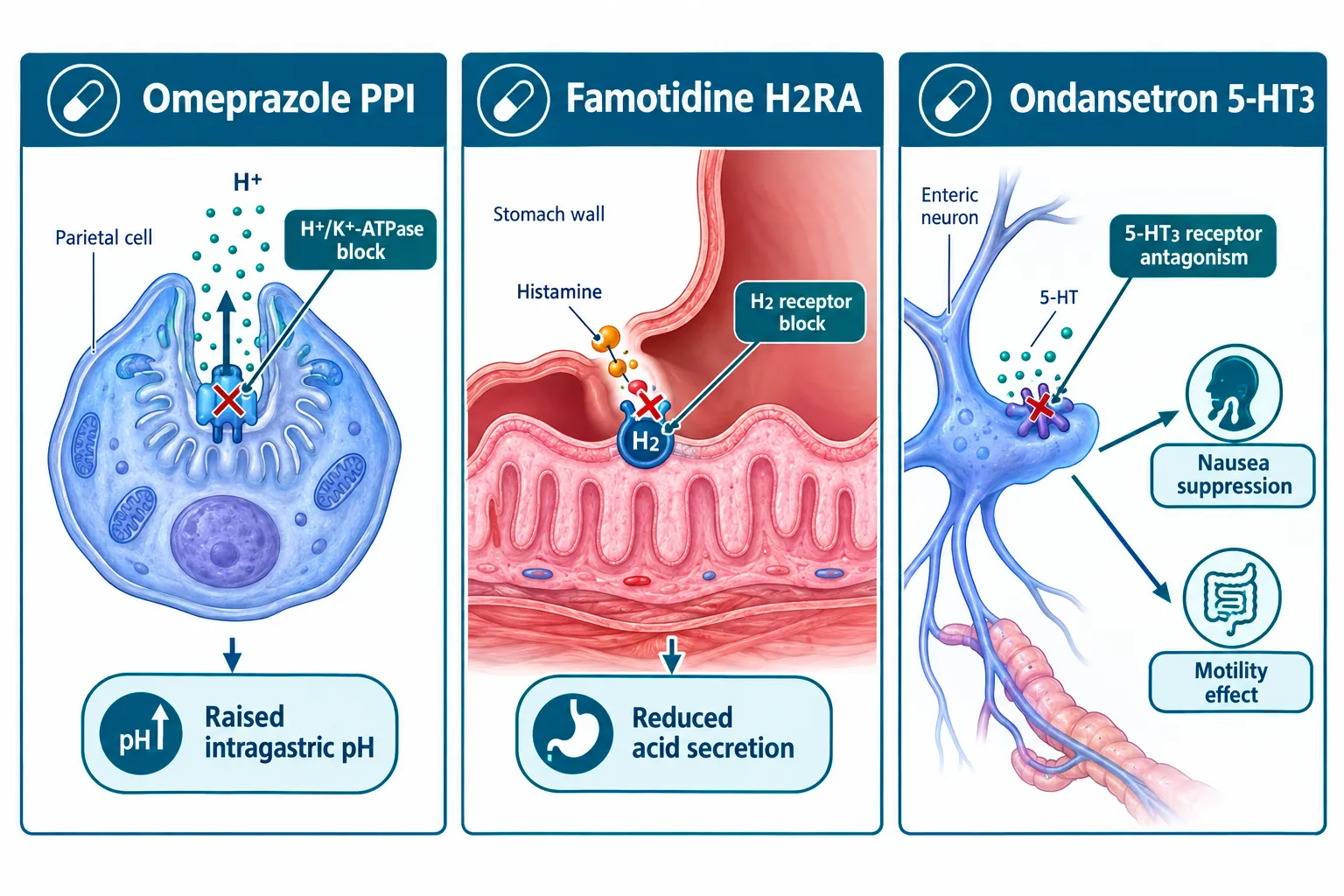
GLP-1 receptor agonists work through several overlapping mechanisms: stimulating glucose-dependent insulin release, suppressing glucagon, slowing gastric emptying, and reducing appetite. GLP-2 analogues primarily target intestinal mucosal growth and permeability. Both pathways sit at the intersection of gastric acid physiology and gut motility, exactly where omeprazole, famotidine, and ondansetron exert their effects.
Omeprazole, a proton-pump inhibitor (PPI), irreversibly inhibits the parietal-cell H+/K+-ATPase enzyme, substantially raising intragastric pH. Famotidine, an H2-receptor antagonist (H2RA), blocks histamine H2 receptors upstream of the same proton pump, producing a more moderate and reversible acid suppression. Both drugs therefore alter the stomach's chemical environment in ways that affect oral peptide stability, nutrient-triggered GLP-1 secretion from L-cells, and the symptom landscape that researchers use to measure tolerability.
Ondansetron acts as a 5-HT3 antagonist. Its antiemetic action blocks serotonin-mediated signaling in both the gut wall and the central chemoreceptor trigger zone. Because intestinal serotonin is a key regulator of peristalsis and mucosal secretion, chronic ondansetron use can slow colonic transit and subtly modify intestinal permeability, endpoints that appear directly in GLP-2 efficacy models.
For researchers exploring GLP-3 peptide signaling pathways or reviewing peptides 101 fundamentals including GLP mechanisms, understanding these pharmacological overlaps is foundational.
How Each Drug Creates Confounding in GLP and GLP-2 Studies
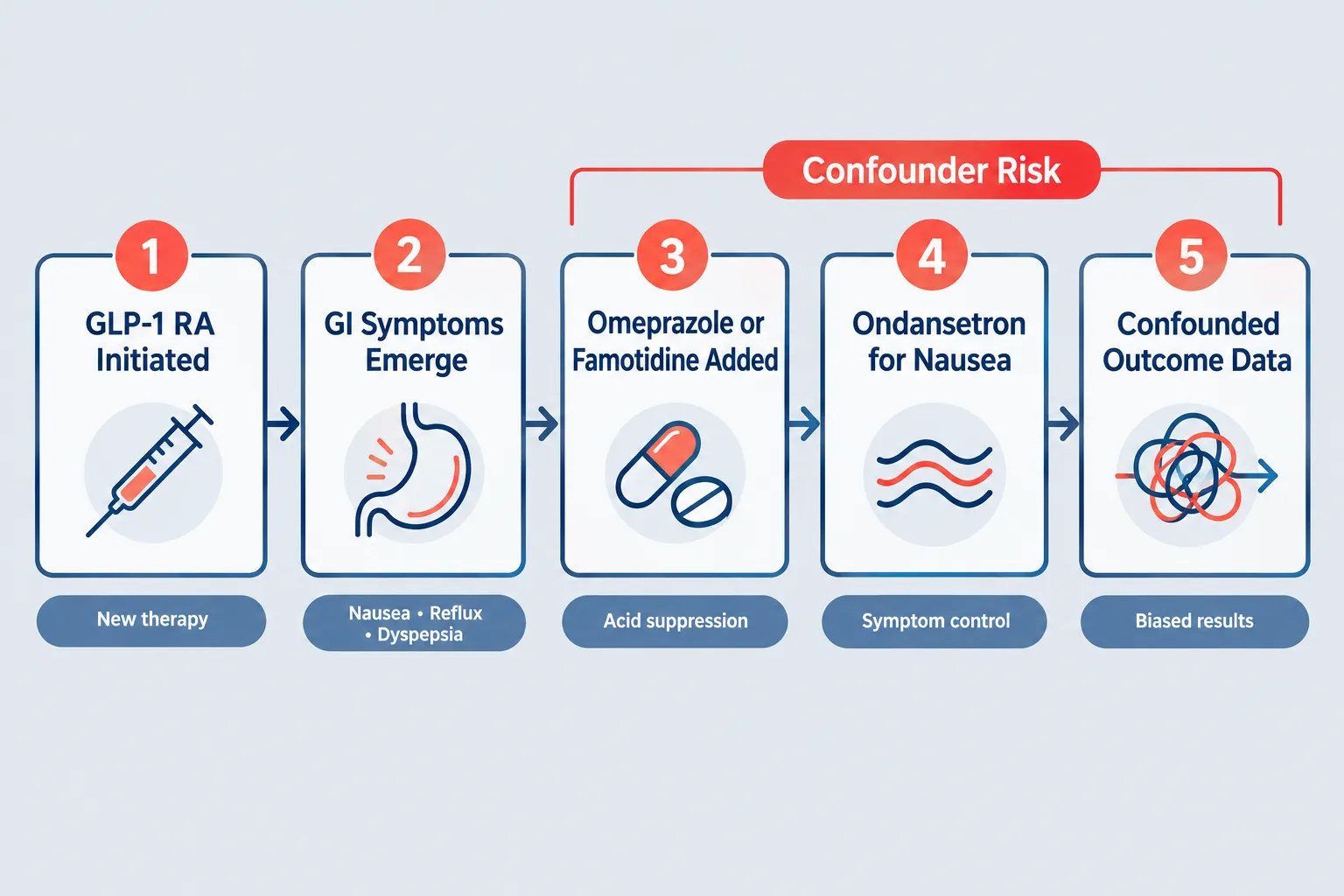
The confounding structure for omeprazole, famotidine, and ondansetron in GLP and GLP-2 research is not random. It is driven by indication, sicker patients with more severe GI intolerance are more likely to receive all three. This table summarizes each drug's primary mechanism, the research endpoints it can distort, and the direction of bias when the drug is ignored.
| Drug | Mechanism | Endpoints Affected | Direction of Potential Bias |
|---|---|---|---|
| Omeprazole | H+/K+-ATPase inhibition, raises pH | Oral GLP-1 absorption, L-cell secretion, gastric emptying | Overestimates tolerability in treated groups |
| Famotidine | H2 receptor block, reduces acidity | Nutrient-triggered incretin response, reflux symptom scores | Masks true GI burden; inflates tolerability comparisons |
| Ondansetron | 5-HT3 antagonism, suppresses nausea | Motility, permeability, nausea/vomiting endpoints | Attenuates GI signal; confounds discontinuation analysis |
Gastric pH and Oral GLP-1 Pharmacokinetics
Clinical trials of oral semaglutide found no significant pharmacokinetic drug-drug interaction with standard-dose omeprazole, which is reassuring. However, timing remains a practical confounder in real-world effectiveness studies: taking omeprazole or famotidine too close to an oral GLP-1 tablet can reduce absorption. In observational data where medication timing is rarely recorded, this creates unmeasured variability that inflates outcome variance and can mask true effects.
Gastric Emptying and GLP-1-Induced Gastroparesis
A significant body of 2026 research confirms that GLP-1 receptor agonists can induce or exacerbate gastroparesis through their pharmacologic slowing of gastric motility. Clinicians frequently respond by adding PPIs, H2 blockers, and antiemetics. This creates a cascade: GLP-1 slows gastric emptying, which drives PPI and antiemetic prescribing, which in turn modifies subsequent gastric emptying measurements, nutrient transit scores, and symptom outcomes. Any study that does not model this cascade will misattribute combined drug effects to the GLP-1 or GLP-2 agent alone.
Long-Term PPI Use and Secondary Endpoints
Long-term omeprazole use carries observational associations with enteric infections, micronutrient deficiencies (magnesium, vitamin B12), osteoporotic fractures, chronic kidney disease, and gastrointestinal cancers, though causality is unproven and many signals are themselves confounded. When GLP-1 or GLP-2 trials track cardiometabolic, renal, bone, or cancer endpoints over months to years, failure to adjust for chronic PPI exposure risks misattributing PPI-related events to the incretin therapy under study.
Building a Clean Confounder Matrix: Study Design Recommendations
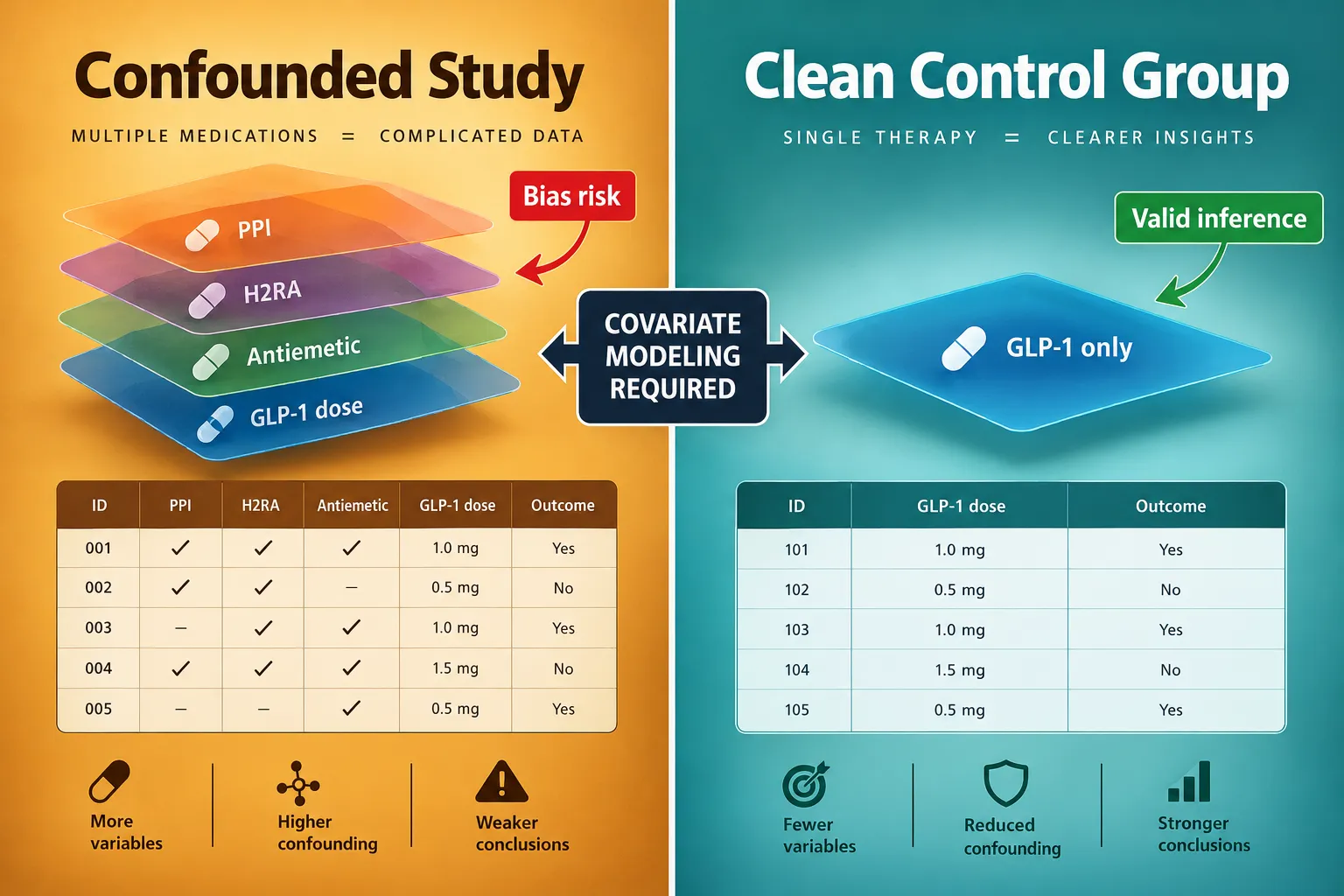
The practical goal is not to eliminate all co-medication use, that is clinically unrealistic, but to model it explicitly and to define clean control groups for sensitivity analyses. Advanced pharmacoepidemiologic studies of GLP-1 receptor agonists now routinely include antiemetic and acid-suppressive drug exposure in propensity-score models and fine-stratification weighting, demonstrating that the field already recognizes these as meaningful covariates.
Researchers working with GLP and GLP-2 compounds, including those reviewing GLP-1 peptide product considerations or evaluating GLP-3 receptor peptide options, should integrate the following design practices:
1. Define the confounder matrix at protocol stage
List omeprazole, famotidine, ondansetron, and other relevant co-medications as pre-specified covariates before data collection begins. Include both prevalence (ever-use) and timing (days from index date) as separate variables.
2. Stratify by acid-suppressive use
Run primary analyses in the full cohort and in a sensitivity cohort restricted to subjects with no PPI or H2RA use. A difference in effect estimates between the two cohorts signals meaningful confounding.
3. Treat ondansetron as a severity proxy
Ondansetron prescribing closely tracks GLP-1-induced nausea severity. Including it as a time-varying covariate in outcome models captures disease-severity confounding that cannot be measured directly.
4. Separate symptom endpoints from motility endpoints
Nausea scores reflect both the GI burden of GLP-1 therapy and the suppressive effect of antiemetics. Gastric emptying time reflects both GLP-1 pharmacology and the motility effects of 5-HT3 blockade. Treating these as equivalent "GI outcome" measures collapses a critical distinction.
5. Record timing of co-medications relative to GLP doses
For oral GLP-1 research especially, the window between PPI/H2RA dosing and peptide administration is a source of absorption variability that can only be addressed if timing data are collected prospectively.
Historical precedent from pharmacoepidemiology, particularly from studies evaluating pneumonia risk with acid-suppressive therapy, shows that thorough covariate adjustment for PPI and H2RA use substantially changes estimated effect sizes. The same rigor is warranted in incretin research.
Researchers interested in related compound interactions may find value in the visceral fat research tag collection and in reviewing tesa peptide benefits, where co-medication confounding follows similar structural patterns.
Conclusion
The medication-confounder matrix for omeprazole, famotidine, and ondansetron in GLP and GLP-2 research is not a theoretical concern, it is an active source of bias in currently published literature. Each drug touches the gastric pH, motility, serotonin signaling, or absorption pathways that define GLP and GLP-2 study endpoints. Because all three are prescribed preferentially to patients with the most severe GI burden, their use encodes indication-driven confounding that simple covariate adjustment can miss if the matrix is not specified carefully.
Actionable next steps for research teams:
- Add omeprazole, famotidine, and ondansetron as mandatory variables in all GLP-1 and GLP-2 observational protocols in 2026 and beyond.
- Pre-register clean-control sensitivity analyses restricted to subjects with no acid-suppressive or antiemetic therapy.
- Collect medication-timing data for oral GLP-1 studies, not just presence or absence of co-prescriptions.
- Treat ondansetron use as both a confounder and a severity marker, adjusting for it as a time-varying covariate.
- Report confounder-adjusted and unadjusted effect estimates side by side so readers can assess the magnitude of confounding in any given dataset.
Building this matrix from the start is far less expensive than correcting for it after data collection. Clean, well-specified studies produce evidence that survives scrutiny, and that ultimately advances the science of incretin and intestinal peptide research.


Leave a Reply
Want to join the discussion?Feel free to contribute!