Call or Text 727-513-9780
  • Shopping Cart Shopping Cart
    0Shopping Cart
Pure Tested Peptides | America's most trusted Peptides for sale online
  • Peptides for sale
    • Oral Peptides for sale
      • Peptide Capsules for sale
      • BPC 157 Capsules 1000mcg
      • SLU-PP-332 Capsules | 1000 mcg
      • 5-Amino-1MQ 50mg Capsules
      • Tesofensine 500mcg
    • All Peptides for sale
    • Peptide Sprays
      • BPC 157 Nasal Spray Kit
      • BPC-157 TB500 Nasal Spray Kit
      • Semax Nasal Spray 10mg
      • Selank – Nasal Spray Kit – 10mg
      • Epithalon 50MG Nasal Spray Kit
      • Ipamorelin 10mg Nasal Spray
      • Klow Nasal Spray (BPC-157 + TB-500 + GHK-Cu + KPV) | 80mg
      • Hulk Nasal Spray Tesa / Ipa Blend 6/3 MG
      • Klow Nasal Spray
      • NAD + 500 mg Nasal Spray
      • PT-141 Nasal Spray Kit
    • GHRH Peptides
      • Ipa Peptides
      • CJC-1295 Peptides
        • CJC-1295 with DAC 5 mg
        • CJC-1295 without DAC 5 mg
        • CJC-1295 Ipa 10mg
      • Tesa Peptides
        • Tesa Peptide
        • Tesa 20 mg
    • GHK-Cu Peptides
      • All GHK-Cu Peptides
      • GHK-Cu 100mg
      • KLOW Peptide Blend – Buy KLOW blend online
    • BPC Peptides
      • All BPC Peptides
      • BPC-157
      • BPC-157 TB-500
      • BPC 157 capsules 1000mcg
    • SLU-PP-332 Peptides
      • All SLU-PP-332 Peptides
      • SLU-PP-332 5mg
    • GLP3 Peptides
    • PT-141 Peptides
      • PT-141 Peptides for sale
      • PT-141 10mg
      • PT-141 Nasal Spray
    • CAG Peptides
      • Lipo-C Peptide Blend
      • CAG 5mg
      • CAG 10mg
    • MOTS-C Peptides
      • MOTS-C Peptides for sale
      • MOTS-c peptide
      • MOTS-c 10mg *6 pack*
    • 5 Amino 1MQ Peptides
      • 5 Amino 1MQ Peptides for sale
      • 5-Amino-1MQ 50mg Capsules
      • 5-Amino-1MQ 5mg
    • Epithalon Peptides
      • Epithalon Peptides for sale
      • Epithalon 10mg
      • Epithalon 50mg
  • Shop
    • GLPs
      • 5-Amino-1MQ 50mg Capsules
      • 5-Amino-1MQ 5mg
      • L-Carnitine 500mg/ml
      • Tesofensine 500mcg
      • SLU-PP-332 5mg
      • MOTS-c 10mg *6 pack*
    • Epithalon & BPC Peptides
      • Epithalon 10mg
      • Epithalon 50mg
      • BPC-157
      • BPC 157 capsules 1000mcg
      • BPC-157 TB-500
      • BPC-157 TB500 Nasal Spray Kit
      • BPC 157 Nasal Spray Kit
    • BPC TB-500 & NAD+ Peptides
      • NAD+ 500 mg
      • KLOW Peptide Blend – Buy KLOW blend online
      • GLOW Peptide Blend
      • TB 500 5mg
      • BPC 157 capsules 1000mcg – Supplement
      • BPC 157 Nasal Spray Kit
      • BPC-157
      • BPC-157 TB500 Nasal Spray Kit
      • BPC-157 TB-500
      • BPC 157 capsules 1000mcg
    • LL-37 Peptide
      • LL-37 10 mg
    • MOTS-C & Selank
      • MOTS-c peptide
      • Selank 10mg
    • GHK Peptides
      • GHK-Cu 100mg
      • GLOW Peptide Blend
      • KLOW Peptide Blend – Buy KLOW blend online
  • COAs
  • Wholesale
    • Wholesale Peptides for sale
  • PTP FAQ
  • Affiliates
    • Selank Peptide: Advanced Pharmacological Mechanisms Underlying Its Anxiolytic and Nootropic Effects in Research
      • 5-Amino-1MQ Peptide: Detailed Mechanisms of NNMT Inhibition and Its Impact on Cellular Metabolism Research
        • MOTS-C Peptide: Unraveling Its Role in Mitochondrial Dynamics and Energy Metabolism Research
          • Epithalon Peptide and Telomerase Regulation: Investigating Its Impact on Cellular Senescence and Lifespan Research Models
            • GLP2-T vs GLP2 Tirz Peptide: Understanding the Naming, Mechanistic Nuances, and Research Implications for Gut Health
      • Peptides and Polypeptides in Modern Pharmacology: What Research on Metoprolol, Prednisone, and Amlodipine Reveals
        • Polypeptide Peptides vs NSAIDs: What Naproxen and Diclofenac Teach Tissue-Repair Researchers About BPC‑157 and TB‑500
          • Peptides and Polypeptides in Endocrine Pharmacology: How GLP-1, GLP-2, and GLP-3 Retatrutide Differ From Classic Drugs Like Prednisone and Amlodipine
          • 5‑Amino‑1MQ Peptide and NNMT Inhibition: How It Compares With Statins Like Atorvastatin in Adipose and Lipid Metabolism Research
      • Enclomiphene, Estrogen Receptor Signaling, and Luteinizing Phase Biology: What Hormone Researchers Should Measure
        • Mesenchymal Stem Cells, BPC‑157, and GHK‑Cu: How Tissue Repair Peptides Compare With Classic NSAIDs Like Naproxen in Injury Models
          • Peptide Calculator Use Cases Beyond Growth Hormone: Working Through GLP‑3 Retatrutide, MOTS‑c, and BPC‑157 Research Dosing
        • Polypeptide Peptides in Endocrine and Metabolic Pharmacology: Lessons From Amlodipine, Prednisone, and Metoprolol
        • Peptides Calculator for Advanced Blends: Worked Examples for Tesamorelin, CJC‑1295, and Ipamorelin Stacks
          • Peptides and Polypeptides in Human Physiology: How Molecular Size Shapes Research Applications
            • Selank Peptide: Advanced Pharmacological Mechanisms Underlying Its Anxiolytic and Nootropic Effects in Research
          • 5-Amino-1MQ Peptide: Detailed Mechanisms of NNMT Inhibition and Its Impact on Cellular Metabolism Research
            • MOTS-C Peptide: Unraveling Its Role in Mitochondrial Dynamics and Energy Metabolism Research
              • Epithalon Peptide and Telomerase Regulation: Investigating Its Impact on Cellular Senescence and Lifespan Research Models
                • GLP2-T vs GLP2 Tirz Peptide: Understanding the Naming, Mechanistic Nuances, and Research Implications for Gut Health
                  • Peptides and Polypeptides in Endocrine Pharmacology: How GLP-1, GLP-2, and GLP-3 Retatrutide Differ From Classic Drugs Like Prednisone and Amlodipine
                    • Polypeptide Peptides vs NSAIDs: What Naproxen and Diclofenac Teach Tissue-Repair Researchers About BPC‑157 and TB‑500
                      • Peptides and Polypeptides in Modern Pharmacology: What Research on Metoprolol, Prednisone, and Amlodipine Reveals
                        • 5‑Amino‑1MQ Peptide and NNMT Inhibition: How It Compares With Statins Like Atorvastatin in Adipose and Lipid Metabolism Research
                        • Enclomiphene, Estrogen Receptor Signaling, and Luteinizing Phase Biology: What Hormone Researchers Should Measure
                        • Mesenchymal Stem Cells, BPC‑157, and GHK‑Cu: How Tissue Repair Peptides Compare With Classic NSAIDs Like Naproxen in Injury Models
                        • Peptide Calculator Use Cases Beyond Growth Hormone: Working Through GLP‑3 Retatrutide, MOTS‑c, and BPC‑157 Research Dosing
                        • Polypeptide Peptides in Endocrine and Metabolic Pharmacology: Lessons From Amlodipine, Prednisone, and Metoprolol
                        • Peptides Calculator for Advanced Blends: Worked Examples for Tesamorelin, CJC‑1295, and Ipamorelin Stacks
                        • Peptides and Polypeptides in Human Physiology: How Molecular Size Shapes Research Applications
                        • Selank Peptide: Advanced Pharmacological Mechanisms Underlying Its Anxiolytic and Nootropic Effects in Research
                        • MOTS-C Peptide: Unraveling Its Role in Mitochondrial Dynamics and Energy Metabolism Research
                        • Peptides and Polypeptides in Modern Pharmacology: What Research on Metoprolol, Prednisone, and Amlodipine Reveals
                        • Peptides and Polypeptides in Endocrine Pharmacology: How GLP-1, GLP-2, and GLP-3 Retatrutide Differ From Classic Drugs Like Prednisone and Amlodipine
                        • 5-Amino-1MQ Peptide: Detailed Mechanisms of NNMT Inhibition and Its Impact on Cellular Metabolism Research
                        • Mesenchymal Stem Cells, BPC‑157, and GHK‑Cu: How Tissue Repair Peptides Compare With Classic NSAIDs Like Naproxen in Injury Models
                        • Peptide Calculator Use Cases Beyond Growth Hormone: Working Through GLP‑3 Retatrutide, MOTS‑c, and BPC‑157 Research Dosing
                        • GLP2-T vs GLP2 Tirz Peptide: Understanding the Naming, Mechanistic Nuances, and Research Implications for Gut Health
                        • Polypeptide Peptides in Endocrine and Metabolic Pharmacology: Lessons From Amlodipine, Prednisone, and Metoprolol
                        • Polypeptide Peptides vs NSAIDs: What Naproxen and Diclofenac Teach Tissue-Repair Researchers About BPC‑157 and TB‑500
                        • Peptides and Polypeptides in Human Physiology: How Molecular Size Shapes Research Applications
                        • Peptides Calculator for Advanced Blends: Worked Examples for Tesamorelin, CJC‑1295, and Ipamorelin Stacks
                        • 5‑Amino‑1MQ Peptide and NNMT Inhibition: How It Compares With Statins Like Atorvastatin in Adipose and Lipid Metabolism Research
                        • Enclomiphene, Estrogen Receptor Signaling, and Luteinizing Phase Biology: What Hormone Researchers Should Measure
                        • Epithalon Peptide and Telomerase Regulation: Investigating Its Impact on Cellular Senescence and Lifespan Research Models
                        • Best research protocol Klow blend
                        • best time to take BPC-157
                        • best time to take DSIP (Delta Sleep Inducing Peptide)
                        • best time to take CJC-1295
                        • best time to take AOD-9604
                        • best time to take Follistatin 344
                        • best time to take Ipamorelin
                        • best time to take MK-677 (Ibutamoren)
                        • best time to take Ligandrol (LGD-4033) — research compound
                        • best time to take Ostarine (MK-2866) — research compound
                        • best time to take GHK-CU
                        • best time to take TB-500
                        • best time to take MOTS-c
                        • best time to take Semax
                        • best time to take RAD-140 (Testolone) — research compound
                        • best time to take Thymosin Alpha-1
                        • best time to take PEG-MGF
                        • Biolife Plasma, Octapharma Plasma, and Research Peptides: How Plasma Donation Labs Differ From Peptide Suppliers
                        • best time to take YK-11 — research compound
                        • best time to take PT-141 (Bremelanotide)
                        • Best research protocol Klow blend
                        • 5-Amino-1MQ and MOTS-C Synergy: Metabolic Signaling, Mitochondria, and Research Design
                        • BPC-157 and TB-500: Investigating Their Combined Effects on Angiogenesis and Cellular Migration in Tissue Repair Models
                        • BPC-157 Peptide: Gut Barrier Function, Inflammation, and Tissue-Recovery Research
                        • 5‑Amino‑1MQ and MOTS‑c Synergy in Metabolic Research: Designing NNMT and Mitochondrial Biogenesis Stacks
                        • CJC-1295 with DAC vs. Without DAC: Half-Life, Release Kinetics, and Research Implications
                        • CJC‑1295 with DAC vs. Without DAC: Expanding on Half‑Life Differences Using Tesamorelin and Ipamorelin Blend Case Studies
                        • Collagen Biology and Copper‑Binding Peptides: How GHK‑Cu, Glow Blend, and Klow Blend Interact with Skin and Connective Tissue
                        • Collagen Biology and Regenerative Peptides: How GHK‑Cu, Glow Blend, and Klow Blend Affect Extracellular Matrix Research
                    • DNA, Telomeres, and Longevity Peptides: Positioning Epithalon and MOTS‑c in Genetic Aging Research
                      • Enclomiphene Citrate: serm Mechanism, Testosterone Research, and Stack Compatibility
                        • Enclomiphene vs Enclomiphene Citrate: Formulation, Bioavailability, and Research Distinctions
                        • Epithalon Peptide Research: Telomerase Activation, Aging, and Pineal Gland Function
                        • Estrogen Receptor Signaling and Enclomiphene: How Selective Modulators Compare with Classic Polypeptide Hormones
                        • GHK-Cu Peptide: Advanced Mechanisms in Extracellular Matrix Remodeling and Wound Healing Research
                        • GHK-Cu Peptide: Collagen Synthesis, Wound Repair, and Skin-Barrier Research Models
                        • GLP-1 vs GLP-3 vs GLP-2: Peptide Classification and Research Applications
                        • GLP-2 Peptide Research Guide: Gut Barrier Function, Nutrient Absorption, and Intestinal Recovery Models
                        • GLP-3 Retatrutide vs. GLP-1 Drugs: What Triple-Agonist Biology Changes in Research Models
                        • Ipamorelin and Tesamorelin Combination: Synergistic GH Secretagogue Research and Dosing Protocols
                        • GLP2 Tirz Peptide: What It Is, Why the Name Exists, and How Researchers Should Interpret It
                        • Klow Blend Peptide Nasal Spray: What the Formulation Is Trying to Do in Cognitive Research
                        • Mitochondria, NNMT Inhibition, and Peptide Modulators: Where MOTS‑c and 5‑Amino‑1MQ Fit in Cellular Energy Research
                        • MOTS-c Peptide: Mitochondrial Function, Energy Metabolism, and What Researchers Measure
                        • MOTS-c vs. 5-Amino-1MQ: Which Metabolic Research Questions Each Compound Actually Answers
                        • Nasal Spray Peptides: Bioavailability, Administration, and Semax/Selank Research Applications
                        • PT-141 Peptide Research: Mechanism of Action and Melanocortin Receptor Signaling
                        • Retatrutide for Research: Mechanism, Structure, and GLP-1/GLP-3 Dual Action
                        • Retatrutide for Obesity and Type 2 Diabetes: What the Latest Trial Data Suggest
                        • Tesofensine Peptide Research: Mechanism, Appetite Suppression, and Neuropeptide Y Pathways
  • Contact
    • Contact Customer Service
    • Text Customer Support
  • About US
  • Shop all peptides
  • Affiliate Program
    • Affiliate Signup
  • Login / Register Login / Register Page Link Login / Register Page Link
  • Click to open the search input field Click to open the search input field Search
  • Menu Menu
Retatrutide 2026 Trial Data: Interpreting Triple-Agonist Results Across Obesity, Diabetes, and Cardiovascular-Risk Populations

Retatrutide 2026 Trial Data: Interpreting Triple-Agonist Results Across Obesity, Diabetes, and Cardiovascular-Risk Populations

October 21, 2026/0 Comments/in Uncategorized/by

Weight loss drugs have historically plateaued at 10-15% body weight reduction. Retatrutide 2026 trial data is shattering that ceiling, but the numbers only make sense when you know which population produced them.

As phase 3 results continue to accumulate under the TRIUMPH program, clinicians, researchers, and informed readers face a critical interpretive challenge. The same molecule can appear to perform very differently depending on baseline BMI, diabetes status, dose escalation schedule, and how long participants were followed. Understanding these variables is the key to reading retatrutide results accurately across obesity, diabetes, and cardiovascular-risk populations.

Key Takeaways

  • Retatrutide simultaneously activates GLP-1, GIP, and glucagon receptors, producing weight loss and metabolic effects beyond any single-agonist drug currently approved.
  • The TRIUMPH-1 trial in adults with obesity but without diabetes reported unprecedented weight loss over 80 weeks, exceeding outcomes seen with semaglutide or tirzepatide in comparable trials.
  • Results in people with type 2 diabetes are strong but modestly lower in absolute weight reduction, largely because diabetes biology blunts the full anorexigenic response.
  • Cardiovascular outcomes data is still maturing as of late 2026; cardiometabolic risk factors improve, but hard endpoint confirmation is pending.
  • Population selection, dose escalation, and follow-up duration are the three variables most likely to mislead readers who compare trial results without accounting for them.

How the Triple-Agonist Mechanism Changes the Baseline Interpretation
How the Triple-Agonist Mechanism Changes the Baseline Interpretation

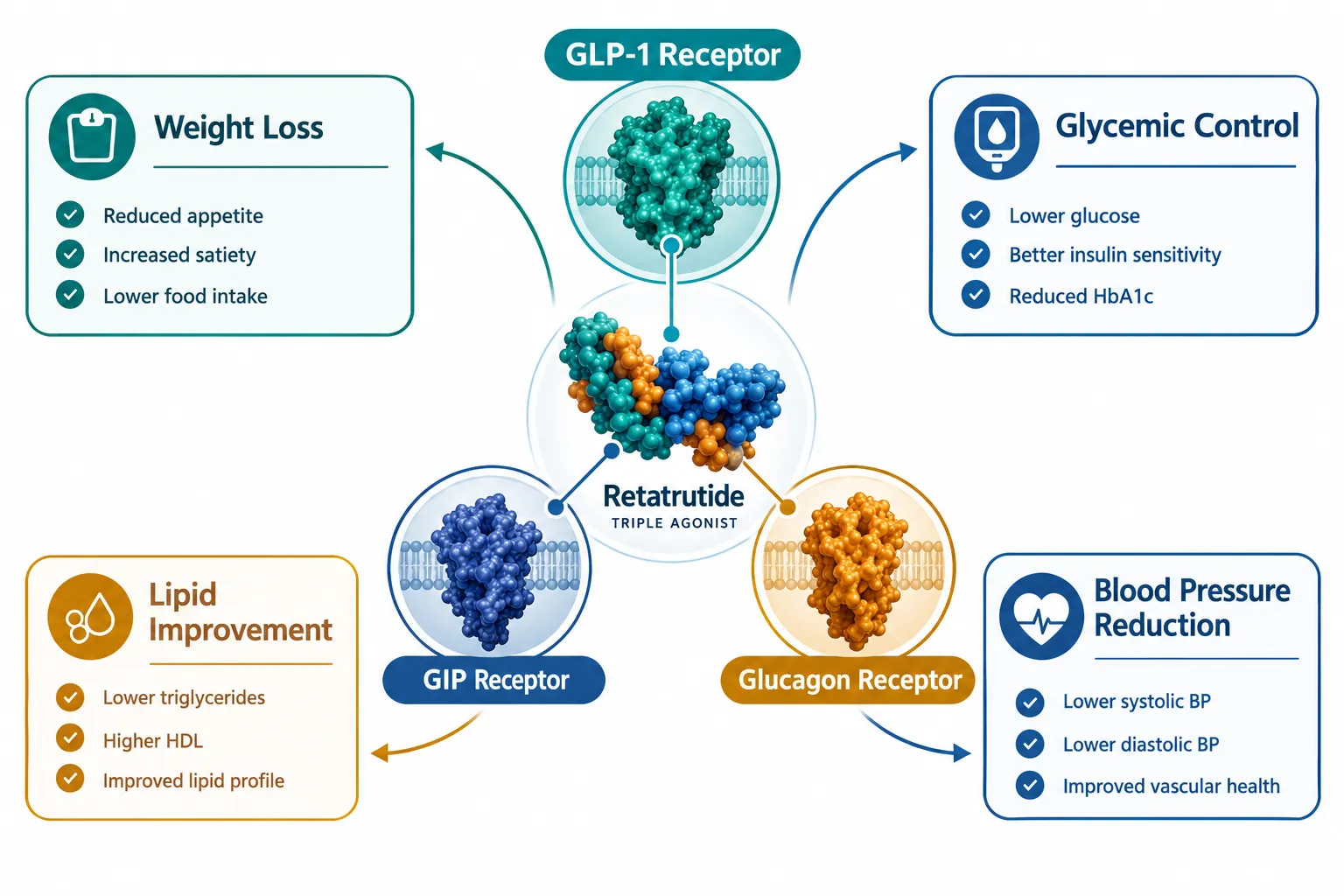
Most GLP-1 receptor agonists work through a single pathway. Tirzepatide added a second, GIP co-agonism, and generated headlines. Retatrutide adds a third: glucagon receptor activation. This matters enormously for interpretation because each receptor contributes differently depending on a patient's metabolic state.

GLP-1 activation suppresses appetite and slows gastric emptying. GIP co-agonism amplifies insulin secretion and may enhance GLP-1 sensitivity. Glucagon receptor activation drives energy expenditure and accelerates fat oxidation. In a person with severe obesity but normal glucose metabolism, all three pathways operate near full capacity. In a person with long-standing type 2 diabetes, GIP sensitivity is often diminished and glucagon dysregulation complicates the picture.

This is why retatrutide 2026 trial data cannot be read as a single number. The molecule interacts differently with each population's underlying physiology.

"The triple-agonist profile means the drug is, in effect, doing different work in different people, and results should always be interpreted through that lens."

Researchers interested in sourcing this compound for further study may explore options such as GLP-3 Reta 10mg or the GLP-3 Reta 20mg GA5 formulation.


Interpreting TRIUMPH-1 and Obesity-Only Population Results

Interpreting TRIUMPH-1 and Obesity-Only Population Results

The TRIUMPH-1 trial enrolled adults with obesity who did not have type 2 diabetes. At 80 weeks, participants on the highest retatrutide dose achieved weight reductions described by investigators as "unprecedented", well above the 20% threshold that had long been considered aspirational for pharmacotherapy.

Several variables explain why this population produced the most striking numbers:

  • Higher baseline BMI means more absolute weight available to lose, inflating percentage figures in some analyses.
  • Intact incretin sensitivity allows both GLP-1 and GIP pathways to function at full efficiency.
  • Longer follow-up (80 weeks) captures the full arc of weight loss, which continues past the plateaus typically seen at 24-36 weeks in shorter trials.
  • Aggressive dose escalation was feasible in this group due to lower baseline gastrointestinal comorbidity burden.

Readers comparing these results to earlier 24-week or 36-week trials, even within the same program, should expect significantly lower percentage weight loss in shorter studies simply due to follow-up duration. This is not a drug failure; it is a timeline artifact.

The obesity plus knee osteoarthritis sub-study added another dimension: participants showed clinically meaningful improvements in pain scores and physical function alongside weight loss. This suggests the cardiometabolic and mechanical burden of obesity is addressable simultaneously, though attributing functional improvements purely to weight loss versus direct anti-inflammatory effects remains an open research question.


Reading Results in Type 2 Diabetes and Cardiovascular-Risk Populations
Reading Results in Type 2 Diabetes and Cardiovascular-Risk Populations

When retatrutide was studied in people with obesity or overweight and concurrent type 2 diabetes, the weight loss remained robust, meaningfully exceeding outcomes from approved GLP-1 agents, while A1C reductions were substantial. However, absolute weight loss was modestly lower than in the non-diabetic obesity cohort.

Three reasons explain this gap:

  1. Blunted GIP response is common in long-standing type 2 diabetes, reducing one of the three receptor contributions.
  2. Baseline medications, including insulin and sulfonylureas, may independently promote weight retention.
  3. Conservative dose escalation is often applied in diabetic populations to manage hypoglycemia risk, limiting peak exposure.

For cardiovascular-risk populations, the picture in 2026 remains partially incomplete. Cardiometabolic risk markers, including LDL cholesterol, triglycerides, blood pressure, waist circumference, and high-sensitivity CRP, all moved in favorable directions across trials. These are meaningful intermediate endpoints, but a dedicated cardiovascular outcomes trial (CVOT) reporting hard events such as MACE has not yet produced final data as of late 2026.

This is the single most important caveat for high-risk populations: improved risk factors do not automatically equal reduced events. Readers and clinicians should treat cardiovascular intermediate data as hypothesis-generating, not confirmatory.

Comparing Retatrutide to Existing GLP-1 and Dual-Agonist Drugs

Factor GLP-1 Mono-agonist Dual GLP-1/GIP Retatrutide (Triple)
Receptor targets 1 2 3
Peak weight loss (approx.) 12-15% 18-22% 24%+ (non-diabetic, 80wk)
A1C reduction Strong Strong Strong
CVOT data available Yes (select agents) Partial Pending
Energy expenditure effect Modest Moderate Elevated (glucagon)

Industry analysts broadly expect regulatory submissions to follow completion of the TRIUMPH program, though timelines remain subject to trial completion and regulatory review.

Those researching retatrutide for scientific purposes can find formulation options including GLP-3 Reta CAG 10mg GA5 and may also want to review peptide supplier comparisons when evaluating sourcing quality. Additional product options are listed under Reta peptide for sale and buy Reta online.

Safety Profile Across Populations

The tolerability profile across retatrutide trials is broadly consistent with the GLP-1 drug class: nausea, vomiting, and diarrhea are the most common adverse events, are dose-dependent, and largely resolve after the titration phase. No unexpected safety signals have emerged across the populations studied. The glucagon component raised theoretical concerns about hepatic glucose output and lean mass loss; neither has materialized as a clinically significant issue in trial data to date.


Conclusion

Retatrutide 2026 trial data represents a genuine advance in obesity and metabolic pharmacotherapy. The triple-agonist mechanism produces weight loss and cardiometabolic improvements that exceed any approved agent, but those results are inseparable from the populations that generated them.

Actionable steps for readers and clinicians:

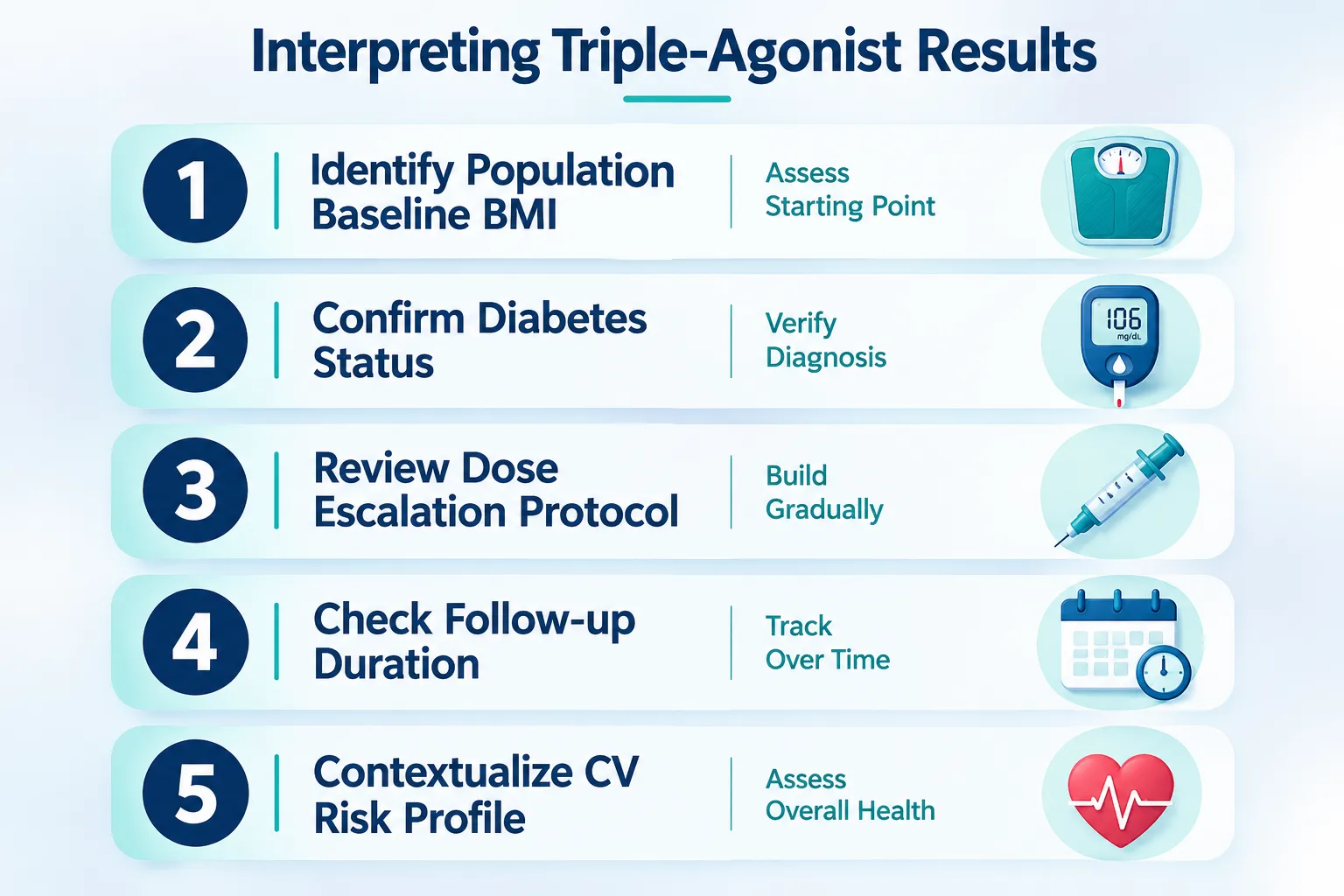
  • Always note whether results come from a diabetic or non-diabetic cohort before comparing percentages across trials.
  • Confirm the follow-up duration, 80-week data is not comparable to 24-week data even from the same drug.
  • Treat cardiovascular risk factor improvements as promising signals, not confirmed outcomes, until CVOT data is published.
  • Apply dose escalation context: aggressive titration in a healthy obesity cohort does not predict the same exposure in a high-risk diabetic patient.
  • Monitor the TRIUMPH program for final phase 3 readouts, which will anchor the full regulatory and clinical picture.

The story retatrutide is telling in 2026 is compelling. Reading it accurately requires knowing not just what was measured, but who was measured, for how long, and at what dose.

Tags: cardiovascular risk reduction, glp-1 gip glucagon agonist, obesity pharmacotherapy, retatrutide, retatrutide 2026 results, triple agonist peptide, triumph trial, type 2 diabetes weight loss
https://www.puretestedpeptides.com/wp-content/uploads/2026/10/retatrutide-2026-trial-data-interpreting-triple-agonist-results-across-obesity-d.webp 1024 1536 https://www.puretestedpeptides.com/wp-content/uploads/2026/01/buy-peptides-online.jpg 2026-10-21 13:05:542026-10-21 13:05:54Retatrutide 2026 Trial Data: Interpreting Triple-Agonist Results Across Obesity, Diabetes, and Cardiovascular-Risk Populations
You might also like
GLP-1 Receptor Agonists vs Research Peptides: Where Retatrutide, GLP-3, and GLP-2 Fit Mechanistically GLP-1 Receptor Agonists vs Research Peptides: Where Retatrutide, GLP-3, and GLP-2 Fit Mechanistically
Retatrutide 2026 Phase 3 Results: What the Latest Trial Data Means for GLP-3 Research Retatrutide 2026 Phase 3 Results: What the Latest Trial Data Means for GLP-3 Research
Atorvastatin, LDL Cholesterol, and Metabolic Peptides: Where MOTS-c, 5-Amino-1MQ, and GLP-3 Retatrutide Fit in Lipid Research Atorvastatin, LDL Cholesterol, and Metabolic Peptides: Where MOTS-c, 5-Amino-1MQ, and GLP-3 Retatrutide Fit in Lipid Research
Retatrutide and GLP-3 Peptide Research in 2026: How Triple Agonist Trials Are Reshaping Metabolic Study Design Retatrutide and GLP-3 Peptide Research in 2026: How Triple Agonist Trials Are Reshaping Metabolic Study Design
Prostate Specific Antigen and Hormone-Modulating Compounds: How PSA Monitoring Interfaces With Enclomiphene and GLP-Class Peptide Research Prostate Specific Antigen and Hormone-Modulating Compounds: How PSA Monitoring Interfaces With Enclomiphene and GLP-Class Peptide Research
Retatrutide Phase 3 Results: What the New GLP-3 Data Mean for Obesity and Diabetes Research Retatrutide Phase 3 Results: What the New GLP-3 Data Mean for Obesity and Diabetes Research
Prostate Specific Antigen and Peptide Hormones: How PSA Is Used to Monitor Enclomiphene and GLP-Class Research Studies Prostate Specific Antigen and Peptide Hormones: How PSA Is Used to Monitor Enclomiphene and GLP-Class Research Studies
Tesofensine vs Semaglutide vs Retatrutide: Appetite Research Pathways Compared Tesofensine vs Semaglutide vs Retatrutide: Appetite Research Pathways Compared
0 replies

Leave a Reply

Want to join the discussion?
Feel free to contribute!

Leave a Reply Cancel reply

Your email address will not be published. Required fields are marked *

×

Helpful Links

  • My account
  • Cart
  • Checkout
  • Refund and Returns Policy
  • Privacy Policy
  • SMS Privacy Policy
  • Login
  • My Account
  • Logout

USA Made Lab Tested Peptides

All products are sold for research, laboratory, or analytical purposes only, and are not for human consumption


Pure Tested Peptides is a chemical supplier. Pure Tested Peptides is not a compounding / chemical compounding facility as defined under 503A of the Federal Food, Drug, and Cosmetic act. Pure Tested Peptides is not an outsourcing facility as defined under 503B of the Federal Food, Drug, and Cosmetic act.

The statements made within this website have not been evaluated by the US Food and Drug Administration. The products we offer are not intended to diagnose, treat, cure or prevent any disease.

Human/Animal Consumption Prohibited. Laboratory/In-Vitro Experimental Use Only

Link to: Retatrutide Phase 3 Results for Sleep Apnea and Osteoarthritis: How Researchers Should Select Disease-Specific Endpoints Link to: Retatrutide Phase 3 Results for Sleep Apnea and Osteoarthritis: How Researchers Should Select Disease-Specific Endpoints Retatrutide Phase 3 Results for Sleep Apnea and Osteoarthritis: How Researchers...Retatrutide Phase 3 Results for Sleep Apnea and Osteoarthritis: How Researchers Should Select Disease-Specific Endpoints Link to: Tesamorelin in 2026: Visceral-Adipose, Frailty, and Lean-Mass Readouts for Research Models Link to: Tesamorelin in 2026: Visceral-Adipose, Frailty, and Lean-Mass Readouts for Research Models Tesamorelin in 2026: Visceral-Adipose, Frailty, and Lean-Mass Readouts for Research ModelsTesamorelin in 2026: Visceral-Adipose, Frailty, and Lean-Mass Readouts for Research...
Scroll to top Scroll to top Scroll to top