Call or Text 727-513-9780
  • Shopping Cart Shopping Cart
    0Shopping Cart
Pure Tested Peptides | America's most trusted Peptides for sale online
  • Peptides for sale
    • Oral Peptides for sale
      • Peptide Capsules for sale
      • BPC 157 Capsules 1000mcg
      • SLU-PP-332 Capsules | 1000 mcg
      • 5-Amino-1MQ 50mg Capsules
      • Tesofensine 500mcg
    • All Peptides for sale
    • Peptide Sprays
      • BPC 157 Nasal Spray Kit
      • BPC-157 TB500 Nasal Spray Kit
      • Semax Nasal Spray 10mg
      • Selank – Nasal Spray Kit – 10mg
      • Epithalon 50MG Nasal Spray Kit
      • Ipamorelin 10mg Nasal Spray
      • Klow Nasal Spray (BPC-157 + TB-500 + GHK-Cu + KPV) | 80mg
      • Hulk Nasal Spray Tesa / Ipa Blend 6/3 MG
      • Klow Nasal Spray
      • NAD + 500 mg Nasal Spray
      • PT-141 Nasal Spray Kit
    • GHRH Peptides
      • Ipa Peptides
      • CJC-1295 Peptides
        • CJC-1295 with DAC 5 mg
        • CJC-1295 without DAC 5 mg
        • CJC-1295 Ipa 10mg
      • Tesa Peptides
        • Tesa Peptide
        • Tesa 20 mg
    • GHK-Cu Peptides
      • All GHK-Cu Peptides
      • GHK-Cu 100mg
      • KLOW Peptide Blend – Buy KLOW blend online
    • BPC Peptides
      • All BPC Peptides
      • BPC-157
      • BPC-157 TB-500
      • BPC 157 capsules 1000mcg
    • SLU-PP-332 Peptides
      • All SLU-PP-332 Peptides
      • SLU-PP-332 5mg
    • GLP3 Peptides
    • PT-141 Peptides
      • PT-141 Peptides for sale
      • PT-141 10mg
      • PT-141 Nasal Spray
    • CAG Peptides
      • Lipo-C Peptide Blend
      • CAG 5mg
      • CAG 10mg
    • MOTS-C Peptides
      • MOTS-C Peptides for sale
      • MOTS-c peptide
      • MOTS-c 10mg *6 pack*
    • 5 Amino 1MQ Peptides
      • 5 Amino 1MQ Peptides for sale
      • 5-Amino-1MQ 50mg Capsules
      • 5-Amino-1MQ 5mg
    • Epithalon Peptides
      • Epithalon Peptides for sale
      • Epithalon 10mg
      • Epithalon 50mg
  • Shop
    • GLPs
      • 5-Amino-1MQ 50mg Capsules
      • 5-Amino-1MQ 5mg
      • L-Carnitine 500mg/ml
      • Tesofensine 500mcg
      • SLU-PP-332 5mg
      • MOTS-c 10mg *6 pack*
    • Epithalon & BPC Peptides
      • Epithalon 10mg
      • Epithalon 50mg
      • BPC-157
      • BPC 157 capsules 1000mcg
      • BPC-157 TB-500
      • BPC-157 TB500 Nasal Spray Kit
      • BPC 157 Nasal Spray Kit
    • BPC TB-500 & NAD+ Peptides
      • NAD+ 500 mg
      • KLOW Peptide Blend – Buy KLOW blend online
      • GLOW Peptide Blend
      • TB 500 5mg
      • BPC 157 capsules 1000mcg – Supplement
      • BPC 157 Nasal Spray Kit
      • BPC-157
      • BPC-157 TB500 Nasal Spray Kit
      • BPC-157 TB-500
      • BPC 157 capsules 1000mcg
    • LL-37 Peptide
      • LL-37 10 mg
    • MOTS-C & Selank
      • MOTS-c peptide
      • Selank 10mg
    • GHK Peptides
      • GHK-Cu 100mg
      • GLOW Peptide Blend
      • KLOW Peptide Blend – Buy KLOW blend online
  • COAs
  • Wholesale
    • Wholesale Peptides for sale
  • PTP FAQ
  • Affiliates
    • Selank Peptide: Advanced Pharmacological Mechanisms Underlying Its Anxiolytic and Nootropic Effects in Research
      • 5-Amino-1MQ Peptide: Detailed Mechanisms of NNMT Inhibition and Its Impact on Cellular Metabolism Research
        • MOTS-C Peptide: Unraveling Its Role in Mitochondrial Dynamics and Energy Metabolism Research
          • Epithalon Peptide and Telomerase Regulation: Investigating Its Impact on Cellular Senescence and Lifespan Research Models
            • GLP2-T vs GLP2 Tirz Peptide: Understanding the Naming, Mechanistic Nuances, and Research Implications for Gut Health
      • Peptides and Polypeptides in Modern Pharmacology: What Research on Metoprolol, Prednisone, and Amlodipine Reveals
        • Polypeptide Peptides vs NSAIDs: What Naproxen and Diclofenac Teach Tissue-Repair Researchers About BPC‑157 and TB‑500
          • Peptides and Polypeptides in Endocrine Pharmacology: How GLP-1, GLP-2, and GLP-3 Retatrutide Differ From Classic Drugs Like Prednisone and Amlodipine
          • 5‑Amino‑1MQ Peptide and NNMT Inhibition: How It Compares With Statins Like Atorvastatin in Adipose and Lipid Metabolism Research
      • Enclomiphene, Estrogen Receptor Signaling, and Luteinizing Phase Biology: What Hormone Researchers Should Measure
        • Mesenchymal Stem Cells, BPC‑157, and GHK‑Cu: How Tissue Repair Peptides Compare With Classic NSAIDs Like Naproxen in Injury Models
          • Peptide Calculator Use Cases Beyond Growth Hormone: Working Through GLP‑3 Retatrutide, MOTS‑c, and BPC‑157 Research Dosing
        • Polypeptide Peptides in Endocrine and Metabolic Pharmacology: Lessons From Amlodipine, Prednisone, and Metoprolol
        • Peptides Calculator for Advanced Blends: Worked Examples for Tesamorelin, CJC‑1295, and Ipamorelin Stacks
          • Peptides and Polypeptides in Human Physiology: How Molecular Size Shapes Research Applications
            • Selank Peptide: Advanced Pharmacological Mechanisms Underlying Its Anxiolytic and Nootropic Effects in Research
          • 5-Amino-1MQ Peptide: Detailed Mechanisms of NNMT Inhibition and Its Impact on Cellular Metabolism Research
            • MOTS-C Peptide: Unraveling Its Role in Mitochondrial Dynamics and Energy Metabolism Research
              • Epithalon Peptide and Telomerase Regulation: Investigating Its Impact on Cellular Senescence and Lifespan Research Models
                • GLP2-T vs GLP2 Tirz Peptide: Understanding the Naming, Mechanistic Nuances, and Research Implications for Gut Health
                  • Peptides and Polypeptides in Endocrine Pharmacology: How GLP-1, GLP-2, and GLP-3 Retatrutide Differ From Classic Drugs Like Prednisone and Amlodipine
                    • Polypeptide Peptides vs NSAIDs: What Naproxen and Diclofenac Teach Tissue-Repair Researchers About BPC‑157 and TB‑500
                      • Peptides and Polypeptides in Modern Pharmacology: What Research on Metoprolol, Prednisone, and Amlodipine Reveals
                        • 5‑Amino‑1MQ Peptide and NNMT Inhibition: How It Compares With Statins Like Atorvastatin in Adipose and Lipid Metabolism Research
                        • Enclomiphene, Estrogen Receptor Signaling, and Luteinizing Phase Biology: What Hormone Researchers Should Measure
                        • Mesenchymal Stem Cells, BPC‑157, and GHK‑Cu: How Tissue Repair Peptides Compare With Classic NSAIDs Like Naproxen in Injury Models
                        • Peptide Calculator Use Cases Beyond Growth Hormone: Working Through GLP‑3 Retatrutide, MOTS‑c, and BPC‑157 Research Dosing
                        • Polypeptide Peptides in Endocrine and Metabolic Pharmacology: Lessons From Amlodipine, Prednisone, and Metoprolol
                        • Peptides Calculator for Advanced Blends: Worked Examples for Tesamorelin, CJC‑1295, and Ipamorelin Stacks
                        • Peptides and Polypeptides in Human Physiology: How Molecular Size Shapes Research Applications
                        • Selank Peptide: Advanced Pharmacological Mechanisms Underlying Its Anxiolytic and Nootropic Effects in Research
                        • MOTS-C Peptide: Unraveling Its Role in Mitochondrial Dynamics and Energy Metabolism Research
                        • Peptides and Polypeptides in Modern Pharmacology: What Research on Metoprolol, Prednisone, and Amlodipine Reveals
                        • Peptides and Polypeptides in Endocrine Pharmacology: How GLP-1, GLP-2, and GLP-3 Retatrutide Differ From Classic Drugs Like Prednisone and Amlodipine
                        • 5-Amino-1MQ Peptide: Detailed Mechanisms of NNMT Inhibition and Its Impact on Cellular Metabolism Research
                        • Mesenchymal Stem Cells, BPC‑157, and GHK‑Cu: How Tissue Repair Peptides Compare With Classic NSAIDs Like Naproxen in Injury Models
                        • Peptide Calculator Use Cases Beyond Growth Hormone: Working Through GLP‑3 Retatrutide, MOTS‑c, and BPC‑157 Research Dosing
                        • GLP2-T vs GLP2 Tirz Peptide: Understanding the Naming, Mechanistic Nuances, and Research Implications for Gut Health
                        • Polypeptide Peptides in Endocrine and Metabolic Pharmacology: Lessons From Amlodipine, Prednisone, and Metoprolol
                        • Polypeptide Peptides vs NSAIDs: What Naproxen and Diclofenac Teach Tissue-Repair Researchers About BPC‑157 and TB‑500
                        • Peptides and Polypeptides in Human Physiology: How Molecular Size Shapes Research Applications
                        • Peptides Calculator for Advanced Blends: Worked Examples for Tesamorelin, CJC‑1295, and Ipamorelin Stacks
                        • 5‑Amino‑1MQ Peptide and NNMT Inhibition: How It Compares With Statins Like Atorvastatin in Adipose and Lipid Metabolism Research
                        • Enclomiphene, Estrogen Receptor Signaling, and Luteinizing Phase Biology: What Hormone Researchers Should Measure
                        • Epithalon Peptide and Telomerase Regulation: Investigating Its Impact on Cellular Senescence and Lifespan Research Models
                        • Best research protocol Klow blend
                        • best time to take BPC-157
                        • best time to take DSIP (Delta Sleep Inducing Peptide)
                        • best time to take CJC-1295
                        • best time to take AOD-9604
                        • best time to take Follistatin 344
                        • best time to take Ipamorelin
                        • best time to take MK-677 (Ibutamoren)
                        • best time to take Ligandrol (LGD-4033) — research compound
                        • best time to take Ostarine (MK-2866) — research compound
                        • best time to take GHK-CU
                        • best time to take TB-500
                        • best time to take MOTS-c
                        • best time to take Semax
                        • best time to take RAD-140 (Testolone) — research compound
                        • best time to take Thymosin Alpha-1
                        • best time to take PEG-MGF
                        • Biolife Plasma, Octapharma Plasma, and Research Peptides: How Plasma Donation Labs Differ From Peptide Suppliers
                        • best time to take YK-11 — research compound
                        • best time to take PT-141 (Bremelanotide)
                        • Best research protocol Klow blend
                        • 5-Amino-1MQ and MOTS-C Synergy: Metabolic Signaling, Mitochondria, and Research Design
                        • BPC-157 and TB-500: Investigating Their Combined Effects on Angiogenesis and Cellular Migration in Tissue Repair Models
                        • BPC-157 Peptide: Gut Barrier Function, Inflammation, and Tissue-Recovery Research
                        • 5‑Amino‑1MQ and MOTS‑c Synergy in Metabolic Research: Designing NNMT and Mitochondrial Biogenesis Stacks
                        • CJC-1295 with DAC vs. Without DAC: Half-Life, Release Kinetics, and Research Implications
                        • CJC‑1295 with DAC vs. Without DAC: Expanding on Half‑Life Differences Using Tesamorelin and Ipamorelin Blend Case Studies
                        • Collagen Biology and Copper‑Binding Peptides: How GHK‑Cu, Glow Blend, and Klow Blend Interact with Skin and Connective Tissue
                        • Collagen Biology and Regenerative Peptides: How GHK‑Cu, Glow Blend, and Klow Blend Affect Extracellular Matrix Research
                    • DNA, Telomeres, and Longevity Peptides: Positioning Epithalon and MOTS‑c in Genetic Aging Research
                      • Enclomiphene Citrate: serm Mechanism, Testosterone Research, and Stack Compatibility
                        • Enclomiphene vs Enclomiphene Citrate: Formulation, Bioavailability, and Research Distinctions
                        • Epithalon Peptide Research: Telomerase Activation, Aging, and Pineal Gland Function
                        • Estrogen Receptor Signaling and Enclomiphene: How Selective Modulators Compare with Classic Polypeptide Hormones
                        • GHK-Cu Peptide: Advanced Mechanisms in Extracellular Matrix Remodeling and Wound Healing Research
                        • GHK-Cu Peptide: Collagen Synthesis, Wound Repair, and Skin-Barrier Research Models
                        • GLP-1 vs GLP-3 vs GLP-2: Peptide Classification and Research Applications
                        • GLP-2 Peptide Research Guide: Gut Barrier Function, Nutrient Absorption, and Intestinal Recovery Models
                        • GLP-3 Retatrutide vs. GLP-1 Drugs: What Triple-Agonist Biology Changes in Research Models
                        • Ipamorelin and Tesamorelin Combination: Synergistic GH Secretagogue Research and Dosing Protocols
                        • GLP2 Tirz Peptide: What It Is, Why the Name Exists, and How Researchers Should Interpret It
                        • Klow Blend Peptide Nasal Spray: What the Formulation Is Trying to Do in Cognitive Research
                        • Mitochondria, NNMT Inhibition, and Peptide Modulators: Where MOTS‑c and 5‑Amino‑1MQ Fit in Cellular Energy Research
                        • MOTS-c Peptide: Mitochondrial Function, Energy Metabolism, and What Researchers Measure
                        • MOTS-c vs. 5-Amino-1MQ: Which Metabolic Research Questions Each Compound Actually Answers
                        • Nasal Spray Peptides: Bioavailability, Administration, and Semax/Selank Research Applications
                        • PT-141 Peptide Research: Mechanism of Action and Melanocortin Receptor Signaling
                        • Retatrutide for Research: Mechanism, Structure, and GLP-1/GLP-3 Dual Action
                        • Retatrutide for Obesity and Type 2 Diabetes: What the Latest Trial Data Suggest
                        • Tesofensine Peptide Research: Mechanism, Appetite Suppression, and Neuropeptide Y Pathways
  • Contact
    • Contact Customer Service
    • Text Customer Support
  • About US
  • Shop all peptides
  • Affiliate Program
    • Affiliate Signup
  • Login / Register Login / Register Page Link Login / Register Page Link
  • Click to open the search input field Click to open the search input field Search
  • Menu Menu
What Is Tesofensine? Dopamine, Norepinephrine, and Serotonin Transporter Biology in Appetite Research

What Is Tesofensine? Dopamine, Norepinephrine, and Serotonin Transporter Biology in Appetite Research

October 31, 2026/0 Comments/in Uncategorized/by

Obesity pharmacology took a sharp turn when researchers discovered that simultaneously blocking all three monoamine transporters, not just one, could produce weight loss magnitudes previously unseen with oral small molecules. That discovery sits at the heart of tesofensine, a synthetic tropane derivative that has become a reference compound in appetite biology. Understanding what tesofensine is and how dopamine, norepinephrine, and serotonin transporter biology shape appetite research reveals why this molecule continues to command scientific attention in 2026.

Key Takeaways

  • Tesofensine is a triple monoamine reuptake inhibitor (SNDRI) that blocks norepinephrine, dopamine, and serotonin transporters simultaneously.
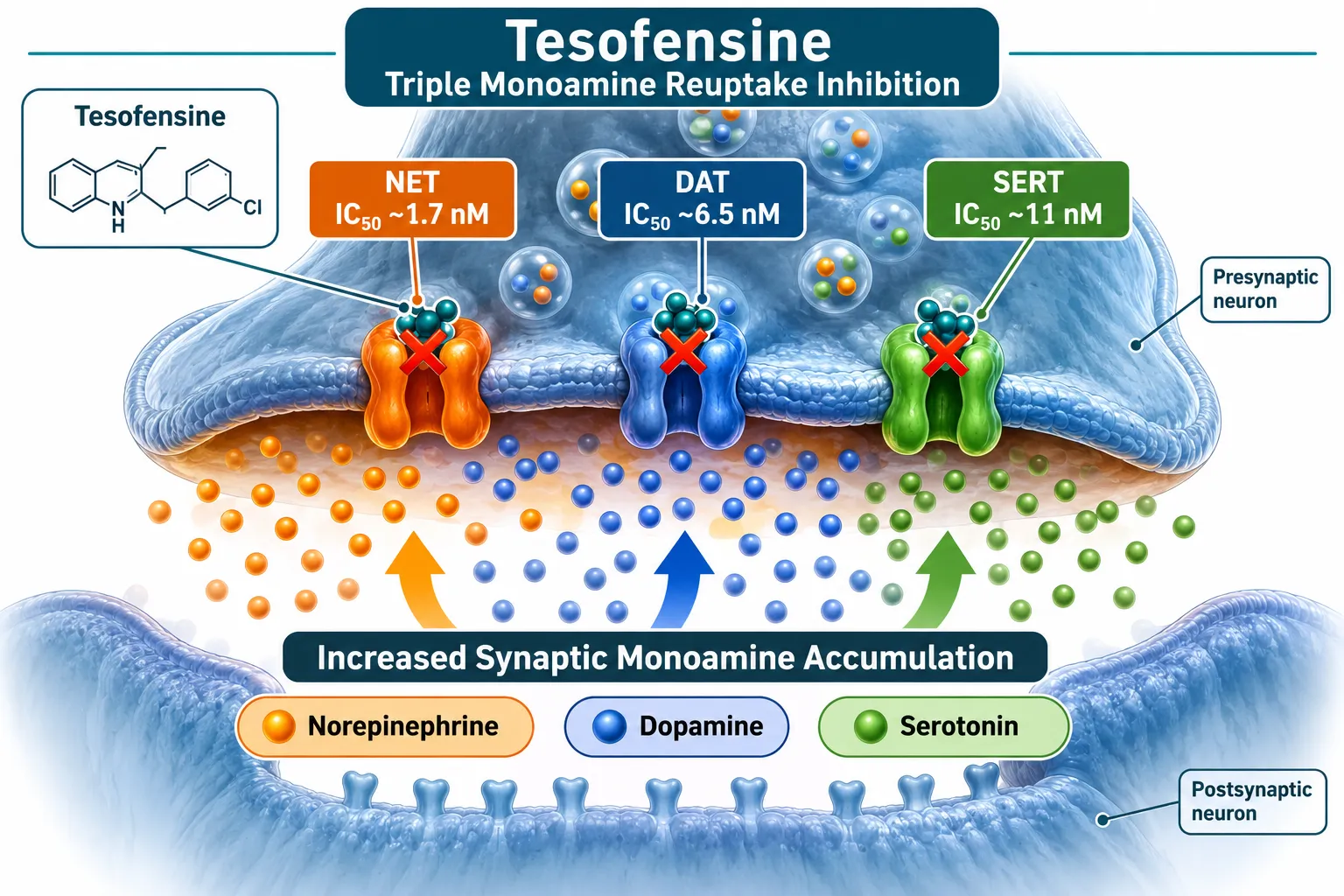
  • Its transporter affinities are strongest at NET (1.7 nM), intermediate at DAT (6.5 nM), and lowest at SERT (~11 nM).
  • The Phase 2b TIPO-1 trial reported up to 10.6% mean weight loss at 24 weeks, among the highest seen in oral obesity pharmacology at the time.
  • Tesofensine differs fundamentally from GLP-1, class peptides; it is a small synthetic molecule acting centrally on monoamine circuits rather than on gut-derived hormone receptors.
  • As of 2026, tesofensine remains investigational and unapproved by the FDA, with unresolved cardiovascular safety data limiting Phase 3 progress.

Tesofensine Pharmacology: A Triple Monoamine Reuptake Inhibitor
Tesofensine Pharmacology: A Triple Monoamine Reuptake Inhibitor

Tesofensine belongs to the phenyltropane chemical class, the same structural family as cocaine and certain antidepressants, but was purpose-engineered as a serotonin, norepinephrine, dopamine reuptake inhibitor (SNDRI). Its mechanism is straightforward in concept: it physically occupies the monoamine transporter proteins responsible for clearing dopamine, norepinephrine, and serotonin from synaptic gaps, allowing all three neurotransmitters to accumulate and act for longer.

What makes tesofensine pharmacologically unusual is the potency profile across all three targets:

Transporter Target Reported IC50
NET Norepinephrine ~1.7 nM
DAT Dopamine ~6.5 nM
SERT Serotonin ~11 nM

These nanomolar values mean that even at low clinical doses, the molecule can produce substantial transporter occupancy. Positron emission tomography (PET) studies in human volunteers confirmed meaningful dopamine transporter occupancy in the living brain, providing a direct biological bridge between lab binding data and human pharmacology.

How does this differ from GLP-1 peptides? GLP-1, class agents such as those reviewed in research on what is the strongest peptide for weight loss act on gut-derived incretin hormone receptors, largely in the periphery and brainstem, slowing gastric emptying and modulating insulin. Tesofensine, by contrast, is a small synthetic oral molecule with no peptide structure and no GLP-1 receptor activity. Its appetite suppression is driven entirely by central monoamine modulation. This distinction matters for researchers comparing mechanisms or combining approaches, including those exploring GLP-1 and related compound research.


Transporter Biology and Appetite Circuits: How Dopamine, Norepinephrine, and Serotonin Shape Food Intake
Transporter Biology and Appetite Circuits: How Dopamine, Norepinephrine, and Serotonin Shape Food Intake

The three monoamines that tesofensine elevates each serve a distinct role in feeding behavior. Understanding their biology is essential to grasping why a triple inhibitor outperforms single-target agents.

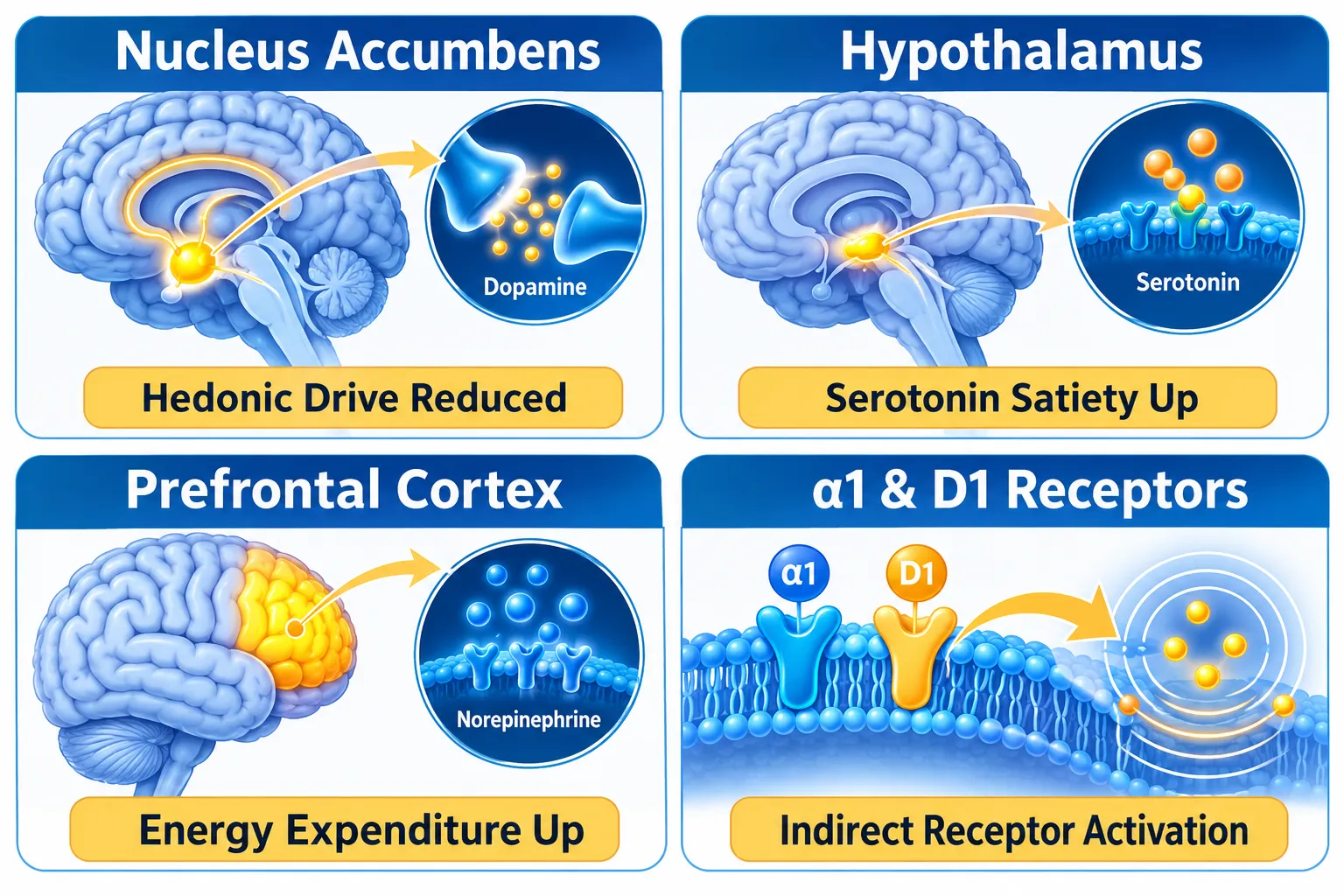
Dopamine and reward-driven eating. Dopamine signals in the nucleus accumbens and prefrontal cortex encode the motivational value of food. In diet-induced obese rodents, dopamine levels in these regions are chronically suppressed, a state that promotes compulsive overeating to compensate for blunted reward. Tesofensine reverses this deficit, restoring nucleus accumbens dopamine and modifying dopamine transporter binding in the dorsal striatum. The result is reduced hedonic drive to eat.

Norepinephrine and energy expenditure. Norepinephrine's role is dual: it raises metabolic rate and suppresses appetite via hypothalamic circuits. Tesofensine's strongest affinity sits at the norepinephrine transporter (NET), and downstream work in obese rats shows that its appetite-suppressive effects are mediated in part by indirect stimulation of α1-adrenoceptors, receptors that normally signal satiety and arousal.

Serotonin and satiety timing. Serotonin modulates meal size and the speed at which fullness develops. Classical serotonergic anorectics like fenfluramine targeted SERT alone; tesofensine's SERT blockade contributes to satiety enhancement but is the weakest of its three targets, suggesting dopaminergic and noradrenergic mechanisms carry more of the weight-loss load.

"Simultaneous modulation of all three monoamine systems may explain why tesofensine achieves weight loss magnitudes that single-target agents rarely reach."

In high-fat diet, induced obese rats given tesofensine at 2 mg/kg subcutaneously, both body weight and food intake fell significantly versus controls. Critically, the mechanism involves D1 receptor pathway stimulation downstream of elevated synaptic dopamine, an indirect receptor effect, not direct agonism, which may partly explain why tolerance develops more slowly than with direct stimulants.

Researchers exploring metabolic peptides such as AOD 9604 research methods or tesa benefits work in overlapping metabolic territory, though through entirely different mechanisms, growth hormone, related rather than monoamine-based.


Clinical Evidence and Development Status in 2026
Clinical Evidence and Development Status in 2026

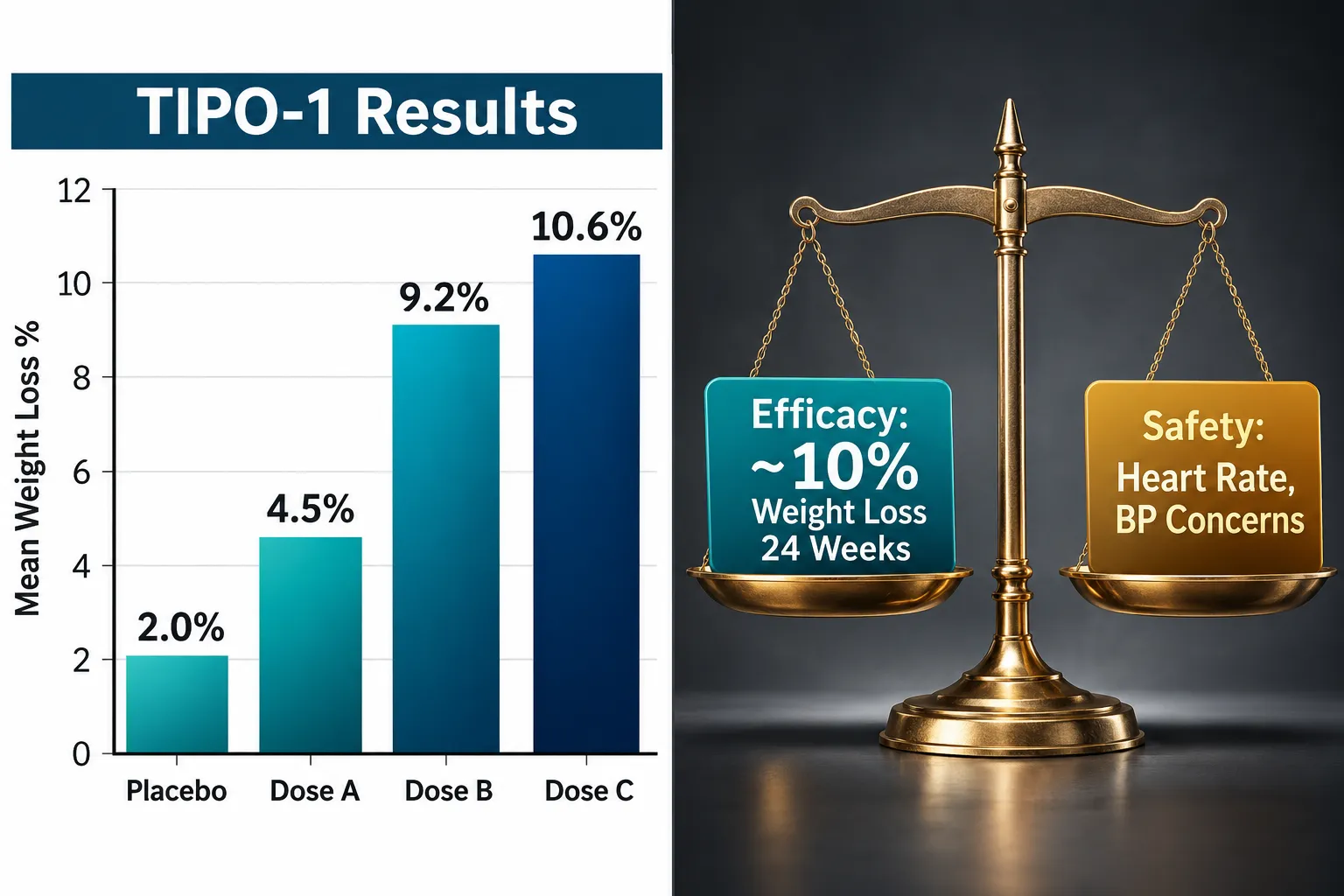
The pivotal Phase 2b trial, TIPO-1 (NCT00394667), enrolled 203 adults with obesity across five Danish centers, randomizing them to placebo or one of three tesofensine doses combined with an energy-restricted diet for 24 weeks. Mean weight loss outcomes were striking:

  • Placebo: ~2.0%
  • Low dose: ~4.5%
  • Mid dose: ~9.2%
  • High dose: ~10.6% (p<0.0001 vs. placebo)

A 10%+ reduction in body weight at 24 weeks with an oral agent was, at the time, described as among the most substantial pharmacologic weight loss results on record. As of 2026, these figures still compare favorably with many established obesity drugs.

Yet development has stalled. Tesofensine remains classified as investigational and is not approved by the U.S. FDA, despite the agency reportedly endorsing a Phase 3 program. The cardiovascular trial NCT00481104, focused on heart rate and blood pressure in 140 obese patients, has no posted results, leaving cardiac safety unresolved in the public domain.

The core tension is this: the same dopaminergic pathway that suppresses hedonic eating also activates the brain's reward circuitry, raising concerns about abuse liability. And the noradrenergic load that boosts energy expenditure also elevates heart rate and blood pressure, a pattern that historically derailed sympathomimetic diet drugs.

Most 2026 expert analyses expect a multi-year timeline before any major-market approval. Some commentators suggest that refined analogues tuning transporter selectivity, perhaps reducing DAT affinity to lower abuse potential while preserving NET and SERT effects, may ultimately be more viable than tesofensine itself.

For research teams also studying appetite and metabolic pathways, resources on retatrutide clinical trial data and peptide physician resources offer complementary perspectives on where multi-target metabolic agents are heading.


Conclusion

Tesofensine stands as a compelling case study in what is tesofensine, dopamine, norepinephrine, and serotonin transporter biology in appetite research, demonstrating that multi-monoamine reuptake blockade can produce clinically meaningful weight loss through convergent effects on reward, satiety, and energy expenditure. Its pharmacology is well-characterized, its Phase 2b efficacy is robust, and its mechanistic logic is sound.

The practical path forward requires resolving cardiovascular and abuse-liability concerns through well-powered Phase 3 trials. Researchers and clinicians following this compound should:

  1. Monitor NCT00481104 and any future Phase 3 registrations for cardiac safety endpoints.
  2. Compare tesofensine's monoamine profile against emerging multi-target small molecules entering development.
  3. Consider how its dopamine circuit effects differ fundamentally from incretin-based approaches when designing combination research programs.
  4. Review GLP-1 class research products as a mechanistic contrast when evaluating appetite-modulating agents.

Tesofensine's legacy in appetite biology may ultimately be less about its own approval timeline and more about what it taught researchers: that hitting dopamine, norepinephrine, and serotonin together, in the right proportions, opens a pharmacological window that single-target drugs cannot reach.

Tags: appetite research, dopamine transporter, norepinephrine transporter, obesity pharmacology, serotonin transporter, sndri, tesofensine, triple monoamine reuptake inhibitor
https://www.puretestedpeptides.com/wp-content/uploads/2026/10/what-is-tesofensine-dopamine-norepinephrine-and-serotonin-transporter-biology-in.webp 1024 1536 https://www.puretestedpeptides.com/wp-content/uploads/2026/01/buy-peptides-online.jpg 2026-10-31 13:20:082026-10-31 13:20:08What Is Tesofensine? Dopamine, Norepinephrine, and Serotonin Transporter Biology in Appetite Research
You might also like
Tesofensine, Enclomiphene, and Peptide-Based Approaches: How Small Molecules Fit Alongside GLP-3 and GH Secretagogues in Metabolic Research Tesofensine, Enclomiphene, and Peptide-Based Approaches: How Small Molecules Fit Alongside GLP-3 and GH Secretagogues in Metabolic Research
Retatrutide 2026 Phase 3 Results: What the Latest Trial Data Means for GLP-3 Research Retatrutide 2026 Phase 3 Results: What the Latest Trial Data Means for GLP-3 Research
Tesofensine Mechanism in Appetite Research: Where Noradrenergic Modulation Fits Alongside GLP Peptides Tesofensine Mechanism in Appetite Research: Where Noradrenergic Modulation Fits Alongside GLP Peptides
Tesofensine vs GLP-3 Retatrutide: Comparing Appetite, Dopamine, Noradrenergic, and Incretin Signaling Tesofensine vs GLP-3 Retatrutide: Comparing Appetite, Dopamine, Noradrenergic, and Incretin Signaling
Best Nasal Spray Peptides for Cognitive and Appetite Research: Semax, Selank, Klow Spray, and Tesofensine Compared Best Nasal Spray Peptides for Cognitive and Appetite Research: Semax, Selank, Klow Spray, and Tesofensine Compared
Polypeptide Peptides in Cardiometabolic Models: How Tesofensine, GLP-3 Retatrutide, and GLP-2-T Differ From Classic Small-Molecule Drugs Polypeptide Peptides in Cardiometabolic Models: How Tesofensine, GLP-3 Retatrutide, and GLP-2-T Differ From Classic Small-Molecule Drugs
GLP-3 Retatrutide: Researching Its Triple-Agonist Mechanism Beyond GLP-1 and GLP-2 Pathways GLP-3 Retatrutide: Researching Its Triple-Agonist Mechanism Beyond GLP-1 and GLP-2 Pathways
Tesofensine: Mechanism, Appetite Pathways, and Research Use in Metabolic Studies Tesofensine: Mechanism, Appetite Pathways, and Research Use in Metabolic Studies
0 replies

Leave a Reply

Want to join the discussion?
Feel free to contribute!

Leave a Reply Cancel reply

Your email address will not be published. Required fields are marked *

×

Helpful Links

  • My account
  • Cart
  • Checkout
  • Refund and Returns Policy
  • Privacy Policy
  • SMS Privacy Policy
  • Login
  • My Account
  • Logout

USA Made Lab Tested Peptides

All products are sold for research, laboratory, or analytical purposes only, and are not for human consumption


Pure Tested Peptides is a chemical supplier. Pure Tested Peptides is not a compounding / chemical compounding facility as defined under 503A of the Federal Food, Drug, and Cosmetic act. Pure Tested Peptides is not an outsourcing facility as defined under 503B of the Federal Food, Drug, and Cosmetic act.

The statements made within this website have not been evaluated by the US Food and Drug Administration. The products we offer are not intended to diagnose, treat, cure or prevent any disease.

Human/Animal Consumption Prohibited. Laboratory/In-Vitro Experimental Use Only

Link to: MOTS-c and 5-Amino-1MQ: A Tissue- and Time-Resolved Framework for Separating Mitochondrial Adaptation From NNMT Inhibition Link to: MOTS-c and 5-Amino-1MQ: A Tissue- and Time-Resolved Framework for Separating Mitochondrial Adaptation From NNMT Inhibition MOTS-c and 5-Amino-1MQ: A Tissue- and Time-Resolved Framework for Separating...MOTS-c and 5-Amino-1MQ: A Tissue- and Time-Resolved Framework for Separating Mitochondrial Adaptation From NNMT Inhibition Link to: Glow Blend vs Klow Blend: How to Compare Injectable-Style and Intranasal Research Formulations by Endpoint Link to: Glow Blend vs Klow Blend: How to Compare Injectable-Style and Intranasal Research Formulations by Endpoint Glow Blend vs Klow Blend: How to Compare Injectable-Style and Intranasal Research Formulations by EndpointGlow Blend vs Klow Blend: How to Compare Injectable-Style and Intranasal Research...
Scroll to top Scroll to top Scroll to top