

Tesofensine vs GLP‑3 Retatrutide vs Classic Appetite Drugs: Which Pathways Researchers Model for Weight‑Related Studies
Fewer than one in five adults with obesity achieve durable weight loss through lifestyle intervention alone, a gap that has pushed research labs to evaluate an increasingly diverse toolkit of pharmacological agents. The question of Tesofensine vs GLP‑3 Retatrutide vs Classic Appetite Drugs: Which Pathways Researchers Model for Weight‑Related Studies is no longer academic; it directly shapes how labs allocate resources, design endpoints, and interpret data in 2026.
Key Takeaways
- Tesofensine acts as a triple monoamine reuptake inhibitor, targeting the central nervous system, while retatrutide engages three peripheral metabolic receptors simultaneously.
- Classic appetite drugs operate through single or dual monoaminergic pathways, making them simpler to model but narrower in scope.
- Retatrutide's TRIUMPH-1 Phase 3 data produced weight-loss magnitudes approaching bariatric surgery outcomes.
- Researchers increasingly favor gut-brain peptide network models over pure CNS-appetite frameworks.
- Study design choices, including endpoint selection and comorbidity integration, differ substantially across all three compound classes.
Mechanistic Foundations: Three Distinct Pathways
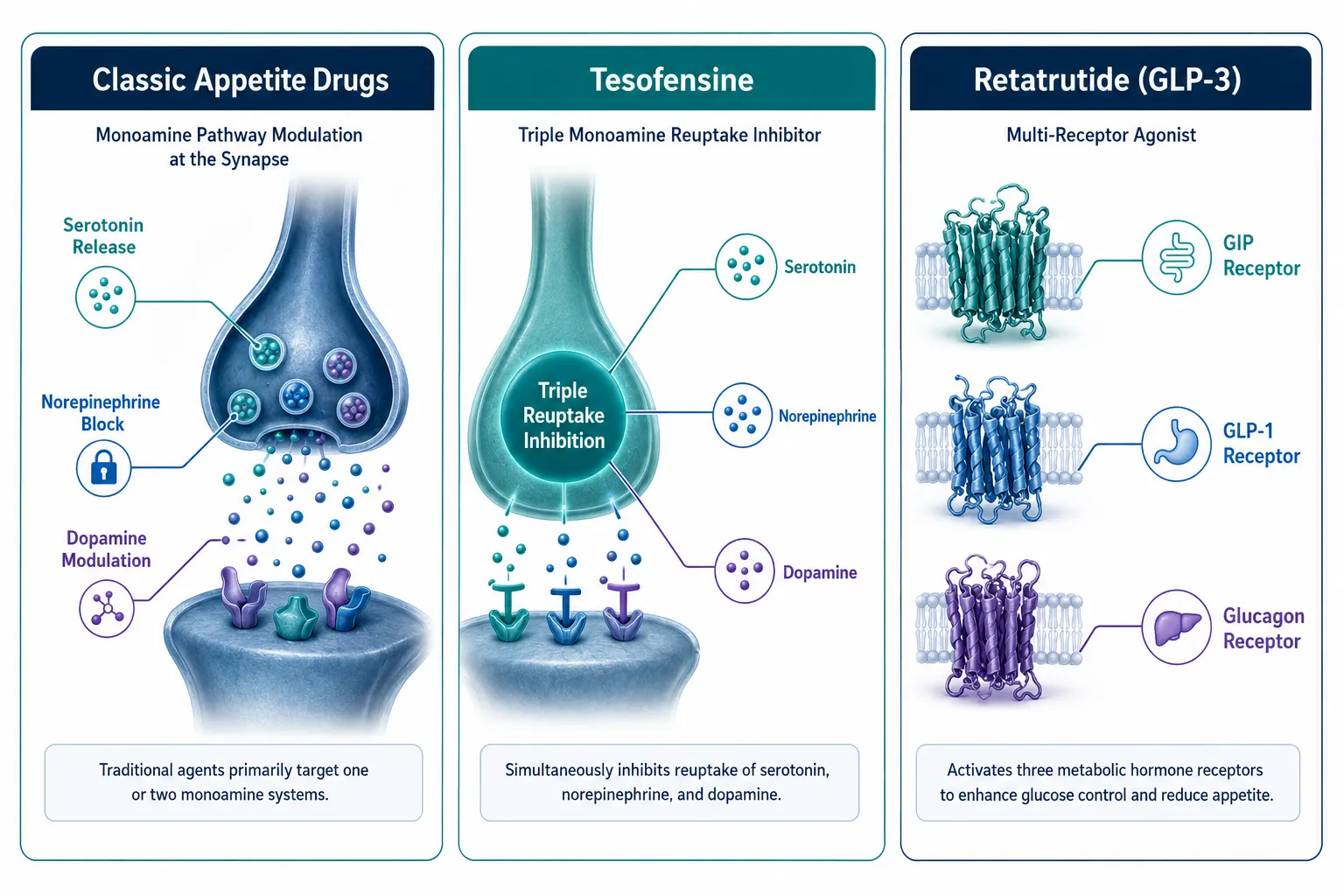
Understanding the mechanistic differences is the starting point for any lab comparing these agents. For context on how tesofensine fits within the broader noradrenergic and monoaminergic landscape, see this detailed breakdown of tesofensine and metabolic research as a noradrenergic appetite modulator.
Classic appetite drugs, including older phentermine-class agents and serotonergic compounds, work primarily by stimulating catecholamine release or blocking serotonin reuptake in the hypothalamus. Their mechanism is relatively linear: reduce hunger signals, lower caloric intake, observe body weight change. This simplicity made them the default model substrate for decades, but it also limits their translational value for complex metabolic phenotypes.
Tesofensine expands on that architecture by simultaneously inhibiting the reuptake of serotonin, norepinephrine, and dopamine. This triple reuptake inhibition produces stronger appetite suppression than single-target agents and also affects reward-related eating behavior. Researchers modeling tesofensine must account for CNS-driven endpoints alongside peripheral metabolic markers, adding complexity but also richer mechanistic insight.
Retatrutide represents a structural departure from both. As a triple agonist at GIP, GLP-1, and glucagon receptors, it operates primarily through gut-derived hormonal signaling rather than central monoamine pathways. For a thorough overview of how this peptide family is classified, the GLP-3, GLP-1, and GLP-2 researcher's guide to the peptide family provides essential background. Labs modeling retatrutide must incorporate insulin secretion dynamics, glucagon suppression, gastric emptying, and energy expenditure, a multi-tissue endpoint panel that classic appetite drug models were never designed to handle.
Study Design Considerations Across Compound Classes
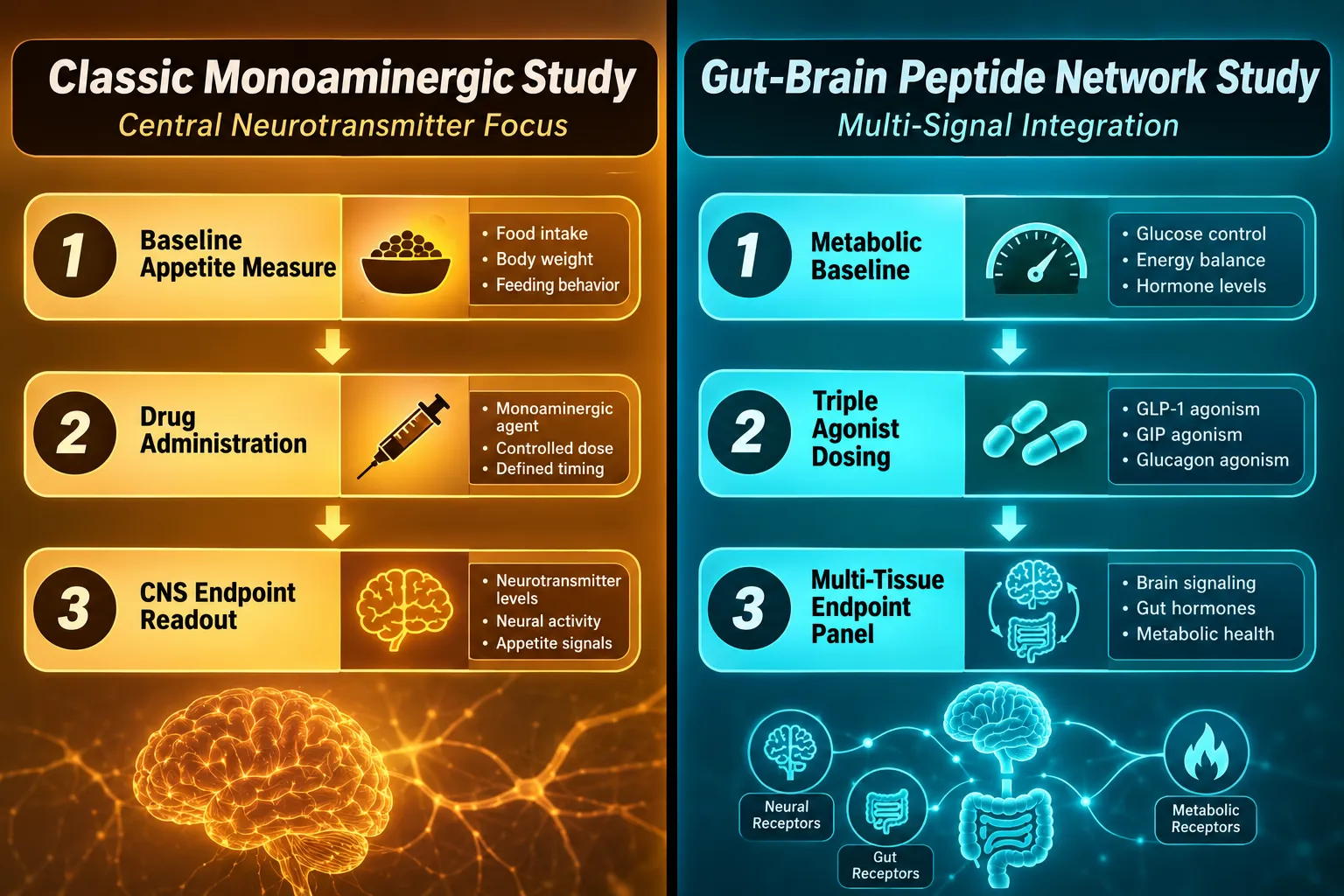
The divergence in mechanism translates directly into divergent study architectures. When researchers examine Tesofensine vs GLP‑3 Retatrutide vs Classic Appetite Drugs: Which Pathways Researchers Model for Weight‑Related Studies, the endpoint selection question becomes central.
Classic appetite drug models typically use:
- Short-duration feeding behavior assays
- Hypothalamic gene expression panels
- Single-tissue (adipose or liver) metabolic readouts
- Monoamine metabolite profiling in cerebrospinal fluid or plasma
Tesofensine-focused models commonly add:
- Dopaminergic reward circuit assessments
- Locomotor activity tracking to distinguish appetite suppression from stimulant effects
- Multi-neurotransmitter plasma panels
- Longer washout periods given CNS accumulation dynamics
Retatrutide models require the most expansive design:
- Pancreatic beta-cell function assays
- Incretin hormone time-course sampling
- Multi-organ imaging endpoints (liver fat, visceral adipose volume)
- Comorbidity integration for cardiovascular, sleep apnea, and osteoarthritis markers
This last point is not incidental. The TRIUMPH program, the Phase 3 trial series for retatrutide, explicitly integrates obesity-related comorbidities including obstructive sleep apnea, osteoarthritis, and cardiovascular disease into its endpoints. A dedicated cardiovascular outcomes trial completed enrollment in 2026, signaling that multi-indication modeling is now the expected standard for next-generation obesity agents. Labs that design single-endpoint studies for retatrutide risk missing the compound's most scientifically significant effects.
"The shift from monoaminergic appetite suppression to gut-brain peptide network modulation represents the most significant methodological change in obesity research in two decades."
For researchers interested in how cellular energy pathways intersect with these metabolic models, the work on MOTS-C peptide and mitochondrial biogenesis for cellular energy research offers a complementary framework.
Selecting the Right Compound for a Research Program
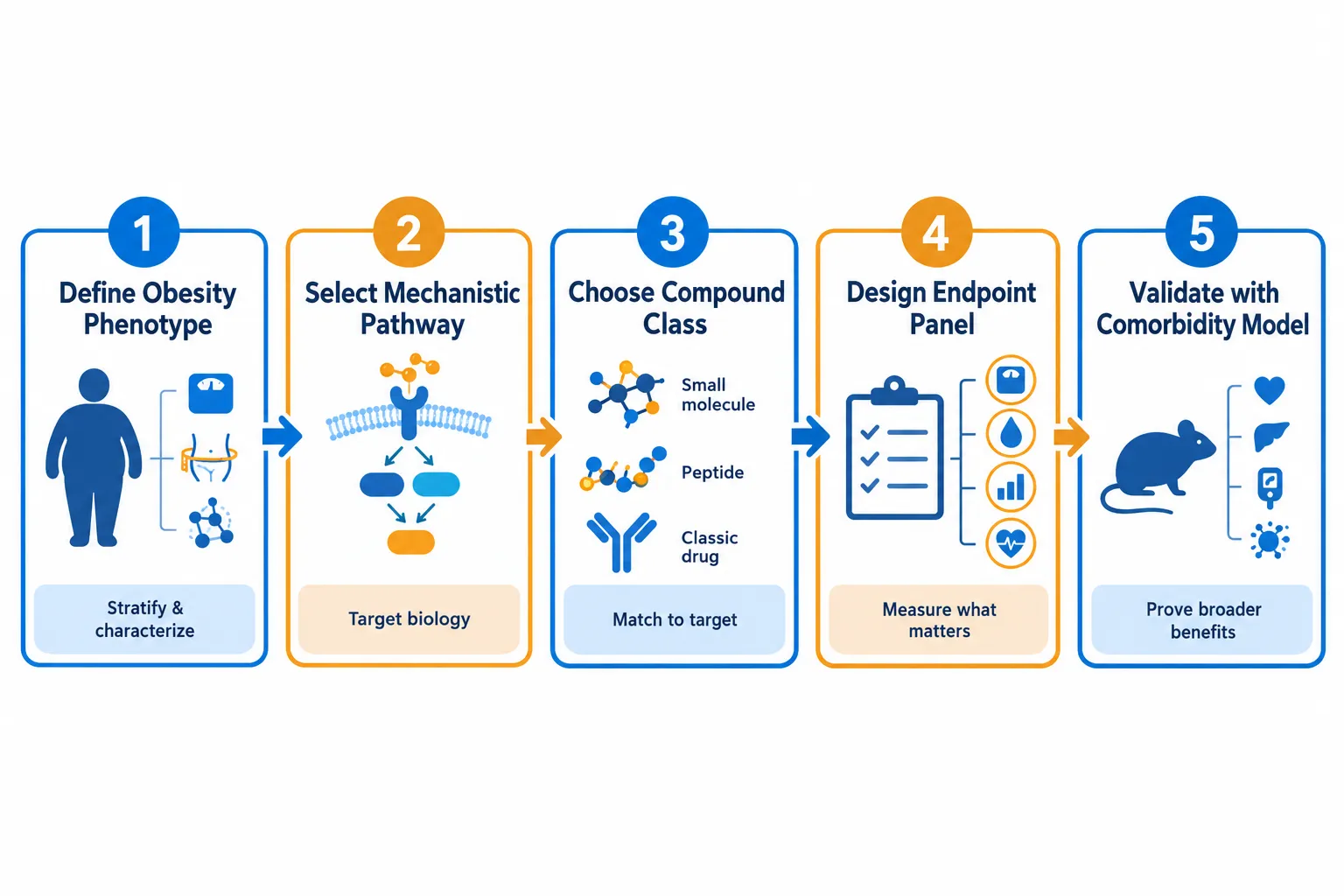
Choosing between these agents is not purely a mechanistic decision, it is also a question of what the research program is designed to answer. The full picture of Tesofensine vs GLP‑3 Retatrutide vs Classic Appetite Drugs: Which Pathways Researchers Model for Weight‑Related Studies depends on research objectives, available infrastructure, and the target phenotype.
| Research Goal | Best-Fit Compound Class |
|---|---|
| CNS appetite circuit mapping | Classic appetite drugs or tesofensine |
| Reward-driven eating behavior | Tesofensine |
| Multi-tissue metabolic profiling | Retatrutide |
| Cardiovascular-obesity interaction | Retatrutide |
| Rapid, low-cost pilot screening | Classic appetite drugs |
For labs focused on hormone regulation studies, retatrutide's incretin-axis activity makes it the most information-dense option. Its Phase 3 data demonstrated weight loss approaching bariatric surgery outcomes, a benchmark that repositions the compound from a pharmacological agent to a near-procedural intervention in research framing.
Tesofensine occupies a valuable middle ground. Its CNS-peripheral hybrid mechanism makes it well-suited for studies that need to bridge appetite neuroscience with metabolic outcomes without the full complexity of a triple incretin agonist protocol. Researchers can find additional context on how retatrutide advances beyond single-receptor agents in this overview of GLP-3 retatrutide and the future of metabolic research beyond GLP-1.
Classic appetite drugs retain relevance as mechanistic controls and for studies requiring well-characterized pharmacokinetic baselines. Their regulatory and safety profiles are extensively documented, making them useful reference compounds in comparative designs.
Conclusion
The comparison of Tesofensine vs GLP‑3 Retatrutide vs Classic Appetite Drugs: Which Pathways Researchers Model for Weight‑Related Studies ultimately reflects a field in transition, moving from single-pathway CNS models toward integrated gut-brain-metabolic frameworks. Labs designing weight-related studies in 2026 should take three concrete steps: first, define whether the primary research question is CNS-centric, peripherally metabolic, or multi-system; second, select the compound class whose mechanism maps directly to that question; third, build endpoint panels that match the compound's known biology rather than defaulting to legacy assay formats. Retatrutide's TRIUMPH data and its anticipated 2027 regulatory filing will continue to raise the methodological bar, researchers who align their study designs now will be best positioned to generate translatable, high-impact findings.


Leave a Reply
Want to join the discussion?Feel free to contribute!