Call or Text 727-513-9780
  • Shopping Cart Shopping Cart
    0Shopping Cart
Pure Tested Peptides | America's most trusted Peptides for sale online
  • Peptides for sale
    • Oral Peptides for sale
      • Peptide Capsules for sale
      • BPC 157 Capsules 1000mcg
      • SLU-PP-332 Capsules | 1000 mcg
      • 5-Amino-1MQ 50mg Capsules
      • Tesofensine 500mcg
    • All Peptides for sale
    • Peptide Sprays
      • BPC 157 Nasal Spray Kit
      • BPC-157 TB500 Nasal Spray Kit
      • Semax Nasal Spray 10mg
      • Selank – Nasal Spray Kit – 10mg
      • Epithalon 50MG Nasal Spray Kit
      • Ipamorelin 10mg Nasal Spray
      • Klow Nasal Spray (BPC-157 + TB-500 + GHK-Cu + KPV) | 80mg
      • Hulk Nasal Spray Tesa / Ipa Blend 6/3 MG
      • Klow Nasal Spray
      • NAD + 500 mg Nasal Spray
      • PT-141 Nasal Spray Kit
    • GHRH Peptides
      • Ipa Peptides
      • CJC-1295 Peptides
        • CJC-1295 with DAC 5 mg
        • CJC-1295 without DAC 5 mg
        • CJC-1295 Ipa 10mg
      • Tesa Peptides
        • Tesa Peptide
        • Tesa 20 mg
    • GHK-Cu Peptides
      • All GHK-Cu Peptides
      • GHK-Cu 100mg
      • KLOW Peptide Blend – Buy KLOW blend online
    • BPC Peptides
      • All BPC Peptides
      • BPC-157
      • BPC-157 TB-500
      • BPC 157 capsules 1000mcg
    • SLU-PP-332 Peptides
      • All SLU-PP-332 Peptides
      • SLU-PP-332 5mg
    • GLP3 Peptides
    • PT-141 Peptides
      • PT-141 Peptides for sale
      • PT-141 10mg
      • PT-141 Nasal Spray
    • CAG Peptides
      • Lipo-C Peptide Blend
      • CAG 5mg
      • CAG 10mg
    • MOTS-C Peptides
      • MOTS-C Peptides for sale
      • MOTS-c peptide
      • MOTS-c 10mg *6 pack*
    • 5 Amino 1MQ Peptides
      • 5 Amino 1MQ Peptides for sale
      • 5-Amino-1MQ 50mg Capsules
      • 5-Amino-1MQ 5mg
    • Epithalon Peptides
      • Epithalon Peptides for sale
      • Epithalon 10mg
      • Epithalon 50mg
  • Shop
    • GLPs
      • 5-Amino-1MQ 50mg Capsules
      • 5-Amino-1MQ 5mg
      • L-Carnitine 500mg/ml
      • Tesofensine 500mcg
      • SLU-PP-332 5mg
      • MOTS-c 10mg *6 pack*
    • Epithalon & BPC Peptides
      • Epithalon 10mg
      • Epithalon 50mg
      • BPC-157
      • BPC 157 capsules 1000mcg
      • BPC-157 TB-500
      • BPC-157 TB500 Nasal Spray Kit
      • BPC 157 Nasal Spray Kit
    • BPC TB-500 & NAD+ Peptides
      • NAD+ 500 mg
      • KLOW Peptide Blend – Buy KLOW blend online
      • GLOW Peptide Blend
      • TB 500 5mg
      • BPC 157 capsules 1000mcg – Supplement
      • BPC 157 Nasal Spray Kit
      • BPC-157
      • BPC-157 TB500 Nasal Spray Kit
      • BPC-157 TB-500
      • BPC 157 capsules 1000mcg
    • LL-37 Peptide
      • LL-37 10 mg
    • MOTS-C & Selank
      • MOTS-c peptide
      • Selank 10mg
    • GHK Peptides
      • GHK-Cu 100mg
      • GLOW Peptide Blend
      • KLOW Peptide Blend – Buy KLOW blend online
  • COAs
  • Wholesale
    • Wholesale Peptides for sale
  • PTP FAQ
  • Affiliates
    • Selank Peptide: Advanced Pharmacological Mechanisms Underlying Its Anxiolytic and Nootropic Effects in Research
      • 5-Amino-1MQ Peptide: Detailed Mechanisms of NNMT Inhibition and Its Impact on Cellular Metabolism Research
        • MOTS-C Peptide: Unraveling Its Role in Mitochondrial Dynamics and Energy Metabolism Research
          • Epithalon Peptide and Telomerase Regulation: Investigating Its Impact on Cellular Senescence and Lifespan Research Models
            • GLP2-T vs GLP2 Tirz Peptide: Understanding the Naming, Mechanistic Nuances, and Research Implications for Gut Health
      • Peptides and Polypeptides in Modern Pharmacology: What Research on Metoprolol, Prednisone, and Amlodipine Reveals
        • Polypeptide Peptides vs NSAIDs: What Naproxen and Diclofenac Teach Tissue-Repair Researchers About BPC‑157 and TB‑500
          • Peptides and Polypeptides in Endocrine Pharmacology: How GLP-1, GLP-2, and GLP-3 Retatrutide Differ From Classic Drugs Like Prednisone and Amlodipine
          • 5‑Amino‑1MQ Peptide and NNMT Inhibition: How It Compares With Statins Like Atorvastatin in Adipose and Lipid Metabolism Research
      • Enclomiphene, Estrogen Receptor Signaling, and Luteinizing Phase Biology: What Hormone Researchers Should Measure
        • Mesenchymal Stem Cells, BPC‑157, and GHK‑Cu: How Tissue Repair Peptides Compare With Classic NSAIDs Like Naproxen in Injury Models
          • Peptide Calculator Use Cases Beyond Growth Hormone: Working Through GLP‑3 Retatrutide, MOTS‑c, and BPC‑157 Research Dosing
        • Polypeptide Peptides in Endocrine and Metabolic Pharmacology: Lessons From Amlodipine, Prednisone, and Metoprolol
        • Peptides Calculator for Advanced Blends: Worked Examples for Tesamorelin, CJC‑1295, and Ipamorelin Stacks
          • Peptides and Polypeptides in Human Physiology: How Molecular Size Shapes Research Applications
            • Selank Peptide: Advanced Pharmacological Mechanisms Underlying Its Anxiolytic and Nootropic Effects in Research
          • 5-Amino-1MQ Peptide: Detailed Mechanisms of NNMT Inhibition and Its Impact on Cellular Metabolism Research
            • MOTS-C Peptide: Unraveling Its Role in Mitochondrial Dynamics and Energy Metabolism Research
              • Epithalon Peptide and Telomerase Regulation: Investigating Its Impact on Cellular Senescence and Lifespan Research Models
                • GLP2-T vs GLP2 Tirz Peptide: Understanding the Naming, Mechanistic Nuances, and Research Implications for Gut Health
                  • Peptides and Polypeptides in Endocrine Pharmacology: How GLP-1, GLP-2, and GLP-3 Retatrutide Differ From Classic Drugs Like Prednisone and Amlodipine
                    • Polypeptide Peptides vs NSAIDs: What Naproxen and Diclofenac Teach Tissue-Repair Researchers About BPC‑157 and TB‑500
                      • Peptides and Polypeptides in Modern Pharmacology: What Research on Metoprolol, Prednisone, and Amlodipine Reveals
                        • 5‑Amino‑1MQ Peptide and NNMT Inhibition: How It Compares With Statins Like Atorvastatin in Adipose and Lipid Metabolism Research
                        • Enclomiphene, Estrogen Receptor Signaling, and Luteinizing Phase Biology: What Hormone Researchers Should Measure
                        • Mesenchymal Stem Cells, BPC‑157, and GHK‑Cu: How Tissue Repair Peptides Compare With Classic NSAIDs Like Naproxen in Injury Models
                        • Peptide Calculator Use Cases Beyond Growth Hormone: Working Through GLP‑3 Retatrutide, MOTS‑c, and BPC‑157 Research Dosing
                        • Polypeptide Peptides in Endocrine and Metabolic Pharmacology: Lessons From Amlodipine, Prednisone, and Metoprolol
                        • Peptides Calculator for Advanced Blends: Worked Examples for Tesamorelin, CJC‑1295, and Ipamorelin Stacks
                        • Peptides and Polypeptides in Human Physiology: How Molecular Size Shapes Research Applications
                        • Selank Peptide: Advanced Pharmacological Mechanisms Underlying Its Anxiolytic and Nootropic Effects in Research
                        • MOTS-C Peptide: Unraveling Its Role in Mitochondrial Dynamics and Energy Metabolism Research
                        • Peptides and Polypeptides in Modern Pharmacology: What Research on Metoprolol, Prednisone, and Amlodipine Reveals
                        • Peptides and Polypeptides in Endocrine Pharmacology: How GLP-1, GLP-2, and GLP-3 Retatrutide Differ From Classic Drugs Like Prednisone and Amlodipine
                        • 5-Amino-1MQ Peptide: Detailed Mechanisms of NNMT Inhibition and Its Impact on Cellular Metabolism Research
                        • Mesenchymal Stem Cells, BPC‑157, and GHK‑Cu: How Tissue Repair Peptides Compare With Classic NSAIDs Like Naproxen in Injury Models
                        • Peptide Calculator Use Cases Beyond Growth Hormone: Working Through GLP‑3 Retatrutide, MOTS‑c, and BPC‑157 Research Dosing
                        • GLP2-T vs GLP2 Tirz Peptide: Understanding the Naming, Mechanistic Nuances, and Research Implications for Gut Health
                        • Polypeptide Peptides in Endocrine and Metabolic Pharmacology: Lessons From Amlodipine, Prednisone, and Metoprolol
                        • Polypeptide Peptides vs NSAIDs: What Naproxen and Diclofenac Teach Tissue-Repair Researchers About BPC‑157 and TB‑500
                        • Peptides and Polypeptides in Human Physiology: How Molecular Size Shapes Research Applications
                        • Peptides Calculator for Advanced Blends: Worked Examples for Tesamorelin, CJC‑1295, and Ipamorelin Stacks
                        • 5‑Amino‑1MQ Peptide and NNMT Inhibition: How It Compares With Statins Like Atorvastatin in Adipose and Lipid Metabolism Research
                        • Enclomiphene, Estrogen Receptor Signaling, and Luteinizing Phase Biology: What Hormone Researchers Should Measure
                        • Epithalon Peptide and Telomerase Regulation: Investigating Its Impact on Cellular Senescence and Lifespan Research Models
                        • Best research protocol Klow blend
                        • best time to take BPC-157
                        • best time to take DSIP (Delta Sleep Inducing Peptide)
                        • best time to take CJC-1295
                        • best time to take AOD-9604
                        • best time to take Follistatin 344
                        • best time to take Ipamorelin
                        • best time to take MK-677 (Ibutamoren)
                        • best time to take Ligandrol (LGD-4033) — research compound
                        • best time to take Ostarine (MK-2866) — research compound
                        • best time to take GHK-CU
                        • best time to take TB-500
                        • best time to take MOTS-c
                        • best time to take Semax
                        • best time to take RAD-140 (Testolone) — research compound
                        • best time to take Thymosin Alpha-1
                        • best time to take PEG-MGF
                        • Biolife Plasma, Octapharma Plasma, and Research Peptides: How Plasma Donation Labs Differ From Peptide Suppliers
                        • best time to take YK-11 — research compound
                        • best time to take PT-141 (Bremelanotide)
                        • Best research protocol Klow blend
                        • 5-Amino-1MQ and MOTS-C Synergy: Metabolic Signaling, Mitochondria, and Research Design
                        • BPC-157 and TB-500: Investigating Their Combined Effects on Angiogenesis and Cellular Migration in Tissue Repair Models
                        • BPC-157 Peptide: Gut Barrier Function, Inflammation, and Tissue-Recovery Research
                        • 5‑Amino‑1MQ and MOTS‑c Synergy in Metabolic Research: Designing NNMT and Mitochondrial Biogenesis Stacks
                        • CJC-1295 with DAC vs. Without DAC: Half-Life, Release Kinetics, and Research Implications
                        • CJC‑1295 with DAC vs. Without DAC: Expanding on Half‑Life Differences Using Tesamorelin and Ipamorelin Blend Case Studies
                        • Collagen Biology and Copper‑Binding Peptides: How GHK‑Cu, Glow Blend, and Klow Blend Interact with Skin and Connective Tissue
                        • Collagen Biology and Regenerative Peptides: How GHK‑Cu, Glow Blend, and Klow Blend Affect Extracellular Matrix Research
                    • DNA, Telomeres, and Longevity Peptides: Positioning Epithalon and MOTS‑c in Genetic Aging Research
                      • Enclomiphene Citrate: serm Mechanism, Testosterone Research, and Stack Compatibility
                        • Enclomiphene vs Enclomiphene Citrate: Formulation, Bioavailability, and Research Distinctions
                        • Epithalon Peptide Research: Telomerase Activation, Aging, and Pineal Gland Function
                        • Estrogen Receptor Signaling and Enclomiphene: How Selective Modulators Compare with Classic Polypeptide Hormones
                        • GHK-Cu Peptide: Advanced Mechanisms in Extracellular Matrix Remodeling and Wound Healing Research
                        • GHK-Cu Peptide: Collagen Synthesis, Wound Repair, and Skin-Barrier Research Models
                        • GLP-1 vs GLP-3 vs GLP-2: Peptide Classification and Research Applications
                        • GLP-2 Peptide Research Guide: Gut Barrier Function, Nutrient Absorption, and Intestinal Recovery Models
                        • GLP-3 Retatrutide vs. GLP-1 Drugs: What Triple-Agonist Biology Changes in Research Models
                        • Ipamorelin and Tesamorelin Combination: Synergistic GH Secretagogue Research and Dosing Protocols
                        • GLP2 Tirz Peptide: What It Is, Why the Name Exists, and How Researchers Should Interpret It
                        • Klow Blend Peptide Nasal Spray: What the Formulation Is Trying to Do in Cognitive Research
                        • Mitochondria, NNMT Inhibition, and Peptide Modulators: Where MOTS‑c and 5‑Amino‑1MQ Fit in Cellular Energy Research
                        • MOTS-c Peptide: Mitochondrial Function, Energy Metabolism, and What Researchers Measure
                        • MOTS-c vs. 5-Amino-1MQ: Which Metabolic Research Questions Each Compound Actually Answers
                        • Nasal Spray Peptides: Bioavailability, Administration, and Semax/Selank Research Applications
                        • PT-141 Peptide Research: Mechanism of Action and Melanocortin Receptor Signaling
                        • Retatrutide for Research: Mechanism, Structure, and GLP-1/GLP-3 Dual Action
                        • Retatrutide for Obesity and Type 2 Diabetes: What the Latest Trial Data Suggest
                        • Tesofensine Peptide Research: Mechanism, Appetite Suppression, and Neuropeptide Y Pathways
  • Contact
    • Contact Customer Service
    • Text Customer Support
  • About US
  • Shop all peptides
  • Affiliate Program
    • Affiliate Signup
  • Login / Register Login / Register Page Link Login / Register Page Link
  • Click to open the search input field Click to open the search input field Search
  • Menu Menu
Prednisone and Research-Use Peptides: How Glucocorticoid Exposure Can Distort Metabolic, Immune, and Tissue-Repair Readouts

Prednisone and Research-Use Peptides: How Glucocorticoid Exposure Can Distort Metabolic, Immune, and Tissue-Repair Readouts

October 6, 2026/0 Comments/in Uncategorized/by

Roughly one in five research subjects enrolled in metabolic or immune-modulating studies carries an active or recent glucocorticoid prescription, yet fewer than half of published peptide protocols formally account for this exposure. The problem of Prednisone and Research-Use Peptides: How Glucocorticoid Exposure Can Distort Metabolic, Immune, and Tissue-Repair Readouts is not theoretical. When a subject is taking prednisone, the drug reshapes glucose handling, cytokine profiles, body composition, and wound biology simultaneously, making it nearly impossible to attribute changes in those endpoints to a peptide compound without deliberate experimental controls.

This guide is written for researchers, protocol designers, and informed buyers of research-use peptide compounds who need a clear, actionable map of where glucocorticoid confounding is most severe and how to design around it.


Key Takeaways

  • Prednisone induces a "pseudo-metabolic syndrome" that directly mimics or masks outcomes targeted by metabolic peptides.
  • Standard inflammatory biomarkers, CRP, leukocyte count, neutrophil ratio, are dose-dependently suppressed by glucocorticoids, distorting immune readouts.
  • Tissue-repair and wound-healing endpoints are particularly vulnerable because glucocorticoids both dampen acute inflammation and impair collagen remodeling.
  • Anabolic and sarcopenia-targeted peptides face the strongest confounding from glucocorticoid-driven muscle catabolism.
  • Glucocorticoid exposure should be treated as a core design variable, not background noise, in any peptide research protocol.

How Glucocorticoids Create a Pseudo-Metabolic Syndrome
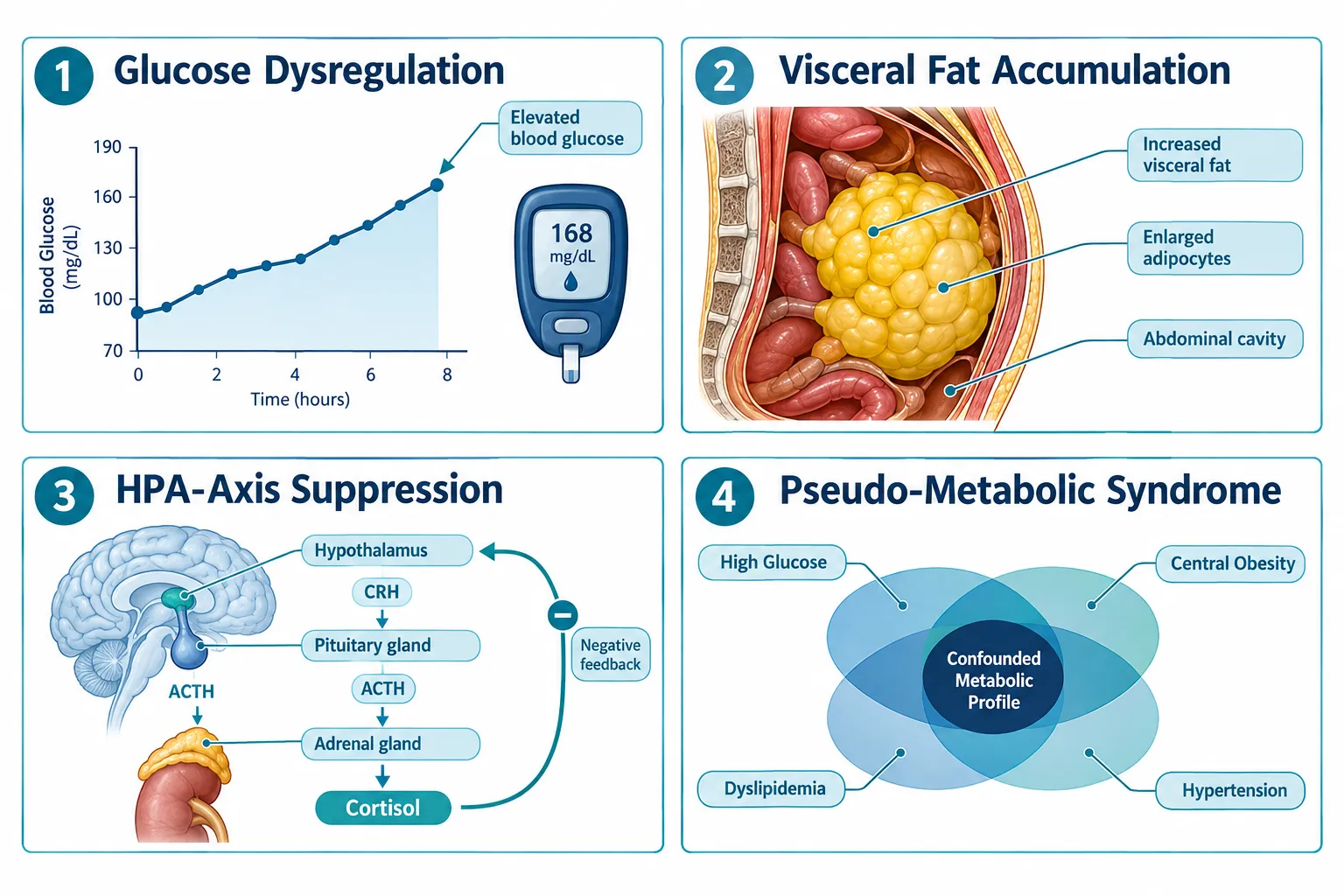
How Glucocorticoids Create a Pseudo-Metabolic Syndrome

Prednisone does not simply suppress inflammation. At doses commonly used in clinical and research-adjacent settings, it triggers a cascade of metabolic changes that closely resemble metabolic syndrome: elevated fasting glucose, increased visceral adiposity, dyslipidemia, and insulin resistance. For researchers studying cardiometabolic peptide compounds, this is a direct collision.

The core metabolic confounders introduced by prednisone include:

Endpoint Glucocorticoid Effect Research Risk
Fasting glucose Elevated (hepatic gluconeogenesis) Masks GLP-class peptide efficacy
Visceral fat Increased via lipid redistribution Distorts body-composition endpoints
Insulin sensitivity Reduced Confounds metabolic peptide response
Appetite / caloric intake Increased Alters weight-loss peptide readouts
Cortisol / HPA axis Suppressed endogenous output Disrupts hormonal biomarker panels

The HPA-axis suppression point deserves particular attention. When exogenous glucocorticoids are present, endogenous cortisol production falls. This changes the hormonal baseline against which peptide pharmacodynamics are measured. For GH-analogue peptides and compounds that interact with the growth hormone axis, this hormonal shift can produce entirely misleading dose-response curves.

Researchers studying visceral fat redistribution should also note that glucocorticoid-driven adiposity preferentially accumulates centrally, the same compartment tracked in visceral fat research models. Without a glucocorticoid-naive control arm, it becomes impossible to separate peptide-driven changes from steroid-driven ones.


Immune Biomarker Distortion: What Prednisone Does to CRP, Cytokines, and Leukocytes
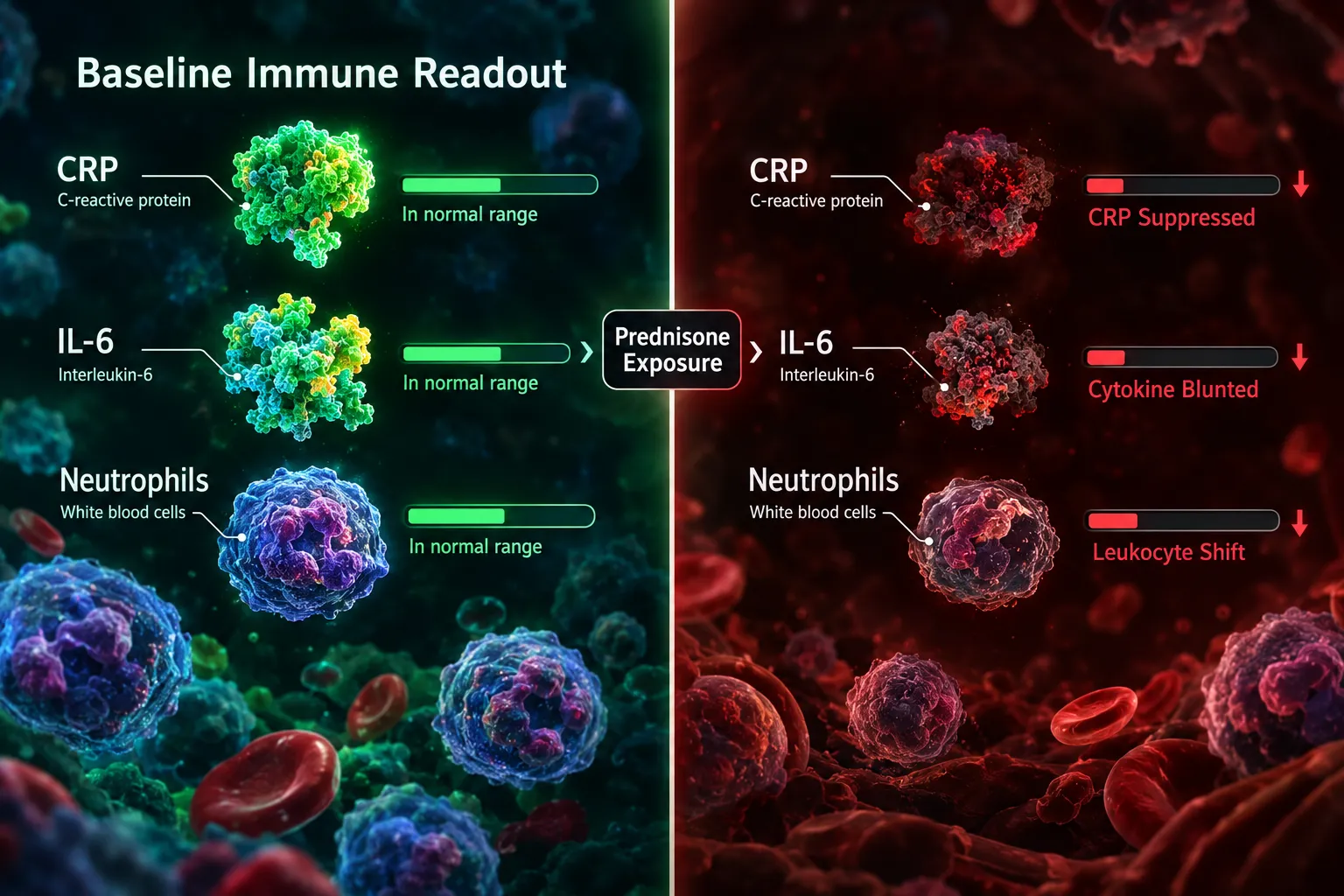
Immune Biomarker Distortion: What Prednisone Does to CRP, Cytokines, and Leukocytes

The immune-modulating effects of prednisone are both well-documented and deeply problematic for peptide research. The drug produces strong, dose-dependent suppression of nearly every standard inflammatory biomarker used in research protocols.

Biomarkers most severely distorted by glucocorticoid exposure:

  • C-reactive protein (CRP): Hepatic CRP synthesis is directly suppressed, producing artificially low readings that can mimic anti-inflammatory peptide effects.
  • Interleukin-6 (IL-6) and TNF-alpha: Both are blunted by glucocorticoid receptor activation, masking inflammatory resolution that a peptide may or may not be driving.
  • Leukocyte and neutrophil counts: Prednisone causes a characteristic leukocytosis with neutrophilia and lymphopenia, a pattern that can be mistaken for an immune-activation signal from a peptide compound.
  • Tissue-resident immune cells: Recent work confirms that glucocorticoids selectively modulate tissue-resident macrophages and mast cells in ways that differ from circulating immune cells. This matters enormously for regenerative peptides like BPC-157 and TB-500, where local tissue immune activity is the primary readout.

"When prednisone is present, the immune landscape a peptide encounters is fundamentally different from the one it was designed to modulate. Treating that as a minor covariate is a protocol error."

The practical consequence is that an immune-modulating peptide may appear highly effective, completely ineffective, or even counterproductive depending entirely on the glucocorticoid dose the subject carries. Without stratifying subjects by steroid exposure, or excluding active users entirely, the data cannot be interpreted with confidence.


Tissue-Repair and Anabolic Readouts: Where Glucocorticoid Confounding Is Most Severe
Tissue-Repair and Anabolic Readouts: Where Glucocorticoid Confounding Is Most Severe

Wound healing and tissue repair represent perhaps the most complex confounding scenario in Prednisone and Research-Use Peptides: How Glucocorticoid Exposure Can Distort Metabolic, Immune, and Tissue-Repair Readouts. Glucocorticoids produce a paradoxical two-phase effect on repair biology.

Phase 1 (acute): Inflammation is suppressed, which can make a wound-healing peptide appear to accelerate early healing simply because the steroid has already cleared the inflammatory field.

Phase 2 (remodeling): Glucocorticoids impair fibroblast proliferation, reduce collagen synthesis, and suppress angiogenesis. A peptide that promotes collagen remodeling may show blunted or absent efficacy, not because it failed, but because the steroid has suppressed the very cellular machinery the peptide targets.

For anabolic and sarcopenia-targeted peptides, the problem is equally stark. Glucocorticoids drive skeletal muscle catabolism through multiple mechanisms: they upregulate muscle-specific ubiquitin ligases, suppress IGF-1 signaling, and reduce protein synthesis rates. Any peptide designed to promote lean mass retention or muscle repair is working against a pharmacologically imposed catabolic state. The net readout will underestimate peptide efficacy, sometimes dramatically.

Mitochondrial function is also affected. Glucocorticoids impair mitochondrial biogenesis in muscle tissue, which is directly relevant for compounds studied in SS-31 mitochondrial research contexts.

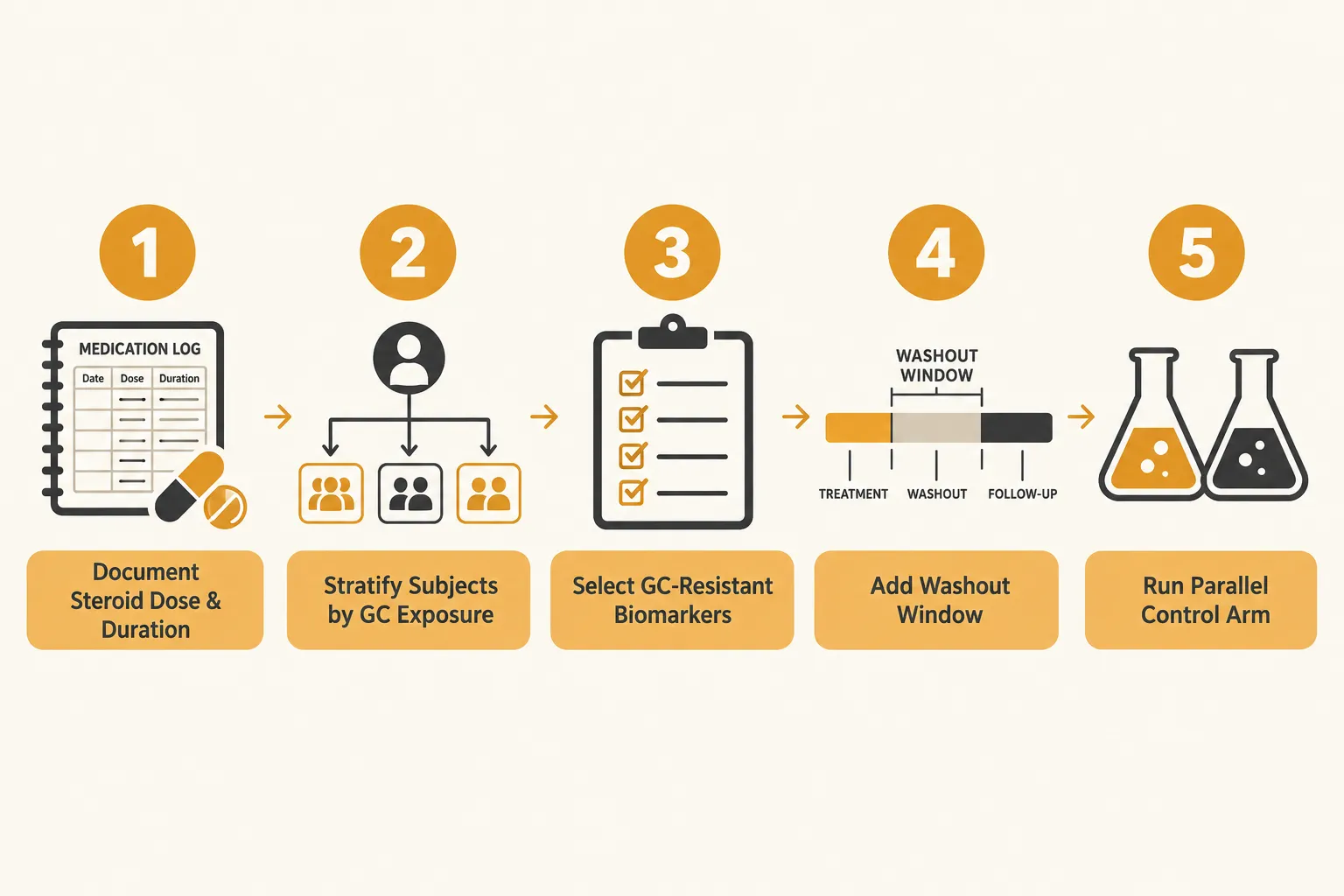
Designing Around Glucocorticoid Confounding: Practical Protocol Controls

Researchers in 2026 have several validated strategies to reduce or detect glucocorticoid confounding:

  1. Screen and stratify at enrollment. Collect steroid use history, current dose, and duration. Stratify rather than exclude where possible to preserve sample size.
  2. Use glucocorticoid-resistant biomarkers where available. Some cytokines and repair markers are less sensitive to steroid suppression and can serve as secondary endpoints.
  3. Build in washout windows. For subjects who can safely discontinue steroids, a documented washout period before peptide exposure begins reduces confounding substantially.
  4. Run parallel control arms. A glucocorticoid-exposed control arm receiving vehicle only allows direct quantification of steroid-driven endpoint changes.
  5. Report steroid exposure as a primary covariate. Statistical models should treat glucocorticoid dose as a continuous variable, not a binary yes/no flag.

Conclusion

The relationship between Prednisone and Research-Use Peptides: How Glucocorticoid Exposure Can Distort Metabolic, Immune, and Tissue-Repair Readouts is now well enough characterized that ignoring it constitutes a preventable design flaw. Across glucose metabolism, inflammatory cytokines, collagen remodeling, body composition, and immune-cell measurements, prednisone introduces quantifiable, directional biases that can make an effective peptide look inert, or an inert one look effective.

Actionable next steps for research protocol designers:

  • Add glucocorticoid screening to all enrollment checklists for metabolic, immune, or repair-focused peptide studies.
  • Pre-specify steroid dose as a covariate in the statistical analysis plan before data collection begins.
  • Consult updated 2026 biomarker guidance on glucocorticoid-resistant immune endpoints when designing immune-modulating peptide studies.
  • Review compound-specific confounding risk, peptides targeting GH axis, collagen synthesis, or mitochondrial function carry the highest vulnerability.

Treating glucocorticoid exposure as a core design variable rather than background noise is the single highest-leverage methodological improvement available to most peptide research teams today.

Tags: glucocorticoid effects on peptides, hpa axis suppression, immune biomarker distortion, metabolic syndrome glucocorticoids, peptide research protocols, prednisone research confounders, research-use peptides, tissue repair peptides
https://www.puretestedpeptides.com/wp-content/uploads/2026/10/prednisone-and-research-use-peptides-how-glucocorticoid-exposure-can-distort-met.webp 1024 1536 https://www.puretestedpeptides.com/wp-content/uploads/2026/01/buy-peptides-online.jpg 2026-10-06 13:06:132026-10-06 13:06:13Prednisone and Research-Use Peptides: How Glucocorticoid Exposure Can Distort Metabolic, Immune, and Tissue-Repair Readouts
You might also like
CJC-1295 with Ipamorelin: Optimizing Growth Hormone Release for Advanced Research Protocols CJC-1295 with Ipamorelin: Optimizing Growth Hormone Release for Advanced Research Protocols
GHK-Cu Peptide: Collagen Synthesis, Tissue Repair, and Longevity Research Applications GHK-Cu Peptide: Collagen Synthesis, Tissue Repair, and Longevity Research Applications
Research-Use Peptides in 2026: How Regulatory Classification Changes COA, Labeling, and Laboratory-Only Controls Research-Use Peptides in 2026: How Regulatory Classification Changes COA, Labeling, and Laboratory-Only Controls
Peptides vs Polypeptides: How Molecular Size and Structure Change Research Questions Peptides vs Polypeptides: How Molecular Size and Structure Change Research Questions
Polypeptide Peptides in Cardiometabolic Research: How GLP-2-T and GLP-3 Fit With Classic Drug Pathways Polypeptide Peptides in Cardiometabolic Research: How GLP-2-T and GLP-3 Fit With Classic Drug Pathways
Best Research-Use Peptides for Sexual Function Studies: Comparing PT-141, Sildenafil, and GLP-Class Metabolic Adjuncts Best Research-Use Peptides for Sexual Function Studies: Comparing PT-141, Sildenafil, and GLP-Class Metabolic Adjuncts
PT-141 Peptide: Mechanism of Action, Research Applications, and Protocol Questions PT-141 Peptide: Mechanism of Action, Research Applications, and Protocol Questions
Peptide Calculators for Tesamorelin and Ipamorelin: Optimizing Reconstitution and Dosing Accuracy Peptide Calculators for Tesamorelin and Ipamorelin: Optimizing Reconstitution and Dosing Accuracy
0 replies

Leave a Reply

Want to join the discussion?
Feel free to contribute!

Leave a Reply Cancel reply

Your email address will not be published. Required fields are marked *

×

Helpful Links

  • My account
  • Cart
  • Checkout
  • Refund and Returns Policy
  • Privacy Policy
  • SMS Privacy Policy
  • Login
  • My Account
  • Logout

USA Made Lab Tested Peptides

All products are sold for research, laboratory, or analytical purposes only, and are not for human consumption


Pure Tested Peptides is a chemical supplier. Pure Tested Peptides is not a compounding / chemical compounding facility as defined under 503A of the Federal Food, Drug, and Cosmetic act. Pure Tested Peptides is not an outsourcing facility as defined under 503B of the Federal Food, Drug, and Cosmetic act.

The statements made within this website have not been evaluated by the US Food and Drug Administration. The products we offer are not intended to diagnose, treat, cure or prevent any disease.

Human/Animal Consumption Prohibited. Laboratory/In-Vitro Experimental Use Only

Link to: Amlodipine in Peptide Research: Separating Calcium-Channel Effects From Blood-Pressure and Vascular Readouts Link to: Amlodipine in Peptide Research: Separating Calcium-Channel Effects From Blood-Pressure and Vascular Readouts Amlodipine in Peptide Research: Separating Calcium-Channel Effects From Blood-Pressure...Amlodipine in Peptide Research: Separating Calcium-Channel Effects From Blood-Pressure and Vascular Readouts Link to: Metoprolol in Peptide Experiments: Controlling Heart Rate, Blood Pressure, and Adrenergic Confounding Link to: Metoprolol in Peptide Experiments: Controlling Heart Rate, Blood Pressure, and Adrenergic Confounding Metoprolol in Peptide Experiments: Controlling Heart Rate, Blood Pressure, and Adrenergic ConfoundingMetoprolol in Peptide Experiments: Controlling Heart Rate, Blood Pressure, and...
Scroll to top Scroll to top Scroll to top