Call or Text 727-513-9780
  • Shopping Cart Shopping Cart
    0Shopping Cart
Pure Tested Peptides | America's most trusted Peptides for sale online
  • Peptides for sale
    • Oral Peptides for sale
      • Peptide Capsules for sale
      • BPC 157 Capsules 1000mcg
      • SLU-PP-332 Capsules | 1000 mcg
      • 5-Amino-1MQ 50mg Capsules
      • Tesofensine 500mcg
    • All Peptides for sale
    • Peptide Sprays
      • BPC 157 Nasal Spray Kit
      • BPC-157 TB500 Nasal Spray Kit
      • Semax Nasal Spray 10mg
      • Selank – Nasal Spray Kit – 10mg
      • Epithalon 50MG Nasal Spray Kit
      • Ipamorelin 10mg Nasal Spray
      • Klow Nasal Spray (BPC-157 + TB-500 + GHK-Cu + KPV) | 80mg
      • Hulk Nasal Spray Tesa / Ipa Blend 6/3 MG
      • Klow Nasal Spray
      • NAD + 500 mg Nasal Spray
      • PT-141 Nasal Spray Kit
    • GHRH Peptides
      • Ipa Peptides
      • CJC-1295 Peptides
        • CJC-1295 with DAC 5 mg
        • CJC-1295 without DAC 5 mg
        • CJC-1295 Ipa 10mg
      • Tesa Peptides
        • Tesa Peptide
        • Tesa 20 mg
    • GHK-Cu Peptides
      • All GHK-Cu Peptides
      • GHK-Cu 100mg
      • KLOW Peptide Blend – Buy KLOW blend online
    • BPC Peptides
      • All BPC Peptides
      • BPC-157
      • BPC-157 TB-500
      • BPC 157 capsules 1000mcg
    • SLU-PP-332 Peptides
      • All SLU-PP-332 Peptides
      • SLU-PP-332 5mg
    • GLP3 Peptides
    • PT-141 Peptides
      • PT-141 Peptides for sale
      • PT-141 10mg
      • PT-141 Nasal Spray
    • CAG Peptides
      • Lipo-C Peptide Blend
      • CAG 5mg
      • CAG 10mg
    • MOTS-C Peptides
      • MOTS-C Peptides for sale
      • MOTS-c peptide
      • MOTS-c 10mg *6 pack*
    • 5 Amino 1MQ Peptides
      • 5 Amino 1MQ Peptides for sale
      • 5-Amino-1MQ 50mg Capsules
      • 5-Amino-1MQ 5mg
    • Epithalon Peptides
      • Epithalon Peptides for sale
      • Epithalon 10mg
      • Epithalon 50mg
  • Shop
    • GLPs
      • 5-Amino-1MQ 50mg Capsules
      • 5-Amino-1MQ 5mg
      • L-Carnitine 500mg/ml
      • Tesofensine 500mcg
      • SLU-PP-332 5mg
      • MOTS-c 10mg *6 pack*
    • Epithalon & BPC Peptides
      • Epithalon 10mg
      • Epithalon 50mg
      • BPC-157
      • BPC 157 capsules 1000mcg
      • BPC-157 TB-500
      • BPC-157 TB500 Nasal Spray Kit
      • BPC 157 Nasal Spray Kit
    • BPC TB-500 & NAD+ Peptides
      • NAD+ 500 mg
      • KLOW Peptide Blend – Buy KLOW blend online
      • GLOW Peptide Blend
      • TB 500 5mg
      • BPC 157 capsules 1000mcg – Supplement
      • BPC 157 Nasal Spray Kit
      • BPC-157
      • BPC-157 TB500 Nasal Spray Kit
      • BPC-157 TB-500
      • BPC 157 capsules 1000mcg
    • LL-37 Peptide
      • LL-37 10 mg
    • MOTS-C & Selank
      • MOTS-c peptide
      • Selank 10mg
    • GHK Peptides
      • GHK-Cu 100mg
      • GLOW Peptide Blend
      • KLOW Peptide Blend – Buy KLOW blend online
  • COAs
  • Wholesale
    • Wholesale Peptides for sale
  • PTP FAQ
  • Affiliates
    • Selank Peptide: Advanced Pharmacological Mechanisms Underlying Its Anxiolytic and Nootropic Effects in Research
      • 5-Amino-1MQ Peptide: Detailed Mechanisms of NNMT Inhibition and Its Impact on Cellular Metabolism Research
        • MOTS-C Peptide: Unraveling Its Role in Mitochondrial Dynamics and Energy Metabolism Research
          • Epithalon Peptide and Telomerase Regulation: Investigating Its Impact on Cellular Senescence and Lifespan Research Models
            • GLP2-T vs GLP2 Tirz Peptide: Understanding the Naming, Mechanistic Nuances, and Research Implications for Gut Health
      • Peptides and Polypeptides in Modern Pharmacology: What Research on Metoprolol, Prednisone, and Amlodipine Reveals
        • Polypeptide Peptides vs NSAIDs: What Naproxen and Diclofenac Teach Tissue-Repair Researchers About BPC‑157 and TB‑500
          • Peptides and Polypeptides in Endocrine Pharmacology: How GLP-1, GLP-2, and GLP-3 Retatrutide Differ From Classic Drugs Like Prednisone and Amlodipine
          • 5‑Amino‑1MQ Peptide and NNMT Inhibition: How It Compares With Statins Like Atorvastatin in Adipose and Lipid Metabolism Research
      • Enclomiphene, Estrogen Receptor Signaling, and Luteinizing Phase Biology: What Hormone Researchers Should Measure
        • Mesenchymal Stem Cells, BPC‑157, and GHK‑Cu: How Tissue Repair Peptides Compare With Classic NSAIDs Like Naproxen in Injury Models
          • Peptide Calculator Use Cases Beyond Growth Hormone: Working Through GLP‑3 Retatrutide, MOTS‑c, and BPC‑157 Research Dosing
        • Polypeptide Peptides in Endocrine and Metabolic Pharmacology: Lessons From Amlodipine, Prednisone, and Metoprolol
        • Peptides Calculator for Advanced Blends: Worked Examples for Tesamorelin, CJC‑1295, and Ipamorelin Stacks
          • Peptides and Polypeptides in Human Physiology: How Molecular Size Shapes Research Applications
            • Selank Peptide: Advanced Pharmacological Mechanisms Underlying Its Anxiolytic and Nootropic Effects in Research
          • 5-Amino-1MQ Peptide: Detailed Mechanisms of NNMT Inhibition and Its Impact on Cellular Metabolism Research
            • MOTS-C Peptide: Unraveling Its Role in Mitochondrial Dynamics and Energy Metabolism Research
              • Epithalon Peptide and Telomerase Regulation: Investigating Its Impact on Cellular Senescence and Lifespan Research Models
                • GLP2-T vs GLP2 Tirz Peptide: Understanding the Naming, Mechanistic Nuances, and Research Implications for Gut Health
                  • Peptides and Polypeptides in Endocrine Pharmacology: How GLP-1, GLP-2, and GLP-3 Retatrutide Differ From Classic Drugs Like Prednisone and Amlodipine
                    • Polypeptide Peptides vs NSAIDs: What Naproxen and Diclofenac Teach Tissue-Repair Researchers About BPC‑157 and TB‑500
                      • Peptides and Polypeptides in Modern Pharmacology: What Research on Metoprolol, Prednisone, and Amlodipine Reveals
                        • 5‑Amino‑1MQ Peptide and NNMT Inhibition: How It Compares With Statins Like Atorvastatin in Adipose and Lipid Metabolism Research
                        • Enclomiphene, Estrogen Receptor Signaling, and Luteinizing Phase Biology: What Hormone Researchers Should Measure
                        • Mesenchymal Stem Cells, BPC‑157, and GHK‑Cu: How Tissue Repair Peptides Compare With Classic NSAIDs Like Naproxen in Injury Models
                        • Peptide Calculator Use Cases Beyond Growth Hormone: Working Through GLP‑3 Retatrutide, MOTS‑c, and BPC‑157 Research Dosing
                        • Polypeptide Peptides in Endocrine and Metabolic Pharmacology: Lessons From Amlodipine, Prednisone, and Metoprolol
                        • Peptides Calculator for Advanced Blends: Worked Examples for Tesamorelin, CJC‑1295, and Ipamorelin Stacks
                        • Peptides and Polypeptides in Human Physiology: How Molecular Size Shapes Research Applications
                        • Selank Peptide: Advanced Pharmacological Mechanisms Underlying Its Anxiolytic and Nootropic Effects in Research
                        • MOTS-C Peptide: Unraveling Its Role in Mitochondrial Dynamics and Energy Metabolism Research
                        • Peptides and Polypeptides in Modern Pharmacology: What Research on Metoprolol, Prednisone, and Amlodipine Reveals
                        • Peptides and Polypeptides in Endocrine Pharmacology: How GLP-1, GLP-2, and GLP-3 Retatrutide Differ From Classic Drugs Like Prednisone and Amlodipine
                        • 5-Amino-1MQ Peptide: Detailed Mechanisms of NNMT Inhibition and Its Impact on Cellular Metabolism Research
                        • Mesenchymal Stem Cells, BPC‑157, and GHK‑Cu: How Tissue Repair Peptides Compare With Classic NSAIDs Like Naproxen in Injury Models
                        • Peptide Calculator Use Cases Beyond Growth Hormone: Working Through GLP‑3 Retatrutide, MOTS‑c, and BPC‑157 Research Dosing
                        • GLP2-T vs GLP2 Tirz Peptide: Understanding the Naming, Mechanistic Nuances, and Research Implications for Gut Health
                        • Polypeptide Peptides in Endocrine and Metabolic Pharmacology: Lessons From Amlodipine, Prednisone, and Metoprolol
                        • Polypeptide Peptides vs NSAIDs: What Naproxen and Diclofenac Teach Tissue-Repair Researchers About BPC‑157 and TB‑500
                        • Peptides and Polypeptides in Human Physiology: How Molecular Size Shapes Research Applications
                        • Peptides Calculator for Advanced Blends: Worked Examples for Tesamorelin, CJC‑1295, and Ipamorelin Stacks
                        • 5‑Amino‑1MQ Peptide and NNMT Inhibition: How It Compares With Statins Like Atorvastatin in Adipose and Lipid Metabolism Research
                        • Enclomiphene, Estrogen Receptor Signaling, and Luteinizing Phase Biology: What Hormone Researchers Should Measure
                        • Epithalon Peptide and Telomerase Regulation: Investigating Its Impact on Cellular Senescence and Lifespan Research Models
                        • Best research protocol Klow blend
                        • best time to take BPC-157
                        • best time to take DSIP (Delta Sleep Inducing Peptide)
                        • best time to take CJC-1295
                        • best time to take AOD-9604
                        • best time to take Follistatin 344
                        • best time to take Ipamorelin
                        • best time to take MK-677 (Ibutamoren)
                        • best time to take Ligandrol (LGD-4033) — research compound
                        • best time to take Ostarine (MK-2866) — research compound
                        • best time to take GHK-CU
                        • best time to take TB-500
                        • best time to take MOTS-c
                        • best time to take Semax
                        • best time to take RAD-140 (Testolone) — research compound
                        • best time to take Thymosin Alpha-1
                        • best time to take PEG-MGF
                        • Biolife Plasma, Octapharma Plasma, and Research Peptides: How Plasma Donation Labs Differ From Peptide Suppliers
                        • best time to take YK-11 — research compound
                        • best time to take PT-141 (Bremelanotide)
                        • Best research protocol Klow blend
                        • 5-Amino-1MQ and MOTS-C Synergy: Metabolic Signaling, Mitochondria, and Research Design
                        • BPC-157 and TB-500: Investigating Their Combined Effects on Angiogenesis and Cellular Migration in Tissue Repair Models
                        • BPC-157 Peptide: Gut Barrier Function, Inflammation, and Tissue-Recovery Research
                        • 5‑Amino‑1MQ and MOTS‑c Synergy in Metabolic Research: Designing NNMT and Mitochondrial Biogenesis Stacks
                        • CJC-1295 with DAC vs. Without DAC: Half-Life, Release Kinetics, and Research Implications
                        • CJC‑1295 with DAC vs. Without DAC: Expanding on Half‑Life Differences Using Tesamorelin and Ipamorelin Blend Case Studies
                        • Collagen Biology and Copper‑Binding Peptides: How GHK‑Cu, Glow Blend, and Klow Blend Interact with Skin and Connective Tissue
                        • Collagen Biology and Regenerative Peptides: How GHK‑Cu, Glow Blend, and Klow Blend Affect Extracellular Matrix Research
                    • DNA, Telomeres, and Longevity Peptides: Positioning Epithalon and MOTS‑c in Genetic Aging Research
                      • Enclomiphene Citrate: serm Mechanism, Testosterone Research, and Stack Compatibility
                        • Enclomiphene vs Enclomiphene Citrate: Formulation, Bioavailability, and Research Distinctions
                        • Epithalon Peptide Research: Telomerase Activation, Aging, and Pineal Gland Function
                        • Estrogen Receptor Signaling and Enclomiphene: How Selective Modulators Compare with Classic Polypeptide Hormones
                        • GHK-Cu Peptide: Advanced Mechanisms in Extracellular Matrix Remodeling and Wound Healing Research
                        • GHK-Cu Peptide: Collagen Synthesis, Wound Repair, and Skin-Barrier Research Models
                        • GLP-1 vs GLP-3 vs GLP-2: Peptide Classification and Research Applications
                        • GLP-2 Peptide Research Guide: Gut Barrier Function, Nutrient Absorption, and Intestinal Recovery Models
                        • GLP-3 Retatrutide vs. GLP-1 Drugs: What Triple-Agonist Biology Changes in Research Models
                        • Ipamorelin and Tesamorelin Combination: Synergistic GH Secretagogue Research and Dosing Protocols
                        • GLP2 Tirz Peptide: What It Is, Why the Name Exists, and How Researchers Should Interpret It
                        • Klow Blend Peptide Nasal Spray: What the Formulation Is Trying to Do in Cognitive Research
                        • Mitochondria, NNMT Inhibition, and Peptide Modulators: Where MOTS‑c and 5‑Amino‑1MQ Fit in Cellular Energy Research
                        • MOTS-c Peptide: Mitochondrial Function, Energy Metabolism, and What Researchers Measure
                        • MOTS-c vs. 5-Amino-1MQ: Which Metabolic Research Questions Each Compound Actually Answers
                        • Nasal Spray Peptides: Bioavailability, Administration, and Semax/Selank Research Applications
                        • PT-141 Peptide Research: Mechanism of Action and Melanocortin Receptor Signaling
                        • Retatrutide for Research: Mechanism, Structure, and GLP-1/GLP-3 Dual Action
                        • Retatrutide for Obesity and Type 2 Diabetes: What the Latest Trial Data Suggest
                        • Tesofensine Peptide Research: Mechanism, Appetite Suppression, and Neuropeptide Y Pathways
  • Contact
    • Contact Customer Service
    • Text Customer Support
  • About US
  • Shop all peptides
  • Affiliate Program
    • Affiliate Signup
  • Login / Register Login / Register Page Link Login / Register Page Link
  • Click to open the search input field Click to open the search input field Search
  • Menu Menu
Retatrutide Triple-Agonist Research After Phase 3: Separating GLP-1, GIP, and Glucagon Effects in Combination Models

Retatrutide Triple-Agonist Research After Phase 3: Separating GLP-1, GIP, and Glucagon Effects in Combination Models

October 12, 2026/0 Comments/in Uncategorized/by

Thirty percent average body weight loss from a single weekly injection, that figure, reported from the TRIUMPH-1 Phase 3 trial in 2026, is not a rounding error. It represents a threshold that no approved obesity drug had previously crossed, and it forces a fundamental scientific question: which of retatrutide's three receptor targets is doing what, and how do they interact?

Understanding retatrutide triple-agonist research after Phase 3: separating GLP-1, GIP, and glucagon effects in combination models is no longer an academic exercise. With multiple Phase 3 programs now reporting data and regulatory submissions on the horizon, the field urgently needs receptor-deconvolution frameworks that can explain the drug's outsized efficacy and guide next-generation design.

For a broader foundation on how multi-target peptides are classified and studied, the Peptides 101 for research-use only buyers guide provides useful context on structure and mechanism.

Key Takeaways

  • Retatrutide (LY3437943) simultaneously activates GLP-1, GIP, and glucagon receptors, producing weight loss and metabolic effects that exceed those of single- or dual-agonist drugs.
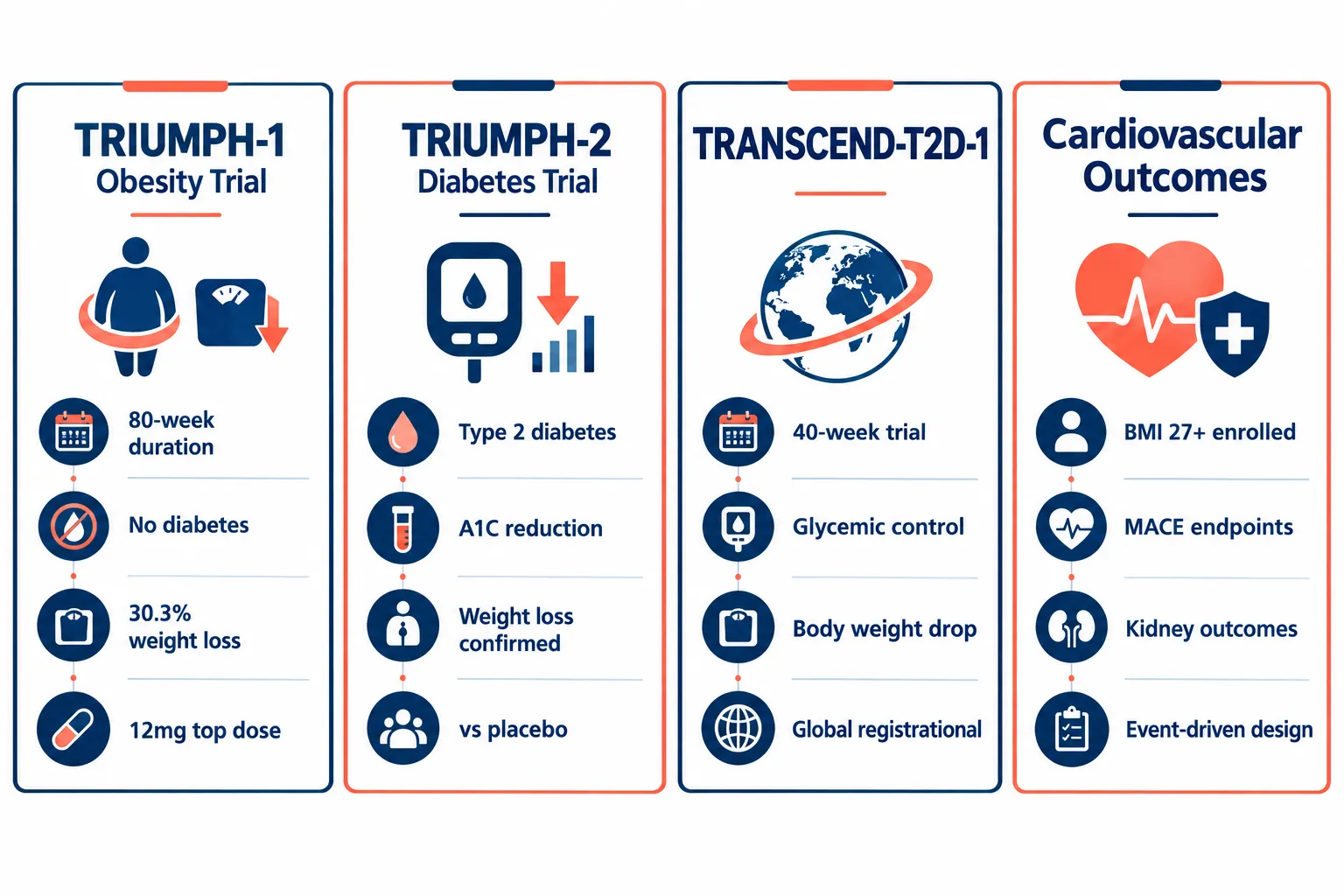
  • Phase 3 TRIUMPH-1 data show up to 30.3% mean weight loss at the 12 mg dose in adults with obesity but without diabetes.
  • Current receptor-deconvolution relies on preclinical selectivity studies, PK/PD modeling, and comparisons against matched single- and dual-agonist controls rather than human "component dissection" trials.
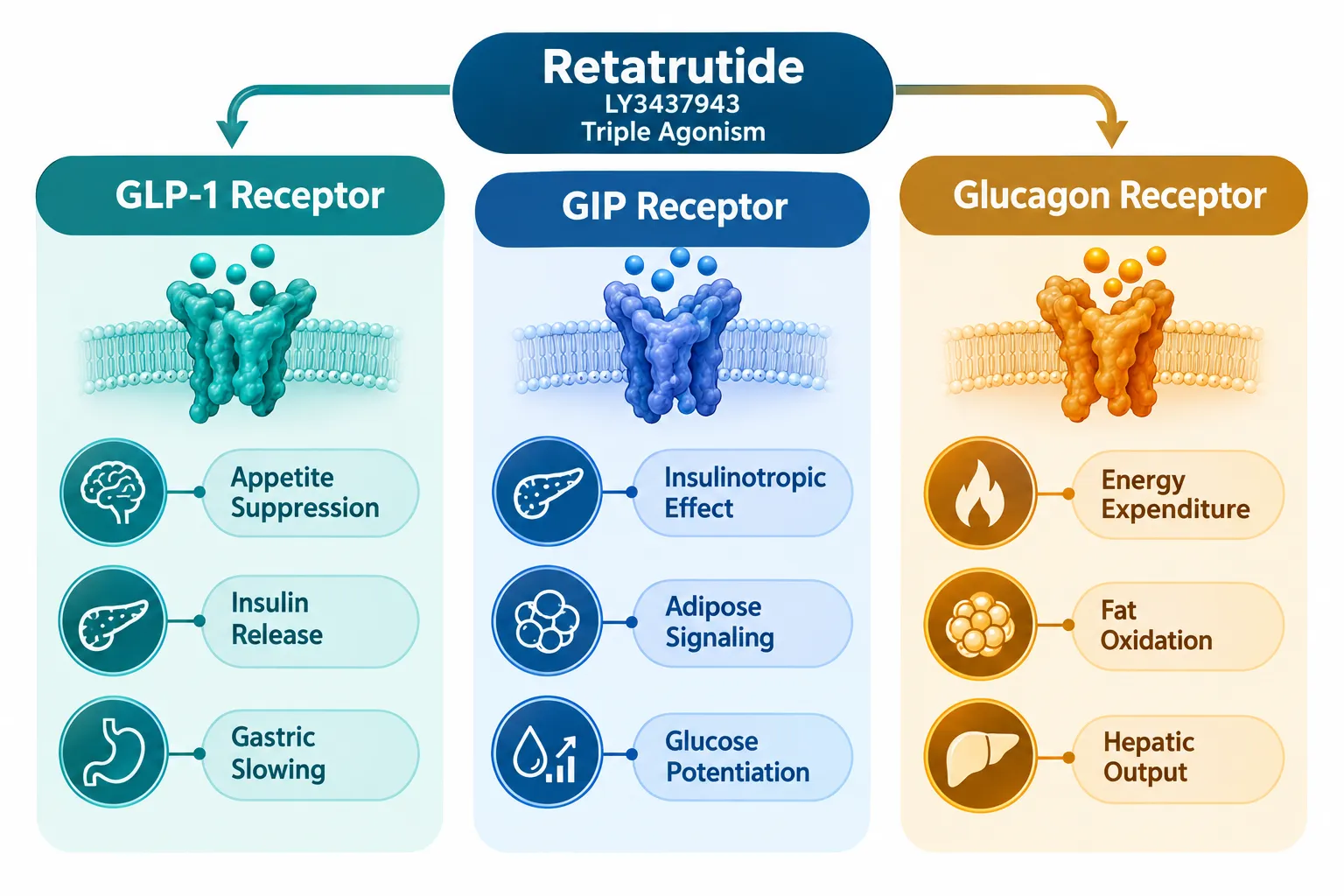
  • GLP-1 and GIP receptor activation primarily drives appetite suppression and insulin release; glucagon receptor activation primarily enhances energy expenditure and fat oxidation.
  • Gastrointestinal side effects and cholelithiasis are the most common adverse events, and no adjudicated cardiovascular outcome data exist yet as of October 2026.

The Three-Receptor Architecture: Why Deconvolution Matters
The Three-Receptor Architecture: Why Deconvolution Matters

Retatrutide is a once-weekly injectable peptide that binds with meaningful potency to all three incretin and counter-regulatory hormone receptors: GLP-1R, GIPR, and GCGR. Each receptor sits in different tissues and drives different downstream signals. When a single molecule activates all three simultaneously, interpreting clinical outcomes becomes genuinely complex.

Why this matters for research design:

  • A drug that lowers body weight by 30% could be doing so through reduced caloric intake, increased energy expenditure, altered fat metabolism, or some combination of all three.
  • Attributing adverse events, particularly nausea, vomiting, or liver enzyme changes, to the correct receptor pathway is essential for dose optimization.
  • Future drug design depends on knowing whether the glucagon component adds meaningfully to the GLP-1/GIP base or introduces unnecessary risk.

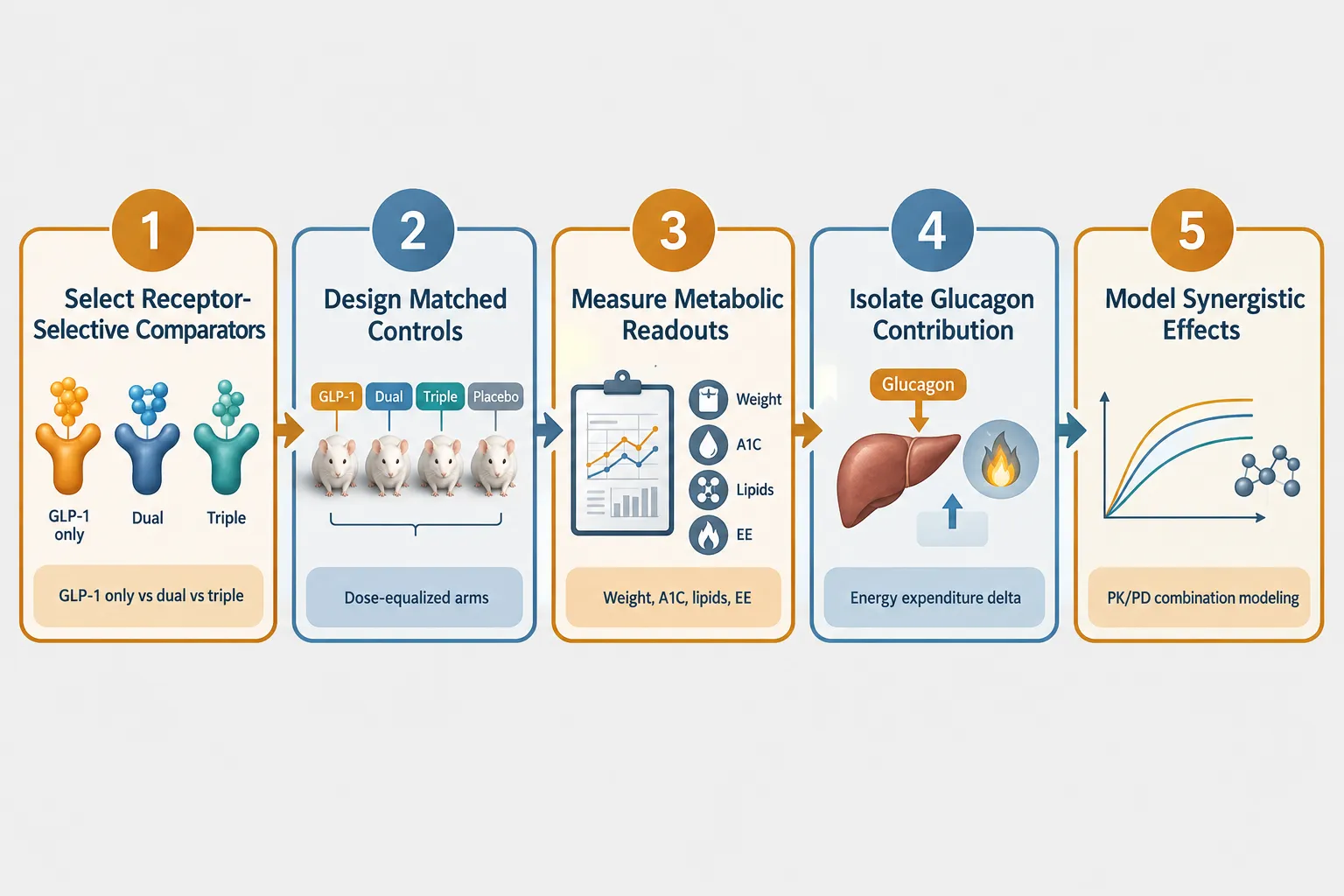
The standard approach to receptor deconvolution in combination models involves four elements: receptor-selective comparator arms, matched-dose controls, indirect food-intake measurements, and multi-dimensional metabolic readouts including energy expenditure calorimetry, lipid panels, and hepatic fat quantification.


Phase 3 Readouts: What the Data Reveal About Combined Signaling
Phase 3 Readouts: What the Data Reveal About Combined Signaling

The TRIUMPH-1 and TRIUMPH-2 trials are the most informative Phase 3 datasets available as of 2026. Both were 80-week, randomized, double-blind, placebo-controlled studies. TRIUMPH-1 enrolled adults with obesity or overweight without diabetes; TRIUMPH-2 enrolled adults with type 2 diabetes plus obesity or overweight.

Trial Population Key Outcome Highest Dose Result
TRIUMPH-1 Obesity, no diabetes Mean weight loss ~30.3% at 12 mg
TRIUMPH-2 T2D + obesity Weight loss + A1C Significant vs placebo
TRANSCEND-T2D-1 Type 2 diabetes A1C + body weight Significant vs placebo
NCT06383390 BMI 27+ with CVD/CKD MACE + MAKE events Ongoing

The TRANSCEND-T2D program adds three global registrational trials specifically in type 2 diabetes, with TRANSCEND-T2D-1 already reporting significant reductions in both A1C and body weight versus placebo within 40 weeks.

A critical observation from these trials: the weight-loss magnitude consistently exceeds what GLP-1 receptor agonists alone or GLP-1/GIP dual agonists have produced in comparable populations. This "excess efficacy" is the primary empirical signal pointing to a meaningful glucagon receptor contribution.

Researchers studying related GLP-3 Reta peptide products will recognize that incretin-family receptor pharmacology is highly sensitive to relative binding affinities and dosing schedules.


Separating GLP-1, GIP, and Glucagon Effects in Combination Models
Separating GLP-1, GIP, and Glucagon Effects in Combination Models

The core challenge in retatrutide triple-agonist research after Phase 3: separating GLP-1, GIP, and glucagon effects in combination models is that no human Phase 3 trial has been designed with a "component subtraction" arm. Instead, mechanistic understanding is built from three converging lines of evidence.

Receptor-Selective Comparator Strategy

The most informative preclinical and early-phase approach compares retatrutide against:

  1. A GLP-1R-only agonist (e.g., semaglutide) at an equi-efficacious dose
  2. A GLP-1R/GIPR dual agonist (e.g., tirzepatide) at a matched dose
  3. A selective GCGR agonist used as a mechanistic probe

Any metabolic outcome that exceeds the dual-agonist benchmark, particularly in energy expenditure, fat oxidation rate, or hepatic lipid clearance, is provisionally attributed to the glucagon receptor component.

What Each Receptor Contributes

Current models, built from pharmacokinetic/pharmacodynamic (PK/PD) analyses and preclinical receptor-knockout studies, assign the following roles:

  • GLP-1 receptor: Appetite suppression via hypothalamic signaling, slowed gastric emptying, glucose-dependent insulin secretion, reduced glucagon secretion from pancreatic alpha cells.
  • GIP receptor: Potentiation of insulin release, adipose tissue signaling that may improve insulin sensitivity, possible central appetite effects that complement GLP-1R activation.
  • Glucagon receptor: Increased hepatic glucose output (a concern at high doses), but also markedly increased energy expenditure, enhanced fat oxidation in adipose and muscle tissue, and accelerated hepatic lipid clearance relevant to MASLD.

"The glucagon component is the most pharmacologically interesting and the most clinically demanding, it adds thermogenic benefit but requires careful titration to avoid glycemic overshoot."

This is why retatrutide's clinical program includes dedicated MASLD and cardiovascular/renal outcomes trials. The glucagon receptor's hepatic effects make it a candidate for steatotic liver disease, while its energy-expenditure effects may translate to cardiovascular risk reduction beyond simple weight loss.

Indirect Food-Intake and Energy Expenditure Readouts

In combination models, separating appetite suppression from increased caloric burn requires:

  • Doubly labeled water studies to measure total energy expenditure in free-living conditions
  • Respiratory quotient measurements to assess fuel substrate shifts (fat vs. carbohydrate oxidation)
  • Resting metabolic rate testing at multiple time points to detect glucagon-driven thermogenesis
  • Ad libitum food-intake diaries cross-referenced with gastric emptying scintigraphy

Phase 2 data suggest that retatrutide produces a larger shift toward fat oxidation than GLP-1-only agents, consistent with glucagon receptor engagement. Confirming this in Phase 3 populations with dedicated sub-studies remains an open research priority.

For researchers tracking related peptide mechanisms, the IPA Sermorelin stack research page illustrates how combination peptide models are analyzed in growth-hormone-axis contexts, a methodologically parallel challenge.


Safety Profile and Receptor-Specific Adverse Events

Across Phase 3 data reported through October 2026, the most frequent adverse events are gastrointestinal: nausea, diarrhea, and vomiting. These are broadly consistent with GLP-1 receptor activation and are similar in character, though sometimes more pronounced, than those seen with GLP-1-only agents.

Treatment-emergent cholelithiasis (gallstone formation) appears at rates that merit monitoring, a known risk class effect of rapid weight loss combined with GLP-1R activity.

The glucagon receptor component introduces two specific safety considerations:

  1. Glycemic risk: Glucagon receptor activation raises hepatic glucose output. In non-diabetic populations this is offset by GLP-1/GIP-driven insulin release, but in patients with impaired beta-cell function, the balance requires careful dose titration.
  2. Hepatic enzyme changes: GCGR agonism can transiently elevate liver enzymes; ongoing MASLD trials are monitoring this closely.

No completed, adjudicated cardiovascular outcomes data exist as of October 2026. The large event-driven outcomes trial (NCT06383390) enrolling adults with established atherosclerotic cardiovascular disease and/or chronic kidney disease will be the definitive test of whether triple agonism translates to hard cardiovascular and renal event reduction.

Researchers interested in renal-protective peptide mechanisms may find the SS-31 kidney health research page relevant as a parallel model of organ-protective peptide pharmacology.


Future Directions: Fine-Tuning the Triple-Agonist Balance

Industry analysts and academic commentators broadly expect Eli Lilly to pursue initial regulatory submissions for obesity/overweight with comorbidities and type 2 diabetes, followed by label expansions for obstructive sleep apnea, knee osteoarthritis, and MASLD pending positive trial outcomes.

The TRIUMPH-4 trial specifically tests retatrutide in adults with obesity and knee osteoarthritis, a paradigm-setting design that positions obesity drugs as disease-modifying therapies for mechanical and pain outcomes, not just metabolic ones.

Longer term, the receptor-deconvolution work now underway will likely inform a new generation of "tunable" triple agonists where the relative GLP-1, GIP, and glucagon potency ratios are deliberately engineered for specific patient phenotypes:

  • High glucagon ratio: Optimized for MASLD and energy expenditure in metabolically active patients
  • High GIP ratio: Optimized for glycemic control with minimized GI side effects
  • Balanced triple agonism: Retatrutide's current profile, optimized for maximum weight loss

For those researching available Reta 20mg peptide options for preclinical study purposes, purity and third-party testing remain essential quality benchmarks in this research context. Similarly, the GLP-3 Reta 10mg third-party tested peptide represents the kind of verified research-grade material required for meaningful receptor-selectivity experiments.


Conclusion

Retatrutide triple-agonist research after Phase 3: separating GLP-1, GIP, and glucagon effects in combination models is one of the most consequential mechanistic challenges in metabolic pharmacology in 2026. The Phase 3 data are compelling, 30.3% mean weight loss, robust A1C reductions, and early signals of benefit in OSA and knee osteoarthritis, but the field cannot yet fully explain how each receptor contributes to these outcomes in human subjects.

Actionable next steps for researchers and clinicians:

  • Prioritize sub-studies within ongoing Phase 3 trials that include energy expenditure calorimetry and fuel oxidation measurements.
  • Design receptor-selective comparator arms in any new combination-model research using matched doses of GLP-1-only and dual GLP-1/GIP agonists as benchmarks.
  • Monitor GCGR-specific safety signals, particularly glycemic and hepatic, as separate endpoints from GLP-1R-class effects.
  • Watch for readouts from the cardiovascular and renal outcomes trial, which will determine whether triple agonism's metabolic benefits translate to hard clinical event reduction.
  • Engage with the MASLD and OSA trial data as they mature; these will provide the clearest real-world test of glucagon receptor contribution to organ-level outcomes.

The receptor-deconvolution work being done now will define not just retatrutide's label, but the entire architecture of next-generation incretin therapy.

Tags: gip receptor, glp-1 receptor, glucagon receptor, incretin therapy, phase 3 obesity trials, retatrutide, triple agonist, triumph trials
https://www.puretestedpeptides.com/wp-content/uploads/2026/10/retatrutide-triple-agonist-research-after-phase-3-separating-glp-1-gip-and-gluca.webp 1024 1536 https://www.puretestedpeptides.com/wp-content/uploads/2026/01/buy-peptides-online.jpg 2026-10-12 13:05:402026-10-12 13:05:40Retatrutide Triple-Agonist Research After Phase 3: Separating GLP-1, GIP, and Glucagon Effects in Combination Models
You might also like
GLP-3 Retatrutide vs. GLP2-T in Research: Metabolic Signaling Compared With Intestinal Epithelial Models GLP-3 Retatrutide vs. GLP2-T in Research: Metabolic Signaling Compared With Intestinal Epithelial Models
GLP-3 Retatrutide and Triple-Agonist Peptides: How Phase 3 Obesity Data Are Shaping Next-Generation Metabolic Research GLP-3 Retatrutide and Triple-Agonist Peptides: How Phase 3 Obesity Data Are Shaping Next-Generation Metabolic Research
Retatrutide 2026 Phase 3 Results: What the Latest Trial Data Means for GLP-3 Research Retatrutide 2026 Phase 3 Results: What the Latest Trial Data Means for GLP-3 Research
Retatrutide Phase 3 Results in 2026: What the New Obesity and Diabetes Data Changes for Research Protocols Retatrutide Phase 3 Results in 2026: What the New Obesity and Diabetes Data Changes for Research Protocols
Retatrutide and Cardiovascular Disease Research: Designing Endpoints Beyond Weight Loss and A1C Retatrutide and Cardiovascular Disease Research: Designing Endpoints Beyond Weight Loss and A1C
Peptides vs Classic Small‑Molecule Drugs: How GLP-3 Retatrutide, MOTS-c, and 5-Amino-1MQ Change Lab Design Compared With Prednisone and Atorvastatin Peptides vs Classic Small‑Molecule Drugs: How GLP-3 Retatrutide, MOTS-c, and 5-Amino-1MQ Change Lab Design Compared With Prednisone and Atorvastatin
Metoprolol in Peptide Experiments: Controlling Heart Rate, Blood Pressure, and Adrenergic Confounding Metoprolol in Peptide Experiments: Controlling Heart Rate, Blood Pressure, and Adrenergic Confounding
Metoprolol, Beta-Blockers, and Incretin Peptide Research: What Labs Track When Combining GLP-3 Retatrutide With Cardioactive Drugs Metoprolol, Beta-Blockers, and Incretin Peptide Research: What Labs Track When Combining GLP-3 Retatrutide With Cardioactive Drugs
0 replies

Leave a Reply

Want to join the discussion?
Feel free to contribute!

Leave a Reply Cancel reply

Your email address will not be published. Required fields are marked *

×

Helpful Links

  • My account
  • Cart
  • Checkout
  • Refund and Returns Policy
  • Privacy Policy
  • SMS Privacy Policy
  • Login
  • My Account
  • Logout

USA Made Lab Tested Peptides

All products are sold for research, laboratory, or analytical purposes only, and are not for human consumption


Pure Tested Peptides is a chemical supplier. Pure Tested Peptides is not a compounding / chemical compounding facility as defined under 503A of the Federal Food, Drug, and Cosmetic act. Pure Tested Peptides is not an outsourcing facility as defined under 503B of the Federal Food, Drug, and Cosmetic act.

The statements made within this website have not been evaluated by the US Food and Drug Administration. The products we offer are not intended to diagnose, treat, cure or prevent any disease.

Human/Animal Consumption Prohibited. Laboratory/In-Vitro Experimental Use Only

Link to: ACE Inhibitors Explained: How Lisinopril and Angiotensin-Converting Enzyme Signaling Can Confound Peptide Vascular Studies Link to: ACE Inhibitors Explained: How Lisinopril and Angiotensin-Converting Enzyme Signaling Can Confound Peptide Vascular Studies ACE Inhibitors Explained: How Lisinopril and Angiotensin-Converting Enzyme Signaling...ACE Inhibitors Explained: How Lisinopril and Angiotensin-Converting Enzyme Signaling Can Confound Peptide Vascular Studies Link to: Retatrutide Phase 3 Cardiometabolic Monitoring: Designing Research Panels for Triglycerides, Blood Pressure, hsCRP, and A1C Link to: Retatrutide Phase 3 Cardiometabolic Monitoring: Designing Research Panels for Triglycerides, Blood Pressure, hsCRP, and A1C Retatrutide Phase 3 Cardiometabolic Monitoring: Designing Research Panels for Triglycerides, Blood Pressure, hsCRP, and A1CRetatrutide Phase 3 Cardiometabolic Monitoring: Designing Research Panels for...
Scroll to top Scroll to top Scroll to top