

Semax Peptide Nasal Spray: Building a Neuroinflammation and Cognitive-Endpoint Matrix
Only one randomized controlled trial appears in the indexed clinical literature for Semax, a peptide that has been used in Russian neurology for decades. That single data point defines both the opportunity and the challenge at the center of Semax Peptide Nasal Spray: Building a Neuroinflammation and Cognitive-Endpoint Matrix as a research discipline. For investigators designing preclinical or translational studies in 2026, the most urgent task is not finding a new molecule, it is building a rigorous endpoint framework that can finally close the evidence gap.
Key Takeaways
- Semax is approved in Russia for ischemic stroke and cognitive disorders but carries research-only status in Western jurisdictions with no FDA submission on record.
- Preclinical data show strong suppression of pro-inflammatory cytokines (IL-1beta, TNF-alpha) and upregulation of BDNF and NGF, yet no published human neuroinflammation endpoint data exist.
- Intranasal delivery achieves roughly nine times greater estimated brain exposure than intravenous administration, making nasal spray the preferred research modality.
- A structured endpoint matrix should integrate behavioral, neurotrophic, cytokine, oxidative-stress, and olfactory-delivery domains simultaneously.
- Modern trials require preregistration, validated neuropsychological batteries, and multiple-comparison correction to move beyond the methodological limits of earlier Russian studies.
Why Intranasal Delivery Shapes the Entire Endpoint Strategy
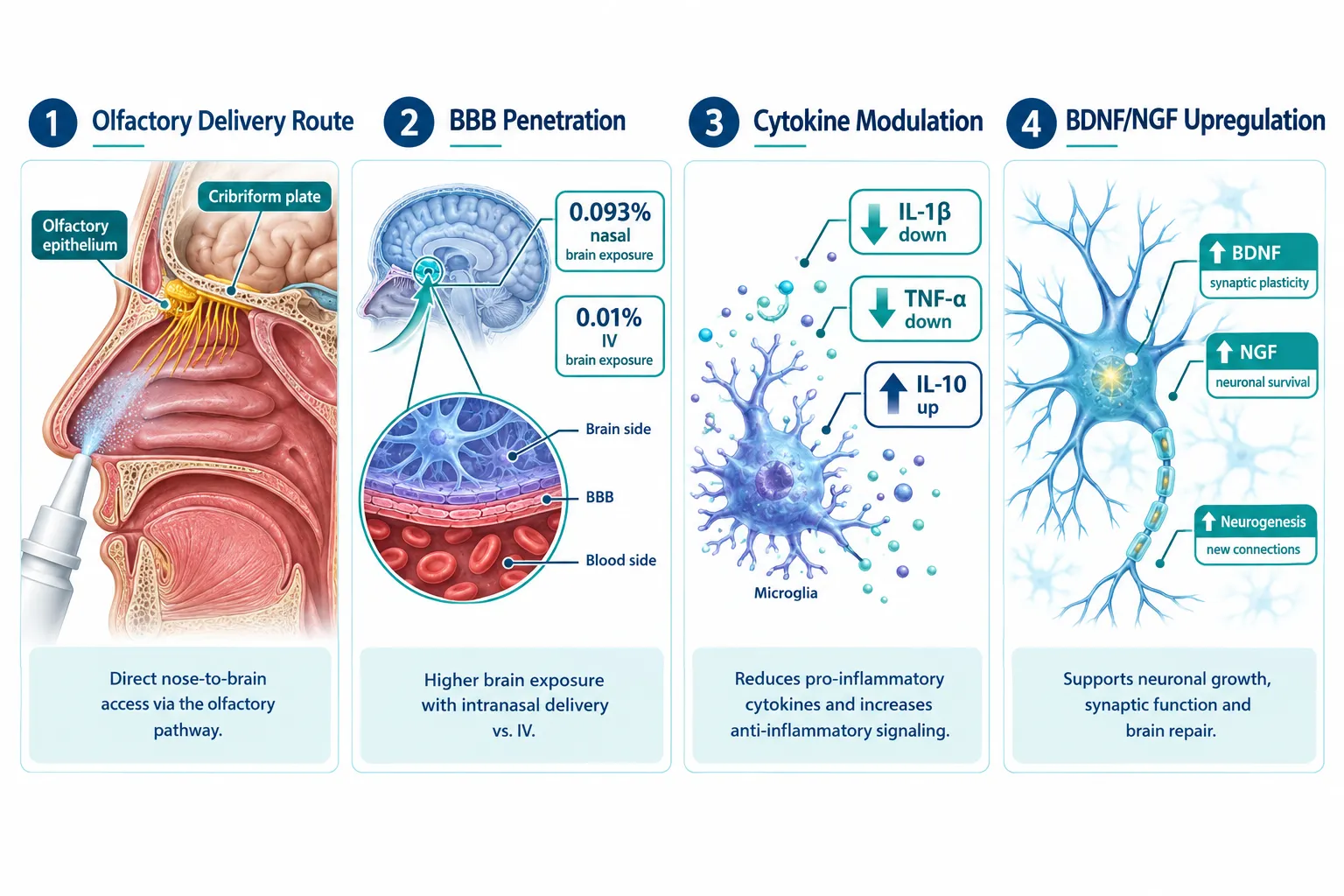
The pharmacokinetic case for nasal administration is central to Semax Peptide Nasal Spray: Building a Neuroinflammation and Cognitive-Endpoint Matrix. Intranasal Semax achieves an estimated 0.093% of the administered dose crossing the blood-brain barrier, compared with roughly 0.01% via intravenous routes. That roughly nine-fold advantage is not incidental, it directly determines which biomarker windows are realistic and which dosing schedules are testable.
Russian clinical programs have standardized on 0.1% and 1.0% solutions, with divided doses of 100-200 mcg per nostril administered two to three times daily. Ten-day courses are common in stroke protocols. These parameters matter for endpoint design because:
- Timing of biomarker sampling must align with peak central exposure, not peripheral plasma peaks.
- Olfactory epithelium integrity becomes a confounding variable, nasal irritation, a documented mild adverse effect, can alter mucosal permeability and shift delivery kinetics.
- Dose-dependent cytokine responses may not be linear, requiring multi-dose arms rather than single fixed-dose designs.
Researchers sourcing compounds for such work should consult resources on building robust peptide benchmarks to ensure reference-standard purity before any biomarker run.
Mapping the Neuroinflammation Endpoint Domain
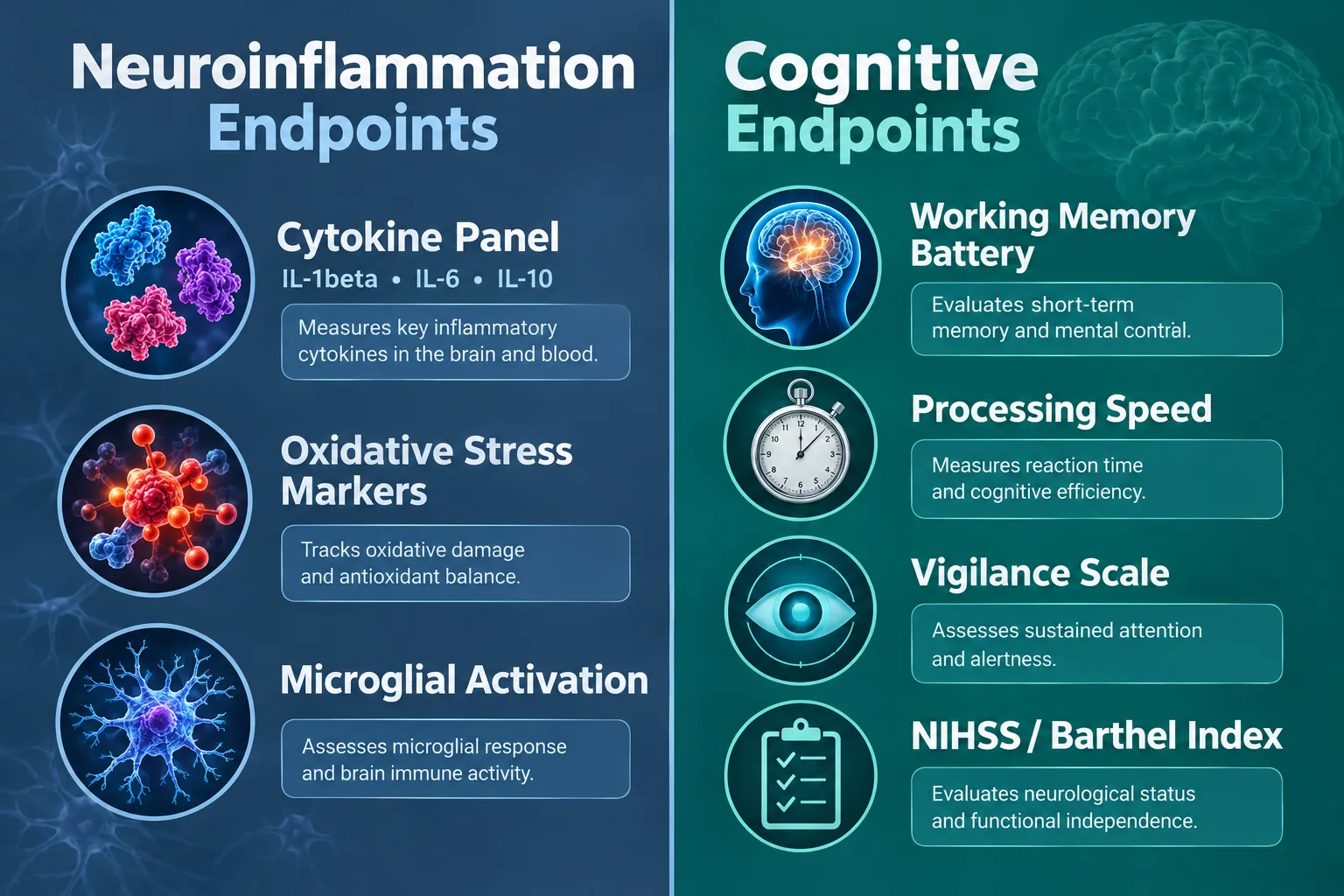
Preclinical transcriptome data from middle cerebral artery occlusion models are the strongest signal in the current literature. Semax suppresses IL-1beta, TNF-alpha, and related cytokines in the ischemic penumbra while upregulating markers of immune resolution and vascular stability. A Semax-derived peptide in 5xFAD Alzheimer model mice reduced amyloid plaque load and attenuated microglial activation, a finding that broadens the neuroinflammation endpoint domain beyond acute ischemia.
For a well-constructed matrix, the neuroinflammation panel should include at minimum:
| Endpoint Category | Specific Markers | Sampling Window |
|---|---|---|
| Pro-inflammatory cytokines | IL-1beta, TNF-alpha, IL-6, IL-8 | Baseline, Day 3, Day 7 |
| Anti-inflammatory mediators | IL-10, TGF-beta | Baseline, Day 7, Day 14 |
| Systemic inflammation | C-reactive protein | Baseline, Day 10, Day 30 |
| Neurotrophic factors | BDNF, NGF | Baseline, Day 10, Day 30 |
| Oxidative stress | 8-isoprostane, SOD activity | Baseline, Day 7 |
| Microglial activation (preclinical) | Iba-1, CD68 immunostaining | Endpoint sacrifice |
No published human study has yet used this full panel. Russian stroke trials have measured plasma BDNF and partial cytokine sets alongside clinical scales such as NIHSS and Barthel Index, but these were not prespecified as a combined neuroinflammation-plus-cognition matrix. Closing that gap is the explicit goal of the 2026 endpoint-matrix proposal.
"The absence of a prespecified, multi-domain biomarker matrix, not the absence of biological effect, is the primary reason Semax remains outside Western treatment guidelines."
Investigators comparing peptide sourcing options can review peptide supplier comparisons to evaluate purity documentation before committing to a cytokine-sensitive protocol.
Building the Cognitive and Functional Endpoint Arm
The cognitive arm of Semax Peptide Nasal Spray: Building a Neuroinflammation and Cognitive-Endpoint Matrix is where the evidence gap is most visible. Existing indexed trials have measured neurological recovery in stroke patients using clinical scales, visual function in optic nerve disease, and BDNF in one 2018 study. None have applied rigorous neuropsychological batteries to healthy adults or to cognitively impaired non-stroke populations.
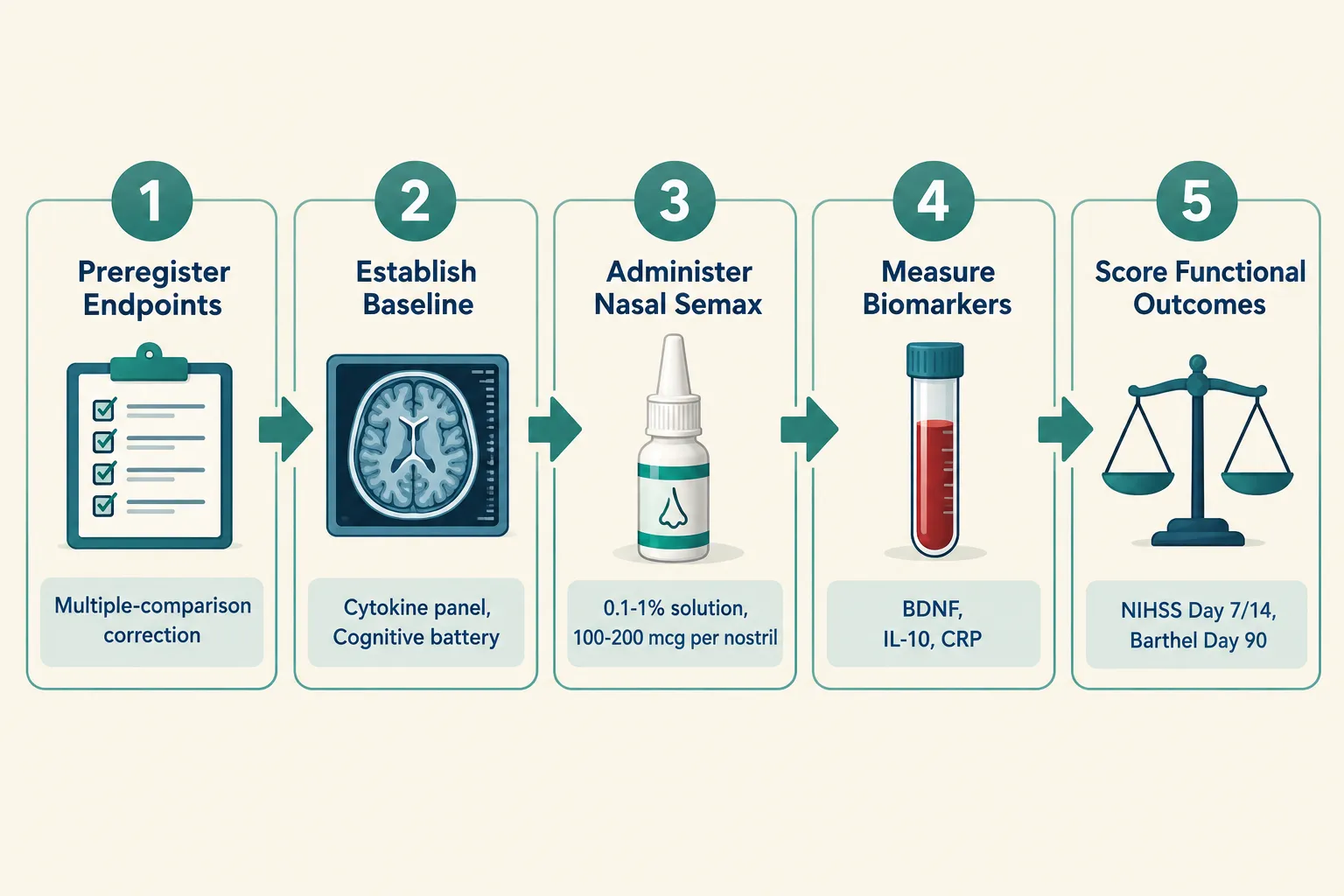
A practical cognitive endpoint matrix for future trials should address three validated domains:
- Working memory, digit span, n-back tasks, or computerized equivalents with test-retest reliability above 0.80.
- Processing speed, Trail Making Test Part A, symbol digit modalities test, or validated digital equivalents.
- Vigilance and sustained attention, continuous performance tests with sensitivity to cholinergic and dopaminergic modulation, both systems Semax is known to influence.
Functional outcome scales for stroke populations remain relevant secondary endpoints: NIHSS at Day 7 and Day 14, Barthel Index at Day 30 and Day 90, and quality-of-life instruments such as the modified Rankin Scale. The key methodological requirement is preregistration of the primary endpoint before unblinding, combined with Bonferroni or false-discovery-rate correction across the full biomarker panel.
Safety monitoring should track nasal irritation, headache, and anxiety, the three most consistently reported adverse effects in Russian clinical experience, using structured adverse-event grids rather than open-ended self-report.
Researchers working with related neuroprotective peptides may find parallel endpoint logic in resources covering MOTS-C peptide and SS31 peptide sourcing, where mitochondrial and oxidative-stress endpoints overlap with the Semax matrix. Additional context on purity verification for research-grade compounds is available through the GHK-Cu peptide sourcing guide.
Conclusion
The evidence base for Semax is substantial in volume but narrow in methodological quality. Preclinical neuroinflammation data are compelling; human data are fragmented. The path forward requires treating the endpoint matrix as the primary research deliverable, not an afterthought.
Actionable next steps for research teams in 2026:
- Select a single primary endpoint (working memory or NIHSS) and register it before enrollment begins.
- Build a minimum cytokine panel (IL-1beta, IL-10, BDNF, CRP) with standardized sampling windows aligned to nasal delivery kinetics.
- Verify peptide purity against reference standards before any biomarker-sensitive protocol.
- Include an olfactory-delivery monitoring arm to detect mucosal changes that could confound pharmacokinetic assumptions.
- Plan for independent replication in a Western population to generate data relevant to regulatory bodies outside Russia.
Semax Peptide Nasal Spray: Building a Neuroinflammation and Cognitive-Endpoint Matrix is not a completed program, it is a design challenge. Researchers who treat endpoint selection with the same rigor applied to compound sourcing will be best positioned to generate the Phase II and Phase III data the field currently lacks.


Leave a Reply
Want to join the discussion?Feel free to contribute!