

GLP-3 Retatrutide and GLP-1 Pills: Oral Stability, Gastric Exposure, and Receptor-Selective Research Design
Oral delivery of GLP-1 class compounds fails roughly 99% of an administered peptide dose before it ever reaches systemic circulation, a biochemical obstacle that fundamentally separates how researchers design injectable triple agonists from how they engineer small-molecule pills. Understanding that gap is central to appreciating the diverging paths of GLP-3 Retatrutide and GLP-1 Pills: Oral Stability, Gastric Exposure, and Receptor-Selective Research Design as a unified field of metabolic science.
Key Takeaways
- Retatrutide is a triple receptor agonist targeting GLP-1, GIP, and glucagon receptors simultaneously, unlike single-target GLP-1 pills.
- Oral GLP-1 compounds face severe gastric degradation; small-molecule designs like orforglipron bypass this limitation but sacrifice receptor breadth.
- The TRIUMPH Phase 3 program is testing retatrutide across obesity, type 2 diabetes, and cardiovascular cohorts.
- Receptor selectivity is a deliberate design variable, broader agonism drives greater weight loss but adds complexity.
- In 2026, the convergence of oral convenience and multi-receptor potency remains an unsolved challenge in metabolic drug research.
Receptor Architecture: Why Triple Agonism Changes the Design Equation
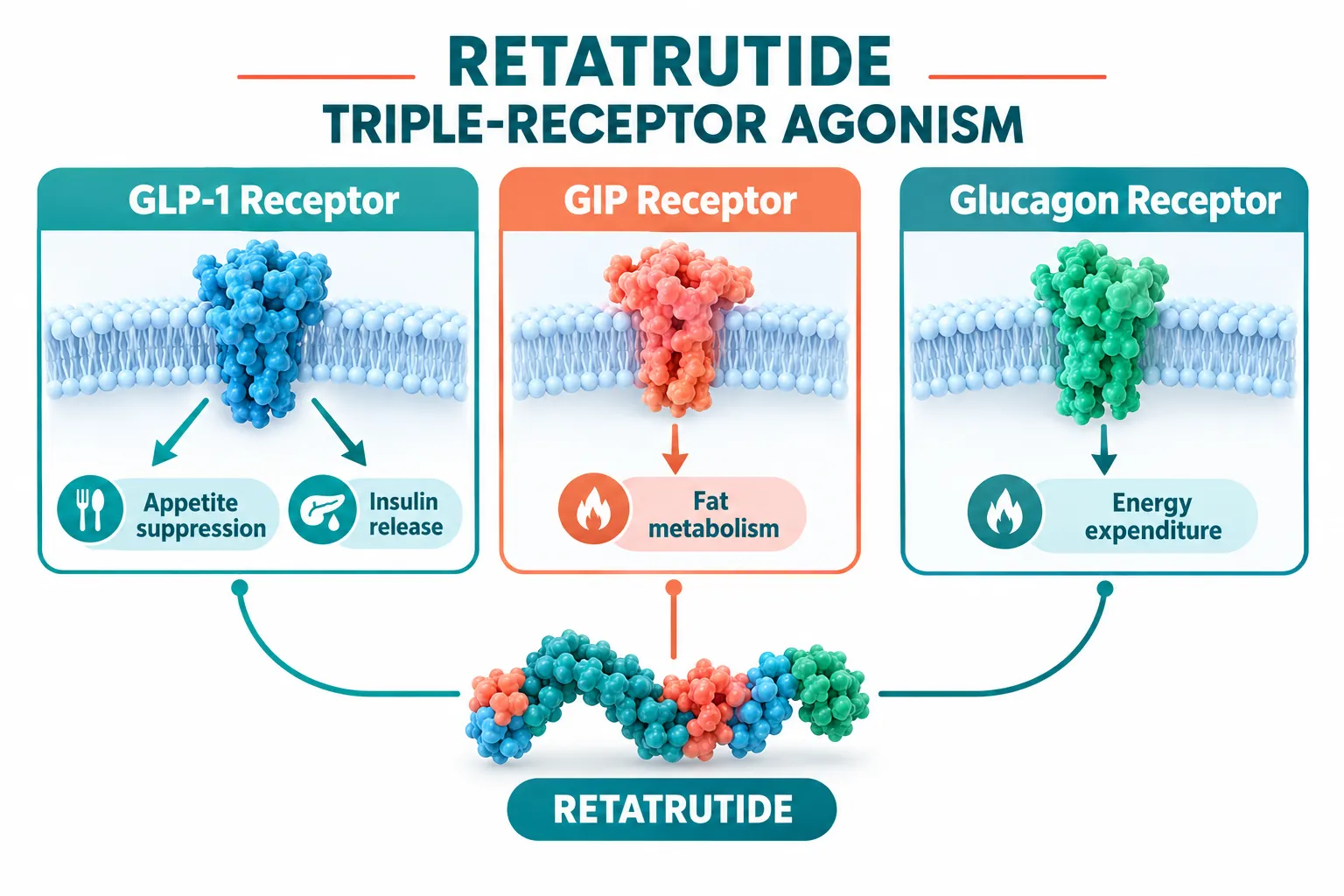
Retatrutide is engineered to activate three distinct G-protein coupled receptors: the glucagon-like peptide-1 receptor (GLP-1R), the glucose-dependent insulinotropic polypeptide receptor (GIPR), and the glucagon receptor (GCGR). Each receptor contributes a different metabolic effect. GLP-1R activation suppresses appetite and stimulates insulin release. GIPR engagement supports fat metabolism and may amplify GLP-1R sensitivity. GCGR activation increases energy expenditure, a mechanism largely absent in single-agonist GLP-1 therapies.
This "triple G" strategy is what separates retatrutide from earlier generations. Tirzepatide, for example, hits only GLP-1R and GIPR. That dual approach produced significant results, but early Phase 2 data for retatrutide suggested even larger reductions in body weight over comparable timeframes. Researchers working in GLP-1 and retatrutide receptor pharmacology have tracked this design evolution closely, noting that adding glucagon receptor engagement comes with its own tolerability considerations, particularly around blood glucose management.
The receptor-selective design also directly determines whether oral delivery is even feasible. Retatrutide is a large peptide molecule. Large peptides are cleaved rapidly by gastric proteases, oxidized by gastric acid, and poorly absorbed across intestinal epithelium. This is not a solubility problem, it is a structural incompatibility with oral pharmacokinetics.
"Receptor breadth and oral bioavailability currently exist in inverse proportion, the more receptors a peptide targets, the harder it is to deliver through the gut."
Oral Stability, Gastric Exposure, and Small-Molecule GLP-1 Pills
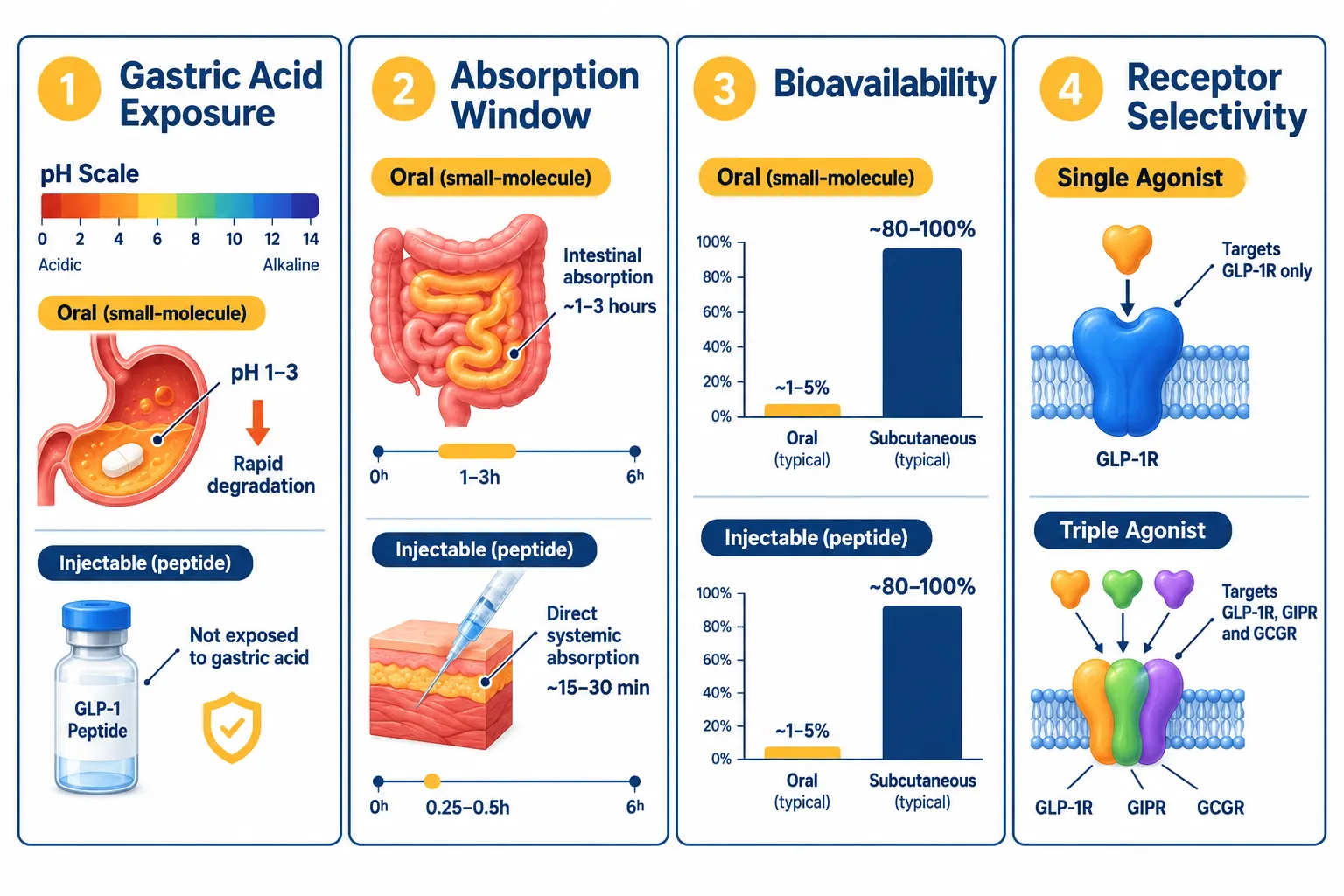
The approval of orforglipron (brand name Foundayo) by the FDA in 2025 marked a genuine milestone: the first orally bioavailable non-peptide GLP-1 receptor agonist for obesity. Unlike semaglutide tablets, which require a large oral dose with strict fasting protocols to achieve modest absorption, orforglipron is a small molecule. It does not rely on peptide bonds that gastric proteases can break.
What makes small-molecule oral GLP-1 design different:
- No peptide backbone susceptible to protease cleavage
- Passive absorption across intestinal epithelium without a carrier mechanism
- Consistent oral bioavailability without fasting requirements
- Narrower receptor binding profile, GLP-1R only
The tradeoff is specificity. Orforglipron activates only GLP-1R. Researchers studying visceral fat reduction mechanisms have noted that single-receptor engagement produces meaningful but potentially ceiling-limited metabolic outcomes compared to multi-agonist approaches.
Gastric exposure remains the core engineering problem. Peptide GLP-1 drugs administered orally face an absorption window of only a few minutes in the upper small intestine before degradation overtakes absorption. Sodium N-[8-(2-hydroxybenzoyl)amino]caprylate (SNAC), the absorption enhancer used with oral semaglutide, works by transiently raising local gastric pH near the tablet and facilitating transcellular transport, but this mechanism still requires strict fasting and delivers low, variable systemic exposure.
Small molecules sidestep this entirely. The exposure window is broader, the dose required is lower relative to bioavailability, and food does not dramatically impair absorption. For GLP-3 Retatrutide and GLP-1 Pills: Oral Stability, Gastric Exposure, and Receptor-Selective Research Design, this distinction represents the most practically significant divide in current metabolic drug development.
TRIUMPH Program: Phase 3 Evidence and Long-Term Exposure Strategy
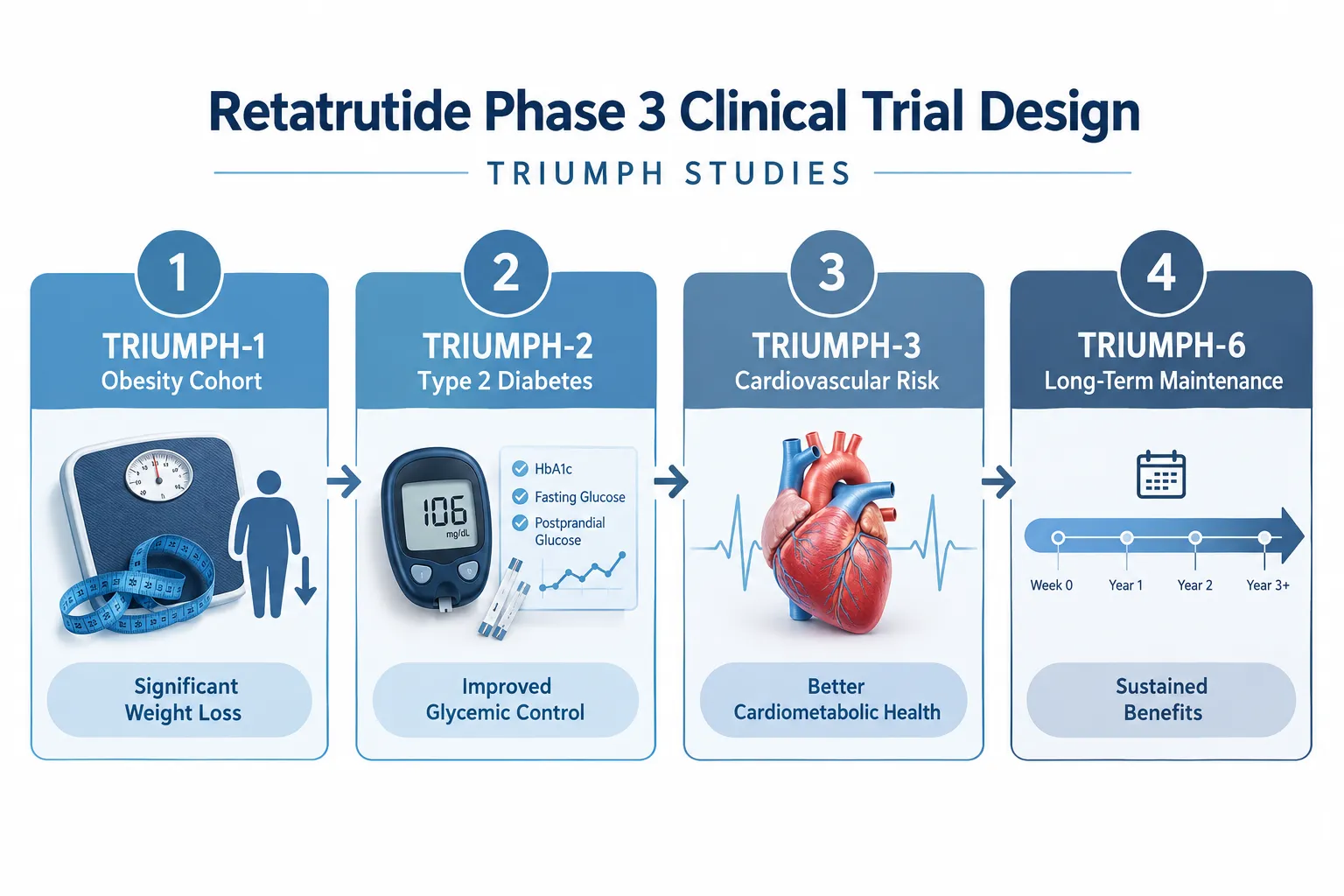
Eli Lilly's TRIUMPH Phase 3 program encompasses several distinct trials, each probing a different population and exposure duration.
| Trial | Population | Primary Focus |
|---|---|---|
| TRIUMPH-1 | Adults with obesity | Weight reduction magnitude |
| TRIUMPH-2 | Type 2 diabetes | Glycemic control plus weight loss |
| TRIUMPH-3 | High cardiovascular risk | Safety and cardiac outcomes |
| TRIUMPH-6 | Post-treatment maintenance | Long-term weight maintenance |
TRIUMPH-1 data set an early benchmark, with participants achieving weight reductions that exceeded those seen in comparable semaglutide and tirzepatide trials. Media and clinical commentators labeled early results a "new benchmark" for injectable obesity pharmacotherapy. TRIUMPH-2 extended findings to type 2 diabetes populations, where retatrutide's glucagon receptor component required careful management to avoid fasting hypoglycemia.
TRIUMPH-6 addressed a known vulnerability of all GLP-1 class therapies: weight regain after treatment cessation. Long-term exposure strategy, meaning continuous administration at maintenance doses, appears necessary to sustain outcomes, a finding consistent across the class.
For researchers sourcing retatrutide for preclinical study, understanding this dosing architecture matters for experimental design. Whether sourcing RETA 10mg or RETA 30mg formats, dose-escalation protocols mirror the clinical program's gradual titration approach to minimize gastrointestinal side effects, nausea and vomiting being the most commonly reported adverse events across the class.
Tolerability considerations in receptor-selective design:
- GLP-1R agonism drives most GI side effects; triple agonism amplifies this risk at higher doses
- Slow dose escalation over weeks reduces discontinuation rates
- Glucagon receptor activation requires monitoring of fasting glucose, particularly in non-diabetic populations
Speculative Outlook: Toward Oral Triple Agonism
Note: The following represents forward-looking analysis, not established fact.
The logical next frontier in GLP-3 Retatrutide and GLP-1 Pills: Oral Stability, Gastric Exposure, and Receptor-Selective Research Design is whether small-molecule chemistry can eventually encode multi-receptor selectivity. Current small-molecule GLP-1R agonists achieve potency at a single receptor; extending that to GIPR and GCGR through a single oral compound would require identifying allosteric binding geometries compatible with all three receptors in a molecule small enough for passive absorption.
Some researchers involved in GLP-3 reta 30mg preclinical formats speculate that bifunctional small molecules could emerge within the next decade, but no clinical candidate has entered Phase 1 trials as of 2026. The more near-term scenario is combination oral regimens, a GLP-1R small molecule paired with adjunct agents targeting GIPR or GCGR through separate mechanisms.
Conclusion
The science of GLP-3 Retatrutide and GLP-1 Pills: Oral Stability, Gastric Exposure, and Receptor-Selective Research Design reveals a field navigating a fundamental tradeoff: receptor breadth versus delivery practicality. Retatrutide's triple agonism delivers outsized metabolic effects but demands injectable administration. Oral small molecules like orforglipron offer daily pill convenience but trade receptor scope for gastrointestinal stability.
Actionable next steps for researchers and informed readers:
- Follow TRIUMPH Phase 3 completion data expected in 2026 for head-to-head weight loss and cardiovascular outcome benchmarks.
- Evaluate oral GLP-1 candidates on bioavailability, not just receptor target, exposure consistency matters as much as mechanism.
- Review preclinical retatrutide study protocols to understand dose-escalation requirements before designing receptor-selective experiments.
- Track small-molecule multi-agonist pipeline developments as the next structural challenge in oral metabolic pharmacology.
The convergence of oral convenience and multi-receptor potency remains the defining unsolved problem of GLP class drug design in 2026.


Leave a Reply
Want to join the discussion?Feel free to contribute!