

Klow Blend vs. Semax and Selank: Intranasal Nootropic Peptides Compared for Research
Fewer than 5% of peptide researchers who search for intranasal nootropics ever stop to ask whether the compounds they are comparing were actually designed for the same purpose. That gap in reasoning is exactly where confusion about Klow Blend vs. Semax and Selank: Intranasal Nootropic Peptides Compared for Research begins, and where this article starts to clear things up.
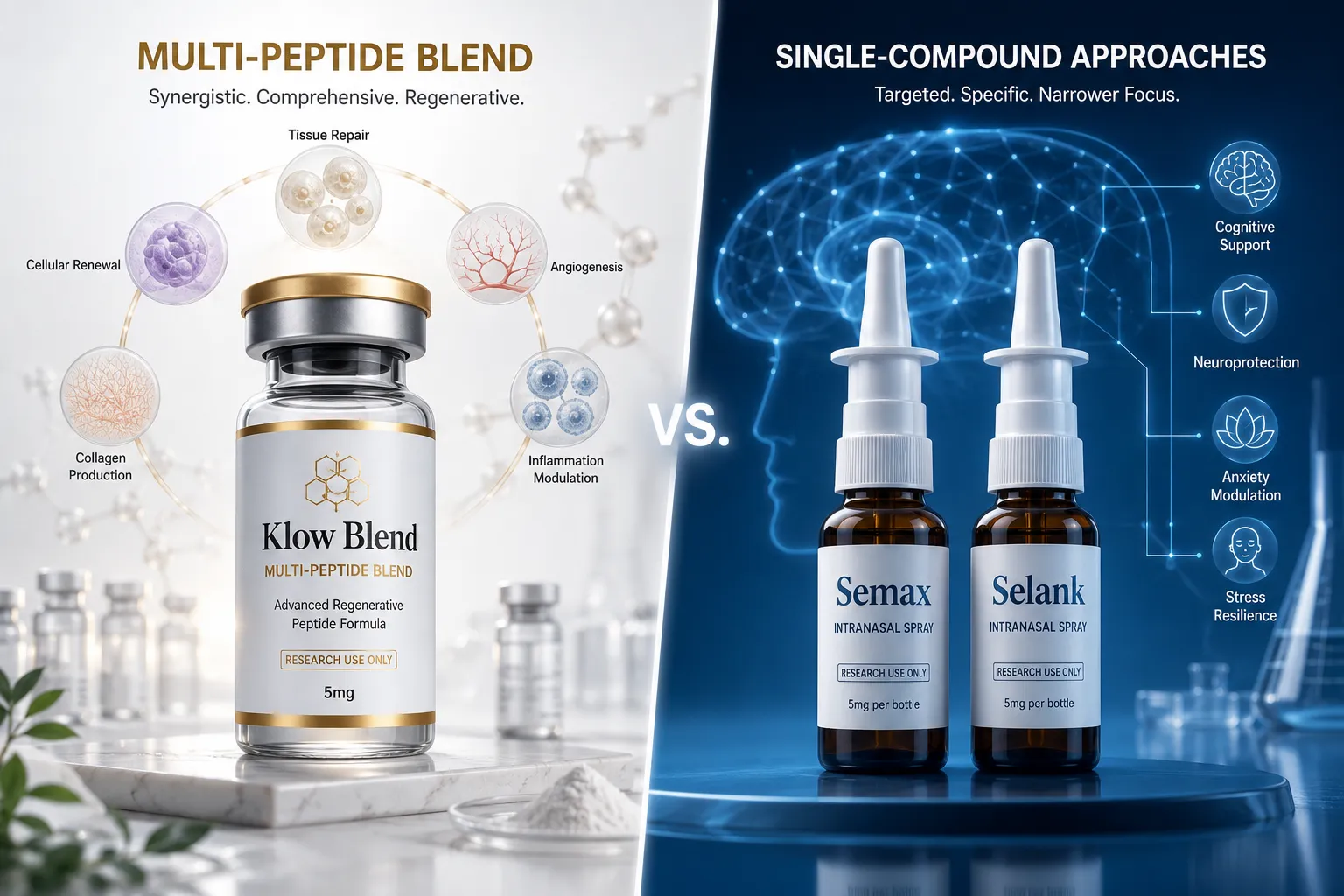
Semax and Selank are well-characterized intranasal peptides with decades of Russian pharmacological research behind them. Klow Blend is a newer multi-peptide regenerative formula that has attracted attention in 2026 wellness and research circles. Placing them side by side requires understanding what each compound is actually built to do, how each is delivered, and what the current evidence base looks like for each.
Key Takeaways
- Semax and Selank are single-target intranasal peptides with established Russian prescription histories and focused nootropic or anxiolytic mechanisms.
- Klow Blend is a multi-peptide regenerative formula, not a dedicated nootropic, and its research profile in 2026 is still emerging.
- Intranasal delivery offers a shared advantage for all three: bypassing first-pass metabolism and providing a direct olfactory route toward the central nervous system.
- Comparing these compounds as direct substitutes misreads their formulation logic; they address overlapping but distinct research hypotheses.
- Purity verification and sourcing quality matter significantly for all intranasal peptide research.
What Are Semax and Selank
Semax is a synthetic heptapeptide derived from ACTH(4-7), developed at the Institute of Molecular Genetics in Russia. It has been used clinically in Russia and Ukraine as a prescription nasal spray for cognitive impairment, stroke recovery, and attention disorders. Its primary mechanisms involve upregulation of brain-derived neurotrophic factor (BDNF) and modulation of dopaminergic and serotonergic systems.
Selank is a synthetic analog of the endogenous tetrapeptide tuftsin, also developed in Russia. It is registered as an anxiolytic drug in Russia and has a well-documented profile as an anti-anxiety and nootropic agent. Selank works partly through modulation of the GABAergic system and has shown effects on BDNF upregulation in preclinical models.
Both peptides share three important characteristics for researchers:
- Intranasal delivery as the primary administration route
- Short amino acid chains that are relatively stable in nasal mucosa
- CNS-targeted mechanisms with documented effects on mood, memory, and neuroprotection
For a deeper look at Selank's pharmacological profile, the Selank peptide research overview and the Selank side effects summary provide useful starting points for protocol planning.
What Is Klow Blend and How Does It Differ
Klow Blend is a multi-peptide regenerative formula. Unlike Semax or Selank, it was not designed around a single nootropic target. Instead, it combines several peptide components aimed at broader regenerative, anti-inflammatory, and systemic wellness outcomes. As of mid-2026, Klow Blend does not carry a prescription classification in the United States and is positioned primarily as a research compound rather than a clinical therapeutic.
This distinction matters enormously when comparing it to Semax and Selank:
| Feature | Semax | Selank | Klow Blend |
|---|---|---|---|
| Primary Target | Cognitive enhancement, BDNF | Anxiolytic, nootropic | Multi-system regenerative |
| Delivery Route | Intranasal | Intranasal | Varies by formulation |
| Regulatory Status | Russian Rx | Russian Rx | Research compound (US, 2026) |
| Evidence Base | Extensive preclinical + clinical | Extensive preclinical + clinical | Emerging |
| Formula Type | Single peptide | Single peptide | Multi-peptide blend |
Key distinction: Klow Blend's value proposition is formulation breadth, not cognitive specificity. Semax and Selank offer narrower, better-characterized mechanisms for researchers focused on nootropic or anxiolytic hypotheses.
For researchers interested in how multi-peptide blends are structured more broadly, the IPA Sermorelin stack research guide offers relevant context on combination peptide logic.
Intranasal Delivery: The Shared Advantage and Its Limits
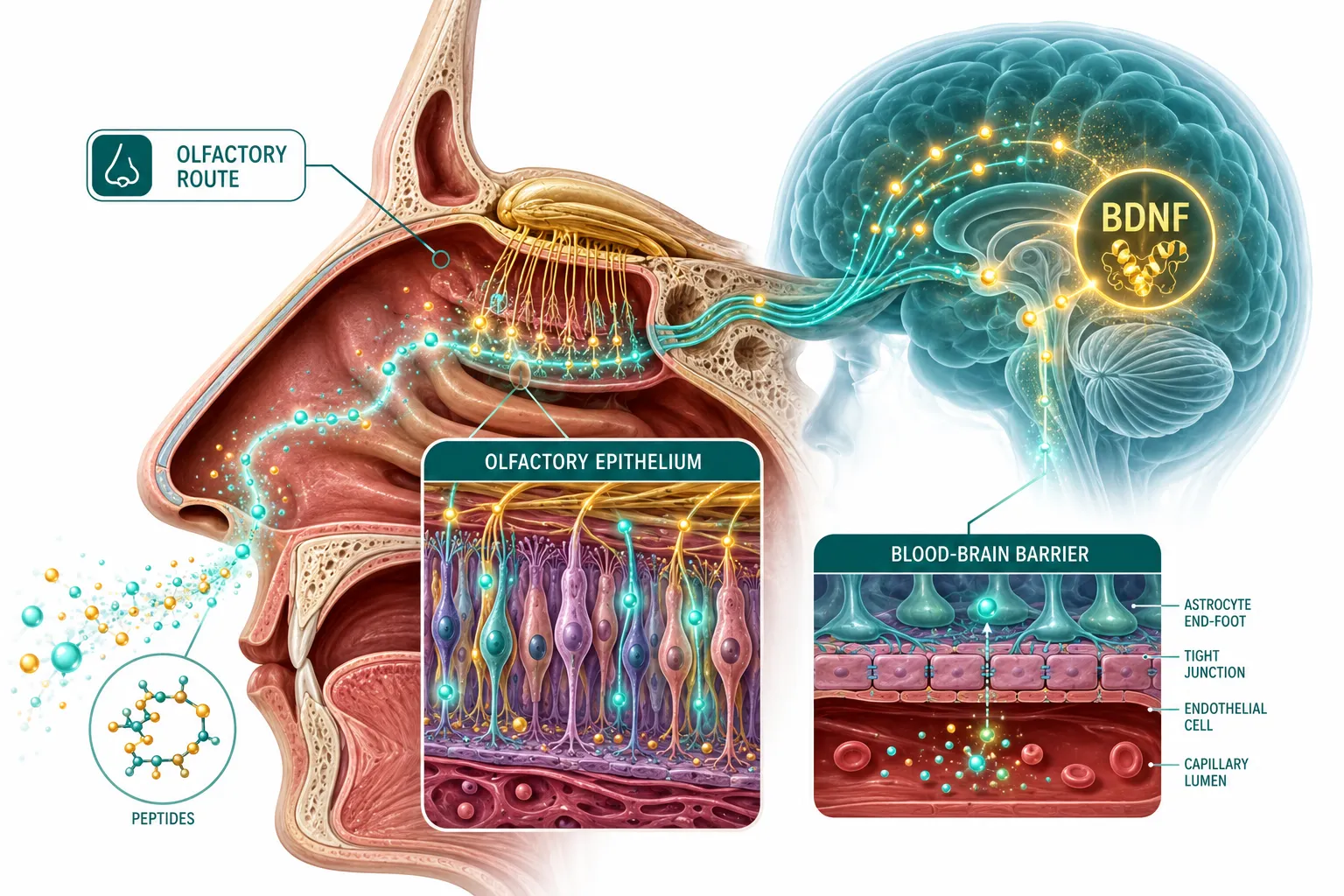
The intranasal route is one of the most discussed delivery mechanisms in peptide research, and for good reason. It bypasses the liver's first-pass metabolism, avoids gastrointestinal degradation, and provides access to the olfactory epithelium, a pathway that allows some peptides to reach the central nervous system more efficiently than subcutaneous or oral routes.
Semax and Selank were specifically engineered for this route. Their molecular size, stability in nasal mucosa, and absorption kinetics were optimized through decades of iterative research. This is not incidental, it is core to why they work as nootropic and anxiolytic agents.
Klow Blend, as a multi-peptide formula, faces a more complex delivery challenge. When multiple peptide components are combined, their individual absorption rates, mucosal stability, and CNS penetration profiles may differ. This does not make intranasal delivery of blends impossible, but it does mean that the delivery efficiency for each component in Klow Blend cannot simply be assumed to match the precision seen with Semax or Selank.
Researchers exploring peptide delivery should also review guidance on what not to mix with peptides to avoid formulation errors that compromise results.
Comparing Research Hypotheses: Where Each Compound Fits
When evaluating Klow Blend vs. Semax and Selank: Intranasal Nootropic Peptides Compared for Research, the most practical question is: what research question is being asked?
Choose Semax if the hypothesis involves:
- Acute cognitive enhancement or neuroprotection
- BDNF pathway modulation
- Dopaminergic or serotonergic system effects
Choose Selank if the hypothesis involves:
- Anxiety reduction without sedation
- GABAergic modulation
- Immune-cognitive interaction (Selank has shown immunomodulatory effects in some models)
Consider Klow Blend if the hypothesis involves:
- Regenerative or systemic multi-target outcomes
- Combination peptide synergy research
- Broader wellness endpoints beyond strict nootropic effects
Researchers sourcing any of these compounds should prioritize verified purity. Lab-tested peptides with documented assay results reduce confounding variables that can undermine intranasal research protocols. For those comparing sourcing options, quality peptides and online peptide sourcing resources can help identify reliable suppliers.
Practical Considerations for Researchers in 2026

As of 2026, the regulatory landscape for all three compounds in the United States positions them as research-only materials. None are approved by the FDA for human therapeutic use outside of clinical trial frameworks. This shapes how researchers should approach procurement, documentation, and protocol design.
Three practical points stand out:
- Purity documentation is non-negotiable. Intranasal delivery means the compound contacts mucosal tissue directly. Contaminants that might be tolerable in other contexts carry higher risk here.
- Formulation logic should match the hypothesis. Using Klow Blend to test a nootropic-specific hypothesis introduces unnecessary variables. Using Semax or Selank to test a regenerative hypothesis misses the compound's actual mechanism.
- Storage and stability differ between single-peptide and multi-peptide formulations. Blends may require more careful handling to preserve the activity of each component.
Conclusion
The comparison of Klow Blend vs. Semax and Selank: Intranasal Nootropic Peptides Compared for Research ultimately comes down to formulation intent. Semax and Selank are precision instruments for cognitive and anxiolytic research, built specifically for intranasal delivery with decades of supporting data. Klow Blend is a broader regenerative formula with an emerging evidence base that serves different research hypotheses.
Actionable next steps for researchers:
- Define the specific biological target before selecting a compound.
- Review the full profiles of Selank and Semax independently before comparing them to blends.
- Source only from suppliers who provide third-party purity assays.
- Document all protocol variables carefully, especially when using intranasal delivery routes where absorption can vary by formulation.
Choosing the right peptide is not about which compound is superior in the abstract, it is about which compound is right for the specific research question being asked.


Leave a Reply
Want to join the discussion?Feel free to contribute!