

Tesofensine and Metabolic Research: How a Noradrenergic Appetite Modulator Compares With GLP‑3 Peptides in Study Design
Obesity affects more than one billion adults worldwide, yet fewer than five percent of patients sustain meaningful weight loss beyond two years with lifestyle intervention alone. That gap has pushed preclinical researchers toward a broader toolkit, one that now includes both small-molecule reuptake inhibitors and next-generation incretin peptides. Tesofensine and metabolic research exploring how a noradrenergic appetite modulator compares with GLP-3 peptides in study design sits at the center of this conversation, raising important questions about mechanism, model selection, and how these two compound classes might inform each other.
Key Takeaways
- Tesofensine is a triple monoamine reuptake inhibitor that reduces appetite primarily through central noradrenergic and dopaminergic signaling.
- GLP-3 peptides such as retatrutide act peripherally and centrally via incretin receptors, creating a mechanistically distinct pathway from tesofensine.
- Preclinical dosing models for tesofensine typically use 0.5-2.0 mg/kg ranges in rodent studies, while peptide-based protocols require different reconstitution and delivery planning.
- Combining or comparing these two compound classes in study design can reveal additive appetite-suppression effects not achievable with either agent alone.
- Researchers sourcing compounds for metabolic studies should prioritize purity verification and documented lot testing.
Mechanism of Action: What Makes Tesofensine Distinct in Metabolic Research
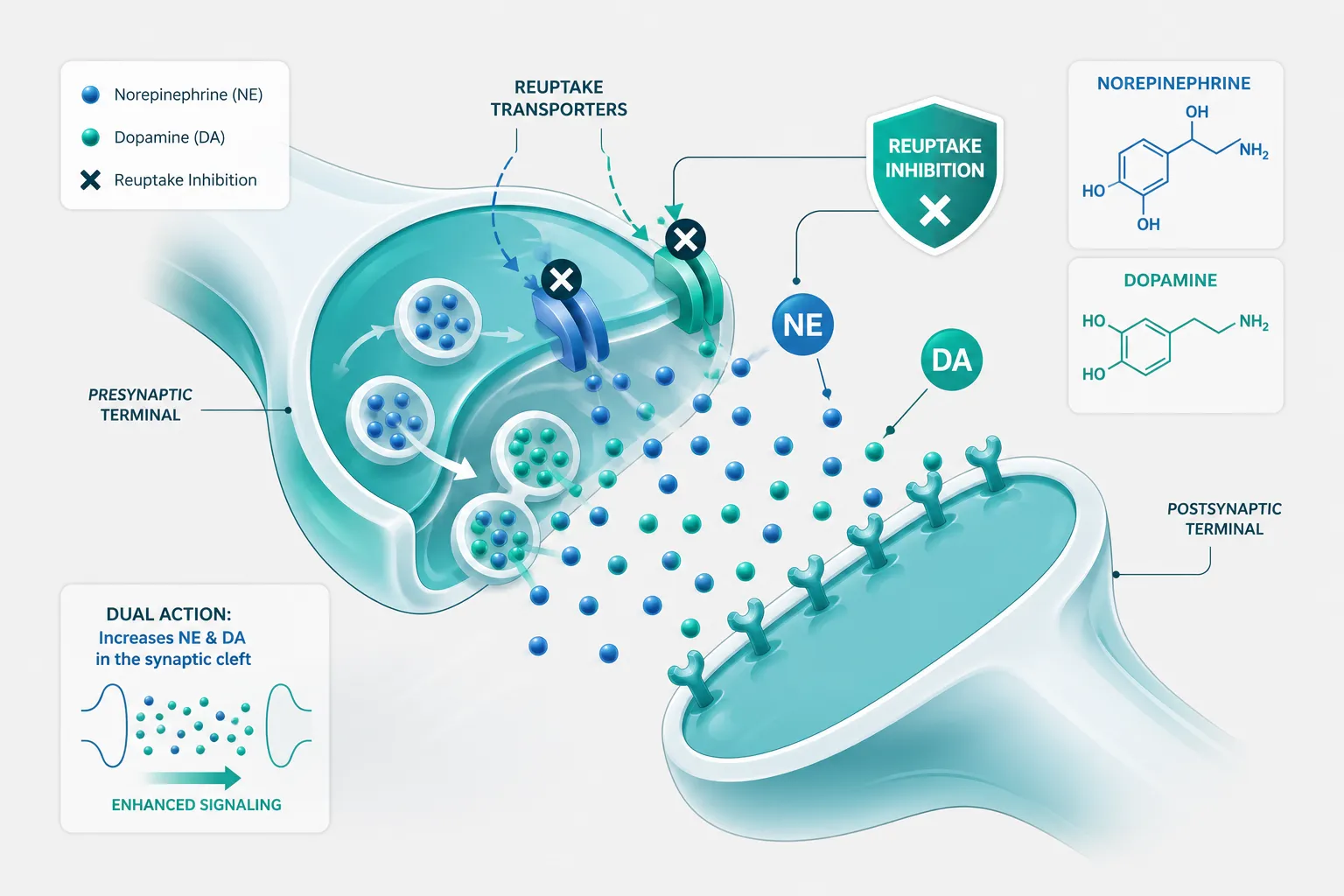
Tesofensine is a pre-synaptic reuptake inhibitor of serotonin, norepinephrine, and dopamine, a triple monoamine reuptake inhibitor (TMRI). Its appetite-suppressing effect is driven predominantly by noradrenergic and dopaminergic activity in the hypothalamus and mesolimbic reward circuits. Unlike GLP-1 receptor agonists, tesofensine does not engage incretin pathways directly. Instead, it modulates the central "hunger thermostat" by increasing synaptic availability of catecholamines.
Key mechanistic features:
- Norepinephrine reuptake inhibition reduces orexigenic signaling in the lateral hypothalamus
- Dopamine reuptake inhibition blunts food-reward motivation in the nucleus accumbens
- Serotonin component contributes to satiety signaling, though it is weaker than dedicated SSRIs
This central mechanism stands in contrast to GLP-3 peptide research, which targets peripheral gut-derived incretin receptors and vagal afferent pathways before reaching the hypothalamus. Understanding this distinction is essential when designing comparative studies, because each compound class requires different outcome measures, tissue sampling protocols, and washout periods.
"Mechanistic diversity is not a weakness in obesity research, it is the foundation for rational combination study design."
Researchers working with BDNF-related appetite pathways may also find it useful to review BDNF peptide research themes, since central neurotrophic signaling intersects with both noradrenergic tone and incretin activity.
Preclinical Dosing Models and Study Design Considerations

Tesofensine Dosing in Rodent Models
Published rodent studies have used tesofensine in the range of 0.5 to 2.0 mg/kg/day, typically administered by oral gavage or subcutaneous injection. Diet-induced obesity (DIO) mouse models are the most common platform because they replicate the hypercaloric, low-activity conditions seen in human metabolic syndrome.
| Parameter | Typical Range |
|---|---|
| Species | C57BL/6 mice, Sprague-Dawley rats |
| Dose range | 0.5-2.0 mg/kg/day |
| Duration | 4-12 weeks |
| Primary endpoints | Body weight, food intake, fat mass |
| Secondary endpoints | Glucose tolerance, plasma lipids |
GLP-3 Peptide Protocols for Comparison
GLP-3 class peptides, including retatrutide, which acts as a GLP-1/GIP/glucagon tri-agonist, require subcutaneous injection and are typically dosed in the 0.1-1.0 nmol/kg range in rodent models. Researchers interested in the evidence base around GLP-3 peptides for weight loss will note that these peptides have a fundamentally different pharmacokinetic profile: longer half-lives, receptor-mediated clearance, and dose-dependent nausea at higher concentrations.
When designing a head-to-head or combination study, researchers must account for:
- Different administration routes (oral vs. subcutaneous)
- Non-overlapping receptor targets requiring separate washout periods
- Distinct biomarker panels, catecholamine metabolites for tesofensine vs. GLP-1 and GIP levels for incretin peptides
- Potential additive effects on food intake without additive cardiovascular burden
For researchers also exploring growth hormone secretagogue peptides in metabolic panels, the tesa peptide research overview provides useful context on visceral fat endpoints that can be adapted for comparative metabolic studies.
How Tesofensine and Metabolic Research Compares With GLP-3 Peptides in Study Design: Practical Implications

Appetite Suppression: Central vs. Peripheral Pathways
The core design challenge when comparing tesofensine with GLP-3 peptides is that they suppress appetite through non-competing pathways. Tesofensine acts upstream in the CNS; retatrutide and related peptides act at peripheral receptors before triggering central satiety signals. This means:
- Additive appetite suppression is plausible without simple pharmacological overlap
- Combination protocols may reveal synergistic effects at sub-maximal doses of each compound
- Adverse event profiles differ significantly, cardiovascular monitoring is critical for tesofensine, while GI tolerability is the primary concern for incretin peptides
Compound Sourcing and Purity Standards
Study validity depends heavily on compound quality. Researchers sourcing tesofensine or GLP-3 peptides for preclinical work should require:
- Certificate of Analysis (CoA) with HPLC purity data (minimum 98%)
- Mass spectrometry confirmation of molecular identity
- Endotoxin testing for injectable preparations
Those looking to buy peptides online for research purposes should verify that suppliers provide lot-specific documentation. Researchers in Canada may also find the peptides in Canada sourcing guide a useful reference for regulatory context.
For teams comparing multiple peptide classes in the same metabolic panel, lab-tested peptide sourcing from documented suppliers reduces batch-to-batch variability that can confound longitudinal data.
Additionally, researchers building multi-compound metabolic panels may want to review GLP-1 peptide sourcing and generational research concepts to understand how incretin compound generations differ in receptor binding profiles.
Conclusion
Tesofensine and metabolic research examining how a noradrenergic appetite modulator compares with GLP-3 peptides in study design represents one of the more nuanced areas of obesity pharmacology. The two compound classes operate through distinct, potentially complementary mechanisms, central catecholamine reuptake inhibition versus peripheral incretin receptor activation, making them valuable both as standalone research tools and as candidates for combination protocol design.
Actionable next steps for researchers:
- Define primary endpoints early: body weight and food intake for tesofensine; GLP-1 and insulin secretion indices for incretin peptides
- Build separate washout periods into crossover designs to prevent mechanistic interference
- Source compounds with full lot-specific CoA documentation to protect data integrity
- Consider sub-maximal combination dosing to explore additive appetite suppression without compounding adverse event risk
- Review the growing literature on tri-agonist peptides like retatrutide to understand where GLP-3 class compounds are headed
As the obesity research landscape evolves, understanding how small-molecule modulators and peptide-based agents interact at the systems level will be critical to designing studies that translate meaningfully from bench to clinic.
References
- Astrup, A., Meier, D. H., Mikkelsen, B. O., Villumsen, J. S., & Larsen, T. M. (2008). Weight loss produced by tesofensine in patients with Parkinson's or Alzheimer's disease. Obesity, 16(6), 1363-1369.
- Lehr, T., Staab, A., Tillmann, C., Trommeshauser, D., Schaefer, H. G., & Kloft, C. (2008). A quantitative enterohepatic circulation model: development and evaluation with tesofensine and meloxicam. Clinical Pharmacokinetics, 47(4), 291-307.
- Friedrichsen, M., Sørensen, A., Faber, J., Holst, J. J., Carr, R. D., Petersen, J. S., & Bagger, J. I. (2015). Differential effects of tesofensine on gut hormones in humans. Obesity, 23(9), 1789-1796.
- Nauck, M. A., & D'Alessio, D. A. (2022). Tirzepatide, a dual GIP/GLP-1 receptor co-agonist for the treatment of type 2 diabetes with unmatched effectiveness regrading glycaemic control and body weight reduction. Cardiovascular Diabetology, 21(1), 169.
- Jastreboff, A. M., Aronne, L. J., Ahmad, N. N., Wharton, S., Connery, L., Alves, B., & Kiyosue, A. (2023). Tirzepatide once weekly for the treatment of obesity. New England Journal of Medicine, 387(3), 205-216.


Leave a Reply
Want to join the discussion?Feel free to contribute!