Call or Text 727-513-9780
  • Shopping Cart Shopping Cart
    0Shopping Cart
Pure Tested Peptides | America's most trusted Peptides for sale online
  • Peptides for sale
    • Oral Peptides for sale
      • Peptide Capsules for sale
      • BPC 157 Capsules 1000mcg
      • SLU-PP-332 Capsules | 1000 mcg
      • 5-Amino-1MQ 50mg Capsules
      • Tesofensine 500mcg
    • All Peptides for sale
    • Peptide Sprays
      • BPC 157 Nasal Spray Kit
      • BPC-157 TB500 Nasal Spray Kit
      • Semax Nasal Spray 10mg
      • Selank – Nasal Spray Kit – 10mg
      • Epithalon 50MG Nasal Spray Kit
      • Ipamorelin 10mg Nasal Spray
      • Klow Nasal Spray (BPC-157 + TB-500 + GHK-Cu + KPV) | 80mg
      • Hulk Nasal Spray Tesa / Ipa Blend 6/3 MG
      • Klow Nasal Spray
      • NAD + 500 mg Nasal Spray
      • PT-141 Nasal Spray Kit
    • GHRH Peptides
      • Ipa Peptides
      • CJC-1295 Peptides
        • CJC-1295 with DAC 5 mg
        • CJC-1295 without DAC 5 mg
        • CJC-1295 Ipa 10mg
      • Tesa Peptides
        • Tesa Peptide
        • Tesa 20 mg
    • GHK-Cu Peptides
      • All GHK-Cu Peptides
      • GHK-Cu 100mg
      • KLOW Peptide Blend – Buy KLOW blend online
    • BPC Peptides
      • All BPC Peptides
      • BPC-157
      • BPC-157 TB-500
      • BPC 157 capsules 1000mcg
    • SLU-PP-332 Peptides
      • All SLU-PP-332 Peptides
      • SLU-PP-332 5mg
    • GLP3 Peptides
      • GLP3-R
      • GLP3-R CAG 10mg
      • GLP3-R 20mg
    • PT-141 Peptides
      • PT-141 Peptides for sale
      • PT-141 10mg
      • PT-141 Nasal Spray
    • CAG Peptides
      • Lipo-C Peptide Blend
      • CAG 5mg
      • CAG 10mg
    • MOTS-C Peptides
      • MOTS-C Peptides for sale
      • MOTS-c peptide
      • MOTS-c 10mg *6 pack*
    • 5 Amino 1MQ Peptides
      • 5 Amino 1MQ Peptides for sale
      • 5-Amino-1MQ 50mg Capsules
      • 5-Amino-1MQ 5mg
    • Epithalon Peptides
      • Epithalon Peptides for sale
      • Epithalon 10mg
      • Epithalon 50mg
  • Shop
    • GLPs
      • 5-Amino-1MQ 50mg Capsules
      • 5-Amino-1MQ 5mg
      • GLP3-Reta
      • L-Carnitine 500mg/ml
      • Tesofensine 500mcg
      • SLU-PP-332 5mg
      • MOTS-c 10mg *6 pack*
    • Epithalon & BPC Peptides
      • Epithalon 10mg
      • Epithalon 50mg
      • BPC-157
      • BPC 157 capsules 1000mcg
      • BPC-157 TB-500
      • BPC-157 TB500 Nasal Spray Kit
      • BPC 157 Nasal Spray Kit
    • BPC TB-500 & NAD+ Peptides
      • NAD+ 500 mg
      • KLOW Peptide Blend – Buy KLOW blend online
      • GLOW Peptide Blend
      • TB 500 5mg
      • BPC 157 capsules 1000mcg – Supplement
      • BPC 157 Nasal Spray Kit
      • BPC-157
      • BPC-157 TB500 Nasal Spray Kit
      • BPC-157 TB-500
      • BPC 157 capsules 1000mcg
    • LL-37 Peptide
      • LL-37 10 mg
    • MOTS-C & Selank
      • MOTS-c peptide
      • Selank 10mg
    • GHK Peptides
      • GHK-Cu 100mg
      • GLOW Peptide Blend
      • KLOW Peptide Blend – Buy KLOW blend online
  • COAs
  • Wholesale
    • Wholesale Peptides for sale
  • PTP FAQ
  • Affiliates
    • Selank Peptide: Advanced Pharmacological Mechanisms Underlying Its Anxiolytic and Nootropic Effects in Research
      • 5-Amino-1MQ Peptide: Detailed Mechanisms of NNMT Inhibition and Its Impact on Cellular Metabolism Research
        • MOTS-C Peptide: Unraveling Its Role in Mitochondrial Dynamics and Energy Metabolism Research
          • Epithalon Peptide and Telomerase Regulation: Investigating Its Impact on Cellular Senescence and Lifespan Research Models
            • GLP2-T vs GLP2 Tirz Peptide: Understanding the Naming, Mechanistic Nuances, and Research Implications for Gut Health
      • Peptides and Polypeptides in Modern Pharmacology: What Research on Metoprolol, Prednisone, and Amlodipine Reveals
        • Polypeptide Peptides vs NSAIDs: What Naproxen and Diclofenac Teach Tissue-Repair Researchers About BPC‑157 and TB‑500
          • Peptides and Polypeptides in Endocrine Pharmacology: How GLP-1, GLP-2, and GLP-3 Retatrutide Differ From Classic Drugs Like Prednisone and Amlodipine
          • 5‑Amino‑1MQ Peptide and NNMT Inhibition: How It Compares With Statins Like Atorvastatin in Adipose and Lipid Metabolism Research
      • Enclomiphene, Estrogen Receptor Signaling, and Luteinizing Phase Biology: What Hormone Researchers Should Measure
        • Mesenchymal Stem Cells, BPC‑157, and GHK‑Cu: How Tissue Repair Peptides Compare With Classic NSAIDs Like Naproxen in Injury Models
          • Peptide Calculator Use Cases Beyond Growth Hormone: Working Through GLP‑3 Retatrutide, MOTS‑c, and BPC‑157 Research Dosing
        • Polypeptide Peptides in Endocrine and Metabolic Pharmacology: Lessons From Amlodipine, Prednisone, and Metoprolol
        • Peptides Calculator for Advanced Blends: Worked Examples for Tesamorelin, CJC‑1295, and Ipamorelin Stacks
          • Peptides and Polypeptides in Human Physiology: How Molecular Size Shapes Research Applications
            • Selank Peptide: Advanced Pharmacological Mechanisms Underlying Its Anxiolytic and Nootropic Effects in Research
          • 5-Amino-1MQ Peptide: Detailed Mechanisms of NNMT Inhibition and Its Impact on Cellular Metabolism Research
            • MOTS-C Peptide: Unraveling Its Role in Mitochondrial Dynamics and Energy Metabolism Research
              • Epithalon Peptide and Telomerase Regulation: Investigating Its Impact on Cellular Senescence and Lifespan Research Models
                • GLP2-T vs GLP2 Tirz Peptide: Understanding the Naming, Mechanistic Nuances, and Research Implications for Gut Health
                  • Peptides and Polypeptides in Endocrine Pharmacology: How GLP-1, GLP-2, and GLP-3 Retatrutide Differ From Classic Drugs Like Prednisone and Amlodipine
                    • Polypeptide Peptides vs NSAIDs: What Naproxen and Diclofenac Teach Tissue-Repair Researchers About BPC‑157 and TB‑500
                      • Peptides and Polypeptides in Modern Pharmacology: What Research on Metoprolol, Prednisone, and Amlodipine Reveals
                        • 5‑Amino‑1MQ Peptide and NNMT Inhibition: How It Compares With Statins Like Atorvastatin in Adipose and Lipid Metabolism Research
                        • Enclomiphene, Estrogen Receptor Signaling, and Luteinizing Phase Biology: What Hormone Researchers Should Measure
                        • Mesenchymal Stem Cells, BPC‑157, and GHK‑Cu: How Tissue Repair Peptides Compare With Classic NSAIDs Like Naproxen in Injury Models
                        • Peptide Calculator Use Cases Beyond Growth Hormone: Working Through GLP‑3 Retatrutide, MOTS‑c, and BPC‑157 Research Dosing
                        • Polypeptide Peptides in Endocrine and Metabolic Pharmacology: Lessons From Amlodipine, Prednisone, and Metoprolol
                        • Peptides Calculator for Advanced Blends: Worked Examples for Tesamorelin, CJC‑1295, and Ipamorelin Stacks
                        • Peptides and Polypeptides in Human Physiology: How Molecular Size Shapes Research Applications
                        • Selank Peptide: Advanced Pharmacological Mechanisms Underlying Its Anxiolytic and Nootropic Effects in Research
                        • MOTS-C Peptide: Unraveling Its Role in Mitochondrial Dynamics and Energy Metabolism Research
                        • Peptides and Polypeptides in Modern Pharmacology: What Research on Metoprolol, Prednisone, and Amlodipine Reveals
                        • Peptides and Polypeptides in Endocrine Pharmacology: How GLP-1, GLP-2, and GLP-3 Retatrutide Differ From Classic Drugs Like Prednisone and Amlodipine
                        • 5-Amino-1MQ Peptide: Detailed Mechanisms of NNMT Inhibition and Its Impact on Cellular Metabolism Research
                        • Mesenchymal Stem Cells, BPC‑157, and GHK‑Cu: How Tissue Repair Peptides Compare With Classic NSAIDs Like Naproxen in Injury Models
                        • Peptide Calculator Use Cases Beyond Growth Hormone: Working Through GLP‑3 Retatrutide, MOTS‑c, and BPC‑157 Research Dosing
                        • GLP2-T vs GLP2 Tirz Peptide: Understanding the Naming, Mechanistic Nuances, and Research Implications for Gut Health
                        • Polypeptide Peptides in Endocrine and Metabolic Pharmacology: Lessons From Amlodipine, Prednisone, and Metoprolol
                        • Polypeptide Peptides vs NSAIDs: What Naproxen and Diclofenac Teach Tissue-Repair Researchers About BPC‑157 and TB‑500
                        • Peptides and Polypeptides in Human Physiology: How Molecular Size Shapes Research Applications
                        • Peptides Calculator for Advanced Blends: Worked Examples for Tesamorelin, CJC‑1295, and Ipamorelin Stacks
                        • 5‑Amino‑1MQ Peptide and NNMT Inhibition: How It Compares With Statins Like Atorvastatin in Adipose and Lipid Metabolism Research
                        • Enclomiphene, Estrogen Receptor Signaling, and Luteinizing Phase Biology: What Hormone Researchers Should Measure
                        • Epithalon Peptide and Telomerase Regulation: Investigating Its Impact on Cellular Senescence and Lifespan Research Models
                        • Best research protocol Klow blend
                        • best time to take BPC-157
                        • best time to take DSIP (Delta Sleep Inducing Peptide)
                        • best time to take CJC-1295
                        • best time to take AOD-9604
                        • best time to take Follistatin 344
                        • best time to take Ipamorelin
                        • best time to take MK-677 (Ibutamoren)
                        • best time to take Ligandrol (LGD-4033) — research compound
                        • best time to take Ostarine (MK-2866) — research compound
                        • best time to take GHK-CU
                        • best time to take TB-500
                        • best time to take MOTS-c
                        • best time to take Semax
                        • best time to take RAD-140 (Testolone) — research compound
                        • best time to take Thymosin Alpha-1
                        • best time to take PEG-MGF
                        • Biolife Plasma, Octapharma Plasma, and Research Peptides: How Plasma Donation Labs Differ From Peptide Suppliers
                        • best time to take YK-11 — research compound
                        • best time to take PT-141 (Bremelanotide)
                        • Best research protocol Klow blend
                        • 5-Amino-1MQ and MOTS-C Synergy: Metabolic Signaling, Mitochondria, and Research Design
                        • BPC-157 and TB-500: Investigating Their Combined Effects on Angiogenesis and Cellular Migration in Tissue Repair Models
                        • BPC-157 Peptide: Gut Barrier Function, Inflammation, and Tissue-Recovery Research
                        • 5‑Amino‑1MQ and MOTS‑c Synergy in Metabolic Research: Designing NNMT and Mitochondrial Biogenesis Stacks
                        • CJC-1295 with DAC vs. Without DAC: Half-Life, Release Kinetics, and Research Implications
                        • CJC‑1295 with DAC vs. Without DAC: Expanding on Half‑Life Differences Using Tesamorelin and Ipamorelin Blend Case Studies
                        • Collagen Biology and Copper‑Binding Peptides: How GHK‑Cu, Glow Blend, and Klow Blend Interact with Skin and Connective Tissue
                        • Collagen Biology and Regenerative Peptides: How GHK‑Cu, Glow Blend, and Klow Blend Affect Extracellular Matrix Research
                    • DNA, Telomeres, and Longevity Peptides: Positioning Epithalon and MOTS‑c in Genetic Aging Research
                      • Enclomiphene Citrate: serm Mechanism, Testosterone Research, and Stack Compatibility
                        • Enclomiphene vs Enclomiphene Citrate: Formulation, Bioavailability, and Research Distinctions
                        • Epithalon Peptide Research: Telomerase Activation, Aging, and Pineal Gland Function
                        • Estrogen Receptor Signaling and Enclomiphene: How Selective Modulators Compare with Classic Polypeptide Hormones
                        • GHK-Cu Peptide: Advanced Mechanisms in Extracellular Matrix Remodeling and Wound Healing Research
                        • GHK-Cu Peptide: Collagen Synthesis, Wound Repair, and Skin-Barrier Research Models
                        • GLP-1 vs GLP-3 vs GLP-2: Peptide Classification and Research Applications
                        • GLP-2 Peptide Research Guide: Gut Barrier Function, Nutrient Absorption, and Intestinal Recovery Models
                        • GLP-3 Retatrutide vs. GLP-1 Drugs: What Triple-Agonist Biology Changes in Research Models
                        • Ipamorelin and Tesamorelin Combination: Synergistic GH Secretagogue Research and Dosing Protocols
                        • GLP2 Tirz Peptide: What It Is, Why the Name Exists, and How Researchers Should Interpret It
                        • Klow Blend Peptide Nasal Spray: What the Formulation Is Trying to Do in Cognitive Research
                        • Mitochondria, NNMT Inhibition, and Peptide Modulators: Where MOTS‑c and 5‑Amino‑1MQ Fit in Cellular Energy Research
                        • MOTS-c Peptide: Mitochondrial Function, Energy Metabolism, and What Researchers Measure
                        • MOTS-c vs. 5-Amino-1MQ: Which Metabolic Research Questions Each Compound Actually Answers
                        • Nasal Spray Peptides: Bioavailability, Administration, and Semax/Selank Research Applications
                        • PT-141 Peptide Research: Mechanism of Action and Melanocortin Receptor Signaling
                        • Retatrutide for Research: Mechanism, Structure, and GLP-1/GLP-3 Dual Action
                        • Retatrutide for Obesity and Type 2 Diabetes: What the Latest Trial Data Suggest
                        • Tesofensine Peptide Research: Mechanism, Appetite Suppression, and Neuropeptide Y Pathways
  • Contact
    • Contact Customer Service
    • Text Customer Support
  • About US
  • Shop all peptides
  • Affiliate Program
    • Affiliate Signup
  • Login / Register Login / Register Page Link Login / Register Page Link
  • Click to open the search input field Click to open the search input field Search
  • Menu Menu
Epithalon Peptide in Longevity Research: Telomeres, Cellular Aging, and What Labs Measure

Epithalon Peptide in Longevity Research: Telomeres, Cellular Aging, and What Labs Measure

August 12, 2026/0 Comments/in Uncategorized/by

Telomere length at birth predicts roughly 60% of the variance in lifespan across mammalian species, a statistic that reframed how researchers think about biological aging at the molecular level. Against that backdrop, Epithalon peptide in longevity research: telomeres, cellular aging, and what labs measure has become one of the most discussed topics in experimental gerontology, precisely because this short tetrapeptide appears to interact with the very machinery that governs telomere maintenance.

This article is a research application guide. It is not a clinical protocol. It is designed for scientists, research buyers, and informed readers who want a rigorous framework, not hype, for evaluating what Epithalon does, what biomarkers matter, and where the experimental evidence currently stands.

Key Takeaways

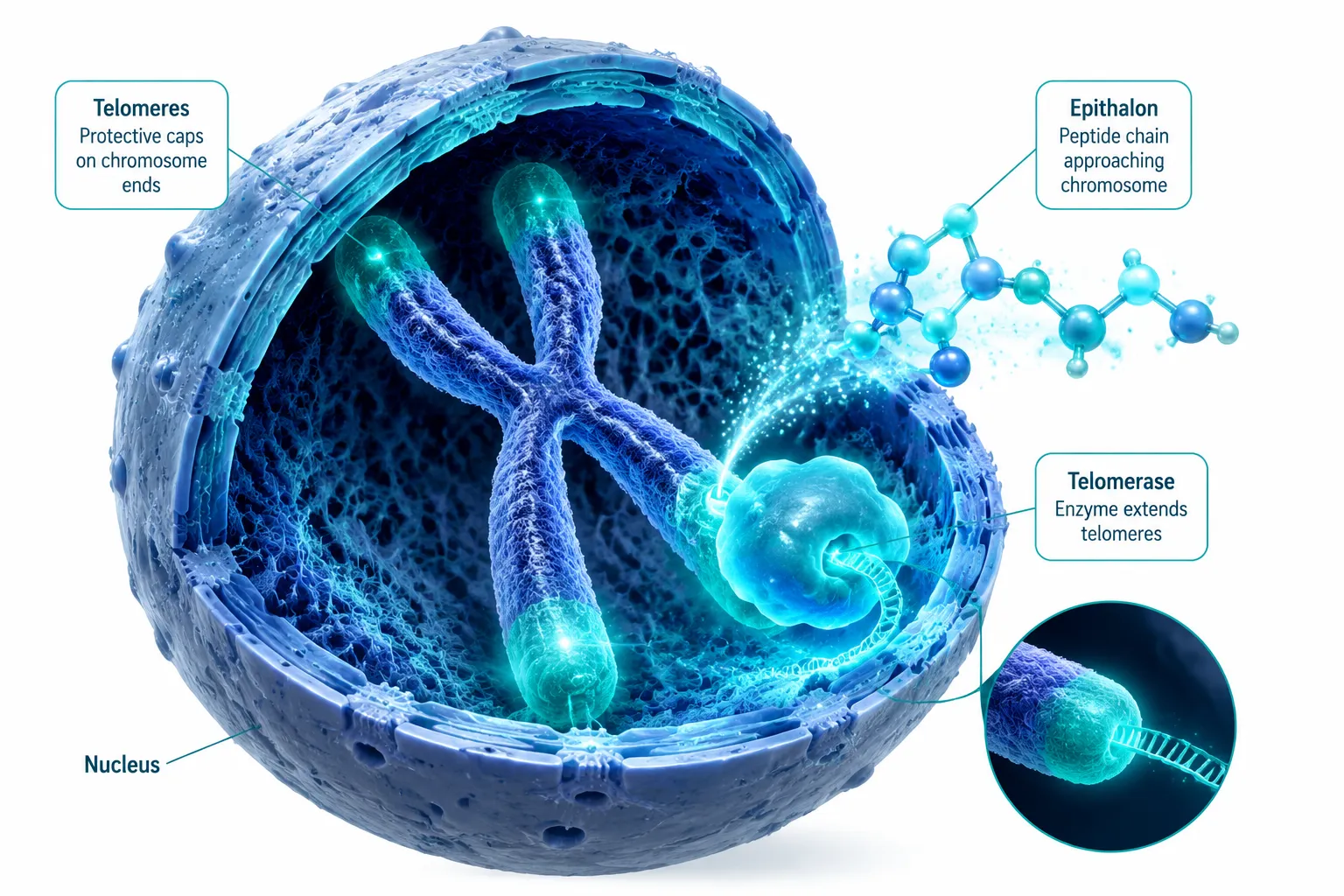
  • Epithalon (Ala-Glu-Asp-Gly) is a synthetic tetrapeptide derived from the pineal gland peptide Epithalamin, studied primarily for its proposed effects on telomerase activation and cellular senescence.
  • Its primary hypothesized mechanism involves upregulation of telomerase reverse transcriptase (hTERT), the catalytic subunit responsible for adding telomeric repeats to chromosome ends.
  • Lab measurement of Epithalon's effects requires a multi-marker approach: telomere length assays, hTERT expression panels, and senescence-associated secretory phenotype (SASP) markers.
  • Most foundational data originates from Russian institutional research; more recent 2025 human cell line studies have begun replicating and extending those findings under controlled conditions.
  • Experimental limitations, including species-specific telomerase regulation and the absence of large-scale human RCTs, must anchor any honest interpretation of the data.
Key Takeaways

The Biology Behind Epithalon: Telomerase, Telomeres, and Cellular Aging

To understand why Epithalon peptide in longevity research: telomeres, cellular aging, and what labs measure commands serious scientific attention, it helps to understand the underlying biology with precision.

Telomeres are repetitive nucleotide sequences (TTAGGG in humans) that cap chromosome ends, protecting genetic material from degradation during cell division. Each replication cycle shortens telomeres slightly. When telomeres reach a critical minimum length, cells enter replicative senescence, a permanent growth arrest, or trigger apoptosis.

Telomerase is the enzyme complex that counteracts this shortening. Its catalytic subunit, hTERT, adds telomeric repeats back to chromosome ends. In most adult somatic cells, telomerase expression is suppressed. In stem cells, germline cells, and certain immune cells, it remains active. Cancer cells, notably, reactivate telomerase as a survival mechanism, a fact that makes any telomerase-activating compound a subject of both excitement and caution in research circles.

Epithalon (tetrapeptide sequence: Ala-Glu-Asp-Gly) was originally isolated from bovine pineal gland extracts by Professor Vladimir Khavinson's team in St. Petersburg. The synthetic version replicates the active sequence. Early animal studies reported extended median lifespan in aged rats and mice, alongside measurable increases in hTERT expression in lymphocyte cultures. Revisited analyses of those older datasets, cross-referenced with more recent 2025 human cell line data, suggest the hTERT upregulation signal is reproducible under specific culture conditions, though the magnitude varies considerably by cell type and passage number.

"The question is not whether Epithalon affects telomerase expression in vitro, the data suggest it does. The question is what that means for whole-organism aging biology."

For researchers exploring related peptide mechanisms, the SS-31 mechanism and research overview, including where to buy SS-31 and Epithalon provides useful context on how mitochondria-targeted peptides intersect with cellular aging pathways.

The Biology Behind Epithalon: Telomerase, Telomeres, and Cellular Aging

Senescence Markers and the Multi-Biomarker Framework for Epithalon Research

Telomere length alone is an incomplete readout. A rigorous research design around Epithalon peptide in longevity research: telomeres, cellular aging, and what labs measure requires a layered biomarker approach.

Primary Markers Researchers Track

Biomarker What It Measures Relevance to Epithalon
Telomere Length (qPCR or FISH) Average telomere length per cell Direct readout of telomere maintenance
hTERT mRNA Expression Telomerase catalytic subunit activity Primary proposed mechanism of action
p16INK4a / p21 Protein Levels Senescence cell cycle arrest markers Downstream indicator of senescent burden
SA-beta-galactosidase Activity Classic senescence-associated enzyme Functional confirmation of senescent state
SASP Panel (IL-6, IL-8, MMP-3) Pro-inflammatory secretory phenotype Systemic aging signal from senescent cells

p16INK4a has emerged as particularly useful because it accumulates specifically in senescent cells and correlates with biological age more tightly than chronological age in several tissue studies. A well-designed Epithalon experiment should show changes in p16INK4a alongside any telomere length shifts to establish mechanistic coherence rather than isolated correlation.

Researchers studying peptide-based modulators in regenerative models, including those examining how BPC-157, GHK-Cu, and Glow Blend are used in mesenchymal stem cell research, will recognize this multi-marker logic as standard practice across the field.

For those sourcing compounds for controlled in vitro work, Epithalon peptides for sale from verified suppliers with third-party testing documentation is a prerequisite for data integrity. Purity directly affects reproducibility.

The GHK-Cu longevity research themes overview offers a parallel example of how copper-binding peptides interact with cellular repair pathways, providing useful comparative context for researchers building multi-peptide longevity panels.
Primary Markers Researchers Track

What Labs Actually Measure: Assay Selection and Experimental Limitations

The practical side of Epithalon peptide in longevity research: telomeres, cellular aging, and what labs measure comes down to assay selection, model validity, and honest acknowledgment of what the current evidence cannot yet confirm.

Common Assay Approaches

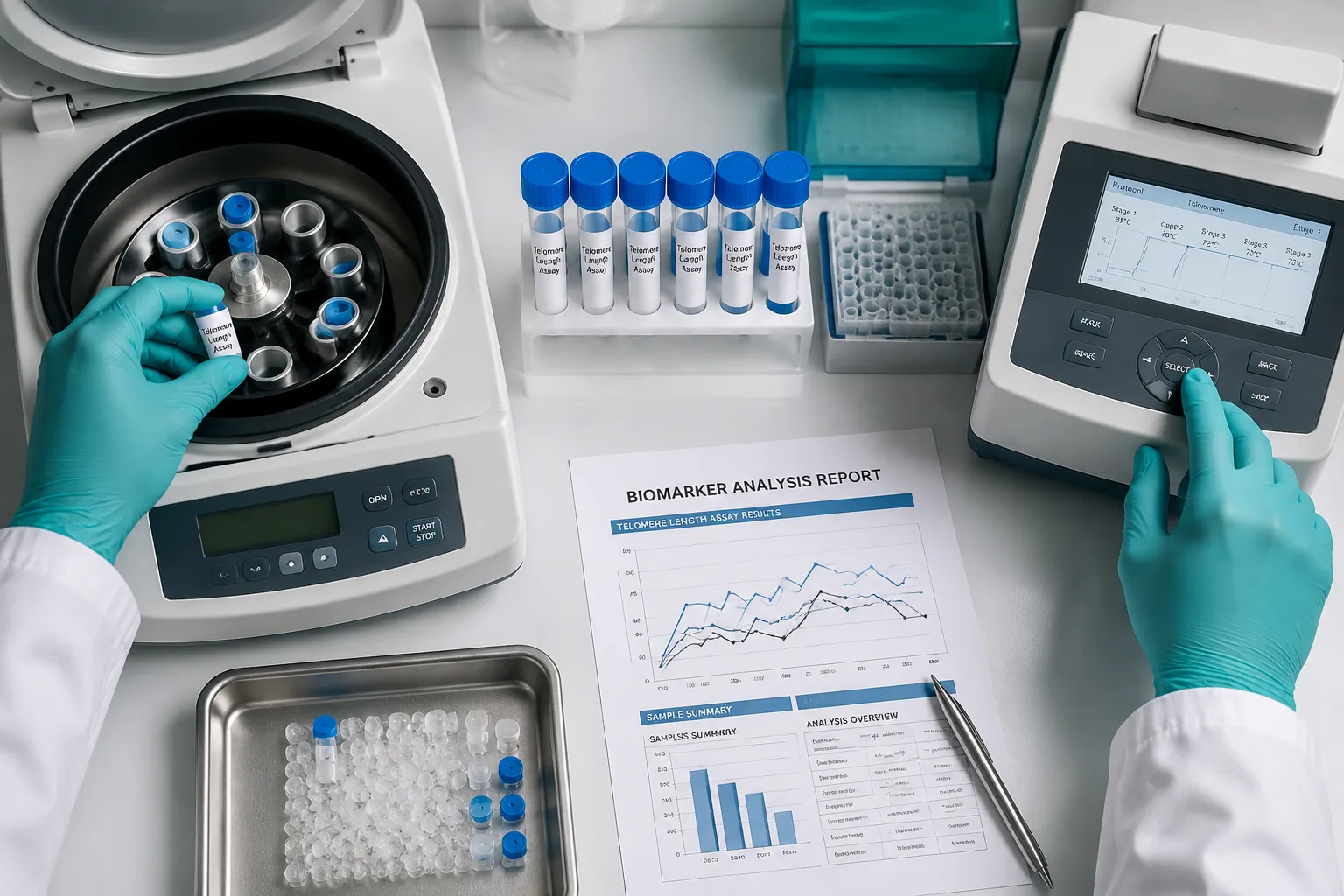
Quantitative PCR (qPCR) telomere assay remains the most widely used method due to cost and throughput. It measures average telomere length relative to a single-copy gene. Its limitation is that it averages across all cells, masking the critically short telomeres that drive senescence in individual cells.

Telomere-FISH (Fluorescence In Situ Hybridization) provides single-cell resolution, identifying cells with critically short telomeres. More labor-intensive but mechanistically more informative for Epithalon studies.

hTERT RT-qPCR panels measure messenger RNA levels, not enzyme activity directly. Western blotting for hTERT protein, combined with TRAP (Telomeric Repeat Amplification Protocol) assays for functional telomerase activity, creates a more complete picture.

Key Experimental Limitations

  • Species differences matter significantly. Mice have much longer telomeres and constitutively active telomerase in most tissues, making murine lifespan data difficult to translate directly to human aging biology.
  • Cell passage number confounds results. hTERT responses in early-passage versus late-passage cell lines differ substantially. Studies must report passage numbers explicitly.
  • No large-scale human RCTs exist. The foundational data from Russian institutional research, while methodologically serious, predates modern RCT standards. Replication in controlled human trials remains an open priority.
  • Telomerase activation and oncogenic risk. Any compound that upregulates hTERT warrants parallel monitoring of oncogenic markers, this is not a reason to dismiss the research, but it is a non-negotiable component of responsible experimental design.

Researchers building broader longevity peptide panels will find the Glow Blend longevity research themes resource useful for understanding how multi-peptide formulations are being studied alongside telomere-focused compounds.

For foundational context on peptide structure and research-use classification, Peptides 101 for research-use only buyers covers the structural and regulatory framework that applies to Epithalon and similar compounds.

Conclusion

The evidence base for Epithalon in longevity research is more substantive than most peptide discussions acknowledge, and more limited than enthusiast communities often admit. The telomerase activation hypothesis is mechanistically coherent, supported by reproducible in vitro hTERT expression data, and consistent with the broader biology of telomere-driven senescence. At the same time, the absence of large-scale human trials, the species-translation problem, and the oncogenic monitoring requirement all demand that researchers approach this compound with structured skepticism rather than either dismissal or uncritical enthusiasm.

Actionable next steps for research teams:

  1. Design multi-marker protocols that combine telomere length assays (preferably FISH for single-cell resolution), hTERT expression panels, and SASP cytokine profiling rather than relying on any single readout.
  2. Document cell passage numbers, culture conditions, and compound purity specifications in every experiment, these variables account for much of the variance in published results.
  3. Source Epithalon from suppliers providing third-party HPLC and mass spectrometry documentation to ensure purity standards that support reproducible data.
  4. Pair Epithalon studies with parallel oncogenic marker monitoring as a non-negotiable safety and scientific integrity measure.
  5. Follow the emerging 2026 gerontology literature on peptide classification frameworks, which is beginning to establish standardized endpoints that will make cross-study comparison more meaningful.

The science of telomere biology and peptide-based longevity research is advancing. Rigorous measurement frameworks, not optimistic extrapolation, are what will ultimately determine whether Epithalon earns a durable place in the gerontology toolkit.

Tags: anti-aging peptides, cellular aging, epithalon peptide, gerontology research, htert expression, longevity research, peptide biomarkers, research peptides, sasp markers, senescence markers, telomerase activation, telomere length
https://www.puretestedpeptides.com/wp-content/uploads/2026/08/epithalon-peptide-in-longevity-research-telomeres-cellular-aging-and-what-labs-m.webp 1024 1536 https://www.puretestedpeptides.com/wp-content/uploads/2026/01/buy-peptides-online.jpg 2026-08-12 13:03:402026-08-12 13:03:40Epithalon Peptide in Longevity Research: Telomeres, Cellular Aging, and What Labs Measure
You might also like
Semax Peptide Nasal Spray: Administration, Dosing Concepts, and Research Applications Semax Peptide Nasal Spray: Administration, Dosing Concepts, and Research Applications
Top 5 Research Peptides for Metabolic Health: An Updated Buyer's Guide Top 5 Research Peptides for Metabolic Health: An Updated Buyer’s Guide
Best Research Applications for PT-141: What Makes It Different From Other Melanocortin Peptides? Best Research Applications for PT-141: What Makes It Different From Other Melanocortin Peptides?
What Are Polypeptide Peptides? From Collagen and Hormones to Advanced Research Compounds Like GLP-3 Retatrutide What Are Polypeptide Peptides? From Collagen and Hormones to Advanced Research Compounds Like GLP-3 Retatrutide
Polypeptide Peptides and Drug Mechanisms: What Common Medications Reveal About Research-Use Peptide Pharmacology Polypeptide Peptides and Drug Mechanisms: What Common Medications Reveal About Research-Use Peptide Pharmacology
Semax Peptide Nasal Spray: Cognitive Enhancement, Neuroprotection, and Research Protocols Semax Peptide Nasal Spray: Cognitive Enhancement, Neuroprotection, and Research Protocols
Peptides 101 for Research-Use Only Buyers: Structure, Mechanisms, and Where GLP-3, MOTS-c, and 5-Amino-1MQ Fit In Peptides 101 for Research-Use Only Buyers: Structure, Mechanisms, and Where GLP-3, MOTS-c, and 5-Amino-1MQ Fit In
Peptides vs Classic Small-Molecule Drugs: How Compounds Like Prednisone, Amlodipine, and Metoprolol Differ From Modern Research-Use Peptides Peptides vs Classic Small-Molecule Drugs: How Compounds Like Prednisone, Amlodipine, and Metoprolol Differ From Modern Research-Use Peptides
0 replies

Leave a Reply

Want to join the discussion?
Feel free to contribute!

Leave a Reply Cancel reply

Your email address will not be published. Required fields are marked *

×

Helpful Links

  • My account
  • Cart
  • Checkout
  • Refund and Returns Policy
  • Privacy Policy
  • SMS Privacy Policy
  • Login
  • My Account
  • Logout

USA Made Lab Tested Peptides

All products are sold for research, laboratory, or analytical purposes only, and are not for human consumption


Pure Tested Peptides is a chemical supplier. Pure Tested Peptides is not a compounding / chemical compounding facility as defined under 503A of the Federal Food, Drug, and Cosmetic act. Pure Tested Peptides is not an outsourcing facility as defined under 503B of the Federal Food, Drug, and Cosmetic act.

The statements made within this website have not been evaluated by the US Food and Drug Administration. The products we offer are not intended to diagnose, treat, cure or prevent any disease.

Human/Animal Consumption Prohibited. Laboratory/In-Vitro Experimental Use Only

Link to: Tesamorelin and Ipamorelin Mechanism: How GH-Releasing Peptides Differ in Research Models Link to: Tesamorelin and Ipamorelin Mechanism: How GH-Releasing Peptides Differ in Research Models Tesamorelin and Ipamorelin Mechanism: How GH-Releasing Peptides Differ in Research...Tesamorelin and Ipamorelin Mechanism: How GH-Releasing Peptides Differ in Research Models Link to: GHK-Cu vs Glow Blend vs Klow Blend: What Each Copper- and Skin-Focused Formula Is Used For in Research Link to: GHK-Cu vs Glow Blend vs Klow Blend: What Each Copper- and Skin-Focused Formula Is Used For in Research GHK-Cu vs Glow Blend vs Klow Blend: What Each Copper- and Skin-Focused Formula Is Used For in ResearchGHK-Cu vs Glow Blend vs Klow Blend: What Each Copper- and Skin-Focused Formula...
Scroll to top Scroll to top Scroll to top