

Retatrutide Research Alternatives: Comparing Incretin Peptides, Tesofensine, and Metabolic Small Molecules by Endpoint Fit
Selecting the wrong compound for a metabolic research model does not just waste resources, it produces uninterpretable data. That problem is the core reason why retatrutide research alternatives: comparing incretin peptides, tesofensine, and metabolic small molecules by endpoint fit has become one of the most practical questions in preclinical and translational obesity science as of 2026. With retatrutide's TRIUMPH phase 3 program delivering landmark results, including a 23.7% mean body-weight reduction at 68 weeks in the TRIUMPH-4 trial, researchers now need a rigorous framework for matching comparator compounds to specific endpoint targets, not to marketing claims.
Key Takeaways
- Retatrutide's triple agonist mechanism (GLP-1, GIP, glucagon receptors) produces the broadest endpoint coverage of any current incretin peptide, making it a high-bar comparator.
- Dual incretin peptides like tirzepatide suit glucose and lipid endpoints but offer narrower energy-expenditure signaling than triple agonists.
- Oral GLP-1 small molecules such as orforglipron expand access research but carry less mature phase 3 data than injectable incretin peptides.
- Tesofensine addresses catecholamine and central appetite pathways but carries cardiovascular safety concerns that limit endpoint compatibility.
- Model selection should begin with the primary endpoint, appetite, glucose, lipid, energy expenditure, catecholamine, or receptor signaling, before choosing a compound.
Why Endpoint Fit Matters More Than Compound Popularity
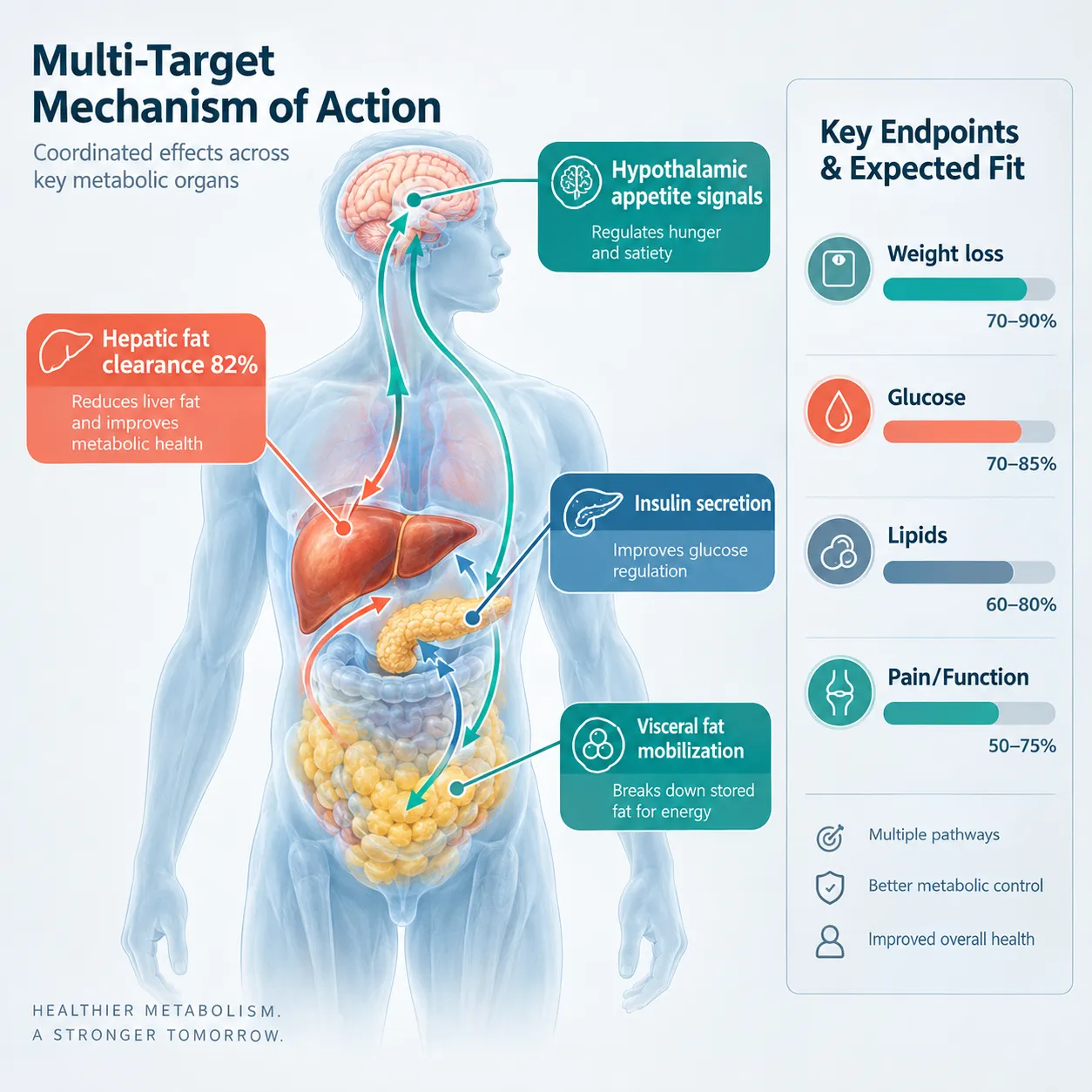
The metabolic research field in 2026 is crowded with potent compounds, and popularity is a poor proxy for scientific fit. Retatrutide simultaneously activates GLP-1, GIP, and glucagon receptors, generating overlapping signals across appetite suppression, hepatic fat clearance, insulin secretion, and thermogenesis. Phase 2 data showed approximately 82% relative reduction in liver fat alongside a 24.2% mean weight loss at 48 weeks with the 12 mg dose. That breadth is valuable, but it also means retatrutide is a noisy tool when a study only needs to isolate one pathway.
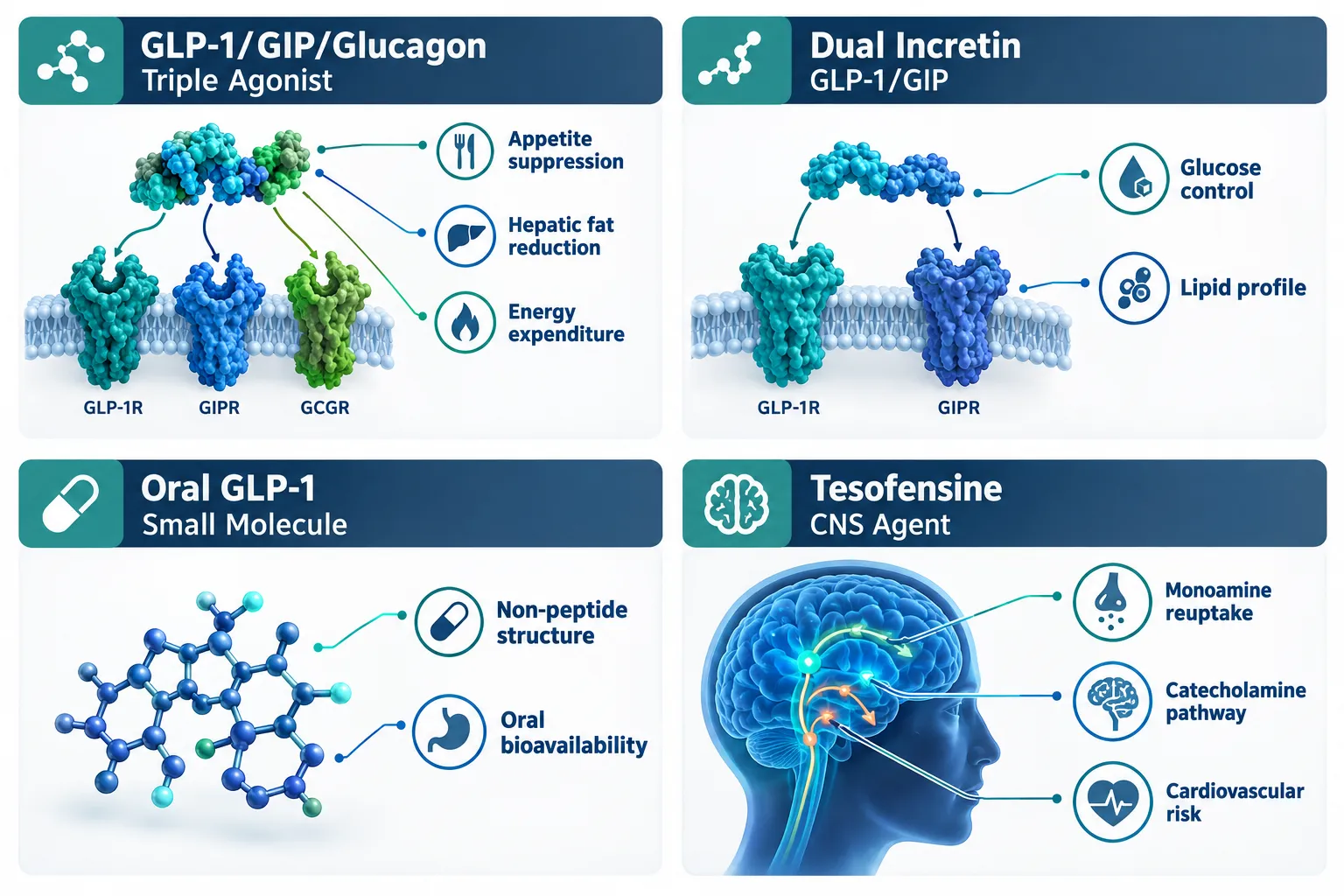
A decision matrix built around the primary research endpoint cuts through this complexity. The six endpoint categories most relevant to metabolic compound selection are:
- Appetite / satiety signaling, hypothalamic and vagal pathways
- Glucose homeostasis, insulin secretion, HbA1c, fasting plasma glucose
- Lipid metabolism, hepatic fat, triglycerides, LDL/HDL profiles
- Energy expenditure, thermogenesis, resting metabolic rate, glucagon-driven brown adipose activation
- Catecholamine / monoamine signaling, dopamine, norepinephrine, serotonin reuptake
- Receptor-level signaling fidelity, clean agonism at a single receptor vs. multi-receptor crosstalk
Mapping each compound to these categories before designing a protocol prevents the most common error in metabolic research: choosing a compound because it produces the largest weight-loss number rather than because it isolates the pathway under investigation.
Incretin Peptides: Where Retatrutide and Its Closest Alternatives Sit
Among injectable incretin peptides, the comparison landscape in 2026 centers on three tiers of receptor engagement.
Retatrutide (GLP-1 / GIP / Glucagon triple agonist) is the highest-coverage option. The meta-analytic evidence across three randomized controlled trials confirms mean weight reduction of approximately 14.33%, BMI reduction of 5.38 units, and meaningful improvements in fasting plasma glucose, HbA1c, and blood pressure, all at very low statistical significance thresholds. For researchers studying retatrutide endpoints that span weight, metabolic, and musculoskeletal outcomes simultaneously, this breadth is the primary advantage. The TRIUMPH program's pairing of weight loss with pain endpoints in TRIUMPH-4 (knee osteoarthritis) and TRIUMPH-7 (chronic low back pain) illustrates this endpoint-fit strategy explicitly.
Tirzepatide (GLP-1 / GIP dual agonist) is the closest comparator for glucose and lipid endpoints without glucagon-driven thermogenesis. TRIUMPH-5 will provide direct head-to-head data against retatrutide in obesity, which will clarify how much the glucagon arm contributes to incremental weight loss and energy expenditure. Until those data arrive, tirzepatide remains the preferred compound when glucagon receptor crosstalk would confound interpretation.
Single GLP-1 receptor agonists (semaglutide class) offer the cleanest receptor-signaling fidelity for studies where isolating GLP-1R biology is the goal. For a broader overview of how these peptide classes are structured mechanistically, the Peptides 101 for Research-Use Only Buyers resource provides a useful structural and mechanistic foundation.
Researchers sourcing GLP-3/retatrutide analogs for preclinical work can review GLP-3 peptides for research use or explore lab tested peptides verified by third-party analysis to ensure compound integrity before endpoint data collection begins.
Tesofensine and Oral Small Molecules: Endpoint Fit for Catecholamine and Access Research
Tesofensine: A Legacy CNS Tool With a Narrow Endpoint Window
Tesofensine is a centrally acting triple monoamine reuptake inhibitor, blocking dopamine, norepinephrine, and serotonin reuptake, originally developed for neurodegenerative conditions. In mid-2000s obesity trials, it produced roughly 10-12% weight loss over approximately 24 weeks. That figure is meaningful in absolute terms but is substantially below the 20-24% range seen with retatrutide at higher doses.
More importantly, tesofensine's endpoint fit is narrow and specific:
| Endpoint Category | Tesofensine Fit | Retatrutide Fit |
|---|---|---|
| Appetite / CNS satiety | Strong (catecholamine) | Strong (incretin) |
| Glucose homeostasis | Weak | Strong |
| Hepatic lipid reduction | Weak | Strong (~82% relative) |
| Energy expenditure | Moderate (sympathomimetic) | Strong (glucagon arm) |
| Cardiovascular safety margin | Narrow (HR/BP elevation) | Broader (phase 3 data) |
| Musculoskeletal pain endpoints | Not established | Active (TRIUMPH-4, 7) |
Tesofensine is a legitimate research tool when the study question specifically involves catecholamine-mediated appetite suppression or monoamine pathway modulation. It is not a frontline alternative for glucose, lipid, or energy-expenditure endpoints, and its cardiovascular signal, increased heart rate and blood pressure, introduces confounders in cardiometabolic models. As of 2026, no new phase 3 obesity program for tesofensine has been widely reported, confirming its position as a legacy pharmacologic comparator rather than a contemporary competitor.
Oral GLP-1 Small Molecules: Orforglipron and the Access Endpoint
Orforglipron represents a structurally distinct category: a non-peptide, oral GLP-1 receptor agonist evaluated in the ATTAIN-1 trial for obesity. Its primary research value is not maximum weight-loss magnitude but oral bioavailability and adherence modeling. For studies where the endpoint involves treatment access, patient adherence behavior, or oral-route pharmacokinetics, orforglipron and related oral GLP-1 receptor agonists are the appropriate comparators.
The tradeoff is data maturity. As of early 2026, oral GLP-1 small molecules carry less complete phase 3 obesity data than injectable incretin peptides. Researchers designing studies that will need to reference a robust efficacy benchmark should note this gap when selecting comparators.
Building the Decision Matrix: Matching Compound to Research Question
The practical output of this analysis is a compound-selection protocol driven by the primary endpoint, not by compound prestige. The framework below summarizes the match:
Use retatrutide or a GLP-3 analog when:
- The primary endpoint spans weight, metabolic markers, and functional outcomes simultaneously
- Visceral fat research is a core outcome
- Energy expenditure and glucagon-receptor biology are within scope
Use a dual incretin (tirzepatide class) when:
- Glucose and lipid endpoints are primary, and glucagon-arm crosstalk would confound
- Head-to-head incretin comparison is the study design
Use a single GLP-1 agonist when:
- Receptor-signaling fidelity at GLP-1R alone is required
- The study needs the cleanest possible GLP-1 pathway attribution
Use tesofensine when:
- The research question is explicitly about monoamine reuptake inhibition or catecholamine-mediated satiety
- Cardiovascular confounders are controlled for or are themselves the endpoint
Use oral GLP-1 small molecules when:
- The endpoint involves oral-route pharmacology, adherence, or access modeling
- Injectable peptide format is a study constraint
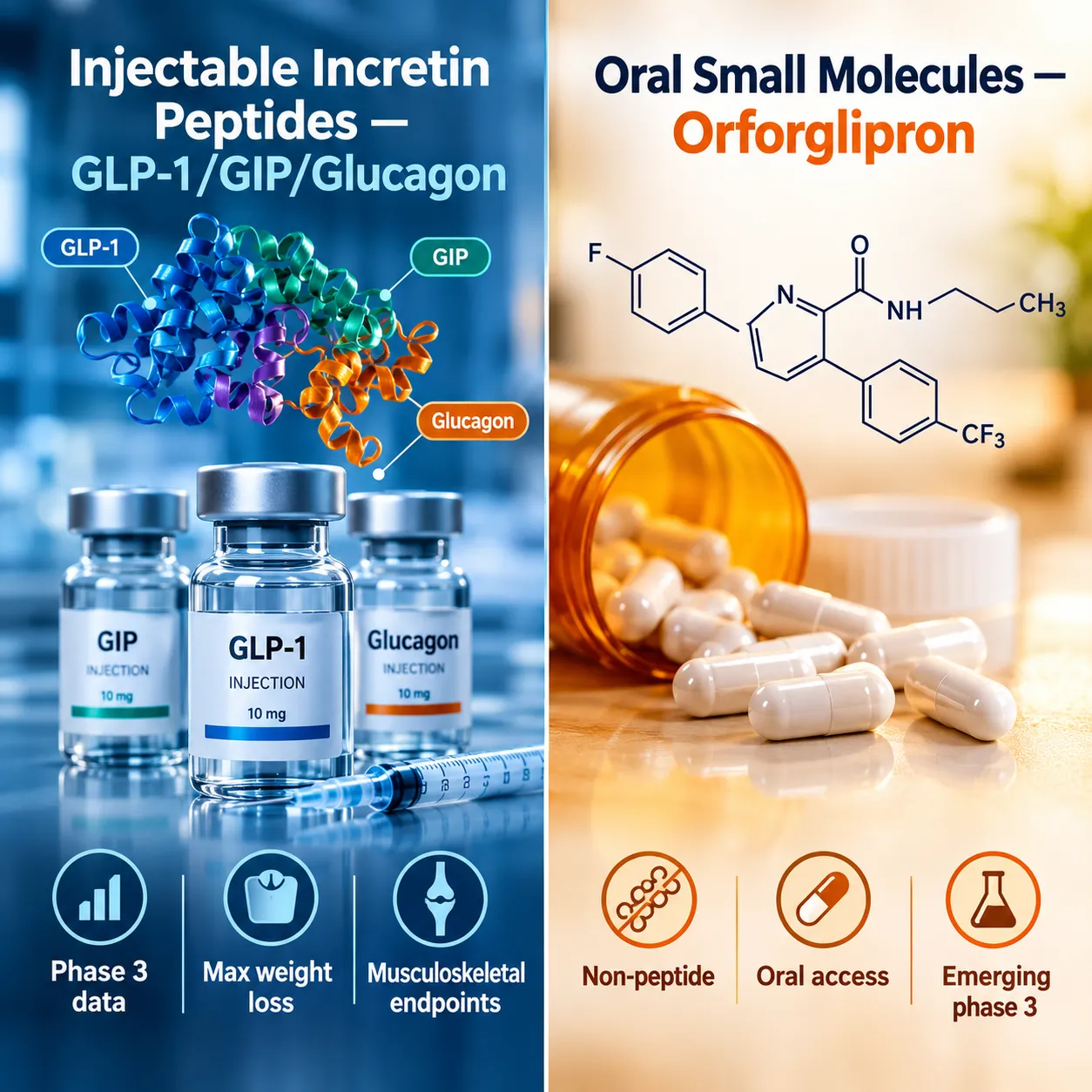
Researchers reviewing the full retatrutide clinical trials landscape, including TRIUMPH-1 through TRIUMPH-8, will find that Eli Lilly's own endpoint-fit strategy mirrors this matrix: each TRIUMPH sub-study pairs retatrutide's weight-loss mechanism with a distinct comorbidity endpoint, from knee osteoarthritis pain to chronic low back pain to long-term weight maintenance. That design logic is directly transferable to preclinical model selection.
For researchers sourcing compounds, the TESA IPA blend peptide page offers a relevant example of how multi-mechanism blends are positioned for specific research applications, reinforcing the endpoint-fit principle at the product level.
Conclusion
The most consequential decision in metabolic peptide research is not which compound produces the largest effect size, it is which compound isolates the pathway the study is actually designed to interrogate. Retatrutide research alternatives: comparing incretin peptides, tesofensine, and metabolic small molecules by endpoint fit is not an academic exercise; it is a protocol-design requirement.
Actionable next steps for research teams in 2026:
- Define the primary endpoint category first, appetite, glucose, lipid, energy expenditure, catecholamine, or receptor signaling, before shortlisting compounds.
- Use retatrutide or GLP-3 analogs for broad metabolic and functional endpoint studies; use single-receptor agonists when signaling fidelity is paramount.
- Reserve tesofensine for CNS monoamine pathway studies with appropriate cardiovascular controls.
- Monitor TRIUMPH phase 3 readouts through 2026 to update the efficacy benchmarks used in comparator selection.
- Verify compound purity through third-party testing before any endpoint data collection begins, using lab tested peptides from verified suppliers.
Endpoint fit, not headline weight-loss numbers, is the standard that produces reproducible, interpretable metabolic research.


Leave a Reply
Want to join the discussion?Feel free to contribute!