

GLP-1 Receptor Agonists vs Traditional Weight-Loss Medications: What Researchers Should Measure Beyond the Drug Name
Across 16 placebo-controlled trials, more than 78% of participants on GLP-1-based agents achieved meaningful weight loss compared with fewer than 27% on placebo, yet pooled analyses show inter-study variability so wide that the confidence interval spans more than two percentage points. That gap is not a statistical quirk. It is a warning that simply naming the drug class tells researchers almost nothing useful. The real question behind GLP-1 Receptor Agonists vs Traditional Weight-Loss Medications: What Researchers Should Measure Beyond the Drug Name is about which endpoints actually explain why outcomes differ, and how legacy drugs like phentermine-topiramate, orlistat, and naltrexone-bupropion stack up when the same rigorous yardstick is applied.
Key Takeaways
- Responder thresholds (5%, 10%, 15% weight loss) are more informative than mean weight change alone.
- Cardiovascular, renal, lean-body-mass, and bone-density outcomes must be tracked alongside weight.
- Behavioral adherence, exercise dose, and lifestyle program intensity independently drive results.
- Route of administration, formulary barriers, and access equity reshape real-world effectiveness.
- Long-term durability and off-treatment weight trajectories are critical gaps in current research.
Why Mechanism Matters More Than the Drug Label
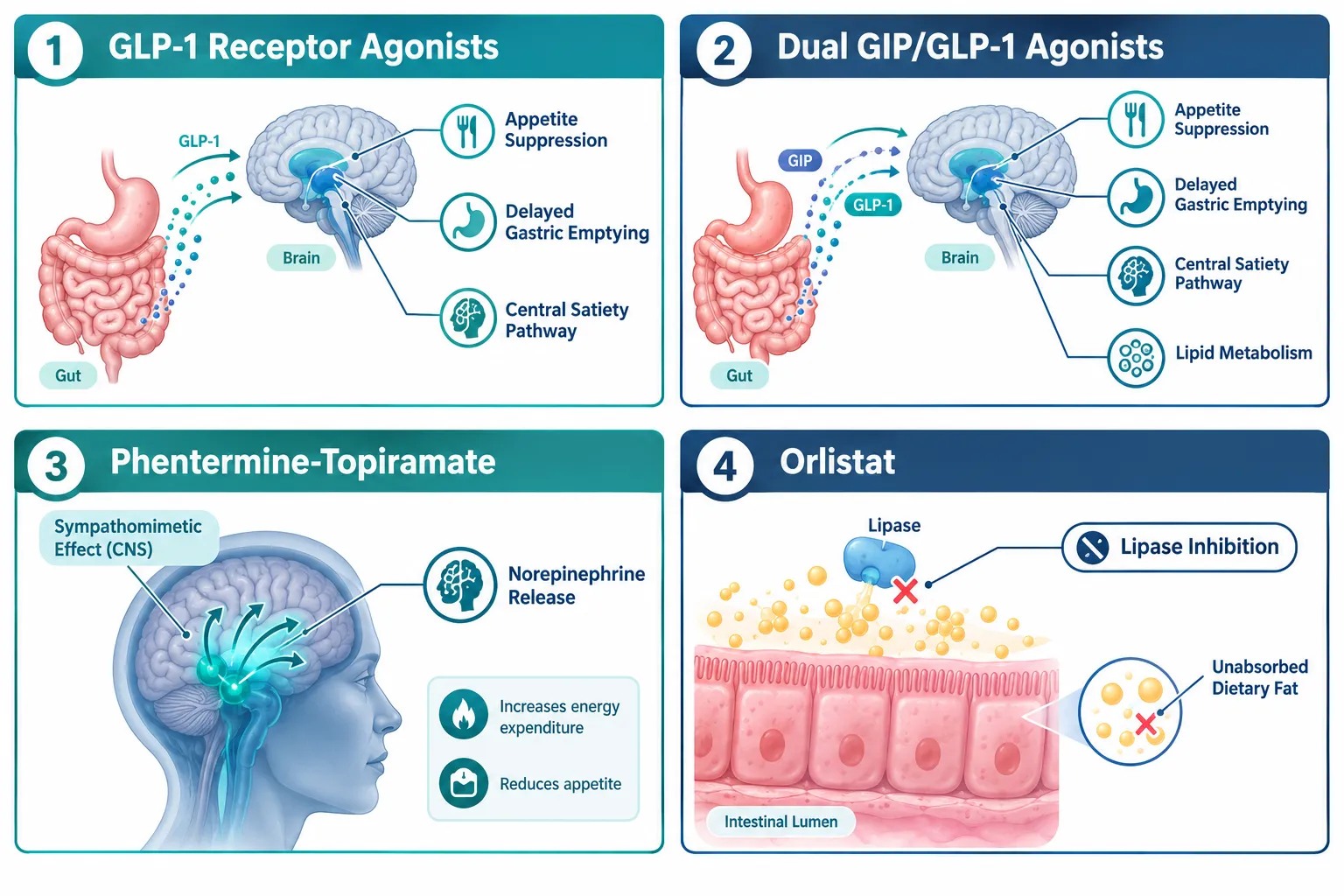
GLP-1 receptor agonists, including semaglutide and tirzepatide, work through at least three distinct pathways: appetite suppression via central satiety circuits, delayed gastric emptying, and modulation of food-reward sensitivity. Dual GIP/GLP-1 agonists add lipid metabolism benefits on top of that. Orlistat, by contrast, inhibits pancreatic lipase to block dietary fat absorption. Phentermine-topiramate stimulates norepinephrine release to blunt hunger centrally. Naltrexone-bupropion targets opioid and dopamine reward pathways.
These differences matter enormously for study design. When comparing GLP-1 Receptor Agonists vs Traditional Weight-Loss Medications, researchers who report only total kilograms lost are conflating drugs that reduce hunger with drugs that block fat digestion, mechanisms with entirely different side-effect profiles, adherence challenges, and disease-specific benefits. Hunger ratings, food-reward sensitivity scores, lipid panels, blood pressure readings, and glycemic control metrics each capture a different slice of the pharmacological story.
Researchers should also monitor:
- Gastrointestinal tolerability by drug class and route
- Changes in total cholesterol and triglycerides
- Hemoglobin A1c trajectories in participants with or at risk of diabetes
For background on how peptide signaling pathways interact with metabolic endpoints, the GLP-3 peptide signaling pathway overview provides useful mechanistic context.
Multidimensional Endpoints: What the Data Actually Demand
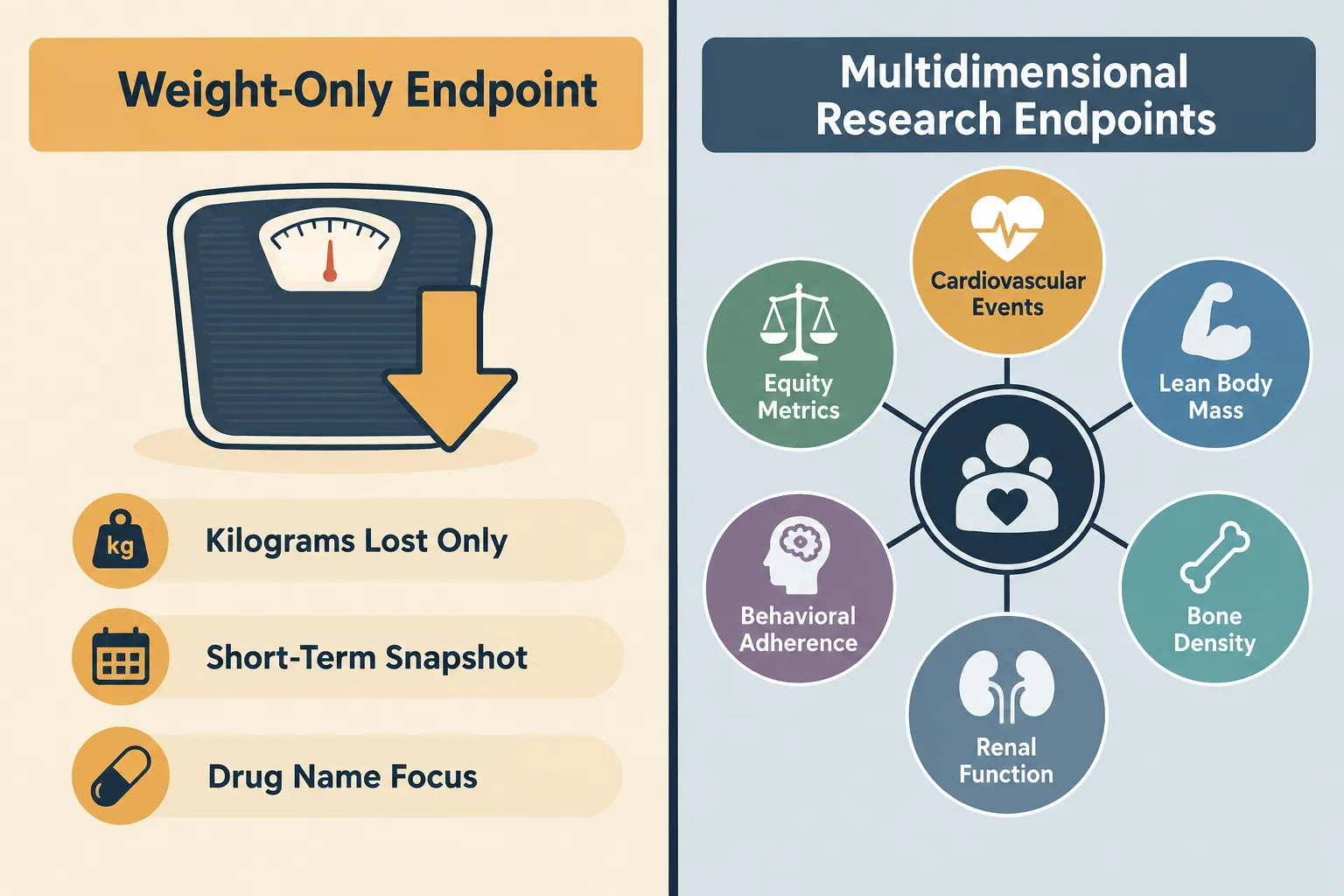
A 2026 New England Journal of Medicine review confirmed that GLP-1 receptor agonists reduce cardiovascular risk and slow renal disease progression, but they also carry potential for muscle and bone mass loss. That dual profile means a study measuring only the scale is incomplete by design.
Core endpoints researchers should systematically capture:
| Endpoint Category | Specific Measures |
|---|---|
| Cardiovascular | Major adverse cardiovascular events (MACE), blood pressure, resting heart rate |
| Renal | eGFR trajectory, albuminuria |
| Body composition | Lean body mass, bone mineral density |
| Metabolic | Fasting glucose, HbA1c, lipid profile |
| Behavioral | Dietary adherence, physical activity volume, counseling attendance |
| Tolerability | GI adverse events, discontinuation rates, reason for stopping |
A network meta-analysis found that combining GLP-1 receptor agonists with structured exercise produced the largest reductions in weight, fat mass, and waist-to-hip ratio, exceeding either intervention alone. That finding creates an obligation: studies must record exercise dose, program structure, and physical activity outcomes as independent variables, not background noise. Attributing all benefit to the pill or injection produces misleading comparisons against older medications.
The WHO's 2026 global obesity guidelines reinforce this point by requiring concurrent intensive behavioral intervention alongside GLP-1 therapy. Research protocols that skip behavior-change quantification cannot fairly adjudicate GLP-1 Receptor Agonists vs Traditional Weight-Loss Medications, especially since older agents like orlistat were rarely studied alongside equivalent behavioral support.
Researchers studying metabolic peptides alongside anti-obesity pharmacotherapy may also find the visceral fat research literature relevant for endpoint selection.
Beyond Efficacy: Equity, Access, and Long-Term Durability
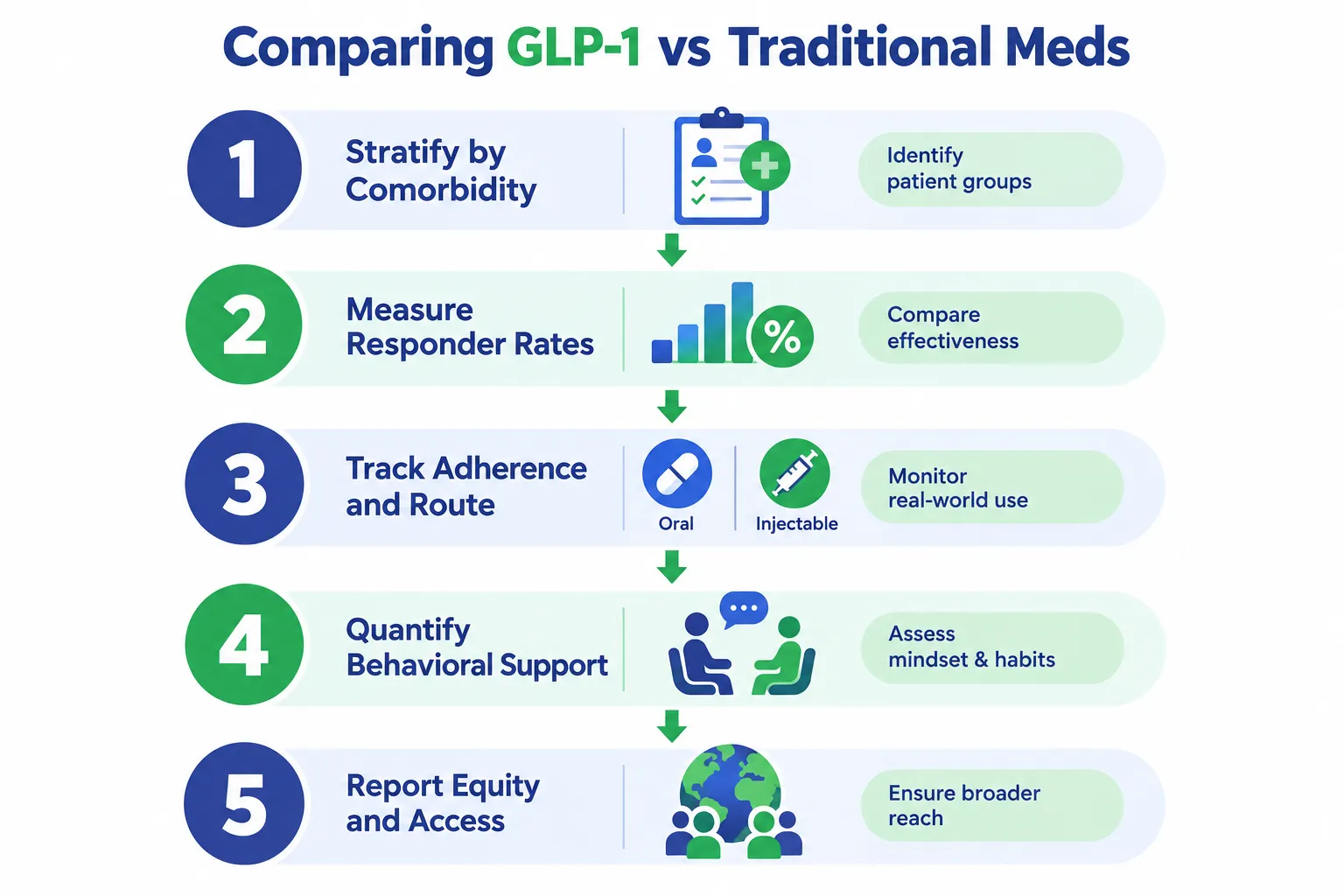
A multinational eligibility analysis estimated that more than one in four adults qualifies for GLP-1-based weight management, and that nearly four-fifths of those eligible individuals live in low- and middle-income countries. Yet GLP-1 agents remain far more expensive than orlistat or phentermine, drugs that are off-patent and widely available. This creates a methodological obligation that goes beyond clinical pharmacology.
Equity and access metrics every comparative study should report:
- Geographic availability of each agent
- Insurance coverage and prior-authorization burden
- Time from diagnosis to treatment initiation
- Representation of low- and middle-income country populations in trial samples
The 2026 American Diabetes Association obesity guidelines position GLP-1 and dual agonists as first-line agents for people with type 2 diabetes, relegating traditional drugs to alternative status. That hierarchy, however, is built on efficacy data; cost and access data tell a different story for most of the world.
Long-term durability is equally under-measured. Weight loss can reverse after treatment discontinuation, yet most published trials run 52 weeks or fewer. Comparative studies must track off-treatment weight trajectories, reasons for stopping therapy, and shifts in surgical referral rates. Contemporary commentaries note that GLP-1 therapies will likely complement rather than replace metabolic surgery, but that relationship can only be understood with durability data in hand.
Oral GLP-1 agents (orforglipron, aleniglipron, high-dose oral semaglutide) now show placebo-adjusted weight reductions of roughly 7.5-11% over 36 weeks, comparable to injectables. That development makes route-of-administration a live research variable: adherence, persistence, gastrointestinal tolerability, and patient preference all shift when a patient can swallow a tablet instead of self-injecting.
For researchers exploring peptide formulations relevant to weight and metabolic research, resources on what is the strongest peptide for weight loss and tesa peptide benefits offer relevant mechanistic background. Those interested in growth-hormone-releasing peptide combinations may also consult the Tesamorelin CJC-1295 Ipamorelin 12mg blend dosage reference for comparative dosing context.
Conclusion
The debate around GLP-1 Receptor Agonists vs Traditional Weight-Loss Medications cannot be settled by drug name alone. Researchers who want actionable conclusions should take three concrete steps.
- Adopt tiered responder thresholds (5%, 10%, 15% weight loss) as primary outcomes rather than mean weight change.
- Expand endpoint panels to include cardiovascular events, renal function, lean body mass, bone density, glycemic markers, and behavioral adherence, not just body weight.
- Report equity variables, cost, access, insurance coverage, and LMIC representation, alongside clinical results so that findings translate across healthcare systems.
Long-term durability data, off-treatment trajectories, and the emerging oral GLP-1 pipeline make this a rapidly evolving field. Studies that measure comprehensively now will remain relevant far longer than those chasing short-term scale numbers.


Leave a Reply
Want to join the discussion?Feel free to contribute!