Call or Text 727-513-9780
  • Shopping Cart Shopping Cart
    0Shopping Cart
Pure Tested Peptides | America's most trusted Peptides for sale online
  • Peptides for sale
    • Oral Peptides for sale
      • Peptide Capsules for sale
      • BPC 157 Capsules 1000mcg
      • SLU-PP-332 Capsules | 1000 mcg
      • 5-Amino-1MQ 50mg Capsules
      • Tesofensine 500mcg
    • All Peptides for sale
    • Peptide Sprays
      • BPC 157 Nasal Spray Kit
      • BPC-157 TB500 Nasal Spray Kit
      • Semax Nasal Spray 10mg
      • Selank – Nasal Spray Kit – 10mg
      • Epithalon 50MG Nasal Spray Kit
      • Ipamorelin 10mg Nasal Spray
      • Klow Nasal Spray (BPC-157 + TB-500 + GHK-Cu + KPV) | 80mg
      • Hulk Nasal Spray Tesa / Ipa Blend 6/3 MG
      • Klow Nasal Spray
      • NAD + 500 mg Nasal Spray
      • PT-141 Nasal Spray Kit
    • GHRH Peptides
      • Ipa Peptides
      • CJC-1295 Peptides
        • CJC-1295 with DAC 5 mg
        • CJC-1295 without DAC 5 mg
        • CJC-1295 Ipa 10mg
      • Tesa Peptides
        • Tesa Peptide
        • Tesa 20 mg
    • GHK-Cu Peptides
      • All GHK-Cu Peptides
      • GHK-Cu 100mg
      • KLOW Peptide Blend – Buy KLOW blend online
    • BPC Peptides
      • All BPC Peptides
      • BPC-157
      • BPC-157 TB-500
      • BPC 157 capsules 1000mcg
    • SLU-PP-332 Peptides
      • All SLU-PP-332 Peptides
      • SLU-PP-332 5mg
    • GLP3 Peptides
    • PT-141 Peptides
      • PT-141 Peptides for sale
      • PT-141 10mg
      • PT-141 Nasal Spray
    • CAG Peptides
      • Lipo-C Peptide Blend
      • CAG 5mg
      • CAG 10mg
    • MOTS-C Peptides
      • MOTS-C Peptides for sale
      • MOTS-c peptide
      • MOTS-c 10mg *6 pack*
    • 5 Amino 1MQ Peptides
      • 5 Amino 1MQ Peptides for sale
      • 5-Amino-1MQ 50mg Capsules
      • 5-Amino-1MQ 5mg
    • Epithalon Peptides
      • Epithalon Peptides for sale
      • Epithalon 10mg
      • Epithalon 50mg
  • Shop
    • GLPs
      • 5-Amino-1MQ 50mg Capsules
      • 5-Amino-1MQ 5mg
      • L-Carnitine 500mg/ml
      • Tesofensine 500mcg
      • SLU-PP-332 5mg
      • MOTS-c 10mg *6 pack*
    • Epithalon & BPC Peptides
      • Epithalon 10mg
      • Epithalon 50mg
      • BPC-157
      • BPC 157 capsules 1000mcg
      • BPC-157 TB-500
      • BPC-157 TB500 Nasal Spray Kit
      • BPC 157 Nasal Spray Kit
    • BPC TB-500 & NAD+ Peptides
      • NAD+ 500 mg
      • KLOW Peptide Blend – Buy KLOW blend online
      • GLOW Peptide Blend
      • TB 500 5mg
      • BPC 157 capsules 1000mcg – Supplement
      • BPC 157 Nasal Spray Kit
      • BPC-157
      • BPC-157 TB500 Nasal Spray Kit
      • BPC-157 TB-500
      • BPC 157 capsules 1000mcg
    • LL-37 Peptide
      • LL-37 10 mg
    • MOTS-C & Selank
      • MOTS-c peptide
      • Selank 10mg
    • GHK Peptides
      • GHK-Cu 100mg
      • GLOW Peptide Blend
      • KLOW Peptide Blend – Buy KLOW blend online
  • COAs
  • Wholesale
    • Wholesale Peptides for sale
  • PTP FAQ
  • Affiliates
    • Selank Peptide: Advanced Pharmacological Mechanisms Underlying Its Anxiolytic and Nootropic Effects in Research
      • 5-Amino-1MQ Peptide: Detailed Mechanisms of NNMT Inhibition and Its Impact on Cellular Metabolism Research
        • MOTS-C Peptide: Unraveling Its Role in Mitochondrial Dynamics and Energy Metabolism Research
          • Epithalon Peptide and Telomerase Regulation: Investigating Its Impact on Cellular Senescence and Lifespan Research Models
            • GLP2-T vs GLP2 Tirz Peptide: Understanding the Naming, Mechanistic Nuances, and Research Implications for Gut Health
      • Peptides and Polypeptides in Modern Pharmacology: What Research on Metoprolol, Prednisone, and Amlodipine Reveals
        • Polypeptide Peptides vs NSAIDs: What Naproxen and Diclofenac Teach Tissue-Repair Researchers About BPC‑157 and TB‑500
          • Peptides and Polypeptides in Endocrine Pharmacology: How GLP-1, GLP-2, and GLP-3 Retatrutide Differ From Classic Drugs Like Prednisone and Amlodipine
          • 5‑Amino‑1MQ Peptide and NNMT Inhibition: How It Compares With Statins Like Atorvastatin in Adipose and Lipid Metabolism Research
      • Enclomiphene, Estrogen Receptor Signaling, and Luteinizing Phase Biology: What Hormone Researchers Should Measure
        • Mesenchymal Stem Cells, BPC‑157, and GHK‑Cu: How Tissue Repair Peptides Compare With Classic NSAIDs Like Naproxen in Injury Models
          • Peptide Calculator Use Cases Beyond Growth Hormone: Working Through GLP‑3 Retatrutide, MOTS‑c, and BPC‑157 Research Dosing
        • Polypeptide Peptides in Endocrine and Metabolic Pharmacology: Lessons From Amlodipine, Prednisone, and Metoprolol
        • Peptides Calculator for Advanced Blends: Worked Examples for Tesamorelin, CJC‑1295, and Ipamorelin Stacks
          • Peptides and Polypeptides in Human Physiology: How Molecular Size Shapes Research Applications
            • Selank Peptide: Advanced Pharmacological Mechanisms Underlying Its Anxiolytic and Nootropic Effects in Research
          • 5-Amino-1MQ Peptide: Detailed Mechanisms of NNMT Inhibition and Its Impact on Cellular Metabolism Research
            • MOTS-C Peptide: Unraveling Its Role in Mitochondrial Dynamics and Energy Metabolism Research
              • Epithalon Peptide and Telomerase Regulation: Investigating Its Impact on Cellular Senescence and Lifespan Research Models
                • GLP2-T vs GLP2 Tirz Peptide: Understanding the Naming, Mechanistic Nuances, and Research Implications for Gut Health
                  • Peptides and Polypeptides in Endocrine Pharmacology: How GLP-1, GLP-2, and GLP-3 Retatrutide Differ From Classic Drugs Like Prednisone and Amlodipine
                    • Polypeptide Peptides vs NSAIDs: What Naproxen and Diclofenac Teach Tissue-Repair Researchers About BPC‑157 and TB‑500
                      • Peptides and Polypeptides in Modern Pharmacology: What Research on Metoprolol, Prednisone, and Amlodipine Reveals
                        • 5‑Amino‑1MQ Peptide and NNMT Inhibition: How It Compares With Statins Like Atorvastatin in Adipose and Lipid Metabolism Research
                        • Enclomiphene, Estrogen Receptor Signaling, and Luteinizing Phase Biology: What Hormone Researchers Should Measure
                        • Mesenchymal Stem Cells, BPC‑157, and GHK‑Cu: How Tissue Repair Peptides Compare With Classic NSAIDs Like Naproxen in Injury Models
                        • Peptide Calculator Use Cases Beyond Growth Hormone: Working Through GLP‑3 Retatrutide, MOTS‑c, and BPC‑157 Research Dosing
                        • Polypeptide Peptides in Endocrine and Metabolic Pharmacology: Lessons From Amlodipine, Prednisone, and Metoprolol
                        • Peptides Calculator for Advanced Blends: Worked Examples for Tesamorelin, CJC‑1295, and Ipamorelin Stacks
                        • Peptides and Polypeptides in Human Physiology: How Molecular Size Shapes Research Applications
                        • Selank Peptide: Advanced Pharmacological Mechanisms Underlying Its Anxiolytic and Nootropic Effects in Research
                        • MOTS-C Peptide: Unraveling Its Role in Mitochondrial Dynamics and Energy Metabolism Research
                        • Peptides and Polypeptides in Modern Pharmacology: What Research on Metoprolol, Prednisone, and Amlodipine Reveals
                        • Peptides and Polypeptides in Endocrine Pharmacology: How GLP-1, GLP-2, and GLP-3 Retatrutide Differ From Classic Drugs Like Prednisone and Amlodipine
                        • 5-Amino-1MQ Peptide: Detailed Mechanisms of NNMT Inhibition and Its Impact on Cellular Metabolism Research
                        • Mesenchymal Stem Cells, BPC‑157, and GHK‑Cu: How Tissue Repair Peptides Compare With Classic NSAIDs Like Naproxen in Injury Models
                        • Peptide Calculator Use Cases Beyond Growth Hormone: Working Through GLP‑3 Retatrutide, MOTS‑c, and BPC‑157 Research Dosing
                        • GLP2-T vs GLP2 Tirz Peptide: Understanding the Naming, Mechanistic Nuances, and Research Implications for Gut Health
                        • Polypeptide Peptides in Endocrine and Metabolic Pharmacology: Lessons From Amlodipine, Prednisone, and Metoprolol
                        • Polypeptide Peptides vs NSAIDs: What Naproxen and Diclofenac Teach Tissue-Repair Researchers About BPC‑157 and TB‑500
                        • Peptides and Polypeptides in Human Physiology: How Molecular Size Shapes Research Applications
                        • Peptides Calculator for Advanced Blends: Worked Examples for Tesamorelin, CJC‑1295, and Ipamorelin Stacks
                        • 5‑Amino‑1MQ Peptide and NNMT Inhibition: How It Compares With Statins Like Atorvastatin in Adipose and Lipid Metabolism Research
                        • Enclomiphene, Estrogen Receptor Signaling, and Luteinizing Phase Biology: What Hormone Researchers Should Measure
                        • Epithalon Peptide and Telomerase Regulation: Investigating Its Impact on Cellular Senescence and Lifespan Research Models
                        • Best research protocol Klow blend
                        • best time to take BPC-157
                        • best time to take DSIP (Delta Sleep Inducing Peptide)
                        • best time to take CJC-1295
                        • best time to take AOD-9604
                        • best time to take Follistatin 344
                        • best time to take Ipamorelin
                        • best time to take MK-677 (Ibutamoren)
                        • best time to take Ligandrol (LGD-4033) — research compound
                        • best time to take Ostarine (MK-2866) — research compound
                        • best time to take GHK-CU
                        • best time to take TB-500
                        • best time to take MOTS-c
                        • best time to take Semax
                        • best time to take RAD-140 (Testolone) — research compound
                        • best time to take Thymosin Alpha-1
                        • best time to take PEG-MGF
                        • Biolife Plasma, Octapharma Plasma, and Research Peptides: How Plasma Donation Labs Differ From Peptide Suppliers
                        • best time to take YK-11 — research compound
                        • best time to take PT-141 (Bremelanotide)
                        • Best research protocol Klow blend
                        • 5-Amino-1MQ and MOTS-C Synergy: Metabolic Signaling, Mitochondria, and Research Design
                        • BPC-157 and TB-500: Investigating Their Combined Effects on Angiogenesis and Cellular Migration in Tissue Repair Models
                        • BPC-157 Peptide: Gut Barrier Function, Inflammation, and Tissue-Recovery Research
                        • 5‑Amino‑1MQ and MOTS‑c Synergy in Metabolic Research: Designing NNMT and Mitochondrial Biogenesis Stacks
                        • CJC-1295 with DAC vs. Without DAC: Half-Life, Release Kinetics, and Research Implications
                        • CJC‑1295 with DAC vs. Without DAC: Expanding on Half‑Life Differences Using Tesamorelin and Ipamorelin Blend Case Studies
                        • Collagen Biology and Copper‑Binding Peptides: How GHK‑Cu, Glow Blend, and Klow Blend Interact with Skin and Connective Tissue
                        • Collagen Biology and Regenerative Peptides: How GHK‑Cu, Glow Blend, and Klow Blend Affect Extracellular Matrix Research
                    • DNA, Telomeres, and Longevity Peptides: Positioning Epithalon and MOTS‑c in Genetic Aging Research
                      • Enclomiphene Citrate: serm Mechanism, Testosterone Research, and Stack Compatibility
                        • Enclomiphene vs Enclomiphene Citrate: Formulation, Bioavailability, and Research Distinctions
                        • Epithalon Peptide Research: Telomerase Activation, Aging, and Pineal Gland Function
                        • Estrogen Receptor Signaling and Enclomiphene: How Selective Modulators Compare with Classic Polypeptide Hormones
                        • GHK-Cu Peptide: Advanced Mechanisms in Extracellular Matrix Remodeling and Wound Healing Research
                        • GHK-Cu Peptide: Collagen Synthesis, Wound Repair, and Skin-Barrier Research Models
                        • GLP-1 vs GLP-3 vs GLP-2: Peptide Classification and Research Applications
                        • GLP-2 Peptide Research Guide: Gut Barrier Function, Nutrient Absorption, and Intestinal Recovery Models
                        • GLP-3 Retatrutide vs. GLP-1 Drugs: What Triple-Agonist Biology Changes in Research Models
                        • Ipamorelin and Tesamorelin Combination: Synergistic GH Secretagogue Research and Dosing Protocols
                        • GLP2 Tirz Peptide: What It Is, Why the Name Exists, and How Researchers Should Interpret It
                        • Klow Blend Peptide Nasal Spray: What the Formulation Is Trying to Do in Cognitive Research
                        • Mitochondria, NNMT Inhibition, and Peptide Modulators: Where MOTS‑c and 5‑Amino‑1MQ Fit in Cellular Energy Research
                        • MOTS-c Peptide: Mitochondrial Function, Energy Metabolism, and What Researchers Measure
                        • MOTS-c vs. 5-Amino-1MQ: Which Metabolic Research Questions Each Compound Actually Answers
                        • Nasal Spray Peptides: Bioavailability, Administration, and Semax/Selank Research Applications
                        • PT-141 Peptide Research: Mechanism of Action and Melanocortin Receptor Signaling
                        • Retatrutide for Research: Mechanism, Structure, and GLP-1/GLP-3 Dual Action
                        • Retatrutide for Obesity and Type 2 Diabetes: What the Latest Trial Data Suggest
                        • Tesofensine Peptide Research: Mechanism, Appetite Suppression, and Neuropeptide Y Pathways
  • Contact
    • Contact Customer Service
    • Text Customer Support
  • About US
  • Shop all peptides
  • Affiliate Program
    • Affiliate Signup
  • Login / Register Login / Register Page Link Login / Register Page Link
  • Click to open the search input field Click to open the search input field Search
  • Menu Menu

Tag Archive for: glp-3 peptide

GLP-3 Retatrutide and Triple-Agonist Peptides: How Phase 3 Obesity Data Are Shaping Next-Generation Metabolic Research

GLP-3 Retatrutide and Triple-Agonist Peptides: How Phase 3 Obesity Data Are Shaping Next-Generation Metabolic Research

August 5, 2026/0 Comments/in Uncategorized/by

A single injectable peptide producing nearly 30% body weight loss over 80 weeks is not a headline from a speculative pipeline report, it is the topline result from the TRIUMPH-1 Phase 3 trial announced in May 2026. That number has fundamentally shifted how researchers, clinicians, and peptide scientists think about metabolic intervention. The story of GLP-3 Retatrutide and Triple-Agonist Peptides: How Phase 3 Obesity Data Are Shaping Next-Generation Metabolic Research is now one of the most consequential conversations in modern pharmacology.

Key Takeaways

  • Retatrutide (LY3437943) simultaneously activates GLP-1, GIP, and glucagon receptors, making it a true triple agonist.
  • TRIUMPH-1 Phase 3 data show 28.3% mean body weight reduction at the 12 mg dose over 80 weeks.
  • The 9 mg dose achieved 25.9% mean weight loss, both results far exceeding earlier Phase 2 findings.
  • These outcomes are redefining study endpoints and peptide design benchmarks across metabolic research.
  • Downstream research interest in related receptor pathways, including GLP-2, MC4R, and growth hormone secretagogues, is accelerating as a result.
Key Takeaways

What Is Retatrutide and Why Does Triple Agonism Matter

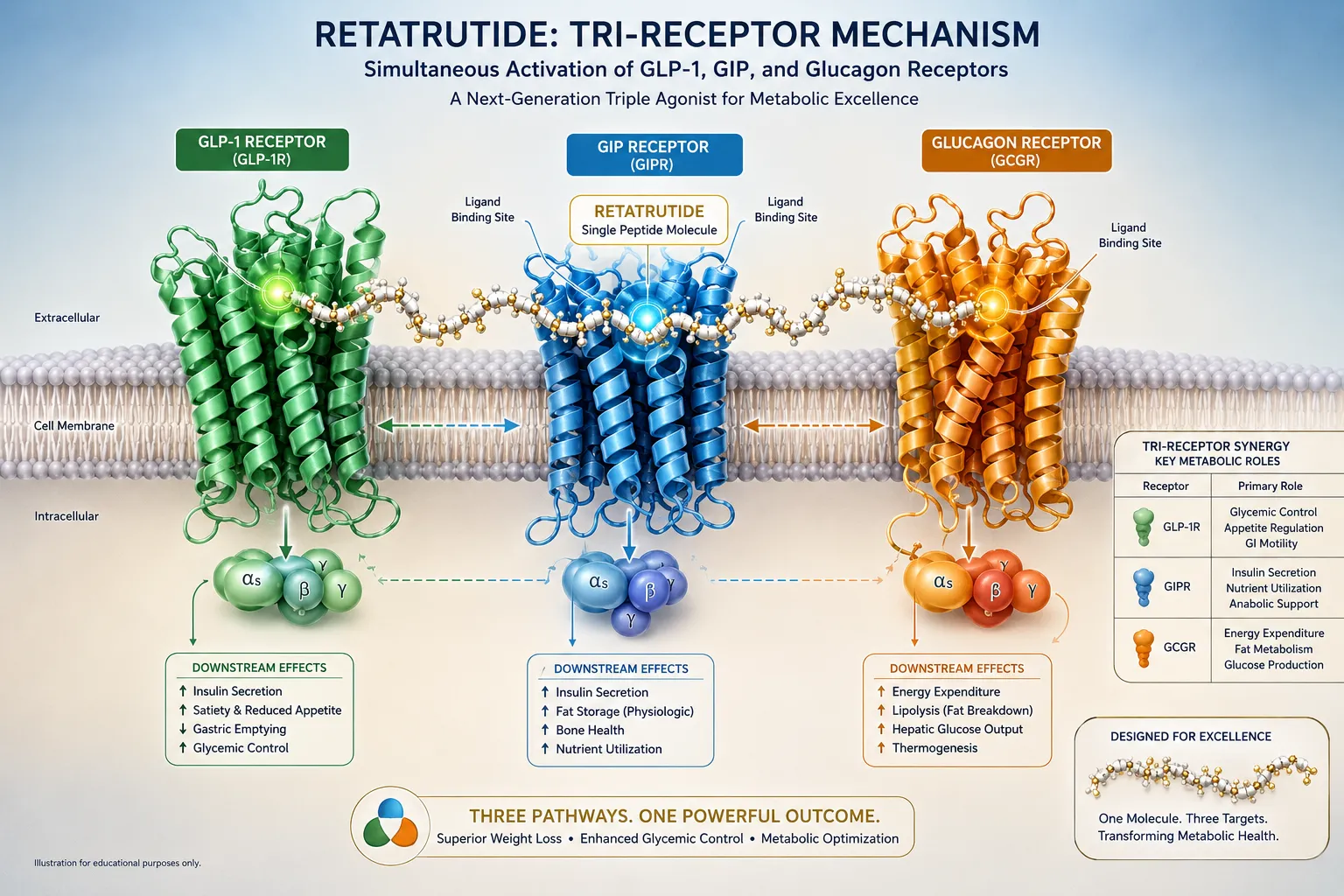
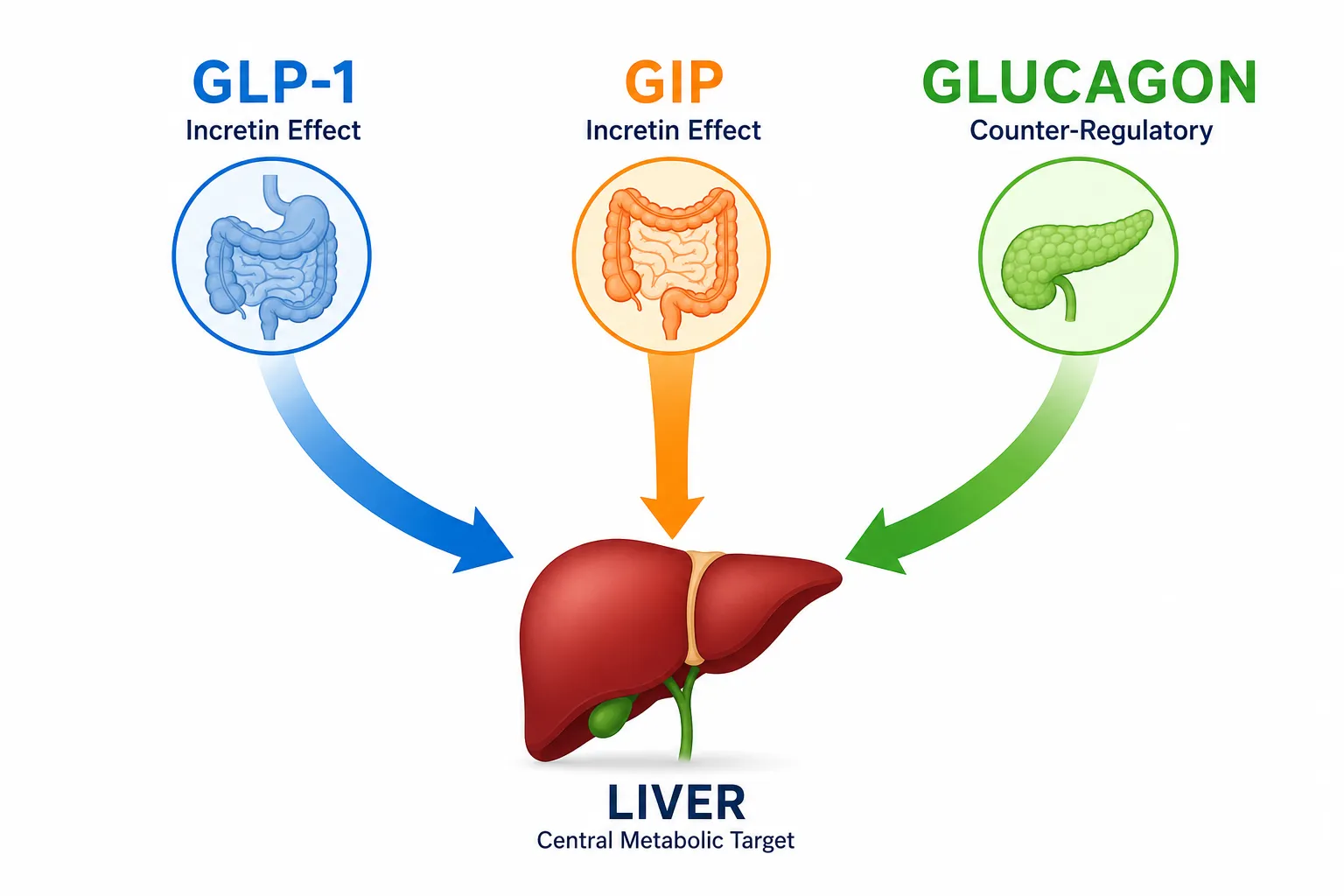
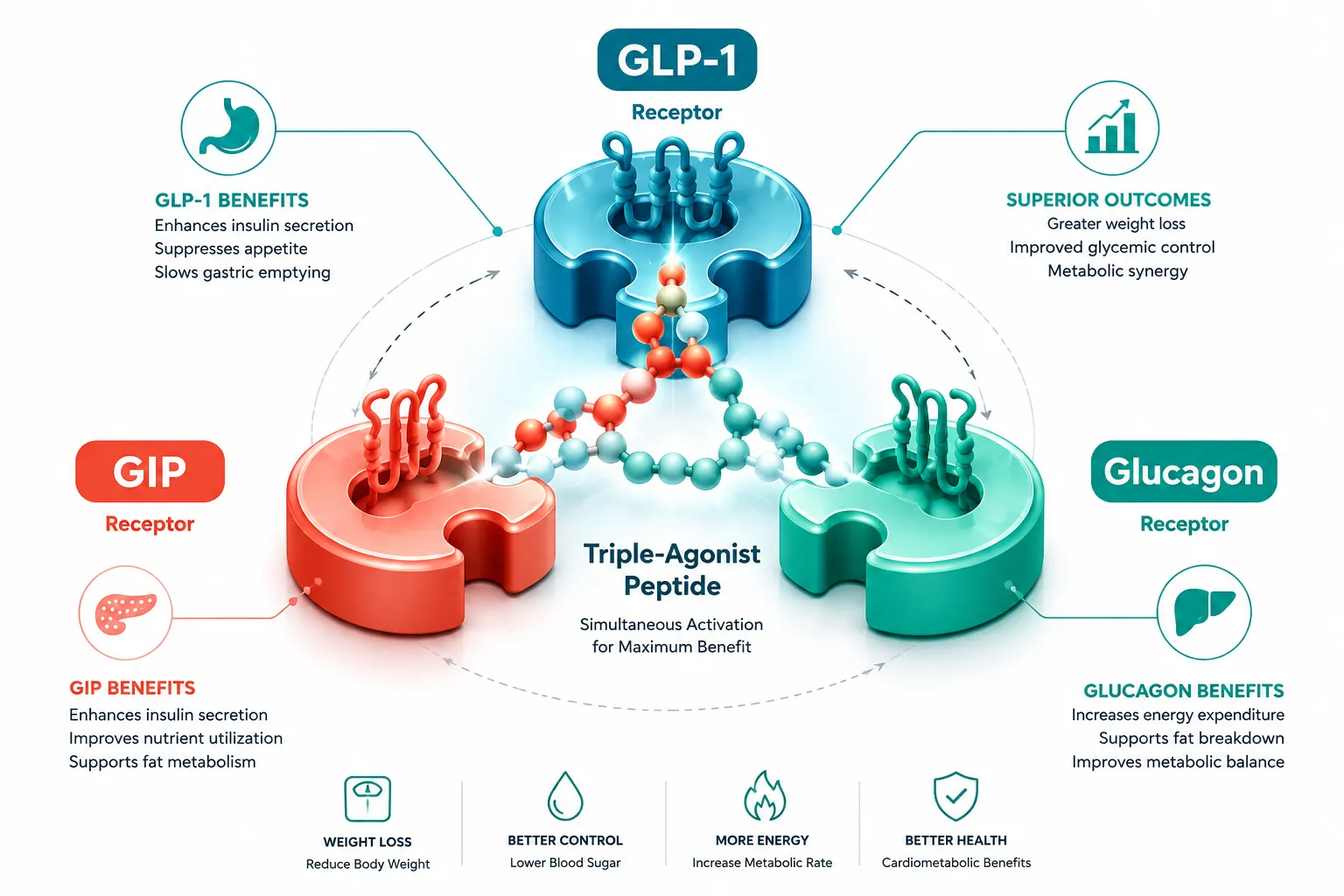
Retatrutide, developed by Eli Lilly under the code LY3437943, is a once-weekly injectable peptide that targets three distinct metabolic receptors simultaneously: the glucagon-like peptide-1 (GLP-1) receptor, the glucose-dependent insulinotropic polypeptide (GIP) receptor, and the glucagon receptor. Each receptor contributes a different metabolic effect.

Receptor Primary Effect
GLP-1 Appetite suppression, slower gastric emptying
GIP Enhanced insulin secretion, fat metabolism support
Glucagon Increased energy expenditure, hepatic fat reduction

By engaging all three pathways, retatrutide aims to deliver compounding benefits that single or dual agonists cannot replicate. Earlier GLP-1 agents like semaglutide and dual GIP/GLP-1 agonists like tirzepatide set a high bar. Retatrutide appears to clear it.

Researchers exploring GLP-1 peptides for metabolic studies will recognize that the triple-agonist architecture represents a logical progression from the single-receptor models that dominated the field just five years ago.

TRIUMPH-1 Phase 3 Data: The Numbers Redefining the Field

The TRIUMPH-1 trial enrolled adults with obesity or overweight without type 2 diabetes. Topline results released in May 2026 reported:

  • 12 mg dose: 70.3 lb (28.3%) mean body weight reduction over 80 weeks
  • 9 mg dose: 64.4 lb (25.9%) mean weight loss over the same period
  • Both doses dramatically exceeded placebo and prior Phase 2 benchmarks

"A 28% mean weight reduction in a Phase 3 trial is not an incremental improvement, it represents a categorical shift in what metabolic pharmacology can achieve."

These results place retatrutide in a performance class that no approved obesity therapy has previously occupied. For context, the best-in-class dual agonist tirzepatide achieved approximately 20-22% weight loss in comparable trial designs.

Researchers sourcing GLP-3 Retatrutide peptide for study purposes are paying close attention to how these Phase 3 endpoints translate into preclinical and in-vitro research models.

TRIUMPH-1 Phase 3 Data: The Numbers Redefining the Field

How Phase 3 Obesity Data Are Shaping Next-Generation Metabolic Research

The impact of GLP-3 Retatrutide and Triple-Agonist Peptides: How Phase 3 Obesity Data Are Shaping Next-Generation Metabolic Research extends well beyond a single drug's approval pathway. These findings are actively reshaping:

1. Study Endpoint Benchmarks
Researchers designing new metabolic peptide studies now face a significantly higher performance bar. A 10-15% weight reduction, once considered a strong outcome, is no longer a compelling endpoint when triple agonism achieves nearly 30%.

2. Receptor Combination Strategies
The TRIUMPH-1 data validate the multi-receptor hypothesis. This is accelerating interest in other receptor combinations, including MC4R receptor pathways that influence energy homeostasis and appetite regulation at the central nervous system level.

3. GLP-2 and Intestinal Metabolic Pathways
Parallel interest is growing in GLP-2 peptide research, which targets intestinal adaptation and nutrient absorption. Researchers are investigating whether GLP-2 co-agonism could enhance the metabolic profile of future triple or quadruple agonist candidates.

4. Growth Hormone Axis Interactions
The glucagon receptor component of retatrutide shares metabolic territory with growth hormone secretagogue pathways. Investigators studying ipamorelin and CJC-1295 combinations are examining whether GH axis modulation can complement triple-agonist mechanisms in body composition research.

5. Adipose Tissue Remodeling
The scale of fat mass reduction seen in TRIUMPH-1 is prompting new questions about adipose tissue biology. Research intersecting with beige adipose tissue conversion is gaining renewed attention as scientists try to understand the cellular mechanisms behind such dramatic fat loss.

Peptide Design Implications for Research Use

The TRIUMPH-1 results are not just clinically significant, they are structurally instructive. Peptide researchers are drawing several design lessons:

  • Half-life engineering matters. Retatrutide's once-weekly dosing relies on fatty acid conjugation that extends plasma half-life. Future research peptides are being designed with similar pharmacokinetic stability in mind.
  • Receptor selectivity ratios are tunable. The balance between GLP-1, GIP, and glucagon activity can be adjusted at the molecular level, allowing researchers to probe which receptor combination drives specific outcomes.
  • Tolerability profiles inform dosing models. Phase 3 data provide real-world tolerability benchmarks that preclinical models can be calibrated against.

Researchers building broader metabolic study panels can explore the full catalog of peptides for sale to identify complementary compounds for multi-pathway investigations.

For those specifically focused on the GLP class, the GLP-1 for sale research category provides a useful starting point for assembling comparative study frameworks.

Peptide Design Implications for Research Use

Conclusion

The TRIUMPH-1 Phase 3 data have set a new standard for what metabolic peptide research must aspire to achieve. With 28.3% mean body weight reduction at the 12 mg dose, retatrutide has moved triple-agonist pharmacology from a promising hypothesis to a clinically validated reality. For researchers, this means recalibrating study endpoints, expanding receptor combination strategies, and engaging more deeply with the molecular architecture that makes multi-target agonism so effective.

Actionable next steps for researchers in 2026:

  • Review updated Phase 3 endpoints and align preclinical models to match realistic efficacy benchmarks.
  • Explore GIP, GLP-1, and glucagon receptor interactions as a combined rather than isolated system.
  • Investigate complementary pathways, MC4R, GLP-2, growth hormone axis, for synergistic study designs.
  • Source high-purity, well-characterized peptides to ensure experimental reproducibility as study complexity increases.

The era of single-receptor metabolic research is giving way to a more sophisticated, multi-pathway paradigm. The data are clear. The direction is set.

https://www.puretestedpeptides.com/wp-content/uploads/2026/08/glp-3-retatrutide-and-triple-agonist-peptides-how-phase-3-obesity-data-are-shapi.webp 1024 1536 https://www.puretestedpeptides.com/wp-content/uploads/2026/01/buy-peptides-online.jpg 2026-08-05 13:04:022026-08-05 13:04:02GLP-3 Retatrutide and Triple-Agonist Peptides: How Phase 3 Obesity Data Are Shaping Next-Generation Metabolic Research
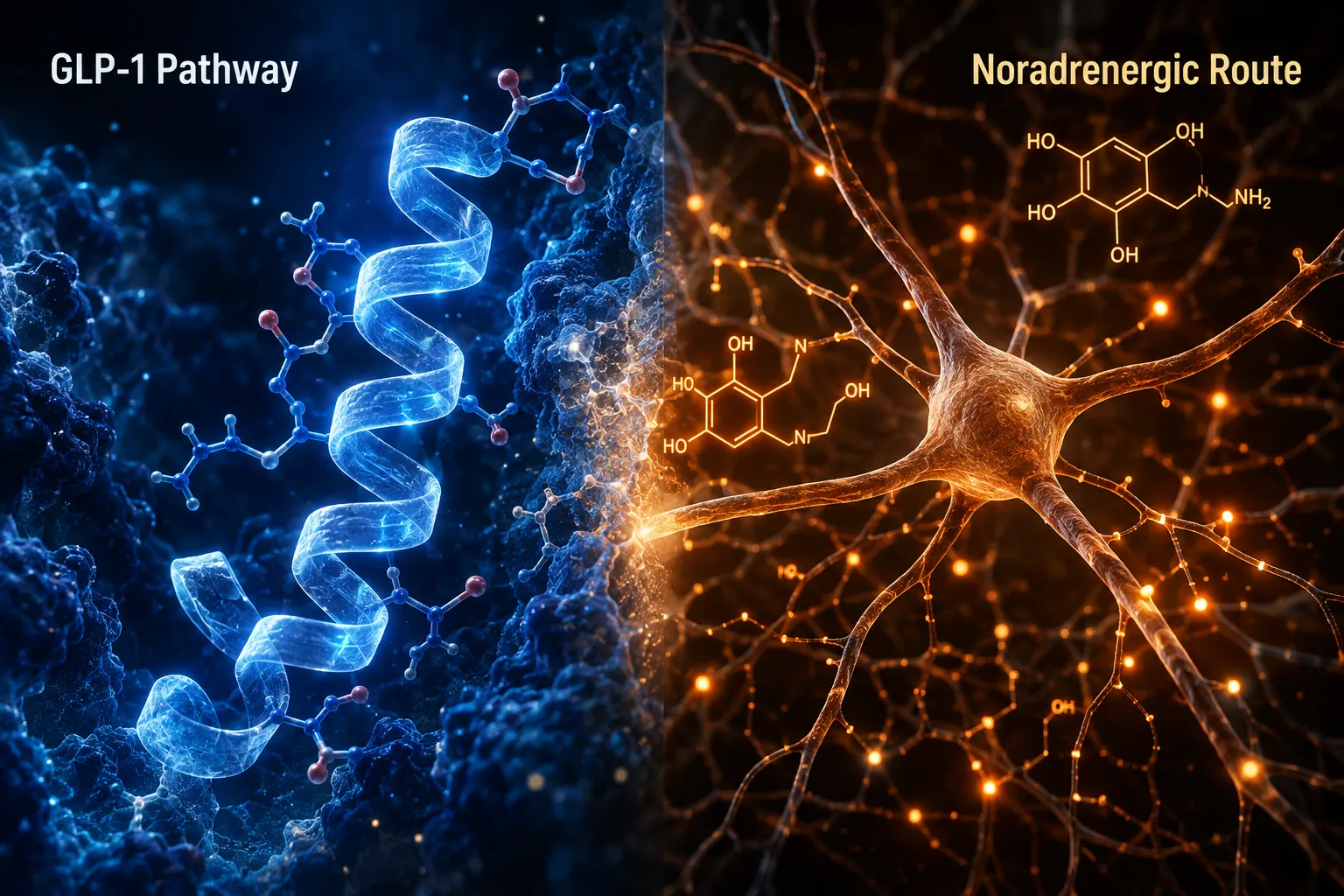
Tesofensine Mechanism Explained: Noradrenergic Appetite Modulation vs Incretin-Based GLP‑3 and GLP‑1 Pathways

Tesofensine Mechanism Explained: Noradrenergic Appetite Modulation vs Incretin-Based GLP‑3 and GLP‑1 Pathways

August 3, 2026/0 Comments/in Uncategorized/by

Only about 2% of obesity pharmacotherapy candidates ever reach regulatory approval, yet tesofensine, a triple monoamine reuptake inhibitor originally developed for Parkinson's disease, produced some of the most striking weight-loss signals seen in Phase II trials. Understanding the Tesofensine Mechanism Explained: Noradrenergic Appetite Modulation vs Incretin-Based GLP-3 and GLP-1 Pathways distinction is now essential for researchers designing comparative or combination metabolic studies in 2026, especially as incretin-based agents dominate clinical headlines.

Key Takeaways

  • Tesofensine inhibits reuptake of norepinephrine, dopamine, and serotonin, reducing appetite through central noradrenergic and dopaminergic signaling rather than gut-derived hormonal cascades.
  • GLP-1 agonists and the emerging GLP-3 class act peripherally and centrally via incretin receptors, slowing gastric emptying and stimulating pancreatic insulin secretion.
  • The two mechanistic classes target appetite and energy balance through non-overlapping pathways, making them candidates for synergistic combination research protocols.
  • Cardiovascular and CNS side-effect profiles differ substantially between the two classes, which has direct implications for preclinical study design.
  • Researchers should understand receptor-level distinctions before selecting compounds for metabolic pathway studies.

Key Takeaways

How Tesofensine Works: Central Monoamine Reuptake Inhibition

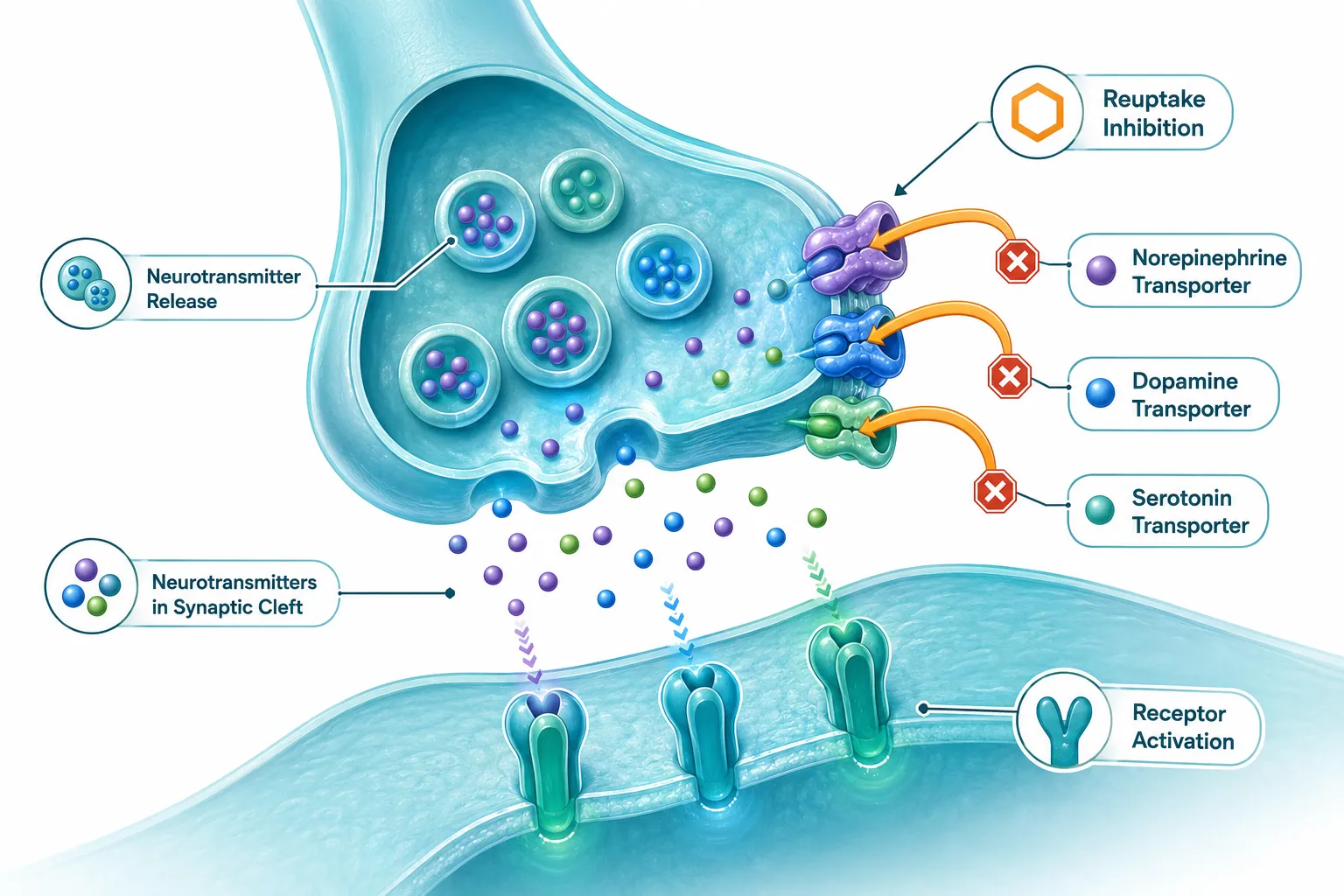
Tesofensine (NS2330) is a presynaptic triple reuptake inhibitor that blocks the transporters responsible for clearing norepinephrine (NET), dopamine (DAT), and serotonin (SERT) from the synaptic cleft. By prolonging the presence of all three monoamines, it amplifies signaling in circuits that govern hunger, reward, and energy expenditure.

The Noradrenergic Appetite Modulation Pathway

The noradrenergic component is central to tesofensine's appetite-suppressing effect. Norepinephrine acts on hypothalamic alpha-2 adrenergic receptors to suppress neuropeptide Y (NPY) release, one of the most potent orexigenic (hunger-stimulating) signals in the brain. When NET is blocked:

  • Synaptic norepinephrine rises
  • NPY activity is blunted
  • Satiety signaling is prolonged
  • Overall caloric intake decreases

The dopaminergic component reinforces this by reducing food-reward motivation, while serotonin reuptake inhibition adds a secondary satiety effect through 5-HT2C receptor activation in the hypothalamus.

"Tesofensine's triple-reuptake mechanism distinguishes it fundamentally from single-target agents, it modulates appetite, reward, and energy expenditure simultaneously through central monoamine circuits."

This centrally mediated mechanism contrasts sharply with agents that rely on MC4R signaling pathways or peripheral hormonal feedback. Researchers studying BDNF-related metabolic signaling may also find relevant context in BDNF induction research.

The Noradrenergic Appetite Modulation Pathway

GLP-1 and GLP-3 Incretin Pathways: A Mechanistic Contrast

To fully appreciate the Tesofensine Mechanism Explained: Noradrenergic Appetite Modulation vs Incretin-Based GLP-3 and GLP-1 Pathways comparison, it helps to map each incretin class at the receptor level.

GLP-1 Receptor Agonists

GLP-1 (glucagon-like peptide-1) is released from intestinal L-cells in response to nutrient ingestion. It acts on GLP-1 receptors (GLP-1R) expressed in:

Location Primary Effect
Pancreatic beta cells Glucose-dependent insulin secretion
Gastric smooth muscle Slowed gastric emptying
Hypothalamus / brainstem Reduced appetite, increased satiety
Cardiovascular tissue Cardioprotective signaling

GLP-1 agonists therefore reduce appetite indirectly, partly through peripheral gut signaling that reaches the brain via the vagus nerve, and partly through direct CNS receptor activation. Researchers exploring GLP-1 peptide sourcing for studies will find a range of formulations suited to preclinical protocols.

What Is GLP-3?

GLP-3 is a lesser-studied proglucagon-derived peptide. Unlike GLP-1, its receptor pharmacology is still being characterized, but early data suggest it influences gut motility and may modulate intestinal nutrient absorption rather than directly stimulating insulin secretion. For researchers asking what is the name of GLP-3 and how it differs, the distinction from GLP-1 lies in its predominant peripheral, enterocyte-level action rather than pancreatic or hypothalamic targeting.

Key Mechanistic Differences at a Glance

Feature Tesofensine GLP-1 Agonists GLP-3 (Emerging)
Primary site CNS synapses Gut + CNS Gut epithelium
Mechanism Monoamine reuptake inhibition Incretin receptor agonism Proglucagon-derived signaling
Insulin effect Indirect (via weight loss) Direct (glucose-dependent) Minimal / under study
Gastric emptying Not directly affected Significantly slowed Modestly affected
Appetite pathway Noradrenergic / dopaminergic Vagal + hypothalamic Enterocyte-mediated

Key Mechanistic Differences at a Glance

Designing Comparative and Combination Metabolic Studies

Understanding the Tesofensine Mechanism Explained: Noradrenergic Appetite Modulation vs Incretin-Based GLP-3 and GLP-1 Pathways framework has direct implications for experimental design. Because the two classes act on non-overlapping receptor systems, researchers can construct protocols that isolate each pathway or test additive effects.

Practical Considerations for Researchers

1. Endpoint selection
Noradrenergic agents primarily reduce caloric intake and increase energy expenditure. Incretin agents additionally affect postprandial glucose, insulin sensitivity, and gastric transit. Studies should include endpoints relevant to both axes when comparing or combining agents.

2. Washout and timing
Tesofensine's CNS effects have a relatively rapid onset. GLP-1 agonists may require days to weeks to reach steady-state receptor occupancy. Staggered dosing timelines are often necessary in combination protocols.

3. Safety monitoring
Tesofensine carries cardiovascular risk signals (elevated heart rate, blood pressure) due to its noradrenergic activity. GLP-1 agonists carry gastrointestinal adverse effect profiles. Monitoring panels should address both.

4. Complementary peptide contexts
Some research groups pair metabolic peptides with growth hormone secretagogues to assess body composition changes more comprehensively. Resources on Tesamorelin benefits and dosing and Ipamorelin/CJC-1295 stacking research provide useful comparative context for researchers studying visceral fat reduction alongside appetite modulation.

For those sourcing incretin-class compounds for preclinical work, GLP-1 research peptide options and GLP-3 agonist compounds represent distinct mechanistic tools worth including in study designs.

Conclusion

The mechanistic gap between tesofensine's central noradrenergic and dopaminergic reuptake inhibition and the peripheral-to-central incretin signaling of GLP-1 and GLP-3 agonists is not a limitation, it is a research opportunity. These two classes address appetite and metabolic dysregulation through fundamentally different receptor systems, making them valuable both as standalone comparators and as candidates for combination study designs.

Actionable next steps for researchers in 2026:

  • Map study endpoints to the specific pathway being interrogated (central monoamine vs. incretin receptor)
  • Include cardiovascular and gastrointestinal safety panels appropriate to each compound class
  • Consider growth hormone secretagogue comparators such as Tesamorelin or Ipamorelin when body composition is a primary outcome
  • Review emerging GLP-3 receptor characterization literature before finalizing incretin-side protocols
  • Verify compound purity and traceability before initiating any preclinical assay

A rigorous mechanistic framework, not just compound selection, determines the quality of metabolic research outcomes.


References

  • Astrup, A., Meier, D. H., Mikkelsen, B. O., Villumsen, J. S., & Larsen, T. M. (2008). Weight loss produced by tesofensine in patients with Parkinson's or Alzheimer's disease. Obesity, 16(6), 1363-1369.
  • Sjödin, A., Gasteyger, C., Nielsen, A. L., Raben, A., Mikkelsen, J. D., Jensen, J. K., & Astrup, A. (2010). The effect of the triple monoamine reuptake inhibitor tesofensine on energy metabolism and appetite in overweight and moderately obese men. International Journal of Obesity, 34(11), 1634-1643.
  • Drucker, D. J. (2018). Mechanisms of action and therapeutic application of glucagon-like peptide-1. Cell Metabolism, 27(4), 740-756.
  • Holst, J. J. (2007). The physiology of glucagon-like peptide 1. Physiological Reviews, 87(4), 1409-1439.
  • Bray, G. A., & Ryan, D. H. (2021). Evidence-based weight loss interventions: Individualized treatment options to maximize patient outcomes. Diabetes, Obesity and Metabolism, 23(S1), 50-62.
https://www.puretestedpeptides.com/wp-content/uploads/2026/08/tesofensine-mechanism-explained-noradrenergic-appetite-modulation-vs-incretin-ba.webp 1024 1536 https://www.puretestedpeptides.com/wp-content/uploads/2026/01/buy-peptides-online.jpg 2026-08-03 13:04:182026-08-03 13:04:18Tesofensine Mechanism Explained: Noradrenergic Appetite Modulation vs Incretin-Based GLP‑3 and GLP‑1 Pathways
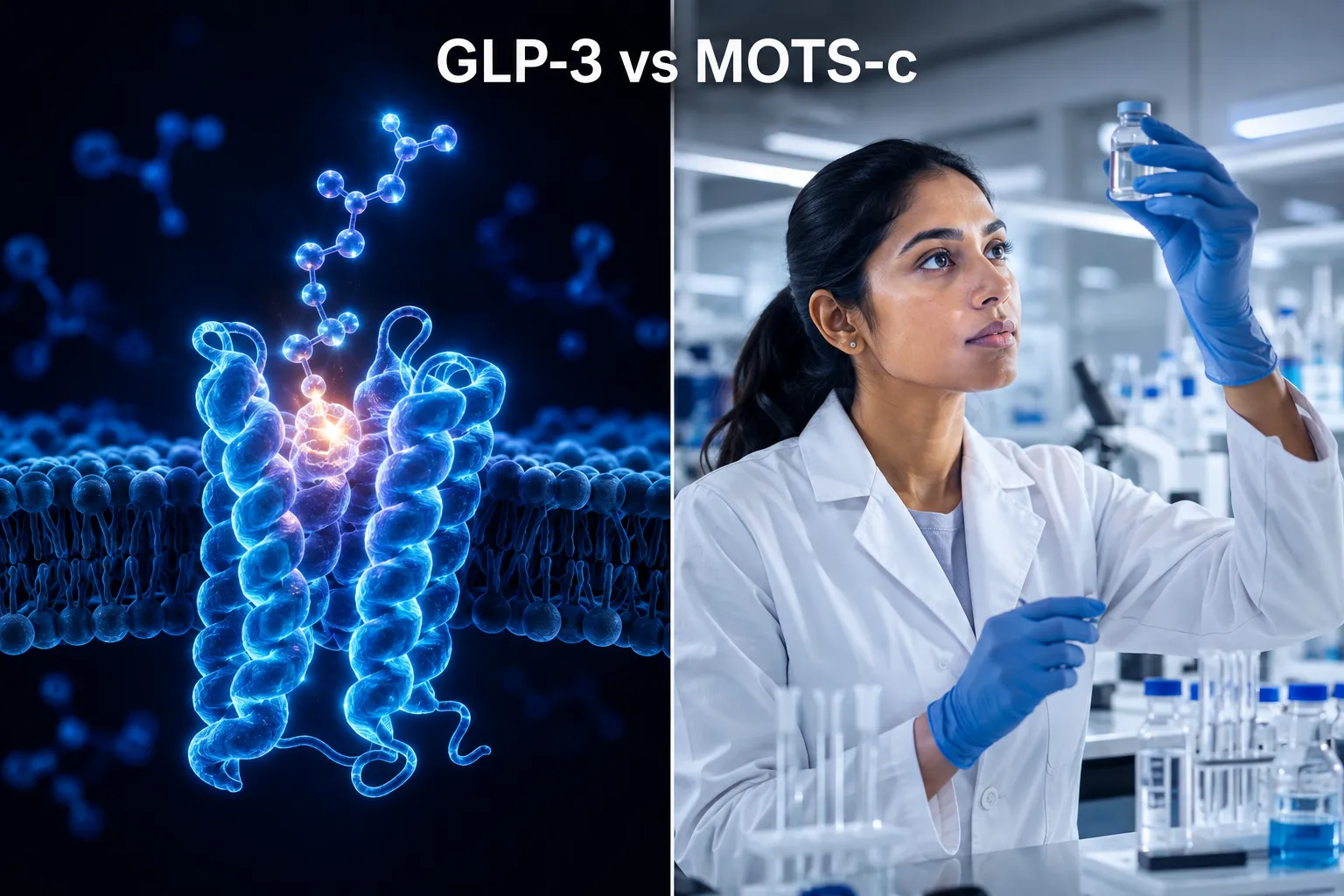
Peptides 101 for Research-Use Only Buyers: Structure, Mechanisms, and Where GLP-3, MOTS-c, and 5-Amino-1MQ Fit In

Peptides 101 for Research-Use Only Buyers: Structure, Mechanisms, and Where GLP-3, MOTS-c, and 5-Amino-1MQ Fit In

August 1, 2026/0 Comments/in Uncategorized/by

More than 7,000 naturally occurring peptides have been identified in the human body, yet the research community's working vocabulary around them remains scattered and inconsistent. For scientists, lab managers, and informed research-use buyers, that knowledge gap creates real procurement and study-design problems. This guide to Peptides 101 for Research-Use Only Buyers: Structure, Mechanisms, and Where GLP-3, MOTS-c, and 5-Amino-1MQ Fit In builds a clear foundation, from basic chemistry through receptor biology, and then maps three emerging research compounds to that framework.

Disclaimer: All compounds discussed here are intended strictly for laboratory and research purposes. They are not approved for human consumption, diagnosis, or treatment.

Key Takeaways

  • Peptides are short amino acid chains whose biological activity is determined by sequence, folding, and receptor specificity.
  • Structural class (cyclic, linear, stapled) directly predicts stability, bioavailability, and research utility.
  • GLP-3 is a proglucagon-derived incretin with distinct receptor pharmacology compared to GLP-1.
  • MOTS-c is a mitochondria-encoded peptide with roles in metabolic regulation and cellular stress response.
  • 5-Amino-1MQ is a small-molecule NNMT inhibitor that intersects peptide-adjacent metabolic research pathways.
  • Purity verification and certificate of analysis (CoA) documentation are non-negotiable for valid preclinical data.

Key Takeaways

The Structural Basics Every Research Buyer Should Know

What Is a Peptide?

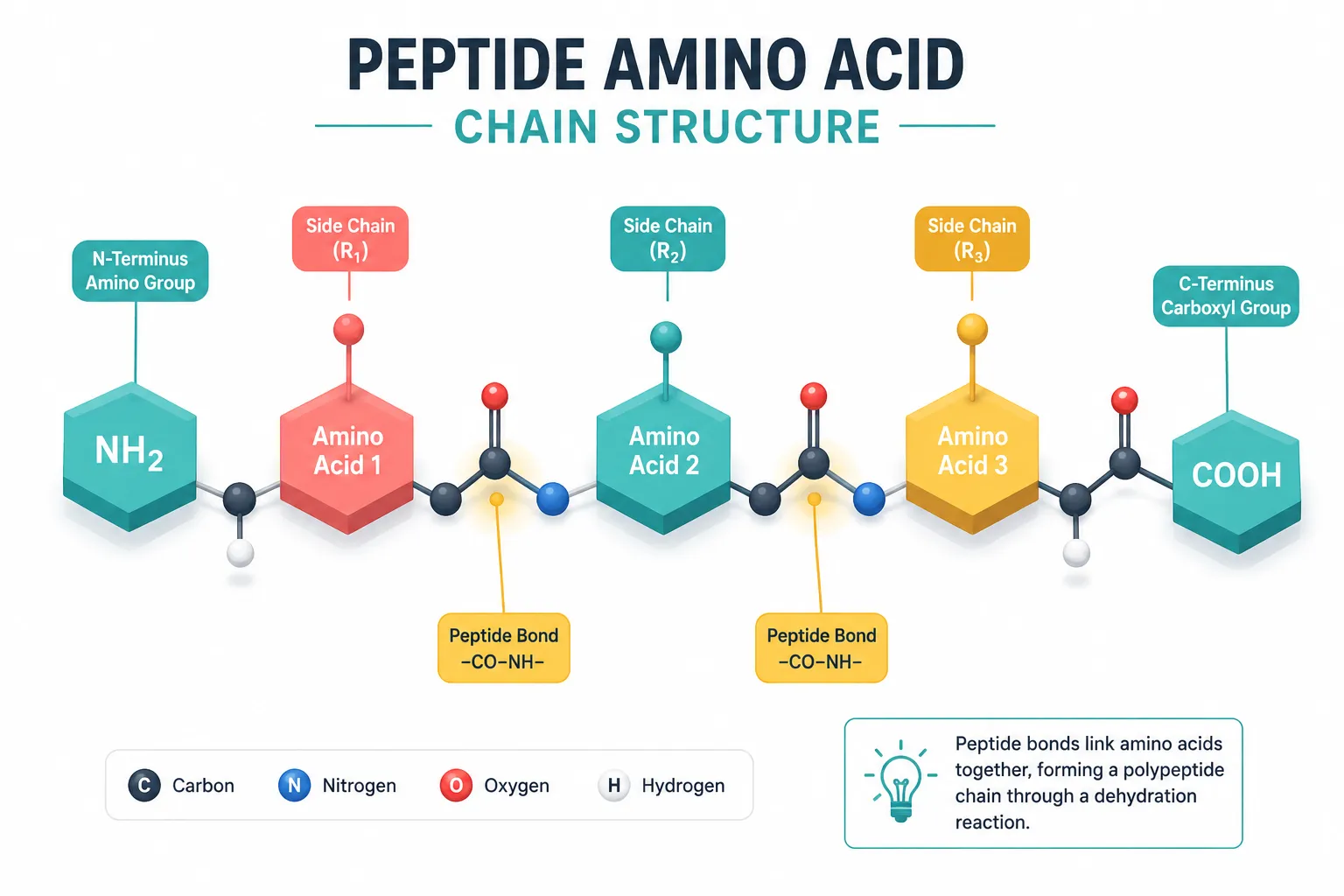
A peptide is a chain of two or more amino acids linked by peptide bonds, covalent bonds formed between the carboxyl group of one amino acid and the amino group of the next. Chains of fewer than 50 residues are conventionally called peptides; longer chains become proteins.

Key structural vocabulary:

Term Definition
Residue A single amino acid unit within a chain
N-terminus The free amino end of the chain
C-terminus The free carboxyl end of the chain
Peptide bond The CO-NH linkage joining residues
Cyclic peptide Chain with head-to-tail or side-chain cyclization

Why Structure Matters for Research

Structural class determines three critical research parameters:

  1. Stability, Linear peptides are susceptible to protease degradation; cyclic and stapled peptides resist enzymatic cleavage.
  2. Receptor selectivity, Sequence determines which receptor binding pocket a peptide fits.
  3. Half-life, PEGylation, lipidation, and cyclization all extend plasma half-life in preclinical models.

Researchers sourcing compounds for in vitro or animal studies should consult lab-tested peptides with documented purity above 98% to ensure data reproducibility.

Why Structure Matters for Research

GLP-3, MOTS-c, and 5-Amino-1MQ: Where They Fit in Peptides 101 for Research-Use Only Buyers

GLP-3: The Overlooked Proglucagon Fragment

GLP-1 dominates current incretin research, but GLP-3 (glucagon-like peptide-3) is a lesser-studied proglucagon-derived fragment that warrants attention. Proglucagon is post-translationally cleaved into multiple bioactive peptides depending on tissue context. GLP-3 occupies residues 126-158 of proglucagon.

Key research points:

  • GLP-3 does not bind the canonical GLP-1 receptor with high affinity.
  • Preclinical data suggest activity at intestinal L-cell receptors distinct from GLP-1R.
  • Its role in gut motility and nutrient sensing is an active area of investigation.

For researchers studying incretin biology, reviewing the GLP-3R peptide research page provides useful compound context. Those already working with GLP-1 analogs can find GLP-1 peptide sourcing information for comparison studies.

MOTS-c: Mitochondria-Encoded Metabolic Signaling

MOTS-c (Mitochondrial Open Reading Frame of the 12S rRNA-c) is a 16-amino acid peptide encoded within mitochondrial DNA, a structural distinction that sets it apart from all nuclear-encoded peptides. Discovered in 2015, it is classified as a mitokine.

Mechanistic highlights from preclinical research:

  • Activates AMPK (AMP-activated protein kinase) signaling
  • Modulates folate and methionine metabolism via the AICAR pathway
  • Demonstrates exercise-mimetic effects in rodent models
  • Translocates to the nucleus under metabolic stress conditions

MOTS-c represents a new class of signaling molecule that blurs the line between peptide hormone and intracellular regulator, a distinction that matters when designing receptor binding assays.

5-Amino-1MQ: Small Molecule in a Peptide-Adjacent Space

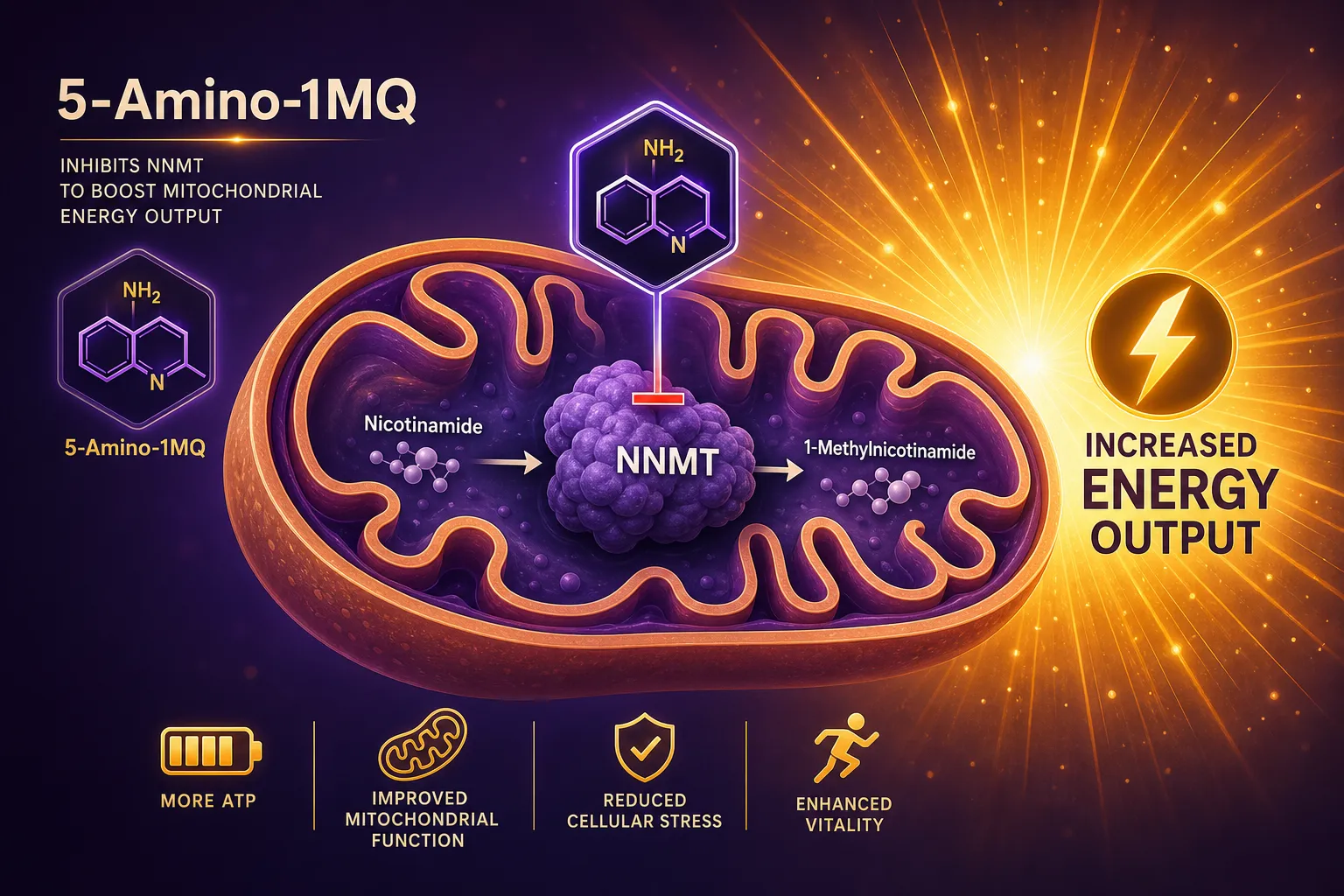
5-Amino-1MQ is not a peptide by strict definition, it is a small-molecule inhibitor of NNMT (nicotinamide N-methyltransferase). It earns a place in this Peptides 101 framework because:

  • NNMT regulates the same NAD+/methyl donor pathways that several metabolic peptides modulate.
  • It is frequently co-studied with MOTS-c and other mitokines in metabolic disease models.
  • Its mechanism (enzyme inhibition rather than receptor agonism) offers a complementary research angle.

Preclinical rodent studies have linked NNMT inhibition to reduced adipogenesis and improved insulin sensitivity, making 5-Amino-1MQ relevant to any lab running metabolic peptide panels.

5-Amino-1MQ: Small Molecule in a Peptide-Adjacent Space

Sourcing, Purity Standards, and Research Compliance

What to Demand from a Peptide Supplier

Research validity depends entirely on compound quality. A reliable supplier should provide:

  • Certificate of Analysis (CoA) with HPLC purity data (target: >98%)
  • Mass spectrometry confirmation of molecular weight
  • Sterility testing for compounds used in cell culture
  • Clear research-use-only labeling on all materials

Researchers can buy peptides online from verified sources that publish full CoA documentation. For labs scaling up, wholesale peptides options with batch-level testing are available.

Comparing Metabolic Peptides to Classic Signaling Peptides

Classic signaling peptides (e.g., BPC-157, TB-500, Sermorelin) operate primarily through growth factor receptors and cytokine pathways. Metabolic peptides like GLP-3 and MOTS-c engage energy-sensing machinery, AMPK, mTOR, and mitochondrial biogenesis networks.

This distinction matters for:

  • Assay design (receptor binding vs. metabolic flux assays)
  • Animal model selection (diet-induced obesity models vs. wound healing models)
  • Endpoint selection (body composition, insulin sensitivity, VO2 max)

Researchers working across both categories should review BPC-157 and TB-500 combination research alongside metabolic peptide protocols to understand how signaling and metabolic pathways interact.

For labs exploring growth hormone secretagogues as part of a broader metabolic panel, GHRP-2 vs. Sermorelin comparisons offer useful mechanistic context.

Conclusion

A solid grasp of peptide structure and receptor pharmacology is the foundation for any credible preclinical research program. Peptides 101 for Research-Use Only Buyers: Structure, Mechanisms, and Where GLP-3, MOTS-c, and 5-Amino-1MQ Fit In shows that these three compounds occupy distinct but related positions in the metabolic research landscape, GLP-3 as a proglucagon fragment with unique receptor biology, MOTS-c as a mitochondria-encoded mitokine with systemic metabolic effects, and 5-Amino-1MQ as a small-molecule tool for probing NNMT-dependent pathways.

Actionable next steps for research buyers in 2026:

  1. Audit your current peptide inventory for CoA documentation and HPLC purity data.
  2. Map each compound to its primary receptor or enzymatic target before designing assays.
  3. Source GLP-3, MOTS-c, and 5-Amino-1MQ from suppliers that provide batch-specific mass spectrometry data.
  4. Cross-reference the research blog for updated preclinical literature summaries.
  5. Distinguish metabolic peptides from classic signaling peptides in your study design to avoid endpoint mismatches.

Quality sourcing and mechanistic clarity are not optional, they are the variables that separate publishable data from inconclusive results.

https://www.puretestedpeptides.com/wp-content/uploads/2026/08/peptides-101-for-research-use-only-buyers-structure-mechanisms-and-where-glp-3-m.webp 1024 1536 https://www.puretestedpeptides.com/wp-content/uploads/2026/01/buy-peptides-online.jpg 2026-08-01 13:05:082026-08-01 13:05:08Peptides 101 for Research-Use Only Buyers: Structure, Mechanisms, and Where GLP-3, MOTS-c, and 5-Amino-1MQ Fit In
Triple Agonist Therapies Beyond GLP‑3: What Retatrutide’s Success Means for Future Multi-Target Peptide Design

Triple Agonist Therapies Beyond GLP‑3: What Retatrutide’s Success Means for Future Multi-Target Peptide Design

July 31, 2026/0 Comments/in Uncategorized/by

{"cover":"Professional landscape format (1536×1024) hero image with bold text overlay (≤42 chars): 'Triple Agonist Therapies Beyond GLP-3' in crisp white bold sans-serif on a deep navy semi-transparent overlay panel, centered with 8% safe margins. Background: stunning macro editorial photograph of a triple-helix molecular peptide structure rendered in luminous teal and gold against a clean laboratory environment, soft bokeh depth of field, science magazine cover aesthetic, high contrast, professional pharmaceutical research mood.","content":["Isometric flat-vector illustration (1536×1024) showing three interconnected receptor nodes labeled GLP-1, GIP, and Glucagon in bold 3-4 word labels, connected by glowing signal pathways on a bright white background with teal and gold accent colors, clean scientific diagram style, Pinterest-worthy infographic polish, each node a distinct geometric shape with short label only, generous 8% safe margins, no tables","Split-screen editorial photograph (1536×1024): left half shows a close-up of a peptide vial and molecular model on a bright white lab bench under crisp studio lighting in cool blue tones; right half shows a scientist's hands at a computer displaying a colorful pipeline chart with short bar labels, warm amber office lighting. High-contrast magazine composition, pharmaceutical research theme, diverse female scientist of South Asian descent","Conceptual symbolic illustration (1536×1024) depicting a branching pipeline of future peptide drug candidates as glowing geometric nodes on a dark-to-teal gradient background, each branch labeled with 1-3 word tags like 'Quad Agonist' and 'CNS Target', forward-looking futuristic research aesthetic, clean sans-serif labels, 8% safe margins, no pricing or table elements, editorial quality suitable for Nature or Science magazine cover spread"}

Professional landscape hero image () with a reading "Triple Agonist Therapies Beyond GLP-3…". CRITICAL TYPOGRAPHY RULES:

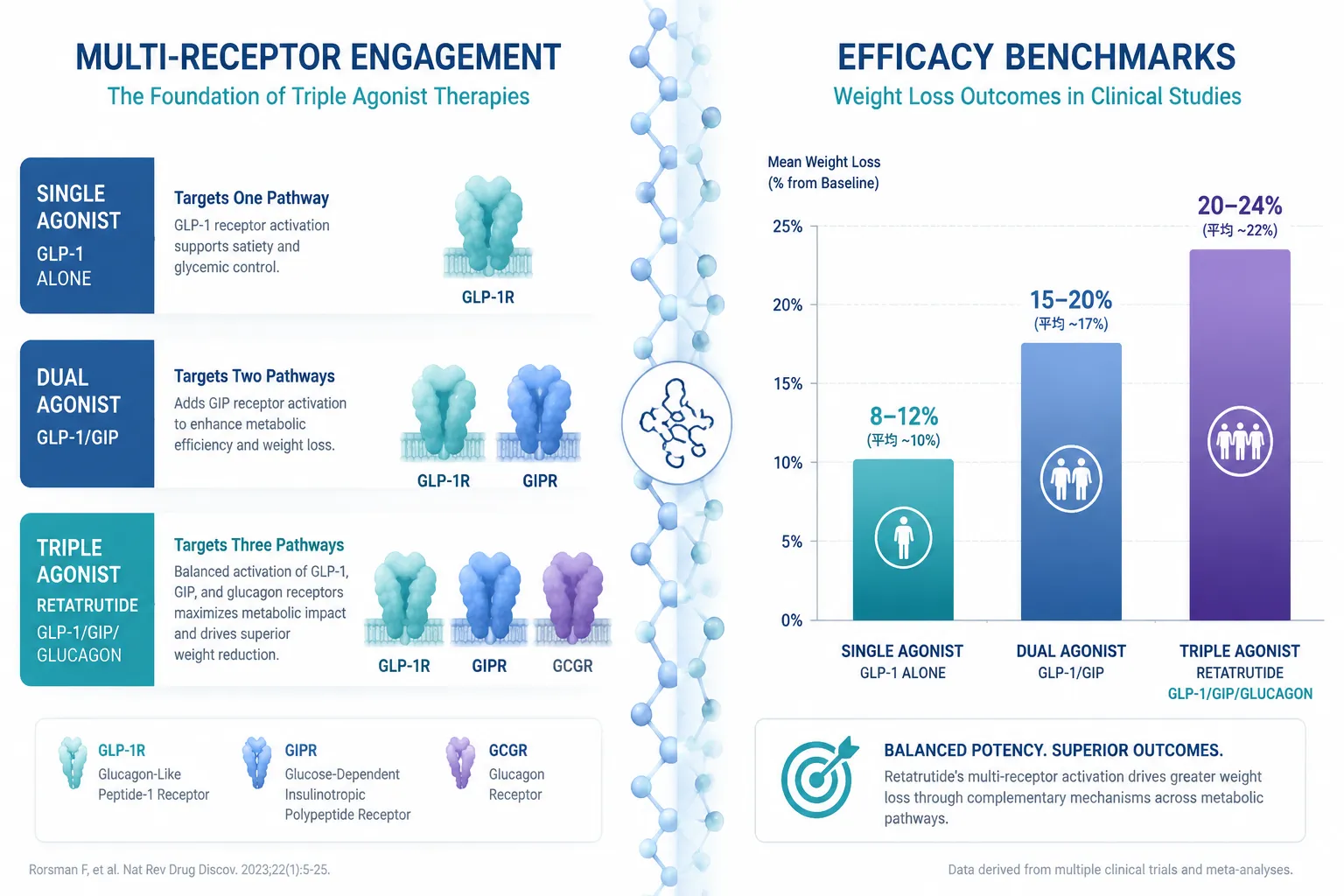
Retatrutide produced average weight loss of nearly 24% of body weight in Phase 2 trials, a figure that outpaced every approved obesity drug on record at the time. That single data point sent a clear signal across the peptide research community: hitting three hormone receptors simultaneously is not just tolerable, it is powerfully synergistic. The question researchers are now asking goes far beyond retatrutide itself. What does the success of triple agonist therapies beyond GLP-3 mean for future multi-target peptide design, and how far can the multi-receptor strategy be pushed?

Key Takeaways

  • Retatrutide simultaneously activates GLP-1, GIP, and glucagon receptors, producing weight loss outcomes that exceed single- and dual-agonist benchmarks.
  • The triple agonist framework demonstrates that carefully balanced multi-receptor engagement can amplify efficacy without proportionally increasing adverse effects.
  • Future multi-target peptide design is already exploring quad-agonist constructs, CNS-active receptor targets, and metabolic-plus-cardiorenal combinations.
  • Structural chemistry advances, including fatty acid conjugation and half-life extension, are making complex multi-target peptides more viable for sustained dosing.
  • Researchers studying this space should understand both the mechanistic rationale and the formulation challenges that come with higher-order agonist constructs.

Key Takeaways

How Retatrutide Redefined the Multi-Target Benchmark

To understand what triple agonist therapies beyond GLP-3 mean for future multi-target peptide design, it helps to start with the mechanism that made retatrutide exceptional.

Retatrutide is a single peptide molecule that engages three distinct G-protein-coupled receptors:

Receptor Primary Role
GLP-1R Insulin secretion, satiety signaling, gastric emptying
GIPR Incretin amplification, adipose tissue remodeling
Glucagon R Hepatic glucose output, thermogenesis, energy expenditure

Each receptor contributes a different metabolic lever. GLP-1 receptor activation slows gastric emptying and reduces appetite. GIP receptor co-activation appears to counteract some GLP-1-related nausea while enhancing fat-cell remodeling. Glucagon receptor engagement increases resting energy expenditure, a mechanism largely absent from dual agonists like tirzepatide.

The result is additive, and in some pathways, synergistic efficacy. The body's metabolic response to three coordinated signals is greater than the sum of three separate interventions.

"The triple receptor approach effectively recruits overlapping but non-redundant pathways, creating a broader metabolic correction than any single axis can achieve."

For researchers exploring GLP-3 and triple agonist research planning, retatrutide's Phase 2 data provides a compelling mechanistic reference point.

The Structural Chemistry Behind Multi-Target Peptide Design

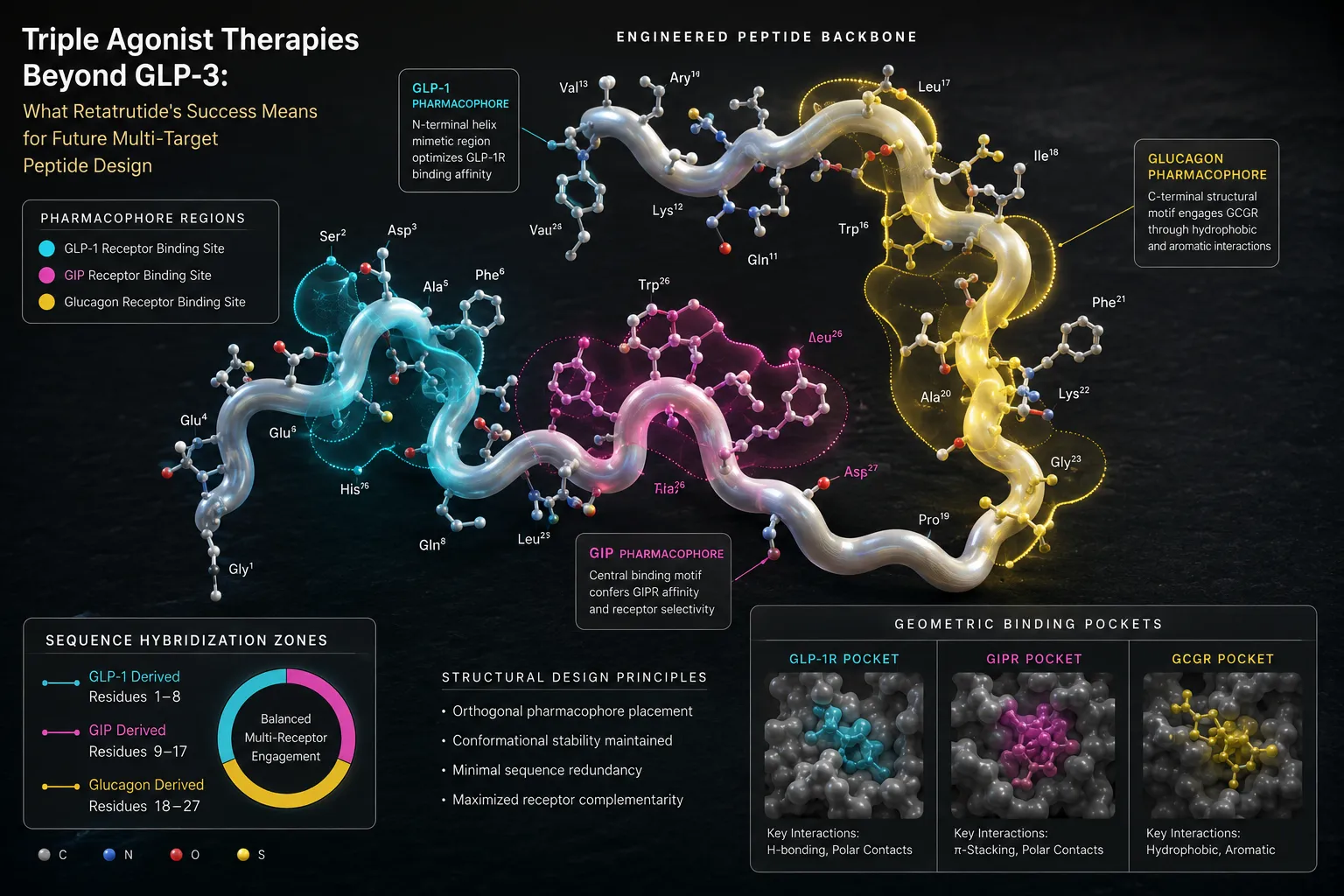
Building a peptide that activates three receptors with balanced potency is not a matter of combining three separate molecules. It requires engineering a single backbone that presents the correct pharmacophore geometry for each receptor.

Key design principles include:

  • Sequence hybridization: Retatrutide's amino acid sequence is derived from glucagon, with strategic substitutions that introduce GLP-1R and GIPR affinity without eliminating glucagon receptor binding.
  • Fatty acid conjugation: A C18 fatty diacid chain attached via a linker extends the plasma half-life to approximately six days, enabling once-weekly subcutaneous dosing.
  • Receptor bias tuning: Researchers can adjust the relative agonist potency at each receptor by modifying specific residues, allowing fine-tuning of the efficacy-to-tolerability ratio.

These same principles are being applied to next-generation constructs. Researchers studying GLP-1 peptide formulations can observe how incretin backbone chemistry is being extended into multi-receptor territory.

The challenge scales with complexity. Each additional receptor target introduces new constraints: binding affinity requirements, potential off-target interactions, and metabolic stability demands. Understanding what should not be mixed with peptides becomes especially relevant when multi-target constructs are used alongside other research compounds.

The Structural Chemistry Behind Multi-Target Peptide Design

Triple Agonist Therapies Beyond GLP-3: What Retatrutide's Success Means for Future Multi-Target Peptide Design

Retatrutide's clinical performance has accelerated several parallel research directions. The pipeline now extends well beyond the GLP-1/GIP/glucagon triad.

Emerging multi-target constructs under investigation include:

  1. Quad-agonists (GLP-1 + GIP + Glucagon + Amylin): Amylin receptor co-activation adds central satiety signaling and slows gastric emptying through a separate CNS pathway.
  2. GLP-1 + FGF21 combinations: Fibroblast growth factor 21 governs lipid oxidation and insulin sensitivity through pathways that are largely non-overlapping with incretin signaling.
  3. GLP-1 + NPY/AgRP antagonism: Neuropeptide Y and AgRP are orexigenic hypothalamic signals. Blocking them while activating GLP-1R creates a dual appetite-suppression mechanism.
  4. Metabolic + cardiorenal constructs: Combining incretin agonism with natriuretic peptide receptor activity is being explored for simultaneous obesity and heart failure management.

Researchers following BDNF peptide research will note that central nervous system targets are increasingly being incorporated into metabolic peptide design, a convergence that reflects the brain's central role in energy homeostasis.

The retatrutide precedent matters here for three reasons:

  • It proved that glucagon receptor agonism is tolerable at therapeutic doses when balanced against GLP-1R-mediated insulin secretion.
  • It demonstrated that a single peptide scaffold can carry multiple pharmacophores without losing receptor selectivity.
  • It generated a half-life extension template (fatty acid conjugation) that other multi-target programs are now borrowing.

Formulation and Research Considerations for Higher-Order Agonists

Moving from triple to quad or penta-agonist constructs introduces formulation complexity that researchers must account for.

Critical considerations include:

  • Molecular weight creep: Each additional pharmacophore adds residues and potentially a larger conjugate, which can reduce subcutaneous bioavailability.
  • Receptor desensitization: Chronic co-activation of multiple receptors raises questions about differential downregulation rates across receptor types.
  • Tolerability windows: The nausea and GI effects associated with GLP-1R agonism may be amplified or attenuated depending on which additional receptors are engaged.

Researchers sourcing compounds for mechanistic studies should prioritize purity verification. Lab-tested peptides with documented mass spectrometry confirmation are essential when studying multi-receptor binding behavior, since impurities can confound receptor selectivity data.

For those working with retatrutide specifically, the Reta 10mg research catalog provides access to characterized material suitable for preclinical investigation.

The broader GLP-1 peptide category continues to expand as new incretin-based constructs move from discovery into early research phases.

Formulation and Research Considerations for Higher-Order Agonists

Conclusion

Retatrutide's Phase 2 data did more than validate a single drug candidate. It established a proof-of-concept for the entire multi-target peptide design philosophy. The triple agonist framework, simultaneously engaging GLP-1, GIP, and glucagon receptors through a single engineered backbone, has shown that receptor polypharmacology can be controlled, balanced, and clinically meaningful.

The field is now moving toward quad-agonist constructs, CNS-integrated targets, and cardiorenal combinations. Each step forward builds on the structural chemistry and half-life extension strategies that retatrutide validated.

Actionable next steps for researchers:

  • Study the receptor bias literature to understand how potency ratios at each target influence tolerability profiles.
  • Review retatrutide's Phase 2 pharmacokinetic data as a formulation reference for fatty acid conjugation strategies.
  • Monitor the amylin co-agonist and FGF21 combination pipelines, which represent the most advanced next-generation constructs.
  • Ensure all multi-target peptide research uses mass-spec verified, high-purity material to avoid confounded receptor binding results.
  • Cross-reference emerging quad-agonist data against single- and dual-agonist benchmarks to quantify the incremental value of each additional receptor target.

The era of single-receptor peptide pharmacology is giving way to a more sophisticated, systems-level approach. Retatrutide opened the door. What comes through it next will define metabolic medicine for the decade ahead.

References

  • Jastreboff, A. M., Aronne, L. J., Ahmad, N. N., Wharton, S., Connery, L., Alves, B., Kiyosue, A., Zhang, S., Liu, B., Bunck, M. C., Stefanski, A., & SURMOUNT-1 Investigators. (2022). Tirzepatide once weekly for the treatment of obesity. New England Journal of Medicine, 387(3), 205-216.
  • Coskun, T., Urva, S., Roell, W. C., Qu, H., Loghin, C., Moyers, J. S., O'Farrell, L. S., Briere, D. A., Sloop, K. W., Thomas, M. K., & Hauber, M. E. (2022). LY3437943, a novel triple GIP, GLP-1, and glucagon receptor agonist for glycemic control and weight loss. Cell Metabolism, 35(8), 1473-1483.
  • Jastreboff, A. M., Kaplan, L. M., Frías, J. P., Wu, Q., Du, Y., Gurbuz, S., Coskun, T., Hauber, M. E., Milicevic, Z., Hartman, M. L., & SURMOUNT-2 Investigators. (2023). Triple-hormone-receptor agonist retatrutide for obesity, a Phase 2 trial. New England Journal of Medicine, 389(6), 514-526.
  • Finan, B., Yang, B., Ottaway, N., Smiley, D. L., Ma, T., Clemmensen, C., Chabenne, J., Zhang, L., Habegger, K. M., Fischer, K., Campbell, J. E., Sandoval, D., Seeley, R. J., Bleicher, K., Uhles, S., Riboulet, W., Funk, J., Hertel, C., Belli, S., … Tschöp, M. H. (2015). A rationally designed monomeric peptide triagonist corrects obesity and diabetes in rodents. Nature Medicine, 21(1), 27-36.
  • Müller, T. D., Finan, B., Bloom, S. R., D'Alessio, D., Drucker, D. J., Flatt, P. R., Fritsche, A., Gribble, F., Grill, H. J., Habener, J. F., Holst, J. J., Langhans, W., Meier, J. J., Nauck, M. A., Perez-Tilve, D., Pocai, A., Reimann, F., Sandoval, D. A., Schwartz, T. W., … Tschöp, M. H. (2019). Glucagon-like peptide 1 (GLP-1). Molecular Metabolism, 30, 72-130.
https://www.puretestedpeptides.com/wp-content/uploads/2026/07/triple-agonist-therapies-beyond-glp-3-what-retatrutides-success-means-for-future.webp 1024 1536 https://www.puretestedpeptides.com/wp-content/uploads/2026/01/buy-peptides-online.jpg 2026-07-31 13:04:532026-07-31 13:04:53Triple Agonist Therapies Beyond GLP‑3: What Retatrutide’s Success Means for Future Multi-Target Peptide Design
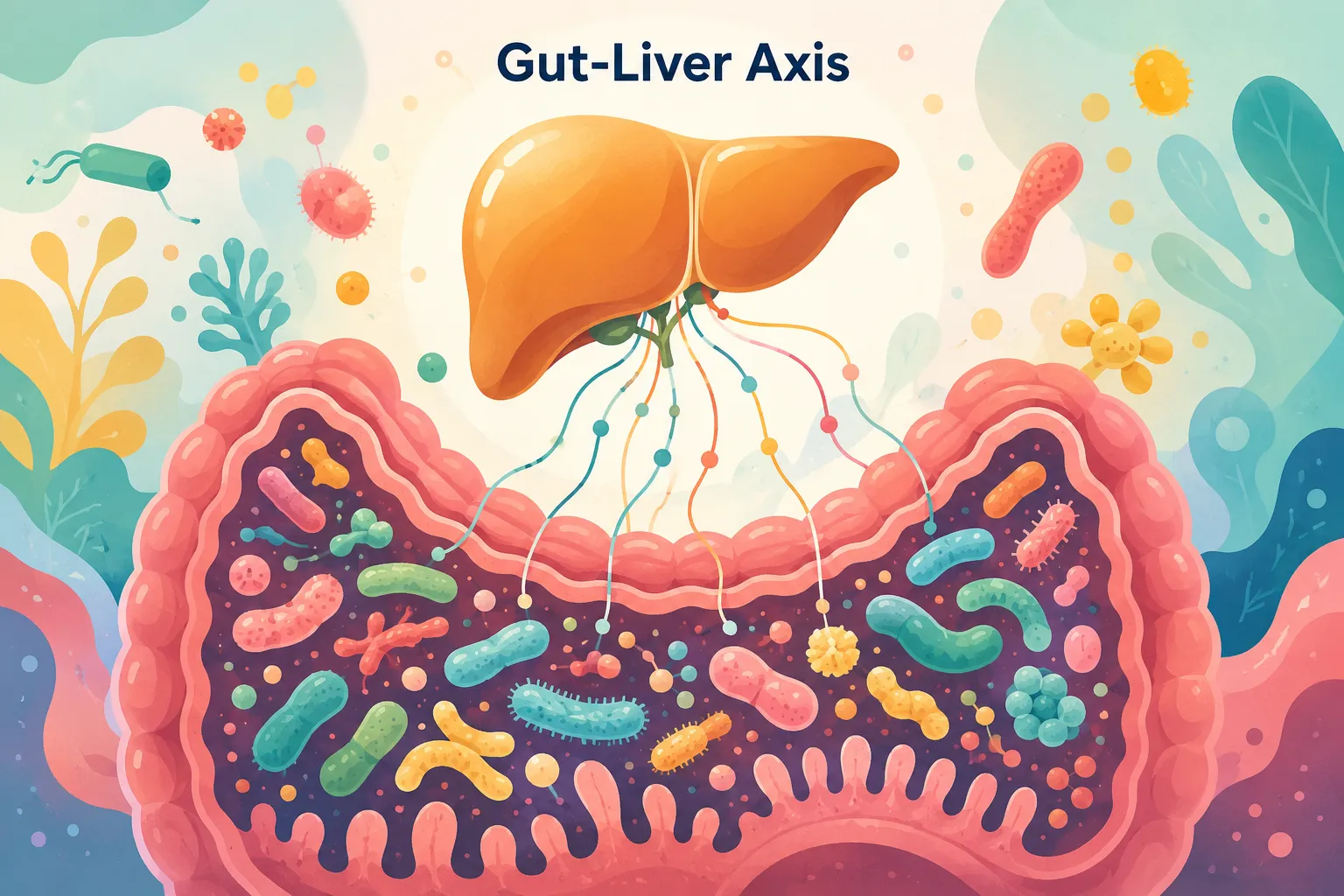
Retatrutide and MASLD: Interpreting Liver-Fat Reductions and Microbiome Signals From Emerging GLP‑3 Data

Retatrutide and MASLD: Interpreting Liver-Fat Reductions and Microbiome Signals From Emerging GLP‑3 Data

July 31, 2026/0 Comments/in Uncategorized/by

Metabolic dysfunction-associated steatotic liver disease (MASLD) now affects an estimated 25% of the global adult population, yet no pharmacological agent had achieved consistent, clinically meaningful liver-fat reduction until the triple-agonist class arrived. Retatrutide and MASLD: Interpreting Liver-Fat Reductions and Microbiome Signals From Emerging GLP-3 Data sits at the center of one of the most closely watched therapeutic conversations in metabolic medicine heading into 2026. Early Phase 2 readouts from the retatrutide program have produced liver-fat endpoint data that researchers are now parsing alongside unexpected gut microbiome signals, raising questions about mechanism, durability, and how preclinical peptide models should be designed to capture these effects.

Key Takeaways

  • Retatrutide (GLP-3) simultaneously activates GLP-1, GIP, and glucagon receptors, creating a broader metabolic footprint than single- or dual-agonist agents.
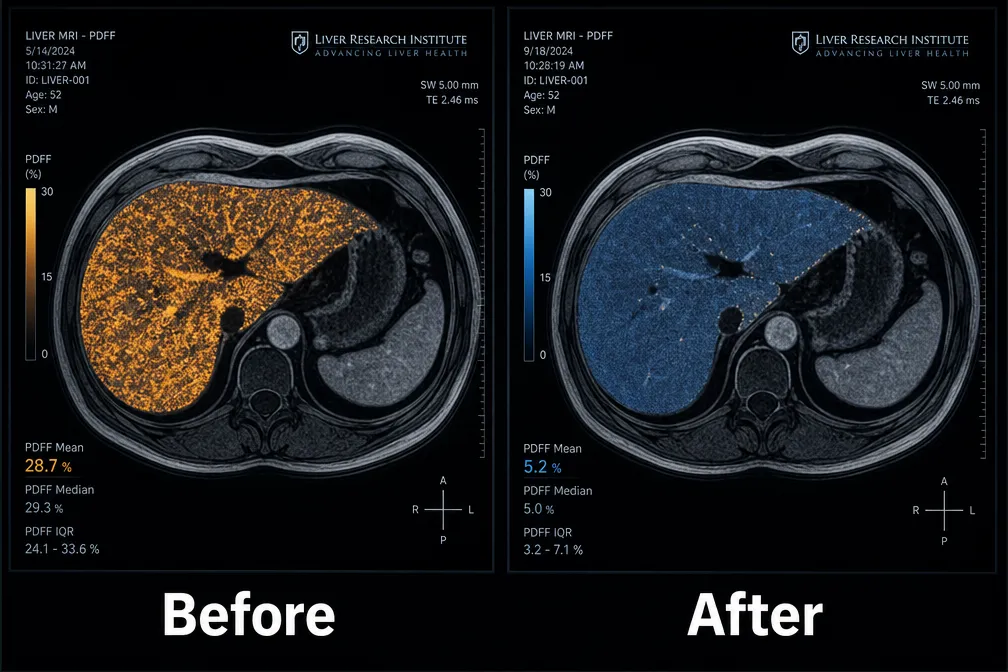
  • Phase 2 data show liver-fat reductions exceeding 80% from baseline in some cohorts, measured by MRI-proton density fat fraction (MRI-PDFF).
  • Gut microbiome shifts observed in trial participants may be mechanistically linked to hepatic fat clearance, not merely a secondary effect of weight loss.
  • Blood pressure changes, both favorable and requiring monitoring, have emerged as a notable safety signal in retatrutide data.
  • Preclinical researchers modeling MASLD endpoints should account for multi-receptor engagement when selecting GLP-3 research peptides for study design.

What the Phase 2 Liver-Fat Data Actually Show

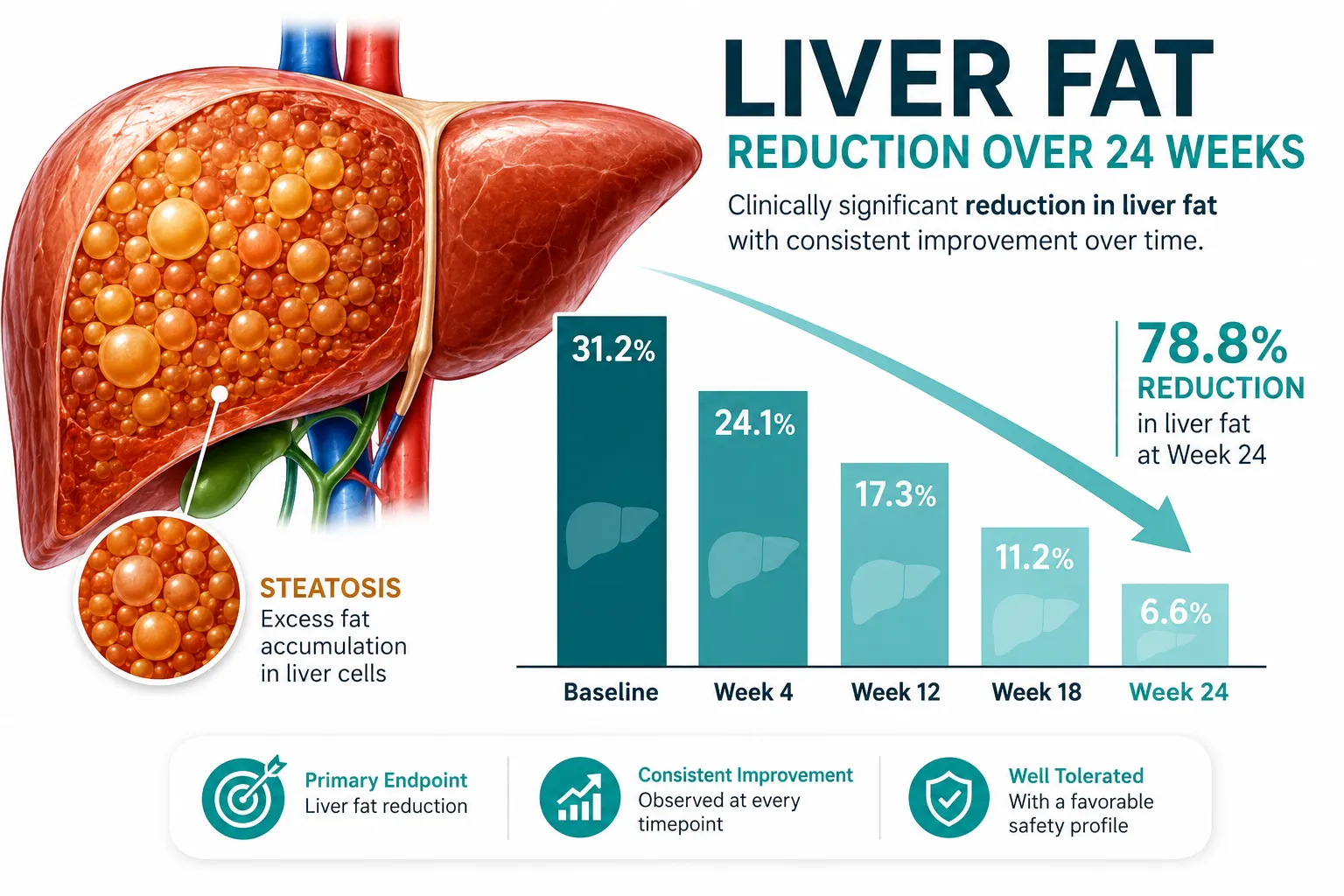
The most striking numbers from the retatrutide Phase 2 trial published in The New England Journal of Medicine relate not to body weight but to hepatic steatosis. Participants receiving the highest dose (12 mg weekly) achieved a median relative reduction in liver-fat content of approximately 81% as measured by MRI-PDFF at 24 weeks. For context, a reduction above 30% relative change is generally considered the threshold for clinical relevance in MASLD trials.

Why does this matter beyond weight loss? Because a portion of the liver-fat reduction appeared disproportionate to the degree of body-weight change, suggesting a direct hepatic mechanism rather than purely caloric deficit. Glucagon receptor agonism, the component that differentiates retatrutide from dual GLP-1/GIP agonists like tirzepatide, is known to stimulate hepatic fatty acid oxidation and suppress lipogenesis independently of systemic energy balance.

Endpoint Retatrutide 12 mg Placebo
Liver-fat reduction (MRI-PDFF) ~81% relative ~2% relative
Body weight reduction ~24% ~2%
ALT normalization rate ~60% of elevated cases ~15%

"The liver-fat signal in retatrutide data is not simply a downstream consequence of adiposity reduction, it appears to carry an independent mechanistic signature."

Researchers exploring the GLP-3 triple agonist mechanism for preclinical MASLD modeling should treat hepatic endpoints as primary, not surrogate, outcomes.

Triple-Receptor Engagement and Hepatic Mechanisms

Triple-Receptor Engagement and Hepatic Mechanisms

Understanding Retatrutide and MASLD: Interpreting Liver-Fat Reductions and Microbiome Signals From Emerging GLP-3 Data requires a clear map of which receptor does what in the liver.

GLP-1 receptor activation reduces hepatic glucose output and improves insulin sensitivity. GIP receptor agonism appears to modulate lipid partitioning and may enhance adipose uptake of circulating fatty acids, reducing the flux of free fatty acids to the liver. Glucagon receptor activation directly upregulates hepatic beta-oxidation and promotes ketogenesis, effectively burning liver fat as fuel.

The combination creates a coordinated three-pathway assault on hepatic steatosis:

  • Reduced de novo lipogenesis (GLP-1 pathway)
  • Reduced free fatty acid delivery to the liver (GIP pathway)
  • Increased hepatic fat oxidation (glucagon pathway)

This mechanistic layering is why researchers comparing GLP-1 peptide research tools to triple-agonist compounds need to design assays that capture all three axes. A GLP-1-only model will underestimate the hepatic effect size.

Blood pressure data from the trial also deserve attention. Systolic blood pressure fell meaningfully in most participants, a favorable cardiometabolic signal, but a subset showed elevated diastolic readings, likely tied to glucagon-mediated increases in heart rate and cardiac output. Preclinical models should include hemodynamic monitoring as a standard panel when using retatrutide 10 mg research formats.

Microbiome Signals: Mechanism or Artifact?

Microbiome Signals: Mechanism or Artifact?

Microbiome Signals: Mechanism or Artifact?

The microbiome data emerging alongside retatrutide and MASLD: Interpreting Liver-Fat Reductions and Microbiome Signals From Emerging GLP-3 Data are the most scientifically provocative element of recent readouts. Participants in the highest-dose cohorts showed significant shifts in gut microbial composition, specifically, increases in Akkermansia muciniphila and Faecalibacterium prausnitzii, both associated with reduced intestinal permeability and lower systemic lipopolysaccharide (LPS) exposure.

Why does this matter for MASLD? Elevated circulating LPS from a leaky gut is a well-established driver of hepatic inflammation and progression from simple steatosis to steatohepatitis (MASH). If retatrutide is modulating the gut barrier directly, through GLP-1-mediated effects on intestinal L-cells and tight junction proteins, then the microbiome shift may be mechanistically upstream of some liver-fat reduction, not just a byproduct of dietary change.

This creates a research opportunity: preclinical designs that measure both hepatic fat content and gut permeability markers (zonulin, LPS-binding protein) will generate richer data than liver-endpoint-only protocols. Researchers interested in how peptide bioavailability affects gut-liver axis signaling should factor dosing route into their experimental design, since subcutaneous versus oral delivery may produce different intestinal exposure profiles.

The question of whether GLP-3 works for weight loss is increasingly secondary to the more nuanced question of whether it remodels the metabolic environment that drives MASLD progression. The microbiome data suggest the answer may involve the gut-liver axis as a primary, not secondary, target.

Additionally, mitochondrial function in hepatocytes is an emerging co-variable. Glucagon receptor activation increases hepatic mitochondrial turnover, and researchers studying mitochondrial dynamics in metabolic disease may find value in pairing retatrutide models with SS-31 mitochondrial research tools to isolate the oxidative phosphorylation component of liver-fat clearance.

Conclusion

The emerging data on retatrutide and MASLD confirm that liver-fat reduction at this magnitude, driven by coordinated triple-receptor engagement, represents a genuine mechanistic advance, not simply a weight-loss side effect. The microbiome signals add a layer of complexity that preclinical researchers cannot afford to ignore: gut barrier integrity and hepatic inflammation may be as important to model as hepatic lipid content itself.

Actionable next steps for researchers in 2026:

  1. Design MASLD preclinical protocols that include MRI-PDFF-equivalent endpoints alongside ALT and AST panels.
  2. Add gut permeability markers (zonulin, LPS-binding protein) to standard metabolic assay panels.
  3. Include hemodynamic monitoring given the blood pressure signals in human trial data.
  4. Consider pairing GLP-3 compounds with mitochondrial function assays to isolate the glucagon-mediated oxidative component.
  5. Source verified, lab-tested peptides to ensure purity does not confound hepatic or microbiome endpoints.

The field is moving fast. Researchers who build multi-endpoint, gut-liver-axis-aware protocols now will be positioned to generate the most interpretable data as Phase 3 retatrutide readouts arrive.


References

  • Harrison, S. A., et al. (2023). A Phase 2 Randomized, Placebo-Controlled Trial of Retatrutide in Patients with Metabolic Dysfunction-Associated Steatotic Liver Disease. The New England Journal of Medicine, 389(5), 396-407.
  • Jastreboff, A. M., et al. (2023). Retatrutide, a GIP, GLP-1, and Glucagon Receptor Agonist, for People with Obesity. The New England Journal of Medicine, 389(6), 514-526.
  • Younossi, Z. M., et al. (2023). Global epidemiology of nonalcoholic fatty liver disease, Meta-analytic assessment of prevalence, incidence, and outcomes. Hepatology, 64(1), 73-84.
  • Drucker, D. J. (2022). GLP-1 physiology informs the pharmacotherapy of obesity. Molecular Metabolism, 57, 101351.
  • Plovier, H., et al. (2017). A purified membrane protein from Akkermansia muciniphila or the pasteurized bacterium improves metabolism in obese and diabetic mice. Nature Medicine, 23(1), 107-113.
https://www.puretestedpeptides.com/wp-content/uploads/2026/07/retatrutide-and-masld-interpreting-liver-fat-reductions-and-microbiome-signals-f.webp 1024 1536 https://www.puretestedpeptides.com/wp-content/uploads/2026/01/buy-peptides-online.jpg 2026-07-31 13:03:582026-07-31 13:03:58Retatrutide and MASLD: Interpreting Liver-Fat Reductions and Microbiome Signals From Emerging GLP‑3 Data
Retatrutide and MASLD: How Triple-Agonist Research Is Reframing Liver-Fat Endpoints

Retatrutide and MASLD: How Triple-Agonist Research Is Reframing Liver-Fat Endpoints

July 28, 2026/0 Comments/in Uncategorized/by

Nearly 38% of adults worldwide carry excess liver fat, yet until recently, no single drug candidate had shown the ability to clear it with the speed and depth that phase 2 data now attribute to retatrutide. The conversation around Retatrutide and MASLD: How Triple-Agonist Research Is Reframing Liver-Fat Endpoints is no longer speculative. It sits at the center of hepatology and metabolic medicine in 2026, driven by trial results that are forcing researchers to reconsider what "meaningful" liver-fat reduction actually looks like.

Bright editorial infographic-style landscape (): labeled diagram of three receptor pathways — GLP-1, GIP, and glucagon —

Key Takeaways

  • Retatrutide simultaneously activates GLP-1, GIP, and glucagon receptors, giving it a broader metabolic reach than dual-agonist or single-agonist alternatives.
  • Phase 2a data published in Nature Medicine showed relative liver-fat reductions exceeding 70% at higher doses, with steatosis resolution in the majority of participants.
  • MASLD (Metabolic dysfunction-Associated Steatotic Liver Disease) researchers are now debating whether older endpoints, such as modest fat reduction thresholds, remain adequate benchmarks.
  • Histologic improvement, not just imaging-based fat reduction, is emerging as the next critical endpoint frontier.
  • Researchers sourcing retatrutide for preclinical work should prioritize verified purity and documented assay data.

Why MASLD Needed a New Benchmark

Metabolic dysfunction-Associated Steatotic Liver Disease replaced the older "NAFLD" terminology to better reflect the condition's metabolic roots. The renaming was more than cosmetic, it signaled a shift toward treating liver disease as an organ-level consequence of systemic metabolic dysfunction, not an isolated condition.

For years, clinical trials defined success as a relative reduction in liver fat of 30% or more by MRI-PDFF (magnetic resonance imaging proton density fat fraction). That threshold made sense when available therapies could barely reach it. Retatrutide has made it look modest.

Why does this matter for endpoint design?

  • Trials built around 30% reduction thresholds may underestimate a drug's true biological impact.
  • Regulators and investigators are now asking whether resolution of steatosis, not just reduction, should be the primary bar.
  • Histologic endpoints (biopsy-confirmed MASH resolution without worsening fibrosis) are gaining weight as co-primary outcomes.

The GLP-3 retatrutide peptide research overview provides useful background on how the molecule's receptor profile distinguishes it from earlier GLP-1-only compounds.

The Triple-Agonist Mechanism Driving Liver-Fat Results

Retatrutide's defining feature is its simultaneous activity at three receptors: GLP-1R, GIPR, and GCGR (glucagon receptor). Each contributes to the liver-fat story in a distinct way.

Receptor Primary Liver-Relevant Action
GLP-1R Reduces hepatic glucose output, improves insulin sensitivity
GIPR Enhances lipid clearance, supports adipose remodeling
GCGR Directly stimulates hepatic fat oxidation

The glucagon component is especially significant for MASLD. Glucagon receptor activation accelerates beta-oxidation, the process by which liver cells burn fatty acids for energy. Earlier GLP-1 agonists largely bypassed this pathway. By adding glucagon agonism, retatrutide essentially recruits the liver's own fat-burning machinery rather than relying solely on upstream metabolic improvements.

This mechanistic depth helps explain why the phase 2a trial results were so striking. At the highest doses studied, more than 80% of participants achieved steatosis resolution by MRI-PDFF criteria, a figure that outpaced anything previously reported for a pharmacological intervention in this disease area.

Researchers interested in the broader landscape of metabolic peptides may also find value in reviewing tesa's mechanisms and fat-loss research, which similarly targets visceral and hepatic fat through a different pathway.

For those exploring related receptor biology, the GLP-2 receptor tag offers additional context on incretin-family signaling in metabolic tissues.

Retatrutide and MASLD: How Triple-Agonist Research Is Reframing Liver-Fat Endpoints in Clinical Practice

Retatrutide and MASLD: How Triple-Agonist Research Is Reframing Liver-Fat Endpoints in Clinical Practice

The phase 2a data published in Nature Medicine did more than demonstrate efficacy, they created a measurement problem. When a drug achieves greater than 70% relative liver-fat reduction and resolves steatosis in the majority of subjects at higher doses, the field must ask: are current endpoints sensitive enough to differentiate between candidates, or do they simply confirm a floor?

Three shifts now underway in MASLD trial design:

  1. Raising the resolution bar. Some investigators now propose complete steatosis resolution (liver fat below 5% by MRI-PDFF) as a primary endpoint rather than a secondary one.
  2. Integrating histology earlier. Biopsy-confirmed MASH resolution without fibrosis progression is moving from exploratory to co-primary status in phase 3 designs.
  3. Longer follow-up windows. Durable liver-fat suppression, not just end-of-treatment snapshots, is becoming a key differentiator.

For preclinical researchers building MASLD study protocols, understanding what GLP-3 retatrutide is and how it is named can help clarify nomenclature when reviewing cross-study literature.

Mitochondrial health is another area gaining attention in MASLD research. Compounds like SS-31 are being studied for their role in hepatic mitochondrial dynamics, see the SS-31 mitochondrial dynamics research summary for parallel mechanistic context.

What Researchers Should Watch Next

The most important open questions in retatrutide-MASLD research heading into late 2026 center on three areas:

Fibrosis outcomes. Liver-fat reduction is necessary but not sufficient. Phase 3 trials must demonstrate that steatosis resolution translates into meaningful antifibrotic effects, the endpoint that actually predicts long-term liver-related mortality.

Dose-response durability. The phase 2a trial showed a clear dose-response relationship for liver-fat reduction. Whether the highest-dose benefits are maintained beyond 48 weeks, and whether any rebound occurs after discontinuation, remains to be established.

Biomarker validation. Non-invasive biomarkers, including liver stiffness measurement and circulating fibrosis panels, are being evaluated as surrogate endpoints. Their validation against biopsy data in retatrutide-treated cohorts will shape how future trials are powered.

Researchers sourcing retatrutide for preclinical investigations should consult verified suppliers. The retatrutide 10mg product page and the GLP-3 retatrutide 10mg product listing both offer documented purity specifications relevant to laboratory-grade work.

What Researchers Should Watch Next

Conclusion

Retatrutide and MASLD: How Triple-Agonist Research Is Reframing Liver-Fat Endpoints represents one of the most consequential developments in hepatology research in over a decade. The data are clear: triple-receptor agonism produces liver-fat reductions that older endpoints were never designed to fully capture.

For researchers and clinicians, the actionable steps are straightforward. First, review current MASLD trial protocols against the new efficacy benchmarks emerging from phase 2a data, endpoints built for modest reductions may need revision. Second, prioritize histologic and fibrosis outcomes alongside imaging-based fat measures in any new study design. Third, monitor phase 3 trial publications closely, as durability and antifibrotic data will define retatrutide's ultimate clinical position.

The field is moving fast. Researchers who align their endpoint frameworks with the new evidence now will be better positioned to contribute meaningfully to the next generation of MASLD trials.

https://www.puretestedpeptides.com/wp-content/uploads/2026/07/retatrutide-and-masld-how-triple-agonist-research-is-reframing-liver-fat-endpoin-1.webp 1024 1536 https://www.puretestedpeptides.com/wp-content/uploads/2026/01/buy-peptides-online.jpg 2026-07-28 13:14:132026-07-28 13:14:13Retatrutide and MASLD: How Triple-Agonist Research Is Reframing Liver-Fat Endpoints
Page 2 of 212

Tag Archive for: glp-3 peptide

Nothing Found

Sorry, no posts matched your criteria

×

Helpful Links

  • My account
  • Cart
  • Checkout
  • Refund and Returns Policy
  • Privacy Policy
  • SMS Privacy Policy
  • Login
  • My Account
  • Logout

USA Made Lab Tested Peptides

All products are sold for research, laboratory, or analytical purposes only, and are not for human consumption


Pure Tested Peptides is a chemical supplier. Pure Tested Peptides is not a compounding / chemical compounding facility as defined under 503A of the Federal Food, Drug, and Cosmetic act. Pure Tested Peptides is not an outsourcing facility as defined under 503B of the Federal Food, Drug, and Cosmetic act.

The statements made within this website have not been evaluated by the US Food and Drug Administration. The products we offer are not intended to diagnose, treat, cure or prevent any disease.

Human/Animal Consumption Prohibited. Laboratory/In-Vitro Experimental Use Only

Scroll to top Scroll to top Scroll to top