

Estrogen Receptors, Enclomiphene, and Peptide Hormones: How serms Interface With GLP-Class and Growth Hormone Peptides
Men with obesity-related secondary hypogonadism can show testosterone levels up to 30% lower than age-matched lean controls, yet the endocrine axis disruption extends far beyond a single hormone. Understanding estrogen receptors, enclomiphene, and peptide hormones: how serms interface with GLP-class and growth hormone peptides is now central to advanced endocrine research protocols that model multiple hormonal axes simultaneously. As GLP-1 receptor agonists and GHRH analogues become fixtures in metabolic and body-composition research, the question of how a selective estrogen receptor modulator like enclomiphene fits into those multi-peptide frameworks has become increasingly important.
Key Takeaways
- Enclomiphene blocks hypothalamic estrogen receptors to raise LH, FSH, and endogenous testosterone without suppressing spermatogenesis.
- Systematic evidence shows serms can increase total testosterone by a mean of roughly 274 ng/dL versus placebo in functional hypogonadism.
- GLP-class peptides such as Retatrutide and GLP-2-T act on gut-brain and metabolic axes that indirectly influence sex hormone binding and HPG axis tone.
- GHRH analogues like CJC-1295 amplify growth hormone pulses and raise IGF-1, creating a separate but intersecting endocrine signal relevant to serm protocols.
- Formal combination trials of enclomiphene with GLP-class or GHRH peptides remain an open research frontier as of 2026.
How Enclomiphene Modulates Estrogen Receptors in the HPG Axis
Enclomiphene is the trans-isomer of clomiphene. Unlike its cis-isomer zuclomiphene, it acts as a clean antagonist at hypothalamic estrogen receptors, blocking the negative feedback signal that estrogen normally sends to suppress gonadotropin-releasing hormone. The result is a coordinated rise in luteinizing hormone (LH) and follicle-stimulating hormone (FSH), which in turn drives endogenous testicular testosterone production.
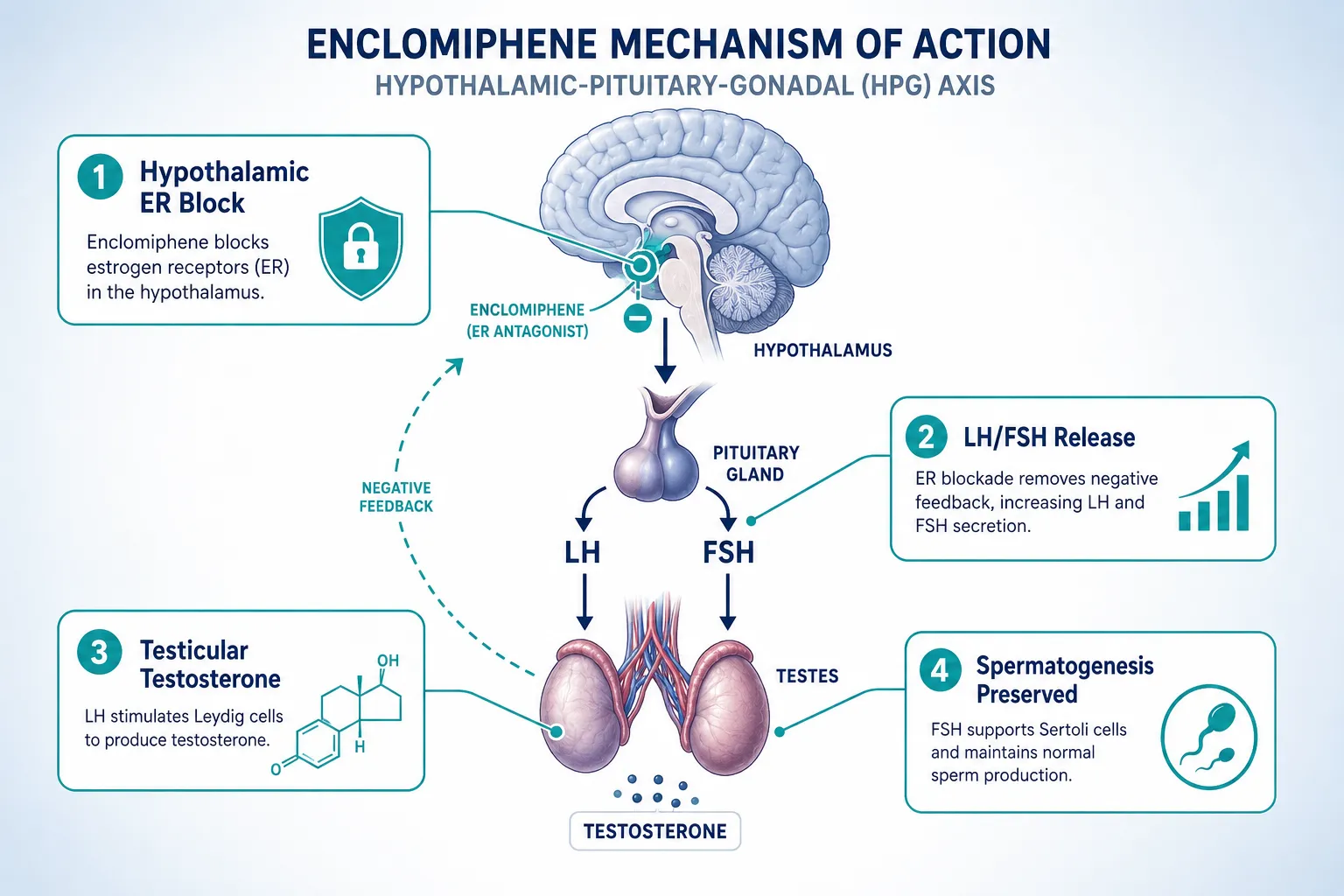
This mechanism distinguishes enclomiphene sharply from exogenous testosterone replacement. Testosterone replacement shuts down the HPG axis through negative feedback; enclomiphene does the opposite. A systematic review and meta-analysis of ten randomized controlled trials covering 819 men found that serm therapy, primarily clomiphene and enclomiphene, raised total testosterone by a mean of approximately 274 ng/dL compared with placebo, while sperm parameters remained intact.
A 2026 British Society for Sexual Medicine position statement reinforces this picture. In one referenced RCT of 44 men, daily enclomiphene was non-inferior to transdermal testosterone at both 24 hours and 6 weeks. A retrospective series of 66 men showed a median testosterone increase of 5.76 nmol/L after roughly 9 months of therapy. For researchers exploring serm therapy protocols, these figures establish a meaningful hormonal baseline.
Why metabolic context matters: Men with obesity, type 2 diabetes, or metabolic syndrome often present with reversible hypothalamic-pituitary dysfunction, a profile where enclomiphene's upstream mechanism is particularly well-matched. Elevated aromatase activity in adipose tissue converts more testosterone to estradiol, deepening the hypothalamic feedback suppression that enclomiphene is designed to interrupt.
"Enclomiphene's value lies not just in raising testosterone, but in preserving the entire upstream signaling architecture, a distinction that matters enormously when modeling multi-axis endocrine protocols."
GLP-Class Peptides and Their Indirect Influence on Estrogen Receptor Signaling
The GLP-class of peptides, including GLP-1 receptor agonists, the dual/triple agonist Retatrutide (GLP-1/GIP/glucagon), and GLP-2-T analogues, operate primarily on gut-brain signaling, insulin secretion, and energy homeostasis. Their connection to estrogen receptor biology is indirect but mechanistically significant.
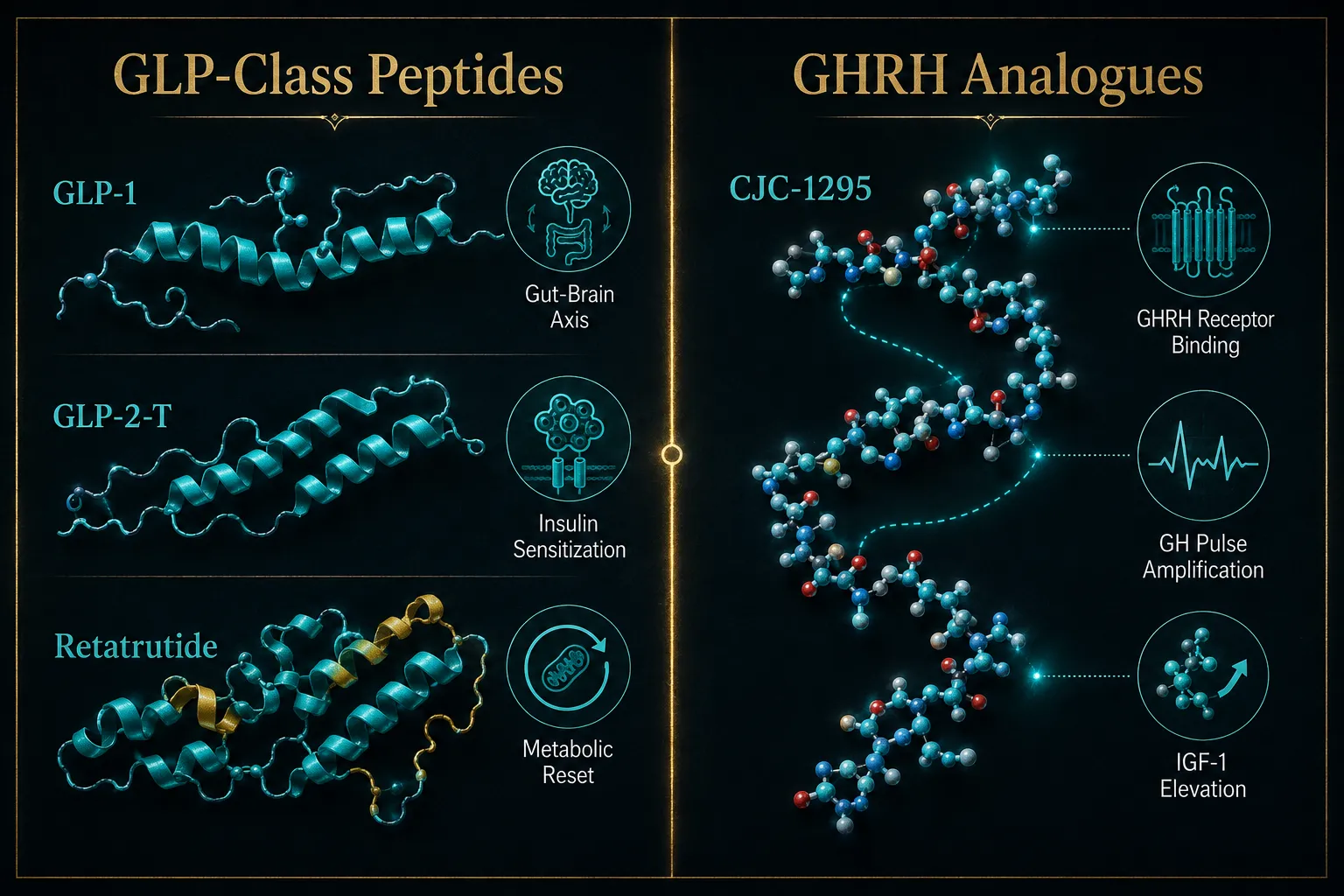
GLP-1 receptor agonists reduce adipose mass. Because adipose tissue is the primary peripheral site of aromatase-driven estrogen synthesis in men, a meaningful reduction in fat mass lowers circulating estradiol. Lower estradiol reduces the hypothalamic estrogen receptor load that enclomiphene must overcome. In practical terms, a subject on a GLP-class agent may show a more responsive HPG axis to serm intervention.
Retatrutide, as a triple agonist targeting GLP-1, GIP, and glucagon receptors, produces more pronounced body-composition shifts than single-agonist agents. Research on tirzepatide peptide, a dual GLP-1/GIP agonist with a related mechanism, illustrates how GLP-class compounds can reshape the metabolic environment in which hormonal axes operate.
GLP-2-T analogues primarily target intestinal epithelial GLP-2 receptors, influencing gut integrity and nutrient absorption. Their relevance to estrogen receptor cross-talk is more distal but may include effects on enterohepatic estrogen recirculation, a pathway that modulates systemic estradiol levels and, consequently, hypothalamic feedback tone.
Researchers working with single peptide protocols often note that isolating one axis at a time provides cleaner data before combining agents, a principle that applies directly to serm-plus-GLP-class study design.
GHRH Analogues, Growth Hormone Peptides, and serm Protocol Integration
CJC-1295 is a synthetic GHRH analogue that extends the half-life of endogenous GHRH, amplifying pulsatile growth hormone release from the anterior pituitary and raising downstream IGF-1 levels. This creates a third endocrine axis, the GH/IGF-1 axis, that intersects with both the HPG axis and the metabolic effects of GLP-class peptides.
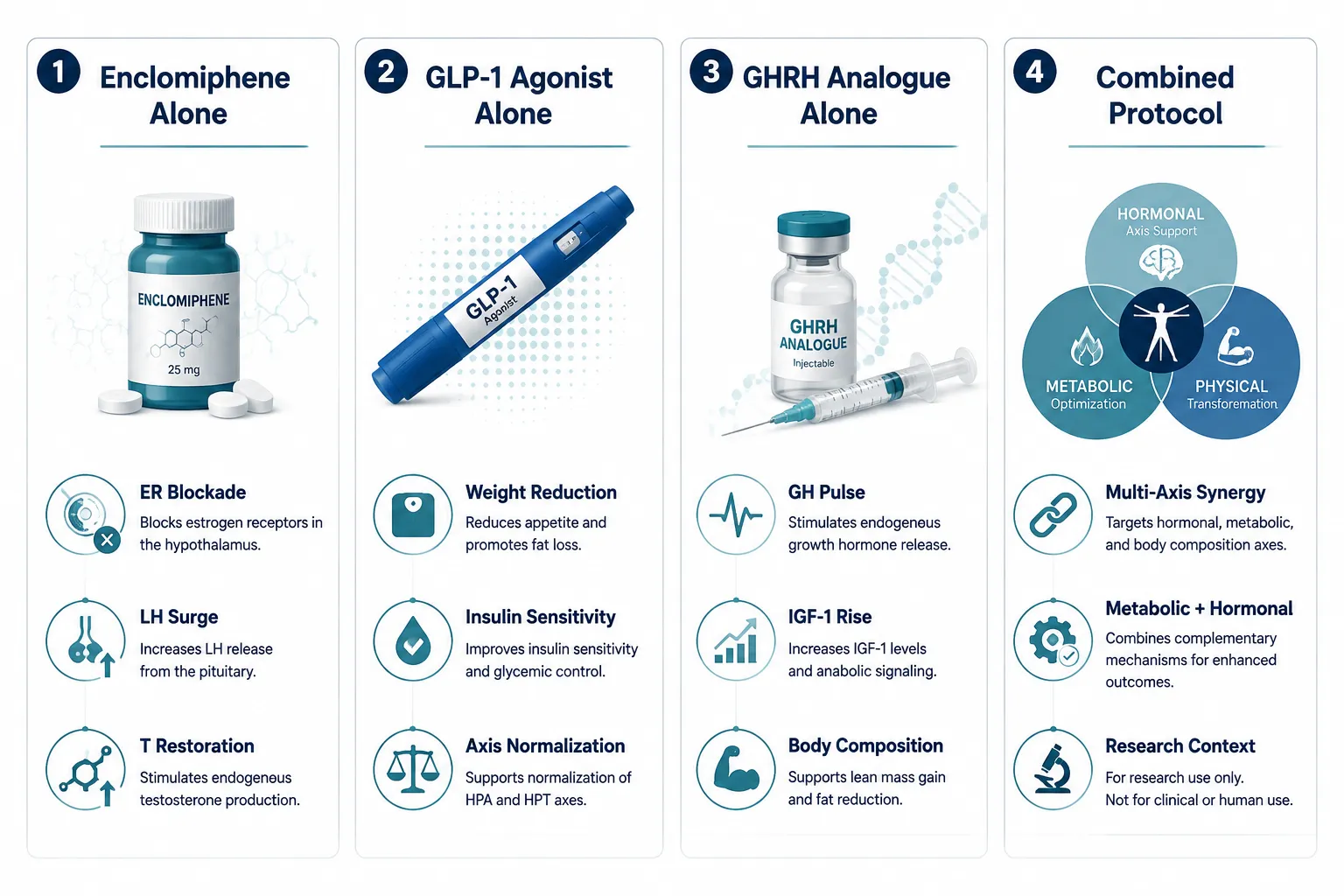
The relevance to estrogen receptor biology is bidirectional. IGF-1 has been shown to modulate estrogen receptor expression in multiple tissue types. Elevated GH and IGF-1 also influence body composition, reducing fat mass and increasing lean tissue, which feeds back into aromatase activity and circulating estradiol, the same variable that enclomiphene targets at the receptor level.
For researchers modeling endocrine axes, the interaction matrix looks like this:
| Agent | Primary Target | Indirect Effect on ER Signaling |
|---|---|---|
| Enclomiphene | Hypothalamic ER | Direct blockade, raises LH/FSH |
| GLP-1/Retatrutide | GLP-1/GIP/Glucagon R | Reduces adipose aromatase substrate |
| CJC-1295 | GHRH receptor | IGF-1 modulates ER expression; body comp shift |
| GLP-2-T | Intestinal GLP-2 R | Enterohepatic estrogen recirculation effects |
Researchers exploring serms in combination with growth hormone peptides should account for these intersecting signals when designing outcome measures. Sports peptides research has long recognized that GH-axis and sex-hormone-axis interventions produce non-additive effects, a principle that extends to serm-plus-GHRH analogue modeling.
Enclomiphene's clinical profile also makes it suitable for populations where erythrocytosis risk from testosterone replacement is a concern, a relevant consideration when subjects are simultaneously on GH-stimulating peptides that affect red blood cell precursor signaling.
As of 2026, formal combination trials pairing enclomiphene with GLP-class agents or GHRH analogues have not been published. This represents a significant gap in the literature and a clear frontier for structured research protocols.
Conclusion
The intersection of estrogen receptors, enclomiphene, and peptide hormones, how serms interface with GLP-class and growth hormone peptides, is one of the most mechanistically rich areas in current endocrine research. Enclomiphene provides a targeted, fertility-preserving tool for HPG axis restoration. GLP-class peptides reshape the metabolic environment that determines how much estrogenic feedback the hypothalamus receives. GHRH analogues like CJC-1295 add a third dimension through IGF-1-mediated effects on receptor expression and body composition.
Actionable next steps for researchers and clinicians:
- Map baseline estradiol, LH, FSH, and testosterone before introducing any multi-agent protocol.
- Consider GLP-class-driven fat-mass reduction as a preparatory phase that may enhance enclomiphene responsiveness.
- Use validated assays for both total and free testosterone, IGF-1, and estradiol when modeling combined serm-plus-peptide protocols.
- Monitor spermatogenesis parameters if fertility preservation is a stated research or clinical objective.
- Prioritize single-axis baseline data before combining enclomiphene with GHRH analogues to isolate each variable's contribution.
The endocrine axes do not operate in isolation. Research protocols that treat them as interconnected systems, rather than independent targets, will generate the most meaningful data as this field matures.


Leave a Reply
Want to join the discussion?Feel free to contribute!