Call or Text 727-513-9780
  • Shopping Cart Shopping Cart
    0Shopping Cart
Pure Tested Peptides | America's most trusted Peptides for sale online
  • Peptides for sale
    • Oral Peptides for sale
      • Peptide Capsules for sale
      • BPC 157 Capsules 1000mcg
      • SLU-PP-332 Capsules | 1000 mcg
      • 5-Amino-1MQ 50mg Capsules
      • Tesofensine 500mcg
    • All Peptides for sale
    • Peptide Sprays
      • BPC 157 Nasal Spray Kit
      • BPC-157 TB500 Nasal Spray Kit
      • Semax Nasal Spray 10mg
      • Selank – Nasal Spray Kit – 10mg
      • Epithalon 50MG Nasal Spray Kit
      • Ipamorelin 10mg Nasal Spray
      • Klow Nasal Spray (BPC-157 + TB-500 + GHK-Cu + KPV) | 80mg
      • Hulk Nasal Spray Tesa / Ipa Blend 6/3 MG
      • Klow Nasal Spray
      • NAD + 500 mg Nasal Spray
      • PT-141 Nasal Spray Kit
    • GHRH Peptides
      • Ipa Peptides
      • CJC-1295 Peptides
        • CJC-1295 with DAC 5 mg
        • CJC-1295 without DAC 5 mg
        • CJC-1295 Ipa 10mg
      • Tesa Peptides
        • Tesa Peptide
        • Tesa 20 mg
    • GHK-Cu Peptides
      • All GHK-Cu Peptides
      • GHK-Cu 100mg
      • KLOW Peptide Blend – Buy KLOW blend online
    • BPC Peptides
      • All BPC Peptides
      • BPC-157
      • BPC-157 TB-500
      • BPC 157 capsules 1000mcg
    • SLU-PP-332 Peptides
      • All SLU-PP-332 Peptides
      • SLU-PP-332 5mg
    • GLP3 Peptides
      • GLP3-R
      • GLP3-R CAG 10mg
      • GLP3-R 20mg
    • PT-141 Peptides
      • PT-141 Peptides for sale
      • PT-141 10mg
      • PT-141 Nasal Spray
    • CAG Peptides
      • Lipo-C Peptide Blend
      • CAG 5mg
      • CAG 10mg
    • MOTS-C Peptides
      • MOTS-C Peptides for sale
      • MOTS-c peptide
      • MOTS-c 10mg *6 pack*
    • 5 Amino 1MQ Peptides
      • 5 Amino 1MQ Peptides for sale
      • 5-Amino-1MQ 50mg Capsules
      • 5-Amino-1MQ 5mg
    • Epithalon Peptides
      • Epithalon Peptides for sale
      • Epithalon 10mg
      • Epithalon 50mg
  • Shop
    • GLPs
      • 5-Amino-1MQ 50mg Capsules
      • 5-Amino-1MQ 5mg
      • GLP3-Reta
      • L-Carnitine 500mg/ml
      • Tesofensine 500mcg
      • SLU-PP-332 5mg
      • MOTS-c 10mg *6 pack*
    • Epithalon & BPC Peptides
      • Epithalon 10mg
      • Epithalon 50mg
      • BPC-157
      • BPC 157 capsules 1000mcg
      • BPC-157 TB-500
      • BPC-157 TB500 Nasal Spray Kit
      • BPC 157 Nasal Spray Kit
    • BPC TB-500 & NAD+ Peptides
      • NAD+ 500 mg
      • KLOW Peptide Blend – Buy KLOW blend online
      • GLOW Peptide Blend
      • TB 500 5mg
      • BPC 157 capsules 1000mcg – Supplement
      • BPC 157 Nasal Spray Kit
      • BPC-157
      • BPC-157 TB500 Nasal Spray Kit
      • BPC-157 TB-500
      • BPC 157 capsules 1000mcg
    • LL-37 Peptide
      • LL-37 10 mg
    • MOTS-C & Selank
      • MOTS-c peptide
      • Selank 10mg
    • GHK Peptides
      • GHK-Cu 100mg
      • GLOW Peptide Blend
      • KLOW Peptide Blend – Buy KLOW blend online
  • COAs
  • Wholesale
    • Wholesale Peptides for sale
  • PTP FAQ
  • Affiliates
    • Affiliate Program
    • Affiliate Signup
  • Contact
    • Contact Customer Service
    • Text Customer Support
  • About US
  • Shop all peptides
  • Login / Register Login / Register Page Link Login / Register Page Link
  • Click to open the search input field Click to open the search input field Search
  • Menu Menu

Tag Archive for: peptide purity

Understanding Peptide Stability: A Guide to Optimizing Storage and Handling for Research Purity

Understanding Peptide Stability: A Guide to Optimizing Storage and Handling for Research Purity

July 6, 2026/0 Comments/in Uncategorized/by

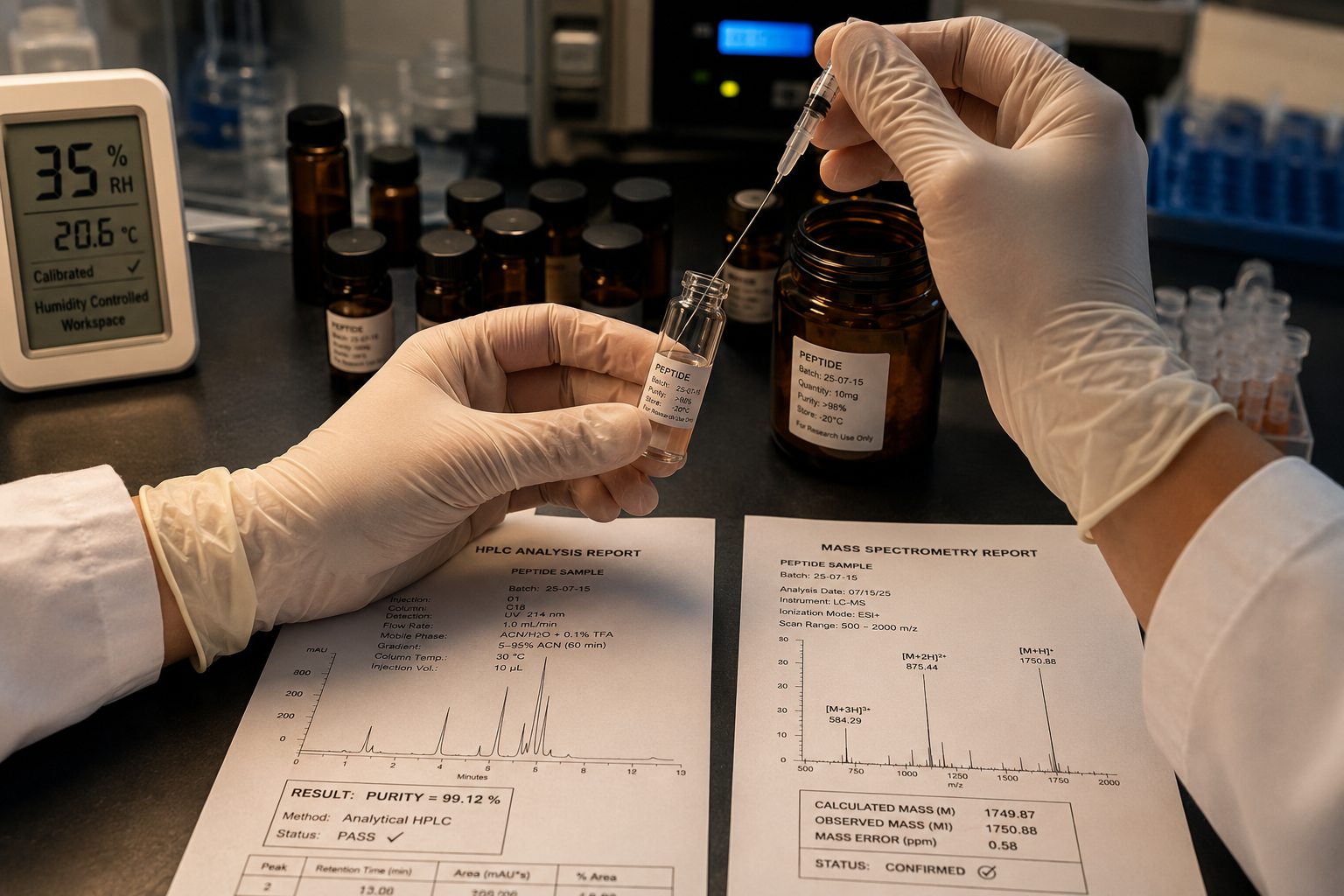
A single improper storage decision can reduce a peptide's purity from over 98% to below 90% in less than four weeks. For researchers who depend on precise, reproducible results, that loss is not just inconvenient, it can invalidate entire experimental protocols. This guide to understanding peptide stability covers the essential storage and handling practices that protect research-grade compounds from the most common degradation threats.

Key Takeaways

  • Lyophilized peptides stored at -20°C or below can remain stable for 2 to 3 years; reconstituted peptides degrade far more quickly.
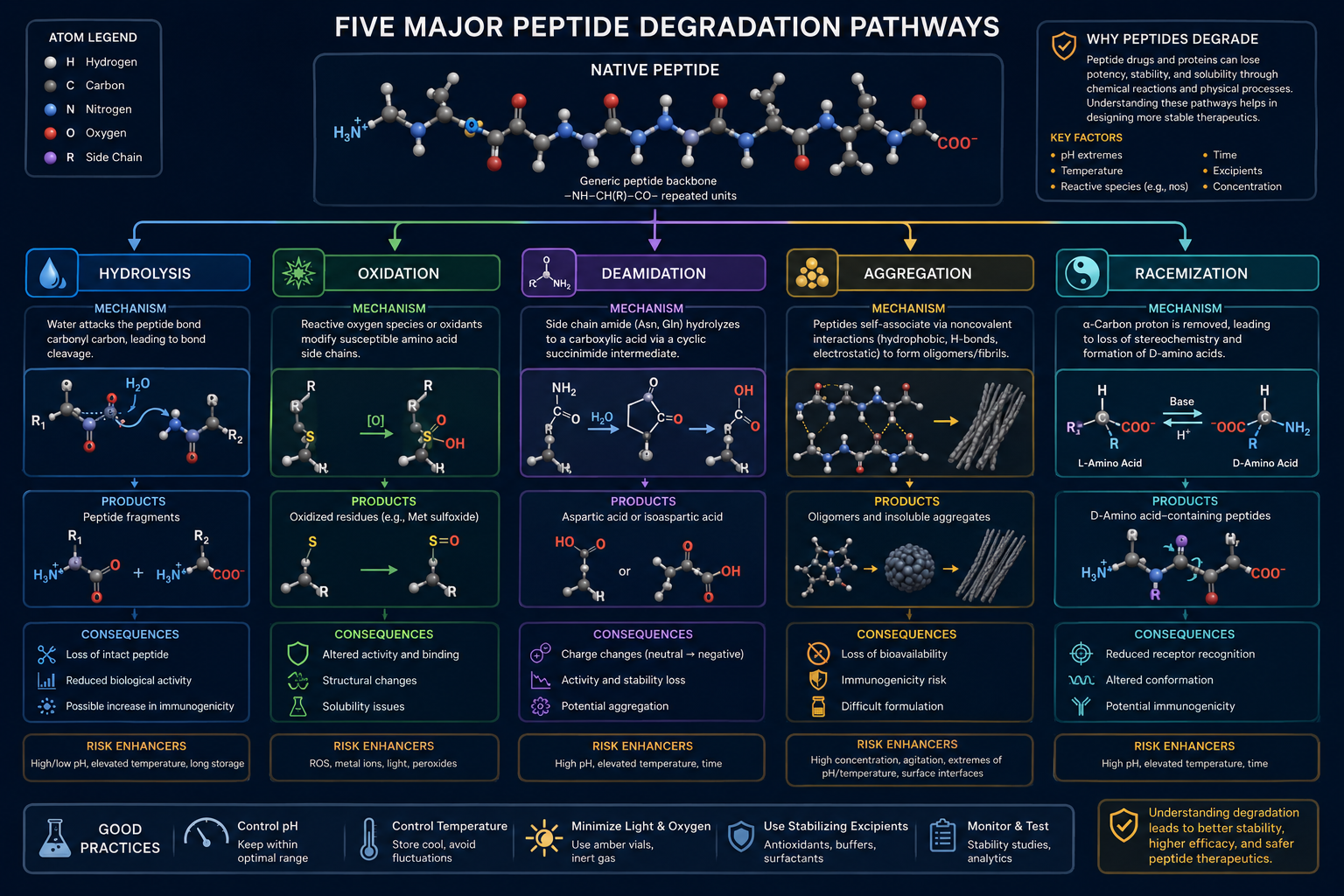
  • Five primary degradation pathways, hydrolysis, oxidation, deamidation, aggregation, and racemization, threaten purity at every stage.
  • Aliquoting reconstituted peptides into single-use portions dramatically reduces freeze-thaw damage.
  • Bacteriostatic water extends the usable life of reconstituted peptides compared to sterile water alone.
  • HPLC and mass spectrometry remain the gold-standard methods for verifying purity after storage.

Key Takeaways

The Five Degradation Pathways Every Researcher Must Know

A foundational part of understanding peptide stability is recognizing how compounds break down. Peptides degrade through five main chemical and physical pathways:

Degradation Pathway Primary Trigger Key Prevention Strategy
Hydrolysis Moisture exposure Sealed vials, low-humidity handling
Oxidation Oxygen, light Amber containers, inert atmosphere
Deamidation Heat, alkaline pH Cold storage, correct solvent pH
Aggregation Freeze-thaw cycling Single-use aliquots
Racemization Heat, extreme pH Stable temperature, proper solvent

Each pathway can occur independently or in combination. Hydrolysis is among the most common, triggered by even trace moisture entering a vial. Oxidation is accelerated by light exposure, which is why amber or opaque containers are standard in professional research settings. Aggregation, where peptide chains clump together and lose bioactivity, is most often caused by repeated freeze-thaw cycles.

Researchers working with sensitive compounds such as those explored in longevity peptide research or mitochondria-targeted molecules like those covered in the MOTS-C mitochondrial peptide overview must be especially attentive to these pathways, as structural integrity directly affects experimental outcomes.


The Five Degradation Pathways Every Researcher Must Know

Storage Conditions: Lyophilized vs. Reconstituted Peptides

Understanding peptide stability requires treating lyophilized and reconstituted peptides as two distinct categories with very different requirements.

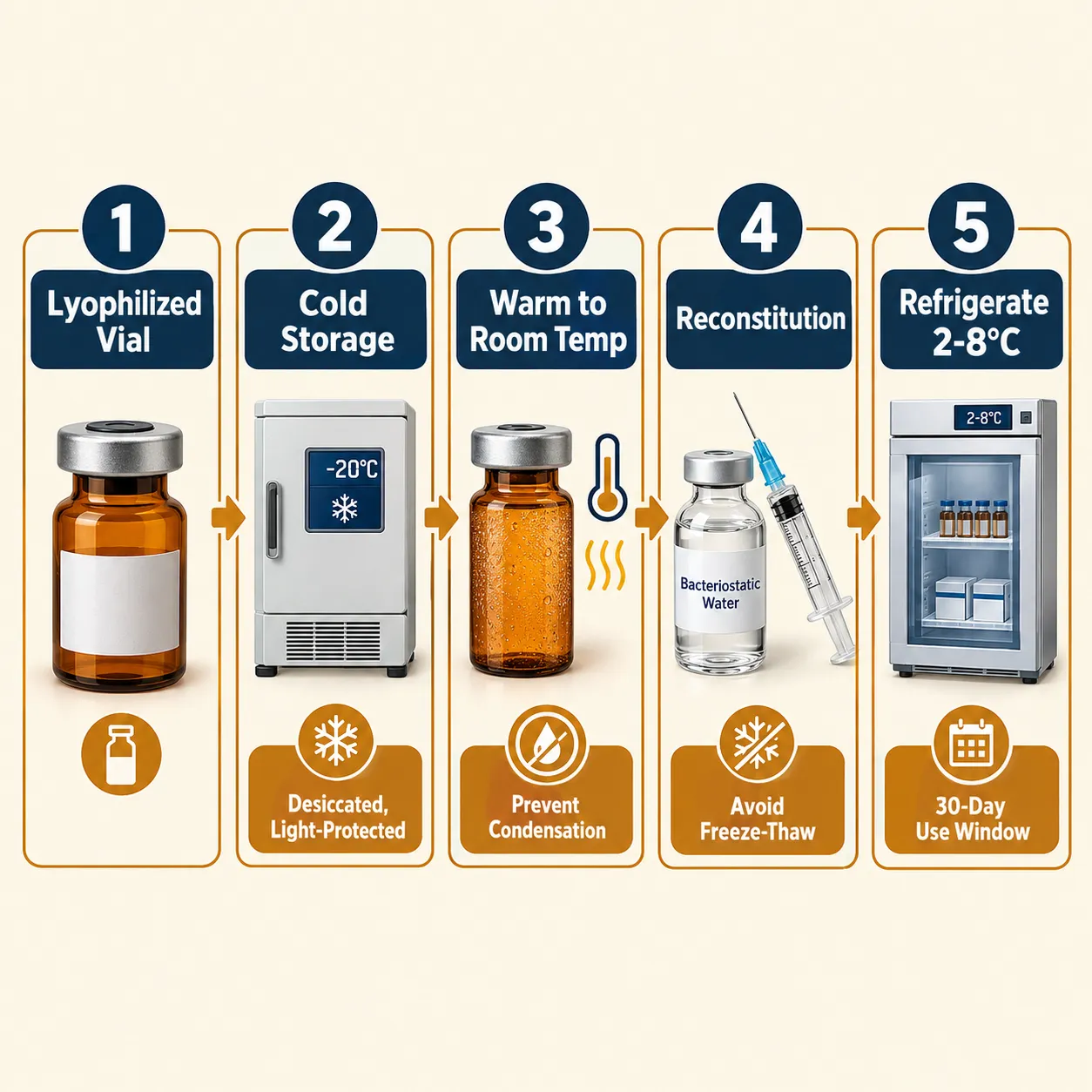
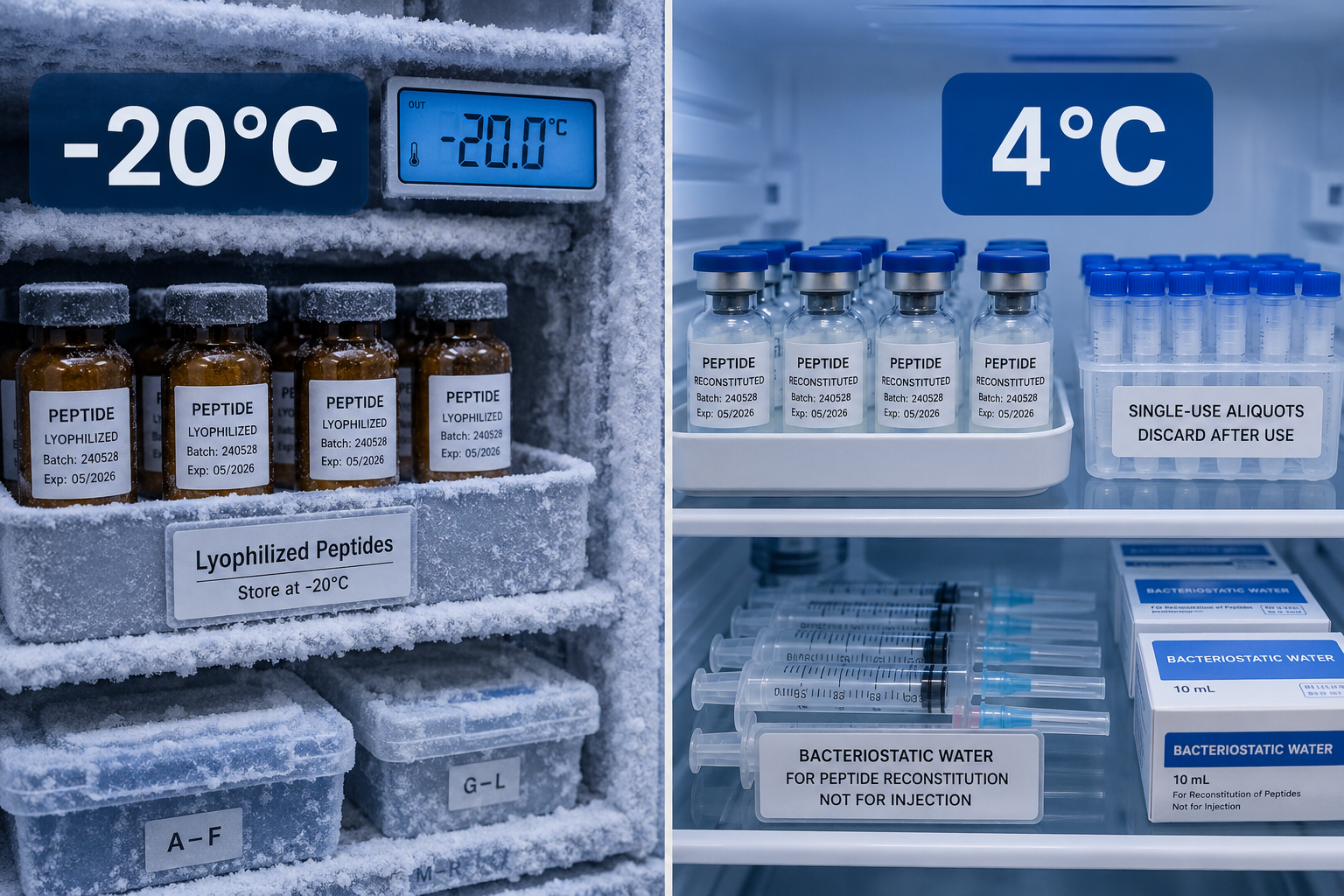
Lyophilized (freeze-dried) peptides are the more stable form. When stored at -20°C or below in sealed, moisture-protected vials, they can remain viable for 2 to 3 years. The freeze-drying process removes water, which is the primary driver of hydrolytic breakdown. Handling lyophilized peptides in low-humidity environments and ensuring vials are tightly sealed before returning them to cold storage is essential.

Reconstituted peptides are considerably more vulnerable. Research monitoring eight common peptides in bacteriostatic water at 4°C over 30 days found average purity retention of 98.2% at day 7, dropping to 91.3% by day 28. This decline underscores the importance of using reconstituted peptides promptly and storing them correctly.

"Bacteriostatic water extends the usable life of reconstituted peptides by inhibiting microbial growth, a meaningful advantage over sterile water for short-term research use."

Standard short-term storage for reconstituted peptides is 2 to 8°C, typically supporting a usable window of 30 to 60 days depending on the specific compound. For peptides like those discussed in the TB-500 muscle recovery research overview or GHK-Cu longevity research themes, following these guidelines helps ensure data reliability.


Storage Conditions: Lyophilized vs. Reconstituted Peptides

Practical Handling Protocols for Maintaining Research Purity

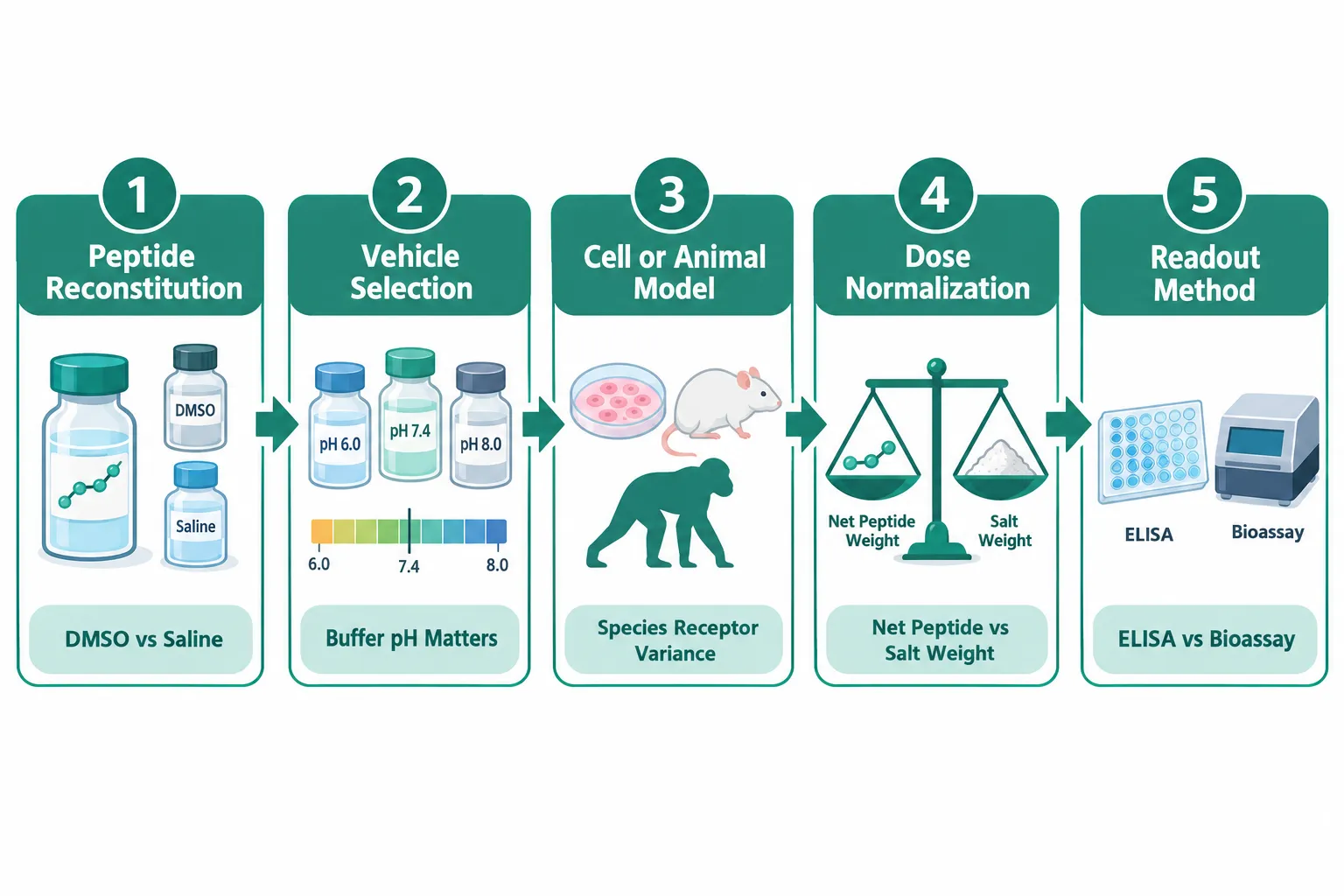
Optimizing storage and handling for research purity extends beyond temperature settings. The physical act of reconstitution matters.

Best practices for reconstitution:

  • Add solvent slowly along the inside wall of the vial rather than directly onto the lyophilized cake.
  • Swirl gently, never vortex, to dissolve the peptide without causing mechanical denaturation.
  • Allow the vial to reach room temperature before opening to prevent condensation from entering.

Aliquoting strategy is equally important. Dividing a reconstituted batch into single-use portions before freezing eliminates the need to repeatedly thaw and refreeze the same vial. Each freeze-thaw cycle risks aggregation and structural damage.

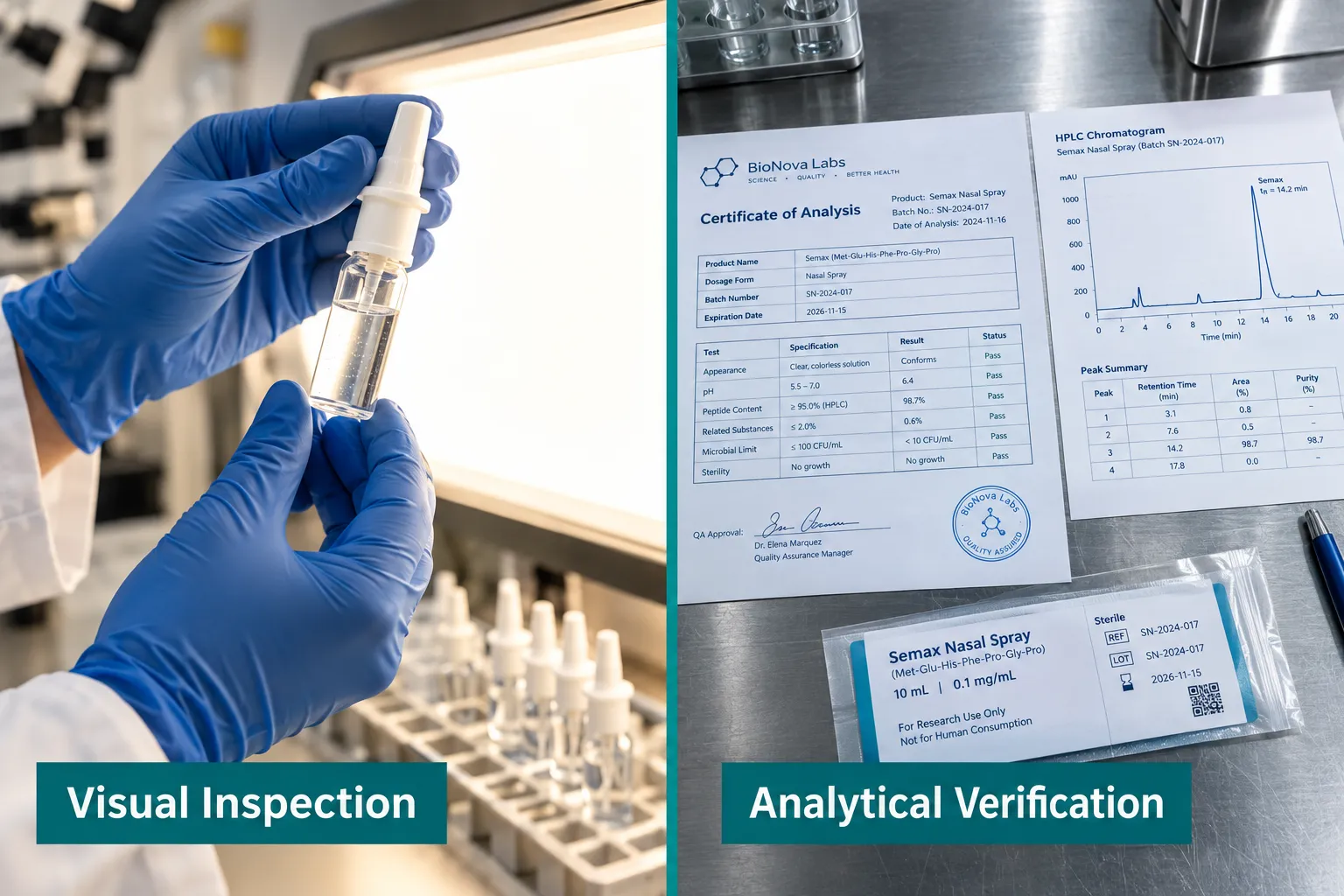
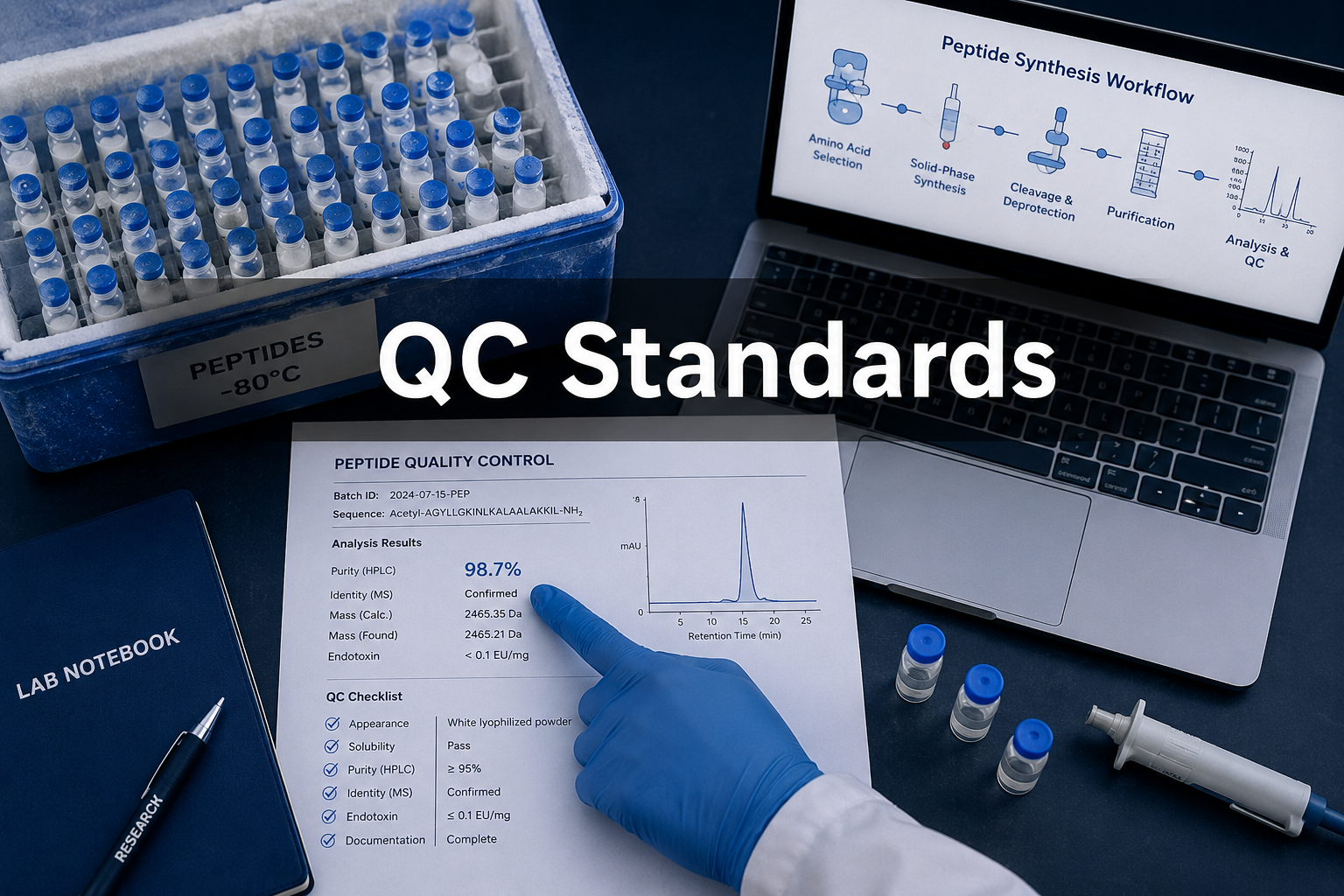
For researchers sourcing compounds, peptide purity testing provides a clear framework for evaluating quality before storage even begins. Verifying purity at the point of purchase using HPLC and mass spectrometry data ensures the baseline is sound. Those exploring newer compounds can also review what is new in peptide research for evolving best practices.

Light protection is another often-overlooked factor. Peptides susceptible to photodegradation, including many aromatic amino acid-containing sequences, should be stored in amber containers and handled away from direct light sources.

For those interested in sourcing verified compounds, lab-tested peptides with documented purity certificates reduce the variables that compromise downstream research integrity.


Conclusion

Protecting peptide purity is not a passive process. It requires deliberate decisions at every stage, from the moment a lyophilized vial arrives to the final use of a reconstituted aliquot. The core actions are clear: store lyophilized peptides at -20°C or below, reconstitute with bacteriostatic water, aliquot before freezing, shield from light and moisture, and verify purity with HPLC or mass spectrometry before critical experiments. Researchers who treat these protocols as non-negotiable will see more consistent, reproducible results and fewer compromised data sets. Start by auditing current storage conditions, identify any gaps against the guidelines above, and implement changes systematically to build a more reliable research workflow.


https://www.puretestedpeptides.com/wp-content/uploads/2026/07/Understanding-Peptide-Stability-A-Guide-to-Optimizing-Storage-and-Handling-for-Research-Purity.png 1024 1536 https://www.puretestedpeptides.com/wp-content/uploads/2026/01/buy-peptides-online.jpg 2026-07-06 13:04:302026-07-06 13:04:30Understanding Peptide Stability: A Guide to Optimizing Storage and Handling for Research Purity
Best Research Peptides for Enhanced Cognitive Function: A Comparative Review

Best Research Peptides for Enhanced Cognitive Function: A Comparative Review

July 3, 2026/0 Comments/in Uncategorized/by

{"cover":"Professional landscape format (1536×1024) hero image with bold text overlay: 'Best Research Peptides for Cognitive Function: A Comparative Review' in extra large 72pt white bold sans-serif font with deep shadow effect, centered upper-third composition. Background features a stunning macro visualization of neural synaptic connections rendered in electric blue and gold against a dark navy backdrop, with subtle molecular peptide chain structures floating in the foreground. Color palette: deep navy, electric blue, gold accents. Magazine cover aesthetic, editorial quality, high contrast, cinematic depth of field.","content":["Detailed landscape format (1536×1024) scientific illustration showing side-by-side molecular structure comparison of Semax and Selank peptides as glowing 3D ribbon diagrams in blue and amber tones, with labeled arrows pointing to BDNF and NGF receptor binding sites on a stylized neuron cross-section. Dark background with faint brain scan imagery. Clean laboratory aesthetic, research journal quality, with subtle text labels 'Semax' and 'Selank' in white sans-serif. Cognitive peptide research theme, high detail.","Landscape format (1536×1024) overhead flat-lay composition of a research laboratory bench showing multiple peptide vials arranged in a comparison grid, each labeled with peptide names including Dihexa, Cerebrolysin, Pinealon, and PE-22-28. A researcher's gloved hand holds a pipette over a test tube. Warm clinical lighting, teal and white color palette, with a blurred brain MRI scan visible on a lightbox in the background. Scientific research quality, editorial photography style, sharp focus on vials.","Landscape format (1536×1024) infographic-style visualization showing a decision flowchart for selecting cognitive research peptides, with branching pathways from 'Research Goal' through nodes labeled 'Neuroprotection', 'Synaptogenesis', 'Anxiety Reduction', and 'Neurogenesis'. Each node features a small peptide name badge in contrasting colors. Background is a clean white-to-light-gray gradient with subtle hexagonal molecular pattern overlay. Bold sans-serif typography, professional data visualization aesthetic, teal and charcoal color scheme."}

Professional landscape hero image () with : "Best Research Peptides for Enhanced Cognitive Function: A Comparative Review".

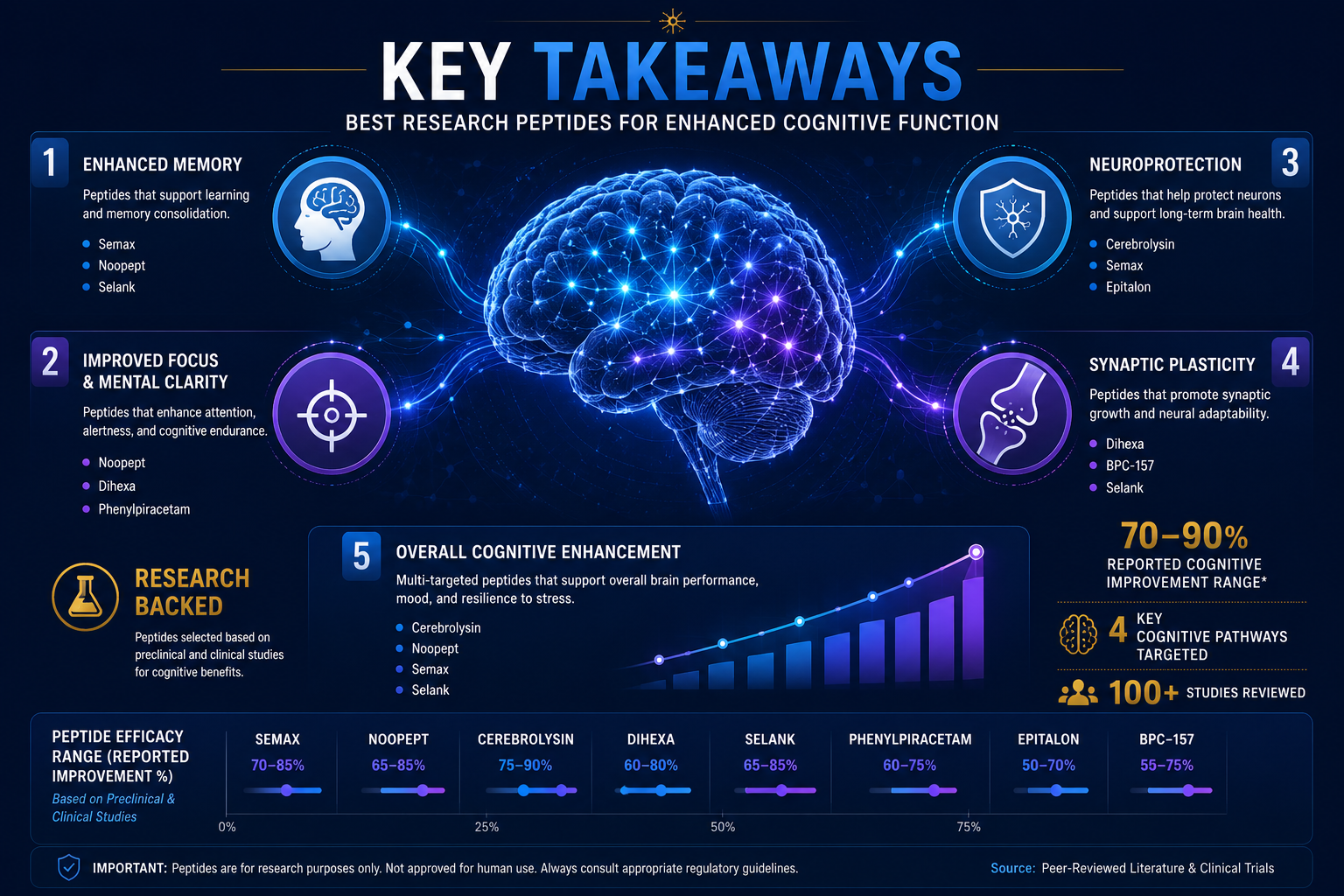
Fewer than 15% of adults consistently perform at their cognitive peak under real-world stress conditions, yet a growing body of preclinical and clinical research suggests that certain bioactive peptides may directly address the neurobiological gaps responsible for that shortfall. This comparative review of the best research peptides for enhanced cognitive function examines the leading compounds, their mechanisms, and what current evidence actually supports.

Key Takeaways

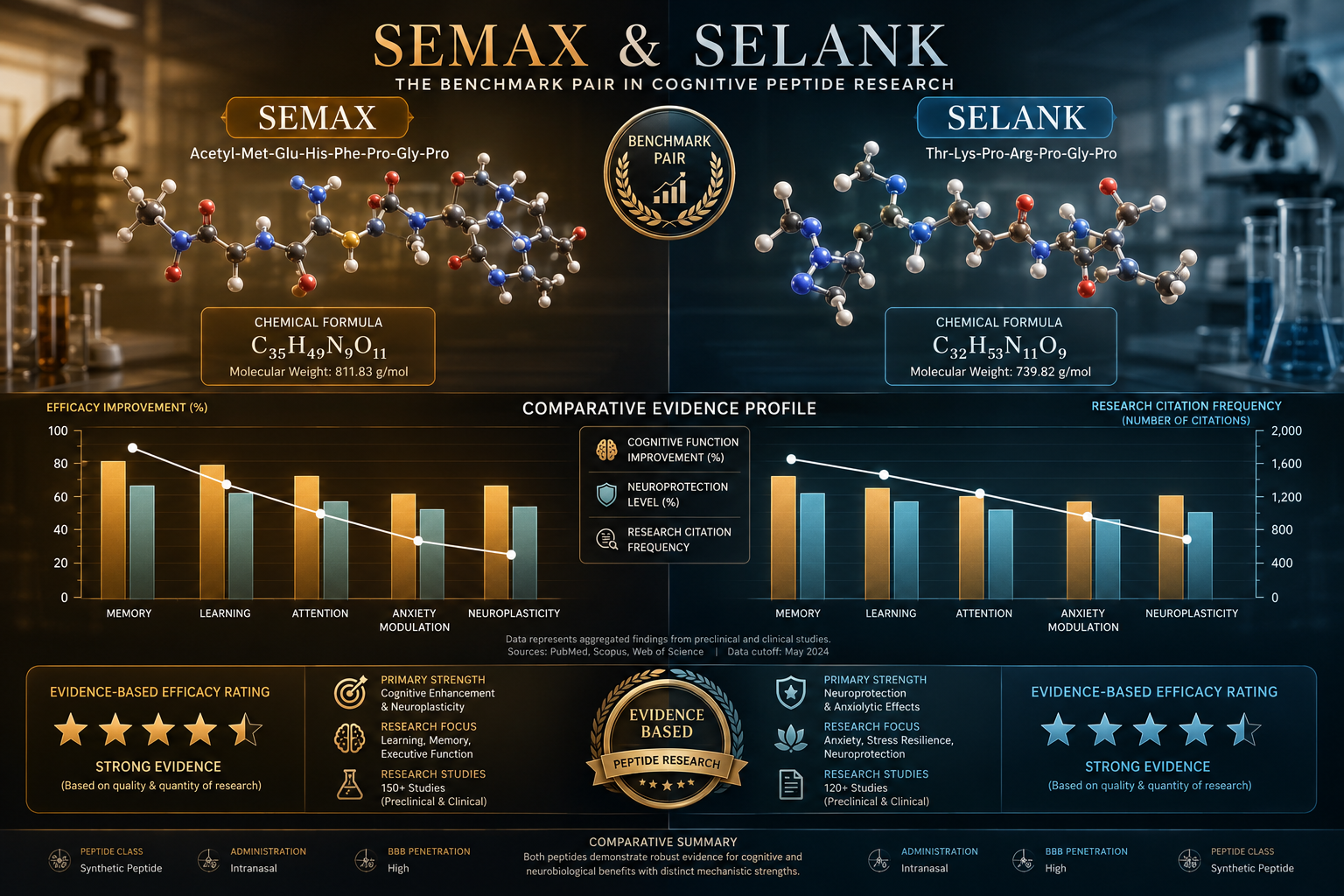
  • Semax and Selank are the most clinically documented cognitive peptides, operating through complementary but distinct mechanisms involving BDNF, NGF, and GABAergic pathways.
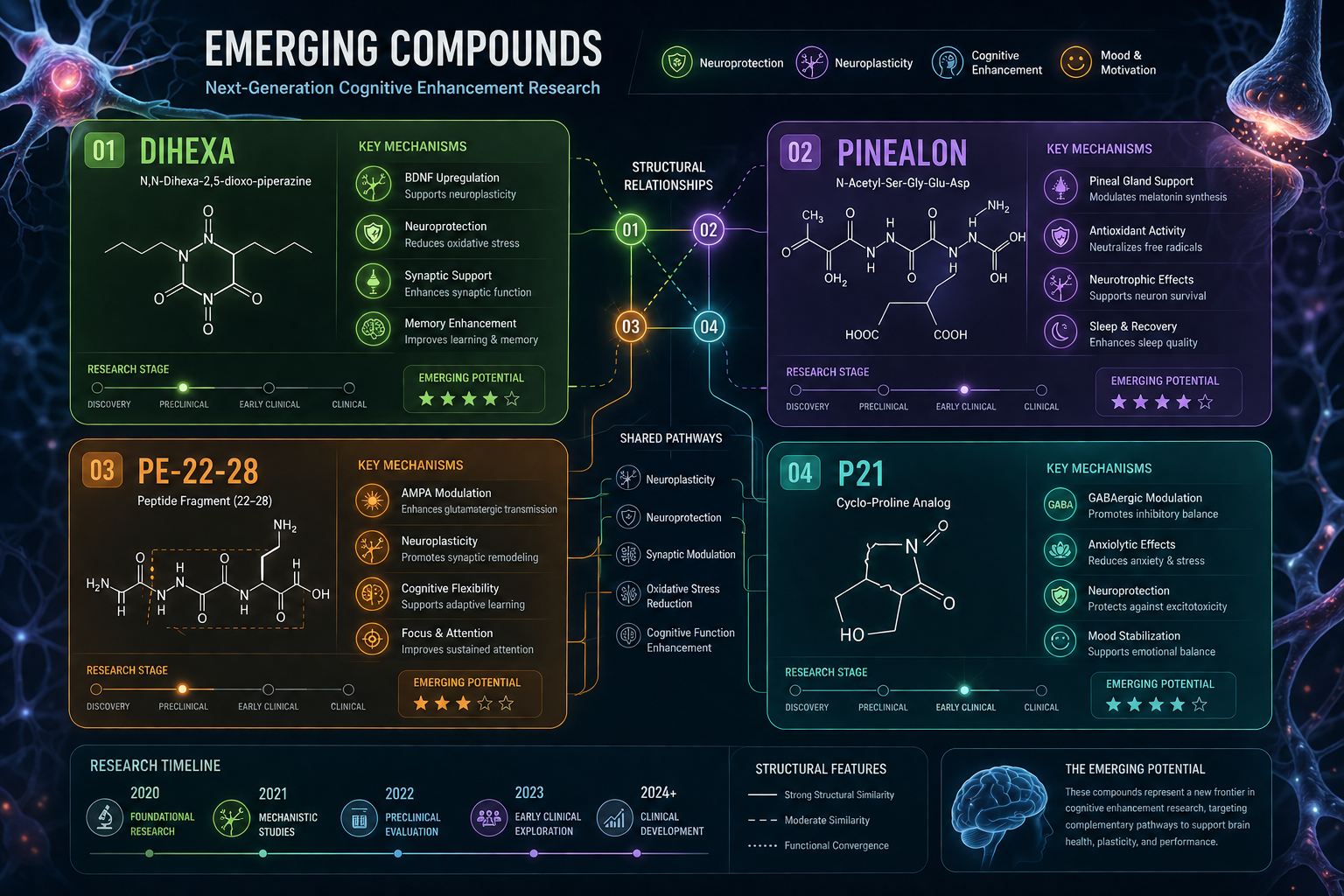
  • Emerging compounds such as Dihexa, PE-22-28, and Pinealon show strong preclinical promise but lack extensive human safety data.

  • No cognitive peptide currently holds FDA approval for use in healthy adults; most human data originates from Russian clinical research.
  • Purity and sourcing quality are critical variables that directly affect research reliability and reproducibility.
  • Combining peptides with non-overlapping mechanisms, such as Semax and Selank, is a common research strategy for broader cognitive coverage.

Key Takeaways

Semax and Selank: The Benchmark Pair in Cognitive Peptide Research

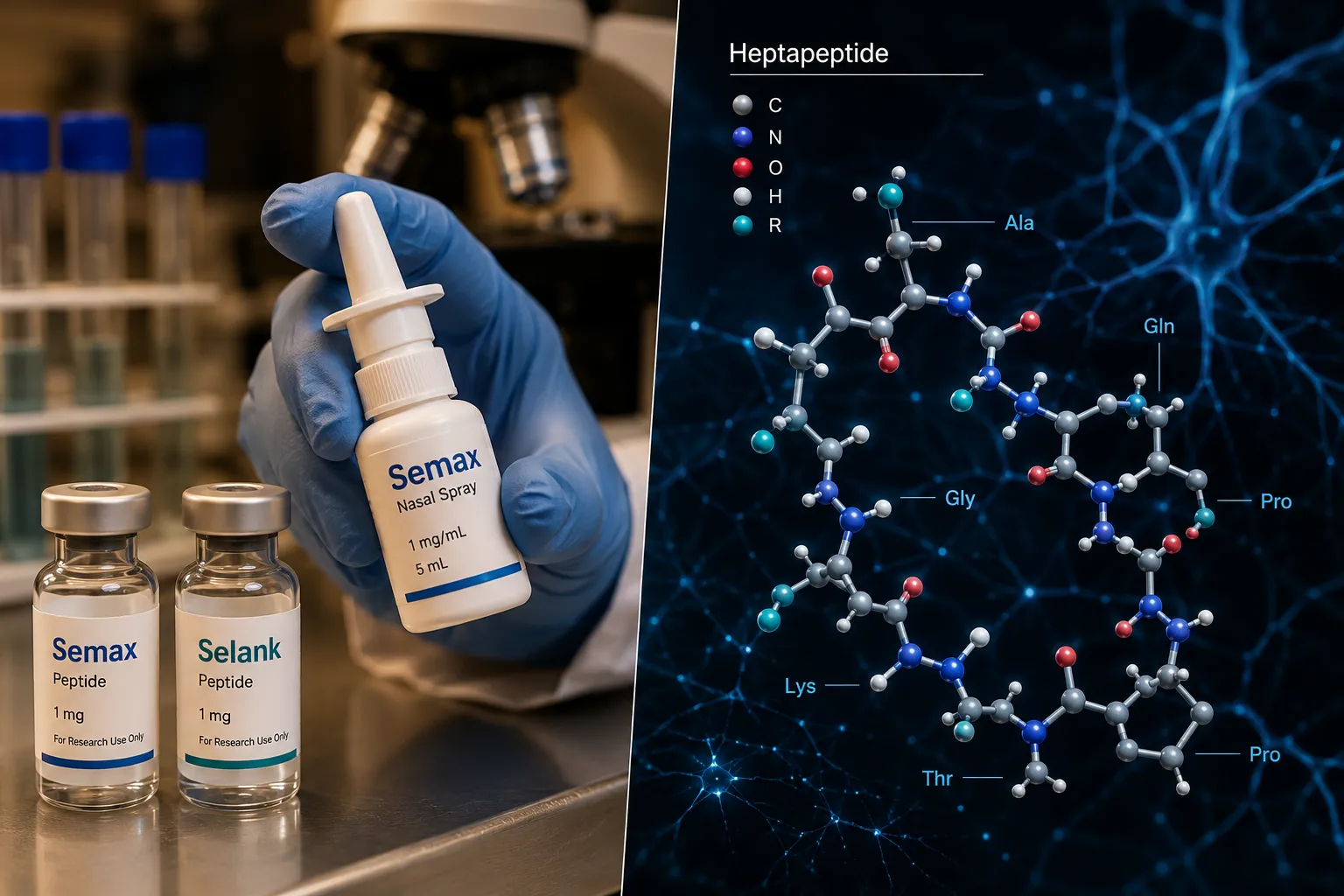
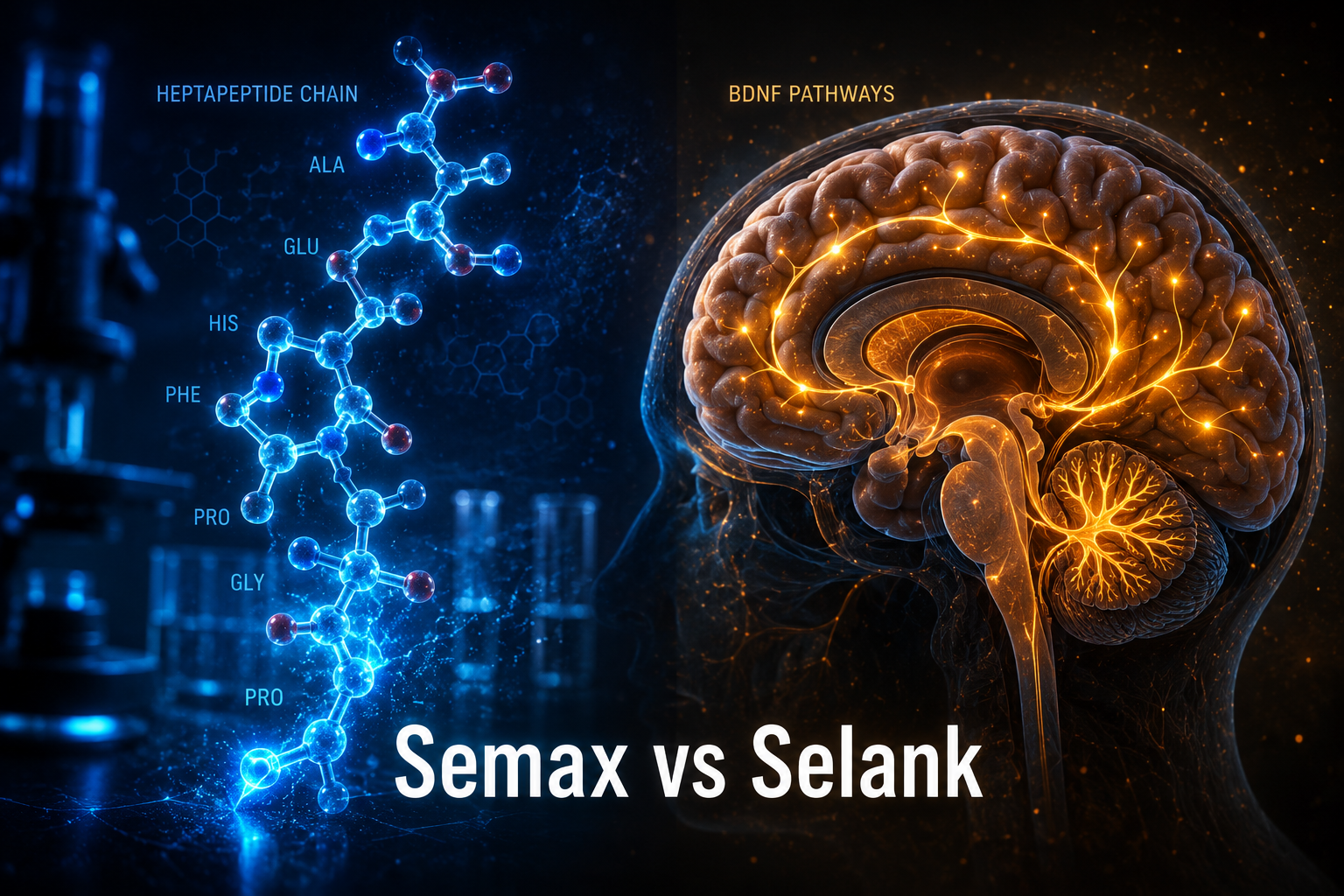
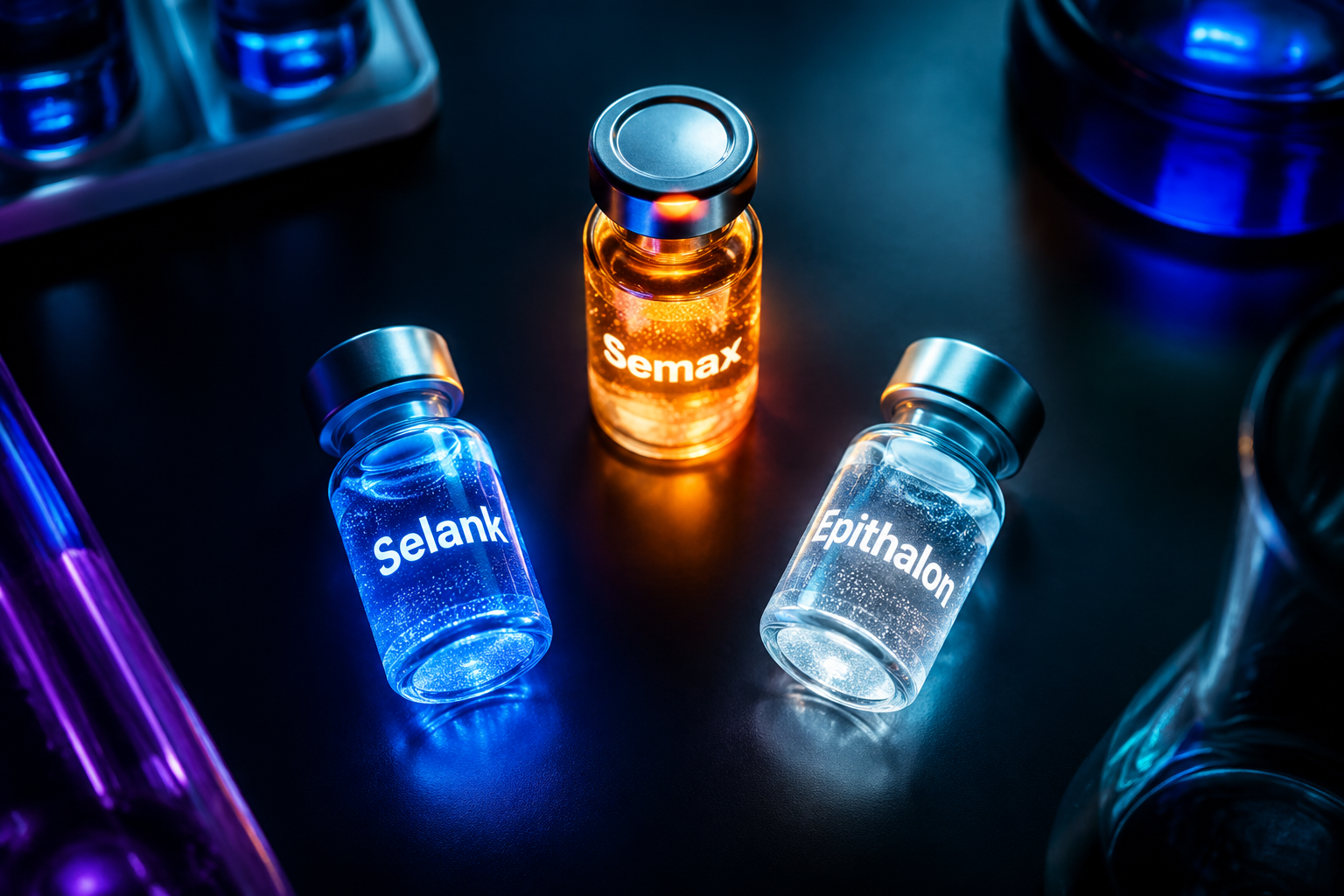
When evaluating the best research peptides for enhanced cognitive function in a comparative review, Semax consistently ranks at the top of the evidence hierarchy. Approved in Russia for stroke recovery and cognitive disorders, Semax is a synthetic heptapeptide derived from ACTH(4-10). Its primary mechanism involves upregulating Brain-Derived Neurotrophic Factor (BDNF) and Nerve Growth Factor (NGF), two proteins essential for neuronal survival, synaptic plasticity, and memory consolidation.

Selank complements Semax through a fundamentally different pathway. Rather than boosting neurotrophic factors directly, Selank modulates GABAergic transmission and enkephalin metabolism, reducing anxiety-driven cognitive interference. This makes the Semax-Selank combination particularly relevant in research models where stress-induced cognitive impairment is a variable.

"The Semax-Selank pairing is widely studied precisely because their mechanisms do not overlap, one builds neural infrastructure while the other clears the psychological noise that disrupts it."

For researchers interested in anxiety-adjacent cognitive research, reviewing Selank side effects and research considerations provides important context before designing protocols.


Semax and Selank: The Benchmark Pair in Cognitive Peptide Research

Emerging Compounds: Dihexa, Pinealon, PE-22-28, and P21

The landscape of cognitive peptide research extends well beyond the Semax-Selank pair. Several newer compounds are generating significant preclinical interest.

Dihexa is perhaps the most discussed emerging synaptogenic peptide. It promotes synapse formation at concentrations far lower than traditional neurotrophic factors, with preclinical data suggesting substantial improvements in memory and learning tasks. However, human safety data remains limited, making it strictly a research compound at this stage.

Pinealon, a synthetic tripeptide (Glu-Asp-Arg), has been studied for neuroprotective effects in traumatic brain injury models and age-related memory decline. Its small size allows efficient cellular penetration, and early studies suggest it may support memory consolidation through epigenetic mechanisms.

PE-22-28, a shortened analog of spadin, functions as a TREK-1 potassium channel blocker. By inhibiting this channel, PE-22-28 promotes hippocampal neurogenesis and synaptogenesis, two processes directly tied to long-term memory formation. Its targeted mechanism makes it a compelling subject for future cognitive research.

P21, derived from ciliary neurotrophic factor (CNTF), shows preclinical promise for promoting neurogenesis and protecting against neurodegeneration. Early animal studies indicate potential cognitive benefits, though the compound requires significantly more investigation.

A 2026 study published in Food Chemistry added further depth to this field, identifying five novel peptides from porcine brain hydrolysates, including FPLHP and WGQKPW, that enhance memory by targeting Keap1, p38α, AChE, and BACE1 simultaneously.

For researchers exploring neuroprotective peptides alongside cognitive compounds, humanin and cellular protection research and epithalon peptide research offer relevant mechanistic parallels.


Peptide Primary Mechanism Evidence Level Human Data
Semax BDNF/NGF upregulation High (clinical) Yes (Russia)
Selank GABAergic/enkephalin modulation Moderate-High Yes (Russia)
Dihexa Synaptogenesis promotion Moderate (preclinical) Limited
Pinealon Epigenetic neuroprotection Early preclinical Minimal
PE-22-28 TREK-1 channel blockade Early preclinical None confirmed
P21 CNTF-derived neurogenesis Early preclinical None confirmed

Sourcing, Purity, and Research Protocol Considerations

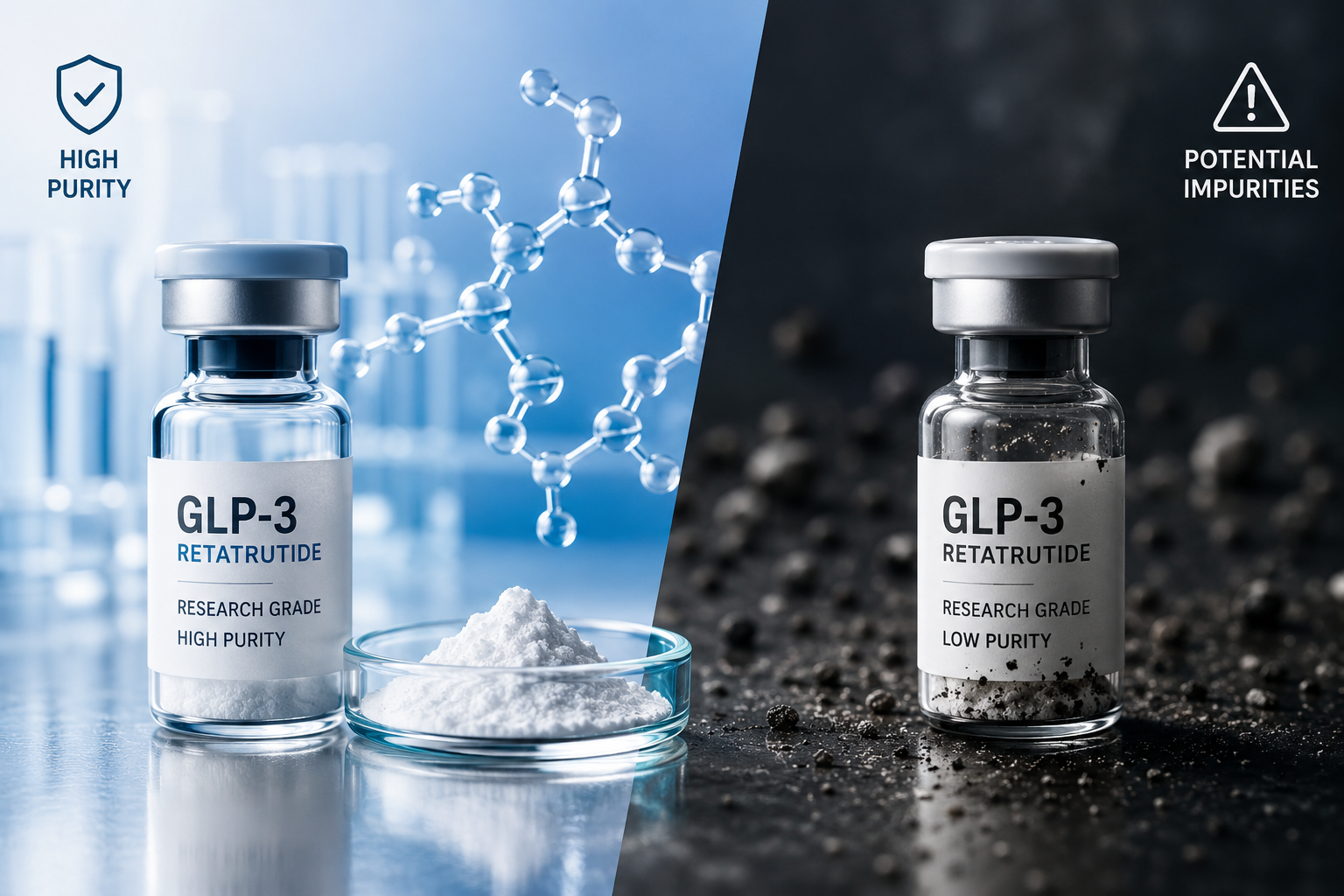
Any meaningful comparative review of the best research peptides for enhanced cognitive function must address a variable that often receives insufficient attention: peptide purity. Impure compounds introduce confounding variables that invalidate results and create safety concerns in research settings.

Researchers should prioritize suppliers that provide third-party verified purity documentation. Understanding peptide purity testing standards is a foundational step before any cognitive peptide protocol begins. Similarly, understanding reference standards and benchmarking practices ensures that experimental results can be meaningfully compared across studies.

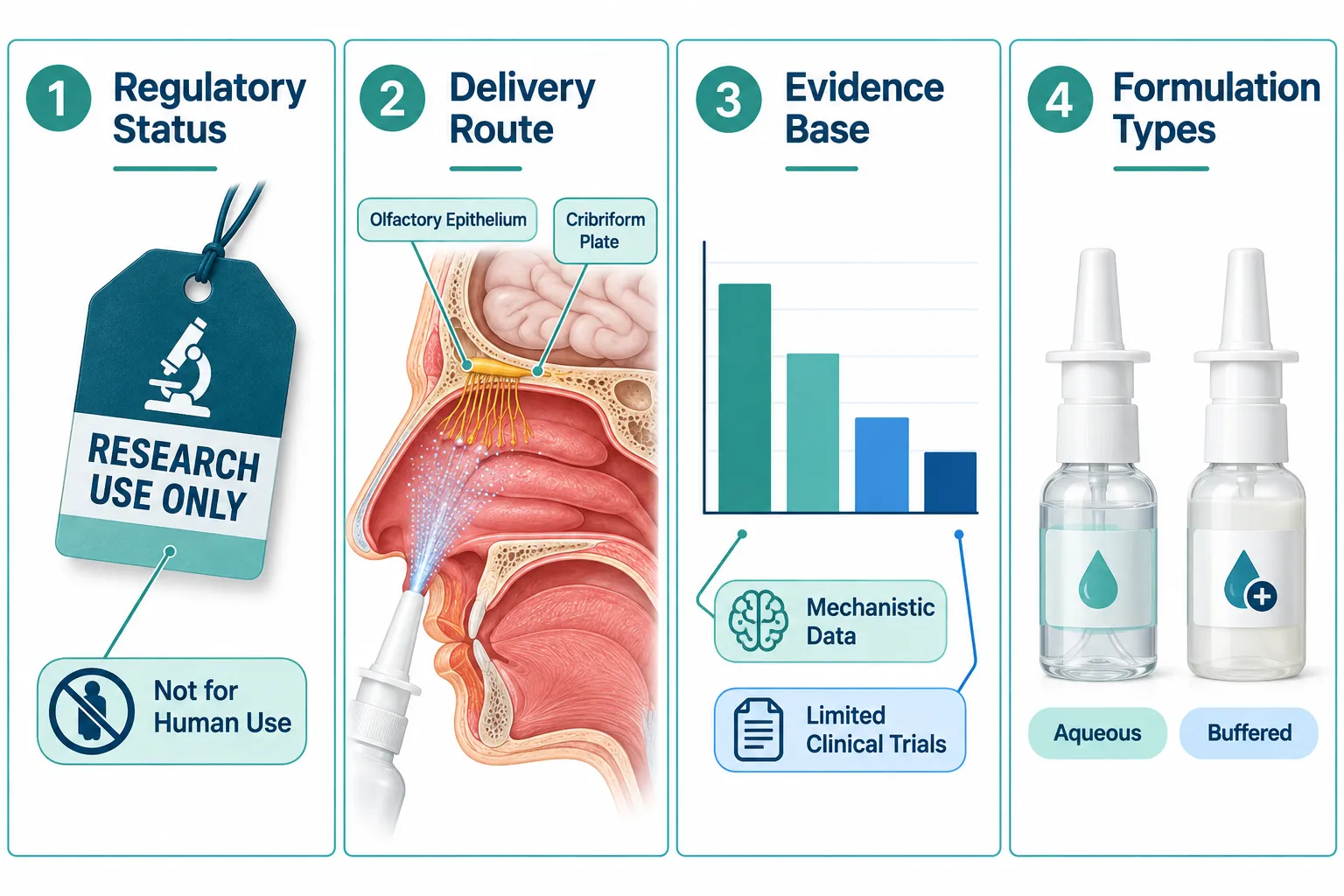
Delivery method also matters. Semax and Selank are typically administered intranasally in research settings, which bypasses first-pass metabolism and allows direct CNS access. Advances in innovative peptide delivery systems are expanding options for researchers working with less bioavailable compounds.

It is also worth noting that none of these peptides hold FDA approval for cognitive enhancement in healthy adults. The most robust human data originates from Russian clinical research, which has not yet been fully replicated in Western randomized controlled trials. Researchers should treat all findings as preliminary until that replication gap is closed.


Sourcing, Purity, and Research Protocol Considerations

Conclusion

The best research peptides for enhanced cognitive function represent a scientifically compelling but still-evolving field. Semax remains the gold standard based on clinical evidence, while Selank provides a complementary anxiolytic mechanism that makes the pair greater than the sum of its parts. Emerging compounds, Dihexa, Pinealon, PE-22-28, and P21, offer intriguing preclinical signals that warrant rigorous follow-up research.

Actionable next steps for researchers:

  • Prioritize compounds with the strongest evidence base (Semax, Selank) before exploring newer analogs.
  • Verify peptide purity through third-party testing before initiating any protocol.
  • Design studies that account for stress variables, where Selank's anxiolytic properties may be a confounding or complementary factor.
  • Monitor the replication of Russian clinical data in Western trials, this will be the defining development for the field in the coming years.
  • Explore neuroendocrine and innate immunity research for broader context on how peptide systems interact with cognitive pathways.

The science is advancing rapidly. Staying current with high-quality sourcing and evidence standards will separate meaningful research from noise.

https://www.puretestedpeptides.com/wp-content/uploads/2026/07/Best-Research-Peptides-for-Enhanced-Cognitive-Function-A-Comparative-Review.png 1024 1536 https://www.puretestedpeptides.com/wp-content/uploads/2026/01/buy-peptides-online.jpg 2026-07-03 13:04:422026-07-03 13:04:42Best Research Peptides for Enhanced Cognitive Function: A Comparative Review
Where to Buy High-Purity Research Peptides: A Guide to Trusted Suppliers and COA Verification

Where to Buy High-Purity Research Peptides: A Guide to Trusted Suppliers and COA Verification

June 30, 2026/0 Comments/in Uncategorized/by

Roughly 40% of peptide samples purchased from unverified online vendors fail independent purity testing — a figure that should stop any serious researcher before placing an order. For laboratories and research professionals navigating this guide to trusted suppliers and COA verification, the stakes are not just financial. Contaminated or mislabeled peptides can invalidate months of experimental work. This guide to buying high-purity research peptides lays out a systematic, verifiable framework for finding trustworthy sources and confirming the quality documents they provide.

Key Takeaways

  • Supplier verifiability — not marketing language — is the first and most critical filter when sourcing research peptides.
  • A legitimate Certificate of Analysis (COA) must come from an accredited, independent third-party laboratory, not the vendor's in-house team.
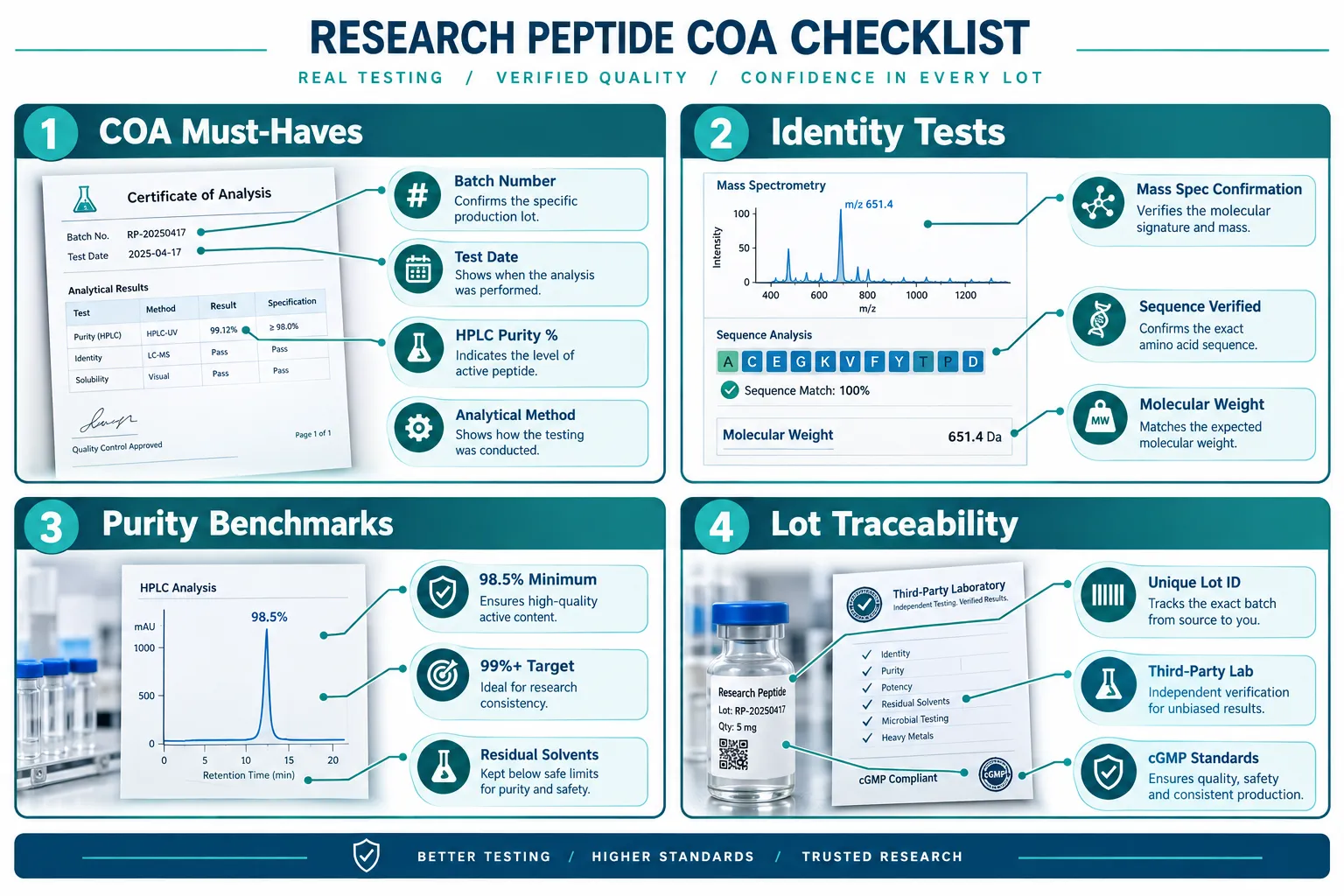
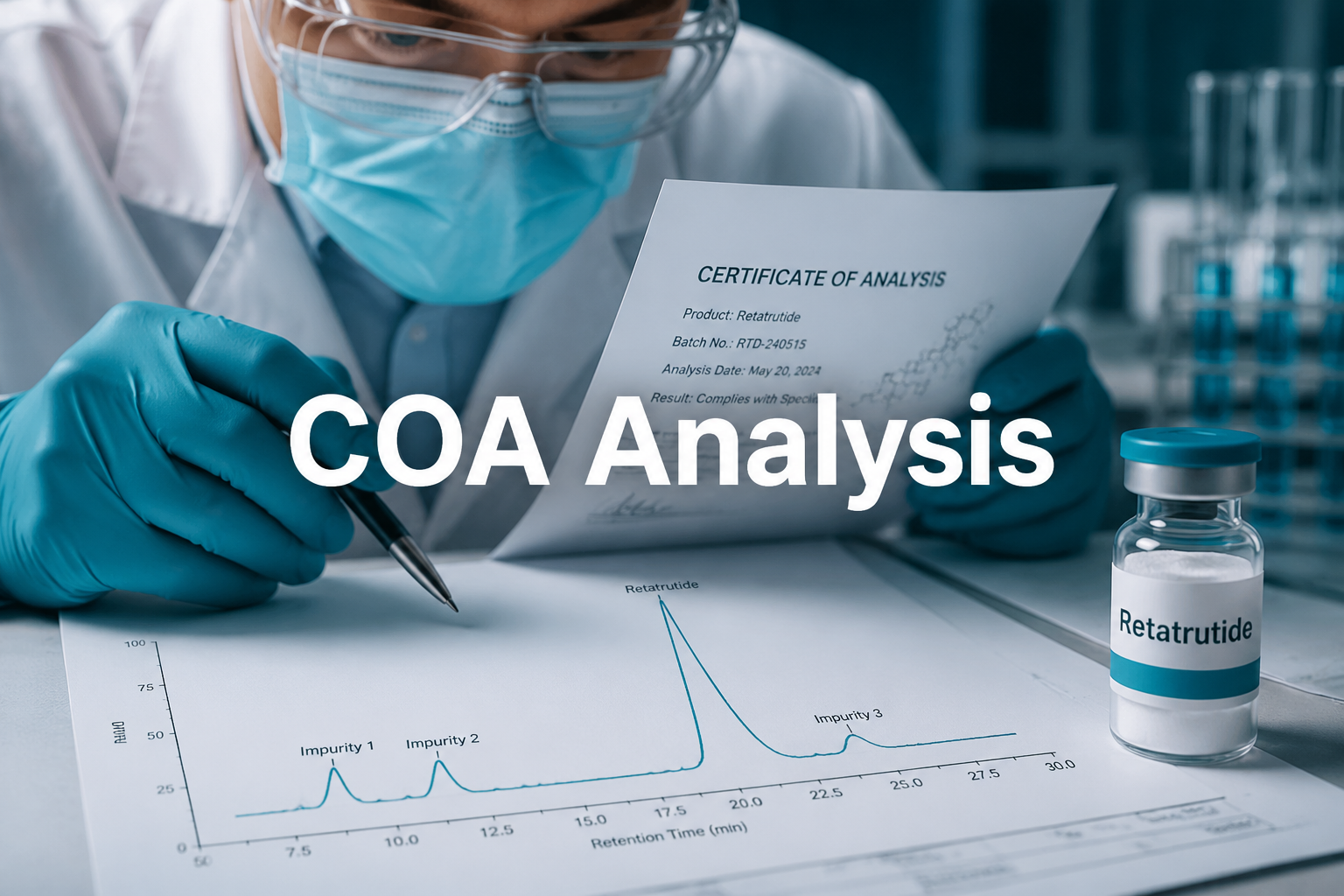
  • HPLC purity data, mass spectrometry confirmation, and lot-specific results are the three non-negotiable elements of a credible COA.
  • Red flags include COAs without named testing labs, purity claims above 99.9% with no supporting data, and pricing that is economically implausible for genuine analytical testing.
  • Matching lot numbers between the COA and the product vial is a simple, fast verification step that filters out recycled or fabricated documents.

Key Takeaways

How to Evaluate a Trusted Supplier Before Ordering

When the goal is finding where to buy high-purity research peptides, the evaluation process must begin with the supplier's identity and infrastructure — not its product catalog. In 2026, analytical guides consistently prioritize supplier verifiability over promotional claims.

Start with these supplier-level checks:

  • Physical address and registration: A verifiable business address, not a P.O. box, is a baseline requirement.
  • Transparent manufacturing or sourcing chain: Reputable vendors disclose whether peptides are synthesized in-house or sourced from established GMP-adjacent facilities.
  • Customer service responsiveness: Send a pre-purchase question about a specific COA. A credible supplier answers with technical specificity, not generic reassurance.
  • Peer-reviewed community presence: Look for the supplier's name in researcher forums, published procurement notes, or third-party review platforms — not just testimonials on their own website.
  • Return and dispute policy: A clear, published refund and returns policy signals accountability.

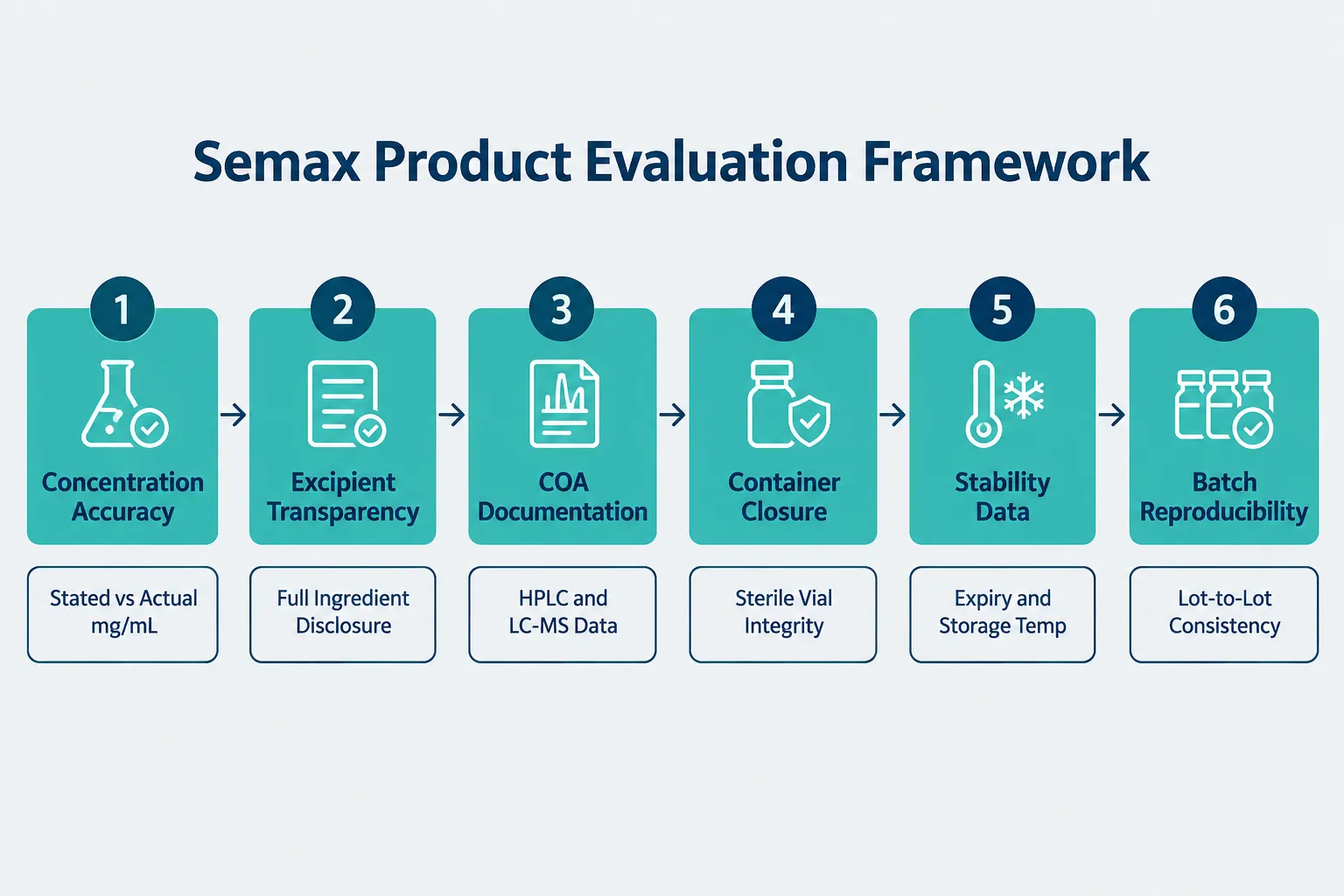
Suppliers who invest in lab-tested peptides will make that testing infrastructure visible and easy to verify. If locating the testing documentation requires more than two clicks, treat that as a warning sign.


How to Evaluate a Trusted Supplier Before Ordering

COA Verification: The Non-Negotiable Steps

A Certificate of Analysis is only as valuable as the process that produced it. Expert procurement protocols now begin by proving the COA is real and economically plausible — not simply present.

A credible COA must include:

Element What to Look For
Testing laboratory name Accredited, independent, named facility
HPLC chromatogram Visible peak data, not just a percentage
Mass spectrometry result Confirms molecular identity of the peptide
Lot or batch number Must match the number printed on the vial
Testing date Recent; ideally within 12 months of purchase
Purity percentage Typically 98%+ for research-grade material

"A COA without a named third-party laboratory is a marketing document, not an analytical one."

Always cross-reference the lot number on the COA against the physical product. Vendors who publish a dedicated COA verification page make this step straightforward. If the COA is a generic document with no lot-specific data, it may have been recycled across multiple batches.

For specific compounds, purity requirements can vary. Researchers sourcing peptides such as BPC-157, CJC-1295 without DAC, or Tesamorelin should request compound-specific COAs rather than accepting a blanket purity certificate for an entire product line.


COA Verification: The Non-Negotiable Steps

Applying This Guide to Specific Research Peptides

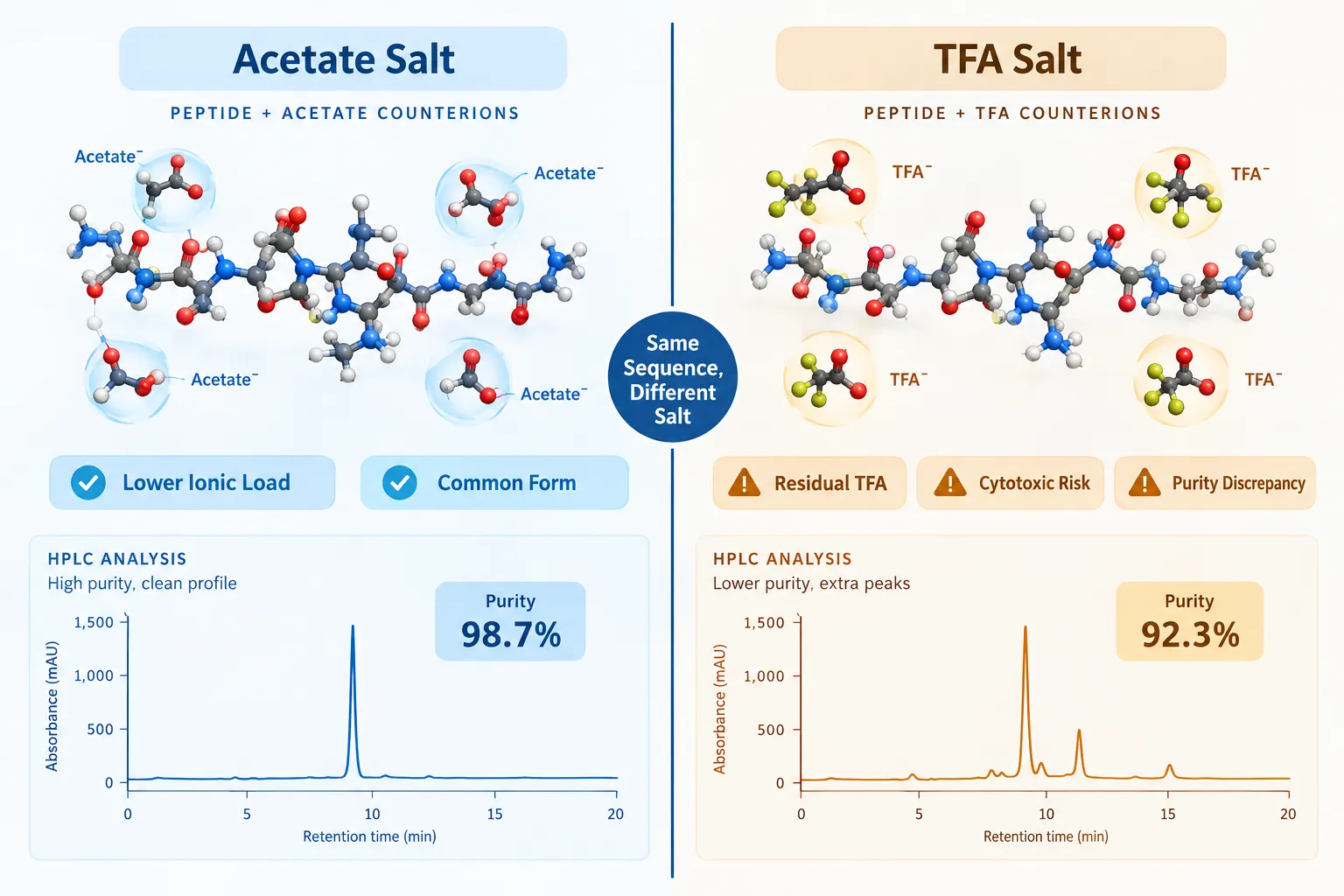
The principles above apply universally, but practical sourcing decisions benefit from compound-specific context. Researchers exploring longevity-focused peptide research or metabolic compounds like AOD-9604 should confirm that COA documentation covers the precise analog or salt form being purchased — not just the base peptide name.

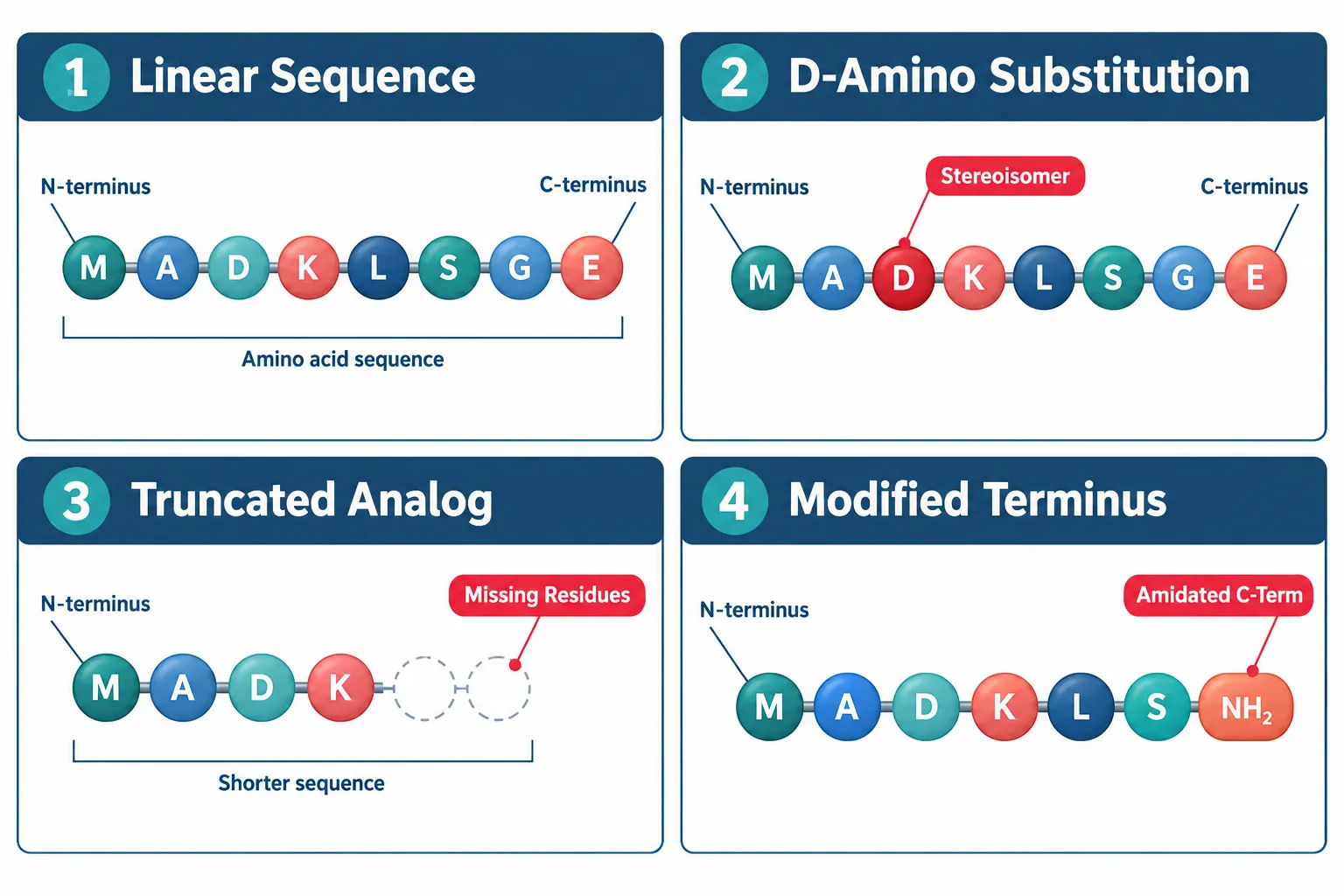
For mitochondrial compounds such as SS-31 (Elamipretide), purity verification is especially critical because structural analogs can differ significantly in biological activity. Similarly, researchers working with neuropeptides like Selank should verify sequence fidelity through mass spectrometry data, not HPLC alone.

Pricing as a purity signal: Genuine third-party HPLC and mass spectrometry testing carries real cost. If a vendor's pricing is dramatically lower than the market average, that gap often reflects skipped analytical steps. Economically implausible pricing is a COA red flag before the document is even reviewed.


Conclusion

Sourcing high-purity research peptides in 2026 demands a structured, skeptical approach. The guide to trusted suppliers and COA verification outlined here reduces research risk through a clear sequence: verify the supplier exists and operates transparently, then verify the COA is compound-specific, lot-matched, and produced by a named independent laboratory. Researchers should bookmark their supplier's COA page, save lot-number records alongside purchase receipts, and repeat the verification process with every new batch — not just the first order. Applying these steps consistently protects both experimental integrity and research investment.

https://www.puretestedpeptides.com/wp-content/uploads/2026/06/Where-to-Buy-High-Purity-Research-Peptides-A-Guide-to-Trusted-Suppliers-and-COA-Verification.png 1024 1536 https://www.puretestedpeptides.com/wp-content/uploads/2026/01/buy-peptides-online.jpg 2026-06-30 13:03:242026-06-30 13:03:24Where to Buy High-Purity Research Peptides: A Guide to Trusted Suppliers and COA Verification
×

Helpful Links

  • My account
  • Cart
  • Checkout
  • Refund and Returns Policy
  • Privacy Policy
  • SMS Privacy Policy
  • Login
  • My Account
  • Logout

USA Made Lab Tested Peptides

All products are sold for research, laboratory, or analytical purposes only, and are not for human consumption


Pure Tested Peptides is a chemical supplier. Pure Tested Peptides is not a compounding / chemical compounding facility as defined under 503A of the Federal Food, Drug, and Cosmetic act. Pure Tested Peptides is not an outsourcing facility as defined under 503B of the Federal Food, Drug, and Cosmetic act.

The statements made within this website have not been evaluated by the US Food and Drug Administration. The products we offer are not intended to diagnose, treat, cure or prevent any disease.

Human/Animal Consumption Prohibited. Laboratory/In-Vitro Experimental Use Only

Scroll to top Scroll to top Scroll to top