Call or Text 727-513-9780
  • Shopping Cart Shopping Cart
    0Shopping Cart
Pure Tested Peptides | America's most trusted Peptides for sale online
  • Peptides for sale
    • Oral Peptides for sale
      • Peptide Capsules for sale
      • BPC 157 Capsules 1000mcg
      • SLU-PP-332 Capsules | 1000 mcg
      • 5-Amino-1MQ 50mg Capsules
      • Tesofensine 500mcg
    • All Peptides for sale
    • Peptide Sprays
      • BPC 157 Nasal Spray Kit
      • BPC-157 TB500 Nasal Spray Kit
      • Semax Nasal Spray 10mg
      • Selank – Nasal Spray Kit – 10mg
      • Epithalon 50MG Nasal Spray Kit
      • Ipamorelin 10mg Nasal Spray
      • Klow Nasal Spray (BPC-157 + TB-500 + GHK-Cu + KPV) | 80mg
      • Hulk Nasal Spray Tesa / Ipa Blend 6/3 MG
      • Klow Nasal Spray
      • NAD + 500 mg Nasal Spray
      • PT-141 Nasal Spray Kit
    • GHRH Peptides
      • Ipa Peptides
      • CJC-1295 Peptides
        • CJC-1295 with DAC 5 mg
        • CJC-1295 without DAC 5 mg
        • CJC-1295 Ipa 10mg
      • Tesa Peptides
        • Tesa Peptide
        • Tesa 20 mg
    • GHK-Cu Peptides
      • All GHK-Cu Peptides
      • GHK-Cu 100mg
      • KLOW Peptide Blend – Buy KLOW blend online
    • BPC Peptides
      • All BPC Peptides
      • BPC-157
      • BPC-157 TB-500
      • BPC 157 capsules 1000mcg
    • SLU-PP-332 Peptides
      • All SLU-PP-332 Peptides
      • SLU-PP-332 5mg
    • GLP3 Peptides
      • GLP3-R
      • GLP3-R CAG 10mg
      • GLP3-R 20mg
    • PT-141 Peptides
      • PT-141 Peptides for sale
      • PT-141 10mg
      • PT-141 Nasal Spray
    • CAG Peptides
      • Lipo-C Peptide Blend
      • CAG 5mg
      • CAG 10mg
    • MOTS-C Peptides
      • MOTS-C Peptides for sale
      • MOTS-c peptide
      • MOTS-c 10mg *6 pack*
    • 5 Amino 1MQ Peptides
      • 5 Amino 1MQ Peptides for sale
      • 5-Amino-1MQ 50mg Capsules
      • 5-Amino-1MQ 5mg
    • Epithalon Peptides
      • Epithalon Peptides for sale
      • Epithalon 10mg
      • Epithalon 50mg
  • Shop
    • GLPs
      • 5-Amino-1MQ 50mg Capsules
      • 5-Amino-1MQ 5mg
      • GLP3-Reta
      • L-Carnitine 500mg/ml
      • Tesofensine 500mcg
      • SLU-PP-332 5mg
      • MOTS-c 10mg *6 pack*
    • Epithalon & BPC Peptides
      • Epithalon 10mg
      • Epithalon 50mg
      • BPC-157
      • BPC 157 capsules 1000mcg
      • BPC-157 TB-500
      • BPC-157 TB500 Nasal Spray Kit
      • BPC 157 Nasal Spray Kit
    • BPC TB-500 & NAD+ Peptides
      • NAD+ 500 mg
      • KLOW Peptide Blend – Buy KLOW blend online
      • GLOW Peptide Blend
      • TB 500 5mg
      • BPC 157 capsules 1000mcg – Supplement
      • BPC 157 Nasal Spray Kit
      • BPC-157
      • BPC-157 TB500 Nasal Spray Kit
      • BPC-157 TB-500
      • BPC 157 capsules 1000mcg
    • LL-37 Peptide
      • LL-37 10 mg
    • MOTS-C & Selank
      • MOTS-c peptide
      • Selank 10mg
    • GHK Peptides
      • GHK-Cu 100mg
      • GLOW Peptide Blend
      • KLOW Peptide Blend – Buy KLOW blend online
  • COAs
  • Wholesale
    • Wholesale Peptides for sale
  • PTP FAQ
  • Affiliates
    • Selank Peptide: Advanced Pharmacological Mechanisms Underlying Its Anxiolytic and Nootropic Effects in Research
      • 5-Amino-1MQ Peptide: Detailed Mechanisms of NNMT Inhibition and Its Impact on Cellular Metabolism Research
        • MOTS-C Peptide: Unraveling Its Role in Mitochondrial Dynamics and Energy Metabolism Research
          • Epithalon Peptide and Telomerase Regulation: Investigating Its Impact on Cellular Senescence and Lifespan Research Models
            • GLP2-T vs GLP2 Tirz Peptide: Understanding the Naming, Mechanistic Nuances, and Research Implications for Gut Health
      • Peptides and Polypeptides in Modern Pharmacology: What Research on Metoprolol, Prednisone, and Amlodipine Reveals
        • Polypeptide Peptides vs NSAIDs: What Naproxen and Diclofenac Teach Tissue-Repair Researchers About BPC‑157 and TB‑500
          • Peptides and Polypeptides in Endocrine Pharmacology: How GLP-1, GLP-2, and GLP-3 Retatrutide Differ From Classic Drugs Like Prednisone and Amlodipine
          • 5‑Amino‑1MQ Peptide and NNMT Inhibition: How It Compares With Statins Like Atorvastatin in Adipose and Lipid Metabolism Research
      • Enclomiphene, Estrogen Receptor Signaling, and Luteinizing Phase Biology: What Hormone Researchers Should Measure
        • Mesenchymal Stem Cells, BPC‑157, and GHK‑Cu: How Tissue Repair Peptides Compare With Classic NSAIDs Like Naproxen in Injury Models
          • Peptide Calculator Use Cases Beyond Growth Hormone: Working Through GLP‑3 Retatrutide, MOTS‑c, and BPC‑157 Research Dosing
        • Polypeptide Peptides in Endocrine and Metabolic Pharmacology: Lessons From Amlodipine, Prednisone, and Metoprolol
        • Peptides Calculator for Advanced Blends: Worked Examples for Tesamorelin, CJC‑1295, and Ipamorelin Stacks
          • Peptides and Polypeptides in Human Physiology: How Molecular Size Shapes Research Applications
            • Selank Peptide: Advanced Pharmacological Mechanisms Underlying Its Anxiolytic and Nootropic Effects in Research
          • 5-Amino-1MQ Peptide: Detailed Mechanisms of NNMT Inhibition and Its Impact on Cellular Metabolism Research
            • MOTS-C Peptide: Unraveling Its Role in Mitochondrial Dynamics and Energy Metabolism Research
              • Epithalon Peptide and Telomerase Regulation: Investigating Its Impact on Cellular Senescence and Lifespan Research Models
                • GLP2-T vs GLP2 Tirz Peptide: Understanding the Naming, Mechanistic Nuances, and Research Implications for Gut Health
                  • Peptides and Polypeptides in Endocrine Pharmacology: How GLP-1, GLP-2, and GLP-3 Retatrutide Differ From Classic Drugs Like Prednisone and Amlodipine
                    • Polypeptide Peptides vs NSAIDs: What Naproxen and Diclofenac Teach Tissue-Repair Researchers About BPC‑157 and TB‑500
                      • Peptides and Polypeptides in Modern Pharmacology: What Research on Metoprolol, Prednisone, and Amlodipine Reveals
                        • 5‑Amino‑1MQ Peptide and NNMT Inhibition: How It Compares With Statins Like Atorvastatin in Adipose and Lipid Metabolism Research
                        • Enclomiphene, Estrogen Receptor Signaling, and Luteinizing Phase Biology: What Hormone Researchers Should Measure
                        • Mesenchymal Stem Cells, BPC‑157, and GHK‑Cu: How Tissue Repair Peptides Compare With Classic NSAIDs Like Naproxen in Injury Models
                        • Peptide Calculator Use Cases Beyond Growth Hormone: Working Through GLP‑3 Retatrutide, MOTS‑c, and BPC‑157 Research Dosing
                        • Polypeptide Peptides in Endocrine and Metabolic Pharmacology: Lessons From Amlodipine, Prednisone, and Metoprolol
                        • Peptides Calculator for Advanced Blends: Worked Examples for Tesamorelin, CJC‑1295, and Ipamorelin Stacks
                        • Peptides and Polypeptides in Human Physiology: How Molecular Size Shapes Research Applications
                        • Selank Peptide: Advanced Pharmacological Mechanisms Underlying Its Anxiolytic and Nootropic Effects in Research
                        • MOTS-C Peptide: Unraveling Its Role in Mitochondrial Dynamics and Energy Metabolism Research
                        • Peptides and Polypeptides in Modern Pharmacology: What Research on Metoprolol, Prednisone, and Amlodipine Reveals
                        • Peptides and Polypeptides in Endocrine Pharmacology: How GLP-1, GLP-2, and GLP-3 Retatrutide Differ From Classic Drugs Like Prednisone and Amlodipine
                        • 5-Amino-1MQ Peptide: Detailed Mechanisms of NNMT Inhibition and Its Impact on Cellular Metabolism Research
                        • Mesenchymal Stem Cells, BPC‑157, and GHK‑Cu: How Tissue Repair Peptides Compare With Classic NSAIDs Like Naproxen in Injury Models
                        • Peptide Calculator Use Cases Beyond Growth Hormone: Working Through GLP‑3 Retatrutide, MOTS‑c, and BPC‑157 Research Dosing
                        • GLP2-T vs GLP2 Tirz Peptide: Understanding the Naming, Mechanistic Nuances, and Research Implications for Gut Health
                        • Polypeptide Peptides in Endocrine and Metabolic Pharmacology: Lessons From Amlodipine, Prednisone, and Metoprolol
                        • Polypeptide Peptides vs NSAIDs: What Naproxen and Diclofenac Teach Tissue-Repair Researchers About BPC‑157 and TB‑500
                        • Peptides and Polypeptides in Human Physiology: How Molecular Size Shapes Research Applications
                        • Peptides Calculator for Advanced Blends: Worked Examples for Tesamorelin, CJC‑1295, and Ipamorelin Stacks
                        • 5‑Amino‑1MQ Peptide and NNMT Inhibition: How It Compares With Statins Like Atorvastatin in Adipose and Lipid Metabolism Research
                        • Enclomiphene, Estrogen Receptor Signaling, and Luteinizing Phase Biology: What Hormone Researchers Should Measure
                        • Epithalon Peptide and Telomerase Regulation: Investigating Its Impact on Cellular Senescence and Lifespan Research Models
                        • Best research protocol Klow blend
                        • best time to take BPC-157
                        • best time to take DSIP (Delta Sleep Inducing Peptide)
                        • best time to take CJC-1295
                        • best time to take AOD-9604
                        • best time to take Follistatin 344
                        • best time to take Ipamorelin
                        • best time to take MK-677 (Ibutamoren)
                        • best time to take Ligandrol (LGD-4033) — research compound
                        • best time to take Ostarine (MK-2866) — research compound
                        • best time to take GHK-CU
                        • best time to take TB-500
                        • best time to take MOTS-c
                        • best time to take Semax
                        • best time to take RAD-140 (Testolone) — research compound
                        • best time to take Thymosin Alpha-1
                        • best time to take PEG-MGF
                        • Biolife Plasma, Octapharma Plasma, and Research Peptides: How Plasma Donation Labs Differ From Peptide Suppliers
                        • best time to take YK-11 — research compound
                        • best time to take PT-141 (Bremelanotide)
                        • Best research protocol Klow blend
                        • 5-Amino-1MQ and MOTS-C Synergy: Metabolic Signaling, Mitochondria, and Research Design
                        • BPC-157 and TB-500: Investigating Their Combined Effects on Angiogenesis and Cellular Migration in Tissue Repair Models
                        • BPC-157 Peptide: Gut Barrier Function, Inflammation, and Tissue-Recovery Research
                        • 5‑Amino‑1MQ and MOTS‑c Synergy in Metabolic Research: Designing NNMT and Mitochondrial Biogenesis Stacks
                        • CJC-1295 with DAC vs. Without DAC: Half-Life, Release Kinetics, and Research Implications
                        • CJC‑1295 with DAC vs. Without DAC: Expanding on Half‑Life Differences Using Tesamorelin and Ipamorelin Blend Case Studies
                        • Collagen Biology and Copper‑Binding Peptides: How GHK‑Cu, Glow Blend, and Klow Blend Interact with Skin and Connective Tissue
                        • Collagen Biology and Regenerative Peptides: How GHK‑Cu, Glow Blend, and Klow Blend Affect Extracellular Matrix Research
                    • DNA, Telomeres, and Longevity Peptides: Positioning Epithalon and MOTS‑c in Genetic Aging Research
                      • Enclomiphene Citrate: serm Mechanism, Testosterone Research, and Stack Compatibility
                        • Enclomiphene vs Enclomiphene Citrate: Formulation, Bioavailability, and Research Distinctions
                        • Epithalon Peptide Research: Telomerase Activation, Aging, and Pineal Gland Function
                        • Estrogen Receptor Signaling and Enclomiphene: How Selective Modulators Compare with Classic Polypeptide Hormones
                        • GHK-Cu Peptide: Advanced Mechanisms in Extracellular Matrix Remodeling and Wound Healing Research
                        • GHK-Cu Peptide: Collagen Synthesis, Wound Repair, and Skin-Barrier Research Models
                        • GLP-1 vs GLP-3 vs GLP-2: Peptide Classification and Research Applications
                        • GLP-2 Peptide Research Guide: Gut Barrier Function, Nutrient Absorption, and Intestinal Recovery Models
                        • GLP-3 Retatrutide vs. GLP-1 Drugs: What Triple-Agonist Biology Changes in Research Models
                        • Ipamorelin and Tesamorelin Combination: Synergistic GH Secretagogue Research and Dosing Protocols
                        • GLP2 Tirz Peptide: What It Is, Why the Name Exists, and How Researchers Should Interpret It
                        • Klow Blend Peptide Nasal Spray: What the Formulation Is Trying to Do in Cognitive Research
                        • Mitochondria, NNMT Inhibition, and Peptide Modulators: Where MOTS‑c and 5‑Amino‑1MQ Fit in Cellular Energy Research
                        • MOTS-c Peptide: Mitochondrial Function, Energy Metabolism, and What Researchers Measure
                        • MOTS-c vs. 5-Amino-1MQ: Which Metabolic Research Questions Each Compound Actually Answers
                        • Nasal Spray Peptides: Bioavailability, Administration, and Semax/Selank Research Applications
                        • PT-141 Peptide Research: Mechanism of Action and Melanocortin Receptor Signaling
                        • Retatrutide for Research: Mechanism, Structure, and GLP-1/GLP-3 Dual Action
                        • Retatrutide for Obesity and Type 2 Diabetes: What the Latest Trial Data Suggest
                        • Tesofensine Peptide Research: Mechanism, Appetite Suppression, and Neuropeptide Y Pathways
  • Contact
    • Contact Customer Service
    • Text Customer Support
  • About US
  • Shop all peptides
  • Affiliate Program
    • Affiliate Signup
  • Login / Register Login / Register Page Link Login / Register Page Link
  • Click to open the search input field Click to open the search input field Search
  • Menu Menu
Selank vs Semax: Which Nootropic Peptide Is Better Suited to Different Research Questions?

Selank vs Semax: Which Nootropic Peptide Is Better Suited to Different Research Questions?

August 11, 2026/0 Comments/in Uncategorized/by

Two synthetic peptides derived from endogenous neuropeptides, one engineered from tuftsin, the other from ACTH(4-7), have quietly become among the most studied intranasal compounds in preclinical neuroscience. The question of Selank vs Semax: which nootropic peptide is better suited to different research questions? is not a matter of one compound being superior. It is a matter of which biological target, which model system, and which outcome variable the research design is built around.
Professional () hero image with (≤42 chars): 'Selank vs Semax: Nootropic Peptides' in crisp white on a deep navy

Key Takeaways

  • Selank (TP-7) is a heptapeptide analog of tuftsin with primary research interest in anxiolytic, GABAergic, and stress-response models.
  • Semax is an ACTH(4-7) analog with primary research interest in BDNF upregulation, neuroprotection, and cognitive-function models.
  • Both peptides are typically studied in intranasal formulations that allow for direct mucosal-to-CNS delivery pathways.
  • The two compounds are not interchangeable; their mechanistic profiles make them better suited to distinct experimental endpoints.
  • Researchers selecting between them should align the compound's known receptor interactions with the specific biological question being tested.

Structural Origins and Mechanistic Profiles

Understanding the Selank vs Semax distinction begins at the molecular level.

Selank (Thr-Lys-Pro-Arg-Pro-Gly-Pro) is a synthetic analog of the endogenous tetrapeptide tuftsin. Its seven-amino-acid sequence was developed to extend the biological half-life of tuftsin while preserving and amplifying its central nervous system activity. Preclinical data suggest Selank modulates GABAergic transmission, influences serotonin metabolism, and reduces expression of anxiety-related behaviors in rodent models. It has also been associated with regulation of interleukin-6, pointing toward potential neuroimmune research applications.

Semax (Met-Glu-His-Phe-Pro-Gly-Pro) is derived from the ACTH(4-7) fragment and was developed in Russia as a neuroprotective and cognitive-enhancing agent. Its most cited mechanism involves upregulation of brain-derived neurotrophic factor (BDNF) and its receptor TrkB, alongside effects on dopaminergic and serotonergic systems. Research models have also examined its role in reducing ischemic damage and supporting neuronal survival under stress conditions.

"The mechanistic divergence between Selank and Semax is not incidental, it reflects fundamentally different parent molecules and different design goals."

Both peptides are commonly delivered via nasal spray formulations. For a detailed look at how intranasal delivery affects bioavailability in CNS-targeted peptide research, see this overview of nasal spray peptides, delivery methods, bioavailability, and research advantages.

Selank vs Semax: Which Nootropic Peptide Is Better Suited to Different Research Questions in Stress and Anxiety Models?
Selank vs Semax: Which Nootropic Peptide Is Better Suited to Different Research Questions in Stress and Anxiety Models?

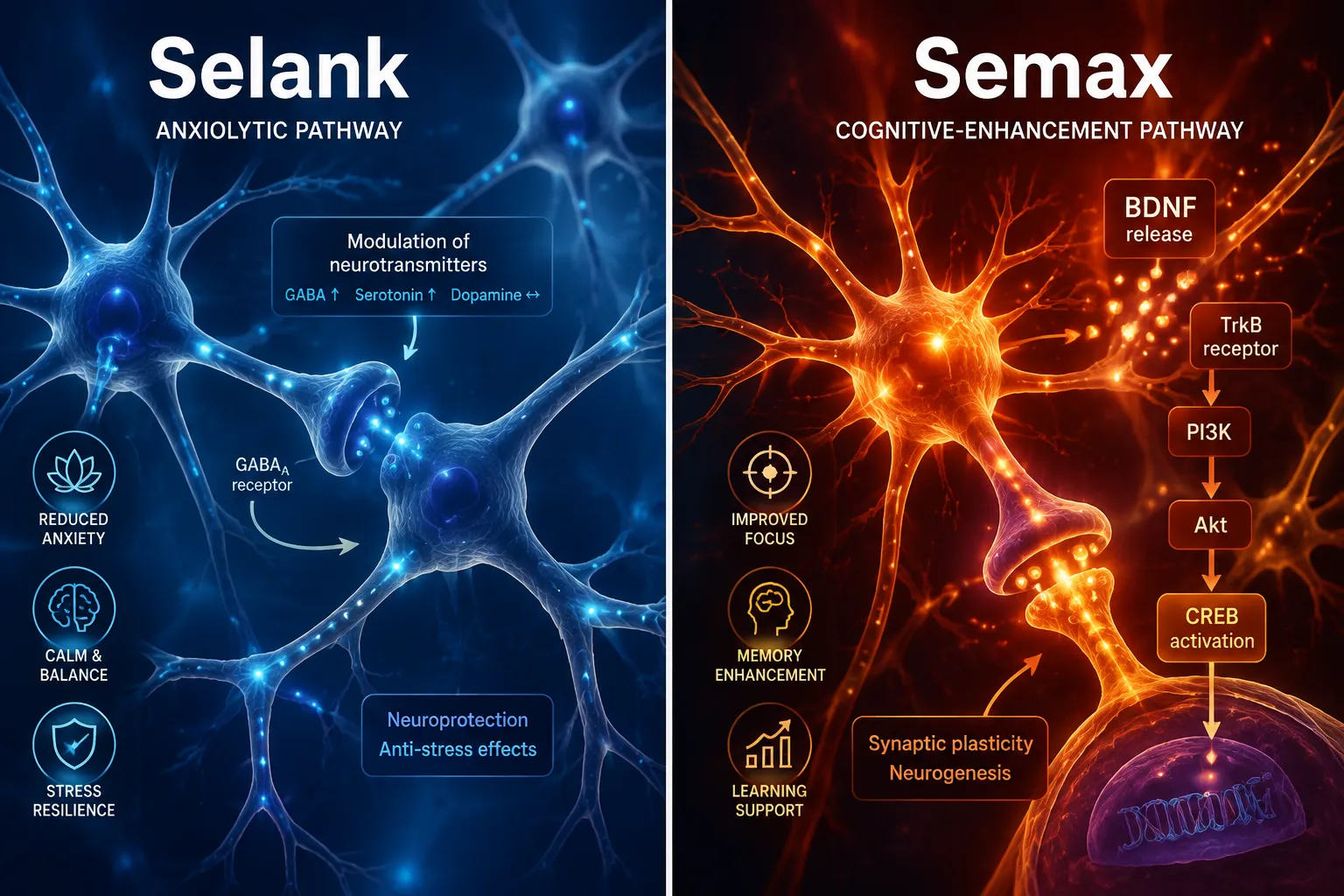
When the research question centers on stress response, anxiety behavior, or GABAergic modulation, Selank is generally the more mechanistically aligned candidate.

Selank in Stress and Anxiety Research

Preclinical studies in rodent models have consistently shown Selank reduces anxiety-like behavior in elevated plus-maze and open-field tests. The proposed mechanisms include:

  • Enhancement of GABAergic inhibitory tone
  • Modulation of serotonin (5-HT) turnover in limbic regions
  • Downregulation of pro-inflammatory cytokines, including IL-6, in stress-exposed animals
  • Stabilization of enkephalin degradation, extending endogenous opioid activity

These properties make Selank a logical selection for studies examining anxiolytic mechanisms without sedation, stress-induced neuroinflammation, or neuroimmune crosstalk in anxiety models.

Semax in Stress-Adjacent Models

Semax is not without stress-related research relevance. Its BDNF-upregulating activity has implications for stress-induced neuroplasticity research, and some studies have examined its role in reducing oxidative stress markers after ischemic events. However, its primary profile is oriented toward cognitive enhancement and neuroprotection rather than direct anxiolytic action.

For a side-by-side look at how both peptides are positioned in intranasal research formulations, the article on research-use only nasal spray peptides comparing Semax, Selank, and Klow Nasal for cognitive and anxiolytic models provides additional context.

Selank vs Semax: Which Nootropic Peptide Is Better Suited to Different Research Questions in Cognitive and Neuroprotective Models?

Selank vs Semax: Which Nootropic Peptide Is Better Suited to Different Research Questions in Cognitive and Neuroprotective Mo

Selank vs Semax: Which Nootropic Peptide Is Better Suited to Different Research Questions in Cognitive and Neuroprotective Mo

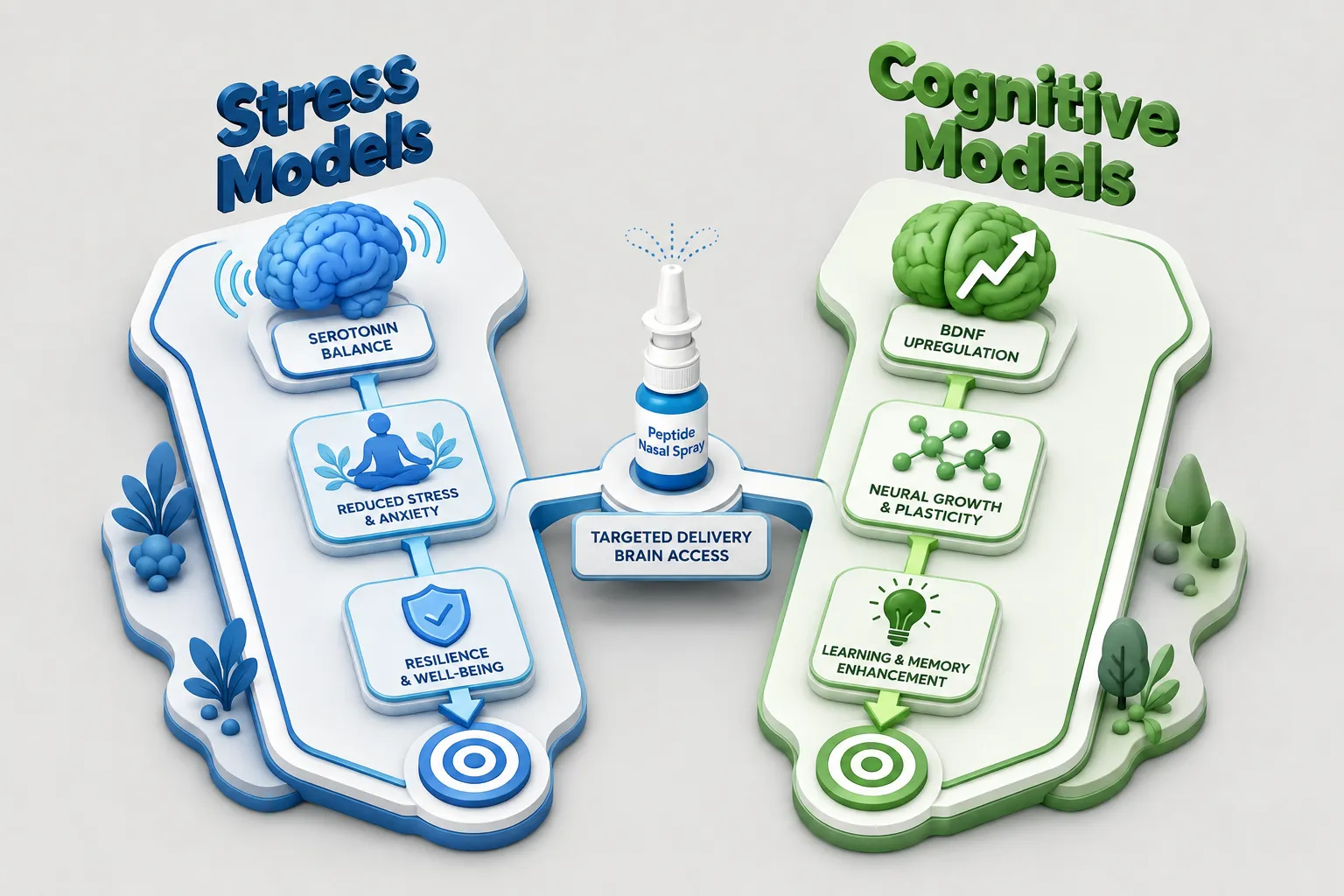
When the research question centers on memory, learning, neuroplasticity, or neuroprotection, Semax is the more mechanistically appropriate compound.

Semax in Cognitive Research

The BDNF-upregulating activity of Semax is its most studied and cited feature in cognitive research contexts. BDNF plays a central role in:

Research Area Semax Relevance
Long-term potentiation (LTP) BDNF/TrkB signaling supports synaptic strengthening
Ischemic neuroprotection Reduces apoptotic markers in oxygen-deprivation models
Dopaminergic modulation Influences dopamine receptor sensitivity in prefrontal models
Learning and memory tasks Improved performance in Morris water maze and passive avoidance tests

Researchers designing studies around post-ischemic recovery, cognitive deficit models, or BDNF-pathway interventions will find Semax's profile substantially more relevant than Selank's.

For detailed administration and dosing concepts specific to Semax nasal spray formulations, refer to the resource on Semax peptide nasal spray administration, dosing concepts, and research applications.

Selank in Cognitive Research

Selank is not without cognitive research relevance. Some studies report improvements in working memory and attention in anxious animal models, likely secondary to its anxiolytic effects reducing cognitive interference. However, these effects are generally considered downstream of its primary anxiolytic action rather than direct nootropic mechanisms.

Practical Research Design Considerations

Choosing between Selank and Semax in 2026 requires researchers to map compound profiles against experimental endpoints with precision. The following framework helps clarify the selection:

Choose Selank when:

  • The primary endpoint involves anxiety-like behavior or GABAergic tone
  • The model involves stress-induced neuroinflammation or cytokine dysregulation
  • The research question requires anxiolytic action without sedative confounds
  • The study examines neuroimmune interactions in limbic regions

Choose Semax when:

  • The primary endpoint involves BDNF expression, synaptic plasticity, or LTP
  • The model involves ischemia, hypoxia, or oxidative neuronal stress
  • The research question requires dopaminergic or serotonergic modulation in prefrontal circuits
  • The study examines neuroprotection or post-injury cognitive recovery

Researchers working with combined intranasal peptide formulations may also find value in reviewing the Klow blend peptide nasal spray research applications and bioavailability considerations for context on how multi-peptide nasal formulations are structured in preclinical settings.

For labs evaluating procurement and quality standards before sourcing either compound, the guide on research-use only nasal spray peptides: what labs should know before buying Semax, Selank, and Klow Nasal formulations outlines purity benchmarks and supplier evaluation criteria.

Conclusion

The debate around Selank vs Semax: which nootropic peptide is better suited to different research questions? resolves most cleanly when researchers anchor their compound selection to mechanistic specificity rather than general "nootropic" categorization.

Selank belongs in stress, anxiety, and neuroimmune research designs. Semax belongs in cognitive enhancement, neuroprotection, and BDNF-pathway studies. Both compounds deserve rigorous, hypothesis-driven investigation using research-grade materials with verified purity documentation.

Actionable next steps for researchers:

  • Define the primary biological endpoint before selecting a compound
  • Review the receptor-level mechanistic literature for the specific model system being used
  • Source only research-grade peptides with third-party purity verification
  • Design controls that account for each compound's secondary effects on overlapping neurotransmitter systems
  • Consult formulation-specific resources to ensure intranasal delivery parameters match published preclinical protocols
Tags: anxiolytic peptides, bdnf upregulation, cognitive research peptides, gabaergic modulation, intranasal peptides, nasal spray peptides, neuroprotection research, nootropic peptides, peptide research design, selank research, selank vs semax, semax peptide
https://www.puretestedpeptides.com/wp-content/uploads/2026/08/selank-vs-semax-which-nootropic-peptide-is-better-suited-to-different-research-q-3.webp 1024 1536 https://www.puretestedpeptides.com/wp-content/uploads/2026/01/buy-peptides-online.jpg 2026-08-11 13:05:052026-08-11 13:05:05Selank vs Semax: Which Nootropic Peptide Is Better Suited to Different Research Questions?
You might also like
Research-Use Only Nasal Spray Peptides: What Labs Should Know Before Buying Semax, Selank, and Klow Nasal Formulations Research-Use Only Nasal Spray Peptides: What Labs Should Know Before Buying Semax, Selank, and Klow Nasal Formulations
Klow Blend vs. Semax and Selank: Intranasal Nootropic Peptides Compared for Research Klow Blend vs. Semax and Selank: Intranasal Nootropic Peptides Compared for Research
Selank Peptide: Research Benefits, Dosing Concepts, and Mechanism of Action Selank Peptide: Research Benefits, Dosing Concepts, and Mechanism of Action
Semax Peptide Nasal Spray: Administration, Dosing Concepts, and Research Applications Semax Peptide Nasal Spray: Administration, Dosing Concepts, and Research Applications
Research-Use Only Nasal Spray Peptides: Comparing Semax, Selank, and Klow Nasal for Cognitive and Anxiolytic Models Research-Use Only Nasal Spray Peptides: Comparing Semax, Selank, and Klow Nasal for Cognitive and Anxiolytic Models
Nasal Spray Peptides: How Delivery Route Changes Bioavailability for Semax, Selank, and Klow Blend Nasal Spray Peptides: How Delivery Route Changes Bioavailability for Semax, Selank, and Klow Blend
Complement-Dependent Cytotoxicity and Peptide Safety: What BPC-157, GHK-Cu, and Nasal Spray Peptides Teach Immunology-Focused Labs Complement-Dependent Cytotoxicity and Peptide Safety: What BPC-157, GHK-Cu, and Nasal Spray Peptides Teach Immunology-Focused Labs
Semax Peptide Nasal Spray: Cognitive Enhancement, Neuroprotection, and Research Protocols Semax Peptide Nasal Spray: Cognitive Enhancement, Neuroprotection, and Research Protocols
0 replies

Leave a Reply

Want to join the discussion?
Feel free to contribute!

Leave a Reply Cancel reply

Your email address will not be published. Required fields are marked *

×

Helpful Links

  • My account
  • Cart
  • Checkout
  • Refund and Returns Policy
  • Privacy Policy
  • SMS Privacy Policy
  • Login
  • My Account
  • Logout

USA Made Lab Tested Peptides

All products are sold for research, laboratory, or analytical purposes only, and are not for human consumption


Pure Tested Peptides is a chemical supplier. Pure Tested Peptides is not a compounding / chemical compounding facility as defined under 503A of the Federal Food, Drug, and Cosmetic act. Pure Tested Peptides is not an outsourcing facility as defined under 503B of the Federal Food, Drug, and Cosmetic act.

The statements made within this website have not been evaluated by the US Food and Drug Administration. The products we offer are not intended to diagnose, treat, cure or prevent any disease.

Human/Animal Consumption Prohibited. Laboratory/In-Vitro Experimental Use Only

Link to: 5-Amino-1MQ and MOTS-c Synergy: What Combination Research Is Trying to Test in Metabolic Models Link to: 5-Amino-1MQ and MOTS-c Synergy: What Combination Research Is Trying to Test in Metabolic Models 5-Amino-1MQ and MOTS-c Synergy: What Combination Research Is Trying to Test...5-Amino-1MQ and MOTS-c Synergy: What Combination Research Is Trying to Test in Metabolic Models Link to: Nasal Spray Peptides: How Delivery Route Changes Bioavailability for Semax, Selank, and Klow Blend Link to: Nasal Spray Peptides: How Delivery Route Changes Bioavailability for Semax, Selank, and Klow Blend Nasal Spray Peptides: How Delivery Route Changes Bioavailability for Semax, Selank, and Klow BlendNasal Spray Peptides: How Delivery Route Changes Bioavailability for Semax,...
Scroll to top Scroll to top Scroll to top