

Mesenchymal Stem Cells and Tissue-Repair Peptides: Where BPC-157, TB-500, and GHK-Cu Intersect in Regenerative Research
Fewer than a handful of completed randomized controlled trials exist for the most widely discussed regenerative peptides in sports medicine, yet preclinical models using mesenchymal stem cells have already mapped out plausible biological mechanisms for each of them. That gap between laboratory insight and clinical proof defines exactly where regenerative research stands in 2026. Understanding Mesenchymal Stem Cells and Tissue-Repair Peptides: Where BPC-157, TB-500, and GHK-Cu Intersect in Regenerative Research requires looking at both the cellular biology and the evolving clinical evidence with equal rigor.
Key Takeaways
- Mesenchymal stem cells (MSCs) are a primary model system for studying how regenerative peptides influence angiogenesis, extracellular matrix remodeling, and cell migration.
- BPC-157, TB-500, and GHK-Cu each target distinct but overlapping pathways relevant to tissue repair, making them frequent subjects of multi-peptide research protocols.
- As of early 2026, the first randomized Phase 2 human trial of BPC-157 is actively recruiting, marking a significant milestone after years of preclinical-only data.
- Regulatory status varies by peptide and jurisdiction; researchers must verify compliance before sourcing or using these compounds.
- MSC co-culture models remain the most reproducible in vitro framework for isolating peptide-specific effects on wound healing and connective tissue regeneration.
What Are Mesenchymal Stem Cells and Why Do They Matter in Peptide Research
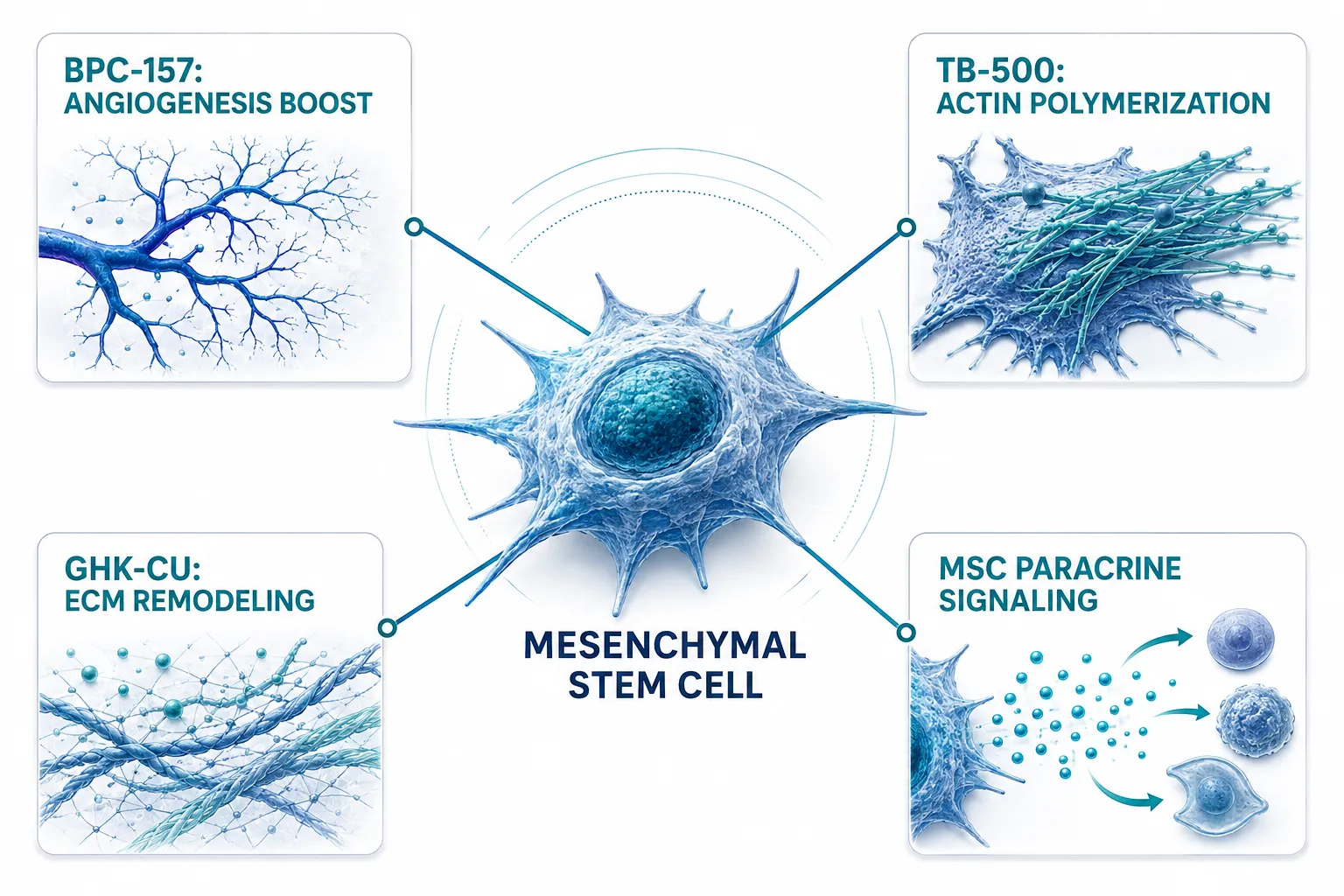
Mesenchymal stem cells are multipotent stromal cells found in bone marrow, adipose tissue, and connective tissue throughout the body. They can differentiate into osteoblasts, chondrocytes, and myofibroblasts, but their most research-relevant function may be paracrine signaling, the release of growth factors and cytokines that coordinate local tissue repair. This makes MSC culture systems an ideal platform for tissue repair research involving bioactive peptides.
When researchers add BPC-157, TB-500, or GHK-Cu to MSC cultures, they can measure discrete outputs: changes in vascular endothelial growth factor (VEGF) expression, collagen synthesis rates, cell migration velocity, and inflammatory cytokine profiles. These endpoints translate directly to the biological processes that govern wound closure, tendon healing, and cartilage restoration.
Why MSCs specifically? Several reasons make them the preferred model:
- They express receptors relevant to all three peptides under study.
- They are relatively easy to harvest and standardize across experiments.
- Their paracrine outputs mirror the signaling environment of an actual injury site.
- Results from MSC models have historically shown reasonable predictive validity for in vivo outcomes.
BPC-157, TB-500, and GHK-Cu: Distinct Mechanisms, Shared Endpoints
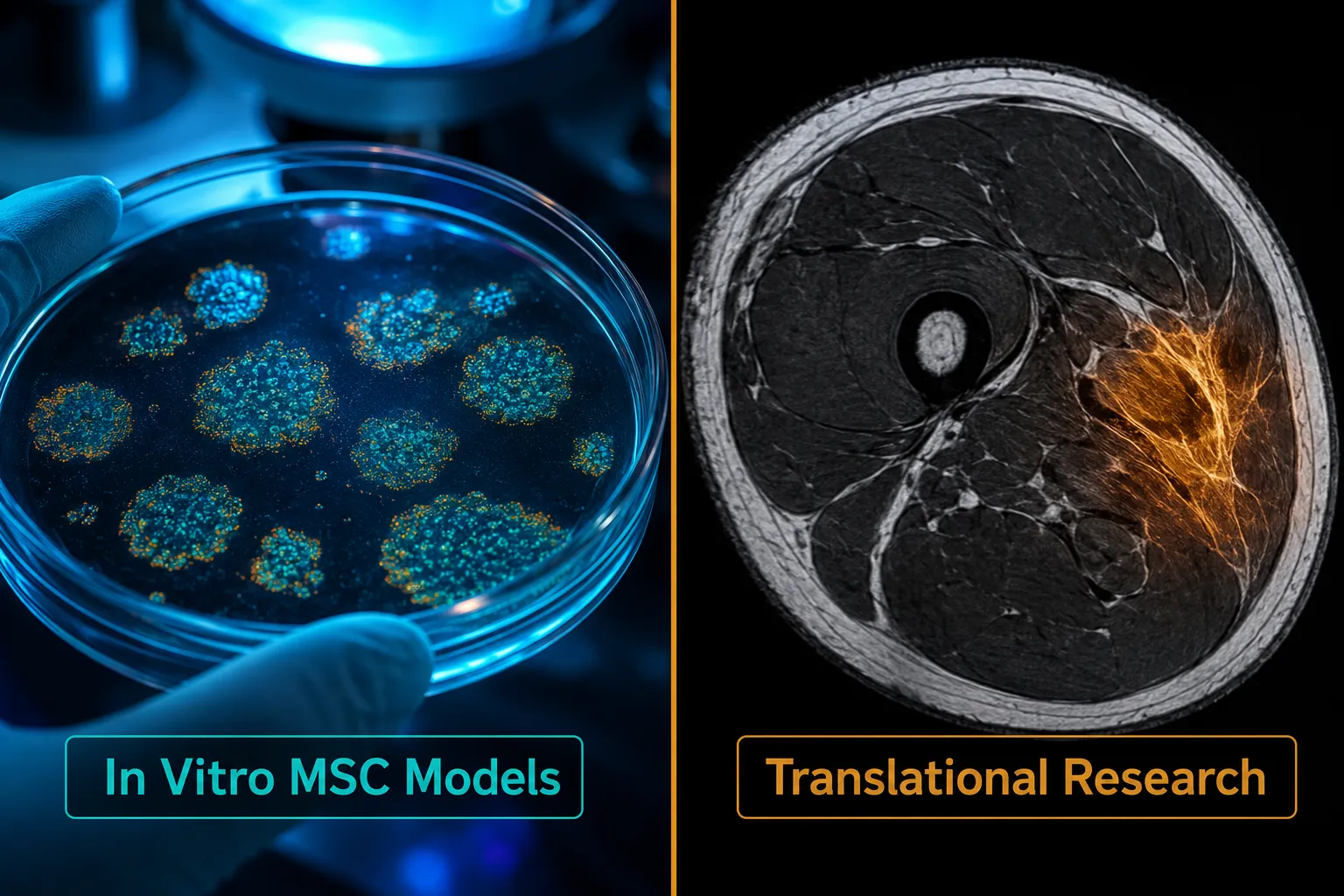
Each peptide in this triad operates through a different primary mechanism, which is precisely what makes their intersection in tissue regeneration research so scientifically interesting.
BPC-157: Angiogenesis and Cytoprotection
BPC-157 (Body Protection Compound-157) is a synthetic pentadecapeptide derived from a gastric protein. In MSC models, it consistently upregulates VEGF and promotes the formation of new capillary networks, a process called angiogenesis. Without adequate blood supply, injured tissue cannot receive the oxygen and nutrients needed for repair. BPC-157 also appears to modulate nitric oxide pathways, which influences vascular tone and reduces oxidative stress at injury sites.
Clinically, the evidence base remains early. As of early 2026, the entire published human dataset consists of roughly three small pilot trials plus limited Phase I/II safety data. However, a landmark development occurred in February 2026: the first randomized, double-blind, placebo-controlled Phase 2 human trial of injectable BPC-157 began recruiting 120 participants with MRI-confirmed acute grade II hamstring strains. The co-primary endpoints are time to return to unrestricted sport and change in MRI-assessed injury volume at day 14, endpoints directly informed by MSC angiogenesis data. Explore broader systemic peptide research for related context.
TB-500: Actin Dynamics and Cell Migration
TB-500 is a synthetic analog of Thymosin Beta-4, a ubiquitous intracellular protein that regulates actin polymerization. Actin filament dynamics govern how cells move, a critical function during wound healing when fibroblasts and MSCs must migrate into a lesion site. In co-culture experiments, TB-500 accelerates MSC migration rates and increases the expression of matrix metalloproteinases (MMPs), enzymes that break down damaged extracellular matrix to clear the way for new tissue.
TB-500's systemic distribution profile makes it relevant to tissue recovery research beyond localized injury models, as Thymosin Beta-4 is naturally upregulated across multiple organ systems following trauma.
GHK-Cu: Extracellular Matrix Remodeling and Skin Repair
GHK-Cu (glycyl-L-histidyl-L-lysine copper complex) is a naturally occurring tripeptide-copper complex with a well-documented role in extracellular matrix (ECM) remodeling. It stimulates collagen and glycosaminoglycan synthesis, activates tissue remodeling enzymes, and downregulates pro-inflammatory cytokines. In MSC models, GHK-Cu increases the deposition of type I and type III collagen, the structural proteins most critical to tendon, skin, and ligament integrity.
GHK-Cu's dual role in skin repair pathways and deeper connective tissue remodeling makes it a frequent companion peptide in multi-agent research protocols. Its favorable safety profile in dermatological research has also supported interest in skin rejuvenation research applications.
| Peptide | Primary MSC Mechanism | Key Research Endpoint |
|---|---|---|
| BPC-157 | VEGF upregulation, angiogenesis | Capillary density, injury volume |
| TB-500 | Actin polymerization, cell migration | Migration rate, MMP expression |
| GHK-Cu | ECM remodeling, collagen synthesis | Collagen deposition, cytokine profile |
Translational Research Design and the Road Ahead
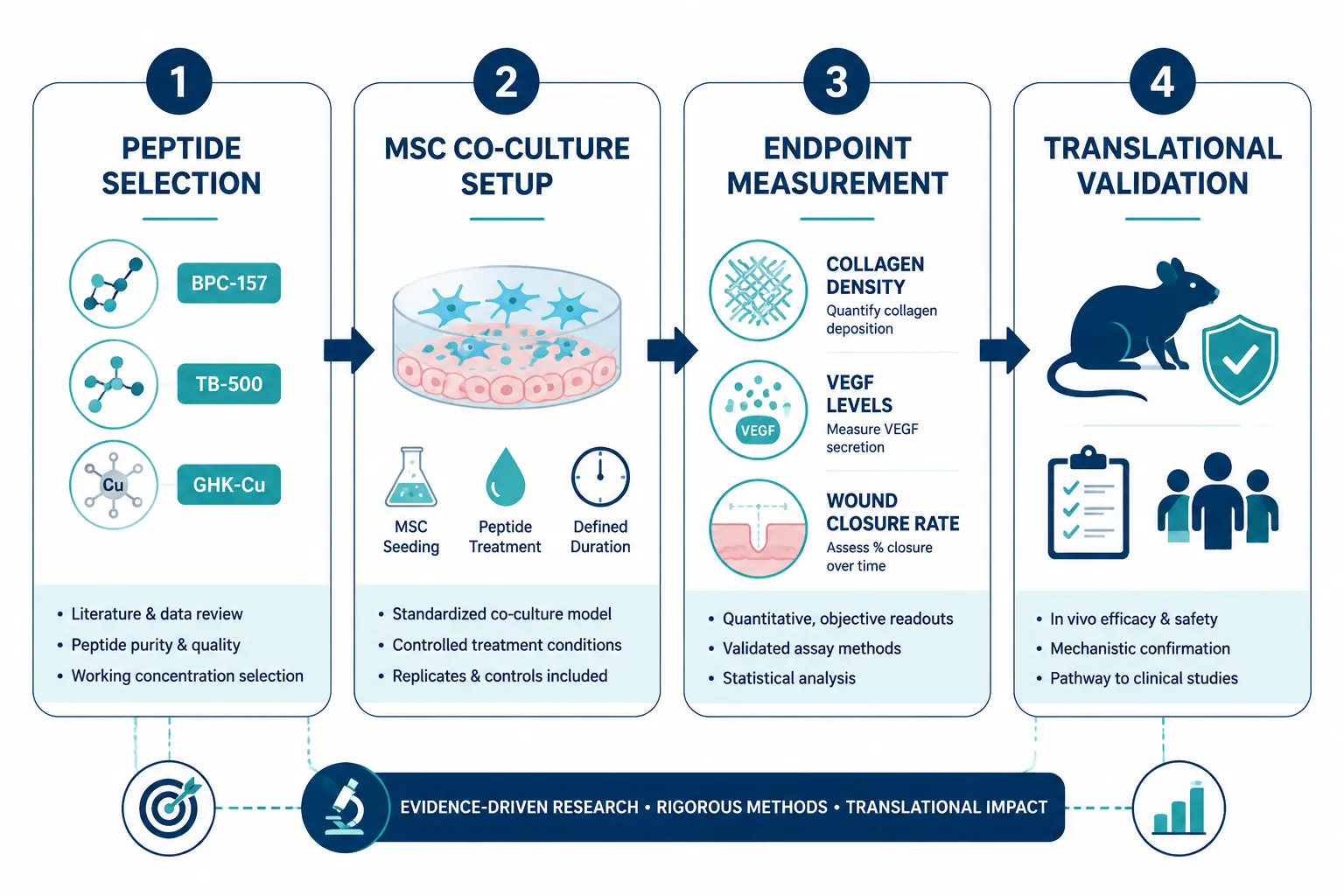
The convergence of MSC biology and peptide pharmacology has opened a productive path for translational research design. The standard pipeline moves from MSC co-culture assays to rodent injury models, and finally to human trials, each stage refining dosing parameters and endpoint selection.
A key challenge in 2026 is regulatory alignment. BPC-157 is currently categorized by the U.S. FDA as a compound requiring an Investigational New Drug (IND) application for human use, which is why the February 2026 Phase 2 trial represents such a pivotal moment. TB-500 and GHK-Cu occupy different regulatory positions depending on jurisdiction and application route, and researchers sourcing these compounds must verify current compliance requirements before initiating any protocol.
Best practices for research teams working at this intersection include:
- Using validated MSC isolation and culture protocols to ensure reproducibility.
- Selecting endpoints that map directly to clinical outcomes (e.g., collagen density to tensile strength).
- Running single-peptide controls before multi-peptide combination experiments to isolate mechanism.
- Documenting regulatory status at the time of procurement and throughout the study period.
The Glow Blend concept, combining GHK-Cu with complementary peptides in a single research formulation, represents one direction this multi-agent approach is heading, particularly in skin barrier research and dermal regeneration studies where layered ECM effects are desirable.
Conclusion
The intersection of mesenchymal stem cell biology and tissue-repair peptides is one of the most active and promising areas in regenerative research today. BPC-157, TB-500, and GHK-Cu each contribute distinct mechanisms, angiogenesis, cell migration, and ECM remodeling respectively, that collectively address the core biology of tissue healing. MSC models provide the reproducible, mechanistically transparent platform needed to study these effects before translating findings to clinical settings.
Actionable next steps for researchers and research institutions in 2026:
- Monitor the outcomes of the ongoing BPC-157 Phase 2 trial, as its results will set the evidentiary standard for injectable peptide interventions in musculoskeletal injury.
- Prioritize single-peptide MSC assays before designing combination protocols, to build a defensible mechanistic rationale.
- Verify regulatory classification for each peptide in the relevant jurisdiction before procurement.
- Align in vitro endpoints with clinically meaningful outcomes to strengthen the translational case for future IND applications.
The science is advancing. Rigorous methodology and regulatory awareness are what will carry it from the laboratory into validated clinical practice.


Leave a Reply
Want to join the discussion?Feel free to contribute!