Call or Text 727-513-9780
  • Shopping Cart Shopping Cart
    0Shopping Cart
Pure Tested Peptides | America's most trusted Peptides for sale online
  • Peptides for sale
    • Oral Peptides for sale
      • Peptide Capsules for sale
      • BPC 157 Capsules 1000mcg
      • SLU-PP-332 Capsules | 1000 mcg
      • 5-Amino-1MQ 50mg Capsules
      • Tesofensine 500mcg
    • All Peptides for sale
    • Peptide Sprays
      • BPC 157 Nasal Spray Kit
      • BPC-157 TB500 Nasal Spray Kit
      • Semax Nasal Spray 10mg
      • Selank – Nasal Spray Kit – 10mg
      • Epithalon 50MG Nasal Spray Kit
      • Ipamorelin 10mg Nasal Spray
      • Klow Nasal Spray (BPC-157 + TB-500 + GHK-Cu + KPV) | 80mg
      • Hulk Nasal Spray Tesa / Ipa Blend 6/3 MG
      • Klow Nasal Spray
      • NAD + 500 mg Nasal Spray
      • PT-141 Nasal Spray Kit
    • GHRH Peptides
      • Ipa Peptides
      • CJC-1295 Peptides
        • CJC-1295 with DAC 5 mg
        • CJC-1295 without DAC 5 mg
        • CJC-1295 Ipa 10mg
      • Tesa Peptides
        • Tesa Peptide
        • Tesa 20 mg
    • GHK-Cu Peptides
      • All GHK-Cu Peptides
      • GHK-Cu 100mg
      • KLOW Peptide Blend – Buy KLOW blend online
    • BPC Peptides
      • All BPC Peptides
      • BPC-157
      • BPC-157 TB-500
      • BPC 157 capsules 1000mcg
    • SLU-PP-332 Peptides
      • All SLU-PP-332 Peptides
      • SLU-PP-332 5mg
    • GLP3 Peptides
    • PT-141 Peptides
      • PT-141 Peptides for sale
      • PT-141 10mg
      • PT-141 Nasal Spray
    • CAG Peptides
      • Lipo-C Peptide Blend
      • CAG 5mg
      • CAG 10mg
    • MOTS-C Peptides
      • MOTS-C Peptides for sale
      • MOTS-c peptide
      • MOTS-c 10mg *6 pack*
    • 5 Amino 1MQ Peptides
      • 5 Amino 1MQ Peptides for sale
      • 5-Amino-1MQ 50mg Capsules
      • 5-Amino-1MQ 5mg
    • Epithalon Peptides
      • Epithalon Peptides for sale
      • Epithalon 10mg
      • Epithalon 50mg
  • Shop
    • GLPs
      • 5-Amino-1MQ 50mg Capsules
      • 5-Amino-1MQ 5mg
      • L-Carnitine 500mg/ml
      • Tesofensine 500mcg
      • SLU-PP-332 5mg
      • MOTS-c 10mg *6 pack*
    • Epithalon & BPC Peptides
      • Epithalon 10mg
      • Epithalon 50mg
      • BPC-157
      • BPC 157 capsules 1000mcg
      • BPC-157 TB-500
      • BPC-157 TB500 Nasal Spray Kit
      • BPC 157 Nasal Spray Kit
    • BPC TB-500 & NAD+ Peptides
      • NAD+ 500 mg
      • KLOW Peptide Blend – Buy KLOW blend online
      • GLOW Peptide Blend
      • TB 500 5mg
      • BPC 157 capsules 1000mcg – Supplement
      • BPC 157 Nasal Spray Kit
      • BPC-157
      • BPC-157 TB500 Nasal Spray Kit
      • BPC-157 TB-500
      • BPC 157 capsules 1000mcg
    • LL-37 Peptide
      • LL-37 10 mg
    • MOTS-C & Selank
      • MOTS-c peptide
      • Selank 10mg
    • GHK Peptides
      • GHK-Cu 100mg
      • GLOW Peptide Blend
      • KLOW Peptide Blend – Buy KLOW blend online
  • COAs
  • Wholesale
    • Wholesale Peptides for sale
  • PTP FAQ
  • Affiliates
    • Selank Peptide: Advanced Pharmacological Mechanisms Underlying Its Anxiolytic and Nootropic Effects in Research
      • 5-Amino-1MQ Peptide: Detailed Mechanisms of NNMT Inhibition and Its Impact on Cellular Metabolism Research
        • MOTS-C Peptide: Unraveling Its Role in Mitochondrial Dynamics and Energy Metabolism Research
          • Epithalon Peptide and Telomerase Regulation: Investigating Its Impact on Cellular Senescence and Lifespan Research Models
            • GLP2-T vs GLP2 Tirz Peptide: Understanding the Naming, Mechanistic Nuances, and Research Implications for Gut Health
      • Peptides and Polypeptides in Modern Pharmacology: What Research on Metoprolol, Prednisone, and Amlodipine Reveals
        • Polypeptide Peptides vs NSAIDs: What Naproxen and Diclofenac Teach Tissue-Repair Researchers About BPC‑157 and TB‑500
          • Peptides and Polypeptides in Endocrine Pharmacology: How GLP-1, GLP-2, and GLP-3 Retatrutide Differ From Classic Drugs Like Prednisone and Amlodipine
          • 5‑Amino‑1MQ Peptide and NNMT Inhibition: How It Compares With Statins Like Atorvastatin in Adipose and Lipid Metabolism Research
      • Enclomiphene, Estrogen Receptor Signaling, and Luteinizing Phase Biology: What Hormone Researchers Should Measure
        • Mesenchymal Stem Cells, BPC‑157, and GHK‑Cu: How Tissue Repair Peptides Compare With Classic NSAIDs Like Naproxen in Injury Models
          • Peptide Calculator Use Cases Beyond Growth Hormone: Working Through GLP‑3 Retatrutide, MOTS‑c, and BPC‑157 Research Dosing
        • Polypeptide Peptides in Endocrine and Metabolic Pharmacology: Lessons From Amlodipine, Prednisone, and Metoprolol
        • Peptides Calculator for Advanced Blends: Worked Examples for Tesamorelin, CJC‑1295, and Ipamorelin Stacks
          • Peptides and Polypeptides in Human Physiology: How Molecular Size Shapes Research Applications
            • Selank Peptide: Advanced Pharmacological Mechanisms Underlying Its Anxiolytic and Nootropic Effects in Research
          • 5-Amino-1MQ Peptide: Detailed Mechanisms of NNMT Inhibition and Its Impact on Cellular Metabolism Research
            • MOTS-C Peptide: Unraveling Its Role in Mitochondrial Dynamics and Energy Metabolism Research
              • Epithalon Peptide and Telomerase Regulation: Investigating Its Impact on Cellular Senescence and Lifespan Research Models
                • GLP2-T vs GLP2 Tirz Peptide: Understanding the Naming, Mechanistic Nuances, and Research Implications for Gut Health
                  • Peptides and Polypeptides in Endocrine Pharmacology: How GLP-1, GLP-2, and GLP-3 Retatrutide Differ From Classic Drugs Like Prednisone and Amlodipine
                    • Polypeptide Peptides vs NSAIDs: What Naproxen and Diclofenac Teach Tissue-Repair Researchers About BPC‑157 and TB‑500
                      • Peptides and Polypeptides in Modern Pharmacology: What Research on Metoprolol, Prednisone, and Amlodipine Reveals
                        • 5‑Amino‑1MQ Peptide and NNMT Inhibition: How It Compares With Statins Like Atorvastatin in Adipose and Lipid Metabolism Research
                        • Enclomiphene, Estrogen Receptor Signaling, and Luteinizing Phase Biology: What Hormone Researchers Should Measure
                        • Mesenchymal Stem Cells, BPC‑157, and GHK‑Cu: How Tissue Repair Peptides Compare With Classic NSAIDs Like Naproxen in Injury Models
                        • Peptide Calculator Use Cases Beyond Growth Hormone: Working Through GLP‑3 Retatrutide, MOTS‑c, and BPC‑157 Research Dosing
                        • Polypeptide Peptides in Endocrine and Metabolic Pharmacology: Lessons From Amlodipine, Prednisone, and Metoprolol
                        • Peptides Calculator for Advanced Blends: Worked Examples for Tesamorelin, CJC‑1295, and Ipamorelin Stacks
                        • Peptides and Polypeptides in Human Physiology: How Molecular Size Shapes Research Applications
                        • Selank Peptide: Advanced Pharmacological Mechanisms Underlying Its Anxiolytic and Nootropic Effects in Research
                        • MOTS-C Peptide: Unraveling Its Role in Mitochondrial Dynamics and Energy Metabolism Research
                        • Peptides and Polypeptides in Modern Pharmacology: What Research on Metoprolol, Prednisone, and Amlodipine Reveals
                        • Peptides and Polypeptides in Endocrine Pharmacology: How GLP-1, GLP-2, and GLP-3 Retatrutide Differ From Classic Drugs Like Prednisone and Amlodipine
                        • 5-Amino-1MQ Peptide: Detailed Mechanisms of NNMT Inhibition and Its Impact on Cellular Metabolism Research
                        • Mesenchymal Stem Cells, BPC‑157, and GHK‑Cu: How Tissue Repair Peptides Compare With Classic NSAIDs Like Naproxen in Injury Models
                        • Peptide Calculator Use Cases Beyond Growth Hormone: Working Through GLP‑3 Retatrutide, MOTS‑c, and BPC‑157 Research Dosing
                        • GLP2-T vs GLP2 Tirz Peptide: Understanding the Naming, Mechanistic Nuances, and Research Implications for Gut Health
                        • Polypeptide Peptides in Endocrine and Metabolic Pharmacology: Lessons From Amlodipine, Prednisone, and Metoprolol
                        • Polypeptide Peptides vs NSAIDs: What Naproxen and Diclofenac Teach Tissue-Repair Researchers About BPC‑157 and TB‑500
                        • Peptides and Polypeptides in Human Physiology: How Molecular Size Shapes Research Applications
                        • Peptides Calculator for Advanced Blends: Worked Examples for Tesamorelin, CJC‑1295, and Ipamorelin Stacks
                        • 5‑Amino‑1MQ Peptide and NNMT Inhibition: How It Compares With Statins Like Atorvastatin in Adipose and Lipid Metabolism Research
                        • Enclomiphene, Estrogen Receptor Signaling, and Luteinizing Phase Biology: What Hormone Researchers Should Measure
                        • Epithalon Peptide and Telomerase Regulation: Investigating Its Impact on Cellular Senescence and Lifespan Research Models
                        • Best research protocol Klow blend
                        • best time to take BPC-157
                        • best time to take DSIP (Delta Sleep Inducing Peptide)
                        • best time to take CJC-1295
                        • best time to take AOD-9604
                        • best time to take Follistatin 344
                        • best time to take Ipamorelin
                        • best time to take MK-677 (Ibutamoren)
                        • best time to take Ligandrol (LGD-4033) — research compound
                        • best time to take Ostarine (MK-2866) — research compound
                        • best time to take GHK-CU
                        • best time to take TB-500
                        • best time to take MOTS-c
                        • best time to take Semax
                        • best time to take RAD-140 (Testolone) — research compound
                        • best time to take Thymosin Alpha-1
                        • best time to take PEG-MGF
                        • Biolife Plasma, Octapharma Plasma, and Research Peptides: How Plasma Donation Labs Differ From Peptide Suppliers
                        • best time to take YK-11 — research compound
                        • best time to take PT-141 (Bremelanotide)
                        • Best research protocol Klow blend
                        • 5-Amino-1MQ and MOTS-C Synergy: Metabolic Signaling, Mitochondria, and Research Design
                        • BPC-157 and TB-500: Investigating Their Combined Effects on Angiogenesis and Cellular Migration in Tissue Repair Models
                        • BPC-157 Peptide: Gut Barrier Function, Inflammation, and Tissue-Recovery Research
                        • 5‑Amino‑1MQ and MOTS‑c Synergy in Metabolic Research: Designing NNMT and Mitochondrial Biogenesis Stacks
                        • CJC-1295 with DAC vs. Without DAC: Half-Life, Release Kinetics, and Research Implications
                        • CJC‑1295 with DAC vs. Without DAC: Expanding on Half‑Life Differences Using Tesamorelin and Ipamorelin Blend Case Studies
                        • Collagen Biology and Copper‑Binding Peptides: How GHK‑Cu, Glow Blend, and Klow Blend Interact with Skin and Connective Tissue
                        • Collagen Biology and Regenerative Peptides: How GHK‑Cu, Glow Blend, and Klow Blend Affect Extracellular Matrix Research
                    • DNA, Telomeres, and Longevity Peptides: Positioning Epithalon and MOTS‑c in Genetic Aging Research
                      • Enclomiphene Citrate: serm Mechanism, Testosterone Research, and Stack Compatibility
                        • Enclomiphene vs Enclomiphene Citrate: Formulation, Bioavailability, and Research Distinctions
                        • Epithalon Peptide Research: Telomerase Activation, Aging, and Pineal Gland Function
                        • Estrogen Receptor Signaling and Enclomiphene: How Selective Modulators Compare with Classic Polypeptide Hormones
                        • GHK-Cu Peptide: Advanced Mechanisms in Extracellular Matrix Remodeling and Wound Healing Research
                        • GHK-Cu Peptide: Collagen Synthesis, Wound Repair, and Skin-Barrier Research Models
                        • GLP-1 vs GLP-3 vs GLP-2: Peptide Classification and Research Applications
                        • GLP-2 Peptide Research Guide: Gut Barrier Function, Nutrient Absorption, and Intestinal Recovery Models
                        • GLP-3 Retatrutide vs. GLP-1 Drugs: What Triple-Agonist Biology Changes in Research Models
                        • Ipamorelin and Tesamorelin Combination: Synergistic GH Secretagogue Research and Dosing Protocols
                        • GLP2 Tirz Peptide: What It Is, Why the Name Exists, and How Researchers Should Interpret It
                        • Klow Blend Peptide Nasal Spray: What the Formulation Is Trying to Do in Cognitive Research
                        • Mitochondria, NNMT Inhibition, and Peptide Modulators: Where MOTS‑c and 5‑Amino‑1MQ Fit in Cellular Energy Research
                        • MOTS-c Peptide: Mitochondrial Function, Energy Metabolism, and What Researchers Measure
                        • MOTS-c vs. 5-Amino-1MQ: Which Metabolic Research Questions Each Compound Actually Answers
                        • Nasal Spray Peptides: Bioavailability, Administration, and Semax/Selank Research Applications
                        • PT-141 Peptide Research: Mechanism of Action and Melanocortin Receptor Signaling
                        • Retatrutide for Research: Mechanism, Structure, and GLP-1/GLP-3 Dual Action
                        • Retatrutide for Obesity and Type 2 Diabetes: What the Latest Trial Data Suggest
                        • Tesofensine Peptide Research: Mechanism, Appetite Suppression, and Neuropeptide Y Pathways
  • Contact
    • Contact Customer Service
    • Text Customer Support
  • About US
  • Shop all peptides
  • Affiliate Program
    • Affiliate Signup
  • Login / Register Login / Register Page Link Login / Register Page Link
  • Click to open the search input field Click to open the search input field Search
  • Menu Menu
Retatrutide Phase 3 Evidence Update: What New Triple-Agonist Results Change for GLP-3 Research Models

Retatrutide Phase 3 Evidence Update: What New Triple-Agonist Results Change for GLP-3 Research Models

November 9, 2026/0 Comments/in Uncategorized/by

Roughly 24% mean body weight reduction at 48 weeks, that was the phase 2 signal that made retatrutide one of the most closely watched peptides in metabolic research. Now, with multiple phase 3 readouts published or presented through 2026, the question is no longer whether the triple-agonist effect is real. The question is what the Retatrutide Phase 3 Evidence Update: What New Triple-Agonist Results Change for GLP-3 Research Models means for how researchers design experiments around GLP-1, GIP, and glucagon receptor signaling going forward.

Key Takeaways

  • Retatrutide simultaneously activates GLP-1, GIP, and glucagon receptors, a tri-receptor profile that separates it mechanistically from earlier incretin-only agents.
  • Phase 3 TRIUMPH-1 (obesity, 80 weeks) and TRIUMPH-2 (type 2 diabetes with obesity) confirm dual metabolic endpoints at a scale phase 2 could not.
  • TRIUMPH-4 extends the evidence base to musculoskeletal outcomes, specifically knee osteoarthritis with obesity, a first for this receptor class.
  • The phase 3 portfolio now spans obesity, type 2 diabetes, cardiovascular disease, sleep apnea, MASLD, and chronic low back pain, forcing researchers to think beyond weight-loss endpoints.
  • For preclinical and translational research models, receptor-selective controls and dose-exposure titration have become essential design requirements.

What the Triple-Agonist Mechanism Demands From Research Design
What the Triple-Agonist Mechanism Demands From Research Design

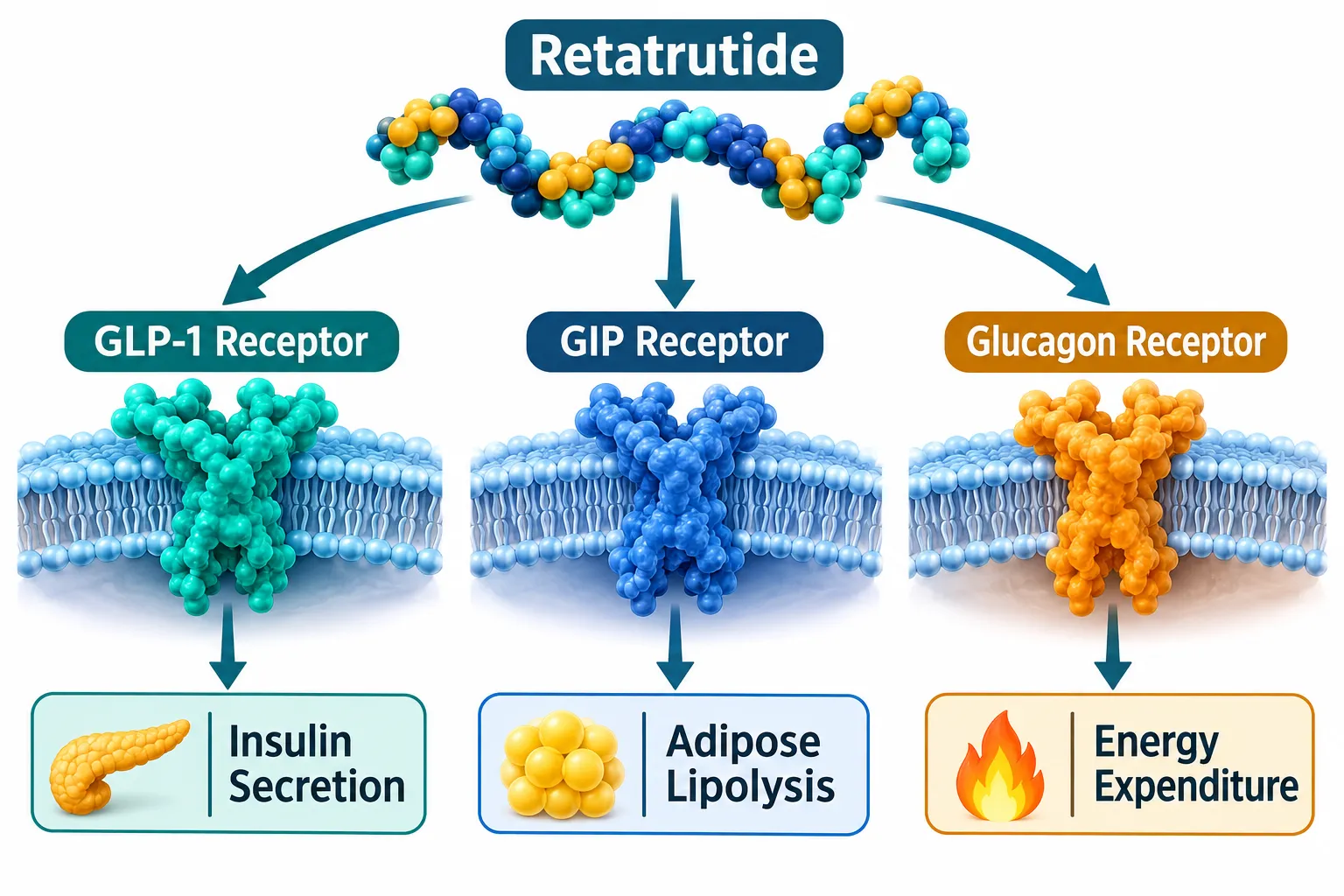
Retatrutide binds three receptors, GLP-1R, GIPR, and glucagon receptor (GCGR), simultaneously. Each receptor drives a distinct but overlapping metabolic cascade. GLP-1R activation suppresses appetite and slows gastric emptying. GIPR activation modulates adipose tissue and potentiates insulin secretion. GCGR activation increases hepatic glucose output and thermogenic energy expenditure.

This layered pharmacology is precisely what makes the Retatrutide Phase 3 Evidence Update so consequential for GLP-3 research models. When a single compound hits all three axes, attribution becomes a central methodological problem. Which portion of the observed weight loss or glycemic improvement comes from which receptor? Phase 3 trials are powered for clinical endpoints, not mechanistic dissection, so that burden falls on bench and translational research.

Key design implications:

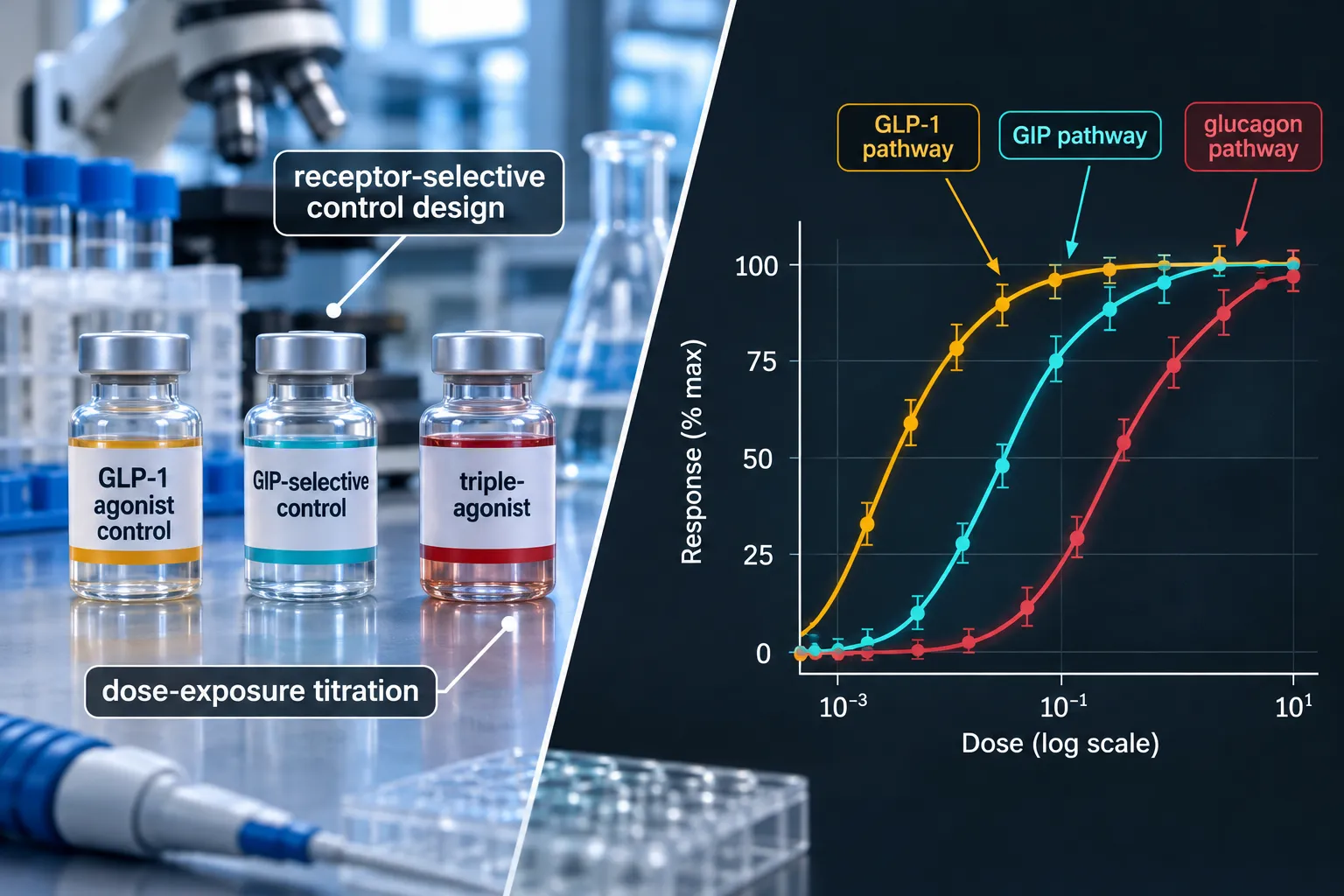
  • Including receptor-selective agonist controls (GLP-1-only, GIP-only, GCGR-only) alongside a triple-agonist arm is now a baseline expectation in well-constructed studies.
  • Dose-exposure matching across receptor arms is non-trivial; equipotent dosing at each receptor requires careful titration rather than simple weight-based scaling.
  • Metabolic endpoint panels should capture lipid flux, hepatic glucose production, and thermogenic markers, not just body weight or fasting glucose.

Researchers exploring GLP-3 triple agonist research planning and catalog navigation should map their experimental endpoints to this receptor-specific attribution framework before committing to a protocol.


Phase 3 Trial Portfolio: What the New Evidence Base Covers
Phase 3 Trial Portfolio: What the New Evidence Base Covers

The 2026 evidence base now spans a broad portfolio of phase 3 programs. Understanding what each trial adds, and what it leaves unresolved, directly informs research model selection.

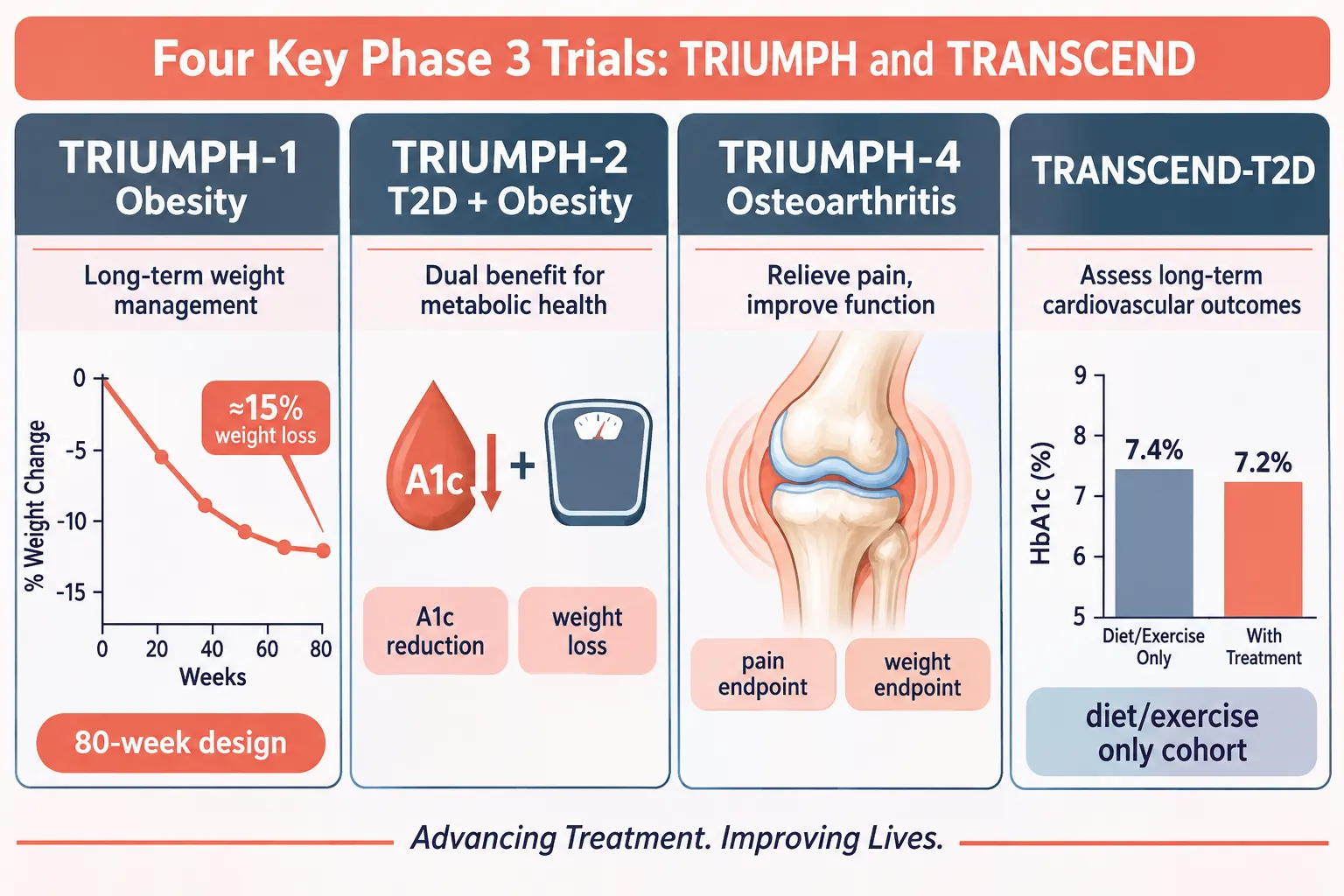
TRIUMPH-1 (80-week, adults with obesity without diabetes, published in NEJM) established the pivotal obesity efficacy signal at scale. More than half of participants achieved at least 20% weight loss, echoing the phase 2 benchmark.

TRIUMPH-2 (type 2 diabetes with overweight or obesity, 80 weeks) confirmed dual metabolic benefit, meaningful A1c reduction alongside substantial weight loss. This matters because GLP-1R and GIPR contributions to glycemic control are partially dissociable from their weight effects.

TRANSCEND-T2D-1 (diet and exercise-only background in type 2 diabetes) isolates glycemic potential without confounding from background pharmacotherapy. For researchers building glucose-metabolism models, this cohort design provides the cleanest signal of receptor-driven glycemic change.

TRANSCEND-T2D-2 (head-to-head versus semaglutide 2 mg) demonstrated superiority in both A1c reduction and weight outcomes. This comparative evidence shifts the competitive benchmarking discussion and raises the bar for what a "strong responder" looks like.

TRIUMPH-3 enrolled adults with severe obesity and established cardiovascular disease, a high-risk phenotype where glucagon receptor contributions to cardiac and hepatic outcomes deserve particular scrutiny.

TRIUMPH-4 is the most novel addition. Topline osteoarthritis data (knee, obesity comorbidity) presented at ACR 2026 showed dual endpoints, pain reduction and weight loss, moving the conversation beyond metabolic models entirely. This has direct implications for researchers studying the interaction between adiposity, systemic inflammation, and joint health.

The broader portfolio also includes sleep apnea, MASLD, chronic low back pain, and renal and cardiovascular outcomes trials, signaling that the glucagon receptor axis may carry tissue-specific benefits well beyond energy balance.

For context on how peptide weight-loss research has evolved across compound classes, the overview of what is the strongest peptide for weight loss provides a useful comparative baseline.


Translating Phase 3 Readouts Into GLP-3 Research Model Decisions
Translating Phase 3 Readouts Into GLP-3 Research Model Decisions

The Retatrutide Phase 3 Evidence Update: What New Triple-Agonist Results Change for GLP-3 Research Models goes beyond efficacy headlines. It reframes three core experimental design questions.

1. What is the right control arm?
Phase 3 superiority data versus a GLP-1-only comparator (semaglutide) makes GIP and glucagon receptor contributions the logical focus of mechanistic inquiry. A GLP-1-only arm is now the minimum standard comparator, not a placebo.

2. How should dose exposure be reported?
Phase 2 data at 12 mg over 48 weeks remain foundational for understanding the exposure-response relationship. Phase 3 protocols use titrated dosing. Research models that apply a single fixed dose without escalation data may underestimate ceiling effects at individual receptors.

3. Which metabolic endpoints matter most?
Given the MASLD and cardiovascular outcome programs now underway, hepatic fat fraction, visceral adiposity imaging, and inflammatory biomarkers belong in metabolic endpoint panels alongside standard glycemic and anthropometric measures.

Safety context also matters for model design. GI adverse events are consistent with the broader incretin class. Glucagon receptor activation introduces additional considerations around hepatic glucose output and potential counter-regulatory signaling that need appropriate monitoring in rodent and in vitro models.

Researchers sourcing material for these studies can explore buy Reta peptide and Reta GLP-3 peptide options through verified catalog sources. For those planning dosing protocols specifically, the Reta 10mg format provides a common starting reference for research-grade preparation.

It is worth noting that comparisons with other metabolically active peptides, such as tesa, which targets growth hormone secretion and visceral fat, help illustrate how different receptor pathways converge on overlapping metabolic outcomes through distinct mechanisms.


Conclusion

The Retatrutide Phase 3 Evidence Update: What New Triple-Agonist Results Change for GLP-3 Research Models is not simply a news event, it is a methodological inflection point. The expanded trial portfolio confirms that GLP-1, GIP, and glucagon receptor co-activation produces clinically meaningful outcomes across obesity, type 2 diabetes, musculoskeletal disease, and likely cardiovascular and hepatic endpoints.

Actionable next steps for researchers:

  • Redesign control arms to include receptor-selective agonists, not just placebo, in any triple-agonist study.
  • Align dose-exposure protocols with titration schedules validated in phase 3, not fixed phase 2 dose points alone.
  • Expand endpoint panels to include hepatic, inflammatory, and cardiovascular biomarkers consistent with the phase 3 indication portfolio.
  • Consult updated phase 3 publications, particularly TRIUMPH-1 and TRANSCEND-T2D-2, before finalizing model selection or outcome hypotheses.
  • Source verified, purity-tested research-grade material to ensure experimental reproducibility.

The triple-agonist era has moved from promising to pivotal. Research models that do not account for multi-receptor attribution will increasingly struggle to generate interpretable, publishable findings.

Tags: gip receptor, glp-1 receptor, glp-3 research, glucagon receptor, obesity research, phase 3 clinical trials, retatrutide, triple agonist peptide
https://www.puretestedpeptides.com/wp-content/uploads/2026/11/retatrutide-phase-3-evidence-update-what-new-triple-agonist-results-change-for-g.webp 1024 1536 https://www.puretestedpeptides.com/wp-content/uploads/2026/01/buy-peptides-online.jpg 2026-11-09 14:05:582026-11-09 14:05:58Retatrutide Phase 3 Evidence Update: What New Triple-Agonist Results Change for GLP-3 Research Models
You might also like
Prostate Specific Antigen and Peptide Hormones: How PSA Is Used to Monitor Enclomiphene and GLP-Class Research Studies Prostate Specific Antigen and Peptide Hormones: How PSA Is Used to Monitor Enclomiphene and GLP-Class Research Studies
Retatrutide and Sleep Apnea Research: Separating AHI, Body-Weight, Glycemic, and Respiratory Endpoints Retatrutide and Sleep Apnea Research: Separating AHI, Body-Weight, Glycemic, and Respiratory Endpoints
Retatrutide Mechanism Explained: How GIP, GLP-1, and Glucagon Signaling Differ From Single-Incretin Models Retatrutide Mechanism Explained: How GIP, GLP-1, and Glucagon Signaling Differ From Single-Incretin Models
Tesofensine vs Semaglutide vs Retatrutide: Appetite Research Pathways Compared Tesofensine vs Semaglutide vs Retatrutide: Appetite Research Pathways Compared
Tesofensine and GLP-3 Retatrutide: Advanced Combination Hypotheses for Future Metabolic Research Tesofensine and GLP-3 Retatrutide: Advanced Combination Hypotheses for Future Metabolic Research
GLP-1 Peptide Alternatives: How Retatrutide, Tesofensine, and Traditional Weight-Loss Drugs Differ in Research Models GLP-1 Peptide Alternatives: How Retatrutide, Tesofensine, and Traditional Weight-Loss Drugs Differ in Research Models
Retatrutide 2026 Trial Results: What the New Obstructive Sleep Apnea Data Mean for Research Models Retatrutide 2026 Trial Results: What the New Obstructive Sleep Apnea Data Mean for Research Models
Retatrutide 2026 Trial Results: What the New Obstructive Sleep Apnea Data Mean for Research Models Retatrutide Phase 3 Data: How Researchers Should Separate Appetite, Energy Expenditure, and Glycemic Effects
0 replies

Leave a Reply

Want to join the discussion?
Feel free to contribute!

Leave a Reply Cancel reply

Your email address will not be published. Required fields are marked *

×

Helpful Links

  • My account
  • Cart
  • Checkout
  • Refund and Returns Policy
  • Privacy Policy
  • SMS Privacy Policy
  • Login
  • My Account
  • Logout

USA Made Lab Tested Peptides

All products are sold for research, laboratory, or analytical purposes only, and are not for human consumption


Pure Tested Peptides is a chemical supplier. Pure Tested Peptides is not a compounding / chemical compounding facility as defined under 503A of the Federal Food, Drug, and Cosmetic act. Pure Tested Peptides is not an outsourcing facility as defined under 503B of the Federal Food, Drug, and Cosmetic act.

The statements made within this website have not been evaluated by the US Food and Drug Administration. The products we offer are not intended to diagnose, treat, cure or prevent any disease.

Human/Animal Consumption Prohibited. Laboratory/In-Vitro Experimental Use Only

Link to: Electrolytes and Research Peptides: Designing Fluid-Balance Controls for GLP, Growth-Hormone, and Metabolic Studies Link to: Electrolytes and Research Peptides: Designing Fluid-Balance Controls for GLP, Growth-Hormone, and Metabolic Studies Electrolytes and Research Peptides: Designing Fluid-Balance Controls for GLP,...Electrolytes and Research Peptides: Designing Fluid-Balance Controls for GLP, Growth-Hormone, and Metabolic Studies Link to: Retatrutide vs Ozempic in the 2026 Diabetes Trial: How Researchers Should Interpret A1C, Weight, and Cardiometabolic Endpoints Link to: Retatrutide vs Ozempic in the 2026 Diabetes Trial: How Researchers Should Interpret A1C, Weight, and Cardiometabolic Endpoints Retatrutide vs Ozempic in the 2026 Diabetes Trial: How Researchers Should Interpret A1C, Weight, and Cardiometabolic EndpointsRetatrutide vs Ozempic in the 2026 Diabetes Trial: How Researchers Should Interpret...
Scroll to top Scroll to top Scroll to top