Call or Text 727-513-9780
  • Shopping Cart Shopping Cart
    0Shopping Cart
Pure Tested Peptides | America's most trusted Peptides for sale online
  • Peptides for sale
    • Oral Peptides for sale
      • Peptide Capsules for sale
      • BPC 157 Capsules 1000mcg
      • SLU-PP-332 Capsules | 1000 mcg
      • 5-Amino-1MQ 50mg Capsules
      • Tesofensine 500mcg
    • All Peptides for sale
    • Peptide Sprays
      • BPC 157 Nasal Spray Kit
      • BPC-157 TB500 Nasal Spray Kit
      • Semax Nasal Spray 10mg
      • Selank – Nasal Spray Kit – 10mg
      • Epithalon 50MG Nasal Spray Kit
      • Ipamorelin 10mg Nasal Spray
      • Klow Nasal Spray (BPC-157 + TB-500 + GHK-Cu + KPV) | 80mg
      • Hulk Nasal Spray Tesa / Ipa Blend 6/3 MG
      • Klow Nasal Spray
      • NAD + 500 mg Nasal Spray
      • PT-141 Nasal Spray Kit
    • GHRH Peptides
      • Ipa Peptides
      • CJC-1295 Peptides
        • CJC-1295 with DAC 5 mg
        • CJC-1295 without DAC 5 mg
        • CJC-1295 Ipa 10mg
      • Tesa Peptides
        • Tesa Peptide
        • Tesa 20 mg
    • GHK-Cu Peptides
      • All GHK-Cu Peptides
      • GHK-Cu 100mg
      • KLOW Peptide Blend – Buy KLOW blend online
    • BPC Peptides
      • All BPC Peptides
      • BPC-157
      • BPC-157 TB-500
      • BPC 157 capsules 1000mcg
    • SLU-PP-332 Peptides
      • All SLU-PP-332 Peptides
      • SLU-PP-332 5mg
    • GLP3 Peptides
      • GLP3-R
      • GLP3-R CAG 10mg
      • GLP3-R 20mg
    • PT-141 Peptides
      • PT-141 Peptides for sale
      • PT-141 10mg
      • PT-141 Nasal Spray
    • CAG Peptides
      • Lipo-C Peptide Blend
      • CAG 5mg
      • CAG 10mg
    • MOTS-C Peptides
      • MOTS-C Peptides for sale
      • MOTS-c peptide
      • MOTS-c 10mg *6 pack*
    • 5 Amino 1MQ Peptides
      • 5 Amino 1MQ Peptides for sale
      • 5-Amino-1MQ 50mg Capsules
      • 5-Amino-1MQ 5mg
    • Epithalon Peptides
      • Epithalon Peptides for sale
      • Epithalon 10mg
      • Epithalon 50mg
  • Shop
    • GLPs
      • 5-Amino-1MQ 50mg Capsules
      • 5-Amino-1MQ 5mg
      • GLP3-Reta
      • L-Carnitine 500mg/ml
      • Tesofensine 500mcg
      • SLU-PP-332 5mg
      • MOTS-c 10mg *6 pack*
    • Epithalon & BPC Peptides
      • Epithalon 10mg
      • Epithalon 50mg
      • BPC-157
      • BPC 157 capsules 1000mcg
      • BPC-157 TB-500
      • BPC-157 TB500 Nasal Spray Kit
      • BPC 157 Nasal Spray Kit
    • BPC TB-500 & NAD+ Peptides
      • NAD+ 500 mg
      • KLOW Peptide Blend – Buy KLOW blend online
      • GLOW Peptide Blend
      • TB 500 5mg
      • BPC 157 capsules 1000mcg – Supplement
      • BPC 157 Nasal Spray Kit
      • BPC-157
      • BPC-157 TB500 Nasal Spray Kit
      • BPC-157 TB-500
      • BPC 157 capsules 1000mcg
    • LL-37 Peptide
      • LL-37 10 mg
    • MOTS-C & Selank
      • MOTS-c peptide
      • Selank 10mg
    • GHK Peptides
      • GHK-Cu 100mg
      • GLOW Peptide Blend
      • KLOW Peptide Blend – Buy KLOW blend online
  • COAs
  • Wholesale
    • Wholesale Peptides for sale
  • PTP FAQ
  • Affiliates
    • Selank Peptide: Advanced Pharmacological Mechanisms Underlying Its Anxiolytic and Nootropic Effects in Research
      • 5-Amino-1MQ Peptide: Detailed Mechanisms of NNMT Inhibition and Its Impact on Cellular Metabolism Research
        • MOTS-C Peptide: Unraveling Its Role in Mitochondrial Dynamics and Energy Metabolism Research
          • Epithalon Peptide and Telomerase Regulation: Investigating Its Impact on Cellular Senescence and Lifespan Research Models
            • GLP2-T vs GLP2 Tirz Peptide: Understanding the Naming, Mechanistic Nuances, and Research Implications for Gut Health
      • Peptides and Polypeptides in Modern Pharmacology: What Research on Metoprolol, Prednisone, and Amlodipine Reveals
        • Polypeptide Peptides vs NSAIDs: What Naproxen and Diclofenac Teach Tissue-Repair Researchers About BPC‑157 and TB‑500
          • Peptides and Polypeptides in Endocrine Pharmacology: How GLP-1, GLP-2, and GLP-3 Retatrutide Differ From Classic Drugs Like Prednisone and Amlodipine
          • 5‑Amino‑1MQ Peptide and NNMT Inhibition: How It Compares With Statins Like Atorvastatin in Adipose and Lipid Metabolism Research
      • Enclomiphene, Estrogen Receptor Signaling, and Luteinizing Phase Biology: What Hormone Researchers Should Measure
        • Mesenchymal Stem Cells, BPC‑157, and GHK‑Cu: How Tissue Repair Peptides Compare With Classic NSAIDs Like Naproxen in Injury Models
          • Peptide Calculator Use Cases Beyond Growth Hormone: Working Through GLP‑3 Retatrutide, MOTS‑c, and BPC‑157 Research Dosing
        • Polypeptide Peptides in Endocrine and Metabolic Pharmacology: Lessons From Amlodipine, Prednisone, and Metoprolol
        • Peptides Calculator for Advanced Blends: Worked Examples for Tesamorelin, CJC‑1295, and Ipamorelin Stacks
          • Peptides and Polypeptides in Human Physiology: How Molecular Size Shapes Research Applications
            • Selank Peptide: Advanced Pharmacological Mechanisms Underlying Its Anxiolytic and Nootropic Effects in Research
          • 5-Amino-1MQ Peptide: Detailed Mechanisms of NNMT Inhibition and Its Impact on Cellular Metabolism Research
            • MOTS-C Peptide: Unraveling Its Role in Mitochondrial Dynamics and Energy Metabolism Research
              • Epithalon Peptide and Telomerase Regulation: Investigating Its Impact on Cellular Senescence and Lifespan Research Models
                • GLP2-T vs GLP2 Tirz Peptide: Understanding the Naming, Mechanistic Nuances, and Research Implications for Gut Health
                  • Peptides and Polypeptides in Endocrine Pharmacology: How GLP-1, GLP-2, and GLP-3 Retatrutide Differ From Classic Drugs Like Prednisone and Amlodipine
                    • Polypeptide Peptides vs NSAIDs: What Naproxen and Diclofenac Teach Tissue-Repair Researchers About BPC‑157 and TB‑500
                      • Peptides and Polypeptides in Modern Pharmacology: What Research on Metoprolol, Prednisone, and Amlodipine Reveals
                        • 5‑Amino‑1MQ Peptide and NNMT Inhibition: How It Compares With Statins Like Atorvastatin in Adipose and Lipid Metabolism Research
                        • Enclomiphene, Estrogen Receptor Signaling, and Luteinizing Phase Biology: What Hormone Researchers Should Measure
                        • Mesenchymal Stem Cells, BPC‑157, and GHK‑Cu: How Tissue Repair Peptides Compare With Classic NSAIDs Like Naproxen in Injury Models
                        • Peptide Calculator Use Cases Beyond Growth Hormone: Working Through GLP‑3 Retatrutide, MOTS‑c, and BPC‑157 Research Dosing
                        • Polypeptide Peptides in Endocrine and Metabolic Pharmacology: Lessons From Amlodipine, Prednisone, and Metoprolol
                        • Peptides Calculator for Advanced Blends: Worked Examples for Tesamorelin, CJC‑1295, and Ipamorelin Stacks
                        • Peptides and Polypeptides in Human Physiology: How Molecular Size Shapes Research Applications
                        • Selank Peptide: Advanced Pharmacological Mechanisms Underlying Its Anxiolytic and Nootropic Effects in Research
                        • MOTS-C Peptide: Unraveling Its Role in Mitochondrial Dynamics and Energy Metabolism Research
                        • Peptides and Polypeptides in Modern Pharmacology: What Research on Metoprolol, Prednisone, and Amlodipine Reveals
                        • Peptides and Polypeptides in Endocrine Pharmacology: How GLP-1, GLP-2, and GLP-3 Retatrutide Differ From Classic Drugs Like Prednisone and Amlodipine
                        • 5-Amino-1MQ Peptide: Detailed Mechanisms of NNMT Inhibition and Its Impact on Cellular Metabolism Research
                        • Mesenchymal Stem Cells, BPC‑157, and GHK‑Cu: How Tissue Repair Peptides Compare With Classic NSAIDs Like Naproxen in Injury Models
                        • Peptide Calculator Use Cases Beyond Growth Hormone: Working Through GLP‑3 Retatrutide, MOTS‑c, and BPC‑157 Research Dosing
                        • GLP2-T vs GLP2 Tirz Peptide: Understanding the Naming, Mechanistic Nuances, and Research Implications for Gut Health
                        • Polypeptide Peptides in Endocrine and Metabolic Pharmacology: Lessons From Amlodipine, Prednisone, and Metoprolol
                        • Polypeptide Peptides vs NSAIDs: What Naproxen and Diclofenac Teach Tissue-Repair Researchers About BPC‑157 and TB‑500
                        • Peptides and Polypeptides in Human Physiology: How Molecular Size Shapes Research Applications
                        • Peptides Calculator for Advanced Blends: Worked Examples for Tesamorelin, CJC‑1295, and Ipamorelin Stacks
                        • 5‑Amino‑1MQ Peptide and NNMT Inhibition: How It Compares With Statins Like Atorvastatin in Adipose and Lipid Metabolism Research
                        • Enclomiphene, Estrogen Receptor Signaling, and Luteinizing Phase Biology: What Hormone Researchers Should Measure
                        • Epithalon Peptide and Telomerase Regulation: Investigating Its Impact on Cellular Senescence and Lifespan Research Models
                        • Best research protocol Klow blend
                        • best time to take BPC-157
                        • best time to take DSIP (Delta Sleep Inducing Peptide)
                        • best time to take CJC-1295
                        • best time to take AOD-9604
                        • best time to take Follistatin 344
                        • best time to take Ipamorelin
                        • best time to take MK-677 (Ibutamoren)
                        • best time to take Ligandrol (LGD-4033) — research compound
                        • best time to take Ostarine (MK-2866) — research compound
                        • best time to take GHK-CU
                        • best time to take TB-500
                        • best time to take MOTS-c
                        • best time to take Semax
                        • best time to take RAD-140 (Testolone) — research compound
                        • best time to take Thymosin Alpha-1
                        • best time to take PEG-MGF
                        • Biolife Plasma, Octapharma Plasma, and Research Peptides: How Plasma Donation Labs Differ From Peptide Suppliers
                        • best time to take YK-11 — research compound
                        • best time to take PT-141 (Bremelanotide)
                        • Best research protocol Klow blend
                        • 5-Amino-1MQ and MOTS-C Synergy: Metabolic Signaling, Mitochondria, and Research Design
                        • BPC-157 and TB-500: Investigating Their Combined Effects on Angiogenesis and Cellular Migration in Tissue Repair Models
                        • BPC-157 Peptide: Gut Barrier Function, Inflammation, and Tissue-Recovery Research
                        • 5‑Amino‑1MQ and MOTS‑c Synergy in Metabolic Research: Designing NNMT and Mitochondrial Biogenesis Stacks
                        • CJC-1295 with DAC vs. Without DAC: Half-Life, Release Kinetics, and Research Implications
                        • CJC‑1295 with DAC vs. Without DAC: Expanding on Half‑Life Differences Using Tesamorelin and Ipamorelin Blend Case Studies
                        • Collagen Biology and Copper‑Binding Peptides: How GHK‑Cu, Glow Blend, and Klow Blend Interact with Skin and Connective Tissue
                        • Collagen Biology and Regenerative Peptides: How GHK‑Cu, Glow Blend, and Klow Blend Affect Extracellular Matrix Research
                    • DNA, Telomeres, and Longevity Peptides: Positioning Epithalon and MOTS‑c in Genetic Aging Research
                      • Enclomiphene Citrate: serm Mechanism, Testosterone Research, and Stack Compatibility
                        • Enclomiphene vs Enclomiphene Citrate: Formulation, Bioavailability, and Research Distinctions
                        • Epithalon Peptide Research: Telomerase Activation, Aging, and Pineal Gland Function
                        • Estrogen Receptor Signaling and Enclomiphene: How Selective Modulators Compare with Classic Polypeptide Hormones
                        • GHK-Cu Peptide: Advanced Mechanisms in Extracellular Matrix Remodeling and Wound Healing Research
                        • GHK-Cu Peptide: Collagen Synthesis, Wound Repair, and Skin-Barrier Research Models
                        • GLP-1 vs GLP-3 vs GLP-2: Peptide Classification and Research Applications
                        • GLP-2 Peptide Research Guide: Gut Barrier Function, Nutrient Absorption, and Intestinal Recovery Models
                        • GLP-3 Retatrutide vs. GLP-1 Drugs: What Triple-Agonist Biology Changes in Research Models
                        • Ipamorelin and Tesamorelin Combination: Synergistic GH Secretagogue Research and Dosing Protocols
                        • GLP2 Tirz Peptide: What It Is, Why the Name Exists, and How Researchers Should Interpret It
                        • Klow Blend Peptide Nasal Spray: What the Formulation Is Trying to Do in Cognitive Research
                        • Mitochondria, NNMT Inhibition, and Peptide Modulators: Where MOTS‑c and 5‑Amino‑1MQ Fit in Cellular Energy Research
                        • MOTS-c Peptide: Mitochondrial Function, Energy Metabolism, and What Researchers Measure
                        • MOTS-c vs. 5-Amino-1MQ: Which Metabolic Research Questions Each Compound Actually Answers
                        • Nasal Spray Peptides: Bioavailability, Administration, and Semax/Selank Research Applications
                        • PT-141 Peptide Research: Mechanism of Action and Melanocortin Receptor Signaling
                        • Retatrutide for Research: Mechanism, Structure, and GLP-1/GLP-3 Dual Action
                        • Retatrutide for Obesity and Type 2 Diabetes: What the Latest Trial Data Suggest
                        • Tesofensine Peptide Research: Mechanism, Appetite Suppression, and Neuropeptide Y Pathways
  • Contact
    • Contact Customer Service
    • Text Customer Support
  • About US
  • Shop all peptides
  • Affiliate Program
    • Affiliate Signup
  • Login / Register Login / Register Page Link Login / Register Page Link
  • Click to open the search input field Click to open the search input field Search
  • Menu Menu
GLP-3 Retatrutide Mechanism of Action Explained: Triple Agonism, Appetite Signaling, and Energy Expenditure

GLP-3 Retatrutide Mechanism of Action Explained: Triple Agonism, Appetite Signaling, and Energy Expenditure

July 9, 2026/0 Comments/by Pure Tested

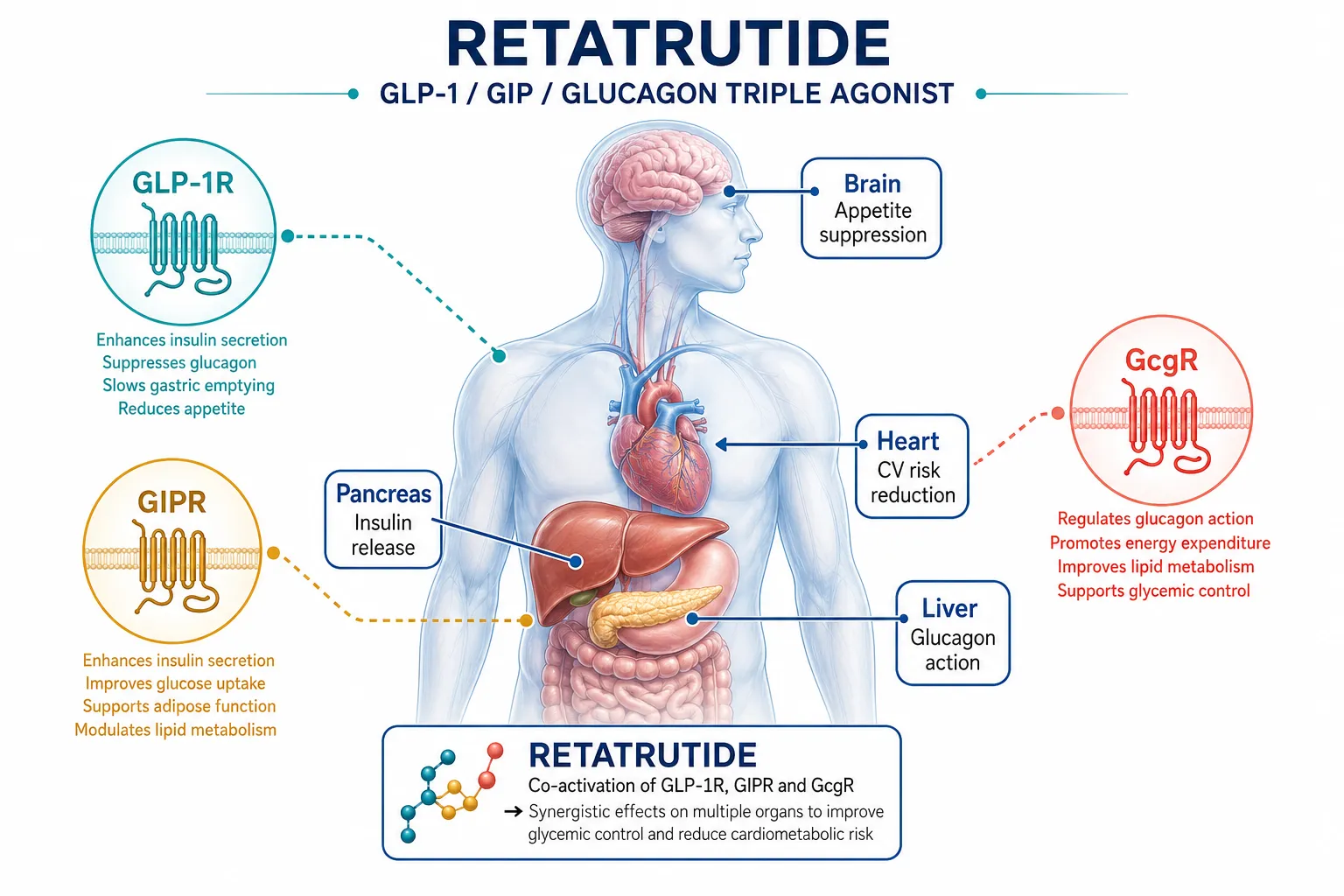
Forty-five percent of participants in a landmark 2026 obesity trial lost more than 30% of their body weight from a single weekly injection, a result previously reserved for bariatric surgery. That compound is retatrutide, and its extraordinary performance comes down to a precise molecular strategy: simultaneous activation of three metabolic receptors. Understanding the GLP-3 Retatrutide mechanism of action explained through triple agonism, appetite signaling, and energy expenditure is essential for researchers, clinicians, and anyone tracking the frontier of metabolic science.

Key Takeaways

  • Retatrutide activates GLP-1, GIP, and glucagon receptors simultaneously, producing effects no single or dual agonist can replicate.
  • Glucagon receptor activation is the distinguishing feature that drives enhanced energy expenditure and fat oxidation beyond appetite suppression alone.
  • In the TRIUMPH-1 trial, participants on 12 mg lost an average of 70.3 lbs (28.3% of body weight) over 80 weeks.
  • The peptide's fatty acid side chain enables albumin binding, supporting a convenient once-weekly dosing schedule.
  • Beyond weight loss, retatrutide shows clinically meaningful improvements in type 2 diabetes, sleep apnea, and osteoarthritis pain.

The Structural Foundation Behind Triple Agonism

The Structural Foundation Behind Triple Agonism

Retatrutide is a 39-amino acid peptide engineered with a fatty acid side chain. That side chain binds to albumin in the bloodstream, extending the compound's half-life to approximately six days. The practical result is once-weekly dosing, a significant advantage for sustained research protocols and patient adherence.

What sets retatrutide apart structurally is its receptor potency profile:

Receptor EC50 (nM) Primary Effect
GIP Receptor (GIPR) 0.0643 Insulin secretion, fat metabolism
GLP-1 Receptor (GLP-1R) 0.775 Appetite suppression, glucose control
Glucagon Receptor (GcgR) 5.79 Energy expenditure, fat oxidation

The compound shows the highest potency at the GIP receptor, followed by GLP-1, then glucagon. This gradient is intentional. GIP and GLP-1 agonism work synergistically on insulin release and satiety, while glucagon agonism, typically avoided in metabolic drugs due to hyperglycemia risk, is carefully balanced to drive thermogenesis without destabilizing blood glucose.

Researchers exploring related metabolic peptide pathways can find additional context in the metabolic modulation research lines overview, which covers complementary compounds under active investigation.


How Appetite Signaling and Energy Expenditure Work Together

How Appetite Signaling and Energy Expenditure Work Together

The GLP-3 Retatrutide mechanism of action explained through appetite signaling begins in the hypothalamus. GLP-1 receptor activation slows gastric emptying and signals satiety centers in the brain, reducing caloric intake. GIP receptor activation amplifies insulin secretion in a glucose-dependent manner, lowering postprandial glucose spikes while also modulating fat storage in adipose tissue.

The glucagon component is where retatrutide diverges from its predecessors.

"The addition of glucagon receptor activation may play a key role in enhancing weight loss beyond what GLP-1 and GIP agonism achieve alone."

Glucagon receptor activation increases hepatic glucose output under fasting conditions, but more critically for obesity research, it stimulates thermogenesis in brown adipose tissue and promotes fatty acid oxidation. This creates a dual-pathway effect: the body consumes fewer calories through appetite suppression while simultaneously burning more through elevated energy expenditure.

This mechanism contrasts with earlier GLP-1 generation drugs. For a deeper look at how incretin-based therapies have evolved, the generations of GLP-1 differences resource provides useful comparative context.

Researchers studying overlapping metabolic pathways may also find value in reviewing 5-Amino-1MQ, a NNMT inhibitor that targets fat cell metabolism through a distinct but complementary mechanism.


Clinical Evidence: What the Data Shows in 2026

Clinical Evidence: What the Data Shows in 2026

The TRIUMPH-1 Phase 3 trial delivered the most compelling data yet. Participants receiving 12 mg of retatrutide lost an average of 70.3 lbs (28.3% of body weight) over 80 weeks. Among those with a baseline BMI of 35 or higher who continued into a study extension, average weight loss reached 85.0 lbs (30.3%) at 104 weeks.

Even the lower 4 mg dose produced meaningful results: an average of 47.2 lbs (19.0%) lost over 80 weeks, with a favorable discontinuation profile compared to placebo.

The TRANSCEND-T2D-1 trial, reported in March 2026, showed retatrutide achieving A1C reductions of up to 2.0% and weight loss of up to 36.6 lbs (16.8%) at 40 weeks in adults with type 2 diabetes. Up to 46% of participants reached normal A1C levels.

Beyond metabolic markers, retatrutide reduced knee osteoarthritis pain by up to 73.1% and decreased obstructive sleep apnea severity by up to 60.6 events per hour, outcomes that reflect the systemic reach of triple receptor agonism.

Common side effects include nausea, vomiting, and dysesthesia. Some participants discontinued due to rapid weight loss, underscoring the importance of careful monitoring.

Eli Lilly is conducting additional late-stage trials with potential FDA approval sought by end of 2026.

For researchers working with GLP-based compounds, the GLP-3 for sale: triple agonist research planning and catalog navigation page offers practical sourcing and protocol guidance. Those seeking specific product details can also review the GLP-3 Retatrutide research catalog entry directly.

Researchers interested in how growth hormone-related peptides interact with metabolic outcomes may also find the Tesamorelin body composition research themes page a useful adjacent resource.


Conclusion

Retatrutide's triple agonism, targeting GLP-1, GIP, and glucagon receptors with precision-tuned potency, represents a genuine leap in metabolic research. The mechanism is not simply additive; the glucagon component introduces an energy expenditure dimension that earlier incretin therapies could not access. Combined with appetite suppression and improved insulin dynamics, this produces weight loss outcomes that rival surgical intervention.

Actionable next steps for researchers:

  • Review the receptor potency profile carefully when designing dosing protocols; GIP receptor sensitivity is highest and may drive early responses.
  • Monitor for nausea and dysesthesia, particularly during dose escalation phases.
  • Consider how triple agonism data intersects with other metabolic modulators in your research stack.
  • Consult the Retatrutide GLP-3 research overview for updated sourcing, purity standards, and protocol references before initiating any study.

The science behind retatrutide is still unfolding, but the 2026 clinical data makes one thing clear: three receptors, activated together, can accomplish what none could achieve alone.

https://www.puretestedpeptides.com/wp-content/uploads/2026/07/GLP-3-Retatrutide-Mechanism-of-Action-Explained-Triple-Agonism-Appetite-Signaling-and-Energy-Expenditure.png 1024 1536 Pure Tested https://www.puretestedpeptides.com/wp-content/uploads/2026/01/buy-peptides-online.jpg Pure Tested2026-07-09 13:04:382026-07-20 15:00:36GLP-3 Retatrutide Mechanism of Action Explained: Triple Agonism, Appetite Signaling, and Energy Expenditure
Regulatory Scrutiny in the GLP‑1/GLP‑3 Era: How BPC‑157, PT‑141, and Enclomiphene Are Being Re‑Evaluated

Regulatory Scrutiny in the GLP‑1/GLP‑3 Era: How BPC‑157, PT‑141, and Enclomiphene Are Being Re‑Evaluated

July 8, 2026/0 Comments/by Pure Tested

The FDA issued 30 warning letters to telehealth companies in a single month in early 2026, a signal that the era of loosely regulated peptide compounding is ending fast. Regulatory scrutiny in the GLP-1/GLP-3 era is reshaping how compounds like BPC-157, PT-141, and enclomiphene are evaluated, sourced, and labeled across the research and clinical landscape.

Key Takeaways

  • The FDA is aggressively tightening oversight of compounded GLP-1 drugs and related peptides in 2026.
  • BPC-157 faces a pivotal PCAC review scheduled for July 23, 2026, that will determine its compounding status.
  • PT-141 and enclomiphene remain under existing regulatory frameworks with no new official policy changes as of mid-2026.
  • Sourcing compounds from suppliers who provide verified Certificates of Analysis is a critical compliance step.
  • Researchers and clinicians must treat BPC-157, PT-141, and enclomiphene strictly as research-only compounds until regulatory clarity is established.

Key Takeaways


The GLP-1 Crackdown That Changed Everything

The regulatory environment for peptides did not shift in isolation. It accelerated because of GLP-1 drugs.

On April 30, 2026, the FDA proposed removing semaglutide, tirzepatide, and liraglutide from the 503B Bulk Drug Substances List, a move that would effectively end large-scale compounding of these blockbuster weight-loss medications. Public comments closed on June 29, 2026. The proposal followed the FDA's March 2026 enforcement wave, in which 30 warning letters targeted telehealth companies for misleading branding and unsubstantiated claims about compounded GLP-1 products.

These actions set a precedent. When regulators draw a hard line around GLP-1 receptor agonists, the scrutiny does not stop there. It flows downstream to adjacent peptides, including those popular in longevity and performance research circles.

For context on how the broader GLP-3 landscape is evolving, the GLP-3 Retatrutide research overview provides useful background on where next-generation metabolic peptides stand scientifically.

"Regulatory clarity around GLP-1 compounds is now the lens through which all compounded peptides are being measured."


Regulatory Scrutiny in the GLP-1/GLP-3 Era: BPC-157 Under the Microscope

BPC-157 is the compound facing the most direct regulatory action in 2026.

Timeline of key events:

Date Event
April 15, 2026 FDA removes BPC-157 from Category 2 list under Section 503A
July 23, 2026 PCAC scheduled to review BPC-157 for 503A Bulks List inclusion

The removal from Category 2 occurred after the original nominators withdrew their nominations, not because the FDA cleared BPC-157 for compounding. The upcoming Pharmacy Compounding Advisory Committee (PCAC) review will assess clinical utility and safety to determine whether BPC-157 can be legally compounded by pharmacies under Section 503A.

Until that review concludes, BPC-157 must be treated strictly as a research compound. Suppliers and researchers should ensure all materials are clearly labeled for research use only and accompanied by third-party purity documentation. For those tracking the regenerative research angle, the BPC-157 and TB-500 combination research page outlines the scientific basis for studying these compounds together.

Purity verification is non-negotiable in this environment. Understanding how peptide purity testing works is an essential step for any researcher handling these compounds responsibly.

Regulatory Scrutiny in the GLP-1/GLP-3 Era: BPC-157 Under the Microscope


Regulatory Scrutiny in the GLP-1/GLP-3 Era: PT-141 and Enclomiphene's Current Status

PT-141 (bremelanotide) and enclomiphene occupy a different regulatory position than BPC-157 as of mid-2026. No new official policy announcements have been issued for either compound. Both continue to be evaluated under existing frameworks.

PT-141 is a melanocortin receptor agonist studied for its role in central arousal pathways. The PT-141 central arousal research overview details the mechanistic research behind this compound. Because it operates through a distinct receptor pathway from GLP-1 drugs, it has not been swept into the same immediate enforcement wave, but increased FDA vigilance means labeling and sourcing standards must remain strict.

Enclomiphene, a selective estrogen receptor modulator studied in the context of hormonal optimization, similarly faces no new rulings. However, the broader enforcement climate means any compounded or research-grade enclomiphene must be sourced with full documentation. Researchers interested in related hormonal axis compounds may also find the Gonadorelin GnRH pulsatility research relevant to understanding endocrine feedback loops.

Best practices for all three compounds:

  • Label all materials clearly as "For Research Use Only, Not for Human Use"
  • Obtain Certificates of Analysis from independent, accredited laboratories
  • Avoid any promotional language that implies clinical or therapeutic use
  • Monitor FDA PCAC announcements, especially post-July 23, 2026

For researchers exploring the broader peptide landscape, the comprehensive peptide catalog offers a structured overview of compounds with available research documentation.

Regulatory Scrutiny in the GLP-1/GLP-3 Era: PT-141 and Enclomiphene's Current Status


Conclusion

Regulatory scrutiny in the GLP-1/GLP-3 era is not a temporary disruption, it is a structural shift in how peptide compounds are governed, sourced, and communicated. BPC-157 faces its most consequential review yet on July 23, 2026. PT-141 and enclomiphene remain under existing frameworks but are not immune to the enforcement momentum building around all compounded bioactive compounds.

Actionable next steps for researchers and suppliers:

  1. Monitor the FDA PCAC BPC-157 decision closely and adjust sourcing protocols immediately after the ruling.
  2. Audit all current labeling to confirm "Research Use Only" language is prominent and unambiguous.
  3. Require third-party Certificates of Analysis for every batch of BPC-157, PT-141, and enclomiphene.
  4. Avoid any marketing or communication that implies therapeutic or clinical application.
  5. Stay current with FDA 503A and 503B list updates, which are changing rapidly in 2026.

Researchers who build compliance into their sourcing and documentation practices now will be far better positioned regardless of how the regulatory landscape continues to evolve.

https://www.puretestedpeptides.com/wp-content/uploads/2026/07/Regulatory-Scrutiny-in-the-GLP‑1GLP‑3-Era-How-BPC‑157-PT‑141-and-Enclomiphene-Are-Being-Re‑Evaluated.png 1254 1254 Pure Tested https://www.puretestedpeptides.com/wp-content/uploads/2026/01/buy-peptides-online.jpg Pure Tested2026-07-08 13:06:092026-07-20 15:00:46Regulatory Scrutiny in the GLP‑1/GLP‑3 Era: How BPC‑157, PT‑141, and Enclomiphene Are Being Re‑Evaluated
Where to Buy Research-Grade GLP-2-T Peptide: A Guide to Sourcing High-Purity Compounds

Where to Buy Research-Grade GLP-2-T Peptide: A Guide to Sourcing High-Purity Compounds

July 8, 2026/0 Comments/by Pure Tested

Fewer than 30% of peptide compounds sold online meet the purity thresholds required for reliable preclinical research, a statistic that makes supplier selection one of the most consequential decisions a researcher can make. For scientists investigating intestinal adaptation, mucosal repair, and metabolic signaling, knowing where to buy research-grade GLP-2-T peptide and how to evaluate high-purity compounds is not a minor detail; it is foundational to data integrity.

This guide to sourcing high-purity GLP-2-T compounds walks through the key quality benchmarks, supplier evaluation criteria, and ordering best practices that serious researchers rely on in 2026.

Key Takeaways

  • Research-grade GLP-2-T peptide requires a minimum purity of 98%, verified by third-party HPLC and mass spectrometry analysis.
  • Certificates of Analysis (CoA) from independent labs are non-negotiable when vetting any supplier.
  • Reputable suppliers provide transparent documentation, cold-chain shipping, and clearly labeled research-only designations.
  • Newer GLP-related analogs are expanding rapidly; understanding the GLP peptide landscape helps researchers select the right compound.
  • Domestic suppliers with updated product listings, such as those refreshed in mid-2026, tend to offer more reliable stock and documentation consistency.

Key Takeaways

Understanding GLP-2-T: What Researchers Need to Know Before Sourcing

GLP-2-T (Glucagon-Like Peptide-2, Thr-substituted analog) is a modified variant of native GLP-2, designed to extend half-life and improve stability in research settings. Native GLP-2 is a 33-amino acid peptide secreted by intestinal L-cells, primarily studied for its role in gut epithelial proliferation, nutrient absorption, and mucosal barrier integrity.

The "T" designation refers to a threonine substitution that resists dipeptidyl peptidase-IV (DPP-IV) cleavage, a modification that makes the compound more tractable for in vitro and in vivo research models.

Why purity matters here: Even a 2-3% impurity load in a GLP-2-T sample can introduce confounding variables in receptor-binding assays or cell proliferation studies. Researchers exploring the broader incretin landscape, including those reviewing GLP-1 receptor agonist research themes, consistently cite purity as the single largest variable affecting reproducibility.
For context on how GLP-family analogs have evolved across research generations, the overview of GLP-1 generations and structural differences provides useful background.


Key Quality Standards: A Guide to Sourcing High-Purity Compounds

Before placing any order, researchers should evaluate suppliers against a defined set of quality benchmarks. The table below summarizes the minimum acceptable standards for research-grade GLP-2-T peptide.

Quality Parameter Minimum Standard Verification Method
Peptide Purity >98% HPLC chromatography
Molecular Identity Confirmed Mass spectrometry (MS)
Endotoxin Level <1 EU/mg LAL assay
Certificate of Analysis Third-party issued Independent lab documentation
Sterility Lyophilized, sealed Visual + documentation

Understanding peptide purity testing methods in detail helps researchers interpret CoA data accurately rather than accepting supplier claims at face value.

Key principle: A supplier unwilling to share third-party CoA documentation before purchase should be disqualified immediately, regardless of price.

Key Quality Standards: A Guide to Sourcing High-Purity Compounds

Where to Buy Research-Grade GLP-2-T Peptide: Evaluating Suppliers in 2026

The research peptide market has grown significantly, and not all vendors maintain consistent standards. As of mid-2026, suppliers such as Nationwide Peptides and Cenexa Labs have updated their GLP-2 and GLP-2-T product pages with current batch documentation, a positive indicator of active inventory management and quality oversight.

What to look for in a reputable supplier:

  • Independent third-party testing, CoAs issued by labs with no commercial relationship to the vendor
  • Transparent batch numbers, traceable to specific synthesis runs
  • Research-only labeling, clearly states the compound is for laboratory use, not human consumption
  • Cold-chain shipping options, lyophilized peptides remain stable at room temperature short-term, but cold-chain shipping reduces degradation risk during transit
  • Responsive technical support, ability to answer questions about reconstitution, storage, and compound specifications

Researchers sourcing GLP-related compounds may also find value in reviewing the GLP-3 triple agonist research catalog to understand how adjacent compounds are documented and presented by quality-focused vendors.

For those comparing sourcing options across compound classes, the comprehensive peptide catalog overview offers a useful reference point for evaluating how vendors organize and disclose product information.


Storage, Handling, and Ordering Best Practices

Receiving high-purity GLP-2-T peptide is only half the equation. Improper storage or reconstitution can degrade even a 99%-pure compound within days.

Storage guidelines:

  • Store lyophilized powder at -20°C for long-term stability
  • After reconstitution, store at 4°C and use within 48-72 hours
  • Avoid repeated freeze-thaw cycles, aliquot before freezing
  • Use sterile bacteriostatic water or acetic acid solution for reconstitution, depending on solubility specifications

Ordering checklist:

  1. Confirm current batch CoA is available before checkout
  2. Verify purity percentage matches the stated research-grade threshold
  3. Check that the supplier lists the compound under research-use-only terms
  4. Review shipping conditions, especially for warm-weather transit
  5. Confirm return or replacement policy for damaged shipments

Researchers working with peptide blends or multi-compound protocols should also review available peptide blend formulations to understand how combination products are documented versus single-compound vials.

For broader context on the evolving peptide research landscape in 2026, the latest peptide research updates provide relevant background on emerging analogs and regulatory considerations.

Storage, Handling, and Ordering Best Practices


Conclusion

Knowing where to buy research-grade GLP-2-T peptide and applying a rigorous guide to sourcing high-purity compounds directly determines the quality of downstream research outcomes. The steps are straightforward: demand third-party CoAs, verify purity above 98% via HPLC and mass spectrometry, confirm research-only labeling, and choose suppliers with demonstrably current inventory documentation.

Actionable next steps for researchers:

  • Build a supplier vetting checklist based on the quality parameters outlined above
  • Request CoA documentation from any new vendor before committing to a purchase
  • Cross-reference batch purity data against your assay sensitivity requirements
  • Review updated GLP-2-T listings from vendors who refreshed their catalogs in 2026
  • Bookmark resources on GLP-1 dual receptor agonism research to contextualize GLP-2-T findings within the broader incretin family

Sourcing decisions made with rigor at the outset protect the integrity of every experiment that follows.

https://www.puretestedpeptides.com/wp-content/uploads/2026/07/Where-to-Buy-Research-Grade-GLP-2-T-Peptide-A-Guide-to-Sourcing-High-Purity-Compounds.png 1254 1254 Pure Tested https://www.puretestedpeptides.com/wp-content/uploads/2026/01/buy-peptides-online.jpg Pure Tested2026-07-08 13:05:452026-07-20 15:00:47Where to Buy Research-Grade GLP-2-T Peptide: A Guide to Sourcing High-Purity Compounds
Tesamorelin and Ipamorelin: Differentiating Their Growth Hormone Releasing Mechanisms for Research

Tesamorelin and Ipamorelin: Differentiating Their Growth Hormone Releasing Mechanisms for Research

July 8, 2026/0 Comments/by Pure Tested

Two peptides can both raise growth hormone levels yet work through completely different biological locks and keys, that distinction is exactly what makes studying Tesamorelin and Ipamorelin: Differentiating Their Growth Hormone Releasing Mechanisms for Research so valuable for investigators designing targeted protocols in 2026.

Key Takeaways

  • Tesamorelin acts on the GHRH receptor (GHRH-R), mimicking the body's natural growth hormone-releasing hormone.
  • Ipamorelin acts on the ghrelin receptor (GHSR-1a), classifying it as a growth hormone secretagogue.
  • These distinct receptor targets produce different pulse patterns, selectivity profiles, and downstream effects.
  • Combining both peptides may amplify GH release through complementary, non-competing pathways.
  • Researchers must account for these mechanistic differences when designing assays, dosing schedules, and outcome measures.

Key Takeaways

Understanding the Two Core Mechanisms

At the heart of Tesamorelin and Ipamorelin: Differentiating Their Growth Hormone Releasing Mechanisms for Research is a straightforward but critical distinction: receptor class.

Tesamorelin is a synthetic analogue of endogenous growth hormone-releasing hormone (GHRH). It binds selectively to the GHRH receptor (GHRH-R) on somatotroph cells in the anterior pituitary. This binding triggers a cyclic AMP (cAMP)-dependent signaling cascade that stimulates GH synthesis and secretion. Because it mirrors the body's own GHRH, the resulting GH pulses tend to follow a physiologically familiar pattern. Researchers interested in Tesamorelin's benefits and mechanisms often note its strong clinical validation, including FDA approval for HIV-associated lipodystrophy.

Ipamorelin, by contrast, belongs to the growth hormone secretagogue (GHS) class. It binds to the ghrelin receptor, formally called GHSR-1a. Rather than mimicking GHRH, Ipamorelin mimics ghrelin, a gut-derived hormone that signals energy status to the pituitary. This receptor engagement activates a phospholipase C / inositol trisphosphate (IP3) pathway, which is mechanistically separate from the cAMP route used by Tesamorelin. Ipamorelin is also noted for its high selectivity; unlike older GHS peptides, it produces minimal stimulation of cortisol or prolactin.

Research Insight: Because Tesamorelin and Ipamorelin engage separate receptor classes, they can stimulate GH release through additive or synergistic pathways without directly competing for the same binding site.

Side-by-Side Comparison for Research Planning

Feature Tesamorelin Ipamorelin
Peptide Class GHRH Analogue GH Secretagogue (GHS)
Primary Receptor GHRH-R GHSR-1a (Ghrelin Receptor)
Signaling Pathway cAMP / PKA PLC / IP3
Selectivity High (GH axis) Very High (minimal cortisol/prolactin)
Combination Potential Complementary with GHS Complementary with GHRH analogues

Side-by-Side Comparison for Research Planning

For researchers evaluating Ipamorelin versus Tesamorelin as standalone or combined agents, this receptor-level separation is the most important design variable to control.


Research Applications and Combination Protocols

Understanding Tesamorelin and Ipamorelin: Differentiating Their Growth Hormone Releasing Mechanisms for Research becomes especially actionable when planning multi-peptide protocols.

Because the two peptides work on different receptors, stacking them does not create direct receptor competition. Studies examining the safety of combining Tesamorelin with CJC/Ipamorelin suggest that dual-pathway stimulation can produce a more robust GH pulse than either agent alone. This is also why blended formulations, such as the Tesamorelin, CJC-1295, and Ipamorelin 12mg blend, have attracted research interest.

Key research considerations when using both peptides:

  • Pulse timing: Tesamorelin pulses follow endogenous GHRH rhythms; Ipamorelin pulses can be timed more flexibly due to ghrelin receptor kinetics.
  • Feedback sensitivity: Both peptides remain subject to somatostatin-mediated negative feedback, so researchers should account for somatostatin tone in study design.
  • Dosing protocols: Reviewing established Tesamorelin dosage frameworks alongside Ipamorelin titration data helps set appropriate research benchmarks.
  • Outcome markers: IGF-1 levels, GH pulse amplitude, and body composition metrics each respond differently depending on which receptor pathway is engaged.

Researchers comparing GHRH-class peptides more broadly may also find value in reviewing Sermorelin, Ipamorelin, and CJC-1295 combination research to contextualize Tesamorelin's relative potency and duration of action.

Research Applications and Combination Protocols


Conclusion

Differentiating Tesamorelin and Ipamorelin at the receptor level, GHRH-R versus GHSR-1a, is not a minor technical detail. It shapes every aspect of a well-designed GH research protocol, from signal pathway selection and pulse timing to combination strategy and outcome measurement.

Actionable next steps for researchers:

  1. Define whether the study goal requires GHRH-pathway activation, ghrelin-pathway activation, or both.
  2. Review published Tesamorelin benefit profiles and Ipamorelin selectivity data before finalizing dosing schedules.
  3. Source peptides from verified, lab-tested suppliers to ensure purity and accurate concentration for reliable data.
  4. Consider CJC-1295 and Ipamorelin assay planning resources when building a multi-peptide experimental framework.

Mechanistic clarity is the foundation of reproducible peptide research. Knowing precisely how each compound triggers GH release allows investigators to isolate variables, interpret results accurately, and build on findings with confidence.

https://www.puretestedpeptides.com/wp-content/uploads/2026/07/Tesamorelin-and-Ipamorelin-Differentiating-Their-Growth-Hormone-Releasing-Mechanisms-for-Research.png 1024 1024 Pure Tested https://www.puretestedpeptides.com/wp-content/uploads/2026/01/buy-peptides-online.jpg Pure Tested2026-07-08 13:05:332026-07-20 15:00:48Tesamorelin and Ipamorelin: Differentiating Their Growth Hormone Releasing Mechanisms for Research
Stacking Metabolic Modulators: 5‑Amino‑1MQ with GLP‑3 and SLUPP332‑Style Blends in Adiposity Research

Stacking Metabolic Modulators: 5‑Amino‑1MQ with GLP‑3 and SLUPP332‑Style Blends in Adiposity Research

July 8, 2026/0 Comments/by Pure Tested

Obesity now affects more than one billion people globally, yet the molecular toolkit available to researchers studying adipose dysfunction has never been more mechanistically diverse. Stacking metabolic modulators, specifically 5-Amino-1MQ with GLP-3 and SLUPP332-style blends in adiposity research, has emerged as one of the most discussed multi-pathway strategies in preclinical metabolic science as of 2026. This guide translates that momentum into a clear mechanistic framework for research professionals.

Key Takeaways

  • 5-Amino-1MQ inhibits NNMT, raising cellular NAD+ and shifting adipocyte metabolism toward energy expenditure.
  • SLUPP332-style compounds activate ERRalpha/gamma receptors, driving mitochondrial biogenesis and fat oxidation through a distinct but complementary pathway.
  • GLP-3/retatrutide-class agents add incretin-mediated appetite and lipid signaling to the stack, creating a three-axis model.
  • No human clinical trials have yet validated any of these combinations; all data remains preclinical as of mid-2026.
  • Multi-pathway stacking is theoretically additive, but rigorous safety profiling for combined use is still absent from the literature.

Key Takeaways

Mechanistic Foundations of Stacking Metabolic Modulators

Understanding why researchers are interested in stacking metabolic modulators begins with the biology of adipose tissue dysfunction in obesity and metabolic-associated steatotic liver disease (MASLD).

5-Amino-1MQ: NNMT Inhibition and NAD+ Elevation

5-Amino-1MQ is a small-molecule inhibitor of nicotinamide N-methyltransferase (NNMT), an enzyme significantly overexpressed in the adipose tissue of obese subjects. When NNMT is active, it consumes methyl groups and depletes the NAD+ precursor pool, effectively suppressing mitochondrial activity in fat cells.

By blocking NNMT, 5-Amino-1MQ:

  • Elevates intracellular NAD+, activating sirtuins and PARP pathways
  • Reduces lipid accumulation in adipocytes in preclinical models
  • Shifts energy balance toward oxidative metabolism rather than storage

Preclinical data in rodent obesity models is compelling, though human clinical trial data remains absent as of 2026.

SLUPP332-Style Compounds: ERR Agonism and Mitochondrial Biogenesis

SLU-PP-332 metabolic modulation research centers on estrogen-related receptor alpha and gamma (ERRalpha/gamma) agonism. These nuclear receptors regulate genes governing oxidative phosphorylation and mitochondrial biogenesis, processes that are blunted in obese and insulin-resistant tissue.

Key SLUPP332-style effects in preclinical models:

Mechanism Observed Effect
ERRalpha activation Upregulation of fatty acid oxidation genes
ERRgamma agonism Increased mitochondrial density in skeletal muscle
Combined ERR agonism Improved exercise endurance without training

This makes SLUPP332-style compounds mechanistically distinct from, yet complementary to, 5-Amino-1MQ.


SLUPP332-Style Compounds: ERR Agonism and Mitochondrial Biogenesis

GLP-3, Retatrutide, and the Incretin Axis in Multi-Agent Stacking

The term "GLP-3" does not correspond to a well-characterized receptor class in current peer-reviewed literature. In practice, researchers using this terminology are typically referencing retatrutide-class agents, triple agonists acting on GLP-1, GIP, and glucagon receptors simultaneously. For context on incretin-based research frameworks, GLP-1 incretin research themes provide foundational background, while GLP-3/retatrutide research covers the emerging triple-agonist landscape directly.

Why add an incretin agonist to a 5-Amino-1MQ/SLUPP332 stack?

Retatrutide-class agents address appetite regulation and hepatic lipid flux, dimensions that NNMT inhibition and ERR agonism do not directly target. In MASLD models, the combination theoretically creates a three-axis attack on adiposity:

  1. Axis 1 (NNMT): Restore NAD+ metabolism in dysfunctional adipocytes
  2. Axis 2 (ERR): Rebuild mitochondrial capacity for fat oxidation
  3. Axis 3 (Incretin): Reduce caloric intake and hepatic triglyceride synthesis

Researchers exploring peptide blends for research have noted growing interest in exactly this type of complementary multi-pathway design.

MOTS-C as a Fourth Axis

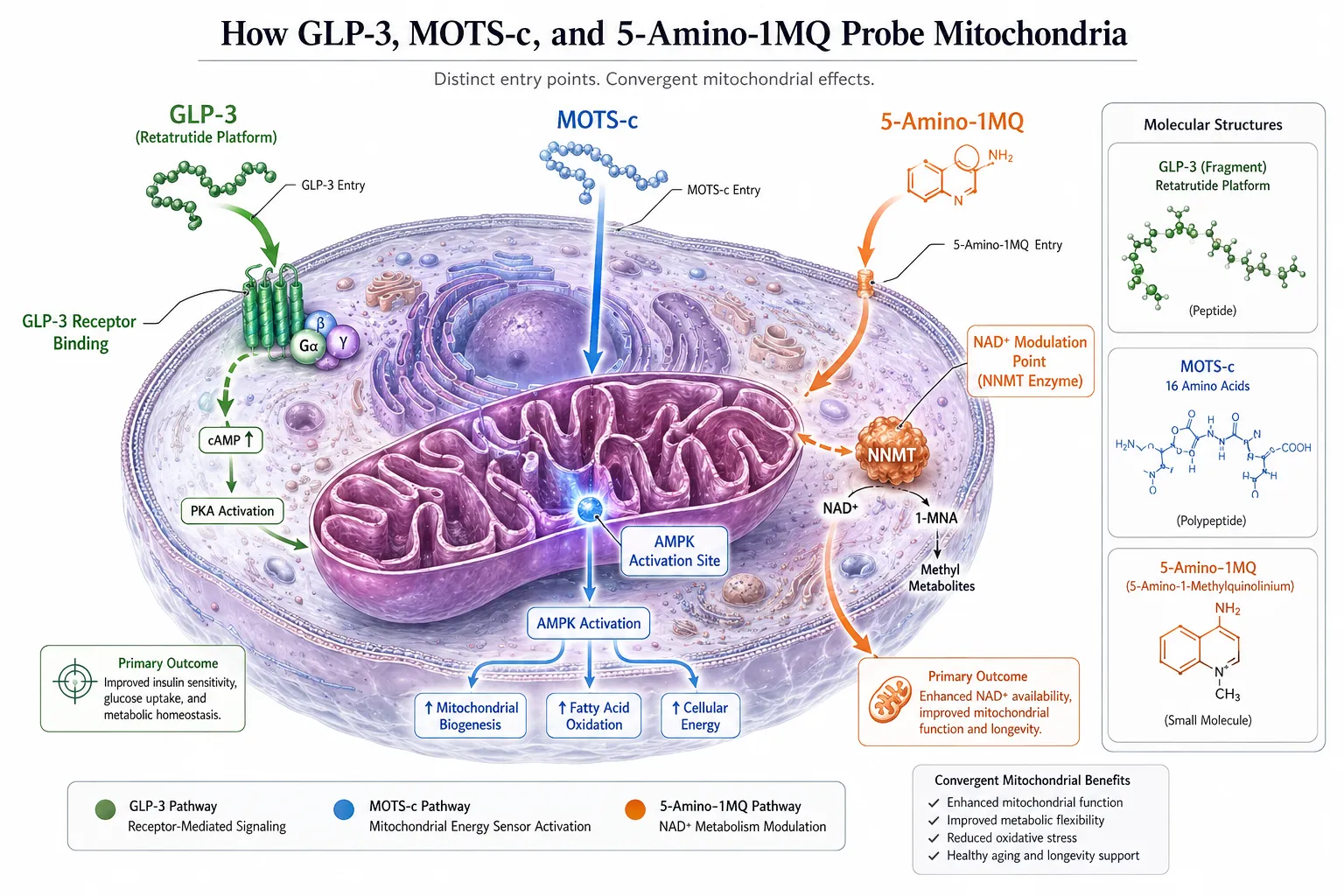
MOTS-C and SLU-PP-332 combined research suggests that adding MOTS-C, a mitochondria-derived peptide that activates AMPK, may further reinforce the stack. AMPK activation overlaps with, but does not duplicate, the ERR and NAD+ pathways, potentially offering additive benefit in insulin-sensitization models.


MOTS-C as a Fourth Axis

Research Gaps and Critical Considerations for Stacking Metabolic Modulators in Adiposity Research

"Mechanistic elegance in preclinical models does not guarantee clinical translation, the history of metabolic pharmacology is filled with promising stacks that failed at the human trial stage."

This caution is especially relevant when stacking metabolic modulators: 5-Amino-1MQ with GLP-3 and SLUPP332-style blends in adiposity research represents a frontier that, as of mid-2026, lacks any published human clinical trial data for any individual component in this combination, let alone the full stack.

Critical gaps researchers must acknowledge:

  • No human pharmacokinetic data for 5-Amino-1MQ or SLUPP332 combinations
  • No established safety profile for concurrent NNMT inhibition plus ERR agonism
  • GLP-3 terminology ambiguity risks conflating distinct receptor pharmacologies
  • Interaction effects between NAD+ elevation and incretin signaling are unstudied

Those following what is new in peptide research will note that multi-agent metabolic stacks are among the most actively discussed topics in 2026 research communities, precisely because the mechanistic rationale is strong while clinical validation lags behind.

For researchers interested in adjacent body composition modalities, tesa and body composition research offers a more clinically validated comparator framework.


Conclusion

Stacking metabolic modulators, 5-Amino-1MQ with GLP-3 and SLUPP332-style blends in adiposity research, represents one of the most mechanistically sophisticated multi-pathway approaches in current obesity and MASLD research. The theoretical framework is coherent: NNMT inhibition restores NAD+ metabolism, ERR agonism rebuilds mitochondrial capacity, and incretin-class agents address appetite and hepatic lipid flux simultaneously.

Actionable next steps for researchers:

  1. Prioritize single-agent preclinical characterization before advancing to combination models
  2. Clarify receptor nomenclature, confirm whether "GLP-3" references retatrutide-class triple agonism
  3. Design combination studies with clear biomarker endpoints (NAD+/NADH ratio, mitochondrial density, hepatic triglyceride content)
  4. Monitor the clinical trial registry for first-in-human studies on NNMT inhibitors, anticipated in the near term
  5. Apply rigorous quality control standards to any research-grade compounds used in experimental models

The science is promising. The clinical evidence is not yet there. That gap is precisely where rigorous, well-designed research belongs.

https://www.puretestedpeptides.com/wp-content/uploads/2026/07/Stacking-Metabolic-Modulators-5‑Amino‑1MQ-with-GLP‑3-and-SLUPP332‑Style-Blends-in-Adiposity-Research.png 1024 1024 Pure Tested https://www.puretestedpeptides.com/wp-content/uploads/2026/01/buy-peptides-online.jpg Pure Tested2026-07-08 13:05:002026-07-20 15:00:48Stacking Metabolic Modulators: 5‑Amino‑1MQ with GLP‑3 and SLUPP332‑Style Blends in Adiposity Research
Understanding Polypeptide Peptides: Structure, Function, and Advanced Research Applications

Understanding Polypeptide Peptides: Structure, Function, and Advanced Research Applications

July 8, 2026/0 Comments/by Pure Tested

Fewer than 50 amino acids linked together can trigger cascading biological events that influence everything from immune defense to metabolic regulation, a fact that underscores just how powerful polypeptide peptides truly are. This article delivers a comprehensive understanding of polypeptide peptides, detailing their complex structures, diverse biological functions, and advanced applications in cutting-edge research as of 2026.

Key Takeaways

  • Polypeptides are chains of amino acids linked by peptide bonds, and their three-dimensional shape determines their biological role.
  • Structural classes, including alpha-helices, beta-sheets, and cyclic forms, each carry distinct functional advantages.
  • Polypeptides serve critical roles in signaling, immune defense, enzymatic activity, and cellular regulation.
  • Advanced tools such as AlphaFold and molecular dynamics simulations are transforming how researchers design and predict peptide behavior.
  • Research-grade polypeptides are at the forefront of longevity science, metabolic research, and targeted therapeutic development.

Key Takeaways

The Architecture Behind Polypeptide Peptides: Structure, Function, and Advanced Research Applications

At the most basic level, a polypeptide is a linear chain of amino acids joined by covalent peptide bonds. The sequence of these amino acids, called the primary structure, dictates how the chain will fold into higher-order shapes.

Four levels of protein and polypeptide structure:

Level Description
Primary Linear amino acid sequence
Secondary Local folding into alpha-helices or beta-sheets
Tertiary Overall 3D shape of a single chain
Quaternary Assembly of multiple polypeptide chains

Alpha-helical polypeptides have received significant research attention for their helix-specific properties, including membrane permeability and receptor binding precision. Beta-sheets, by contrast, offer structural rigidity and are common in fibrous proteins. A third class, lasso peptides, features unique knot-like macrocyclic structures that confer remarkable stability and diverse bioactivities, including antimicrobial properties.

Constrained peptides, engineered to mimic protein secondary structures, have opened new doors for therapeutic design. By locking a peptide into a defined conformation, researchers improve target selectivity and resistance to enzymatic degradation. For a closer look at how simple peptide forms compare to complex ones, the overview of simple peptides offers useful foundational context.


Biological Functions: What Polypeptides Actually Do

Polypeptides are not passive molecules. They act as hormones, enzymes, signaling agents, and structural components across virtually every tissue system.

Core biological roles include:

  • Hormonal signaling, peptides like growth hormone-releasing hormones regulate metabolism and tissue repair
  • Immune modulation, antimicrobial peptides defend against pathogens at epithelial barriers
  • Enzymatic catalysis, short polypeptide sequences can accelerate biochemical reactions
  • Cell-to-cell communication, neuropeptides and cytokines coordinate systemic responses

"Therapeutic peptides are gaining traction because of their cost-effectiveness, reduced immunogenicity, and ability to engage large protein-protein interaction surfaces that small molecules cannot reach."

Research into peptides like LL-37 illustrates how a single antimicrobial polypeptide can modulate immune responses, disrupt bacterial membranes, and influence wound healing simultaneously. Similarly, research on KPV and epithelial barrier function demonstrates how short tripeptide sequences exert targeted anti-inflammatory effects at mucosal surfaces.

The comparison of LL-37 versus SS-31 benefits further highlights how structural differences between polypeptides translate directly into divergent functional profiles.


Biological Functions: What Polypeptides Actually Do

Advanced Research Applications in 2026

Understanding polypeptide peptides, their structure, function, and advanced research applications, has never been more relevant than it is today, as computational and laboratory tools converge to accelerate discovery.

Key research frontiers include:

  1. AI-driven structure prediction, Tools like AlphaFold now enable precision design of cyclic peptides, including candidates targeting complex viral structures such as the HIV gp120 trimer.
  2. Molecular dynamics simulations, These computational models predict how peptides fold and interact with receptors under physiological conditions.
  3. Molecular fingerprints, Emerging research shows these are computationally efficient tools for predicting peptide function without requiring deep learning infrastructure.
  4. Self-assembling peptides, Active learning-directed simulations have identified pi-conjugated peptides capable of self-assembly, with applications in bioelectronics and energy materials.

Advanced Research Applications in 2026

Longevity research represents one of the most active application areas. Peptides such as SS-31 (elamipretide) are being studied for mitochondrial protection, as explored in the MOTS-c and elamipretide research overview. Growth hormone axis peptides, including tesa and CJC-1295, are central to body composition and metabolic research, detailed further in the GH axis product line overview.

For researchers tracking the latest developments, the what is new in peptide research resource provides regularly updated coverage of emerging findings.

Peptide-based biopolymers also continue to expand into drug delivery, tissue engineering, and biosurface engineering, reflecting the broad translational potential of polypeptide science.


Conclusion

Polypeptide peptides sit at the intersection of structural biology, biochemistry, and translational medicine. Their diverse conformations, from alpha-helices to lasso structures, directly shape their functional roles, while advances in computational design and laboratory synthesis are making precision peptide engineering increasingly achievable.

Actionable next steps for researchers and professionals:

  • Explore the structural class most relevant to your research target (helical, cyclic, or linear)
  • Use molecular dynamics tools to model conformational behavior before synthesis
  • Review current longevity and metabolic peptide research through dedicated resources such as longevity peptide research
  • Source research-grade compounds from verified suppliers by browsing the full catalog of peptides for sale

As structural data becomes more integrated into peptide design workflows, the gap between laboratory discovery and real-world application will continue to narrow, making 2026 a pivotal year for polypeptide research.

https://www.puretestedpeptides.com/wp-content/uploads/2026/07/Understanding-Polypeptide-Peptides-Structure-Function-and-Advanced-Research-Applications.png 1024 1536 Pure Tested https://www.puretestedpeptides.com/wp-content/uploads/2026/01/buy-peptides-online.jpg Pure Tested2026-07-08 13:04:442026-07-20 15:00:49Understanding Polypeptide Peptides: Structure, Function, and Advanced Research Applications

Polypeptide Peptides in Endocrine and Metabolic Pathways: How GLP‑3, GLP‑2‑T, and CJC‑1295 Drive Hormone Research

July 7, 2026/0 Comments/by Pure Tested

Fewer than 30 amino acids separate a simple dipeptide from a full-length polypeptide hormone, yet that structural gap represents decades of endocrinology research and some of the most consequential therapeutic discoveries in modern medicine. The phrase "polypeptide peptides" is technically redundant, but it reflects a real gap in how researchers, students, and clinicians talk about these molecules. Understanding that gap is the first step toward grasping how compounds like GLP-3, GLP-2-T, and CJC-1295 are reshaping endocrine and metabolic science in 2026.

This article clarifies the structure-function basics of polypeptide hormones, then maps those principles onto three research-stage peptides that are generating significant scientific interest.

Key Takeaways

  • All peptide hormones are polypeptides, but the term "polypeptide peptides" is often used loosely to describe multi-chain signaling molecules derived from larger precursor proteins.
  • GLP-3, GLP-2-T (a stabilized GLP-2 analog), and CJC-1295 each act on distinct receptor systems, incretin, intestinal trophic, and growth hormone-releasing pathways respectively.
  • Proglucagon is the shared precursor for GLP-1, GLP-2, and GLP-3, with tissue-specific enzyme processing determining which hormone is produced.
  • CJC-1295 extends its half-life through covalent albumin binding, making it a useful model for studying sustained growth hormone axis stimulation.
  • All three compounds are currently restricted to preclinical and research contexts; none are approved for general clinical use.

Key Takeaways

What "Polypeptide Peptides" Actually Means in Endocrine Science

A peptide is any chain of amino acids linked by peptide bonds. A polypeptide is simply a longer chain, conventionally above 10 amino acids. In endocrinology, most signaling hormones fall into this polypeptide range, including insulin, glucagon, and the glucagon-like peptides. When researchers use the phrase "polypeptide peptides in endocrine and metabolic pathways," they are usually describing these multi-residue signaling molecules that bind to G-protein-coupled receptors (GPCRs) to regulate metabolism, growth, and energy balance.

Why does the distinction matter? Because the length and folding of a polypeptide chain determine receptor selectivity, enzymatic stability, and pharmacokinetic behavior. Small modifications, a single amino acid substitution or the addition of a fatty acid chain, can shift a rapidly degraded native peptide into a research-grade compound with a half-life measured in days rather than minutes.

The Proglucagon Precursor: One Gene, Multiple Hormones

Glucagon, GLP-1, GLP-2, and GLP-3 all derive from a single precursor protein called proglucagon. Tissue-specific prohormone convertases (PC2 in the pancreatic alpha cells, PC1/3 in intestinal L-cells) cleave proglucagon at different sites, producing distinct hormones with distinct roles.

  • Glucagon: raises blood glucose; produced in the pancreas
  • GLP-1: stimulates insulin secretion; produced in the gut and brain
  • GLP-2: promotes intestinal mucosal growth and nutrient absorption
  • GLP-3: a less-characterized fragment still under active investigation

For researchers exploring GLP-1 peptide sourcing and generational research concepts, understanding this shared precursor is essential context.


GLP-3 and GLP-2-T: Incretin-Adjacent Peptides in Metabolic Research

GLP-3 and GLP-2-T: Incretin-Adjacent Peptides in Metabolic Research

GLP-3 and the Triple-Agonist Frontier

GLP-3 is a proglucagon-derived fragment whose receptor binding profile is still being characterized. Research interest intensified when it became clear that multi-receptor agonism, hitting GLP-1R, GIPR, and glucagon receptors simultaneously, produces additive metabolic effects. Retatrutide, sometimes discussed in the context of GLP-3 triple-agonist research planning, is a synthetic peptide designed to exploit this multi-agonist principle.

"Multi-receptor agonism represents a shift from single-target pharmacology toward systems-level metabolic intervention, a paradigm that polypeptide research is uniquely positioned to advance."

Proglucagon-derived peptides, including GLP-1 and GIP, regulate energy storage through actions on adipose tissue, influencing white and brown fat activity, islet hormone secretion, and food intake. GLP-3 research extends this framework into less-mapped receptor territory. You can also explore related research on retatrutide and GLP-3 pathway studies for additional context.

GLP-2-T: Stabilized Intestinal Trophic Research

GLP-2-T refers to a stabilized, modified form of GLP-2 designed to resist dipeptidyl peptidase-4 (DPP-4) degradation, the same enzyme that rapidly inactivates native GLP-1 and GLP-2. Native GLP-2 has a half-life of approximately 7 minutes; structural modifications extend this substantially, making it viable for controlled research protocols examining intestinal mucosal integrity, nutrient absorption, and gut barrier function.

The chemical modification strategy mirrors what has been applied to other peptide hormones: amino acid substitutions at DPP-4 cleavage sites, combined in some analogs with fatty acid acylation to enable albumin binding.


CJC-1295 and the Growth Hormone Axis: A Model for Polypeptide Peptides in Endocrine and Metabolic Pathways

Mechanism and Pharmacokinetics

CJC-1295 is a synthetic analog of growth hormone-releasing hormone (GHRH). It binds to GHRH receptors on anterior pituitary somatotrophs, activating the cAMP/PKA signaling pathway. This triggers growth hormone (GH) release and subsequent elevation of insulin-like growth factor 1 (IGF-1).

What makes CJC-1295 a standout research model is its Drug Affinity Complex (DAC) modification. The DAC enables covalent binding to circulating serum albumin, extending the peptide's half-life to approximately 6 to 8 days in humans, compared to minutes for native GHRH. This sustained action allows researchers to study prolonged GH and IGF-1 elevation without repeated dosing.

CJC-1295 underwent Phase II clinical trials for HIV-associated visceral obesity before being discontinued following the death of a trial participant. The death was attributed to pre-existing coronary artery disease and deemed unrelated to the compound, but development did not continue. It remains a research-only compound.

For researchers reviewing CJC-1295 and Ipamorelin assay planning and sourcing, the DAC pharmacokinetics are a central variable in experimental design. Multi-peptide blend studies, such as those examining Tesamorelin and CJC-1295 combinations, also rely on this extended half-life as a design consideration.

CREB Signaling: The Downstream Pathway

CJC-1295's activation of cAMP/PKA feeds into the CREB (cAMP response element-binding protein) transcriptional pathway. CREB and its co-activators act as sensors for hormonal and metabolic signals, mediating gene transcription involved in glucose metabolism and energy balance. This makes CJC-1295 not just a GH secretagogue but a tool for studying broader hormonal gene regulation.

Researchers interested in growth hormone-axis peptides may also find value in reviewing Tesamorelin peptide research, another GHRH analog with a distinct modification profile and its own clinical data set.

Ipamorelin as a Complementary Research Tool

Ipamorelin is a GH secretagogue receptor (GHSR) agonist that stimulates GH release through a different receptor than CJC-1295. Used together in research models, they provide a dual-pathway approach to studying GH axis regulation. Detailed information on Ipamorelin research applications offers useful background for designing multi-peptide studies.


Conclusion

Polypeptide peptides in endocrine and metabolic pathways, from the proglucagon-derived incretin family to synthetic GHRH analogs, represent a structurally diverse but mechanistically coherent class of research tools. GLP-3 and GLP-2-T extend incretin biology into multi-receptor and intestinal trophic territory, while CJC-1295 provides a well-characterized model for sustained growth hormone axis stimulation through albumin-binding pharmacokinetics.

Actionable next steps for researchers:

  • Map the proglucagon processing pathway before designing any GLP-family study to ensure receptor selectivity is clearly defined.
  • Evaluate DPP-4 stability data when selecting GLP-2-T analogs, as modification sites directly affect experimental half-life.
  • Review CJC-1295 DAC pharmacokinetics and CREB pathway literature before establishing dosing intervals in GH-axis protocols.
  • Source peptides from suppliers with documented purity standards; consult peptide supplier comparison resources and reference standard benchmarking guides to validate compound integrity before use.

All compounds discussed here are for preclinical research purposes only and are not approved for human therapeutic use outside of authorized clinical trial frameworks.

https://www.puretestedpeptides.com/wp-content/uploads/2026/01/buy-peptides-online.jpg 0 0 Pure Tested https://www.puretestedpeptides.com/wp-content/uploads/2026/01/buy-peptides-online.jpg Pure Tested2026-07-07 13:20:052026-07-20 15:00:49Polypeptide Peptides in Endocrine and Metabolic Pathways: How GLP‑3, GLP‑2‑T, and CJC‑1295 Drive Hormone Research

Adenosine Triphosphate, Mitochondria, and MOTS‑c: Where Cellular Energy Meets Peptide Signaling

July 7, 2026/0 Comments/by Pure Tested

Every cell in the human body produces and consumes roughly its own weight in ATP each day, a fact that underscores just how central mitochondrial energy metabolism is to survival. Yet for decades, the mitochondrion was treated almost exclusively as a power plant. That view has changed dramatically. The emerging science of Adenosine Triphosphate, Mitochondria, and MOTS-c: Where Cellular Energy Meets Peptide Signaling reveals that the organelle also encodes bioactive peptides that coordinate whole-body metabolic responses, stress adaptation, and even aging trajectories.

Key Takeaways

  • Mitochondria generate ATP through oxidative phosphorylation, but they also encode signaling peptides such as MOTS-c directly from mitochondrial DNA.
  • MOTS-c activates AMPK and PGC-1alpha pathways, improving mitochondrial efficiency and reducing reactive oxygen species (ROS) output.
  • Circulating MOTS-c levels decline with age, linking the peptide to age-related metabolic decline.
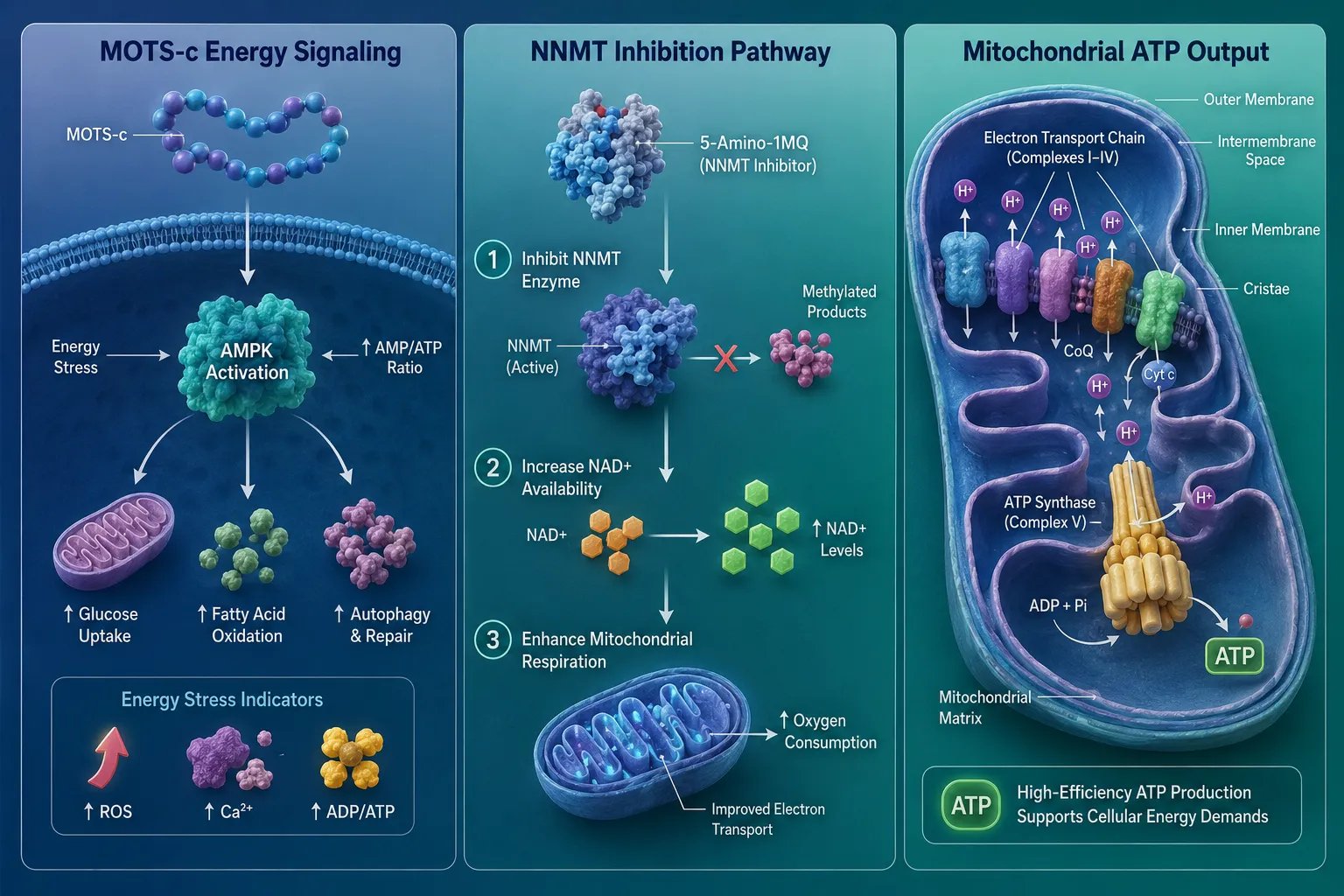
  • 5-Amino-1MQ, an NNMT inhibitor, may indirectly support NAD+ availability and AMPK signaling, creating metabolic crosstalk with MOTS-c biology.
  • MOTS-c is not FDA-approved and is banned by WADA; all current use is strictly within preclinical research contexts.

Key Takeaways

From ATP Synthesis to Peptide Signaling: The Mitochondrial Dual Role

The textbook account of ATP production begins with glycolysis in the cytoplasm and ends with oxidative phosphorylation across the inner mitochondrial membrane. Electrons donated by NADH and FADH2 travel through the electron transport chain, driving proton pumps that power ATP synthase. The result is a continuous supply of adenosine triphosphate, the universal energy currency that fuels muscle contraction, protein synthesis, and ion transport.

What the textbook often omits is that the mitochondrial genome, a circular strand of just 16,569 base pairs, contains small open reading frames capable of producing functional peptides. One of the most studied is MOTS-c (Mitochondrial Open Reading Frame of the 12S rRNA Type-c), a 16-amino-acid peptide encoded within the 12S ribosomal RNA gene. Its discovery reframed the mitochondrion as both an energy producer and an active endocrine-like signaling hub.

This intersection is precisely what makes Adenosine Triphosphate, Mitochondria, and MOTS-c: Where Cellular Energy Meets Peptide Signaling such a compelling area of research in 2026. Understanding how ATP metabolism and peptide signaling interact opens new windows into metabolic disease, aging, and cellular resilience.

For a broader view of how mitochondrial peptides fit into longevity research, the longevity peptide research overview provides useful context.

MOTS-c Mechanisms: AMPK, PGC-1alpha, and Mitochondrial Efficiency

MOTS-c Mechanisms: AMPK, PGC-1alpha, and Mitochondrial Efficiency

MOTS-c exerts its primary effects through two well-characterized pathways:

1. AMPK Activation
AMPK (AMP-activated protein kinase) acts as the cell's master energy sensor. When the AMP-to-ATP ratio rises, signaling low energy, AMPK switches on catabolic processes and suppresses anabolic ones. MOTS-c mimics this low-energy signal, activating AMPK even under normal conditions. This is why researchers describe MOTS-c as an exercise mimetic: it produces metabolic adaptations similar to physical training, including improved insulin sensitivity and enhanced fatty acid oxidation.

2. PGC-1alpha and Mitochondrial Biogenesis
A March 2026 study demonstrated that MOTS-c administration improves muscle mitochondrial bioenergetic performance through PGC-1alpha, the master regulator of mitochondrial biogenesis. The result is reduced ROS emission and lower oxidative protein damage, outcomes that matter greatly in aging tissues.

Beyond these two pathways, MOTS-c translocates to the cell nucleus under stress conditions, where it regulates genes containing antioxidant response elements (ARE). This nuclear role positions MOTS-c as a direct link between mitochondrial stress sensing and genomic stress adaptation.

A preliminary study also found a positive correlation between serum MOTS-c concentrations and lower-body muscle strength in healthy individuals, though no significant link to VO2 max was observed, suggesting the peptide is more relevant to strength than endurance capacity.

Research published in 2023 further identified MOTS-c as a potential protective factor against pulmonary fibrosis, pointing to metabolic regulation as a mechanism. A separate systematic review highlighted MOTS-c's role in reducing insulin resistance and systemic inflammation.

Researchers interested in how MOTS-c interacts with other mitochondria-targeting compounds should review the MOTS-c and elamipretide research page for comparative data.

The MOTS-c metabolic stress research page also documents how cellular energy depletion triggers MOTS-c expression.

The Age-Related Decline of MOTS-c and the 5-Amino-1MQ Connection

Circulating MOTS-c levels fall measurably with age. This decline correlates with the metabolic deterioration seen in older adults, reduced insulin sensitivity, impaired mitochondrial function, and increased inflammatory signaling. The pattern suggests that MOTS-c acts as a kind of metabolic buffer that erodes over time.

This is where 5-Amino-1MQ enters the picture. This small-molecule NNMT (nicotinamide N-methyltransferase) inhibitor works by blocking an enzyme that consumes SAM (S-adenosylmethionine) and depletes the NAD+ precursor pool. By inhibiting NNMT, 5-Amino-1MQ supports higher intracellular NAD+ availability, and NAD+ is a direct upstream activator of AMPK signaling.

The metabolic crosstalk is meaningful:

Compound Primary Target Effect on Energy Metabolism
MOTS-c AMPK / PGC-1alpha Enhances mitochondrial efficiency, reduces ROS
5-Amino-1MQ NNMT inhibition Elevates NAD+, supports AMPK activation indirectly

The Age-Related Decline of MOTS-c and the 5-Amino-1MQ Connection

Neither compound is FDA-approved. MOTS-c specifically remains on the FDA's Category 2 list and is banned by WADA under Section S4.4 (Metabolic Modulators, AMPK activators) of the 2024 Prohibited List. All research involving these compounds is conducted in preclinical settings.

For researchers exploring related mitochondrial-targeting peptides, SS-31 peptide research offers complementary data on inner mitochondrial membrane protection. The MOTS-c mitochondrial research themes page consolidates the most current mechanistic findings.

Key insight: The convergence of MOTS-c signaling and NAD+ metabolism through NNMT inhibition represents one of the more promising areas of mitochondrial research in 2026, not because either compound is a clinical therapy, but because together they illuminate how the cell regulates energy balance at multiple levels simultaneously.

Conclusion

The science of Adenosine Triphosphate, Mitochondria, and MOTS-c: Where Cellular Energy Meets Peptide Signaling has moved well beyond the textbook. Mitochondria are now understood as signaling organelles that use peptides like MOTS-c to communicate energy status across tissues, regulate stress adaptation, and influence aging biology. The parallel discovery that NNMT inhibitors such as 5-Amino-1MQ can alter the NAD+/AMPK axis adds another layer of complexity, and opportunity, to this field.

Actionable next steps for researchers:

  • Review the current preclinical literature on MOTS-c dosing protocols and endpoint selection before designing studies.
  • Explore how MOTS-c and LL-37 synergy may compound metabolic and immune outcomes in research models.
  • Consult the epithalon longevity signals research page for comparative aging-pathway data.
  • Source only lab-tested, verified compounds through reputable suppliers to ensure experimental reproducibility.

The bridge from ATP biochemistry to peptide signaling is no longer theoretical, it is an active research frontier with measurable, reproducible outcomes.

https://www.puretestedpeptides.com/wp-content/uploads/2026/01/buy-peptides-online.jpg 0 0 Pure Tested https://www.puretestedpeptides.com/wp-content/uploads/2026/01/buy-peptides-online.jpg Pure Tested2026-07-07 13:16:342026-07-20 15:00:50Adenosine Triphosphate, Mitochondria, and MOTS‑c: Where Cellular Energy Meets Peptide Signaling
Neuroactive Research Peptides as Adjuncts to GLP‑1/GLP‑3: Selank, Semax, and Epithalon in Neuro‑Metabolic Study Designs

Neuroactive Research Peptides as Adjuncts to GLP‑1/GLP‑3: Selank, Semax, and Epithalon in Neuro‑Metabolic Study Designs

July 7, 2026/0 Comments/by Pure Tested

Fewer than 15% of subjects in GLP-1-based metabolic research protocols complete long-term study phases without reporting anxiety, sleep disruption, or cognitive fatigue, variables that rarely appear in primary endpoints but quietly shape adherence data. That gap is driving renewed interest in neuroactive research peptides as adjuncts to GLP-1/GLP-3: Selank, Semax, and Epithalon in neuro-metabolic study designs represent three candidates that researchers are increasingly pairing with incretin-based frameworks to address exactly these secondary endpoints.

Close-up laboratory flat-lay image showing three distinct peptide vials labeled Selank, Semax, and Epithalon arranged on a

Key Takeaways

  • Selank, Semax, and Epithalon each target distinct neurological pathways, anxiety modulation, BDNF upregulation, and circadian/telomere regulation respectively, that may complement GLP-1 and GLP-3 metabolic protocols.
  • GLP-1 receptor agonists combined with additional peptides have demonstrated up to a 32% reduction in food intake in research settings, suggesting multi-peptide synergy is a viable study design strategy.
  • Both Semax and Selank are approved for medical use in Russia but lack large-scale Western randomized controlled trials, limiting regulatory standing outside that jurisdiction.
  • Epithalon's influence on sleep architecture and pineal function positions it as a hypothesized adjunct for circadian-metabolic alignment in longer study windows.
  • All three peptides are classified as research compounds and are subject to WADA prohibitions; researchers must account for regulatory context in study design.

Mechanisms: How Selank, Semax, and Epithalon Map to Neuro-Metabolic Pathways

Understanding why these compounds attract attention in metabolic research begins with their individual mechanisms.

Semax is a synthetic heptapeptide derived from adrenocorticotropic hormone (ACTH). Its most studied action is the upregulation of Brain-Derived Neurotrophic Factor (BDNF) in the hippocampus and cortex. BDNF elevation activates TrkB receptors, supporting neuronal survival, synaptic plasticity, and cognitive function. In metabolic research contexts, BDNF is not merely a cognitive marker, it also plays a documented role in energy homeostasis and hypothalamic appetite regulation, making Semax a biologically plausible adjunct in neuro-metabolic designs.

Selank, also a heptapeptide but derived from the immunomodulatory peptide tuftsin, operates through a different set of mechanisms. It modulates monoamine metabolism, increases GABA release, and regulates serotonin-related gene expression. The result is anxiolytic and nootropic activity without the sedation or dependence risk associated with classical anxiolytics. Researchers studying Selank peptide benefits note its potential relevance to stress-driven eating behavior and cortisol-mediated metabolic disruption, endpoints that are rarely isolated in standard GLP-1 trials but are mechanistically significant.

Epithalon (also spelled Epitalon) is a tetrapeptide synthesized from epithalamin, a pineal gland extract. Its primary research interest centers on telomerase activation, circadian rhythm normalization, and melatonin secretion support. Disrupted sleep architecture is strongly associated with impaired insulin sensitivity and elevated ghrelin, which means Epithalon's circadian-regulatory properties carry direct metabolic relevance. Researchers exploring Epithalon peptides for sale in research contexts often frame it within longevity and metabolic aging study designs.

"The intersection of neurological stability and metabolic regulation is not incidental, it is mechanistic. Anxiety, sleep quality, and cognitive load each modulate the hormonal environment that GLP-1 therapies are designed to influence."


GLP-1/GLP-3 Synergy and the Case for Multi-Peptide Study Designs

GLP-1 receptor agonists have reshaped metabolic research, but their scope is expanding. Combined infusion studies using GLP-1 alongside oxyntomodulin and peptide YY have recorded a 32% reduction in food intake among obese research subjects, evidence that multi-peptide protocols can produce outcomes beyond what single-agent designs achieve.

GLP-3, a lesser-studied incretin fragment, is gaining attention for its potential role in gut-brain signaling and neuroinflammation modulation. When researchers consider NAD research and GLP-3 online resources, the emerging picture is one of overlapping neuroendocrine pathways where incretin biology and neuropeptide biology converge.

The rationale for pairing Selank, Semax, or Epithalon with GLP-1/GLP-3 frameworks rests on several hypothesized interaction points:

Peptide Primary Research Target Hypothesized GLP-1/GLP-3 Adjunct Role
Semax BDNF upregulation, neuroprotection Hypothalamic appetite axis support, cognitive adherence
Selank Anxiolysis, serotonin/GABA modulation Stress-eating attenuation, cortisol normalization
Epithalon Circadian regulation, telomerase activation Sleep-metabolic alignment, insulin sensitivity support

GLP-1 infusions have also been shown to augment muscle protein synthesis in older adults, addressing anabolic resistance, a finding that becomes more relevant when paired with Epithalon's anti-aging and cellular repair research themes. For researchers interested in related metabolic peptide frameworks, AOD9604 metabolic research and 5-Amino-1MQ research data offer additional mechanistic context for multi-pathway designs.


Study Design Considerations, Safety Profiles, and Regulatory Context

Designing a neuro-metabolic study that incorporates neuroactive research peptides as adjuncts to GLP-1/GLP-3, Selank, Semax, and Epithalon in neuro-metabolic study designs specifically, requires careful attention to both safety data and regulatory standing.

Safety profiles for Semax and Selank are generally favorable in existing literature. Semax is well-tolerated, with rare adverse events limited to mild nasal irritation and transient agitation. Selank is considered non-sedative and non-addictive, with uncommon side effects including mild daytime drowsiness or dry mouth. Epithalon has a strong preclinical safety record, though long-term human data remains limited.

Critically, neither Semax nor Selank has undergone large-scale randomized controlled trials in Western research settings. Both are approved for medical use in Russia, Semax for stroke recovery and neurological disease, Selank for mild anxiety, but neither holds FDA or EMA approval. Researchers should also note that WADA classifies both Semax and Selank as prohibited substances due to their neuroenhancement potential.

For researchers building multi-peptide protocols, resources on neuroendocrine and innate immunity research themes and PT-141 neural-metabolic research themes provide useful comparative frameworks for designing endpoints that capture both neurological and metabolic variables.

Key study design checkpoints include:

  • Baseline neurological assessments for anxiety, sleep quality, and cognitive function before GLP-1/GLP-3 protocol initiation
  • Defined adjunct dosing windows that avoid confounding primary incretin endpoints
  • Secondary endpoint tracking for cortisol, BDNF, melatonin, and inflammatory markers
  • Institutional review and ethics compliance given the unapproved status of all three peptides in most Western jurisdictions

Conclusion

The convergence of neuroactive research peptides as adjuncts to GLP-1/GLP-3, Selank, Semax, and Epithalon in neuro-metabolic study designs, reflects a broader shift in how researchers are framing metabolic science. Rather than treating anxiety, cognition, and sleep as confounding variables, forward-looking study designs are beginning to treat them as mechanistically relevant endpoints in their own right.

Actionable next steps for researchers in 2026:

  1. Review existing GLP-1 protocol data for unreported neurological secondary variables that Selank or Semax could address in follow-up designs.
  2. Incorporate Epithalon into longer study windows where circadian-metabolic alignment is a measurable outcome.
  3. Consult institutional review boards early regarding the regulatory status of all three peptides before protocol submission.
  4. Explore multi-peptide synergy literature, including cagrilintide synergy with GLP-1 and GLOW blend longevity research themes, to build a comparative evidence base.

The evidence base remains early-stage, but the mechanistic logic is sound. Rigorous trial design, not speculation, will determine whether these peptides earn a formal role in neuro-metabolic research protocols.

https://www.puretestedpeptides.com/wp-content/uploads/2026/07/Neuroactive-Research-Peptides-as-Adjuncts-to-GLP‑1GLP‑3-Selank-Semax-and-Epithalon-in-Neuro‑Metabolic-Study-Designs.png 1024 1536 Pure Tested https://www.puretestedpeptides.com/wp-content/uploads/2026/01/buy-peptides-online.jpg Pure Tested2026-07-07 13:16:152026-07-20 15:00:50Neuroactive Research Peptides as Adjuncts to GLP‑1/GLP‑3: Selank, Semax, and Epithalon in Neuro‑Metabolic Study Designs

Mitochondria, MOTS‑c, and 5‑Amino‑1MQ: How Polypeptide Peptides Rewire Cellular Energy Metabolism

July 7, 2026/0 Comments/by Pure Tested

Circulating levels of MOTS-c, a peptide encoded directly inside mitochondrial DNA, drop measurably as humans age, tracking closely with the rise of insulin resistance and metabolic dysfunction. That single fact reframes a long-standing assumption: that mitochondria are passive energy factories. The emerging science of Mitochondria, MOTS-c, and 5-Amino-1MQ: How Polypeptide Peptides Rewire Cellular Energy Metabolism reveals these organelles as active hormonal broadcasters, capable of dispatching peptide signals that reshape how every cell burns fuel.

Detailed () scientific illustration showing a cross-section of a mitochondrion with labeled cristae and inner membrane, with

Key Takeaways

  • MOTS-c is a 16-amino acid mitochondria-derived peptide that activates AMPK, improving glucose uptake and insulin sensitivity.
  • 5-Amino-1MQ is a small-molecule inhibitor targeting NNMT, an enzyme overexpressed in obese adipose tissue, shifting fat cells toward energy expenditure.
  • Both compounds target distinct metabolic pathways, making combined research protocols a logical area of investigation.
  • MOTS-c behaves as a mitokine, released by muscle during exercise and capable of traveling to distant tissues and even the cell nucleus.
  • Unlike classic metabolic drugs, these agents interface directly with mitochondrial and epigenetic signaling rather than simply blocking a receptor.

What Is MOTS-c and How Does It Interact with Mitochondrial Signaling

MOTS-c is a 16-amino acid peptide translated from a short open reading frame within mitochondrial DNA, an unusual origin that sets it apart from nuclear-encoded proteins. Its discovery confirmed that mitochondria are not merely ATP generators; they produce bioactive signals that govern whole-body metabolism.

The mechanism is precise. MOTS-c inhibits the folate-methionine cycle inside cells, which causes a buildup of AICAR, a naturally occurring AMPK activator. When AMPK switches on, cells increase glucose uptake, suppress fat synthesis, and shift toward oxidative metabolism. The result is improved insulin sensitivity and more efficient energy use across muscle, liver, and adipose tissue.

What makes MOTS-c especially compelling is its behavior under stress. During metabolic challenge, MOTS-c translocates to the nucleus, where it directly regulates adaptive stress-response genes. This retrograde signaling, from mitochondria back to the genome, represents a layer of metabolic control that classic small-molecule drugs do not replicate.
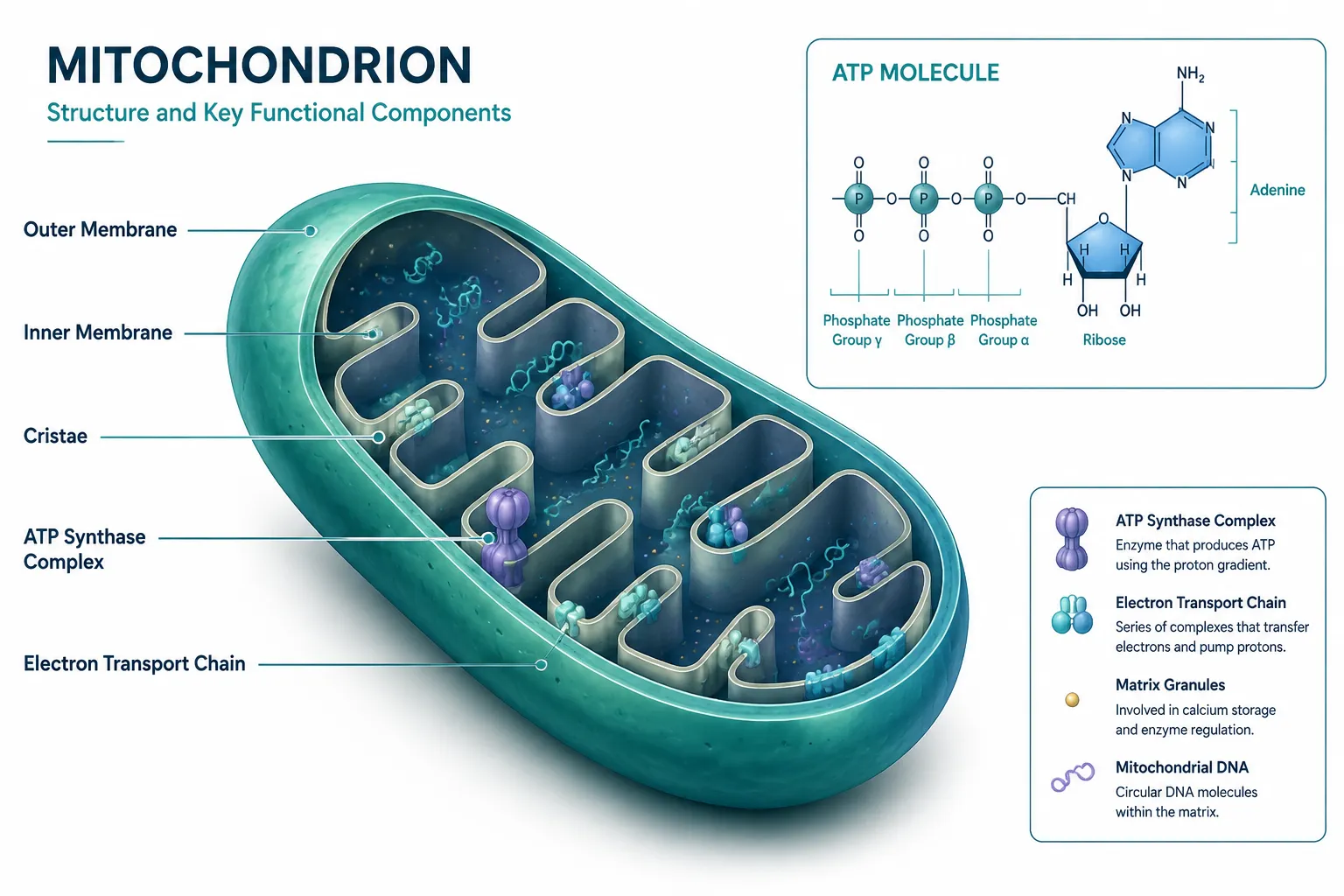
MOTS-c also qualifies as a mitokine: skeletal muscle releases it during exercise, after which it circulates to distant tissues and mimics aspects of exercise-induced metabolic benefit. Research in animal models shows that MOTS-c treatment significantly improves physical performance across young, middle-aged, and older subjects, suggesting a role in combating age-dependent decline.

For researchers exploring mitochondria-targeted compounds, the SS-31 mitochondrial research overview provides useful context on how different peptides approach mitochondrial membrane stabilization and energy efficiency.

MOTS-c at a glance:

Parameter Detail
Origin Mitochondrial DNA
Length 16 amino acids
Primary target AMPK via AICAR accumulation
Half-life Approximately 2 hours
Research dosage 5-10 mg subcutaneously, 2-3x weekly

5-Amino-1MQ: NNMT Inhibition and the Adipose Tissue Connection

5-Amino-1MQ: NNMT Inhibition and the Adipose Tissue Connection

Where MOTS-c acts through mitochondrial peptide signaling, 5-Amino-1MQ operates through a fundamentally different mechanism, making the two compounds complementary rather than redundant.

5-Amino-1MQ is a small-molecule inhibitor of nicotinamide N-methyltransferase (NNMT), an enzyme that is significantly overexpressed in the white adipose tissue of obese individuals. NNMT consumes methyl groups that would otherwise support NAD+ biosynthesis and healthy epigenetic regulation. By blocking NNMT, 5-Amino-1MQ frees up those methyl groups, shifts fat cell metabolism toward energy expenditure, and may reduce adipose tissue accumulation.
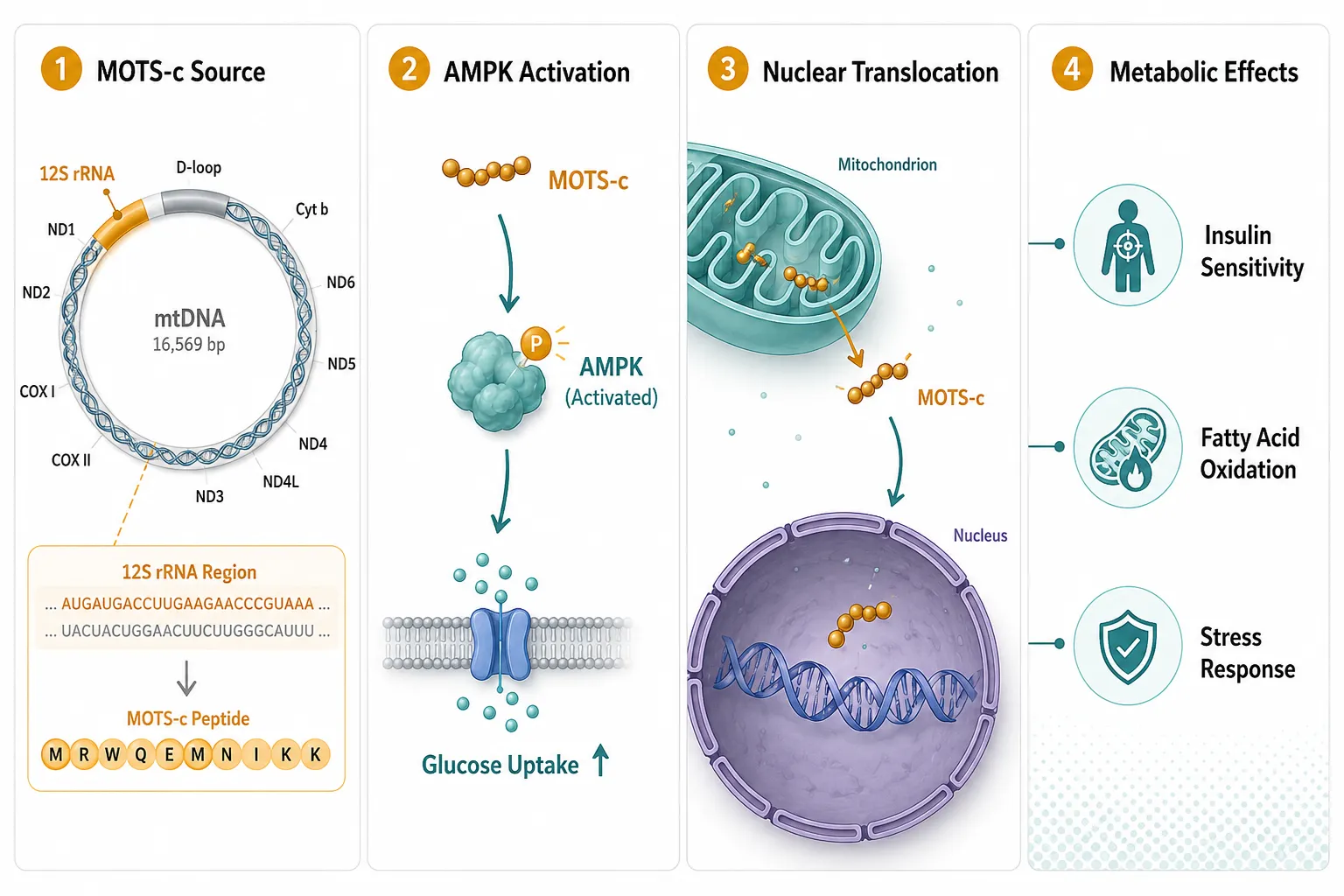
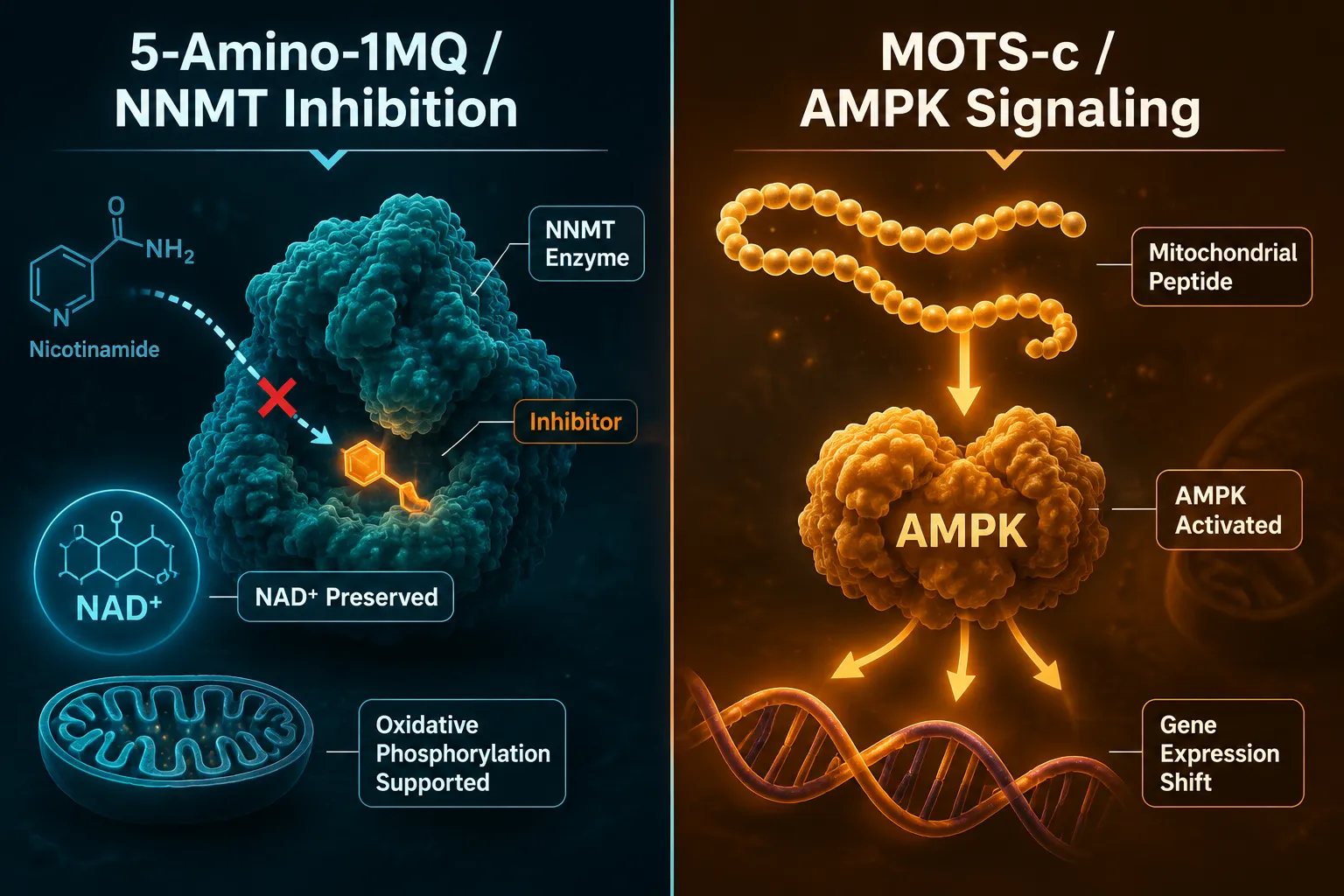
This is a meaningful distinction from classic metabolic drugs such as metformin or GLP-1 receptor agonists. Those agents primarily target receptor-level signaling or hepatic glucose output. 5-Amino-1MQ intervenes at the epigenetic and NAD+ metabolic level within the fat cell itself.

Researchers interested in NAD+ pathway modulation may also find value in reviewing the scientific evidence on NAD+ supplementation as a complementary framework.

Pharmacokinetic data for 5-Amino-1MQ suggest a half-life of roughly 12-16 hours, with research dosages typically ranging from 50-100 mg orally once or twice daily. Its oral bioavailability makes it logistically distinct from injectable peptides like MOTS-c.


Combining MOTS-c and 5-Amino-1MQ: Dual-Pathway Metabolic Research

The logic behind studying MOTS-c and 5-Amino-1MQ together rests on pathway complementarity. MOTS-c targets AMPK activation and mitochondrial stress signaling; 5-Amino-1MQ targets NNMT-driven epigenetic dysfunction in adipose tissue. Neither pathway fully overlaps, which is why combining them represents a rational research strategy for metabolic optimization.

"The shift from single-target metabolic drugs to multi-pathway peptide protocols reflects a broader understanding that energy dysregulation is never caused by one broken switch."

This dual approach also contrasts sharply with older pharmacological models. Classic drugs like statins or insulin sensitizers work downstream of the problem. MOTS-c and 5-Amino-1MQ work closer to the source, at the organelle and epigenome level, which is why researchers describe them as rewiring rather than merely adjusting cellular energy metabolism.

For broader context on how peptide combinations are being explored in research settings, the synergy of LL-37 and MOTS-c research overview offers a useful parallel example of multi-peptide protocol design.

Researchers working with mitochondria-targeted peptides may also consider reviewing SS-31 (elamipretide) research, which targets cardiolipin on the inner mitochondrial membrane, a third distinct mechanism that complements both MOTS-c and 5-Amino-1MQ approaches.

Additional resources on mitochondria-adjacent peptide research include:

  • SS-31 peptide research considerations
  • LL-37 versus SS-31 peptide benefit comparison

Key differences between MOTS-c, 5-Amino-1MQ, and classic metabolic drugs:

Feature MOTS-c 5-Amino-1MQ Classic Drug (e.g., Metformin)
Origin Mitochondrial peptide Synthetic small molecule Synthetic small molecule
Primary target AMPK / nucleus NNMT / adipose epigenome Hepatic glucose output
Route Subcutaneous Oral Oral
Metabolic layer Organelle signaling Epigenetic / NAD+ Receptor / enzyme

Conclusion

The science of Mitochondria, MOTS-c, and 5-Amino-1MQ: How Polypeptide Peptides Rewire Cellular Energy Metabolism represents a genuine shift in how researchers think about metabolic disease. Rather than patching downstream symptoms, these compounds address upstream dysfunction at the mitochondrial and epigenetic level.

Actionable next steps for researchers in 2026:

  1. Review the primary literature on MOTS-c's AMPK activation pathway and its nuclear translocation behavior under metabolic stress.
  2. Examine NNMT expression data in adipose tissue models before designing 5-Amino-1MQ protocols.
  3. Consider how mitochondria-targeted peptides like SS-31 might complement MOTS-c in multi-pathway research designs.
  4. Source research-grade compounds from verified, tested suppliers to ensure purity and traceability.
  5. Track both metabolic and physical performance markers across study timelines, given MOTS-c's documented effects on exercise capacity.

The mitochondrion is no longer just a powerhouse. It is a signaling organ, and the peptides it produces may be among the most important metabolic research targets of this decade.

https://www.puretestedpeptides.com/wp-content/uploads/2026/01/buy-peptides-online.jpg 0 0 Pure Tested https://www.puretestedpeptides.com/wp-content/uploads/2026/01/buy-peptides-online.jpg Pure Tested2026-07-07 13:15:532026-07-20 15:00:51Mitochondria, MOTS‑c, and 5‑Amino‑1MQ: How Polypeptide Peptides Rewire Cellular Energy Metabolism
Page 24 of 57«‹2223242526›»
×

Helpful Links

  • My account
  • Cart
  • Checkout
  • Refund and Returns Policy
  • Privacy Policy
  • SMS Privacy Policy
  • Login
  • My Account
  • Logout

USA Made Lab Tested Peptides

All products are sold for research, laboratory, or analytical purposes only, and are not for human consumption


Pure Tested Peptides is a chemical supplier. Pure Tested Peptides is not a compounding / chemical compounding facility as defined under 503A of the Federal Food, Drug, and Cosmetic act. Pure Tested Peptides is not an outsourcing facility as defined under 503B of the Federal Food, Drug, and Cosmetic act.

The statements made within this website have not been evaluated by the US Food and Drug Administration. The products we offer are not intended to diagnose, treat, cure or prevent any disease.

Human/Animal Consumption Prohibited. Laboratory/In-Vitro Experimental Use Only

Scroll to top Scroll to top Scroll to top