Call or Text 727-513-9780
  • Shopping Cart Shopping Cart
    0Shopping Cart
Pure Tested Peptides | America's most trusted Peptides for sale online
  • Peptides for sale
    • Oral Peptides for sale
      • Peptide Capsules for sale
      • BPC 157 Capsules 1000mcg
      • SLU-PP-332 Capsules | 1000 mcg
      • 5-Amino-1MQ 50mg Capsules
      • Tesofensine 500mcg
    • All Peptides for sale
    • Peptide Sprays
      • BPC 157 Nasal Spray Kit
      • BPC-157 TB500 Nasal Spray Kit
      • Semax Nasal Spray 10mg
      • Selank – Nasal Spray Kit – 10mg
      • Epithalon 50MG Nasal Spray Kit
      • Ipamorelin 10mg Nasal Spray
      • Klow Nasal Spray (BPC-157 + TB-500 + GHK-Cu + KPV) | 80mg
      • Hulk Nasal Spray Tesa / Ipa Blend 6/3 MG
      • Klow Nasal Spray
      • NAD + 500 mg Nasal Spray
      • PT-141 Nasal Spray Kit
    • GHRH Peptides
      • Ipa Peptides
      • CJC-1295 Peptides
        • CJC-1295 with DAC 5 mg
        • CJC-1295 without DAC 5 mg
        • CJC-1295 Ipa 10mg
      • Tesa Peptides
        • Tesa Peptide
        • Tesa 20 mg
    • GHK-Cu Peptides
      • All GHK-Cu Peptides
      • GHK-Cu 100mg
      • KLOW Peptide Blend – Buy KLOW blend online
    • BPC Peptides
      • All BPC Peptides
      • BPC-157
      • BPC-157 TB-500
      • BPC 157 capsules 1000mcg
    • SLU-PP-332 Peptides
      • All SLU-PP-332 Peptides
      • SLU-PP-332 5mg
    • GLP3 Peptides
      • GLP3-R
      • GLP3-R CAG 10mg
      • GLP3-R 20mg
    • PT-141 Peptides
      • PT-141 Peptides for sale
      • PT-141 10mg
      • PT-141 Nasal Spray
    • CAG Peptides
      • Lipo-C Peptide Blend
      • CAG 5mg
      • CAG 10mg
    • MOTS-C Peptides
      • MOTS-C Peptides for sale
      • MOTS-c peptide
      • MOTS-c 10mg *6 pack*
    • 5 Amino 1MQ Peptides
      • 5 Amino 1MQ Peptides for sale
      • 5-Amino-1MQ 50mg Capsules
      • 5-Amino-1MQ 5mg
    • Epithalon Peptides
      • Epithalon Peptides for sale
      • Epithalon 10mg
      • Epithalon 50mg
  • Shop
    • GLPs
      • 5-Amino-1MQ 50mg Capsules
      • 5-Amino-1MQ 5mg
      • GLP3-Reta
      • L-Carnitine 500mg/ml
      • Tesofensine 500mcg
      • SLU-PP-332 5mg
      • MOTS-c 10mg *6 pack*
    • Epithalon & BPC Peptides
      • Epithalon 10mg
      • Epithalon 50mg
      • BPC-157
      • BPC 157 capsules 1000mcg
      • BPC-157 TB-500
      • BPC-157 TB500 Nasal Spray Kit
      • BPC 157 Nasal Spray Kit
    • BPC TB-500 & NAD+ Peptides
      • NAD+ 500 mg
      • KLOW Peptide Blend – Buy KLOW blend online
      • GLOW Peptide Blend
      • TB 500 5mg
      • BPC 157 capsules 1000mcg – Supplement
      • BPC 157 Nasal Spray Kit
      • BPC-157
      • BPC-157 TB500 Nasal Spray Kit
      • BPC-157 TB-500
      • BPC 157 capsules 1000mcg
    • LL-37 Peptide
      • LL-37 10 mg
    • MOTS-C & Selank
      • MOTS-c peptide
      • Selank 10mg
    • GHK Peptides
      • GHK-Cu 100mg
      • GLOW Peptide Blend
      • KLOW Peptide Blend – Buy KLOW blend online
  • COAs
  • Wholesale
    • Wholesale Peptides for sale
  • PTP FAQ
  • Affiliates
    • Selank Peptide: Advanced Pharmacological Mechanisms Underlying Its Anxiolytic and Nootropic Effects in Research
      • 5-Amino-1MQ Peptide: Detailed Mechanisms of NNMT Inhibition and Its Impact on Cellular Metabolism Research
        • MOTS-C Peptide: Unraveling Its Role in Mitochondrial Dynamics and Energy Metabolism Research
          • Epithalon Peptide and Telomerase Regulation: Investigating Its Impact on Cellular Senescence and Lifespan Research Models
            • GLP2-T vs GLP2 Tirz Peptide: Understanding the Naming, Mechanistic Nuances, and Research Implications for Gut Health
      • Peptides and Polypeptides in Modern Pharmacology: What Research on Metoprolol, Prednisone, and Amlodipine Reveals
        • Polypeptide Peptides vs NSAIDs: What Naproxen and Diclofenac Teach Tissue-Repair Researchers About BPC‑157 and TB‑500
          • Peptides and Polypeptides in Endocrine Pharmacology: How GLP-1, GLP-2, and GLP-3 Retatrutide Differ From Classic Drugs Like Prednisone and Amlodipine
          • 5‑Amino‑1MQ Peptide and NNMT Inhibition: How It Compares With Statins Like Atorvastatin in Adipose and Lipid Metabolism Research
      • Enclomiphene, Estrogen Receptor Signaling, and Luteinizing Phase Biology: What Hormone Researchers Should Measure
        • Mesenchymal Stem Cells, BPC‑157, and GHK‑Cu: How Tissue Repair Peptides Compare With Classic NSAIDs Like Naproxen in Injury Models
          • Peptide Calculator Use Cases Beyond Growth Hormone: Working Through GLP‑3 Retatrutide, MOTS‑c, and BPC‑157 Research Dosing
        • Polypeptide Peptides in Endocrine and Metabolic Pharmacology: Lessons From Amlodipine, Prednisone, and Metoprolol
        • Peptides Calculator for Advanced Blends: Worked Examples for Tesamorelin, CJC‑1295, and Ipamorelin Stacks
          • Peptides and Polypeptides in Human Physiology: How Molecular Size Shapes Research Applications
            • Selank Peptide: Advanced Pharmacological Mechanisms Underlying Its Anxiolytic and Nootropic Effects in Research
          • 5-Amino-1MQ Peptide: Detailed Mechanisms of NNMT Inhibition and Its Impact on Cellular Metabolism Research
            • MOTS-C Peptide: Unraveling Its Role in Mitochondrial Dynamics and Energy Metabolism Research
              • Epithalon Peptide and Telomerase Regulation: Investigating Its Impact on Cellular Senescence and Lifespan Research Models
                • GLP2-T vs GLP2 Tirz Peptide: Understanding the Naming, Mechanistic Nuances, and Research Implications for Gut Health
                  • Peptides and Polypeptides in Endocrine Pharmacology: How GLP-1, GLP-2, and GLP-3 Retatrutide Differ From Classic Drugs Like Prednisone and Amlodipine
                    • Polypeptide Peptides vs NSAIDs: What Naproxen and Diclofenac Teach Tissue-Repair Researchers About BPC‑157 and TB‑500
                      • Peptides and Polypeptides in Modern Pharmacology: What Research on Metoprolol, Prednisone, and Amlodipine Reveals
                        • 5‑Amino‑1MQ Peptide and NNMT Inhibition: How It Compares With Statins Like Atorvastatin in Adipose and Lipid Metabolism Research
                        • Enclomiphene, Estrogen Receptor Signaling, and Luteinizing Phase Biology: What Hormone Researchers Should Measure
                        • Mesenchymal Stem Cells, BPC‑157, and GHK‑Cu: How Tissue Repair Peptides Compare With Classic NSAIDs Like Naproxen in Injury Models
                        • Peptide Calculator Use Cases Beyond Growth Hormone: Working Through GLP‑3 Retatrutide, MOTS‑c, and BPC‑157 Research Dosing
                        • Polypeptide Peptides in Endocrine and Metabolic Pharmacology: Lessons From Amlodipine, Prednisone, and Metoprolol
                        • Peptides Calculator for Advanced Blends: Worked Examples for Tesamorelin, CJC‑1295, and Ipamorelin Stacks
                        • Peptides and Polypeptides in Human Physiology: How Molecular Size Shapes Research Applications
                        • Selank Peptide: Advanced Pharmacological Mechanisms Underlying Its Anxiolytic and Nootropic Effects in Research
                        • MOTS-C Peptide: Unraveling Its Role in Mitochondrial Dynamics and Energy Metabolism Research
                        • Peptides and Polypeptides in Modern Pharmacology: What Research on Metoprolol, Prednisone, and Amlodipine Reveals
                        • Peptides and Polypeptides in Endocrine Pharmacology: How GLP-1, GLP-2, and GLP-3 Retatrutide Differ From Classic Drugs Like Prednisone and Amlodipine
                        • 5-Amino-1MQ Peptide: Detailed Mechanisms of NNMT Inhibition and Its Impact on Cellular Metabolism Research
                        • Mesenchymal Stem Cells, BPC‑157, and GHK‑Cu: How Tissue Repair Peptides Compare With Classic NSAIDs Like Naproxen in Injury Models
                        • Peptide Calculator Use Cases Beyond Growth Hormone: Working Through GLP‑3 Retatrutide, MOTS‑c, and BPC‑157 Research Dosing
                        • GLP2-T vs GLP2 Tirz Peptide: Understanding the Naming, Mechanistic Nuances, and Research Implications for Gut Health
                        • Polypeptide Peptides in Endocrine and Metabolic Pharmacology: Lessons From Amlodipine, Prednisone, and Metoprolol
                        • Polypeptide Peptides vs NSAIDs: What Naproxen and Diclofenac Teach Tissue-Repair Researchers About BPC‑157 and TB‑500
                        • Peptides and Polypeptides in Human Physiology: How Molecular Size Shapes Research Applications
                        • Peptides Calculator for Advanced Blends: Worked Examples for Tesamorelin, CJC‑1295, and Ipamorelin Stacks
                        • 5‑Amino‑1MQ Peptide and NNMT Inhibition: How It Compares With Statins Like Atorvastatin in Adipose and Lipid Metabolism Research
                        • Enclomiphene, Estrogen Receptor Signaling, and Luteinizing Phase Biology: What Hormone Researchers Should Measure
                        • Epithalon Peptide and Telomerase Regulation: Investigating Its Impact on Cellular Senescence and Lifespan Research Models
                        • Best research protocol Klow blend
                        • best time to take BPC-157
                        • best time to take DSIP (Delta Sleep Inducing Peptide)
                        • best time to take CJC-1295
                        • best time to take AOD-9604
                        • best time to take Follistatin 344
                        • best time to take Ipamorelin
                        • best time to take MK-677 (Ibutamoren)
                        • best time to take Ligandrol (LGD-4033) — research compound
                        • best time to take Ostarine (MK-2866) — research compound
                        • best time to take GHK-CU
                        • best time to take TB-500
                        • best time to take MOTS-c
                        • best time to take Semax
                        • best time to take RAD-140 (Testolone) — research compound
                        • best time to take Thymosin Alpha-1
                        • best time to take PEG-MGF
                        • Biolife Plasma, Octapharma Plasma, and Research Peptides: How Plasma Donation Labs Differ From Peptide Suppliers
                        • best time to take YK-11 — research compound
                        • best time to take PT-141 (Bremelanotide)
                        • Best research protocol Klow blend
  • Contact
    • Contact Customer Service
    • Text Customer Support
  • About US
  • Shop all peptides
  • Affiliate Program
    • Affiliate Signup
  • Login / Register Login / Register Page Link Login / Register Page Link
  • Click to open the search input field Click to open the search input field Search
  • Menu Menu

Tag Archive for: 5-amino-1mq

The Role of 5-Amino-1MQ Peptide in Mitochondrial Function and Metabolic Pathways Research

The Role of 5-Amino-1MQ Peptide in Mitochondrial Function and Metabolic Pathways Research

July 2, 2026/0 Comments/by Pure Tested

Mitochondrial dysfunction is now linked to more than 50 chronic diseases, yet the molecular tools available to study its root causes remain limited. That gap is precisely why the role of 5-Amino-1MQ peptide in mitochondrial function and metabolic pathways research has attracted growing scientific attention. This small-molecule compound targets a specific enzyme pathway that sits at the intersection of cellular energy production and metabolic regulation, making it a compelling subject for researchers studying obesity, insulin resistance, and age-related metabolic decline.

Key Takeaways

  • 5-Amino-1MQ is a selective inhibitor of the enzyme nicotinamide N-methyltransferase (NNMT), which regulates NAD+ availability and metabolic rate.
  • By inhibiting NNMT, the compound may increase intracellular NAD+ levels, supporting mitochondrial energy production.
  • Preclinical research suggests 5-Amino-1MQ may reduce fat cell size and improve markers of metabolic health.
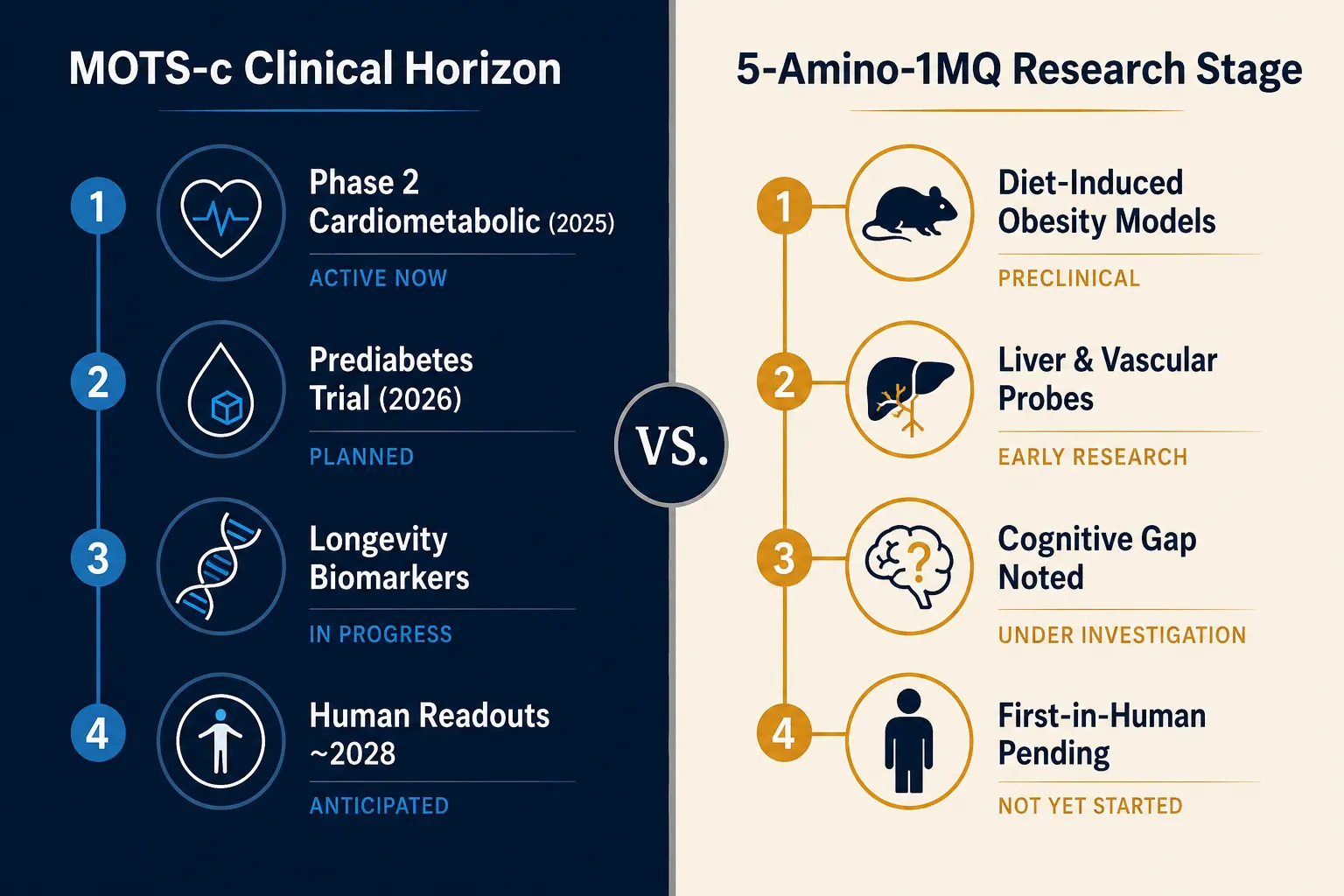
  • The compound remains in the research phase as of 2026, with no approved human clinical applications.
  • Its mechanism overlaps with other metabolically active peptides, making it relevant to broader longevity and energy research.

How 5-Amino-1MQ Targets NNMT and Influences Mitochondrial Activity

How 5-Amino-1MQ Targets NNMT and Influences Mitochondrial Activity

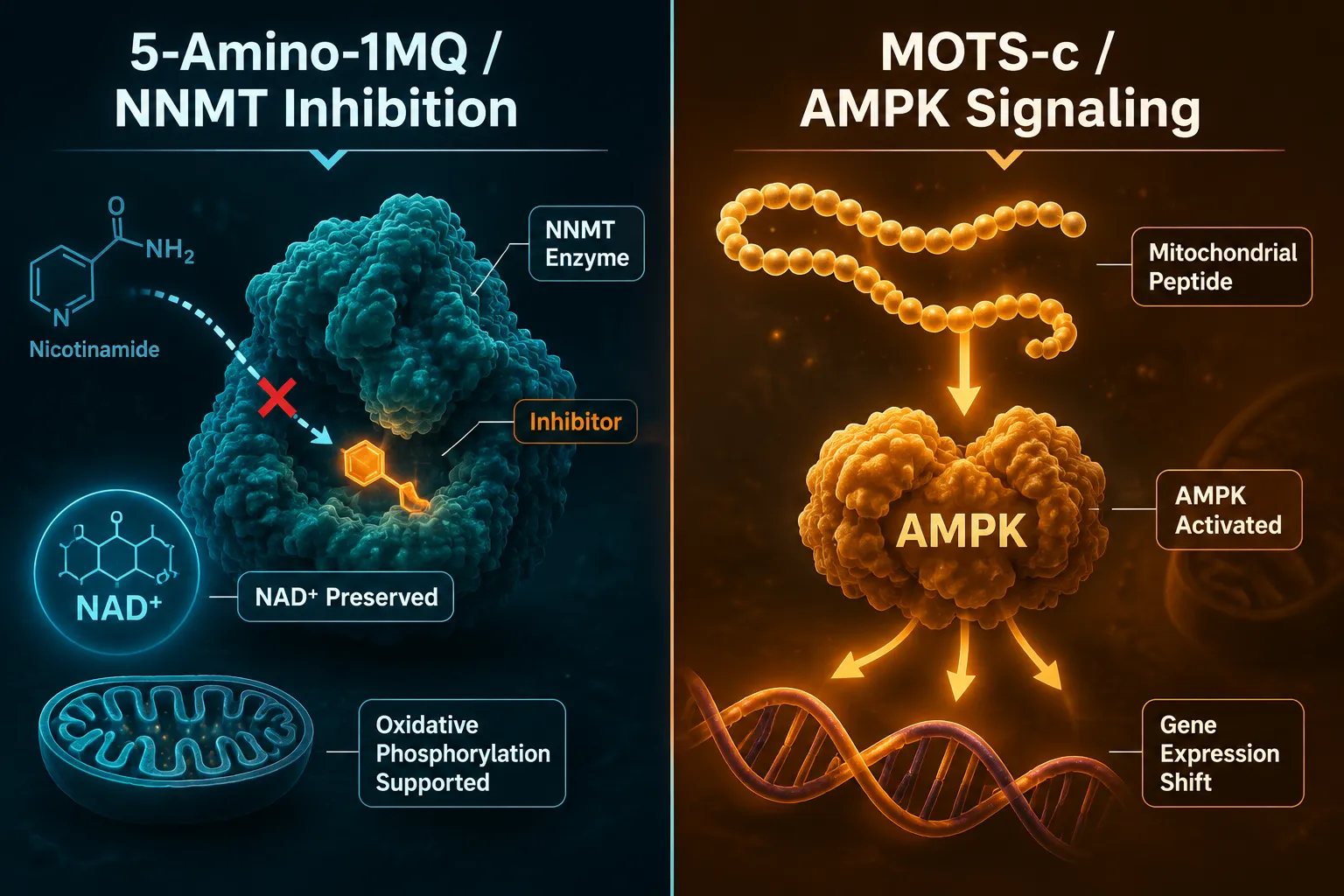
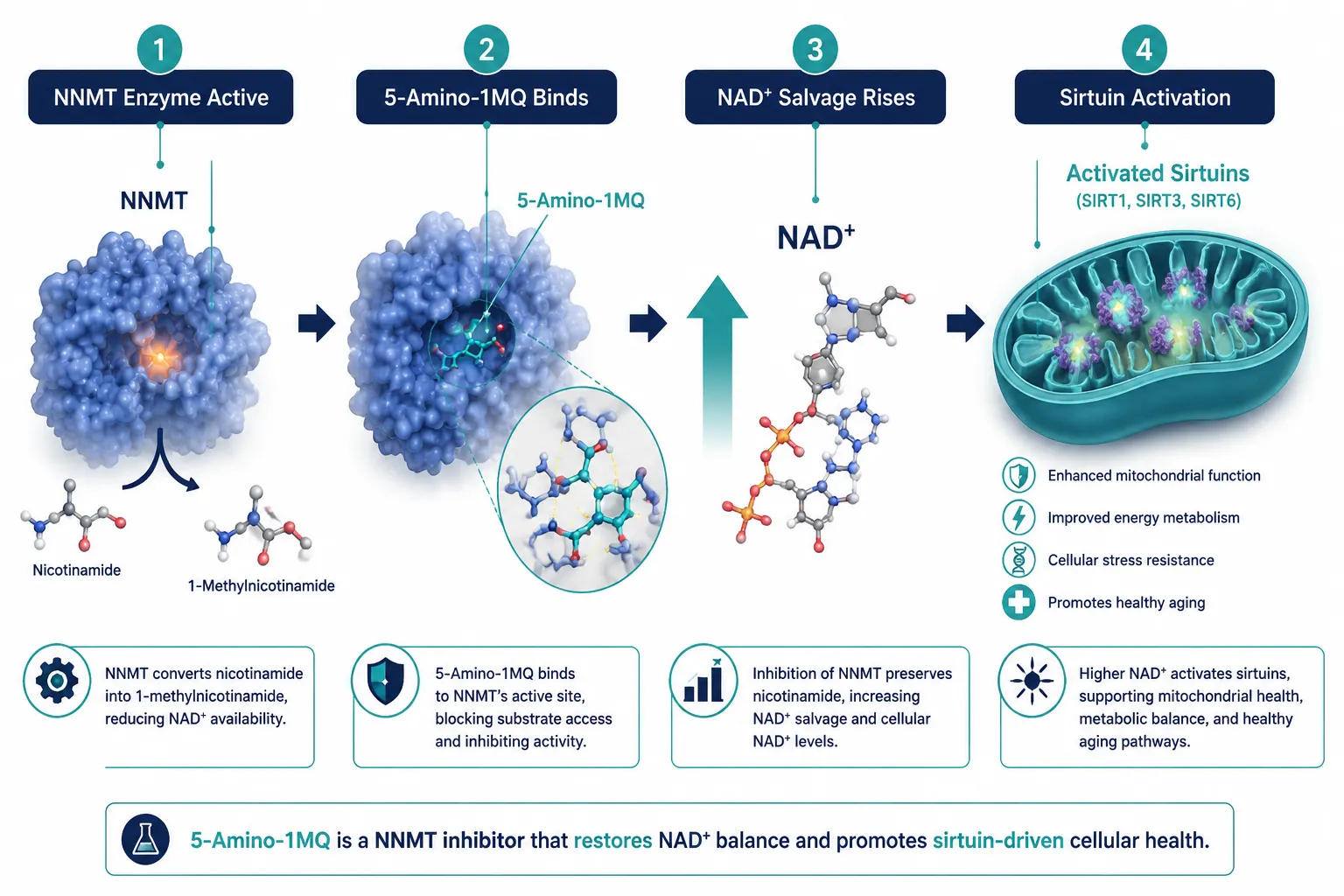
At the core of the role of 5-Amino-1MQ peptide in mitochondrial function and metabolic pathways research is its action on nicotinamide N-methyltransferase (NNMT). This enzyme methylates nicotinamide, a precursor to NAD+, effectively removing it from the pool available for cellular energy metabolism.

When NNMT is overexpressed — a common finding in adipose tissue and certain metabolic disease states — NAD+ availability drops. Lower NAD+ levels impair the function of sirtuins and PARP enzymes, both of which are essential regulators of mitochondrial biogenesis and DNA repair.

5-Amino-1MQ acts as a selective, cell-permeable NNMT inhibitor. By blocking this enzyme, the compound helps preserve nicotinamide availability, which in turn supports NAD+ synthesis and the downstream processes that depend on it.

Key mitochondrial effects observed in preclinical models include:

Effect Mechanism
Increased NAD+ flux NNMT inhibition preserves nicotinamide substrate
Enhanced oxidative phosphorylation Greater electron transport chain activity
Improved mitochondrial membrane potential Stabilized inner membrane function
Reduced reactive oxygen species (ROS) Better redox balance in metabolically stressed cells

This mechanistic profile places 5-Amino-1MQ alongside other research compounds studied for mitochondrial support, such as those explored in SS-31 peptide research considerations, which also focuses on inner mitochondrial membrane stabilization.


Metabolic Pathway Implications: Fat Metabolism and Energy Expenditure

Metabolic Pathway Implications: Fat Metabolism and Energy Expenditure

Beyond its direct mitochondrial effects, the role of 5-Amino-1MQ peptide in mitochondrial function and metabolic pathways research extends into adipose tissue biology and systemic energy regulation.

Preclinical studies in diet-induced obesity models have shown that NNMT inhibition with 5-Amino-1MQ is associated with:

  • Reduced adipocyte hypertrophy — fat cells become smaller without significant changes in cell number
  • Lower body weight gain — even under high-fat dietary conditions
  • Improved insulin sensitivity markers — suggesting downstream effects on glucose metabolism
  • Elevated resting energy expenditure — consistent with enhanced mitochondrial activity

These findings are particularly relevant when viewed alongside research on other metabolically active peptides. For instance, MOTS-c and metabolic flexibility research explores a mitochondria-derived peptide with overlapping interests in energy substrate switching and insulin signaling. Similarly, longevity peptide research contextualizes how compounds that influence NAD+ metabolism may intersect with aging biology.

"NNMT inhibition represents a novel strategy for targeting the metabolic inefficiencies that accumulate in adipose tissue during chronic energy surplus."

The compound's ability to influence both mitochondrial function and fat cell metabolism makes it a dual-pathway research tool — rare among small molecules at this stage of investigation.

Researchers interested in related lipid mobilization mechanisms may also find value in reviewing TESA lipid mobilization research for comparative pathway context.


Current Research Status and Broader Context in 2026

Current Research Status and Broader Context in 2026

As of 2026, 5-Amino-1MQ remains firmly in the preclinical research phase. No human clinical trials have been completed or approved. All data supporting its metabolic and mitochondrial effects come from in vitro cell studies and rodent models.

This distinction matters. Researchers and institutions working with this compound do so strictly within controlled laboratory settings. The compound is not approved for therapeutic use in any jurisdiction.

That said, the scientific rationale is well-grounded. The NNMT-NAD+ axis is a validated target in metabolic disease research, and the specificity of 5-Amino-1MQ for this pathway gives it a cleaner mechanistic profile than broader NAD+ precursor supplementation strategies.

For those building a broader picture of metabolic and mitochondrial research compounds, the following resources provide useful comparative context:

  • Humanin cellular protection research — another mitochondria-derived peptide with cytoprotective properties
  • Epithalon vs. NAD+ evidence — a direct comparison of NAD+-adjacent research strategies
  • NAD+ scientific evidence overview — foundational context for understanding the NAD+ research landscape

Understanding peptide purity and compound integrity is also essential in this field. Reviewing peptide purity testing protocols helps researchers evaluate the quality standards relevant to any preclinical compound.


Conclusion

The role of 5-Amino-1MQ peptide in mitochondrial function and metabolic pathways research is defined by a precise and scientifically grounded mechanism: selective NNMT inhibition that preserves NAD+ availability, supports mitochondrial energy output, and reduces metabolic dysfunction in preclinical models.

Actionable next steps for researchers and institutions:

  1. Review the current preclinical literature on NNMT inhibition and NAD+ flux before designing study protocols.
  2. Compare 5-Amino-1MQ's mechanism against related mitochondrial research compounds such as SS-31, MOTS-c, and Humanin to identify complementary or overlapping pathways.
  3. Ensure all research-grade compounds are sourced with verified purity documentation.
  4. Monitor for emerging clinical trial registrations, as the preclinical data profile may support future Phase I investigation.

This compound represents a focused, mechanistically coherent tool for advancing the understanding of mitochondrial health and metabolic disease — two of the most pressing research priorities in 2026.

https://www.puretestedpeptides.com/wp-content/uploads/2026/07/The-Role-of-5-Amino-1MQ-Peptide-in-Mitochondrial-Function-and-Metabolic-Pathways-Research.png 1024 1536 Pure Tested https://www.puretestedpeptides.com/wp-content/uploads/2026/01/buy-peptides-online.jpg Pure Tested2026-07-02 13:07:402026-07-20 15:01:16The Role of 5-Amino-1MQ Peptide in Mitochondrial Function and Metabolic Pathways Research
Slupp332 with 5-Amino-1MQ: Investigating Synergistic Metabolic Effects in Cellular Models

Slupp332 with 5-Amino-1MQ: Investigating Synergistic Metabolic Effects in Cellular Models

June 30, 2026/0 Comments/by Pure Tested

A 34% rise in cellular NAD+ concentration within just 48 hours — that single preclinical data point hints at why researchers are now pairing two distinct metabolic compounds to explore what neither can achieve alone. The study of Slupp332 with 5-Amino-1MQ: Investigating Synergistic Metabolic Effects in Cellular Models has become one of the more compelling areas of preclinical metabolic research in 2026, drawing attention for its dual-pathway approach to energy regulation and fat metabolism.

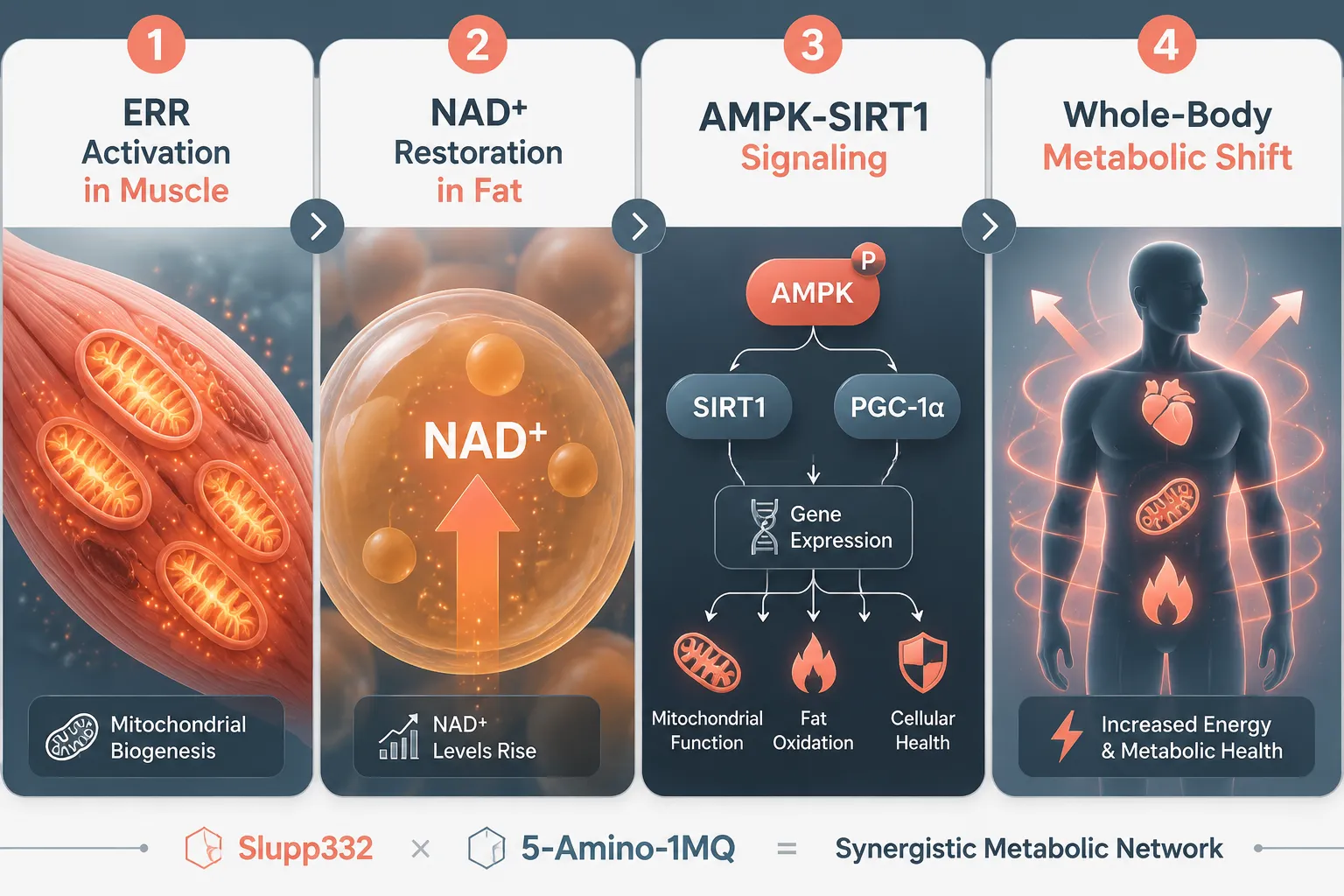
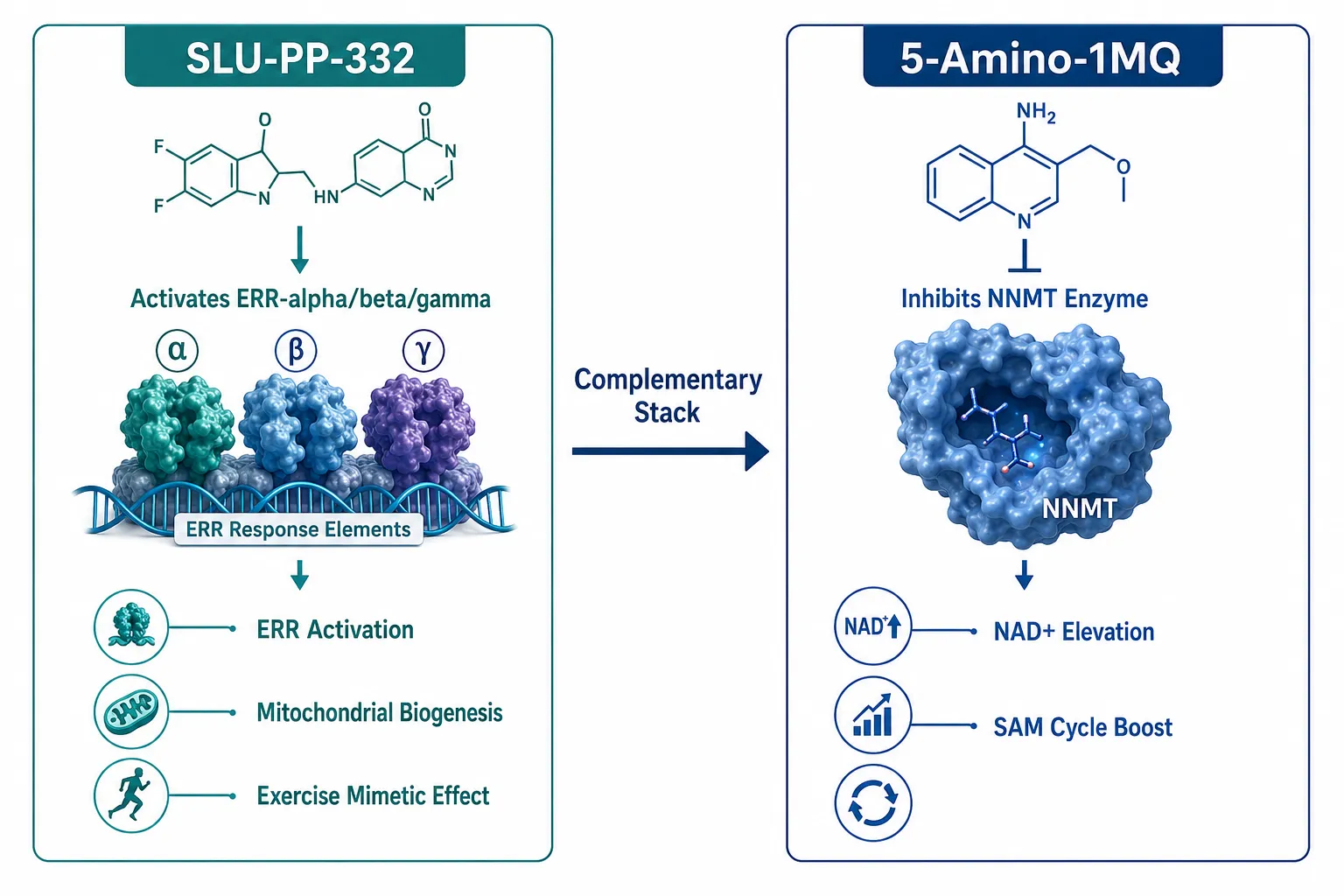
Detailed () scientific diagram showing two distinct molecular pathway arrows — one labeled ERR-alpha/gamma activation

Key Takeaways

  • Slupp332 activates estrogen-related receptors (ERRa/g), promoting mitochondrial biogenesis and fatty acid oxidation.
  • 5-Amino-1MQ inhibits NNMT, raising intracellular NAD+ levels and boosting mitochondrial function.
  • Combining both compounds targets complementary pathways, potentially amplifying metabolic outcomes beyond what either achieves alone.
  • Preclinical models show meaningful reductions in body weight and white adipose tissue with Slupp332, and significant NAD+ elevation with 5-Amino-1MQ.
  • As of 2026, both remain research-stage compounds with no approved human therapeutic use.

How Each Compound Works at the Cellular Level

Understanding the combination starts with understanding each compound individually.

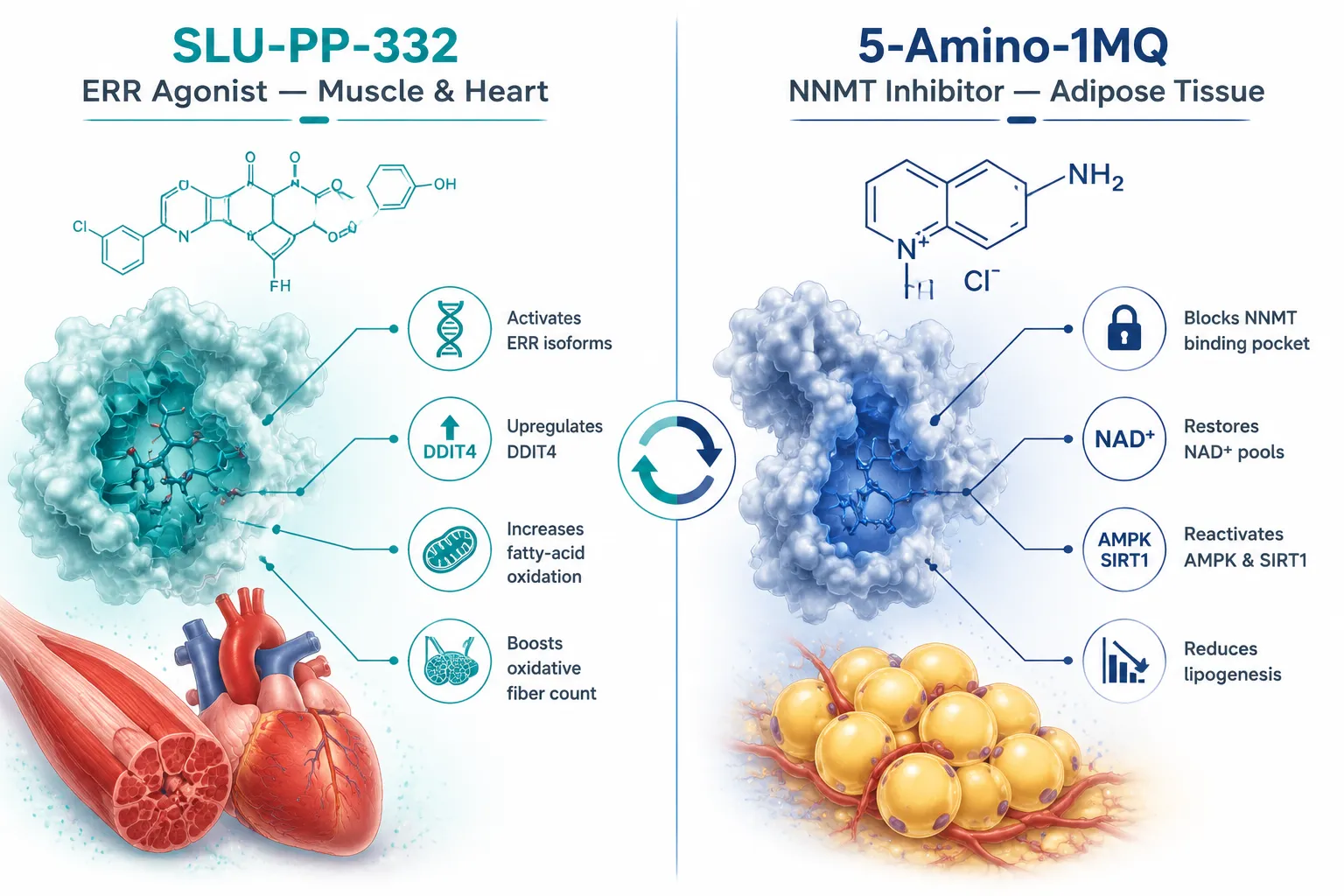
5-Amino-1MQ is a selective inhibitor of nicotinamide N-methyltransferase (NNMT), an enzyme that consumes SAM (S-adenosylmethionine) and reduces NAD+ availability. By blocking NNMT, 5-Amino-1MQ preserves NAD+ pools within the cell. Elevated NAD+ then fuels sirtuin activity — particularly SIRT1 — which regulates mitochondrial efficiency, glucose homeostasis, and cellular stress responses. For researchers exploring NAD+ and its scientific evidence base, this mechanism is well-documented in preclinical settings.

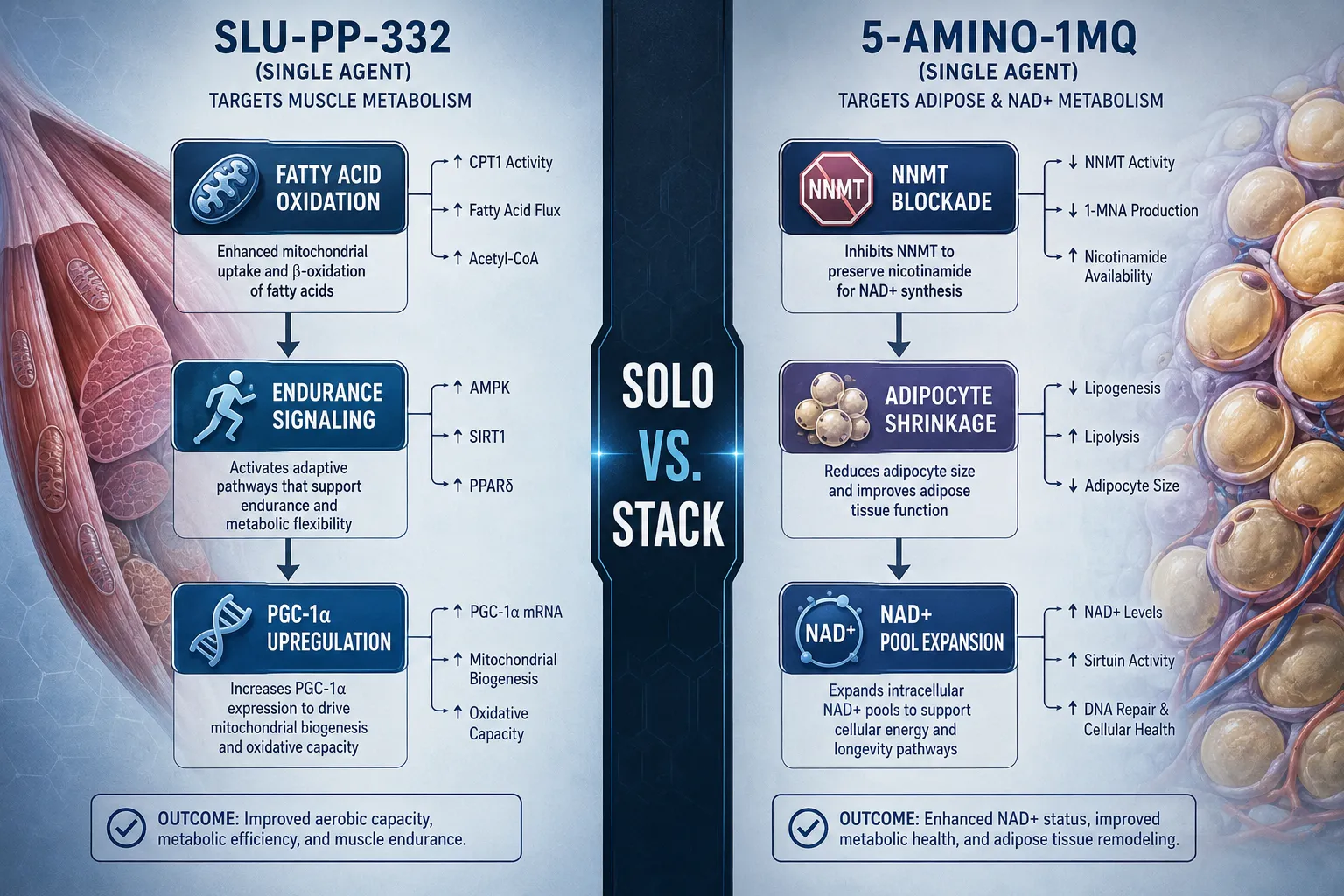
Slupp332 (SLU-PP-332) takes a different route. It acts as an agonist of estrogen-related receptors ERRa and ERRg — nuclear receptors that govern the transcription of genes tied to mitochondrial biogenesis and fatty acid oxidation. In diet-induced obese mouse models, Slupp332 produced an 18-24% reduction in body weight and a 30-35% decrease in white adipose tissue mass over a 12-28 day period. Detailed background on this compound is available through the SLU-PP-332 research overview.

Compound Primary Target Key Cellular Effect
5-Amino-1MQ NNMT inhibition Raises NAD+, activates SIRT1
Slupp332 ERRa/g agonism Drives mitochondrial biogenesis, fat oxidation

Slupp332 with 5-Amino-1MQ: Investigating Synergistic Metabolic Effects in Cellular Models

The scientific rationale for combining these two compounds rests on pathway complementarity. NNMT inhibition raises NAD+ and activates sirtuins, while ERR agonism drives the structural and transcriptional machinery needed for new mitochondria. Together, they address both the fuel supply (NAD+) and the engine capacity (mitochondrial mass).

"Targeting distinct but complementary metabolic nodes may produce additive or synergistic effects that single-compound approaches cannot replicate."

Preclinical evidence supports this hypothesis. When both pathways are engaged simultaneously, models show amplified mitochondrial activity and energy expenditure compared to either compound used alone. This is consistent with broader research themes around mitochondrial longevity and cellular energy, which increasingly point to multi-target strategies as more effective than single-pathway interventions.

Researchers studying related metabolic peptides such as MOTS-c for metabolic flexibility will recognize the parallel logic: compounds that work on mitochondrial signaling often show greater effect when combined with agents that enhance substrate availability.

Slupp332 with 5-Amino-1MQ: Investigating Synergistic Metabolic Effects in Cellular Models


Research Limitations and What Comes Next

Despite promising preclinical signals, significant gaps remain in the research landscape for Slupp332 with 5-Amino-1MQ: Investigating Synergistic Metabolic Effects in Cellular Models.

Current limitations include:

  • No human clinical trials on the combined use of these compounds
  • Existing data is limited to cellular and animal models
  • Optimal dosing ratios for combination use are not established
  • Long-term safety profiles remain unknown

Both compounds are classified as research-stage molecules as of 2026. Neither has received regulatory approval for human therapeutic use. This places them in a similar category to other investigational metabolic agents, such as those discussed in AOD-9604 research themes and ipamorelin muscle and fat research.

Researchers sourcing these compounds for controlled studies should prioritize verified quality standards. Reviewing quality testing protocols before procurement is an important step in maintaining experimental integrity.

Research Limitations and What Comes Next


Conclusion

The combination of Slupp332 and 5-Amino-1MQ represents a mechanistically sound dual-pathway approach to metabolic research. By pairing ERR agonism with NNMT inhibition, researchers can probe complementary aspects of mitochondrial function and energy metabolism within the same cellular model. Preclinical data — including the 34% NAD+ increase and significant adipose tissue reductions — provide a credible foundation for continued investigation.

Actionable next steps for researchers:

  1. Review existing cellular model data before designing combination studies.
  2. Establish baseline NAD+ and mitochondrial markers to measure compound interaction effects accurately.
  3. Consult verified sources for compound purity and testing documentation.
  4. Monitor emerging literature, as 2026 is an active year for metabolic compound research.
  5. Consider parallel investigation of complementary compounds such as MOTS-c to build a broader metabolic research framework.

The science is early, but the mechanistic logic is compelling. Rigorous cellular model studies remain the essential next step.

https://www.puretestedpeptides.com/wp-content/uploads/2026/06/Slupp332-with-5-Amino-1MQ-Investigating-Synergistic-Metabolic-Effects-in-Cellular-Models.png 1024 1536 Pure Tested https://www.puretestedpeptides.com/wp-content/uploads/2026/01/buy-peptides-online.jpg Pure Tested2026-06-30 13:03:442026-07-20 15:01:54Slupp332 with 5-Amino-1MQ: Investigating Synergistic Metabolic Effects in Cellular Models
Adenosine Triphosphate (ATP), Cell Energy, and Peptide Signaling: Where MOTS-c, 5-Amino-1MQ, and GLP-3 Retatrutide Fit

Adenosine Triphosphate (ATP), Cell Energy, and Peptide Signaling: Where MOTS-c, 5-Amino-1MQ, and GLP-3 Retatrutide Fit

June 23, 2026/0 Comments/by Pure Tested

Every contraction of a muscle fiber, every nerve impulse, and every protein folded inside a cell depends on a single molecule: adenosine triphosphate. Without a steady ATP supply, cellular signaling collapses within seconds. That foundational fact is exactly why researchers studying Adenosine Triphosphate (ATP), cell energy, and peptide signaling have grown so interested in compounds like MOTS-c, 5-Amino-1MQ, and GLP-3 Retatrutide — each one interacts with ATP-related pathways in a distinct and measurable way.

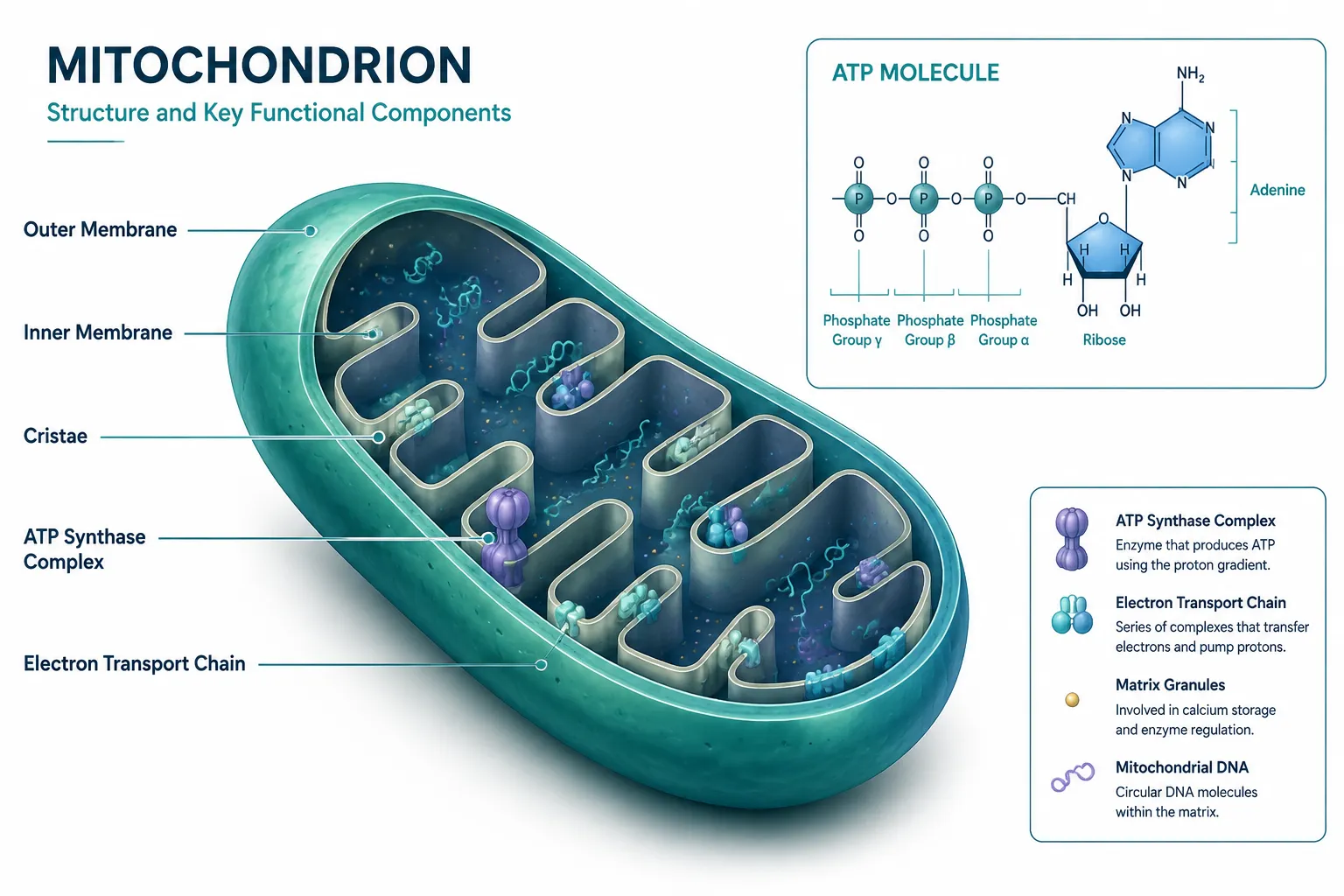
Detailed () scientific illustration showing a cross-section of a human mitochondrion with labeled ATP synthase complexes,

Key Takeaways

  • ATP is the universal energy currency of the cell; disruptions in its production underlie most metabolic diseases.
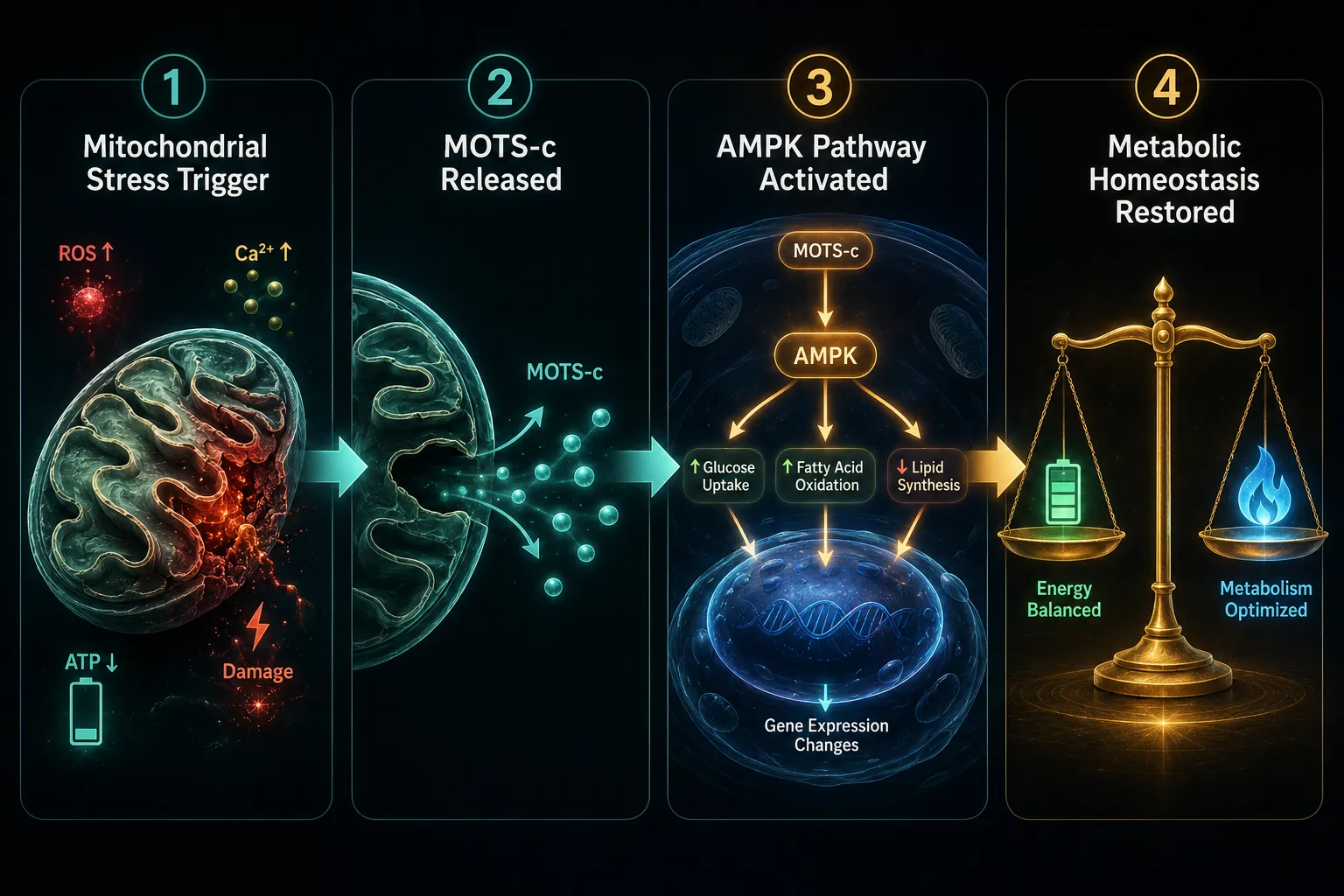
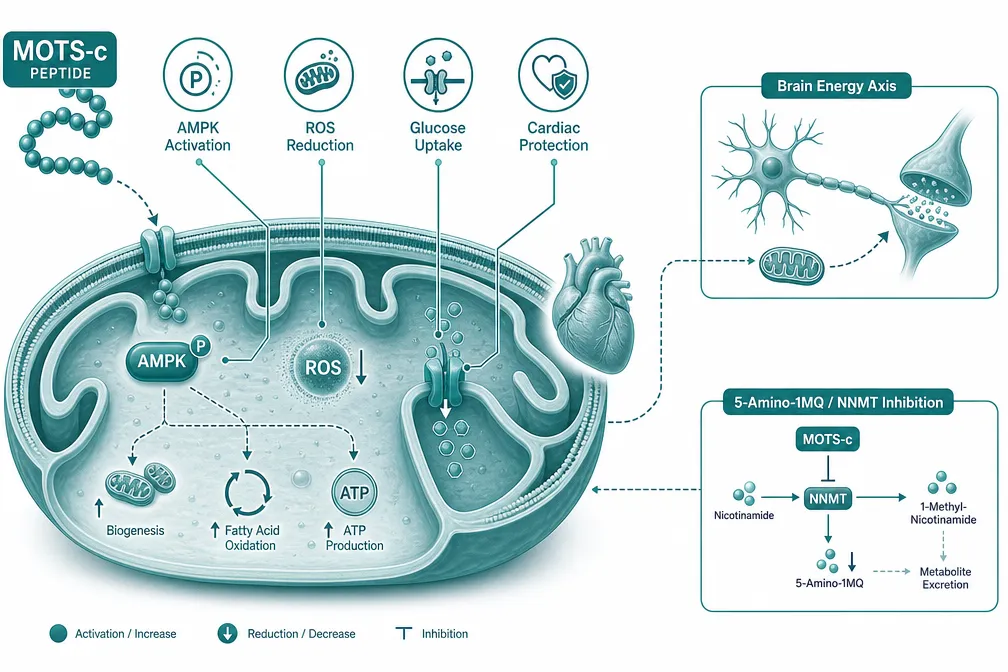
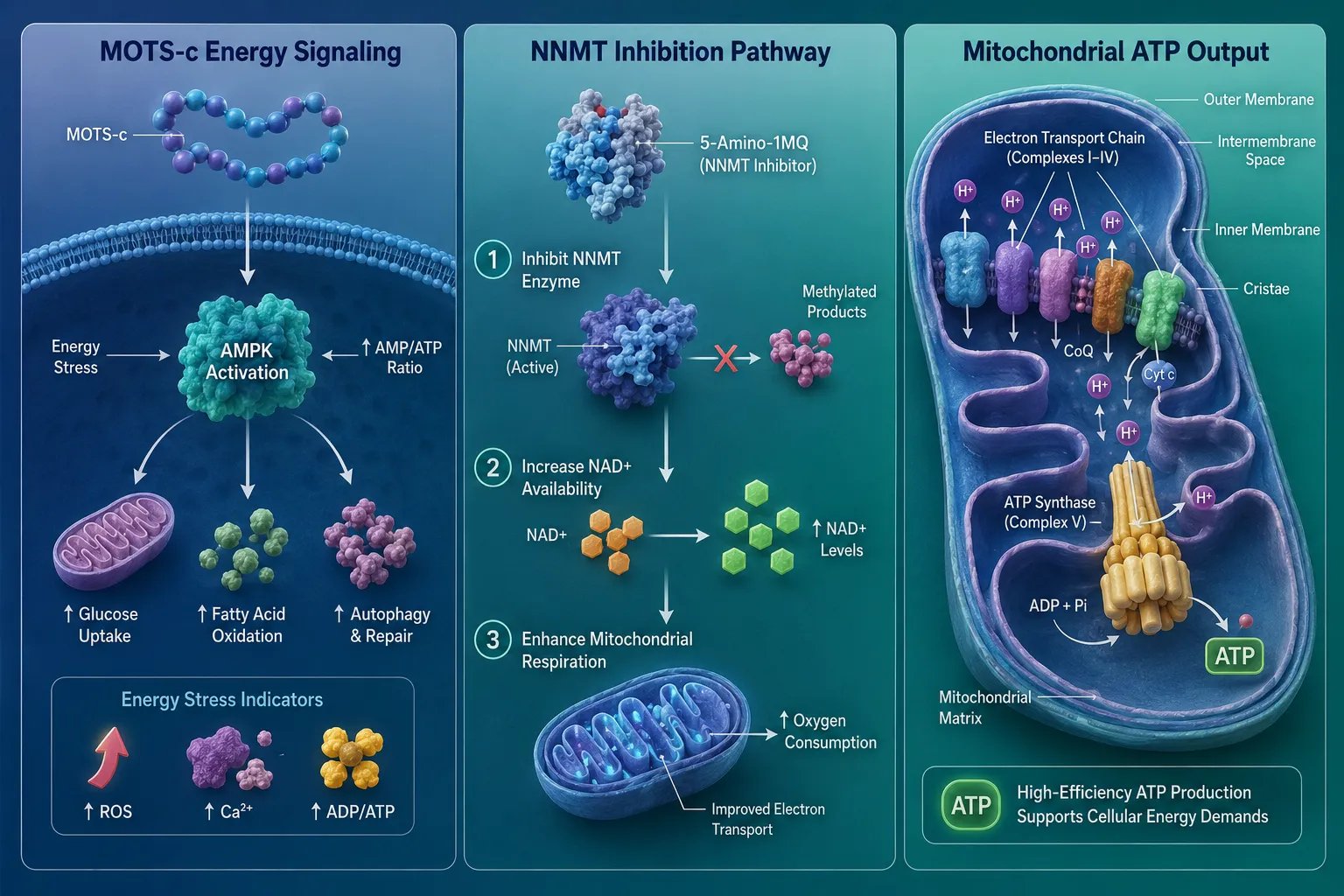
  • MOTS-c is a mitochondrial-encoded peptide that shifts the AMP/ATP ratio to activate AMPK, the cell's master energy sensor.
  • 5-Amino-1MQ raises intracellular nicotinamide levels by blocking NNMT, indirectly supporting NAD+ and ATP synthesis.
  • Retatrutide (GLP-3) is a triple agonist targeting GIP, GLP-1, and glucagon receptors, driving energy expenditure through hormonal signaling rather than direct mitochondrial action.
  • These three compounds represent complementary layers of metabolic intervention — mitochondrial, enzymatic, and hormonal.

The ATP Foundation: Why Cell Energy Metabolism Matters

ATP is built inside mitochondria through oxidative phosphorylation. Electrons stripped from glucose and fatty acids travel down the electron transport chain, and the resulting proton gradient powers ATP synthase. When this process is efficient, cells maintain a high ATP/AMP ratio, signaling an energy-replete state. When it falters — due to aging, obesity, or oxidative damage — the AMP/ATP ratio rises, triggering stress-response pathways.

Key facts about ATP biology:

Parameter Detail
ATP half-life in a cell Less than 1 minute
Daily ATP turnover (human body) Roughly equal to body weight
Primary production site Inner mitochondrial membrane
Master energy sensor activated by low ATP AMP-activated protein kinase (AMPK)

AMPK is the pivot point. When AMPK detects a falling ATP level, it switches on catabolic pathways — glucose uptake, fatty acid oxidation, mitochondrial biogenesis — and switches off energy-expensive anabolic processes. This is precisely the pathway that several modern peptides are designed to influence.

Researchers exploring mitochondrial longevity and energy research have documented how restoring mitochondrial efficiency can cascade into broad metabolic improvements, making the ATP-AMPK axis a high-value research target.


MOTS-c and 5-Amino-1MQ: Peptide Signaling at the Mitochondrial Level

Understanding Adenosine Triphosphate (ATP), cell energy, and peptide signaling requires a close look at how MOTS-c operates at the source of energy production.

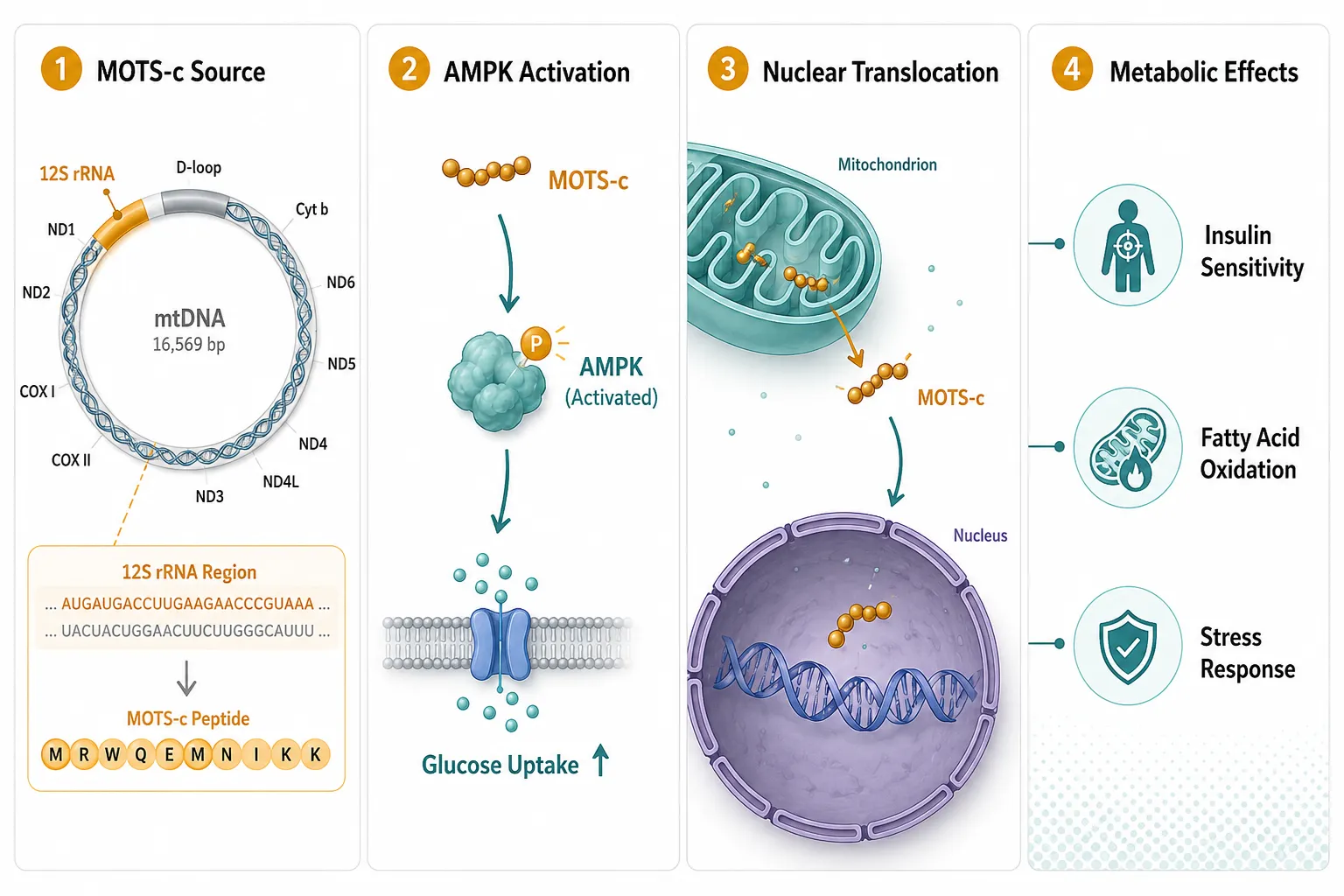
MOTS-c is a 16-amino-acid peptide encoded not by nuclear DNA but by the mitochondrial genome itself — specifically within the 12S rRNA gene. Discovered in 2015, it was the first mitochondrial-encoded peptide shown to act like a hormone throughout the body, establishing mitochondria as true endocrine organelles.

How MOTS-c influences ATP pathways:

  • Inhibits the folate cycle and de novo purine biosynthesis
  • This inhibition raises the intracellular AMP/ATP ratio
  • The elevated ratio activates AMPK
  • AMPK then promotes glucose uptake, fatty acid oxidation, and new mitochondrial growth

In preclinical models, MOTS-c has shown protective effects in metabolic syndrome, aging, and ischemia-reperfusion injury. Its ability to reduce oxidative stress while enhancing glycolysis positions it as a compelling subject in MOTS-c metabolic flexibility research.

"MOTS-c essentially teaches cells to respond to energy stress more efficiently — a biological adaptation with broad implications for metabolic disease research."

5-Amino-1MQ approaches the same problem from a different angle. It is a small-molecule inhibitor of nicotinamide N-methyltransferase (NNMT), an enzyme that consumes nicotinamide — the precursor to NAD+. By blocking NNMT, 5-Amino-1MQ raises intracellular nicotinamide levels, which supports NAD+ synthesis. Higher NAD+ availability feeds directly into the electron transport chain, improving ATP output. Preclinical models have shown weight reduction and enhanced energy metabolism with this compound. For researchers interested in the NAD+/ATP connection, the NAD+ scientific evidence overview provides useful context.


GLP-3 Retatrutide: Hormonal Signaling and Energy Expenditure

Where MOTS-c and 5-Amino-1MQ act at the cellular and enzymatic level, Retatrutide operates through a hormonal signaling cascade — yet the downstream result still connects to Adenosine Triphosphate (ATP), cell energy, and peptide signaling outcomes.

Retatrutide is a synthetic 39-amino-acid peptide built on a GIP backbone, conjugated to a C20 fatty diacid that enables albumin binding and extends its half-life to approximately six days — supporting once-weekly dosing. It functions as a triple agonist, activating:

  1. GIP receptor (highest potency, EC50 = 0.064 nM)
  2. GLP-1 receptor (EC50 = 0.775 nM)
  3. Glucagon receptor (EC50 = 5.79 nM)

This distinguishes it from semaglutide (single GLP-1 agonist) and tirzepatide (dual GIP/GLP-1 agonist). By simultaneously activating all three receptors, Retatrutide reduces food intake, augments insulin secretion, and increases energy expenditure through glucagon-driven thermogenesis.

Phase 2 and Phase 3 clinical trial highlights:

  • Up to 24.2% body weight reduction over 48 weeks (Phase 2)
  • Up to 28.7% body weight reduction over 68 weeks (Phase 3 preliminary data)
  • HbA1c reductions of up to 2.0% in Phase 3 trials
  • Active Phase 3 programs: TRIUMPH (obesity), TRANSCEND (type 2 diabetes), SYNERGY (MASLD/MASH)

Common adverse effects include nausea, vomiting, and gastrointestinal discomfort, typically dose-dependent. Researchers can review the GLP-3 Retatrutide research profile for a deeper look at its mechanism and trial data.

For those studying how GLP-1-class compounds interact with cagrilintide and other metabolic agents, the cagrilintide and GLP-1 synergy page offers relevant comparative data.


Comparing the Three Compounds: Complementary Layers

Compound Primary Target ATP/Energy Link Research Stage
MOTS-c Mitochondrial AMPK axis Direct: raises AMP/ATP ratio Preclinical/early clinical
5-Amino-1MQ NNMT enzyme Indirect: raises NAD+ for ATP synthesis Preclinical
Retatrutide GIP/GLP-1/Glucagon receptors Hormonal: increases energy expenditure Phase 3 clinical

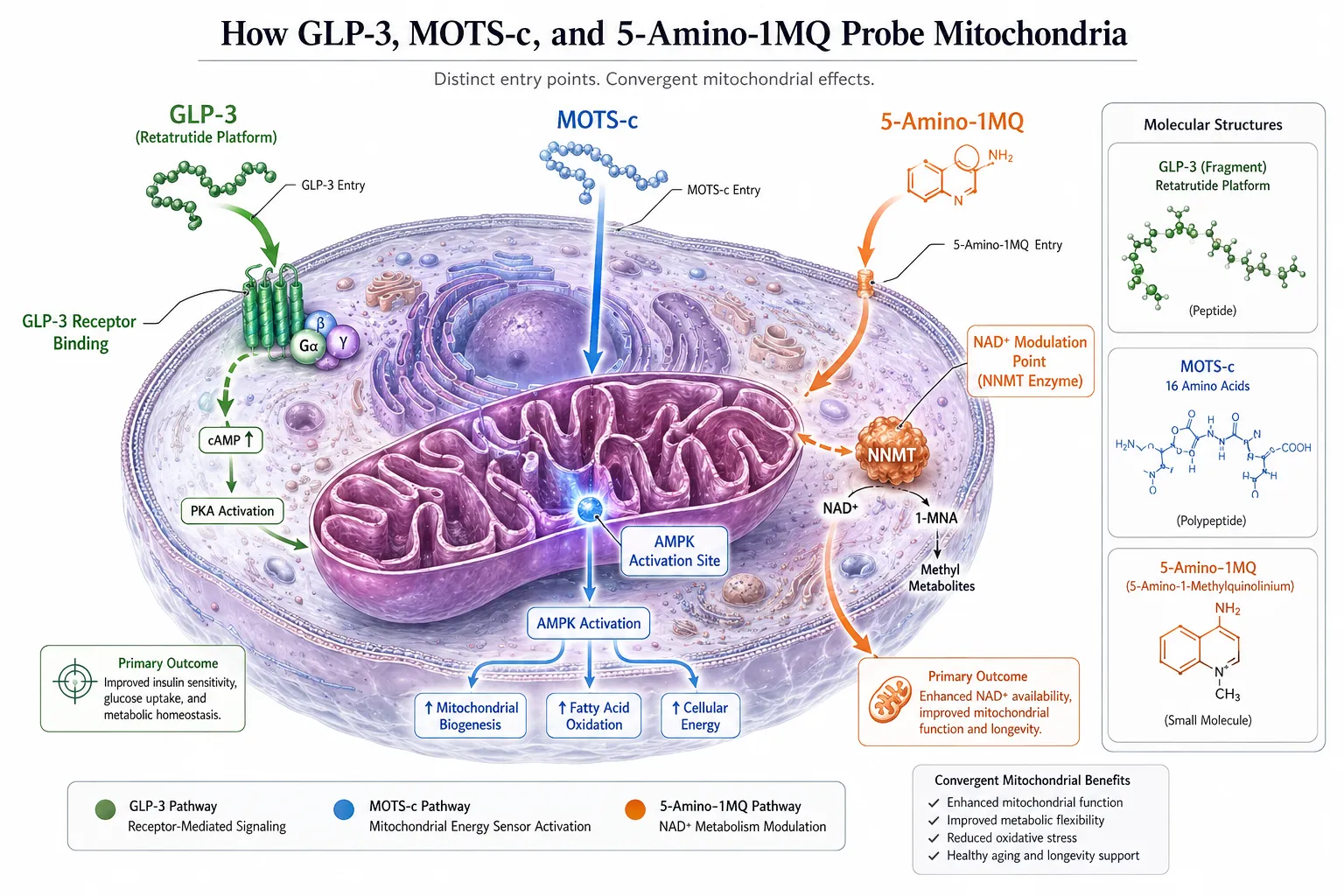
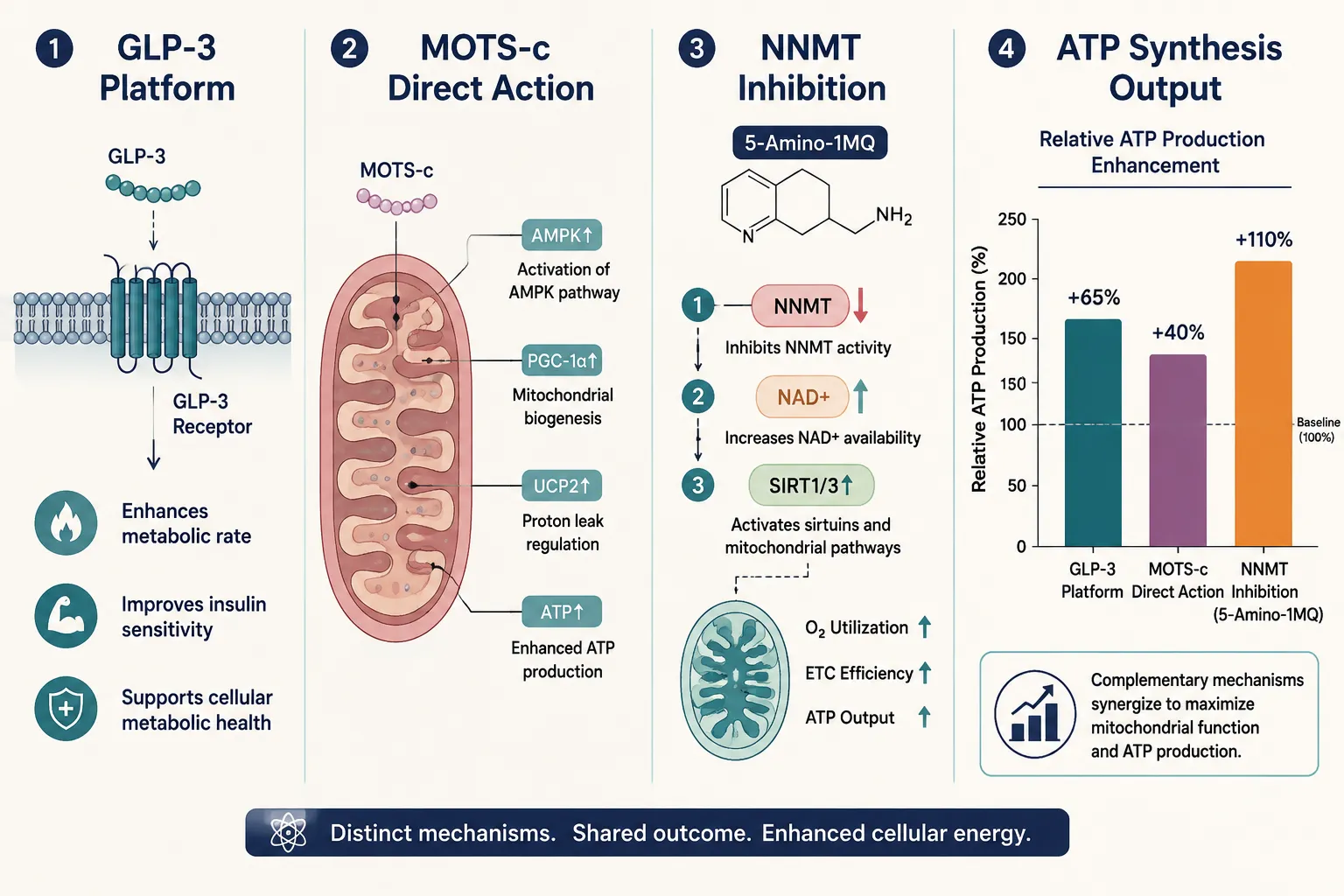
These compounds are not redundant. MOTS-c works inside the mitochondria, 5-Amino-1MQ works at the enzyme level in the cytoplasm, and Retatrutide works through circulating hormonal signals. Together, they represent three distinct layers of metabolic intervention that researchers are exploring for metabolic syndrome, obesity, and age-related energy decline.

Researchers interested in MOTS-c mechanism and research context or broader longevity peptide research themes will find these compounds frequently discussed together in the literature.


Conclusion

The science of Adenosine Triphosphate (ATP), cell energy, and peptide signaling — and where MOTS-c, 5-Amino-1MQ, and GLP-3 Retatrutide fit — points toward a multi-layered model of metabolic intervention. MOTS-c targets the mitochondrial genome's own signaling output to activate AMPK. 5-Amino-1MQ preserves the NAD+ pool that powers the electron transport chain. Retatrutide drives energy expenditure and glycemic control through triple receptor agonism.

Actionable next steps for researchers in 2026:

  • Review the AMPK activation literature before designing MOTS-c protocols
  • Assess NAD+ precursor status when evaluating 5-Amino-1MQ research models
  • Monitor Retatrutide's Phase 3 trial readouts (TRIUMPH, TRANSCEND, SYNERGY) for updated efficacy and safety data
  • Prioritize peptide purity testing when sourcing any research compound to ensure data reliability

Understanding how these three compounds interact with ATP biology is not just academic — it is the foundation for designing more precise, effective metabolic research protocols.

https://www.puretestedpeptides.com/wp-content/uploads/2026/06/Adenosine-Triphosphate-ATP-Cell-Energy-and-Peptide-Signaling-Where-MOTS-c-5-Amino-1MQ-and-GLP-3-Retatrutide-Fit.png 1024 1536 Pure Tested https://www.puretestedpeptides.com/wp-content/uploads/2026/01/buy-peptides-online.jpg Pure Tested2026-06-23 13:20:502026-07-20 15:02:21Adenosine Triphosphate (ATP), Cell Energy, and Peptide Signaling: Where MOTS-c, 5-Amino-1MQ, and GLP-3 Retatrutide Fit
Mitochondria, MOTS-c, and 5-Amino-1MQ: How Peptides Reframe Classic Mitochondrial Biology in Metabolic Research

Mitochondria, MOTS-c, and 5-Amino-1MQ: How Peptides Reframe Classic Mitochondrial Biology in Metabolic Research

June 23, 2026/0 Comments/by Pure Tested

Metabolic disease affects more than one billion people globally, yet the signaling machinery inside the mitochondrion itself remains one of the least-exploited therapeutic territories in preclinical research. The intersection of Mitochondria, MOTS-c, and 5-Amino-1MQ: How Peptides Reframe Classic Mitochondrial Biology in Metabolic Research is precisely where that gap is beginning to close. Two molecules — the mitochondria-derived peptide MOTS-c and the small-molecule NNMT inhibitor 5-Amino-1MQ — are forcing researchers to reconsider how energy sensing, nuclear gene regulation, and NAD+ metabolism are coordinated at the organelle level.

Key Takeaways

  • MOTS-c is a 16-amino-acid peptide encoded in mitochondrial DNA that translocates to the nucleus under metabolic stress to regulate gene expression.
  • MOTS-c activates AMPK by inhibiting the folate cycle and accumulating AICAR, a natural AMPK agonist.
  • 5-Amino-1MQ selectively inhibits NNMT, raising cellular NAD+ by approximately 34% within 48 hours in laboratory models.
  • NNMT expression in white adipose tissue is up to 15-fold higher in obese versus lean tissue, making it a high-value metabolic target.
  • Combining MOTS-c and 5-Amino-1MQ in metabolic models creates overlapping but mechanistically distinct interventions on the same energy-sensing network.

Mitochondrial cross-section with MOTS-c translocation pathway diagram

MOTS-c: A Mitochondrial Peptide That Speaks Directly to the Nucleus

MOTS-c is a 16-amino-acid peptide encoded within the 12S ribosomal RNA region of the mitochondrial genome. Unlike nuclear-encoded proteins that travel into mitochondria, MOTS-c moves in the opposite direction. Under conditions of metabolic stress — elevated glucose, oxidative load, or caloric excess — MOTS-c translocates from the mitochondrial matrix to the nucleus, where it binds stress-responsive transcription factors including NRF2 to modulate gene expression. This retrograde signaling pathway represents a direct communication channel between mitochondrial status and nuclear transcriptional output.

The metabolic effects of MOTS-c are largely mediated through AMPK activation. Mechanistically, MOTS-c inhibits the folate cycle, causing accumulation of AICAR (5-aminoimidazole-4-carboxamide ribonucleotide), a well-characterized endogenous AMPK activator. Downstream consequences include enhanced glucose uptake, improved lipid oxidation, and restoration of metabolic homeostasis in muscle and adipose tissue. In rodent models of type 2 diabetes, MOTS-c therapy improved mitochondrial respiration in cardiac tissue, suggesting organ-level restoration of energy metabolism beyond skeletal muscle.

Critically for lab scientists, exercise itself induces MOTS-c expression in human skeletal muscle and circulation. Research published in Nature Communications demonstrated that MOTS-c administration improved physical performance across young, middle-aged, and old mice, while also regulating nuclear genes tied to proteostasis. This positions MOTS-c as both an exercise mimetic and a longevity-relevant signal worth modeling in metabolic assay systems.

For researchers building mitochondrial signaling models, the MOTS-c mitochondrial peptide research overview provides a useful starting framework. Those studying combined pathway interventions may also find the MOTS-c and SLU-PP-332 combination research relevant to multi-target experimental design.


5-Amino-1MQ NNMT inhibition and NAD+ increase bar graph

5-Amino-1MQ: NNMT Inhibition as a Mitochondrial Energy Lever

Where MOTS-c operates through mitochondrial DNA and retrograde nuclear signaling, 5-Amino-1MQ takes a complementary route: it blocks nicotinamide N-methyltransferase (NNMT), an enzyme that consumes S-adenosylmethionine (SAM) and methyl-pool substrates while degrading nicotinamide — a direct NAD+ precursor. In obese tissue models, NNMT expression in white adipose tissue runs up to 15-fold higher than in lean controls, correlating tightly with markers of metabolic dysfunction.

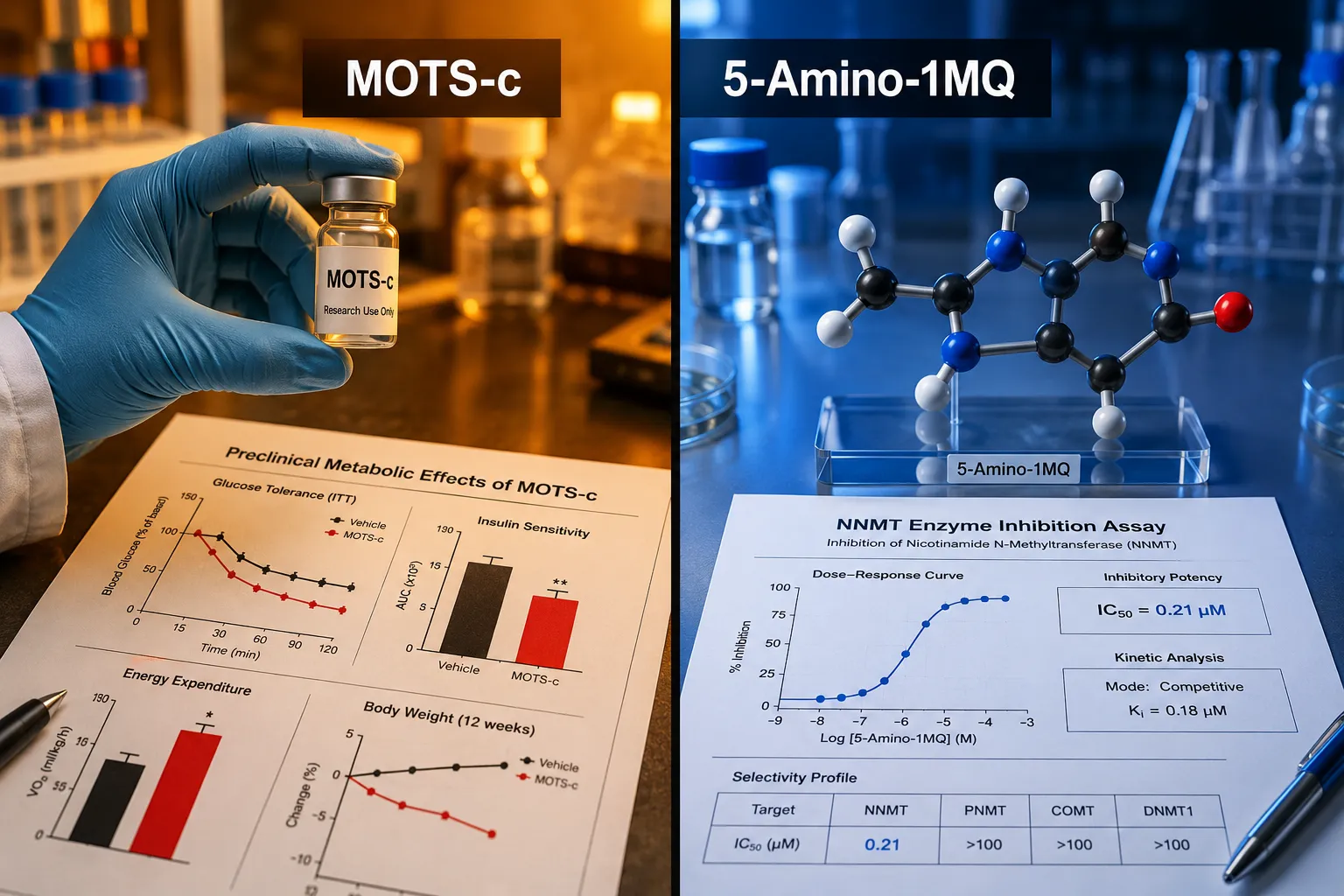
5-Amino-1MQ exhibits an IC50 of approximately 1.2 μM in cell-free assays, demonstrating high selectivity for NNMT over other methyltransferases. In laboratory models, a single treatment achieved a 47% reduction in NNMT activity within 30 minutes. Over 48 hours, cellular NAD+ concentrations rose by approximately 34%, accompanied by measurable increases in SIRT1 deacetylase activity. Since SIRT1 is a direct NAD+-dependent regulator of mitochondrial biogenesis via PGC-1 alpha, the downstream effect of 5-Amino-1MQ is an enhancement of the very mitochondrial machinery that produces MOTS-c.

Parameter 5-Amino-1MQ Effect
NNMT IC50 ~1.2 μM (cell-free)
NNMT activity reduction 47% within 30 minutes
NAD+ increase ~34% within 48 hours
SIRT1 activity Elevated alongside NAD+
NNMT in obese adipose 15-fold higher vs. lean

This creates a reinforcing loop relevant to metabolic model design: higher NAD+ supports mitochondrial function, which in turn supports MOTS-c production and release.

Researchers sourcing compounds for these assays can review lab-tested peptides for metabolic research or explore the broader peptides for sale catalog for combination-ready compounds.


Metabolic research lab bench with MOTS-c and 5-Amino-1MQ vials and pathway diagrams

How Mitochondria, MOTS-c, and 5-Amino-1MQ Intersect in Metabolic Research Models

Understanding Mitochondria, MOTS-c, and 5-Amino-1MQ: How Peptides Reframe Classic Mitochondrial Biology in Metabolic Research requires mapping where these two agents converge on shared pathway nodes.

Shared targets and convergence points:

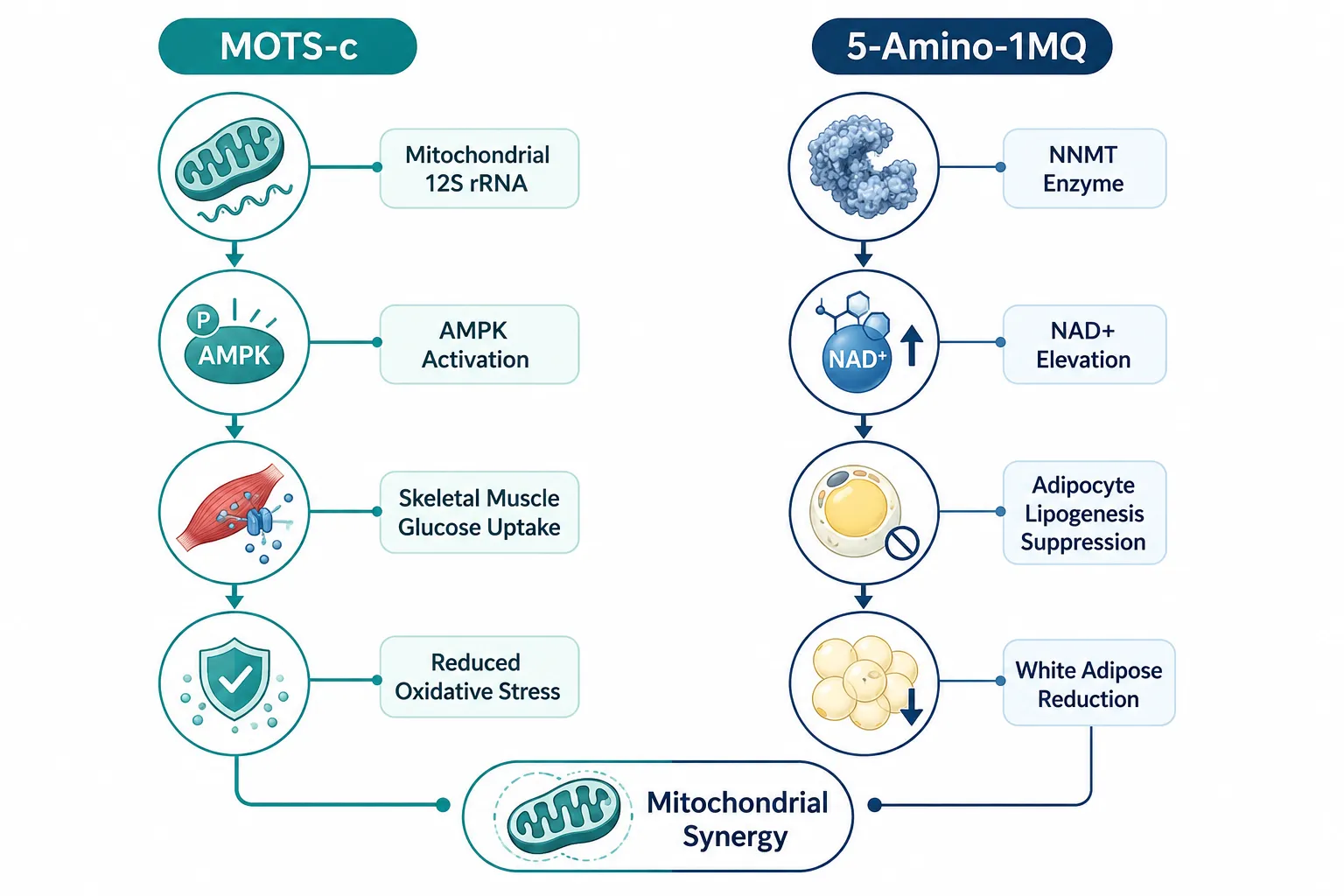
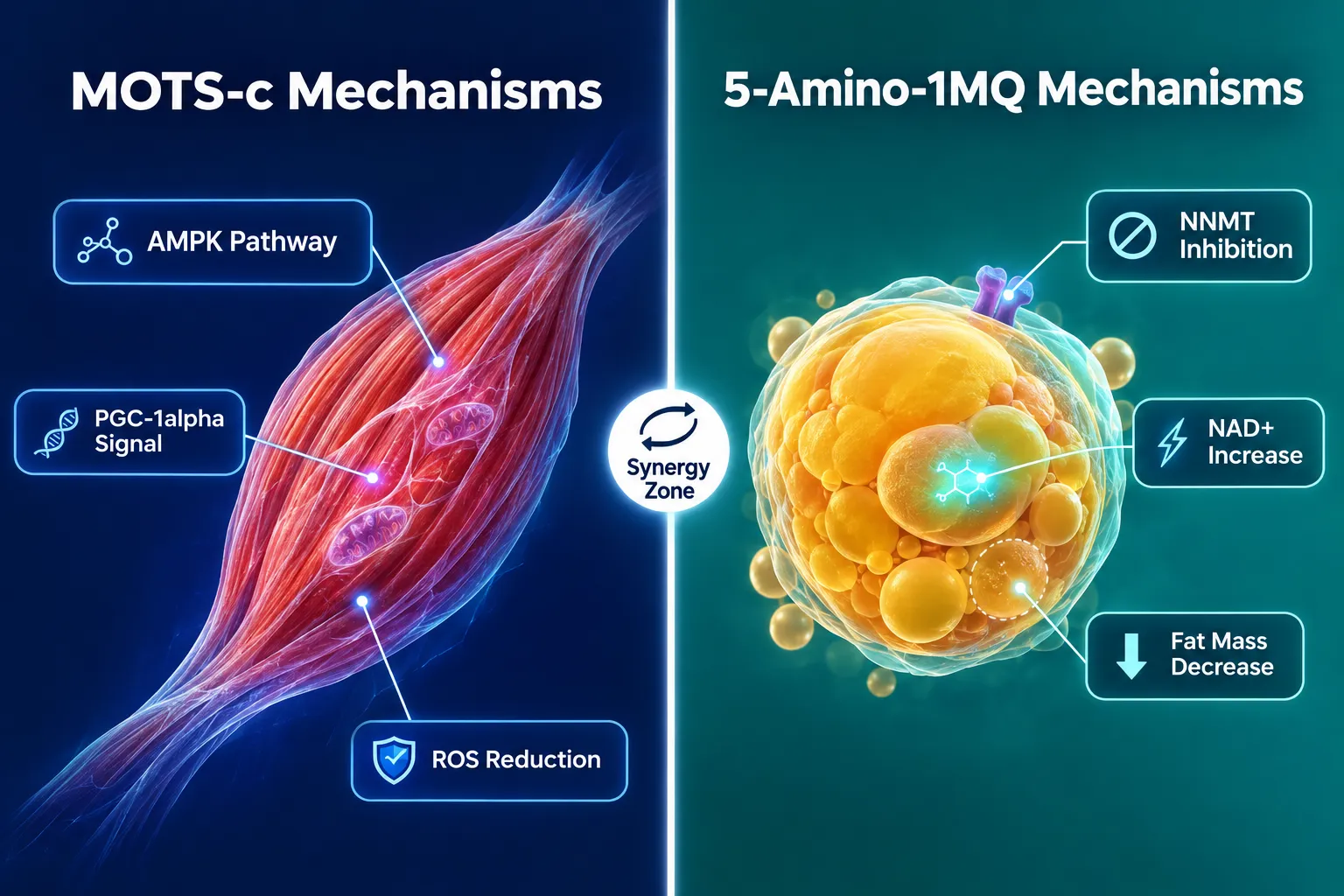
  • AMPK node: MOTS-c activates AMPK via AICAR accumulation; elevated NAD+ from 5-Amino-1MQ activates SIRT1, which deacetylates and activates LKB1, an upstream AMPK kinase.
  • NAD+ pool: MOTS-c's metabolic stress response is partly governed by NAD+ availability; 5-Amino-1MQ directly expands this pool.
  • Mitochondrial biogenesis: Both agents, through separate routes, converge on PGC-1 alpha activation, the master regulator of mitochondrial number and function.
  • Adipose tissue remodeling: MOTS-c promotes lipid utilization via AMPK; 5-Amino-1MQ reduces NNMT-driven metabolic suppression in adipocytes.

For lab scientists designing metabolic stress models, the practical implication is that these two compounds offer mechanistically non-redundant but synergistic interventions. MOTS-c addresses the mitochondrial signaling deficit from the organelle outward; 5-Amino-1MQ addresses the NAD+ depletion that limits mitochondrial output from the enzymatic level inward.

Researchers interested in related mitochondrial-targeting peptides should also review SS-31 mitochondrial research themes and SS-31 mitochondrial dynamics, which address membrane-targeted cardiolipin protection as a third axis of mitochondrial intervention. For metabolic modulation models involving exercise-mimetic compounds, SLU-PP-332 metabolic modulation research offers a complementary ERR-alpha agonist perspective.

"The mitochondrion is no longer just a power plant. It is an active signaling organelle whose peptide output directly governs nuclear gene programs — and 5-Amino-1MQ's effect on NAD+ feeds directly back into that output capacity."


Conclusion

The convergence of Mitochondria, MOTS-c, and 5-Amino-1MQ: How Peptides Reframe Classic Mitochondrial Biology in Metabolic Research offers lab scientists a more complete picture of how energy homeostasis is regulated at the organelle-to-nucleus axis. MOTS-c provides a direct readout of mitochondrial metabolic status and an intervention point at AMPK and nuclear stress-response pathways. 5-Amino-1MQ addresses NNMT-driven NAD+ depletion, restoring the substrate availability that mitochondrial signaling depends on.

Actionable next steps for researchers:

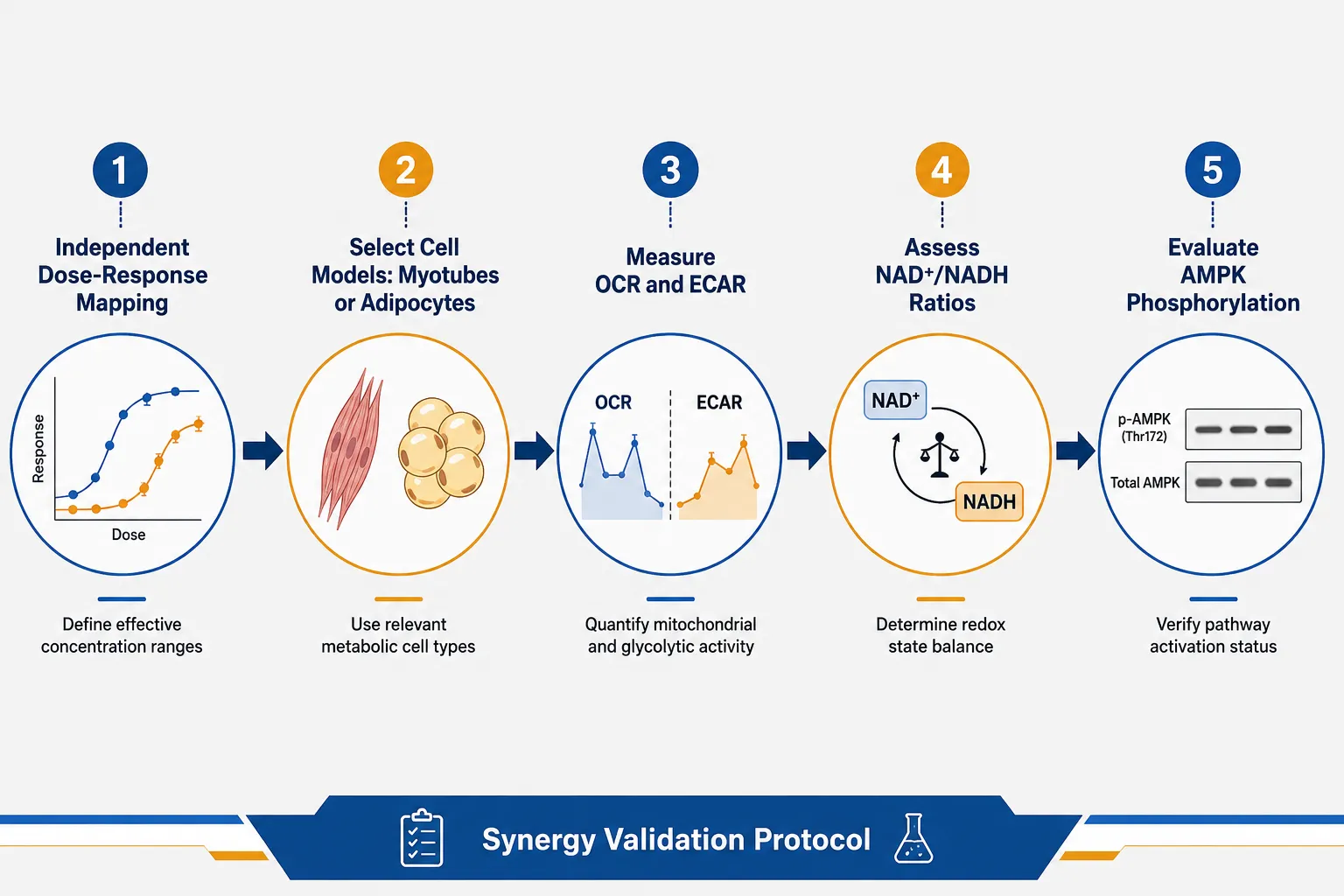
  • Design dual-intervention assays pairing MOTS-c and 5-Amino-1MQ to assess additive versus synergistic effects on AMPK phosphorylation and PGC-1 alpha expression.
  • Use NNMT activity as a baseline stratification variable in metabolic model selection — particularly in adipocyte or cardiac cell lines where NNMT overexpression is documented.
  • Incorporate NAD+/NADH ratio measurements as a primary readout when evaluating 5-Amino-1MQ alongside mitochondrial respiration assays.
  • Cross-reference MOTS-c nuclear translocation data with NRF2 binding assays to map the stress-response transcriptional network more precisely.
Sourcing verified, high-purity compounds is a prerequisite for reproducible metabolic research. Reviewing available MOTS-c peptides for research from suppliers with documented purity testing is an essential first step before experimental design is finalized.

https://www.puretestedpeptides.com/wp-content/uploads/2026/06/Mitochondria-MOTS-c-and-5-Amino-1MQ-How-Peptides-Reframe-Classic-Mitochondrial-Biology-in-Metabolic-Research.png 1024 1536 Pure Tested https://www.puretestedpeptides.com/wp-content/uploads/2026/01/buy-peptides-online.jpg Pure Tested2026-06-23 13:19:082026-07-20 15:02:23Mitochondria, MOTS-c, and 5-Amino-1MQ: How Peptides Reframe Classic Mitochondrial Biology in Metabolic Research
Mitochondria, MOTS-c, and 5-Amino-1MQ: How Peptides Reframe Classic Mitochondrial Biology in Metabolic Research

Mitochondria, MOTS-c, and 5-Amino-1MQ: How Peptides Reframe Classic Mitochondrial Biology in Metabolic Research

June 23, 2026/0 Comments/by Pure Tested

Metabolic disease affects more than one billion people globally, yet the signaling machinery inside the mitochondrion itself remains one of the least-exploited therapeutic territories in preclinical research. The intersection of Mitochondria, MOTS-c, and 5-Amino-1MQ: How Peptides Reframe Classic Mitochondrial Biology in Metabolic Research is precisely where that gap is beginning to close. Two molecules — the mitochondria-derived peptide MOTS-c and the small-molecule NNMT inhibitor 5-Amino-1MQ — are forcing researchers to reconsider how energy sensing, nuclear gene regulation, and NAD+ metabolism are coordinated at the organelle level.

Key Takeaways

  • MOTS-c is a 16-amino-acid peptide encoded in mitochondrial DNA that translocates to the nucleus under metabolic stress to regulate gene expression.
  • MOTS-c activates AMPK by inhibiting the folate cycle and accumulating AICAR, a natural AMPK agonist.
  • 5-Amino-1MQ selectively inhibits NNMT, raising cellular NAD+ by approximately 34% within 48 hours in laboratory models.
  • NNMT expression in white adipose tissue is up to 15-fold higher in obese versus lean tissue, making it a high-value metabolic target.
  • Combining MOTS-c and 5-Amino-1MQ in metabolic models creates overlapping but mechanistically distinct interventions on the same energy-sensing network.

Mitochondrial cross-section with MOTS-c translocation pathway diagram

MOTS-c: A Mitochondrial Peptide That Speaks Directly to the Nucleus

MOTS-c is a 16-amino-acid peptide encoded within the 12S ribosomal RNA region of the mitochondrial genome. Unlike nuclear-encoded proteins that travel into mitochondria, MOTS-c moves in the opposite direction. Under conditions of metabolic stress — elevated glucose, oxidative load, or caloric excess — MOTS-c translocates from the mitochondrial matrix to the nucleus, where it binds stress-responsive transcription factors including NRF2 to modulate gene expression. This retrograde signaling pathway represents a direct communication channel between mitochondrial status and nuclear transcriptional output.

The metabolic effects of MOTS-c are largely mediated through AMPK activation. Mechanistically, MOTS-c inhibits the folate cycle, causing accumulation of AICAR (5-aminoimidazole-4-carboxamide ribonucleotide), a well-characterized endogenous AMPK activator. Downstream consequences include enhanced glucose uptake, improved lipid oxidation, and restoration of metabolic homeostasis in muscle and adipose tissue. In rodent models of type 2 diabetes, MOTS-c therapy improved mitochondrial respiration in cardiac tissue, suggesting organ-level restoration of energy metabolism beyond skeletal muscle.

Critically for lab scientists, exercise itself induces MOTS-c expression in human skeletal muscle and circulation. Research published in Nature Communications demonstrated that MOTS-c administration improved physical performance across young, middle-aged, and old mice, while also regulating nuclear genes tied to proteostasis. This positions MOTS-c as both an exercise mimetic and a longevity-relevant signal worth modeling in metabolic assay systems.

For researchers building mitochondrial signaling models, the MOTS-c mitochondrial peptide research overview provides a useful starting framework. Those studying combined pathway interventions may also find the MOTS-c and SLU-PP-332 combination research relevant to multi-target experimental design.


5-Amino-1MQ NNMT inhibition and NAD+ increase bar graph

5-Amino-1MQ: NNMT Inhibition as a Mitochondrial Energy Lever

Where MOTS-c operates through mitochondrial DNA and retrograde nuclear signaling, 5-Amino-1MQ takes a complementary route: it blocks nicotinamide N-methyltransferase (NNMT), an enzyme that consumes S-adenosylmethionine (SAM) and methyl-pool substrates while degrading nicotinamide — a direct NAD+ precursor. In obese tissue models, NNMT expression in white adipose tissue runs up to 15-fold higher than in lean controls, correlating tightly with markers of metabolic dysfunction.

5-Amino-1MQ exhibits an IC50 of approximately 1.2 μM in cell-free assays, demonstrating high selectivity for NNMT over other methyltransferases. In laboratory models, a single treatment achieved a 47% reduction in NNMT activity within 30 minutes. Over 48 hours, cellular NAD+ concentrations rose by approximately 34%, accompanied by measurable increases in SIRT1 deacetylase activity. Since SIRT1 is a direct NAD+-dependent regulator of mitochondrial biogenesis via PGC-1 alpha, the downstream effect of 5-Amino-1MQ is an enhancement of the very mitochondrial machinery that produces MOTS-c.

Parameter 5-Amino-1MQ Effect
NNMT IC50 ~1.2 μM (cell-free)
NNMT activity reduction 47% within 30 minutes
NAD+ increase ~34% within 48 hours
SIRT1 activity Elevated alongside NAD+
NNMT in obese adipose 15-fold higher vs. lean

This creates a reinforcing loop relevant to metabolic model design: higher NAD+ supports mitochondrial function, which in turn supports MOTS-c production and release.

Researchers sourcing compounds for these assays can review lab-tested peptides for metabolic research or explore the broader peptides for sale catalog for combination-ready compounds.


Metabolic research lab bench with MOTS-c and 5-Amino-1MQ vials and pathway diagrams

How Mitochondria, MOTS-c, and 5-Amino-1MQ Intersect in Metabolic Research Models

Understanding Mitochondria, MOTS-c, and 5-Amino-1MQ: How Peptides Reframe Classic Mitochondrial Biology in Metabolic Research requires mapping where these two agents converge on shared pathway nodes.

Shared targets and convergence points:

  • AMPK node: MOTS-c activates AMPK via AICAR accumulation; elevated NAD+ from 5-Amino-1MQ activates SIRT1, which deacetylates and activates LKB1, an upstream AMPK kinase.
  • NAD+ pool: MOTS-c's metabolic stress response is partly governed by NAD+ availability; 5-Amino-1MQ directly expands this pool.
  • Mitochondrial biogenesis: Both agents, through separate routes, converge on PGC-1 alpha activation, the master regulator of mitochondrial number and function.
  • Adipose tissue remodeling: MOTS-c promotes lipid utilization via AMPK; 5-Amino-1MQ reduces NNMT-driven metabolic suppression in adipocytes.

For lab scientists designing metabolic stress models, the practical implication is that these two compounds offer mechanistically non-redundant but synergistic interventions. MOTS-c addresses the mitochondrial signaling deficit from the organelle outward; 5-Amino-1MQ addresses the NAD+ depletion that limits mitochondrial output from the enzymatic level inward.

Researchers interested in related mitochondrial-targeting peptides should also review SS-31 mitochondrial research themes and SS-31 mitochondrial dynamics, which address membrane-targeted cardiolipin protection as a third axis of mitochondrial intervention. For metabolic modulation models involving exercise-mimetic compounds, SLU-PP-332 metabolic modulation research offers a complementary ERR-alpha agonist perspective.

"The mitochondrion is no longer just a power plant. It is an active signaling organelle whose peptide output directly governs nuclear gene programs — and 5-Amino-1MQ's effect on NAD+ feeds directly back into that output capacity."


Conclusion

The convergence of Mitochondria, MOTS-c, and 5-Amino-1MQ: How Peptides Reframe Classic Mitochondrial Biology in Metabolic Research offers lab scientists a more complete picture of how energy homeostasis is regulated at the organelle-to-nucleus axis. MOTS-c provides a direct readout of mitochondrial metabolic status and an intervention point at AMPK and nuclear stress-response pathways. 5-Amino-1MQ addresses NNMT-driven NAD+ depletion, restoring the substrate availability that mitochondrial signaling depends on.

Actionable next steps for researchers:

  • Design dual-intervention assays pairing MOTS-c and 5-Amino-1MQ to assess additive versus synergistic effects on AMPK phosphorylation and PGC-1 alpha expression.
  • Use NNMT activity as a baseline stratification variable in metabolic model selection — particularly in adipocyte or cardiac cell lines where NNMT overexpression is documented.
  • Incorporate NAD+/NADH ratio measurements as a primary readout when evaluating 5-Amino-1MQ alongside mitochondrial respiration assays.
  • Cross-reference MOTS-c nuclear translocation data with NRF2 binding assays to map the stress-response transcriptional network more precisely.
Sourcing verified, high-purity compounds is a prerequisite for reproducible metabolic research. Reviewing available MOTS-c peptides for research from suppliers with documented purity testing is an essential first step before experimental design is finalized.

https://www.puretestedpeptides.com/wp-content/uploads/2026/06/Mitochondria-MOTS-c-and-5-Amino-1MQ-How-Peptides-Reframe-Classic-Mitochondrial-Biology-in-Metabolic-Research.png 1024 1536 Pure Tested https://www.puretestedpeptides.com/wp-content/uploads/2026/01/buy-peptides-online.jpg Pure Tested2026-06-23 13:19:072026-07-20 15:02:32Mitochondria, MOTS-c, and 5-Amino-1MQ: How Peptides Reframe Classic Mitochondrial Biology in Metabolic Research
Best Research Peptides for Weight Management: Comparing GLP-3 Retatrutide, MOTS-c, and 5-Amino-1MQ

Best Research Peptides for Weight Management: Comparing GLP-3 Retatrutide, MOTS-c, and 5-Amino-1MQ

June 22, 2026/0 Comments/by Pure Tested

Obesity affects more than one billion people worldwide, yet fewer than five percent of those with clinically significant excess weight achieve durable fat loss through lifestyle changes alone. That gap has pushed researchers toward a new generation of metabolic compounds. Among the most closely watched are three distinct agents: Retatrutide, MOTS-c, and 5-Amino-1MQ. This comparative guide on the best research peptides for weight management — comparing GLP-3 Retatrutide, MOTS-c, and 5-Amino-1MQ — examines what each compound does, how far the science has advanced, and what distinguishes them from one another.

Key Takeaways

  • Retatrutide is a triple agonist (GLP-1, GIP, glucagon) that produced roughly 28% average weight loss over 18 months in Phase 3 trials — comparable to bariatric surgery outcomes.
  • MOTS-c is a mitochondria-derived peptide that activates the AMPK pathway, improving insulin sensitivity and metabolic flexibility in preclinical models.
  • 5-Amino-1MQ inhibits the NNMT enzyme to enhance cellular metabolism, but human trial data remain limited.
  • All three compounds are currently research-stage agents; none carries full FDA approval for weight management as of 2026.
  • Mechanism, research maturity, and target pathway differ significantly across the three, making direct comparison essential for informed research planning.

Key Takeaways

Retatrutide: The Triple Agonist Redefining Weight Loss Research

Retatrutide represents the most clinically advanced entry among the best research peptides for weight management. It functions as a triple agonist, simultaneously activating GLP-1, GIP, and glucagon receptors. This three-pronged approach does something no single-receptor agent can match: it enhances satiety through GLP-1 signaling, boosts energy expenditure via glucagon activation, and improves glycemic control through GIP engagement.

The clinical data behind Retatrutide are striking. In a Phase 3 trial conducted by Eli Lilly, participants achieved an average body weight reduction of approximately 28% over 18 months. That figure places Retatrutide in the same efficacy range as bariatric surgery — a threshold no oral or injectable anti-obesity medication had previously crossed. Eli Lilly is pursuing FDA approval, with late-stage trial completion targeted for 2026.

Side effects reported in trials were primarily gastrointestinal: nausea, vomiting, and diarrhea. These effects were dose-dependent and generally mild to moderate, consistent with the GLP-1 drug class profile.

For researchers sourcing this compound, the GLP-3 Retatrutide product page provides catalog navigation and research planning context. Additional receptor-level background is available through the GIP receptor mechanism overview.

"A 28% average weight reduction over 18 months positions Retatrutide as potentially the most efficacious pharmacological weight loss agent studied to date."

MOTS-c and 5-Amino-1MQ: Mitochondrial and Enzymatic Pathways

MOTS-c and 5-Amino-1MQ: Mitochondrial and Enzymatic Pathways

MOTS-c: Mitochondria-Derived Metabolic Regulation

MOTS-c is a 16-amino-acid peptide encoded within mitochondrial DNA — an unusual origin that sets it apart from conventional peptide therapeutics. Under metabolic stress, it translocates from the mitochondria to the cell nucleus, where it activates the AMPK pathway and modulates mTOR and folate-cycle-linked processes.

In animal models, MOTS-c has demonstrated:

  • Approximately 30% improvement in insulin sensitivity
  • 12-15% enhancement in exercise performance
  • Improved mitochondrial function and lipid metabolism

These findings make MOTS-c a compelling candidate for metabolic research, particularly in contexts involving insulin resistance or age-related metabolic decline. Researchers can explore detailed mechanistic studies through the MOTS-c mitochondrial dynamics research page and the MOTS-c metabolic stress research overview.

However, MOTS-c has not received FDA approval. Human trial data remain limited to early-phase studies, meaning its efficacy and safety profile in clinical populations are not yet fully established.

5-Amino-1MQ: NNMT Inhibition and Cellular Metabolism

5-Amino-1MQ takes a fundamentally different approach. Rather than acting on gut hormones or mitochondrial signaling, it inhibits nicotinamide N-methyltransferase (NNMT) — an enzyme that plays a regulatory role in cellular energy metabolism. By blocking NNMT, 5-Amino-1MQ is theorized to raise intracellular NAD+ precursor availability and shift cells toward greater metabolic activity.
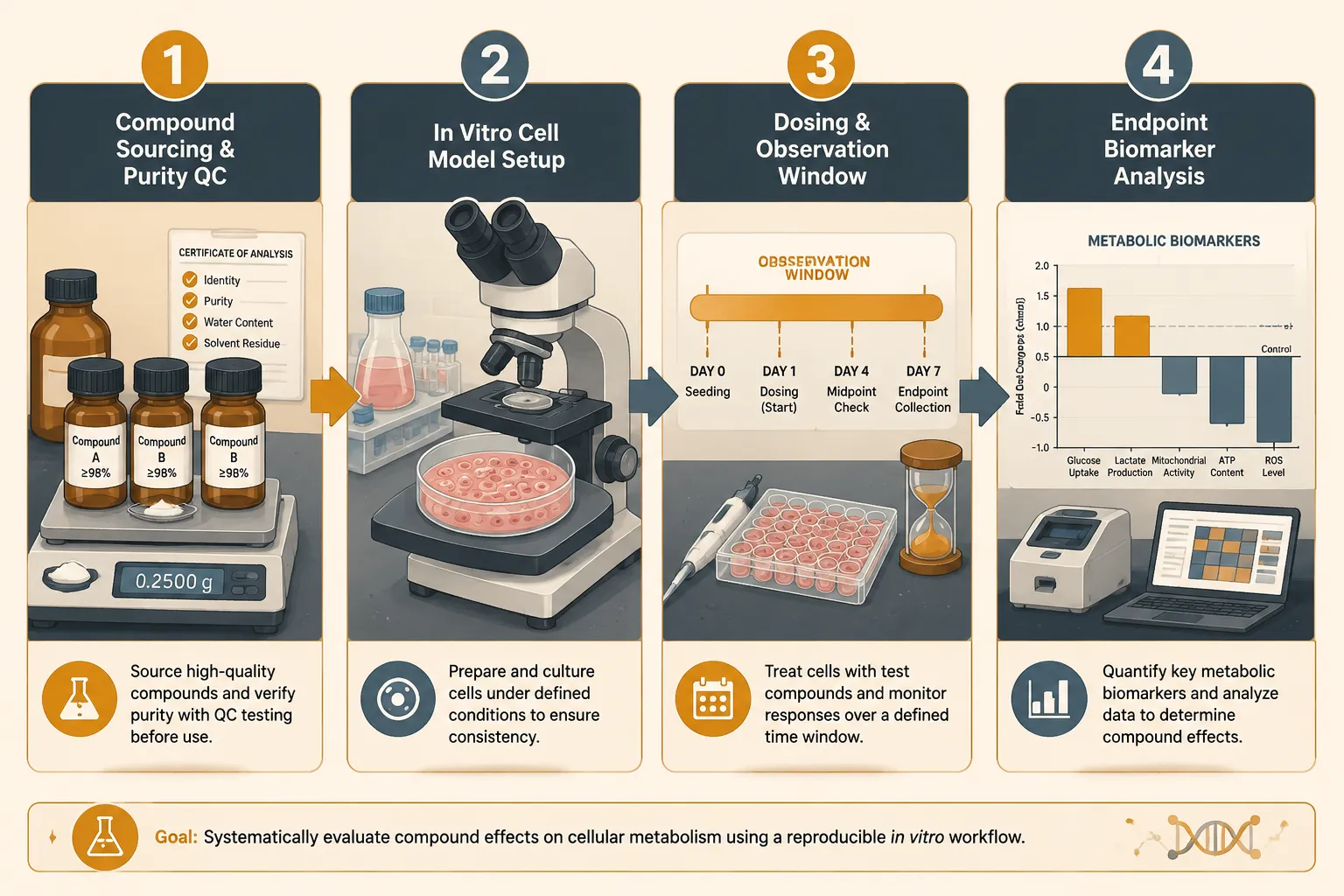
Preclinical data suggest potential for fat cell reduction and improved metabolic rate, but published human trial data for 5-Amino-1MQ remain sparse as of 2026. Researchers interested in this compound can find sourcing and research context at the 5-Amino-1MQ research page. For broader NAD+ pathway context, the NAD+ energetics and longevity research overview offers relevant background.

Comparing the Three: A Research-Stage Summary

Comparing the Three: A Research-Stage Summary

The table below summarizes the key distinctions across the best research peptides for weight management: comparing GLP-3 Retatrutide, MOTS-c, and 5-Amino-1MQ.

Feature Retatrutide MOTS-c 5-Amino-1MQ
Primary Target GLP-1, GIP, Glucagon receptors AMPK / mitochondrial pathway NNMT enzyme inhibition
Research Stage Phase 3 clinical trials Early-phase human trials Preclinical / limited human data
Key Efficacy Signal 28% weight loss (18 months) 30% insulin sensitivity gain (animal) Metabolic rate improvement (preclinical)
FDA Status Approval pending Not approved Not approved
Side Effect Profile GI-related, dose-dependent Not well established in humans Limited data

Researchers evaluating these compounds should also consider how they fit within broader metabolic research stacks. For context on GLP-1 class compounds more broadly, the GLP-1 peptide research and sourcing guide provides useful framing. Those exploring what is emerging across the peptide research landscape can consult the latest peptide research updates.

Conclusion

The comparison of GLP-3 Retatrutide, MOTS-c, and 5-Amino-1MQ reveals three agents at very different stages of scientific maturity. Retatrutide leads on clinical evidence, with Phase 3 data showing surgery-level weight loss and a near-term FDA approval pathway. MOTS-c offers a compelling mitochondrial mechanism with strong preclinical signals but requires more human data. 5-Amino-1MQ presents an intriguing enzymatic target, though its research base is the thinnest of the three.

Actionable next steps for researchers:

  1. Review the full mechanistic profiles of each compound before designing protocols.
  2. Source compounds exclusively from verified, tested suppliers to ensure purity and research integrity.
  3. Monitor ongoing trial registries for MOTS-c and Retatrutide updates throughout 2026.
  4. Cross-reference metabolic pathway research — particularly AMPK and NAD+ signaling — to identify potential complementary compounds.
  5. Consult the comprehensive peptide catalog to assess current availability and documentation standards.
https://www.puretestedpeptides.com/wp-content/uploads/2026/06/Best-Research-Peptides-for-Weight-Management-Comparing-GLP-3-Retatrutide-MOTS-c-and-5-Amino-1MQ.png 1024 1536 Pure Tested https://www.puretestedpeptides.com/wp-content/uploads/2026/01/buy-peptides-online.jpg Pure Tested2026-06-22 13:04:242026-07-20 15:02:33Best Research Peptides for Weight Management: Comparing GLP-3 Retatrutide, MOTS-c, and 5-Amino-1MQ
5-Amino-1MQ Peptide: Mechanisms of NNMT Inhibition and Research into Metabolic Disorders

5-Amino-1MQ Peptide: Mechanisms of NNMT Inhibition and Research into Metabolic Disorders

June 21, 2026/0 Comments/by Pure Tested

{"cover":"Professional landscape format (1536×1024) hero image with bold text overlay: '5-Amino-1MQ: NNMT Inhibition & Metabolic Research' in extra large 72pt white bold sans-serif font with dark semi-transparent background panel, centered upper third. Background shows a high-resolution 3D molecular structure of the NNMT enzyme with glowing blue and teal energy pathways representing NAD+ biosynthesis, surrounded by abstract mitochondrial networks. Color palette: deep navy, electric teal, white. Editorial magazine cover quality, high contrast, scientific aesthetic.","content":["Detailed landscape format (1536×1024) scientific illustration showing a cross-section molecular diagram of the NNMT enzyme active site with 5-Amino-1MQ small molecule docking into the binding pocket, highlighted in glowing amber. Surrounding elements show the SAM cycle with methyl group transfer arrows blocked by a red inhibition symbol, and NAD+ salvage pathway molecules flowing upward in teal. Clean white background with subtle grid lines, labeled molecular structures, professional biochemistry textbook aesthetic.","Landscape format (1536×1024) split-panel infographic comparing white adipose tissue cell morphology before and after NNMT inhibition. Left panel shows enlarged lipid-filled adipocytes in pale yellow with low mitochondrial density markers. Right panel shows reduced adipocyte size with dense mitochondrial networks glowing orange-red, representing increased energy expenditure. Central dividing line labeled 'NNMT Inhibition by 5-Amino-1MQ'. Clean clinical infographic style, teal and orange color scheme, professional research poster aesthetic.","Landscape format (1536×1024) overhead laboratory research scene showing a researcher in a white lab coat reviewing preclinical data charts on a tablet, with glass vials of compound samples in a rack labeled '5-Amino-1MQ', a metabolic assay plate, and printed graphs showing fat mass reduction curves over time. Soft clinical lighting, shallow depth of field on the compound vials in foreground, blurred researcher in background. Muted blue-gray and white tones with warm amber lab lighting accents, photorealistic editorial quality."]

Professional landscape hero image () with : "5-Amino-1MQ Peptide: Mechanisms of NNMT Inhibition and Research into Metabolic

Nicotinamide N-methyltransferase (NNMT) is overexpressed in the fat tissue of obese individuals at rates significantly higher than in lean controls — a detail that has pushed this enzyme to the center of metabolic research. The compound drawing the most attention as a precise NNMT inhibitor is 5-Amino-1MQ, a small molecule with a targeted mechanism that may reshape how researchers approach obesity, insulin resistance, and metabolic syndrome. Understanding the 5-Amino-1MQ Peptide: Mechanisms of NNMT Inhibition and Research into Metabolic Disorders requires a close look at the biochemistry involved and what preclinical data currently shows.

Key Takeaways

  • 5-Amino-1MQ directly inhibits NNMT, redirecting nicotinamide toward NAD+ biosynthesis and improving mitochondrial energy output
  • Preclinical models show reductions in white adipose tissue mass without changes in food intake, suggesting a direct metabolic effect
  • The compound also preserves S-adenosylmethionine (SAM) for essential methylation reactions, influencing gene expression
  • Research is currently limited to animal models; no human clinical trials have been published as of 2026
  • Oral dosing in research settings typically ranges from 50 to 100 mg per day with a half-life of 4 to 7 hours

Key Takeaways

How 5-Amino-1MQ Inhibits NNMT at the Molecular Level

NNMT is an enzyme responsible for methylating nicotinamide, converting it into 1-methylnicotinamide (1-MNA). This reaction consumes both nicotinamide and S-adenosylmethionine (SAM), the body's primary methyl donor. When NNMT activity is high — as it often is in obese or metabolically compromised tissue — this process depletes two critical resources simultaneously.

5-Amino-1MQ blocks the NNMT active site, preventing this methylation reaction from occurring. The downstream effects are significant:

  • Nicotinamide is preserved, making it available for the NAD+ salvage pathway
  • NAD+ levels rise, supporting mitochondrial biogenesis and oxidative phosphorylation
  • SAM is conserved, keeping methyl groups available for DNA methylation, histone modification, and other regulatory processes

This dual preservation of nicotinamide and SAM creates a cascade that improves cellular energy metabolism at a foundational level. Researchers studying metabolic flexibility and mitochondrial function have noted similar upstream effects with other metabolic compounds, but the NNMT-specific targeting of 5-Amino-1MQ makes its mechanism particularly precise.

For a broader look at how peptides interact with metabolic pathways, the ultimate guide to peptide therapy provides useful foundational context.


How 5-Amino-1MQ Inhibits NNMT at the Molecular Level

Preclinical Research: Adipose Tissue and Insulin Sensitivity

The most compelling data on 5-Amino-1MQ Peptide: Mechanisms of NNMT Inhibition and Research into Metabolic Disorders comes from animal studies examining body composition and metabolic markers.

Key findings from preclinical models include:

Outcome Measured Observed Result
White adipose tissue mass Significant reduction
Food intake No meaningful change
Insulin sensitivity Measurable improvement
Energy expenditure Increased
Mitochondrial function Enhanced

The fact that fat mass decreased without changes in food consumption is a critical detail. It points to a direct metabolic effect rather than an appetite-suppressing one. The compound appears to shift how cells process and expend energy rather than simply reducing caloric input.

This profile makes 5-Amino-1MQ a subject of interest alongside other metabolic research compounds. For comparison, researchers have also examined SLU-PP-332 for metabolic modulation and Tesamorelin for body composition outcomes, both of which target metabolic dysfunction through different mechanisms.

Those interested in exploring the compound itself can review the 5-Amino-1MQ research profile for detailed compound information.


Preclinical Research: Adipose Tissue and Insulin Sensitivity

Research Limitations and Current Status in 2026

Despite promising preclinical results, the research landscape for 5-Amino-1MQ Peptide: Mechanisms of NNMT Inhibition and Research into Metabolic Disorders carries important caveats that any serious reader should weigh.

Current limitations include:

  • All published efficacy data comes from animal models, not human trials
  • Long-term safety data is limited even in preclinical settings
  • Independent replication of findings remains sparse
  • No official clinical trial announcements have been made as of 2026

In research settings, oral dosing protocols typically use 50 to 100 mg per day, with the compound's half-life of approximately 4 to 7 hours supporting once-daily administration. However, these parameters are derived from preclinical work and cannot be extrapolated directly to human use.

Researchers exploring metabolic peptides more broadly may also find value in reviewing mitochondrial longevity research and MOTS-c metabolic research themes, which share mechanistic overlap with NAD+ pathway modulation.


Conclusion

The science behind 5-Amino-1MQ Peptide: Mechanisms of NNMT Inhibition and Research into Metabolic Disorders is precise, biologically grounded, and genuinely compelling. By blocking NNMT, this compound preserves nicotinamide for NAD+ synthesis, protects SAM for essential methylation reactions, and drives measurable improvements in fat mass and insulin sensitivity in animal models — all without altering food intake.

Actionable next steps for researchers and informed readers:

  1. Review the current 5-Amino-1MQ compound data to understand purity standards and research-grade sourcing
  2. Examine how NNMT inhibition compares mechanistically to other metabolic compounds like Tesamorelin and SLU-PP-332
  3. Monitor peer-reviewed literature for human trial announcements, which will be the critical next step in validating preclinical findings
  4. Approach any application outside controlled research settings with caution until human safety and efficacy data are established

The NNMT pathway is a legitimate and underexplored frontier in metabolic science. 5-Amino-1MQ sits at its center — and the research, while early, warrants close attention.

https://www.puretestedpeptides.com/wp-content/uploads/2026/06/5-Amino-1MQ-Peptide-Mechanisms-of-NNMT-Inhibition-and-Research-into-Metabolic-Disorders.png 1024 1536 Pure Tested https://www.puretestedpeptides.com/wp-content/uploads/2026/01/buy-peptides-online.jpg Pure Tested2026-06-21 13:06:042026-07-20 15:02:375-Amino-1MQ Peptide: Mechanisms of NNMT Inhibition and Research into Metabolic Disorders
Best Research Peptides for Mitochondrial Health: A Comparison of MOTS-c, 5-Amino-1MQ, and Emerging Compounds

Best Research Peptides for Mitochondrial Health: A Comparison of MOTS-c, 5-Amino-1MQ, and Emerging Compounds

June 20, 2026/0 Comments/by Pure Tested

Mitochondrial dysfunction now appears in the mechanistic pathway of over 50 human diseases, from type 2 diabetes to neurodegeneration — yet the pharmacological toolkit for directly targeting these organelles remained thin until the last decade. The field of best research peptides for mitochondrial health: a comparison of MOTS-c, 5-Amino-1MQ, and emerging compounds has moved quickly, giving researchers a growing menu of targeted molecules to evaluate. This article breaks down the leading candidates, their mechanisms, and what distinguishes each for preclinical study design in 2026.

Key Takeaways

  • MOTS-c is a 16-amino-acid mitochondrial-derived peptide that activates AMPK, reduces oxidative stress, and declines naturally with age.
  • 5-Amino-1MQ targets NNMT enzyme inhibition, influencing NAD+ metabolism and energy expenditure at the cellular level.
  • SS-31 (elamipretide) protects the inner mitochondrial membrane and is one of the most studied structural mitochondrial peptides.
  • Researchers should evaluate purity, mechanism specificity, and study context when selecting among these compounds.
  • Emerging molecules such as SLU-PP-332 and humanin analogs are expanding the mitochondrial peptide research landscape.

Key Takeaways

MOTS-c: The Mitochondrial-Derived Peptide Redefining Metabolic Research

MOTS-c is encoded within the mitochondrial genome itself — a distinction that separates it from most synthetic research peptides. This 16-amino-acid peptide translocates to the nucleus under metabolic stress and exercise, where it activates antioxidant response elements and regulates stress-adaptation genes.

Key mechanisms of MOTS-c:

  • Inhibits the folate cycle and de novo purine biosynthesis
  • Activates AMPK, the master cellular energy sensor
  • Upregulates PGC-1alpha, promoting mitochondrial biogenesis
  • Reduces reactive oxygen species (ROS) emission and protein oxidative damage

Research shows that MOTS-c levels increase in skeletal muscle, systemic circulation, and the hypothalamus following exercise. Critically, circulating MOTS-c declines with age, which correlates with reduced insulin sensitivity, increased adiposity, and impaired muscle homeostasis. Exogenous MOTS-c administration in animal models has reversed age-dependent and diet-induced insulin resistance.

"MOTS-c acts as a molecular signal linking mitochondrial stress to whole-body metabolic adaptation — a property no synthetic small molecule fully replicates."

For researchers building study frameworks around this peptide, the MOTS-c mitochondrial research themes resource provides a useful orientation to current experimental directions. Those interested in mechanistic depth can also explore MOTS-c and mitochondrial dynamics for pathway-level detail.


MOTS-c: The Mitochondrial-Derived Peptide Redefining Metabolic Research

Comparing the Best Research Peptides for Mitochondrial Health: A Comparison of MOTS-c, 5-Amino-1MQ, and Emerging Compounds

5-Amino-1MQ: NNMT Inhibition and NAD+ Metabolism

5-Amino-1MQ is a small-molecule NNMT (nicotinamide N-methyltransferase) inhibitor rather than a peptide in the classical sense, but it is routinely grouped with research peptides given its metabolic targeting profile. NNMT consumes SAM (S-adenosylmethionine) and reduces NAD+ precursor availability. By blocking NNMT, 5-Amino-1MQ effectively raises intracellular NAD+ levels, which supports mitochondrial electron transport chain efficiency.

Comparison table: MOTS-c vs. 5-Amino-1MQ

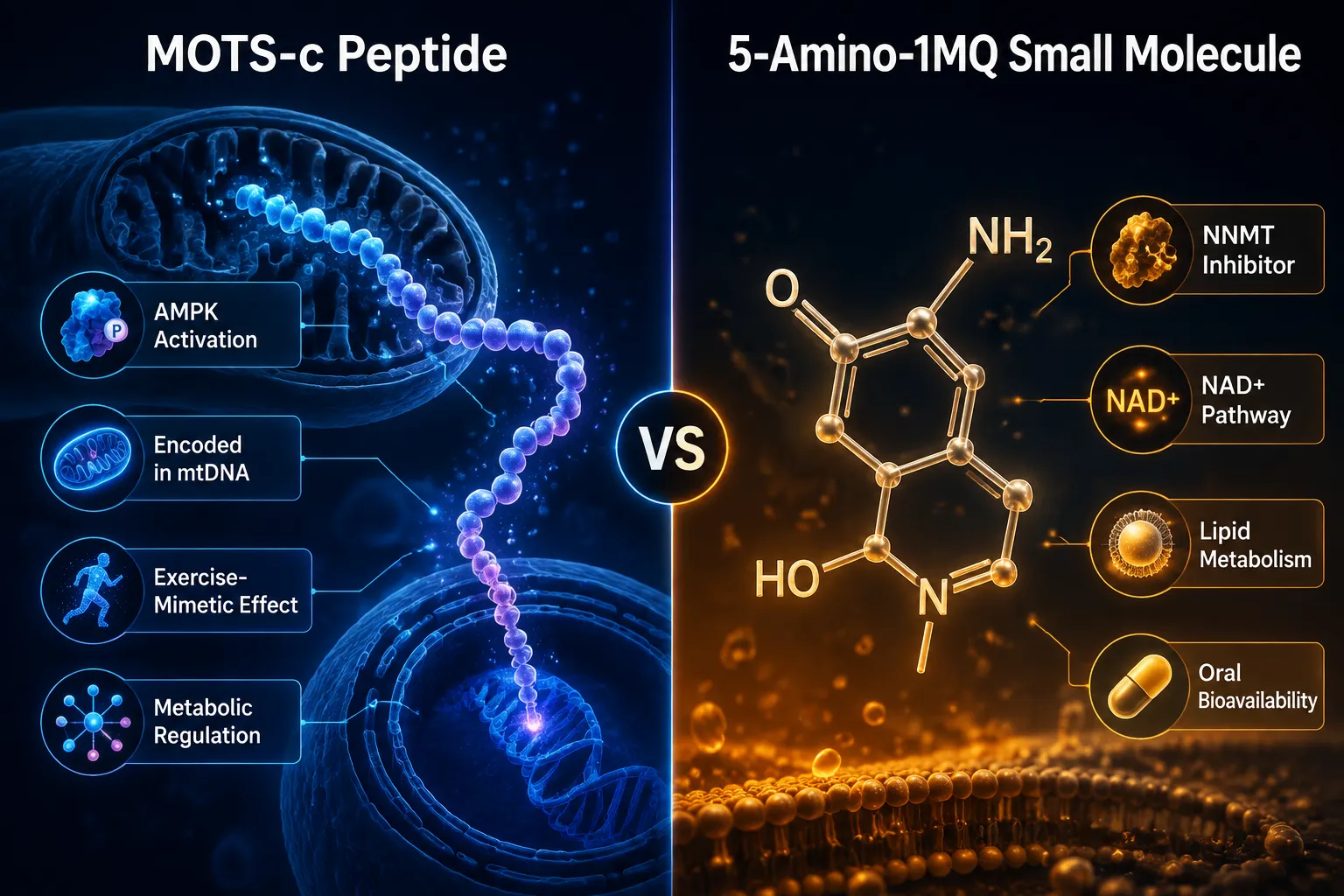
Feature MOTS-c 5-Amino-1MQ
Origin Mitochondrial genome Synthetic small molecule
Primary target AMPK / PGC-1alpha NNMT enzyme
NAD+ effect Indirect (via AMPK) Direct (via NNMT inhibition)
Oxidative stress reduction Demonstrated Under active study
Age-related decline Yes Not applicable

SS-31 (Elamipretide): Structural Mitochondrial Protection

SS-31 targets cardiolipin on the inner mitochondrial membrane, stabilizing cristae architecture and improving ATP synthesis efficiency. Unlike MOTS-c, SS-31 does not rely on nuclear translocation — it acts directly at the membrane. Researchers studying kidney, cardiac, or skeletal muscle models frequently pair SS-31 with MOTS-c to address both structural and signaling dimensions of mitochondrial health. The SS-31 and MOTS-c research tag reflects this growing interest in combinatorial study designs.

For kidney-specific mitochondrial research, the SS-31 kidney health research page offers relevant preclinical context.


SS-31 (Elamipretide): Structural Mitochondrial Protection

Emerging Compounds and Sourcing Considerations

Humanin, SLU-PP-332, and Beyond

The mitochondrial-derived peptide (MDP) family extends beyond MOTS-c. Humanin and SHLP2 (small humanin-like peptides) are encoded in the same mitochondrial 16S rRNA region and show cytoprotective effects in neuronal and cardiomyocyte models. SLU-PP-332 is an ERR-alpha/gamma agonist that mimics exercise-induced mitochondrial gene expression — a distinct but complementary mechanism. Researchers interested in this compound can review the SLU-PP-332 metabolic research overview for study design notes.

Longevity-oriented research programs increasingly stack these compounds. The longevity peptide research framework outlines how multiple mitochondrial targets can be addressed within a single experimental protocol.

Sourcing and Purity Standards

Compound quality is non-negotiable in mitochondrial research. ROS-sensitive assays and AMPK phosphorylation readouts are highly vulnerable to contaminant interference. Researchers should prioritize suppliers with documented certificate of analysis (COA) data and reference standard benchmarking. The Bachem and reference standards guide addresses how to evaluate peptide purity against validated benchmarks.

For researchers building broader metabolic study panels, the MOTS-c and elamipretide comparison page provides a useful side-by-side of two of the field's most studied mitochondrial compounds.


Conclusion

Selecting among the best research peptides for mitochondrial health requires matching mechanism to research question. MOTS-c is the strongest candidate for studies targeting AMPK activation, age-related metabolic decline, and exercise physiology. 5-Amino-1MQ suits protocols focused on NAD+ metabolism and NNMT-driven energy regulation. SS-31 remains the reference compound for inner mitochondrial membrane integrity. Emerging molecules like SLU-PP-332 and humanin analogs are broadening the toolkit further.

Actionable next steps for researchers:

  1. Define the specific mitochondrial pathway under investigation before compound selection.
  2. Obtain COA-verified peptides from suppliers using validated reference standards.
  3. Consider combinatorial designs (e.g., MOTS-c plus SS-31) for multi-target mitochondrial studies.
  4. Monitor the MDP literature actively — this field is advancing rapidly in 2026.
https://www.puretestedpeptides.com/wp-content/uploads/2026/06/Best-Research-Peptides-for-Mitochondrial-Health-A-Comparison-of-MOTS-c-5-Amino-1MQ-and-Emerging-Compounds.png 1024 1536 Pure Tested https://www.puretestedpeptides.com/wp-content/uploads/2026/01/buy-peptides-online.jpg Pure Tested2026-06-20 13:04:512026-07-20 15:02:39Best Research Peptides for Mitochondrial Health: A Comparison of MOTS-c, 5-Amino-1MQ, and Emerging Compounds
5-Amino-1MQ Peptide: Exploring its Metabolic Pathway and Emerging Research Applications

5-Amino-1MQ Peptide: Exploring its Metabolic Pathway and Emerging Research Applications

June 19, 2026/0 Comments/by Pure Tested

Obesity affects more than one billion people worldwide, yet the enzyme at the center of its cellular machinery — nicotinamide N-methyltransferase (NNMT) — remains largely outside mainstream awareness. Research into 5-Amino-1MQ Peptide: Exploring its Metabolic Pathway and Emerging Research Applications has placed this small molecule at the forefront of metabolic science, offering a targeted approach to fat regulation and cellular energy that differs fundamentally from conventional strategies.

Key Takeaways

  • 5-Amino-1MQ selectively inhibits NNMT, an enzyme overexpressed in the fat tissue of obese individuals, raising intracellular NAD+ levels and activating key metabolic regulators.
  • Preclinical studies in obese mice show significant reductions in body weight and white adipose tissue without changes in food intake.
  • Aged mice treated with 5-Amino-1MQ demonstrated up to a 60% improvement in muscle function when combined with exercise, suggesting anti-sarcopenia potential.
  • The compound also appears to alter gut microbiome composition, adding another layer to its metabolic influence.
  • As of 2026, 5-Amino-1MQ remains a research compound with no approved human clinical trials, requiring further validation before any therapeutic conclusions can be drawn.

Key Takeaways

How 5-Amino-1MQ Targets the Metabolic Pathway

The core mechanism of 5-Amino-1MQ centers on NNMT inhibition. NNMT is an enzyme found at elevated levels in the adipose tissue of obese individuals. It consumes SAM (S-adenosylmethionine) and diverts it away from NAD+ biosynthesis, effectively slowing the cell's energy machinery.

By selectively blocking NNMT, 5-Amino-1MQ redirects metabolic resources. Within 48 hours of administration in diet-induced obese mice, researchers observed a 34% increase in intracellular NAD+ concentrations. This surge in NAD+ then activates sirtuins — particularly SIRT1 — which are proteins that regulate mitochondrial biogenesis, fat oxidation, and energy expenditure.

Key metabolic effects observed in preclinical models:

Effect Observation
NAD+ increase 34% within 48 hours
Body weight reduction Significant vs. control
White adipose tissue mass Measurably reduced
Food intake change None observed
Muscle function (aged mice + exercise) 60% improvement

This cascade — NNMT inhibition leading to NAD+ elevation, sirtuin activation, and mitochondrial enhancement — forms the backbone of 5-Amino-1MQ's proposed metabolic pathway. For researchers interested in related mitochondrial energy research, MOTS-c mitochondrial research themes offer a useful comparative framework.

"Raising NAD+ through NNMT inhibition represents a fundamentally different strategy than caloric restriction — it targets the enzyme machinery directly."

The compound also shows promise for metabolic syndrome components, including insulin resistance and dyslipidemia, in preclinical models. This positions it alongside other metabolically active compounds such as those explored in SLU-PP-332 metabolic research.


How 5-Amino-1MQ Targets the Metabolic Pathway

Emerging Research Applications of 5-Amino-1MQ Peptide

Beyond fat metabolism, 5-Amino-1MQ Peptide: Exploring its Metabolic Pathway and Emerging Research Applications reveals several compelling research directions.

Muscle Function and Aging

A 2024 preclinical study found that aged mice receiving 5-Amino-1MQ showed a 40% improvement in grip strength — double the 20% improvement seen with exercise alone. When treatment was combined with exercise, muscle function improved by 60%. This finding positions 5-Amino-1MQ as a candidate for research into age-related sarcopenia, a field also explored through mitochondrial longevity-focused compounds.

Gut Microbiome Modulation

Research in obese mice indicates that 5-Amino-1MQ treatment increases the abundance of Lactobacillus species — bacteria associated with favorable metabolic outcomes. This gut-metabolism connection adds a systemic dimension to what was initially viewed as a purely cellular mechanism.

Pharmacokinetics

  • Oral half-life: approximately 6.9 hours
  • Typical research dose range: 50–100 mg daily
  • Supports once-daily dosing regimens

This oral bioavailability profile distinguishes 5-Amino-1MQ from many peptide compounds that require injection. Researchers comparing delivery methods may also find value in reviewing NAD+ scientific evidence for related pathway context.

Safety and Regulatory Status

Preclinical studies report no significant adverse effects at therapeutic doses. However, no published human clinical trials exist as of 2026, and the compound remains classified as a research chemical — not approved by the FDA for therapeutic use. Independent replication of existing findings is also limited, which is a meaningful caveat for any research team evaluating this compound.

For those sourcing compounds for research, peptide purity testing and working with a best peptide manufacturer are critical steps in ensuring data integrity.


Emerging Research Applications of 5-Amino-1MQ Peptide

Research Limitations and the Road Ahead

The science behind 5-Amino-1MQ Peptide: Exploring its Metabolic Pathway and Emerging Research Applications is promising, but it carries important caveats. Most studies originate from a small number of research groups, and independent replication remains sparse. All data are preclinical, meaning translation to human physiology is unconfirmed.

Future research directions may include:

  • Muscle regeneration therapy models
  • Synergistic protocols combining 5-Amino-1MQ with structured exercise in aging populations
  • Gut microbiome interaction studies in metabolic syndrome models
  • Long-term safety profiling across diverse preclinical models

Researchers exploring adjacent metabolic pathways may also benefit from reviewing Tesamorelin peptide research and AOD-9604 fat metabolism research for comparative context.


Conclusion

5-Amino-1MQ occupies a genuinely unique space in metabolic research. Its selective inhibition of NNMT, downstream elevation of NAD+, and activation of sirtuin pathways create a multi-layered mechanism that addresses fat storage, energy regulation, and potentially muscle aging from a single molecular target. The gut microbiome findings add further depth to an already compelling preclinical profile.

Actionable next steps for researchers:

  1. Review the existing preclinical literature critically, noting the limited number of independent replication studies.
  2. Ensure any research-grade compound is sourced from verified, purity-tested suppliers and review quality testing protocols before procurement.
  3. Design studies that pair 5-Amino-1MQ with exercise interventions, given the synergistic muscle function data.
  4. Monitor regulatory updates, as the compound's status may evolve as human trial data emerge.
  5. Cross-reference findings with related NAD+ and mitochondrial pathway research to build a more complete metabolic picture.

The compound is not a clinical therapy — it is a research tool with significant potential. Treating it as such, with rigorous methodology and appropriate sourcing standards, is the most responsible path forward.

https://www.puretestedpeptides.com/wp-content/uploads/2026/06/5-Amino-1MQ-Peptide-Exploring-its-Metabolic-Pathway-and-Emerging-Research-Applications.png 1024 1536 Pure Tested https://www.puretestedpeptides.com/wp-content/uploads/2026/01/buy-peptides-online.jpg Pure Tested2026-06-19 13:07:122026-07-20 15:02:435-Amino-1MQ Peptide: Exploring its Metabolic Pathway and Emerging Research Applications
5-Amino-1MQ and SLUPP332 in Metabolic Research: How NNMT Targeting Is Framed in Experimental Design

5-Amino-1MQ and SLUPP332 in Metabolic Research: How NNMT Targeting Is Framed in Experimental Design

June 17, 2026/0 Comments/by Pure Tested

Nicotinamide N-methyltransferase (NNMT) overexpression in adipose tissue correlates with increased fat accumulation, insulin resistance, and suppressed energy expenditure — yet the enzyme received relatively little research attention until small-molecule inhibitors made precise targeting feasible. The study of 5-Amino-1MQ and SLUPP332 in metabolic research: how NNMT targeting is framed in experimental design has since become a focused area for researchers building body-composition models around enzymatic control of the NAD+ pool and mitochondrial activity.

Key Takeaways

  • NNMT acts as a "methylation sink," consuming S-adenosyl methionine and depleting the NAD+ precursor pool in adipose tissue.
  • 5-Amino-1MQ inhibits NNMT directly, raising intracellular NAD+ and shifting adipocyte metabolism toward energy expenditure.
  • SLUPP332 targets ERR-alpha, a downstream node of mitochondrial biogenesis, making it a mechanistically distinct but complementary research tool.
  • Most 5-Amino-1MQ evidence comes from animal models; human clinical data remain limited as of 2026.
  • Experimental designs pairing these compounds typically use multi-arm layouts to isolate pathway-specific effects.

Key Takeaways

Understanding NNMT's Role in Metabolic Dysfunction

NNMT catalyzes the transfer of a methyl group from S-adenosyl methionine (SAM) to nicotinamide, producing 1-methylnicotinamide. This reaction has two major downstream consequences. First, it consumes SAM, reducing the cell's overall methylation potential — a process that, when chronic, leads to histone hypomethylation and altered gene expression. Second, it diverts nicotinamide away from NAD+ synthesis, shrinking the intracellular NAD+ pool that mitochondria depend on for oxidative phosphorylation.

In adipose tissue, NNMT overexpression is strongly associated with:

Effect Mechanism
Increased fat storage Reduced NAD+ limits fatty acid oxidation
Insulin resistance Impaired mitochondrial signaling
Epigenetic remodeling SAM depletion causes histone hypomethylation
Suppressed thermogenesis Lower energy expenditure in adipocytes

"NNMT functions less like a simple metabolic enzyme and more like a regulatory switch that integrates energy status, epigenetic state, and immune signaling simultaneously."

This multifaceted role is why NNMT has attracted attention in both metabolic disorder research and oncology. In cancer biology, the same methylation-sink mechanism supports tumor cell survival by remodeling chromatin. For researchers focused on metabolic modulation research lines, the adipose-tissue angle is the primary focus.

How 5-Amino-1MQ and SLUPP332 in Metabolic Research Frame NNMT Targeting in Experimental Design

How 5-Amino-1MQ and SLUPP332 in Metabolic Research Frame NNMT Targeting in Experimental Design

5-Amino-1MQ: The Direct NNMT Inhibitor

5-Amino-1MQ is a small-molecule competitive inhibitor of NNMT. By blocking the enzyme's active site, it prevents nicotinamide from being methylated, which preserves the substrate pool available for NAD+ synthesis. The result, observed consistently in rodent models, is a measurable rise in adipose NAD+ levels, increased mitochondrial activity, and a shift in energy balance away from lipid storage.

Researchers sourcing 5-Amino-1MQ for preclinical studies typically frame their endpoints around:

  • NAD+ quantification in adipose and liver tissue
  • Oxygen consumption rate (OCR) in isolated mitochondria
  • Body composition metrics via DEXA or MRI in diet-induced obesity models
  • Insulin sensitivity markers including HOMA-IR and glucose tolerance curves

Newer NNMT inhibitors such as II559 (Ki = 1.2 nM) and II802 (Ki = 1.6 nM) have demonstrated over 5,000-fold selectivity for NNMT over related methyltransferases, with cellular IC50 values near 150 nM. These figures provide a useful selectivity benchmark when designing controls for 5-Amino-1MQ studies.

Critical caveat: Despite strong animal-model data, human clinical trials for 5-Amino-1MQ remain in early stages. Researchers should treat all mechanistic claims as preclinical until robust human data emerge.

SLUPP332: A Complementary Mitochondrial Target

SLUPP332 (also written SLU-PP-332) works through a different mechanism. It is an agonist of estrogen-related receptor alpha (ERR-alpha), a nuclear receptor that drives mitochondrial biogenesis and oxidative metabolism gene expression. Rather than targeting NNMT directly, SLUPP332 in oral and subcutaneous evidence models activates downstream transcriptional programs that overlap with the metabolic benefits sought through NNMT inhibition.

This mechanistic distinction is precisely why researchers pair the two compounds in multi-arm designs — to determine whether upstream enzyme inhibition (5-Amino-1MQ) and downstream receptor activation (SLUPP332) produce additive, synergistic, or redundant effects on mitochondrial output and fat oxidation.

Experimental Design Considerations

Rigorous study layouts for 5-Amino-1MQ and SLUPP332 in metabolic research typically include:

  1. Control arm — vehicle only
  2. 5-Amino-1MQ arm — NNMT inhibition, NAD+ restoration
  3. SLUPP332 arm — ERR-alpha activation, biogenesis upregulation
  4. Combination arm — both compounds to test interaction effects

Researchers also integrate MOTS-c metabolic flexibility models as parallel comparators, given MOTS-c's role in AMPK activation and mitochondrial stress response. Similarly, IPA muscle and fat research themes offer adjacent endpoints for lean mass preservation alongside fat-loss outcomes.

For broader longevity-oriented panels, some investigators incorporate NAD+ precursor co-treatments, referencing NAD+ scientific evidence frameworks to contextualize NNMT inhibition within the wider NAD+ biology literature.

Experimental Design Considerations

Framing Limitations and Research Integrity

Honest experimental framing requires acknowledging several constraints:

  • Species translation gaps: Rodent adipose biology does not always map cleanly to human adipose, particularly regarding NNMT expression levels and tissue distribution.
  • In vivo bioavailability: Many NNMT inhibitors show strong in vitro potency but limited in vivo activity, a challenge that applies to 5-Amino-1MQ as well.
  • SLUPP332 data scarcity: Publicly available mechanistic data on SLUPP332 remain limited, making independent replication difficult.
  • Confounding variables: Diet-induced obesity models introduce metabolic heterogeneity that can obscure compound-specific signals.

Researchers building longevity peptide research protocols that include NNMT-targeting agents should pre-register endpoints and use blinded outcome assessment to minimize bias.

Conclusion

The study of 5-Amino-1MQ and SLUPP332 in metabolic research: how NNMT targeting is framed in experimental design rewards researchers who prioritize mechanistic clarity over outcome assumptions. The core logic is straightforward: NNMT overexpression depletes NAD+ and impairs mitochondrial function; inhibiting it restores metabolic flexibility. SLUPP332 adds a complementary activation signal at the transcriptional level, making multi-arm designs the most informative approach.

Actionable next steps for researchers:

  • Define NAD+ quantification and OCR as primary endpoints before dosing begins.
  • Include a selectivity control arm using a structurally related but inactive analog.
  • Cross-reference findings against mitochondrial longevity research frameworks to situate results within the broader field.
  • Treat human translation with caution until Phase I/II data are available.
  • Source compounds with verified purity documentation to ensure assay reproducibility.

Rigorous design, not compound enthusiasm, is what advances NNMT research from promising mechanism to actionable biology.

https://www.puretestedpeptides.com/wp-content/uploads/2026/06/5-Amino-1MQ-and-SLUPP332-in-Metabolic-Research-How-NNMT-Targeting-Is-Framed-in-Experimental-Design.png 1024 1536 Pure Tested https://www.puretestedpeptides.com/wp-content/uploads/2026/01/buy-peptides-online.jpg Pure Tested2026-06-17 13:04:092026-07-20 15:02:565-Amino-1MQ and SLUPP332 in Metabolic Research: How NNMT Targeting Is Framed in Experimental Design
Page 2 of 3123
×

Helpful Links

  • My account
  • Cart
  • Checkout
  • Refund and Returns Policy
  • Privacy Policy
  • SMS Privacy Policy
  • Login
  • My Account
  • Logout

USA Made Lab Tested Peptides

All products are sold for research, laboratory, or analytical purposes only, and are not for human consumption


Pure Tested Peptides is a chemical supplier. Pure Tested Peptides is not a compounding / chemical compounding facility as defined under 503A of the Federal Food, Drug, and Cosmetic act. Pure Tested Peptides is not an outsourcing facility as defined under 503B of the Federal Food, Drug, and Cosmetic act.

The statements made within this website have not been evaluated by the US Food and Drug Administration. The products we offer are not intended to diagnose, treat, cure or prevent any disease.

Human/Animal Consumption Prohibited. Laboratory/In-Vitro Experimental Use Only

Scroll to top Scroll to top Scroll to top