Call or Text 727-513-9780
  • Shopping Cart Shopping Cart
    0Shopping Cart
Pure Tested Peptides | America's most trusted Peptides for sale online
  • Peptides for sale
    • Oral Peptides for sale
      • Peptide Capsules for sale
      • BPC 157 Capsules 1000mcg
      • SLU-PP-332 Capsules | 1000 mcg
      • 5-Amino-1MQ 50mg Capsules
      • Tesofensine 500mcg
    • All Peptides for sale
    • Peptide Sprays
      • BPC 157 Nasal Spray Kit
      • BPC-157 TB500 Nasal Spray Kit
      • Semax Nasal Spray 10mg
      • Selank – Nasal Spray Kit – 10mg
      • Epithalon 50MG Nasal Spray Kit
      • Ipamorelin 10mg Nasal Spray
      • Klow Nasal Spray (BPC-157 + TB-500 + GHK-Cu + KPV) | 80mg
      • Hulk Nasal Spray Tesa / Ipa Blend 6/3 MG
      • Klow Nasal Spray
      • NAD + 500 mg Nasal Spray
      • PT-141 Nasal Spray Kit
    • GHRH Peptides
      • Ipa Peptides
      • CJC-1295 Peptides
        • CJC-1295 with DAC 5 mg
        • CJC-1295 without DAC 5 mg
        • CJC-1295 Ipa 10mg
      • Tesa Peptides
        • Tesa Peptide
        • Tesa 20 mg
    • GHK-Cu Peptides
      • All GHK-Cu Peptides
      • GHK-Cu 100mg
      • KLOW Peptide Blend – Buy KLOW blend online
    • BPC Peptides
      • All BPC Peptides
      • BPC-157
      • BPC-157 TB-500
      • BPC 157 capsules 1000mcg
    • SLU-PP-332 Peptides
      • All SLU-PP-332 Peptides
      • SLU-PP-332 5mg
    • GLP3 Peptides
      • GLP3-R
      • GLP3-R CAG 10mg
      • GLP3-R 20mg
    • PT-141 Peptides
      • PT-141 Peptides for sale
      • PT-141 10mg
      • PT-141 Nasal Spray
    • CAG Peptides
      • Lipo-C Peptide Blend
      • CAG 5mg
      • CAG 10mg
    • MOTS-C Peptides
      • MOTS-C Peptides for sale
      • MOTS-c peptide
      • MOTS-c 10mg *6 pack*
    • 5 Amino 1MQ Peptides
      • 5 Amino 1MQ Peptides for sale
      • 5-Amino-1MQ 50mg Capsules
      • 5-Amino-1MQ 5mg
    • Epithalon Peptides
      • Epithalon Peptides for sale
      • Epithalon 10mg
      • Epithalon 50mg
  • Shop
    • GLPs
      • 5-Amino-1MQ 50mg Capsules
      • 5-Amino-1MQ 5mg
      • GLP3-Reta
      • L-Carnitine 500mg/ml
      • Tesofensine 500mcg
      • SLU-PP-332 5mg
      • MOTS-c 10mg *6 pack*
    • Epithalon & BPC Peptides
      • Epithalon 10mg
      • Epithalon 50mg
      • BPC-157
      • BPC 157 capsules 1000mcg
      • BPC-157 TB-500
      • BPC-157 TB500 Nasal Spray Kit
      • BPC 157 Nasal Spray Kit
    • BPC TB-500 & NAD+ Peptides
      • NAD+ 500 mg
      • KLOW Peptide Blend – Buy KLOW blend online
      • GLOW Peptide Blend
      • TB 500 5mg
      • BPC 157 capsules 1000mcg – Supplement
      • BPC 157 Nasal Spray Kit
      • BPC-157
      • BPC-157 TB500 Nasal Spray Kit
      • BPC-157 TB-500
      • BPC 157 capsules 1000mcg
    • LL-37 Peptide
      • LL-37 10 mg
    • MOTS-C & Selank
      • MOTS-c peptide
      • Selank 10mg
    • GHK Peptides
      • GHK-Cu 100mg
      • GLOW Peptide Blend
      • KLOW Peptide Blend – Buy KLOW blend online
  • COAs
  • Wholesale
    • Wholesale Peptides for sale
  • PTP FAQ
  • Affiliates
    • Selank Peptide: Advanced Pharmacological Mechanisms Underlying Its Anxiolytic and Nootropic Effects in Research
      • 5-Amino-1MQ Peptide: Detailed Mechanisms of NNMT Inhibition and Its Impact on Cellular Metabolism Research
        • MOTS-C Peptide: Unraveling Its Role in Mitochondrial Dynamics and Energy Metabolism Research
          • Epithalon Peptide and Telomerase Regulation: Investigating Its Impact on Cellular Senescence and Lifespan Research Models
            • GLP2-T vs GLP2 Tirz Peptide: Understanding the Naming, Mechanistic Nuances, and Research Implications for Gut Health
      • Peptides and Polypeptides in Modern Pharmacology: What Research on Metoprolol, Prednisone, and Amlodipine Reveals
        • Polypeptide Peptides vs NSAIDs: What Naproxen and Diclofenac Teach Tissue-Repair Researchers About BPC‑157 and TB‑500
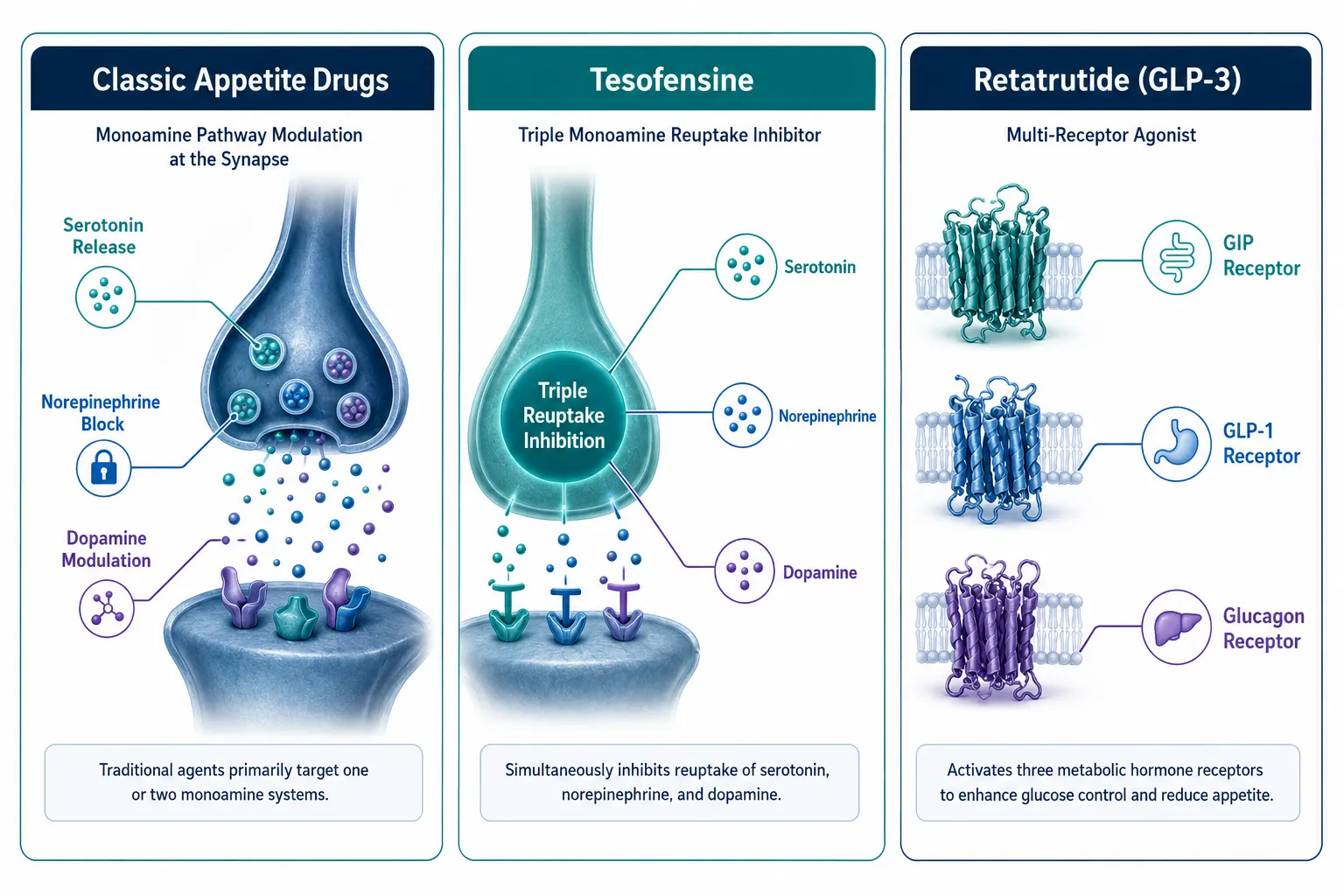
          • Peptides and Polypeptides in Endocrine Pharmacology: How GLP-1, GLP-2, and GLP-3 Retatrutide Differ From Classic Drugs Like Prednisone and Amlodipine
          • 5‑Amino‑1MQ Peptide and NNMT Inhibition: How It Compares With Statins Like Atorvastatin in Adipose and Lipid Metabolism Research
      • Enclomiphene, Estrogen Receptor Signaling, and Luteinizing Phase Biology: What Hormone Researchers Should Measure
        • Mesenchymal Stem Cells, BPC‑157, and GHK‑Cu: How Tissue Repair Peptides Compare With Classic NSAIDs Like Naproxen in Injury Models
          • Peptide Calculator Use Cases Beyond Growth Hormone: Working Through GLP‑3 Retatrutide, MOTS‑c, and BPC‑157 Research Dosing
        • Polypeptide Peptides in Endocrine and Metabolic Pharmacology: Lessons From Amlodipine, Prednisone, and Metoprolol
        • Peptides Calculator for Advanced Blends: Worked Examples for Tesamorelin, CJC‑1295, and Ipamorelin Stacks
          • Peptides and Polypeptides in Human Physiology: How Molecular Size Shapes Research Applications
            • Selank Peptide: Advanced Pharmacological Mechanisms Underlying Its Anxiolytic and Nootropic Effects in Research
          • 5-Amino-1MQ Peptide: Detailed Mechanisms of NNMT Inhibition and Its Impact on Cellular Metabolism Research
            • MOTS-C Peptide: Unraveling Its Role in Mitochondrial Dynamics and Energy Metabolism Research
              • Epithalon Peptide and Telomerase Regulation: Investigating Its Impact on Cellular Senescence and Lifespan Research Models
                • GLP2-T vs GLP2 Tirz Peptide: Understanding the Naming, Mechanistic Nuances, and Research Implications for Gut Health
                  • Peptides and Polypeptides in Endocrine Pharmacology: How GLP-1, GLP-2, and GLP-3 Retatrutide Differ From Classic Drugs Like Prednisone and Amlodipine
                    • Polypeptide Peptides vs NSAIDs: What Naproxen and Diclofenac Teach Tissue-Repair Researchers About BPC‑157 and TB‑500
                      • Peptides and Polypeptides in Modern Pharmacology: What Research on Metoprolol, Prednisone, and Amlodipine Reveals
                        • 5‑Amino‑1MQ Peptide and NNMT Inhibition: How It Compares With Statins Like Atorvastatin in Adipose and Lipid Metabolism Research
                        • Enclomiphene, Estrogen Receptor Signaling, and Luteinizing Phase Biology: What Hormone Researchers Should Measure
                        • Mesenchymal Stem Cells, BPC‑157, and GHK‑Cu: How Tissue Repair Peptides Compare With Classic NSAIDs Like Naproxen in Injury Models
                        • Peptide Calculator Use Cases Beyond Growth Hormone: Working Through GLP‑3 Retatrutide, MOTS‑c, and BPC‑157 Research Dosing
                        • Polypeptide Peptides in Endocrine and Metabolic Pharmacology: Lessons From Amlodipine, Prednisone, and Metoprolol
                        • Peptides Calculator for Advanced Blends: Worked Examples for Tesamorelin, CJC‑1295, and Ipamorelin Stacks
                        • Peptides and Polypeptides in Human Physiology: How Molecular Size Shapes Research Applications
                        • Selank Peptide: Advanced Pharmacological Mechanisms Underlying Its Anxiolytic and Nootropic Effects in Research
                        • MOTS-C Peptide: Unraveling Its Role in Mitochondrial Dynamics and Energy Metabolism Research
                        • Peptides and Polypeptides in Modern Pharmacology: What Research on Metoprolol, Prednisone, and Amlodipine Reveals
                        • Peptides and Polypeptides in Endocrine Pharmacology: How GLP-1, GLP-2, and GLP-3 Retatrutide Differ From Classic Drugs Like Prednisone and Amlodipine
                        • 5-Amino-1MQ Peptide: Detailed Mechanisms of NNMT Inhibition and Its Impact on Cellular Metabolism Research
                        • Mesenchymal Stem Cells, BPC‑157, and GHK‑Cu: How Tissue Repair Peptides Compare With Classic NSAIDs Like Naproxen in Injury Models
                        • Peptide Calculator Use Cases Beyond Growth Hormone: Working Through GLP‑3 Retatrutide, MOTS‑c, and BPC‑157 Research Dosing
                        • GLP2-T vs GLP2 Tirz Peptide: Understanding the Naming, Mechanistic Nuances, and Research Implications for Gut Health
                        • Polypeptide Peptides in Endocrine and Metabolic Pharmacology: Lessons From Amlodipine, Prednisone, and Metoprolol
                        • Polypeptide Peptides vs NSAIDs: What Naproxen and Diclofenac Teach Tissue-Repair Researchers About BPC‑157 and TB‑500
                        • Peptides and Polypeptides in Human Physiology: How Molecular Size Shapes Research Applications
                        • Peptides Calculator for Advanced Blends: Worked Examples for Tesamorelin, CJC‑1295, and Ipamorelin Stacks
                        • 5‑Amino‑1MQ Peptide and NNMT Inhibition: How It Compares With Statins Like Atorvastatin in Adipose and Lipid Metabolism Research
                        • Enclomiphene, Estrogen Receptor Signaling, and Luteinizing Phase Biology: What Hormone Researchers Should Measure
                        • Epithalon Peptide and Telomerase Regulation: Investigating Its Impact on Cellular Senescence and Lifespan Research Models
                        • Best research protocol Klow blend
                        • best time to take BPC-157
                        • best time to take DSIP (Delta Sleep Inducing Peptide)
                        • best time to take CJC-1295
                        • best time to take AOD-9604
                        • best time to take Follistatin 344
                        • best time to take Ipamorelin
                        • best time to take MK-677 (Ibutamoren)
                        • best time to take Ligandrol (LGD-4033) — research compound
                        • best time to take Ostarine (MK-2866) — research compound
                        • best time to take GHK-CU
                        • best time to take TB-500
                        • best time to take MOTS-c
                        • best time to take Semax
                        • best time to take RAD-140 (Testolone) — research compound
                        • best time to take Thymosin Alpha-1
                        • best time to take PEG-MGF
                        • Biolife Plasma, Octapharma Plasma, and Research Peptides: How Plasma Donation Labs Differ From Peptide Suppliers
                        • best time to take YK-11 — research compound
                        • best time to take PT-141 (Bremelanotide)
                        • Best research protocol Klow blend
  • Contact
    • Contact Customer Service
    • Text Customer Support
  • About US
  • Shop all peptides
  • Affiliate Program
    • Affiliate Signup
  • Login / Register Login / Register Page Link Login / Register Page Link
  • Click to open the search input field Click to open the search input field Search
  • Menu Menu

Tag Archive for: retatrutide

The Best Research Peptides for Metabolic Health: A Comparative Guide to 5-Amino-1MQ, MOTS-c, and GLP-3 Retatrutide

The Best Research Peptides for Metabolic Health: A Comparative Guide to 5-Amino-1MQ, MOTS-c, and GLP-3 Retatrutide

July 6, 2026/0 Comments/by Pure Tested

}

Professional () hero image with : 'Best Research Peptides for Metabolic Health: 5-Amino-1MQ, MOTS-c & Retatrutide Compared'

Participants receiving the highest dose of Retatrutide in a Phase 2 clinical trial lost an average of 24.2% of their body weight over 48 weeks, a result that has reshaped how researchers think about metabolic intervention. Yet Retatrutide is only one of several compounds drawing serious attention in 2026. This comparative guide to the best research peptides for metabolic health covers 5-Amino-1MQ, MOTS-c, and GLP-3 Retatrutide, helping researchers understand where each compound stands, what mechanisms drive it, and how to select the most appropriate tool for a given study design.

Key Takeaways

  • Retatrutide is a triple receptor agonist (GIP, GLP-1, glucagon) with robust Phase 2 human clinical data supporting significant weight and visceral fat reduction.
  • MOTS-c is a mitochondrial-derived peptide that activates AMPK; human evidence is emerging but limited to observational data.
  • 5-Amino-1MQ inhibits NNMT and may raise NAD+ levels, but all current evidence is preclinical, no human trials exist.
  • Evidence strength varies dramatically across the three compounds, which should directly inform research protocol design.
  • Combination approaches are being explored but lack human safety and efficacy data.

Key Takeaways

Understanding the Mechanisms: A Comparative Guide to 5-Amino-1MQ, MOTS-c, and GLP-3 Retatrutide

Each compound operates through a distinct biological pathway, which is why comparing them side by side is so valuable for research planning.

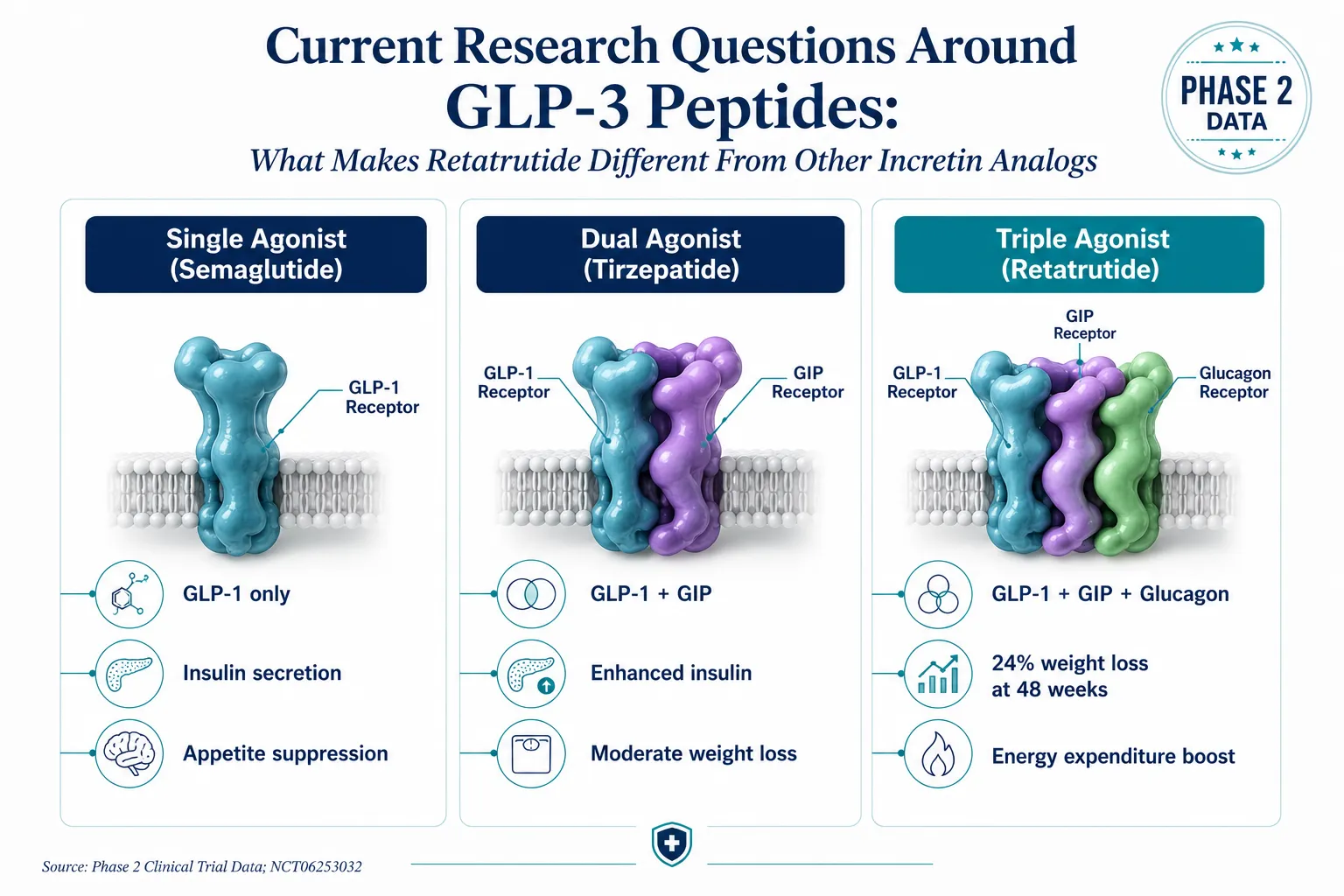
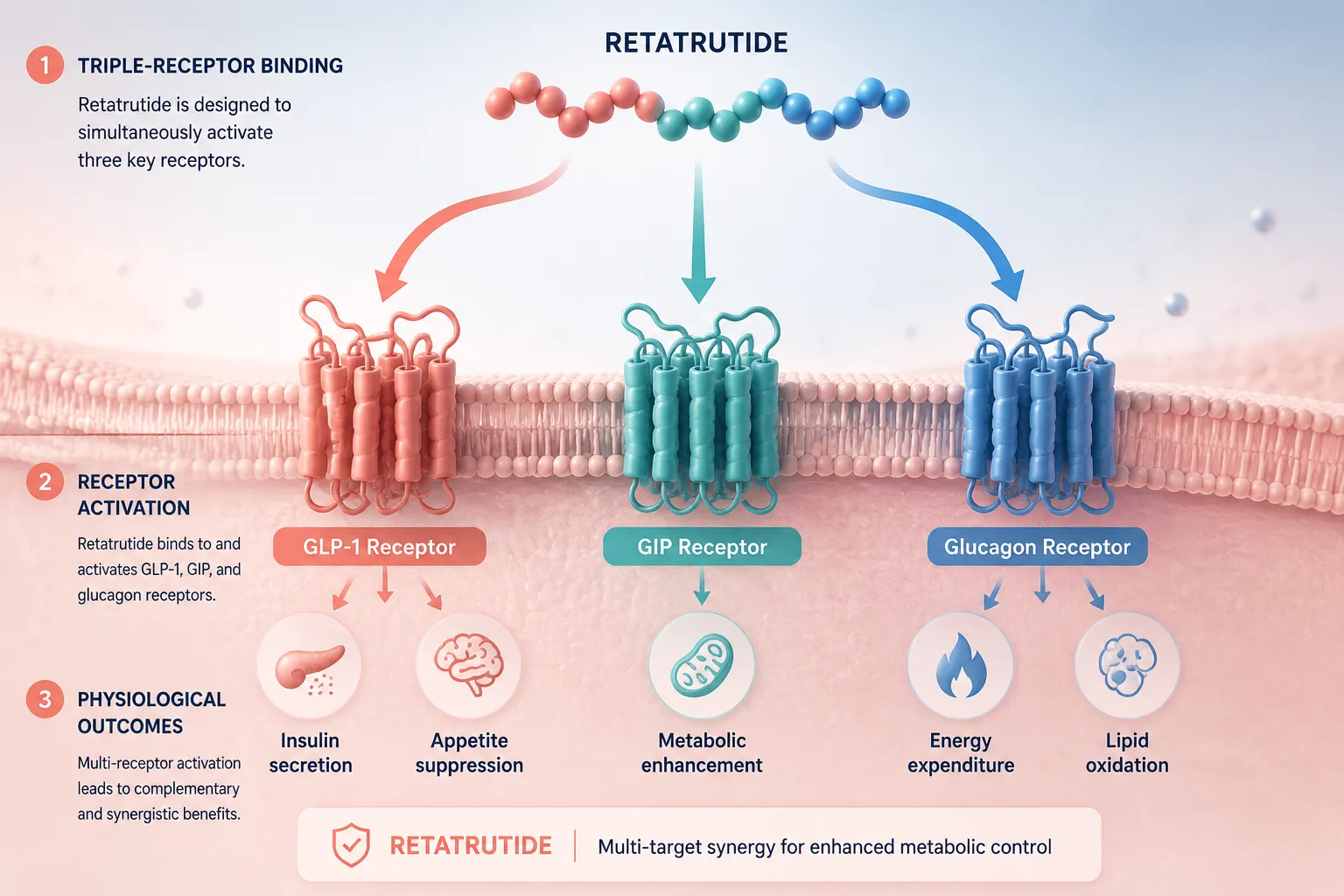
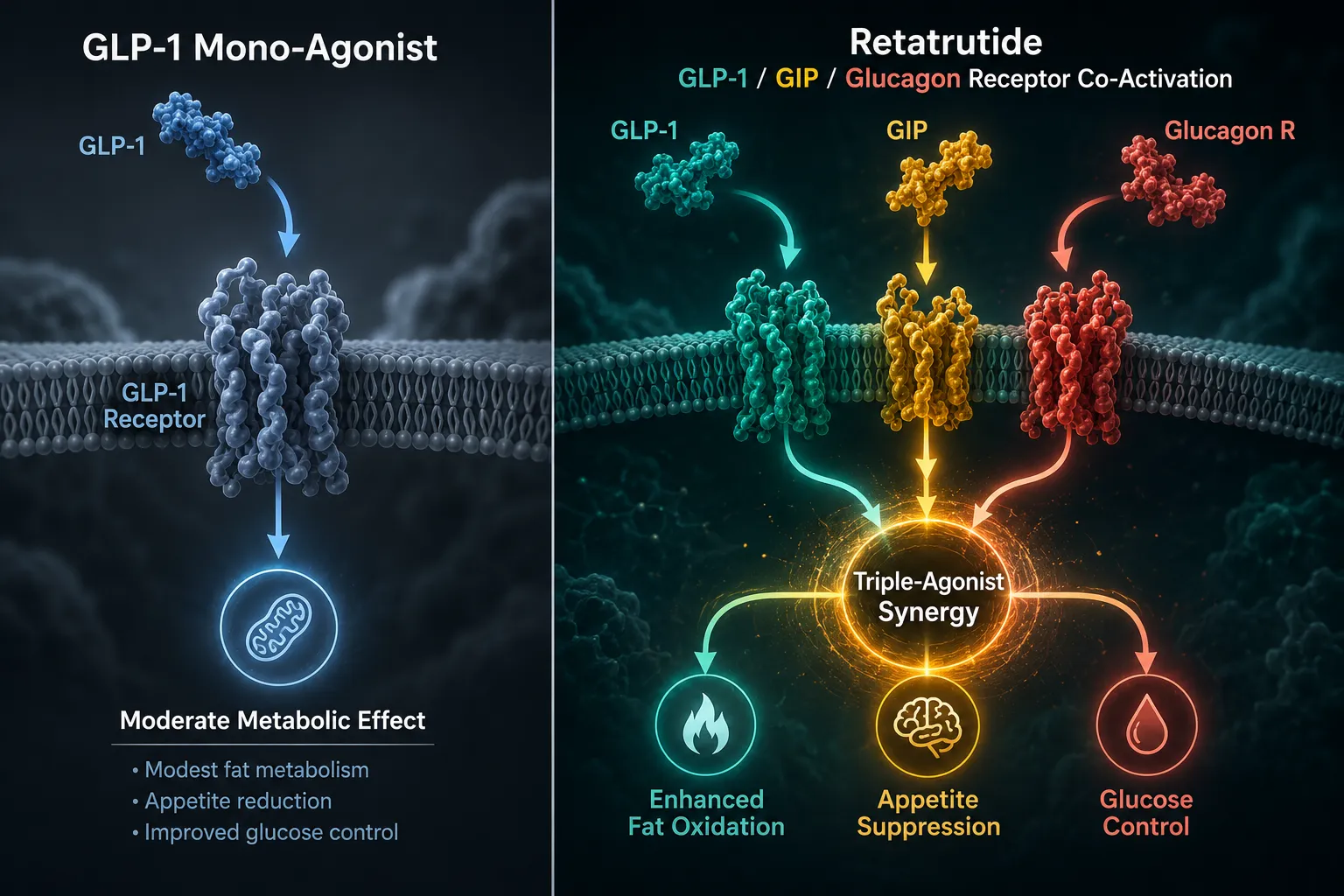
Retatrutide (GLP-3) is a triple agonist targeting GIP, GLP-1, and glucagon receptors simultaneously. This triple activation drives enhanced insulin secretion, increased energy expenditure, and lipolysis. Preclinical evidence also suggests Retatrutide may prevent metabolic adaptation during weight loss by promoting thermogenesis through mitochondrial uncoupling, though direct human confirmation of this mechanism is still pending. For researchers interested in the broader GLP-1 receptor agonist landscape, the GLP-1 peptide research and sourcing overview provides useful context.

MOTS-c is a mitochondrial-derived peptide encoded in mitochondrial DNA. It activates AMPK in muscle tissue, promoting metabolic homeostasis and reducing insulin resistance in preclinical models. Researchers studying its synergistic potential with other compounds may find the MOTS-c and SLU-PP-332 combination research and the LL-37 and MOTS-c synergy overview particularly relevant.

5-Amino-1MQ inhibits nicotinamide N-methyltransferase (NNMT), an enzyme involved in fat storage regulation. By blocking NNMT, the compound may increase NAD+ levels and activate SIRT1 in adipose tissue. Its oral route of administration is a practical advantage. However, all evidence remains preclinical. Its effects are subtle, and it should not be treated as a substitute for validated metabolic therapies.


Comparing Evidence Levels Across the Three Compounds

The most important variable separating these compounds is not mechanism, it is the quality and depth of supporting evidence.

Compound Evidence Stage Key Metabolic Target Human Data?
Retatrutide Phase 2/3 Clinical Trials GIP, GLP-1, Glucagon Receptors Yes, robust
MOTS-c Preclinical + Observational AMPK / Mitochondria Limited
5-Amino-1MQ Preclinical Only NNMT / NAD+ / SIRT1 None

Retatrutide's Phase 2 data also showed a 42% reduction in visceral fat and approximately a 50% decrease in liver fat at the 12 mg weekly dose over 48 weeks, figures that place it well ahead of the other two compounds in terms of demonstrated metabolic impact. Retatrutide is currently in Phase 3 trials and is projected for FDA approval no earlier than late 2027.

Key distinction: Researchers designing human-applicable protocols should weight Retatrutide's evidence base far above the preclinical profiles of MOTS-c and 5-Amino-1MQ.

For a deeper look at Retatrutide's triple agonist profile, the GLP-3 triple agonist research and catalog guide and the GLP-3 newest triple agonist overview are strong starting points.


Comparing Evidence Levels Across the Three Compounds

Selecting the Right Compound: Practical Guidance for Metabolic Research

Choosing among the best research peptides for metabolic health requires aligning compound selection with research objectives, available evidence, and safety considerations.

For studies targeting measurable fat loss and insulin sensitivity with human-applicable endpoints, Retatrutide is the strongest candidate. Common side effects mirror those of GLP-1 receptor agonists, primarily gastrointestinal, and protocols should include monitoring of protein intake, resistance training variables, and heart rate.

For mitochondrial and cellular energy research, MOTS-c offers a compelling mechanistic angle. Researchers interested in its standalone profile can review the dedicated MOTS-c mitochondrial research themes resource.

For exploratory NAD+ pathway and adipose tissue studies, 5-Amino-1MQ remains experimental. Its oral bioavailability makes it logistically convenient, but researchers must design protocols with full acknowledgment of its preclinical-only status.

Some researchers are exploring combinations, for example, pairing Retatrutide's appetite suppression and fat loss effects with MOTS-c's potential to enhance cellular glucose handling. No human studies have evaluated this stack, and safety data is absent. Any combination protocol should be treated as highly exploratory.

For researchers building broader longevity and metabolic panels, the longevity peptide research overview and the NAD+ energetics and longevity research themes provide useful complementary context.


Selecting the Right Compound: Practical Guidance for Metabolic Research

Conclusion

The best research peptides for metabolic health, 5-Amino-1MQ, MOTS-c, and GLP-3 Retatrutide, each occupy a different position on the evidence spectrum. Retatrutide leads with Phase 2 clinical data showing dramatic reductions in body weight, visceral fat, and liver fat. MOTS-c presents a biologically compelling mitochondrial mechanism with early human signals. 5-Amino-1MQ offers an accessible oral option for NAD+ pathway research, but remains entirely preclinical.

Actionable next steps for researchers in 2026:

  • Match compound selection to evidence tier, do not apply preclinical compounds to human-outcome research designs without appropriate controls.
  • Review Retatrutide's GIP receptor contribution through the GIP receptor importance overview before finalizing triple agonist protocols.
  • Treat any combination stacking as exploratory and document safety monitoring rigorously.
  • Consult quality and purity documentation before sourcing any compound for research use.

Understanding where each compound stands today is the foundation of responsible, productive metabolic research.

https://www.puretestedpeptides.com/wp-content/uploads/2026/07/The-Best-Research-Peptides-for-Metabolic-Health-A-Comparative-Guide-to-5-Amino-1MQ-MOTS-c-and-GLP-3-Retatrutide.png 1024 1536 Pure Tested https://www.puretestedpeptides.com/wp-content/uploads/2026/01/buy-peptides-online.jpg Pure Tested2026-07-06 13:05:292026-07-20 15:00:52The Best Research Peptides for Metabolic Health: A Comparative Guide to 5-Amino-1MQ, MOTS-c, and GLP-3 Retatrutide
GLP-3 Retatrutide vs. GLP-1 Receptor Agonists: A Comprehensive Research Review

GLP-3 Retatrutide vs. GLP-1 Receptor Agonists: A Comprehensive Research Review

July 5, 2026/0 Comments/by Pure Tested

A 28% average body weight reduction over 18 months, that figure, emerging from Phase 3 clinical data on retatrutide, rivals outcomes typically seen only with bariatric surgery. For researchers tracking the evolution of metabolic peptide science, this GLP-3 Retatrutide vs. GLP-1 Receptor Agonists: A Comprehensive Research Review examines what sets retatrutide apart from established GLP-1 therapies, how their mechanisms diverge, and what the latest trial data reveals about their comparative potential.

Key Takeaways

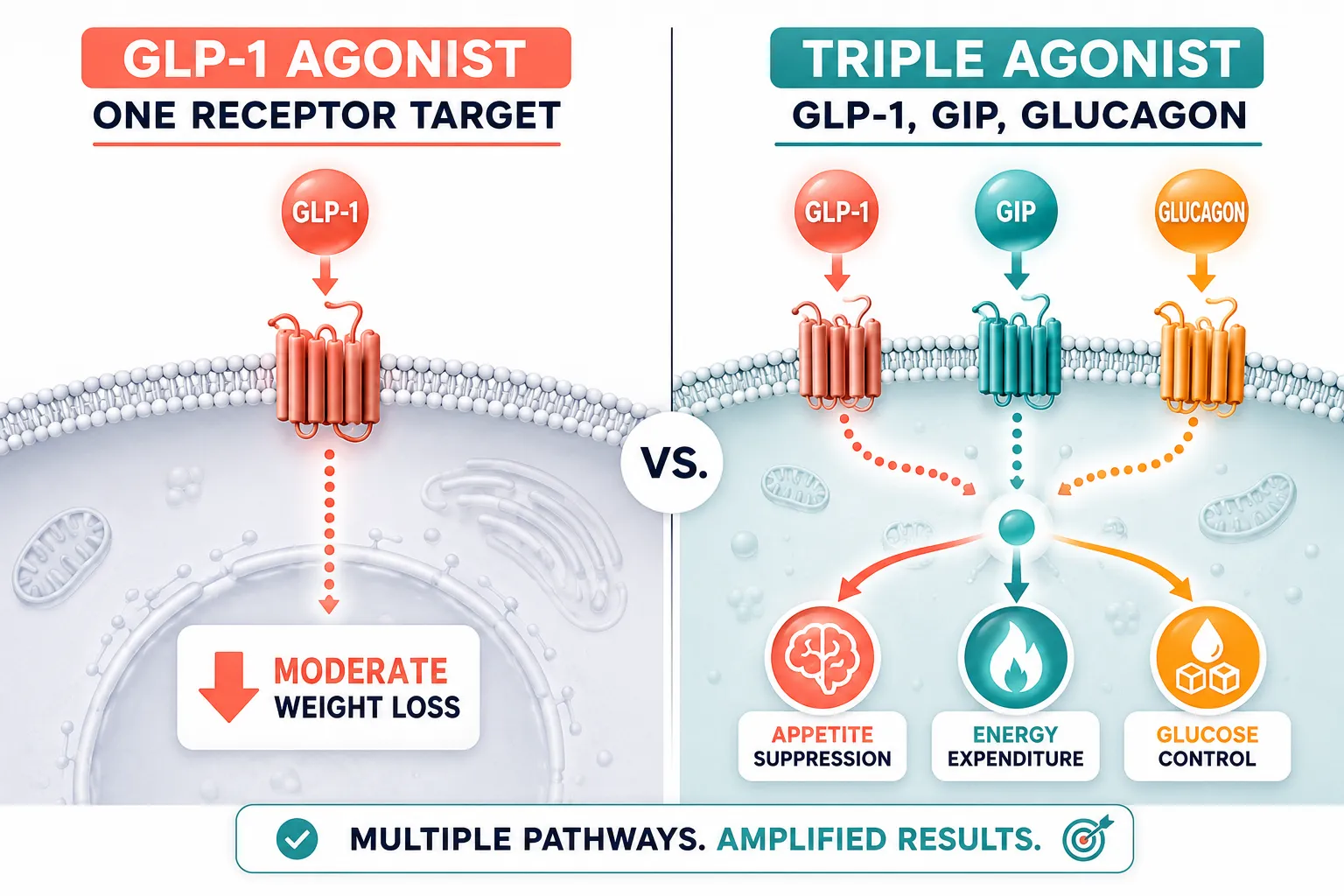
  • Retatrutide is a triple agonist targeting GIP, GLP-1, and glucagon receptors, a fundamentally different mechanism from single GLP-1 receptor agonists.
  • Phase 3 data shows retatrutide achieving approximately 28% body weight reduction, surpassing current GLP-1 benchmarks.
  • A network meta-analysis found retatrutide 12 mg produced a 22.10% body weight reduction, outperforming all compared GLP-1 receptor agonists.
  • Phase 2 trials reported HbA1c reductions of up to 1.94% and body weight reductions up to 15.3% over 40 weeks in type 2 diabetes subjects.
  • Gastrointestinal side effects were mild to moderate and diminished over time, with no severe hypoglycemia reported.
Key Takeaways

Mechanism of Action: How Retatrutide Differs from GLP-1 Receptor Agonists

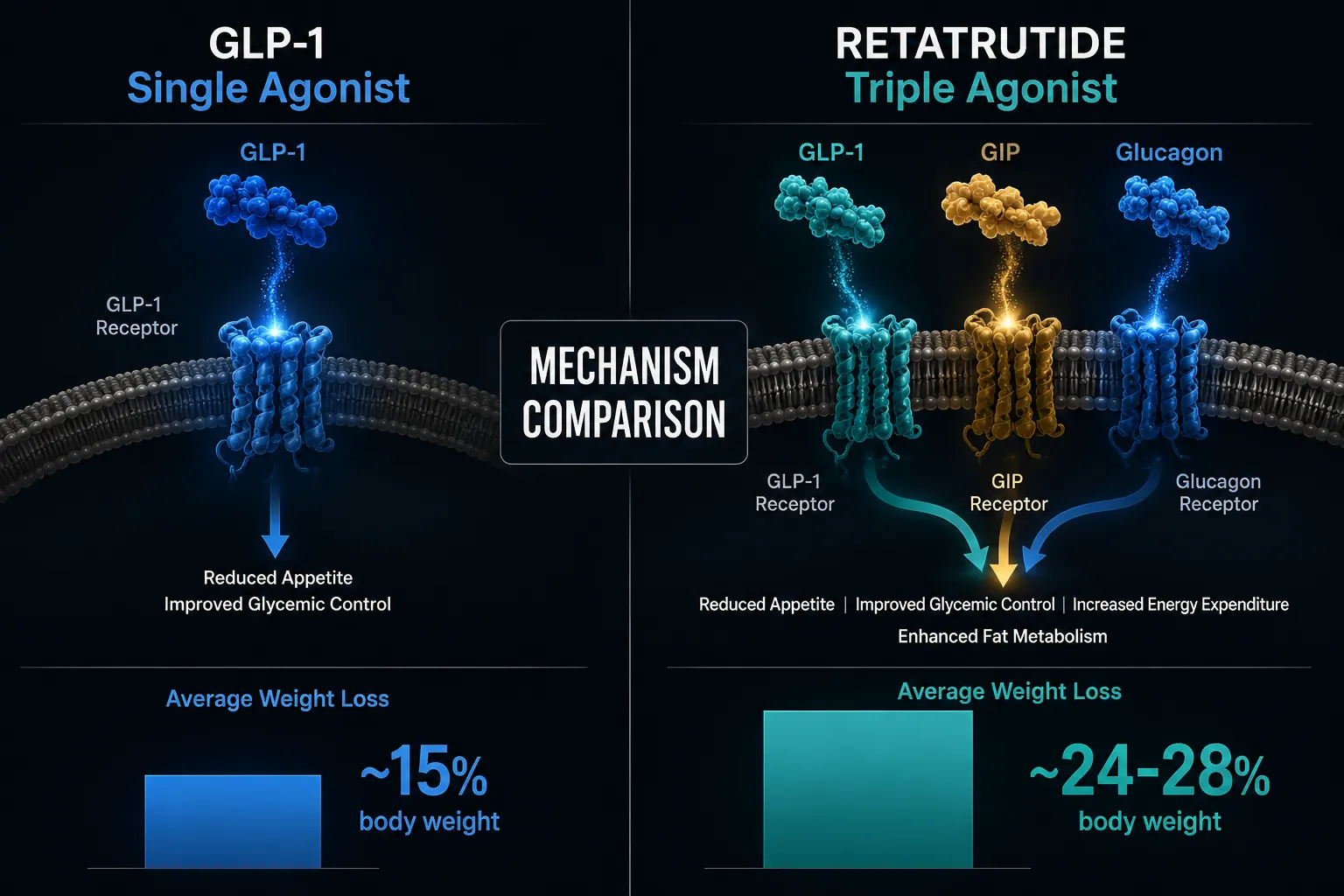
Understanding the GLP-3 Retatrutide vs. GLP-1 Receptor Agonists: A Comprehensive Research Review begins at the receptor level. Standard GLP-1 receptor agonists, such as semaglutide and liraglutide, work by binding exclusively to glucagon-like peptide-1 receptors. This drives insulin secretion, suppresses glucagon release, and slows gastric emptying, producing meaningful but bounded metabolic effects.

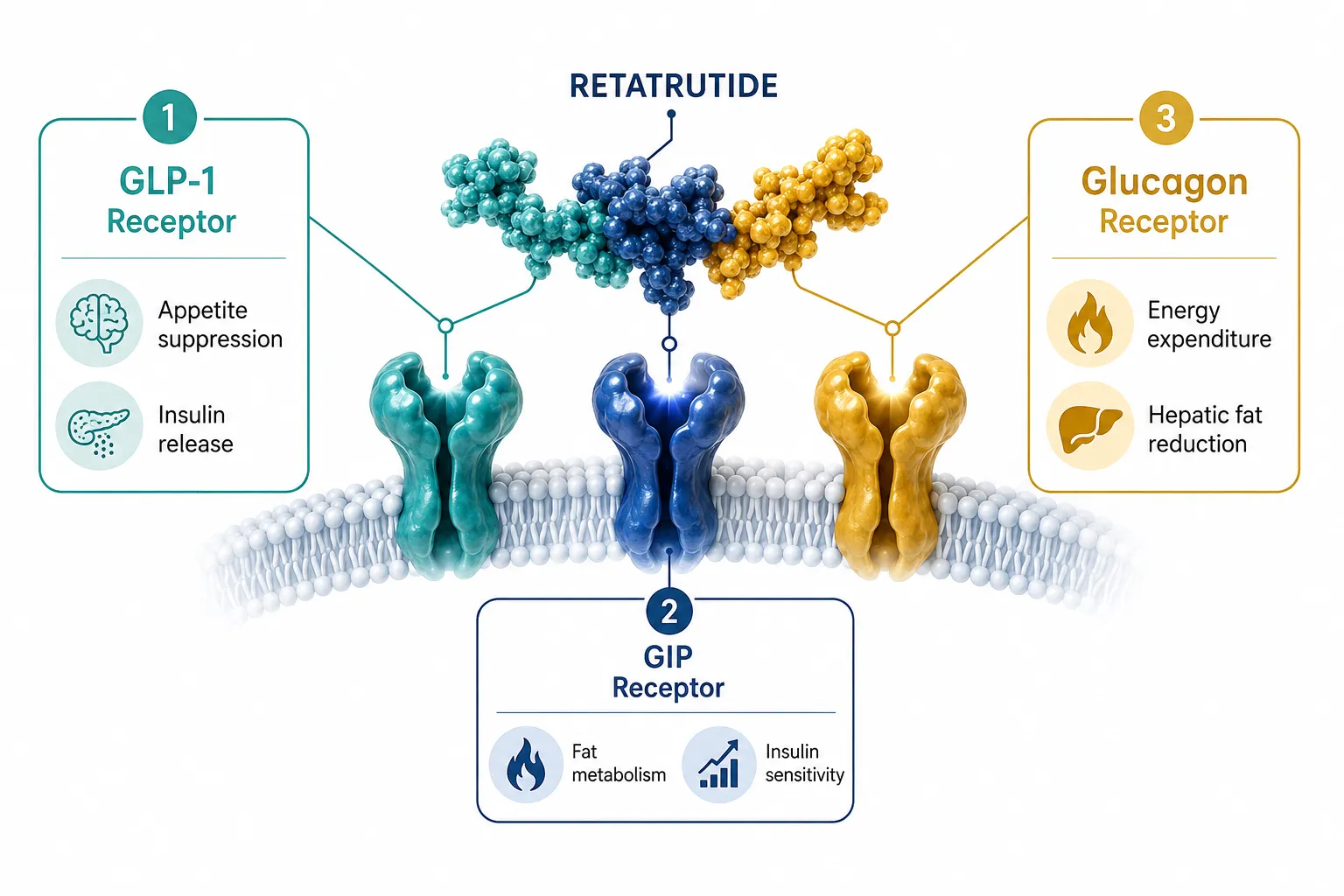
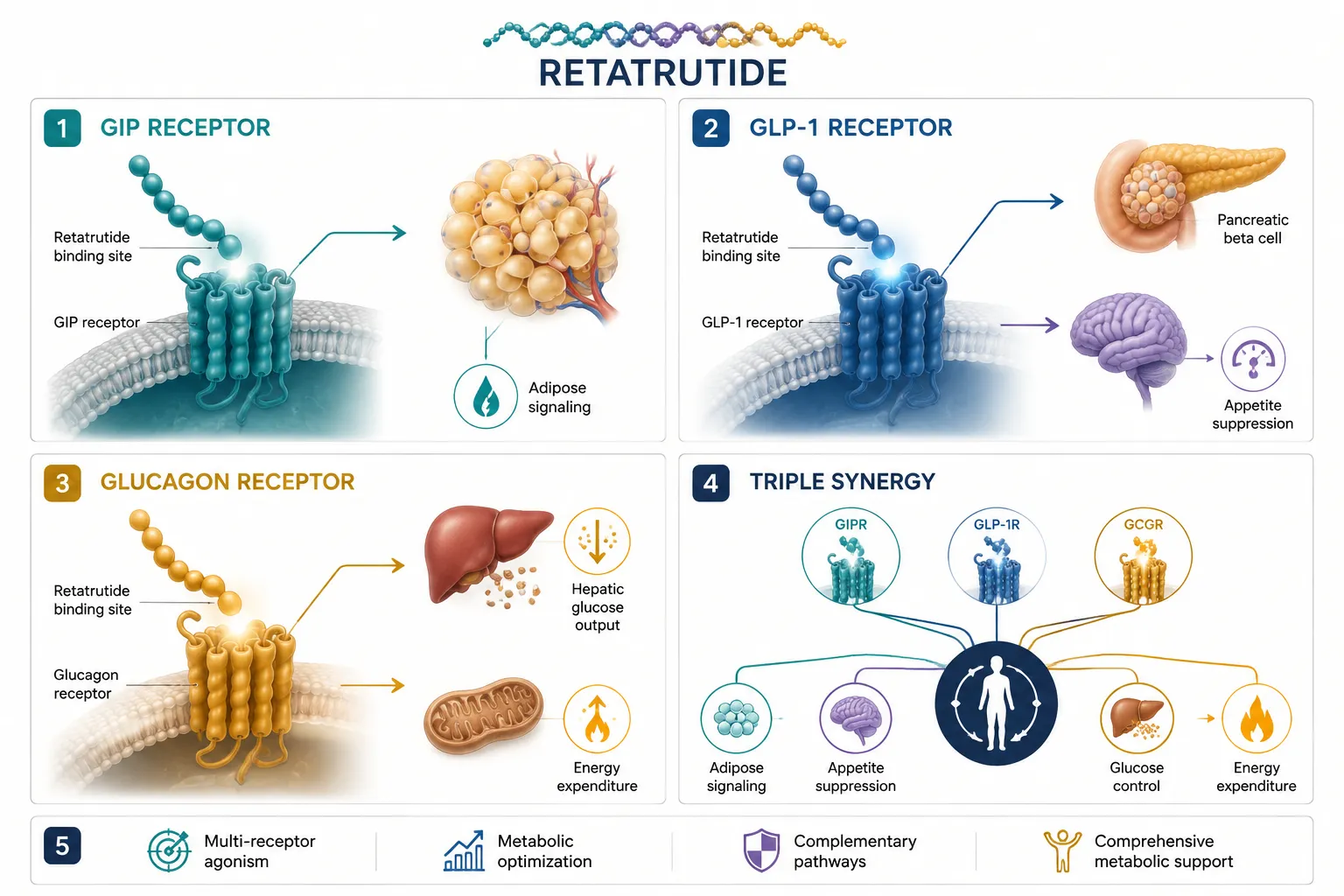
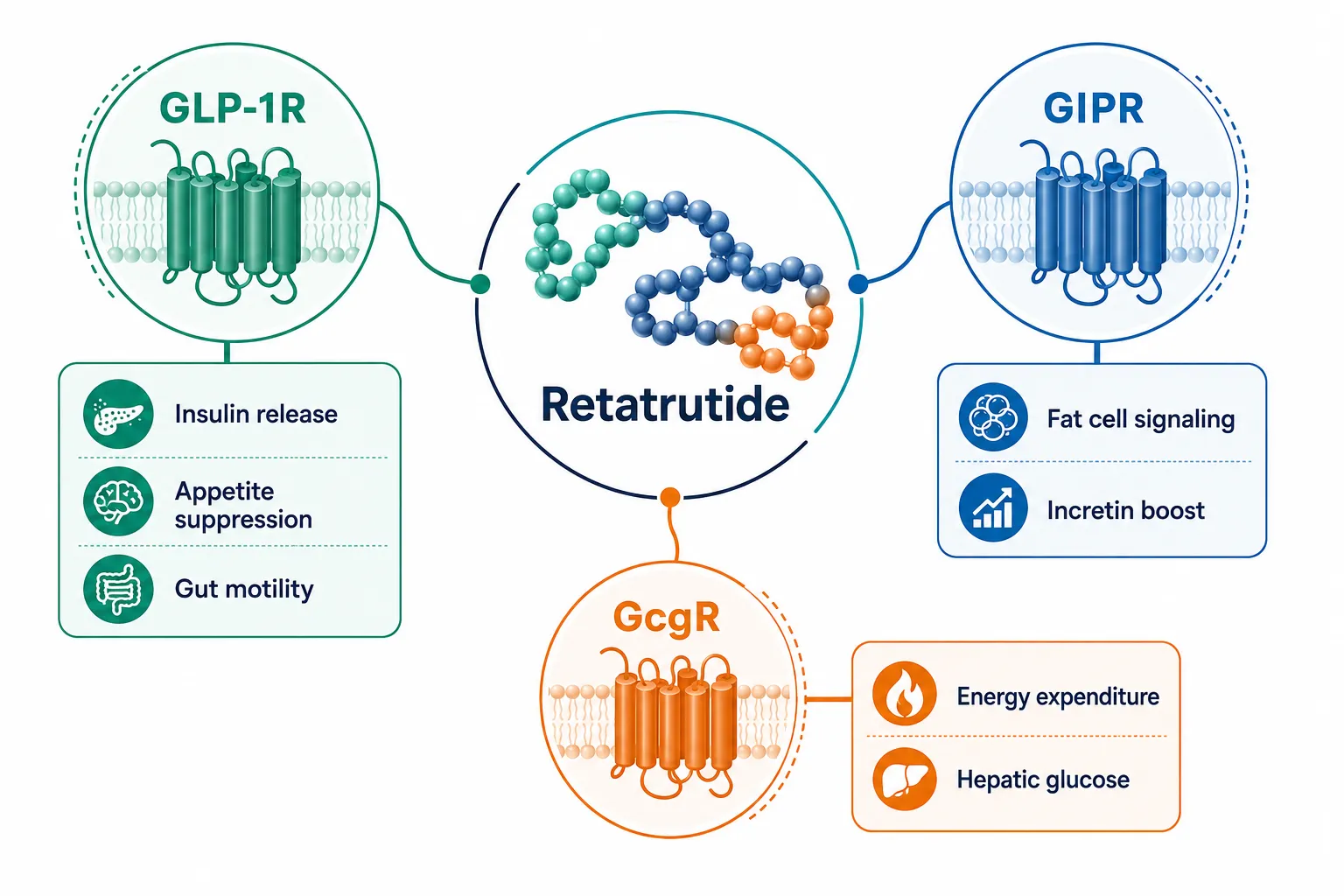
Retatrutide operates on an entirely different scale. It is a 39-amino acid peptide engineered as a triple agonist, simultaneously activating three receptor types:

  • GIP (Glucose-dependent Insulinotropic Polypeptide) receptors, enhancing insulin sensitivity and fat metabolism
  • GLP-1 receptors, regulating appetite, glucose, and gastric motility
  • Glucagon receptors, increasing energy expenditure and promoting hepatic fat oxidation

"The inclusion of glucagon receptor agonism is considered a significant advancement, it adds a thermogenic and lipolytic dimension that single-target GLP-1 agents simply cannot replicate."

This multi-receptor engagement is why researchers exploring GLP-3 retatrutide research are paying close attention. The glucagon component, in particular, drives enhanced energy expenditure, which may explain retatrutide's outsized weight loss results compared to dual or single agonists. Researchers interested in related metabolic peptide mechanisms may also find value in reviewing AOD9604 metabolic research themes for comparative context on fat-targeted peptide signaling.


Mechanism of Action: How Retatrutide Differs from GLP-1 Receptor Agonists

Clinical Trial Data: What the Research Shows

The clinical evidence in this GLP-3 Retatrutide vs. GLP-1 Receptor Agonists: A Comprehensive Research Review paints a compelling picture across multiple trial phases.

Phase 2 Findings

In a Phase 2 trial focused on individuals with type 2 diabetes, retatrutide demonstrated:

Outcome Measure Result
Mean HbA1c reduction Up to 1.94%
Mean body weight reduction Up to 15.3%
Trial duration 40 weeks
Severe hypoglycemia events None reported

These results were notable not only for their magnitude but for the absence of serious glycemic complications, a key safety consideration in diabetic populations.

Phase 3 Findings

The Phase 3 trial expanded the scope to a broader population with obesity or overweight conditions. The headline result, approximately 28% average weight loss over 18 months, placed retatrutide in a category previously occupied only by surgical interventions.

A separate systematic review and network meta-analysis reinforced these findings, reporting that retatrutide 12 mg produced a 22.10% reduction in body weight and a 17.00 cm decrease in waist circumference, outperforming all other GLP-1 receptor agonists and polyagonists included in the analysis.

For researchers also studying body composition peptides, the TESA body composition research themes and IPA muscle and fat research themes offer relevant comparative frameworks.

Safety Profile

The most frequently reported adverse events were mild to moderate gastrointestinal symptoms, nausea, vomiting, and diarrhea, consistent with the GLP-1 class profile. Importantly, these effects tended to subside as the trial progressed. No severe hypoglycemia was observed across the trials reviewed.

Safety Profile

Comparative Efficacy and Research Implications

When mapping the landscape of incretin-based therapies, the data consistently positions retatrutide above current GLP-1 benchmarks. The table below summarizes the key comparative differences:

Feature GLP-1 Agonists Retatrutide (Triple Agonist)
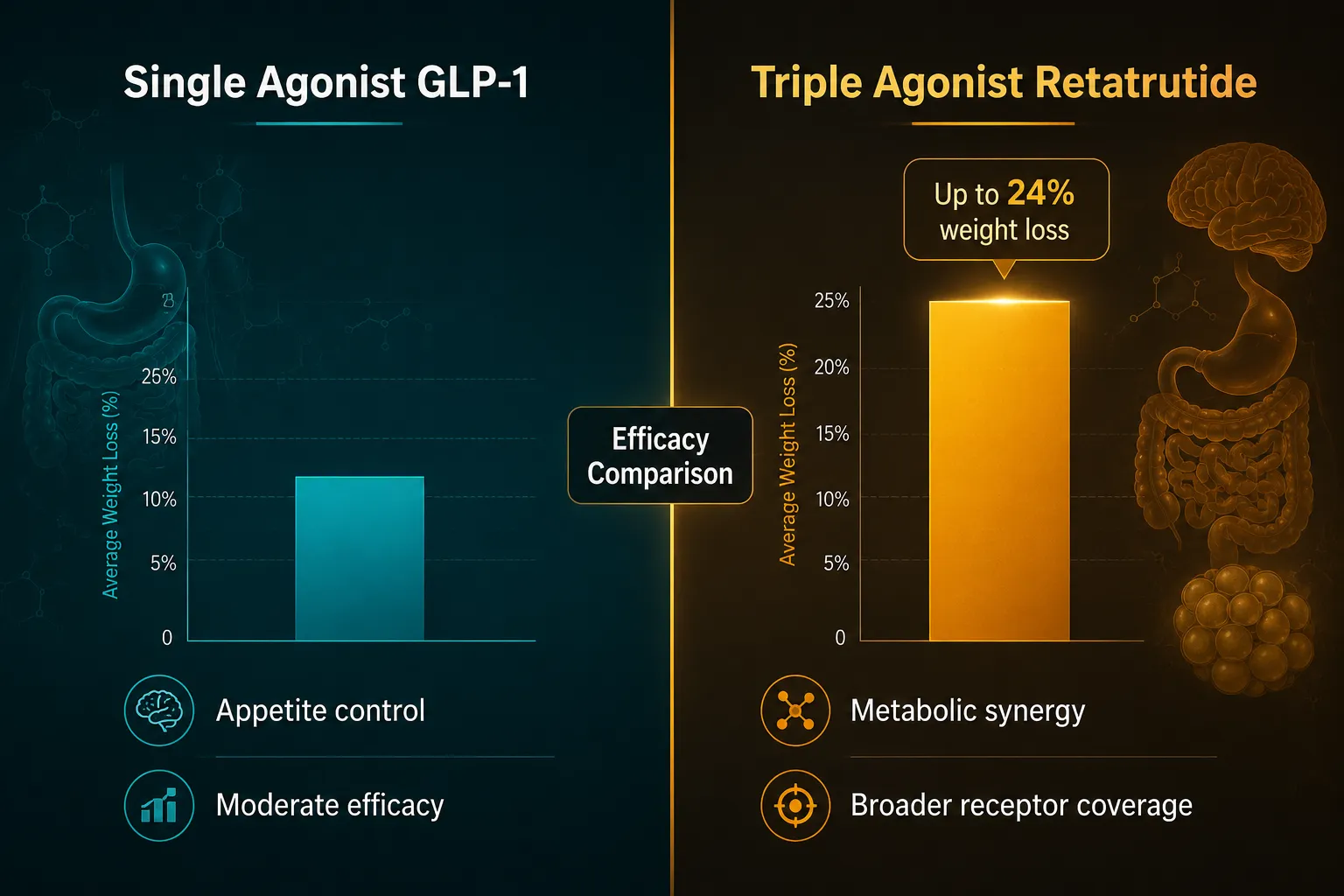
Receptor targets GLP-1 only GIP + GLP-1 + Glucagon
Average weight loss 10-15% Up to 28%
Thermogenic effect Minimal Enhanced via glucagon axis
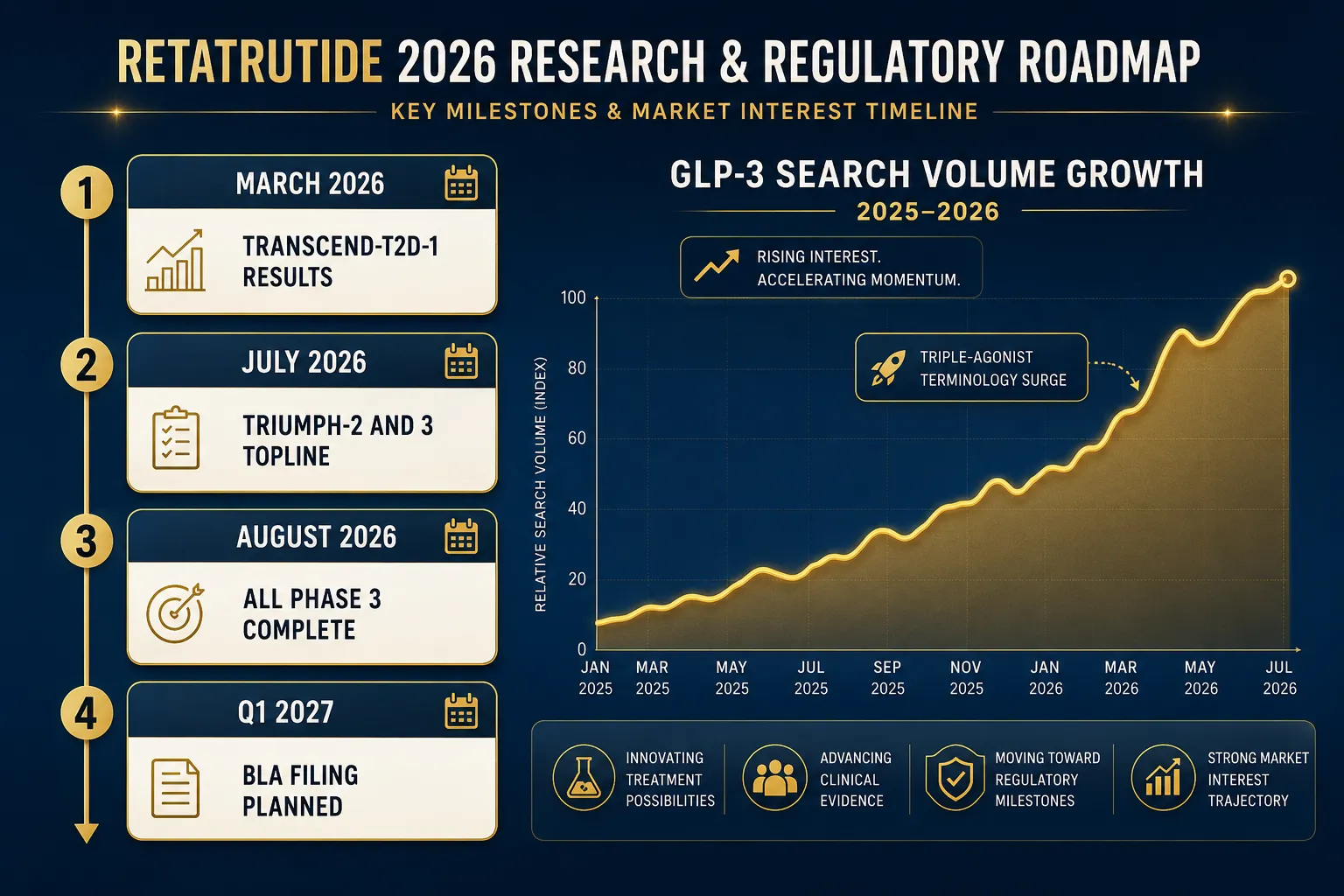
Regulatory status (2026) FDA approved (various) Late-stage trials; FDA submission anticipated

As of 2026, Eli Lilly continues late-stage trials with an anticipated FDA submission by year-end. Analysts project that approval could position retatrutide as a leading therapy across obesity, type 2 diabetes, and metabolic liver disease.

Researchers exploring the broader peptide landscape may find useful context in what is new in peptide research and the GLP-1 Retatrutide research product page. Those interested in metabolic synergy combinations may also review CJC and IPA synergy research themes for adjacent growth hormone axis considerations.

For researchers sourcing verified research-grade material, the GLP-3 Retatrutide 10mg product listing provides specification details relevant to preclinical study design.


Conclusion

The evidence reviewed here makes a clear case: retatrutide represents a meaningful step beyond conventional GLP-1 receptor agonist therapy. Its triple-receptor mechanism, particularly the addition of glucagon receptor agonism, produces weight loss outcomes that current single-target agents cannot match. Phase 2 and Phase 3 data both support its superior efficacy in reducing body weight and improving glycemic control, with a manageable safety profile.

Actionable next steps for researchers:

  • Review the full Phase 2 and Phase 3 trial datasets to assess applicability to specific research populations.
  • Compare retatrutide's glucagon receptor activity against established metabolic peptides to identify potential synergy or overlap.
  • Monitor FDA submission timelines closely, as approval would significantly expand the translational research landscape.
  • Explore innovative peptide delivery systems to understand how formulation advances may affect retatrutide's future clinical utility.

The gap between GLP-1 agonists and triple agonists like retatrutide is not incremental, it is structural. Researchers who map that gap now will be best positioned when the regulatory landscape shifts.

https://www.puretestedpeptides.com/wp-content/uploads/2026/07/GLP-3-Retatrutide-vs.-GLP-1-Receptor-Agonists-A-Comprehensive-Research-Review.png 1024 1536 Pure Tested https://www.puretestedpeptides.com/wp-content/uploads/2026/01/buy-peptides-online.jpg Pure Tested2026-07-05 13:07:052026-07-20 15:00:56GLP-3 Retatrutide vs. GLP-1 Receptor Agonists: A Comprehensive Research Review
Triple‑agonist design and receptor structural biology behind GLP‑1/GIP/glucagon peptides like retatrutide

Triple‑agonist design and receptor structural biology behind GLP‑1/GIP/glucagon peptides like retatrutide

July 4, 2026/0 Comments/by Pure Tested

Retatrutide achieved a mean body weight reduction of over 24% in a 48-week Phase 2 trial, a figure that surpassed every single- and dual-agonist result recorded up to that point. That number is not a coincidence. It is a direct consequence of deliberate molecular engineering, and the triple-agonist design and receptor structural biology behind GLP-1/GIP/glucagon peptides like retatrutide is now one of the most intensively studied areas in metabolic medicine.

Key Takeaways

  • Retatrutide simultaneously activates three gut-hormone receptors: GLP-1R, GIPR, and glucagon receptor (GCGR).
  • High-resolution cryo-EM structural data reveal how a single peptide backbone can engage all three receptor binding pockets.
  • The GLP-1 backbone serves as the scaffold, with GIP and glucagon pharmacophore elements grafted at specific residue positions.
  • Fatty acid conjugation extends plasma half-life, enabling once-weekly dosing without sacrificing receptor selectivity.
  • Understanding this structural framework is essential for interpreting next-generation incretin-mimetic research.

Key Takeaways

How Three Receptors Are Activated by One Molecule

All three target receptors, GLP-1R, GIPR, and GCGR, belong to the class B1 family of G-protein coupled receptors (GPCRs). Each has a large extracellular domain that captures the peptide's N-terminus and a transmembrane bundle that transduces the signal intracellularly. What makes the triple-agonist design and receptor structural biology behind GLP-1/GIP/glucagon peptides like retatrutide so remarkable is that these three receptors share enough structural homology to be addressed by a single engineered peptide, yet differ enough that achieving balanced potency across all three requires precise residue-level tuning.

Cryo-electron microscopy data published in 2024 resolved retatrutide-receptor complexes at near-atomic resolution. The structures confirmed that the peptide adopts an alpha-helical conformation upon receptor engagement. The N-terminal region drives glucagon receptor activation, the mid-helix segment is critical for GIP receptor binding, and the C-terminal portion anchors GLP-1 receptor engagement. Each pharmacophore region overlaps partially, meaning a single amino acid substitution can shift the balance of potency across all three targets simultaneously.

For a broader look at how GLP-1 receptor agonism has evolved across generations, the GLP-1 generations overview provides useful context on how single-receptor agents gave way to more complex multi-target designs.


Rational Poly-Agonist Engineering: Building the Retatrutide Scaffold

Rational Poly-Agonist Engineering: Building the Retatrutide Scaffold

The design strategy starts with the native GLP-1 peptide as the structural backbone. This choice is deliberate. GLP-1R agonism is well-validated for glycemic control and appetite suppression, and the GLP-1 helix provides a stable scaffold onto which additional pharmacophore elements can be introduced.

Key engineering steps include:

Modification Purpose
N-terminal glucagon pharmacophore grafting Activates GCGR to increase energy expenditure and hepatic glucose output
Mid-helix GIP motif insertion Engages GIPR for enhanced insulin secretion and adipose tissue effects
C18 fatty acid chain conjugation Extends half-life via albumin binding; enables once-weekly dosing
Aib (alpha-aminoisobutyric acid) substitutions Resists dipeptidyl peptidase-4 (DPP-4) enzymatic cleavage

The glucagon receptor component is particularly significant. Glucagon alone raises blood glucose, a seemingly counterproductive effect in metabolic disease. However, when glucagon receptor activation is balanced against strong GLP-1R and GIPR agonism, the net result is increased thermogenesis and fat oxidation without net hyperglycemia. This balance is the central challenge of poly-agonist design.

Researchers interested in dual-receptor agonism as a stepping stone to this triple-target approach will find the GLP-1T research breakdown on dual receptor agonism a valuable reference.

"Balanced tri-receptor engagement is not about maximal activation at each target, it is about calibrating the ratio of potencies to produce a synergistic metabolic outcome."

The GLP-3 triple agonist overview explores how related molecules in this class are being characterized for research purposes in 2026.


Metabolic Consequences of Simultaneous Tri-Receptor Activation

Metabolic Consequences of Simultaneous Tri-Receptor Activation

The triple-agonist design and receptor structural biology behind GLP-1/GIP/glucagon peptides like retatrutide produces a layered metabolic effect that no single-receptor agent can replicate.

GLP-1R activation contributes:

  • Slowed gastric emptying
  • Reduced appetite via hypothalamic signaling
  • Glucose-dependent insulin secretion

GIPR activation adds:

  • Enhanced postprandial insulin response
  • Possible direct adipocyte effects reducing lipid accumulation
  • Complementary appetite modulation

GCGR activation provides:

  • Increased hepatic glucose production (offset by GLP-1R effects)
  • Elevated energy expenditure through brown adipose tissue thermogenesis
  • Enhanced lipolysis in white adipose tissue

This convergence explains the superior weight loss data. Researchers studying metabolic modulation pathways can explore additional mechanistic context through the metabolic modulation research lines resource.

The structural data also have formulation implications. Because the fatty acid chain binds albumin reversibly, the peptide circulates in a depot-like state, releasing gradually. This pharmacokinetic profile is a direct product of the structural biology, not an afterthought. For those interested in how delivery systems shape peptide therapeutics broadly, the innovative peptide delivery systems overview covers relevant advances.

Researchers examining related metabolic peptides may also find the MOTS-c metabolic flexibility research themes relevant, as mitochondrial and incretin pathways intersect in energy homeostasis models.


Conclusion

The triple-agonist design and receptor structural biology behind GLP-1/GIP/glucagon peptides like retatrutide represents a landmark convergence of structural biology, medicinal chemistry, and metabolic physiology. High-resolution cryo-EM data have moved this field from empirical screening toward genuinely rational drug design, where each amino acid substitution is chosen with a specific receptor interaction in mind.

Actionable next steps for researchers and clinicians:

  1. Review published cryo-EM structural data on retatrutide-receptor complexes to understand residue-level binding determinants.
  2. Track ongoing Phase 3 trial data for retatrutide to assess whether preclinical structural predictions translate to clinical outcomes.
  3. Explore the generations of GLP-1 receptor agonists to contextualize where triple agonism fits in the therapeutic timeline.
  4. Consider how poly-agonist design principles may inform research into other multi-target peptide systems beyond metabolic disease.

The structural biology is no longer a black box. That clarity is accelerating the next wave of incretin-mimetic innovation.

https://www.puretestedpeptides.com/wp-content/uploads/2026/07/Triple‑agonist-design-and-receptor-structural-biology-behind-GLP‑1GIPglucagon-peptides-like-retatrutide.png 1024 1536 Pure Tested https://www.puretestedpeptides.com/wp-content/uploads/2026/01/buy-peptides-online.jpg Pure Tested2026-07-04 13:03:572026-07-20 15:01:09Triple‑agonist design and receptor structural biology behind GLP‑1/GIP/glucagon peptides like retatrutide
Safety, stability, and storage of research‑grade retatrutide/“GLP‑3” solutions

Safety, stability, and storage of research‑grade retatrutide/“GLP‑3” solutions

July 4, 2026/0 Comments/by Pure Tested

Lyophilized retatrutide stored at −20 °C retains approximately 98% of its potency after 12 months, yet a significant share of research buyers still keep peptide vials at room temperature, a practice that can destroy bioactivity within days. As new stability data emerges and interest in this triple-receptor agonist grows, understanding the safety, stability, and storage of research-grade retatrutide/"GLP-3" solutions has become essential knowledge for any serious laboratory.

Key Takeaways

  • Retatrutide is an investigational research peptide only, not approved for human use.
  • Lyophilized (freeze-dried) powder is far more stable than reconstituted solution and can last up to 48 months at −20 °C.
  • Reconstituted solutions should be refrigerated at 2-8 °C and used within 4 weeks.
  • Proper PPE, biological safety cabinets, and biohazardous waste disposal are required for safe handling.
  • Light, heat, and repeated freeze-thaw cycles are the primary causes of peptide degradation.

Key Takeaways

Safe Handling of Research-Grade Retatrutide/"GLP-3" Solutions

Retatrutide, often labeled GLP-3 RT by vendors, is sold strictly as a research chemical. Safety Data Sheet (SDS) documentation classifies it as a laboratory chemical with health hazards typical of peptide and protein compounds, including potential for skin irritation and allergenic responses.

Required PPE for safe handling:

  • Nitrile gloves (minimum)
  • Lab coat or protective gown
  • Safety glasses or goggles
  • Work within a biological safety cabinet when handling powders

Researchers must avoid inhalation of lyophilized powder, ingestion, and direct skin or eye contact. Any spill should be absorbed with inert material and disposed of as biohazardous waste following local regulations.

"Research peptides like retatrutide must be treated with the same rigor as any uncharacterized bioactive compound, controlled environment, documented handling, and proper disposal."

For researchers exploring other peptides with similar handling requirements, guidance on safe peptide combinations and research protocols provides a useful reference point. Similarly, those working with mitochondria-targeted compounds can consult SS-31 research peptide handling considerations for parallel best practices.


Safe Handling of Research-Grade Retatrutide/"GLP-3" Solutions

Stability of Research-Grade Retatrutide/"GLP-3" Solutions: What the Data Shows

Peptide stability depends on three core variables: temperature, moisture, and light exposure. Retatrutide is no exception.

Lyophilized Powder Stability

Storage Condition Estimated Shelf Life Notes
−20 °C or below (frozen) 24-48 months Gold standard; ~98% potency at 12 months
2-8 °C (refrigerated) 12-24 months Acceptable for shorter-term storage
Room temperature Days to weeks Not recommended; rapid degradation risk

Reconstituted Solution Stability

Once reconstituted with bacteriostatic water, retatrutide solutions are considerably more vulnerable. Key guidelines include:

  • Store reconstituted vials at 2-8 °C (standard refrigerator)
  • Use within 4 weeks of reconstitution
  • Never freeze a reconstituted solution, ice crystal formation disrupts peptide structure
  • Protect from light by wrapping vials in foil or storing in opaque containers

The primary degradation pathways are oxidation, hydrolysis, and aggregation, all of which accelerate with heat and UV exposure. Researchers working with other sensitive peptides such as MOTS-c and Elamipretide will recognize these same degradation risks.


Reconstituted Solution Stability

Storage Best Practices for Research-Grade Retatrutide/"GLP-3" Solutions

Consistent, documented storage protocols protect both sample integrity and research validity.

Practical storage checklist:

  • Store lyophilized vials at −20 °C in a dedicated laboratory freezer
  • Include a desiccant packet in the storage container to control moisture
  • Label each vial with the date of receipt and reconstitution date
  • Minimize the number of times a vial is opened to reduce contamination risk
  • Avoid storing near freezer doors where temperature fluctuates

Researchers sourcing retatrutide should verify that suppliers provide Certificates of Analysis (CoA) confirming purity and identity. Reviewing a supplier's CoA documentation standards is a critical step before beginning any protocol. For those evaluating the retatrutide GLP-3 research peptide directly, verified purity data should accompany every order.

Researchers comparing peptide classes may also find value in reviewing how related compounds like ipamorelin and sermorelin stacks are handled, as overlapping storage principles apply across many research-grade peptides.


Conclusion

The safety, stability, and storage of research-grade retatrutide/"GLP-3" solutions demand the same disciplined approach applied to any high-value investigational compound. Three actionable priorities stand out:

  1. Handle with full PPE in a controlled environment and dispose of waste as biohazardous material.
  2. Store lyophilized powder at −20 °C to maximize shelf life up to 48 months; refrigerate reconstituted solutions and use within four weeks.
  3. Source from verified suppliers that provide independent CoA documentation confirming peptide identity and purity before beginning any research protocol.

Following these standards protects both the integrity of the research and the safety of everyone in the laboratory.

https://www.puretestedpeptides.com/wp-content/uploads/2026/07/Safety-stability-and-storage-of-research‑grade-retatrutideGLP‑3-solutions.png 1024 1536 Pure Tested https://www.puretestedpeptides.com/wp-content/uploads/2026/01/buy-peptides-online.jpg Pure Tested2026-07-04 13:02:462026-07-20 15:01:10Safety, stability, and storage of research‑grade retatrutide/“GLP‑3” solutions
GLP-3 Retatrutide Dose Escalation: Understanding Tolerability and Side Effects in Research Studies

GLP-3 Retatrutide Dose Escalation: Understanding Tolerability and Side Effects in Research Studies

July 3, 2026/0 Comments/by Pure Tested

Discontinuation rates in Retatrutide research groups reached as high as 16% due to adverse events, compared to 0% in placebo groups. That single data point frames the central challenge researchers face when designing protocols around GLP-3 Retatrutide dose escalation: understanding tolerability and side effects in research studies is not optional; it is foundational to sound experimental design.

Key Takeaways

  • Gastrointestinal side effects are the most common adverse events and are strongly dose-dependent, peaking during escalation phases.
  • Gradual four-week dose escalation intervals significantly improve tolerability compared to rapid titration.
  • A unique dysesthesia signal, abnormal tingling or burning, affects up to 20.9% of participants at the highest doses.
  • Modest heart rate increases averaging 5 to 10 BPM have been observed, peaking around week 24.
  • Approximately 25 to 40% of total weight lost may come from lean mass, making resistance training and protein intake critical protocol considerations.

Key Takeaways

Dose Escalation Protocol and the Tolerability Framework

The core principle guiding GLP-3 Retatrutide dose escalation in research settings is gradual titration. Starting at 2 mg and increasing in four-week intervals allows biological systems to adapt before advancing to higher dose tiers. This approach directly reduces the frequency and intensity of adverse events.

Retatrutide is a triple agonist acting on GLP-1, GIP, and glucagon receptors simultaneously. This multi-receptor activity drives its potent metabolic effects, but it also broadens the side effect profile compared to single-target GLP-1 agents. Researchers exploring GLP-1 and incretin research themes will recognize the GI tolerability pattern, but Retatrutide introduces additional signals not seen with earlier-generation compounds.

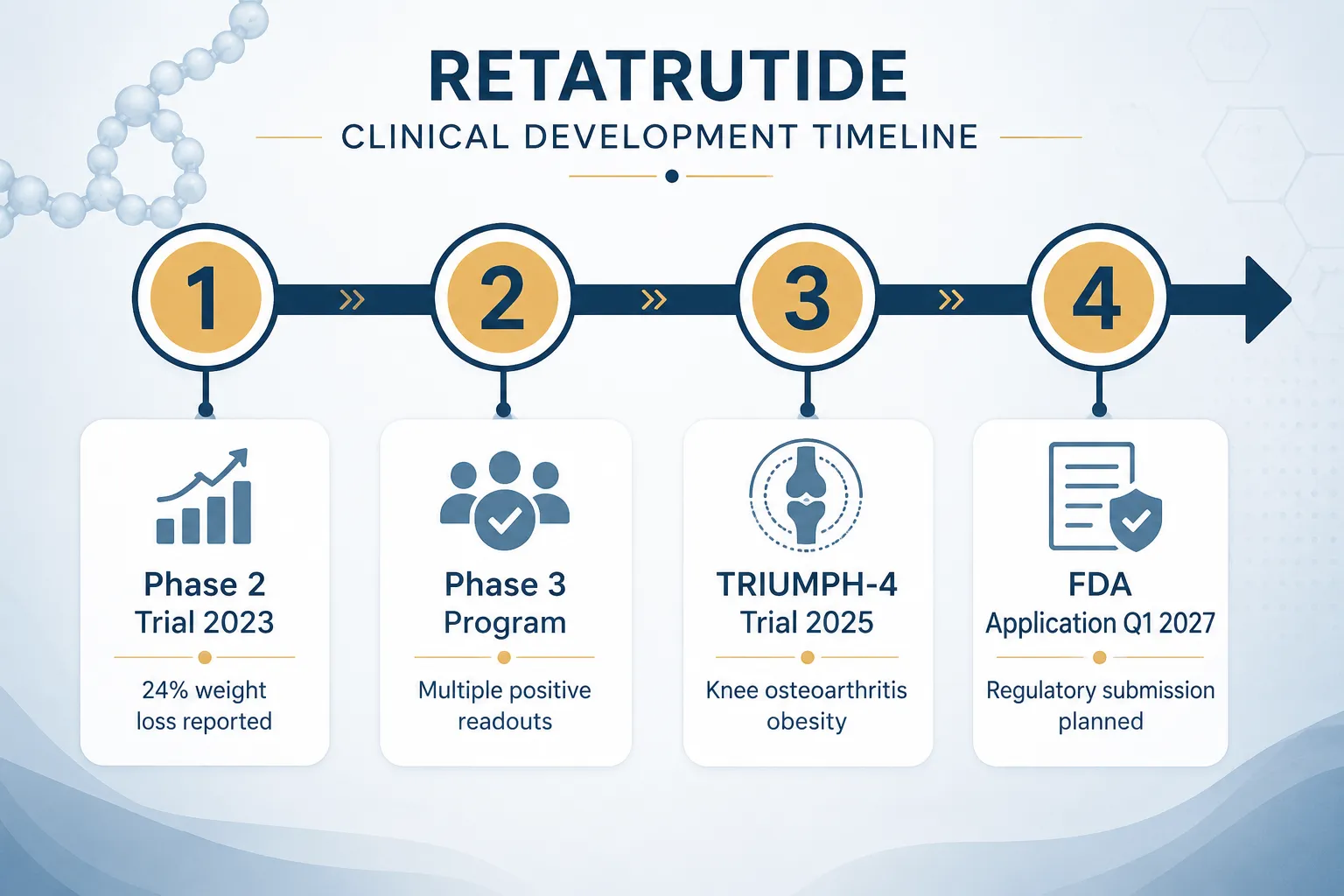
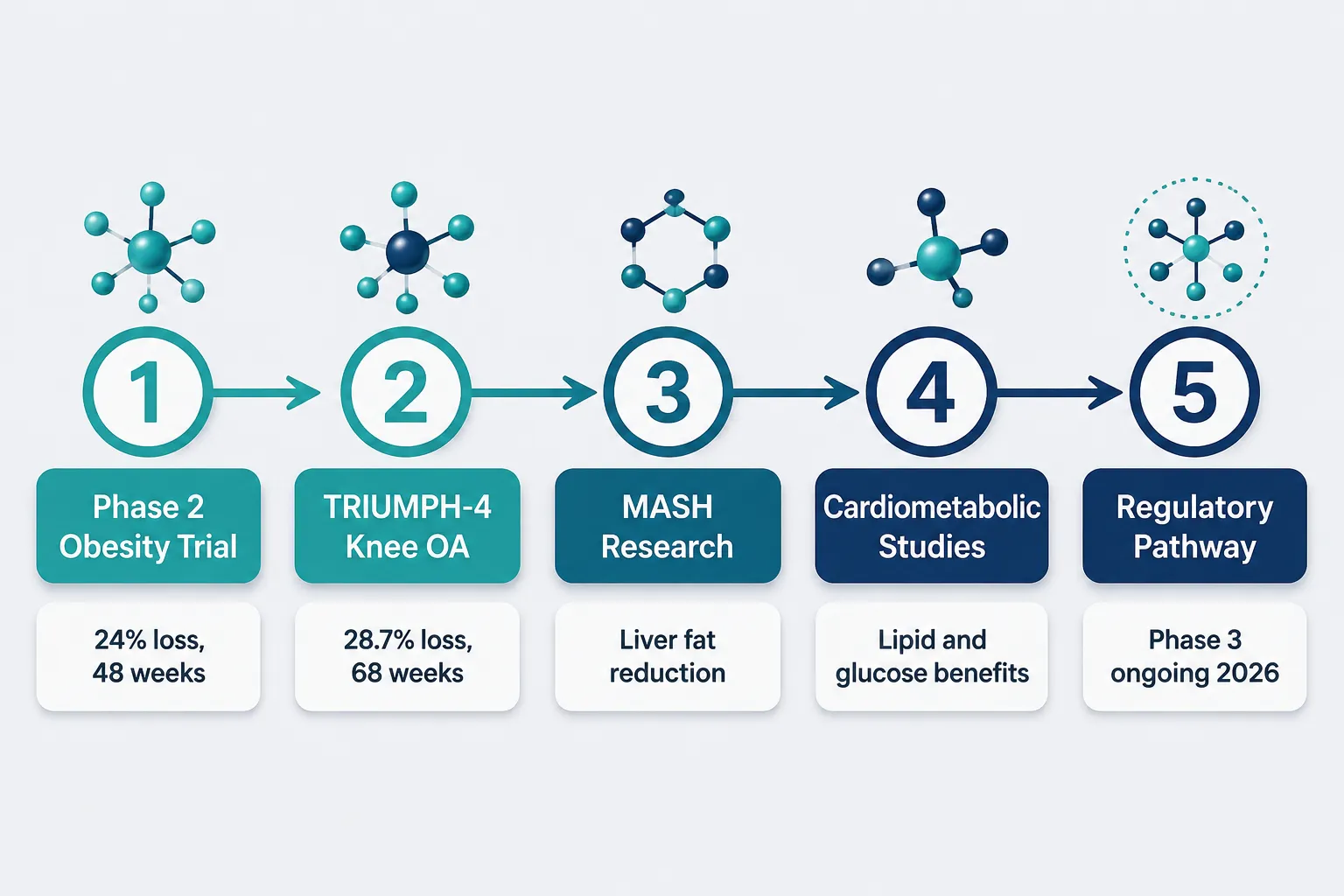
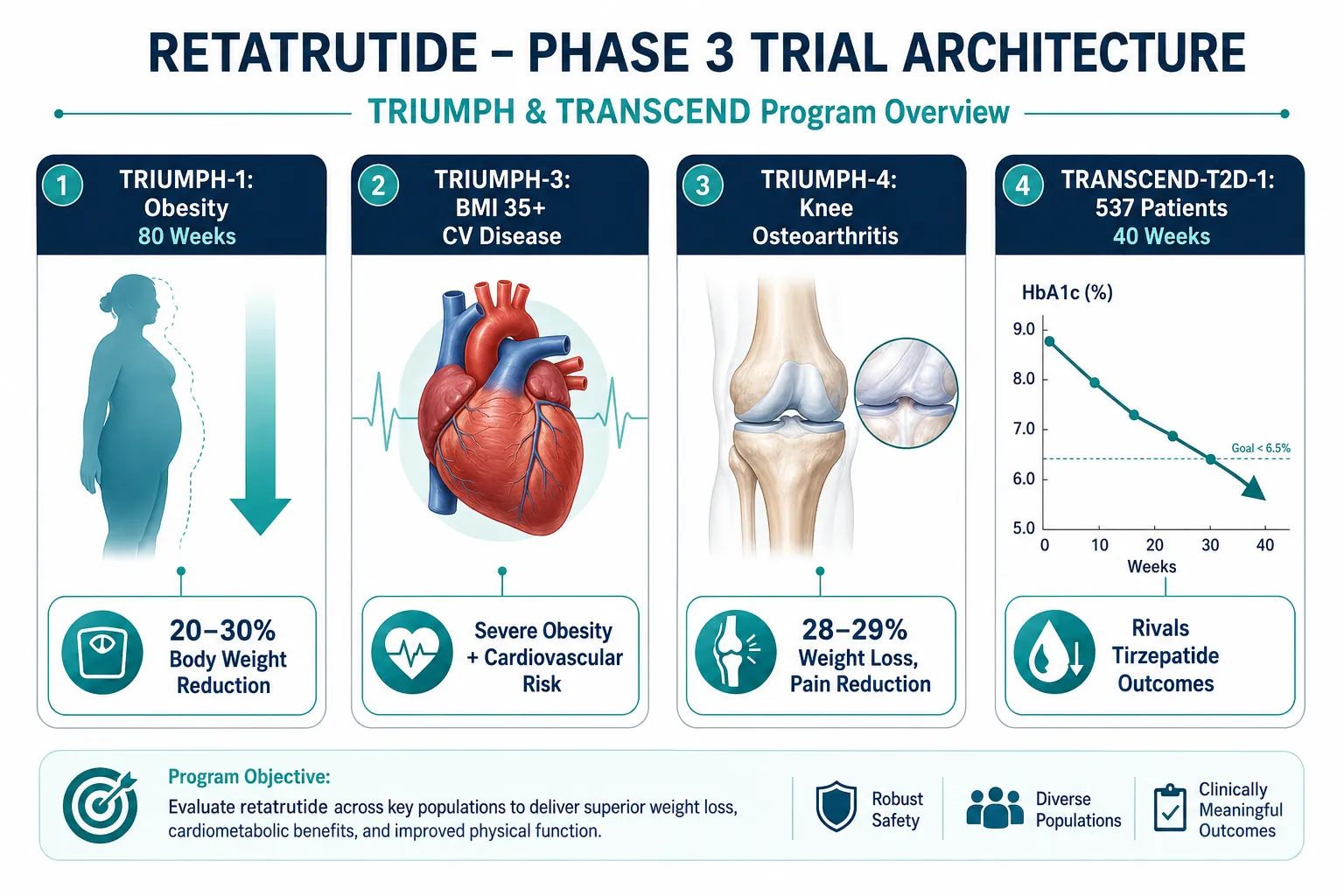
In the 48-week Phase 2 obesity trial, weight loss outcomes were clearly dose-dependent, reinforcing that higher doses carry both greater efficacy and greater tolerability burden. The 68-week TRIUMPH-4 Phase 3 trial further confirmed this relationship, with nausea rates of 38.1% at 9 mg and 43.2% at 12 mg, versus 10.7% in the placebo group.

Practical protocol guidance:

Dose Tier Approximate Duration Primary Tolerability Risk
2 mg Weeks 1-4 Minimal GI symptoms
4 mg Weeks 5-8 Mild nausea onset
8 mg Weeks 9-16 Moderate GI events peak
12 mg Weeks 17+ Highest GI and dysesthesia risk

Researchers sourcing material for metabolic studies can review the GLP-3 triple agonist research planning catalog for further context on compound availability and protocol scaffolding.


Side Effect Profile: What Research Data Reveals

Side Effect Profile: What Research Data Reveals

Understanding the full tolerability and side effects in research studies requires examining each adverse event category individually.

Gastrointestinal Events

Nausea, vomiting, diarrhea, and constipation are the dominant adverse events. These are mild to moderate in most cases and cluster heavily during the escalation window rather than persisting at maintenance doses. Comparing Retatrutide to tirzepatide, GI event rates are measurably higher, a distinction researchers should factor into study design and participant selection criteria.

The Dysesthesia Signal

"Up to 20.9% of participants at the 12 mg dose reported dysesthesia, abnormal tingling or burning sensations, compared to just 0.7% in the placebo group."

This signal is notably absent from standard GLP-1 agonist profiles. The glucagon receptor component of Retatrutide is the suspected driver. Researchers designing longer-duration studies should include dysesthesia monitoring checkpoints, particularly at higher dose tiers. This distinguishes Retatrutide's side effect map from compounds like tesa, which carries its own distinct tolerability considerations.

Cardiovascular Signal: Heart Rate

Resting heart rate increases averaging 5 to 10 BPM have been documented, peaking near week 24 before partially attenuating. While modest, this elevation warrants baseline cardiovascular assessment in research subjects and ongoing monitoring throughout the protocol. Researchers interested in broader metabolic modulation research will find this cardiovascular signal relevant to multi-compound study design.

Lean Mass Considerations

Roughly 25 to 40% of total weight lost during Retatrutide studies is lean mass, a finding consistent across the broader GLP-1 drug class. Research protocols that do not account for this risk may produce confounded body composition data. Resistance exercise protocols and elevated protein intake are the primary mitigation strategies supported by current evidence.

For researchers examining complementary compounds that may address lean mass preservation, ipamorelin muscle and fat research themes offer relevant parallel data.


Designing Safer Research Protocols Around Retatrutide

Designing Safer Research Protocols Around Retatrutide

Translating the GLP-3 Retatrutide dose escalation tolerability and side effects data into actionable protocol design requires structured decision-making.

Key protocol design checkpoints:

  • Baseline screening: Cardiovascular status, GI history, and neurological baselines before initiating escalation.
  • Escalation pacing: Strict four-week minimum intervals between dose increases; do not accelerate based on early tolerance.
  • Adverse event monitoring windows: Heightened observation during weeks 5 through 20, when GI and dysesthesia events peak.
  • Discontinuation thresholds: Pre-define stopping criteria; trial data shows 6 to 16% discontinuation rates, and researchers should plan for this range.
  • Body composition tracking: Dual-energy X-ray absorptiometry (DEXA) or equivalent methods to monitor lean mass changes.

Long-term cardiovascular, renal, and oncological safety data remain incomplete pending results from the ongoing TRIUMPH-5 multi-year trial. This gap is a meaningful limitation for researchers planning extended protocols. Researchers interested in renal-adjacent peptide safety profiles may find value in reviewing SS-31 kidney health research as a comparative reference point.

Those sourcing Retatrutide for research can explore the Reta 10mg product tag for catalog options, while researchers building broader metabolic panels may also reference GLP-1 peptide product options for complementary compounds.


Conclusion

GLP-3 Retatrutide dose escalation: understanding tolerability and side effects in research studies is not a peripheral concern, it is the operational core of any well-designed Retatrutide protocol. The data from Phase 2 and TRIUMPH-4 trials provide a clear roadmap: GI events dominate the escalation window, dysesthesia is a unique and dose-dependent signal, heart rate elevations require cardiovascular monitoring, and lean mass loss demands proactive mitigation strategies.

Actionable next steps for researchers in 2026:

  1. Build four-week escalation intervals into every protocol from the outset.
  2. Include dysesthesia and cardiovascular monitoring checkpoints at weeks 12, 24, and 48.
  3. Define discontinuation criteria before the study begins, accounting for the 6 to 16% adverse-event dropout range.
  4. Pair Retatrutide protocols with body composition tracking to capture lean mass data.
  5. Monitor TRIUMPH-5 trial publications for emerging long-term safety data before extending protocol durations.

Researchers who treat the tolerability profile as a design input, not an afterthought, will produce more reliable, reproducible, and ethically sound data from their Retatrutide studies.

https://www.puretestedpeptides.com/wp-content/uploads/2026/07/GLP-3-Retatrutide-Dose-Escalation-Understanding-Tolerability-and-Side-Effects-in-Research-Studies.png 1024 1536 Pure Tested https://www.puretestedpeptides.com/wp-content/uploads/2026/01/buy-peptides-online.jpg Pure Tested2026-07-03 13:04:132026-07-20 15:01:12GLP-3 Retatrutide Dose Escalation: Understanding Tolerability and Side Effects in Research Studies
Retatrutide Clinical Trials: Interpreting Phase 3 Data for Future Metabolic Research Directions

Retatrutide Clinical Trials: Interpreting Phase 3 Data for Future Metabolic Research Directions

July 3, 2026/0 Comments/by Pure Tested

Participants in the TRIUMPH-1 Phase 3 trial lost an average of 24.2% of their body weight over 48 weeks, a figure that surpasses every previously approved obesity pharmacotherapy on record. That single data point has reshaped how metabolic researchers think about triple receptor agonism and what comes next for the field.

Retatrutide clinical trials, specifically the interpreting of Phase 3 data for future metabolic research directions, represent one of the most significant inflection points in obesity science in 2026. This article breaks down what the data shows, what it means mechanistically, and where researchers should focus next.

Key Takeaways

  • Retatrutide simultaneously activates GLP-1, GIP, and glucagon receptors, producing additive metabolic effects not seen with dual agonists.
  • TRIUMPH-1 Phase 3 data showed up to 24.2% mean body weight reduction at the highest dose, outperforming all approved single and dual agonists.
  • Secondary endpoints included meaningful improvements in cardiometabolic markers, liver fat reduction, and insulin sensitivity.
  • An NDA submission to the FDA is anticipated in late 2026, with regulatory decisions expected to follow.
  • Phase 3 findings open multiple new research directions including NASH, cardiovascular outcomes, and combination peptide protocols.

Key Takeaways

Understanding the Triple Agonist Mechanism Behind the Phase 3 Results

Retatrutide is a triple receptor agonist that targets GLP-1 (glucagon-like peptide-1), GIP (glucose-dependent insulinotropic polypeptide), and glucagon receptors simultaneously. This multi-pathway engagement is what separates it from earlier generation compounds.

  • GLP-1 receptor activation reduces appetite and slows gastric emptying
  • GIP receptor activation enhances insulin secretion and may improve adipose tissue metabolism
  • Glucagon receptor activation increases energy expenditure and promotes hepatic fat oxidation

The combination creates a synergistic effect on energy balance that neither pathway achieves alone. Researchers interested in GLP-1 dual receptor agonism research will recognize that adding glucagon receptor activity is the critical differentiator here.

For broader context on how this fits within the evolution of incretin-based therapies, the GLP-1 generations overview provides a useful framework for comparing mechanistic generations.

"The glucagon component may be the key variable that pushes weight loss beyond the ceiling observed with GLP-1/GIP dual agonists."

This mechanistic architecture also explains why secondary endpoints in TRIUMPH-1 showed reductions in hepatic fat content, improvements in fasting glucose, and favorable shifts in lipid panels, outcomes that extend well beyond simple caloric restriction effects.


Understanding the Triple Agonist Mechanism Behind the Phase 3 Results

Key Phase 3 Findings and What They Signal for Metabolic Research

The TRIUMPH-1 trial enrolled adults with obesity (BMI 30 or above) or overweight with at least one weight-related comorbidity. Results across dose groups were consistent and dose-dependent.

Dose Group Mean Weight Reduction Notable Secondary Outcomes
Low dose (4 mg) ~17.5% Improved fasting insulin
Mid dose (8 mg) ~22.1% Reduced liver fat, lower triglycerides
High dose (12 mg) ~24.2% Significant HbA1c reduction, LDL improvement

These findings carry direct implications for retatrutide clinical trials interpreting Phase 3 data for future metabolic research directions in several disease areas:

  1. NASH and hepatic steatosis, liver fat reductions suggest standalone or adjunct NASH trial potential
  2. Type 2 diabetes management, HbA1c improvements position retatrutide as a diabetes candidate independent of weight loss
  3. Cardiovascular risk reduction, lipid and blood pressure improvements warrant dedicated outcomes trials

Researchers exploring complementary metabolic pathways may also find value in reviewing metabolic modulation research lines and the emerging data on MOTS-c and metabolic flexibility as parallel investigative threads.


Key Phase 3 Findings and What They Signal for Metabolic Research

Future Research Directions Informed by Phase 3 Data

The depth of TRIUMPH-1 data creates a clear roadmap for the next generation of metabolic studies. Researchers examining retatrutide clinical trials and interpreting Phase 3 data for future metabolic research directions should prioritize the following areas.

Combination protocol research is an emerging frontier. Whether retatrutide can be paired with agents targeting complementary pathways, such as amylin analogs like cagrilintide, is already under early investigation. The cagrilintide synergy with GLP-1 research explores similar combinatorial logic.

Long-term weight maintenance remains an open question. Phase 3 trials ran to 48 weeks; what happens at years two and three without dose escalation is unknown. Durability studies are a critical next step.

Lean mass preservation is a concern shared across the obesity pharmacotherapy field. Retatrutide's glucagon component theoretically supports energy expenditure without proportional muscle catabolism, but dedicated body composition trials using DEXA endpoints are needed.

Pediatric and adolescent populations represent an underserved research gap. Given the escalating rates of adolescent obesity, age-stratified extension trials are a logical priority.

For researchers interested in how peptide-based metabolic interventions are evolving more broadly, the latest peptide research updates and GLP-3 triple agonist research offer adjacent context worth reviewing.


Conclusion

The Phase 3 data from retatrutide clinical trials has fundamentally shifted the ceiling of what metabolic pharmacotherapy can achieve. Weight reductions exceeding 24%, combined with meaningful improvements in hepatic, glycemic, and cardiovascular markers, provide a strong scientific foundation for the next wave of research.

Actionable next steps for researchers in 2026:

  • Design NASH-specific secondary analysis protocols using existing TRIUMPH-1 biomarker data
  • Prioritize lean mass and body composition endpoints in any follow-on trial design
  • Explore combination peptide protocols pairing retatrutide with amylin or GIP-selective agents
  • Monitor the anticipated NDA submission timeline for regulatory signal on approvable endpoints
  • Review adjacent metabolic peptide research to identify synergistic investigative opportunities

The data is in. The research directions are clear. The question now is how quickly the field moves to answer them.

https://www.puretestedpeptides.com/wp-content/uploads/2026/07/Retatrutide-Clinical-Trials-Interpreting-Phase-3-Data-for-Future-Metabolic-Research-Directions.png 1024 1536 Pure Tested https://www.puretestedpeptides.com/wp-content/uploads/2026/01/buy-peptides-online.jpg Pure Tested2026-07-03 13:03:522026-07-20 15:01:12Retatrutide Clinical Trials: Interpreting Phase 3 Data for Future Metabolic Research Directions
Retatrutide as so‑called “GLP‑3” triple agonist vs. GLP‑1 drugs (latest Phase 3 obesity and MASLD data)

Retatrutide as so‑called “GLP‑3” triple agonist vs. GLP‑1 drugs (latest Phase 3 obesity and MASLD data)

July 3, 2026/0 Comments/by Pure Tested

Phase 3 trial data released in mid-2026 shows that a single injectable peptide can strip away nearly 30% of total body weight, a figure that once belonged exclusively to bariatric surgery. That peptide is retatrutide, and the numbers are forcing a hard reset on how researchers and clinicians think about obesity pharmacology.

Detailed () scientific infographic illustration showing three distinct receptor pathways — GLP-1, GIP, and Glucagon — as

Key Takeaways

  • Retatrutide simultaneously activates GLP-1, GIP, and glucagon receptors, earning the informal label "GLP-3" in research circles.
  • TRIUMPH-1 Phase 3 data shows 28.3% average weight loss at 80 weeks with the 12 mg dose, nearly double the results seen with semaglutide.
  • Participants with a BMI of 35 or higher who continued for 104 weeks lost an average of 30.3% of body weight.
  • Phase 2 MASLD data shows over 85% of participants achieved complete liver steatosis resolution after 48 weeks.
  • An FDA New Drug Application is expected by late 2026 or early 2027.

What Makes Retatrutide a "GLP-3" Triple Agonist

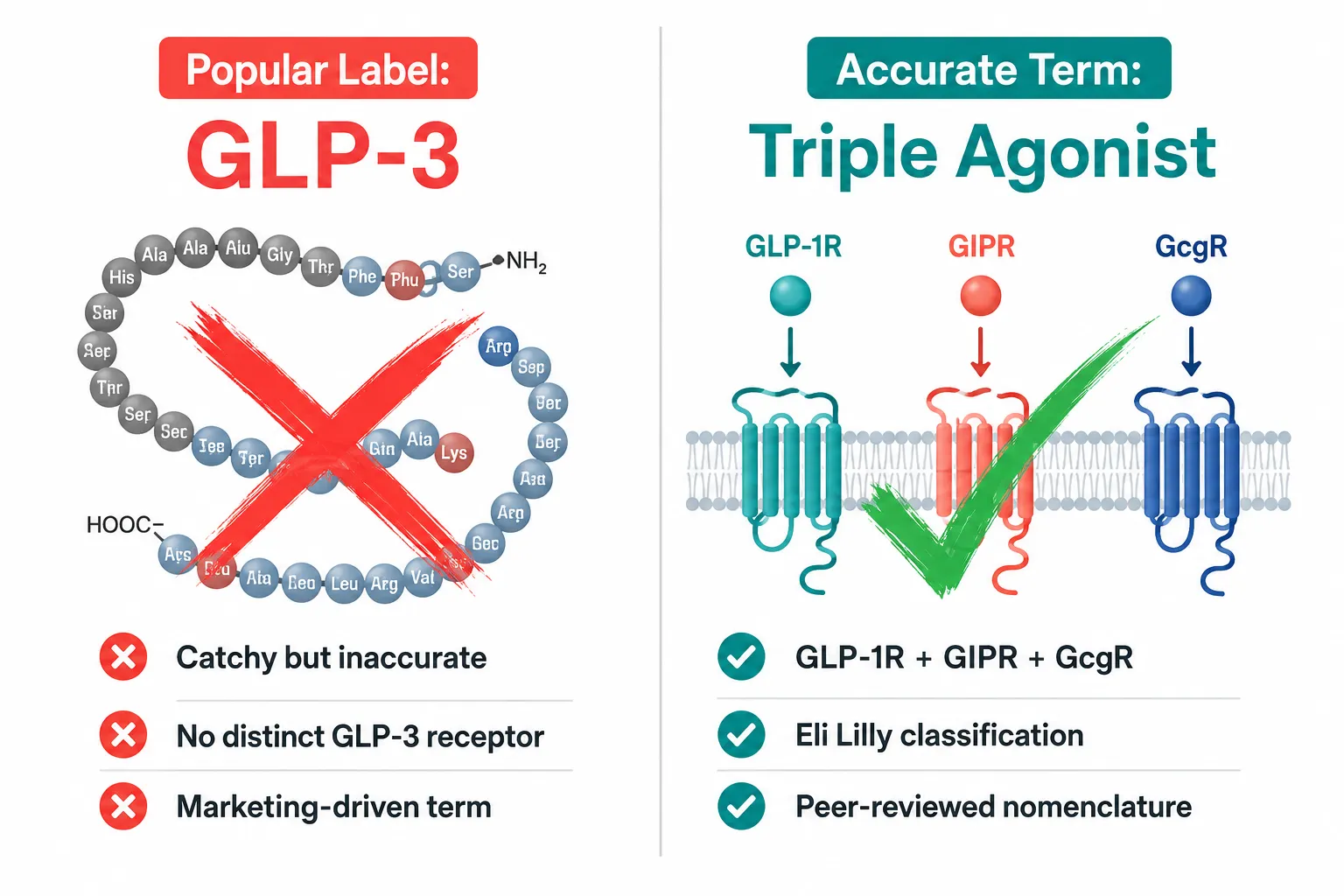
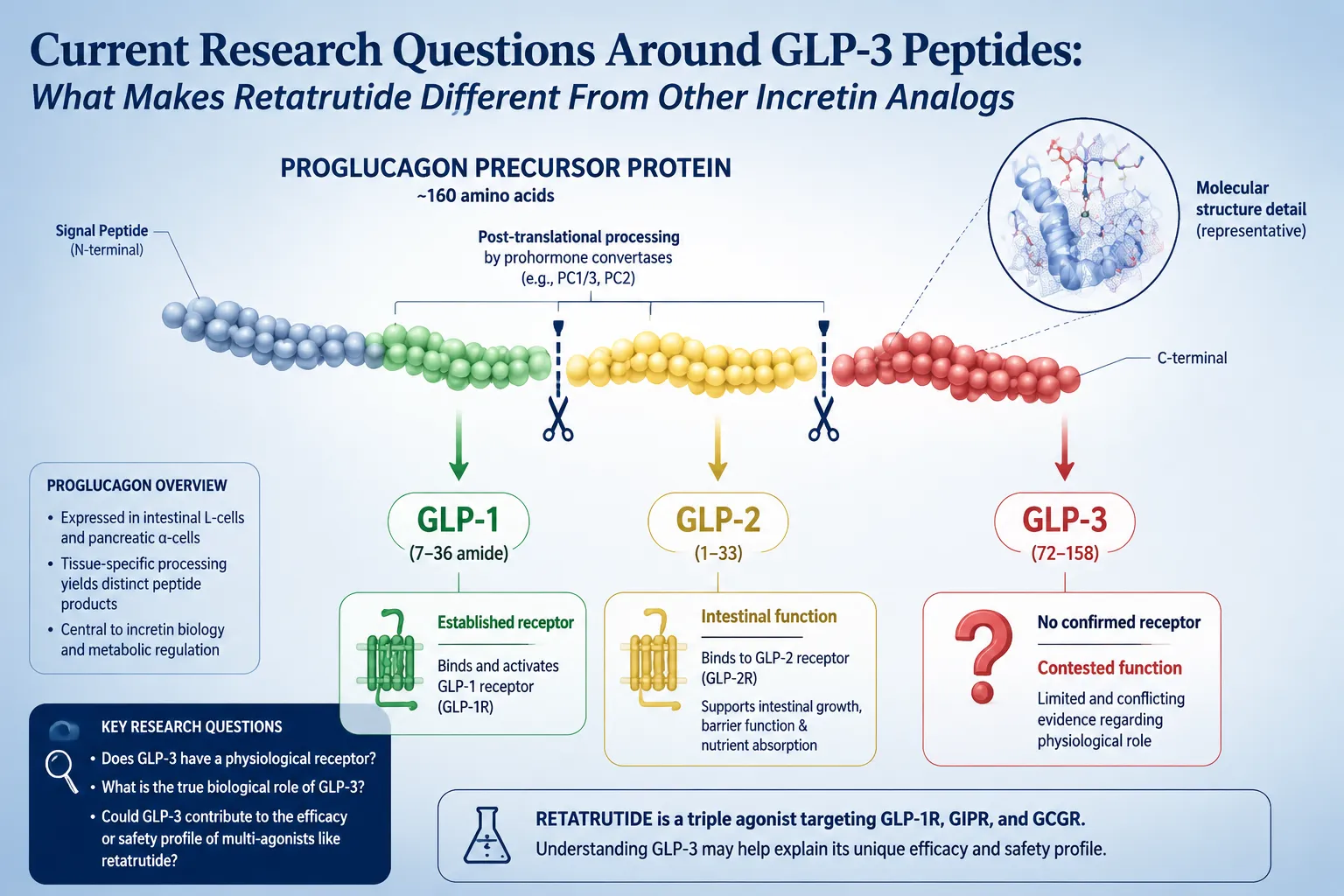
The "GLP-3" label is informal, no third GLP receptor exists, but it captures the core idea neatly. Where standard GLP-1 receptor agonists like semaglutide or liraglutide target a single receptor pathway, retatrutide activates three simultaneously: the glucagon-like peptide-1 (GLP-1) receptor, the glucose-dependent insulinotropic polypeptide (GIP) receptor, and the glucagon receptor.

Each receptor contributes a distinct metabolic effect:

Receptor Primary Effect
GLP-1 Appetite suppression, slowed gastric emptying
GIP Enhanced insulin secretion, fat metabolism support
Glucagon Increased energy expenditure, enhanced fat oxidation

The glucagon receptor component is what separates retatrutide most sharply from dual agonists like tirzepatide. Glucagon receptor activation ramps up thermogenesis and fat burning in ways that GLP-1 alone cannot achieve. For a deeper look at how incretin receptor families interact, the GLP-3 and incretin research themes overview provides useful context, as does this GLP-1 generations overview covering how the drug class has evolved.

Understanding the GIP receptor and its importance is also valuable for grasping why dual and triple agonism consistently outperforms single-receptor approaches.


TRIUMPH-1 Phase 3 Obesity Data: Retatrutide vs. GLP-1 Drugs

TRIUMPH-1 Phase 3 Obesity Data: Retatrutide vs. GLP-1 Drugs

The TRIUMPH-1 trial is the headline result of 2026 for obesity pharmacology. Eli Lilly reported that participants receiving the 12 mg dose of retatrutide lost an average of 28.3% of body weight (roughly 70.3 lbs) over 80 weeks. The distribution of results was equally striking:

  • 45.3% of participants achieved 30% or more weight loss
  • 65.3% reduced their BMI below 30, moving out of the obesity range entirely

In a pre-specified extension for participants with a baseline BMI of 35 or higher who continued treatment for 104 weeks, average weight loss reached 30.3%, equivalent to approximately 85 lbs.

"Retatrutide's 28-30% weight loss figures place it in the same territory as bariatric surgery outcomes, something no oral or injectable drug has previously achieved."

For comparison, semaglutide, currently the most prescribed GLP-1 agonist, produces roughly 15% weight loss in similar populations. Retatrutide's triple agonism roughly doubles that benchmark.

Cardiometabolic improvements were broad and clinically meaningful, including reductions in:

  • Waist circumference
  • Non-HDL cholesterol and triglycerides
  • Systolic blood pressure
  • High-sensitivity C-reactive protein (hsCRP)

Researchers studying metabolic peptides alongside incretin agents may also find AOD-9604 metabolic research relevant as a complementary area of fat metabolism investigation.


MASLD Resolution and Liver Health Data

MASLD Resolution and Liver Health Data

Metabolic dysfunction-associated steatotic liver disease (MASLD) is closely tied to obesity, and retatrutide's Phase 2 data presented at the American Association for the Study of Liver Diseases (AASLD) delivered a landmark finding: over 85% of participants with MASLD and obesity achieved complete resolution of liver steatosis after 48 weeks of treatment.

This is a dramatic outcome. Current standard-of-care options for MASLD are limited, and no drug has previously shown steatosis resolution rates at this scale in a controlled study. The improvements came alongside broader metabolic health gains, reinforcing that retatrutide's mechanism targets the root metabolic dysfunction driving liver fat accumulation, not just body weight.

For researchers interested in mitochondrial and cellular health aspects of metabolic disease, MOTS-c and metabolic stress research offers a complementary perspective on how peptide-based interventions interact with energy metabolism pathways.


Safety Profile and Regulatory Outlook

The adverse event profile of retatrutide is consistent with the broader incretin drug class. The most commonly reported side effects are gastrointestinal: nausea, diarrhea, constipation, and vomiting. One notable finding specific to retatrutide is that 20.9% of participants at the 12 mg dose reported dysesthesia, tingling or burning sensations, though the majority of cases were mild and did not lead to discontinuation.

Eli Lilly plans to submit a New Drug Application (NDA) to the FDA by late 2026 or early 2027, pending completion of additional Phase 3 trials. Those ongoing studies are evaluating retatrutide across broader populations, including people with type 2 diabetes and other metabolic conditions.

Researchers tracking the broader peptide research landscape may also find tesa's role in visceral fat reduction relevant as a separate but related area of metabolic peptide science.


Conclusion

Retatrutide as so-called "GLP-3" triple agonist vs. GLP-1 drugs represents one of the most significant inflection points in obesity pharmacology in decades. The latest Phase 3 obesity and MASLD data confirm that simultaneous activation of GLP-1, GIP, and glucagon receptors produces weight loss and liver fat reduction outcomes that single-receptor drugs cannot match.

Actionable next steps for researchers and clinicians:

  1. Review the full TRIUMPH-1 dataset when published in peer-reviewed form to assess subgroup performance.
  2. Monitor AASLD and upcoming hepatology conference presentations for Phase 3 MASLD data.
  3. Track the FDA NDA submission timeline, expected by late 2026 or early 2027.
  4. Consider how triple agonism compares to emerging peptide combinations in your own research protocols.
  5. Explore the GLP-1 product research tag for research-grade incretin-related peptide options.

The era of surgery-level weight loss from a once-weekly injection is no longer theoretical. It is arriving.

https://www.puretestedpeptides.com/wp-content/uploads/2026/07/Retatrutide-as-so‑called-GLP‑3-triple-agonist-vs.-GLP‑1-drugs-latest-Phase-3-obesity-and-MASLD-data.png 1024 1536 Pure Tested https://www.puretestedpeptides.com/wp-content/uploads/2026/01/buy-peptides-online.jpg Pure Tested2026-07-03 13:03:352026-07-20 15:01:13Retatrutide as so‑called “GLP‑3” triple agonist vs. GLP‑1 drugs (latest Phase 3 obesity and MASLD data)
GLP-3 Retatrutide: Latest Research on Its Impact on Liver Fat Reduction and MASLD Management

GLP-3 Retatrutide: Latest Research on Its Impact on Liver Fat Reduction and MASLD Management

July 3, 2026/0 Comments/by Pure Tested

More than 80% of participants with fatty liver disease who received retatrutide in a phase 2 trial had their liver fat completely normalized by week 48, a result researchers described as among the largest liver-fat reductions ever reported in an obesity or MASLD trial. That single data point has reshaped how the research community thinks about triple receptor agonists and metabolic liver disease.

This article examines what the most current evidence says about GLP-3 Retatrutide: Latest Research on Its Impact on Liver Fat Reduction and MASLD Management, who may benefit most, and what questions still need answering.

Key Takeaways

  • Retatrutide is a triple agonist targeting GLP-1, GIP, and glucagon receptors simultaneously.
  • Phase 2 data show mean relative liver fat reductions exceeding 80% at 48 weeks.
  • More than 90% of participants on the 12 mg dose achieved liver fat normalization below the 5% MRI threshold.
  • Weight loss of nearly 24-26% accompanied the liver fat improvements, suggesting dual metabolic benefit.
  • The safety profile mirrors other incretin-based therapies, with no new hepatotoxicity signal identified.

Key Takeaways

What Is Retatrutide and Why Does It Matter for MASLD

Metabolic Dysfunction-Associated Steatotic Liver Disease (MASLD), formerly called NAFLD, affects an estimated 25% of the global adult population. It ranges from simple fat accumulation in liver cells to progressive inflammation, fibrosis, and cirrhosis. Until recently, no pharmacological agent had demonstrated the ability to reliably normalize liver fat across a broad patient population.

Retatrutide changes that conversation. Unlike semaglutide or tirzepatide, which act on one or two receptors, retatrutide simultaneously activates three receptors:

Receptor Primary Role
GLP-1 Appetite suppression, insulin secretion
GIP Energy metabolism, fat storage regulation
Glucagon Hepatic fat oxidation, energy expenditure

The glucagon component is particularly relevant for liver fat. Glucagon receptor activation directly stimulates hepatic fat burning, meaning retatrutide works on the liver through a mechanism that single or dual agonists do not fully replicate. Researchers interested in the broader landscape of GLP-1 peptide research will recognize this as a meaningful mechanistic step forward.


Phase 2 Trial Data: Retatrutide and Liver Fat Reduction

Phase 2 Trial Data: Retatrutide and Liver Fat Reduction

The most compelling evidence comes from a pre-specified MASLD sub-study within the obesity phase 2 trial. Participants with confirmed hepatic steatosis received weekly injections of either 8 mg or 12 mg retatrutide for 48 weeks, with liver fat measured by MRI-PDFF, the gold-standard imaging method.

The headline results:

  • Mean relative liver fat reduction exceeded 80% in both dose groups
  • More than 80% of participants on either dose achieved at least a 70% relative reduction in liver fat
  • Hepatic steatosis resolved in over 85% of participants on 8 mg
  • Over 90% achieved liver fat normalization (below the 5% MRI threshold) on 12 mg

A Virginia Commonwealth University-led analysis of the same sub-study reported that 81.7% relative liver fat reduction occurred with 8 mg and 86% with 12 mg. Average body weight fell by 23.8% and 25.9% respectively, underscoring that retatrutide delivers simultaneous, substantial benefits to both body weight and liver health.

"These are not incremental improvements. Resolving fatty liver in more than 9 out of 10 participants represents a potential paradigm shift in MASLD pharmacotherapy."

For context on how peptide-based approaches compare in metabolic research, the MOTS-c metabolic flexibility research page offers useful background on mitochondrial and metabolic mechanisms.


2026 Research Updates and Remaining Questions

2026 Research Updates and Remaining Questions

A 2026 ENDO meeting presentation reviewing phase 2 data confirmed weight reductions up to 24.2%, HbA1c reductions up to 2.16%, and liver fat normalization in up to 86% of MASLD participants. The safety profile remained consistent with other incretin-based therapies, primarily dose-dependent gastrointestinal side effects, with no new hepatotoxicity signal.

However, critical gaps remain:

  • No liver biopsy data, histological confirmation of fibrosis regression is still pending from phase 3
  • Long-term durability beyond 48 weeks has not been established
  • Head-to-head comparisons with tirzepatide or semaglutide in MASLD-specific populations are lacking

Phase 3 trials are underway in 2026, and the field is watching closely for histological endpoints that would confirm whether the dramatic MRI improvements translate to reduced fibrosis and cirrhosis risk.

Those following the evolution of retatrutide peptide research will find the upcoming phase 3 data particularly significant. Related metabolic research on compounds like tesa for fat loss and AOD-9604 provides additional context for how peptide science is advancing metabolic health broadly. Researchers also tracking longevity peptide research themes may find retatrutide's hepatic effects relevant to long-term metabolic aging.


Conclusion

The evidence on GLP-3 Retatrutide: Latest Research on Its Impact on Liver Fat Reduction and MASLD Management is, by any measure, striking. Phase 2 data consistently show liver fat normalization rates above 85-90%, weight loss approaching 25%, and a safety profile that does not introduce new hepatic risk. The triple-receptor mechanism, particularly glucagon receptor activation, appears to be the key driver of effects that surpass what single or dual agonists have achieved.

Actionable next steps for researchers and clinicians:

  1. Monitor phase 3 trial readouts for histological fibrosis data, which will determine whether MRI improvements predict long-term liver health outcomes.
  2. Review the GLP-1 Retatrutide product research page for the latest compound specifications and purity standards relevant to preclinical study design.
  3. Consider how retatrutide's metabolic profile compares to other peptides in your research stack by exploring the full peptide catalog.
  4. Stay current with ENDO and EASL 2026 conference updates, where phase 3 interim data are expected to be presented.

The next 12-18 months will determine whether retatrutide becomes the first agent to achieve broad regulatory approval specifically for MASLD, a milestone the field has been working toward for decades.

https://www.puretestedpeptides.com/wp-content/uploads/2026/07/GLP-3-Retatrutide-Latest-Research-on-Its-Impact-on-Liver-Fat-Reduction-and-MASLD-Management.png 1024 1536 Pure Tested https://www.puretestedpeptides.com/wp-content/uploads/2026/01/buy-peptides-online.jpg Pure Tested2026-07-03 13:03:342026-07-20 15:01:13GLP-3 Retatrutide: Latest Research on Its Impact on Liver Fat Reduction and MASLD Management
Retatrutide vs GLP3 Peptide: How to Interpret the Naming Difference in Research Context

Retatrutide vs GLP3 Peptide: How to Interpret the Naming Difference in Research Context

July 1, 2026/0 Comments/by Pure Tested

Researchers and informed readers searching metabolic peptide literature in 2026 frequently encounter two terms side by side — "retatrutide" and "GLP-3 peptide" — and assume they are comparing two separate compounds. They are not. Understanding this naming gap is essential for reading clinical data accurately and avoiding confusion when evaluating research outcomes.

This article on Retatrutide vs GLP3 Peptide: How to Interpret the Naming Difference in Research Context explains where the informal label came from, what the science actually says, and how to navigate terminology when reviewing preclinical or clinical literature.

Key Takeaways

  • "GLP-3 peptide" is an informal shorthand, not an official scientific or regulatory term.
  • Retatrutide is the INN (International Nonproprietary Name) for a triple receptor agonist targeting GLP-1R, GIPR, and GcgR.
  • The "GLP-3" label emerged from a logical but unofficial progression: GLP-1 agonist, then dual GLP-1/GIP agonist, then "triple" or "GLP-3."
  • Phase 3 TRIUMPH-4 trial data showed up to 28.7% body weight reduction at 68 weeks with a 12 mg dose.
  • In formal research contexts, always use "retatrutide" or "triple receptor agonist" to ensure accurate source retrieval.

Where the "GLP-3" Label Comes From

Where the "GLP-3" Label Comes From

The naming logic follows a simple pattern that the research community informally adopted. GLP-1 receptor agonists — such as semaglutide — target a single receptor. Dual agonists like tirzepatide activate both the GLP-1 receptor and the GIP receptor. When retatrutide arrived as a compound activating three receptors simultaneously — GLP-1R, GIPR, and the glucagon receptor (GcgR) — some writers and online communities began calling it a "GLP-3" to signal that it goes one step further than a dual agonist.

This is a shorthand label, not a pharmacological classification. No regulatory body, no peer-reviewed journal, and no drug developer has officially designated retatrutide as a "GLP-3 receptor agonist." The glucagon receptor is not a third GLP receptor in any biological sense. GLP-1 and GLP-2 are the two glucagon-like peptides identified in the literature, and neither is the same as the glucagon receptor that retatrutide activates.

Term Type Official?
Retatrutide INN / clinical name Yes
Triple receptor agonist Mechanistic descriptor Yes
GLP-3 peptide Community shorthand No
GLP-1/GIP/GcgR agonist Pharmacological label Yes

For those already familiar with the broader landscape of incretin-based compounds, the GLP-1 incretin research themes article provides useful background on how these receptor classes differ.


What Retatrutide Actually Does in Research

What Retatrutide Actually Does in Research

Retatrutide works by co-activating three distinct receptor pathways that each influence energy balance, appetite signaling, and glucose metabolism. The GLP-1 receptor component slows gastric emptying and reduces appetite. The GIP receptor component modulates insulin secretion and fat storage. The glucagon receptor component increases energy expenditure and promotes fat oxidation.

This triple mechanism is why Phase 2 trial data reported up to 24.2% body weight loss at 48 weeks with a 12 mg dose — a figure that exceeded what single or dual agonists had achieved at comparable timepoints. Phase 3 TRIUMPH-4 trial data extended that finding further, showing up to 28.7% body weight loss at 68 weeks with the same 12 mg dose.

"Triple agonism is not simply additive — the glucagon receptor component introduces an energy expenditure pathway that single and dual agonists do not access."

For researchers comparing incretin-based mechanisms, the dual receptor agonism research breakdown and the generations of GLP-1 differences articles offer relevant context. Researchers interested in complementary metabolic compounds may also find value in reviewing cagrilintide synergy with GLP-1 as a related area of investigation.


How to Interpret the Naming Difference in Research Context

How to Interpret the Naming Difference in Research Context

When evaluating Retatrutide vs GLP3 Peptide: How to Interpret the Naming Difference in Research Context, the practical rule is straightforward: use "retatrutide" for database searches on PubMed, ClinicalTrials.gov, or any regulatory archive. Searching "GLP-3 peptide" will return inconsistent results and may surface unrelated compounds or speculative content.

The informal "GLP-3" label is most common in:

  • Fitness and biohacking communities
  • Non-peer-reviewed blog content
  • Social media discussions comparing weight-loss peptides

It is rarely, if ever, used in:

  • Clinical trial registrations
  • Peer-reviewed pharmacology journals
  • FDA or EMA regulatory filings

Researchers studying adjacent compounds — such as tesofensine peptide overview or TESA body composition research themes — will notice the same pattern: informal community labels often diverge from official nomenclature. Maintaining terminological precision protects the integrity of literature reviews and prevents citation errors.


Conclusion

The core answer to Retatrutide vs GLP3 Peptide: How to Interpret the Naming Difference in Research Context is that no meaningful distinction exists between the two terms — they refer to the same compound, but one name is scientifically valid and one is not. Retatrutide is the correct, searchable, regulatory-recognized name for the triple GLP-1R/GIPR/GcgR agonist under active Phase 3 investigation.

Actionable next steps for researchers and informed readers:

  • Use "retatrutide" exclusively when searching clinical databases or citing literature.
  • Treat "GLP-3 peptide" as a community shorthand that signals triple agonism, not a distinct compound class.
  • Cross-reference mechanism descriptions against the three receptor targets (GLP-1R, GIPR, GcgR) to verify you are reading about the correct compound.
  • Follow TRIUMPH-4 and related Phase 3 trial updates for the most current efficacy and safety data.

Precision in terminology is not pedantic — it is the foundation of reliable research interpretation.

https://www.puretestedpeptides.com/wp-content/uploads/2026/07/Retatrutide-vs-GLP3-Peptide-How-to-Interpret-the-Naming-Difference-in-Research-Context.png 1024 1536 Pure Tested https://www.puretestedpeptides.com/wp-content/uploads/2026/01/buy-peptides-online.jpg Pure Tested2026-07-01 13:04:142026-07-20 15:01:17Retatrutide vs GLP3 Peptide: How to Interpret the Naming Difference in Research Context
GLP-3 Retatrutide: The Future of Metabolic Research Beyond GLP-1

GLP-3 Retatrutide: The Future of Metabolic Research Beyond GLP-1

June 29, 2026/0 Comments/by Pure Tested

A single drug achieving nearly 29% body weight reduction in a Phase 3 trial — comparable to bariatric surgery outcomes — marks a turning point in metabolic science. That drug is retatrutide, widely referred to by researchers as "GLP-3," and in 2026 it is reshaping how scientists think about obesity, type 2 diabetes, and metabolic disease at the receptor level.

GLP-3 Retatrutide: The Future of Metabolic Research Beyond GLP-1 represents more than an incremental upgrade over existing therapies. It introduces a fundamentally different mechanism — one that activates three distinct hormone receptors simultaneously — and its early data is forcing a reassessment of what pharmacological intervention can achieve.

Key Takeaways

  • Retatrutide is a triple agonist targeting GLP-1, GIP, and glucagon receptors, setting it apart from all prior GLP-1 therapies.
  • Phase 3 TRIUMPH-4 data from April 2026 showed an average weight loss of 28.7% over 68 weeks — the highest ever recorded in a Phase 3 obesity trial.
  • The informal nickname "GLP-3" reflects its triple-agonist activity, not a third glucagon-like peptide hormone.
  • Eli Lilly plans to submit an NDA to the FDA in late 2026, with potential approval anticipated in 2027.
  • Research interest extends beyond obesity to type 2 diabetes, liver disease (MASLD), and cardiovascular risk reduction.

Understanding the Triple-Agonist Mechanism

Understanding the Triple-Agonist Mechanism

Most GLP-1 receptor agonists work through a single pathway: they mimic the glucagon-like peptide-1 hormone to suppress appetite and regulate blood sugar. Retatrutide goes further by simultaneously activating three receptors:

Receptor Primary Role
GLP-1R Appetite suppression, insulin secretion
GIPR Insulin potentiation, fat metabolism
GCG-R Energy expenditure, hepatic glucose output

This combination does something no single-pathway drug can: it both reduces caloric intake and increases energy expenditure. The glucagon receptor component, in particular, drives thermogenic activity that amplifies fat loss beyond what appetite suppression alone can produce.

It is worth clarifying the "GLP-3" label. There is no third glucagon-like peptide hormone in human biology. The nickname emerged informally to reflect the drug's third-generation, triple-receptor profile. Researchers exploring GLP-1 peptide research concepts and sourcing will find retatrutide represents a clear evolutionary step beyond that class.

For a deeper dive into retatrutide's research profile, the GLP-3 Retatrutide compound overview provides useful context on its structural and pharmacological properties.


Phase 3 Clinical Data: What the Trials Reveal

Phase 3 Clinical Data: What the Trials Reveal

The 2026 trial readouts for retatrutide have been striking across multiple study populations.

TRIUMPH-4 (April 2026): Adults with obesity achieved a mean weight loss of 28.7% over 68 weeks. This figure places retatrutide in territory previously occupied only by surgical interventions.

TRIUMPH-3 (March 2026): Presented at the American College of Cardiology Annual Scientific Session, this trial enrolled participants with obesity and elevated cardiovascular risk. Mean weight loss reached 24.2% at 72 weeks, suggesting meaningful cardiometabolic benefit beyond weight alone.

TRANSCEND-T2D-1 (March 2026): In adults with type 2 diabetes, the 12 mg dose produced HbA1c reductions of 1.7% to 2.0% alongside 16.8% weight loss over 40 weeks — a dual benefit that positions retatrutide as a strong candidate for metabolic disease management.

"The weight loss achieved with retatrutide in recent trials is comparable to outcomes typically associated with bariatric surgery."

Retatrutide is administered as a once-weekly subcutaneous injection, with doses titrated from 2 mg up to 12 mg to manage tolerability. Common side effects include nausea, vomiting, and diarrhea — consistent with the GI profile seen across the incretin drug class, though the glucagon component may amplify these effects at higher doses.

Researchers comparing metabolic peptide approaches may also find value in reviewing AOD-9604 metabolic research and MOTS-C metabolic flexibility research as complementary areas of investigation.


Research Horizons: Beyond Obesity and GLP-1

Research Horizons: Beyond Obesity and GLP-1

The scope of GLP-3 Retatrutide: The Future of Metabolic Research Beyond GLP-1 extends well past weight management. Active investigation includes:

  • Metabolic dysfunction-associated steatotic liver disease (MASLD): The glucagon receptor's role in hepatic lipid metabolism makes retatrutide a logical candidate for liver-focused research.
  • Cardiovascular risk reduction: TRIUMPH-3 data hints at benefits independent of weight loss.
  • Chronic low back pain: An emerging and less-expected indication under early investigation.
  • Broader metabolic syndrome components: Insulin resistance, dyslipidemia, and visceral adiposity all represent potential targets.

Eli Lilly plans to file an NDA with the FDA in late 2026, with approval potentially following in 2027. The broader TRIUMPH program, including TRIUMPH-1 and TRIUMPH-2, continues enrolling participants with primary endpoint data expected between late 2026 and early 2027.

Researchers building multi-pathway metabolic protocols may also want to explore SLU-PP-332 metabolic research, 5-Amino-1MQ research and data, and the NAD research overview for complementary mechanistic angles. For those sourcing research-grade material, Reta 10mg product options are available for qualified research applications.


Conclusion

GLP-3 Retatrutide: The Future of Metabolic Research Beyond GLP-1 is not a theoretical advance — it is a clinically validated shift in what metabolic pharmacology can accomplish. Its triple-agonist mechanism addresses appetite, energy expenditure, and glycemic control through three simultaneous pathways, producing outcomes that single-receptor drugs cannot match.

For researchers in 2026, the actionable priorities are clear:

  1. Monitor TRIUMPH-1 and TRIUMPH-2 data as primary endpoints emerge in late 2026 and early 2027.
  2. Track the FDA NDA submission and anticipated 2027 approval timeline for clinical translation signals.
  3. Explore multi-pathway metabolic research stacks that complement the receptor targets retatrutide engages.
  4. Review the MASLD and cardiovascular trial arms for indications that extend well beyond obesity.

Retatrutide is redefining the ceiling for metabolic intervention. Researchers who engage with its mechanism and emerging data now will be best positioned when the full clinical picture becomes available.

https://www.puretestedpeptides.com/wp-content/uploads/2026/06/GLP-3-Retatrutide-The-Future-of-Metabolic-Research-Beyond-GLP-1.png 1024 1536 Pure Tested https://www.puretestedpeptides.com/wp-content/uploads/2026/01/buy-peptides-online.jpg Pure Tested2026-06-29 13:05:242026-07-20 15:01:57GLP-3 Retatrutide: The Future of Metabolic Research Beyond GLP-1
Page 2 of 512345
×

Helpful Links

  • My account
  • Cart
  • Checkout
  • Refund and Returns Policy
  • Privacy Policy
  • SMS Privacy Policy
  • Login
  • My Account
  • Logout

USA Made Lab Tested Peptides

All products are sold for research, laboratory, or analytical purposes only, and are not for human consumption


Pure Tested Peptides is a chemical supplier. Pure Tested Peptides is not a compounding / chemical compounding facility as defined under 503A of the Federal Food, Drug, and Cosmetic act. Pure Tested Peptides is not an outsourcing facility as defined under 503B of the Federal Food, Drug, and Cosmetic act.

The statements made within this website have not been evaluated by the US Food and Drug Administration. The products we offer are not intended to diagnose, treat, cure or prevent any disease.

Human/Animal Consumption Prohibited. Laboratory/In-Vitro Experimental Use Only

Scroll to top Scroll to top Scroll to top